We occasionally eat wild fish and bacalhau is a favourite made from Norwegian dried cod that can be found in supermarkets here. More or less anything goes in bacalhau (bacalao) and although most people make it in the same way – layers of potato, fish, tomato and onions, often with chili – the Portuguese have hundreds of ways of preparing baccalao (dried cod). Being self-sufficient, detailed recipes aren¨’t useful and we use whatever is available at the moment. Winter is the time for stored bulbs, corms, tubers, rhizomes, and taproots. See below the picture for yesterday’s baccalao ingredients with 14 home grown below surface storage organs plus some greens (I’m pretty sure nobody else had this version of the dish…ever!):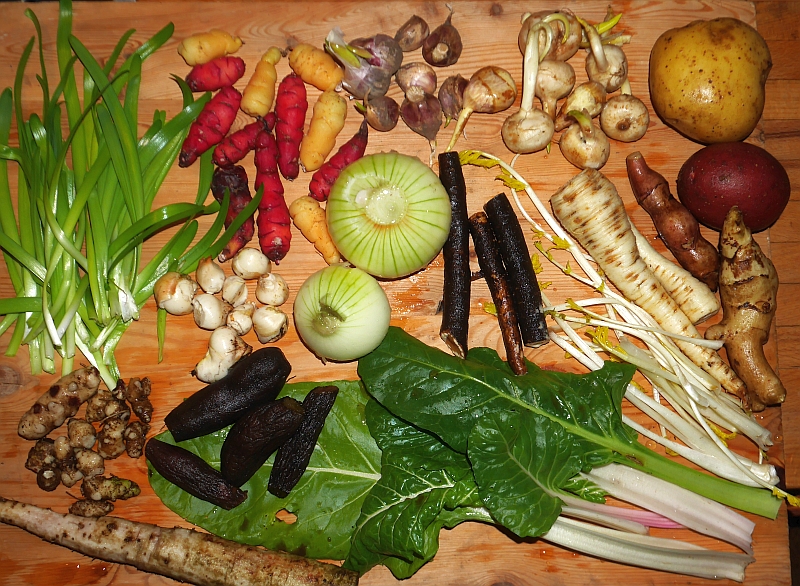
Oca (Oxalis tuberosa): yellow and red varieties
Garlic / hvitløk (Allium sativum)
Wapato (Sagittaria latifolia)
Potato / potet (Solanum tuberosum) – 2 varieties
Jerusalem artichokes / jordskokk (Helianthus tuberosus)
Parsnip / pastinakk (Pastinaca sativa)
Scorzonera / scorsonerrot (Scorzonera hispanica)
Common onion / kepaløk (Allium cepa)
Cacomitl (Tigridia pavonia)
Yacon (Polymnia sonchifolia)
Burdock / storborre (Arctium lappa)
Madeira vine (Anredera cordifolia)
Parsnip / pastinakk (Pastinaca sativa) shoots – had started shooting in the cellar
Leaf beets / bladbete (Beta vulgaris var. flavescens) – 3 varieties
Allium nutans (forced in the living room)
plus (not home grown) organic tomatoes, olive oil and olives
(I forgot the dandelion…will add tonight: we make enough that it lasts for several days….and the taste improves!)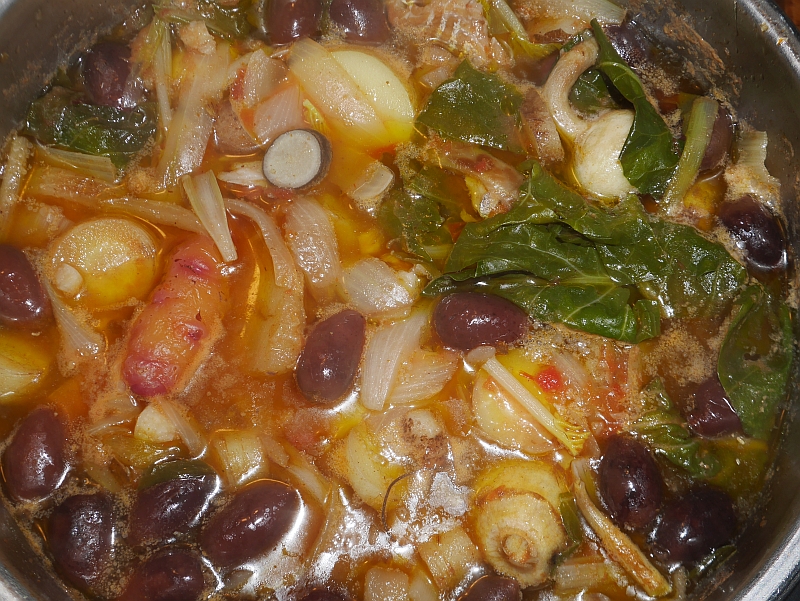
Category Archives: Food
February salad
Lunch salad had the following ingredients;
From the garden:
Allium scorodoprasum / sand leek / bendelløk (shoots)
Allium cernuum / nodding onion / prærieløk (bulbs and leaves)
Hablitzia tamnoides / Caucasian spinach / stjernemelde (shoots)
From the cellar:
Brassica oleracea / perennial kale / flerårig kål (new leaves)
Cichorium intybus “Witloof” / chicory / sikori (shoots)
Taraxacum spp. /dandelion /løvetann (blanched cellar shoots)
Apium graveolens / celery / selleri (new and old leaves from stored celery plants)
Brassica rapa / turnip / nepe (roots)
Brassica rapa / turnip / nepe (leaf shoots)
Daucus carota / carrot / gulrot
From the living room:
Allium nutans (forced shoots)
Allium sativum / garlic / hvitløk (forced bulbils)
Taraxacum spp. / dandelion / løvetann (forced green leaves)
(served with feta cheese, olive oil, olives, salt and pepper)

Habby Chicago Eggs
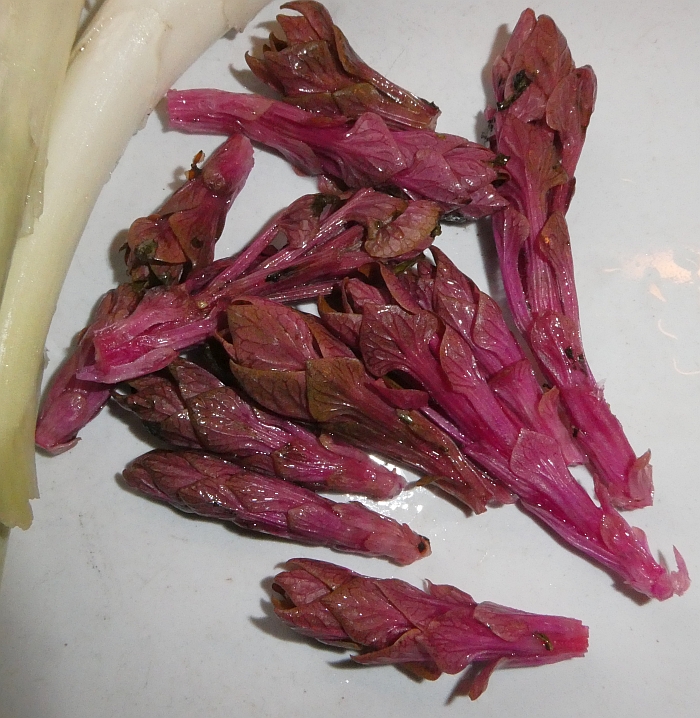
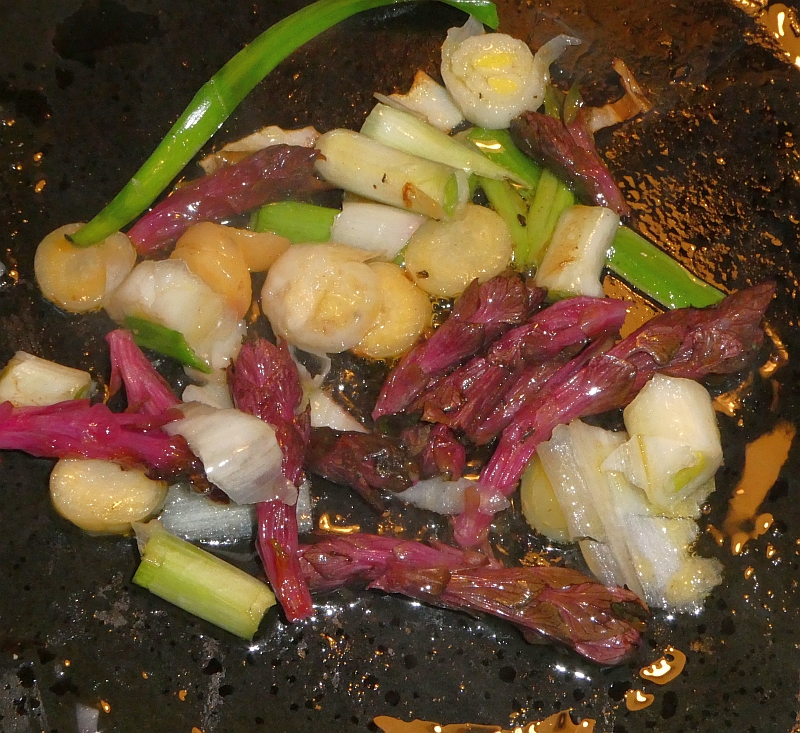
I was showing a journalist around the winter edible garden and cellar this morning and dug up some nodding (Chicago) onions (Allium cernuum) and picked a few Hablitzia shoots, so why not turn it into lunch! I sliced an oca (Oxalis tuberosa) in with the vegetables. Scambled Habby Chicago eggs is simple gourmet midwinter food from garden to table in no time!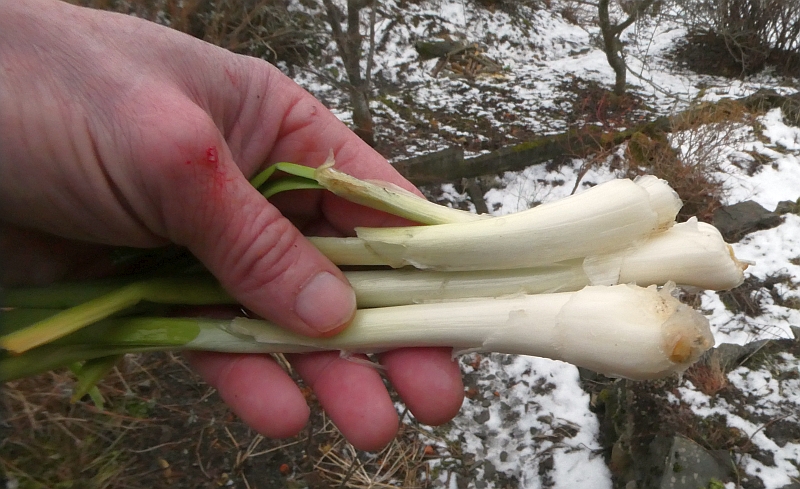

Seven Vegetable Dishes
In Denmark’s major ethnobotanical work, Brøndegaard’s Folk og Flora (1978-80), ground elder (skvalderkål; Aegopodium podograria) is one of seven different greens used in a once common health-bringing springtime dish, skærtorsdagssuppen (skærtorsdag=Maundy Thursday) and I included this in my book as a number of perennials were among the ingredients as they are at their best around Easter when this dish was served: The number 7 is considered lucky in different cultures around the world and is often seen as highly symbolic. This Danish dish is related to the northern England dish Dock Pudding, which has very similar ingredients (see Easter Ledge Pudding in my book Around the World in 80 plants).
After my book was published I came across another seven vegetable dish from Japan, nanakusa, which contains an unusual mix of edible plants (see the first slide below – from my talks over recent years) including perennial Oenanthe javanica (seri) and as fate would have it, on my study tour to Japan, organised by my friend Aiah Noack, I was taken to a farm where they were actually producing several of these herbs (pictures below). Greenhouses full of common chickweed (Stellaria media; vassarve) was a sight I won’t forget easily! Today, 7th January, is the Festival of Seven Herbs or Nanakusa no sekku (Japanese: 七草の節句) and is the old Japanese custom of eating seven-herb rice porridge on this day.
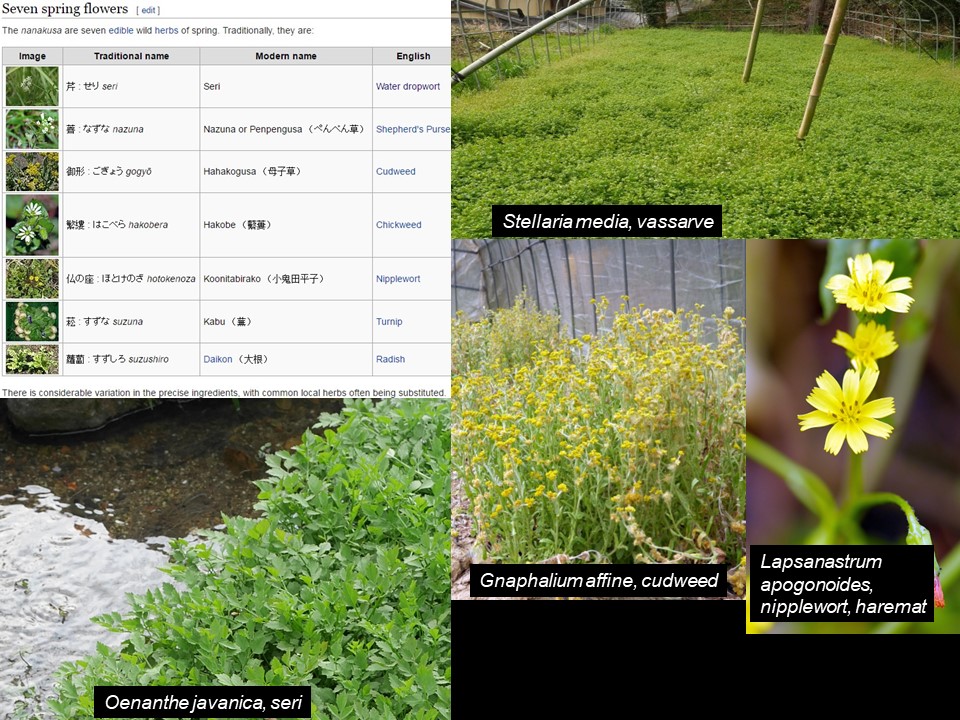
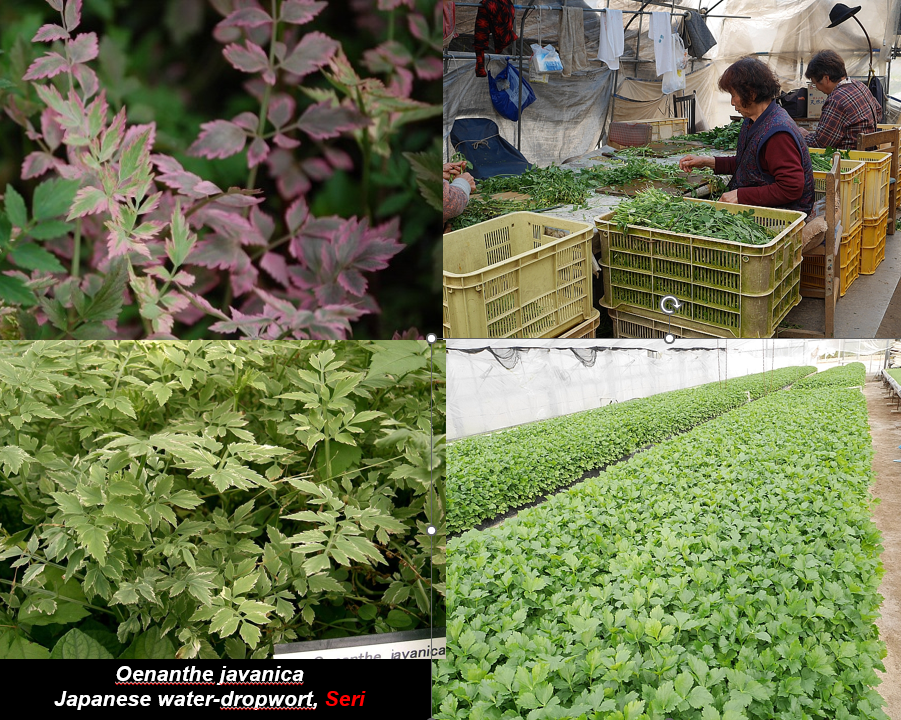
As I was writing this I wondered if there were other seven herb traditions out there and, right enough, a quick google search revealed two others (please let me know if you know of others):
Seven vegetables on the seventh day of the Chinese New Year is eaten for luck and health, a tradition perserved by the Teochew or Chaoshan people in Southern China. The following five vegetables must be included, the other two are flexible: celery, garlic, green onions, coriander and leeks.
Seven vegetable couscous: Seven is a lucky number in Jewish tradition and a dish featuring seven vegetables is a New Year favourite among Sephardic Jews (early autumn). A recipe can be seen here: https://theveganatlas.com/seven-vegetable-couscous
Xmas diversity from the rhizosphere
Presenting this year’s 30 rhizosphantastic Xmas vegetables, all roasted in the oven, served as every year in the last 40 with nut roast, bedecked with the following seeds / bulbils: alpine bistort / harerug (Polygonum viviparum), Himalayan balsam / kjempefringfrø (Impatiens glandulifera), evening primrose / nattlys (Oenothera biennis) and opium poppy (Papaver somniferum). The tubers are listed below the pictures.


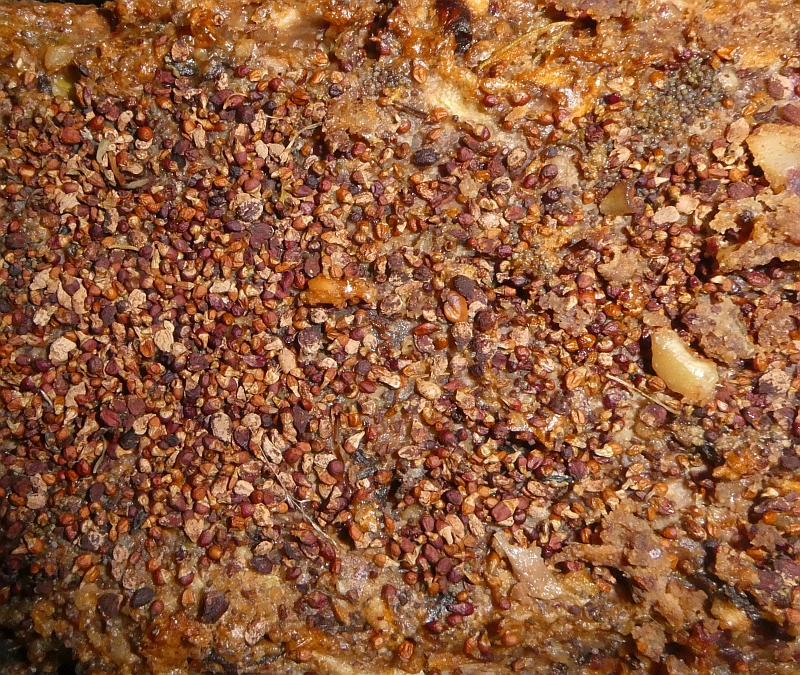
The 30 tubers, roots and rhizomes in the picture are:
Solanum tuberosum (potato / potet: 11 varieties)
Daucus carota (carrot / gulrot)
Oxalis tuberosa (oca: 2 varieties)
Arctium lappa (burdock)
Scorzonera hispanica (Scorzonera / scorsonnerot eller svartrot)
Tigridia pavonia (cacomitl)
Pastinaca sativa (parsnip / pastinakk)
Beta vulgaris (beetroot / rødbete)
Tropaeolum tuberosum (mashua)
Anredera cordifolia (Madeira vine)
Helianthus tuberosus (Jerusalem artichoke / jordskokk : 3 varieties)
Brassica rapa (turnip / nepe)
Brassica napus (swede / kålrot)
Dahlia (Dahlia / georginer)
Polymnia sonchifolia (yacon)
Sagittaria latifolia (wapato)
Allium cepa (onion)
Sweet cicely / chicory root scrambled egg
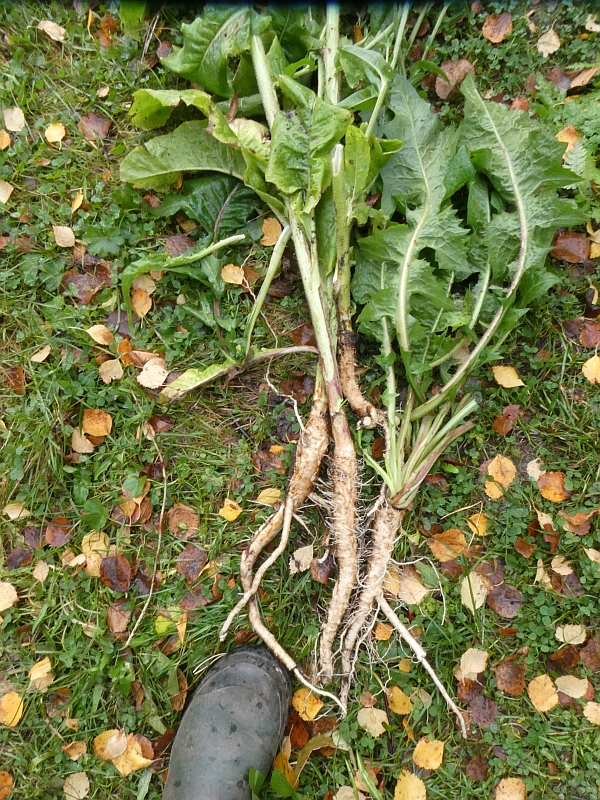
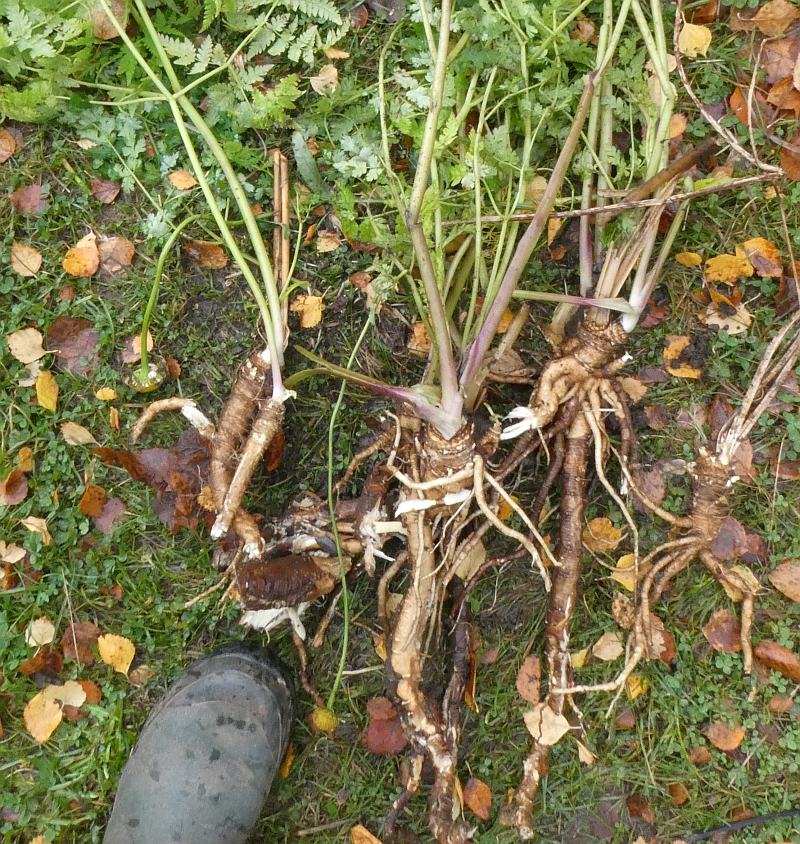
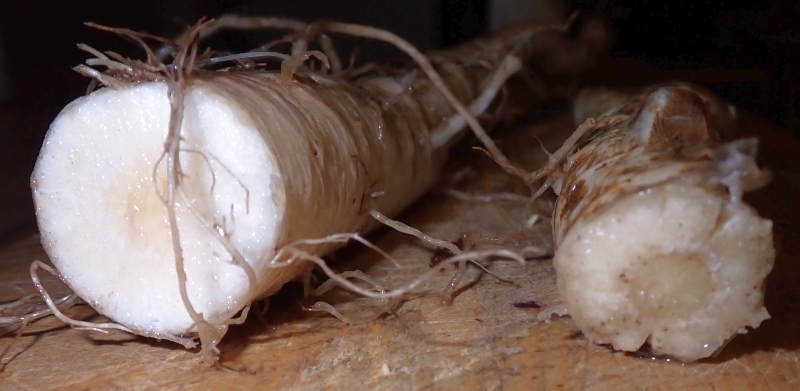
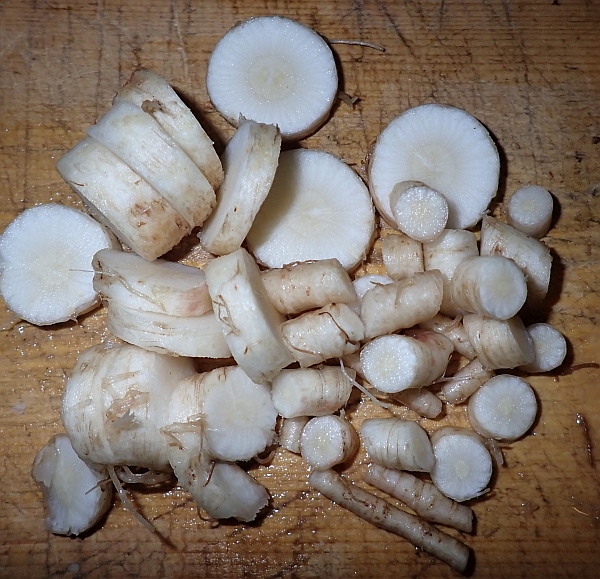
I had been asked if I had photos of the roots of chicory (sikkori) and sweet cicely (Spansk kjørvel) for a talk about wild edible roots. I therefore dug some from the garden.
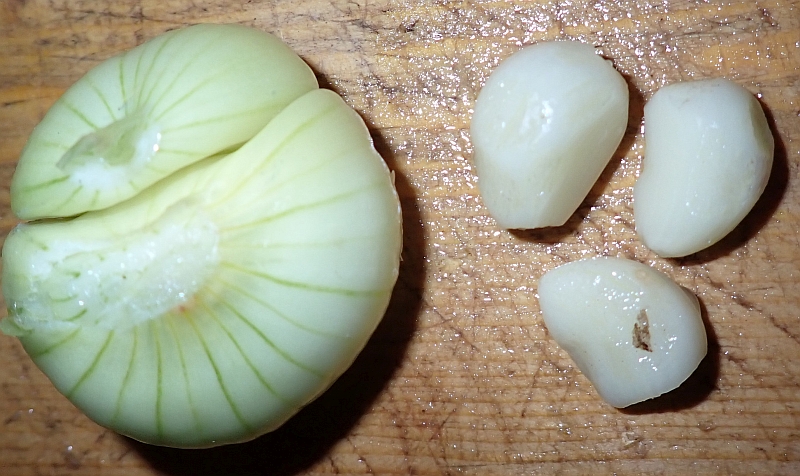
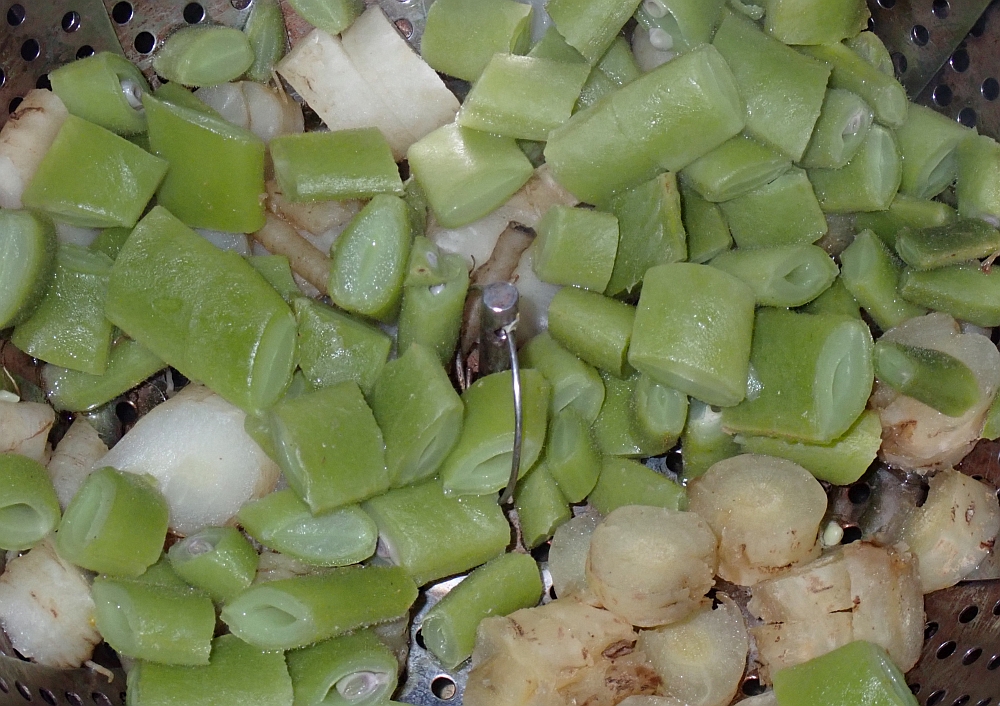
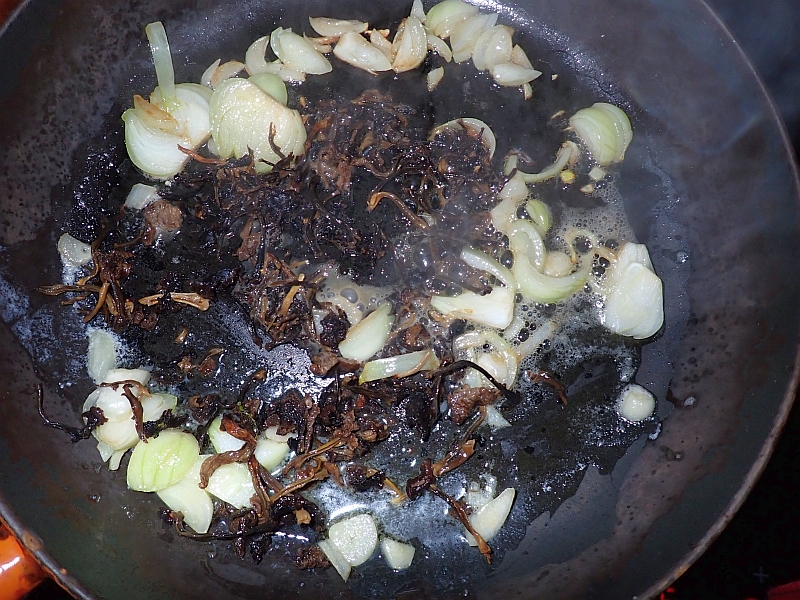
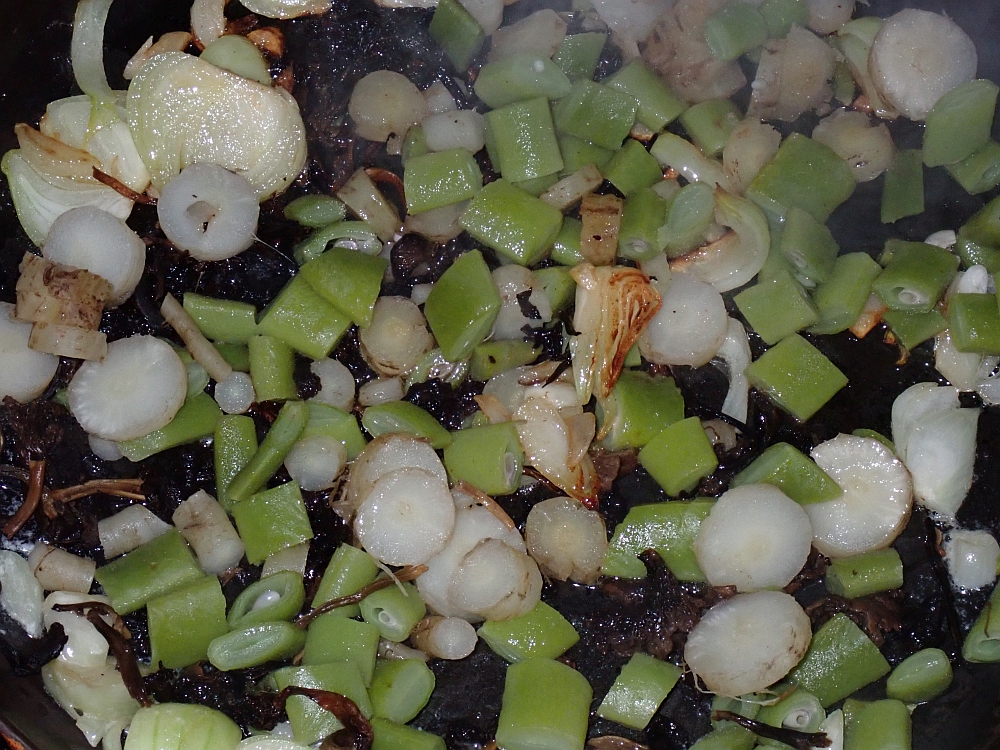
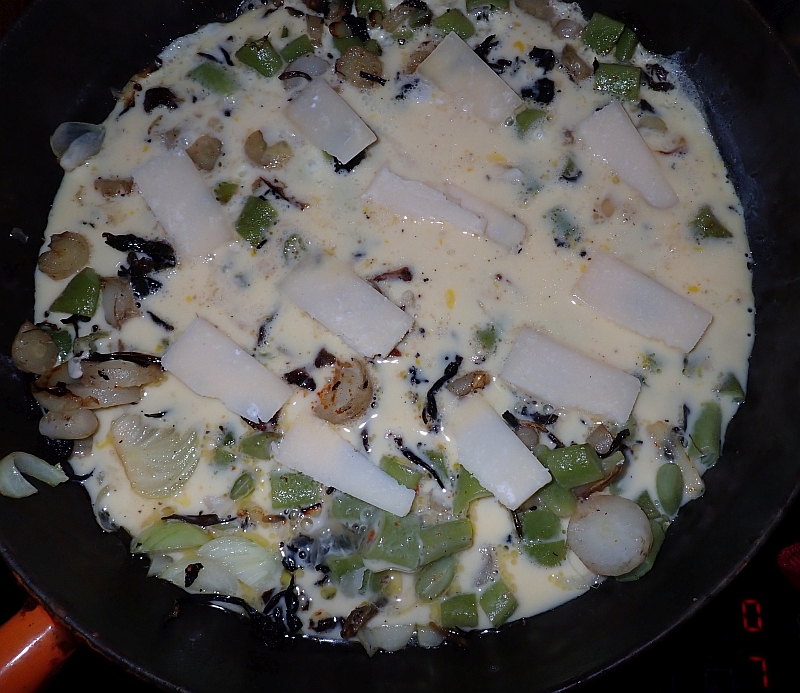
Inspired by traditional Mediterranean ways of preparing wild and cultivated vegetables, I boiled the roots and they were then stir-fried with onions and winter chantarelle mushrooms before being added to scrambled egg (see the pictures for more).
All the roots on the perennial chicory were far too fibrous to eat, but the sweet cicely roots were good (at least the younger ones!)
More or less any vegetable can be prepared this way!
Simple is best!
Sochan tops Mediterranean style
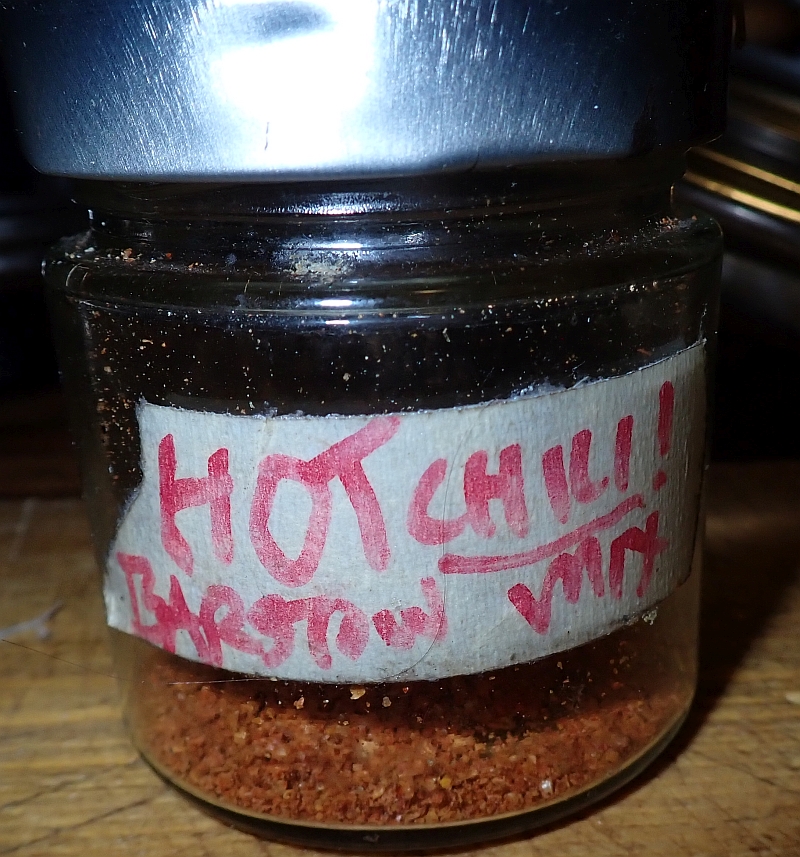
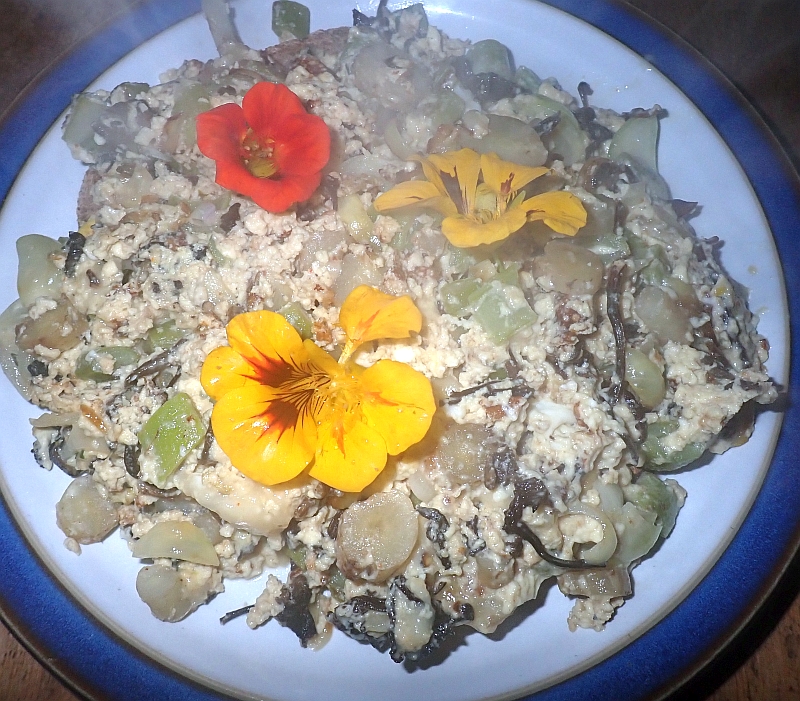
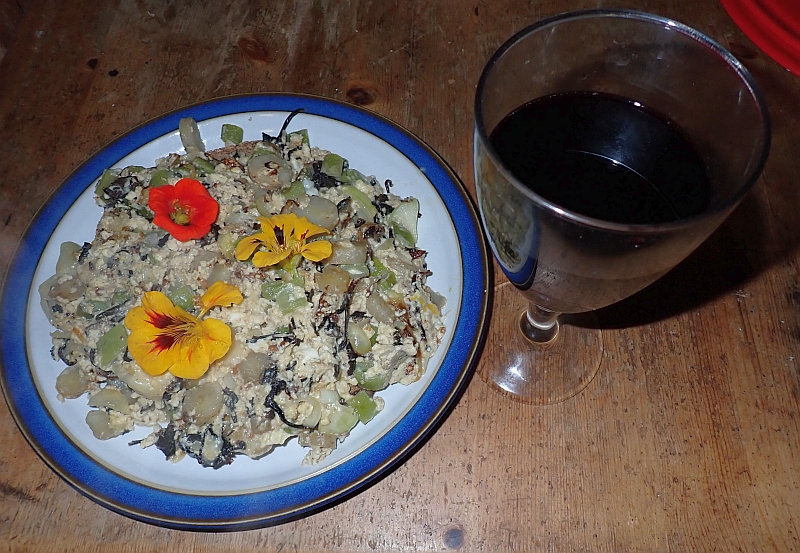
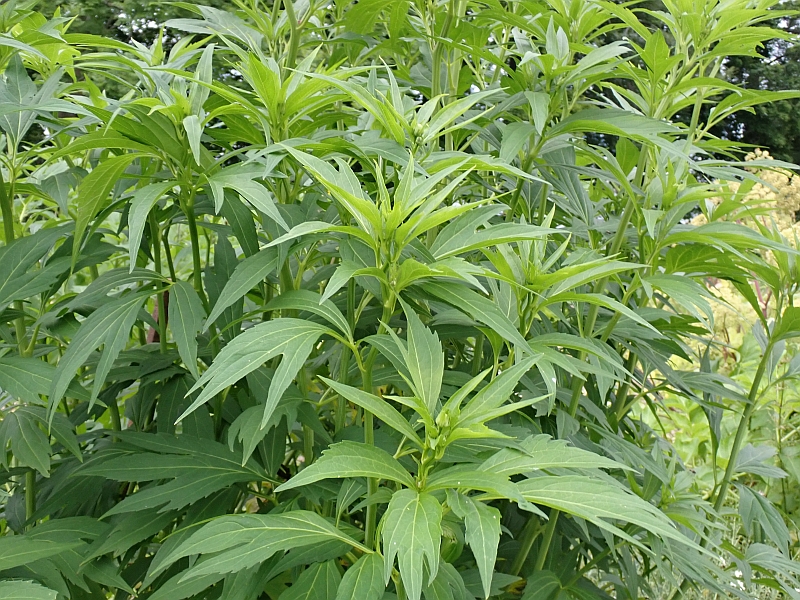
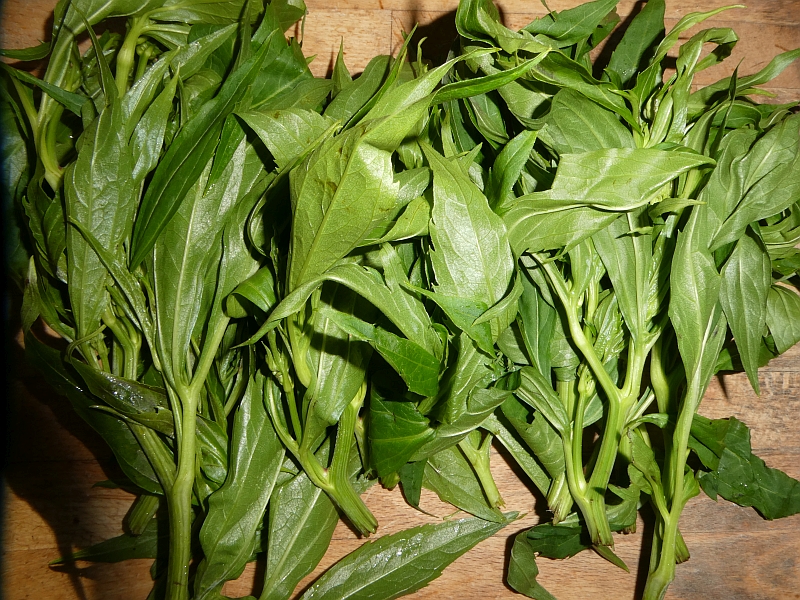
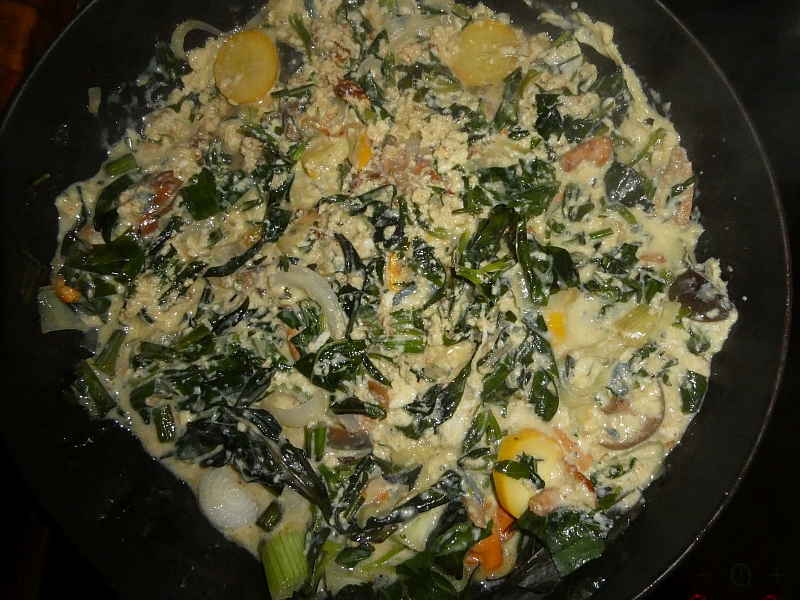
Thanks to Alan Bergo (@foragerchef) for reminding me to try sochan tops. This is Rudbeckia laciniata (cut-leafed coneflower) which in the double form is one of the most popular garden ornamentals here in Norway over the last 100 years and a plant that has been commercialised as a farm vegetable over recent years in Korea. I’d previously only eaten the spring shoots, but I was equally impressed by the tops which I used simply cooked with onion, garlic and yellow zucchini from the garden, various fungi picked in the woods (saffron milkcap/matriske; hedgehog fungus / piggsopp and chantarelles / kantarell) and scrambled with eggs with a little chilim added (a classic way for preparing wild edibles in the Mediterranean countries. See the pictures below.
See other posts on this great vegetable which was introduced to me in one of Samuel Thayer’s books:
Appalachian Greens
Cherokee Pizza 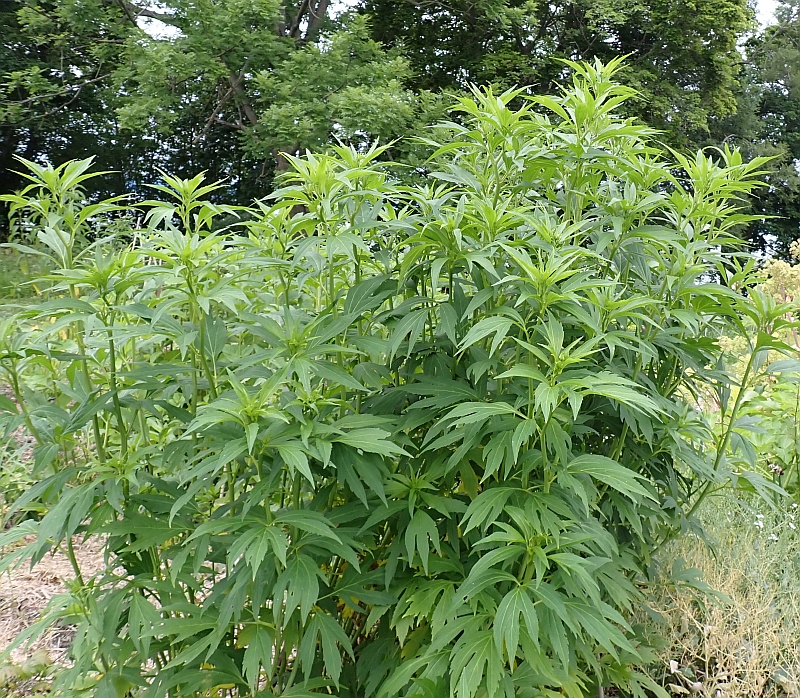



Persian Shallot harvest
One of my favourite perennial onions are persian shallots, Allium stipitatum and I’ve blogged about them several times in the past:
https://www.edimentals.com/blog/?s=persian+shallot
This is one of the earliest onions to appear in the spring and they flower and die down in the course of June. July is the best time to harvest the bulbs (I’ve often harvested them too late when they’ve already started sprouting in autumn). I harvested one plant this week and the bulbs were in perfect condition. I was once again struck by the yield (although it is probably two years since I harvested this plant). I replanted 3 of the largest bulbs. I usually dry the bulbs as they do in Iran, but this time I ate some fresh. They are surprisingly mild tasting and I used them fried in an omelette.
Below the pictures is a Norwegian article on the persian shallot which I wrote in 2021.

Please download this Norwegian article on persian shallots:
Sweet Gigas stalks
Somebody asked me a few days ago if one could eat Angelica gigas (Korean Angelica) as you can Angelica archangelica (see my book Around the World in 80 plants for more about that). In my book, I do mention gigas as one of several other Angelica species used in other parts of the world, but until yesterday I hadn’t eaten it myself, partly as I¨’ve never had many plants and the flowering is wonderful!!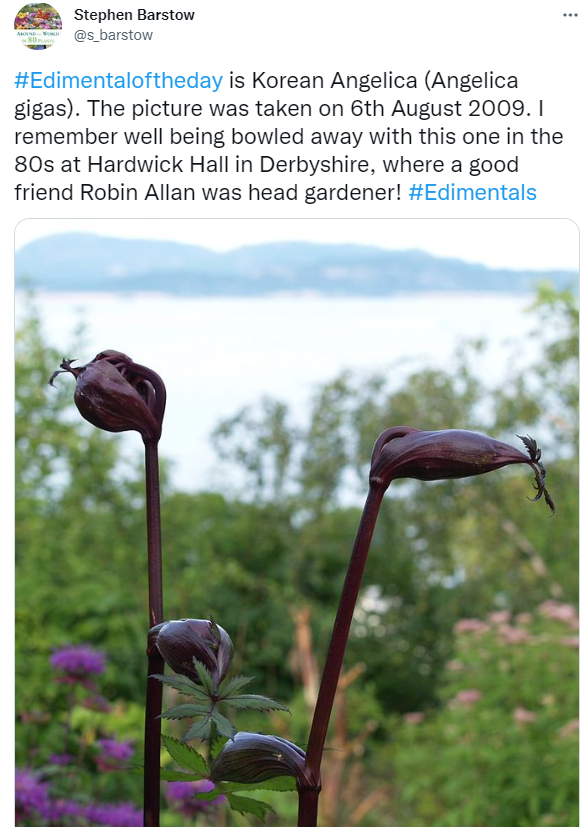
On the Korean wiki page, it simply states that “dangwi / dangquai’s petioles and tender stems are eaten raw or seasoned with herbs”. The root is also used medicinally along with Angelica acutiloba and Angelica sinensis.
You can find various instructional videos and recipes on Korean pages by searching
For example, the spring leaves and petioles are boiled and served with onions, garlic, sesame oil and sesame seeds.
As my plants were close to flowering (they darken quickly to deep red at this stage), I decided to go for using the flower stems in salad: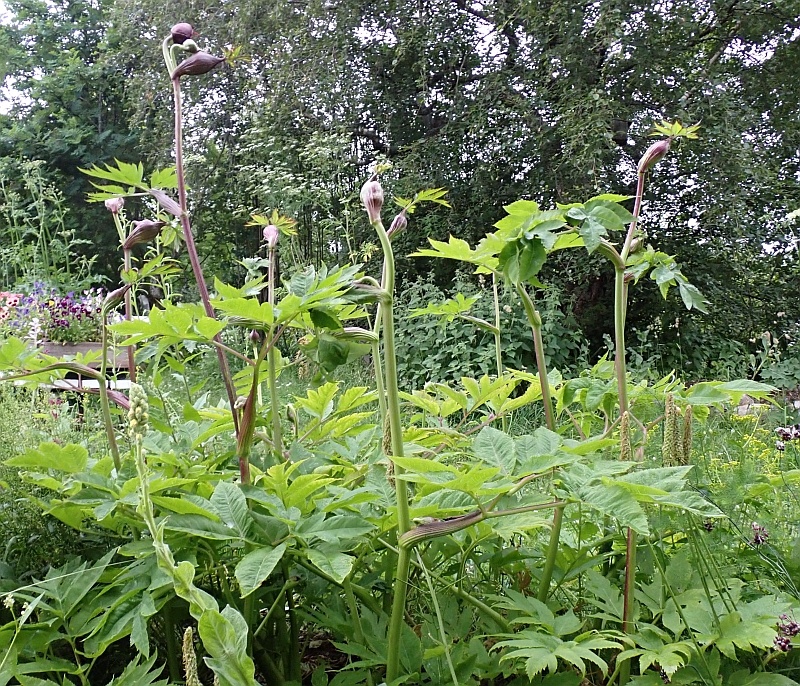 I first took one of the thicker flower stems…
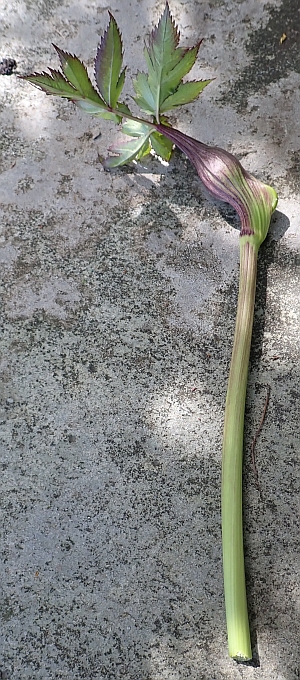 ….and sliced off a bit at the base for a taste! I was taken aback by how sweet it was (flower stems of Angelica archangelica were in the past considered to be candy by Norwegians). This reminded me of other plants that have surprisingly sweet flower stems: Scorzonera hispanica (scorzonera / scorsonnerot) and Arctium (burdock / borre). I assume that as plants like these approach flowering they produce less insect repellent chemicals and transfer their energy to producing flowers and seeds. For the salad, I peeled off the outer layer as it is fibrous and sliced it into the salad. Young seed pods of sea kale / strandkål were also available as were Scorzonera flower stems and buds.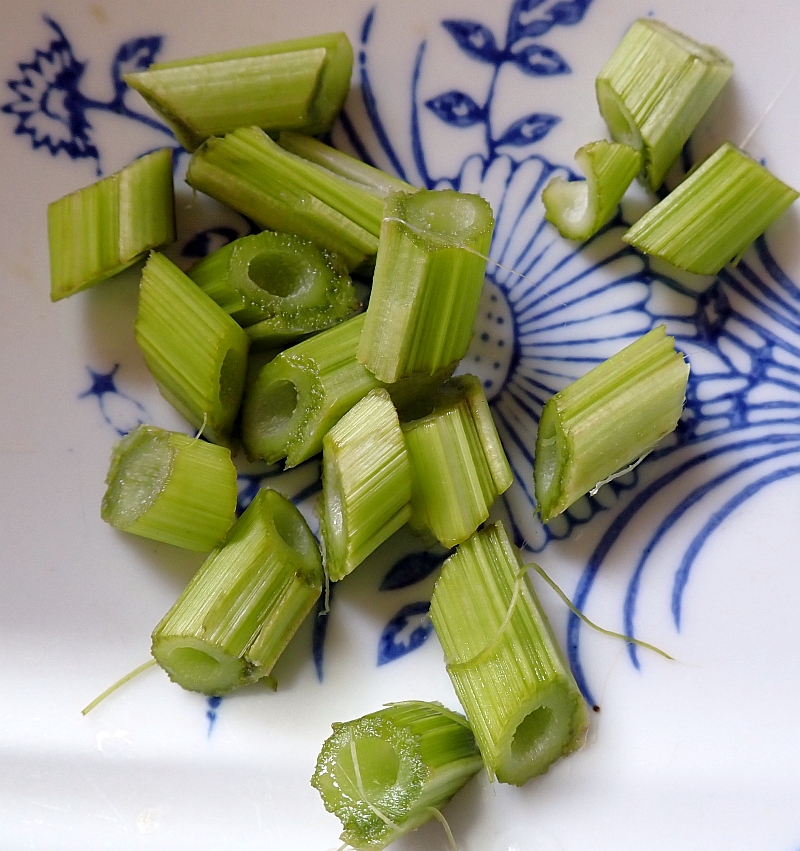

As with most Apiaceae, Angelica gigas is very popular with the pollinators, so this one definitely fits into the Edi-ento-mental category (delicious, ornamental and popular with the pollinators – what more could you wish of a plant!).
Unfortunately, like Angelica archangelica this species dies after flowering.
42 Pakora veggies
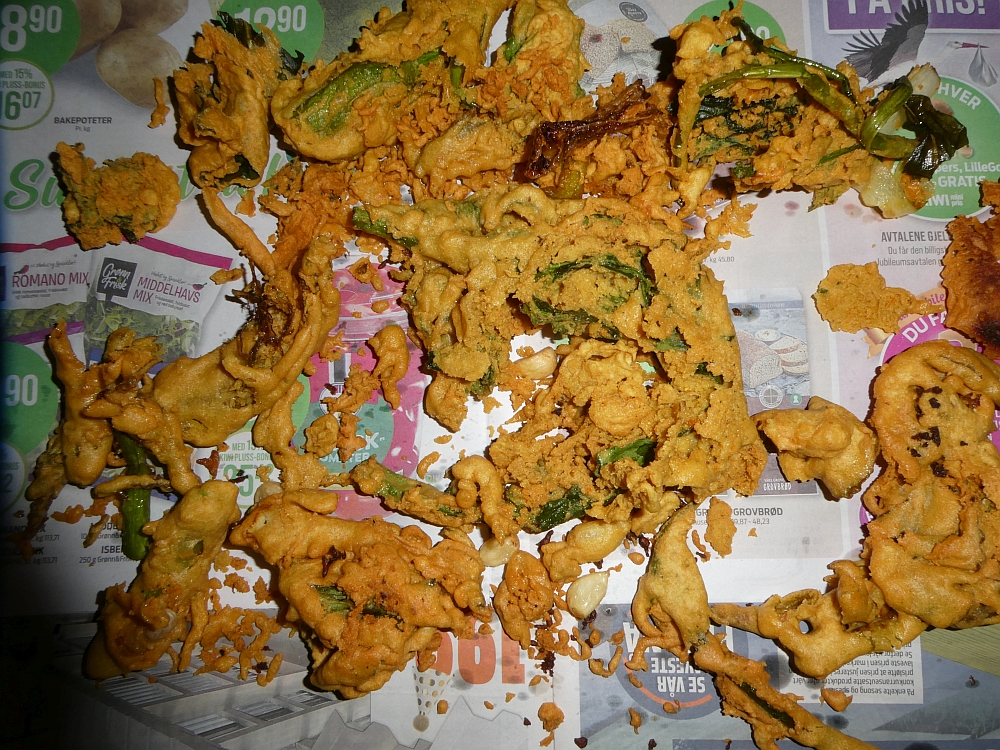
Here are this week’s largely perennial veggies made into a delicious and varied 42 variety pakora!
Picture 1 below (Roughly from left to right): Saxifraga pensylvanica (swamp saxifrage); Malva alcea (hollyhock mallow / rosekattost); Tragopogon pratensis (goatsbeard / geitskjegg); Campanula rapunculoides tops (creeping bellflower / ugrassklokke); Scorzonera hispanica ( scorzonera / scorsonerrot, svartrot); Houttuynia cordata “Chameleon” (kameleonplante); Fallopia japonica “Compactum Roseum” (Japanese knotweed / parkslirekne); Hosta spp.; Houttuynia cordata; Doellingeria scabra / Aster scaber (Korean Aster; Koreasters); Carum carvi flowering tops (caraway / karve); Allium fistulosum (Welsh onion / pipeløk); Allium victorialis (victory onion / seiersløk); Crambe maritima “Lily White” flowering tops (sea kale / strandkål); Hablitzia tamnoides tops (Caucasian spinach / stjernemelde); Smilax lasioneura shoot (Blue Ridge carrionflower):
Picture 2 below (Roughly from left to right): Urtica cannabina; Rumex patientia flower shoot (patience dock / hagesyre); Asparagus officinalis (asparagus / asparges); Cardamine raphanifolia flowering tops; Myrrhis odorata (sweet cicely / Spansk kjørvel) flowering tops; Aegopodium podograria (ground elder / skvallerkål); Allium ursinum (ramsons / ramsløk); Leucanthemum vulgare (ox-eye daisy / prestekrage); Parasenecio hastatus top; Brassica juncea (two cultivars) (mustard greens / sennepsalat); Urtica dioica ( stinging nettle / brennesle); Cryptotaenia japonica “Atropurpurea” (mitsuba); Allium scorodoprasum (sand leek / bendelløk); Campanula latifolia (giant bellflower / storklokke); Allium pskemense x fistulosum (Wietse’s onion / Wietsesløk); Lepidium latifolium flower shoots (dittander / strandkarse); Silene vulgaris shoots (bladder campion / engsmelle); Cichorium intybus (chicory / sikkori); Bunias orientalis flowering tops (Turkish rocket / russekål); Mentha (two cultivars)
(mint / mynte); Taraxacum sublaciniosum “Delikatess” (moss-leaved dandelion; mosebladet løvetann); Ligularia fischeri (Fischer’s Ligularia; Koreanøkketunge):
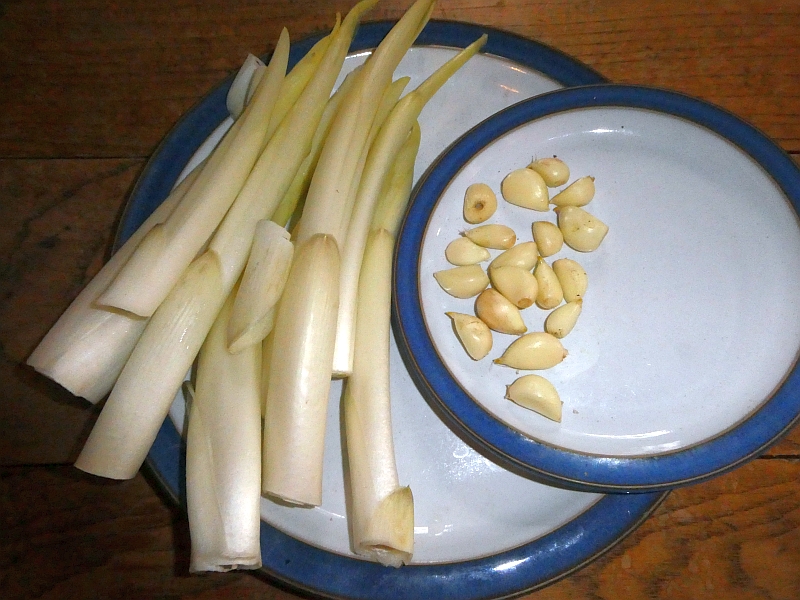
Picture 3 below Hosta “Big Daddy” blanched shoots and Allium sativum (garlic / hvitløk)