
As the very warm autumn weather continues, still without a frost, here’s a collection of wake-up views so far this month:





Burdock harvest
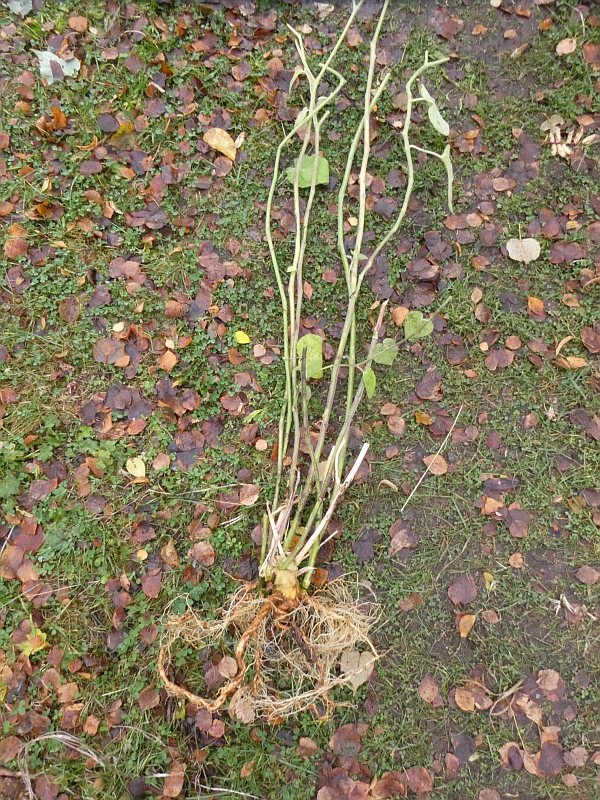
I have a large bucket on the balcony where i grow greater burdock (Arctium lappa) for the birds, Both goldfinches (stillits) and greenfinches (grønnfink) eat burdock seed in winter and by growing the plants on the balcony I have close views of both species from where I’m typing this! Last year, the plants flowered and set seeds, they germinated en masse this spring, I thinned them and this was the harvest today. The largest roots and the smallest ones will be replanted in the spring. The others will be eaten in oriental stir-fries this winter.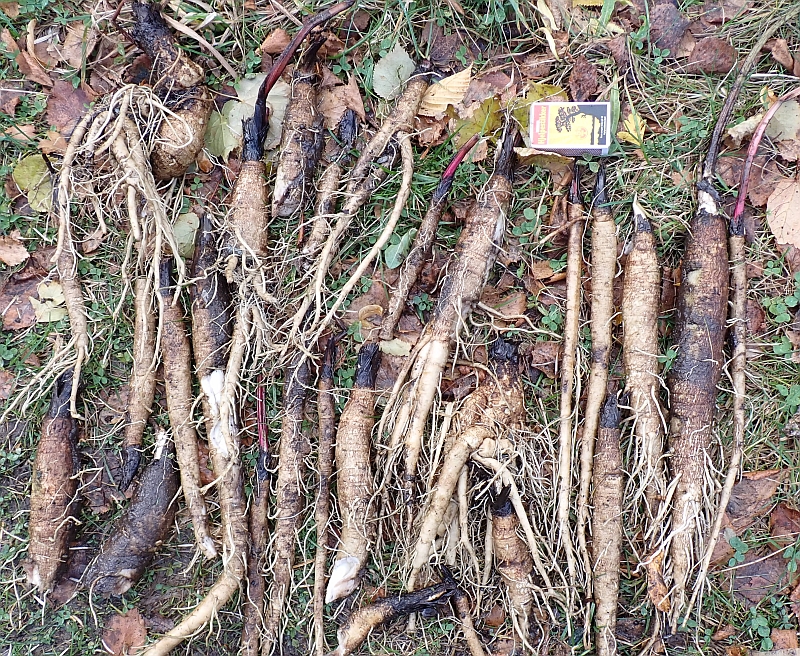
See also other burdock posts: https://www.edimentals.com/blog/?s=arctium
Twisted-leaf garlic for lunch
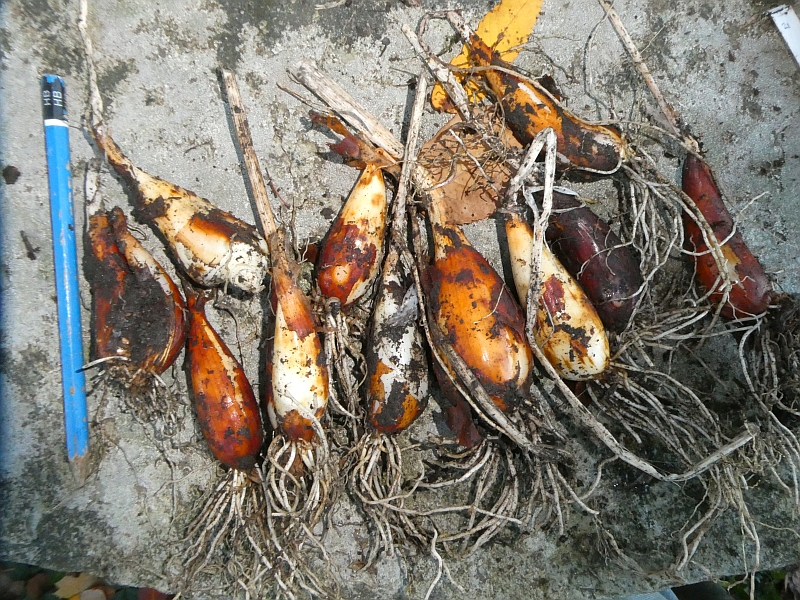
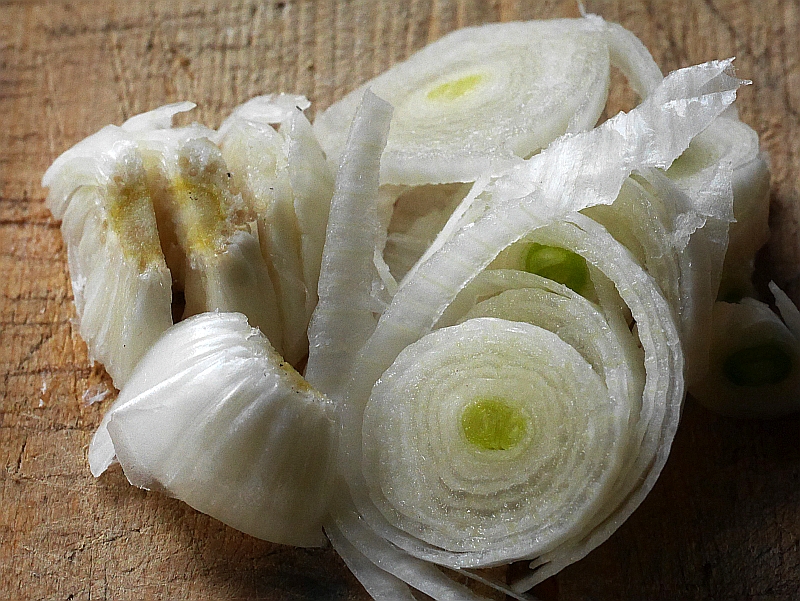
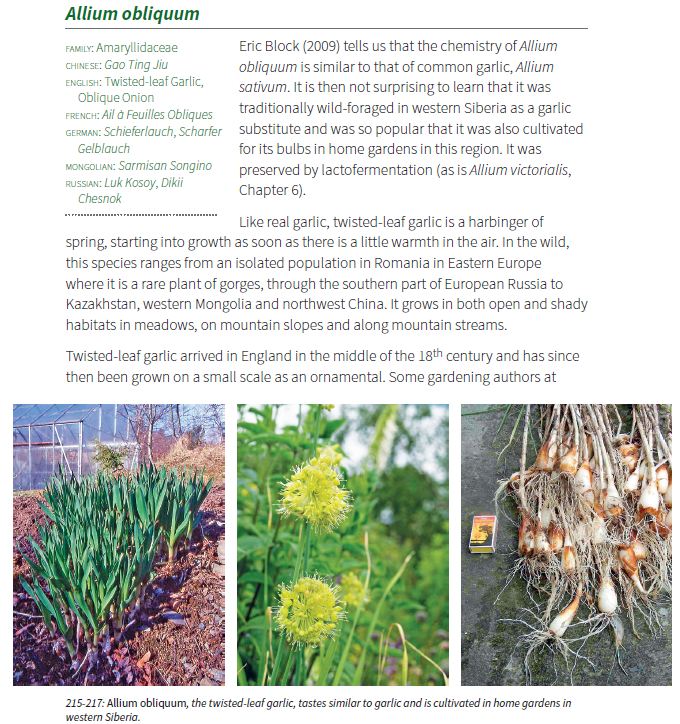
I’d sent a few bulbs of twisted-leaf garlic (Allium obliquum) to members of Norwegian Seed Savers’ (KVANN) guild for Alliums and had a few left overover, so I fried them up for lunch and ate them with cheese on toast. A delicious sweetish taste after heating in olive oil. The onions are also a good size! This was one of the 80 in my book Around the World in 80 plants!


Physalis “Indian Strain” at 13
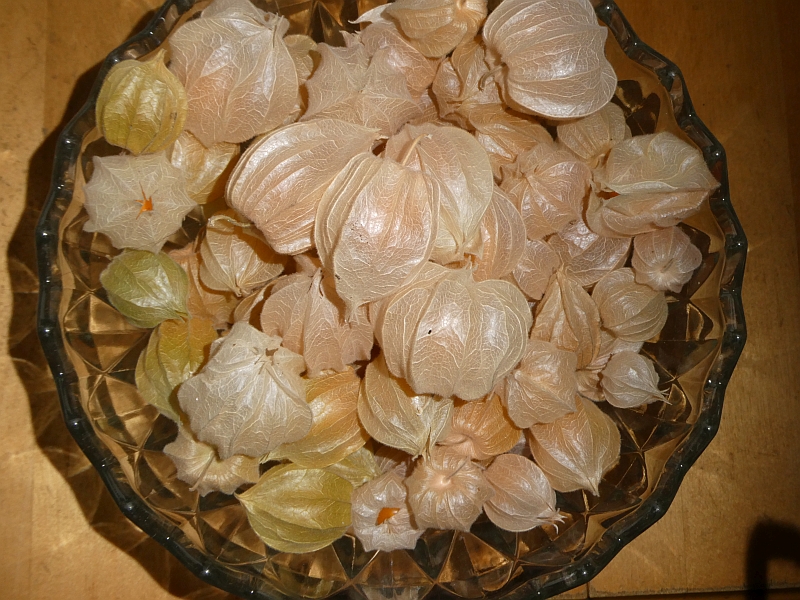
The last time I blogged about this Physalis it was 7 years old. It is now 13 and still going strong. The last time I wrote about it, I wrote the following: “This Physalis which I’ve called “Indian Strain” is now going into its 7th year. I got this from Seed Savers Exchange in the US. However, that one is supposed to be a tomatillo and I wonder if I mixed it up with another I got at about the same time, P. heterophylla, clammy ground cherry, although the stems are not clammy (sticky) to the feel. That would explain it’s hardiness as it is found in the wild north to Canada (see http://plants.usda.gov/core/profile?symbol=PHHEH3). I definitely planted heterophylla in the garden and it’s survived since 2009 without winter protection, but the summer is just too cold for fruit (it does flower).
It lives in a cold bedroom all year and produces a few fruit most of the year, even continuing to ripen fruit despite the temperature being often under 10C. The fruit are sweet and have good flavour. It’s not hugely productive but little bother (aphids don’t bother it). I cut it back when it gets too straggly”.
I repotted one of them today and cut all 3 plants back to 1/3 height (it reaches the ceiling).
The conclusion is that it is a cape gooseberry / goldenberry (Physalis peruviana).


Sweet cicely / chicory root scrambled egg
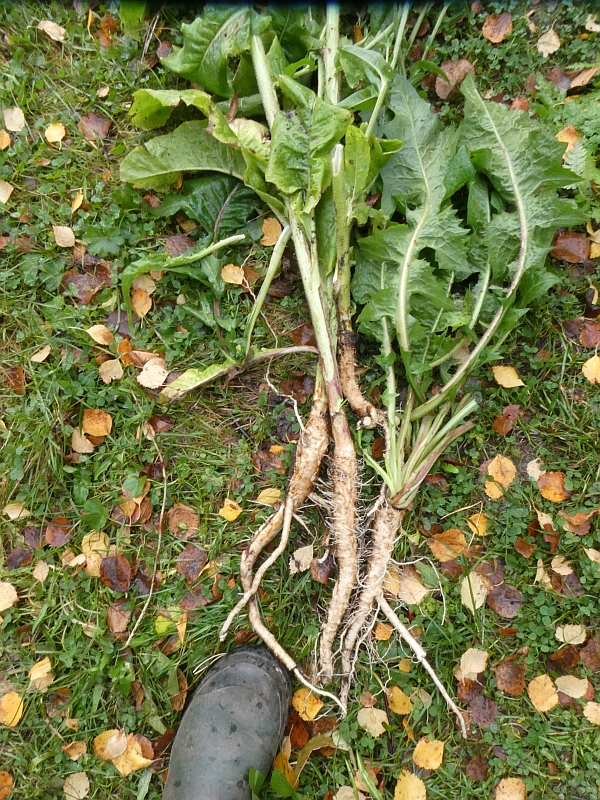
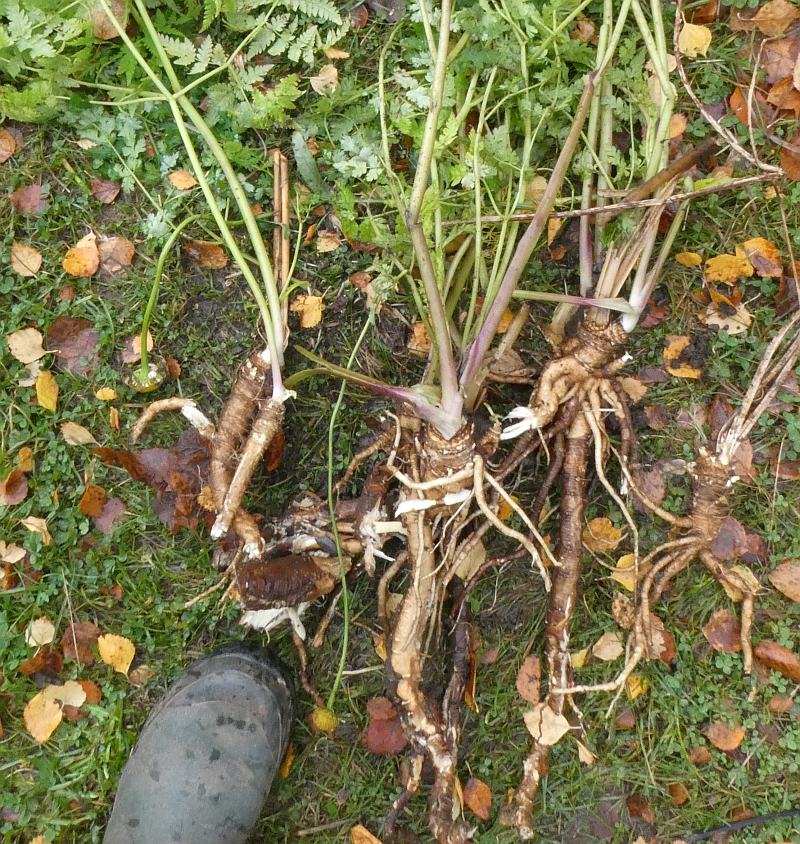
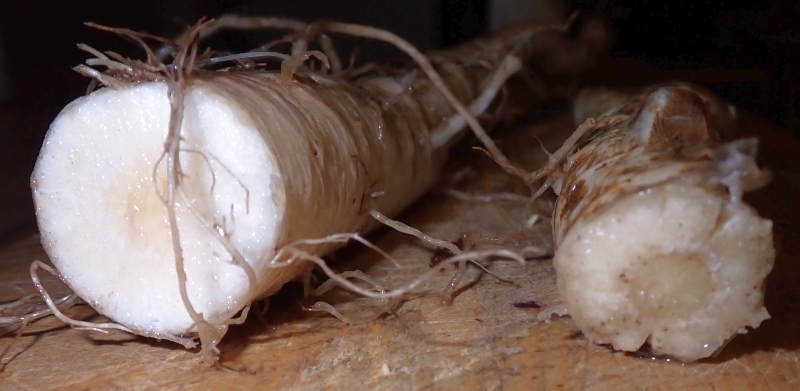
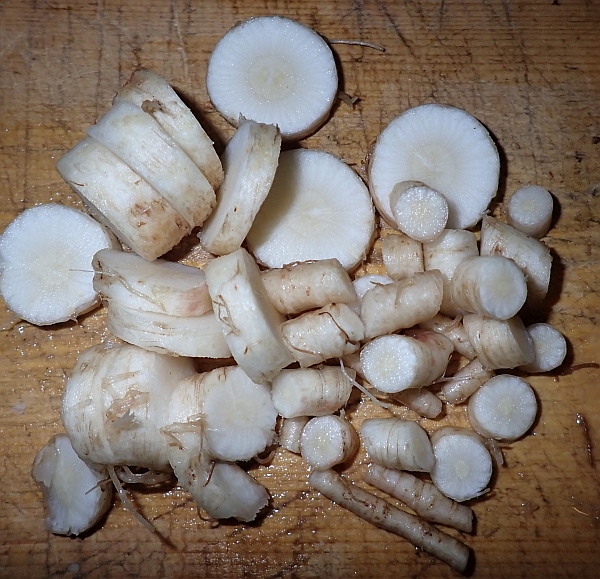
I had been asked if I had photos of the roots of chicory (sikkori) and sweet cicely (Spansk kjørvel) for a talk about wild edible roots. I therefore dug some from the garden.
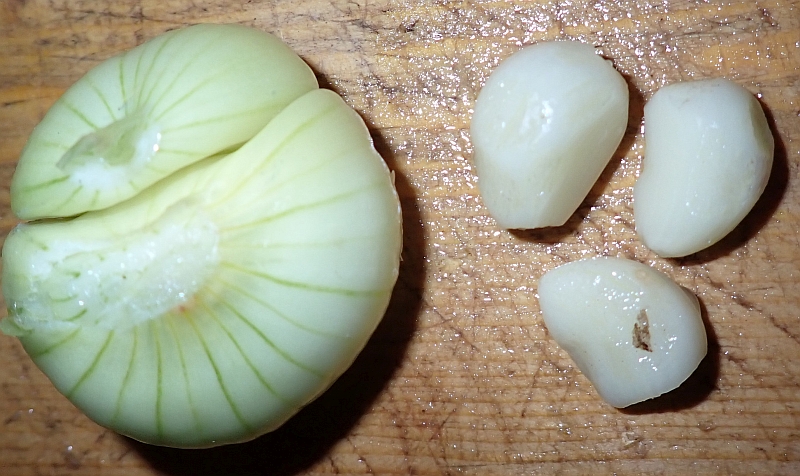
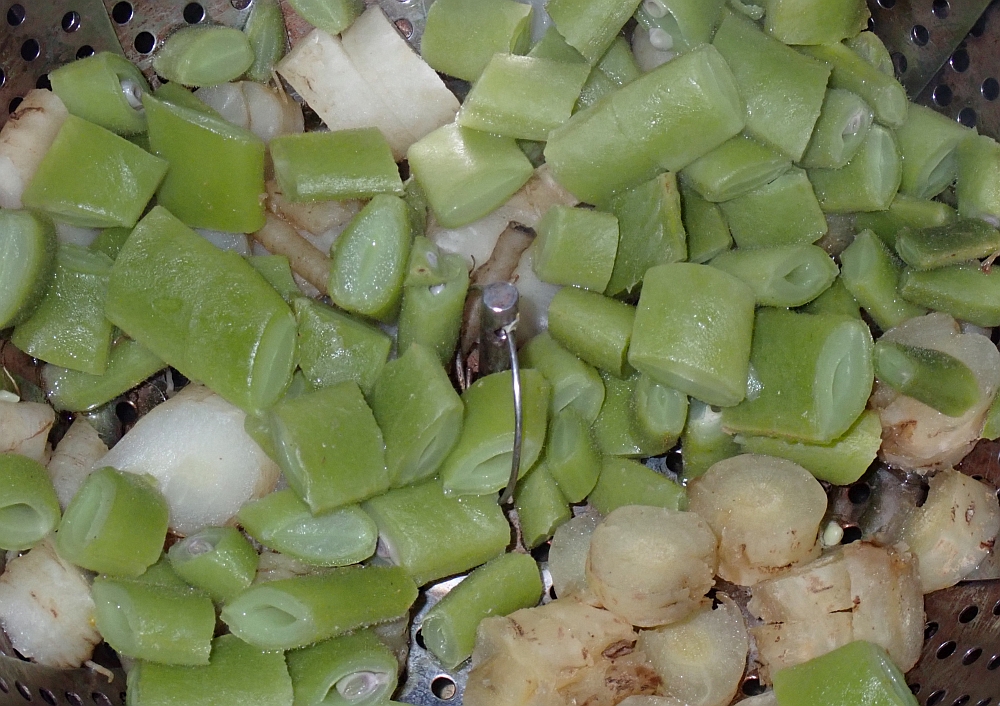
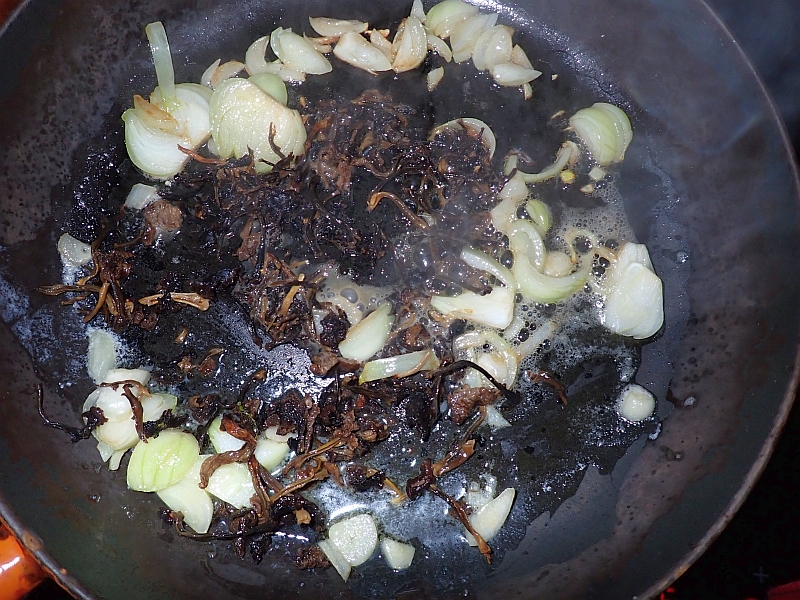
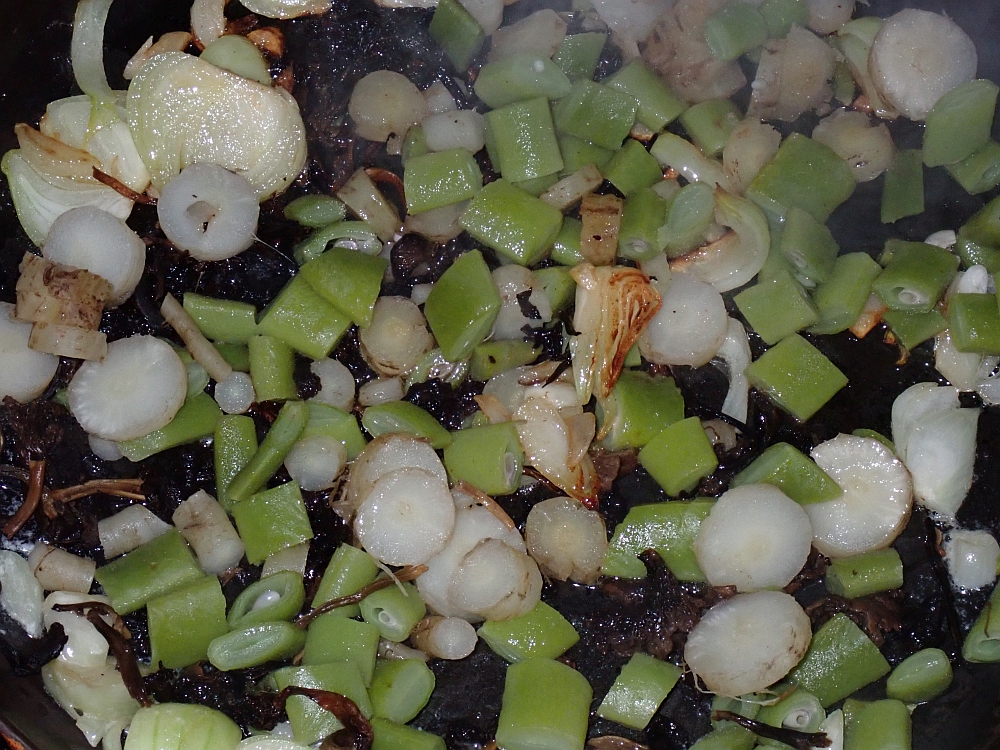
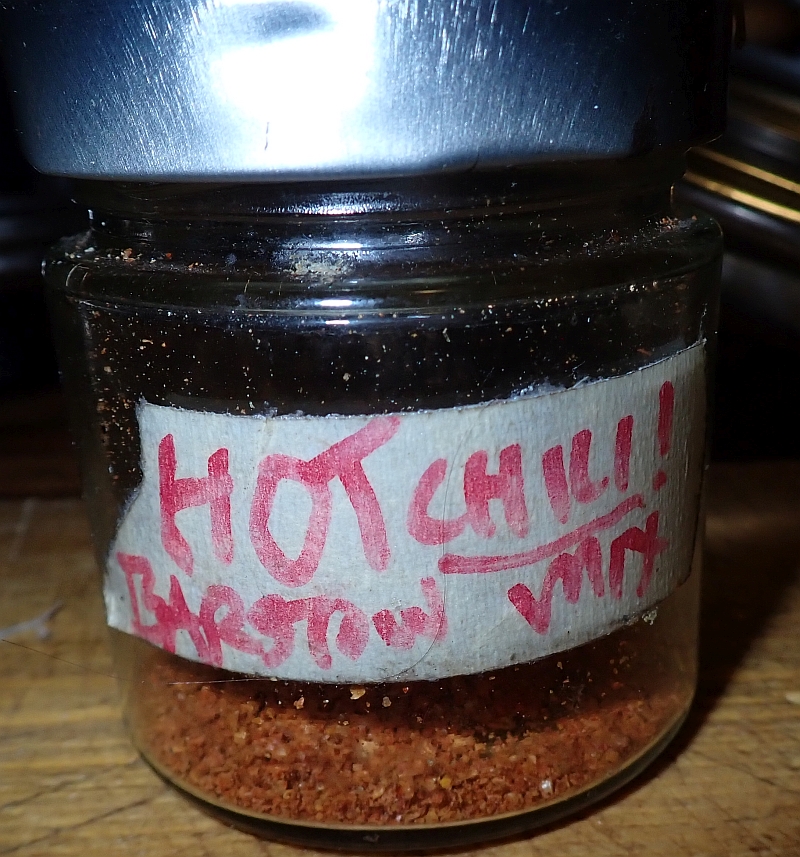
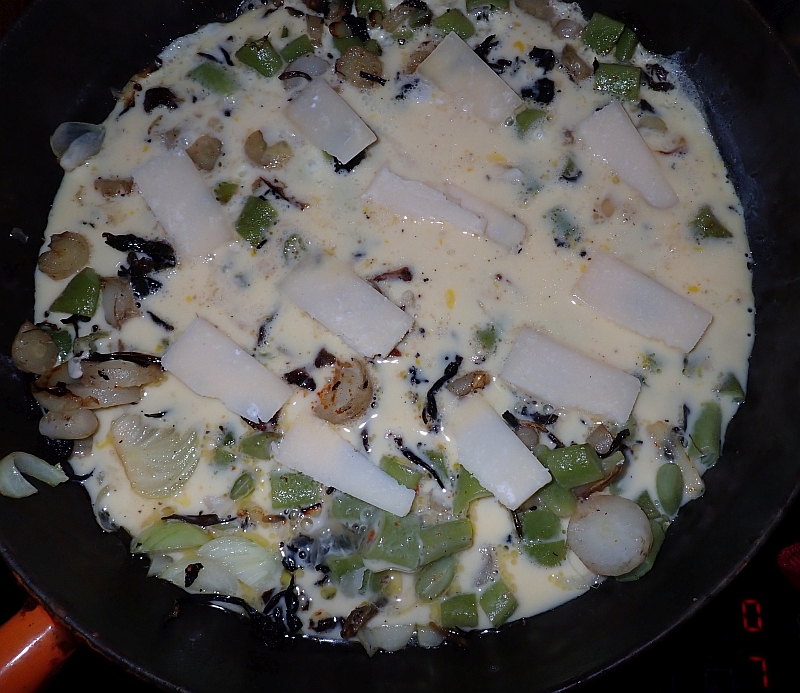
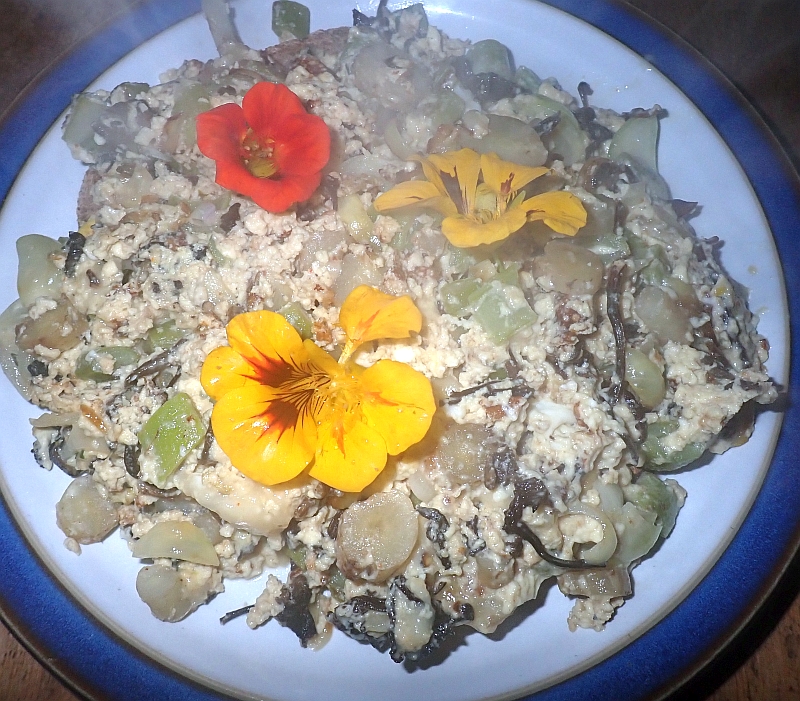
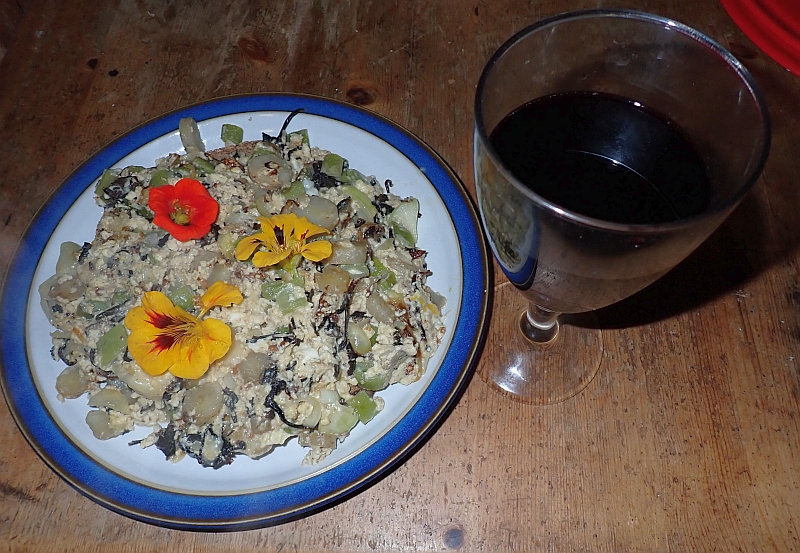
Inspired by traditional Mediterranean ways of preparing wild and cultivated vegetables, I boiled the roots and they were then stir-fried with onions and winter chantarelle mushrooms before being added to scrambled egg (see the pictures for more).
All the roots on the perennial chicory were far too fibrous to eat, but the sweet cicely roots were good (at least the younger ones!)
More or less any vegetable can be prepared this way!
Simple is best!

Red Cheeks and Fingerprints
I harvested two of the more beautiful broad (fava) beans I’ve grown yesterday, both of which originate in Canada. Red Cheek and Fingerprint favas. The diversity of forms, colours and sizes in these beans doesn’t cease to amaze me! I will definitely be trying to maintain these forms within my grex of broad beans (selection for a wide diversity of different forms every year and all planted close together so that they will cross promiscuously)!
Read legendary Will Bonsall’s article on fava beans where he talks about the diversity of forms and his collection of 250 varieties he maintains for Seed Savers Exchange: https://www.mofga.org/resources/beans/favas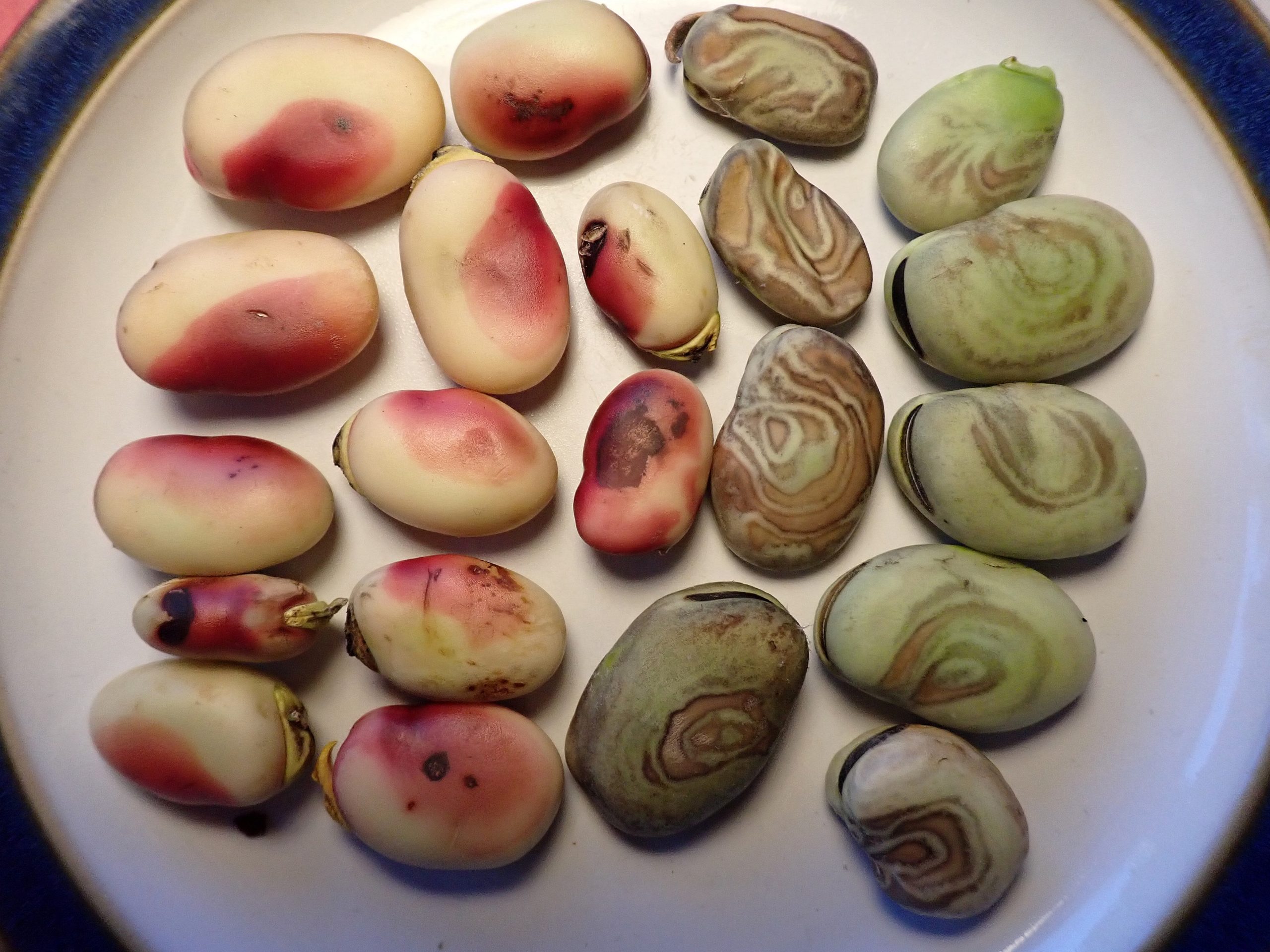

Dad’s potatoes – life goes on!
I harvested the last potatoes yesterday. This variety is Sharpe’s Express, an English variety from 1900 developed by a Mr. Sharpe in Lincolnshire. Although an early variety, I planted them late in June just before I left for my Dad’s funeral. He had told me that he grew this variety during the war and having a few seed left it felt right to plant them <3 Historically, this is a variety commonly grown in Norway and rated by many as the best tasting of all varieties. Surprisingly, they didn’t get blight. I got these as virus-cleaned mini tubers as part of KVANN’s (Norwegian Seed Savers) potato project.
Forest bounty
Spending so much time in the 3 gardens I look after – The Edible Garden; The World and Demonstration Gardens at Væres Venner Community Garden and the Allium Garden Chicago at the Ringve Botanical Gardens in Trondheim – I don’t get into the surrounding forest so often. Yesterday, we had a fantastic day foraging fungi in the forest nearby in Malvik and the forest shared with us and these will mostly be dried. The following edibles were picked:
Winter chanterelle / traktkantarell (grows in damp mossy locations in the forest)
Gul trompetsopp / yellow foot (on the edge of bogs)
Chantarelle / Kantarell – a bit late for this, but we nevertheless found a few patches
Rødgul piggsopp / terracotta hedgehog
Piggsopp / hedgehog fungus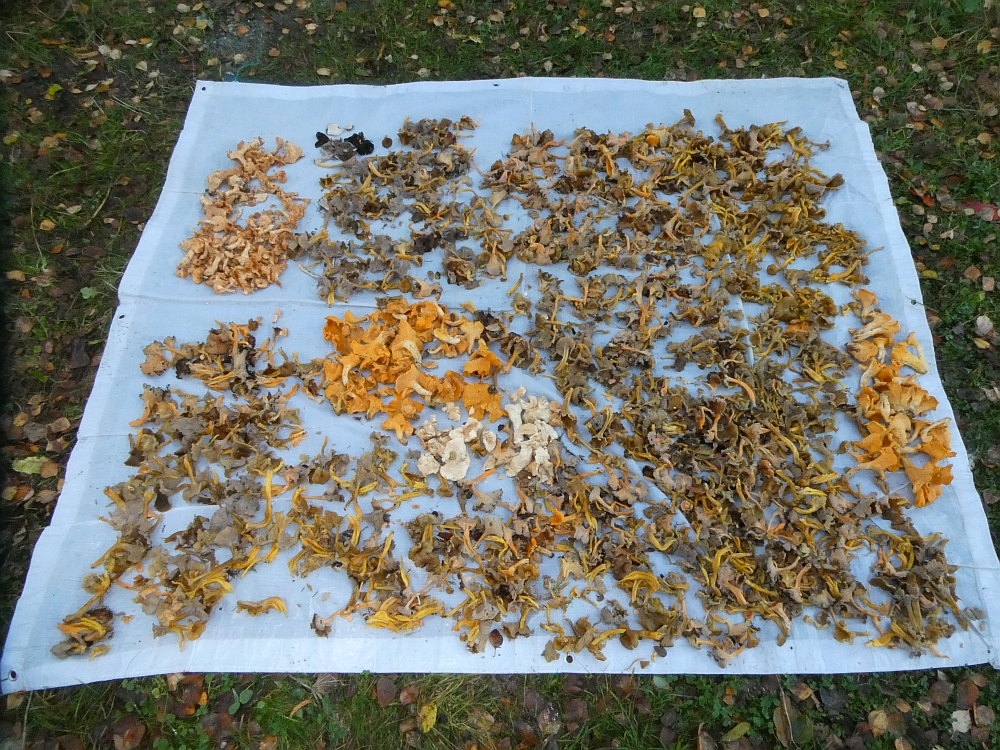 (Hydnum rufescens)
20 seasons with Sarpo potatoes
(Norwegian under)
This year was the 20th season of growing Sarpo potatoes here in Malvik/Trondheim and yields are as good as ever with 100% blight resistance! These were harvested from the community garden at Væres Venner in Trondheim this week. My favourite variety is Sarpo Tominia which seems to be a little earlier and therefore better for areas with early frost (they remain vigorous right through to the time when the first hard frosts kill the foliage). I’ve also grown Sarpo Mira since 2009 and have also tried Sarpo Axona and “Sarpo Surprise” (from true seed).
Norwegian: I år var det den 20. sesongen med dyrking av Sarpo-poteter her i Malvik/Trondheim og avlingene er like gode som alltid med 100 % tørråte-resistens! Disse ble høstet fra felleshagen på Væres Venner i Trondheim denne uken. Min favorittsort er Sarpo Tominia som ser ut til å være litt tidligere og derfor bedre for områder med tidlig frost (den vokser helt frem til de hardfrostene). Jeg har også dyrket Sarpo Mira siden 2009 og har også prøvd Sarpo Axona og “Sarpo Surprise” fra ekte frø.
View towards Hell
This was the view towards a little place called Hell which lies due east of here yesterday morning:
