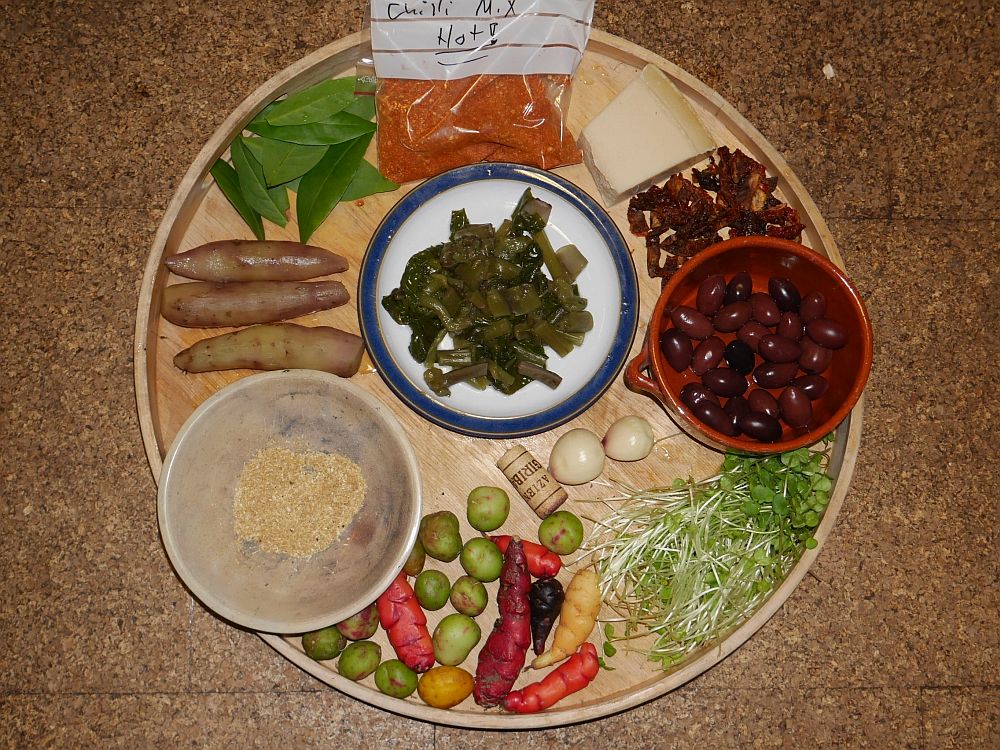
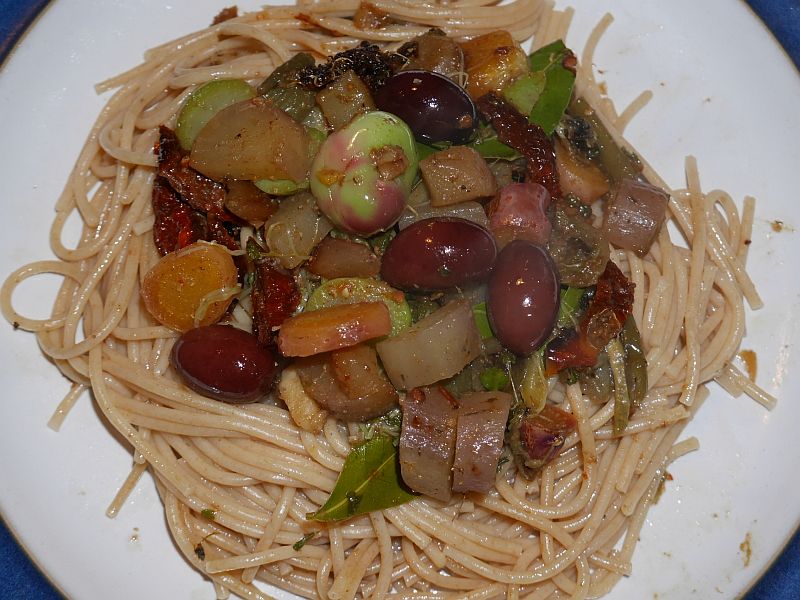
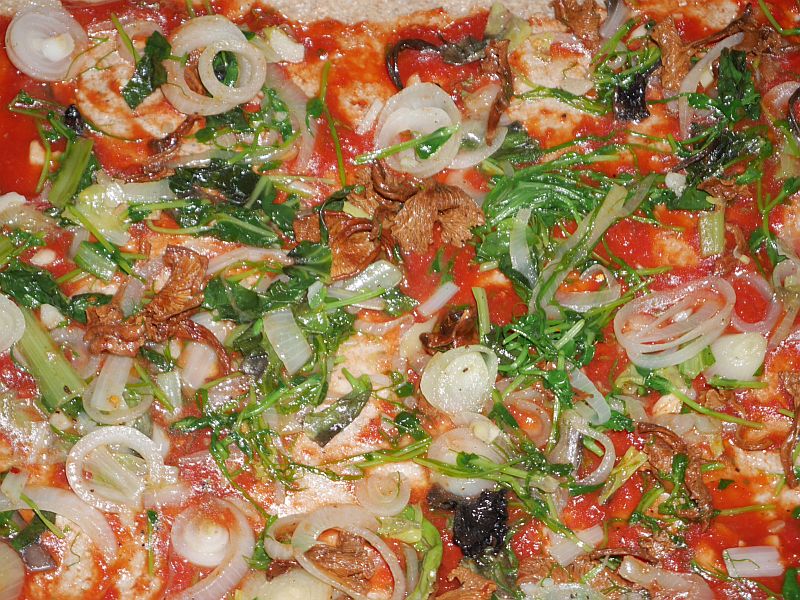
Last night’s veggie whole grain sourdough pizza had amongst a few other things Siberian onion Allium nutans shoots, Ragged Jack kale seedlings, Hablitzia tops and French sorrel Rumex scutatus!



Last night’s veggie whole grain sourdough pizza had amongst a few other things Siberian onion Allium nutans shoots, Ragged Jack kale seedlings, Hablitzia tops and French sorrel Rumex scutatus!
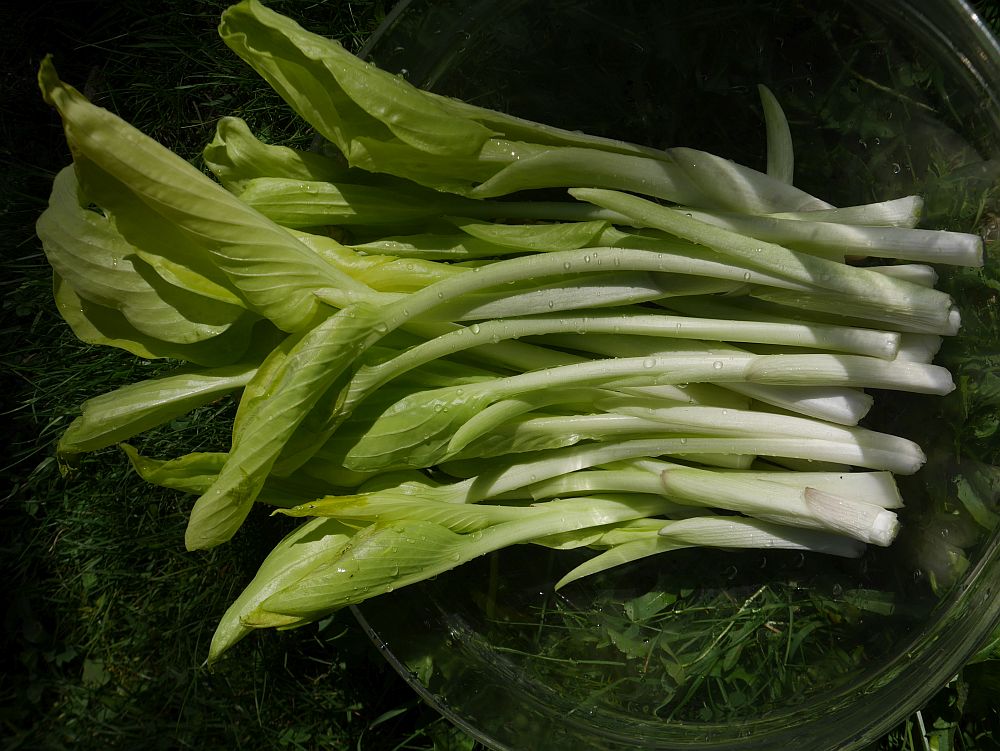
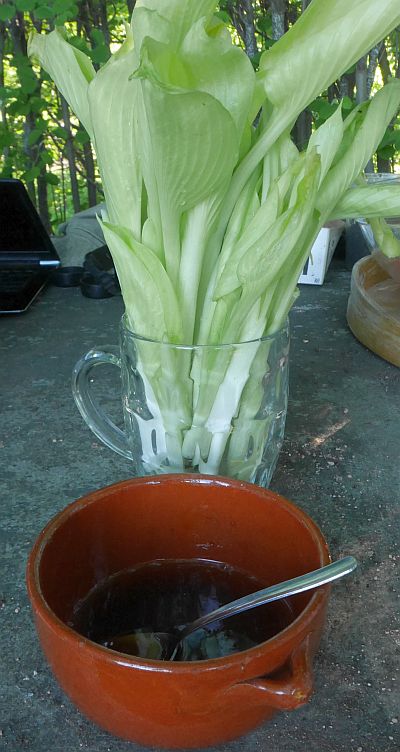
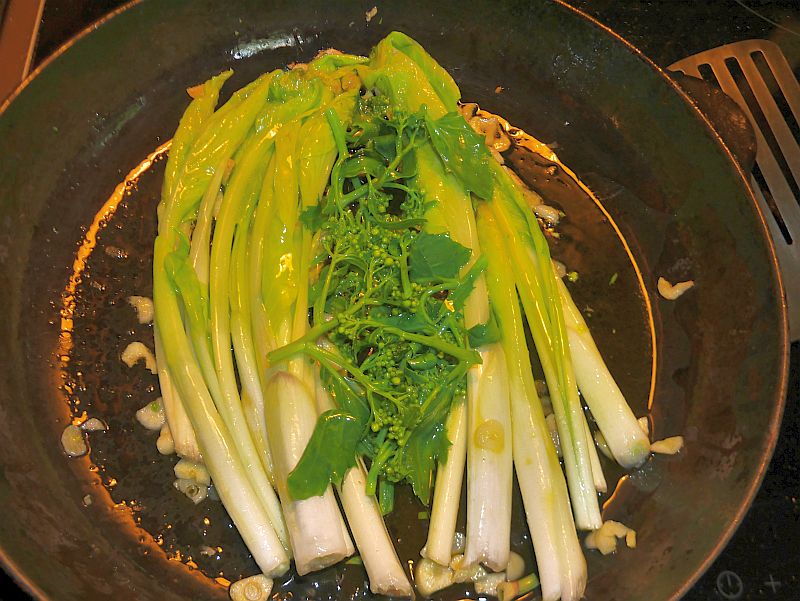
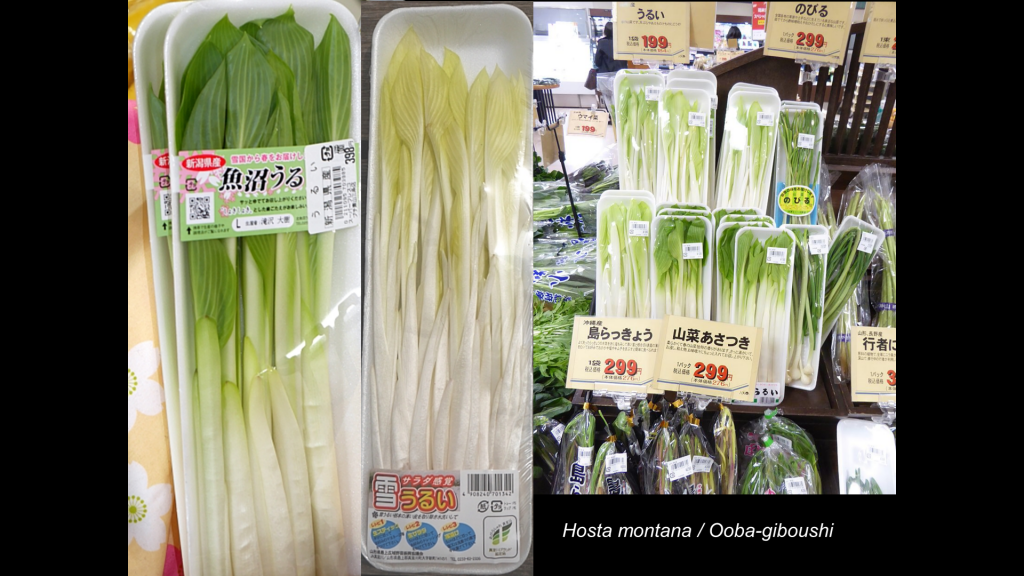
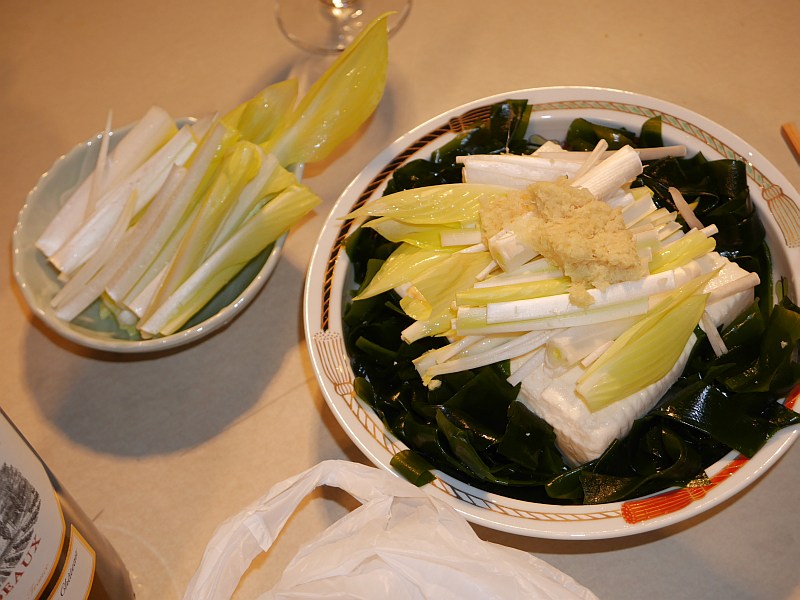
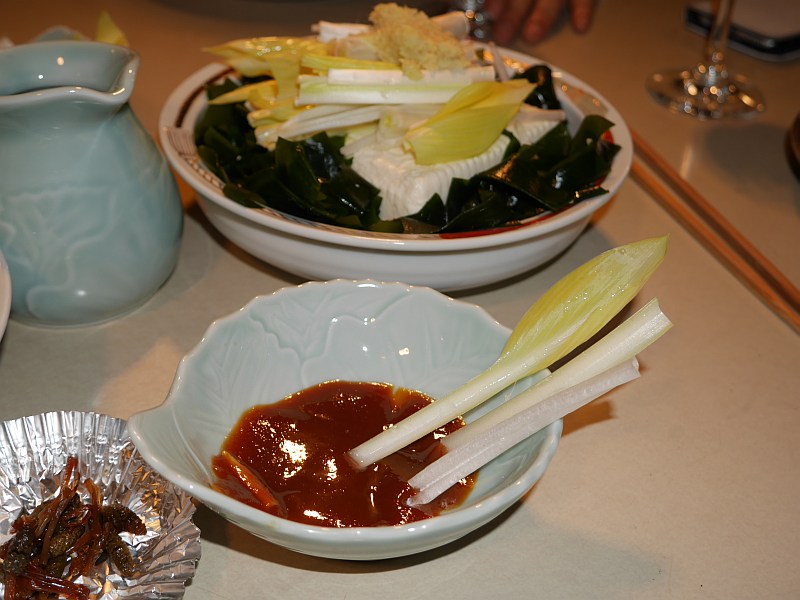
The other day I discovered a long suffering Hosta that I’d covered with a bucket in the spring. Surprisingly the blanched shoots were in good condition despite the warmth. We ate them as a salad with a simple dipping sauce (roasted sesame oil, soy sauce and pepper! And it was delicious, mild tasting, crispy and refreshing, the texture and shape of the leaf reminding my friend of artichoke! The day afterwards, I ate the rest lightly fried with garlic and chili in an omelette with sea kale broccolis! I’m sure you can use any Hosta for this. In Japan, Hosta montana is the main species cultivated for the markets. We found blanched Hosta shoots or urui in all the supermarkets in late march / early april during my study trip to Japan. However, H. montana is not an accepted species name by the Plant List (plantlist.org) and is often given as a variety, H. sieboldiana var montana or var gigantea. However, on the taxonomy account at http://www.hostalibrary.org/species/pdf/species_part1.pdf, it is stated that H. montana is so obviously different from H. sieboldiana that even the average gardener can tell them apart! For this reason, I used H. montana in my book as it is still commonly used in horticulture. For a list of cultivar names known as H. montana, see http://myhostas.be/db/hostas/montana. Hosta undulata is also noted on the Japanese Hosta wiki page as being used. This is no longer accepted as a species and is considered to be a group of cultivars H. “Undulata” (see http://myhostas.be/db/hostas/undulata for a list of cultivars associated with Undulata).
On the Japanese Hosta wiki (translated with Google translate), the main producing area for urui is given as Yamagata prefecture (north of Tokyo on the other side of Honshu), which ship light green young shoots which are used for salads , pickles , stir-fry , with miso sauce , vinegar miso , miso soup , mixed rice , sushi rolls etc. This explains why we didn’t see the production of Hosta during our farm trips south of Tokyo.
The Japanese name is 雪うるい (yuki urui) which means snow leaf or icicles (google the Japanese name to see many pictures). They are produced in darkened greenhouses for an extended season or the rows are mounded outdoors. The production techniques seem to be different judging by the colour of the urui sold in supermarkets.


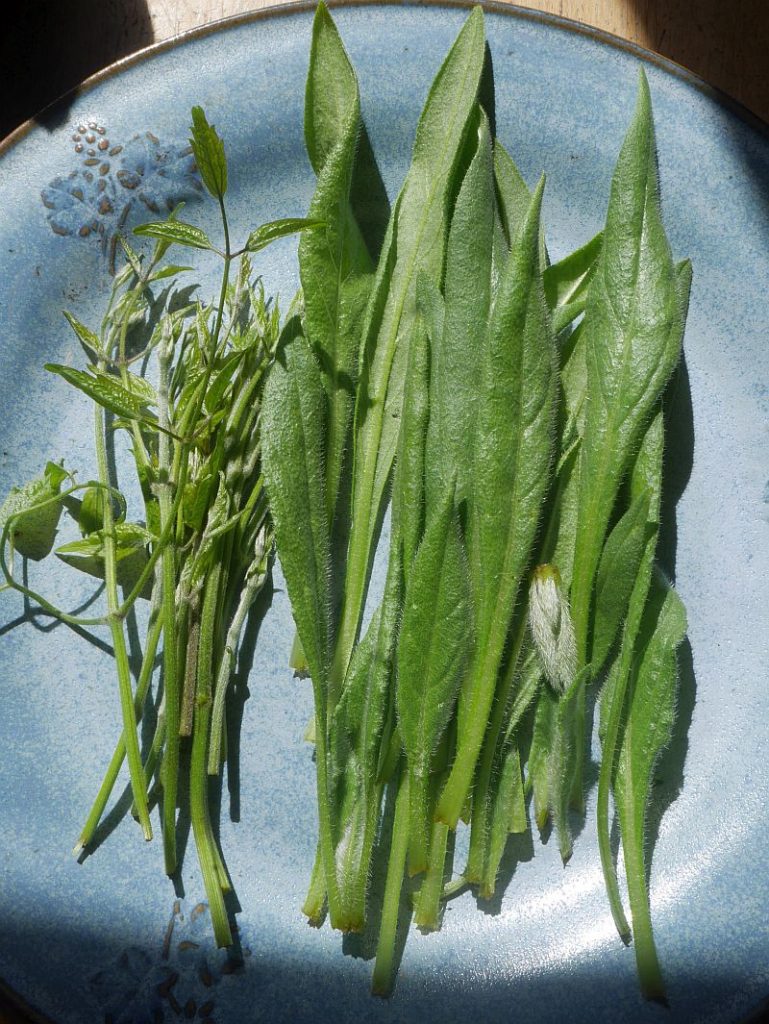


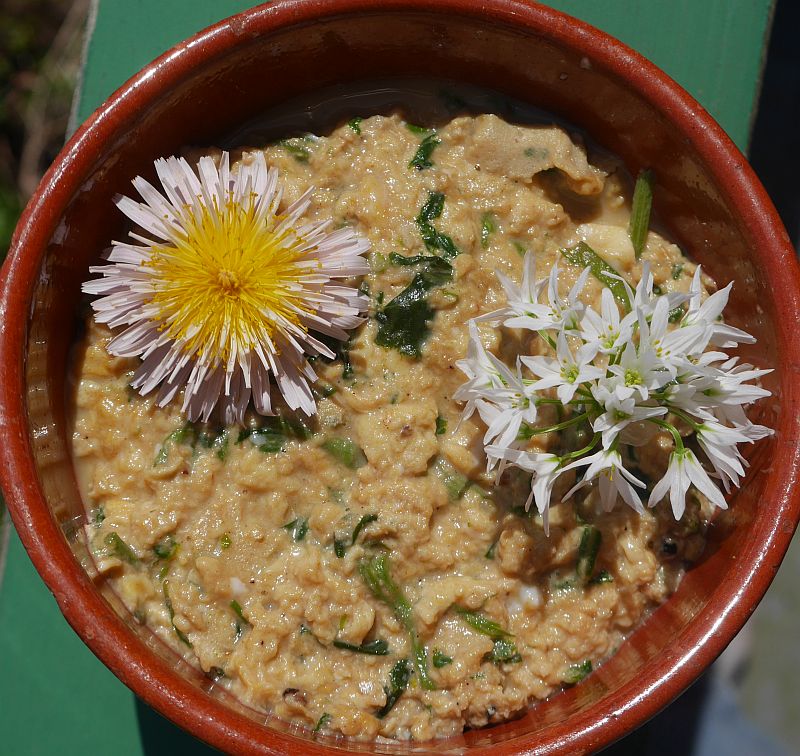
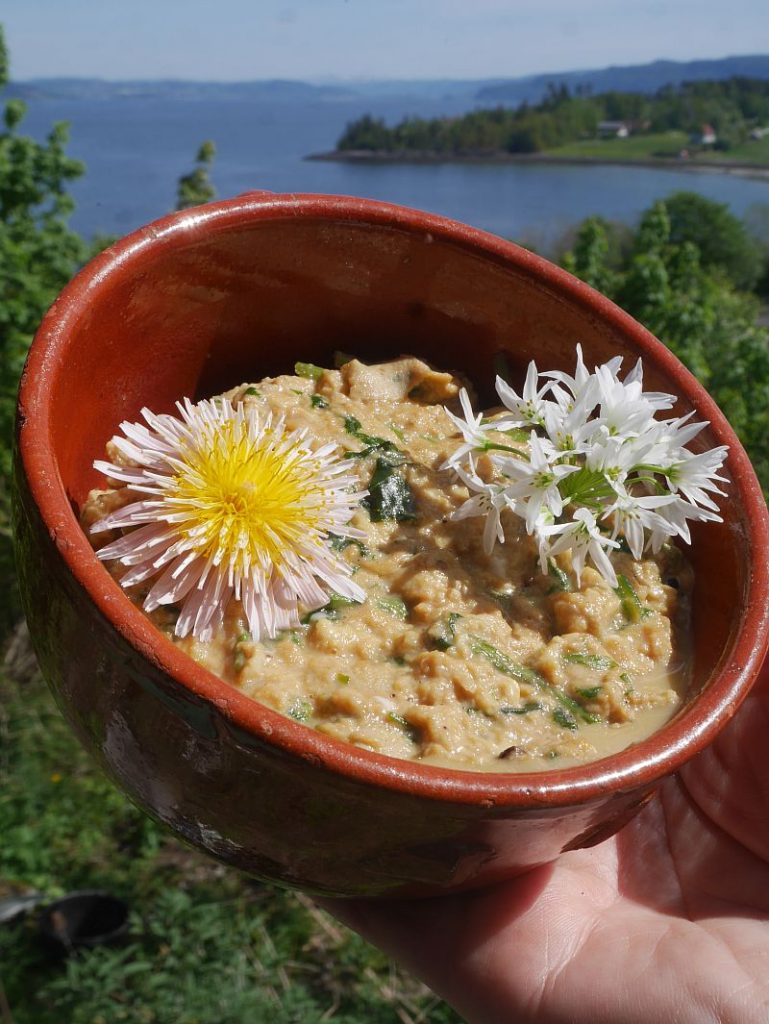
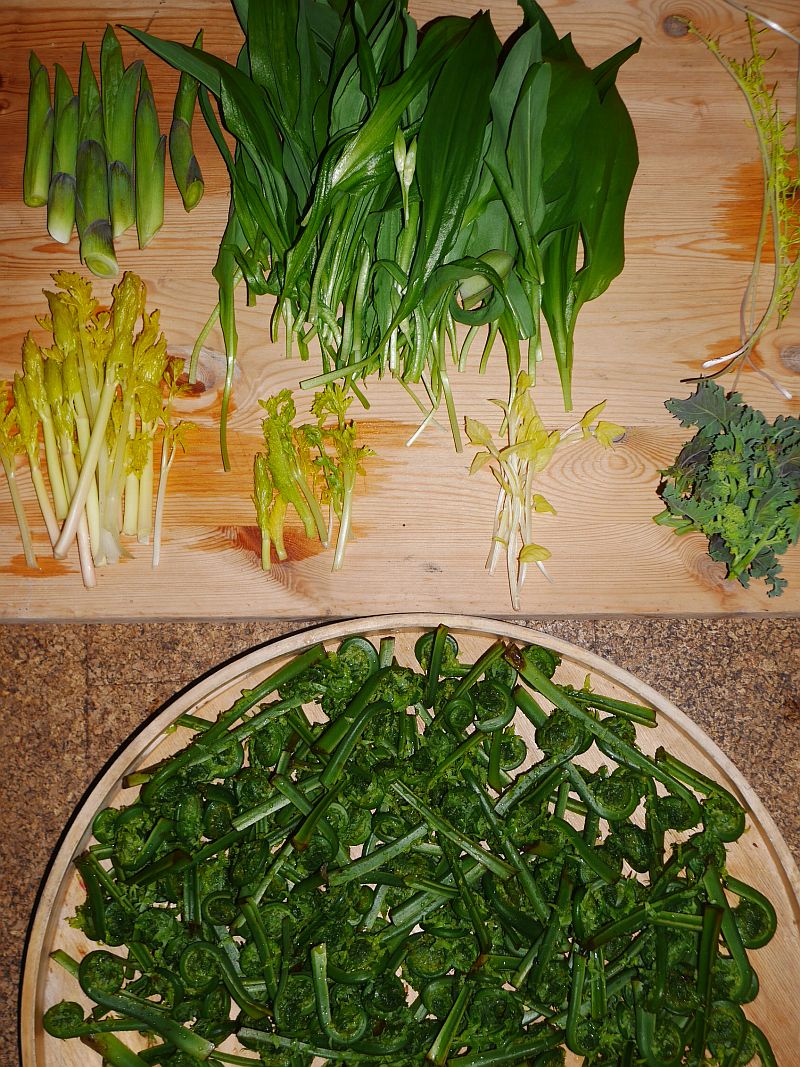
Most years since I’ve followed this tradition on or near my birthday, no chips this year as the potatoes have run out and nowadays the macaroni cheese is mixed with masses of green stuff both from the garden and, yesterday, fiddleheads harvested on the Homla walk. This is more or less the only time in the year I have dessert and the only time I eat sugar…in rhubarb crumble, also with family roots back to the 60s :)
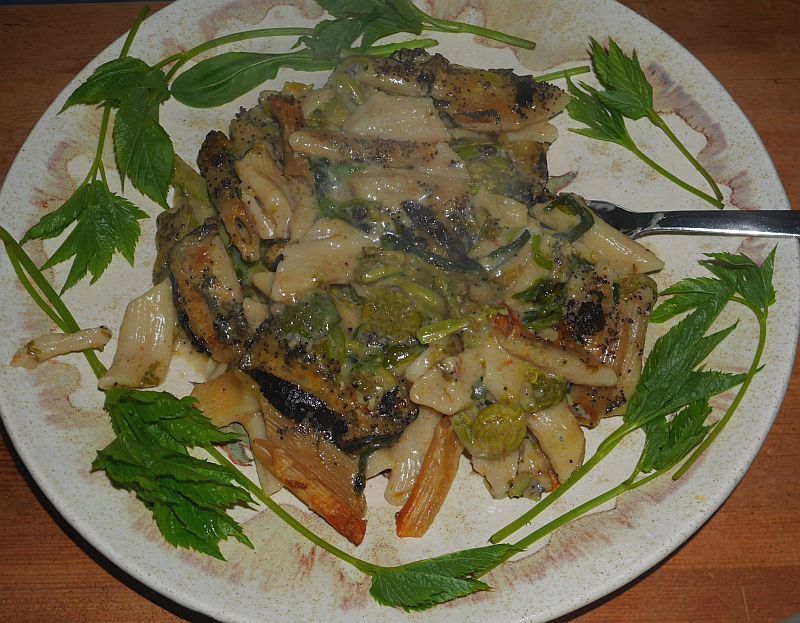


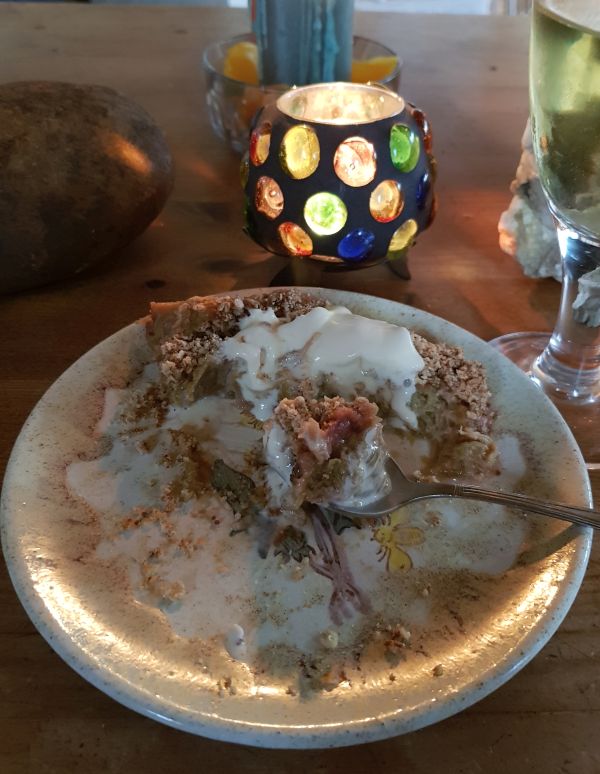
rhubarb crumble, also with family roots back to the 60s :)

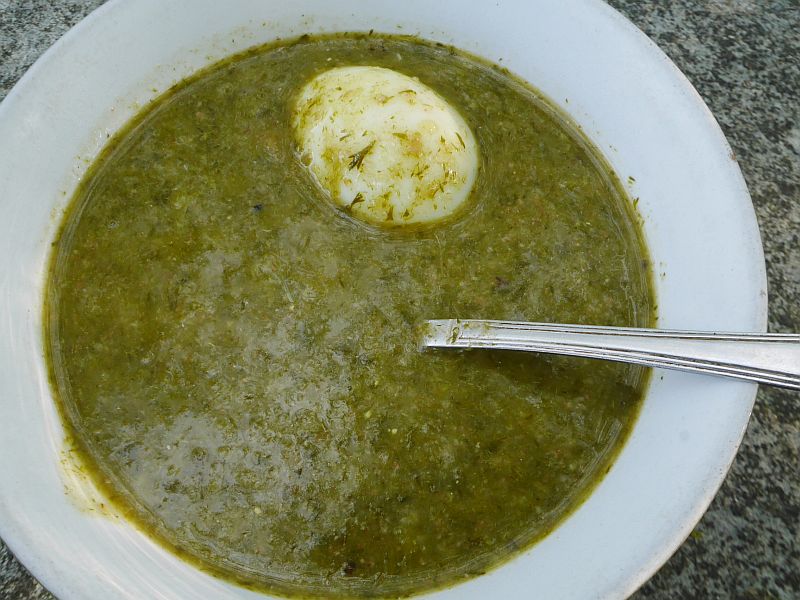
I’ve never seen real bread for sale, you can tell from the weight. The loaves I made yesterday weighted in at over 1.5kg! This sourdough was made from a selection of whole grain organic flours (yesterday’s pizza dough was taken from the proving dough) including: coarse rye, emmer, barley, coarse spelt, svedjerug and a few barley and svedjerug grains and fresh ground elder (skvallerkål) mixed in at the end!

At least the ground elder and seed toppings were home grown, from left to right – caraway (karve), opium poppy (opiumvalmue) and greater plantain (groblad) / Plantago major
Last night’s dinner was a 100% wholegrain sourdough pizza with Hablitzia, four cheese and poppy seed topping…
The dough was made from a selection of whole grain organic flours including: coarse rye, emmer, barley, coarse spelt, svedjerug and a few barley and svedjerug grains added.
It was accompanied by a blanched salad – sea kale, dandelion “Vert de Montmagny Ameliore” and Allium tuberosum!
Sooooo tasty….
The Hablitzia once again impresses with its incredible productivity and early growth in one of the driest, shadiest places in the garden!


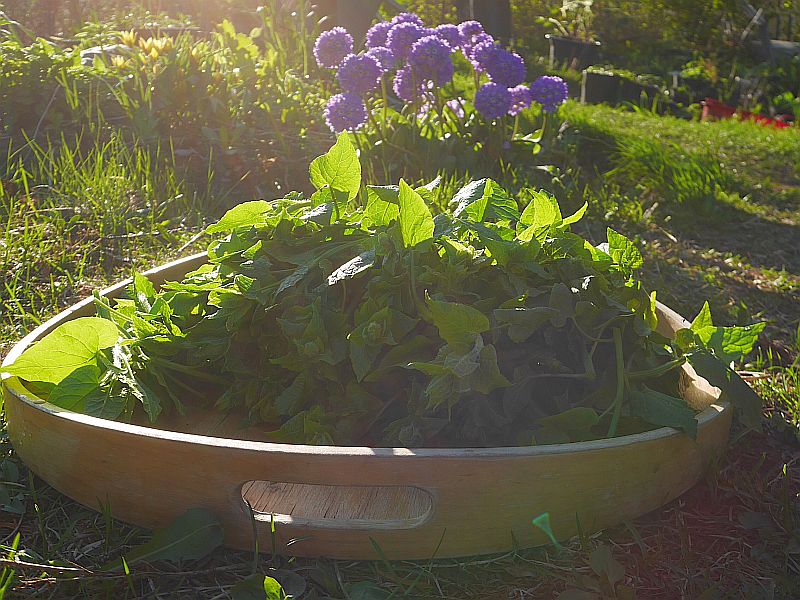
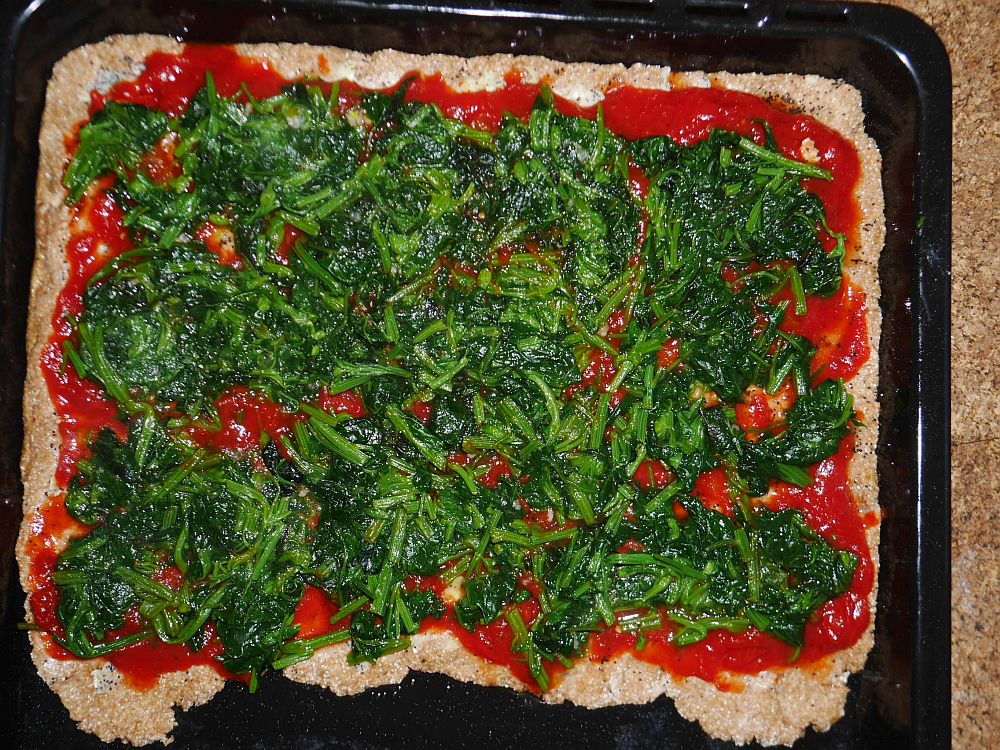
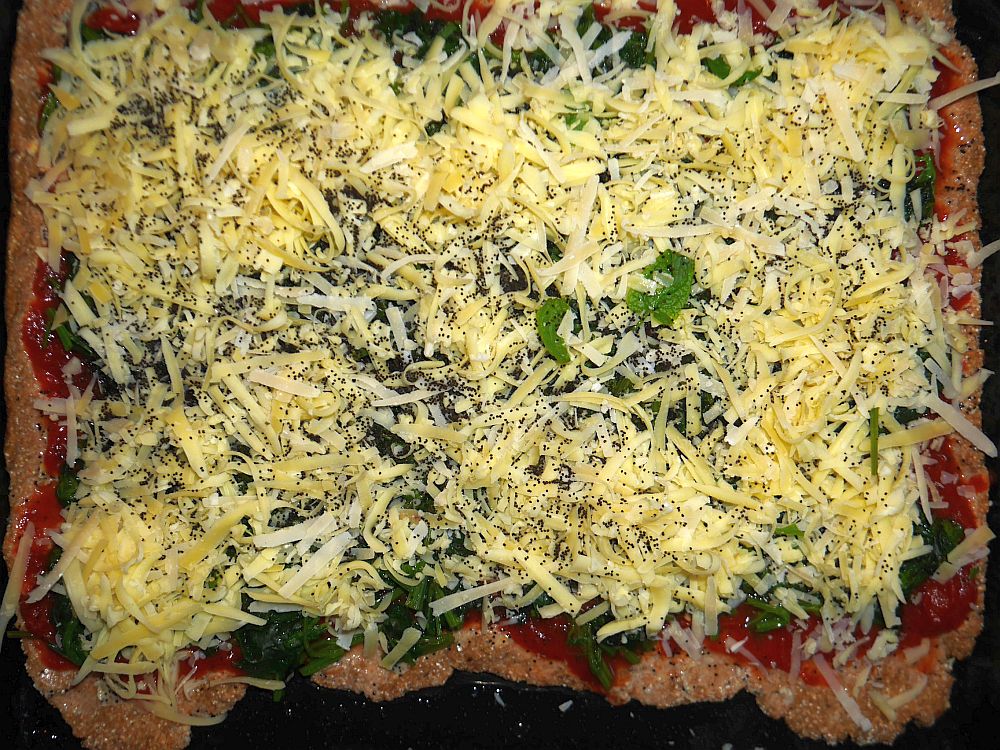

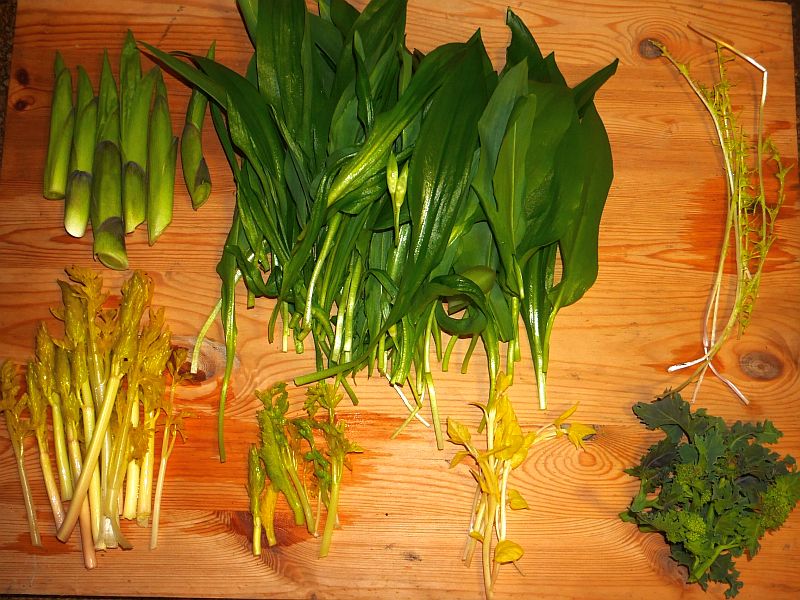
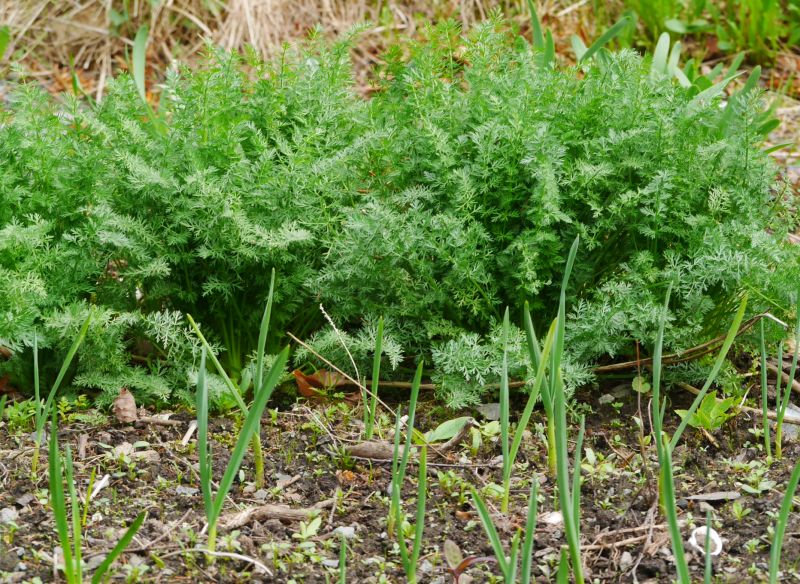
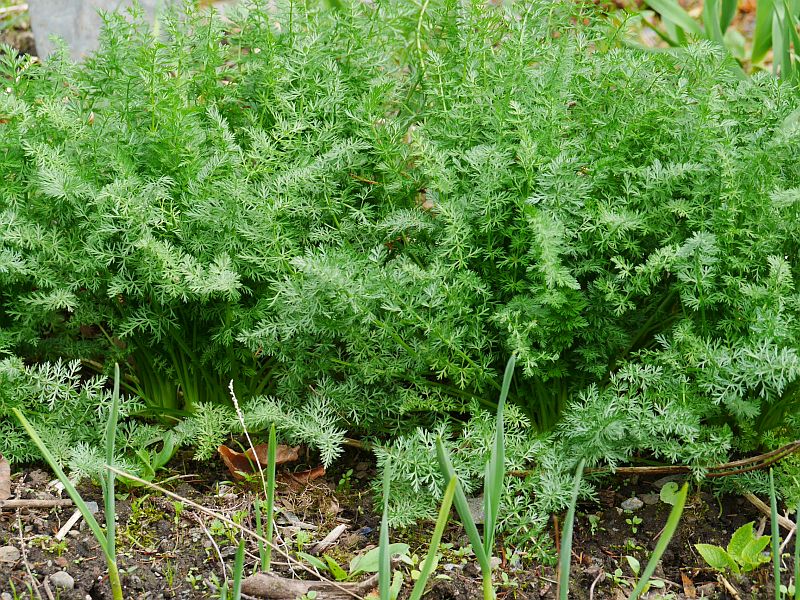
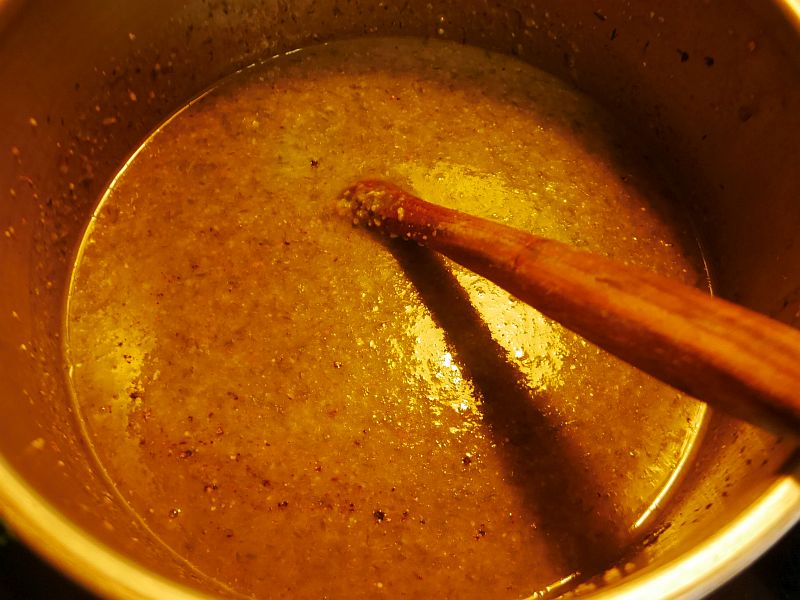
We’re now going into a period traditionally called the hungry gap, but in my eyes it’s the Full gap, the period with an abundance of vegetables, both perennial wild and cultivated edibles. Yesterday’s dinner was a ryotto (risotto with rye rather than rice). In the last few days, many of these early spring permaveggies have put on a growth spurt! I photographed most of the ingredients in the garden first.


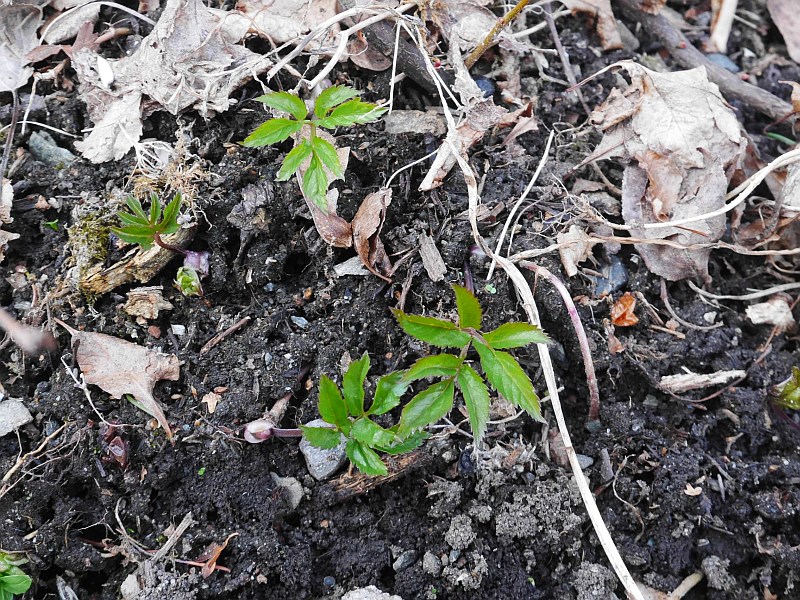
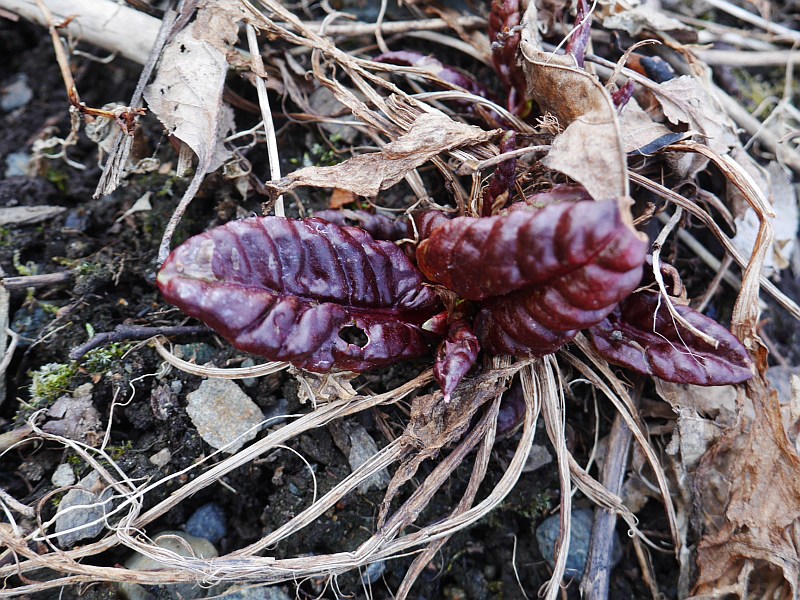


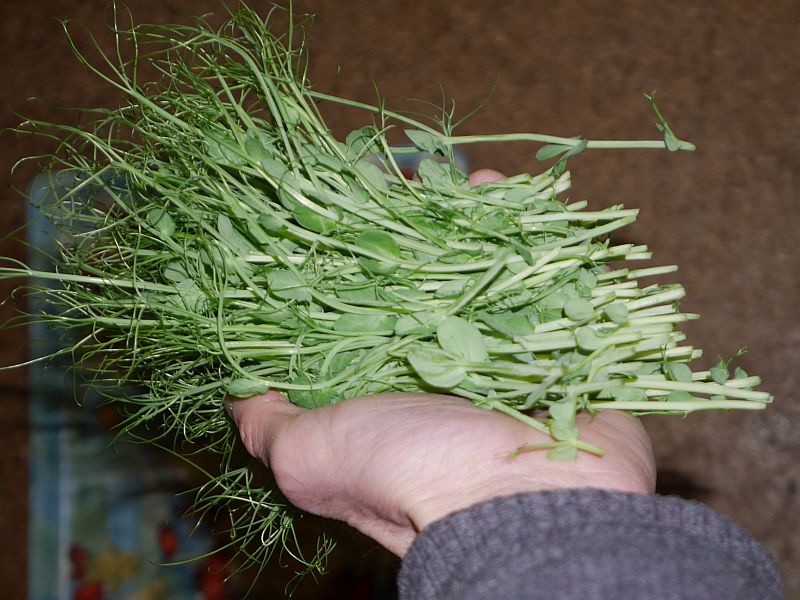
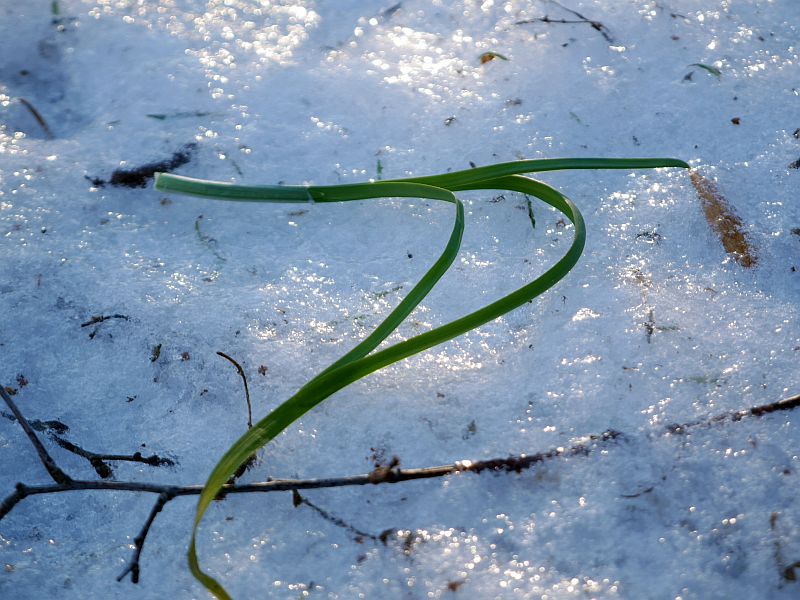
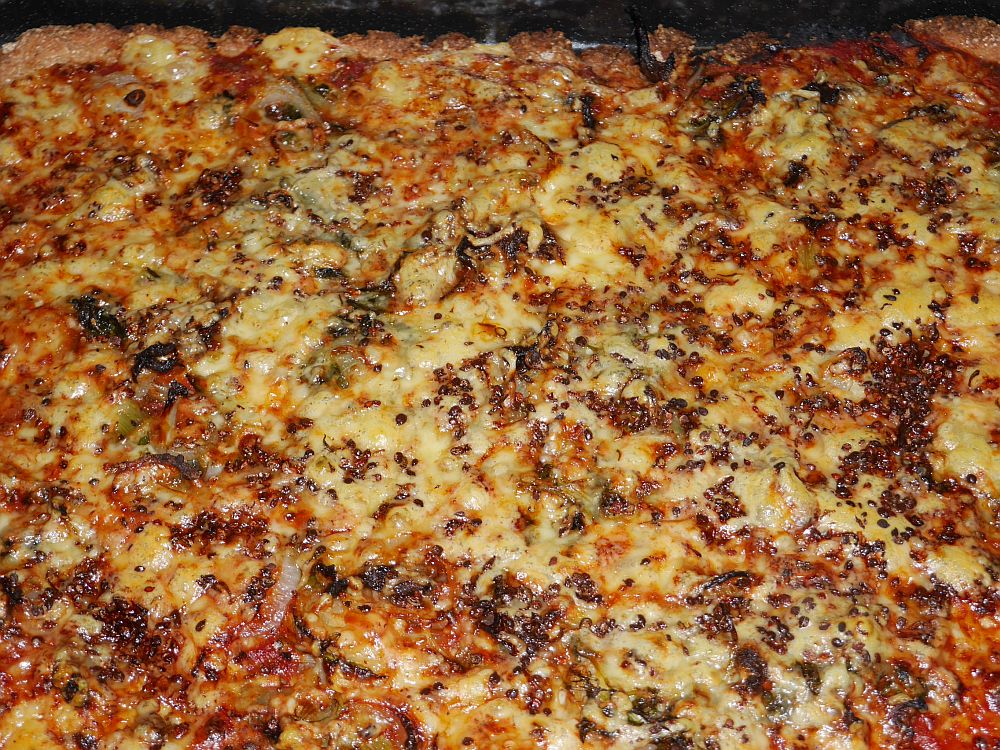
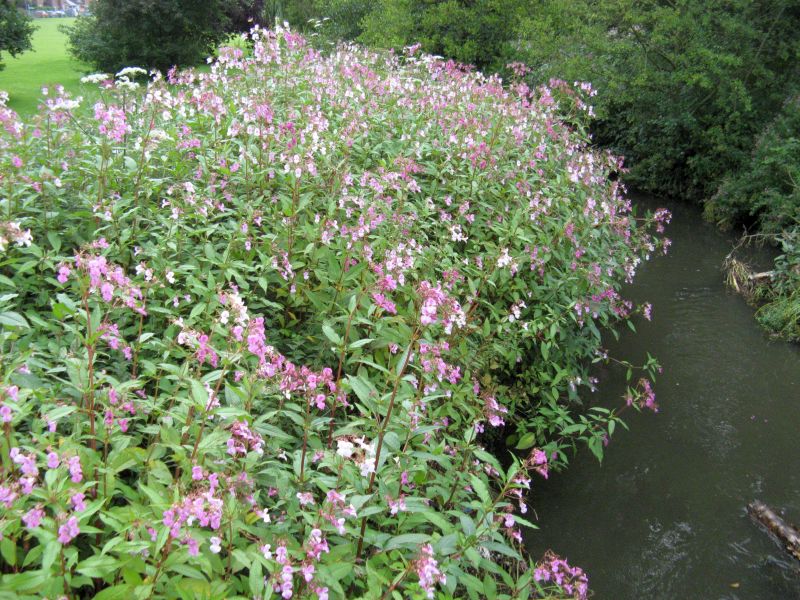
I’m still alive and well after last night’s noxious pizza. I’ll explain. I used pea shoots from the living room, onion, Allium cernuum shoots harvested from the garden (I forgot to include Hablitzia shoots), garlic and chili…on top of the pizza, I added seed of Himalayan balsam (Impatiens glandulifera), one of the “worst” noxious (invasive) species…



What are the ingredients we see in the first picture?