A series of pictures taken of edible plants that I spotted in the “ornamental collections” at RHS Wisley Gardens on 11th April 2024. Admittedly, some will be obscure or “emergency food” edibles, but all have been used somewhere for food and have an ethnobotanical story to tell! See also an earlier post from a visit on 28th June 2013 at https://www.edimentals.com/blog/?p=32483 I was also shown around all the great work being done by the Wisley Edibles Team later the same day; see
See the picture captions for names and use:
1. Smyrnium perfoliatum, perfoliate alexanders. From Cornucopia II: “The blanched leafstalks are eaten raw in salads or used as a potherb. It is considered superior to S. olusatrum, as it not only blanches better, but is more crisp and tender, and not so harsh flavored”
2. Cardiocrinum giganteum? A starch was extracted from the bulbs and used in central and western China; other species were similarly used in Japan ; young leaves were also eaten and a flute was made with the hollow stem!
3. Matteuccia struthiopteris, ostrich fern (strutseving); see my book for more about this great edimental
4. Polygonatum hirtum (P. latifolium); many solomon’s seals (Polygonatum sp.) were traditionally used in the kitchen. Young shoots make an excellent sweet tasting spring vegetable and the rhizomes are also used
5. Trachystemon orientalis, early flowering borage; see my blog post “Trachystemon orientalis, a new Edimental for the dry forest garden” https://www.edimentals.com/blog/?page_id=1269 written having discovered this was edible on a trip to Bulgaria:
6. Saxifraga fortunei, the fortune saxifrage is used in tempura in Japan
7. Hosta «Decorata» (Se https://www.hostalibrary.org/d/d.html) (see my book and other blog posts for the importance of this amazing edimental; you can try any Hosta)
8. Kalopanax septemlobus; the young shoots are eaten in the Far East; a friend on my Edimentals FB group has tried but writes: “Kalopanax has a grassy/piney/soapy/bitter taste that the chojang doesn’t fully mask”
9. Gunnera “manicata” (it has recently been announced that the G. manicata found in the UK is actually a hybrid with G. tinctoria, so that both are now banned from being sold as tinctoria has become an invasive species in parts of the UK); I tried the stalks in September when I did a walk and talk at the Edinburgh Botanics some years ago; the taste was good!
10. Hosta undulata var albomarginata (se https://www.hostalibrary.org/u/u.html) (see my book and other blog posts for the importance of this amazing edimental; you can try any Hosta)
10a. Hosta “Snowden” (see my book and other blog posts for the importance of this amazing edimental; you can try any Hosta)
11. Primula denticulata; this hardy species from East Asia is edible. I use the flowers often in spring mixed salads.
12. Hosta plantaginea var japonica (see my book and other blog posts for the importance of this amazing edimental; you can try any Hosta)
14. Caltha palustris, marsh marigold (soleihov); although quite strong tasting even after cooking various Caltha sp. were used traditionally sa reported in Cornucopia II: “Young leaves are eaten like spinach, especially after having been boiled in two or more changes of water and cooked in a cream sauce. Flower buds are pickled in vinegar and used as a substitute for capers.”
15. Wisteria floribunda “George F Wilson”; flowers of all species are considered edible and there are traditional uses; in Japan, young leaves and flowers are boiled; other species have been used as fritters
16. Hemerocallis sp., day lily / daglilje (see my book Around the World in 80 plants for much more about probably the world’s oldest documented vegetable)
17. Hemerocallis “Little Wine Cup” with flower buds (see my book Around the World in 80 plants for much more about probably the world’s oldest documented vegetable)
18. Bistorta officinalis, bistort / ormerot (see more about this traditionally foraged vegetable, particularly in Easter Ledge Pudding and survival food for Norwegian explorer Roald Amundsen in the arctic in my book)
19. Satureja montana, winter savory / vintersar
20. Pinus mugo “Humpy”, dwarf mountain pine; A vanillin flavouring is obtained as a by-product of other resins that are released from the pulpwood
20. Pinus mugo “Humpy”, dwarf mountain pine; A vanillin flavouring is obtained as a by-product of other resins that are released from the pulpwood
21. Gingko biloba “Mariken”; Fresh ginkgo nuts (seeds) Are eaten as a seasonal delicacy, having a mild, sweet, crisp flavor (are preerved and sold in oriental stores around the world and harvested by ethnic communities in Central Park in New York where it is widely planted as a street tree.
22. Muscari comosum, lampascioni is an important edible in the Mediterranean where it is sold on markets; see my blog post about an edimental variety:https://www.edimentals.com/blog/?page_id=1670
23. Silene uniflora, the sea campion is probably edible like the closely related Silene vulgaris (see my book)
24. Halesia carolina, silver bell tree, wild olive: From Cornucopia II -he ripe fruits are chewed for their acidity. Unripe ones are sometimes made into pickles
24. Halesia carolina, silver bell tree, wild olive: From Cornucopia II -he ripe fruits are chewed for their acidity. Unripe ones are sometimes made into pickles
25. Erythronium pagoda (see my blog post about Erythroniums in the kitchen at https://www.edimentals.com/blog/?p=9442; Pagoda is probably the best and is a hybrid between Erythronium tuolumnense and Erythronium californicum ‘White Beauty”); see my blog post about Erythroniums in the kitchen at https://www.edimentals.com/blog/?p=9442
25. Erythronium pagoda (see my blog post about Erythroniums in the kitchen at https://www.edimentals.com/blog/?p=9442; Pagoda is probably the best and is a hybrid between Erythronium tuolumnense and Erythronium californicum ‘White Beauty”); see my blog post about Erythroniums in the kitchen at https://www.edimentals.com/blog/?p=9442
27. Tradescantia (see my book for more about the edibility of this genus)
26. Wisteria floribunda “Strella” (flowers of all species are considered edible and there are traditional uses; in Japan, young leaves and flowers are boiled; other species have been used as fritters)
28. Allium nigrum (used traditionally in the kitchen in Italy including Sicily and Croatia.)
29. Crambe maritima (sea kale / strandkål); see my book for much more about this “King of the Edible Vegetables”
29. Crambe maritima (sea kale / strandkål); (sea kale / strandkål); see my book for much more about this “King of the Edible Vegetables”
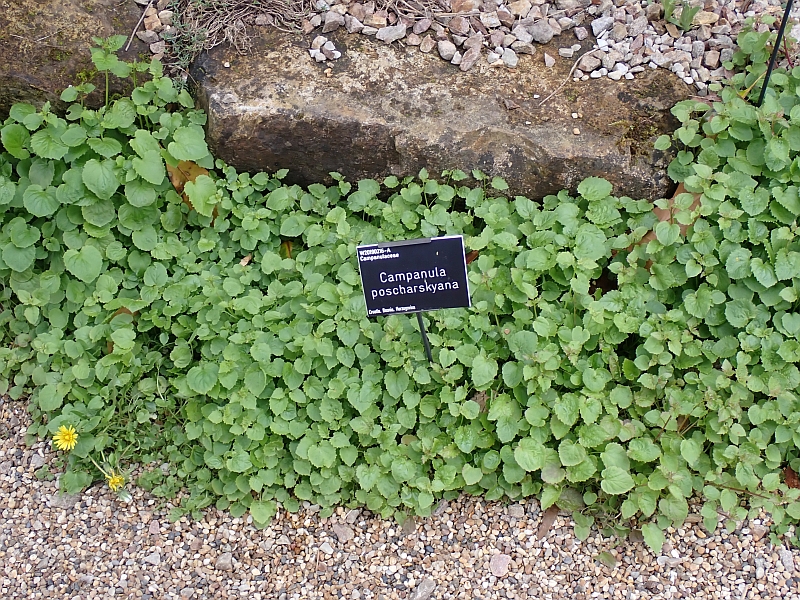
30. Campanula poscharskyana; there are many members of the bellflower family used for food around the world (see my book for more)
31. Yucca rostrata (beaked Yucca); edible flowers and flower shoots); the tasty edible flowers of many Yucca sp. are used as are young flower shoots and buds.
33. Yucca filamentosa “Garland’s Gold” (edible flowers and flower shoots)
34. Asphodeline lutea (Jacob’s Rod); One of the best tasting edible flowers!Cornucopia II: The ancient Greeks and Romans roasted the roots like potatoes and ate them with salt and oil, or mashed them with figs.
35. Allium cernuum – probabbly my favourite edimental onion: see much more in my book! I’ve not heard the common name Lady Leek before.
36. One of the first lowering Hemerocallis sp. (day lily / dagilje)
37. Primula veris (cowslip / marianøkleblom); edible flowers and leaves
38. Hosta plantaginea var japonica (see my book and other blog posts for the importance of this amazing edimental)
39. Hosta shoots (see my book and other blog posts for the importance of this amazing edimental; you can try any Hosta)
40. Polygonatum sp. (solomon’s seals / konvall); young shoots of most if not all species are used cooked and ae surprisingly sweet…
41. Magnolia “Phelan Bright” (unknown parentage); Many Magnolia species are used, mainly in the Far East, young flower buds and flowers
42. Hosta “Ufo”
44. Hemerocallis “Green Gold” (young day lily shoots are used as a vegetable.
43. Cercis giganteus (closely related to Cercis chinensis); buds and flowers are widely used from other Cercis sp.; C. chinensis flowers are widely used for the extraction of natural edible red pigment.
45. Chinese bladdernut, Staphylea holocarpa “Innocence” a species with huge edimental potential! The young leaves are eaten cooked and taste great, and the unopened flower clusters are also edible and can be cooked almost like a small cauliflower (see my Edimentals FB group).
45. Chinese bladdernut, Staphylea holocarpa “Innocence” a species with huge edimental potential! The young leaves are eaten cooked and taste great, and the unopened flower clusters are also edible and can be cooked almost like a small cauliflower (see my Edimentals FB group).
45. Chinese bladdernut, Staphylea holocarpa “Innocence” a species with huge edimental potential! The young leaves are eaten cooked and taste great, and the unopened flower clusters are also edible and can be cooked almost like a small cauliflower (see my Edimentals FB group).
46. Hosta fortunei “Albomarginata”
47. Decaisnea fargesii (Blue sausage fruit)
48. Musa basjoo, the Japanese Banana (nectar can be used and leaves used as wraps)
49. Oplopanax horridus (devil’s club) has edible spring shoots
50. Drimys winteri (winter’s bark) – the bark is powdered and ground as a pepper substitute (southern South America)
51. Phormiums (important plant for the Maori; nectar; fibre)
52. Phormium cookianum subsp hookeri (important plant for the Maori; nectar; fibre)
53. Phormium “Yellow Wave” (important plant for the Maori; nectar; fibre)
54. Cordyline australis “Salsa” (Ti-kouka, Cabbage tree); Root baked, pith of the stem and young shoots; a important food plant of the Maori people
55. Trachycarpus fortunei (the young inflorescence is eaten in much the same way as bamboo sprouts. Fresh flowers and the terminal buds have also been used)
56. Paulownia kawakamii (presumably the flowers can be eaten as with P. tomentosa – served with miso)
57. Alliaria petiolata (hedge garlic; løkurt); leaves and flowers
58. Pachyphragma macrophylla (edible leaves and flowers)
59. Camassia leichtlinii subsp. suksdorfii “Caerulea Group” ( Leichtlin’s camass, wild hyacinth / praerielilje) ; From Cornucopia II: The bulbs are eaten raw, boiled, baked in pits, fried, used in pies, or dried for future use. They were boiled down to a molasses which was used on festival occasions by various Indian tribes.
59. Camassia leichtlinii subsp. suksdorfii “Caerulea Group” ( Leichtlin’s camass, wild hyacinth / praerielilje) ; From Cornucopia II: The bulbs are eaten raw, boiled, baked in pits, fried, used in pies, or dried for future use. They were boiled down to a molasses which was used on festival occasions by various Indian tribes.
60. Opuntia lindheimeri (Texas prickly pear); both ripe and unripe fruits, young pads, flowers and flower buds are also cooked.
61. Allium akaka -in Anatolia, the fresh leaves areconsumed as vegetable. Fresh onions are used in pilaf. And also, it is grown in gardens for daily consumption. People uproot them from the nature and plant in their gardens; in spring they use their leaves as daily vegetable.
62. Tropaeolum leptophyllum
63. Allium aff. elburzense: this is an endemic Iranian plant which grows in the Elburz Mountains. It is known locally as “Valak”, and its aerial parts are used as food.
64. Allium tolmiei var platyphyllum
65. Cyclamen persicum: the leaves of this species were used Cooked with rice and meat, or raw as salad in Palestine
65. Cyclamen persicum: the leaves of this species were used Cooked with rice and meat, or raw as salad in Palestine
65. Cyclamen persicum: the leaves of this species were used Cooked with rice and meat, or raw as salad in Palestine
66. Allium grosii
67. Lewisia columbiana: the roots of this and other species of Lewisia were cooked and eaten by first peoples in North America
68. Allium libani
68. Allium libani
69. Phyteuma scheuchzeri (see my article about the Phyteuma genus here: https://www.edimentals.com/blog/wp-content/uploads/2019/01/Phyteuma_Final-1.pdf
70. Silene uniflora “Rosea”; sea campion
71. Silene uniflora “Rosea” can probably be eaten like big sister Silene vulgaris
72. Oxalis obtusa “Sunset” is a South African species – corms of several SOuth African Oxalis species can be used
73. Wisteria. Different Wisteria species flowers are variously cooked, eaten raw and fried in oil as fritters in different parts of the world
74. Saxifraga spathularis, St. Patrick’s Cabbage: along with several other Saxifraga species this one can probably be safely eaten
75. Trillium chloropetalum – It’s generally not recommended harvesting to eat in North America except where super abundant. The young shoots while the leaves are drooping or folded can be eaten raw and coooked (Sam Thayer in Field Guide to Edible Wild Plants); I find the leaves to have a pleasant nutty taste; I sometimes decorate spring salads with flowers.
76. Polypodium glycyrrhiza “Lawrence Crocker”; a North American licorice fern – it is chewed for flavor by numerous Native American groups, including the Squamish, Shishalh, Comox, Nuxalk, Haida, and Kwakwaka’wakw (wikipedia)
On a short visit to England to visit my mum, I visited RHS Wisley yesterday to do a 2 hour walk and talk for the Edibles Team (and a few others who were interested!). I hopefully added a new dimension to their work by pointing out all the wonderful perennial veg and other edibles hidden incognito in the ornamental collections, everything from Hostas to Rudbeckia to Gunnera! Still getting my head around the fact that there is such a thing as an Edibles Team across the RHS gardens! Next week I’m following this up with a webinar about Edimentals for all the gardens! …and I’d just like to congratulate the team for the World Food Garden! It’s very impressive with quite a few perennial veg already and looks and I imagine tastes fantastic! Thanks for the warm enthusiastic welcome to leaderSheila Das and the rest of the team! Wisley is a garden I’ve visited many times over the years to do a spot of edible spotting, so great to be able to pass on some of the knowledge! #edimentals #edientomentals #edientoavimentals #hiddenedibles #RHSEdiblesTeam #worldfoodgarden #extremesaladman
Various berries harvested late July at home in the Edible Garden and in the Væres Venner Community Garden. More information in the picture captions. These were either eaten fresh for breakfast with muesli or were made into mixed fruit leather!
Mulberries (morbær) from a tree planted 15 years ago, received as Morus alba “Rubra” – these had started dropping from the tree!
Saskatoons / blåhegg – Amelanchier sp. ;this year the birds left a good number of berries for us – the thrushes and tits only seem to take these early on, until other berries that they prefer become available
Black redcurrants / svartrips (Ribes petraeum var. biebersteinii with assorted other berries
A mix of berries and indoor grown fig to be used in a mixed fruit leather
Redcurrant / rips “Pink Champagne” has a sweeter taste than most
From the community garden (Væres Venner), a sunnier site than my own garden, these super early tomatoes were ripe already on 20th August, something I never dreamed was possible in the past! 42 days to the left and Linda Siberian to the right.
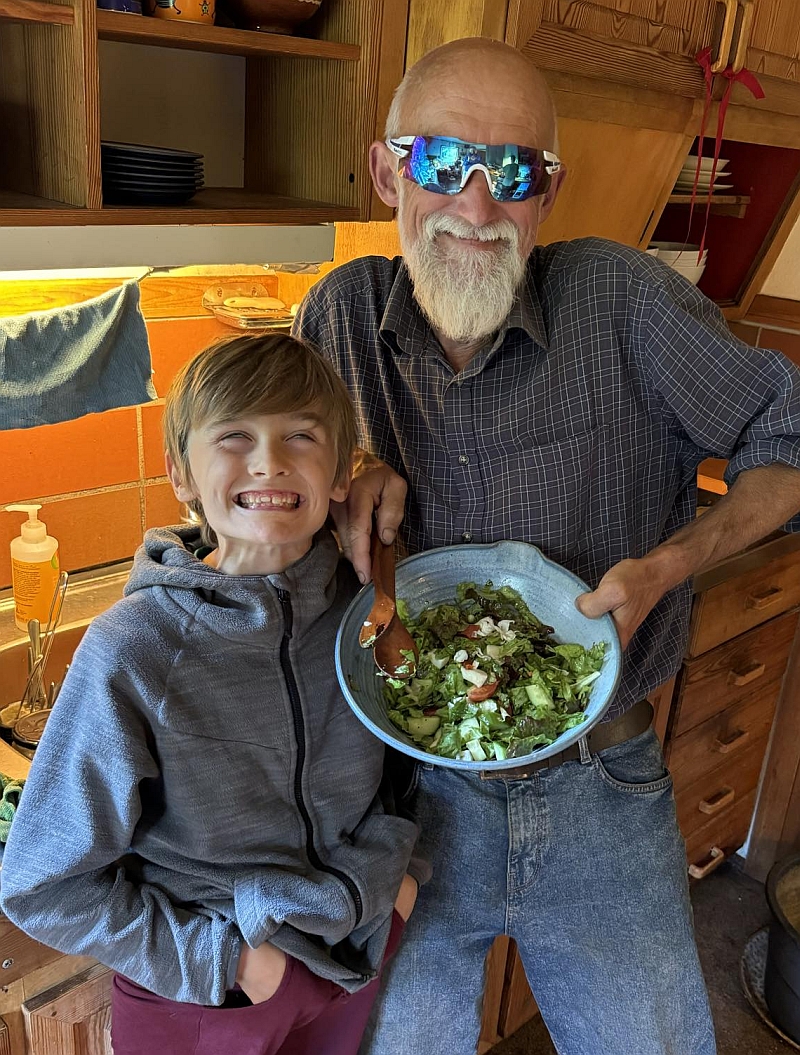
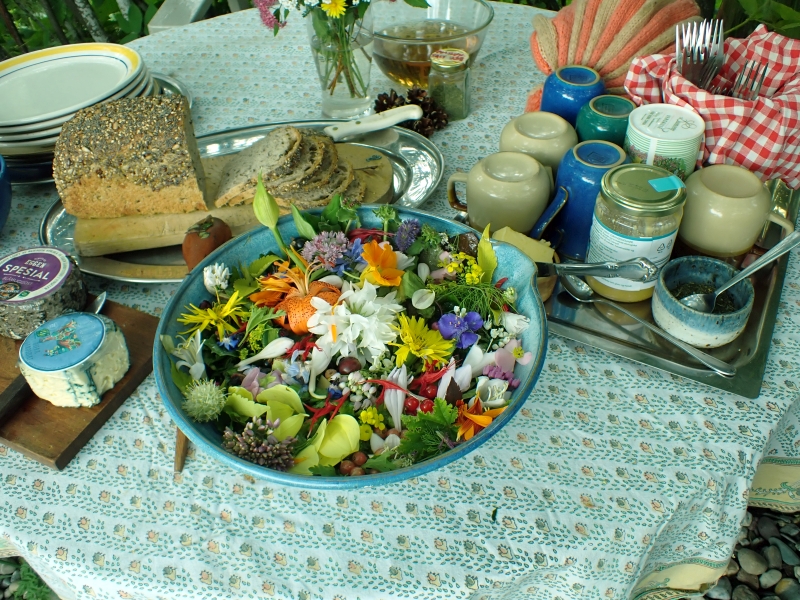
I didn’t know if I could make a salad just with ingredients you can buy in the supermarket (but all home grown of course!), but last week I DID IT when I had a family visit!!
The picture of me looking cool and conventional with my favourite grandson Johannes was taken by favourite son Robin (yes, I have one of each)
Engelsk tekst nederst I løpet av 17.-19. juli var jeg glad for å kunne returnere gjestfriheten gitt av KVANNs søsterorganisasjon Arche Noah (Austrian Seed Savers) under mine 2 turer dit i 2017 og januar 2020 rett før COVID-en rammet (se https://www.edimentals .com/blog/?s=arche+noah) Dette var i forbindelse med et Erasmus pluss utdanningsprogram der Arche Noah-utdanningen besøker ulike steder i Europa for å lære mer om flerårige grønnsaker og skogshager! Vi besøkte hver av mine 3 hager: The Edible Garden, Væres Venners Felleshagen og Løkhagen Chicago ved NTNU Ringve Botaniske Hagen. Vi fikk selskap av Guri Bugge, Mette Theisen og Judit Fehér fra KVANNs styre (bilde). Ursula Taborsky fra Arche Noah er nest til venstre på bildet fra min spiselige (skogs)hage. English: During 17th-19th July I was happy to be able to return the hospitality given by KVANN’s sister organisation Arche Noah (Austrian Seed Savers) during my 2 trips there in 2017 and January 2020 just before COVID hit (see https://www.edimentals.com/blog/?s=arche+noah) This was in connection with an Erasmus plus education program in which Arche Noah education are visiting various places in Europe to learn more about perennial vegetables and forest gardening! We visited each of my 3 gardens: The Edible Garden, Væres Venners Community Garden and the Onion Garden Chicago at the Ringve Botanical Garden. We were joined by Guri Bugge, Mette Theisen and Judit Fehér from KVANN’s board (picture). Ursula Taborsky from Arche Noah is second left in the picture from my Edible (Forest) Garden.
I didn’t know if I could make a salad just with ingredients you can buy in the supermarket (but all home grown of course!), but last week I DID IT when I had a family visit!! The picture of me looking cool and conventional with my favourite grandson Johannes was taken by favourite son Robin (yes, I have one of each)
During early 2019, I sowed seed of black raspberry, Rubus occidentalis Ex-Black Hawk. The seed were harvested from some plants in my garden received originally as seed from Seed Savers Exchange in 2003. They germinated around 26th May 2021 and I planted about 20 quite close together with the thought of later moving them to a permanent place. That never happened and the plants grew large and started producing last year. To my surprise I discovered that some of the berries, presumably from one of the plants, were very different and reminiscent of the hybrid with red raspberry (Rubus idaeus) “Glencoe”. About ‘Glen Coe’: “this is the result of a cross-breeding between Rubus idaeus ‘Glen Prosen’ – a local Scottish variety with red fruits – and R. occidentalis ‘Munger’, a black-fruited variety from North America that was introduced in 1897 and extensively cultivated on more than 600 hectares in Oregon. This hybrid was developed by the Scottish Crops Research Institute, an agricultural research centre near Dundee (now integrated into the James Hutton Institute). Introduced to the market in 1989, ‘Glen Coe’ still surprises with the unique colour of its fruits, which is intermediate between its two parents.”
Toad lilies (Tricyrtis sp.) are great edientomentals from the Far East; i.e. both food for us to eat (the edi bit), eye food (the mental bit ;) ) and food for the pollinators like bumble bees (the ento bit). I’ve been meaning to try to research this genus properly for many years ever since I ate the young shoots 10 years ago (it tasted mild and good). I’ve tried 10+ species over the years, but only the early flowering species thrive (Tricyrtis latifolia is I think the most successful of the two). Bumble bees love them too as can be seen in the video below! Below the pictures is an overview of how different species Tricyrtis are used in Japan. It indicates that the flowers can also be used at least in moderation for decoration, so I must give it a go!
Blanched perennial veggies eaten on 14th May 2012 were dandelion, Crambe cordifolia , Cicerbita alpina, Lovage, Horseradish, Hosta, Sonchus arvensis, Allium tuberosum, Silene vulgaris, Heracleum maximum and Tricyrtis (latifolia)
Tricyrtis in the kitchen All I have so far is that 6 or 7 species are listed in my comprehensive Japanese foraging book (in Japanese): Wild Food Lexicon (Japan) and this is what it says (there are no warnings of possible toxicity and it encourages the reader to get and grow a couple of the species): Tricyrtis latifolia (Tamagawa hototogisu) Eat young shoots. You can eat other types of Tricyrtis so don’t worry if you make a mistake. Rest assured. You can pick it even if the stems are long, you can pick the soft young shoots until they bloom. Boil in hot water with a pinch of salt, then rinse in cold water. In boiled food, soup, tempura… Tricyrtis macropoda It can be eaten like Tamagawa hototogisu, but the ones with a lot of hairs have an inferior taste. Tricyrtis macrantha Boiled soup. For tempura etc. It has a crisp texture. Boil briefly, soak in cold water, boil, cut into small pieces and season with mustard. The young shoots are the most flavourful amongst the hototogisu. Tricyrtis macranthopsis Seedlings for cultivation are on the market. You can grow it and use it as food. Around May, pick young shoots that grow diagonally. Even those with long stems can be eaten by picking the soft part at the tip of the stem. Tricyrtis perfoliata Young shoots are “hard”? in quality. Floating the flowers in the soup and enclosing them in jelly will make them beautiful. Get it, grow it and taste it!!
The last time I saw one of these in the garden was in 1998: poplar hawk moth / ospesvermer. Today, one turned up in my light trap, and I’m sure anyone passing would have heard a loud WOW coming from the woods! More information and a picture of the 1998 moth here. It was reluctant to take to the wing and needed some encouragement as can be seen in the videos and you can pick it out flying off through the woods…
Perennial vegetables, Edimentals (plants that are edible and ornamental) and other goings on in The Edible Garden






 English: During 17th-19th July I was happy to be able to return the hospitality given by KVANN’s sister organisation Arche Noah (Austrian Seed Savers) during my 2 trips there in 2017 and January 2020 just before COVID hit (see https://www.edimentals.com/blog/?s=arche+noah)