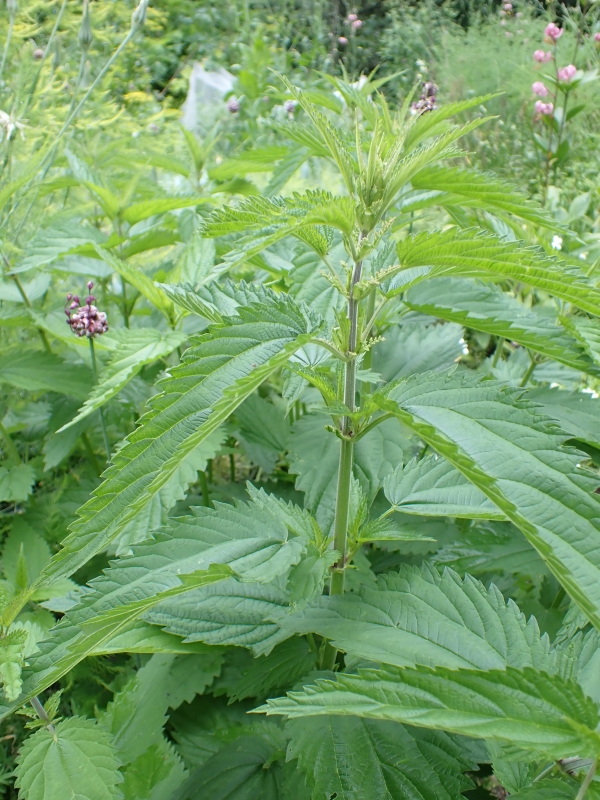
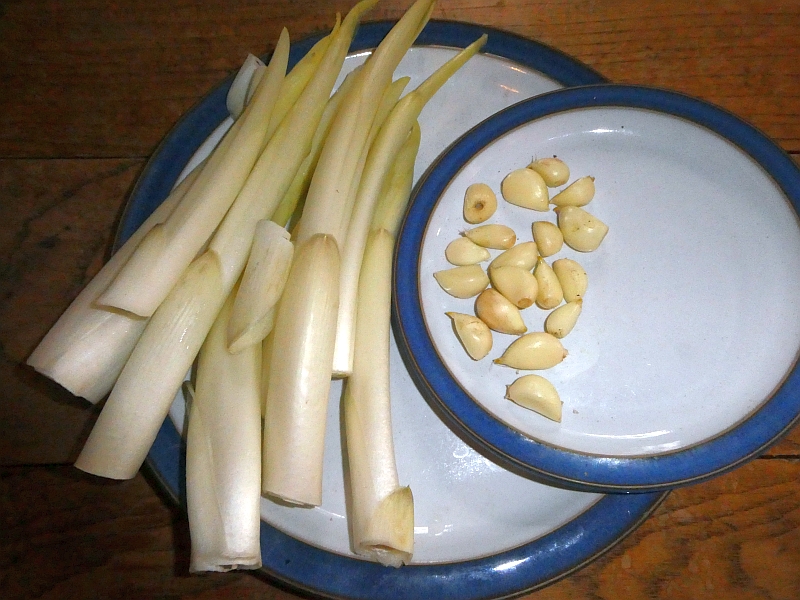
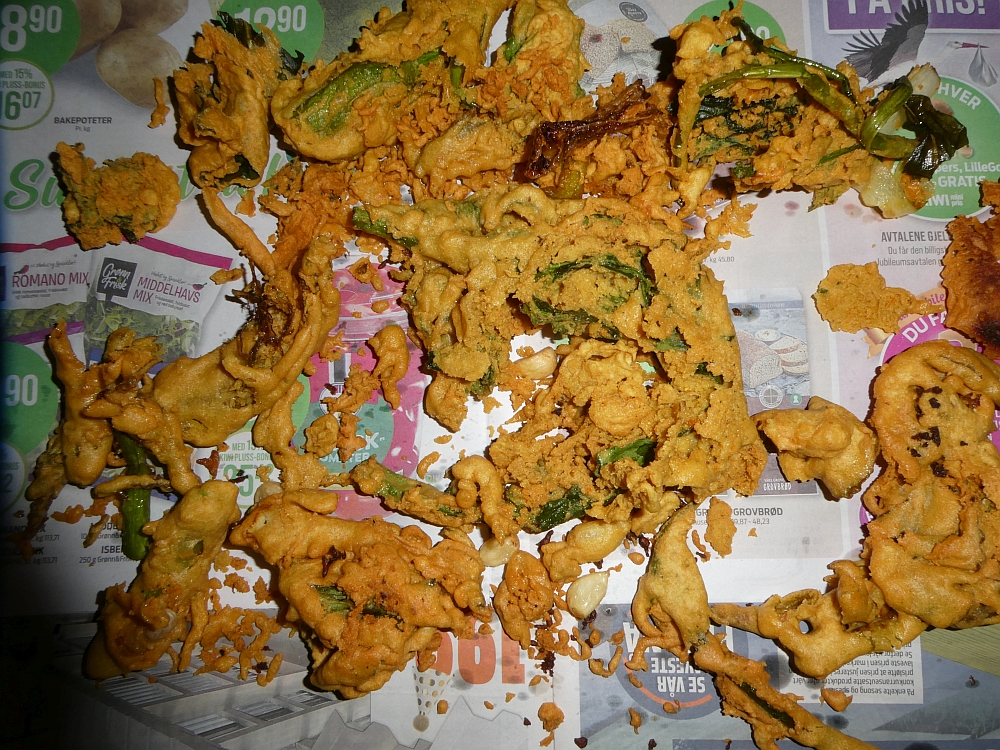
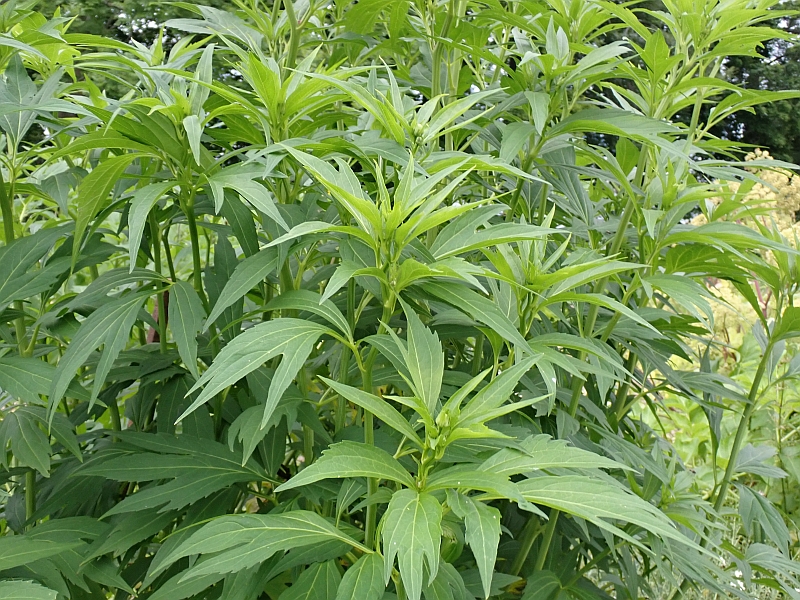
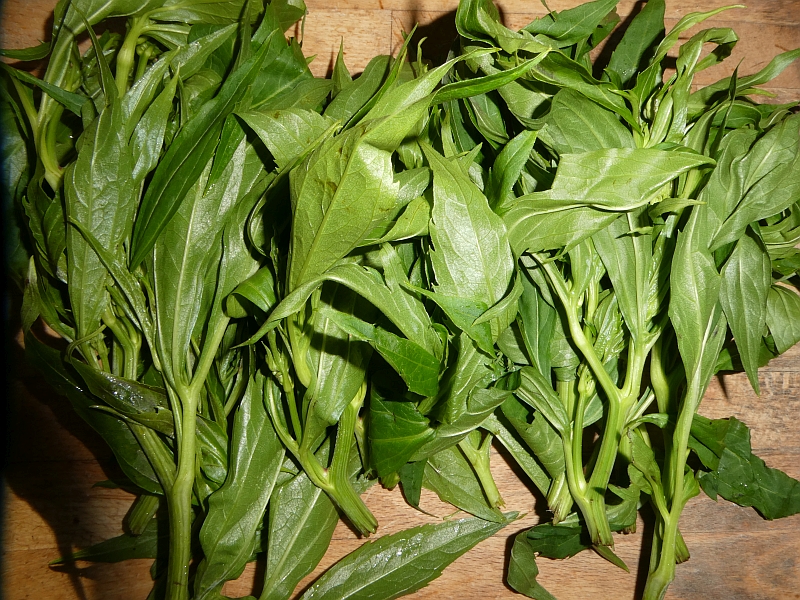
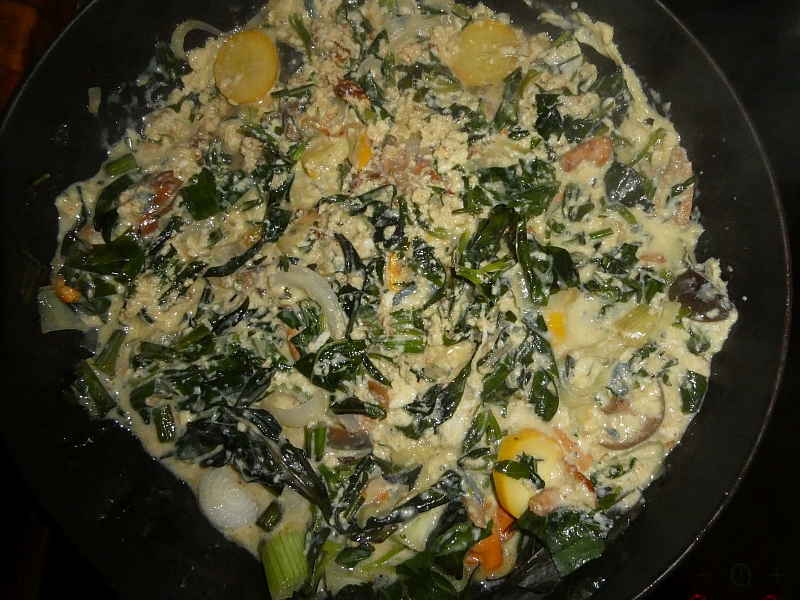
Thanks to Alan Bergo (@foragerchef) for reminding me to try sochan tops. This is Rudbeckia laciniata (cut-leafed coneflower) which in the double form is one of the most popular garden ornamentals here in Norway over the last 100 years and a plant that has been commercialised as a farm vegetable over recent years in Korea. I’d previously only eaten the spring shoots, but I was equally impressed by the tops which I used simply cooked with onion, garlic and yellow zucchini from the garden, various fungi picked in the woods (saffron milkcap/matriske; hedgehog fungus / piggsopp and chantarelles / kantarell) and scrambled with eggs with a little chilim added (a classic way for preparing wild edibles in the Mediterranean countries. See the pictures below. See other posts on this great vegetable which was introduced to me in one of Samuel Thayer’s books: Appalachian Greens Cherokee Pizza
I have a small patch of different forms of alpine bistort / harerug (Bistorta vivipara) in the garden and this year’s harvest is now drying in the living room. See other posts on this plant here: https://www.edimentals.com/blog/?s=%22alpine+bistort%22
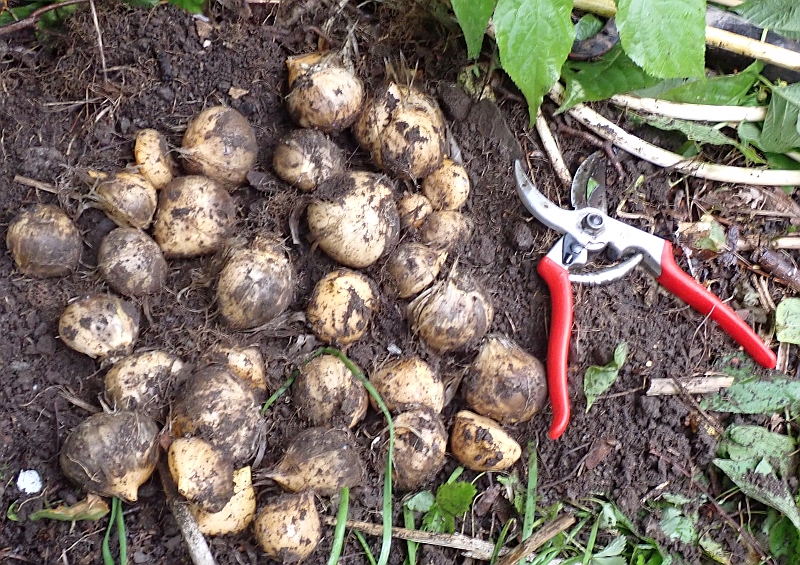
One of my favourite perennial onions are persian shallots, Allium stipitatum and I’ve blogged about them several times in the past: https://www.edimentals.com/blog/?s=persian+shallot This is one of the earliest onions to appear in the spring and they flower and die down in the course of June. July is the best time to harvest the bulbs (I’ve often harvested them too late when they’ve already started sprouting in autumn). I harvested one plant this week and the bulbs were in perfect condition. I was once again struck by the yield (although it is probably two years since I harvested this plant). I replanted 3 of the largest bulbs. I usually dry the bulbs as they do in Iran, but this time I ate some fresh. They are surprisingly mild tasting and I used them fried in an omelette. Below the pictures is a Norwegian article on the persian shallot which I wrote in 2021.
The persian shallots are overgrown by a mini kiwi (Actinidia kolomikta) behind it during June. Here I’ve cut the kiwi back in order to harvest the shallots
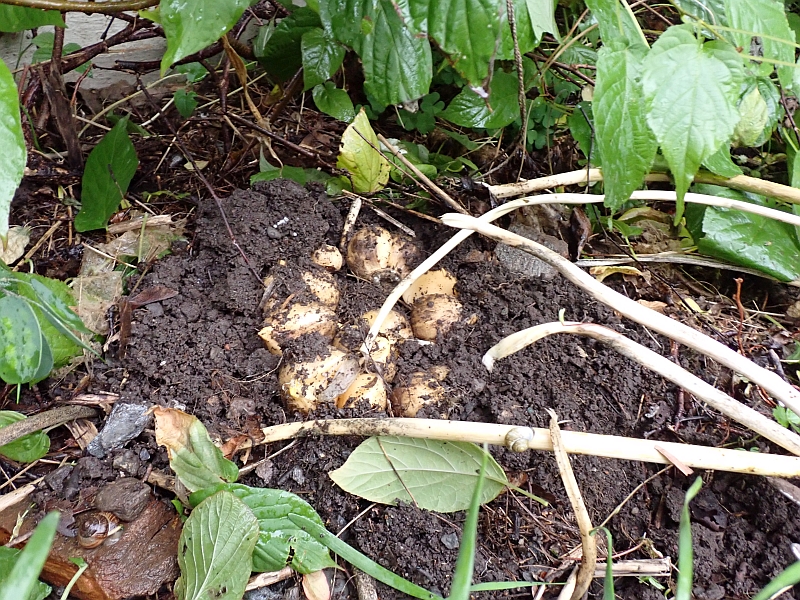
The persian shallot bulbs were quite close to the surface in several layers
The bulb harvest was once again phenomenal (the biggest 3 onions were replanted)
Stir-frying one of the bulbs for an omelette
Please download this Norwegian article on persian shallots:
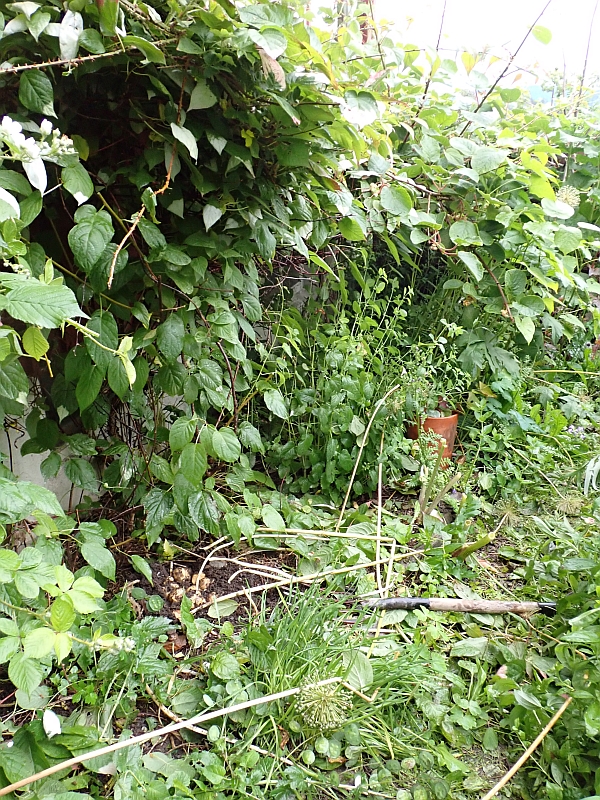
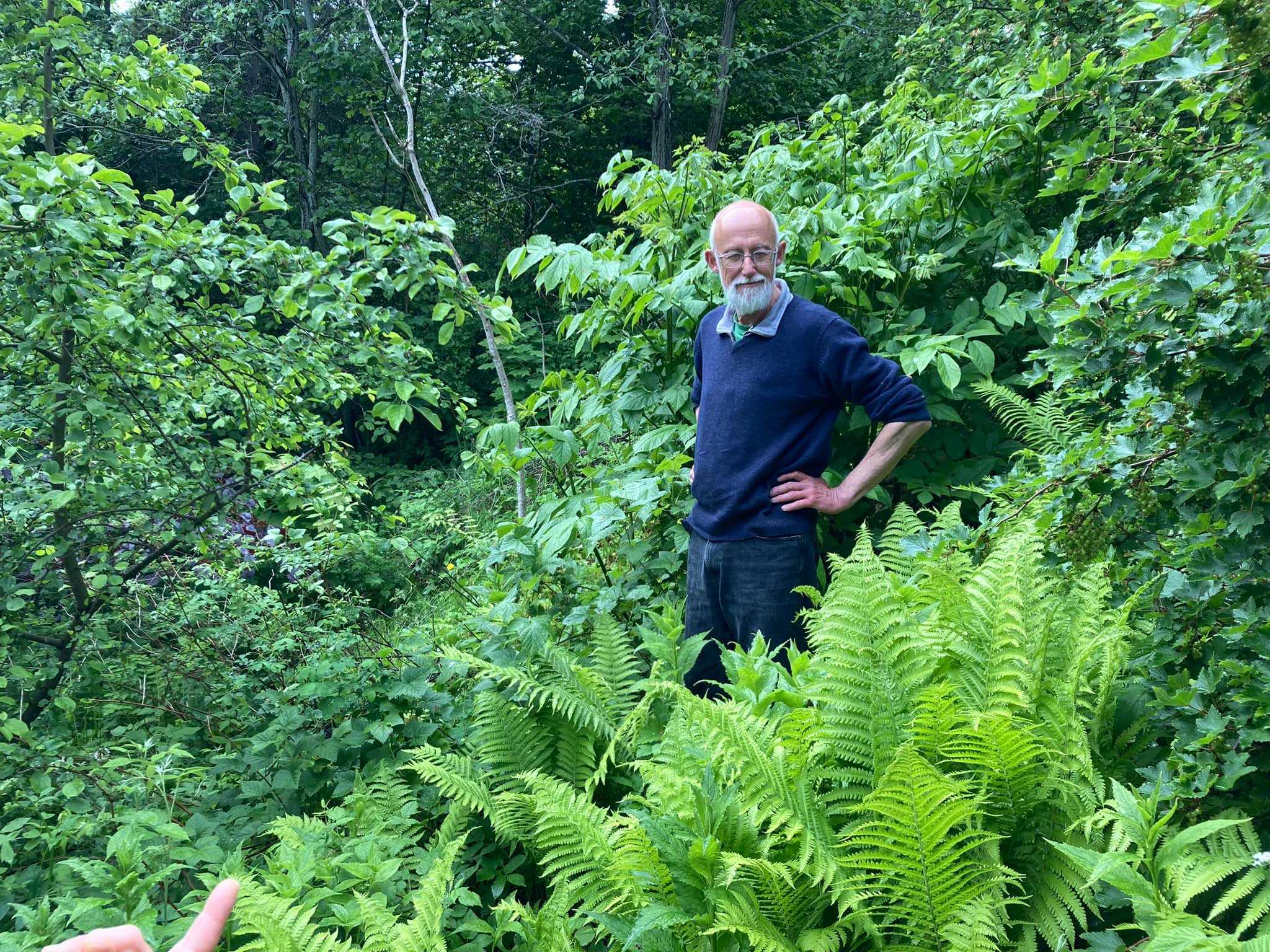
I was away in the UK unexpectedly for two weeks in June. In my absence, there was a mini-heat wave here with plentiful rainfall too and 24 hour light. Growth was phenomenal and I took this series of videos to document the garden at its wildest (I had only cleared the paths of overhanging and fallen plants so that I could walk around the garden).
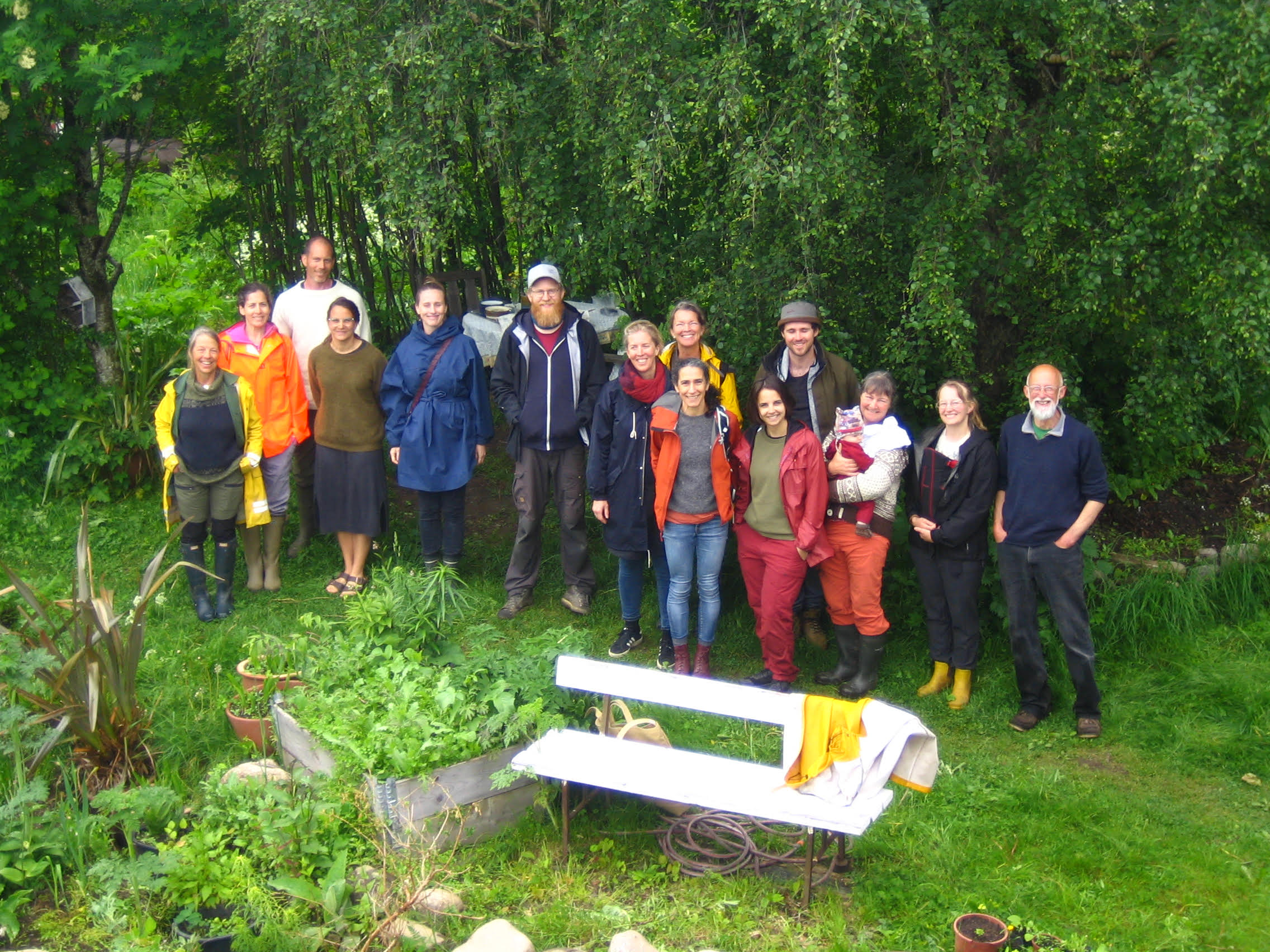
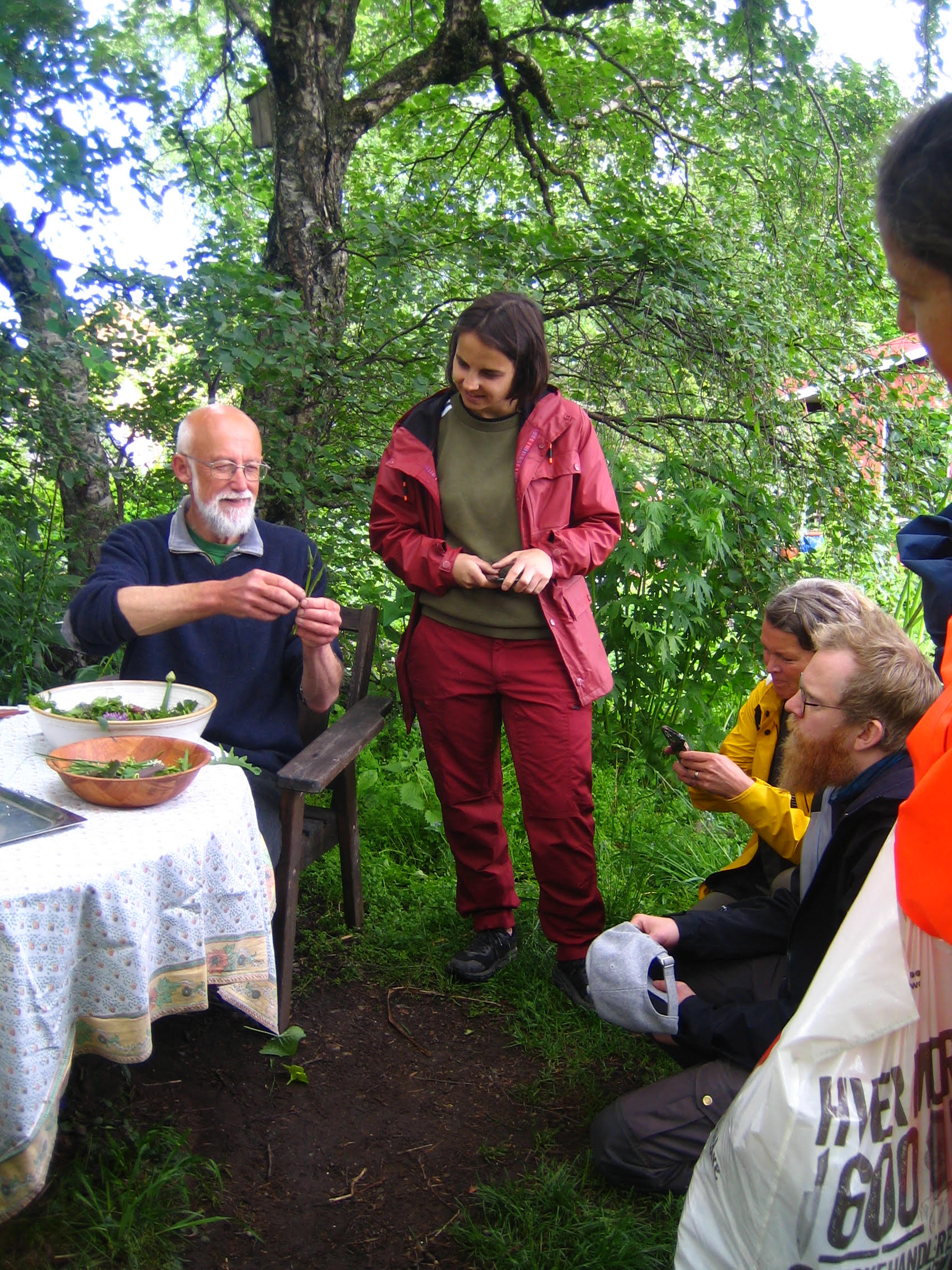
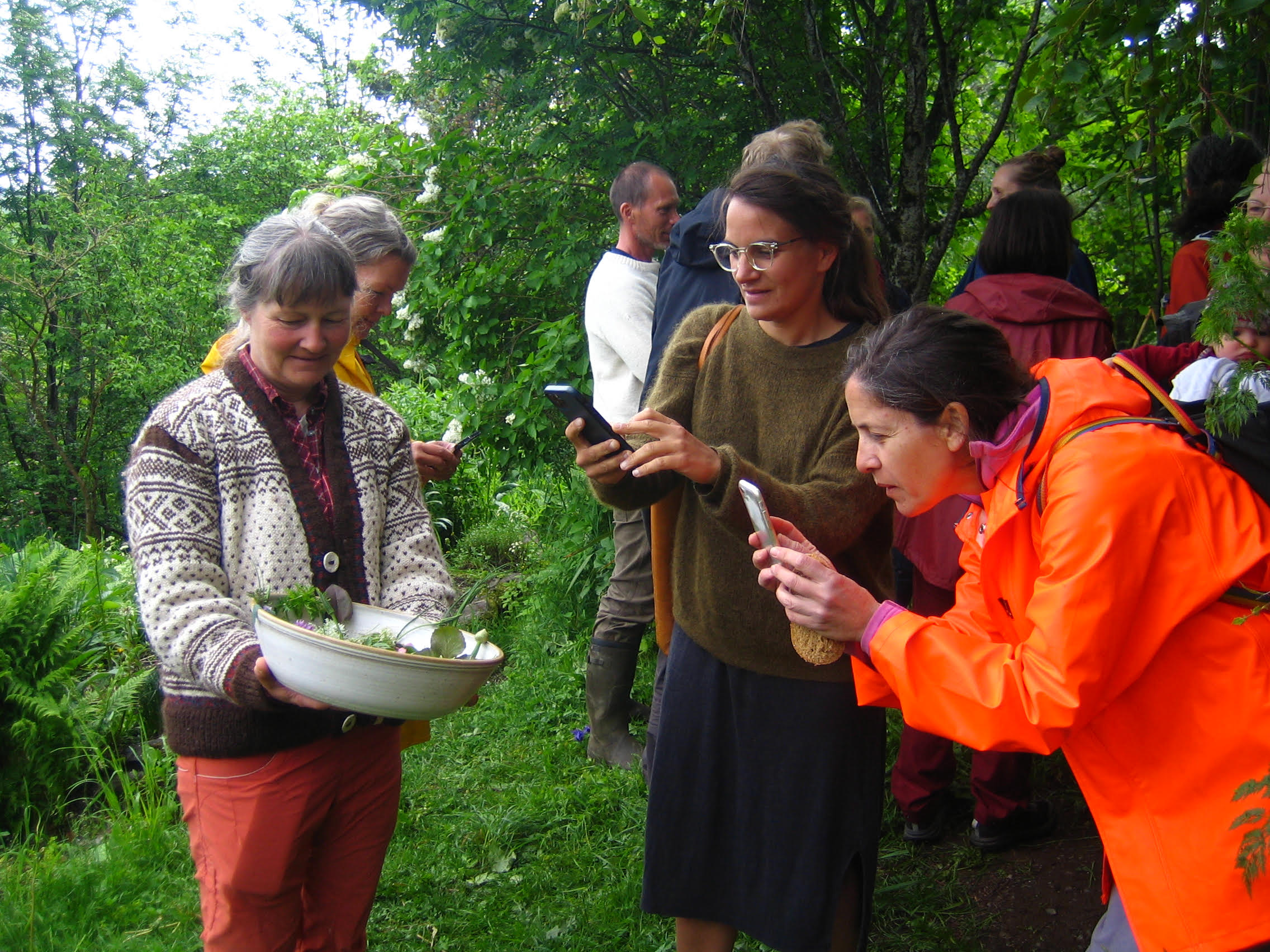
My dad Harald George Barstow (HGB) sadly passed away on 7th June at 97. A few days later on 11th June I’d scheduled a long-awaited visit from my friend Helene von Bothmer, the Koster Islands Permaculture Queen accompanied by participants on a one day permaculture course on Katy Chada’s farm (I had twice visited Koster but this was Helene’s first Malvik visit). They had asked if I could make a salad for lunch that day, so with my Dad’s loving memory in focus, the salad became a tribute to Dad as well as a welcome to Helene, Katy and the participants. It had exactly 97 ingredients <3 (a list can be found at the bottom of this page)
There’s an H in there (sort of!)
Now some pictures taken during a lovely visit! I hope it isn’t long before our ways cross again Helene!
Somebody asked me a few days ago if one could eat Angelica gigas (Korean Angelica) as you can Angelica archangelica (see my book Around the World in 80 plants for more about that). In my book, I do mention gigas as one of several other Angelica species used in other parts of the world, but until yesterday I hadn’t eaten it myself, partly as I¨’ve never had many plants and the flowering is wonderful!!
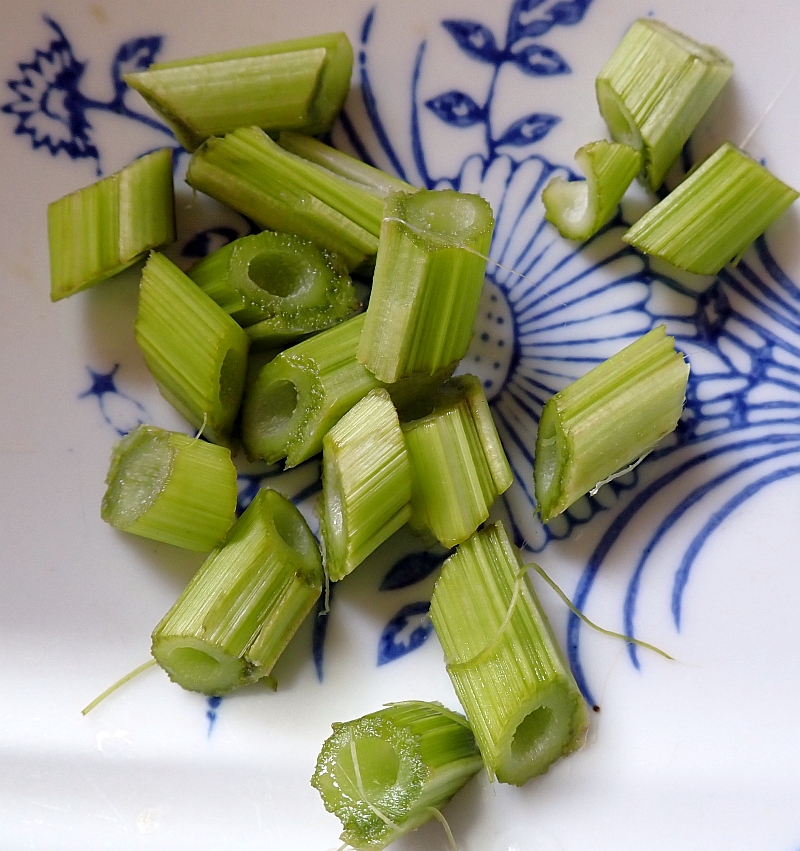
On the Korean wiki page, it simply states that “dangwi / dangquai’s petioles and tender stems are eaten raw or seasoned with herbs”. The root is also used medicinally along with Angelica acutiloba and Angelica sinensis. You can find various instructional videos and recipes on Korean pages by searching For example, the spring leaves and petioles are boiled and served with onions, garlic, sesame oil and sesame seeds. As my plants were close to flowering (they darken quickly to deep red at this stage), I decided to go for using the flower stems in salad:I first took one of the thicker flower stems… ….and sliced off a bit at the base for a taste! I was taken aback by how sweet it was (flower stems of Angelica archangelica were in the past considered to be candy by Norwegians). This reminded me of other plants that have surprisingly sweet flower stems: Scorzonera hispanica (scorzonera / scorsonnerot) and Arctium (burdock / borre). I assume that as plants like these approach flowering they produce less insect repellent chemicals and transfer their energy to producing flowers and seeds. For the salad, I peeled off the outer layer as it is fibrous and sliced it into the salad. Young seed pods of sea kale / strandkål were also available as were Scorzonera flower stems and buds.
As with most Apiaceae, Angelica gigas is very popular with the pollinators, so this one definitely fits into the Edi-ento-mental category (delicious, ornamental and popular with the pollinators – what more could you wish of a plant!). Unfortunately, like Angelica archangelica this species dies after flowering.
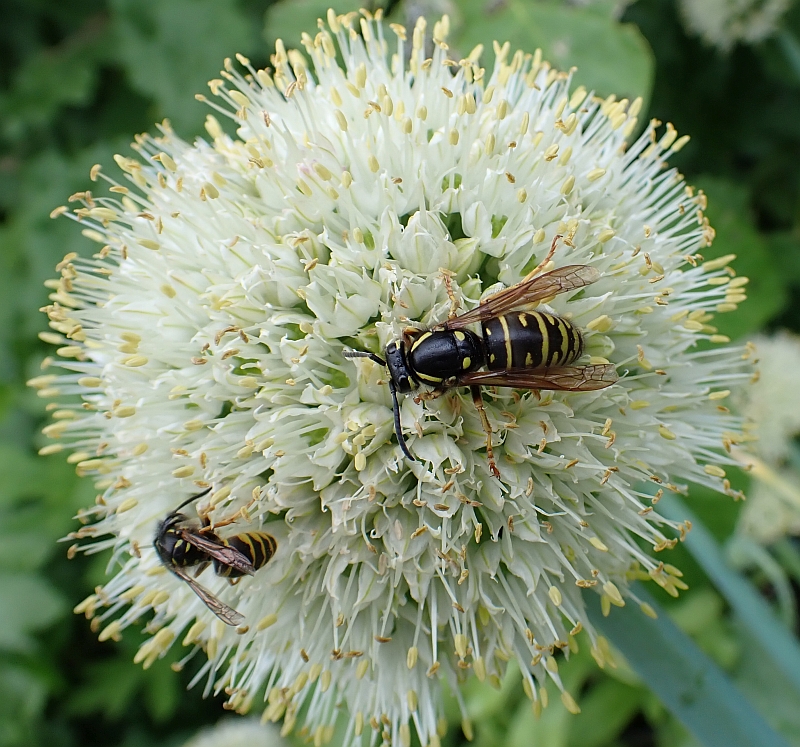
I found the cuckoo wasp / rødgjøkveps in the garden today – Vespula austriaca. It parasitizes the red wasp / rødveps (Vespula rufa) by occupying its nest. V. rufa is uncommon in the garden, but I saw one today too. There are no workers of V. austriaca.
A weird thing happened on the morning I left for England. Not what I expected to see gliding across the window in front of my desk: an earthworm. How on earth did it get there…and, yes, the window is dirty enough for it to get a grip!
Back from my two week stay in England for my dad’s funeral (he was 97 and still growing leeks from seed; I planted them posthumously!) and being with my mum. The growth in the garden has been phenomenal with a heat wave (over 30C), 24 hour light and plentiful rainfall. I have much work ahead of me tidying up overgrown paths!
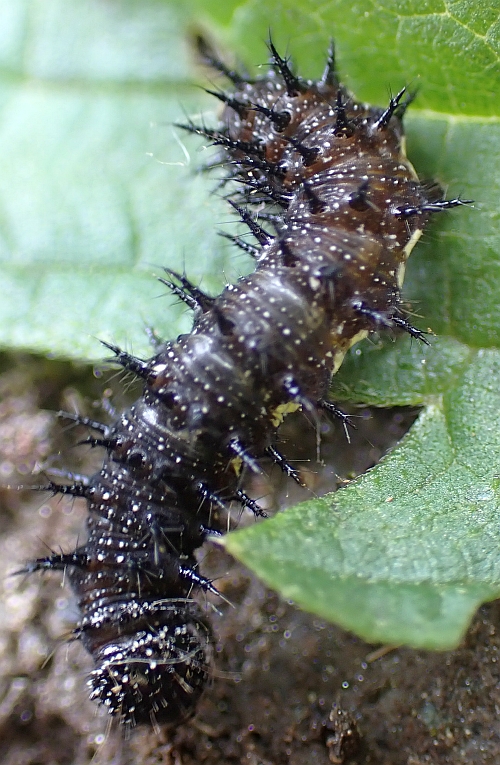
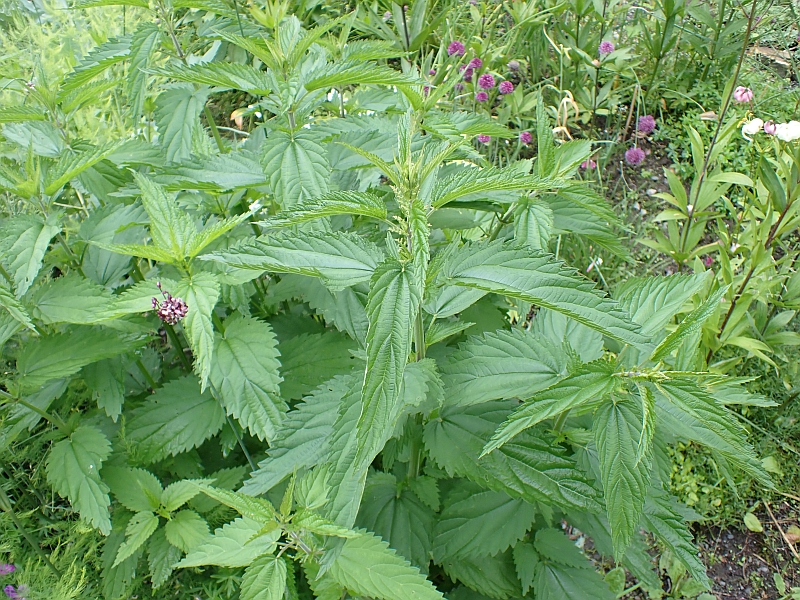
Harvested nettles of the almost stingless Urtica kiovensis for dinner and found this red admiral caterpillar!

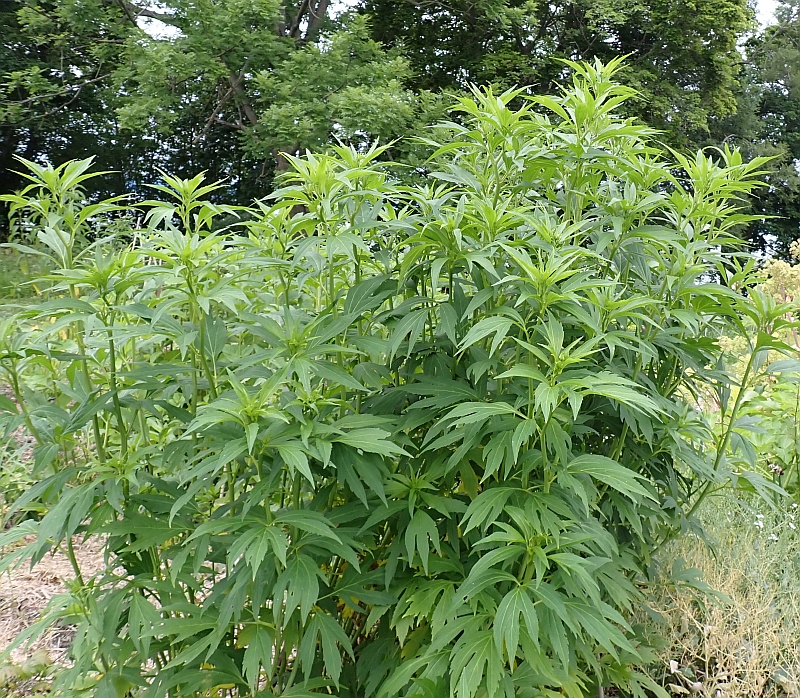






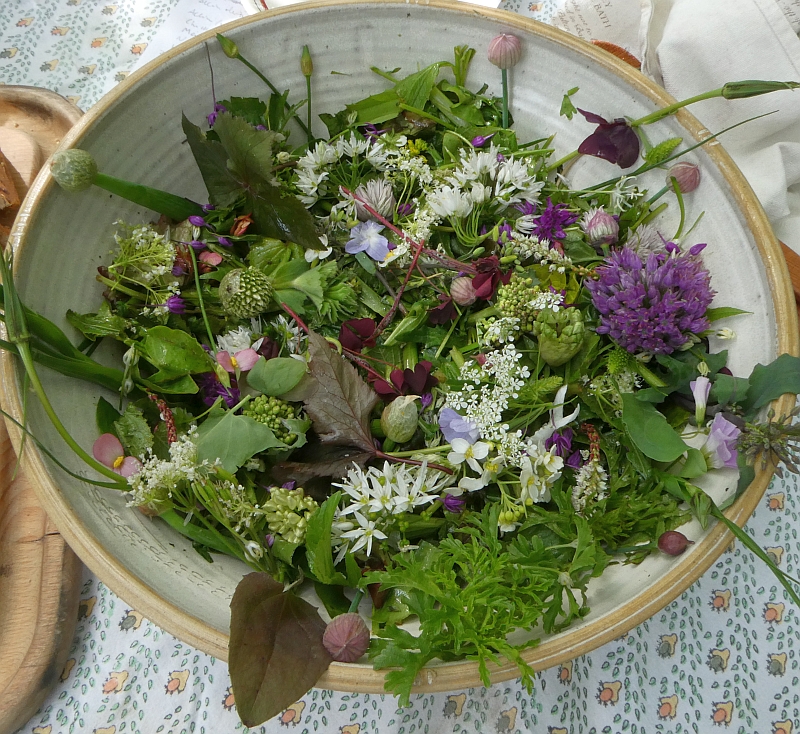
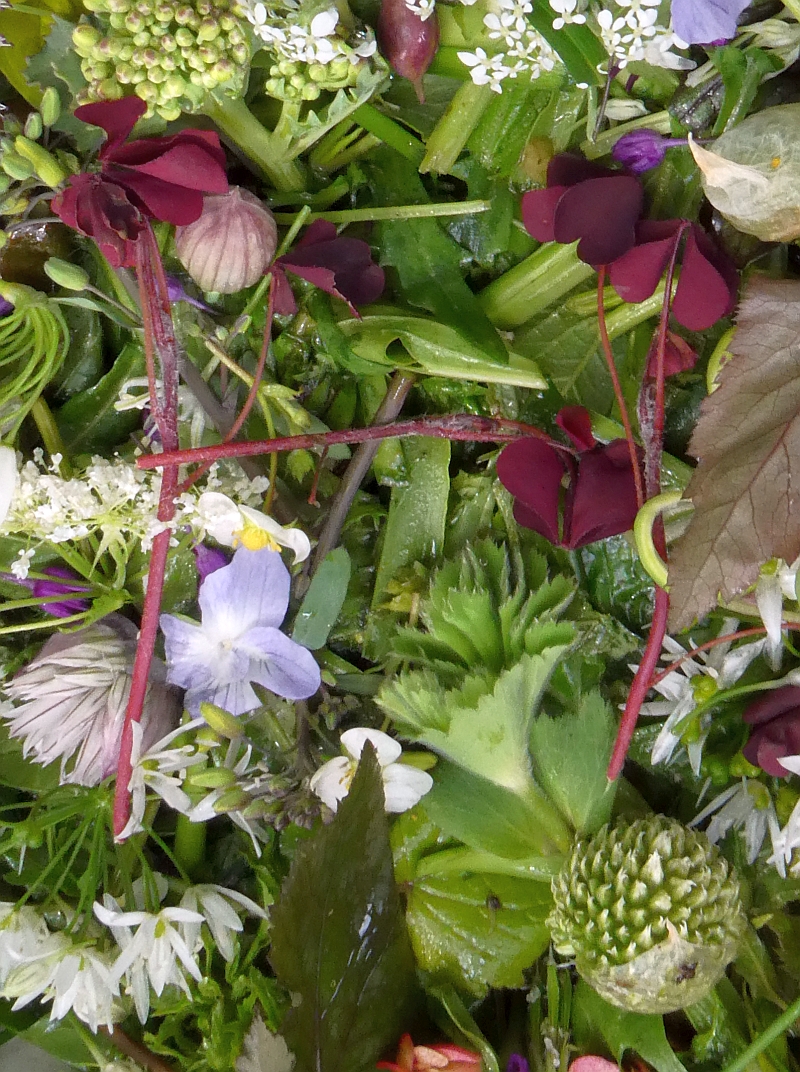 There’s an H in there (sort of!)





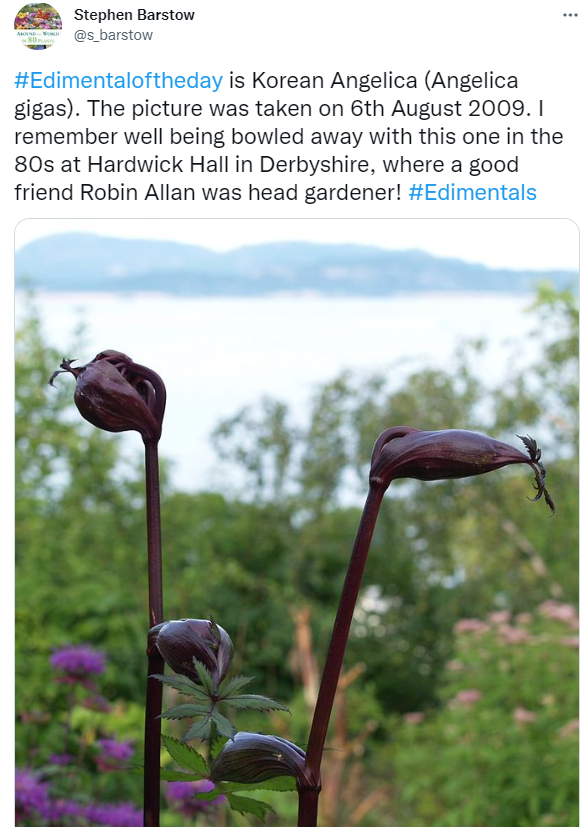
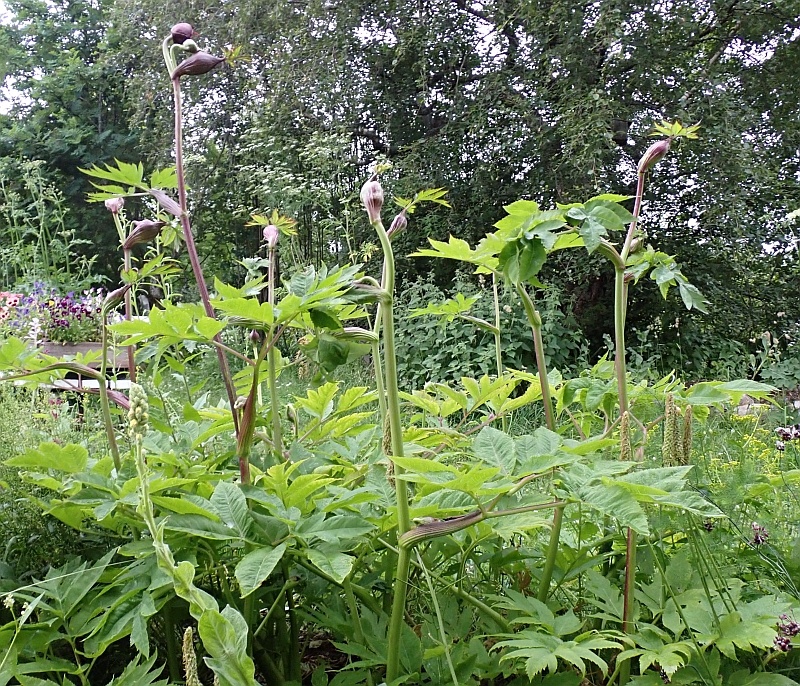 I first took one of the thicker flower stems…
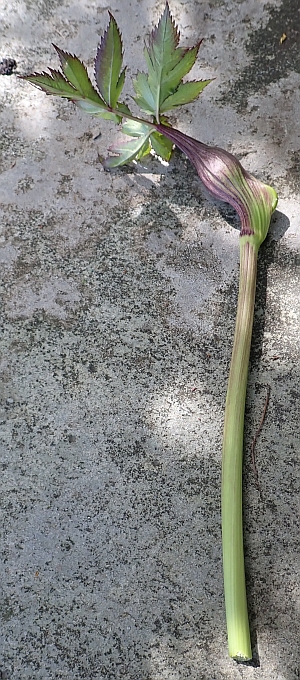 ….and sliced off a bit at the base for a taste! I was taken aback by how sweet it was (flower stems of Angelica archangelica were in the past considered to be candy by Norwegians). This reminded me of other plants that have surprisingly sweet flower stems: Scorzonera hispanica (scorzonera / scorsonnerot) and Arctium (burdock / borre). I assume that as plants like these approach flowering they produce less insect repellent chemicals and transfer their energy to producing flowers and seeds. For the salad, I peeled off the outer layer as it is fibrous and sliced it into the salad. Young seed pods of sea kale / strandkål were also available as were Scorzonera flower stems and buds.