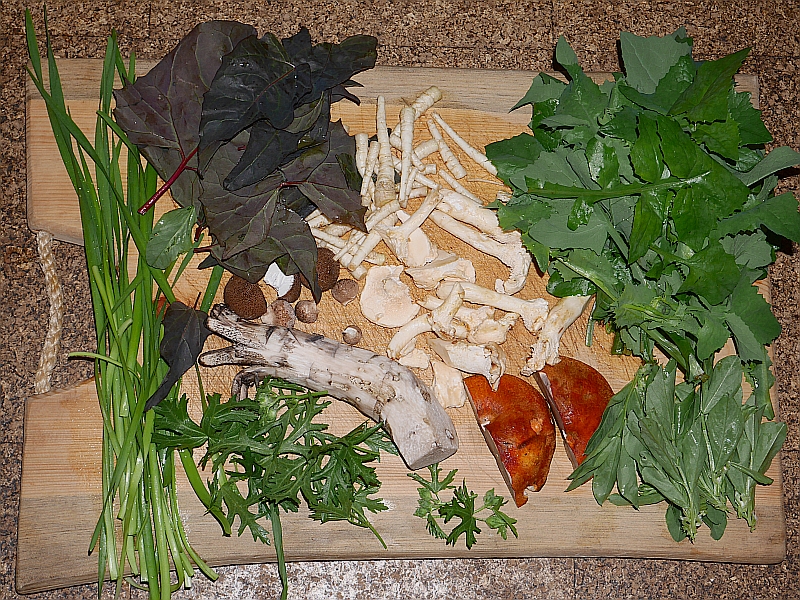
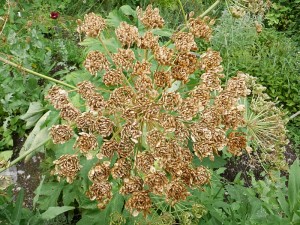
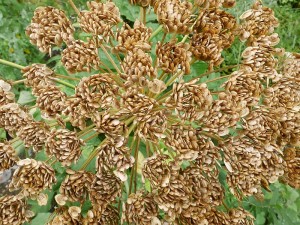
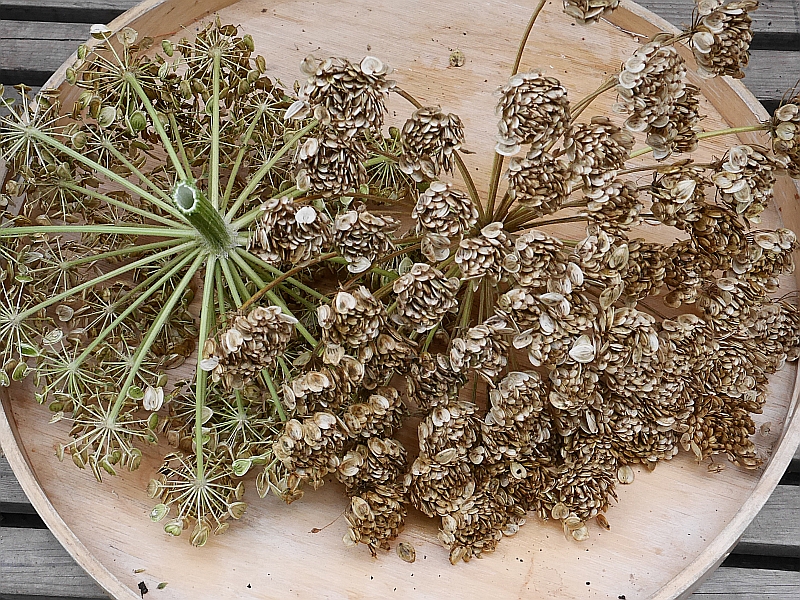
The veggies: Allium senescens x nutans hybrid onions, Malva moschata (musk mallow), Broad bean tops, Atriplex hortensis “Rubra” (red orach), Sonchus oleraceus (common sow thistle), chili, puff balls, Leccinum versipelle (orange birch bolete / rødskrubb), piggsopp/hedgehog fungus and at the top young parsnip roots (thinnings)Heracleum maximum is the North American Cow Parsnip…Heracleum maximum is the North American Cow Parsnip…
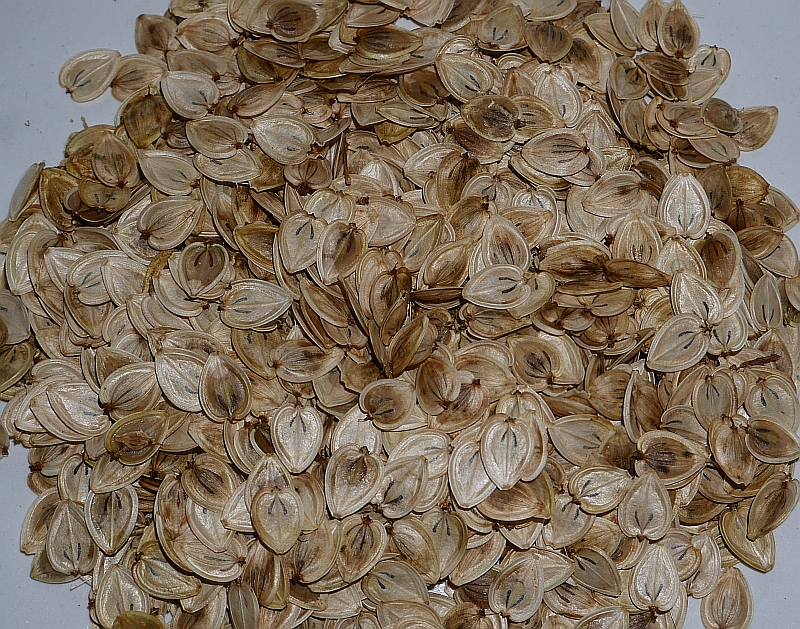
I made soba with stir-fried golpared veggies and wild fungi for tonight’s dinner. Soba is buckwheat noodles. Golpar is the Turkish spice usually made from the ground seed of Heracleum persicum (Tromsøpalme). To me the taste of “golpar” made with different Heracleum species isn’t very different. Tonight I used Heracleum maximum seeds fresh harvested from the garden to spice the stir-fry (instead of cumin which I used to use).
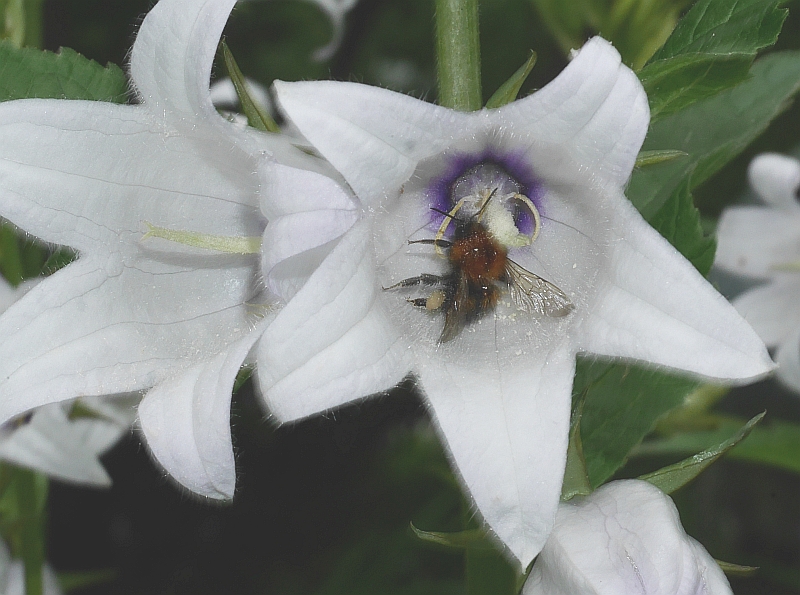
Noticed this rather attractive purple throated Giant Bellflower, reminiscent of Codonopsis! This patch came from AGS (Alpine Garden Society) seed, received as a cultivar “Gloaming” although pictures of that one all seem to show a purple flowered variety…
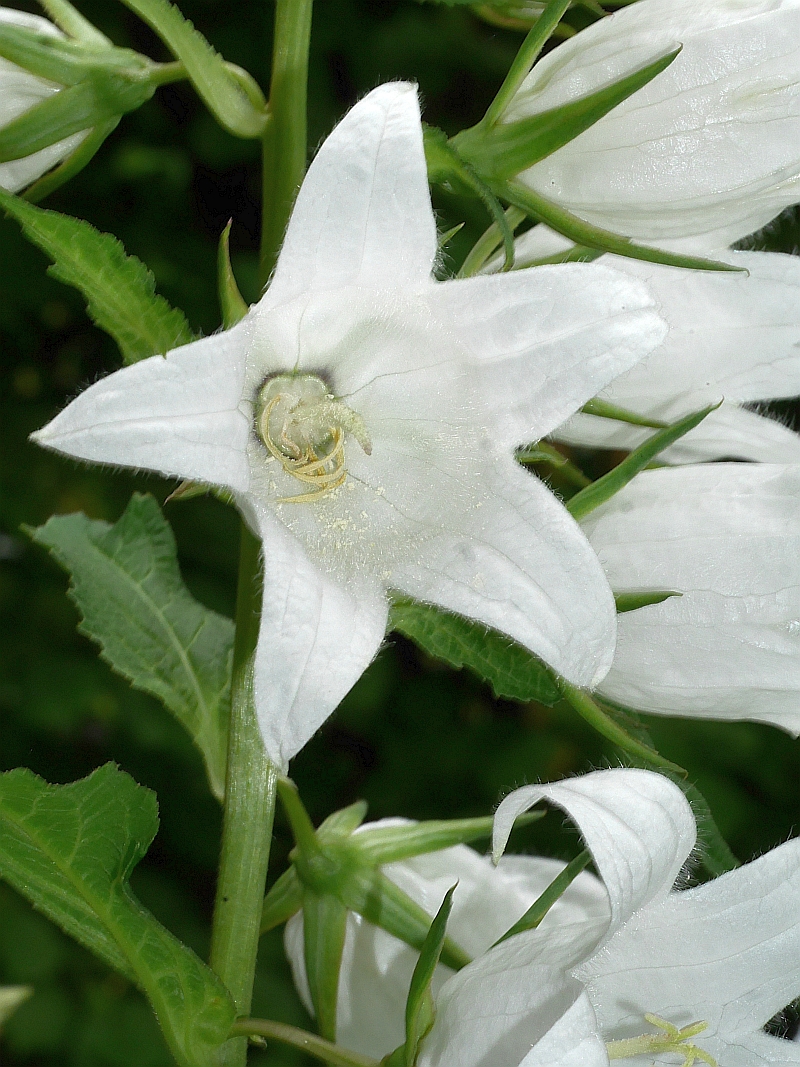
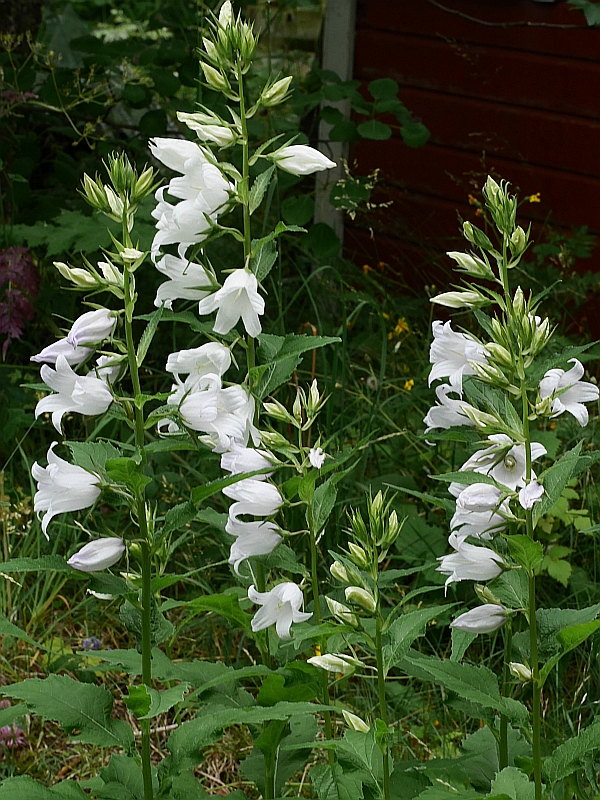
Campanula latifolia is one of top favourite edimentals as anyone who has read my book will realise!
Normal white throat
A closer look shows that Purple throat also has a little purple in the petals ..A closer look shows that Purple throat also has a little purple in the petals ..
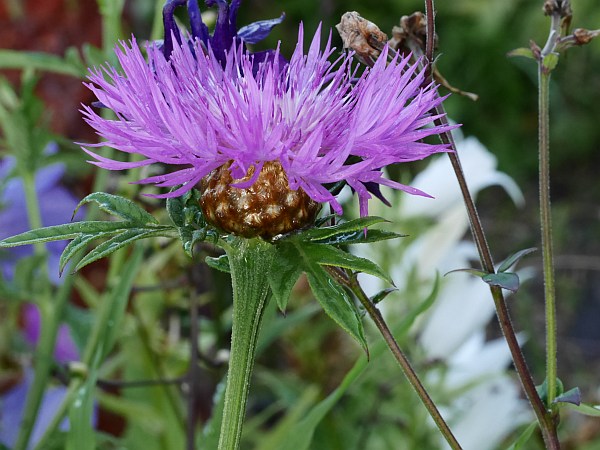
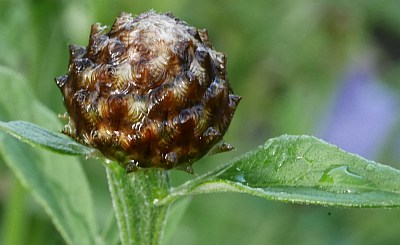
There are several knapweeds (Centaurea spp.) that have been used as wild vegetables in the Mediterranean countries. I haven’t yet found and evidence of this beauty (Centaurea dealbata “Steenbergii”) having been used but it’s flowering in my garden at the moment!
I’m interested in seed of any of the following, all recorded as food plants (shoot, leaves and stems):
Centaurea aspera
Centaurea calcitrapa
Centaurea dumulosa
Centaurea hyalolepis (syn Centaurea pallescens)
Centaurea nicaeensis
Centaurea nigrescens
Centaurea solstitialis
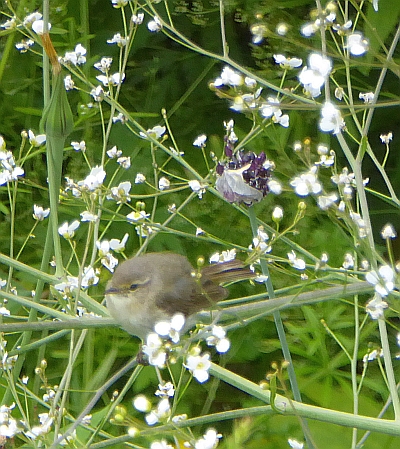
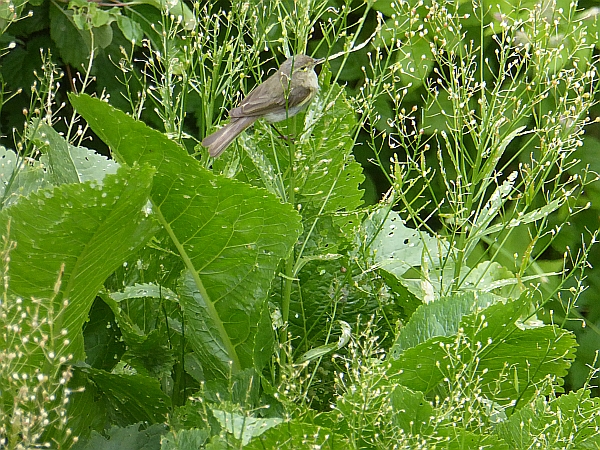
I was taking a picture of my second Crambe cordifolia (heartleaf crambe / buskstrandkål) flowering for the first time in the garden from my bedroom balcony. I noticed this chiffchaff (gransanger) presumably gorging on diamond back moth larvae (kålmøll). It then moved across to a horseradish, another plant in the Brassicaceae with plenty of food. Both plants are in my book!
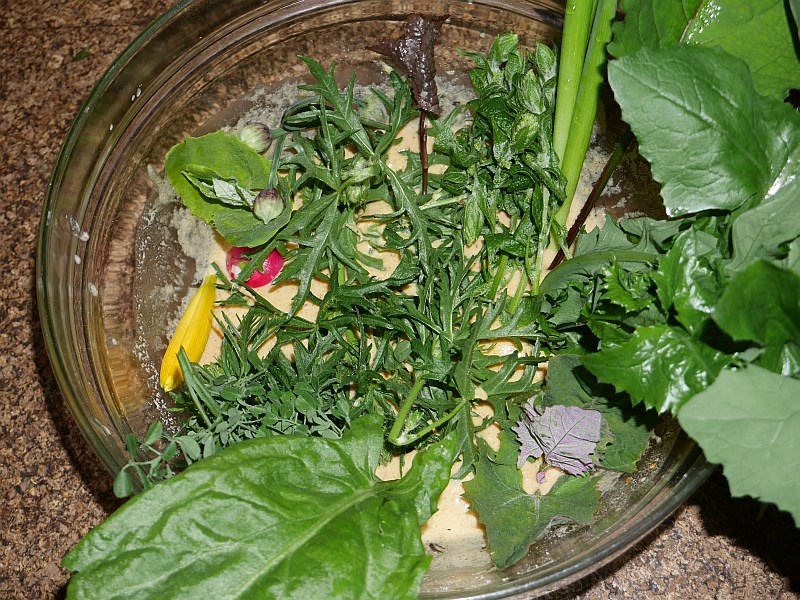
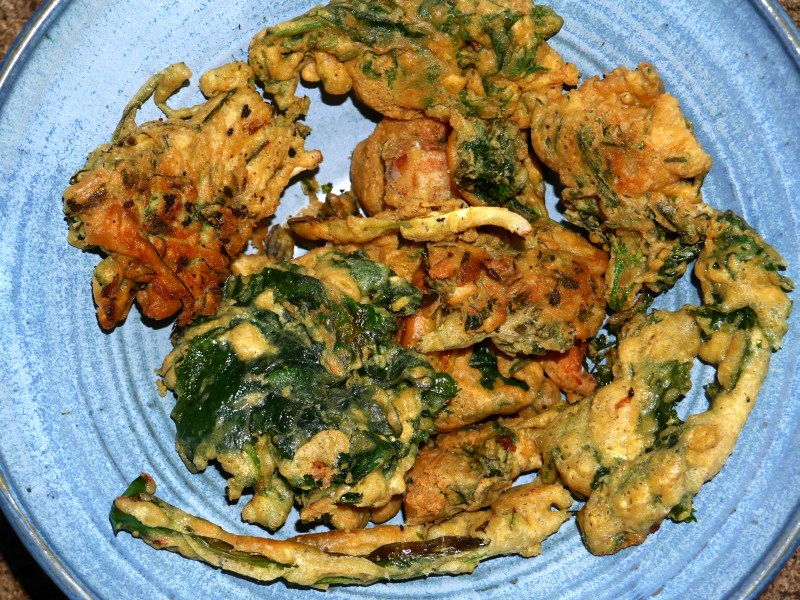
I gave myself a little treat this week and made Indian pakora! Pakora are basically fried vegetable fritters, often sold as a starter in Indian restaurants. The vegetables were dipped in a batter made of gram (chick pea) flour, a little chili and garam masala spice. It would be interesting to use broad bean (fava) flour instead of chick peas!
I used: Day lily buds (Hemerocallis), common sow thistle (Sonchus oleraceus), radish, red mitsuba (Cryptotaenia japonica atropurpurea), musk mallow (Malva moschata), Korean aster (Aster scaber), sorrel (Rumex acetosa), garden orach (Atriplex hortensis), Parsley pea (tops), Allium nutans x senescens (leaves and flower stems/buds) and Hablitzia tamnoides (tops)…..
DELICIOUS!!
An interview with yours truly at Holma Forest Garden in Southern Sweden during my visit in early May. Filmed and produced by Jim Nilsson who did an excellent job I think :) The interviewer is Eric Karlsson!