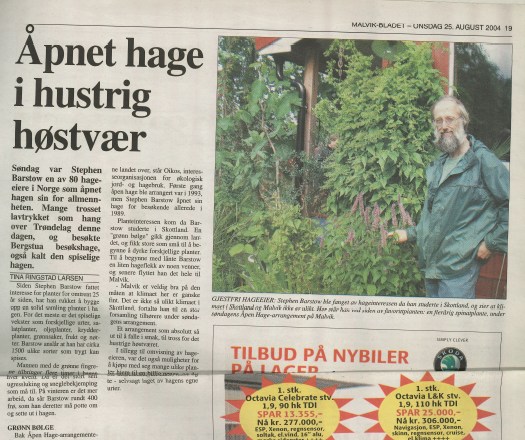
Cleaning out my office and I found a local newspaper article about an open day in my garden almost 13 years ago (August 2004) with a picture of me and my only 3 year old Hablitzia (noted in the caption as my favourite plant: a perennial spinach!) that’s still going strong and already in vigorous growth!
10 years ago in July 2006, I received an email seed request from a Sergey Banketov in the Caucasus. I don’t usually trade seed in summer, but he had such an interesting list of wild collected species from the Caucasus that I made an exception and we traded seeds. At the time I was writing my article on Hablitzia tamnoides for Permaculture Magazine and on the offchance I asked “Do you know the plant Hablitzia tamnoides? It was introduced to Sweden in about 1870 as an ornamental plant and later it was realised that it was also a very good edible plant (used in the springtime as spinach) . It is still grown in some gardens in Scandinavia for food. However, I can find no reference to its use as a food plant in its home range (the Caucasus). Do you have any information about its use? I am also interested in seed from wild populations and photographs of the plant in the wild as I am writing an article about it.”
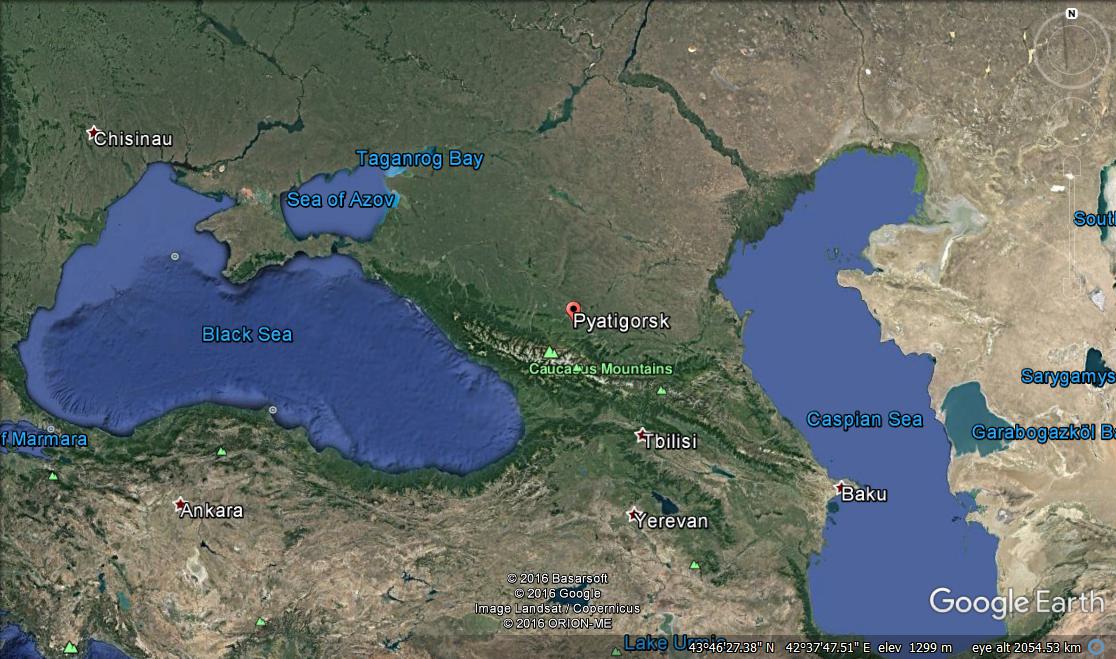
Sergey, a botanist, lived in the city of Pyatigorsk in the Stavropol region of Russia (Northern Caucasus) and he quickly replied:
“I know a plant of Hablitzia tamnoides. This plant grows with us in the vicinity of the city. And like for the first time it is described from mountain Mashuk. I shall collect seeds and I shall try to photograph her. Unfortunately the information on it is very poor. I hear the first time that she is edible. With us we do not use even for decorative purposes. I shall try to learn about it at work (Botanical institute) and in the pharmaceutical academy.”
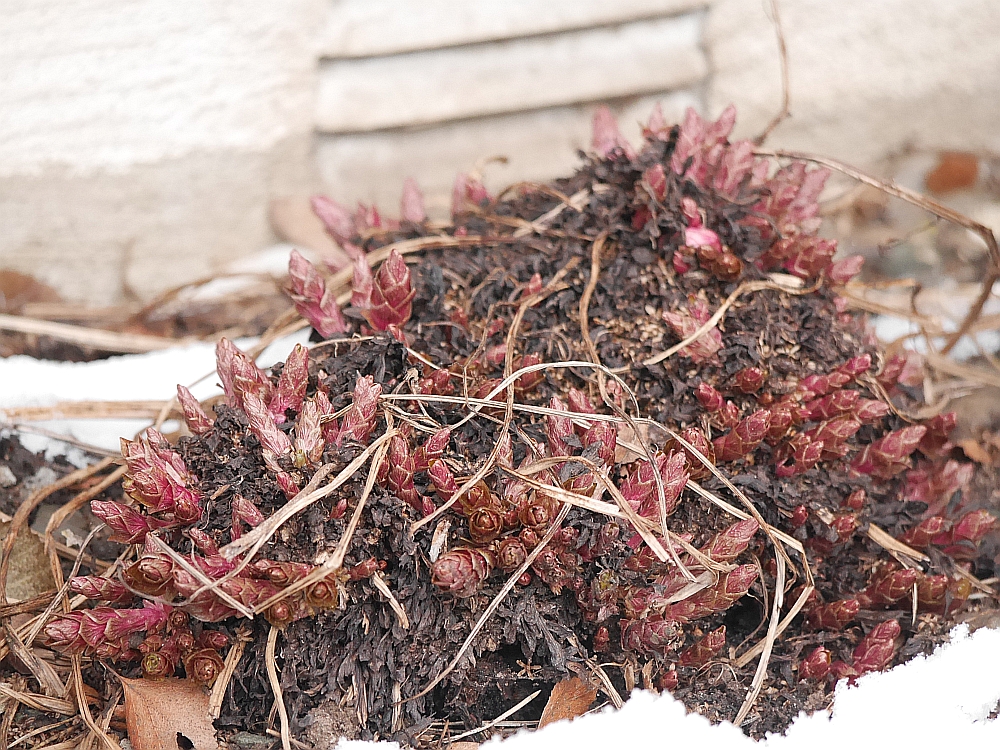
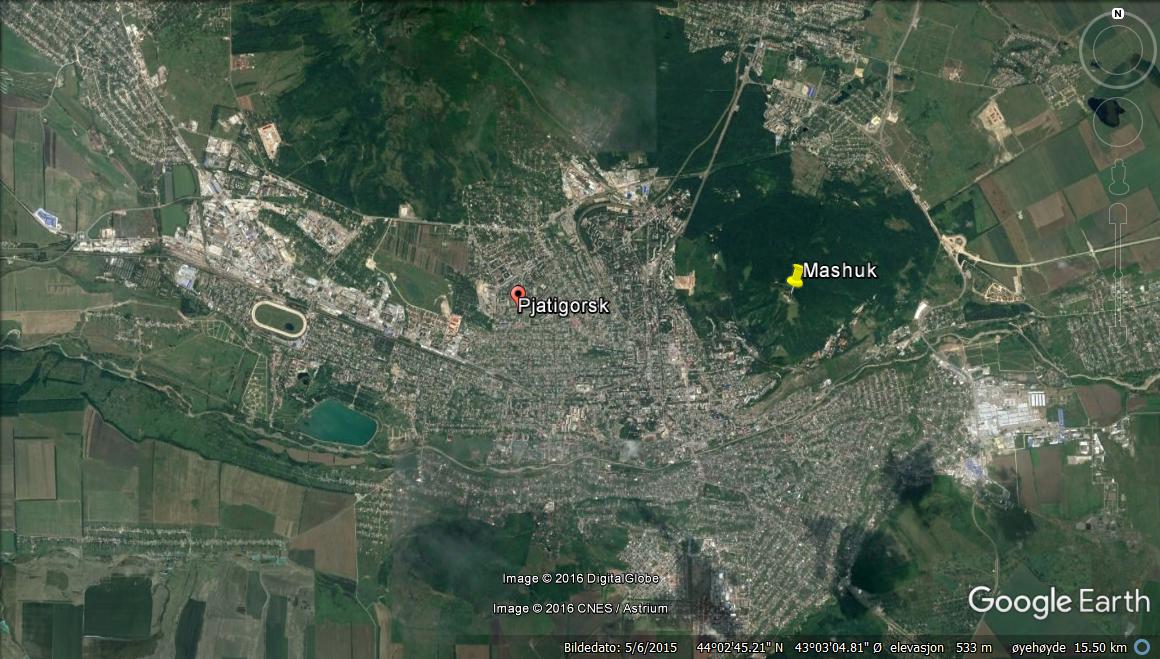
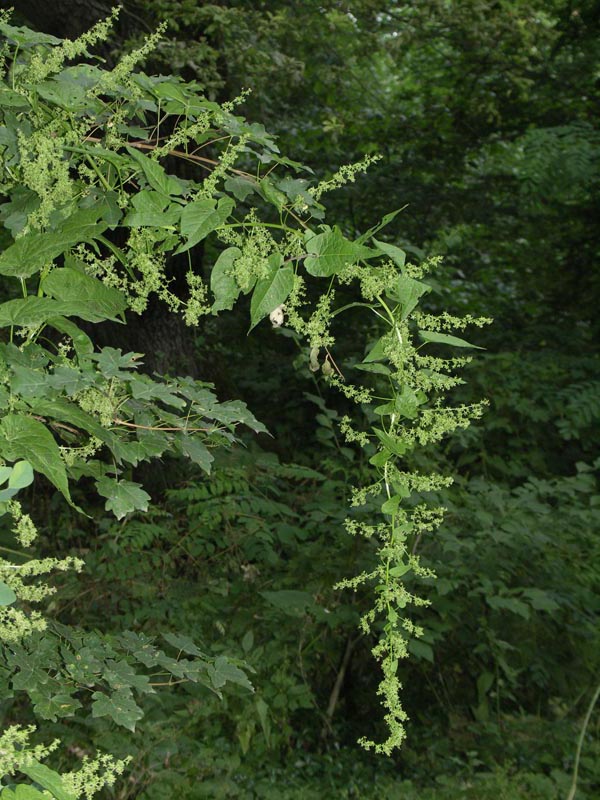
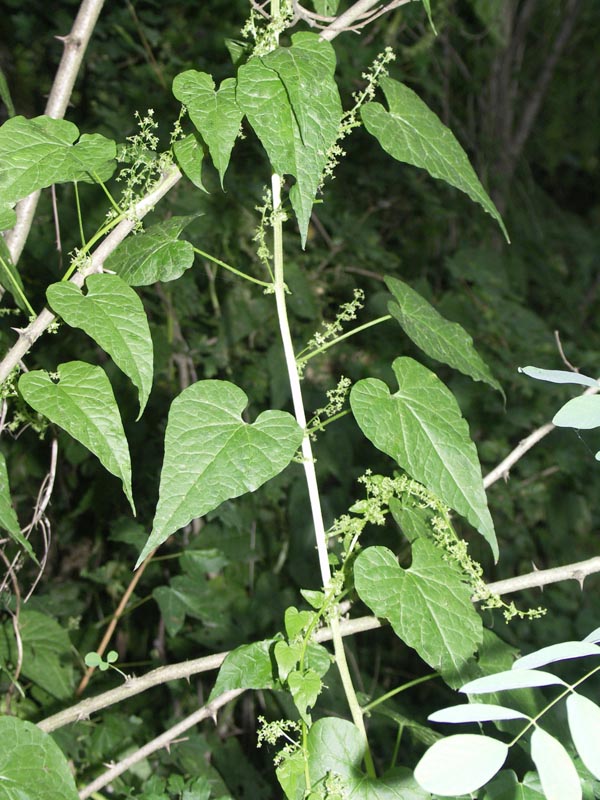
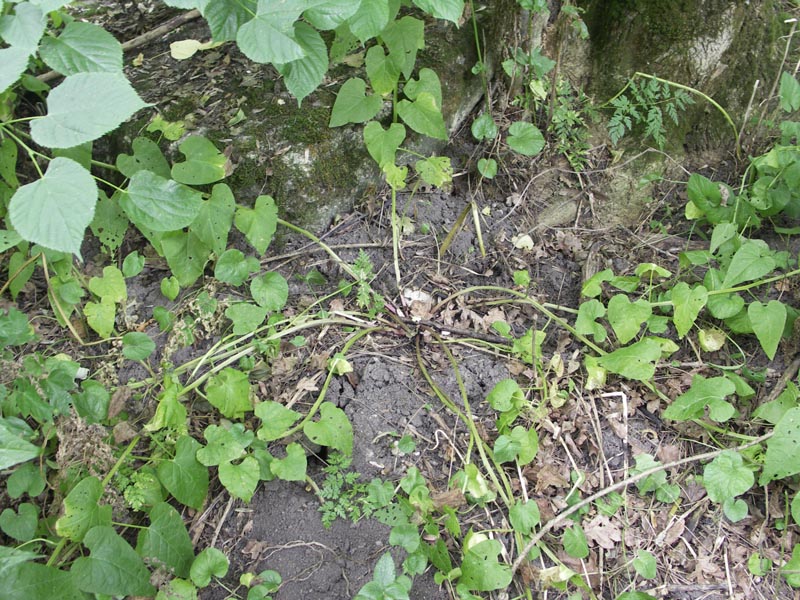
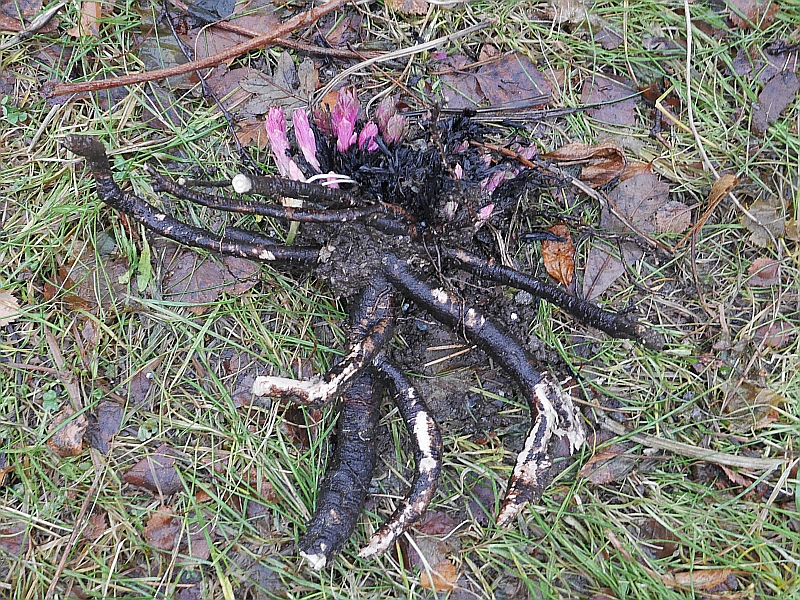
Just 4 days later he sent me these 4 pictures of the plant growing on northern slope at the bottom of the mountain Mashuk (see the images for the location). Further he told me that nobody knows the plant apart from botanists!
Location of Pyatigorsk in the Northern Caucasus
Mt. Mashuk is on the outskirts of the city
Picture by Sergey Banketov on the lower northern slopes of Mt. Mashuk
Picture by Sergey Banketov on the lower northern slopes of Mt. Mashuk
Picture by Sergey Banketov on the lower northern slopes of Mt. Mashuk
Picture by Sergey Banketov on the lower northern slopes of Mt. Mashuk
In January 2007, Sergey sent me his new seed list which now included Hablitzia! In February, I received a good amount of wild seed, collected from 3-4 plants at the bottom of Mt. Mashuk (my own single plant produced almost no seed) and in the Permaculture Magazine article an offer of seed was given, the source being Sergey.
I dug out one of my Hablitzia plants today as it had self-sowed in a place I didn’t want it….I harvested a few of the winter shoots and potted the roots up in a large pot for winter forcing!
My article “Caucasian spinach: the unknown woodlander” was published by Permaculture Magazine 9 years ago in 2007 (see http://www.edimentals.com/blog/?page_id=1984 and also my book Around the World in 80 plants). In the meantime this vegetable has become a popular perennial vegetable and forest garden plant grown by thousands around the world, and is perhaps the first new vegetable to become popular thanks to social media and the permaculture movement! At last the results of a project to analyse the nutrient content of this plant have been announced on our Friends of Hablitzia FB group by Leena Nurmi who carried out the work for her masters thesis in Finland! And the news is very good, confirming that Hablitzia (Caucasian Spinach) is not only a fantastic productive perennial vegetable but also is superior to spinach and New Zealand spinach nutritionally and for those who worry about oxalic acid and nitrates, both are within accepted limits!!
Time for a celebration
She writes:“Hello Stephen and other Hablitzia friends! Greetings from Finland. I have done my master’s thesis about Hablitzia “Hablitzia tamnoides – a new but old leafy vegetable of early summer: cold stratification of seeds and nutritional value of leaves”. Now I am writing a scientific article about the nutritional value of Hablitzia. Caucasian spinach contains particularly plenty of carotenoids, folates, calcium, magnesium, phosphorus and zinc. Also many other nutritions were larger in Hablitzia than in spinach and New Zealand spianch. In my study the oxalic acid, nitrate, cadmium and lead contents did not outweigh the permissible threshold values. The seeds of Hablitzia need to be stratified either in a cold room or outside during winter in order to germinate. The highest germination rate was 52 %, recorded from the Tampere population stratified at +5 ºC in a cold room. The seeds of Tampere population were picked up in February and sown for stratification in the middle of March. In Finland Hablitzia grows even in Oulu, but wetness of soil kills the plant very easily.”
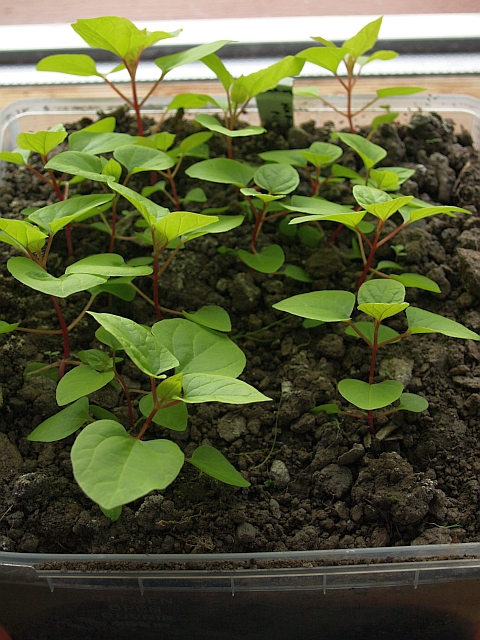
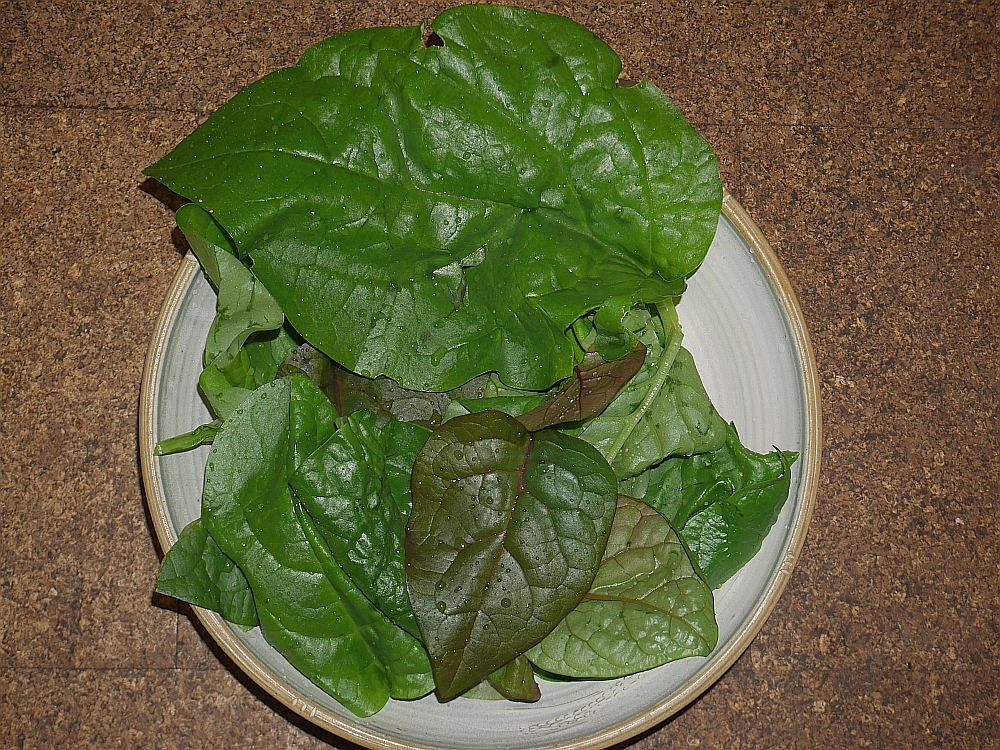
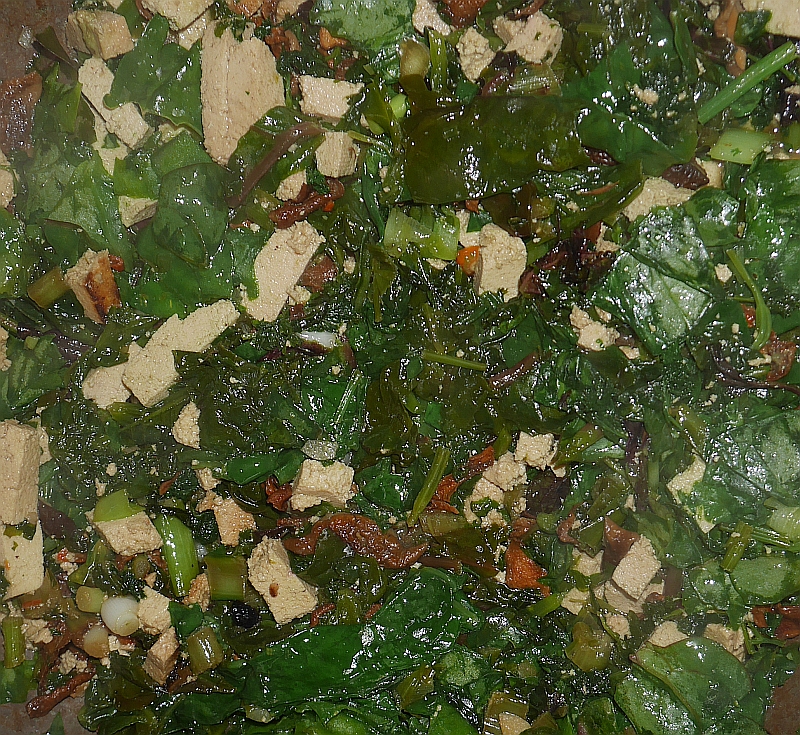
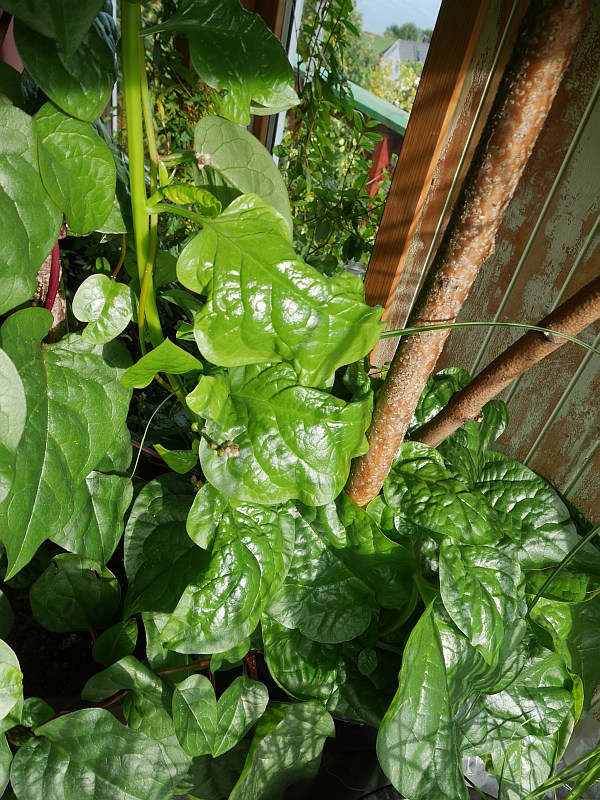
Harvested some of my bedside Basella greens tonight for a stir-fry with garlic, chili, chicory, parsley, dried chantarelle, broad beans and perilla…. served with soba (organic buckwheat noodles). Basella is perennial but I’ve never managed to overwinter it…
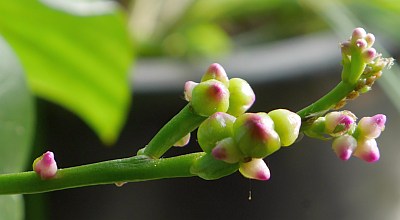
Green and red stems of the two varieties intertwined next to my bedFlowers and swelling seeds/fruit…From outside, the Basella is growing behind two different varieties of tiger nuts (Cyperus esculentus)Green and red stems of the two varieties intertwined next to my bedAll three of the Basellaceae for Xmas dinner 2007 – Madeira vine, ullucos and potatoes with Malabar spinach on the right!
I have Malabar spinach (also known as Ceylon spinach or just Basella), a vigorous climbing spinach which isn’t hardy outside here, but grows very well and sets seed every years in an unheated bedroom, this year in my bedroom…should I be worried it might strangle me in its sleep?
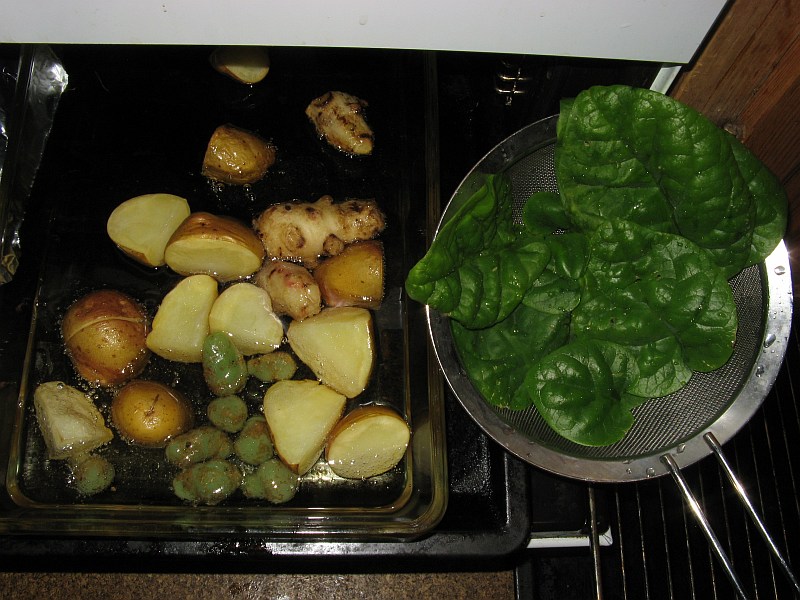
It’s in the Basellaceae alongside Madeira Vine (Anredera cordifolia) and Ulluco (Ullucus tuberosus), both of which have both edible tubers and leaves… I actually included all 3 of these in Xmas dinner one year (picture below) :)
Malabar spinach can be harvested here – I usually take a few leaves and mix with other greens – from August right into the depths of winter, a great winter leafy green house plant! This year I have both green (Basella alba) and red-stemmed (Basella alba “Rubra”) varieties growing alongside each other…
I presume that Malabar is the area of southern India where it’s a popular vegetable and I look forward to making Malabar bhaji next time I make an Indian meal!
Click the link to download this Norwegian report on a project in which old hop plants were collected from 18 locations around Norway (in Norwegian). Some of these are now available for members of Norwegian Seed Savers (Planteklubben for grønnsaker).
For the first time this year I have two different Yam beans growing in my office in Trondheim, Ahipa and Jicama (Pachyrhizus ahipa og Pachyrhizus erosus). I’ve grown and eaten Jicama before and here’s an album of pictures about my experiences of this delicious vegetable…worth growing for a little taste each year!
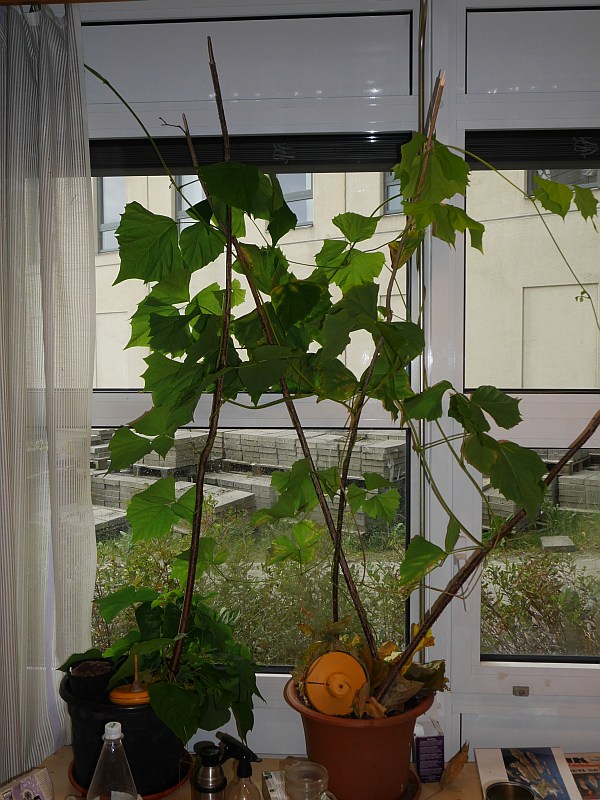
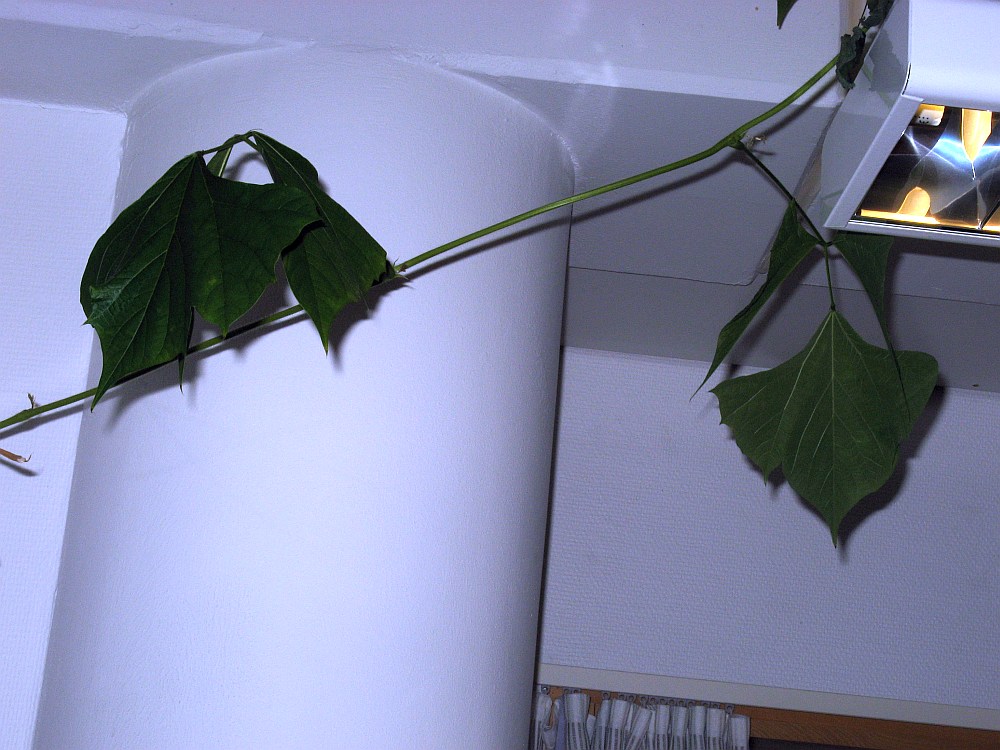
On the left, Ahipa (Pachyrhizus ahipa; Andean yam bean) and Jicama (P. erosus, Yam bean) in my office; September 2016… I hadn’t realised that Ahipa doesn’t climb, hence the stakes on both plants…the yellow things are models of my company, OCEANOR’s marine environmental monitoring buoys that I tested in a wave tank back in the 80s!
Reaching for the lights..
The first time I grew Jicama was in 2008. The yield wasn’t fantastic, but enough to try, here with tomatillos
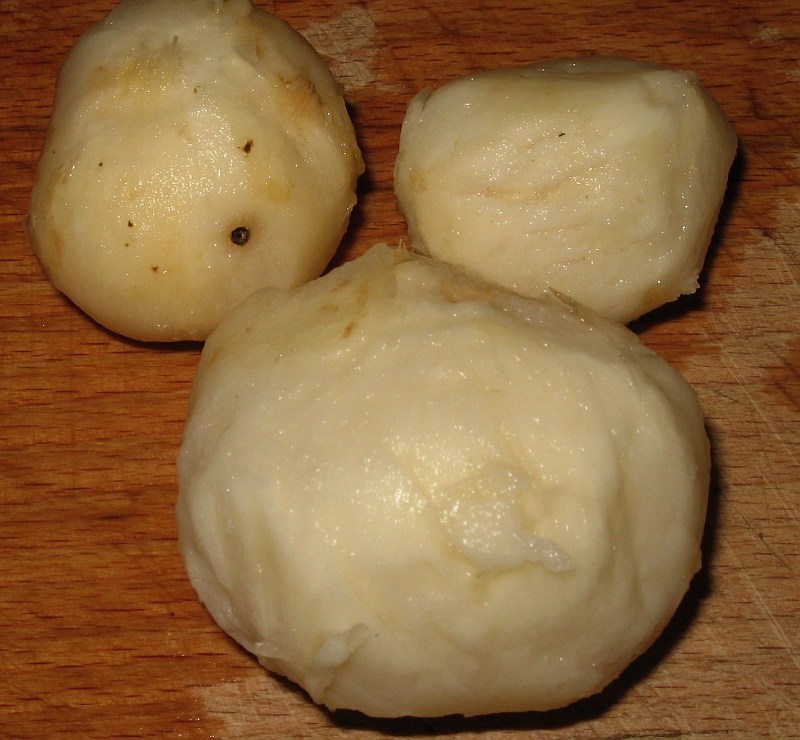
Peeled Jicamas
Quinoa boiled and then stir-fried with chili, tomatoes and onion.
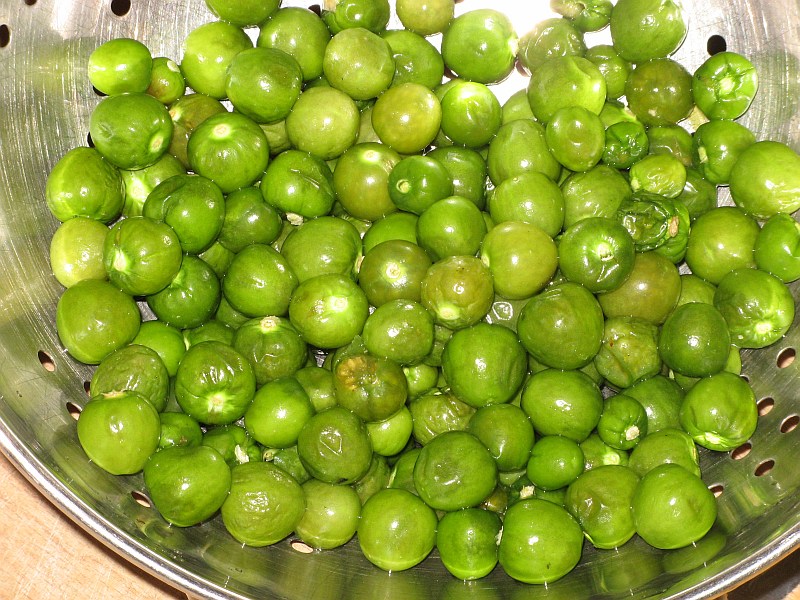
Home grown Norwegian tomatillos ready to cook ;)
Cooked tomatillos with other salsa ingredients!
The final dinner, grated Jicama with lemon bottom left was one of the tastiest vegetables I’ve eaten, salsa (bottom right) and quinoa (top)
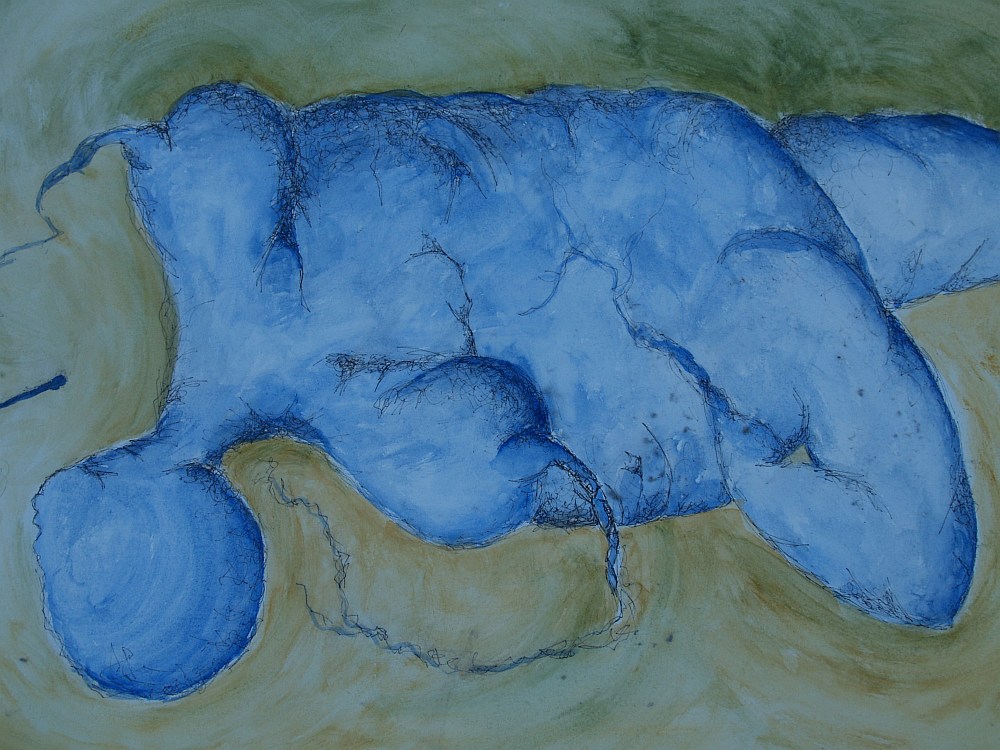
My daughter painted a Jicama tuber… I’ve always liked this :)
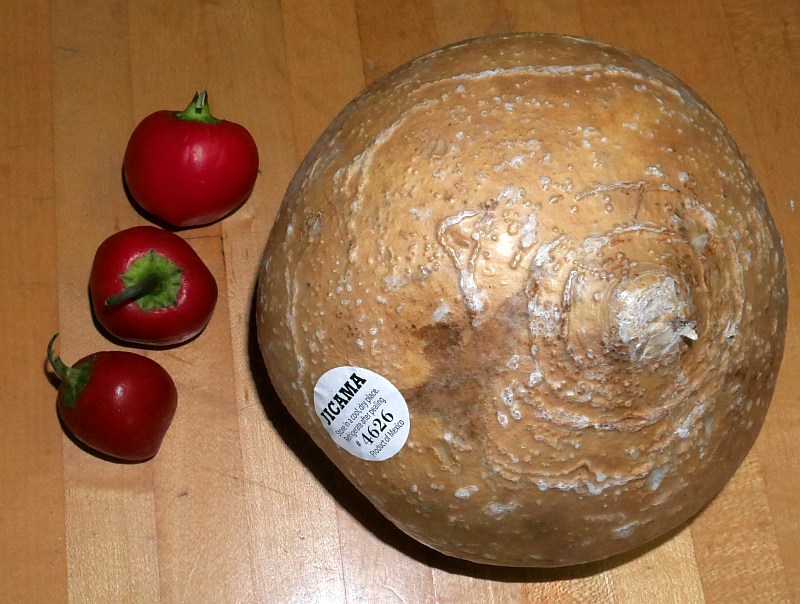
September 2014 and I was visiting a friend in Woodstock, Vermont and we found Jicamas in the local food coop!
Jicama and chilis
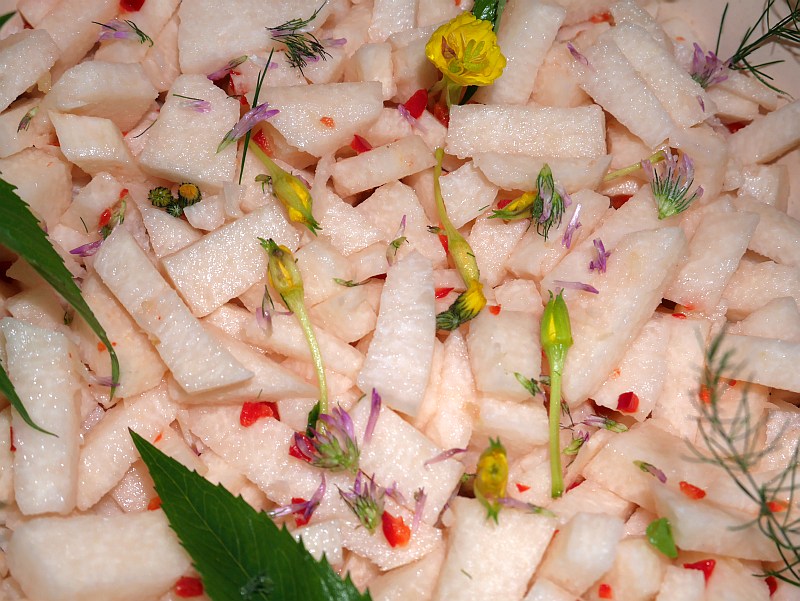
This Woodstock edimental jicama salad was delicious (with foraged greens and flowers)