Monthly Archives: August 2019
Close encounter with a cuckoo
On my bike ride to Ringve today, I saw a bird sitting on the path in front of me. I thought first it was a sparrowhawk that had its prey nearby, but no it was a first year cuckoo, which allowed me to get within 10m before it flew!


Broad beans, falafels, new potatoes and golpar
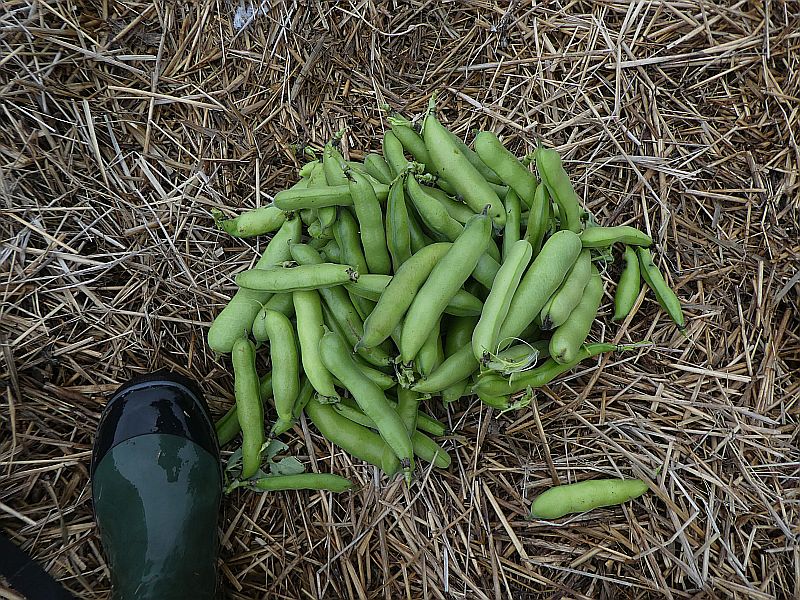
Today I harvested the year’s first broad beans at the Væres Venner Community Garden where KVANN (Norwegian Seed Savers) are developing a garden:
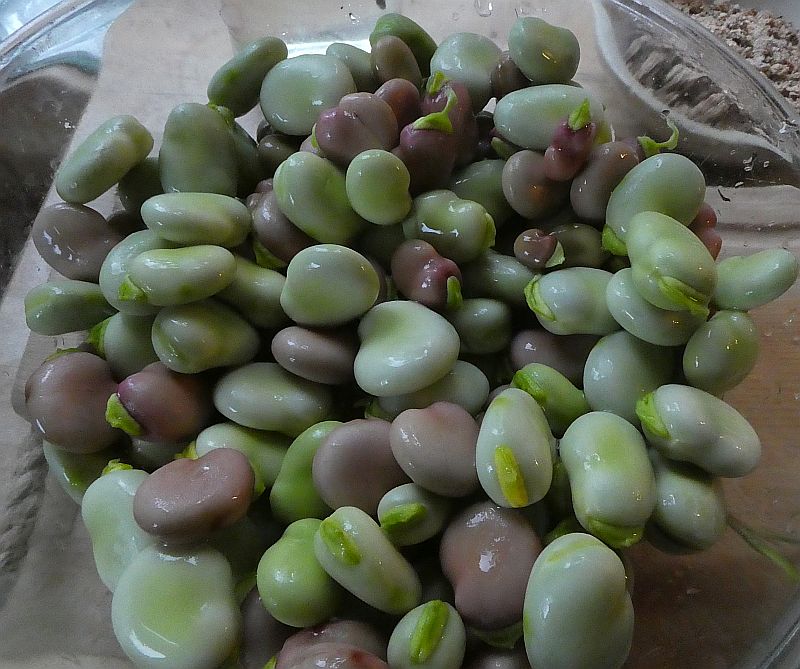
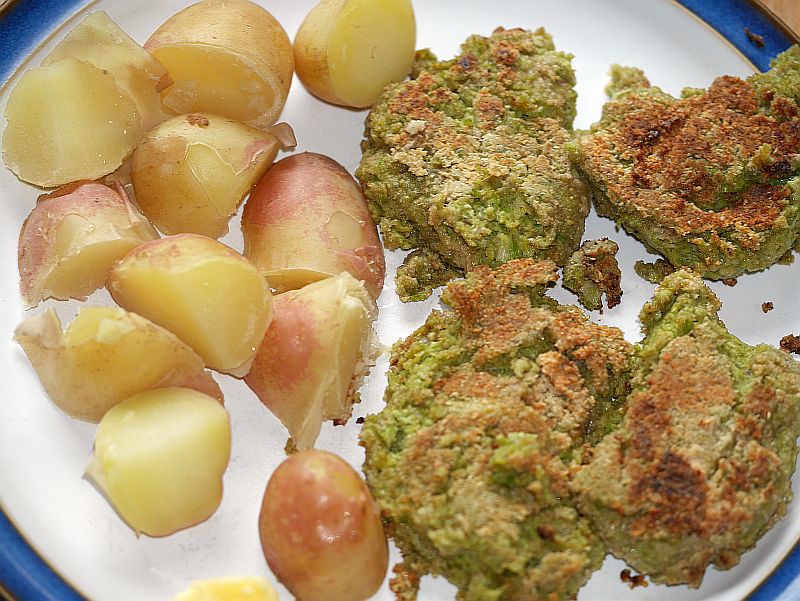
I also harvested the first potatoes at home…and the year’s first falafels resulted with new potatoes for dinner. The falafels were flavoured with salt, pepper, shallots, chili and golpar (ground seed of any species of Heracleum or hogweed) which gives a delicious exotic flavour!

Heracleum sibiricum gives the local variant of golpar here…most people have a local variety of hogweed to harvest, even Giant Hogweed (Heracleum mantegazzianum) or Tromso palm (H. persicum), the latter giving the most authentic Iranian golpar spice.


Floriferous Hablitzia
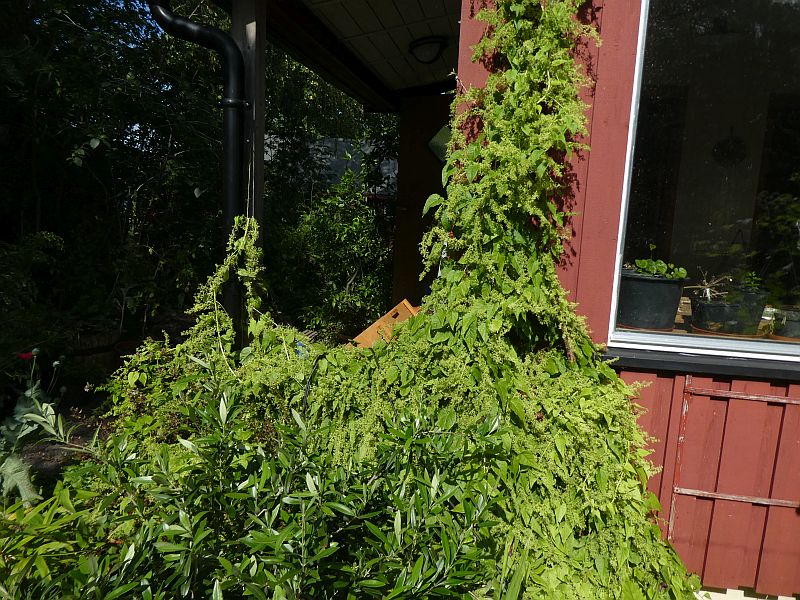
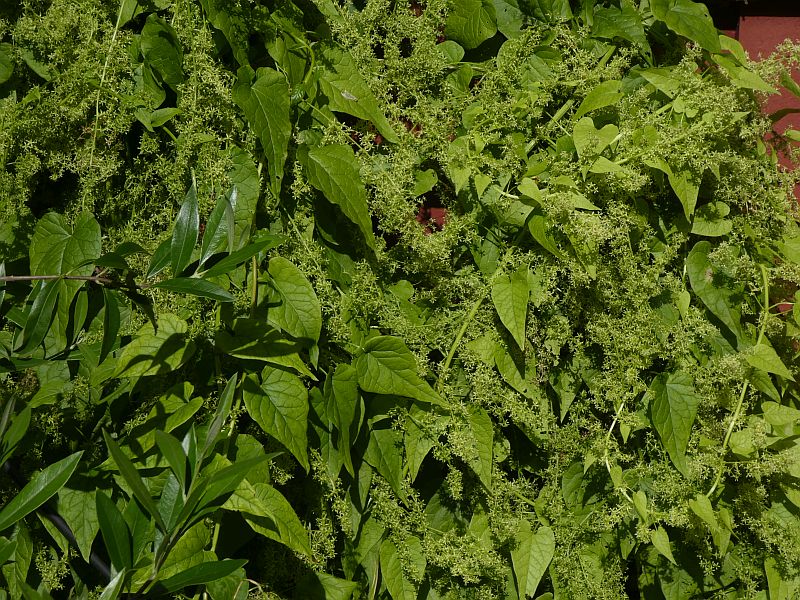
There couldn’t be more flowers on my oldest 17 year old Hablitzia tamnoides (Caucasian spinach / stjernemelde)!

Sweet chestnuts and the lower part of the Forest Garden
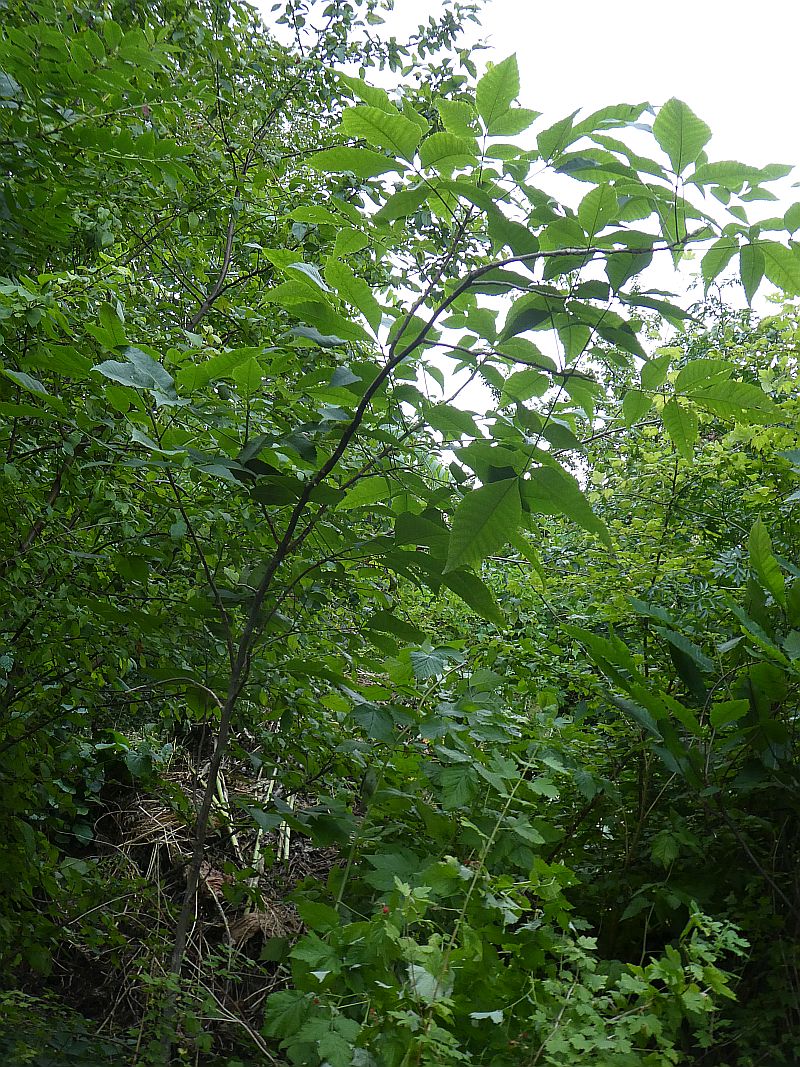
A couple of helpers cleared the sycamores and Norwegian maples that had grown up again along the lane at the bottom of the garden. Now you can once again see some of the other interesting trees and shrubs in this part of the garden, below the composting area:


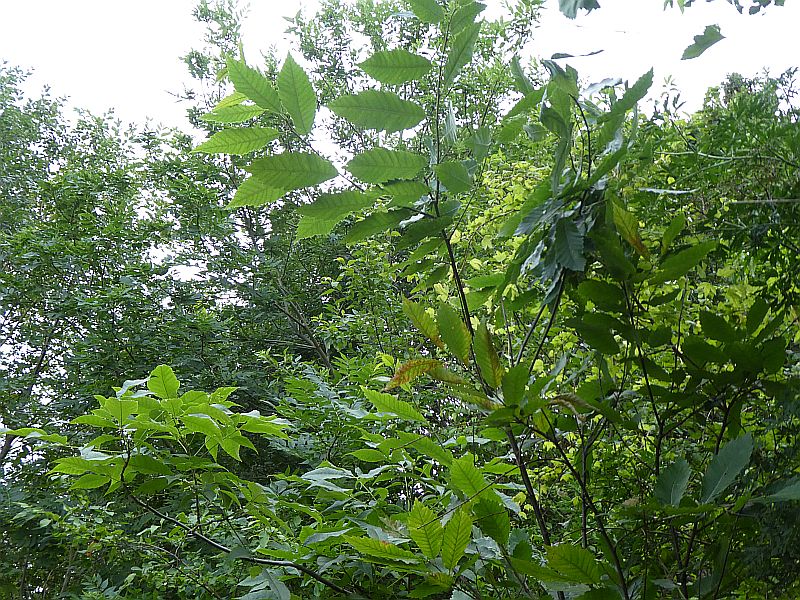
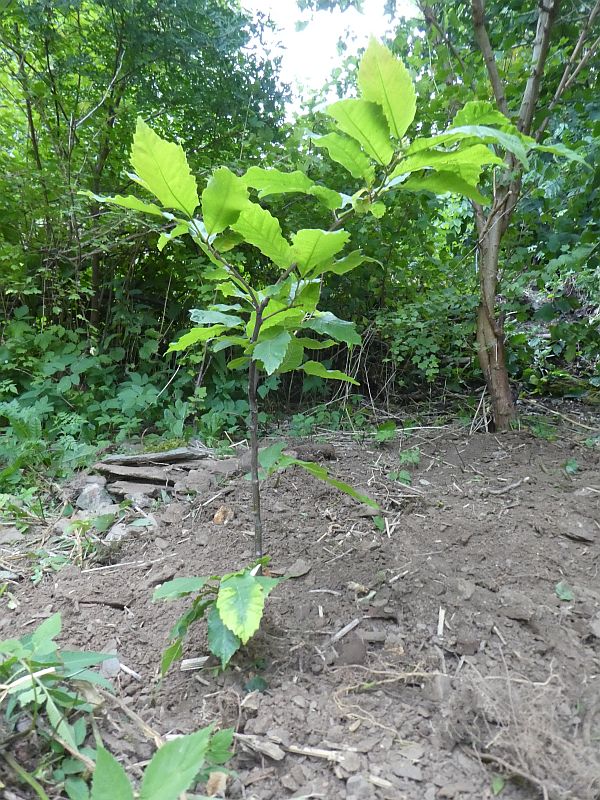
At the opening of my garden as a Permaculture LAND centre in the spring, I was given a present of two sweet chestnut trees, a grafted Marigoule tree and a seed propagated Marigoule. Sadly, the grafted tree died but I planted the other tree yesterday next to another sweet chestnut that I think came from a woodland in Southern England in the early 2000s and was planted here in 2008. It has to my great surprise survived even a really cold winter when its roots were frozen solid for almost 4 months and temperatures below -20C:

Hablitzia accession overview 2019
Hablitzia accession overview 2019
The following gives an overview of the sources of Hablitzia I know of (if I’ve missed any, please let me know!)
- My oldest plant is 17 years old and came from Sweden (unknown background)
- Jonathan Bates received his plants from a German Botanical Garden. I contacted the German garden, but no reply. I think Jon and Eric Toensmeier lost theirs….
- Justin West collected seed in the wild in Armenia. He struggled with them in New York and lost them before moving west.
- Tycho Holcomb and Karoline Nolsø Aaen in Denmark collected one accession in Georgia (found at the entrance to a cave)
- I received wild collected seed from botanist Sergey Banketov in the Russian Caucasus (near Pyatigorsk)
- I have one plant from the only relic Norwegian plant at Hadsel in Northern Norway
- I received seed of plants from two relic Swedish locations
- #2
- I received seed from about 5 relic plants in Finland and Estonia
- #2
- #3
- #4
- #5
- I was given seed from a plant at the Uppsala Botanical Garden in Sweden in 2009.
- I also received seed from a Swedish herb nursery (pre-1970, unknown source).
- I’ve seen plants of unknown origin in the following botanical gardens: Gothenburg
- Oslo
- Copenhagen
- Chelsea Physic Garden (London)
- I have one accession from Arche Noah (Austria) – unknown source
Seed of many of these have been deposited with Nordgen (Nordic Genebank) who funded some of the collection work that I did. However, they have struggled with regenerating new seed of the different varieties as it seems you need more than one type to produce seed.
I’ve sent cuttings from several of my plants to Ronny Staquet of Wallogreen in Belgium. I have about 10 accessions in my garden, but they self-sow readily and have become mixed up in one place where I had several plants growing close together.
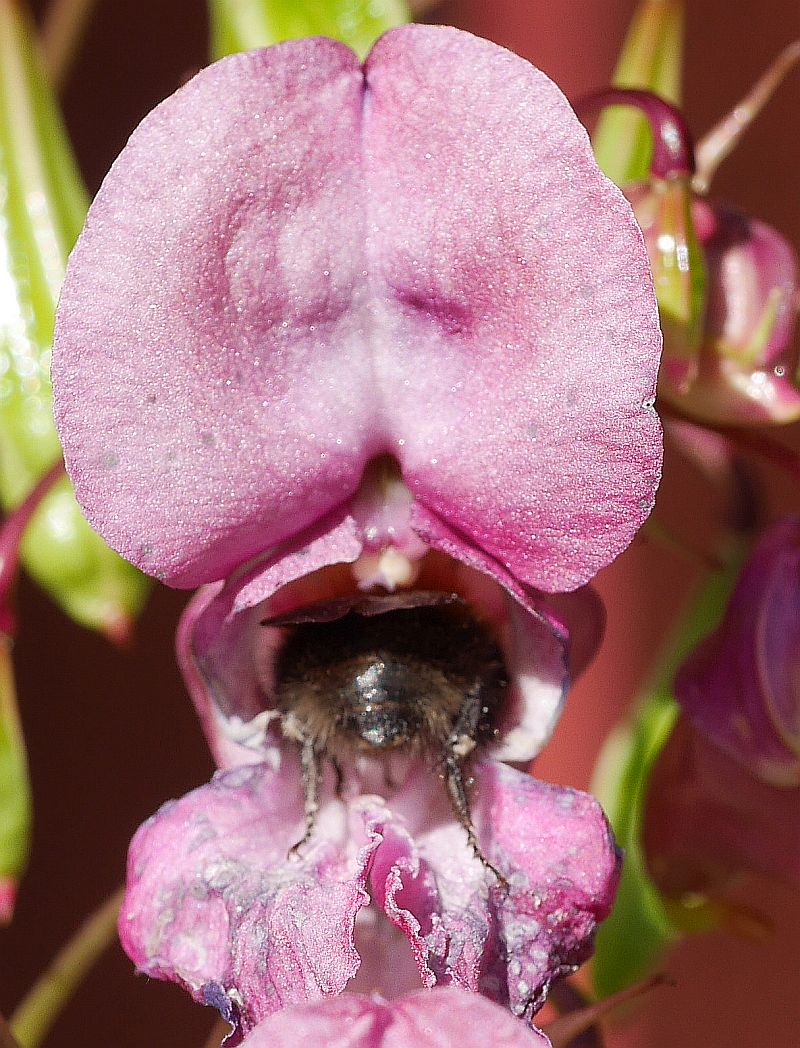
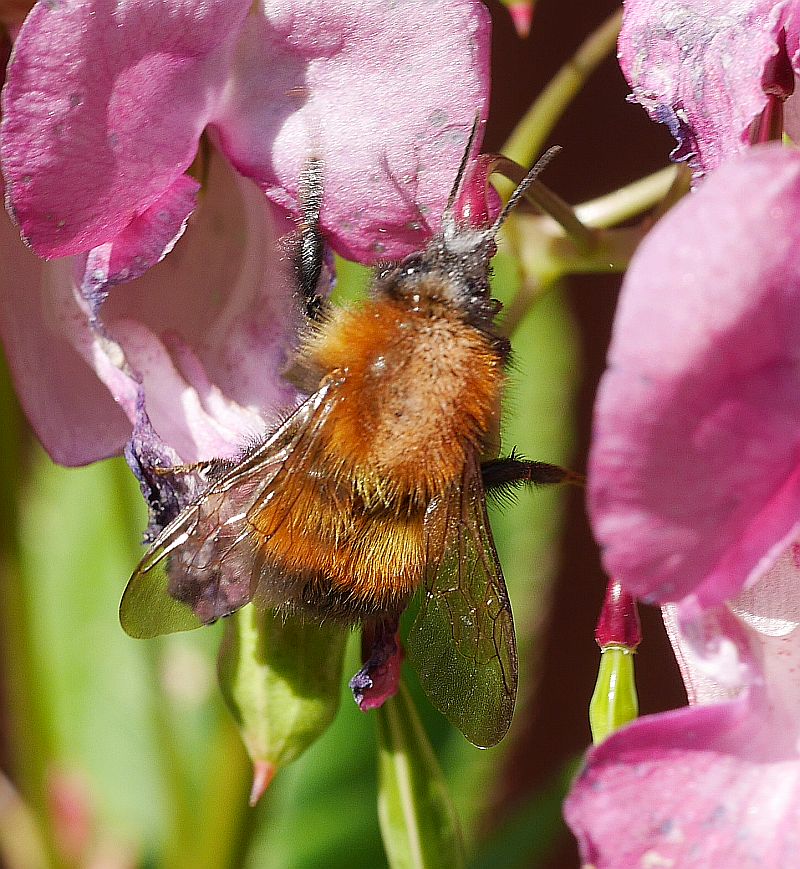
Bombus consobrinus on Himalayan Balsam
Long-tongued Bombus consobrinus (lushatthumle) which almost exclusively feeds on Aconitum has turned up in the garden over the last few days on Himalayan balsam / kjempespringfrø (Impatiens glandulifera).
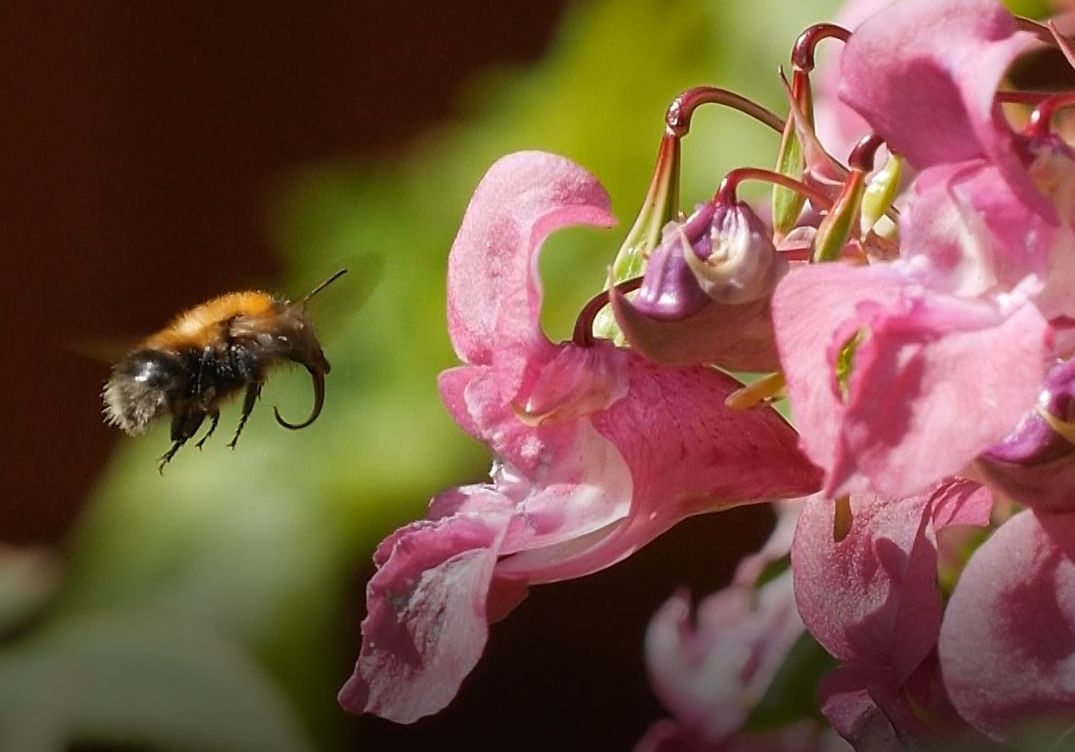
Thanks to Tor Bollingmo for the ID (he tells me, he’s not seen this species on Impatiens before).

Biological control
This chiffchaff (gransanger) is doing its best to control the invasion of diamond back moths (kålmøll) larvae! On cress (karse) and radish (reddik) being grown for seed! I also observed house sparrows (gråspurv) feeding on them earlier today! I was cheering them on!
http://www.edimentals.com/blog/?p=23073
Veggie wholegrain pizza with New Zealand Spinach
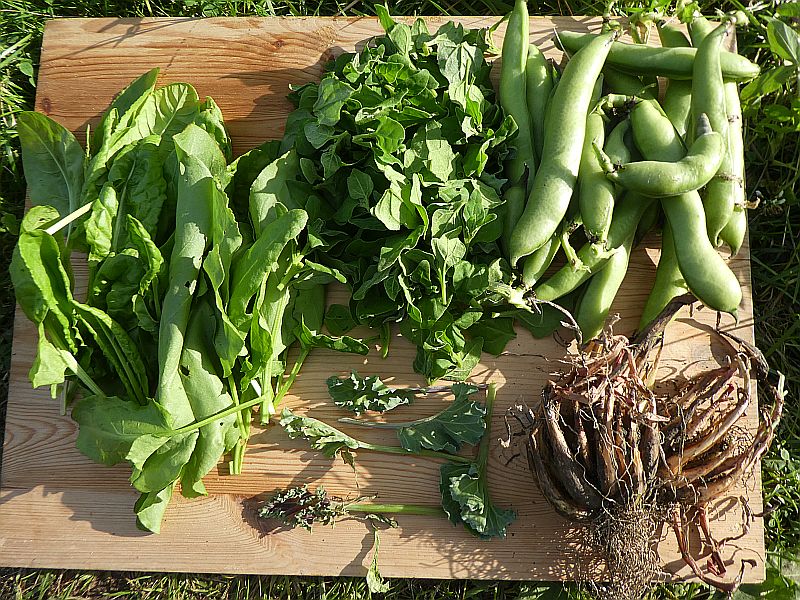
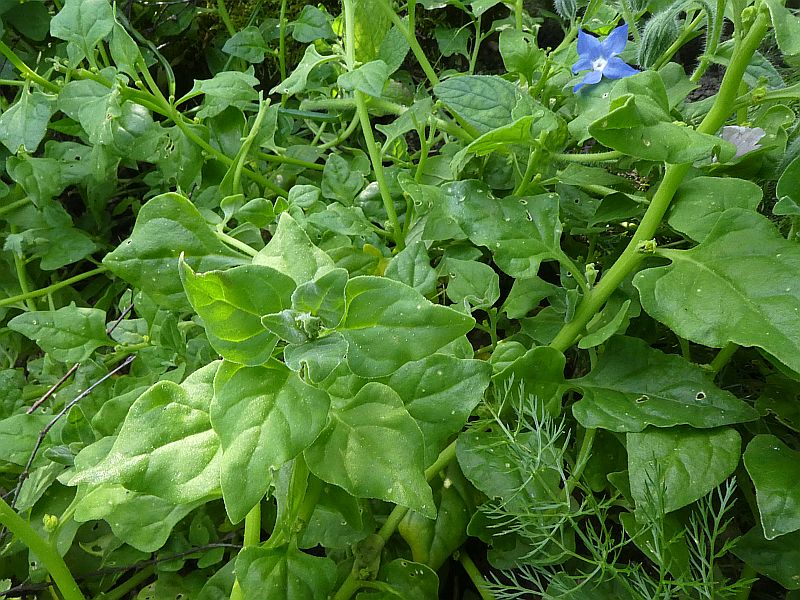
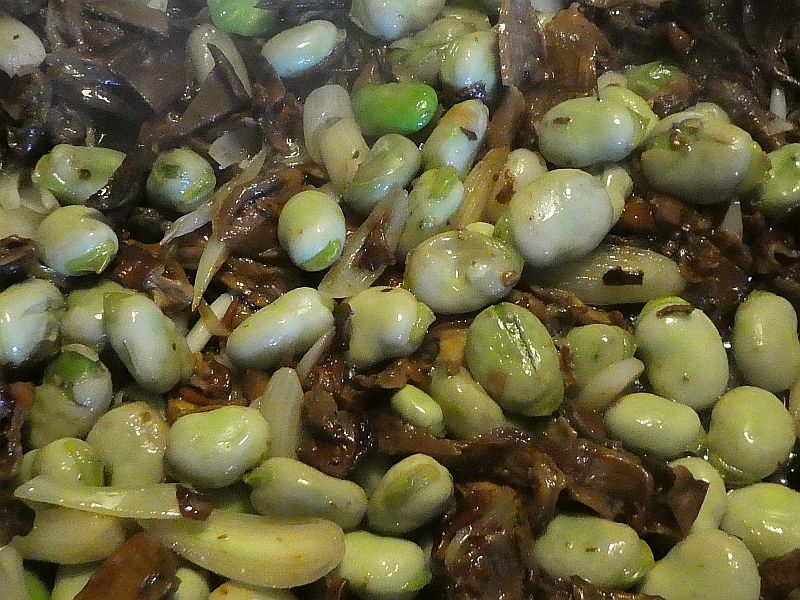
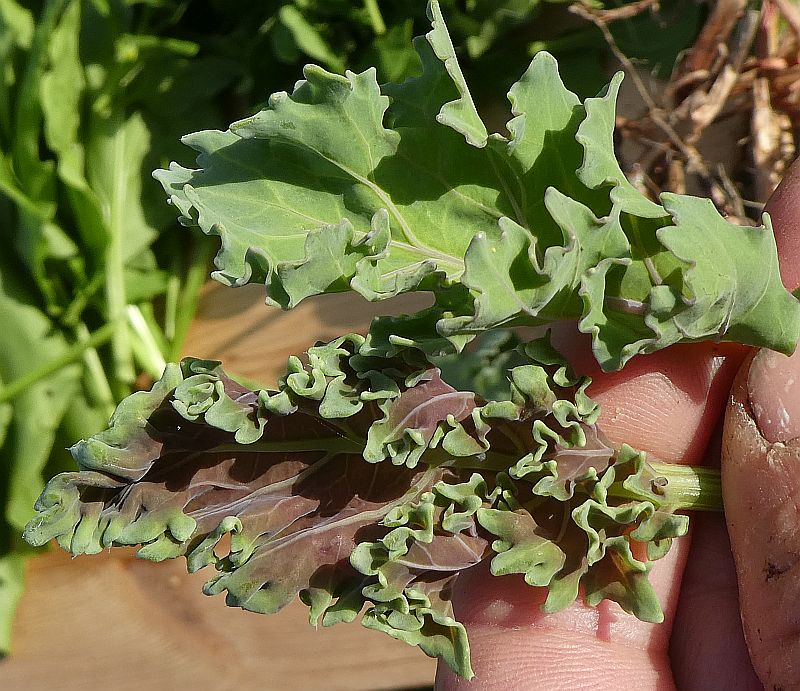
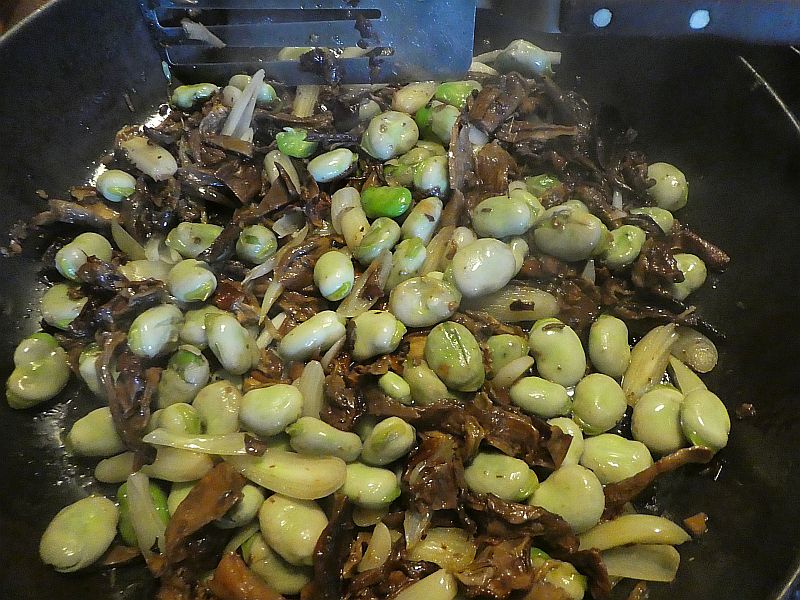
My daughter asked if we’d like to come and join her and her friend in Napolitana (the village pizza restaurant). We were actually just about to eat pizza with new zealand spinach (NZ spinat), broad beans (bondebønner), Johannes shallots (Sankthans-sjalott), patience dock (hagesyre), sea kale (strandkål) and steinsopp (cep / porcini) topping with Hartington Silver thyme (timian) in the tomato sauce with chili….on a sourdough pizza made with 100% wholegrain barley (bygg), svedjerug (Svedje rye), spelt and emmer wheat.
We ate at home!
Lemon balm rescue
Getting on for 35 years ago, we created what we called the Herb Bed in the garden for sun-loving herbs. It was the most sunny part of the garden, facing south. Herbs like winter and summer savory (sar), hyssop (isop), flere sorter oregano (bergmynte), french tarragon (fransk estragon), lavender (lavendel), sage (salvie), thymes (timian), lemon balm (sitronmelisse) and others.
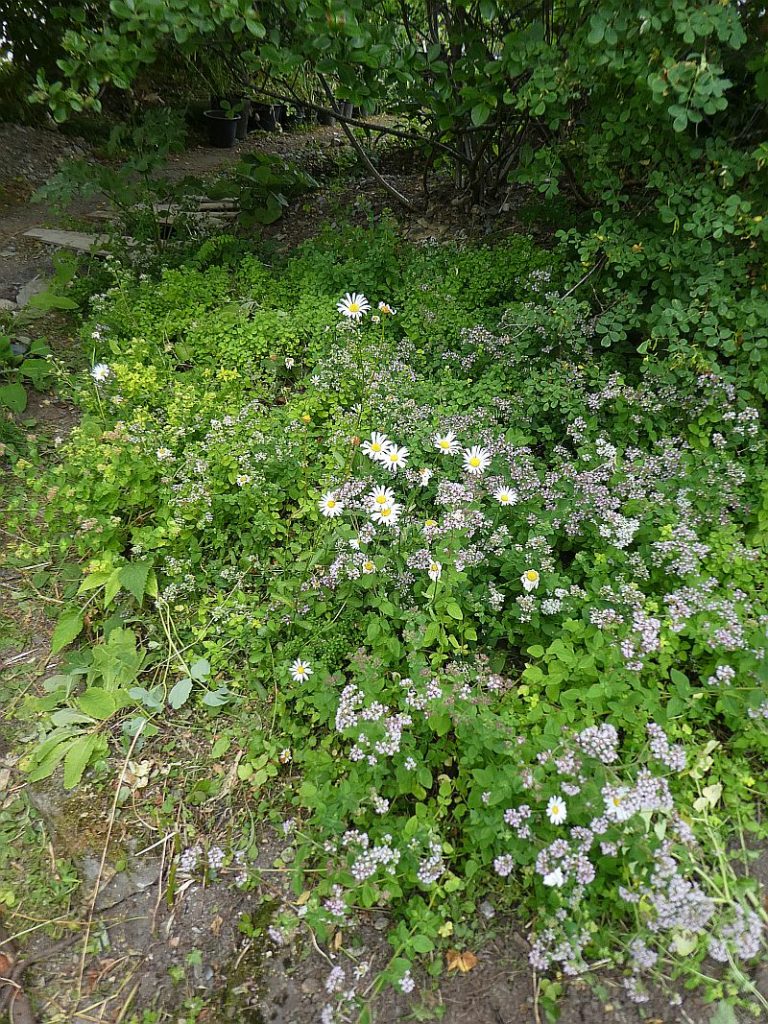
However, a small birch tree became a large birch tree over the years and the roots spread throughout the bed and it became very dry. I had also introduced greater stitchwort / lundstjerneblom (Stellaria holostea) near the bed and it spread into the herb bed and, loving the dry conditions, spread through part of the bed and was difficult to control. Over the years, most of the herbs died, apart from the oreganos which thrived under these conditions and the lemon balm (sitronmelisse), despite the fact that this we hadn’t expected this to be hardy enough (we covered this part of the bed with leaves in winter to protect it for many years). English bluebells (Endymion non-scriptus) are also doing well, a bit of nostalgia from the old country!
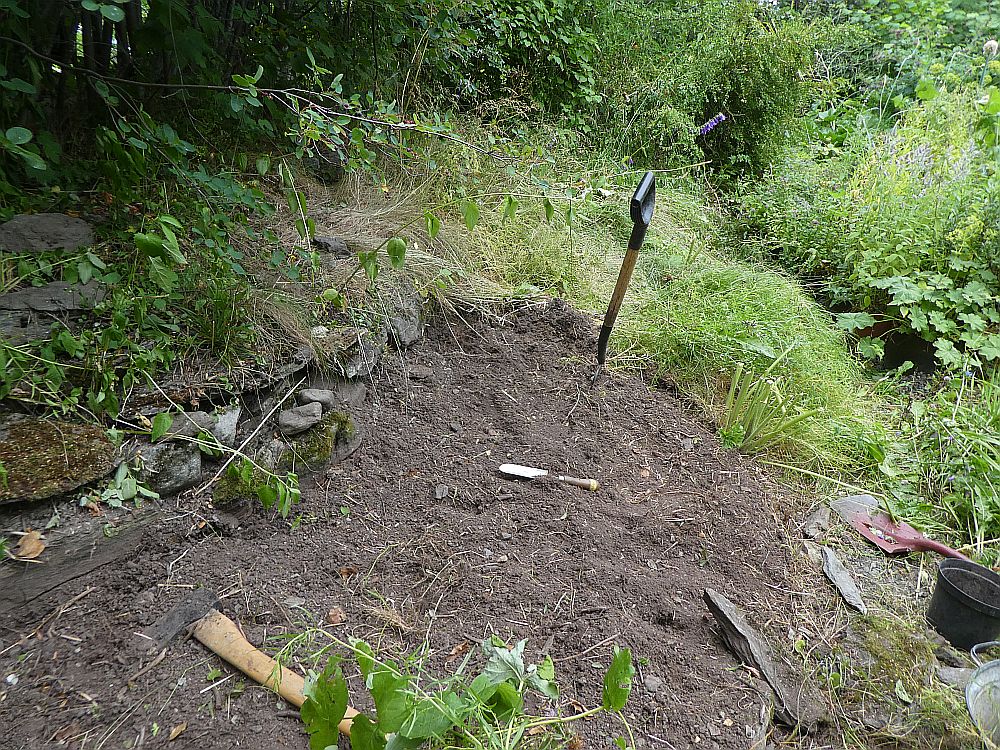
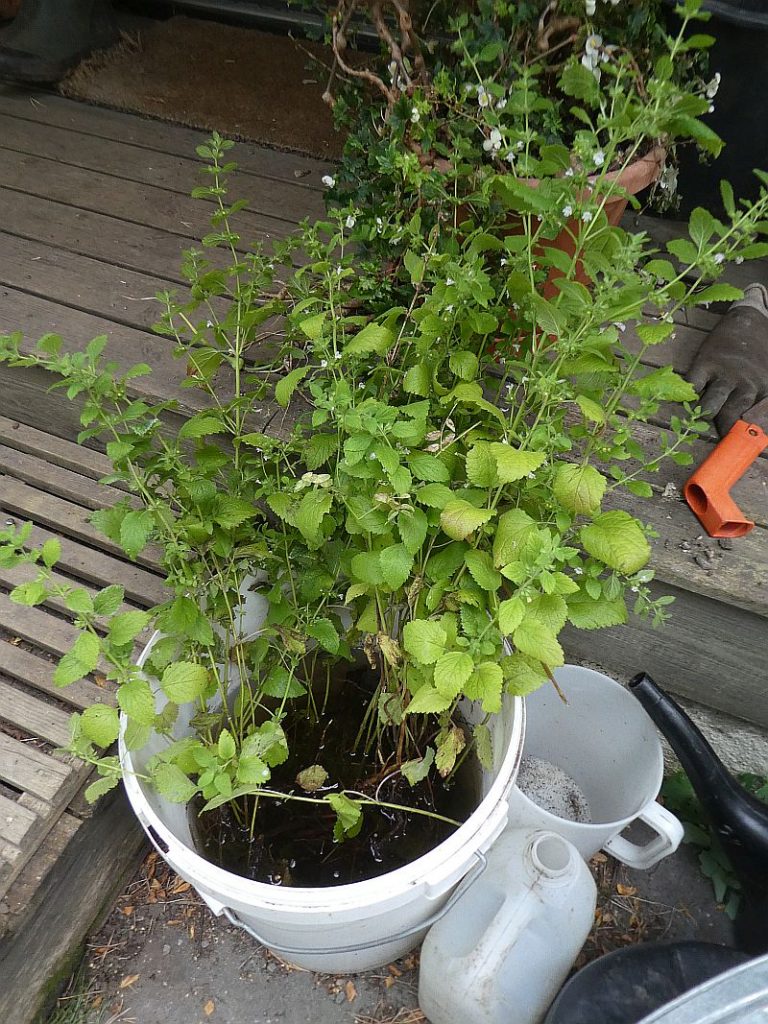
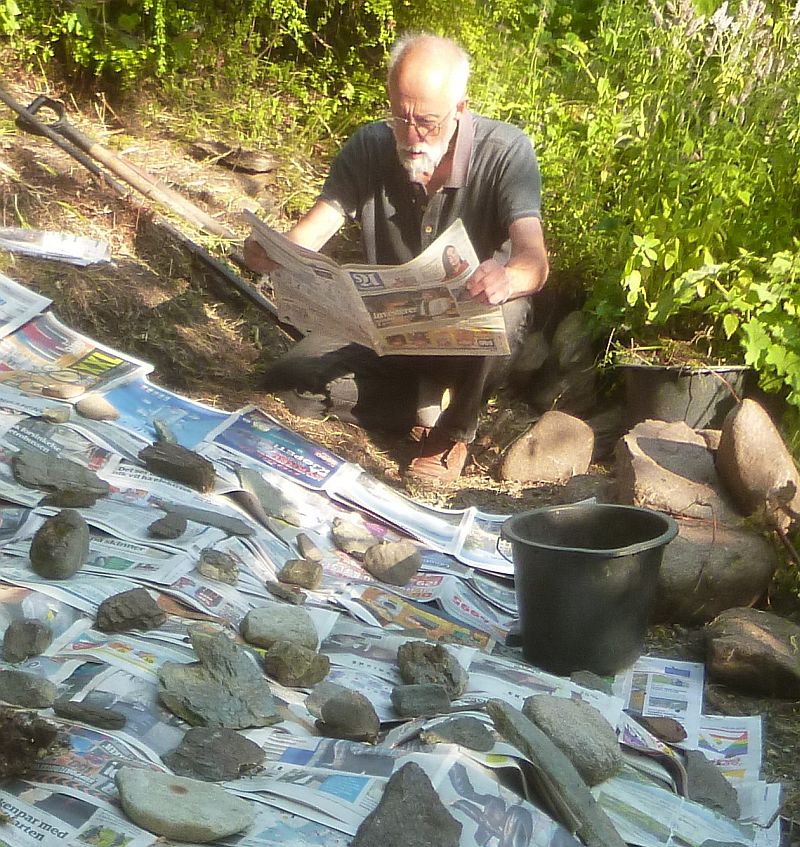
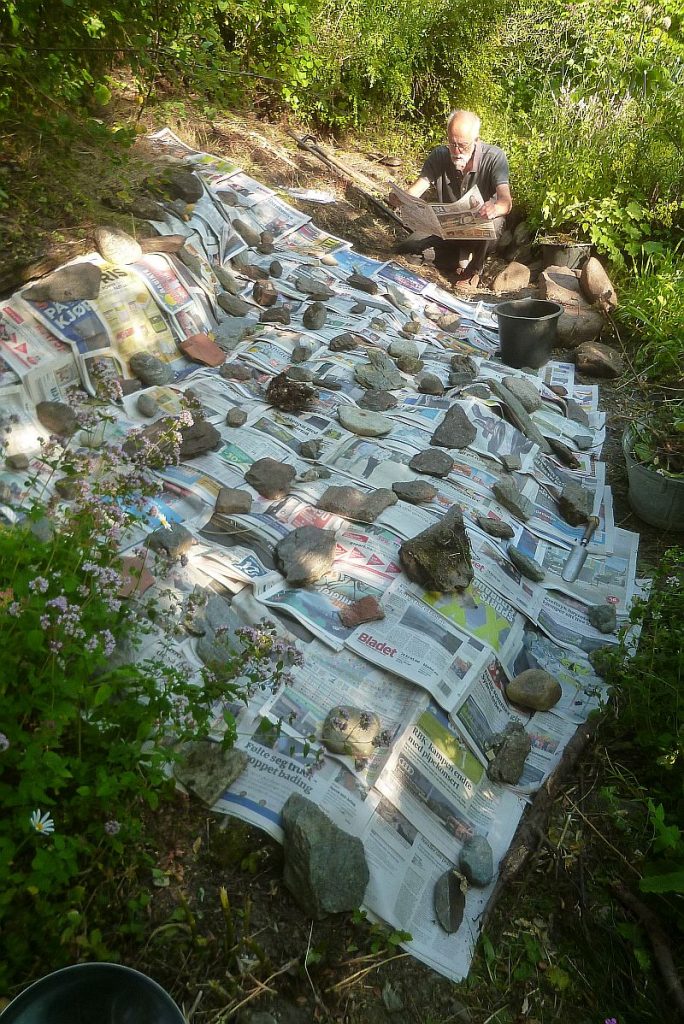
I started today to clear this bed, rescuing valuable plants such as lemon balm and german tarragon (tysk estragon) which was planted here in 2010 and has liked the dry conditions. The oreganos will be left as they were. Once I’ve dug out as many of the plants as possible, I’ll cover with newspaper for a year before replanting.