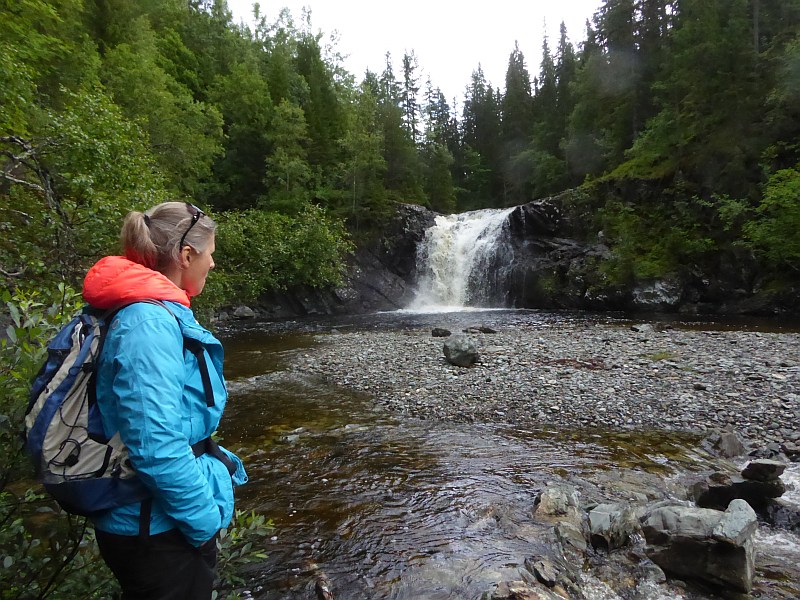
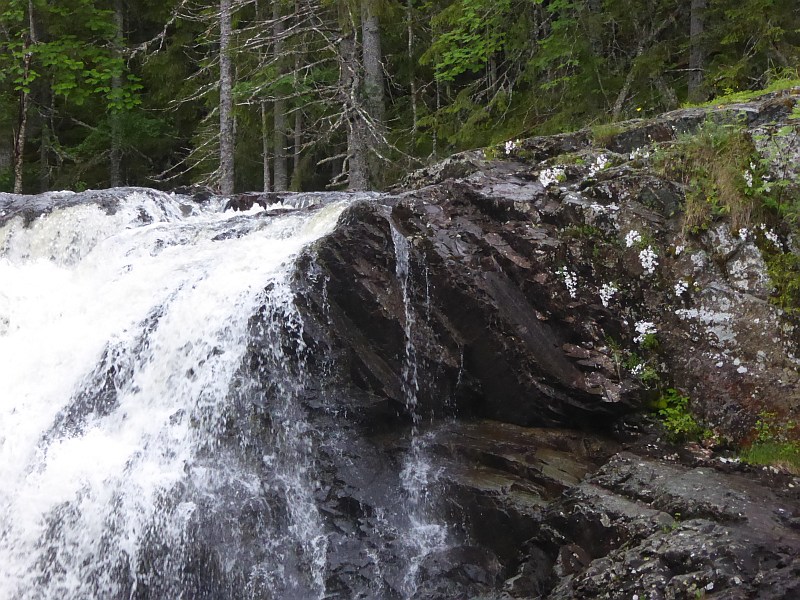
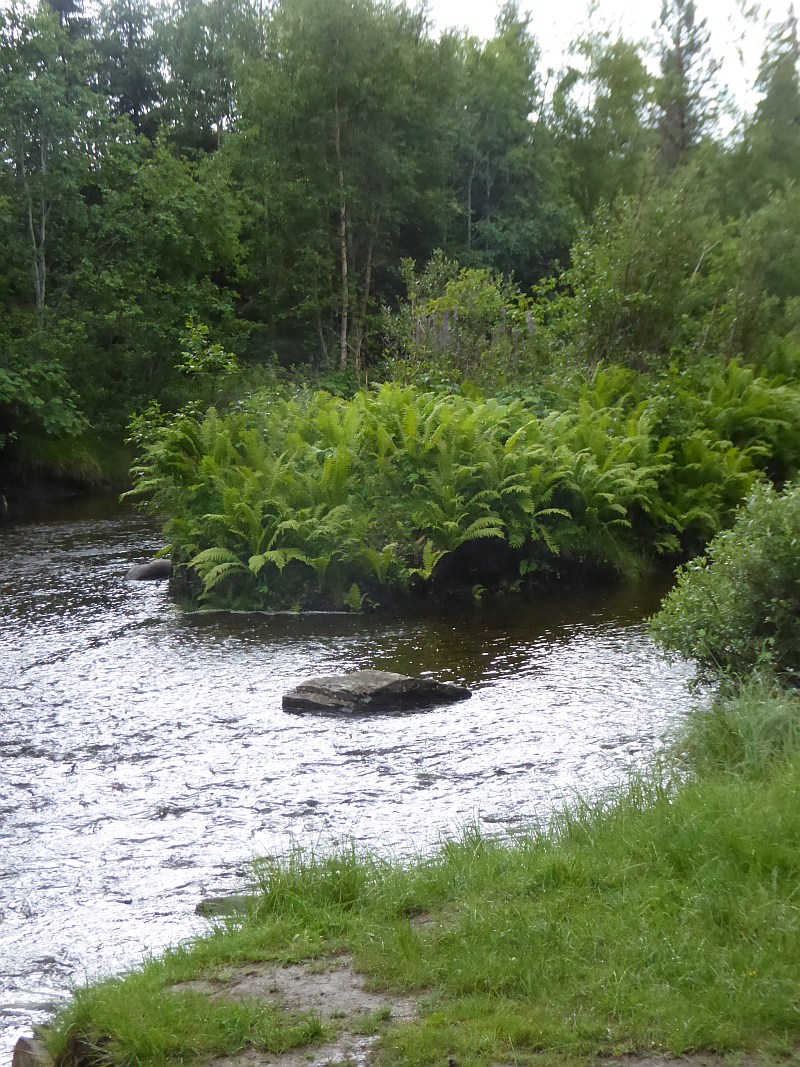
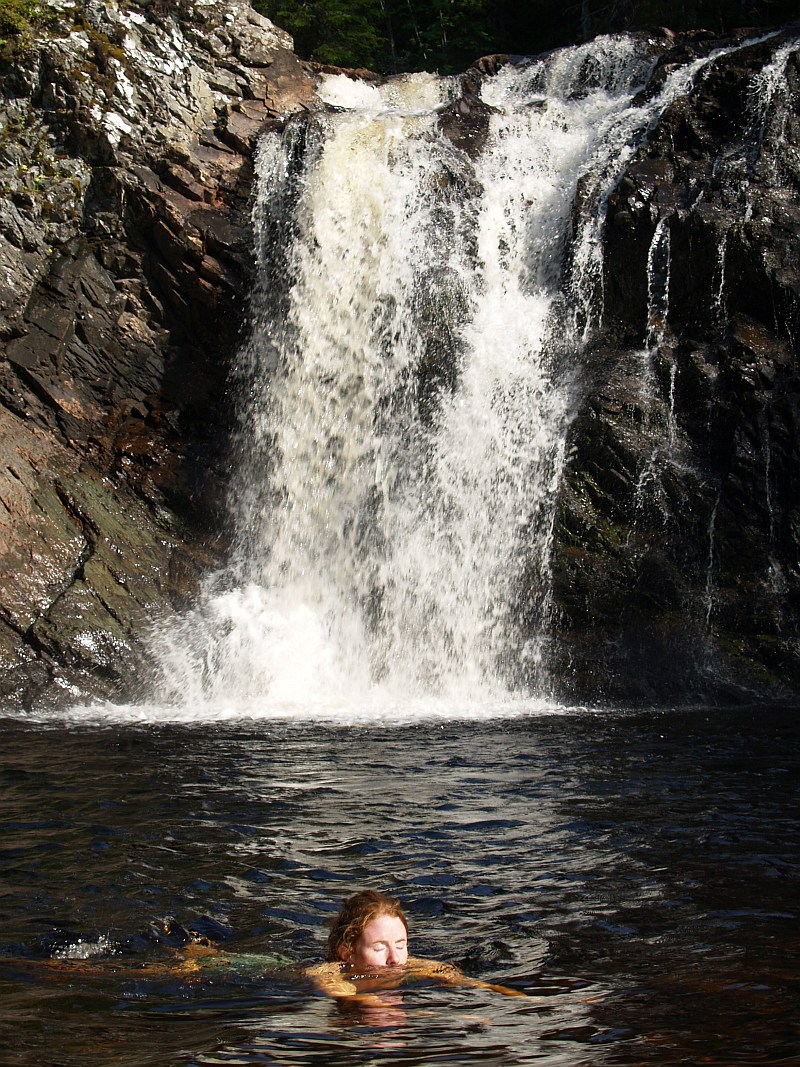
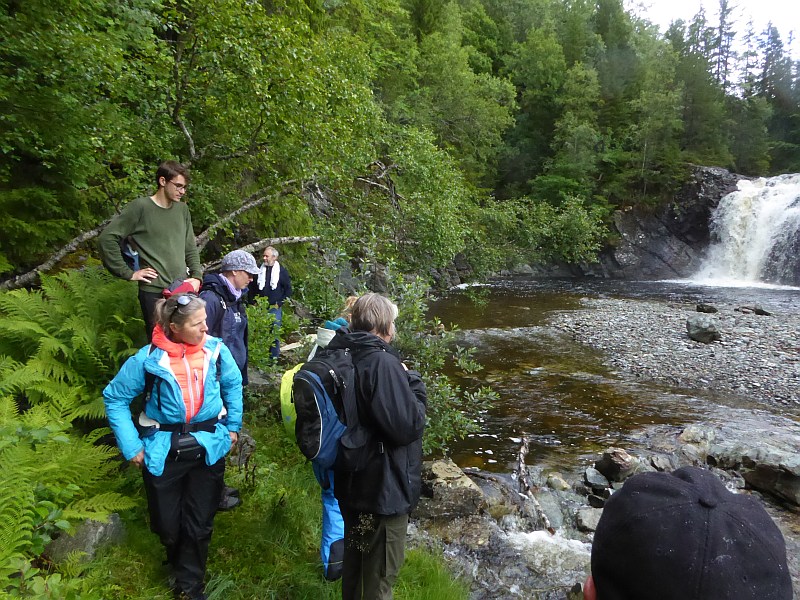
NævrahøletOstrich fern / strutsevingSaxifraga cotyledon / Mountain Queen / Flelldronning racemes hanging from the rocks to the right of the waterfall…An island of ostrich fern / strutseving in the riverAlys Fowler in Nævrahølet
Almost exactly 6 years ago (is it really that long ago?) I was delighted to have a visit from BBC gardening presenter and Guardian writer Alys Fowler. After we finished photographing the garden I took her on a tour to Vennafjellet, the closest mountain to home and we also stopped at Nævrahølet, a local swimming “hole” under a small waterfall! It was a glorious hot day in “paradise”. It’s now known as Alys’ Pool and a picture of her swimming here features in her book the Thrifty Forager!
6 years on I did the same trip with the group of Danes who have been learning about permaveggies in my garden! It was a much colder day, but two of us did venture into the water. It wasn’t as bad as feared! One thing I hadn’t noticed on Alys’ visit was that there were several plants of Mountain Queen (Saxifraga cotyledon) hanging in full flower around the waterfall!
See the video of Ostrich Fern Island below:
P1080258
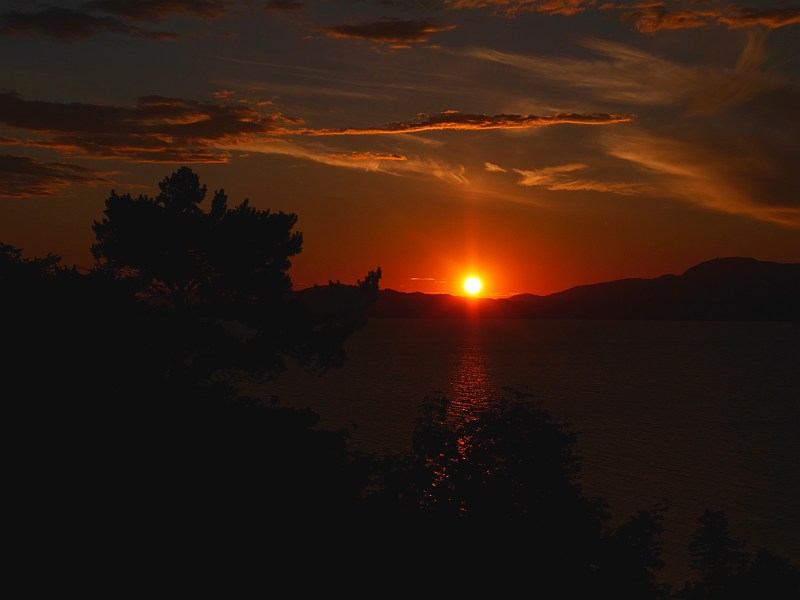
Sunrise at 04:18 this morning, 22nd July! It’s now a month away from the solstice! The temperature was 18-19C. Yesterday, a few places recorded over 30C yesterday in this area!
On Sunday of the Danish Malvik permaveggies course, we drove to near the top of the closest mountain from home to see the views and the rich flora: Vennafjellet (Faseknippen) and walked over to Baklifjellet
Please feel free to add names to plants and people!
See the whole album here: http://www.edimentals.com/pictures/index.php?/category/114
I heard a few swifts (tårnseiler) yesterday evening, so put on my swift attracting CD (I have a nest box on the house) and in no time they were dive-bombing the house and inspecting the box…maybe they will remember next year! My favourite birds!
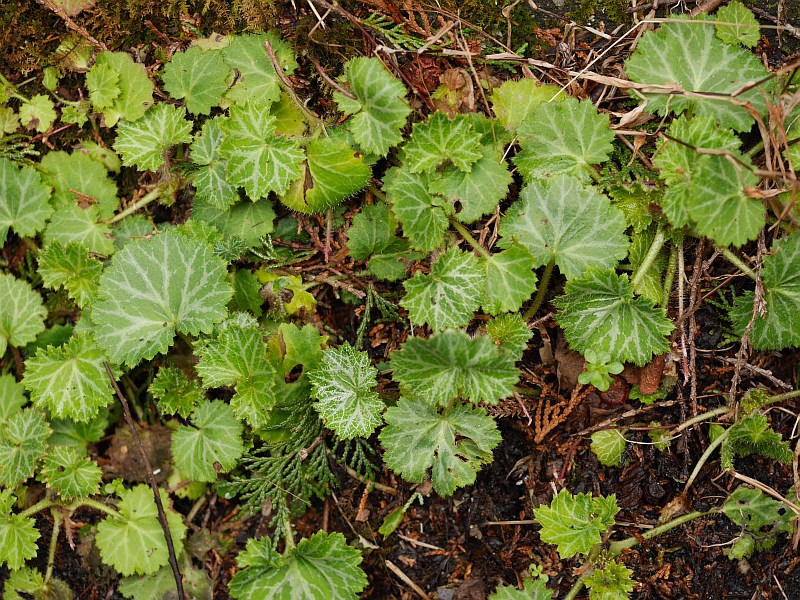
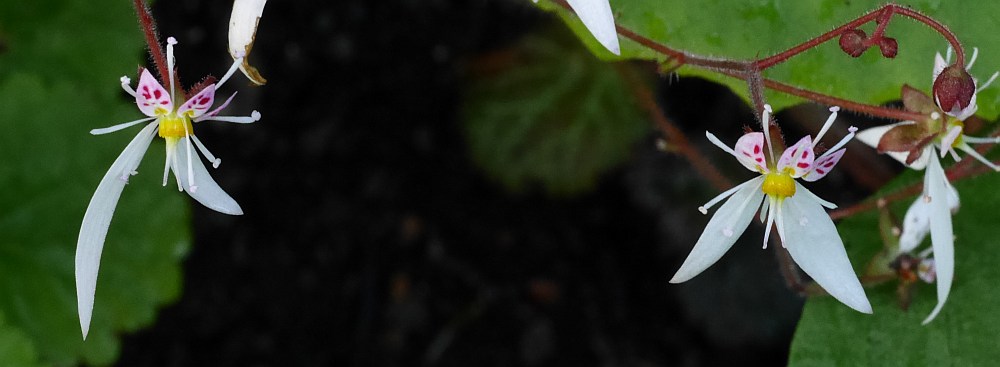
Saxifraga stolonifera is a lover of dark, wet, rocky places in Japan, Korea and China. I saw it several places in Japan during my March / April visit and ate the leaves as tempura, the commonest way of using it in the kitchen. In Japan, it has the “lovely” name Yuki-no-shita, meaning “Under the snow” whilst in English this fairly popular rock garden plant is known as creeping or strawberry saxifrage. It has flowered for the first time in my garden and they are rather special! There are a number of leaf selections (currently 8 available in the RHS Plant Finder in the UK, as well as a large flowered form). A great rock garden edimental then!! Probably not hardy, I will try to overwinter in my cellar!
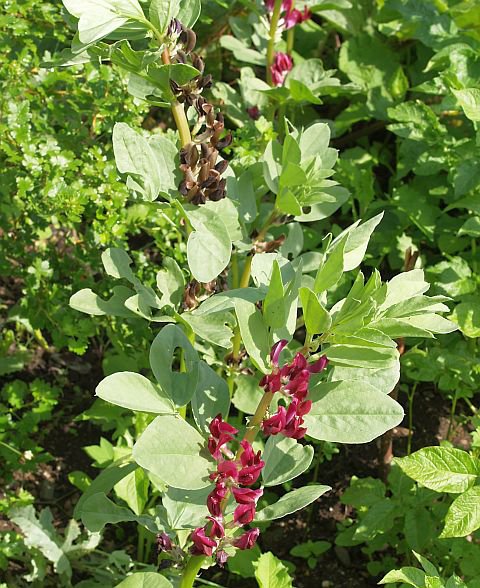
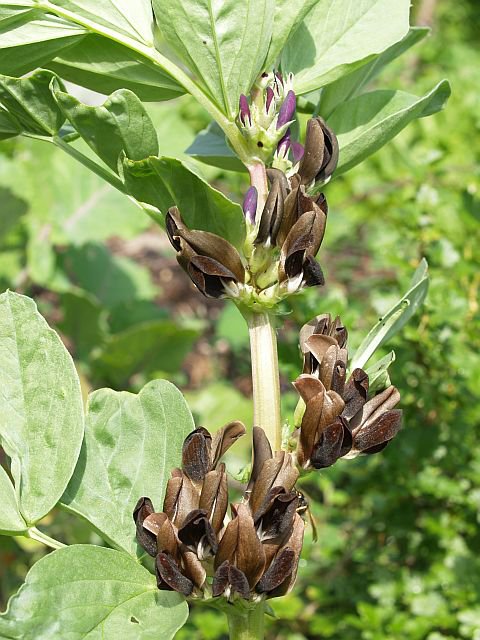
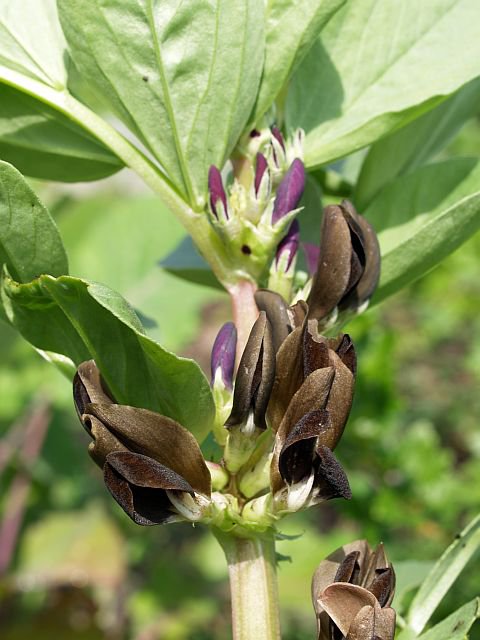
In July 2011, I noticed that a beautiful black-flowered broad/fava bean had appeared amongst my Crimson-flowered broad beans (a UK heritage variety that I’ve grown for some years)!
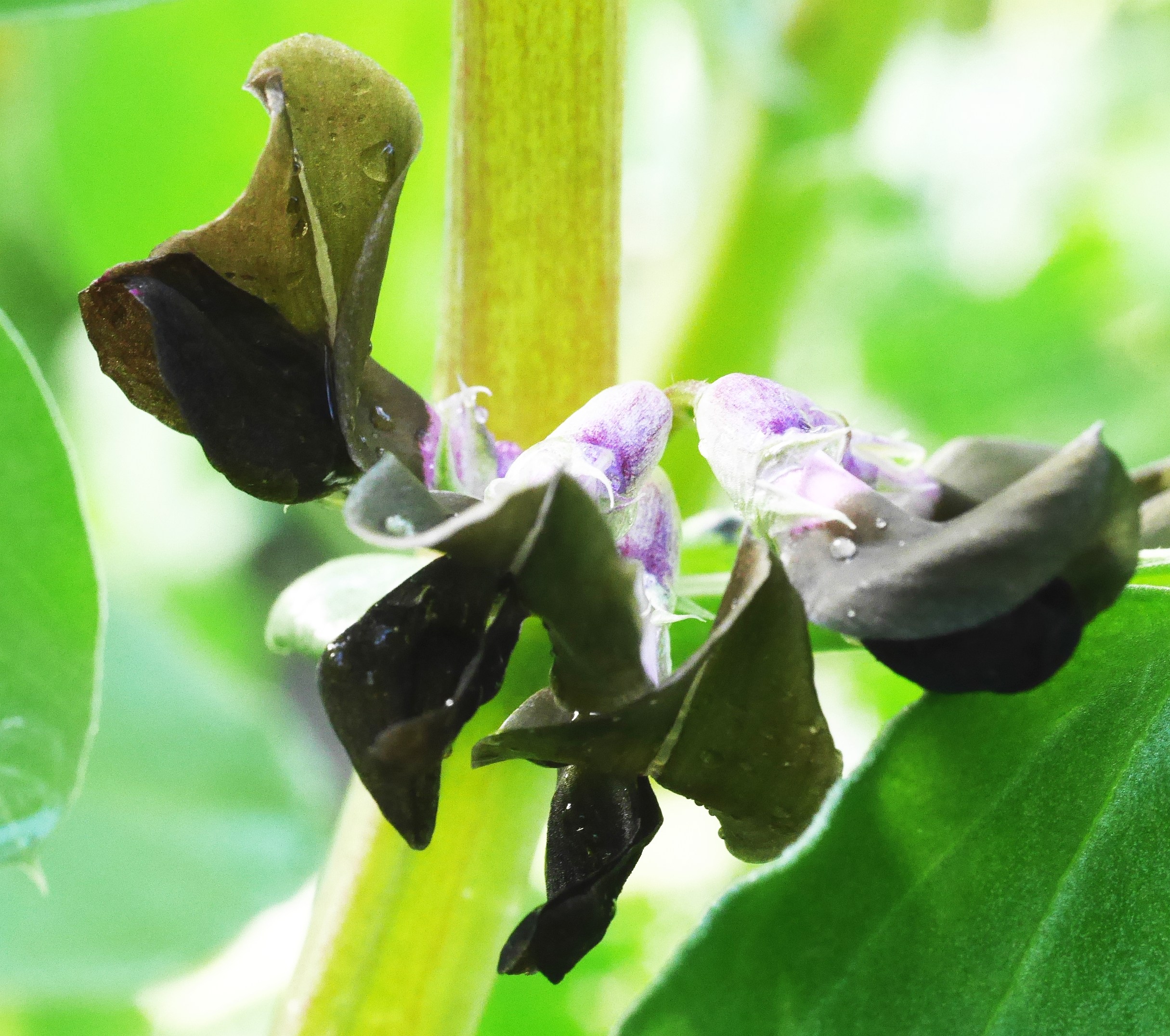
In July 2016, another black-flowered bean appeared (the bottom picture below)
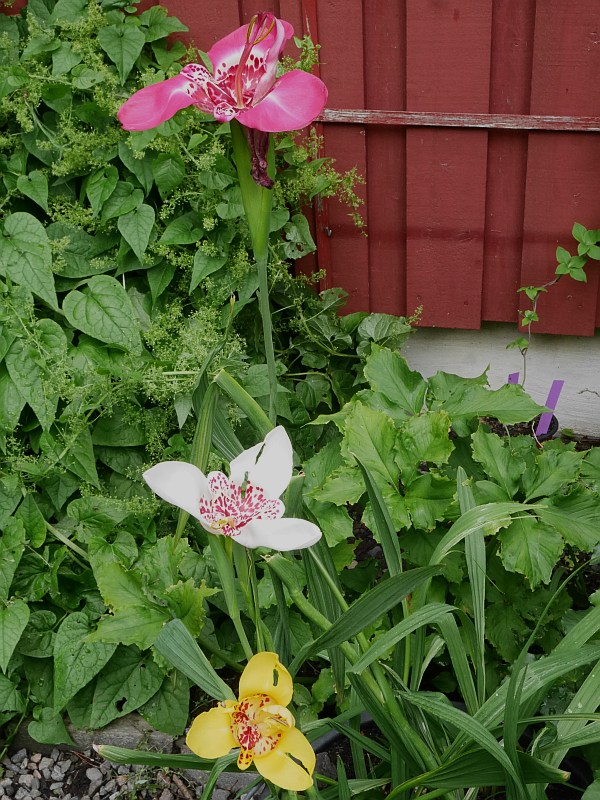
The best tasting vegetable of the rhizosphere I’ve had the pleasure of eating is Cacomitl, one of the lost crops of the Aztecs, also known as Tigridia (pavonia) and commonly available on those racks of ornamental bulbs. It is also one of the best edimentals, witness the pictures from my garden today (14th July!) below.
I’ll keep this short as I couldn’t possibly do better than the series of witty and informative posts on this plant by my friend (I’ve even shaken his hand now!) Owen Smith on his fabulous Radix: Root Crop Research and Ruminations blog. You know you need to read these titles:
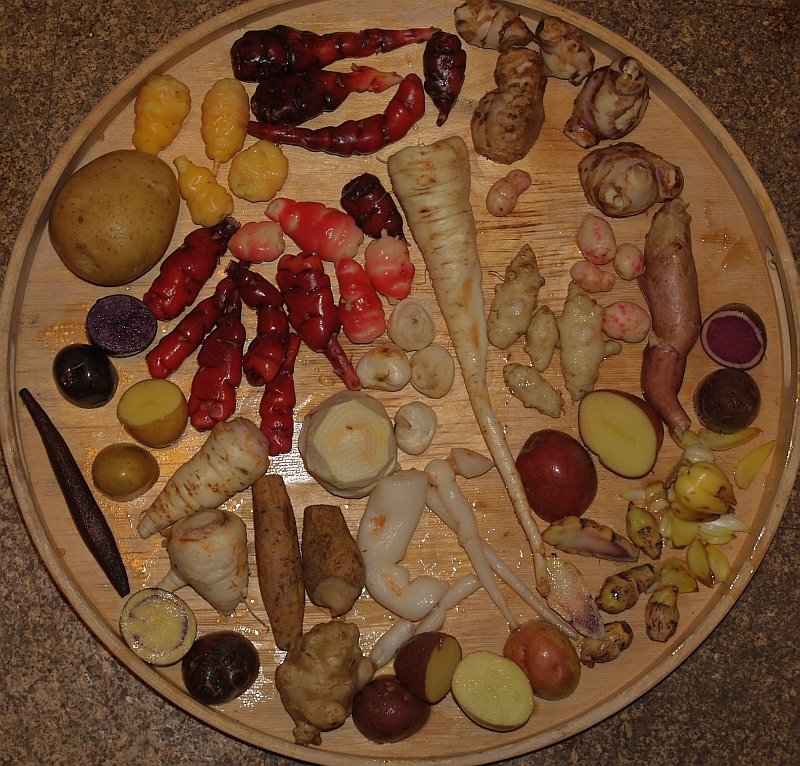
The bulbs (in the centre below the ocas and left of the parsnip) are in this picture of my 2013 Xmas Tubasmagoria with 25 different edible tubers of 15 species! They were: Oxalis tuberosa (Oca); Pastinaca sativa (Parsnip/Pastinakk), Solanum tuberosum (Potato/Potet); Tropaeolum tuberosum (Mashua), Helianthus tuberosus (Jerusalem Artichoke/Jordskokk), Polymnia edulis (Yacon), Ullucus tuberosus (Ulluco), Petroselinum crispus (Hamburg Parsley/Persillerot), Brachychiton populneus (Kurrajong), Tigridia pavonia (Cacomitl), Dahlia cultivar (Dahlia/Georginer), Lilium martagon (Martagon Lily/Martagonlilje), Anredera cordifolia (Madeira Vine), Canna edulis (Achira) and Colocasia esculenta (Taro)
I get invited to talk in some wonderful places! On 27th April 2014 I visited Portåsen and gave a shortened version of my Around the World in 80 plants talk in the comfortable Hay Loft venue at Portåsen!
The Norwegian Genetic Resource Centre (NGRC) think that all cultural heritage institutions in Norway with landscaping ought to use historical plants suitable for the actual buildings, associated culture and history. Portåsen is one of the places that have made the most progress with this. Portåsen is the childhood home of Herman Wildenvey (1885-1959) in Nedre Eiker. Wildenvey is one of the most prominent Norwegianpoets of the twentieth century. During his lifetime he published 44 books of his own poetry. Portåsen was established in 2010 as a cultural centre for the dissemination of Herman Wildenvey’s life and works. Herman Wildenvey was known as the “sun and summer” poet, and his poems reference some 80 different flower and plants. It is said that one of his first reading experiences were from Blytt’s Flora. Therefore it is quite natural that historical plants and traditional plant use gives a key backdrop to the varied cultural events with exhibitions, concerts, walks etc. at Portåsen. The place is beautifully restored. In the flower beds around the houses in the yard can be found historical perennial ornamentals (to be classified as Plant Heritage, a plant has to be documented to have been grown 50 years ago), which were either found in old gardens locally or received from “Oldemors garden” at the botanics in Oslo or from Lier Bygdetun (both have collections coordinated with the NGRC). Just above the yard is a well-tended vegetable and herb garden with food and spice plants, and within a traditionally erected fence can be found old apple varieties. A meadow has also been sown with seeds from Ryghsetra, an old local hayfield which Friends of the Earth Buskerud have received the Norwegian Plant Heritage prize for maintaining! The following lines are from Wildenveys poem “O, ennu å være”
O, ennu å synge om midtsommernetter, Og ennu å ånde i kryddersval luft, Ennu å vite, hva blomstene hetter Og nevne dem ved deres farve og duft.