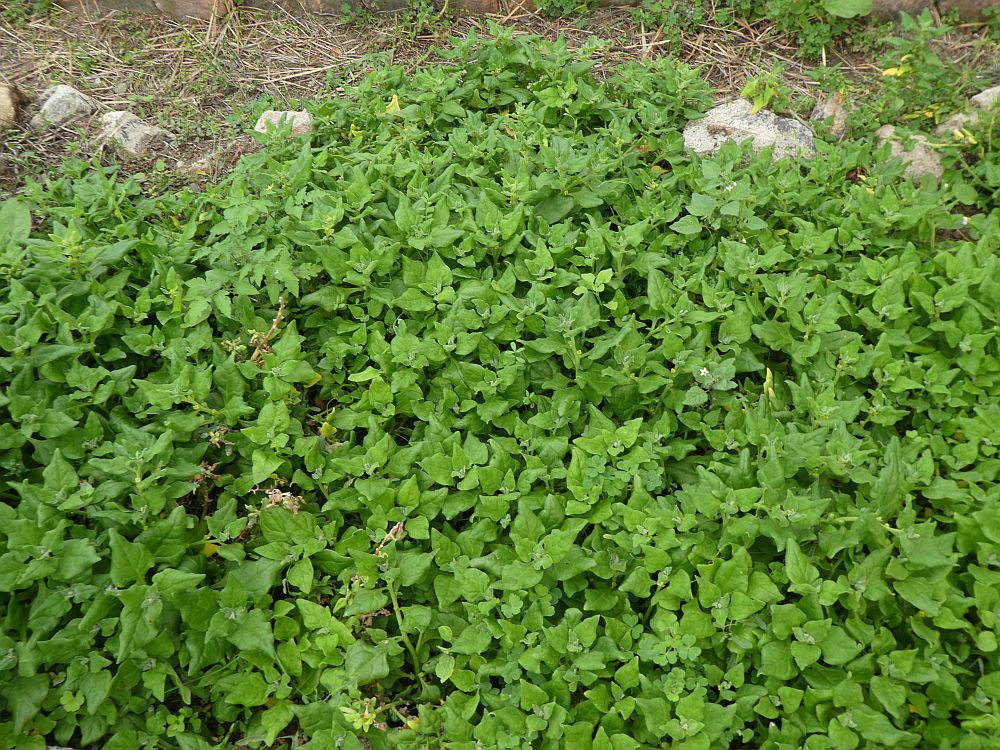
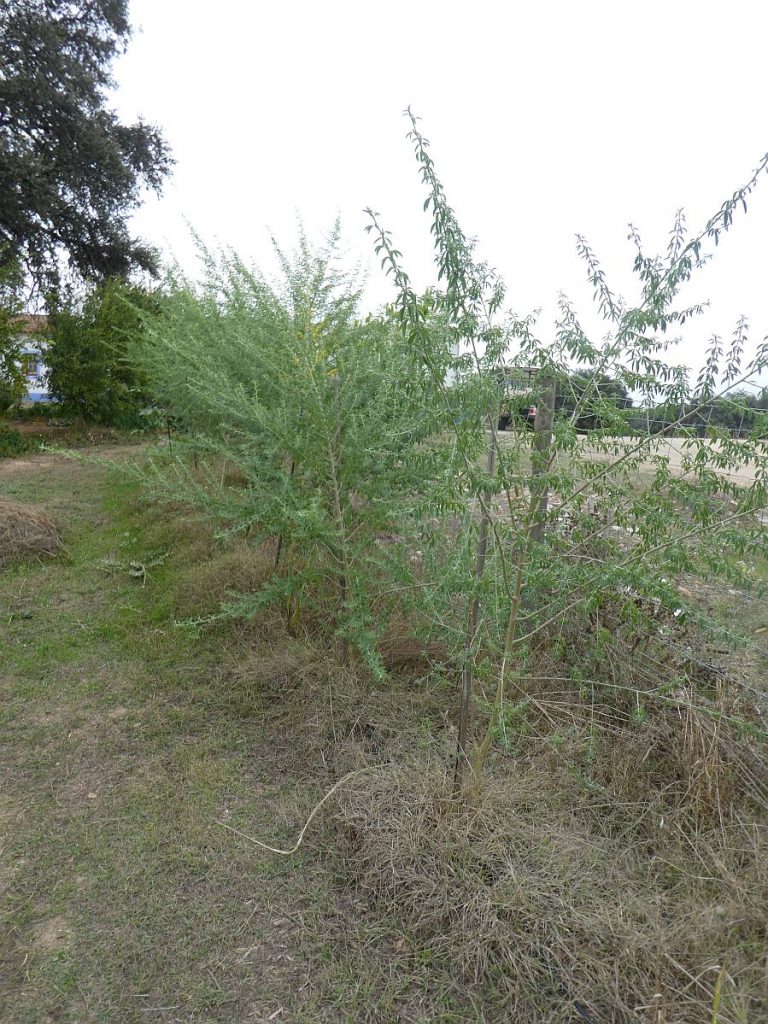
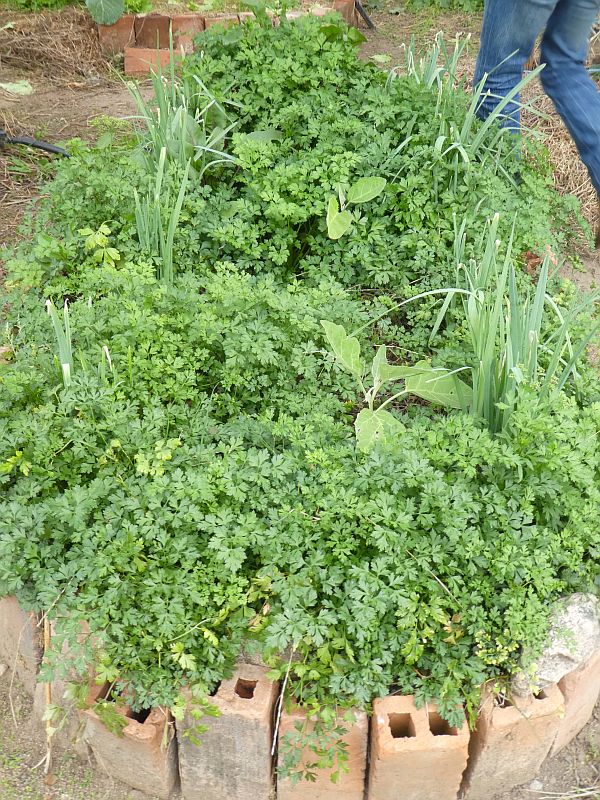
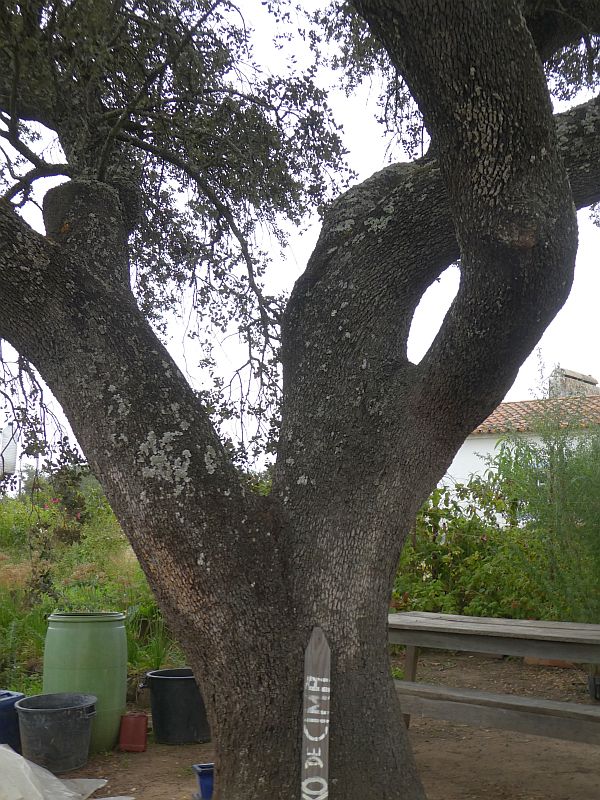
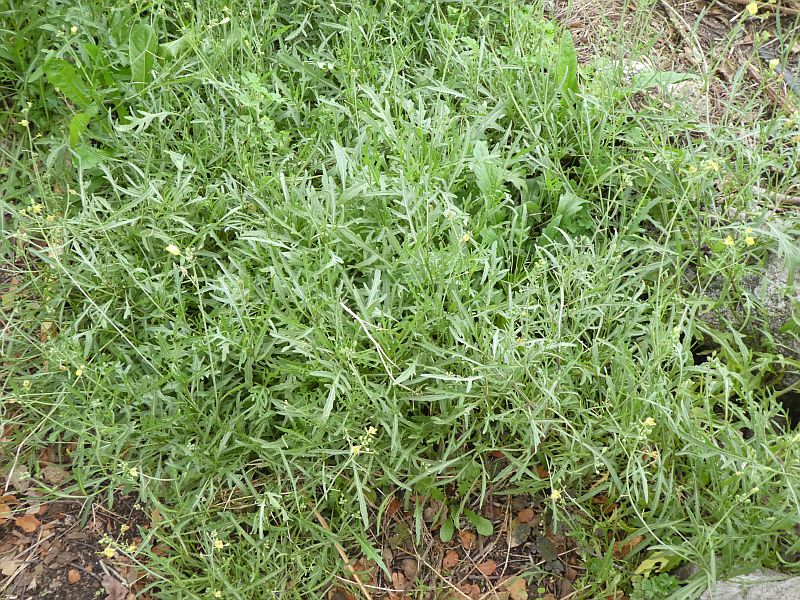
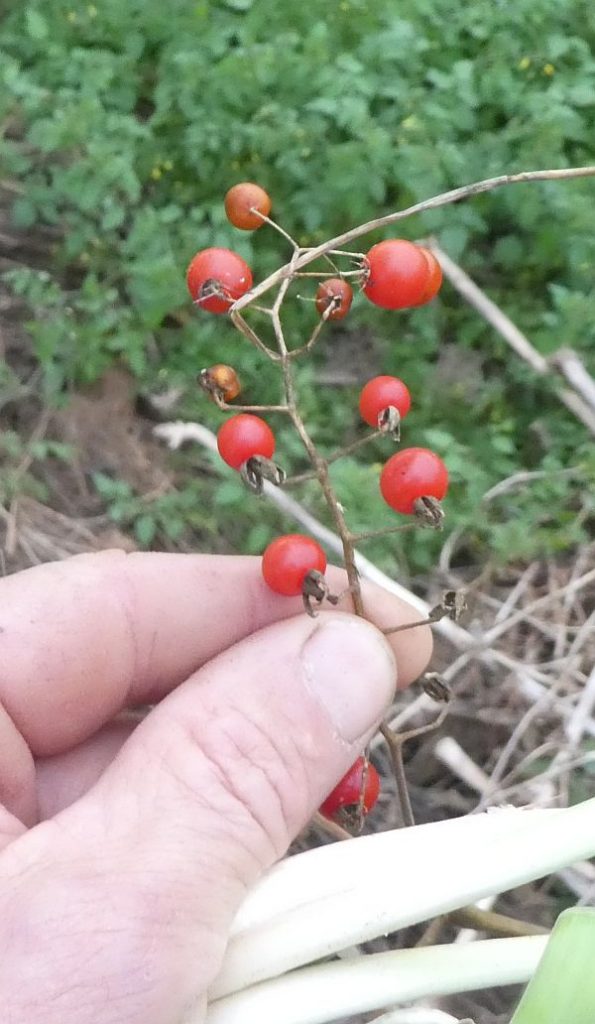
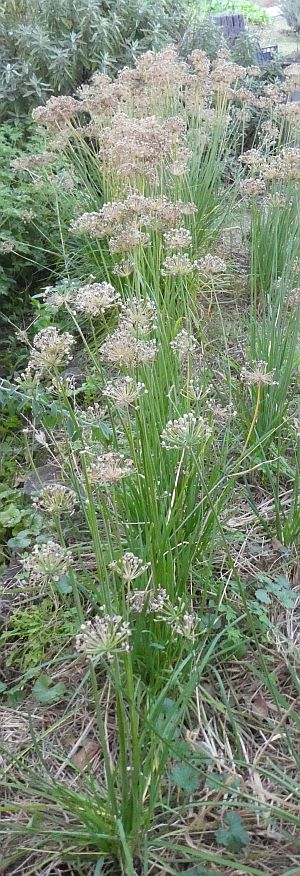
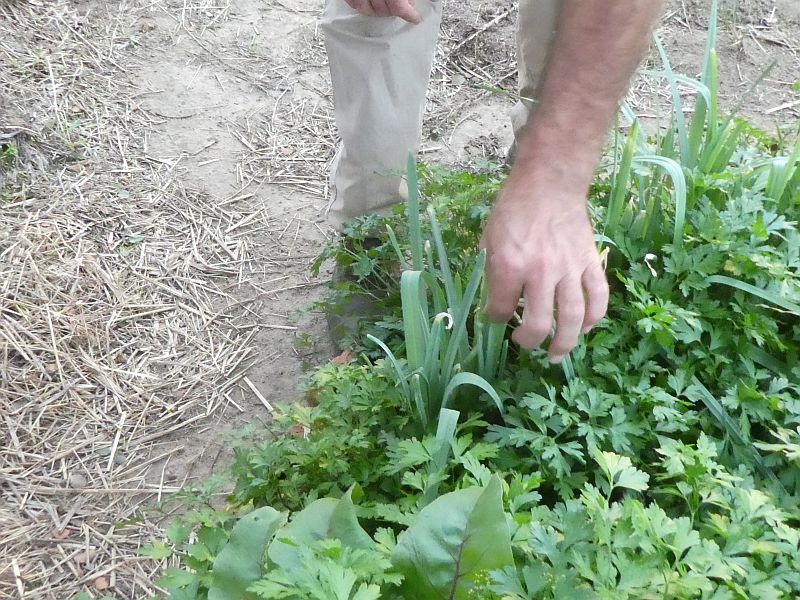
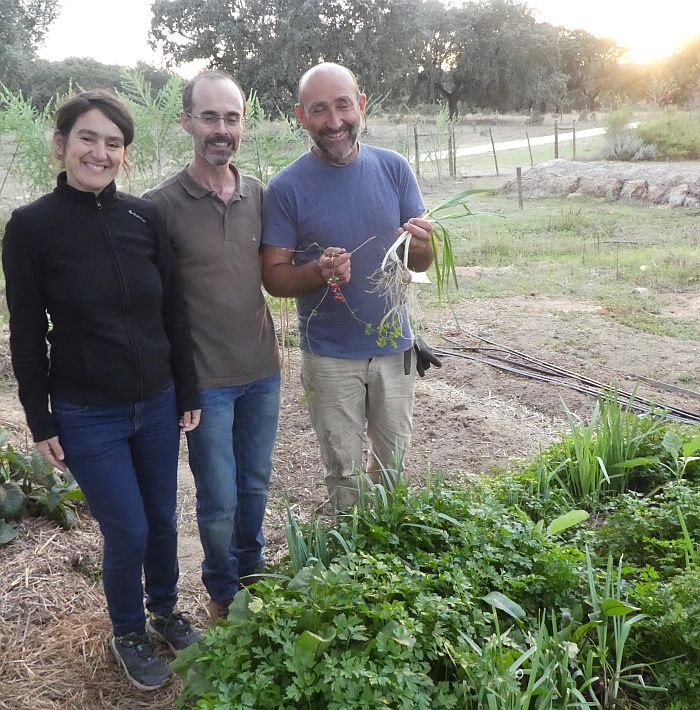
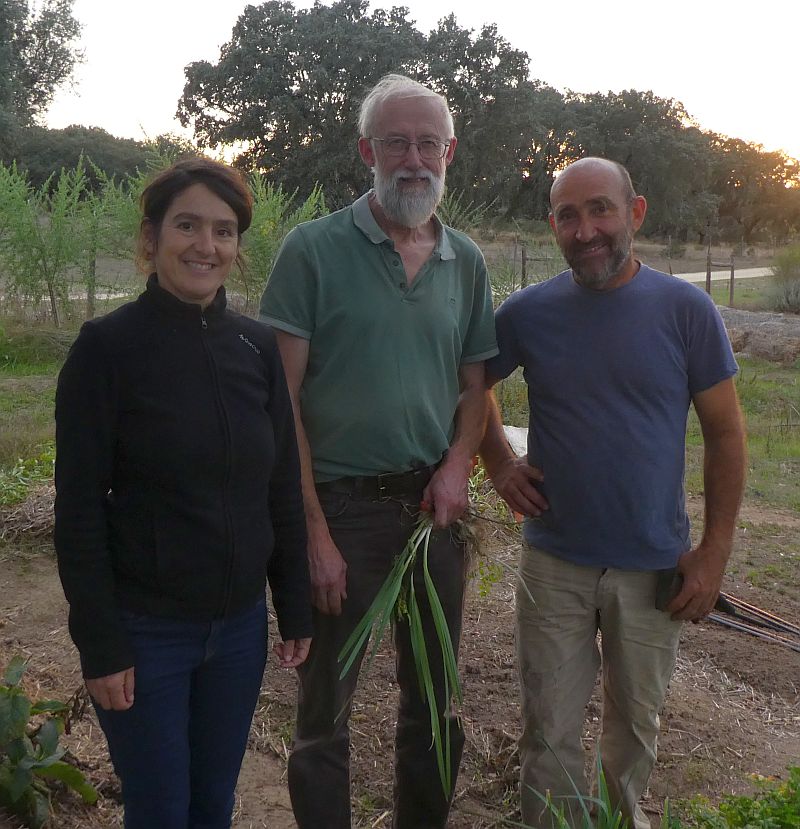
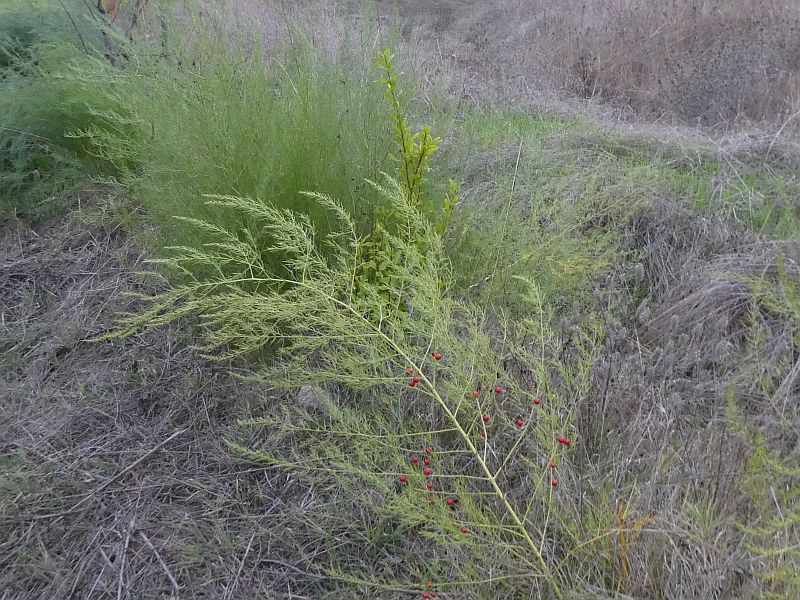
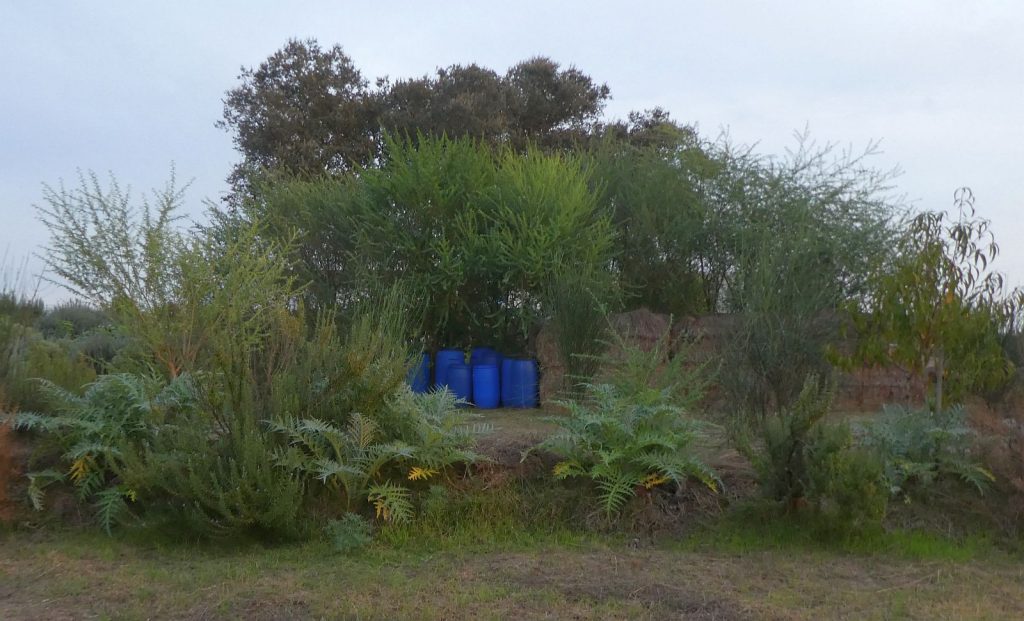
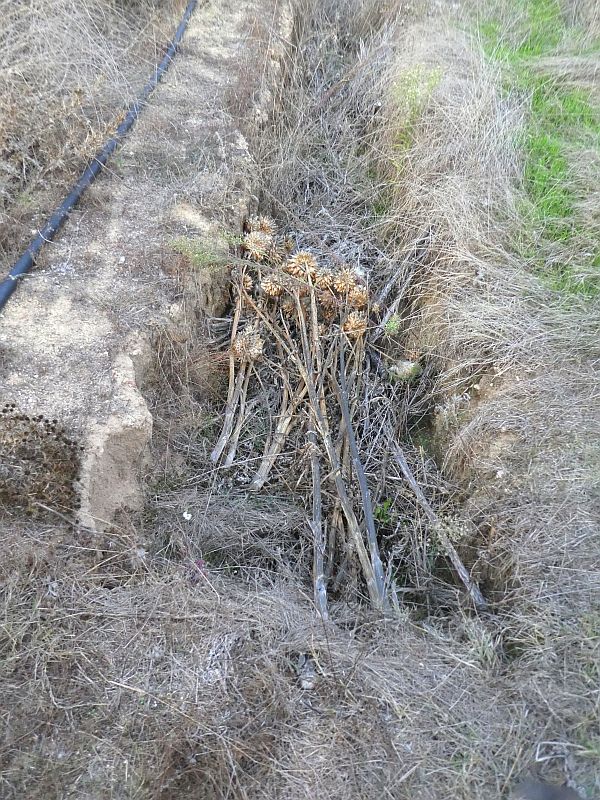
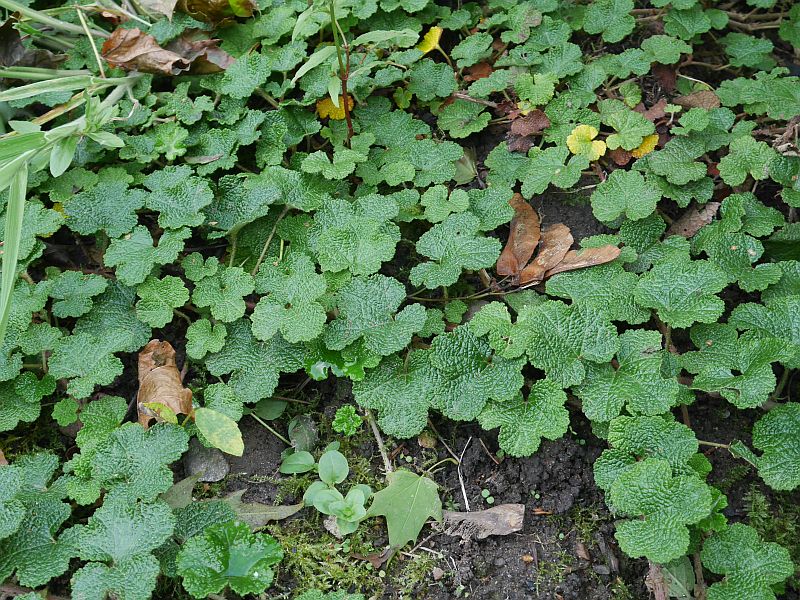
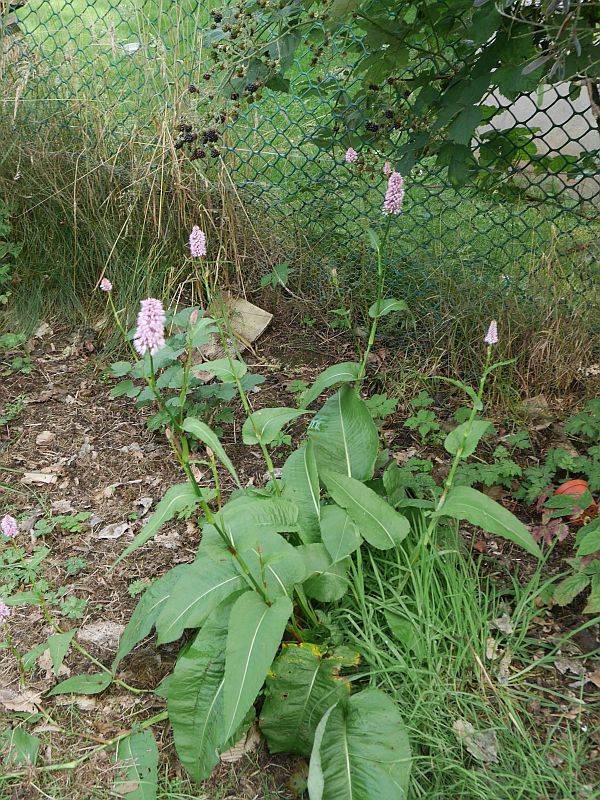
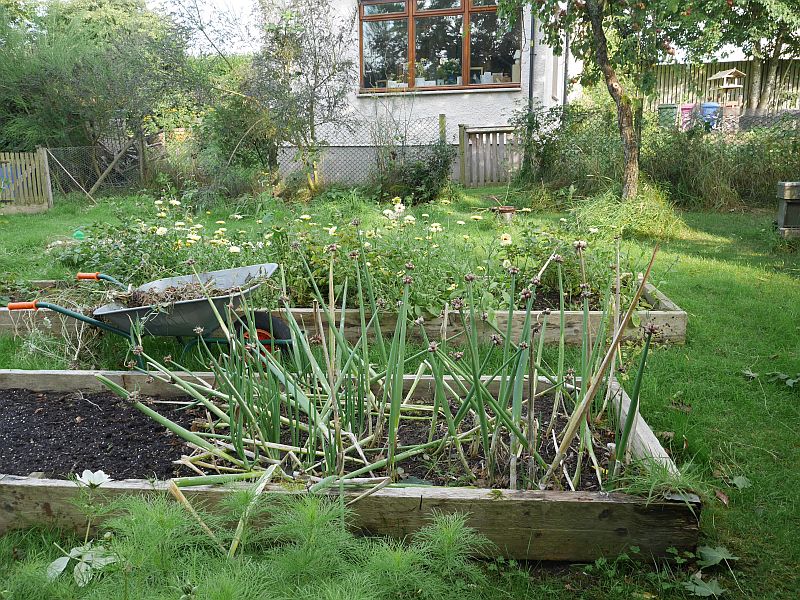
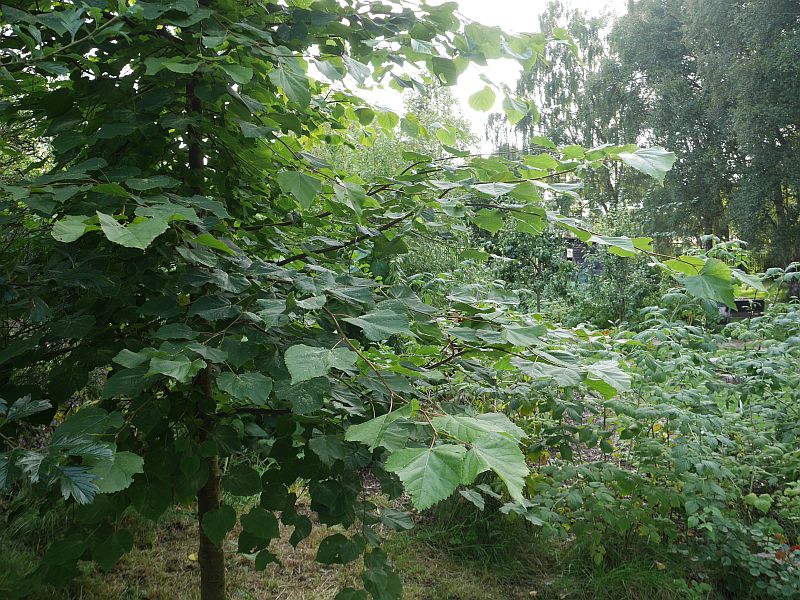
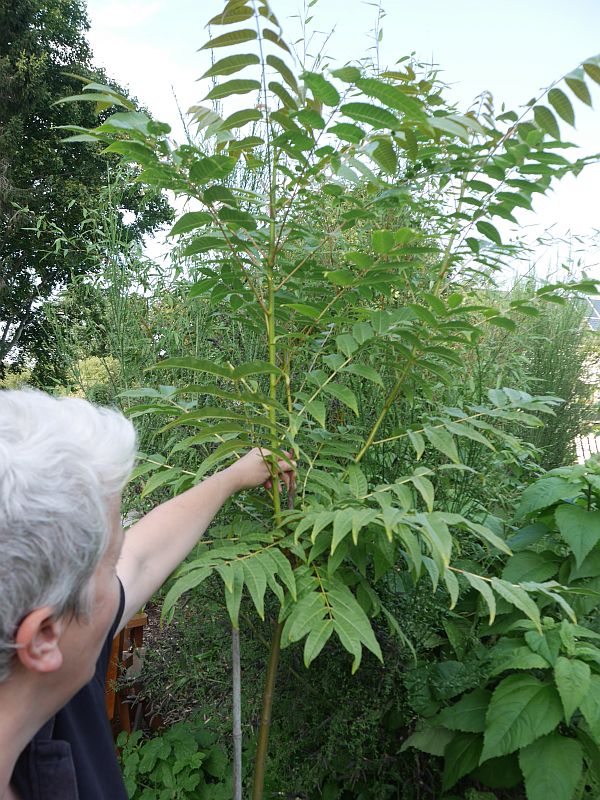
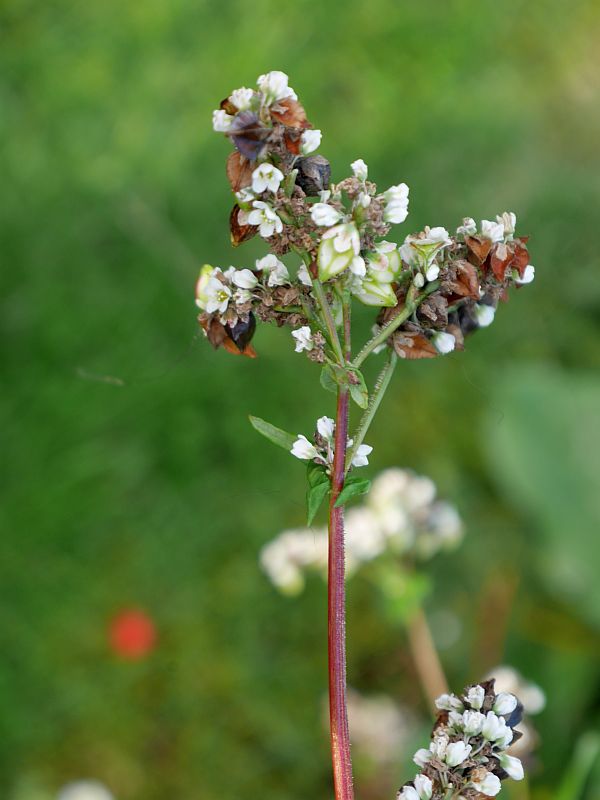
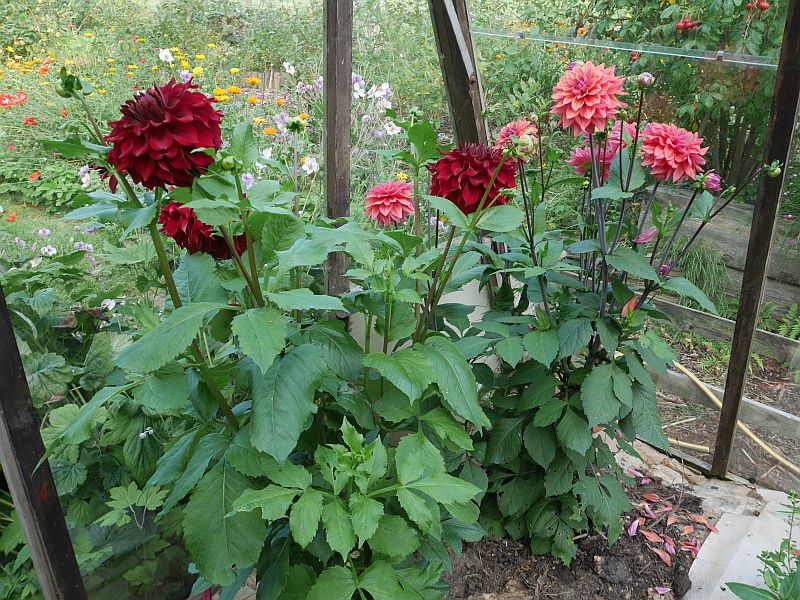
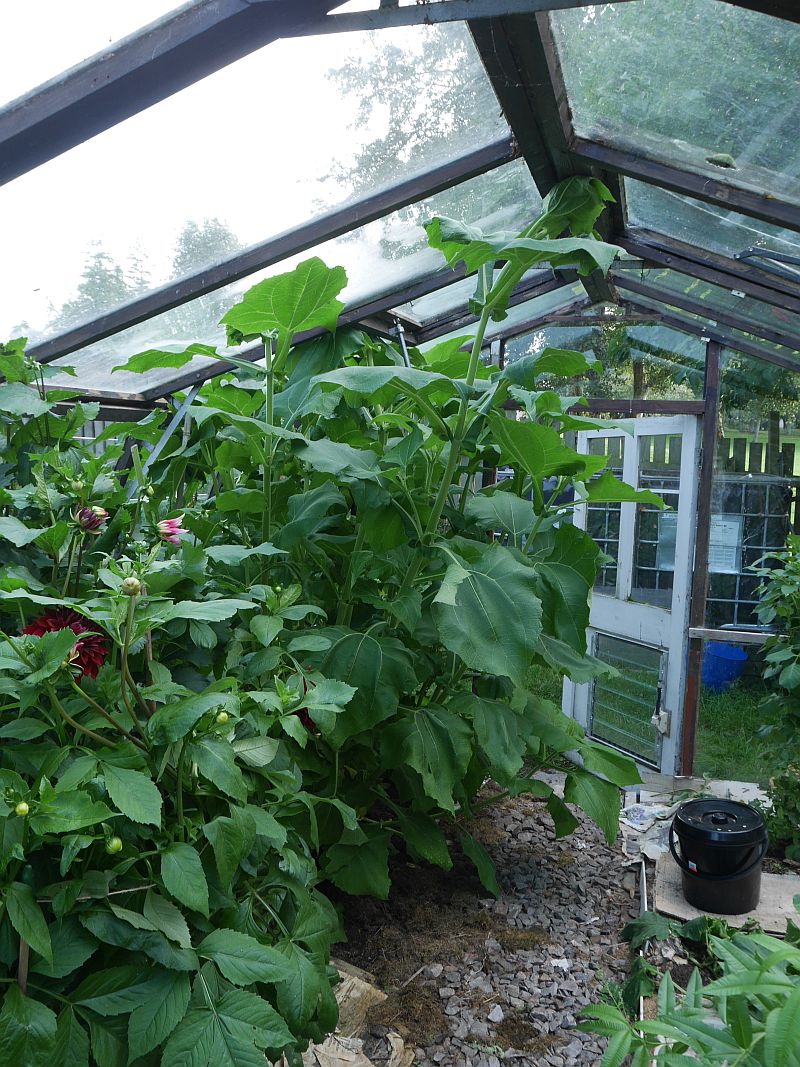
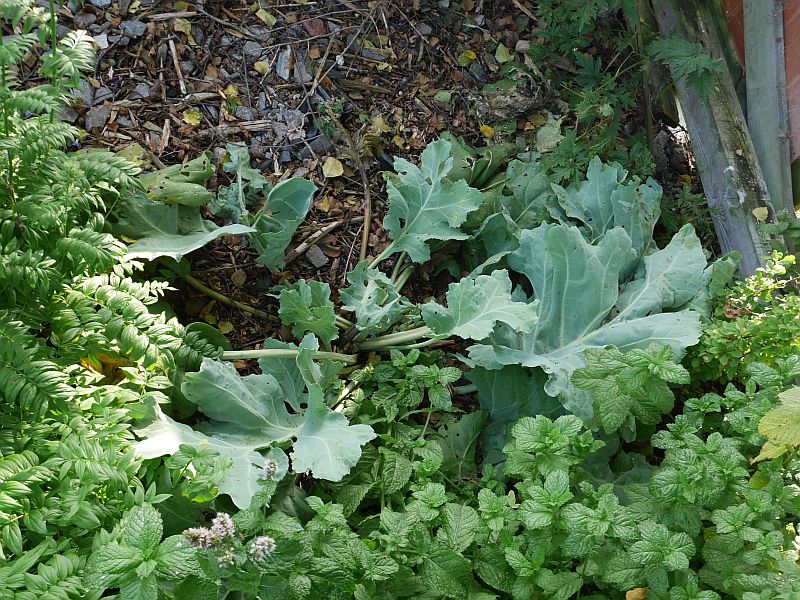
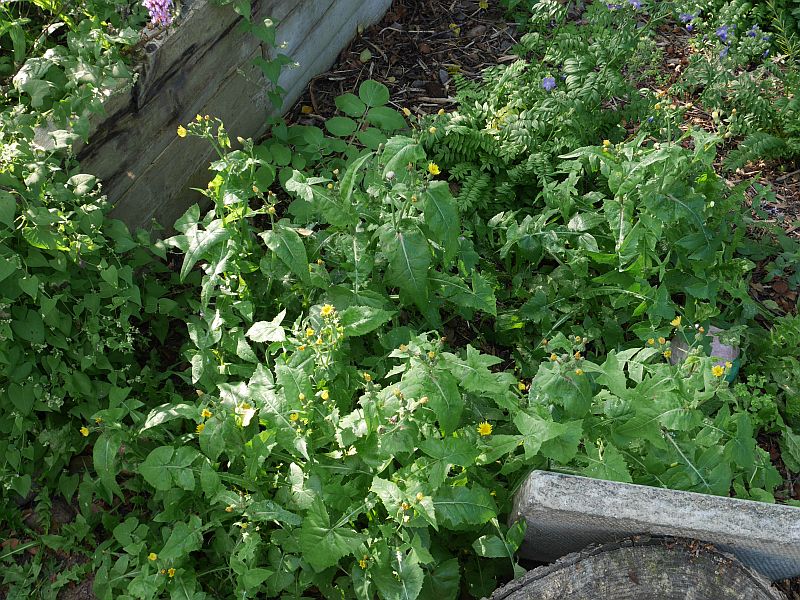
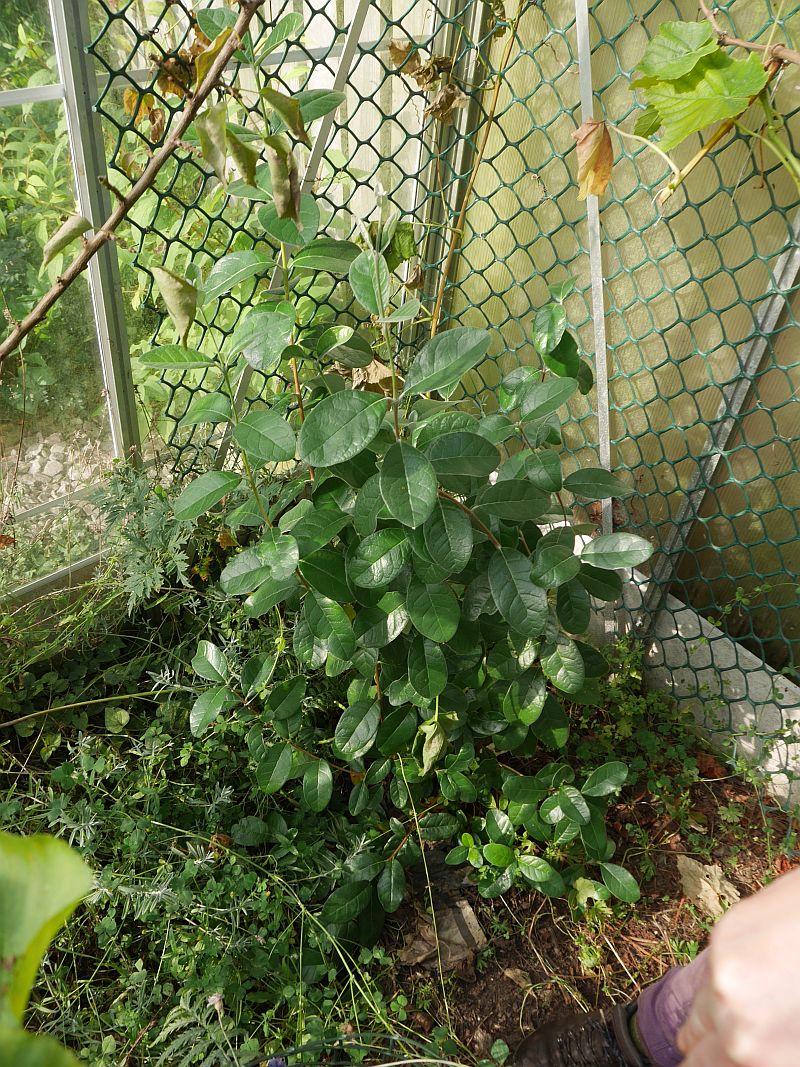
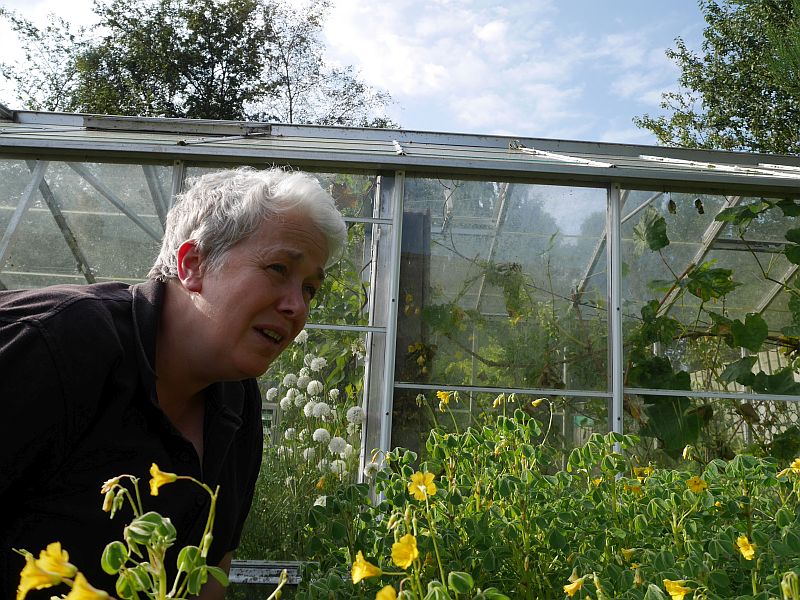
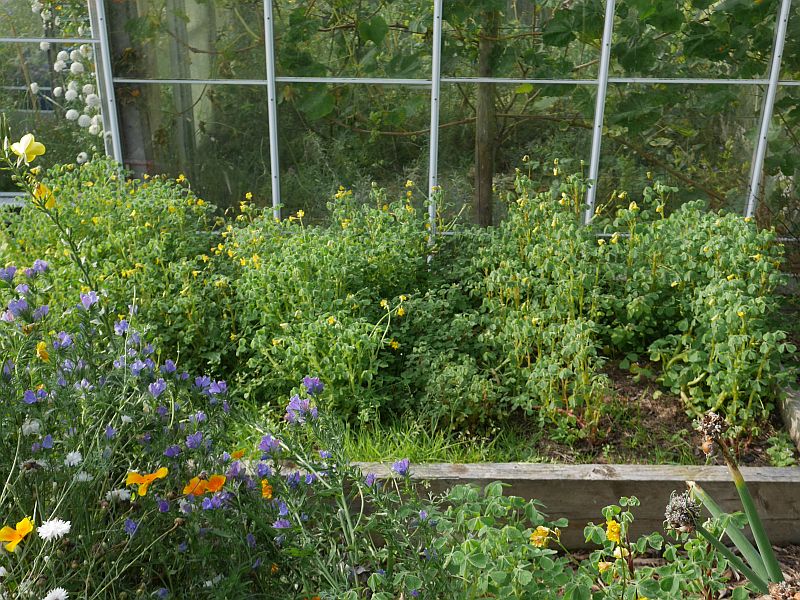
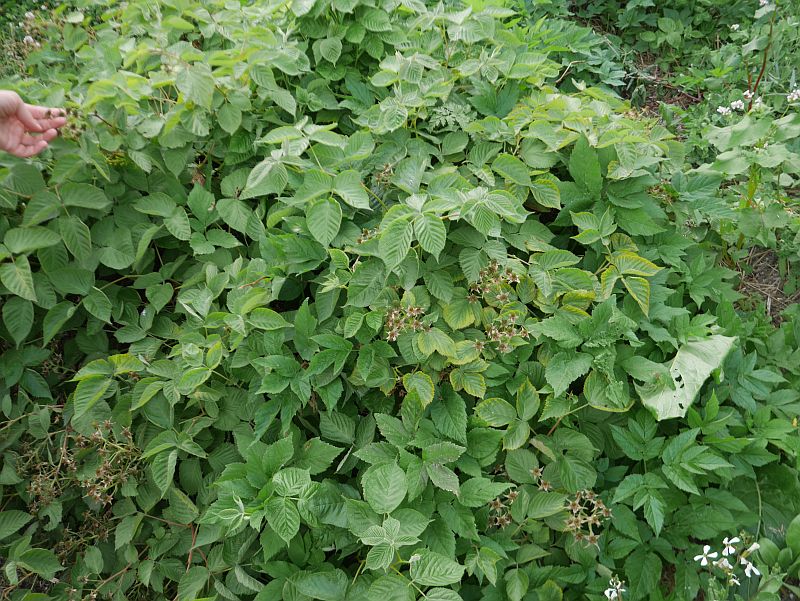
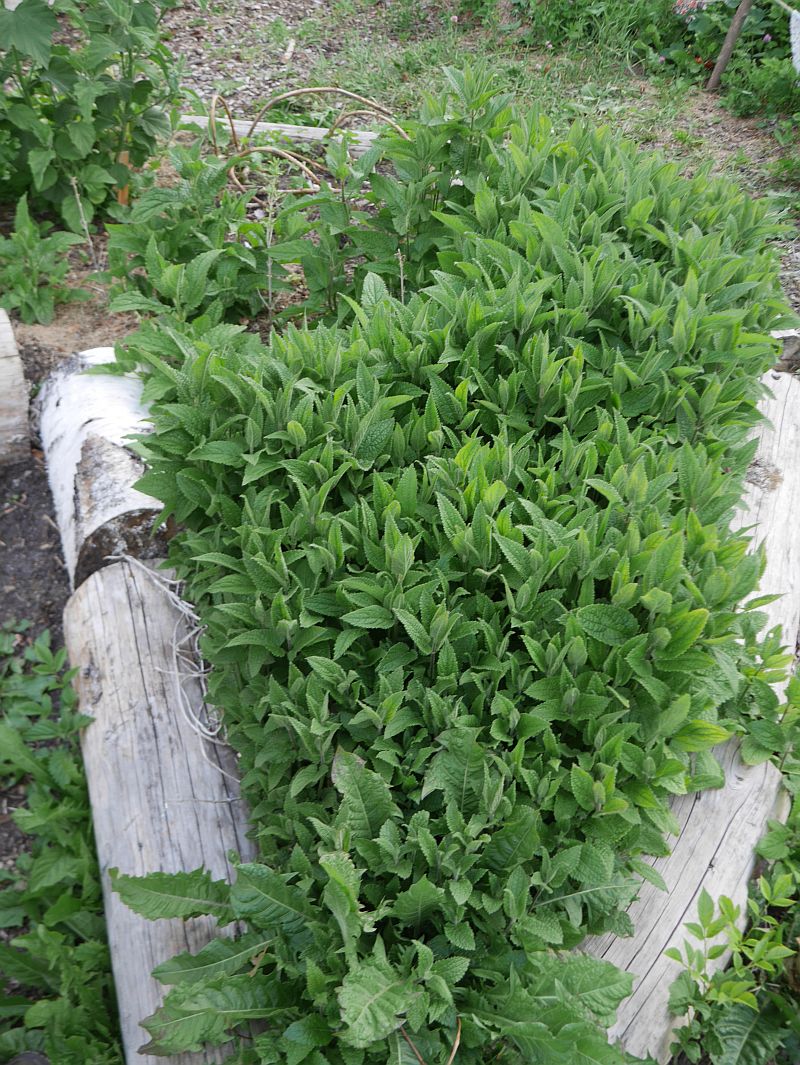
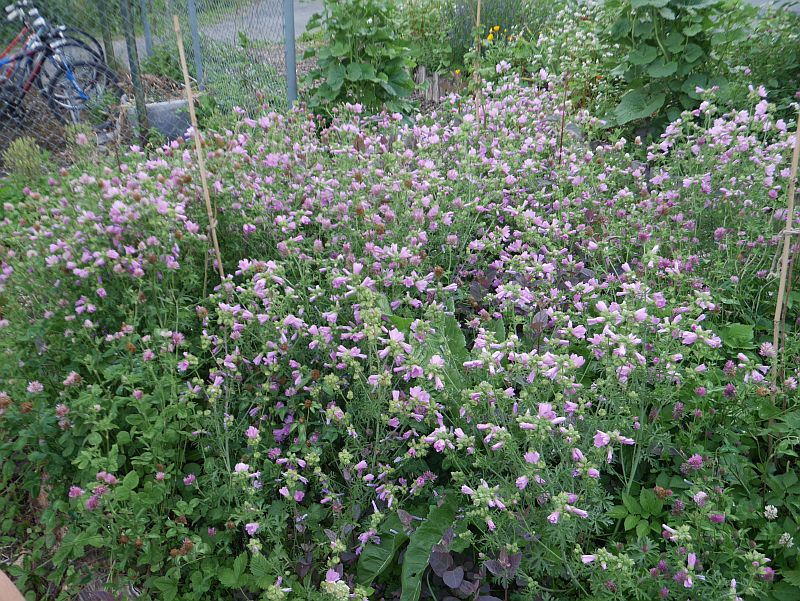
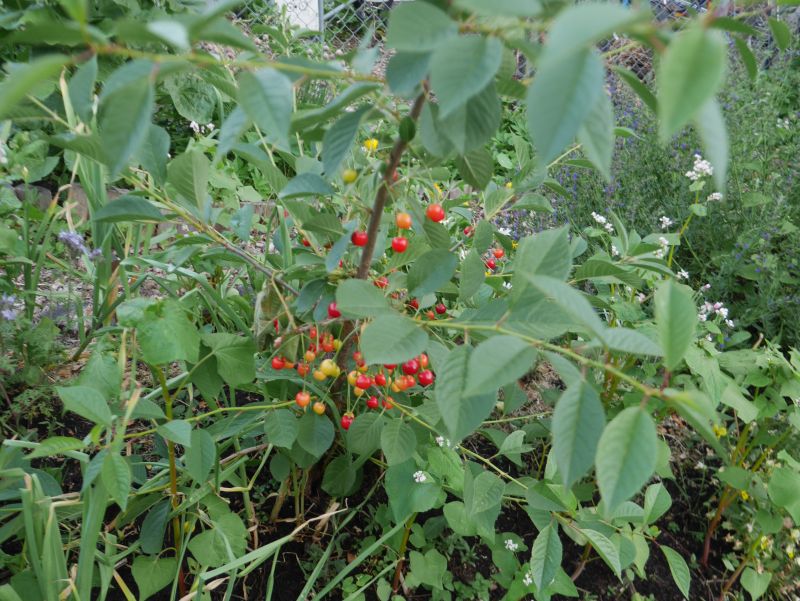
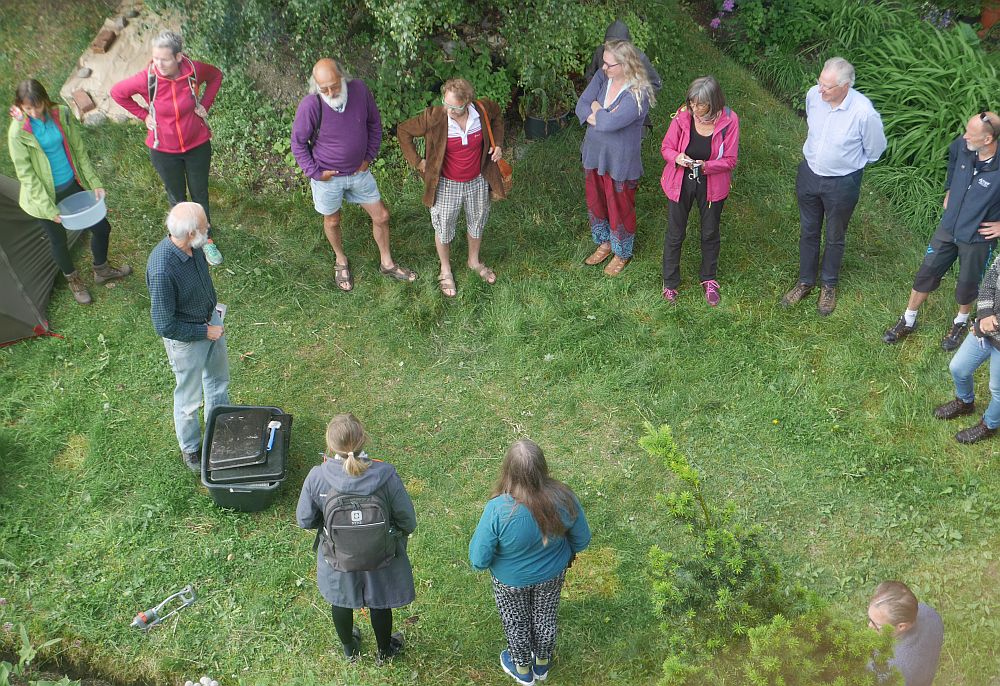
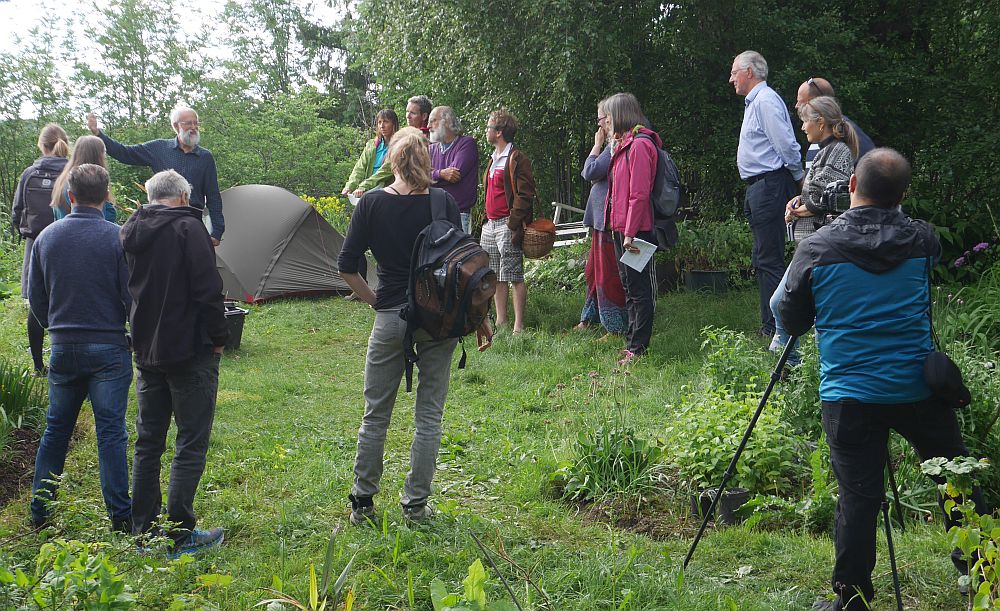
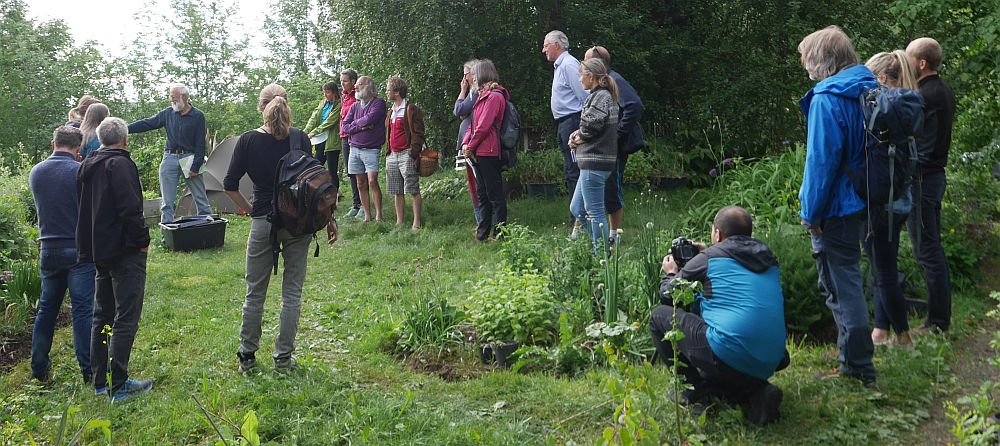
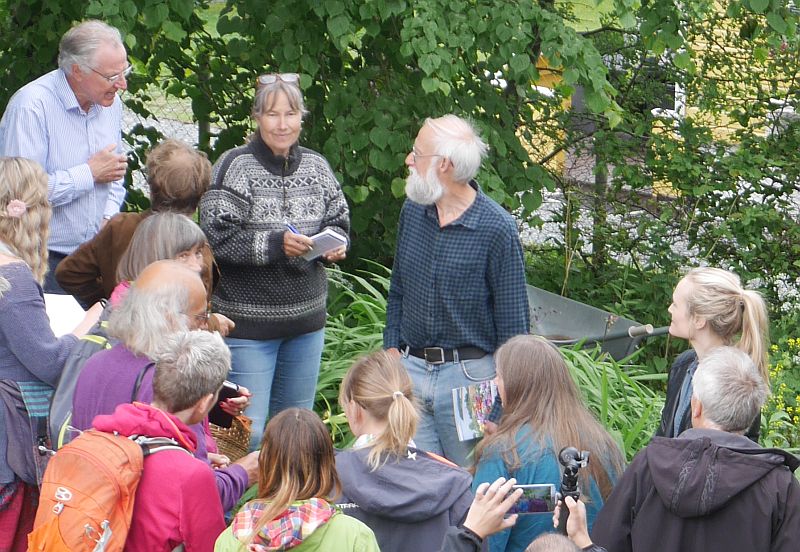
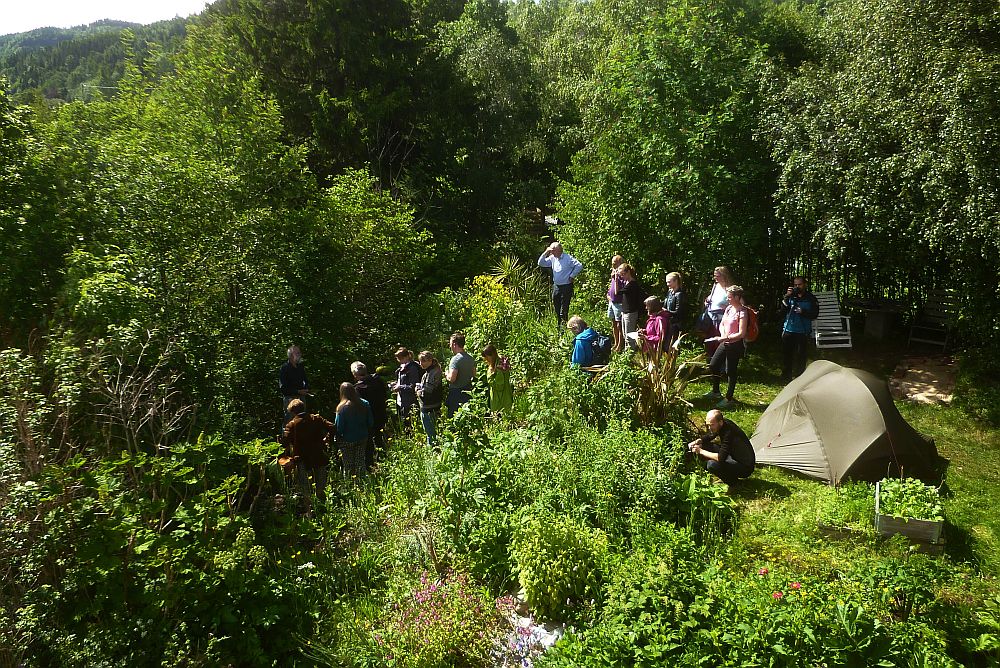
On the afternoon of my arrival at Freixo do Meio (see previous posts and also http://www.edimentals.com/blog/?p=20042), Jorge Carona and I were loaned an electric vehicle to explore the farm. Jorge proposed we go over to a property within the main farm practicing regenerative agriculture using keyline design.
Catarina Joaquim and Carlos Simões have designed and established this impressive garden (see
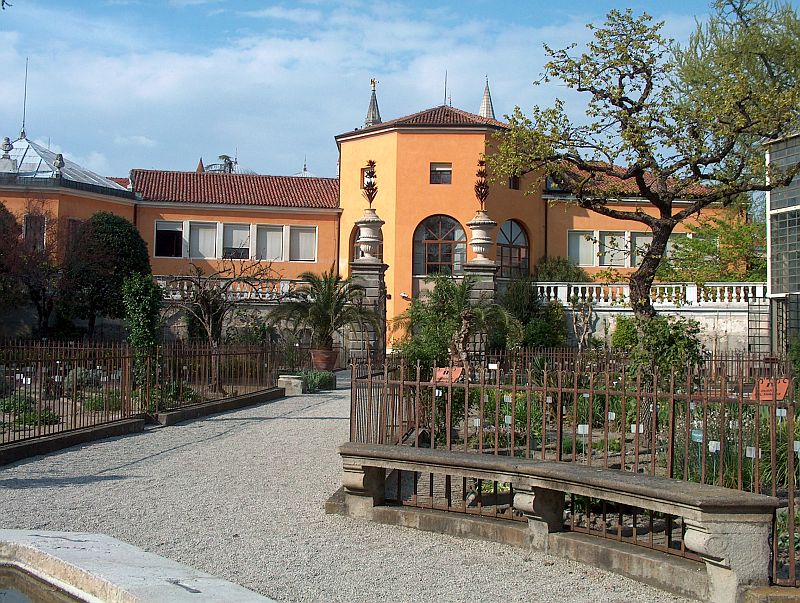
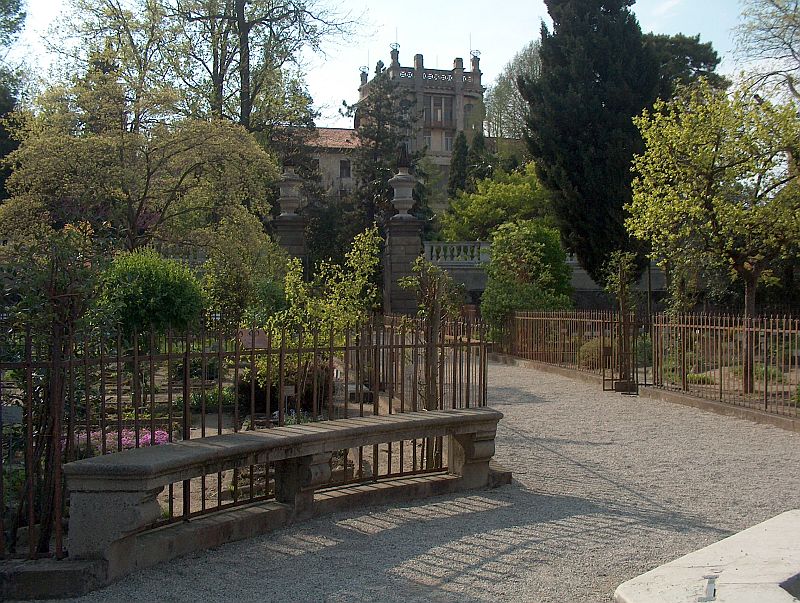
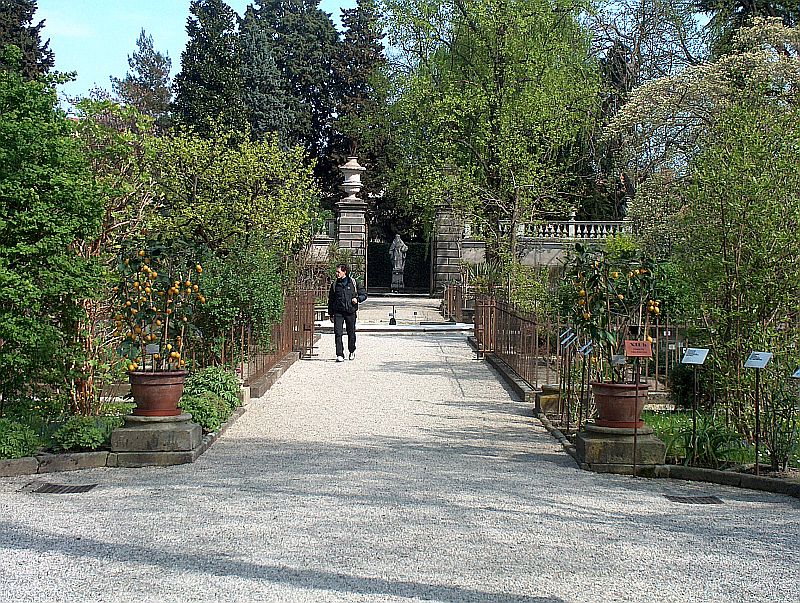
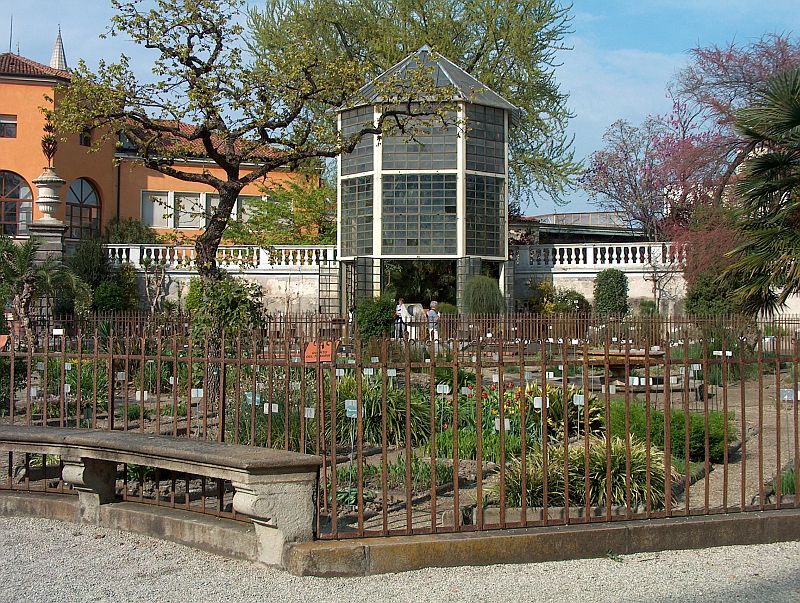
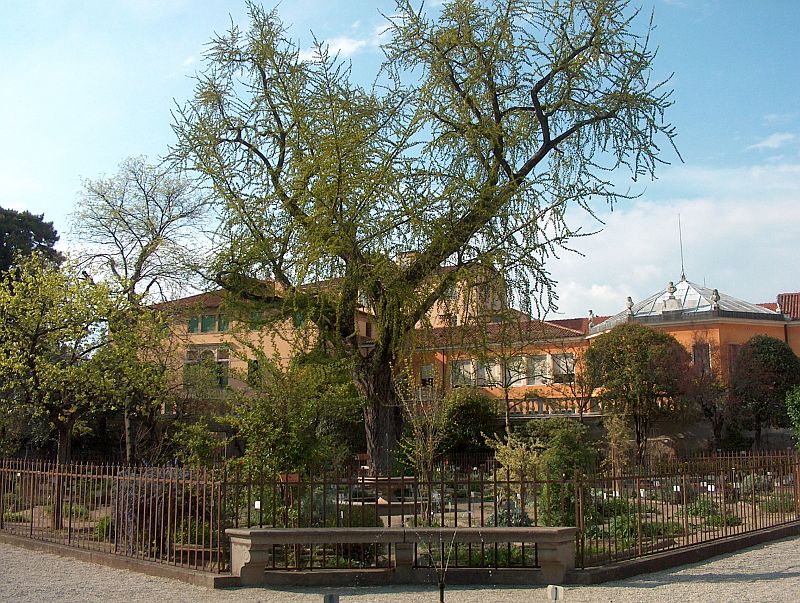
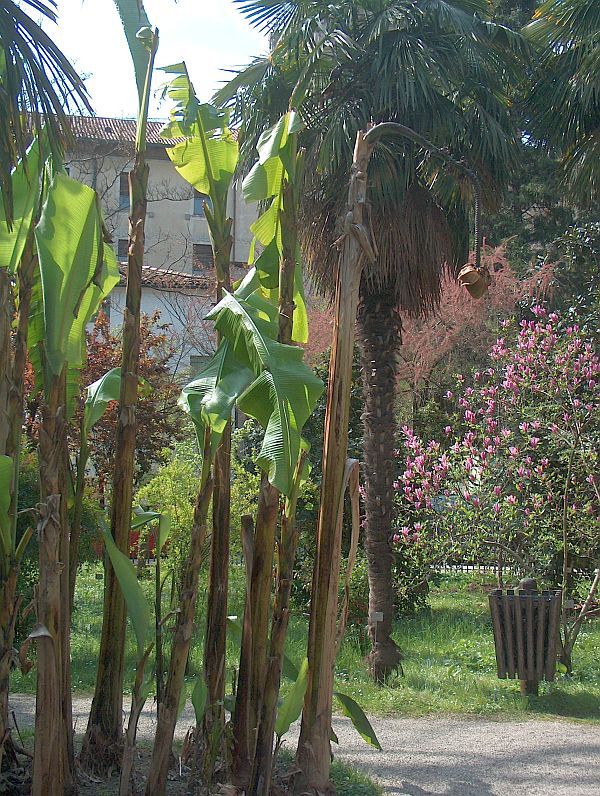
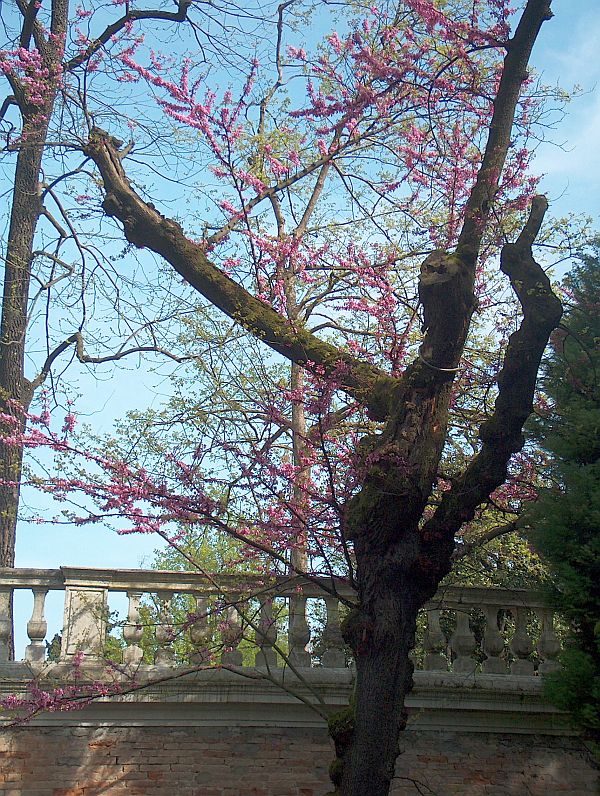
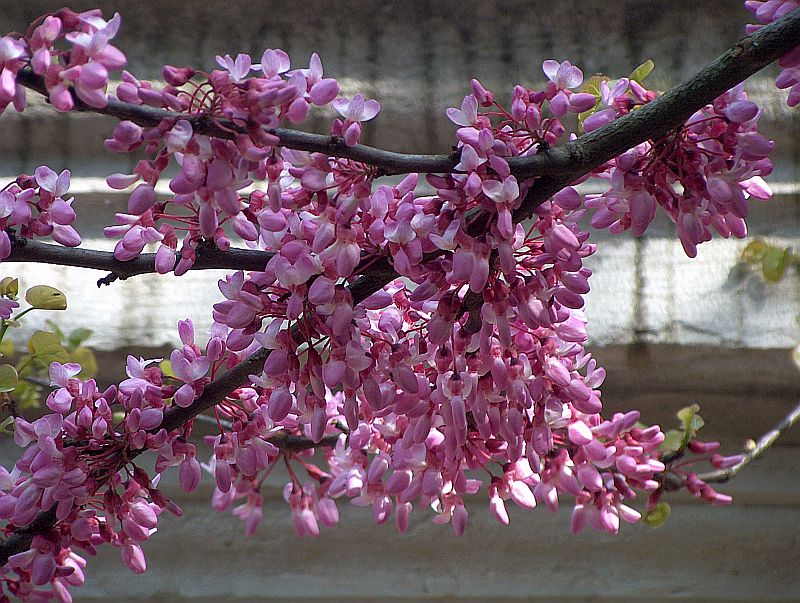
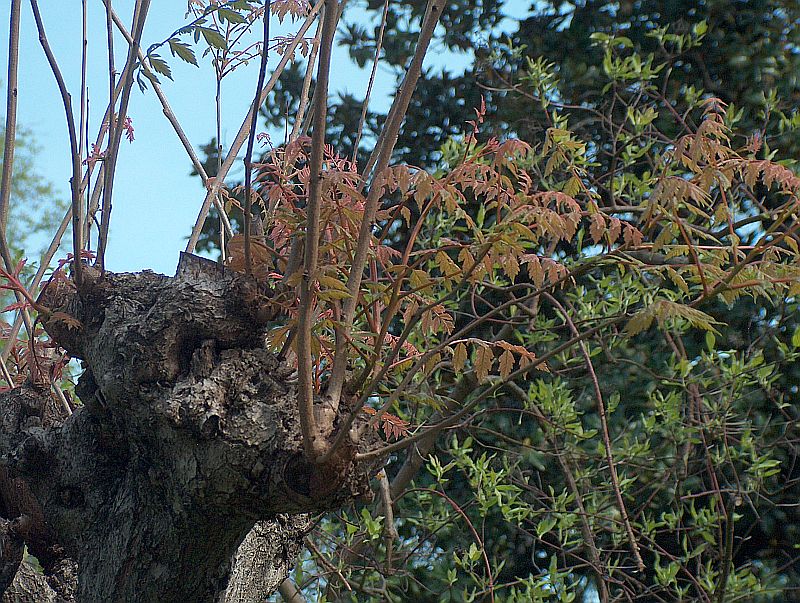
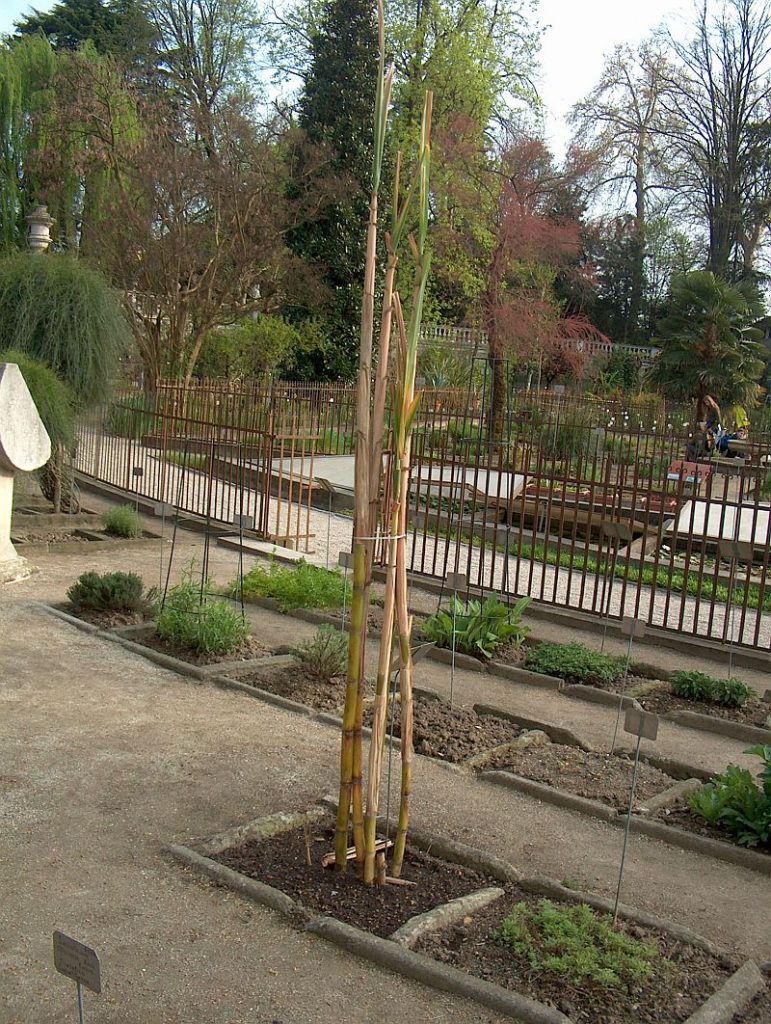
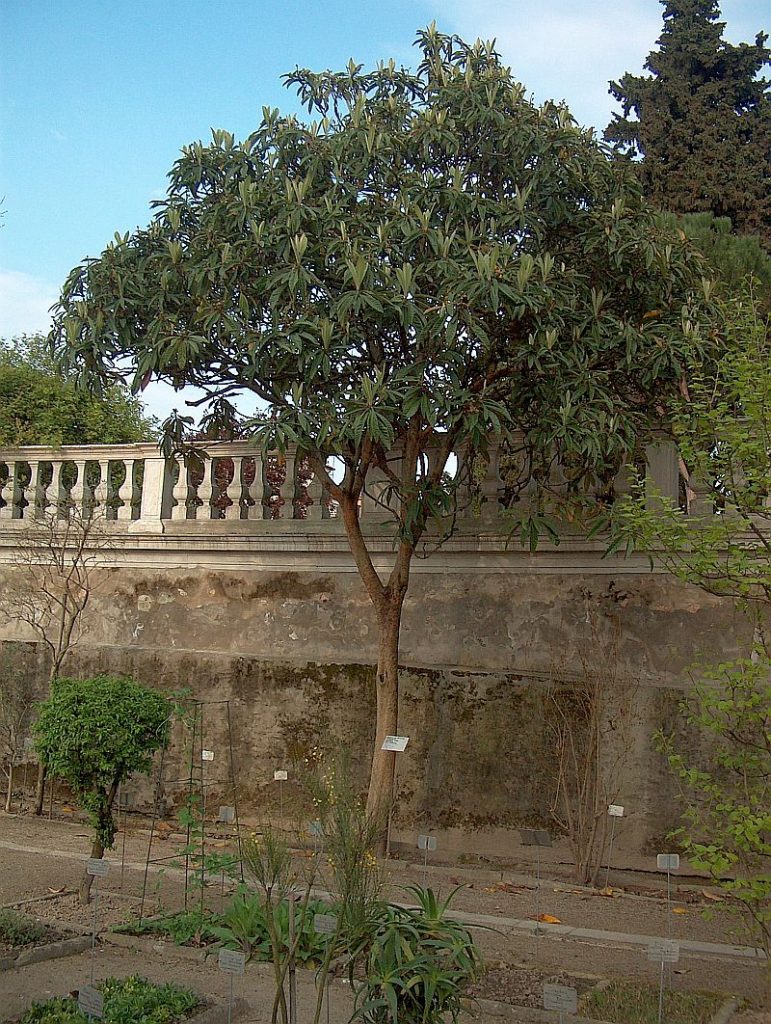
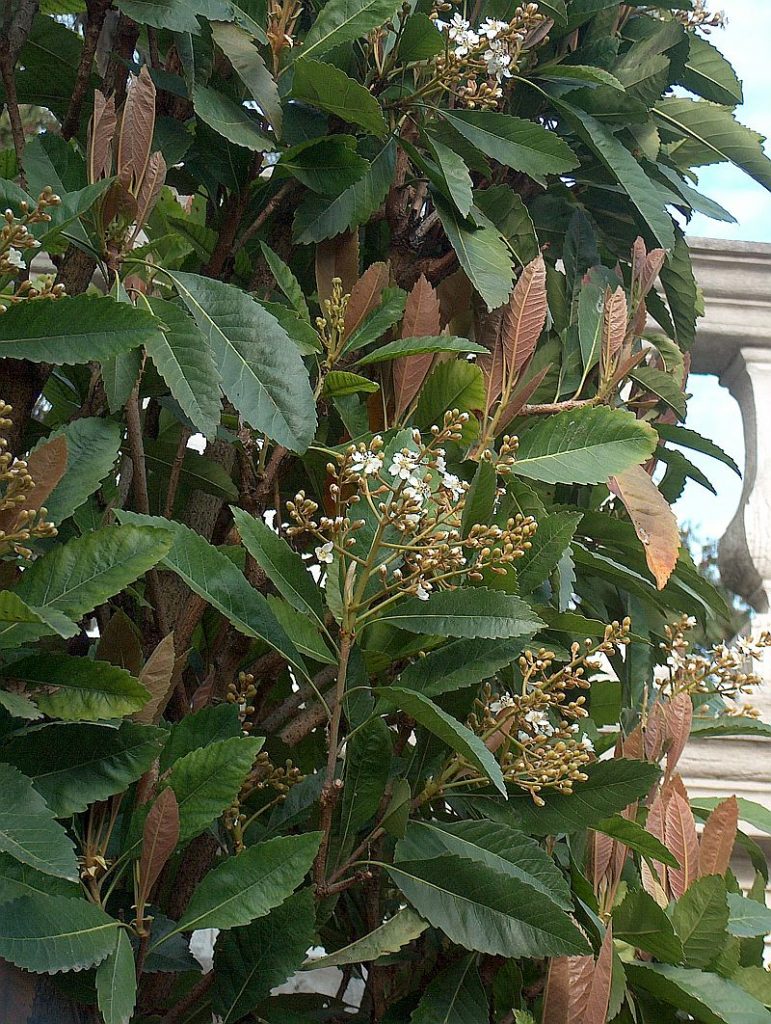
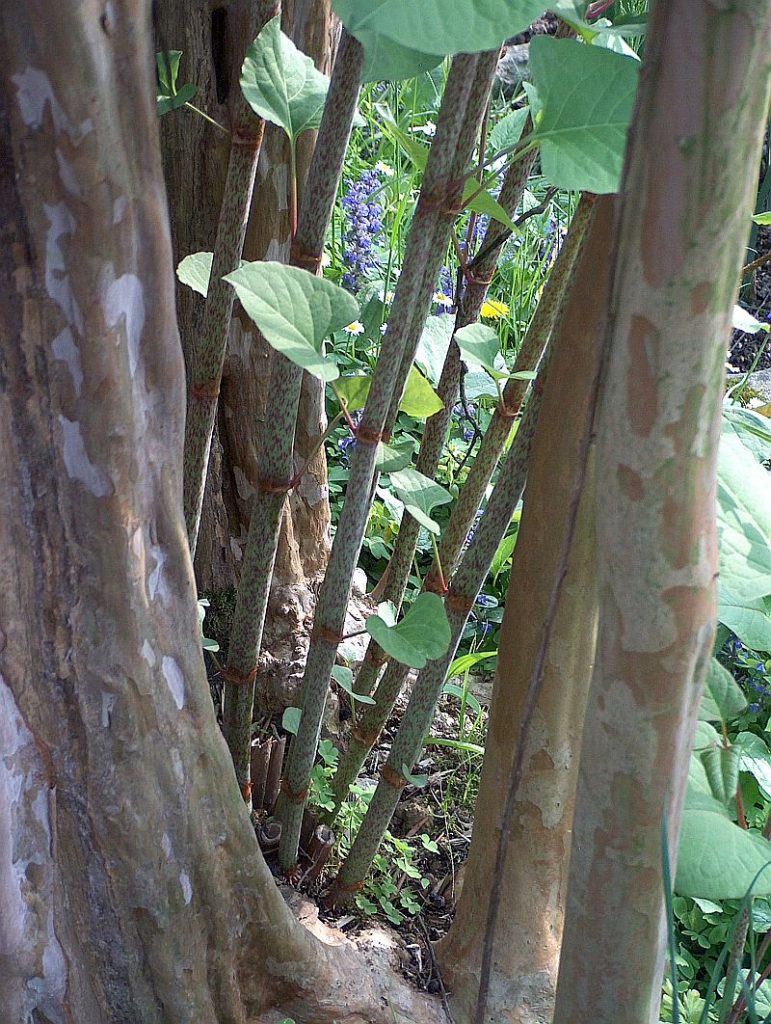
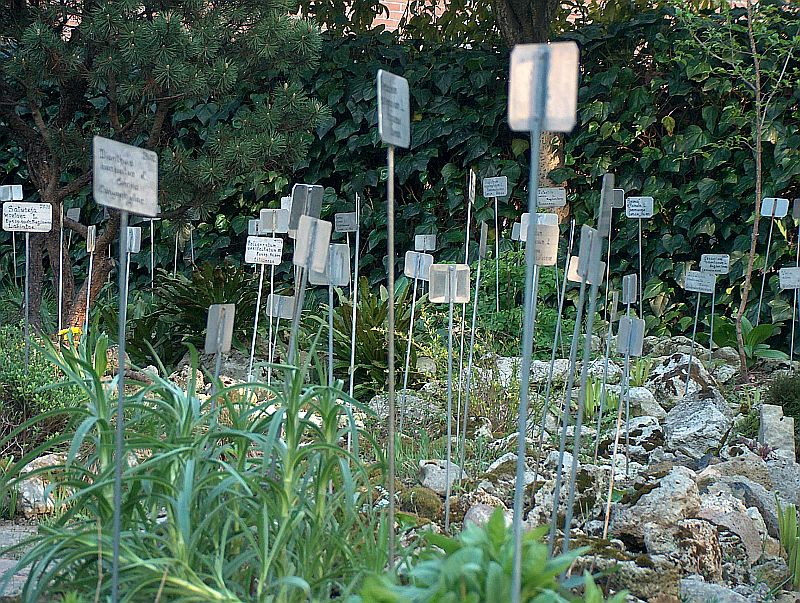
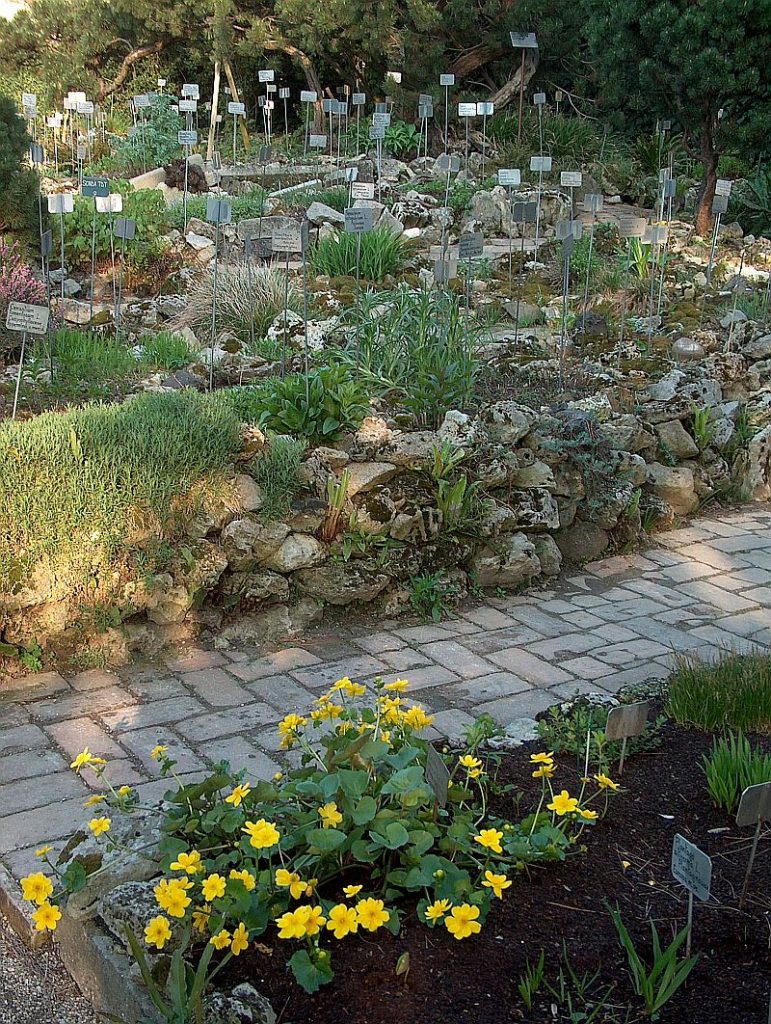
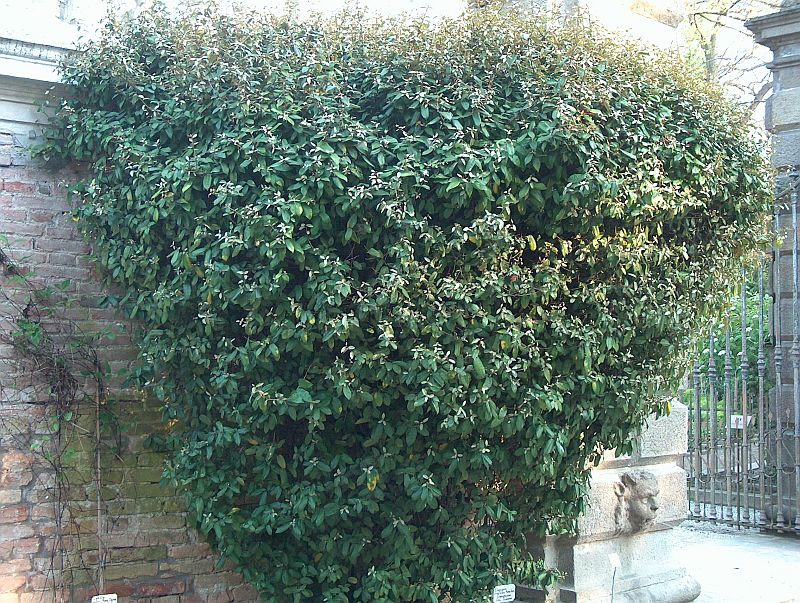
On a work trip to Italy on 4th April 2009 I took the opportunity to visit Orto Botanico in Padua. Founded in 1545 by the Venetian Republic, it is the world’s oldest academic botanical garden that is still in its original location! Here’s an album of pictures of mostly edible plants I took that day!
Gingko biloba
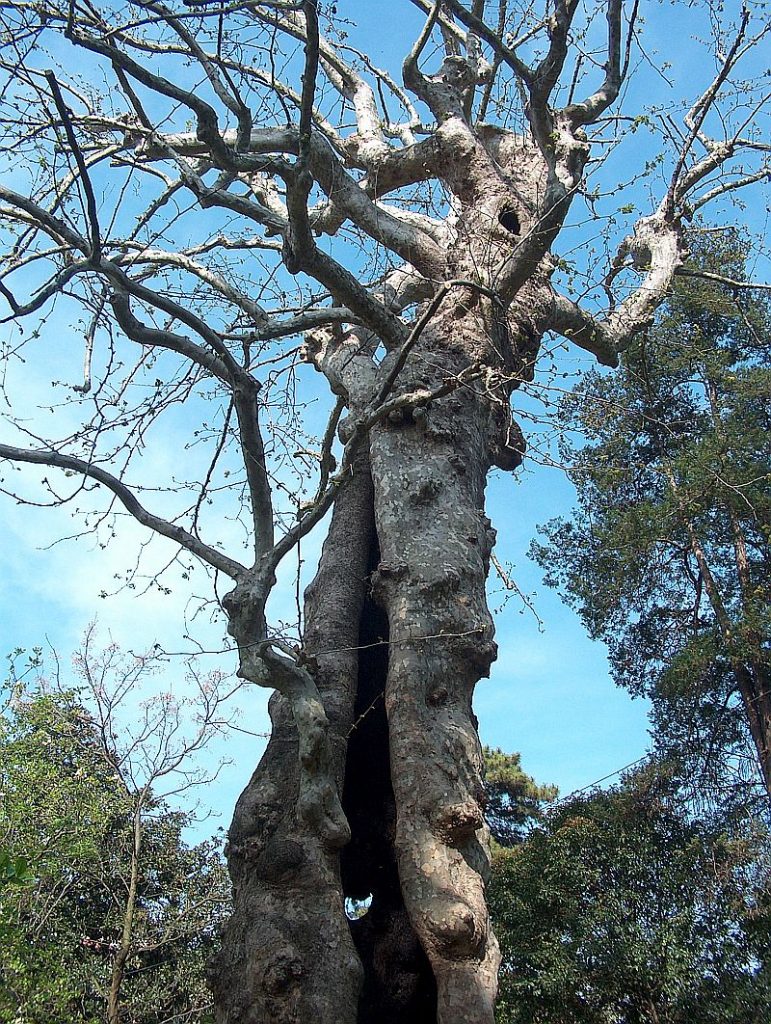
Platanus orientalis from 1680!
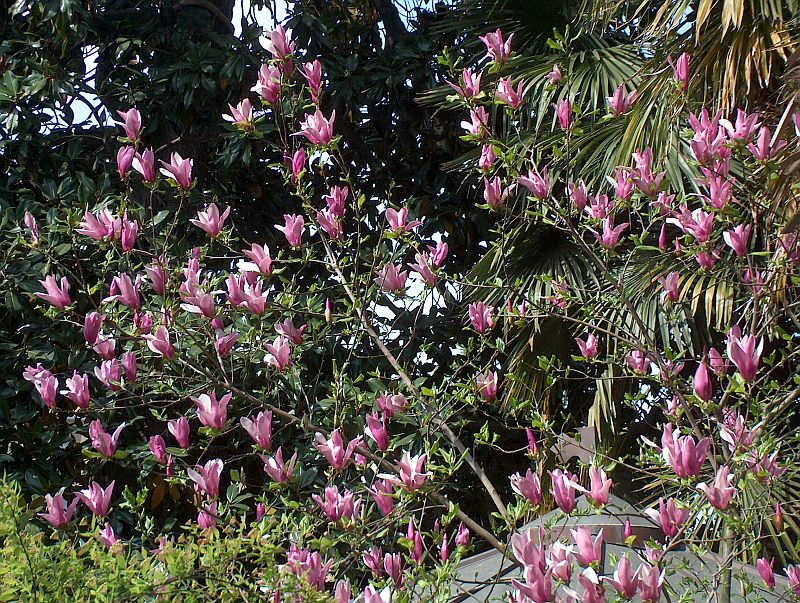
Magnolia liliiflora
Musa basjoo
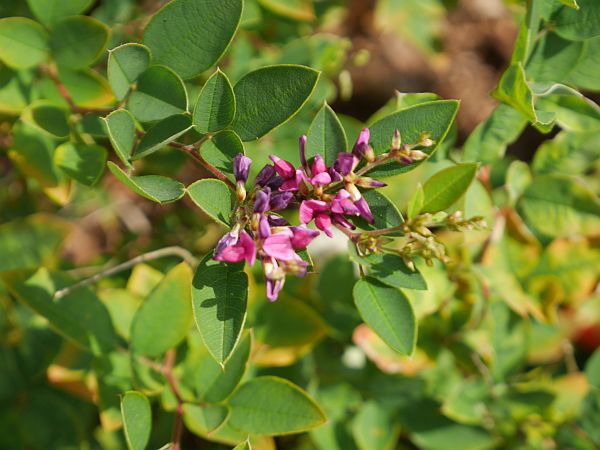
Cercis siliquastrum
Koelreuteria paniculata( Golden Rain Tree) has edible shoots and the seeds were roasted
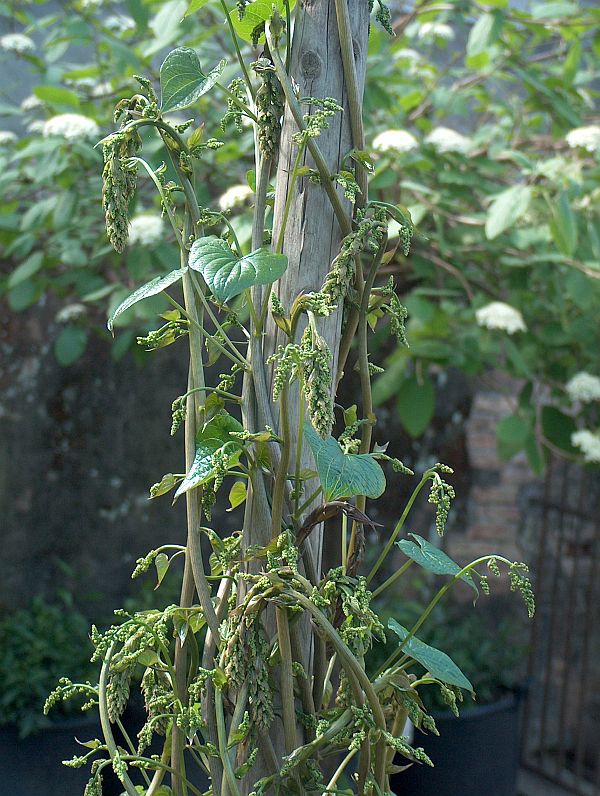
There are many records of Tamus communis being eaten traditionally in the Mediterranean countries (from Spain to Palestine), butcareful preparation is needed to boil away the saponins
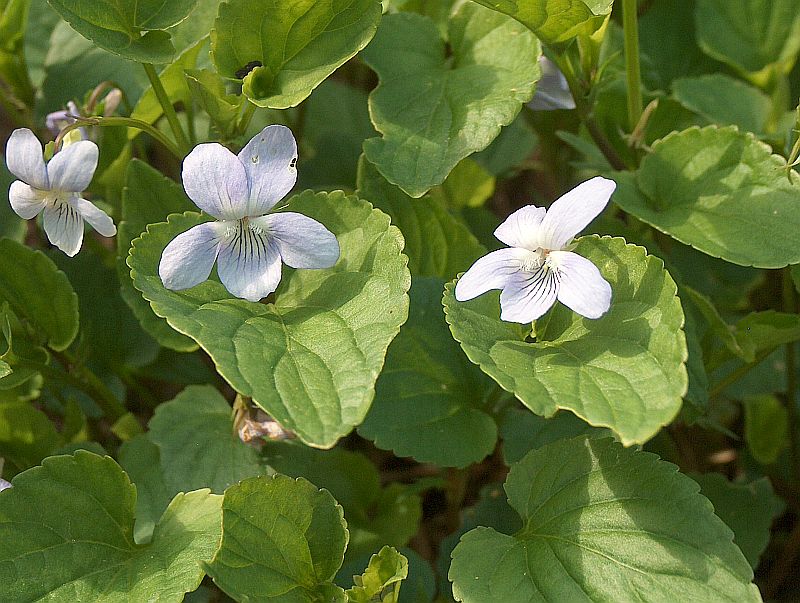
Viola banksii from Australia
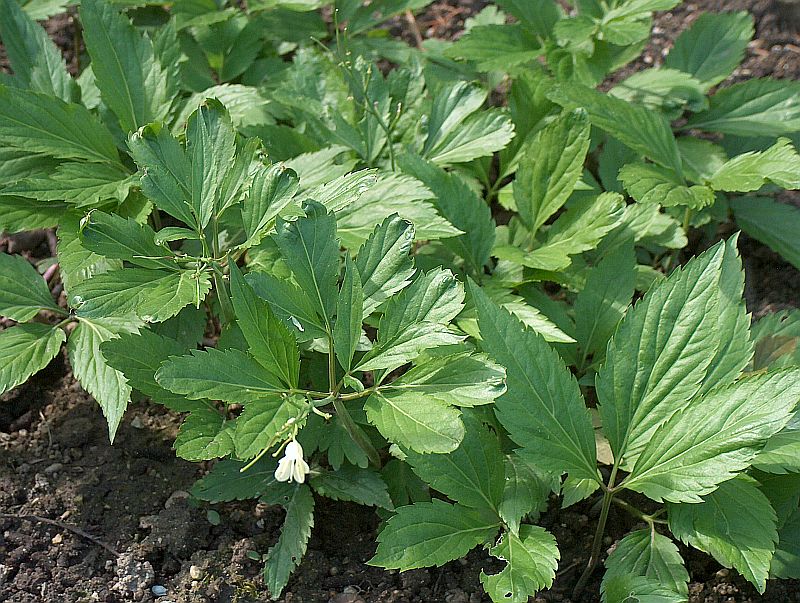
Cardamine enneaphylla
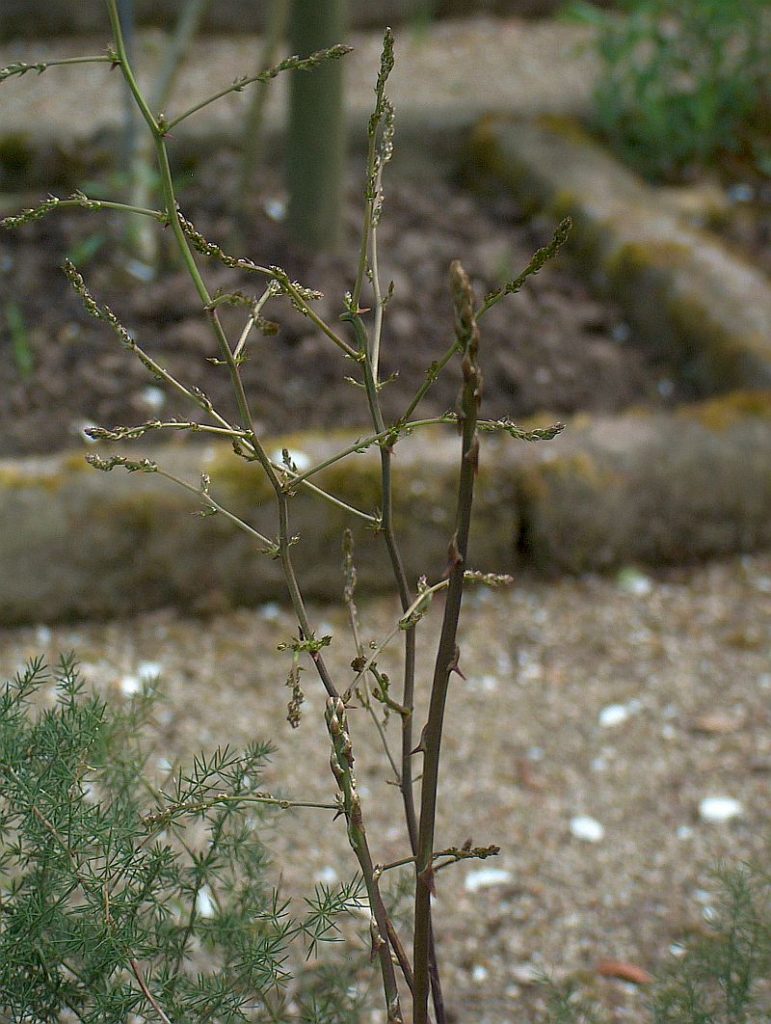
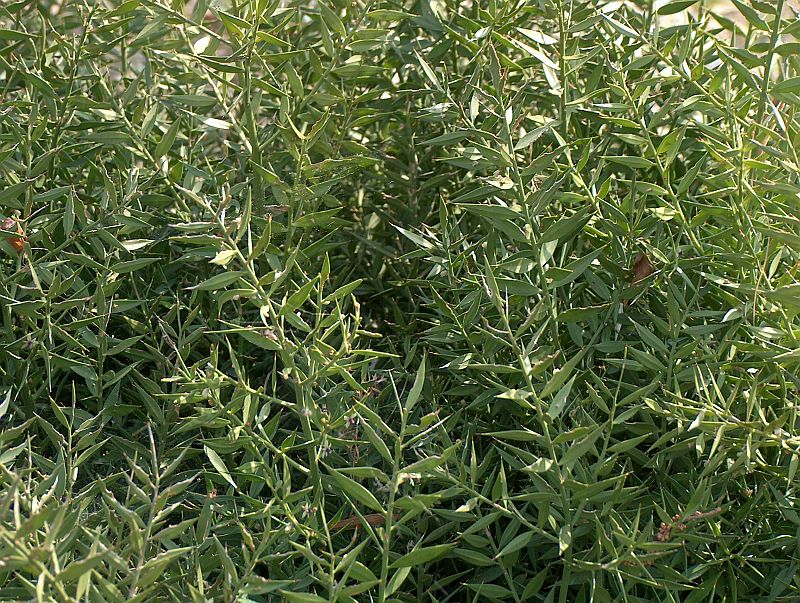
Asparagus acutifolius
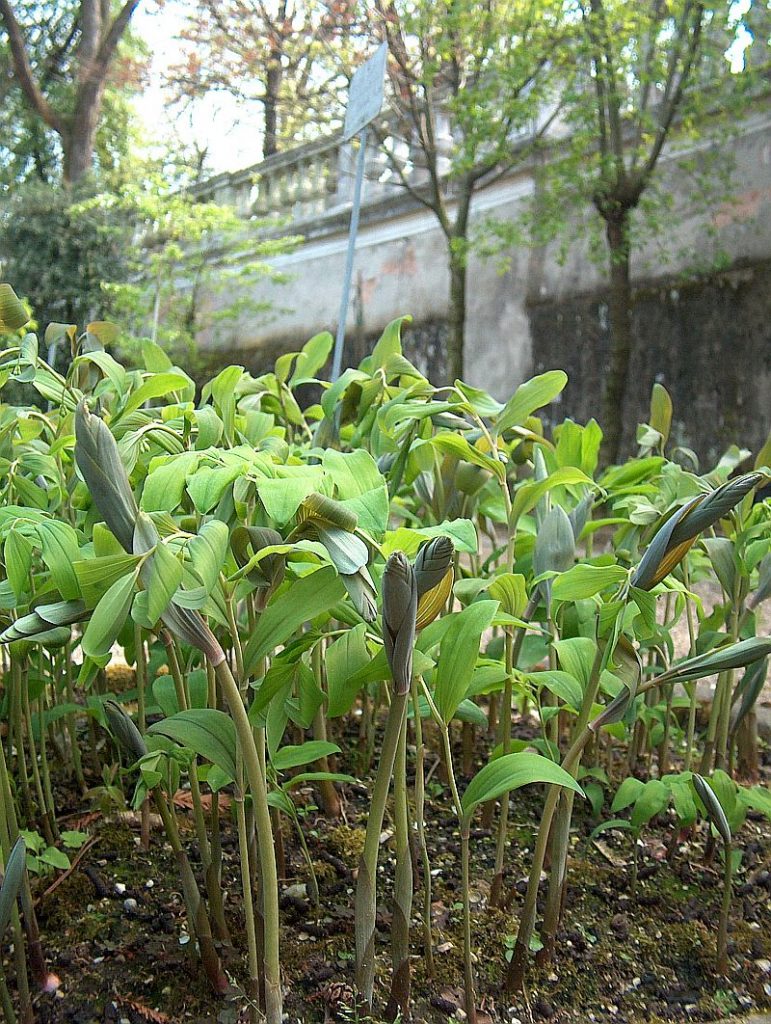
Polygonatum hybridum
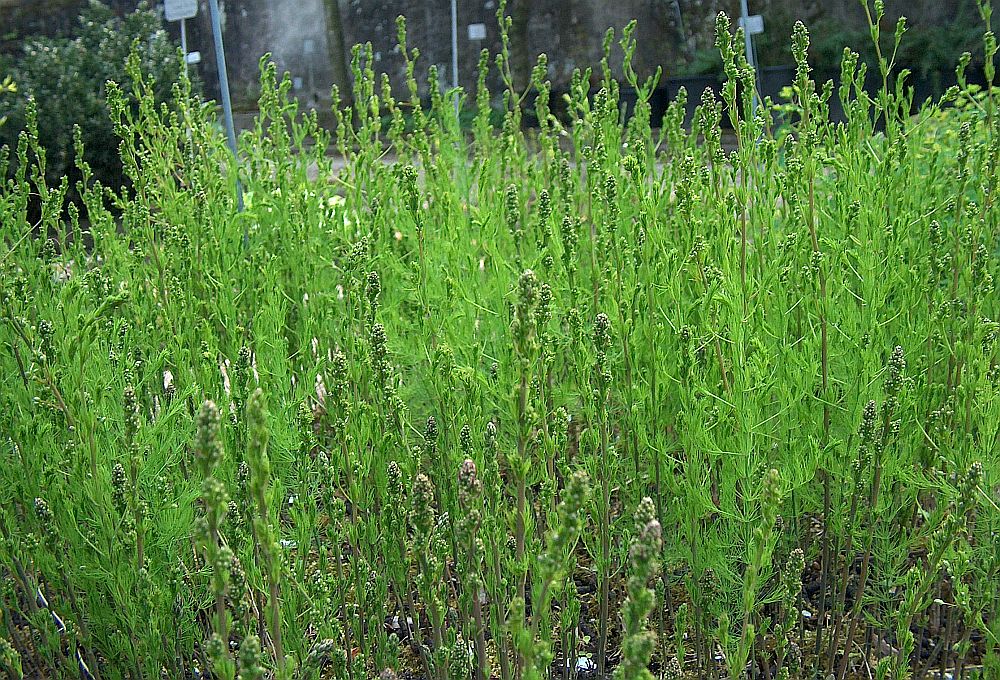
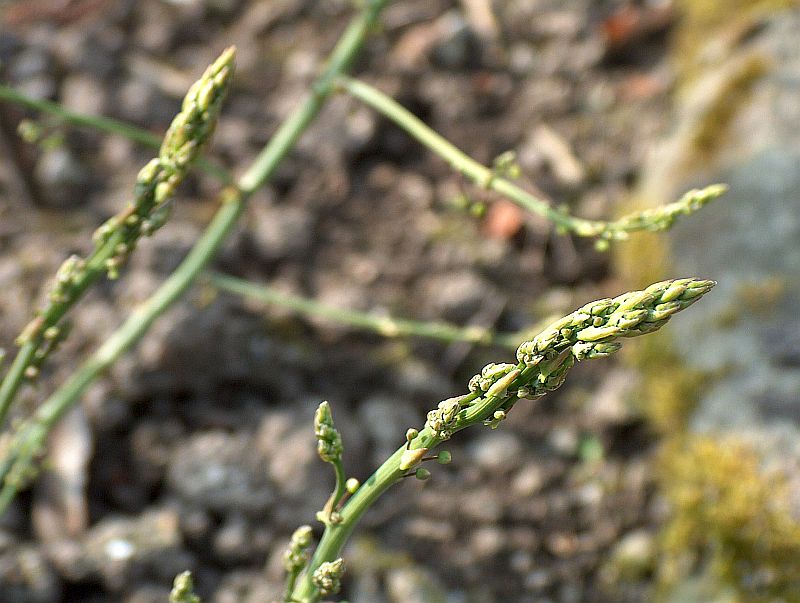
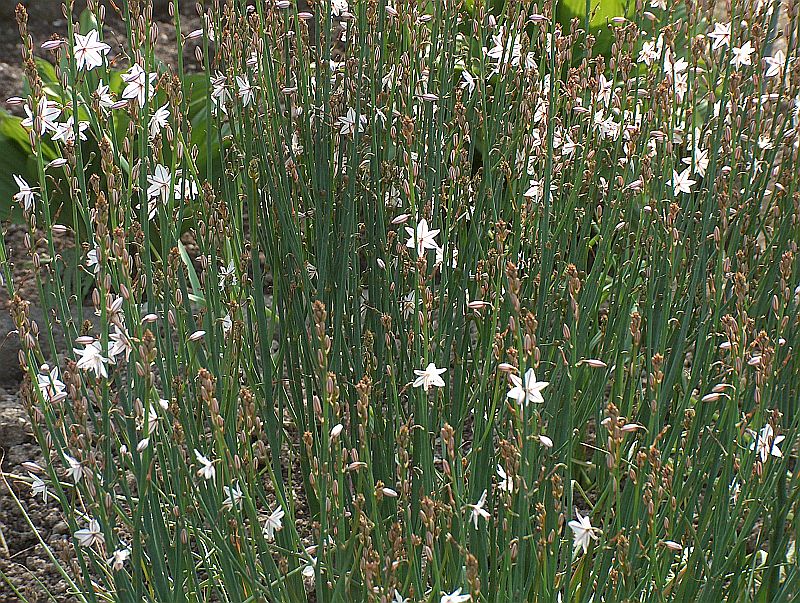
Asparagus tenuifolius
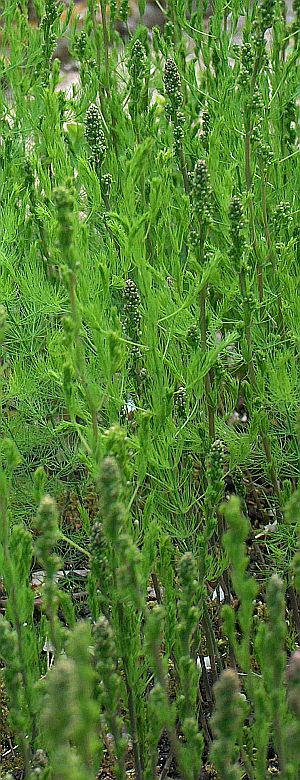
Asparagus tenuifolius
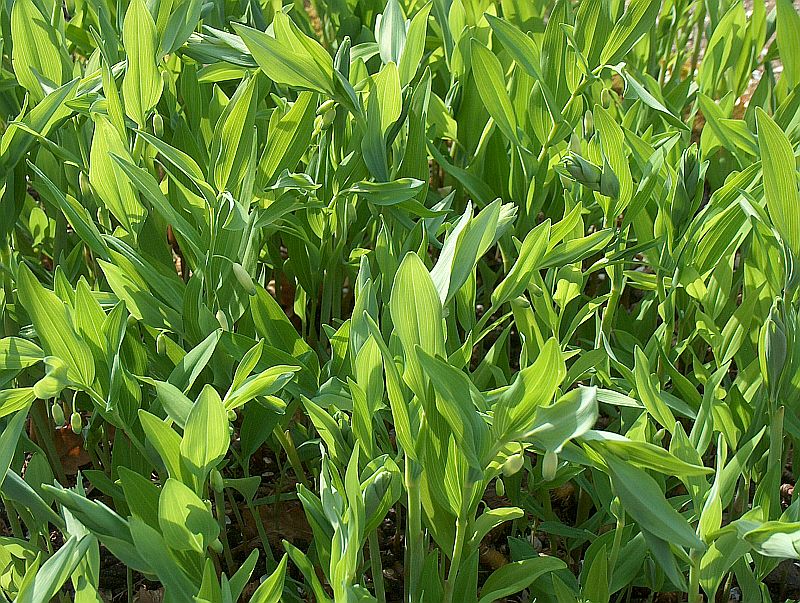
Polygonatum odoratum
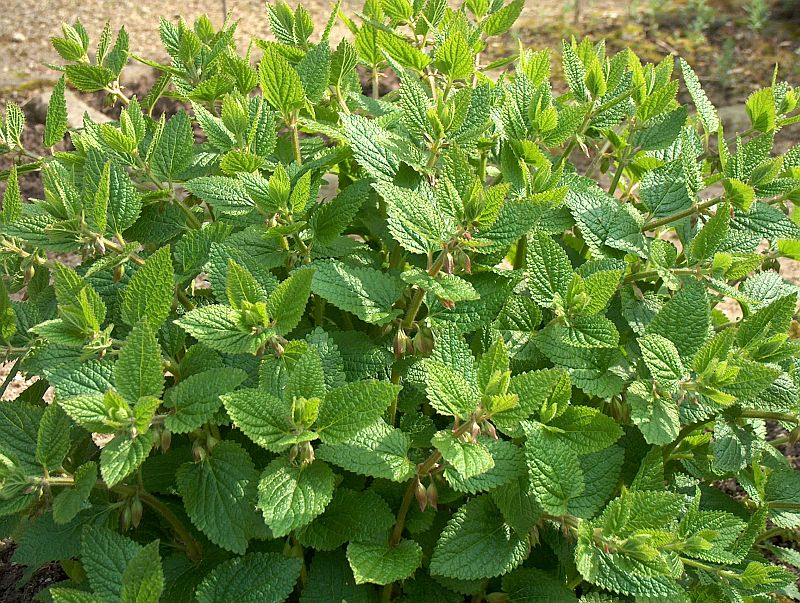
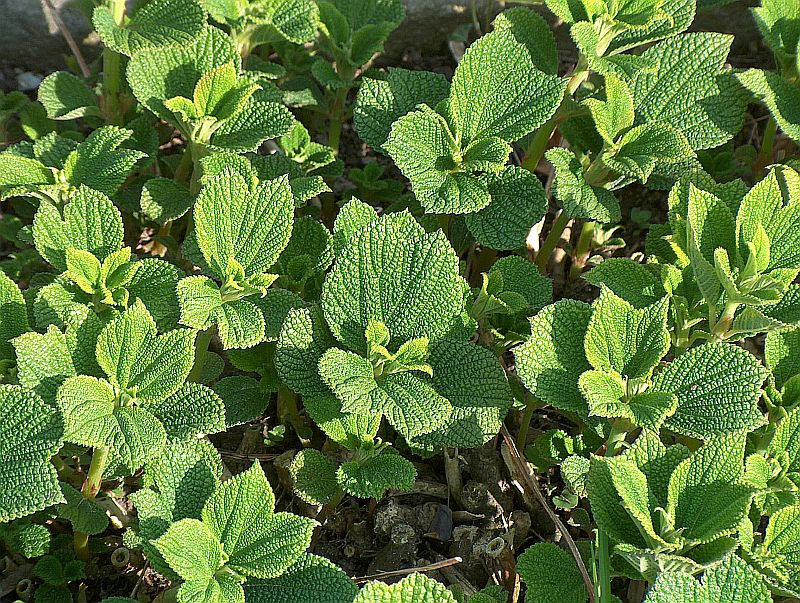
Melittis melissophyllum is sometimes used as a flavouring in drinks, like maibowle
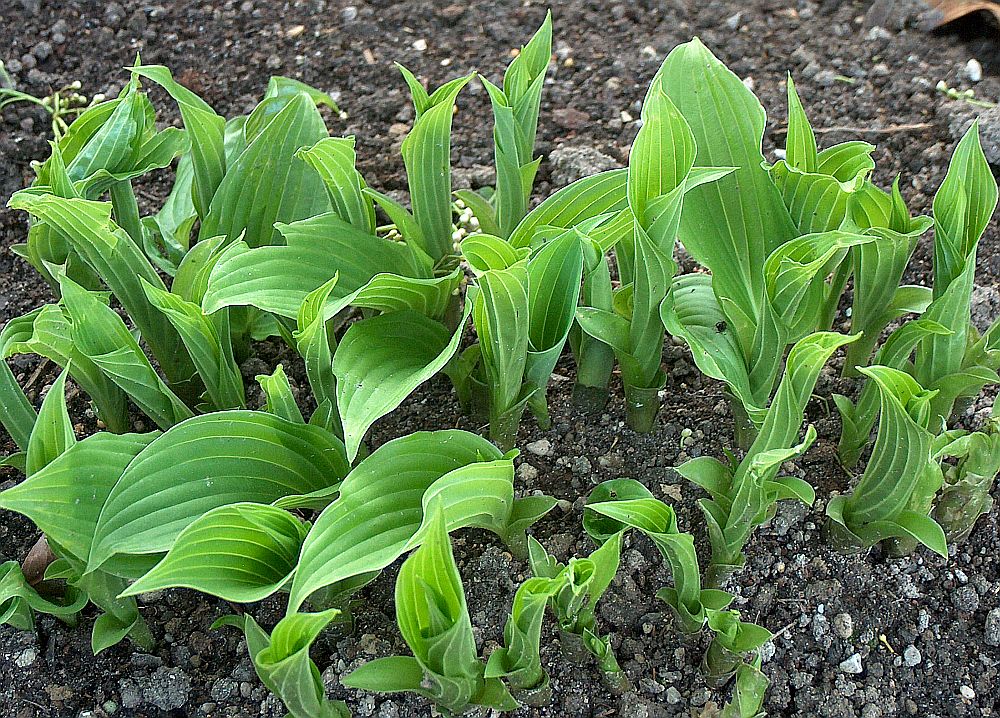
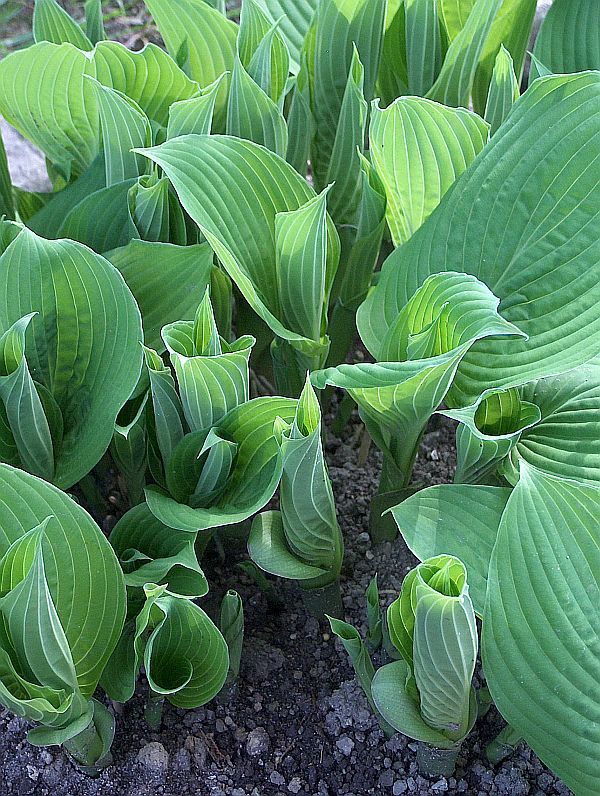
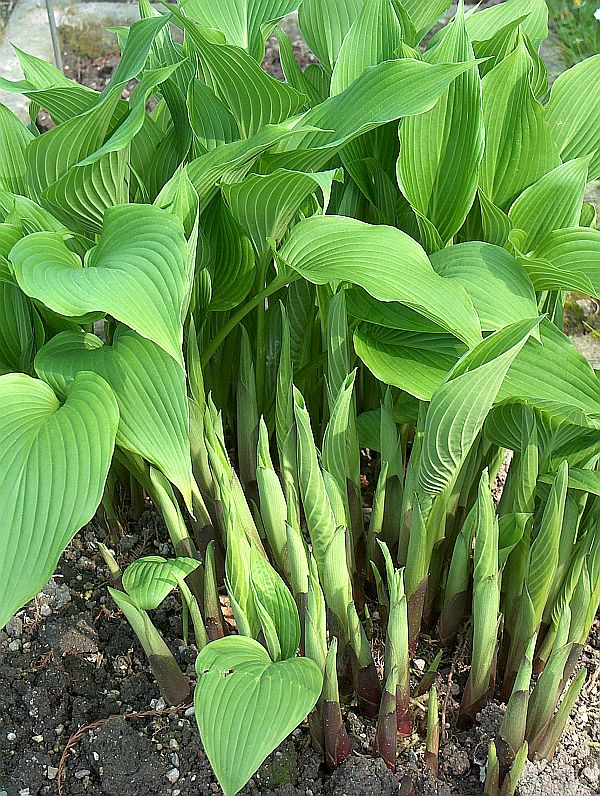
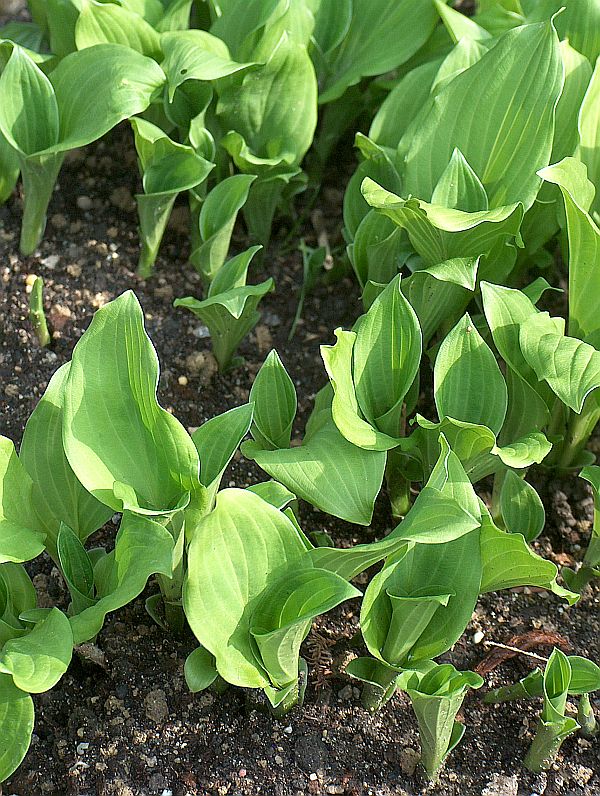
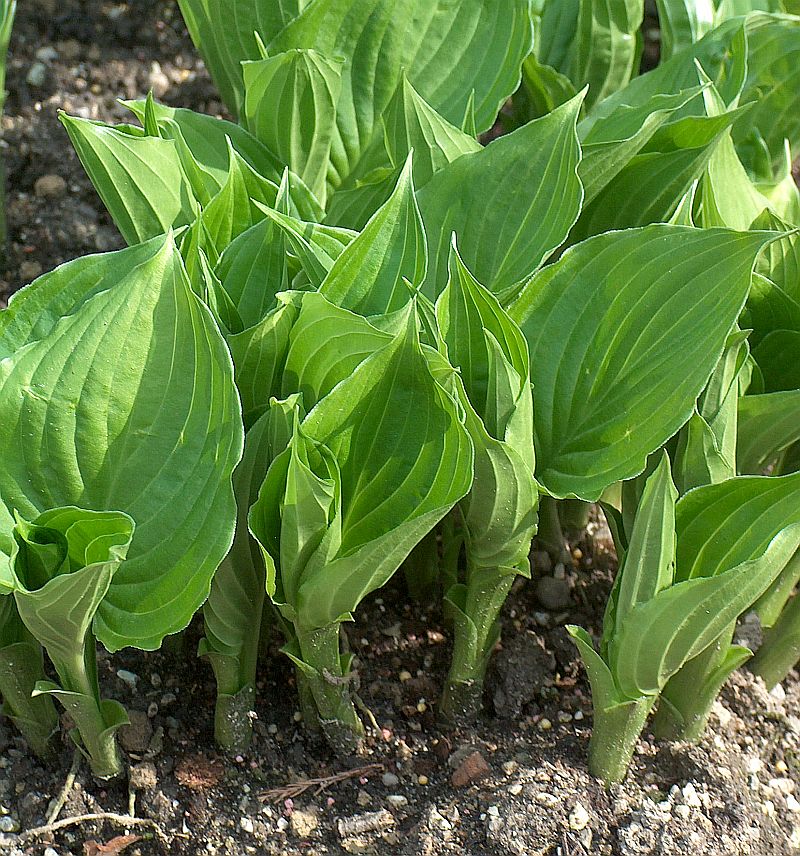
Hosta fluctuans
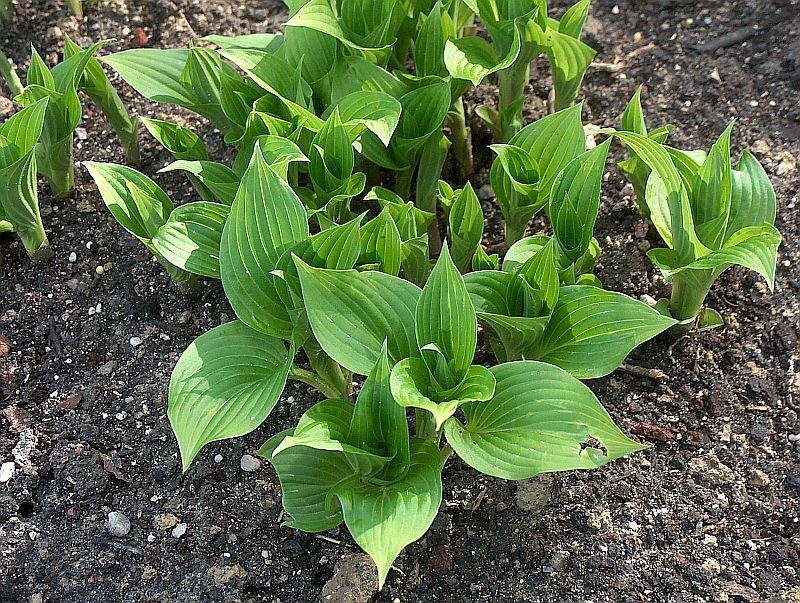
Hosta nakaina
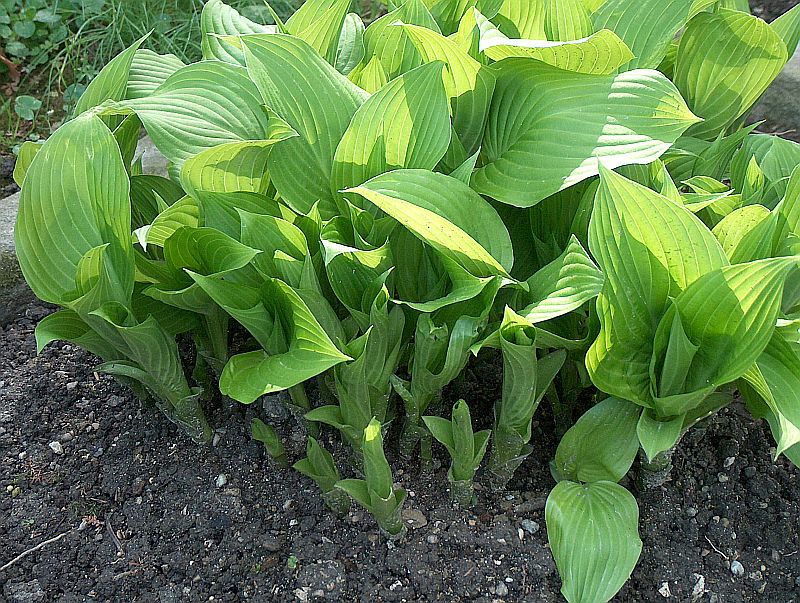
Hosta capitata
Hosta crispula
Hosta elata
Hosta rectifolia
Hosta decorata
Oenanthe pimpinelloides
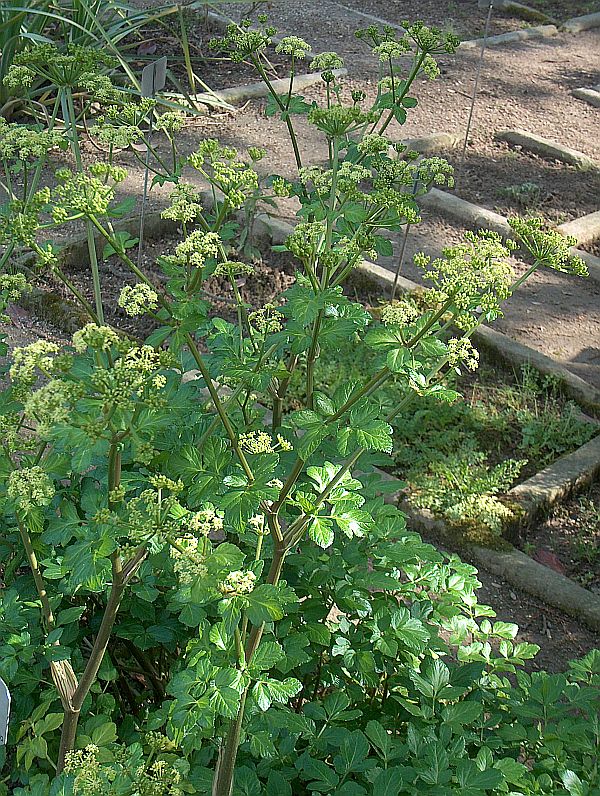
Smyrnium olusatrum
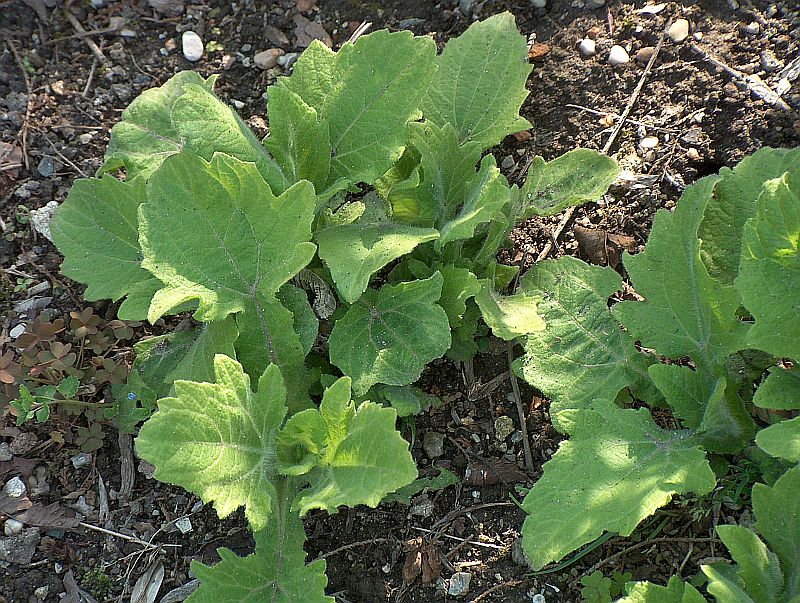
Ferula assa-foetida (?); most accessions of this Indian spice are wrong in European botanical gardens
Crambe cordifolia
Boehmeriabiloba
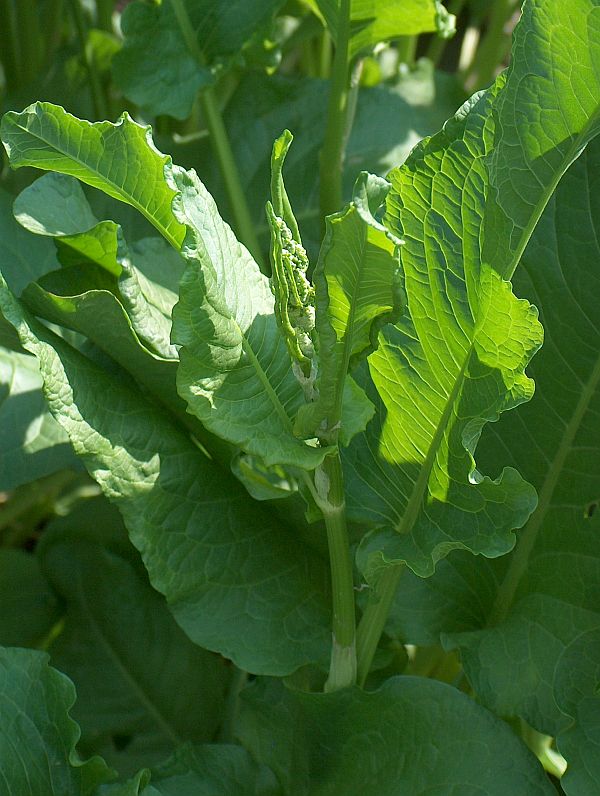
Rumex patientia
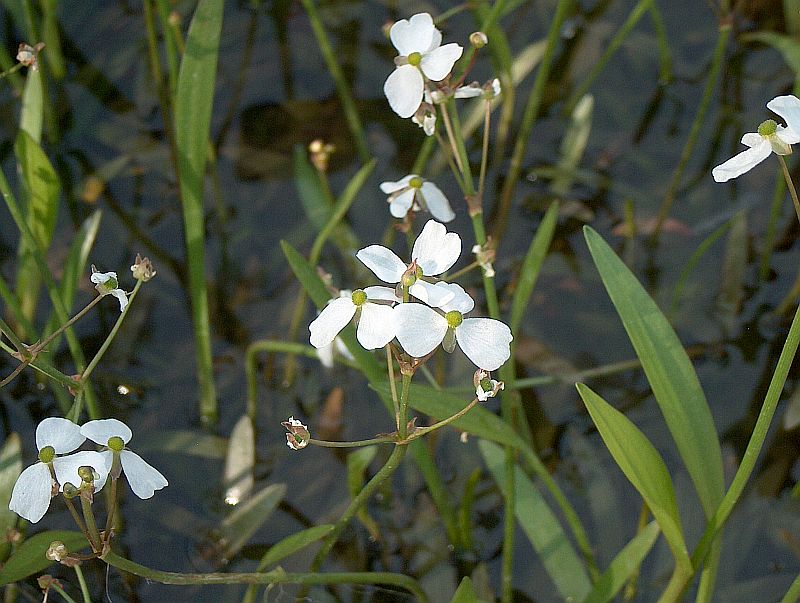
Sagittaria platyphylla
Polymnia uvedalia, north American relation of yacon
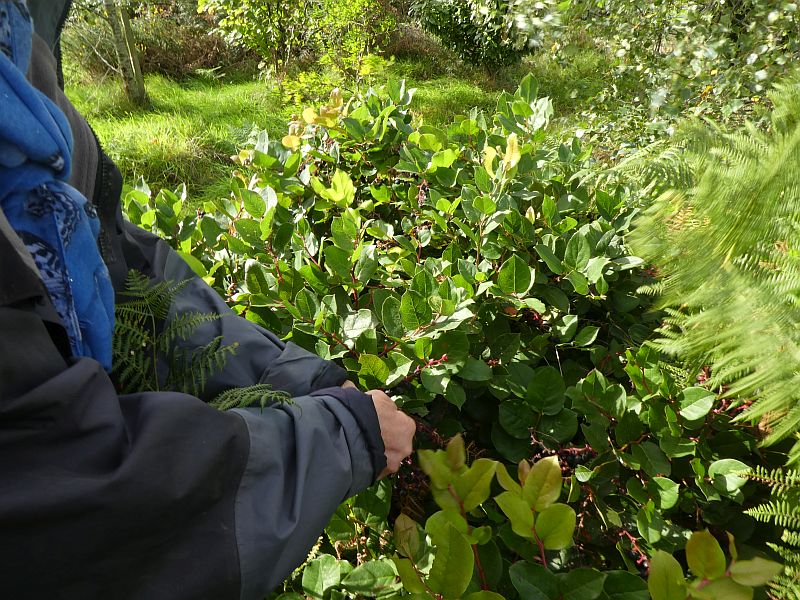
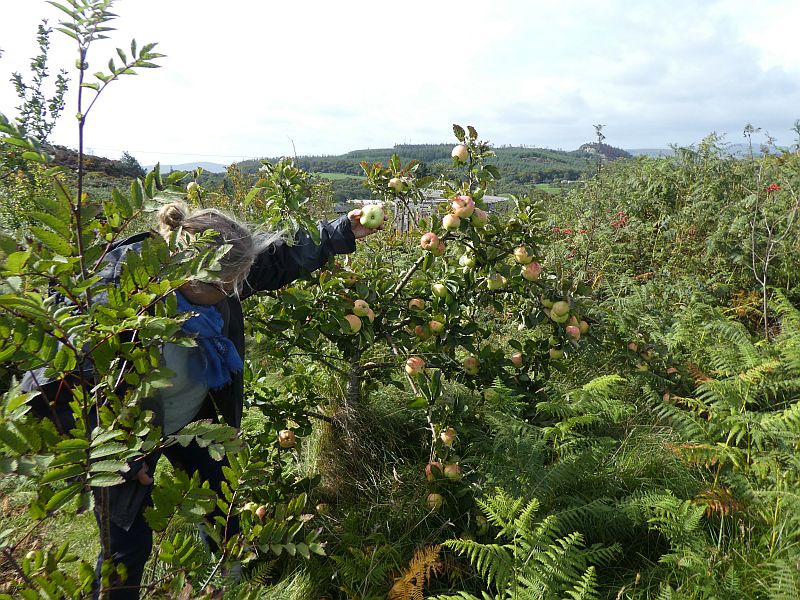
Finally, a post from my 3 days non-stop tour of Wicklow gardens, thanks to Orlaith Murphy. The first stop was Suzie Cahn’s Carraig Dulra Permaculture Farm. The abundance developing here on this hillside site which most would probably be categorized as marginal land reminded me of Mandy Barber‘s Incredible Edible site on previous sheep pasture in Devon!
It’s been a hard year due to the very unusual drought since April until recently. Nevertheless, the deep rooting collection of heirloom apples had produced well! We were there on a blustery day after Storm Ali had battered Ireland that night!
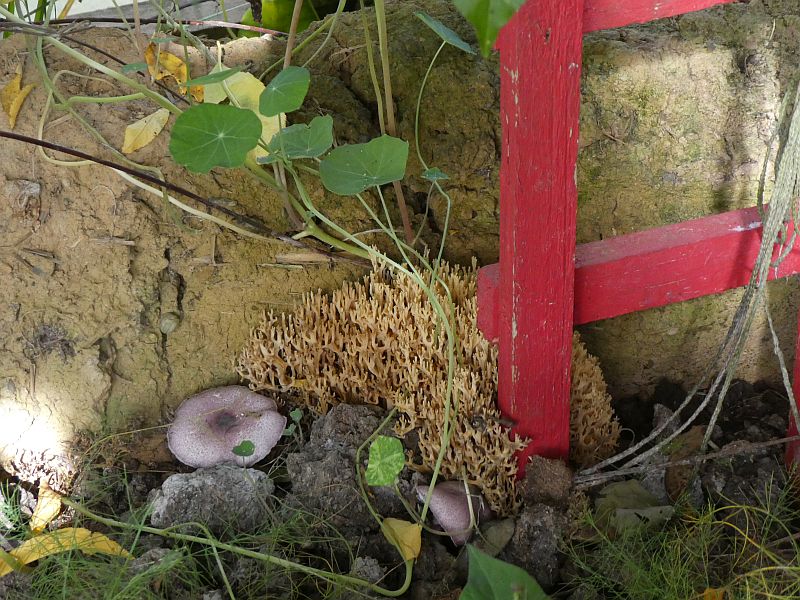
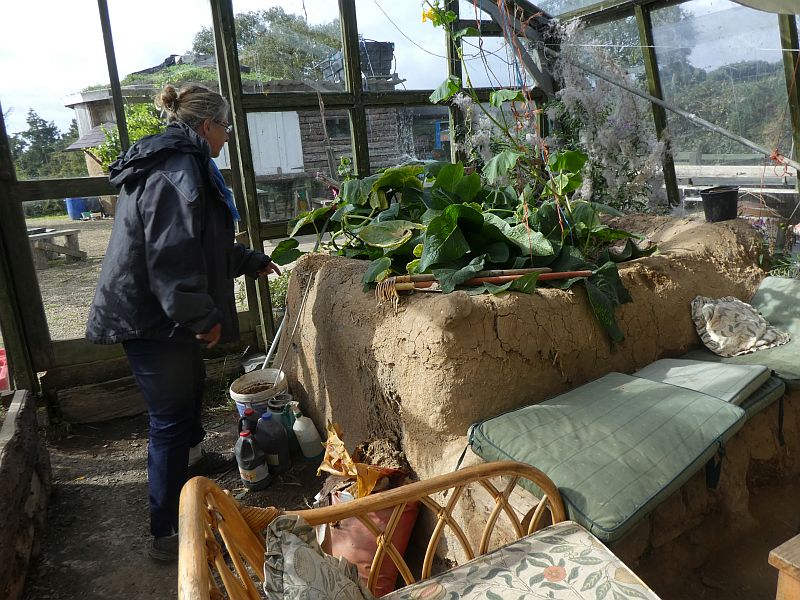
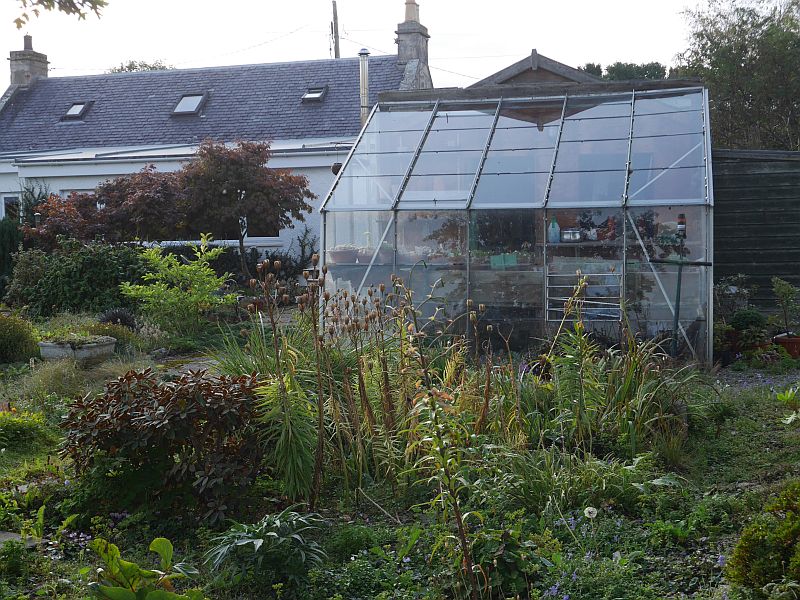
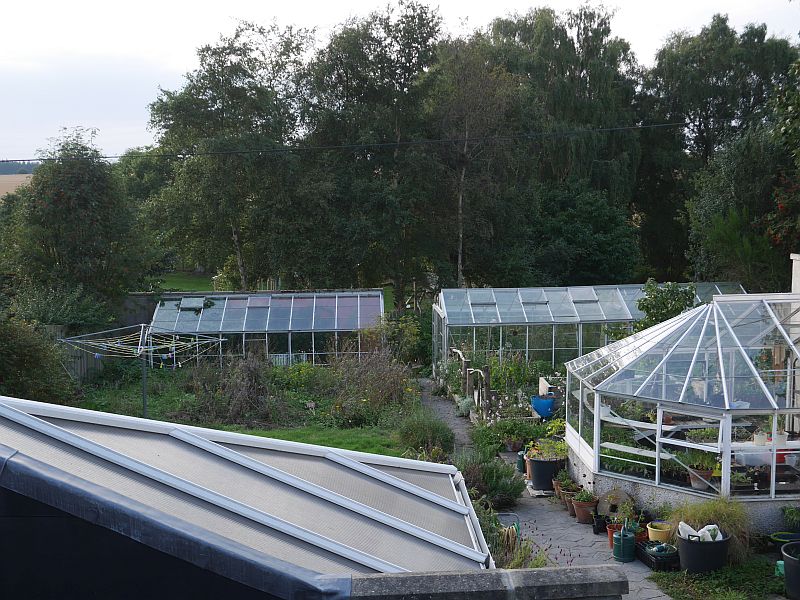
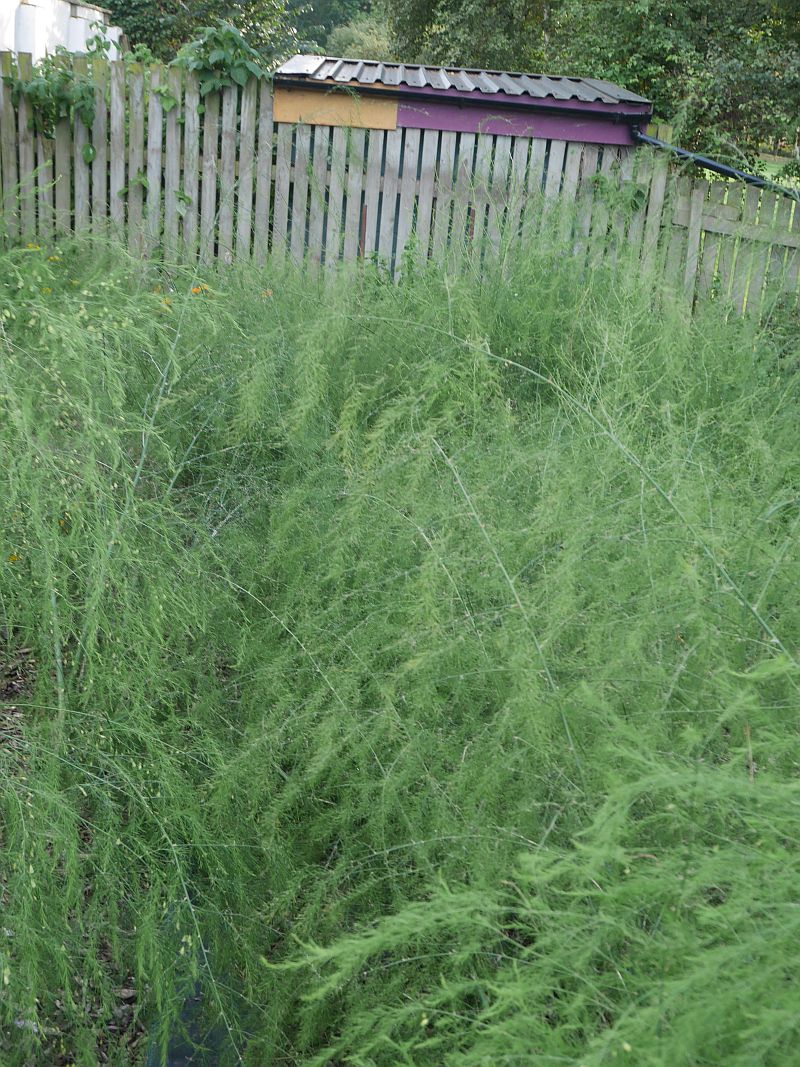
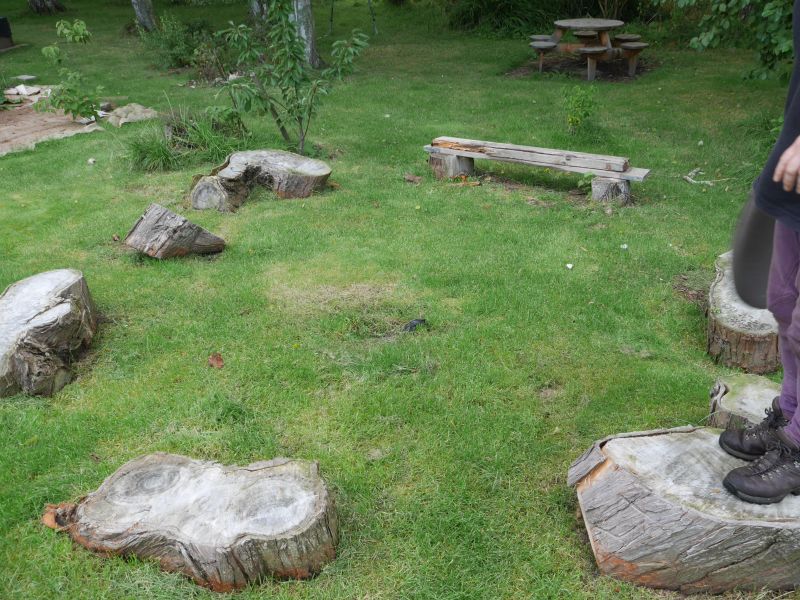
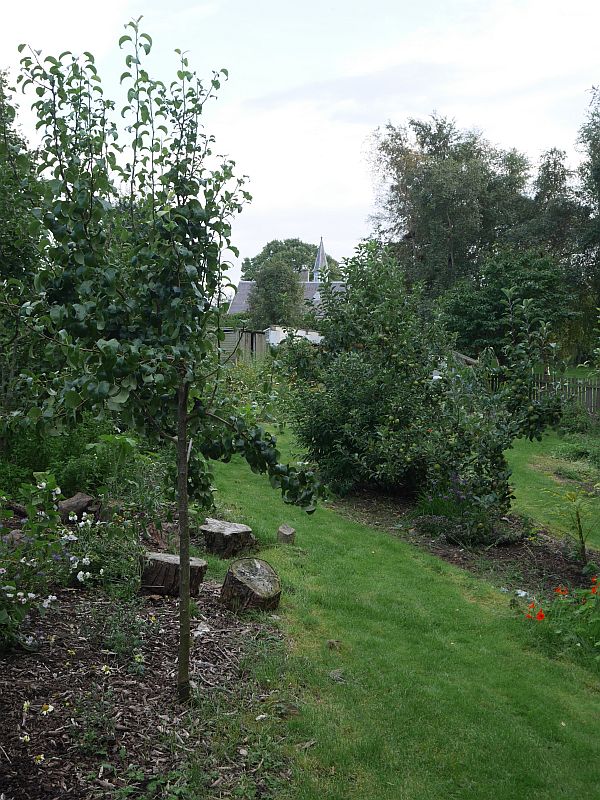
It’s only taken me two years to blog about the garden at Teeny Weeny Farm, a permaculture inspired market garden in the teeny village of Dyke in Morayshire in North East Scotland, not far from Findhorn!
Today FB told me my visit was already two years ago…so I decided to do something about it. The garden was relatively young when I visited but packed with interesting plants intermingled with plants being grown by Kirsty Reid for her cut flower business (many are edimentals!). I was told that her partner permaculturist Chris Johnstone was in charge of the fruit trees and berry bushes!
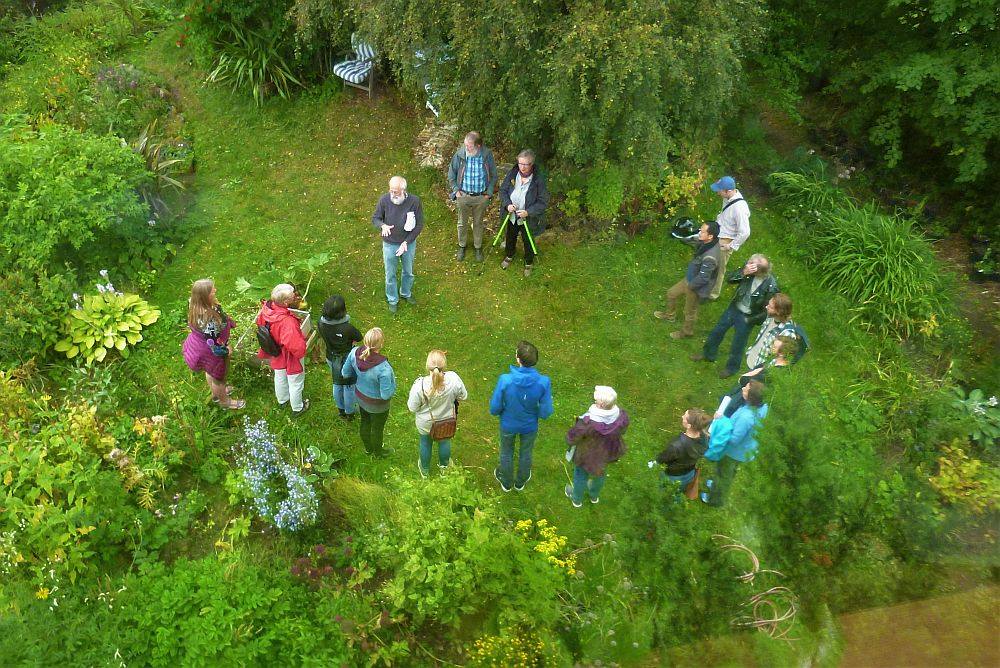
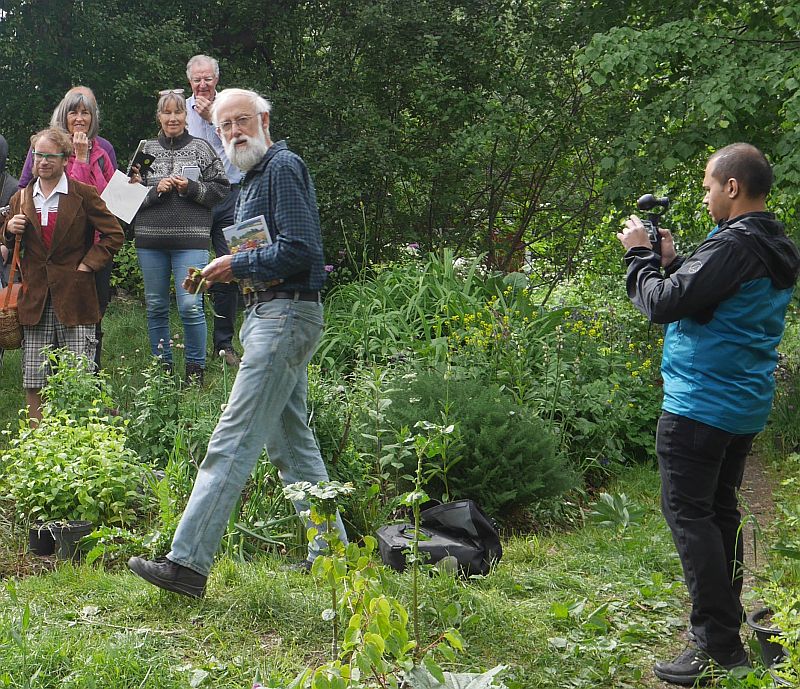
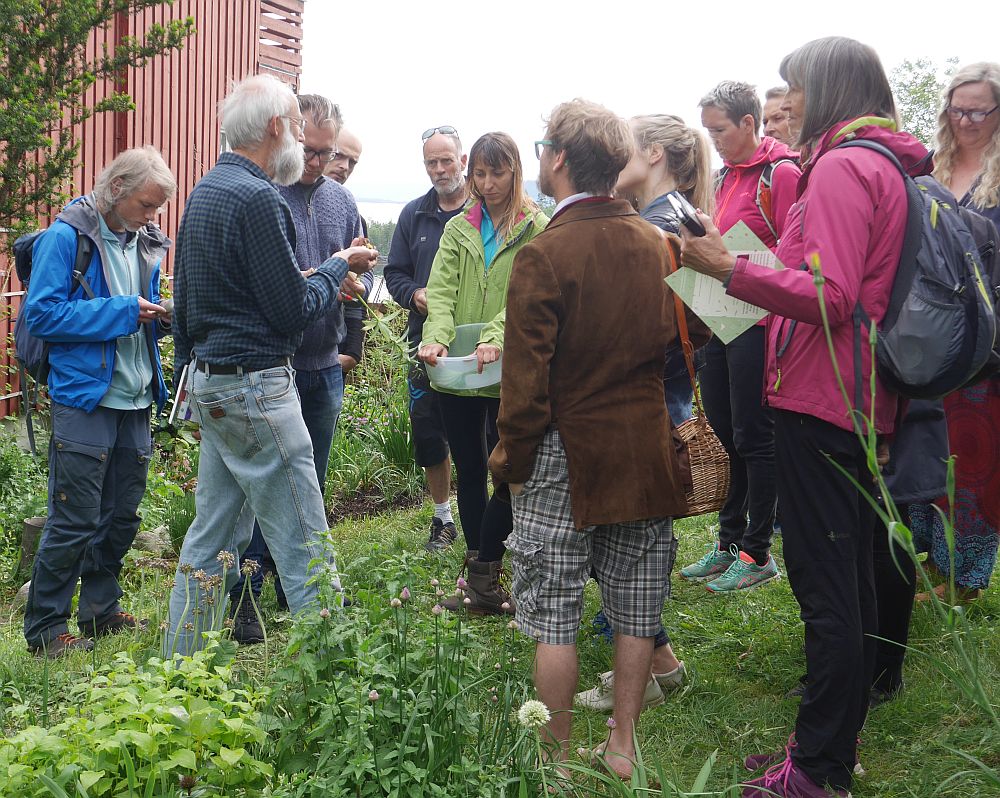
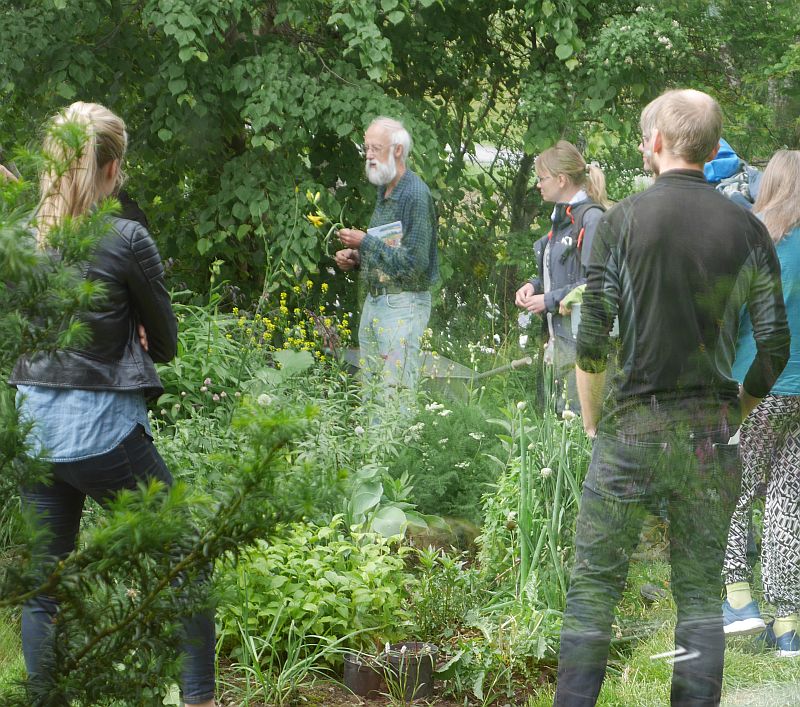
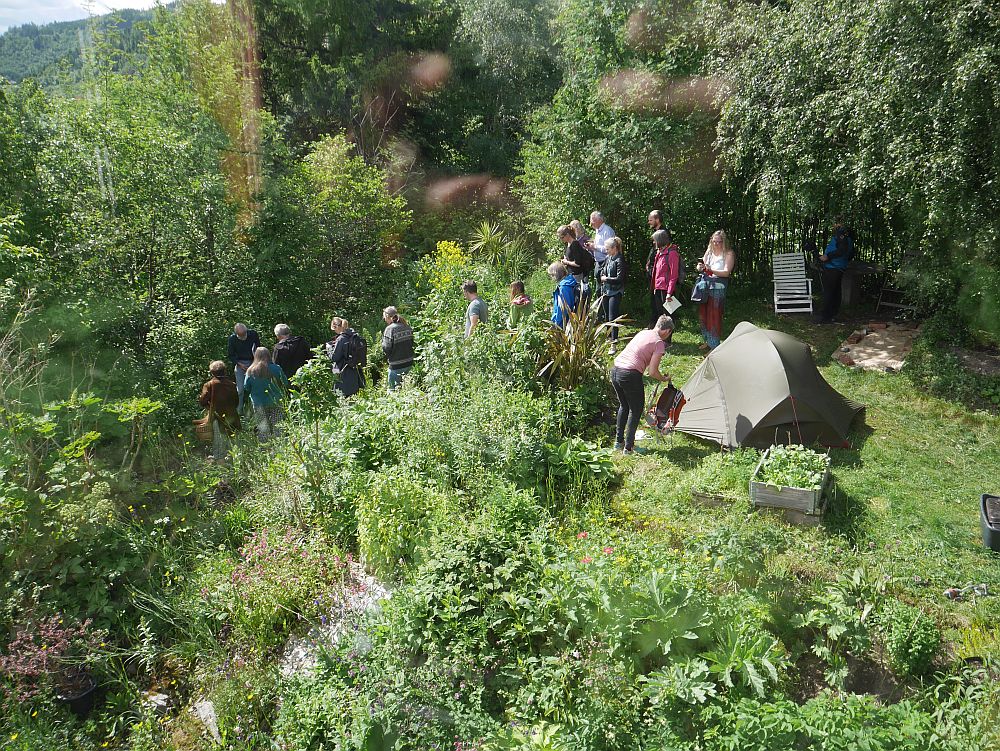
I’ll once again be inviting Trondheim Climate Festival (Klimafestivalen i Trondheim) to hear about and witness climate friendly vegetable growing in my garden this Thursday (6th September)…tickets are still available via https://trdevents.no/en/event/hagebesok-hos-stephen-barstow/2018-09-06
The last two years, both garden tours sold out, so be quick! Here’s a picture from last year’s event:
On Sunday I finally found the opportunity to visit my friend and fellow Norwegian Seed Savers (KVANN) board member Andrew McMillion who lives on a small farm in Nes, Akershus! We were joined by Amandine from France who is doing an Msc in Agroecology in Ås (Norway). She had joined us in Trondheim and Malvik at the KVANN weekend in June!
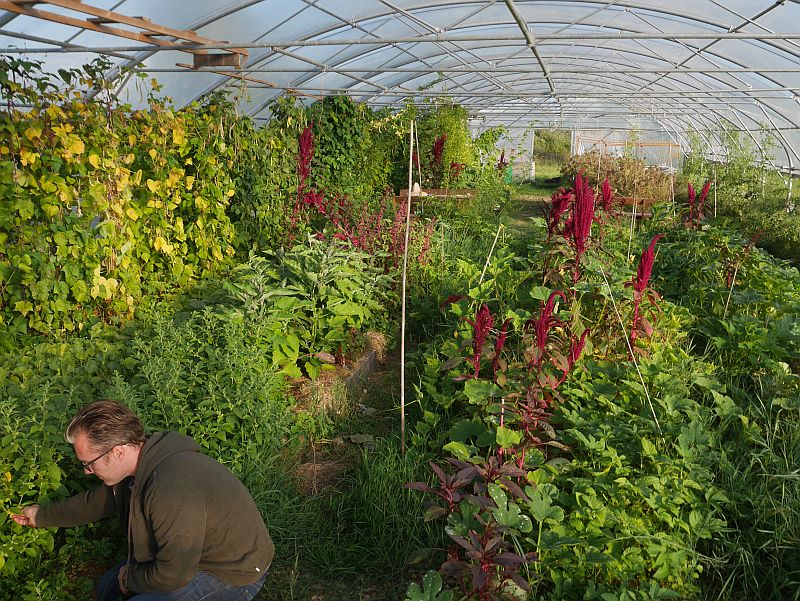
In Andrew’s tunnel greenhouse I saw several plants I’d never seen before and Andrew’s belief in the importance of diversity in a secure food production is evident everywhere! His greenhouse reminded me in fact of Alan Kapuler (Mushroom)’s amazing kinship (biodiversity) gardens in Oregon, USA (see http://www.edimentals.com/blog/?page_id=3325)
It’s amazing how Andrew grows what for many are impossible vegetables with minimal additional heat!
Outside, he is developing the ravine on the side of the property with perennial vegetables! He is also a champion of Shetland Cabbage as a future hardy vegetable in Norway and this is one of many vegetables he offers each year through Norwegian Seed Savers!!
I look forward to following Andrew’s projects over the next years!!
Udo (Aralia cordata)
Atomic Red carrots being grown for the Norwegian seed company, Solhatt
Atomic Red carrots being grown for the Norwegian seed company, Solhatt
One of Alan Kapuler’s tomatoes…very distinctive…I saw his breeding lines on my visit there, but was asked not to publish pictures (here’s an album of pictures from my visit with Kapuler)
Diversity
Watermelon
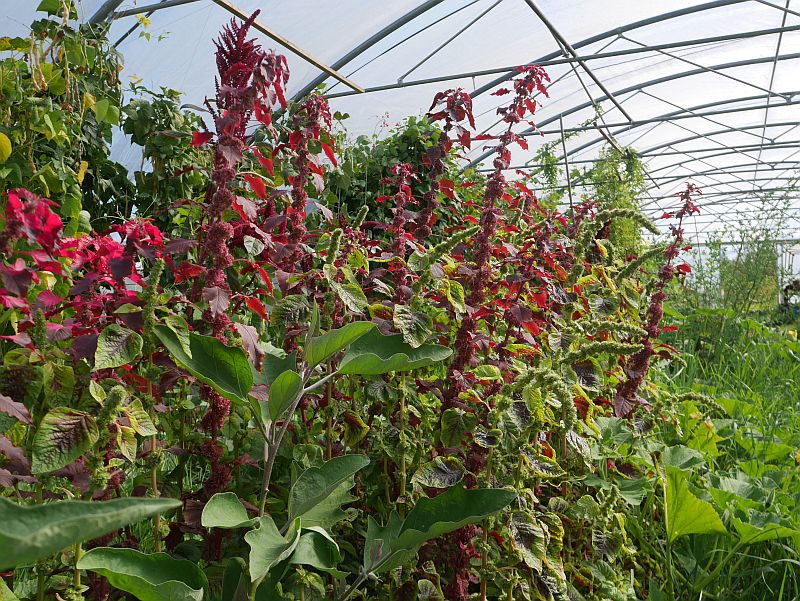
Amaranths
Melon
Udo (Aralia cordata)
Glycyrrhiza uralensis, Chinese liquorice
German hardneck garlic with massive bulbs!
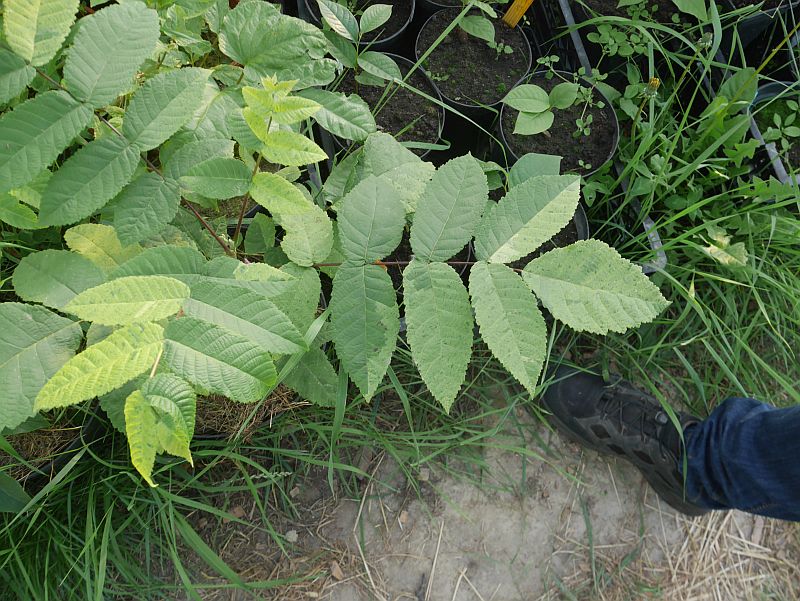
Papaw (Asimina)
Ligularia fischeri and udo (Aralia cordata)
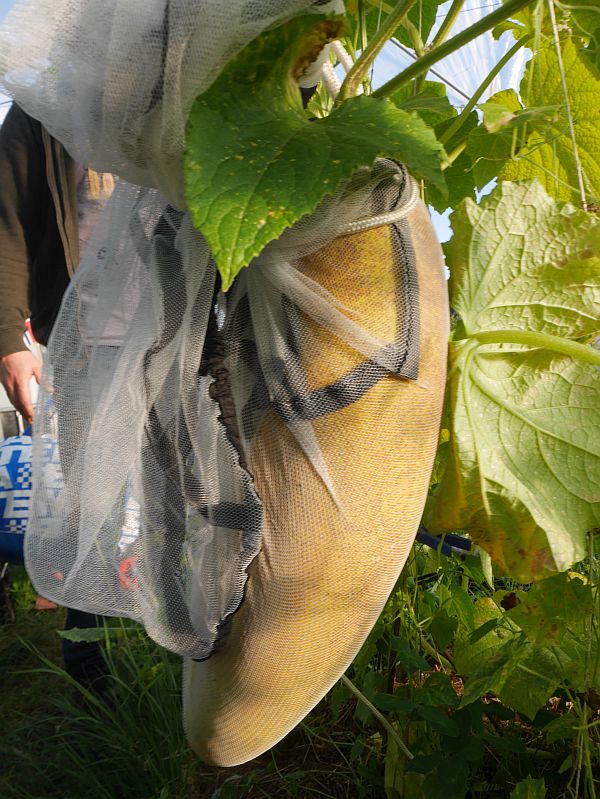
Bhutanese? melon!
Bhutanese? melon! It looks like a cucumber when young…
Bhutanese? melon!
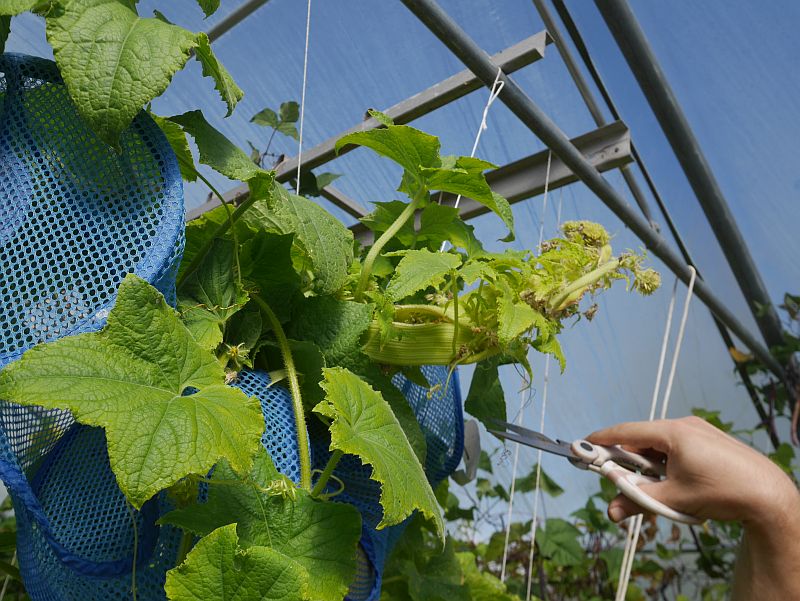
Peloria on bhutanese? melon
Fenugreek (methi) seed
Udo (Aralia cordata)
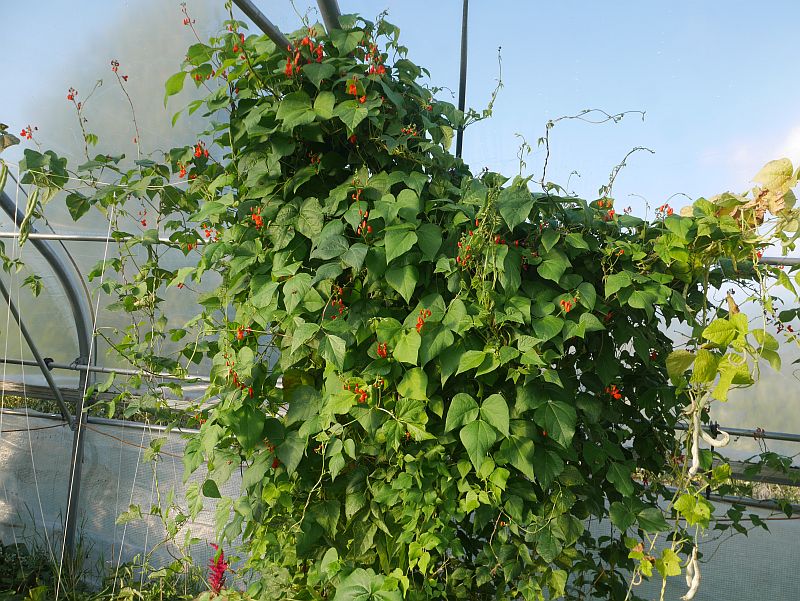
A Japanese variety of runner bean is the last producer
Aster scaber (Korean aster)
Andrew grows Indian ginseng / Ashwagandha (Withania somnifera)
Andrew grows Indian ginseng / Ashwagandha (Withania somnifera) – enough for Andrew to hibernate for the winter?
Ligularia fischeri
The biodiversity tunnel!
An area in the ravine where Andrew is planting udo (Aralia cordata) and other perennials
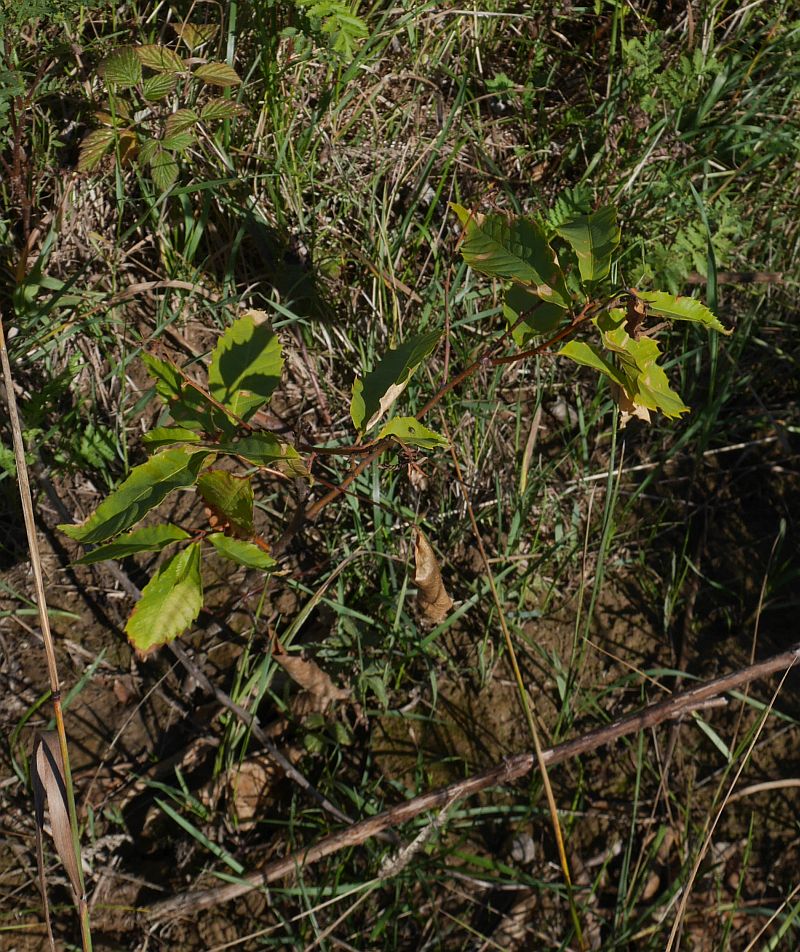
American chestnut
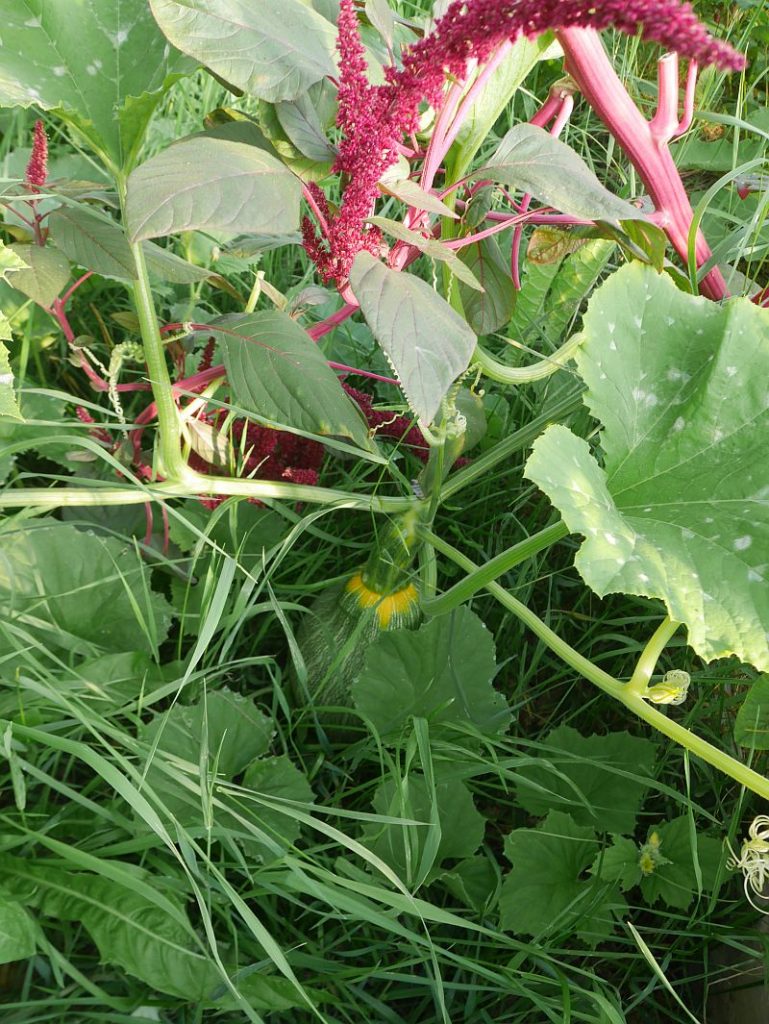
Amaranth
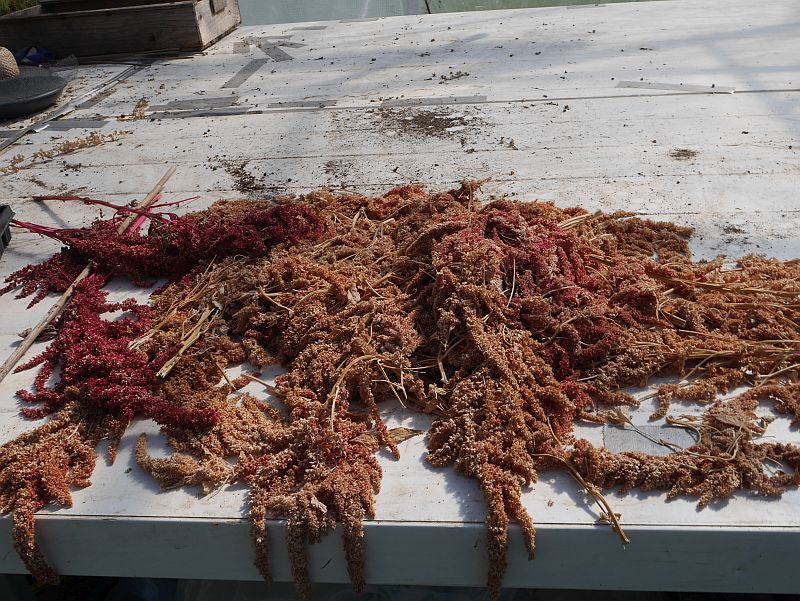
Amaranth diversity
Even aubergines thrive…Andrew says that varieties with small fruits are easiest in a marginal climate
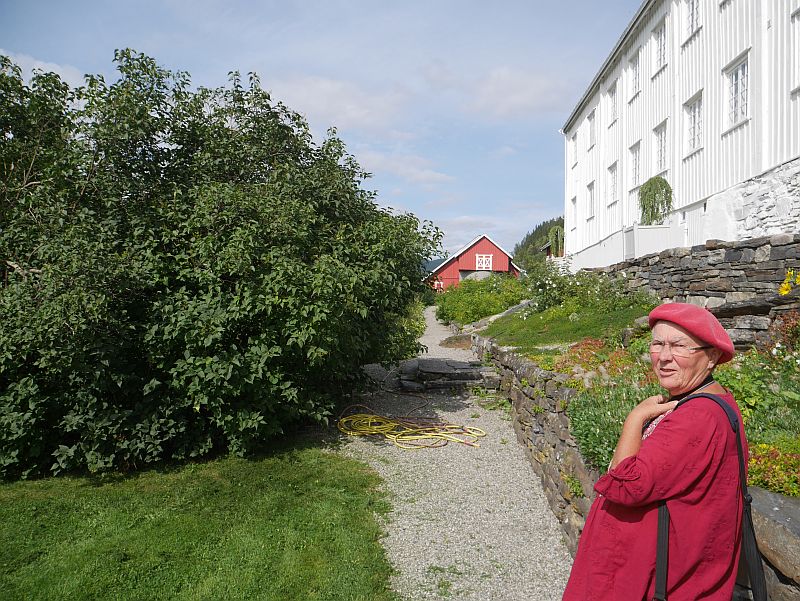
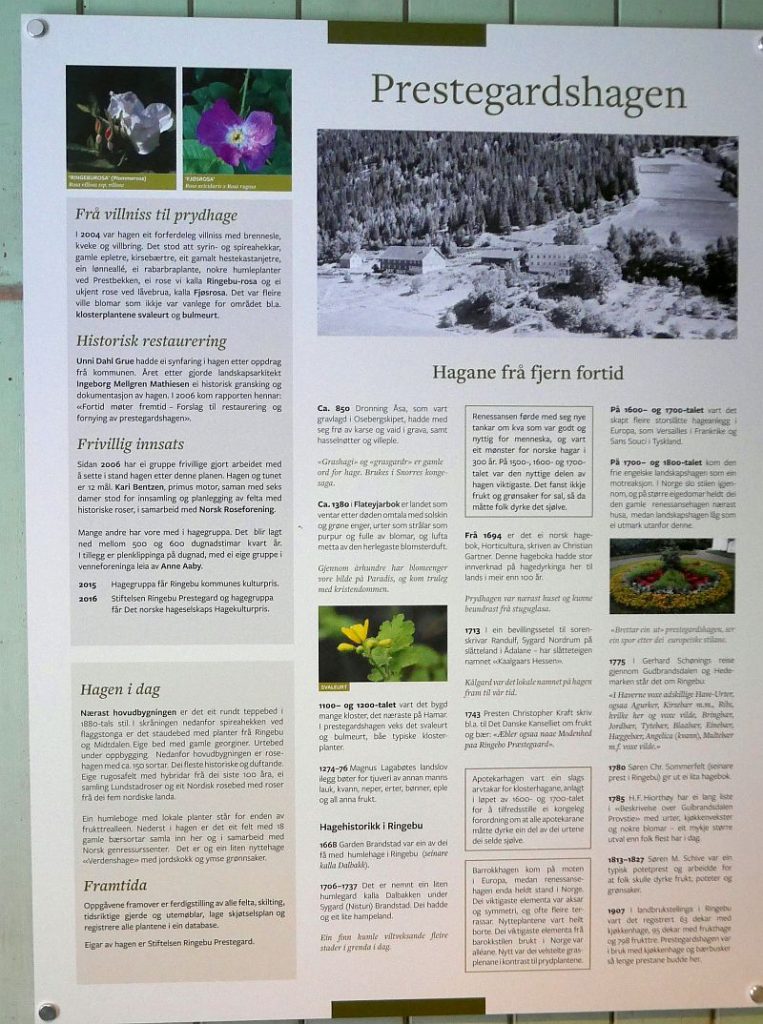
I travelled yesterday from the PDC course at Hurdal Prestegård (rectory) to another rectory in Ringebu in the Gudbrandsdalen about 3 hours north by train! I was invited by KVANN (Norwegian Seed Savers) member Halldis Myhre Tvete to give a talk on perennial vegetables and edimentals to the gardening group (hagegruppa på Ringebu Prestegården)!
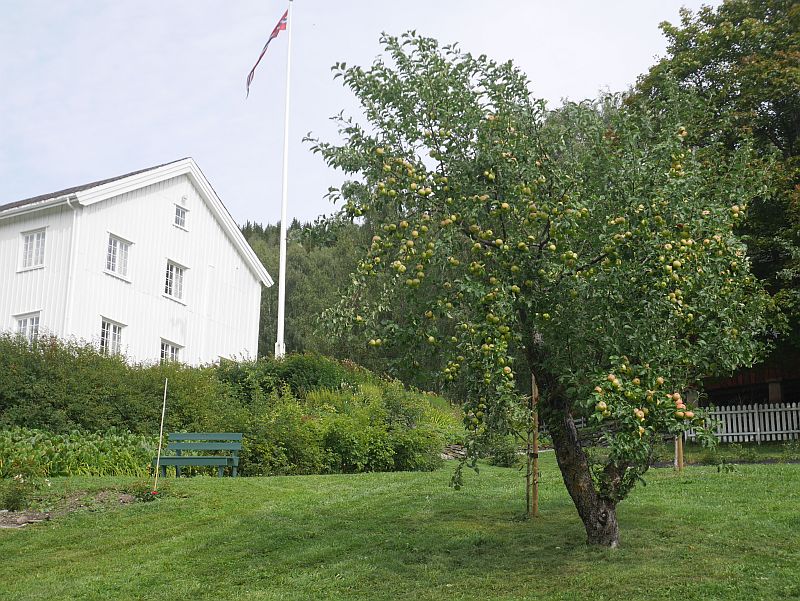
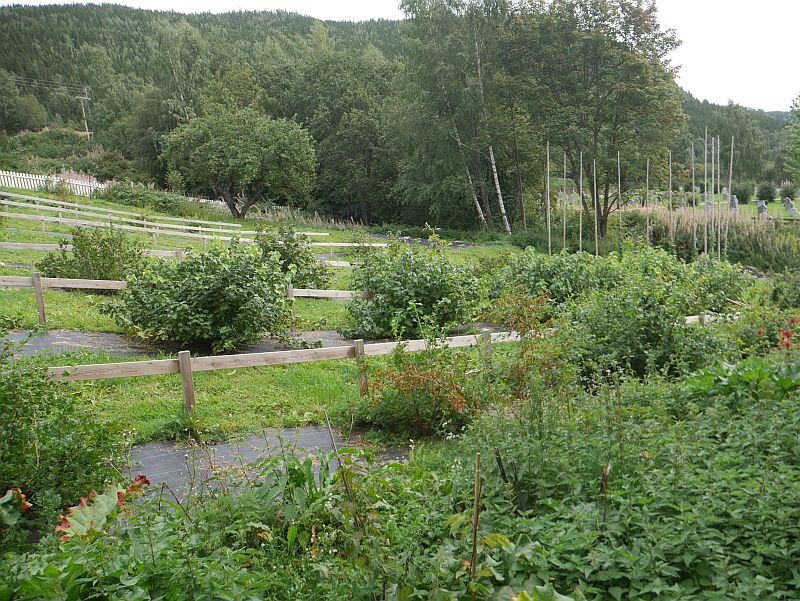
I was very impressed by the garden which the largely voluntary gardening group have created since 2006 from an overgrown garden with just a few original plants such as the Ringebu rose!
Most of the plants are Norwegian heritage plants, including a large collection of historical roses, berry and fruit trees, hops, Dahlias and herbs!
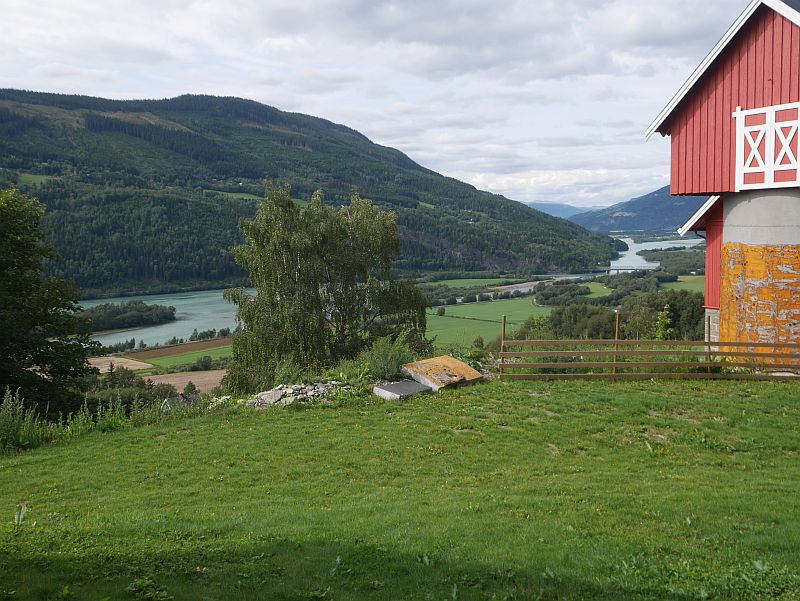
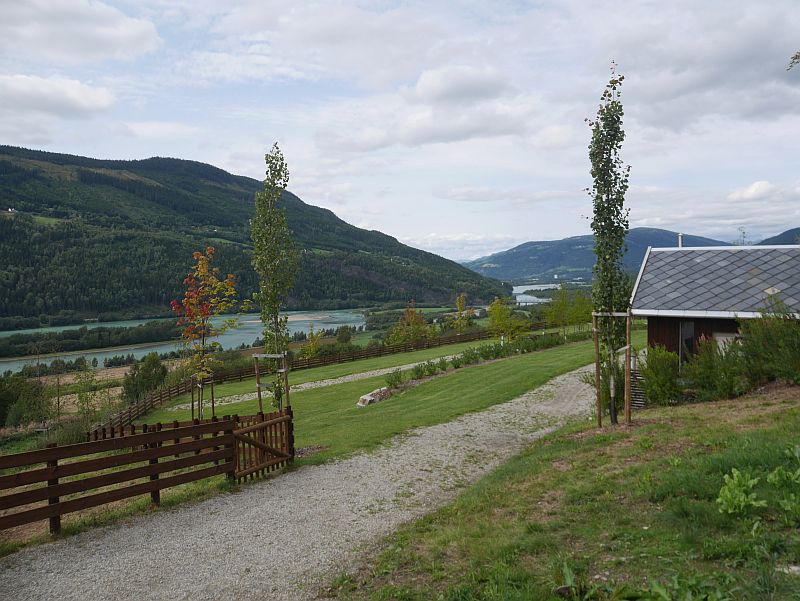
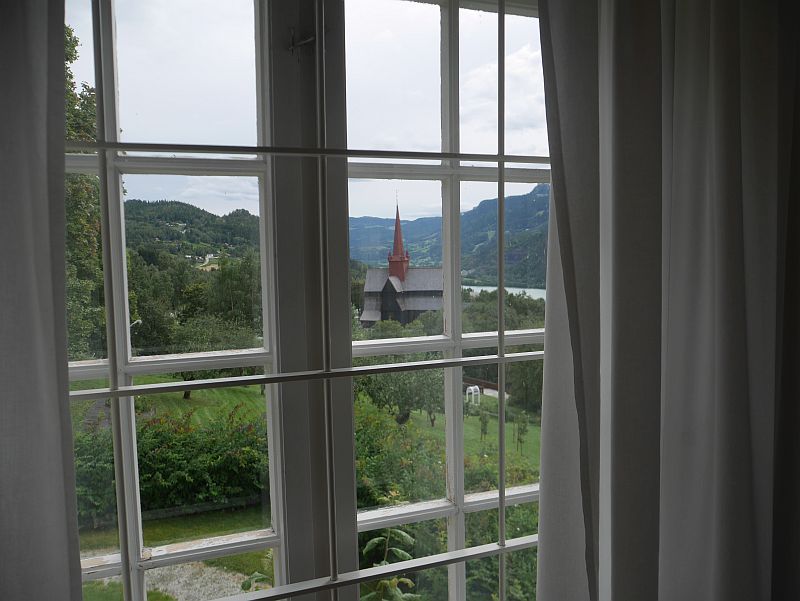
The view from the garden is also spectacular looking down and north along the green glacial river (Gudbrandslågen) and the neighbouring Ringebu Stave Church!
Looking north along Gudbrandslågen
The rectory, the oldest parts of which are from the 1730s!
The rectory, the oldest parts of which are from the 1730s!
The rectory, the oldest parts of which are from the 1730s!
Old historical perennials
Halldis Myhre Tvete was my guide!
Halldis says “..and here’s the vegetables” as we approach a long border of Hostas with historical roses
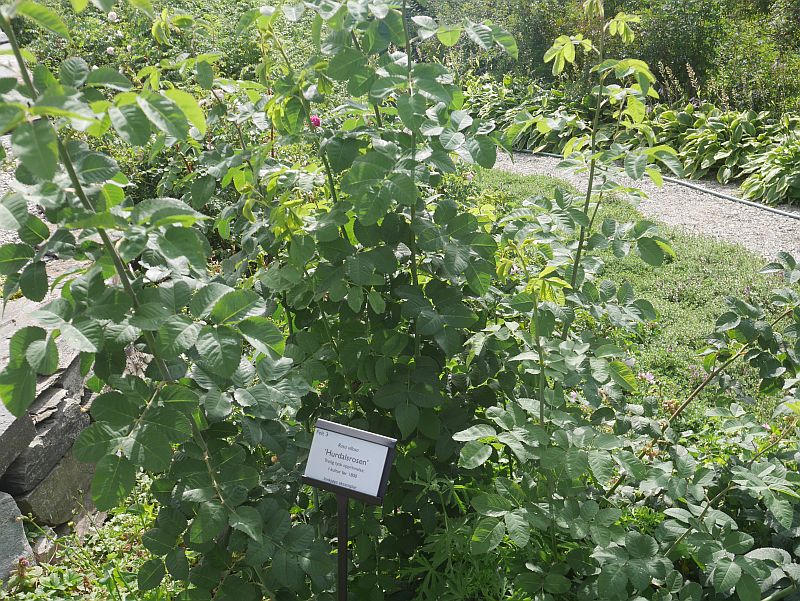
Many of the roses had informative signs with historical details, this one from Finland
Hurdalsrosen!
A common local form of rhubarb has undulating leaves
Poisonous Veratrum (confusion species for Hosta) with seiersløk (Allium victorialis) from Lofoten!
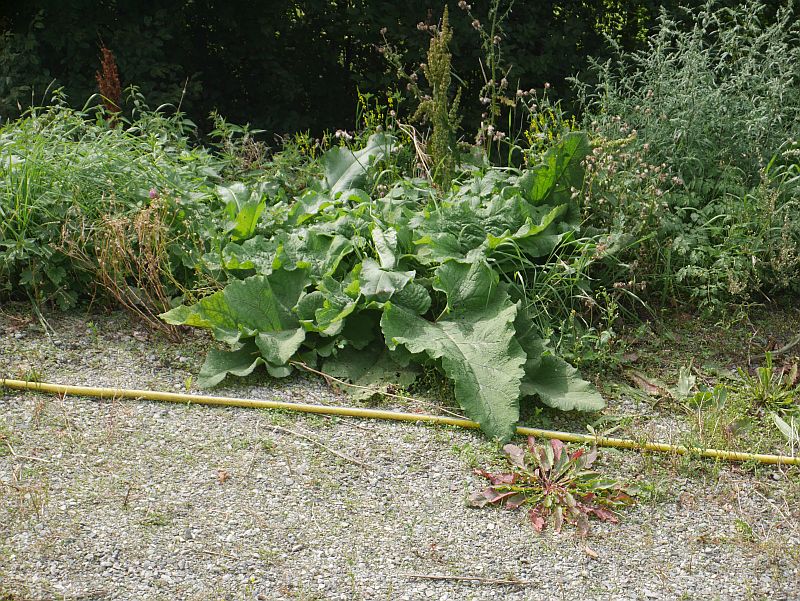
Wild burdock (borre)
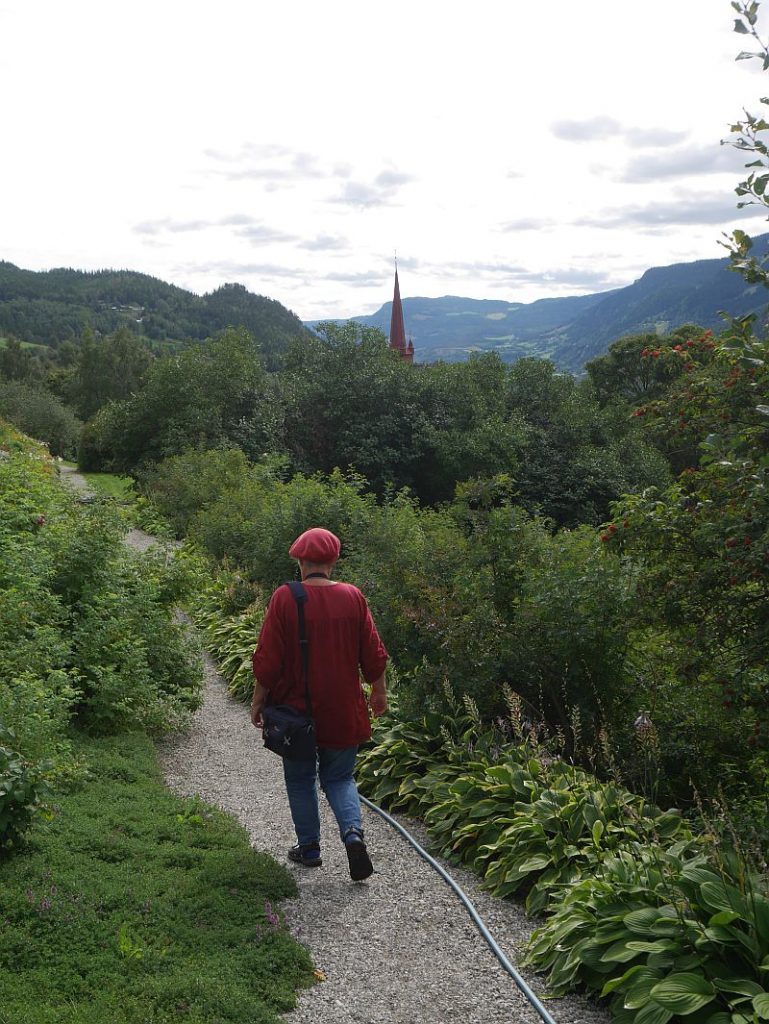
The spire of Ringebu stavkirke
A collection of roses after Norway’s most prolific rose breeder
Hemerocallis (daylilies)
A white flowered Rosa rugosa hybrid
Halldis told me that this is probably the Rosa rugosa (tomato rose) with largest hips
Despite the drought, it’s a good year for apples (last year was very bad as in Hurdal)
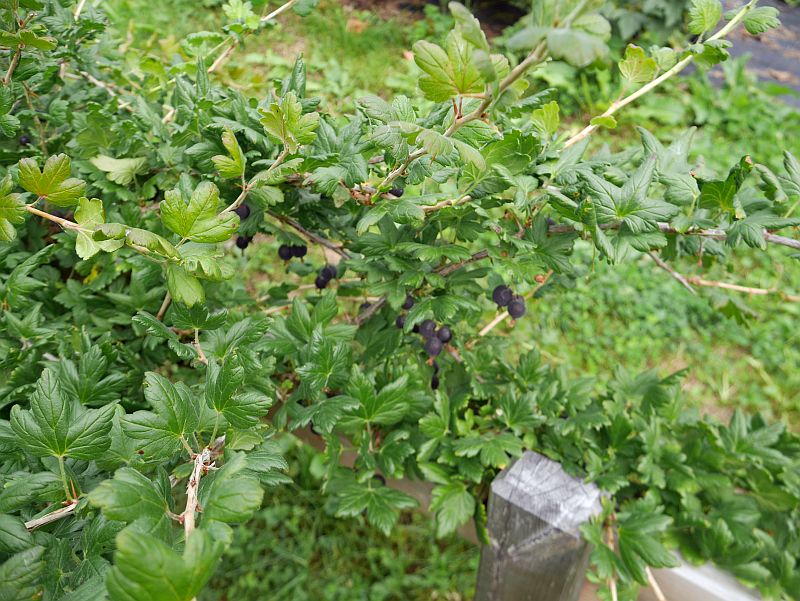
Collection of berry bushes, including white, red and black variants of redcurrant…The black variety (svartrips) was apparently an old variety hereand different from the black redcurrant I have, which is a different species (Ribes petraeum bibersteinii). This variant has large berries! A bed with Vossakvann (Voss Angelica) line Bordalen will be planted in this area next year!
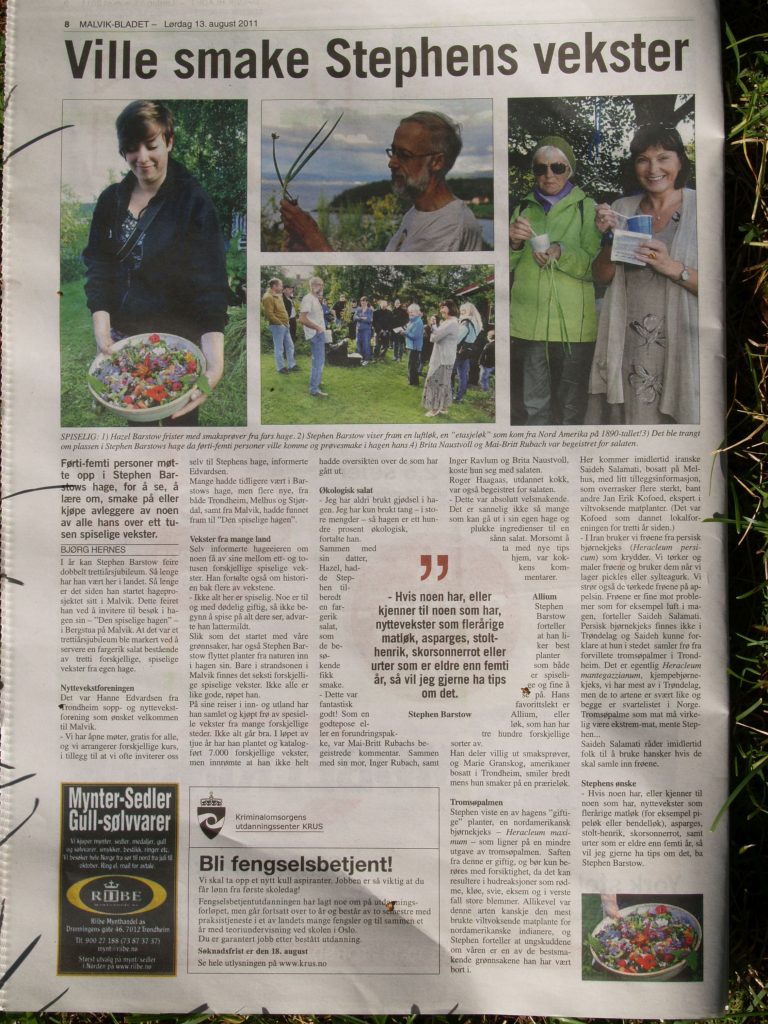
7 years ago (11th August 2011) and 40-50 people from the Trondheim Useful Plants Society (Nyttevekstforeningen) turned up for a walk and talk in my garden, including two journalists. Bente Haarstads pictures can be seen here: https://bentehaarstad.photoshelter.com/gallery/Edible-plants-Stephen-Barstows-garden/G0000yLcSVBDTqqI
Bjørg Hernes from local paper Malvikbladet wrote an article about the event which included a salad made with (only) 30 edibles to commemorate my 30 year anniversary of veggie growing in Malvik!
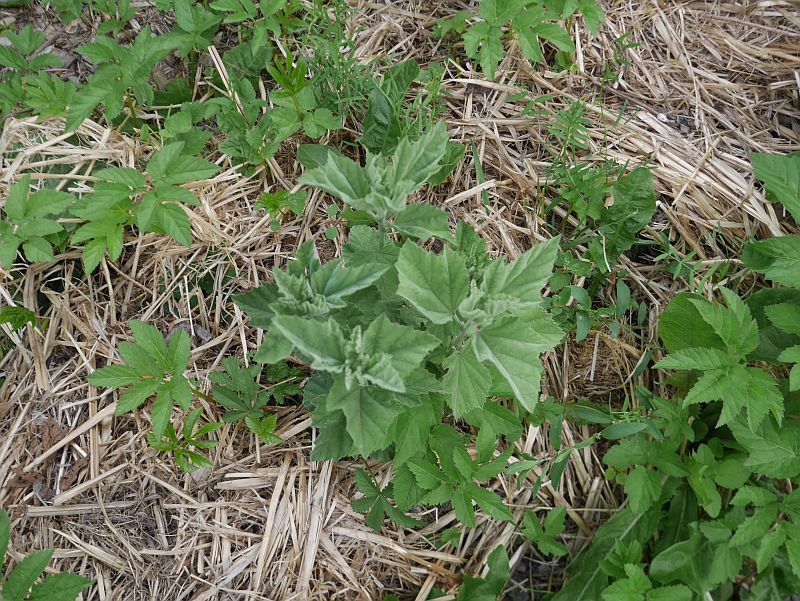
This was also the event when Saideh, originally from Iran surprised us all telling us that she ate naturalised invasive Tromsøpalme (Heracleum persicum) collected in the centre of Trondheim…this encounter was later related in my book and Saideh kindly provided recipes!
Below the pictures is a list of ingredients!
Malvikbladet (local newspaper)
List of ingredients:
Adenophora Ex- Amethyst (blomst);Ladybells;
Aegopodium podagraria;Ground Elder;Skvallerkål
Agastache anisata (blomst);Anise Hyssop;Anisisop
Agastache anisata alba (blomst);Anise Hyssop;Anisisop
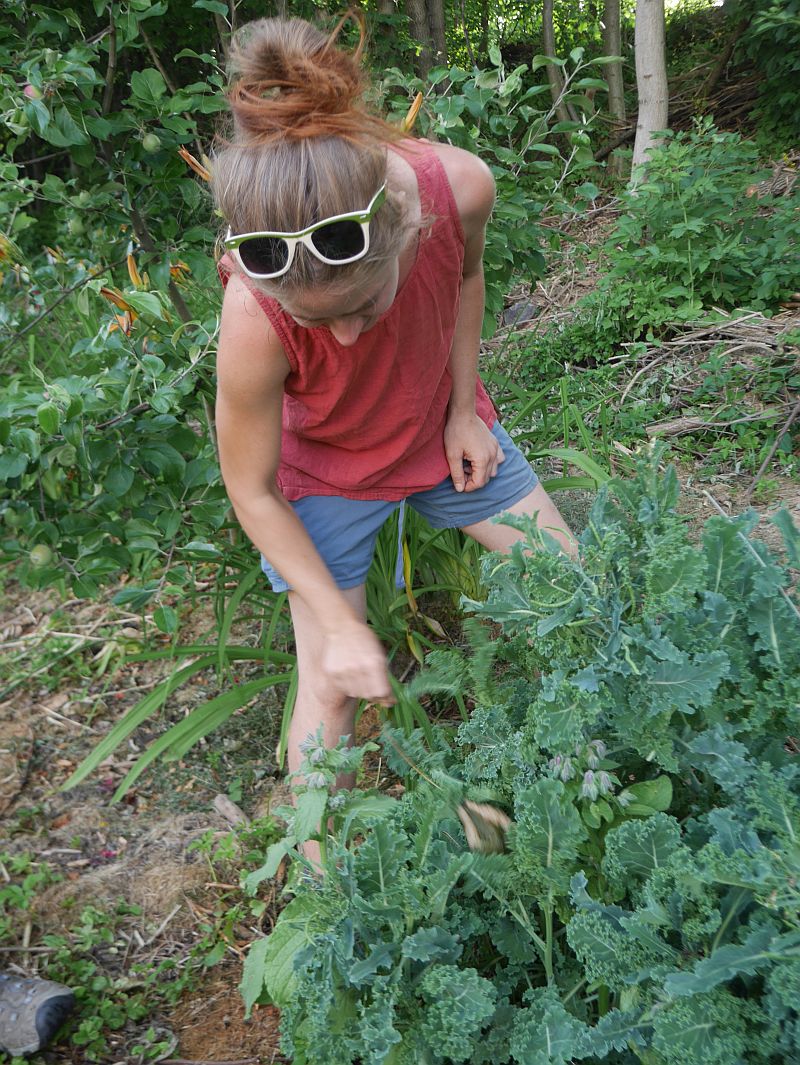
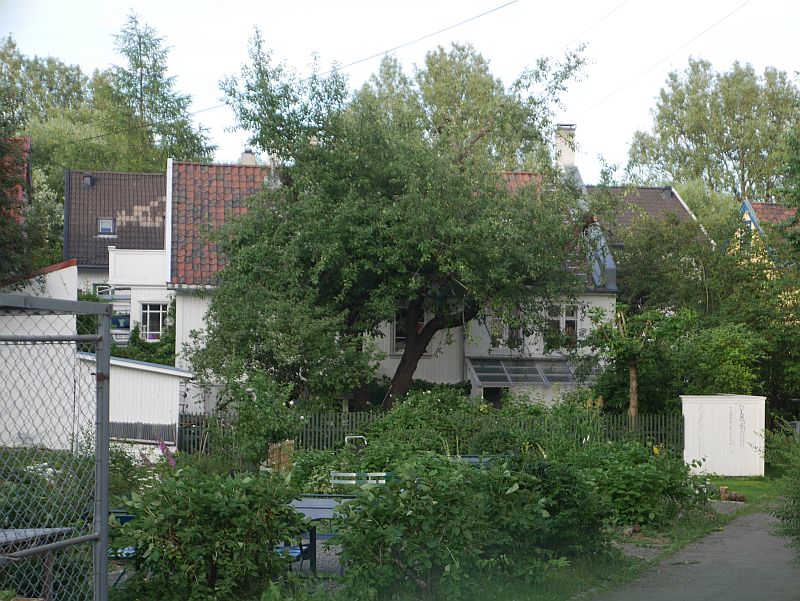
Thanks to Elena Katarina for showing me Parkens Grøde at short notice on Sunday evening before I took the train home! The other gardener Marcia Kyle and a newly arrived Swedish guy, Marcus Ivarsson also joined us!
I was very impressed….in a similar way to the first time I visited Holma Skogsträdgård in Sweden….
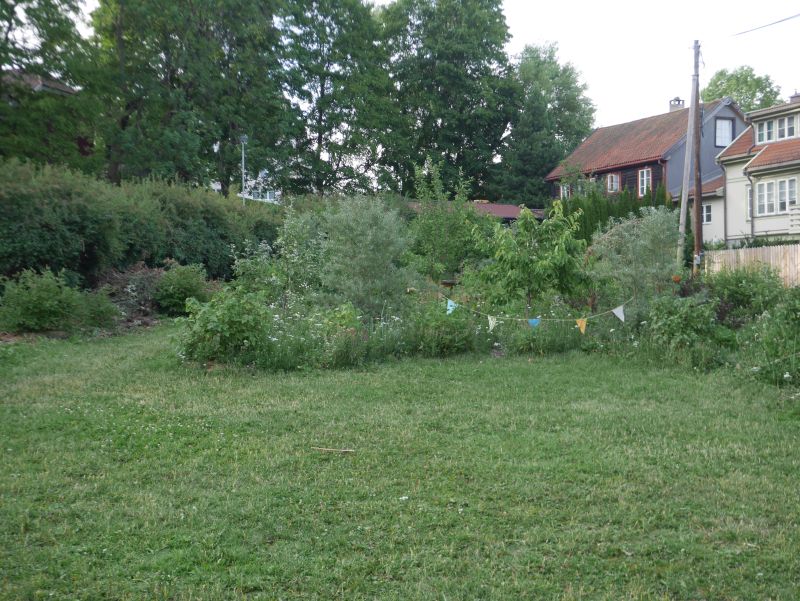
Parkens Grøde is a permaculture inspired urban farming project in Oslo with many interesting elements including forest garden, hugel beds, insect friendly plants and habitat.
See http://www.xn--parkensgrde-ogb.no/ for more details..
The first plant I saw was this Fourberry (Ribes aureum / odoratum) full of fruit. I hadn’t seen this in fruit in Norway before (mine are still too young). There’s been a breeding program in Russia for some years and some fantastic looking varieties have been developed with fruit in different colours. Use Google translate, for example, on the following page: http://sadsemena.ru/index.php/zolotistaya-smorodina.html
The name Fourberry (some are clusters of 4) comes from a Swiss breeding programme.
Goji…only one fruit so far
Aronia
Showing the swales
Walking the swales
Marshmallow
Decaisnea
A Russian blackberry
Marcia Kyle is the other main gardener, here with the Angelica (kvann)
See a separate post about the swallowtail butterfly larvae (they hadn’t seen the adult butterfly)
Jostaberry
Asparagus grows well
Schisandra
A hugel bed!
Chorogi on the hugel bed
Malva moschata…could be harvested a lot more :)
A dwarf cherry from Finland
A walnut!
This kale had perennialised!
Daylilies
Insect habitat
There’s a large old apple tree in a neighbouring garden…Elena said they hoped to take cuttings for grafting
Salsify (havrerot)
Goldfinches (stillits) eat the seeds, even before the pods open!
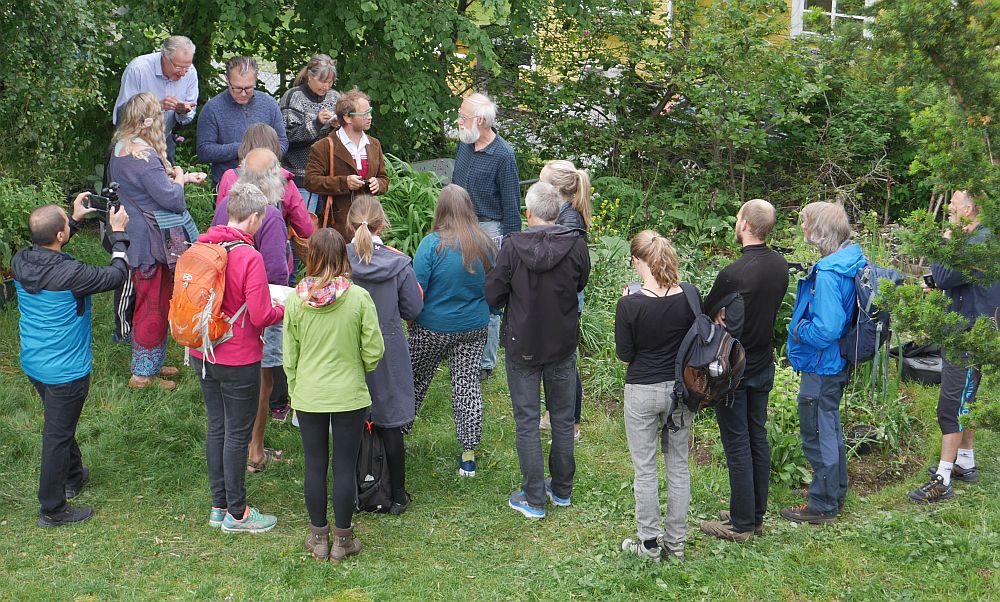
Some pictures from Day 2 of the KVANN (Norwegian Seed Savers) meet in Malvik in my Edible Forest Garden :)
As usual, it was a great group!!
Thanks to Margaret M. Meg Anderson for most of the pictures!
The salad gathered by the KVANN members for lunch….including various Alliums (ramsons, chives etc.), two species Lilium, day lilies, the red leaves of red mitsuba and about 40-50 others
Perennial vegetables, Edimentals (plants that are edible and ornamental) and other goings on in The Edible Garden