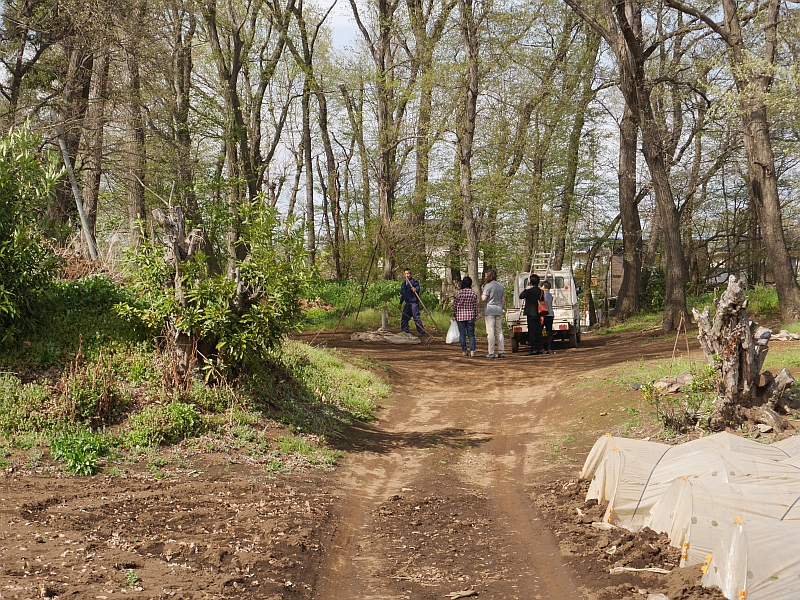
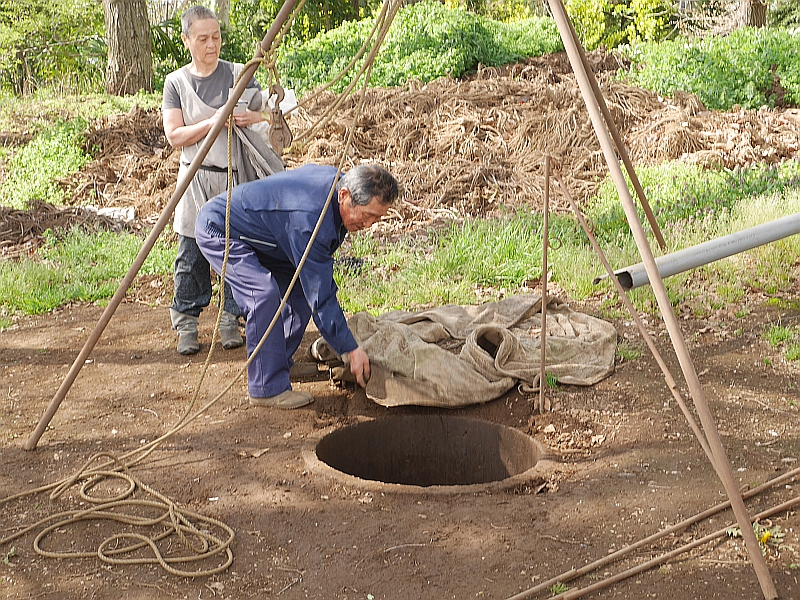
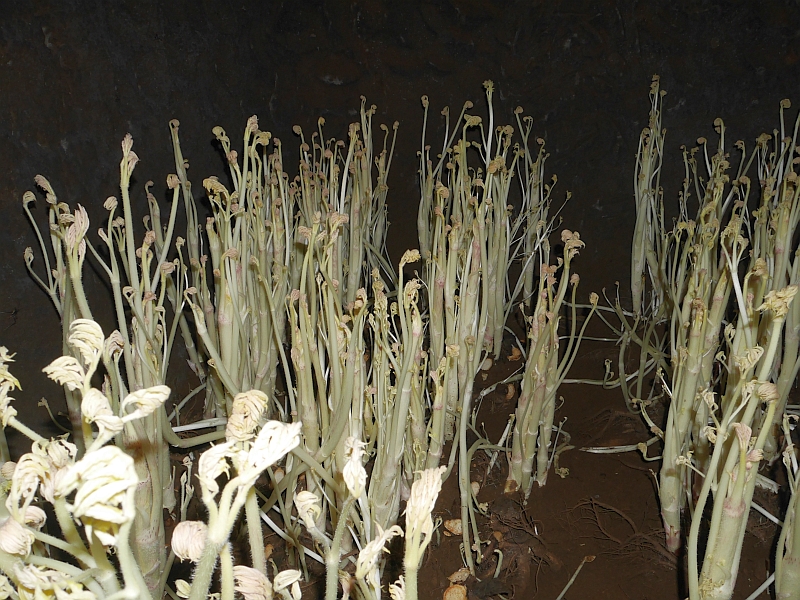
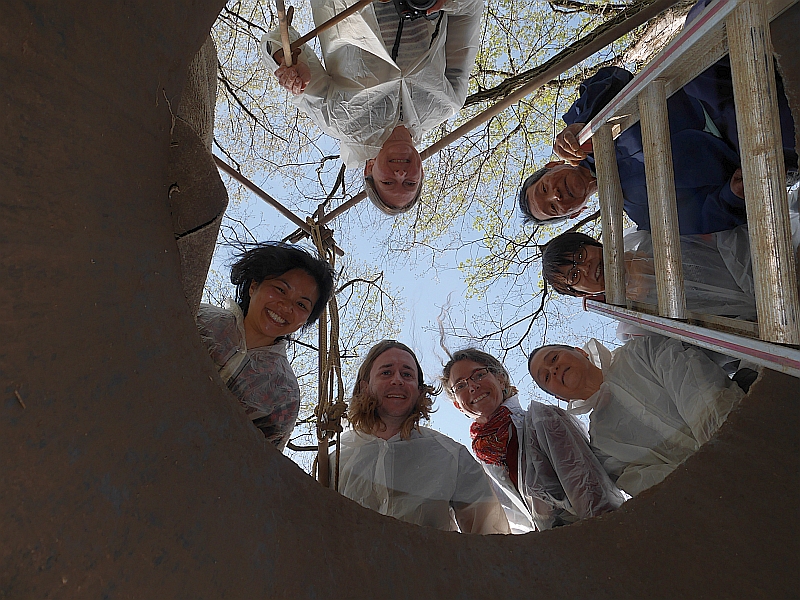
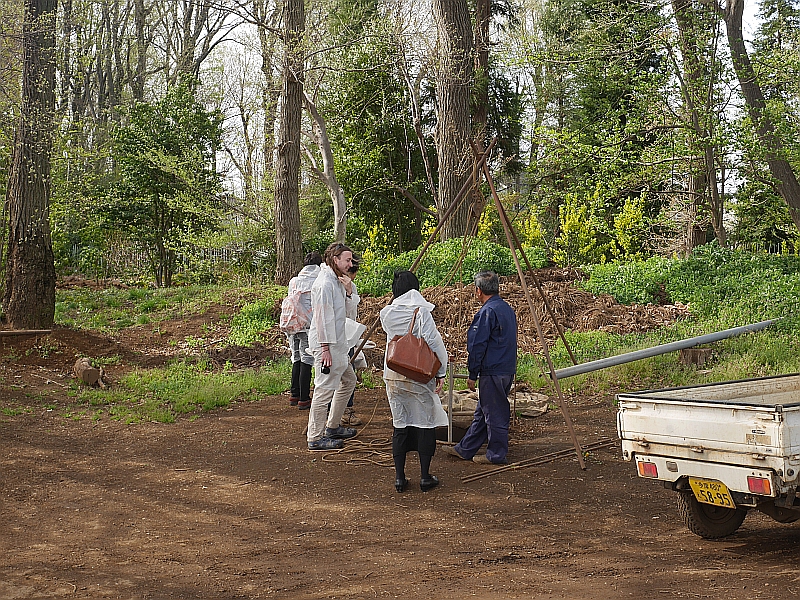
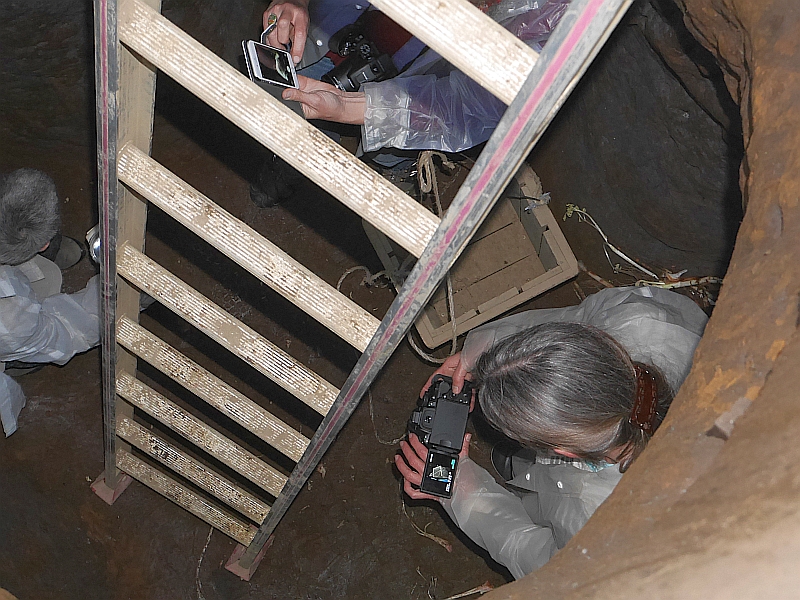
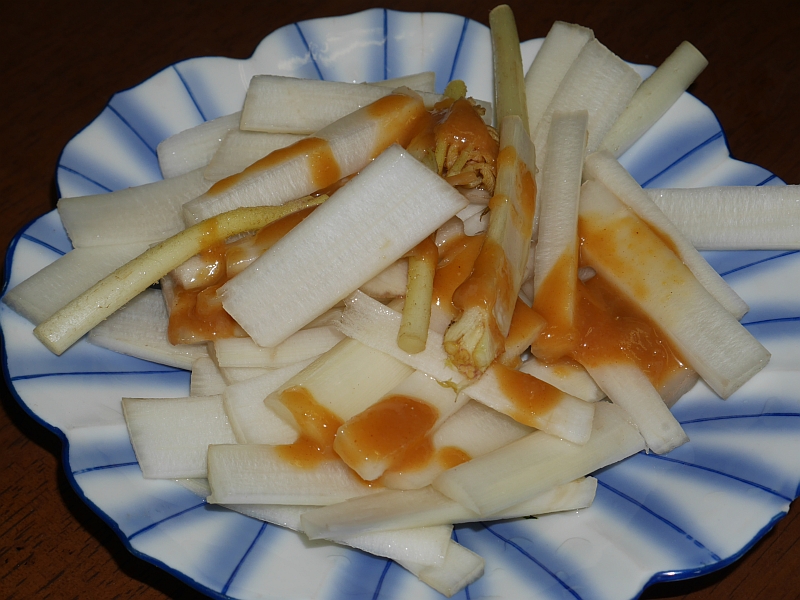
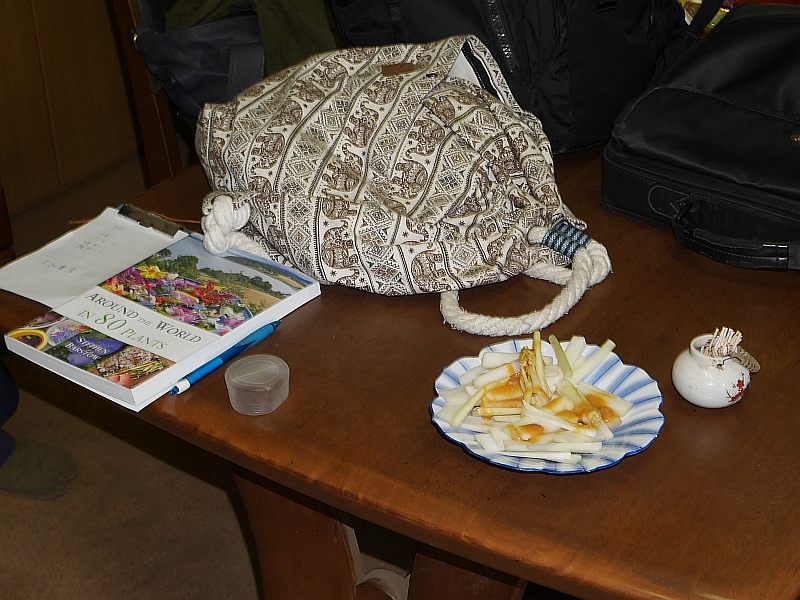
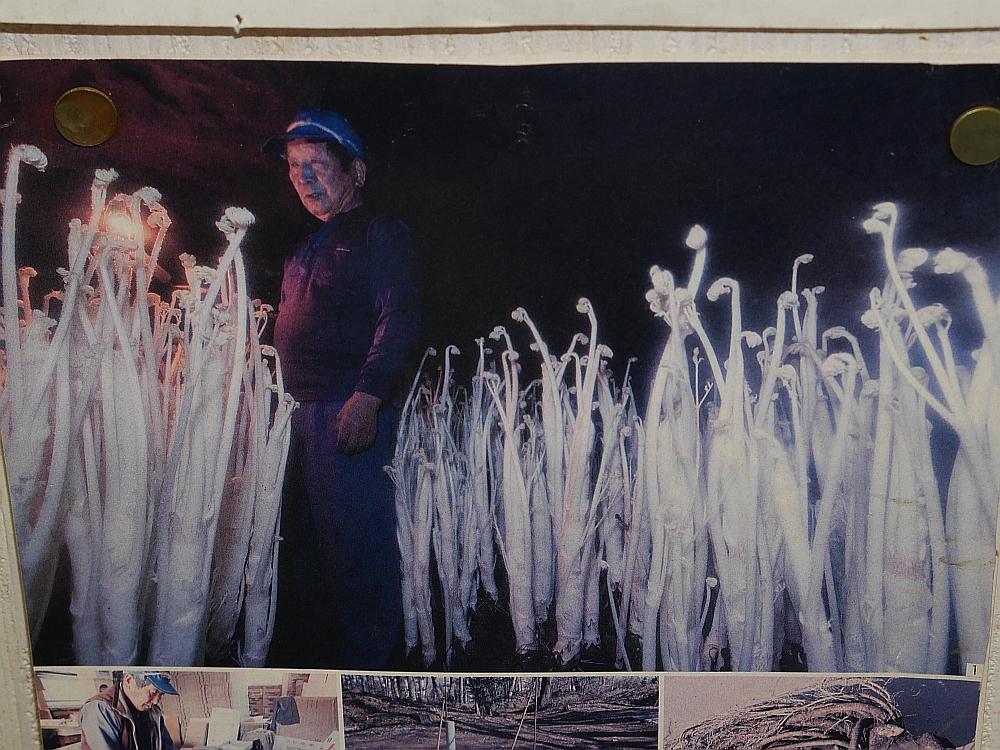
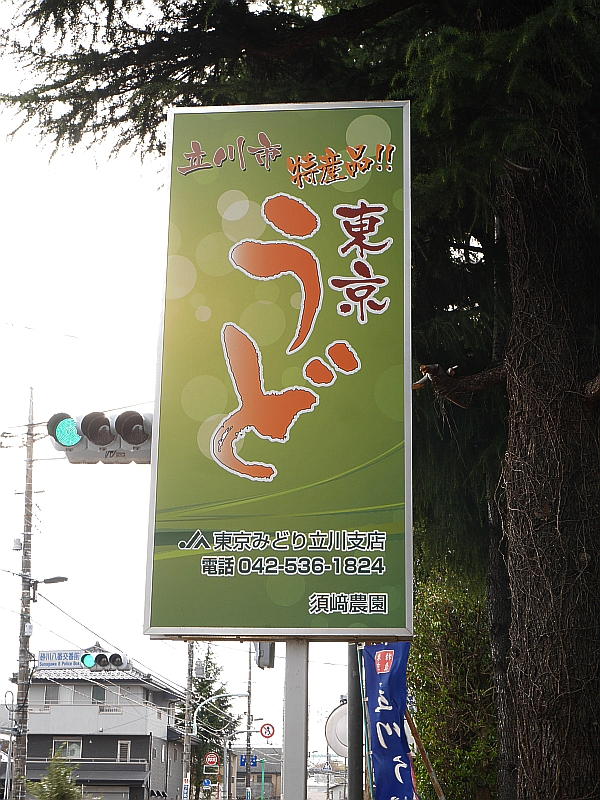
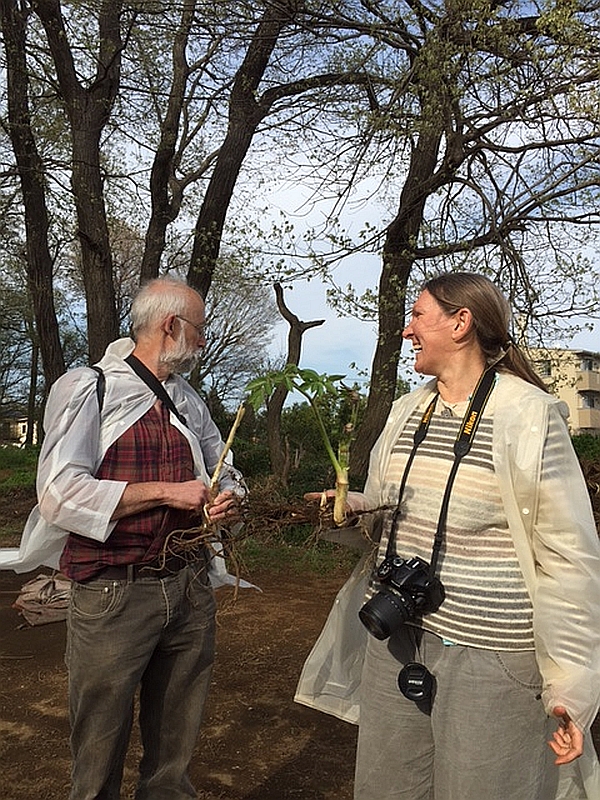
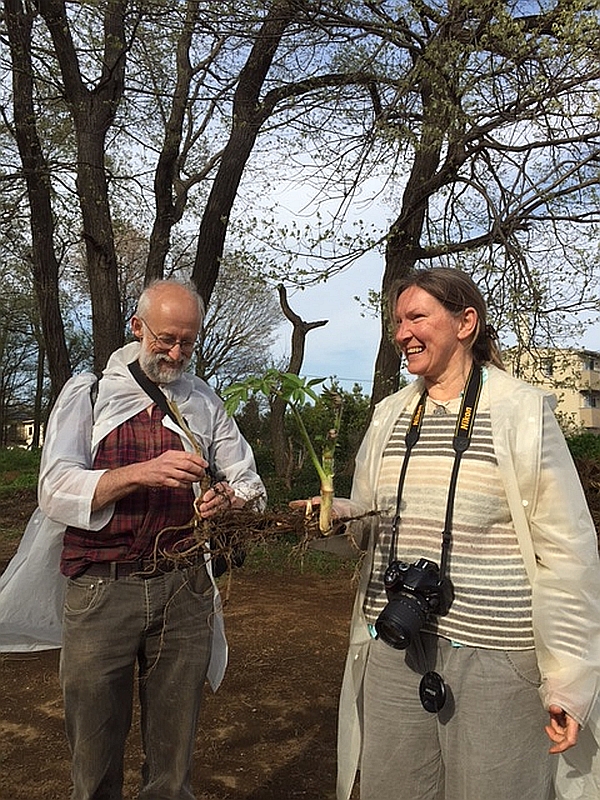
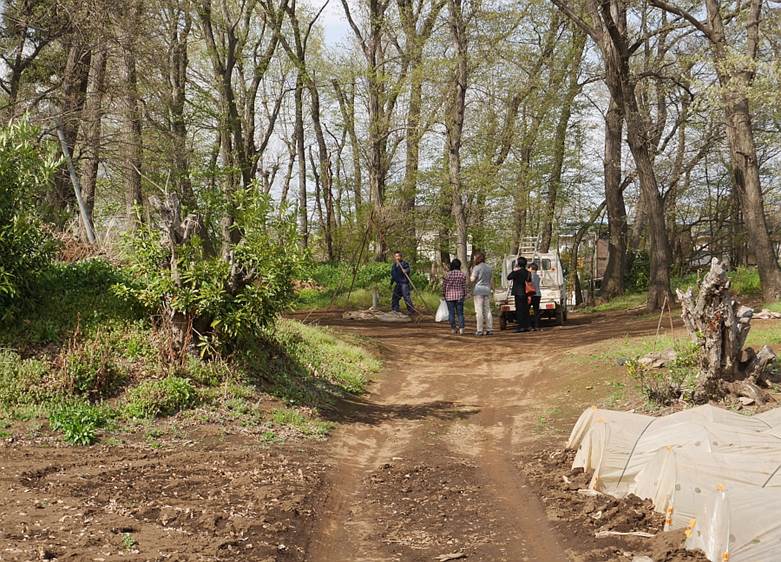
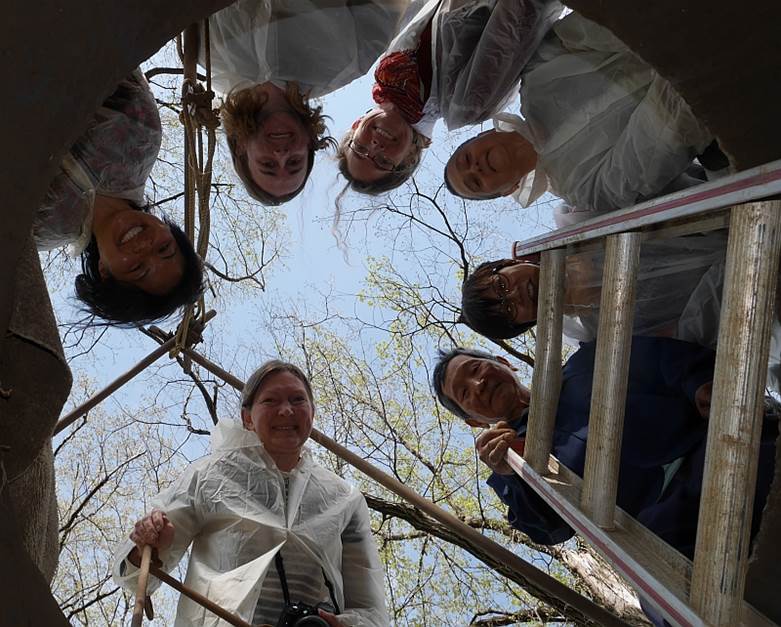
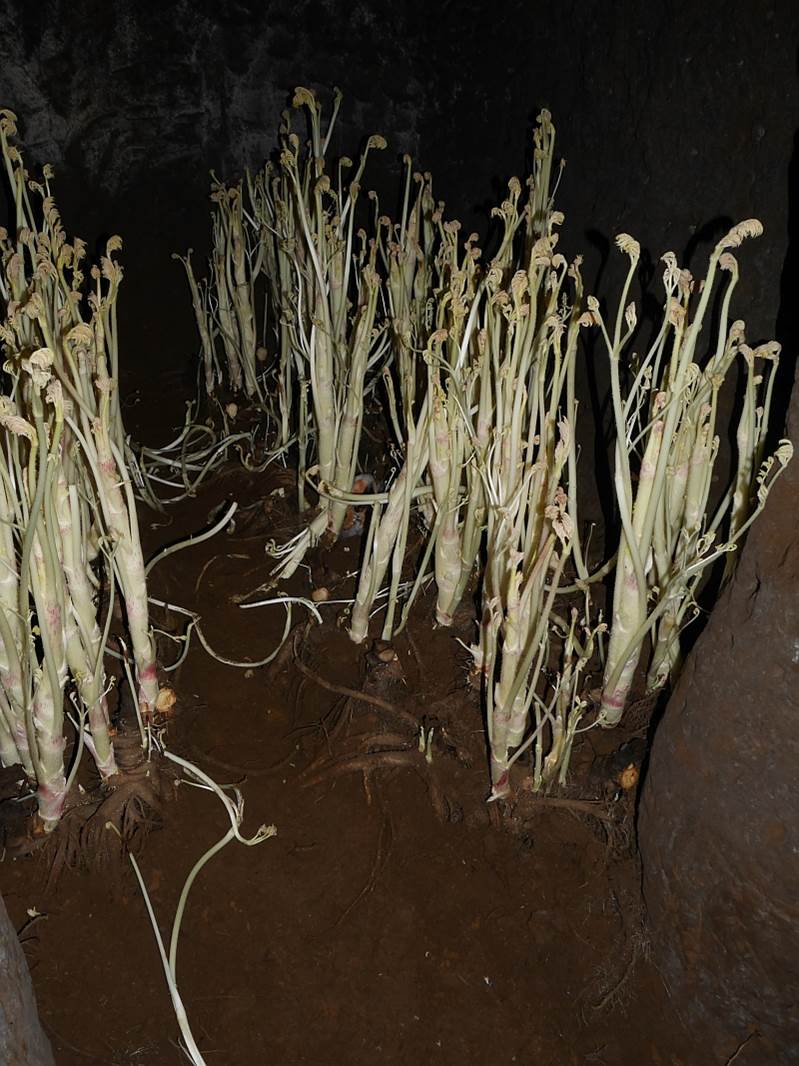
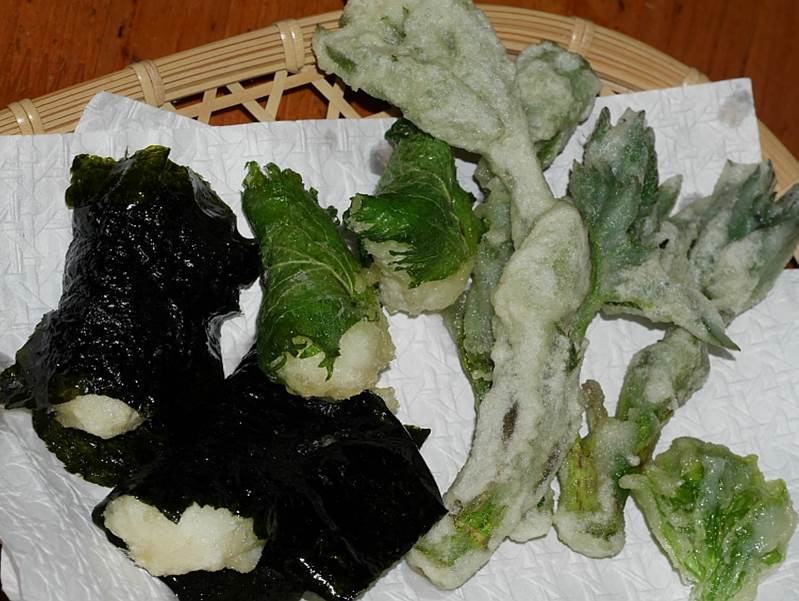
Here’s an album of my own pictures from our visit to Tokyo’s underground Udo forcing holes…
More about Udo (Aralia cordata) on my web site www.edimentals.com
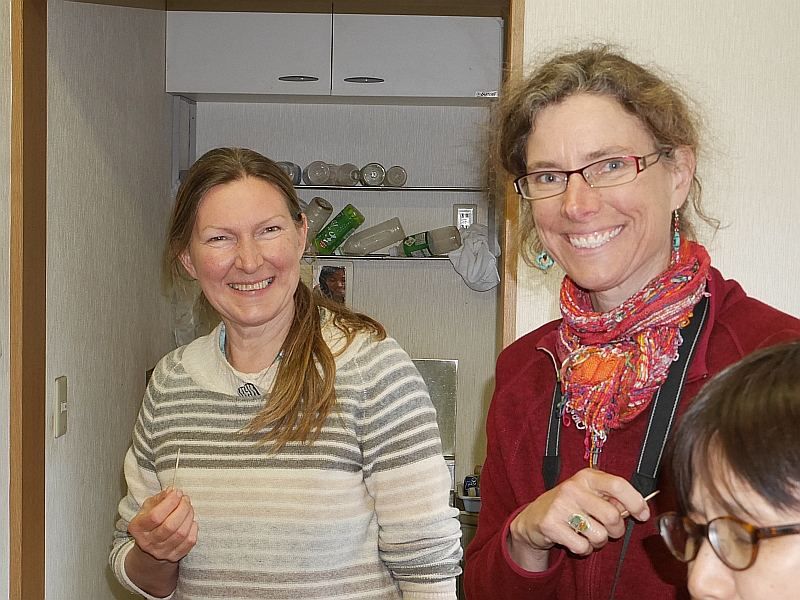
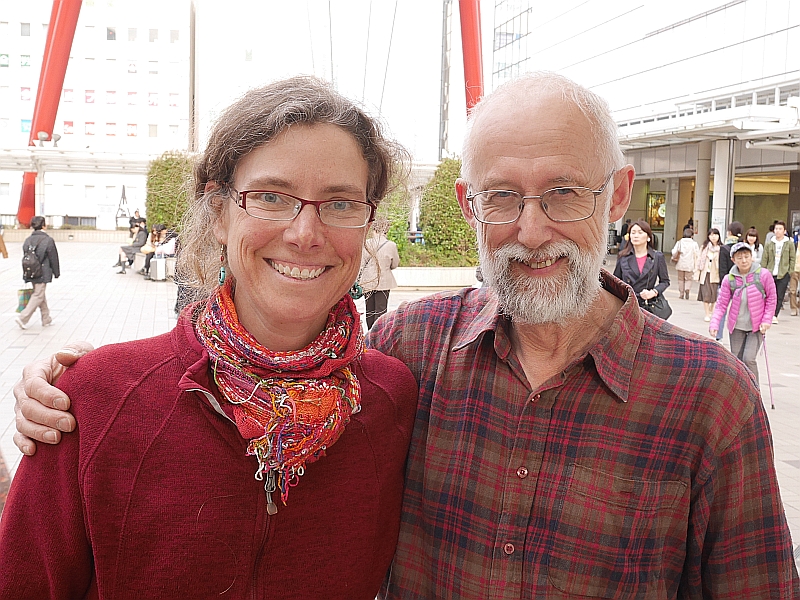
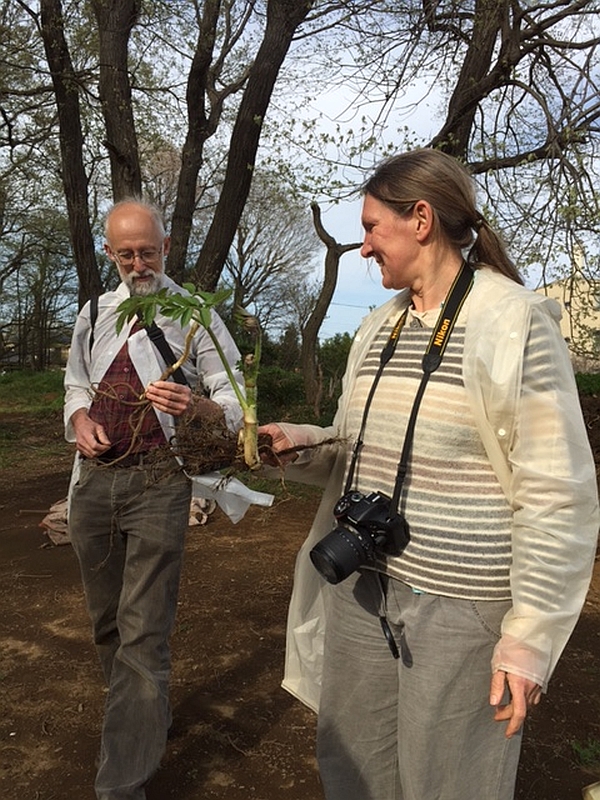
Thanks again to Ken Minatoya-Yasuda for liaising with the agriculture industry Tourism Division in Tachikawa city!! We were the first Europeans to ask for this particular tour!! Thanks also to Tei Kobayashi for acting as interpreter and great to meet local gardening blogger Joan Lambert Bailey and friends on the day!! We all had a great day I think!!
Please help translating the text on some of the pictures!
http://www.edimentals.com/blog/?p=7499 (My “The Many Uses of Udo” Permaculture Magazine article and pictures taken by Naturplanteskolen who joined me on the trip!
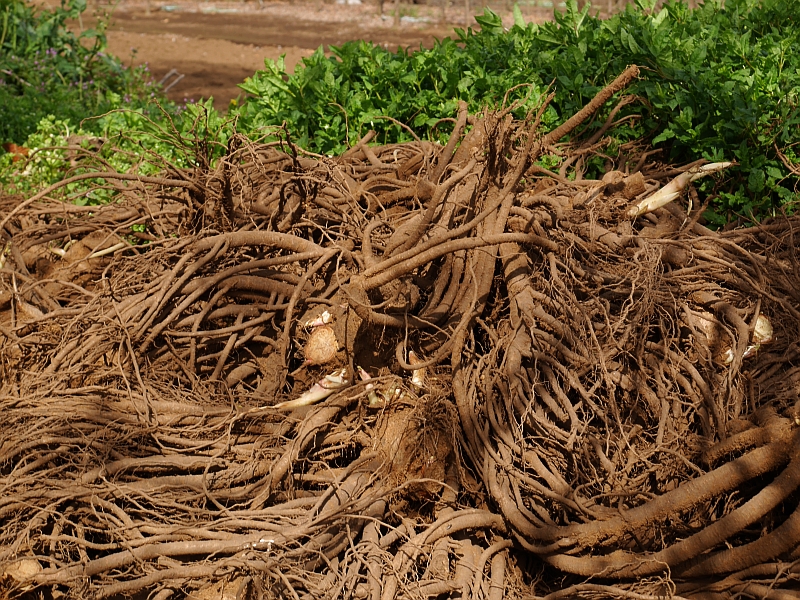
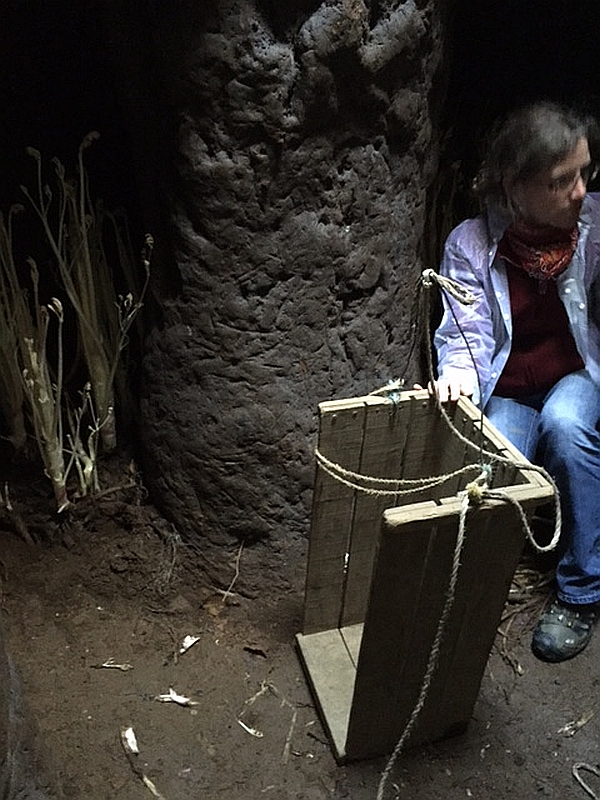
To see an underground Udo (Aralia cordata) farm has long been a dream. My dream was finally fulfilled this spring and below you can see a short video I took in the Udo cavern! I’ve also added 3 videos above the ground where you can see piles of spent Udo roots…the roots themselves have been used medicinally, but at the moment are going to waste :(
Below the videos is a gallery of photos taken by my friend Tei Kobayashi who acted as interpreter!
More pictures from the visit can be seen here: http://www.edimentals.com/blog/?p=7499
Thanks to my friend Tei Kobayashi for the following pictures taken during our visit to the underground udo farm in Tokyo.
Aiah Noack of Denmark’s permaveggie nursery Naturplanteskolen!
The special earth is seen in this picture
Joan Bailey
Me and Aiah Noack from Naturplanteskolen in Denmark!
Negative height is an important characteristic for the underground Udo farmer :)
The last 3 days, I’ve been harvesting as quickly as I can as it’s very cold for the time of year (max. about -6C today) and the earth is now frozen to 5-6 cm deep….at this rate it won’t be possible to break up the surface layer with hand tools…but a few things like leeks will have to wait until the weekend….hoping I can get them up…
This is my largest Nero di Toscana (Laciniato) cross with Daubenton (from Chris Homanics’ OP perennial grex selection in 2013) at the end of year two. I’ve taken cuttings and will overwinter this and a couple of other plants in the cellar as I don’t want to lose it!
Portuguese Couve Galega (thanks Maria Silva), not perennial but I love the leaves and it would be interesting to cross it with one of the perennial kales…overwintering it inside hoping it will flower…
Couve Galega
I harvested parnips, carrots, turnips and chicory root for forcing (Witloof types) and a variety for eating the root
Experimenting with burying the roots of perennial kales deep down outside, hoping this might help overwintering. This is inspired by long cuttings I took a couple of years ago in October. I buried them at a similar depth (20-30 cm) and the amazingly made it through the winter!
The edibles cellar store rooms are now completely full and I can hardly move down there now :) Perennial kales at the front in buckets
The traditional veg store with swiss chard planted in boxes in earth…root vegetables are stored in damp leaves
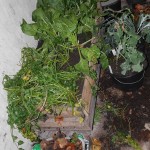
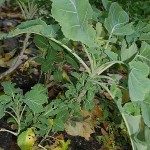
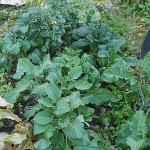
Some pictures of my beds of perennial kales. I took cuttings of 6 or 7 varieties today in case the mother plants don’t make it through the winter. I’ll do the second bed next weekend!
Perennial Kale Bed #1 : I took cuttings of all these today)
Walsall Allotments (UK, possibly Taunton Deane?)
Eiiwig Moes (Belgium)
Daubenton (France)
Taunton Deane (UK)
Leuven (wild perennial cabbage?) (Belgium)
3 year old Daubenton x Late purple sprouting broccoli (didn’t flower this year)
Cuttings safely inside the house in my loft room (unheated)
Perennial Kale Bed #2 : I will take cuttings of thesenext weekend!
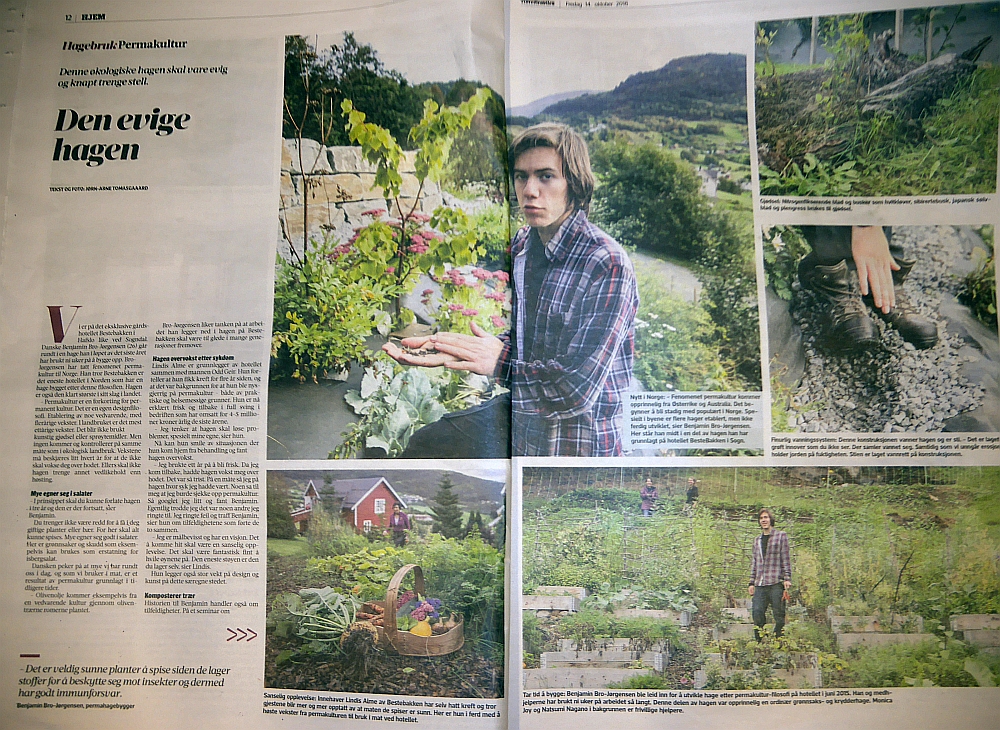
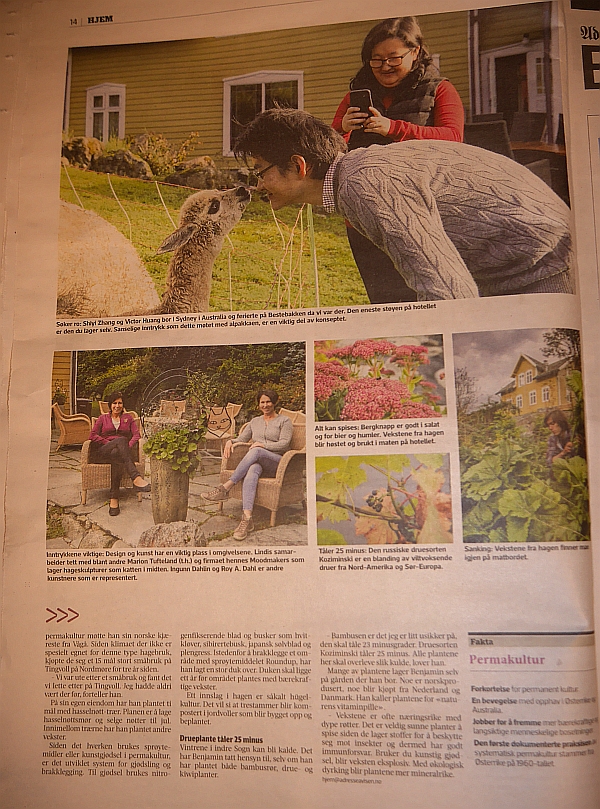
Benjamin Bro-Jørgensen, who together with Irja Frydenlund have started an edible perennials nursery in Tingvoll, Norway, was profiled in today’s Adresseavisen (Hjem magazine) in an article “Den evige hagen” (the eternal garden). Wow, Permaculture and perennial vegetables in my local paper! Well done! Apparently, it is also published in Bergenstidende :)
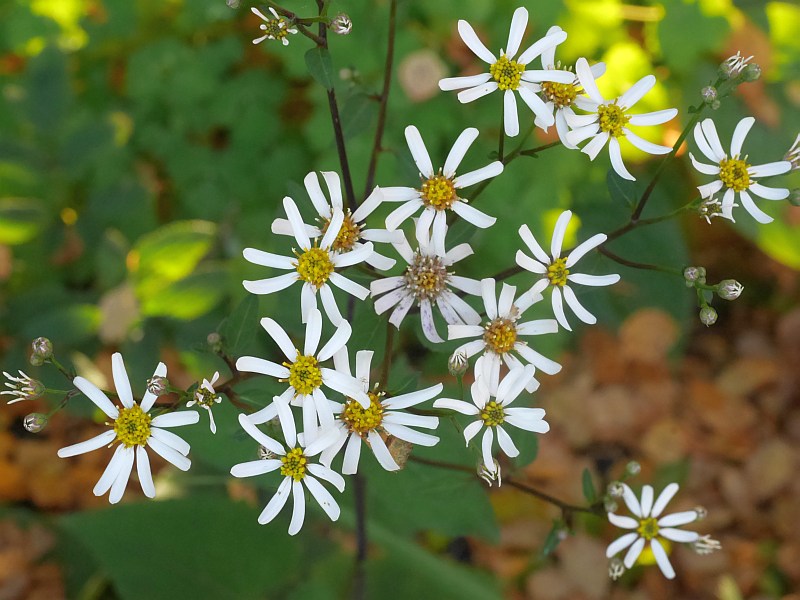
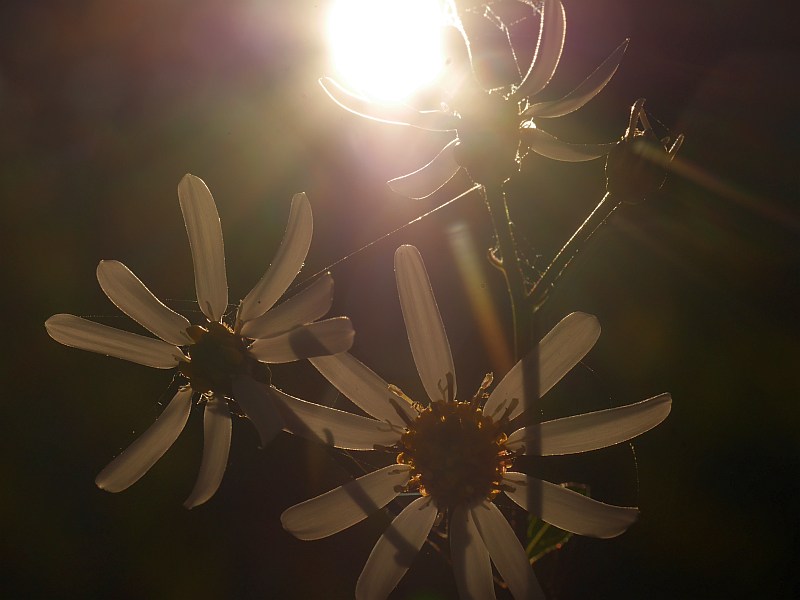
There are some great autumn flowering edimentals (or edible ornamentals) in the Asteraceae, and this is my favourite of the lot, Korean Aster or Chwinamul (Aster scaber)….and it’s also very photogenic!
If you don’t grow this and aren’t living in Korea, your only chance to try this is to find the dried leaf on Korean markets around the world. Anyone seen it? Like to send me a packet? Here’s how to prepare it: http://www.maangchi.com/recipe/chwinamul
The pictures are from my garden on 10th October 2016 of a plant that originated from a Korean vegetable catalogue!:
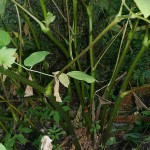
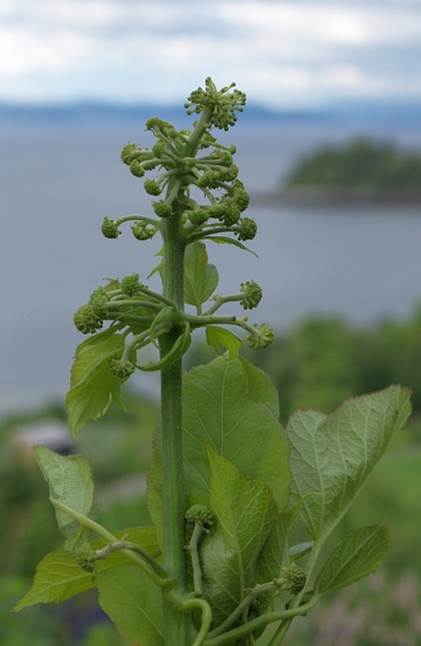
My forest garden continues to be super-productive, my udo is on its way back to the soil and is preparing for next year as are my three devil’s walking sticks, Aralia elata as well as Aralia racemosa and A. californica.
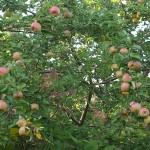
There are a lot of apples to start drying soon!
Udo (Aralia cordata) collapses early autumn under its own weight….
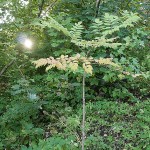
Ostrich fern, udo, apples and devil’s walking stick (Aralia elata)
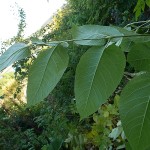
Aralia racemosa (I think) is growing next to my udo and is now quite big, with ostrich fern growing underneath it!
Aralia racemosa fruiting heads…
Aralia racemosa fruiting leaves…
Aralia elata from Honshu in Japan is the youngest of 3 trees
Aralia elata (devil’s walking stick) is in fruit for the first time here
Apples galore…producing large amounts of fruit every year without any fertiliser, growing next to it, also produces well every year on zero fuel!
For the first time freely available is my article in Permaculture Magazine about my largest and most exciting vegetable Udo (Aralia cordata)! See the link near the bottom of the page and please subscribe here, they do a great job, but need our support! Go to https://www.permaculture.co.uk/subscribe…………….
To witness the underground cultivation of Udo in large caverns under Tokyo (mentioned in the article) was one of the reasons for embarking on a study tour of Japan with Naturplanteskolen in Denmark in Spring 2016, and during the visit we discovered that you can have one more layer in a forest garden……..
The udo wood…
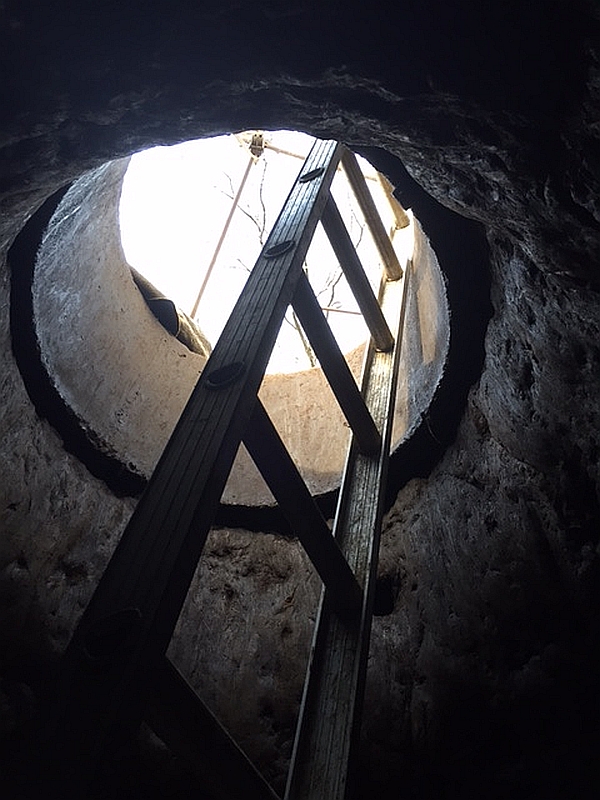
About to descend for the first time into Udo heaven; picture courtesy of Naturplanteskolen
…and there they were!!
Green udo tempura in a restaurant!
The broccolis are also used
In the coldest spring ever in 2015 in my area, udo grew better than ever, whilst traditional farmers were struggling to sow and plant!
Thanks to Tei Kobayashi who acted as interpreter and liasing with the local authorities, to Ken Minatoya in the Netherlands who also initially called the city clerks for me and Joan Bailey for helping out, accompanying us on the visit and also for writing a local article, see here http://metropolisjapan.com/more-than-cherry-blossoms
I will write more about this visit as well as my other encounters with Udo in Japan as soon as I can!!
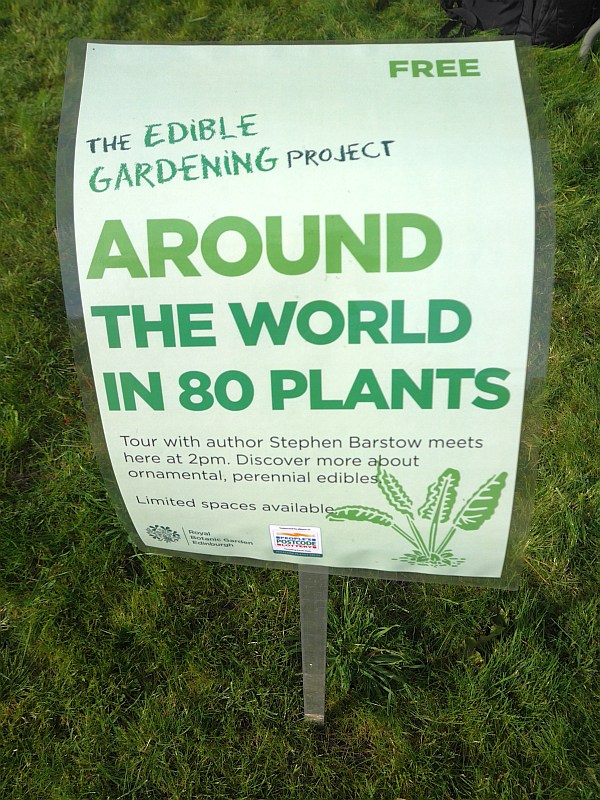
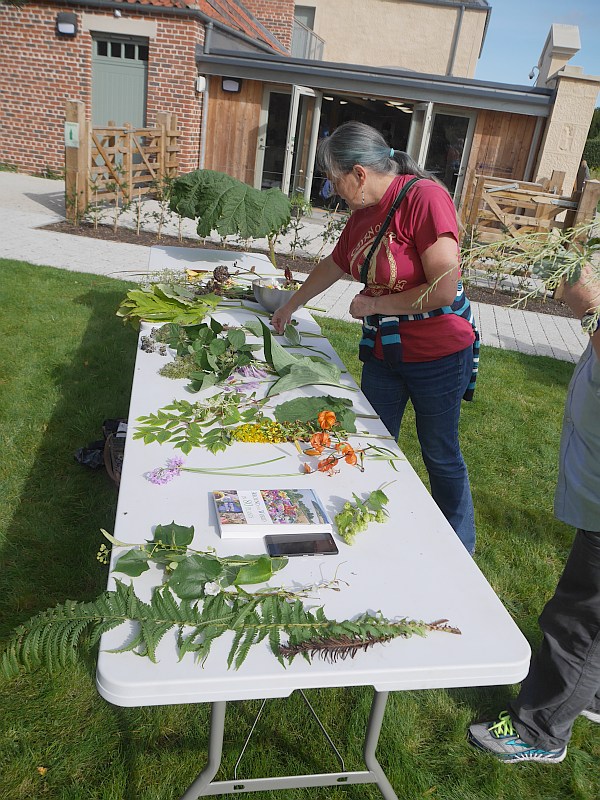
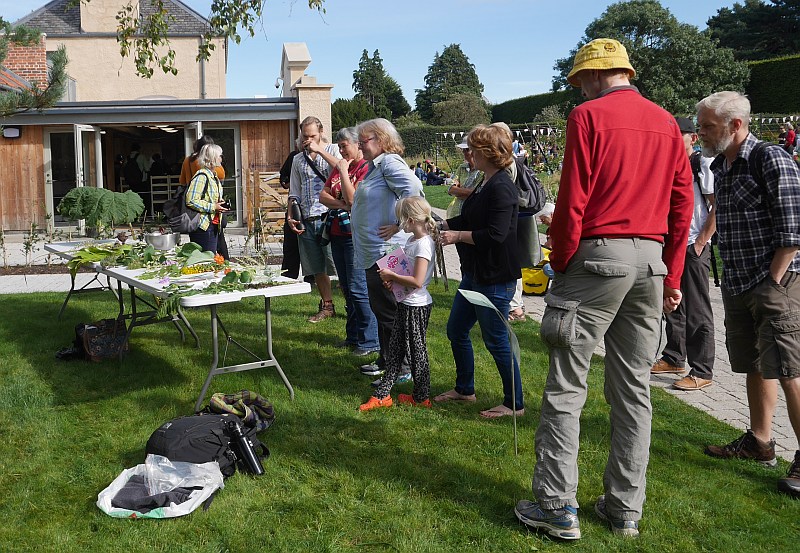
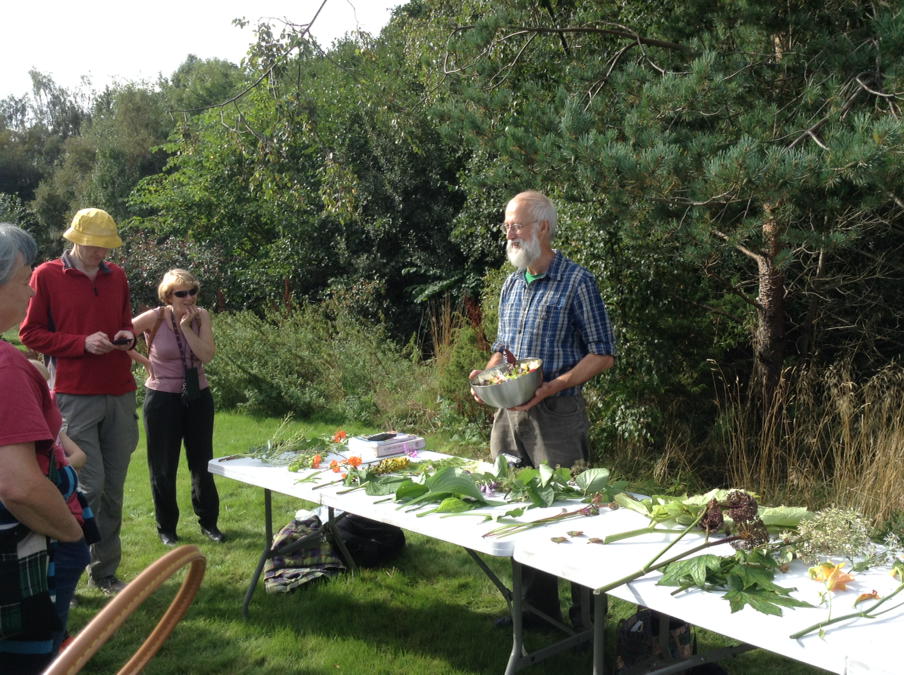
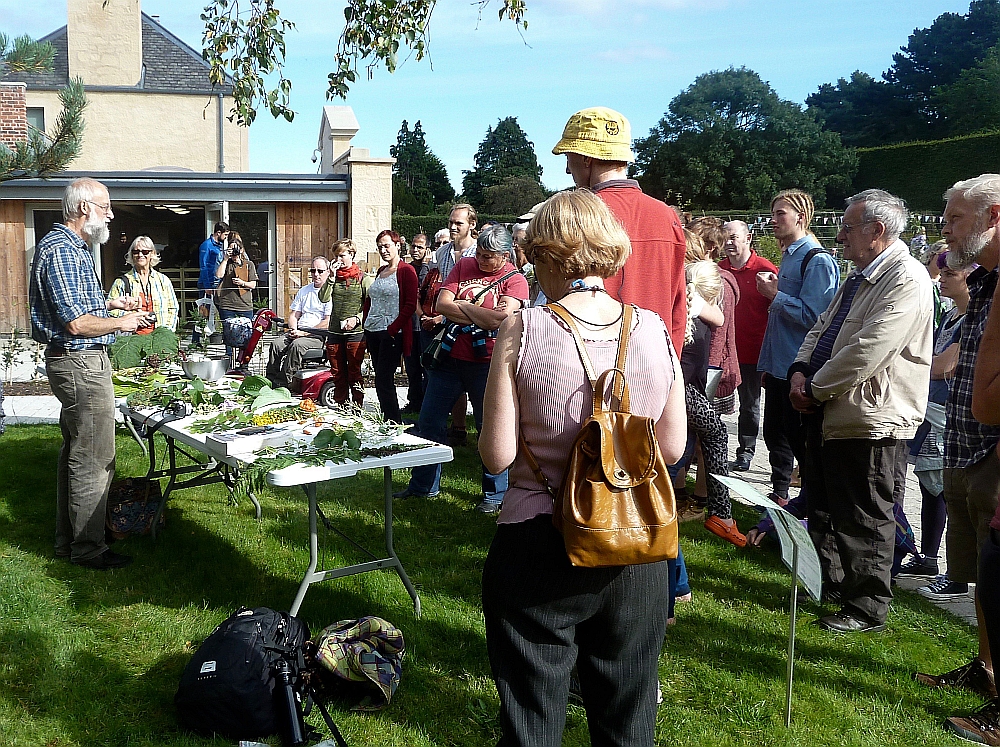
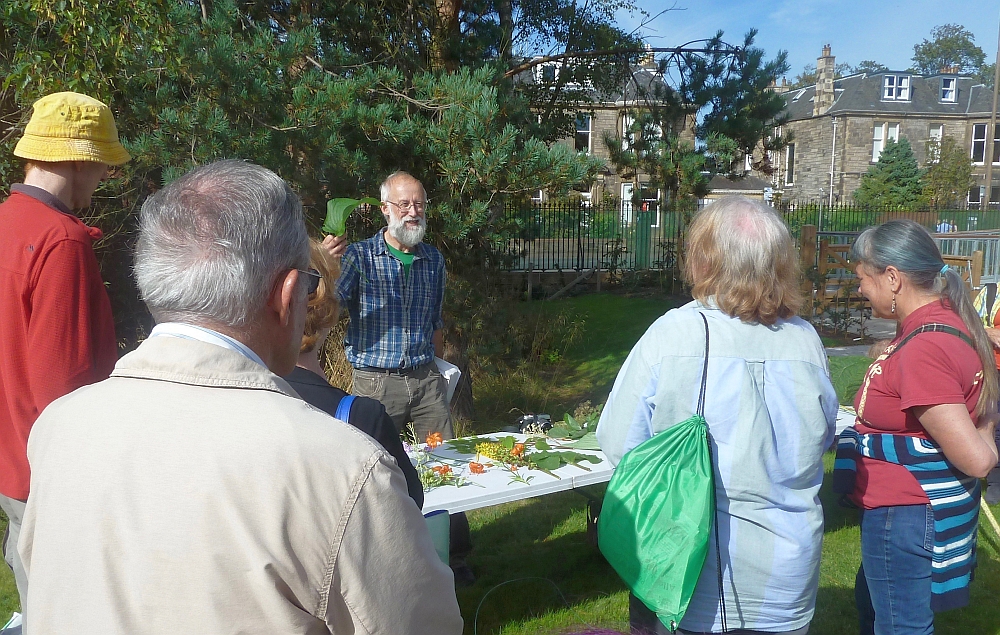
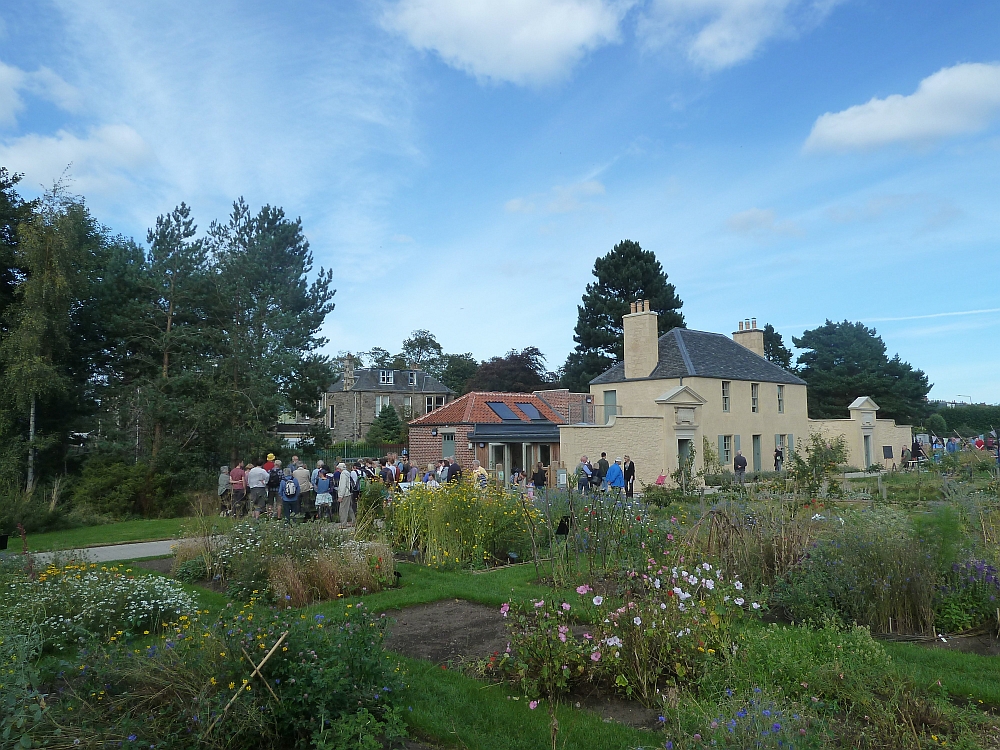
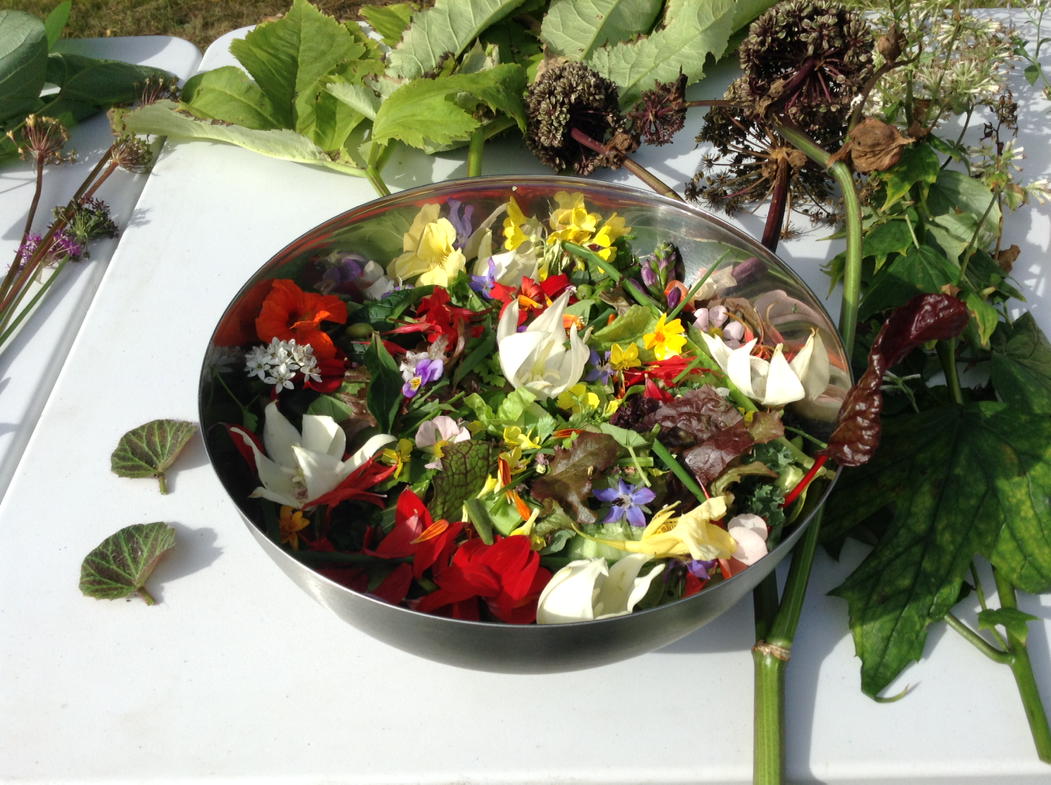
Fun day collecting edimentals from the garden’s collections, making a multi-species salad followed by my talk and walk!
Thanks to all who came and to Sabina Knees for helping out!
Some of the plants we collected were: Gunnera manicata, Saxifraga stolonifera, Hemerocallis spp. (daylilies), Hosta (leaves and flowers), Allium wallichii (two forms), Ligularia fischeri, Allium nutans, Allium schoenoprasum sibiricum, Ostrich Fern, Lilium leichtlinii, Lime leaves, Cacalia (Parasenecio) delphiniifolia, Hops, Aralia cordata (Udo), Aralia elata, Angelica gigas and Aster macrophylla. Flowers of Yucca filamentosa were used in the salad!
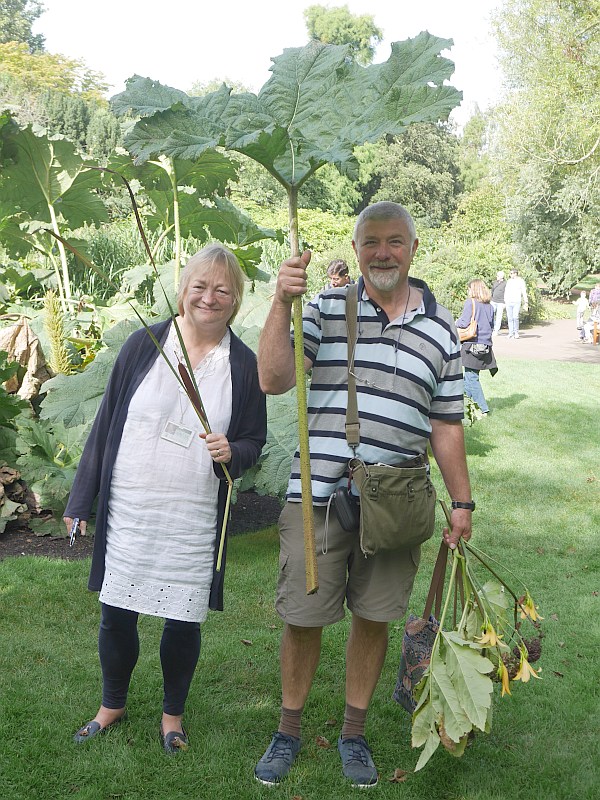
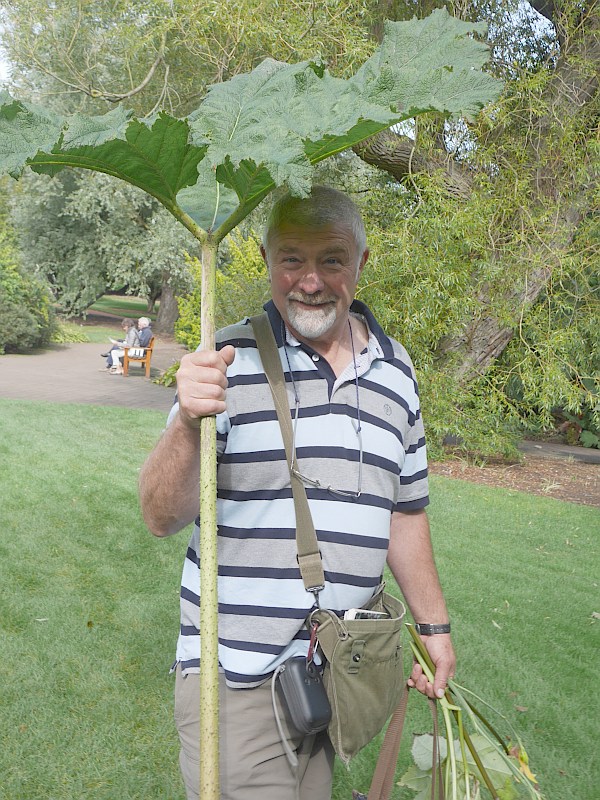
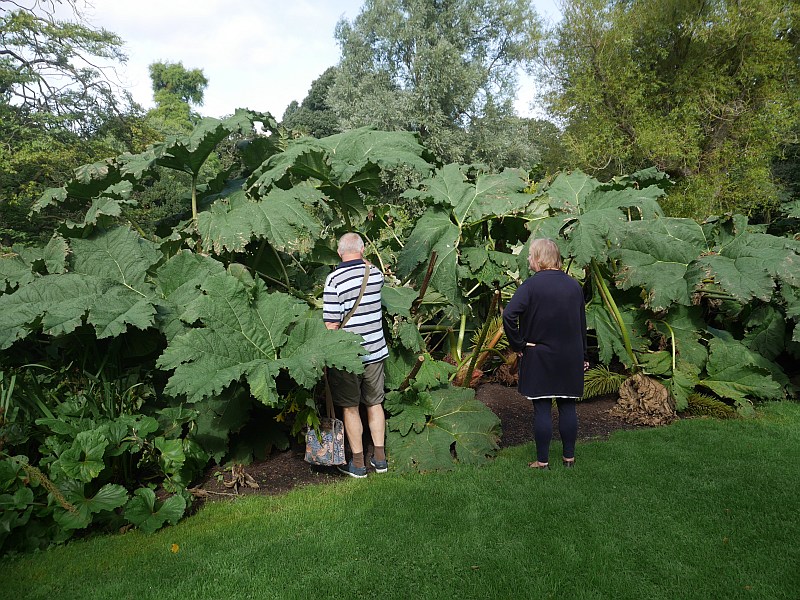
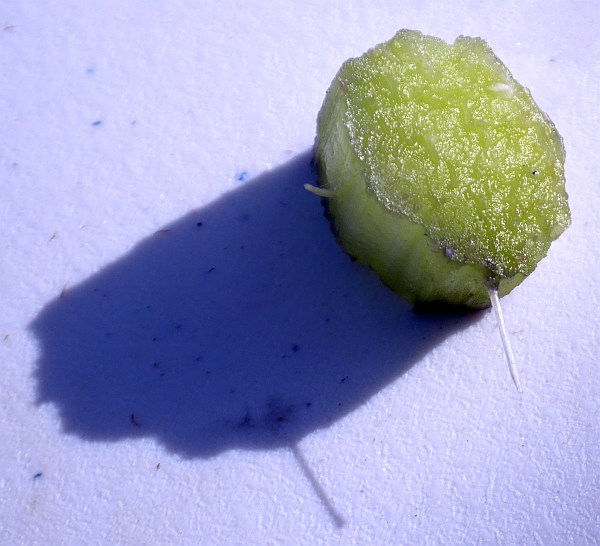
It was great to have the chance last week in Bergen to harvest and share the Gunnera tinctoria (Nalca) leaf stalk….the verdict was that it was surprisingly good, sweetly acid flavour (see http://www.edimentals.com/blog/?p=6772)! In Edinburgh, I was able to taste G. manicata for the first time. I’ve never seen evidence for its use. My hunch that this was probably due to it being more fibrous than its smaller cousin was confirmed:
Here’s an album of pictures I took of the amazing Nalca food forests of Chiloe Island in Chile (including being shown by a local how to eat it!): http://www.edimentals.com/pictures/index.php?/category/10 See also http://www.edimentals.com/blog/?page_id=677
Finally, thanks to my “old” friends Robin and Gwyn Allan (with an A), Diane Blakeley and Pete Fordham and our hosts Sabina Knees and Martin Gardner for not heckling during the proceedings ;) (we had a great reunion weekend in Edinburgh, not having met for some 35 years or more!)
Sabina Knees and Robin Allan assisted me in collecting edimentals from the garden’s collections (with permission!)
Robin Allan with Gunnera umbrella
The Edimentals plant display! Many people stopping at the stand were surprised to find Hosta amongst the edible plants!
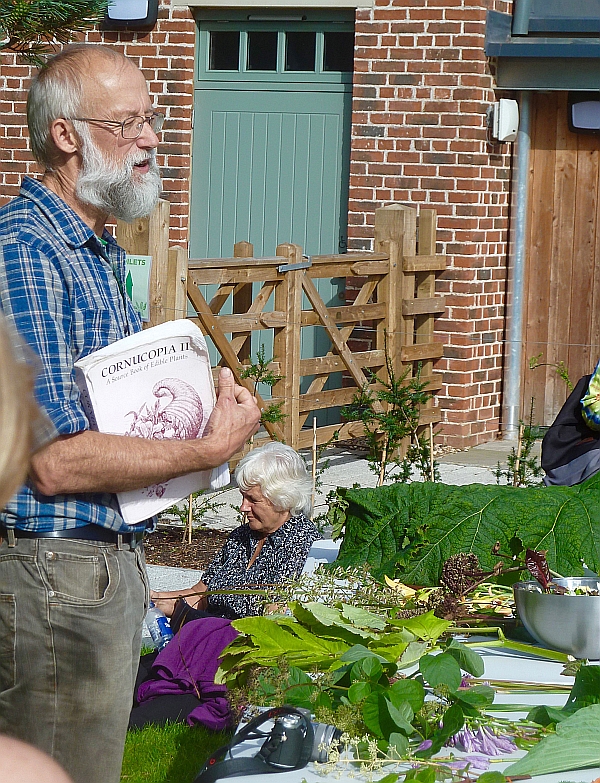
Gunnera manicata leaf stem: as suspected it was mcuh more fibrous than smaller G. tinctoria, but it tasted very similar (refreshingly sweet and lemony)
Photo by Sabina Knees
Edimentals Picture by Robin Allan
My bible! Picture by Robin Allan
Eat your Hosta leaves Picture by Robin Allan
The new (old) Botanic Cottage on the right! Picture by Robin Allan
The 61 species salad that we collected and made in about 30 mins. from the garden to table! Fast slow food! Photo by Sabina Knees
Perennial vegetables, Edimentals (plants that are edible and ornamental) and other goings on in The Edible Garden