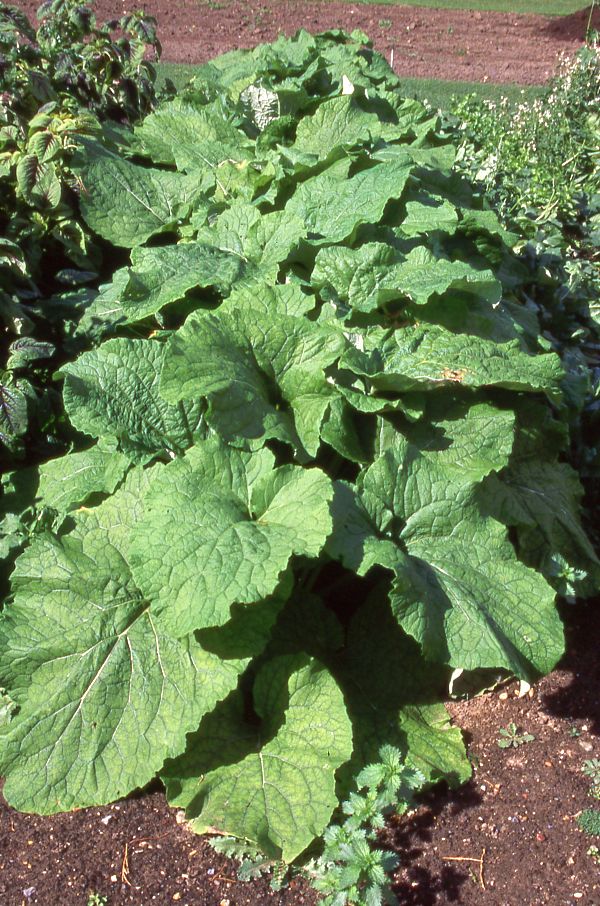
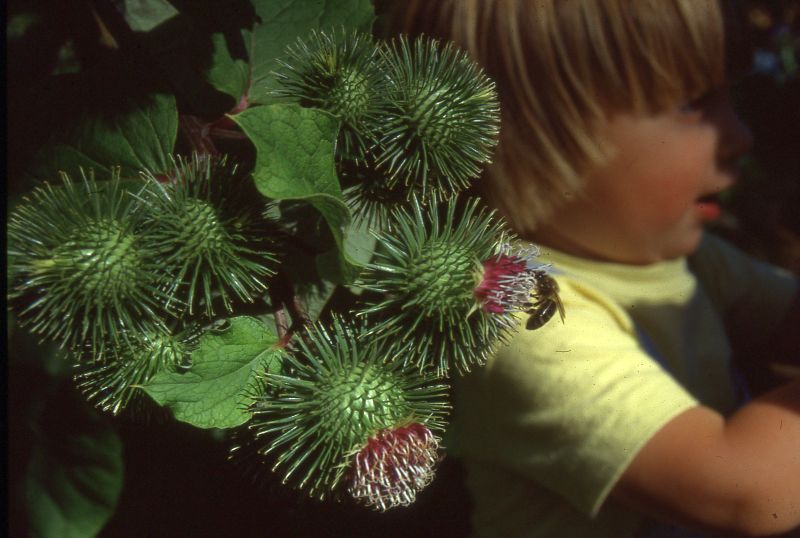
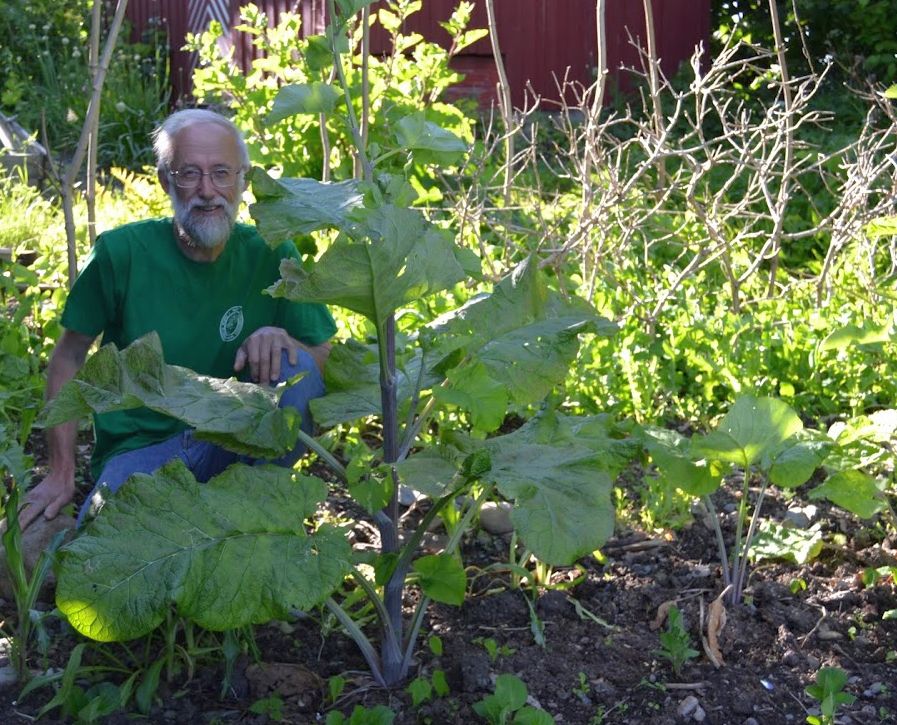
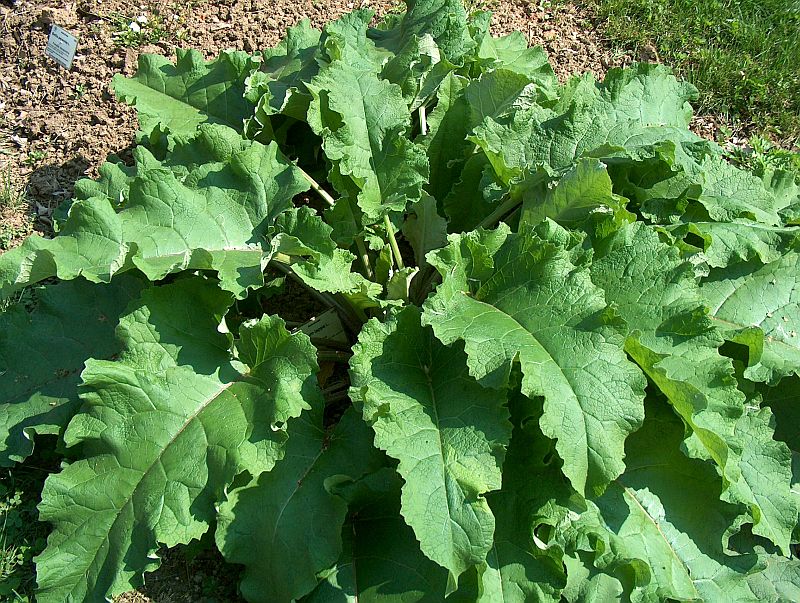
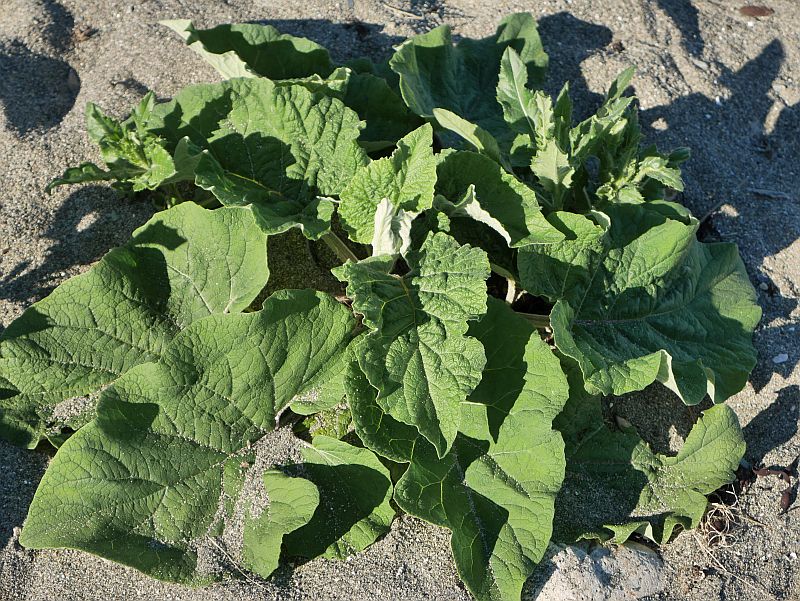
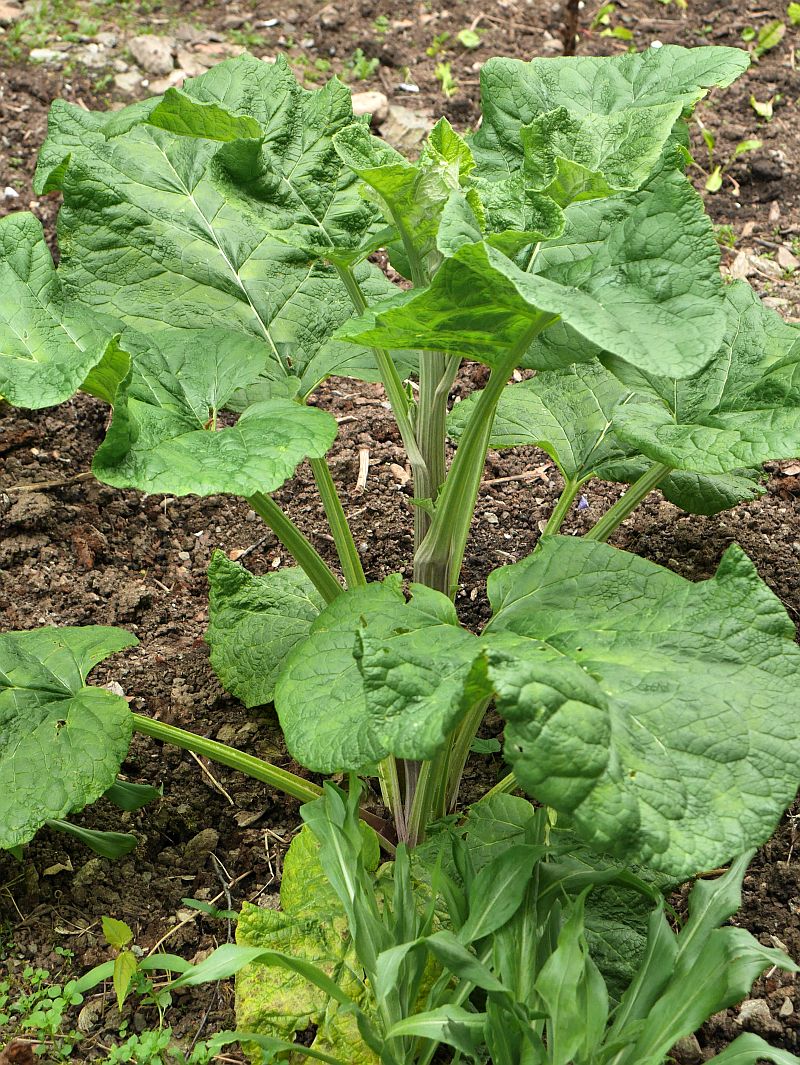
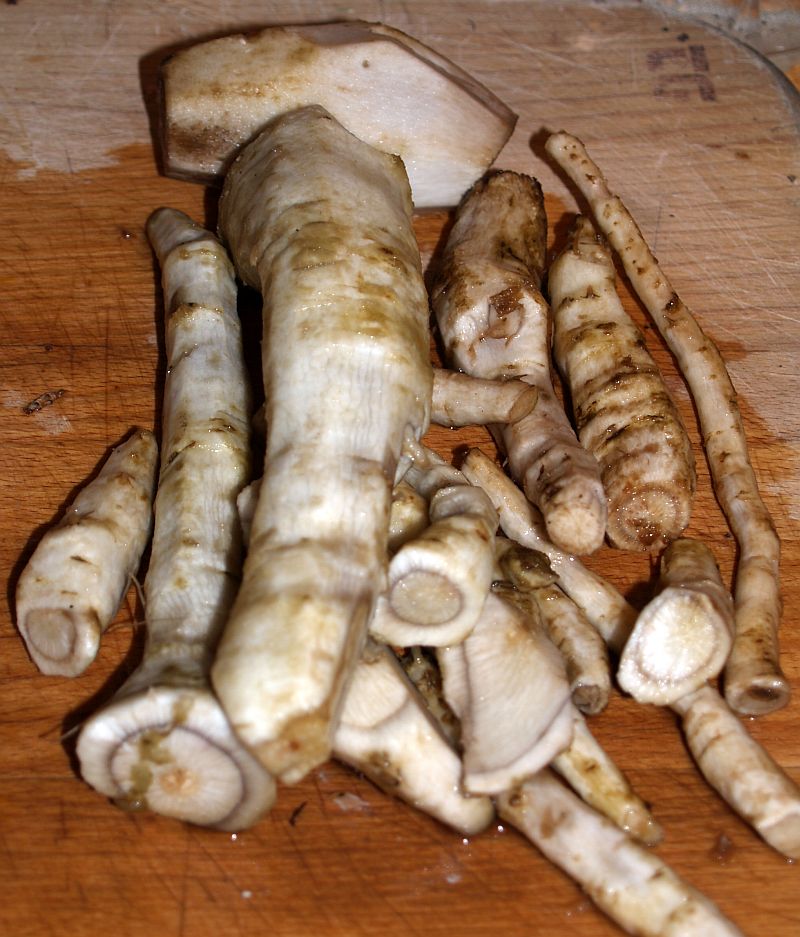
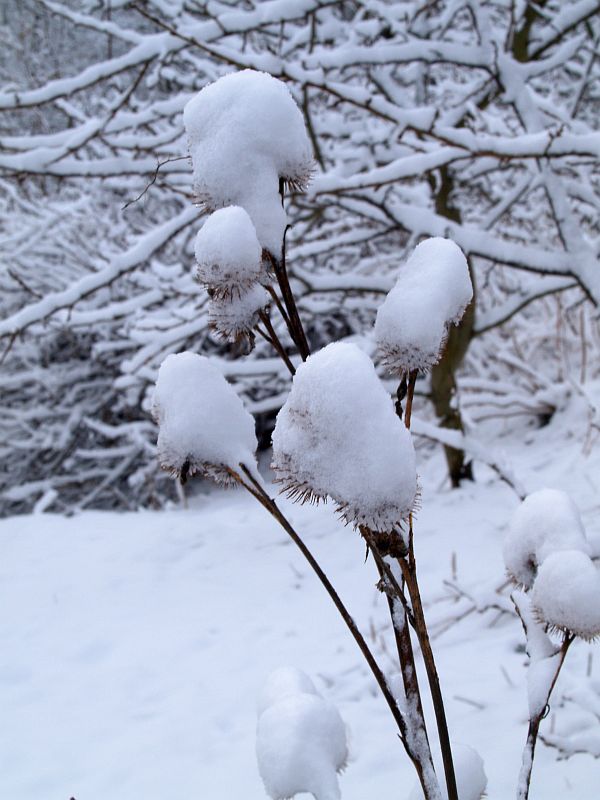
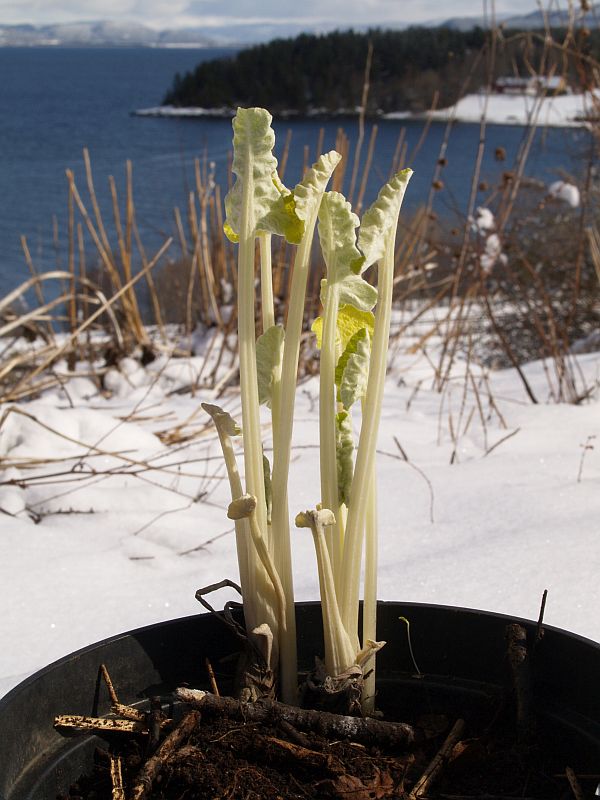
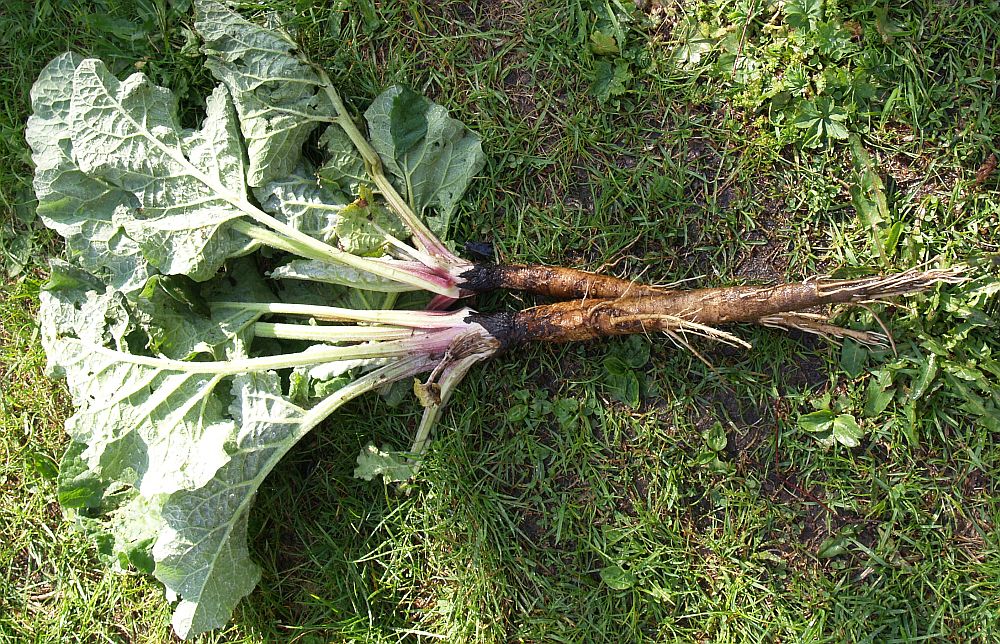
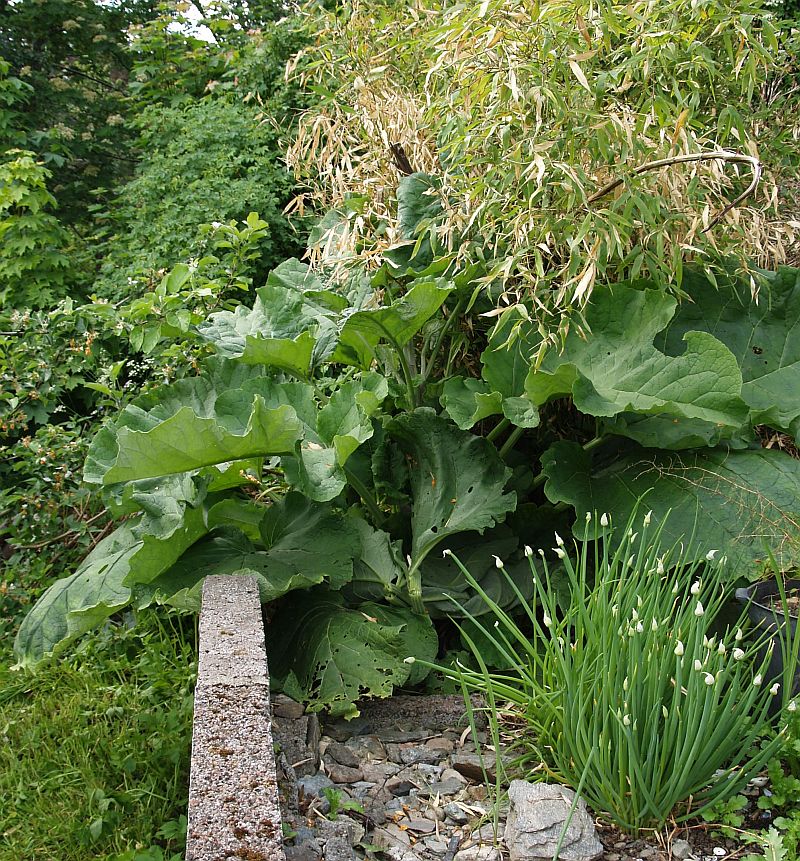
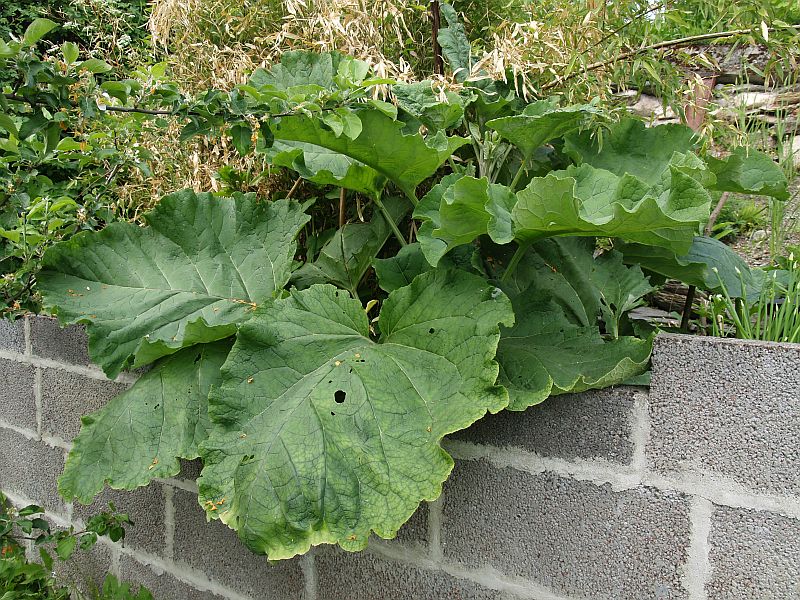
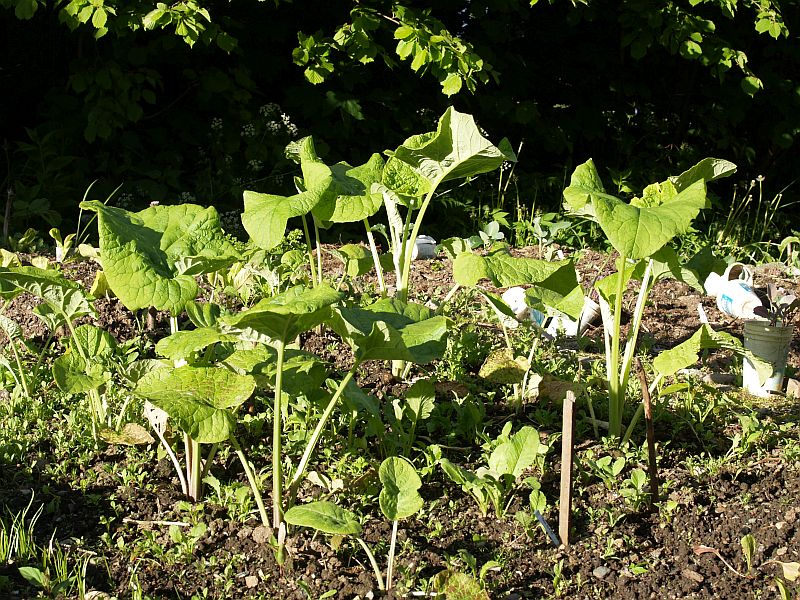
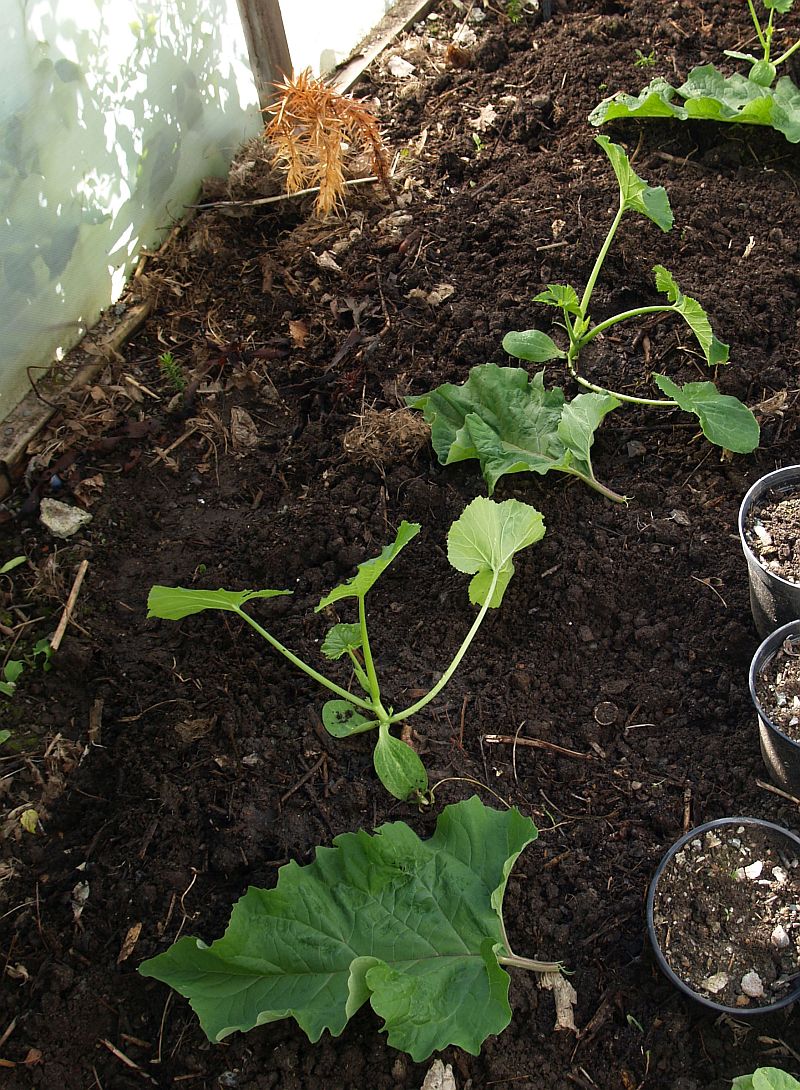
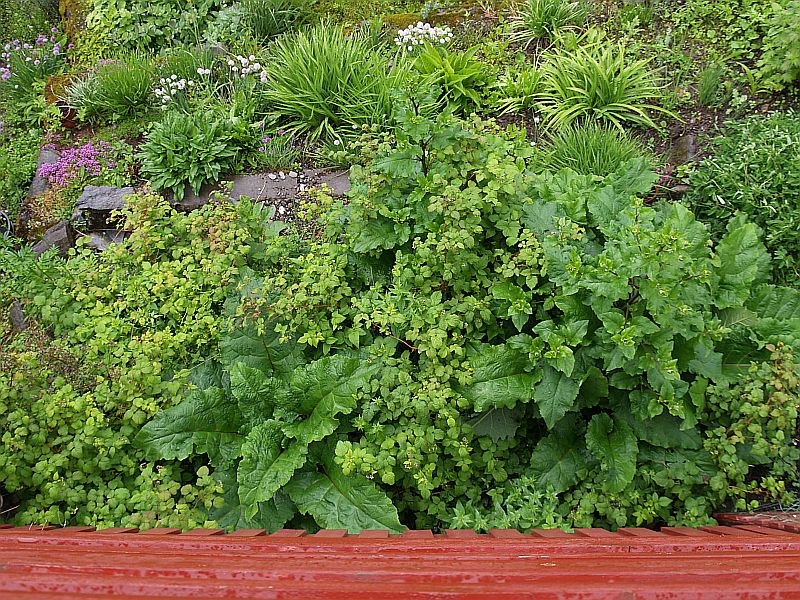
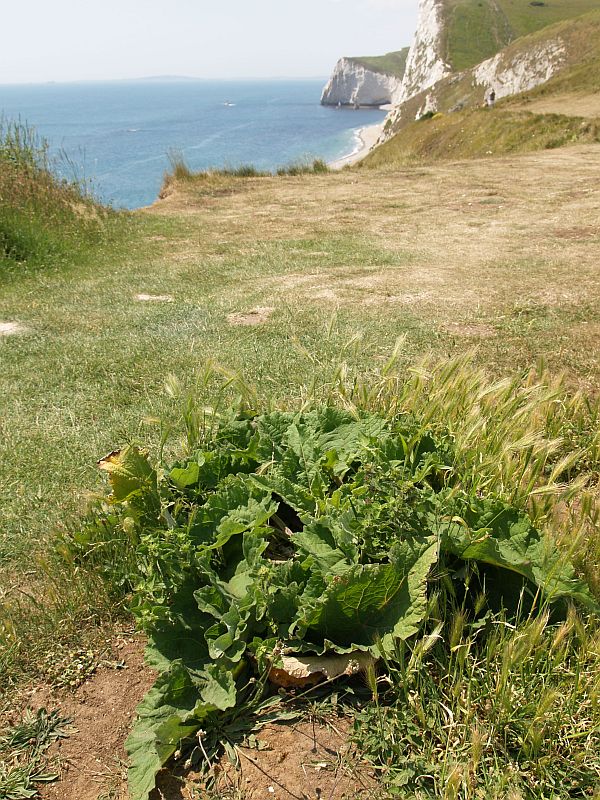
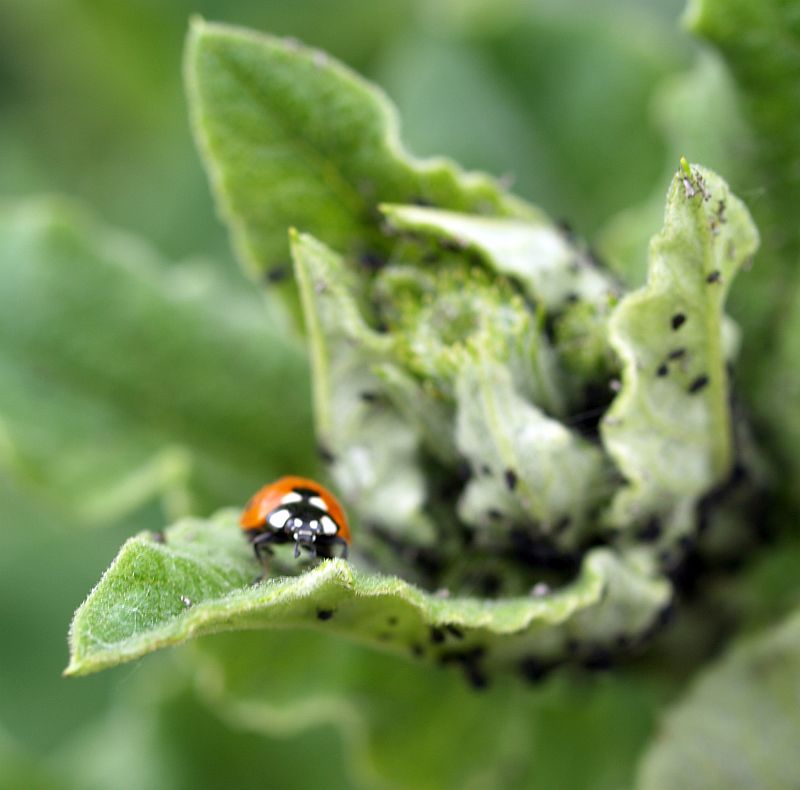
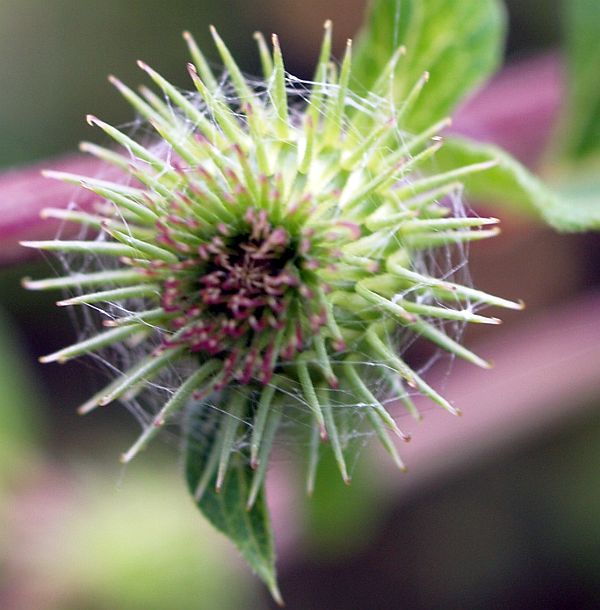
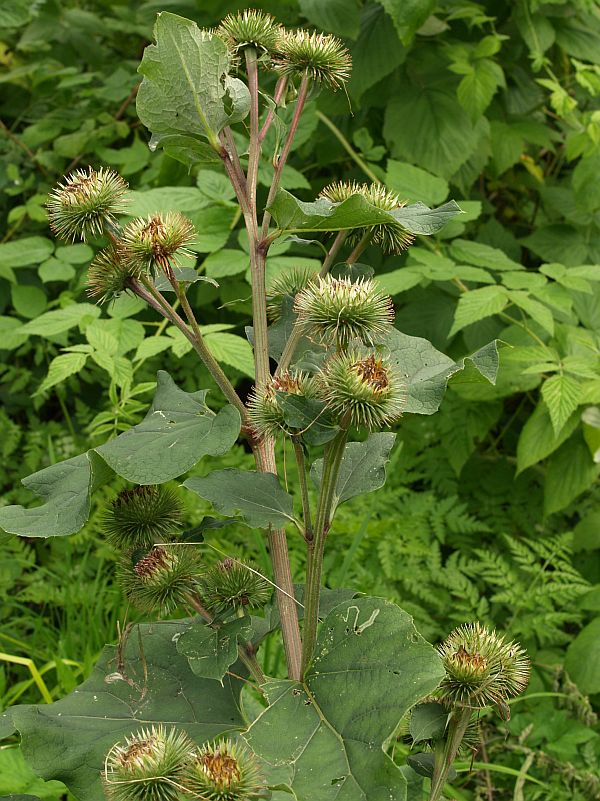
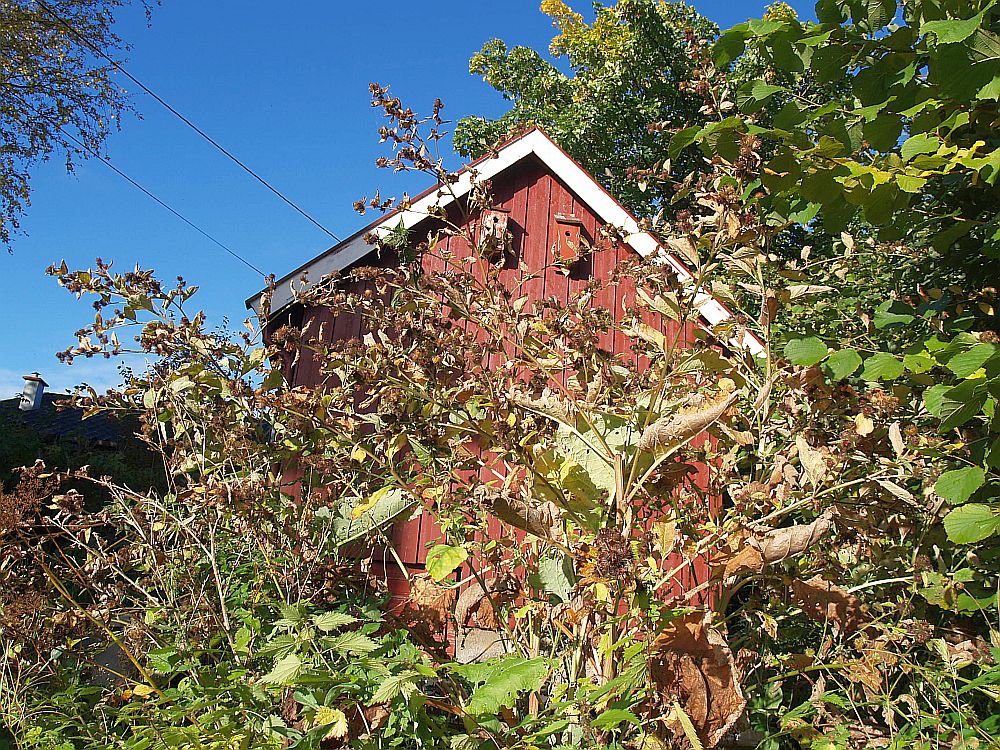
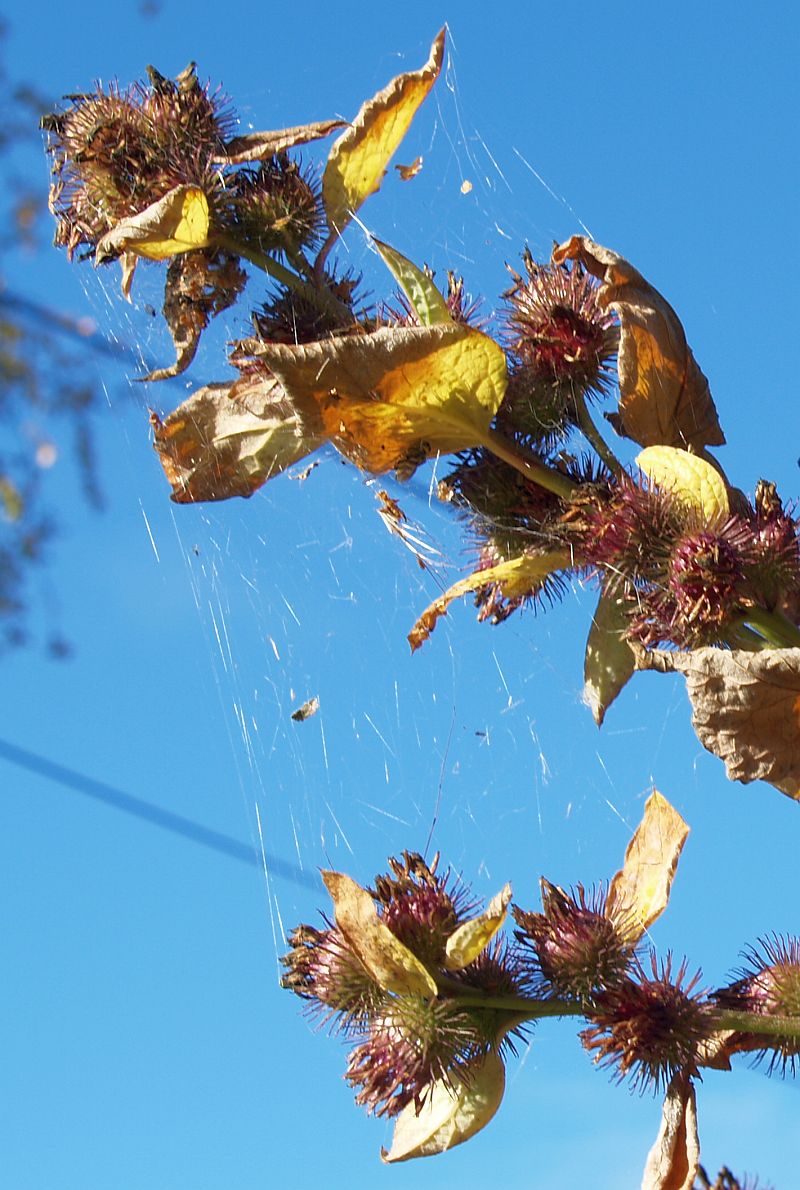
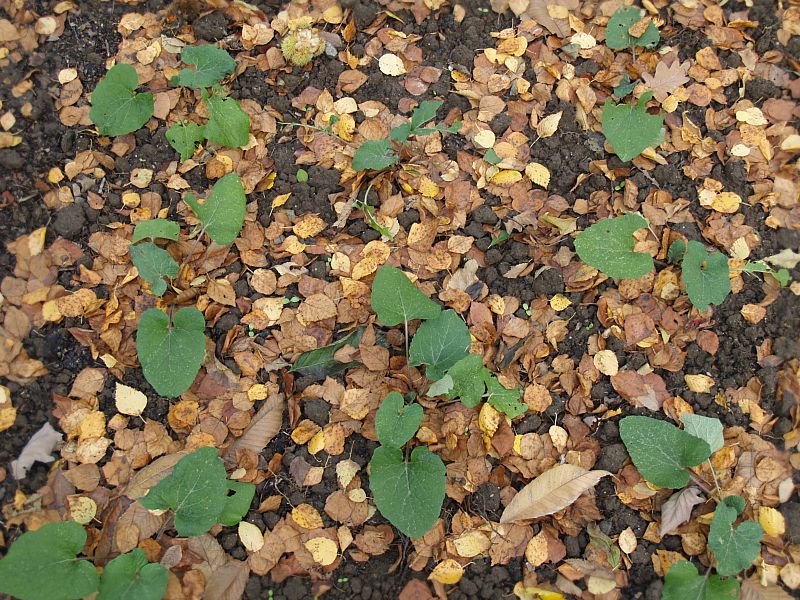
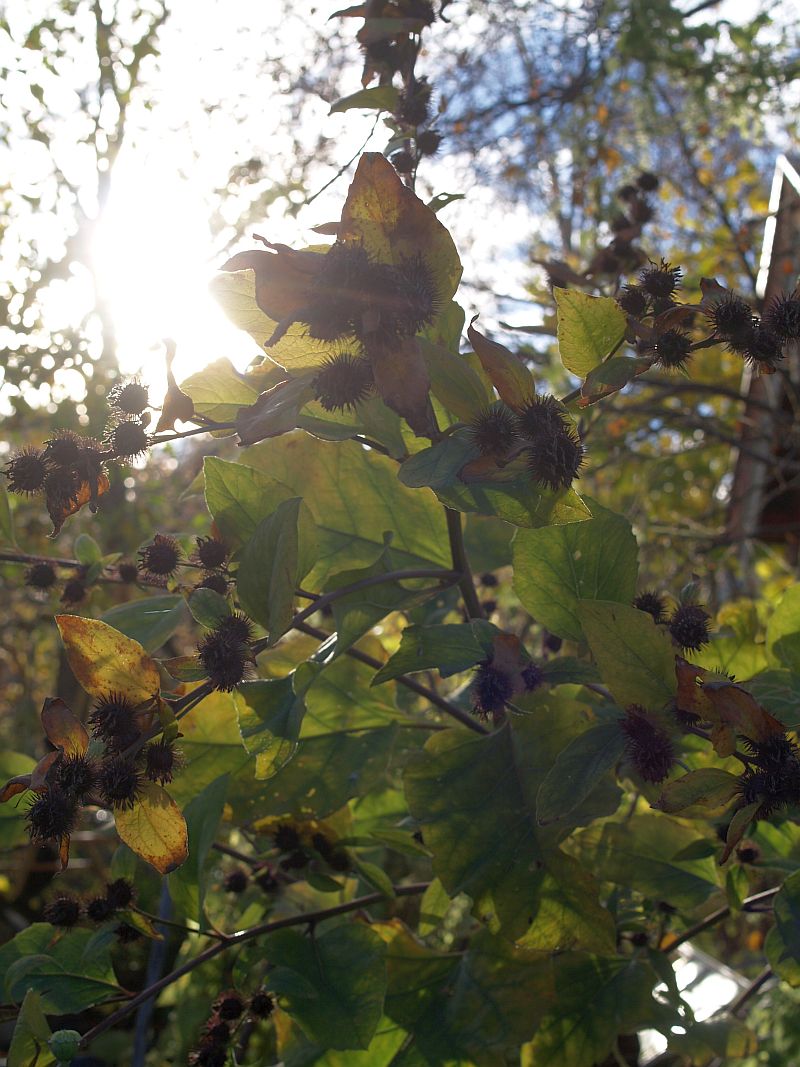
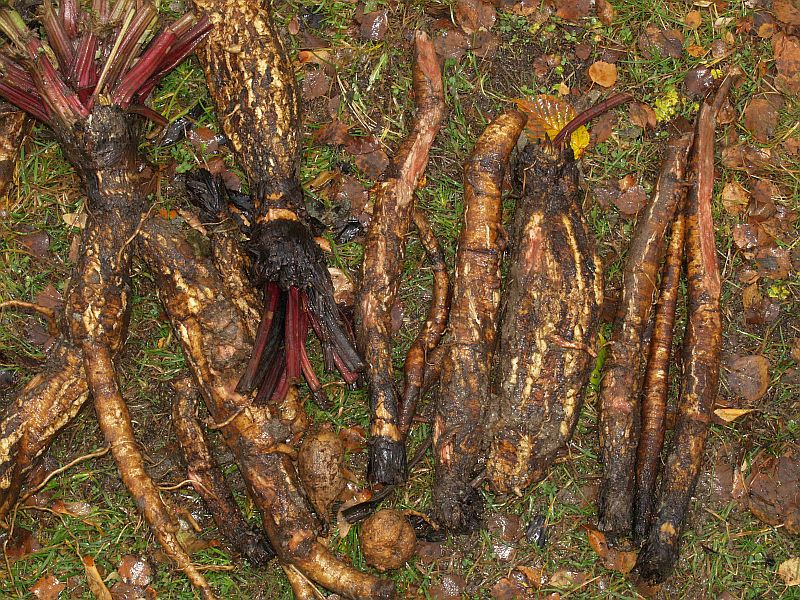
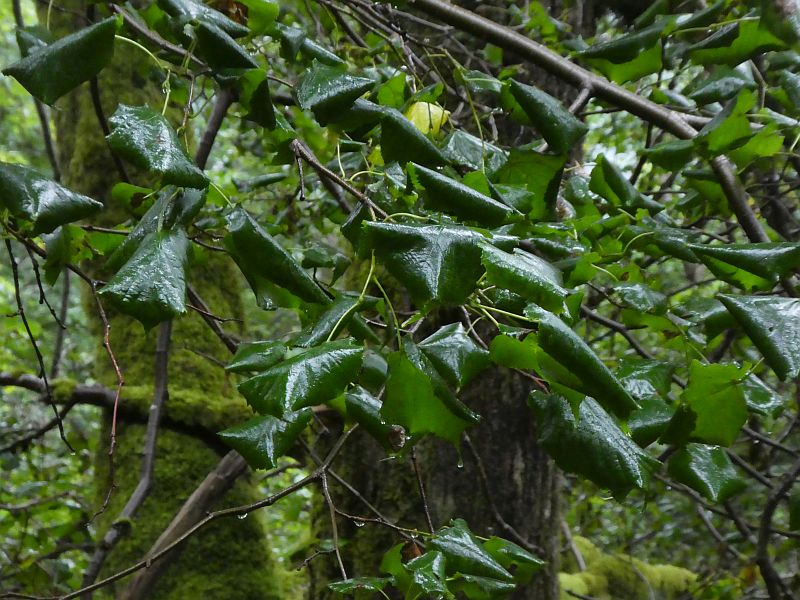
One of my favourite multi-purpose vegetables and one of my first unusual vegetables that I grew in my garden in the 80s was burdock or borre, more specifically various Japanese cultivars of Arctium lappa, hardly used in Europe and North America apart from a few foragers, even though it’s a common wild plant and hardy. Although it is best known as a root vegetable, there are varieties bred for their leaf petioles and the flower stems are really delicious! If you add to this that the seeds are foraged by various birds like goldfinches and greenfinches in winter in addition to being impressive photogenic plants which tolerated shady conditions, no permaculture garden should be without them!
In the album below are pictures I’ve taken over the years, in my garden, in botanical gardens and in the wild. There follows links to various blog posts about burdock!
This album was first published on FB in June 2012, now “regurgitated” here:
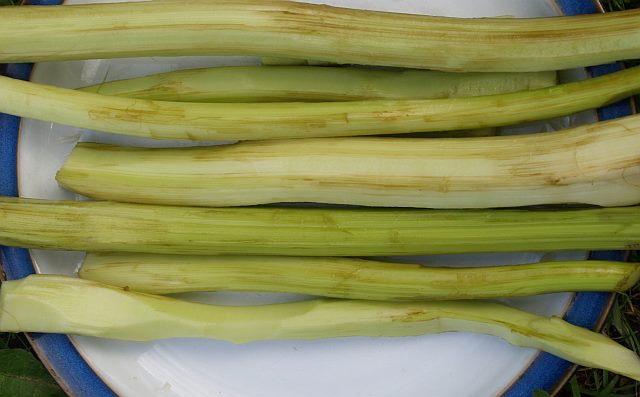
“What for dinner? “Burdock flower stalk, nettle and the onion that nods curry” sounds interesting, so why not. So it was to be… I had completely missed this amazing vegetable and this experiment was prompted by foraging author Leda Meredith waxing eloquent about it a few days ago, so thanks to her. How did I miss it? Well, Cornucopia II doesn’t mention this part being eaten, just the leaf stalks – I’d tried them and they were fiddly to peel and bitter. The flower stalks were easy to prepare and once peeled had an excellent sweet crunchy taste with no bitterness.”
(https://www.facebook.com/media/set/?set=a.10151007155680860.476401.655215859&type=1&l=b287a87f09)
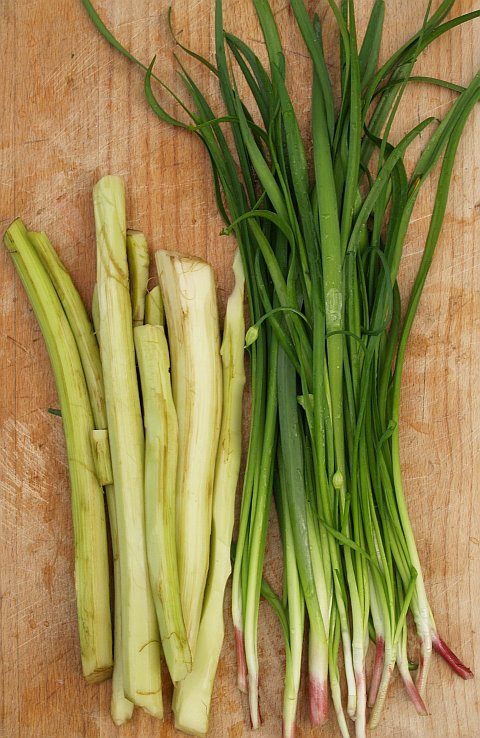
A pile of nettles (brennesle) and Burdock (borre) flower stalks
Burdock (borre) flower stalks
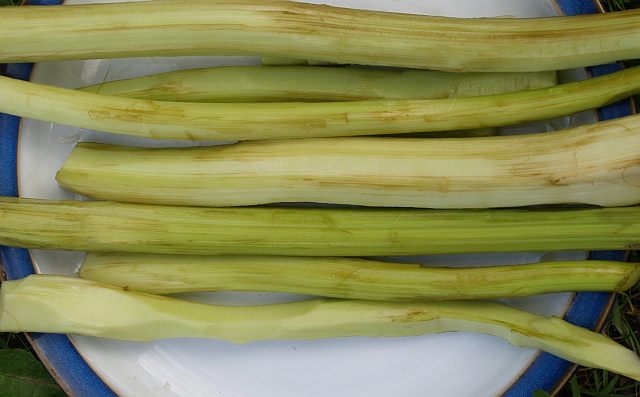
Peeled burdock (borre) flower stalks – the outside layer is fibrous and bitter, but the inside has a pleasant sweet crunchy taste that could be used in salads.
Peeled burdock (borre) flower stalks with Allium cernuum (Nodding Onion/Praerie-løk), easy to grow and excellent cooked and in salads at this time of year with flower buds.
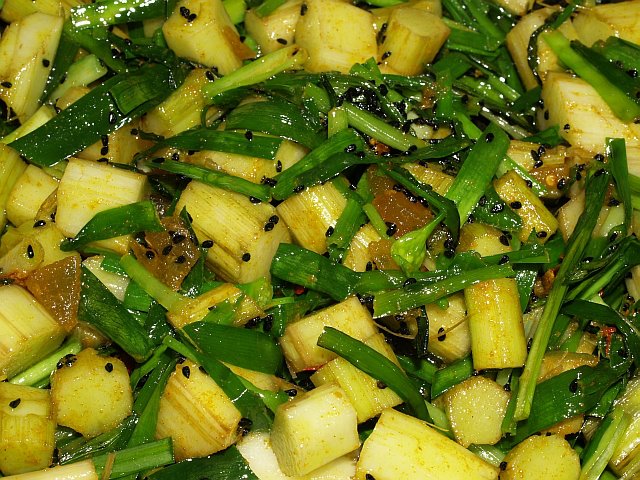
Peeled and chopped burdock (borre) flower stalks are delicious raw – this really must be one of the best vegetables ever!
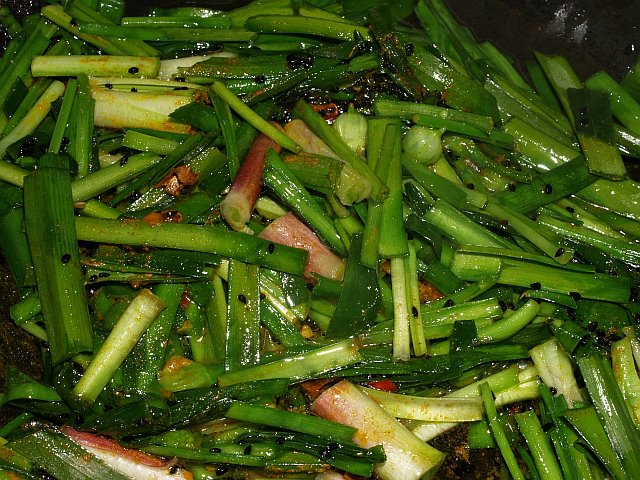
Stir fried Nodding Onion with Indian spices
…add the burdock which maintains an excellent flavour after cooking with spices…
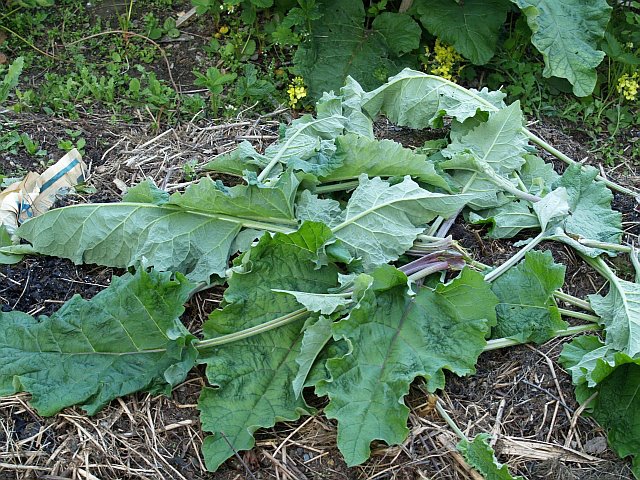
Discarded burdock (borre) leaves are great slug traps – I’d noticed that slugs are very keen on the leaves and they hide underneath the large leaves
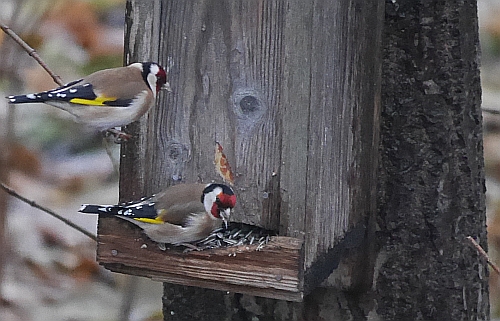
A small number of goldfinches spend their winter holiday in the lowlands around Trondheimsfjord, a very good choice I would say! I’ve never seen them in summer here . I heard the characteristic twittering flight call this morning for the first time this winter and then saw 4 of them this afternoon on burdock (borre) seed heads next to my outhouse (see the two videos below). Goldfinches have long and thin bills allowing them to extract seeds from burdock, other thistles, sunflowers and teasel /kardeborre (Dipsacus), although they have never shown any interest in the teasel I’ve grown for them.
You can read how my growing burdock as a vegetable attracted them to my garden , at that time a rare bird in this area: http://www.edimentals.com/blog/?p=8810
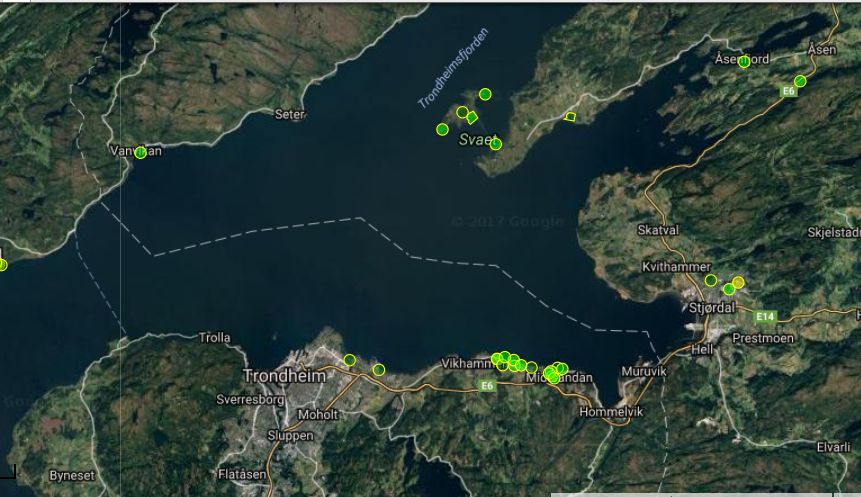
The map below shows the concentration of sightings of flocks of goldfinches in Malvik in my garden and elsewhere nearby from Malvik to Midtsandan, on the southern shores of the fjord (only flocks of more than 20 birds are plotted).
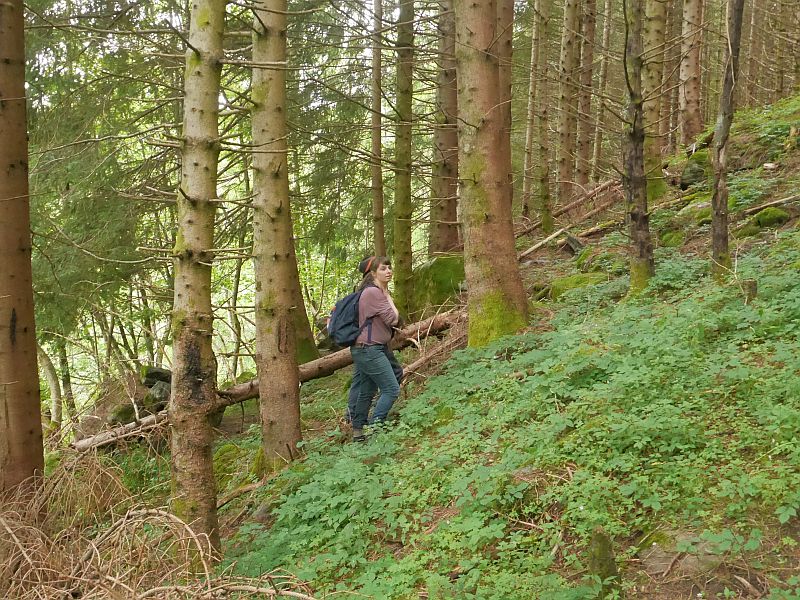
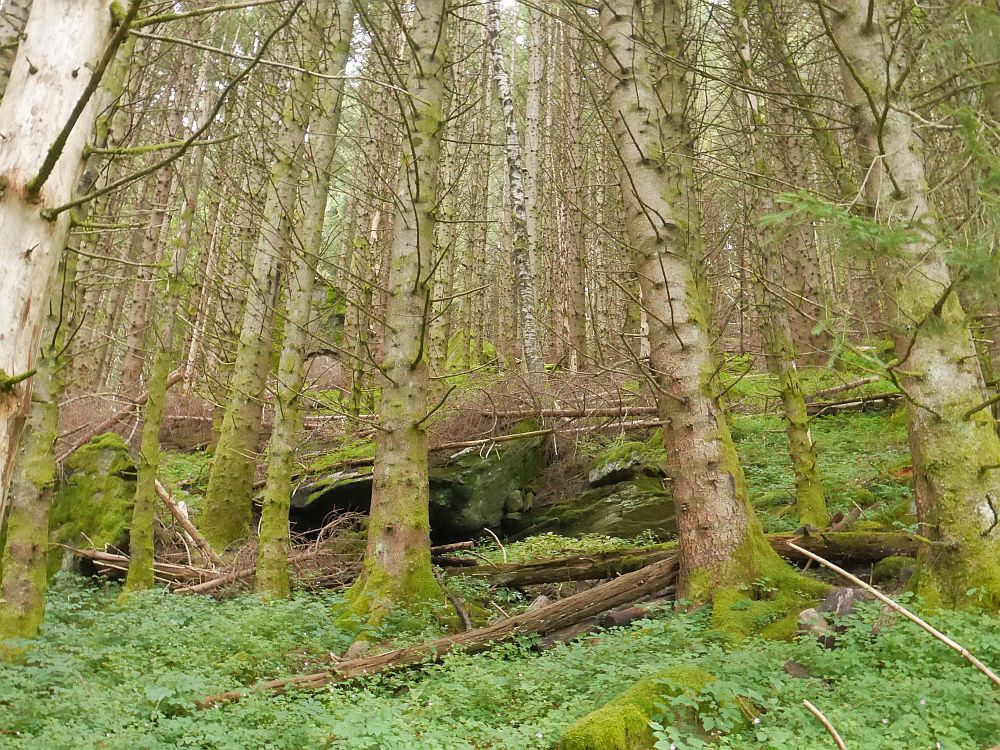
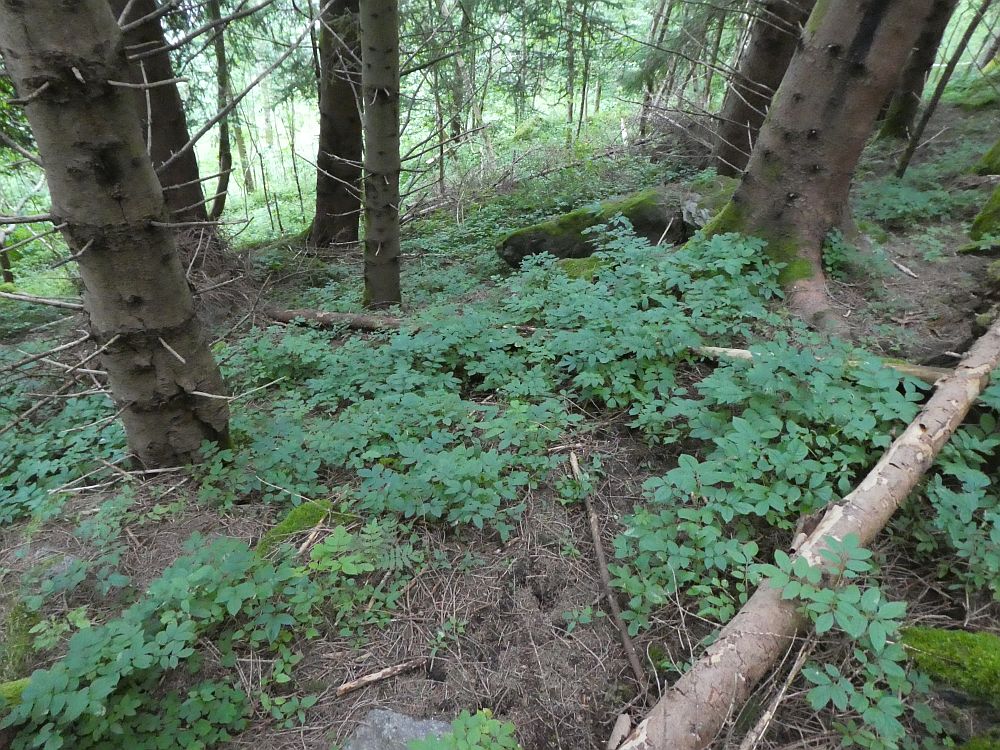
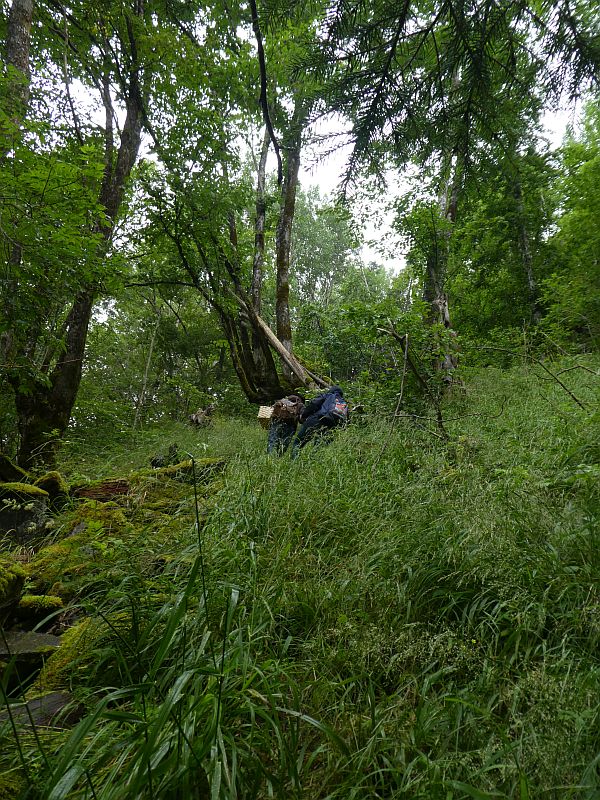
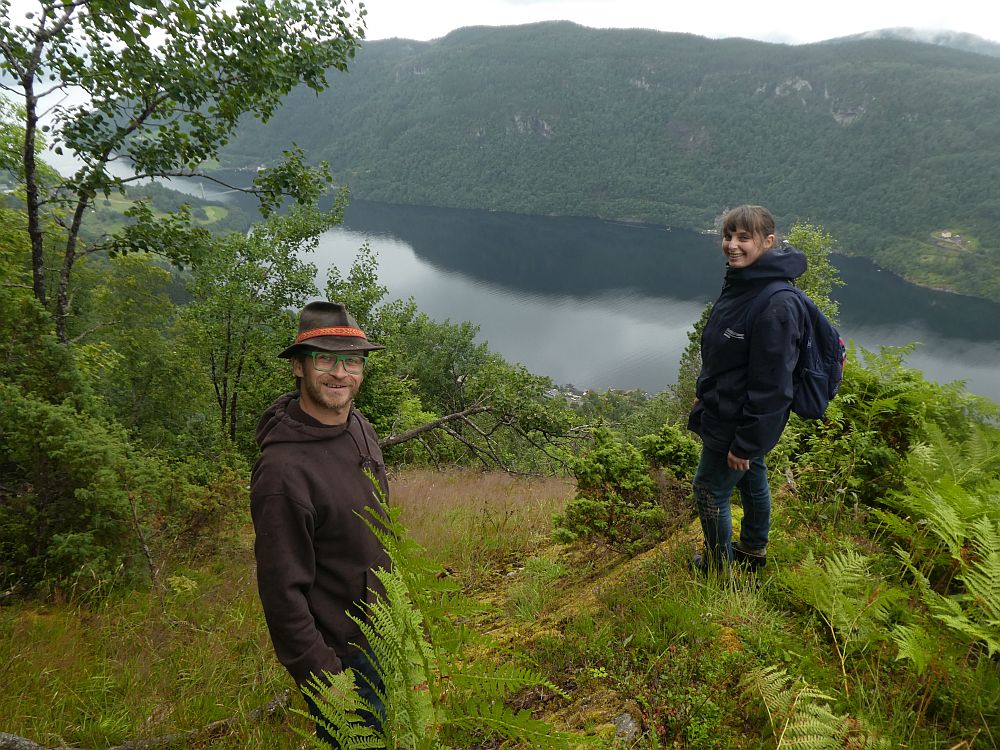
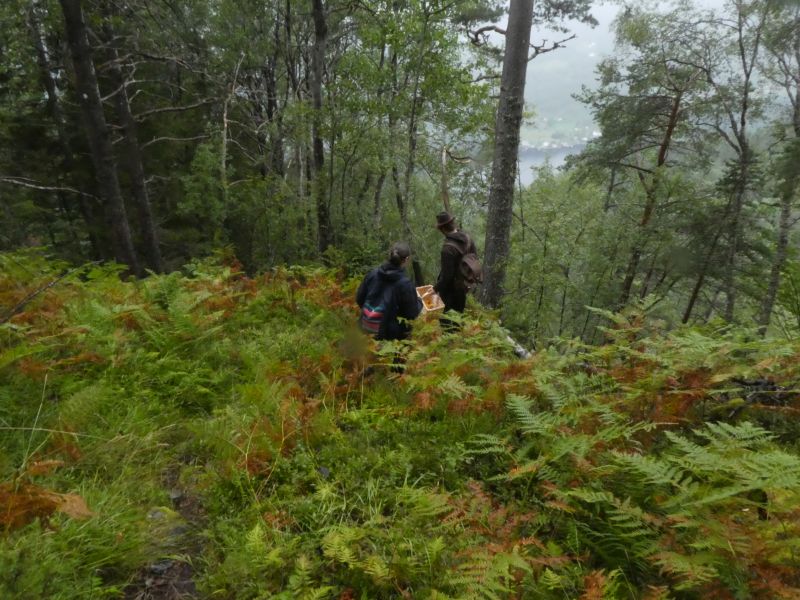
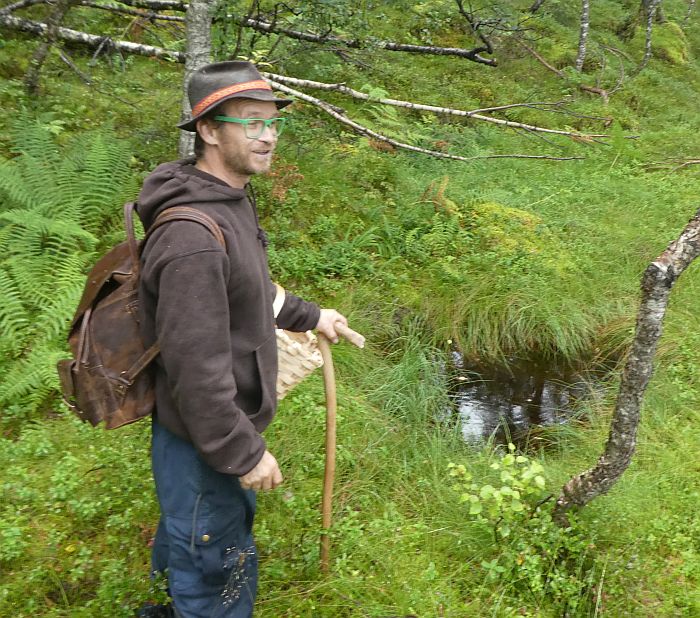
Documentation of yet another amazing day during last week’s Perennialen III in Hardanger!! Pictures taken on a fantastic 6-7 hour round trip from Eirik Lillebøe Wiken and Hege Iren Aasdal Wiken’s house to their shieling (støl or seter in Norwegian). We took our time botanising on the way up, passing through different types of forest on the way up, from alder (or), ash (ask), planted spruce (gran), lime (lind), elm (alm), hazel (hassel), aspen (osp) and birch (bjørk) at the highest levels. Lower down, old apple trees witnessed that these steep slopes had at one time been worked for fruit production, no easy matter….
Eirik and Hege are planning to rejuvenate and replant some of this area and have planted a multispecies forest garden above and below the house, probably one of the most dramatic forest gardens in the world (more later).
A picture of Alvastien Telste taken last year showing the house at the bottom centre and the walk to the ridge at the top and beyond!
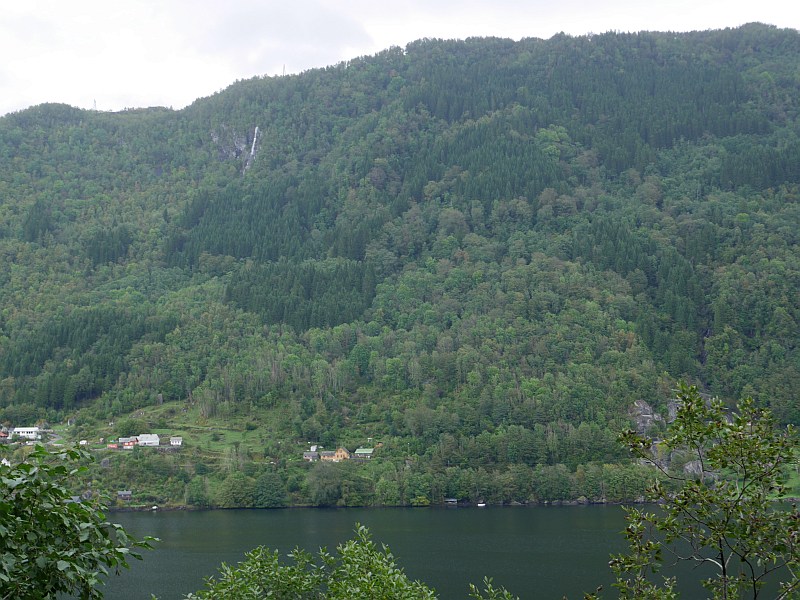
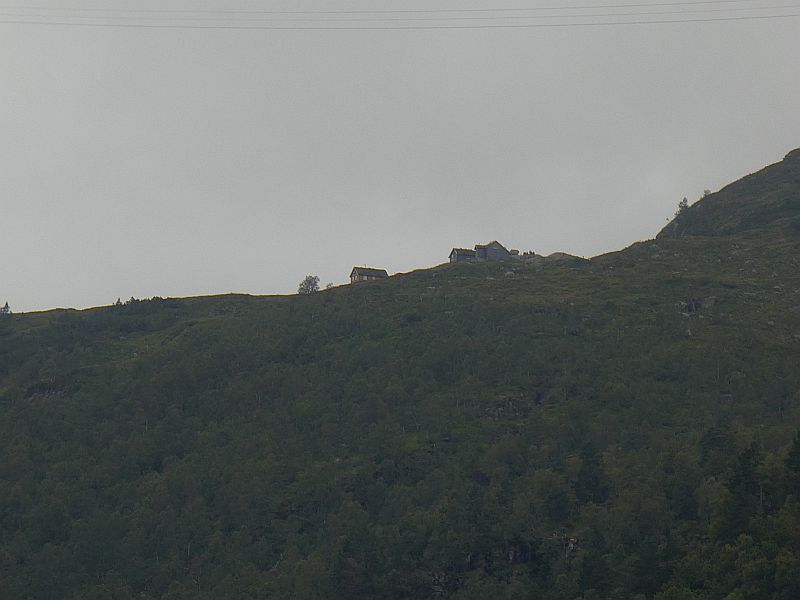
Starting our walk up the mountain, I took this picture of a farm on the other side of the fjord and, next picture, a shieling (seter / støl) is visible on the ridge at the top!
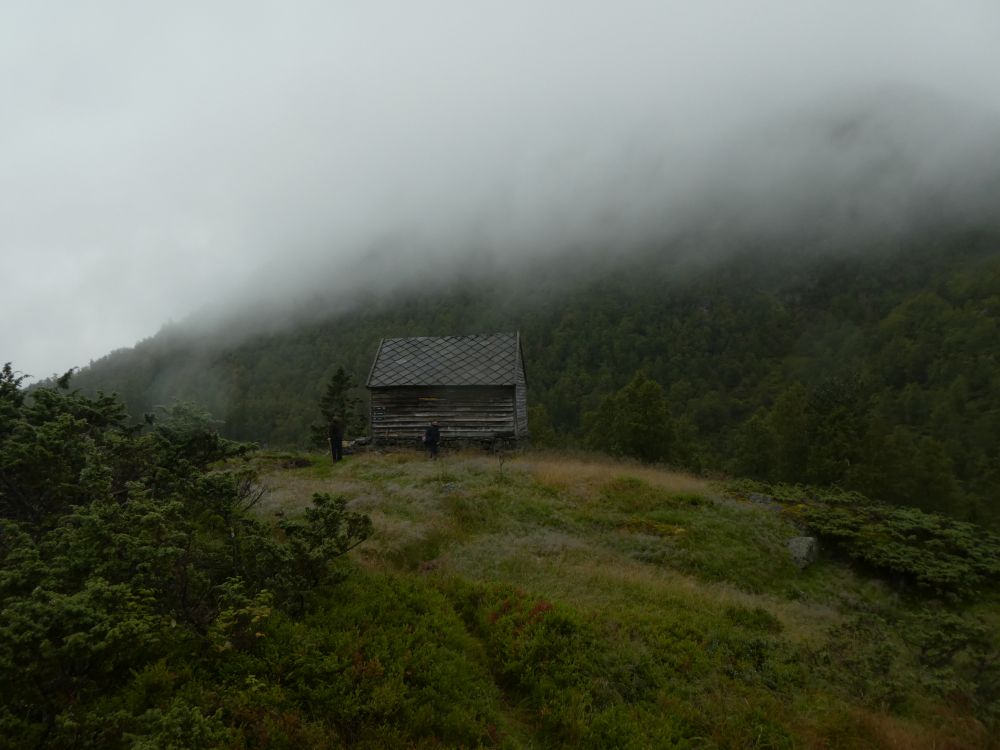
Shieling (seter / støl)
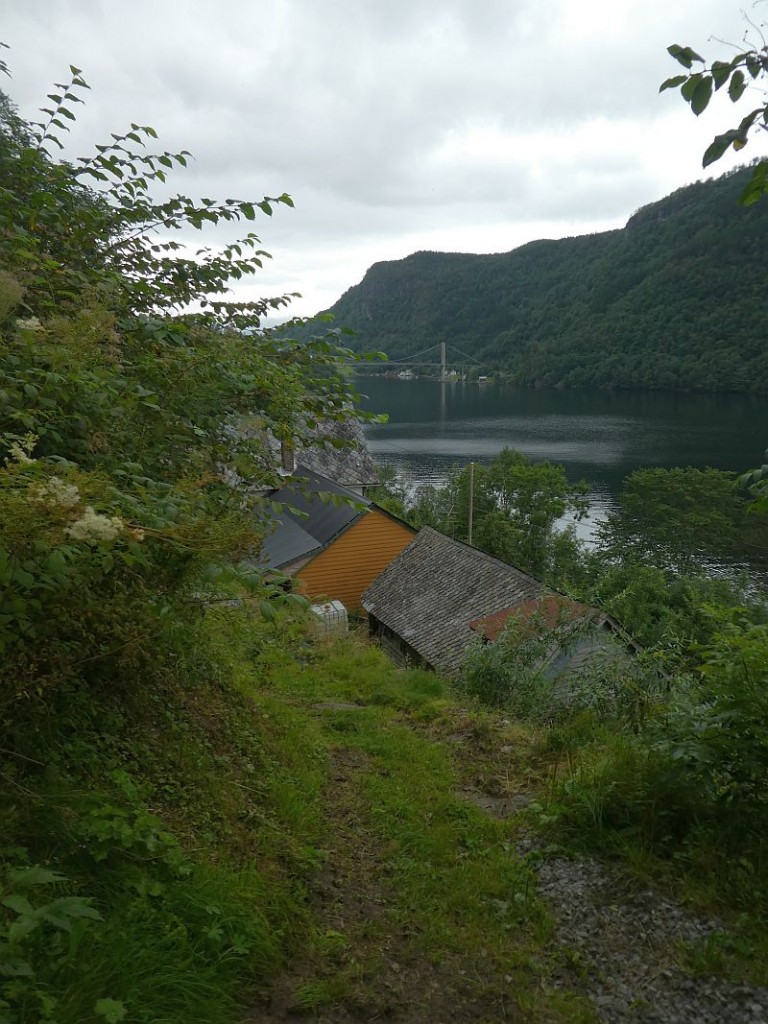
The house at Alvastien Telste
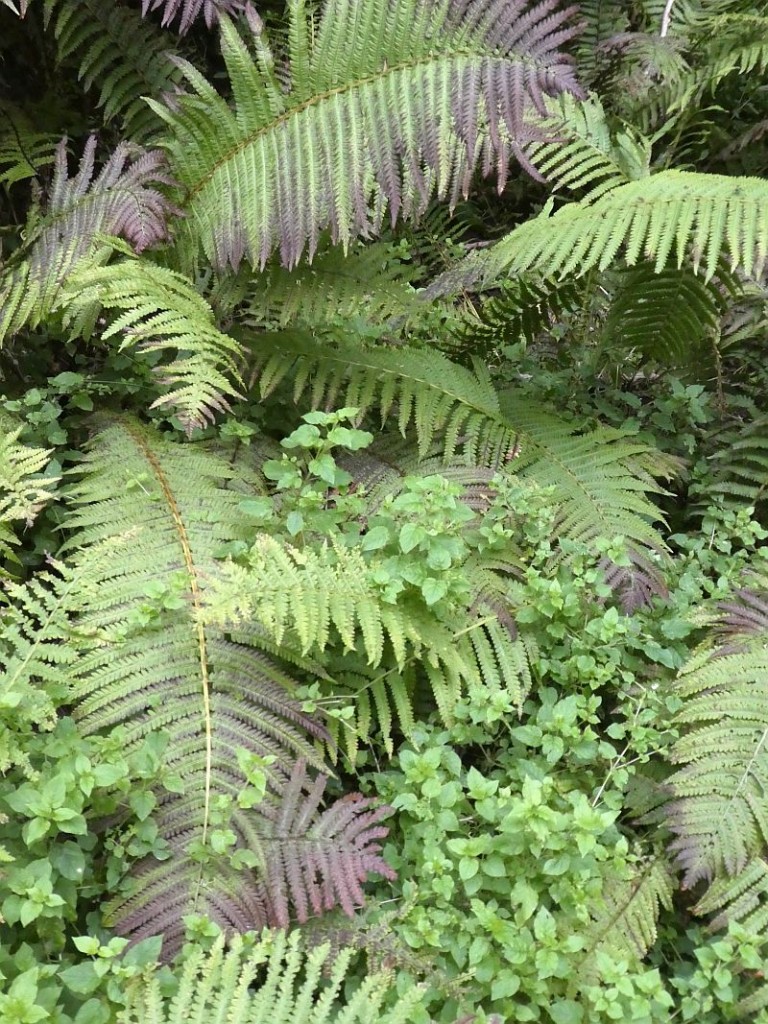
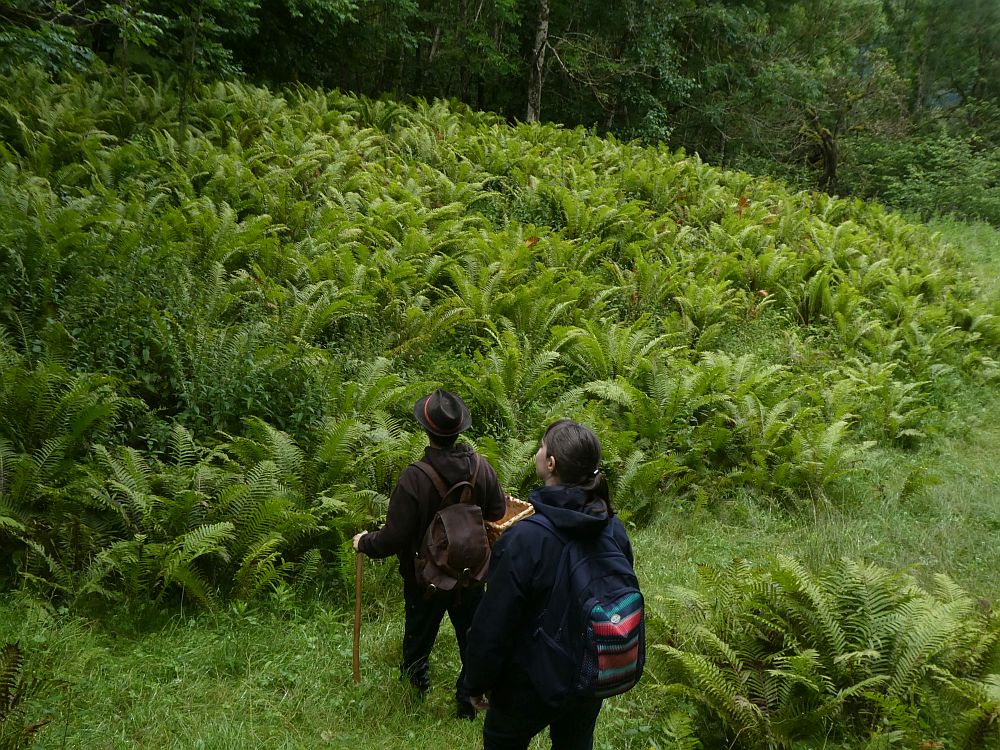
Ostrich fern (strutseving)
Eirik and Hege’s tree house (I stayed there on my first visit – Perennialen I)
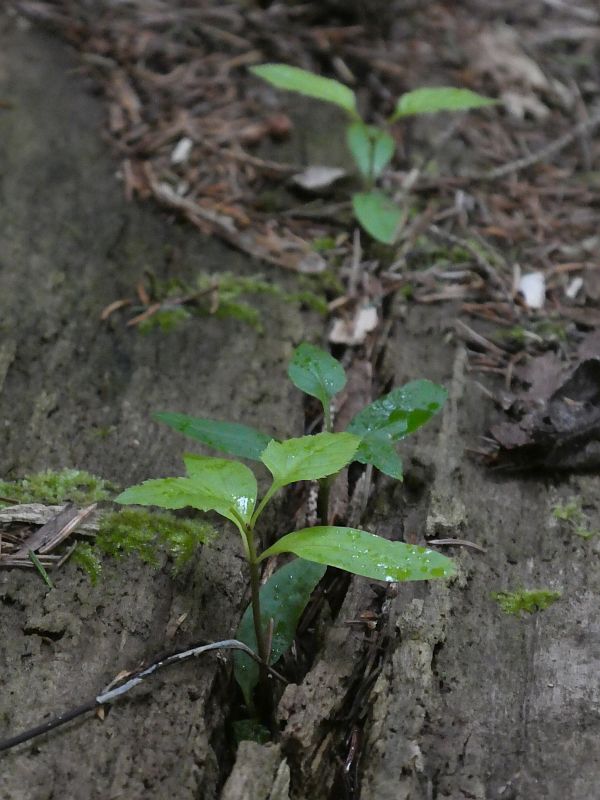
Under the spruce, a ground cover of young ash seedlings…the future of which is uncertain as Ash dieback has arrived here…
Impaties noli-tangere (Touch me not balsam / springfrø) was common on damper soils
Ostrich fern (strutseving) with enchanters nightshade (trollurt)
Cirsium arvense on a small open field halfway up the hill
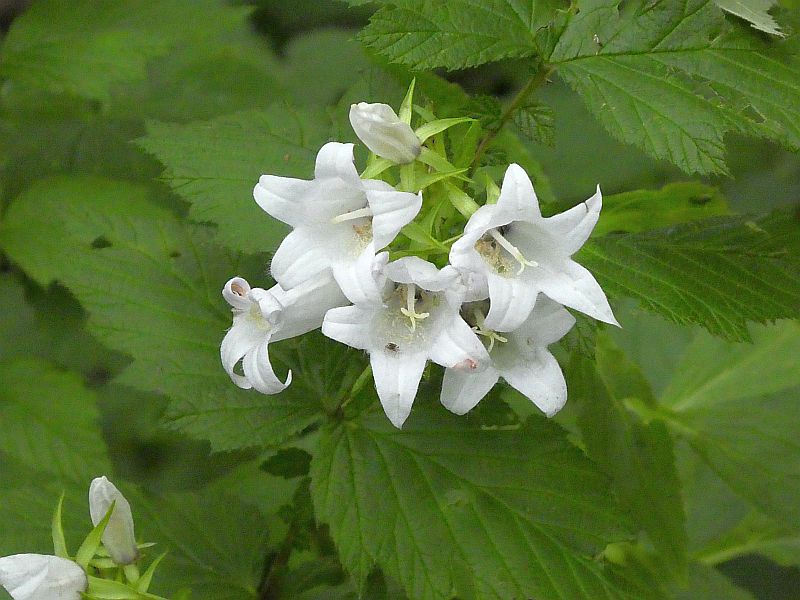
Campanula
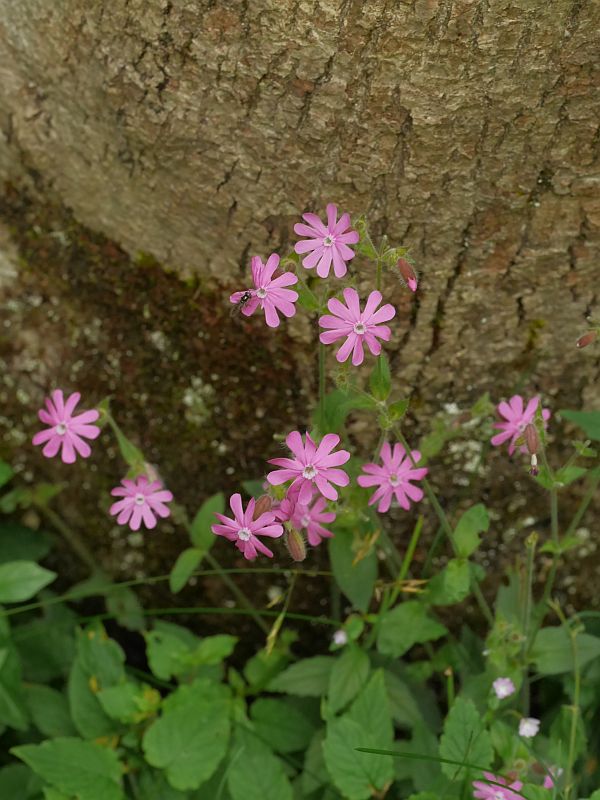
Late flowering Silene dioica (red campion /rød jonsokblom)
Ostrich fern (strutseving)
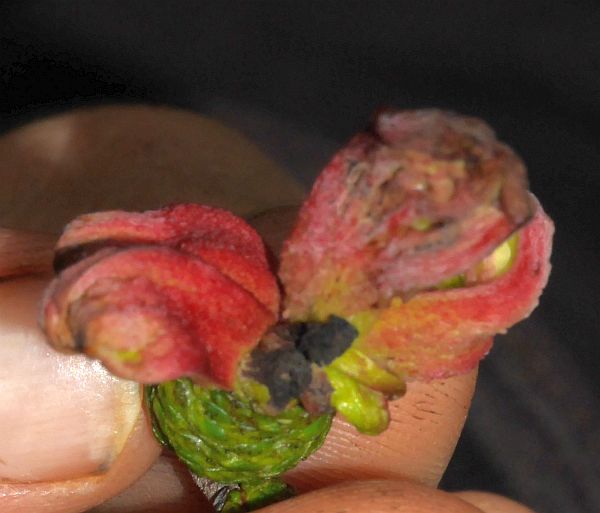
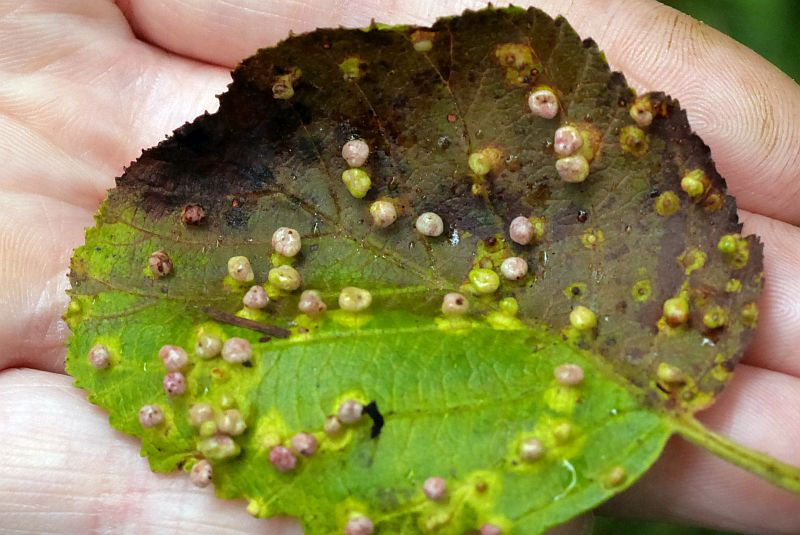
Alder tongue gall (Taphrina alni)
Mycelis muralis
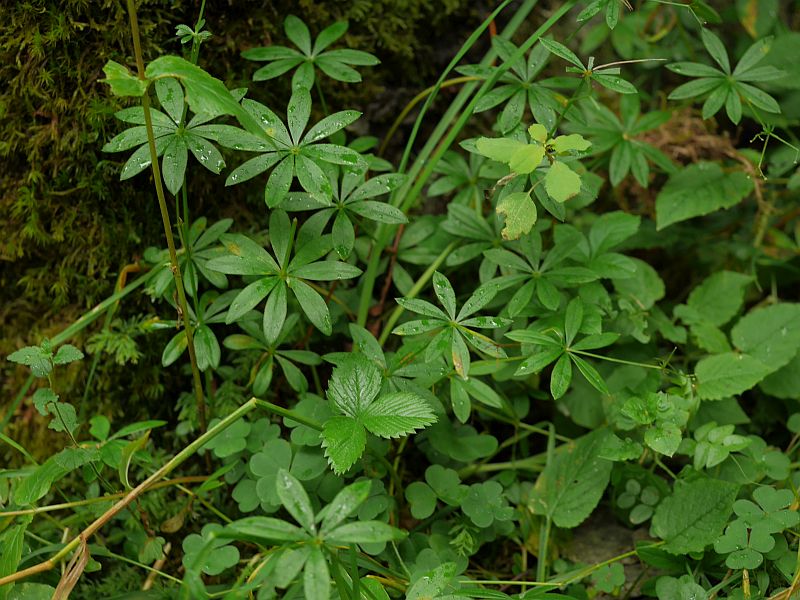
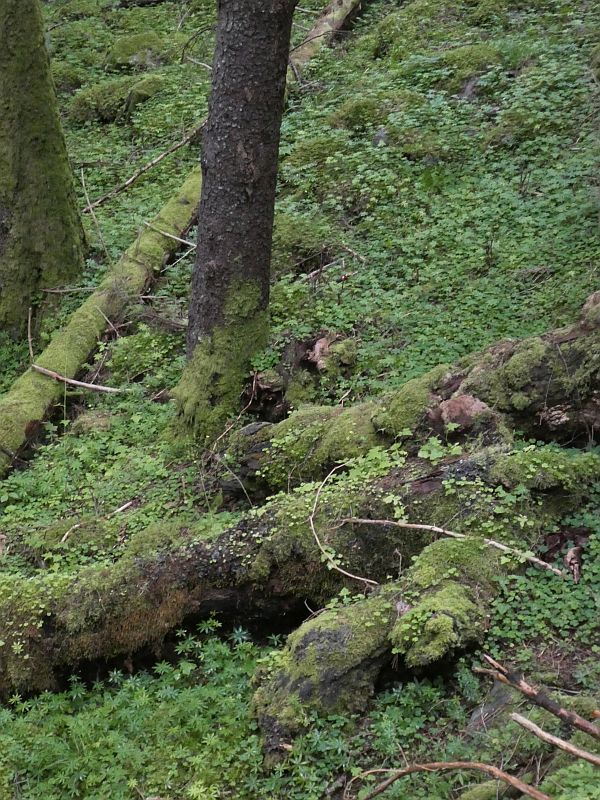
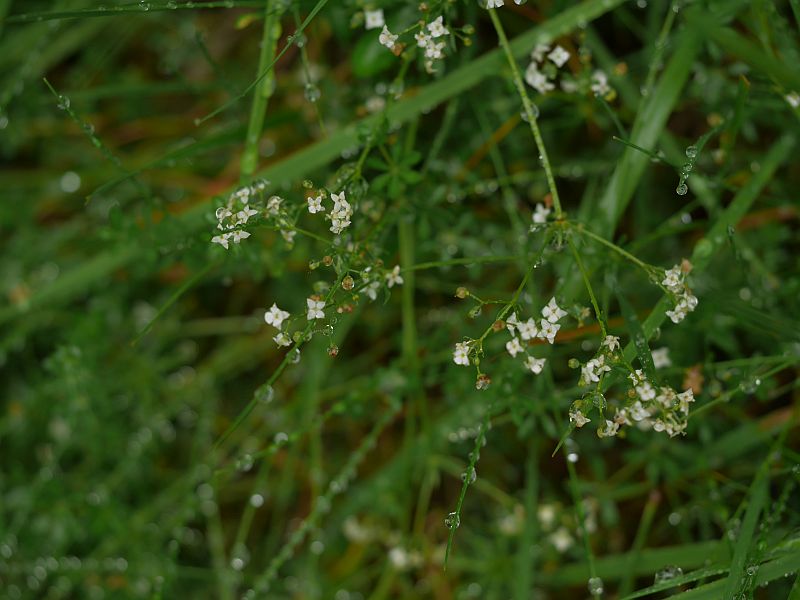
Galium odoratum (woodruff / myske)
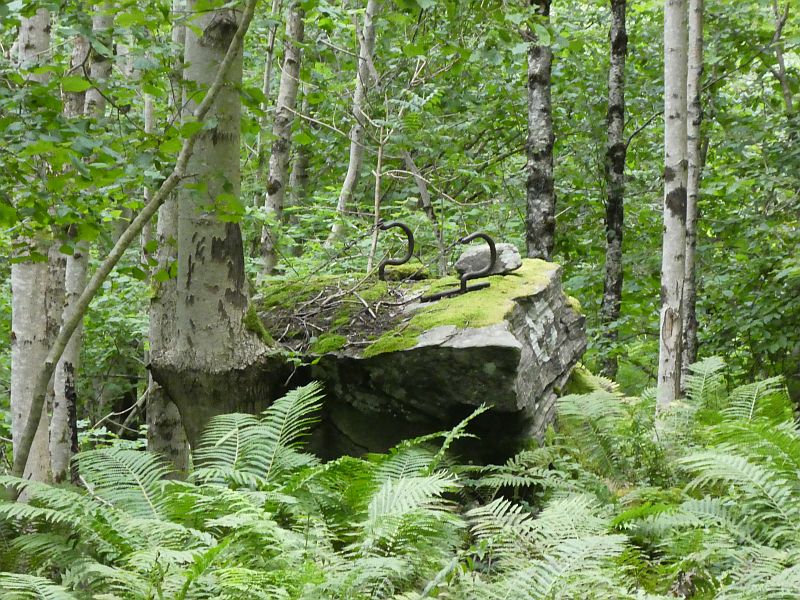
Rock to which an old cable lift was attached
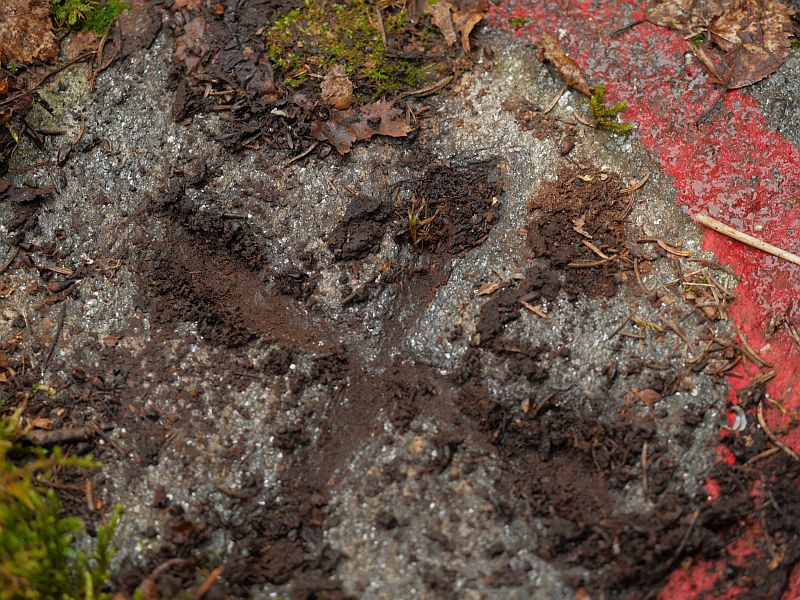
Fox dung with beetle cases?
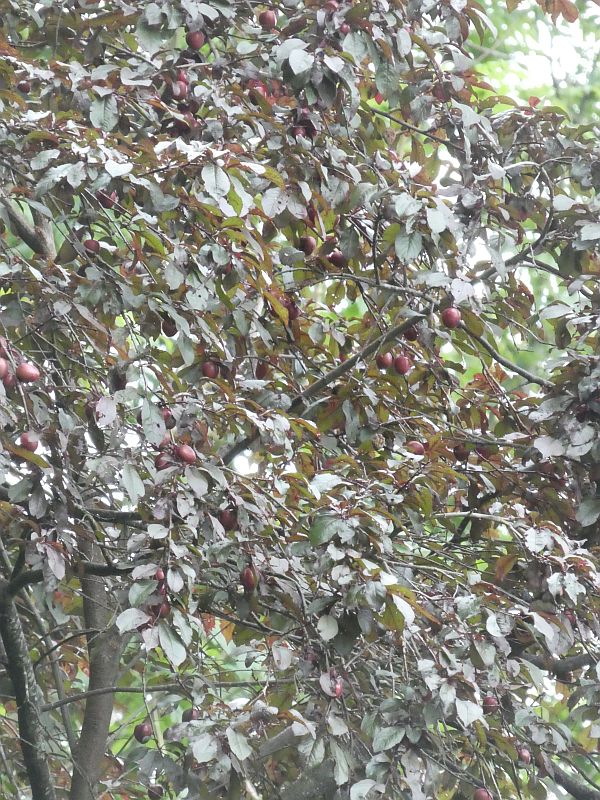
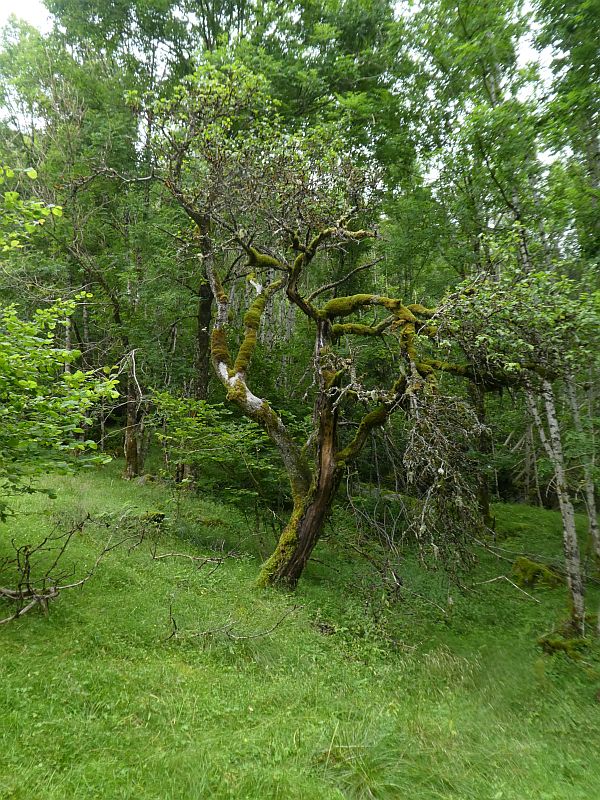
Old apple tree half way up
We saw one small population of hedge garlic (løkurt)
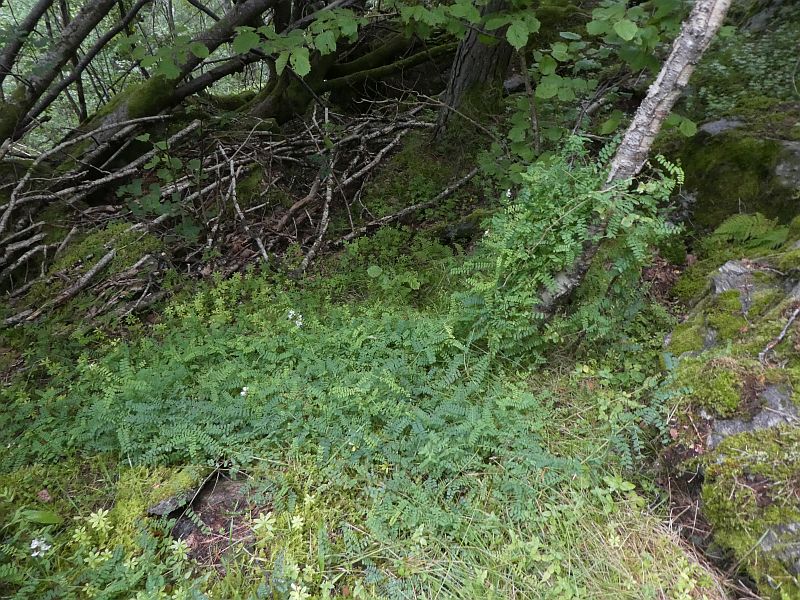
Wood vetch (skogsvikke)
Clambering wood vetch (skogsvikke)
Hazel (hassel)
More ostrich fern (strutseving)
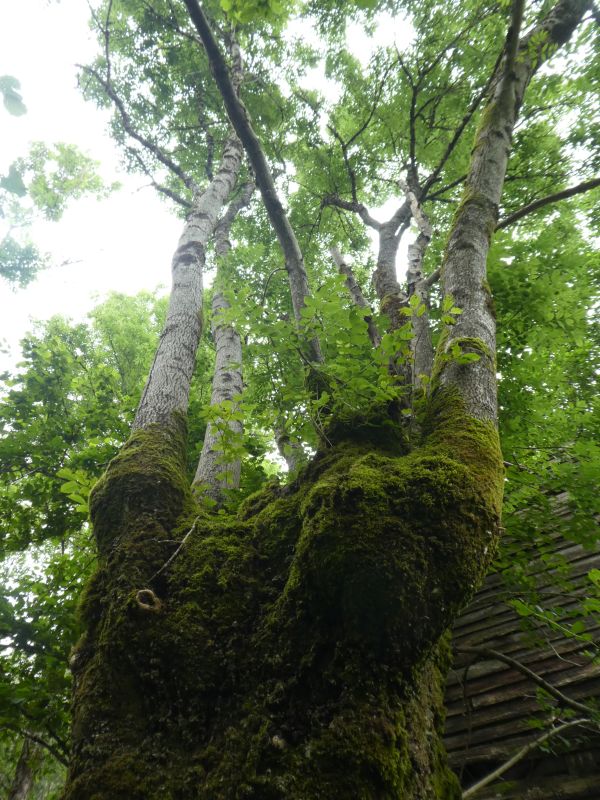
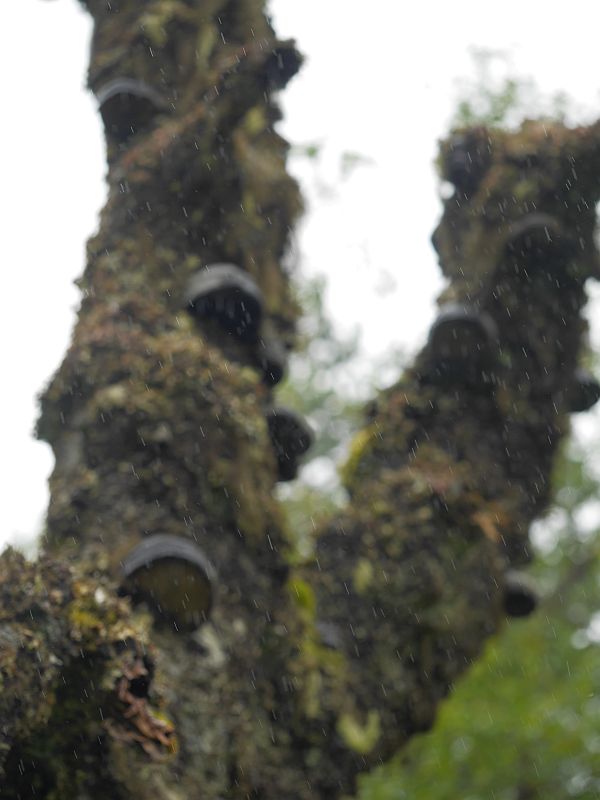
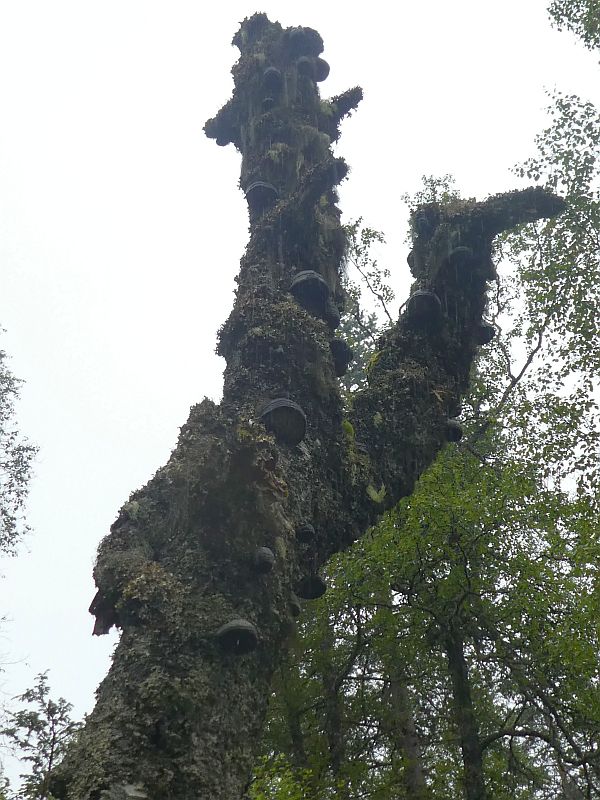
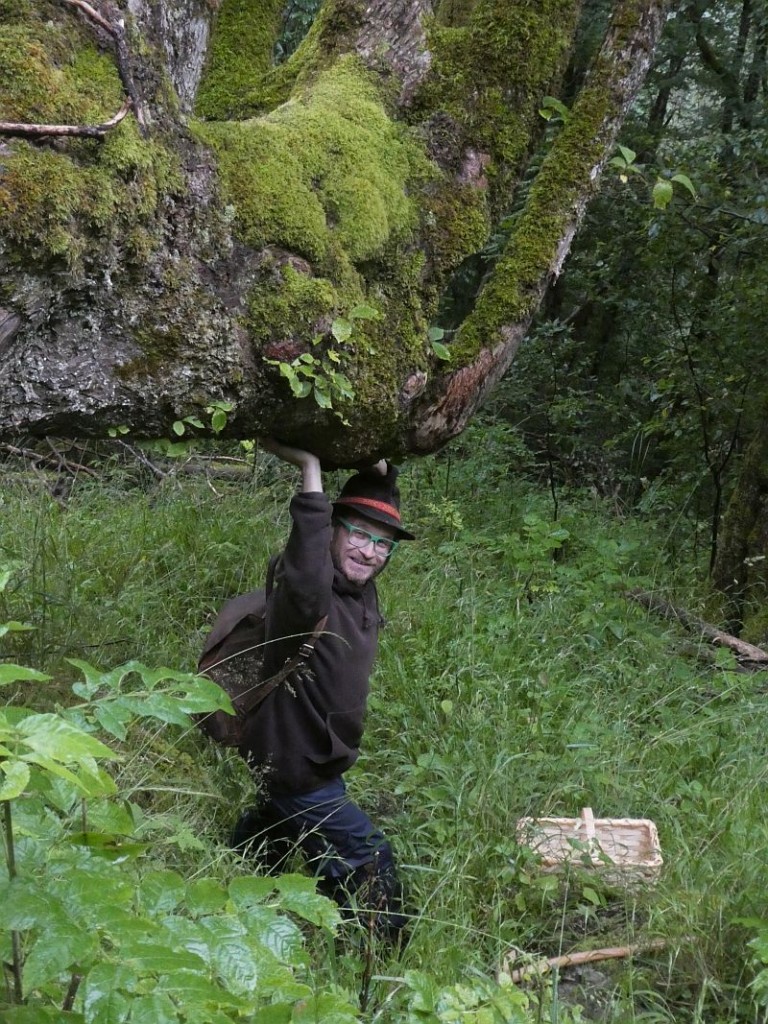
There were many amazing trees, many of which were pollarded (for animal feed in the past)
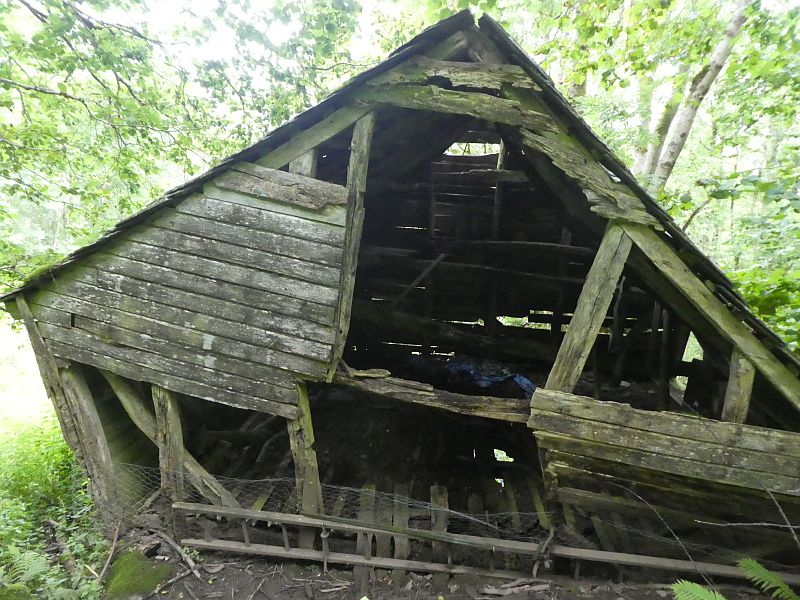
Old barn
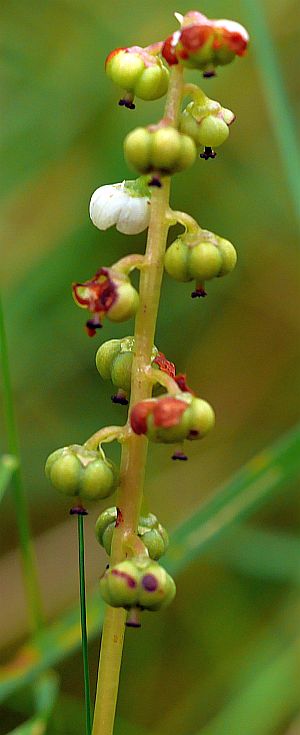
Pyrola spp.
Woodruff (myske)
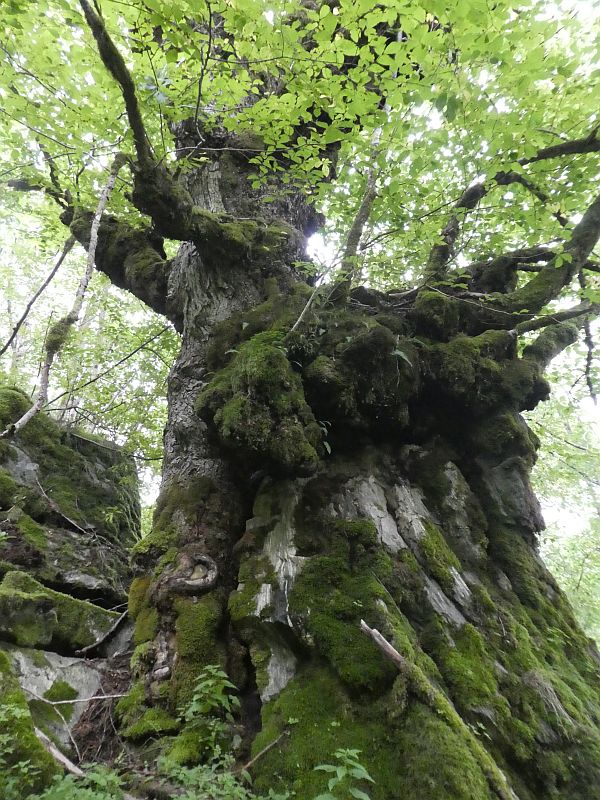
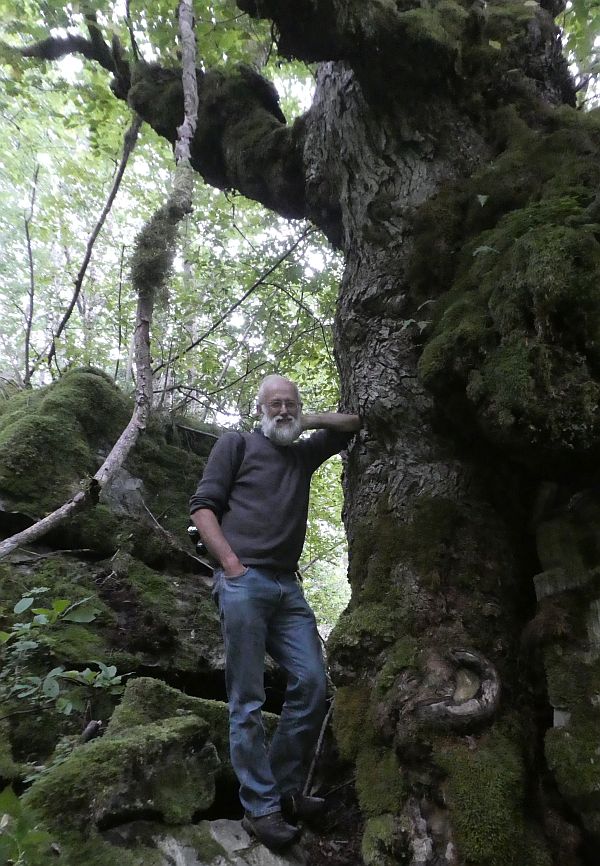
The Troll Elm!
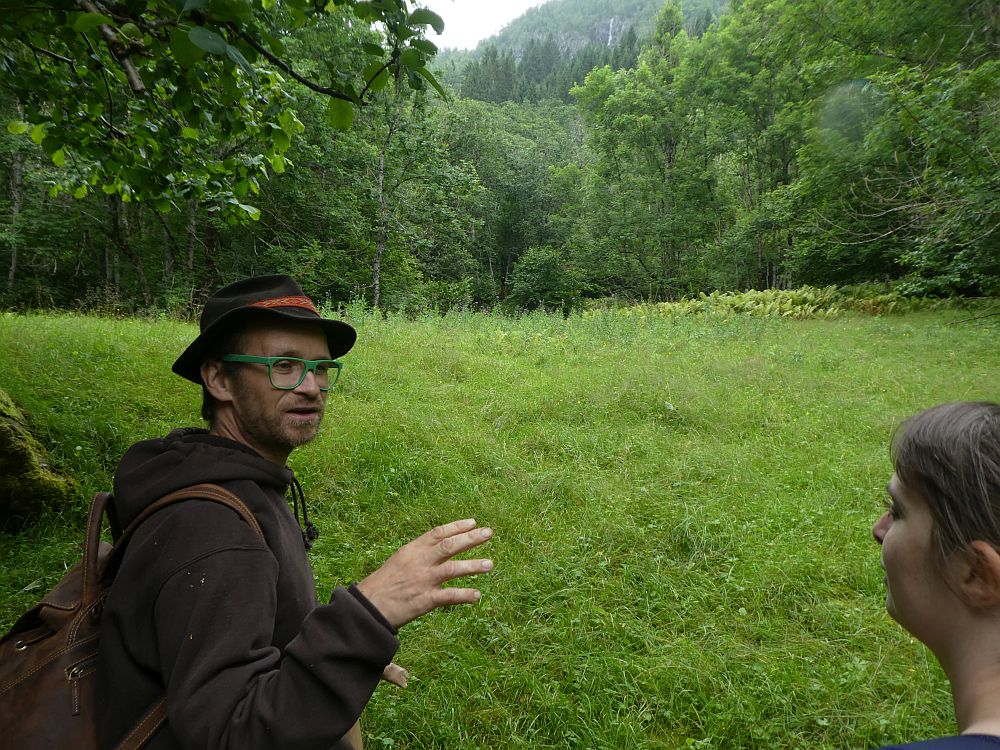
Eirik showed us an old cross on the rock marking the edge of his property
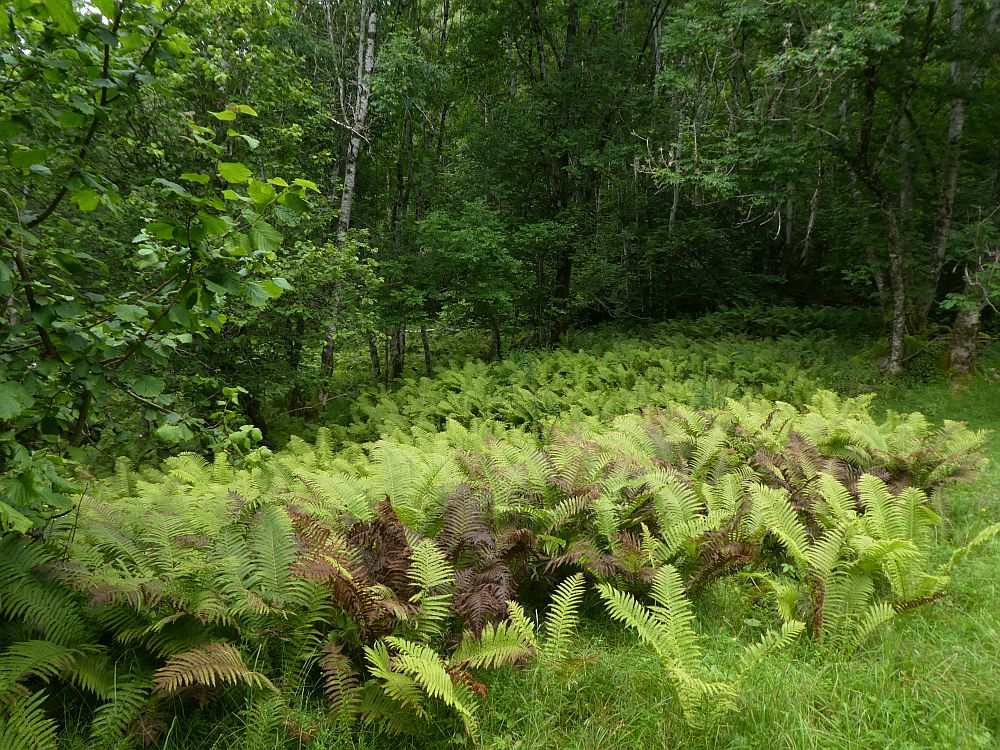
This ostrich fern had over 30 fertile fronds in the centre!!
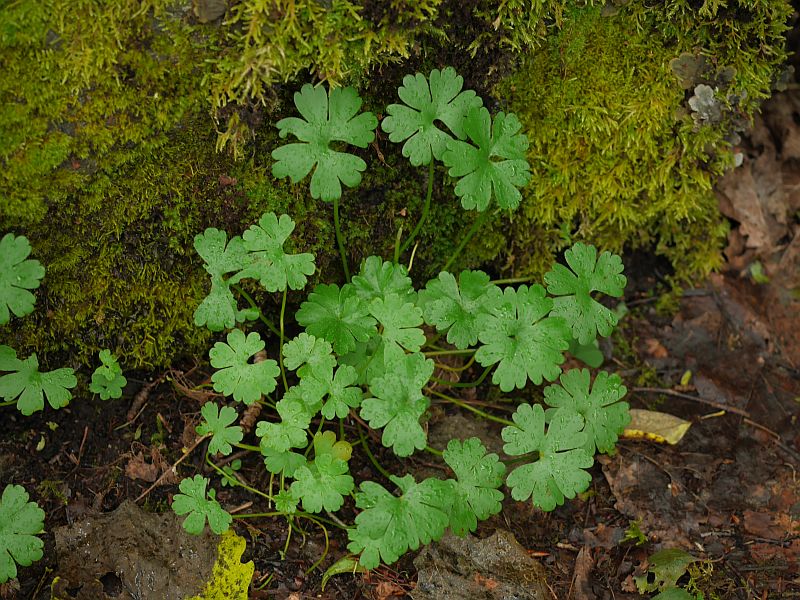
I was surpised to find an area of Geranium lucidum
Woodruff (myske)
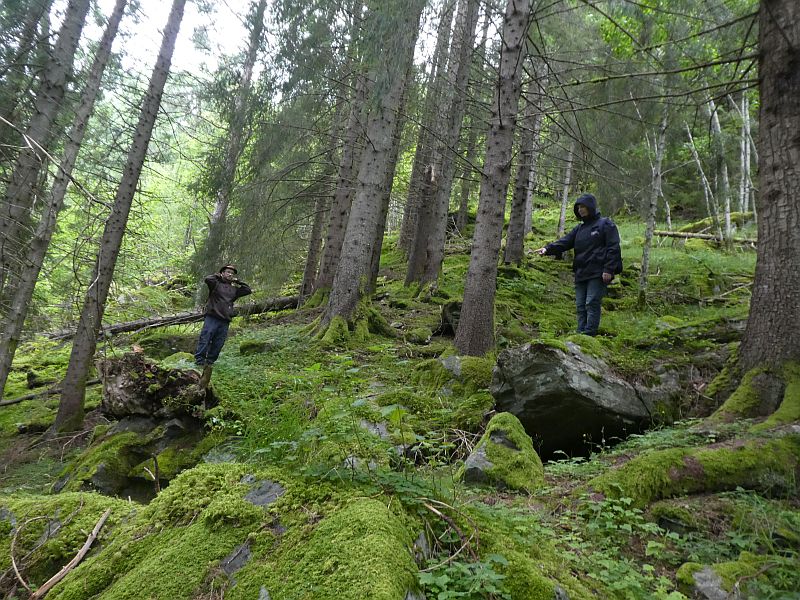
Steep slopes
Galium spp.
…the rain came down near the top
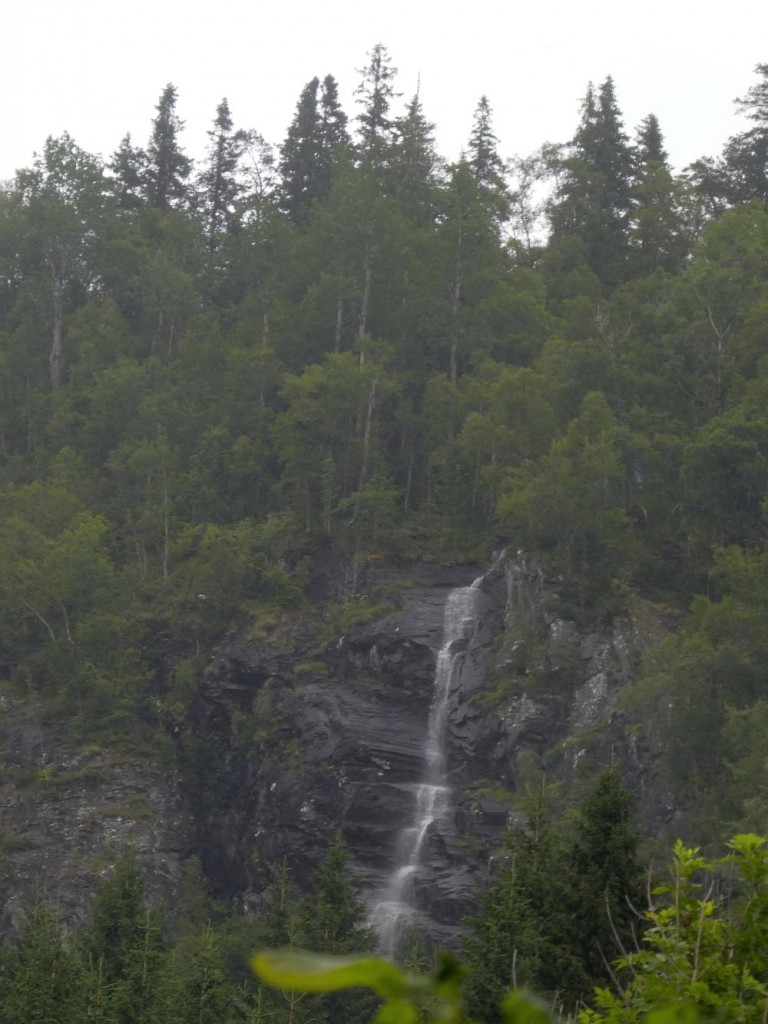
Fantastic views of the fjord on the way up!
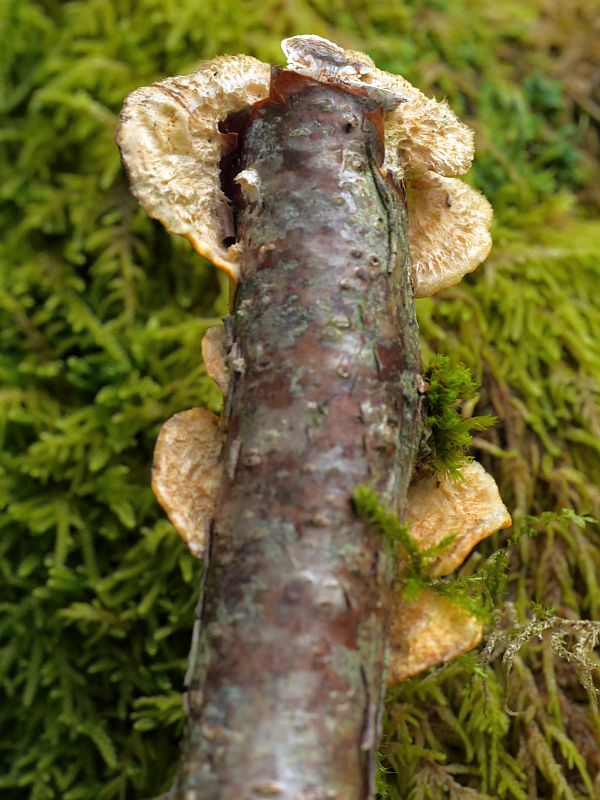
Frosted bracken?
Rut pool used by red deer stags!
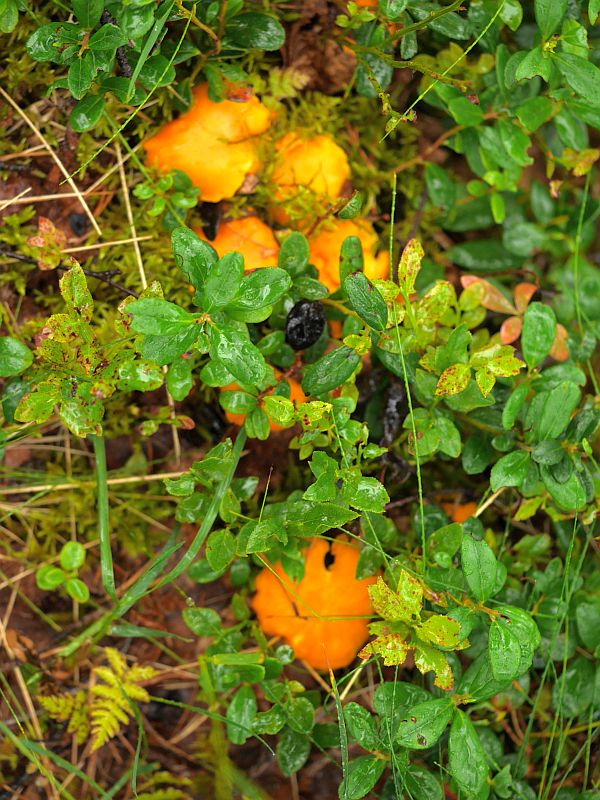
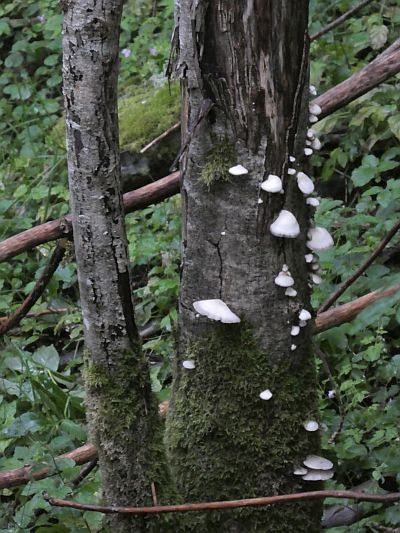
There weren’t many edible fungi apart from one good patch of chantarelles in the birch zone
Picking chantarelles
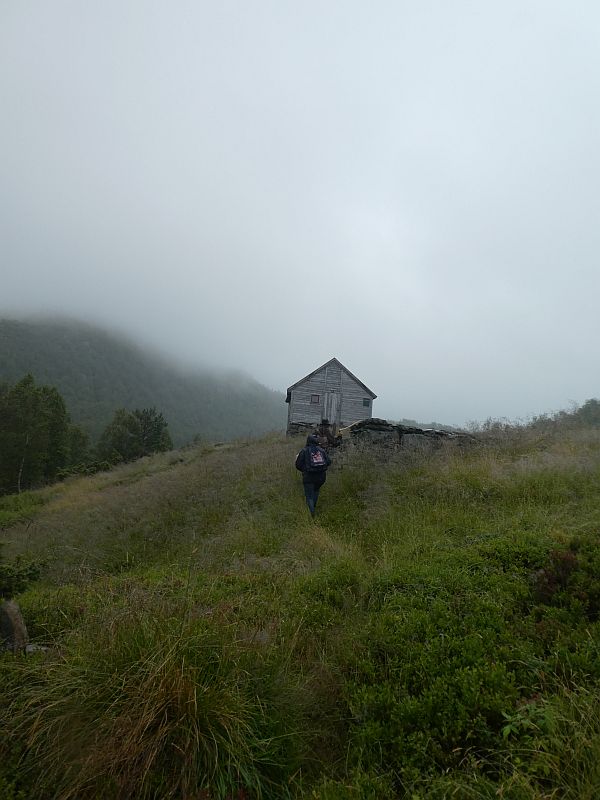
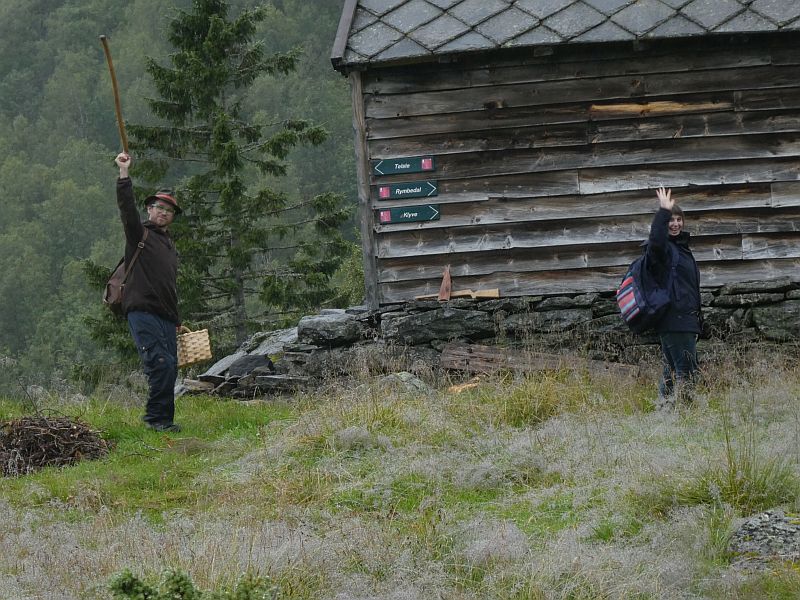
…and, finally, after 4 hours we reached the hut!
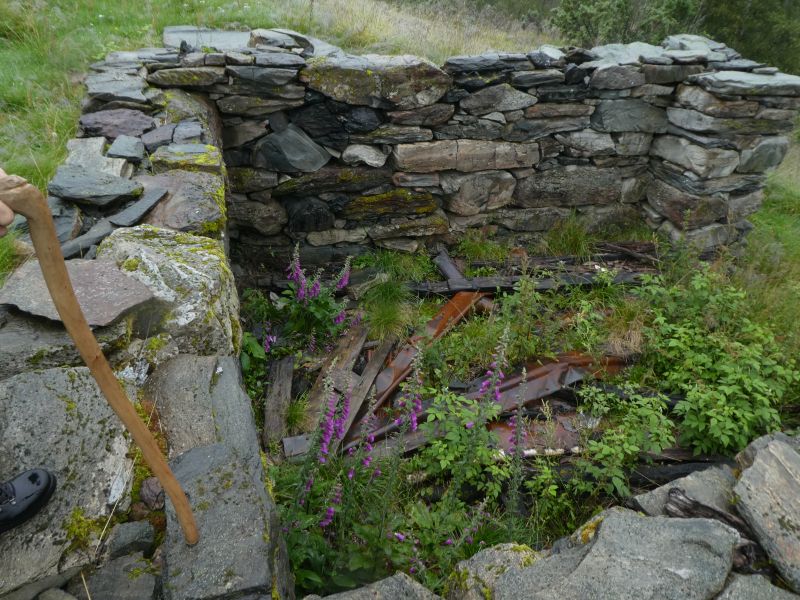
Foxglove (revebjelle) within the protection of this old wall
The Goldfinches (stillits) are back. They are winter visitors here and, as far as I know, it isn’t known where these birds breed, perhaps in the Baltic states /Finland, moving westwards to overwinter in our warmer weather!
These beautiful birds started appearing in my garden some 15 years ago as I grew and saved seed of vegetable burdock (borre) or Arctium lappa, their main food here in winter. At that time my garden was the best place to see them and I had several visits from bird photographers and birdwatchers to see them. It must be a bad year for burdock (there’s not much in my garden) as they’ve gone straight for the bird feeder, something that doesn’t usually happen until later in the winter.
Part of a flock of 29 goldfinches in the garden today!
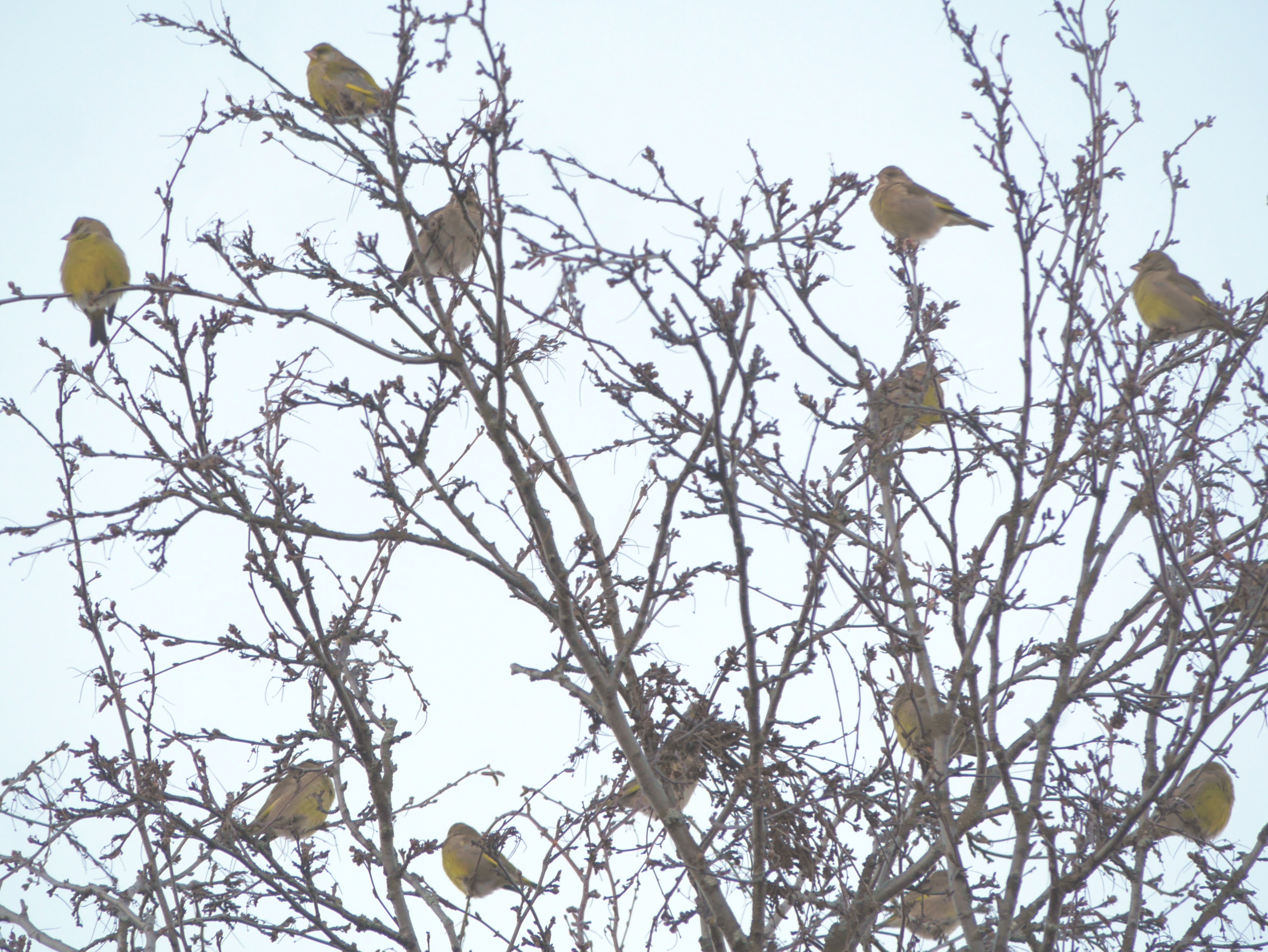
Greenfinches / grønnfink are the commonest finches in the winter here . They find both natural food (seed of burdock / borre and rosa spp., both wild and planted) and bird seed I put out. A flock of about 30 was in the garden today.
Perennial vegetables, Edimentals (plants that are edible and ornamental) and other goings on in The Edible Garden