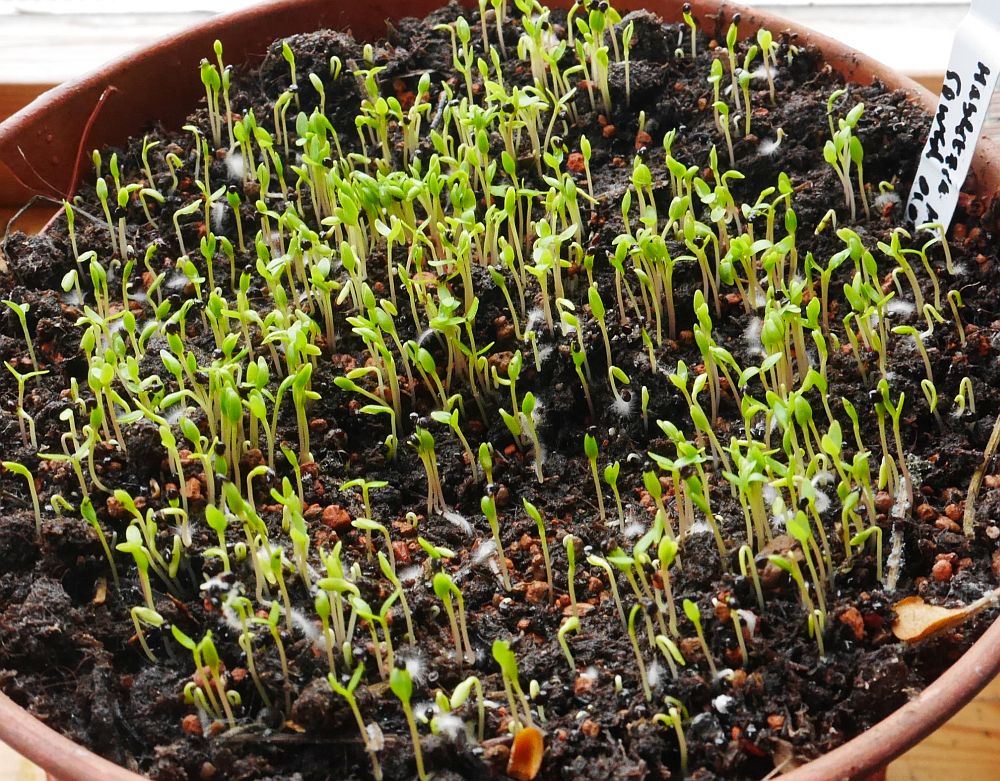
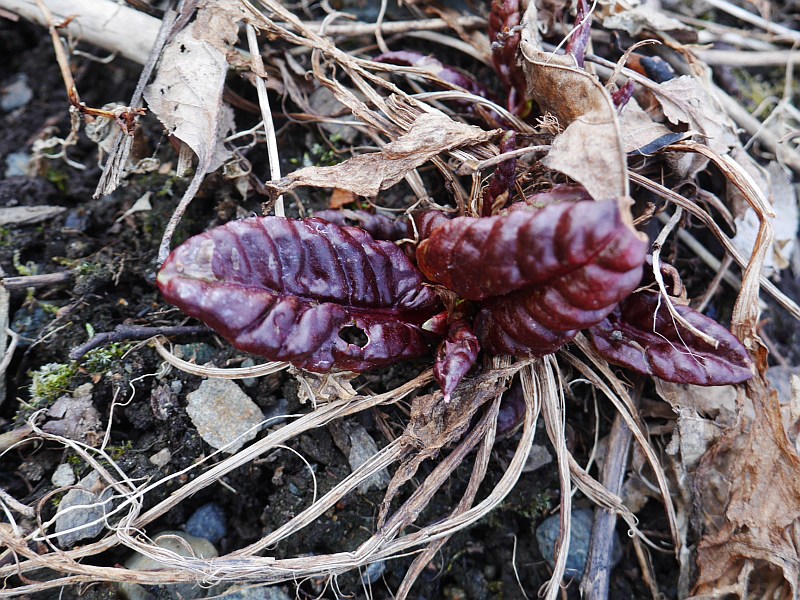
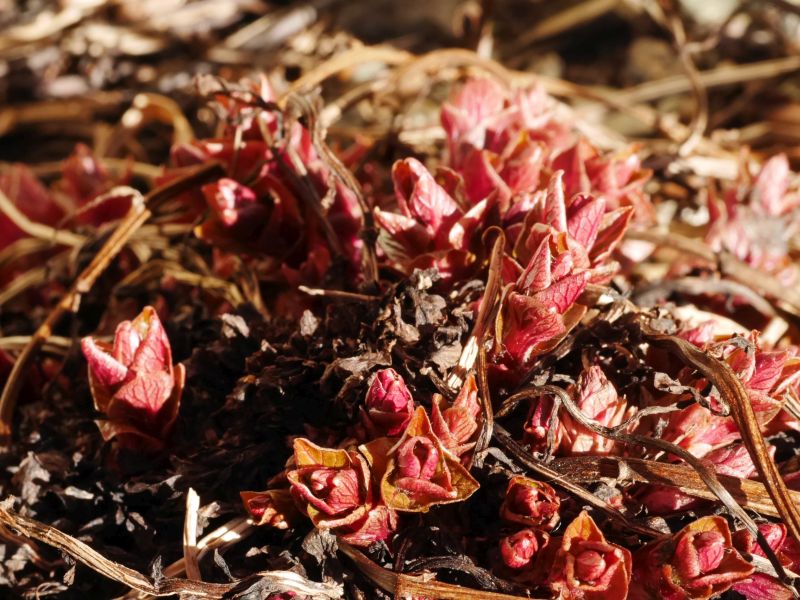
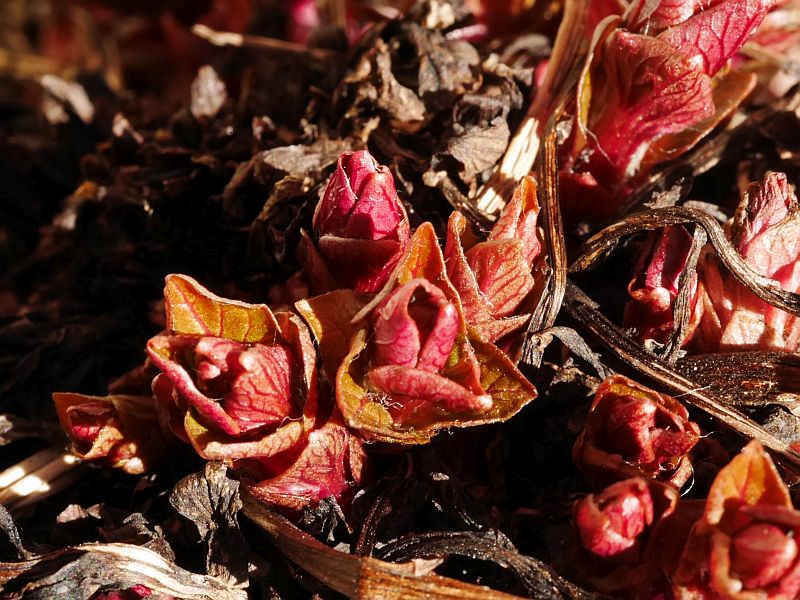
Hablitzia’s attempt to take over the temperate world continues with this mass germination after 10 days in the fridge! Plenty of plants will be finding new homes this summer.
I’ve been attending a great gathering of gardeners from all over Norway the last couple of days, organised by my colleagues at the Ringve Botanical Gardens.
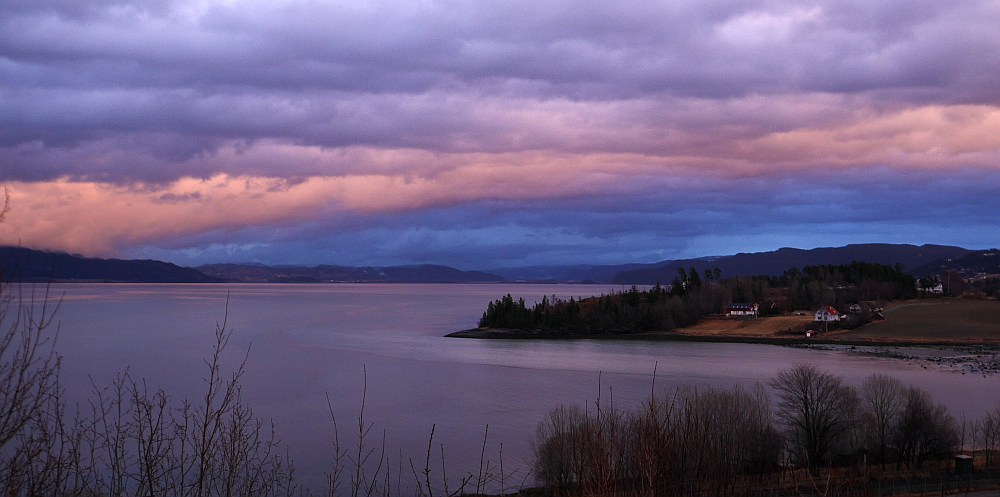
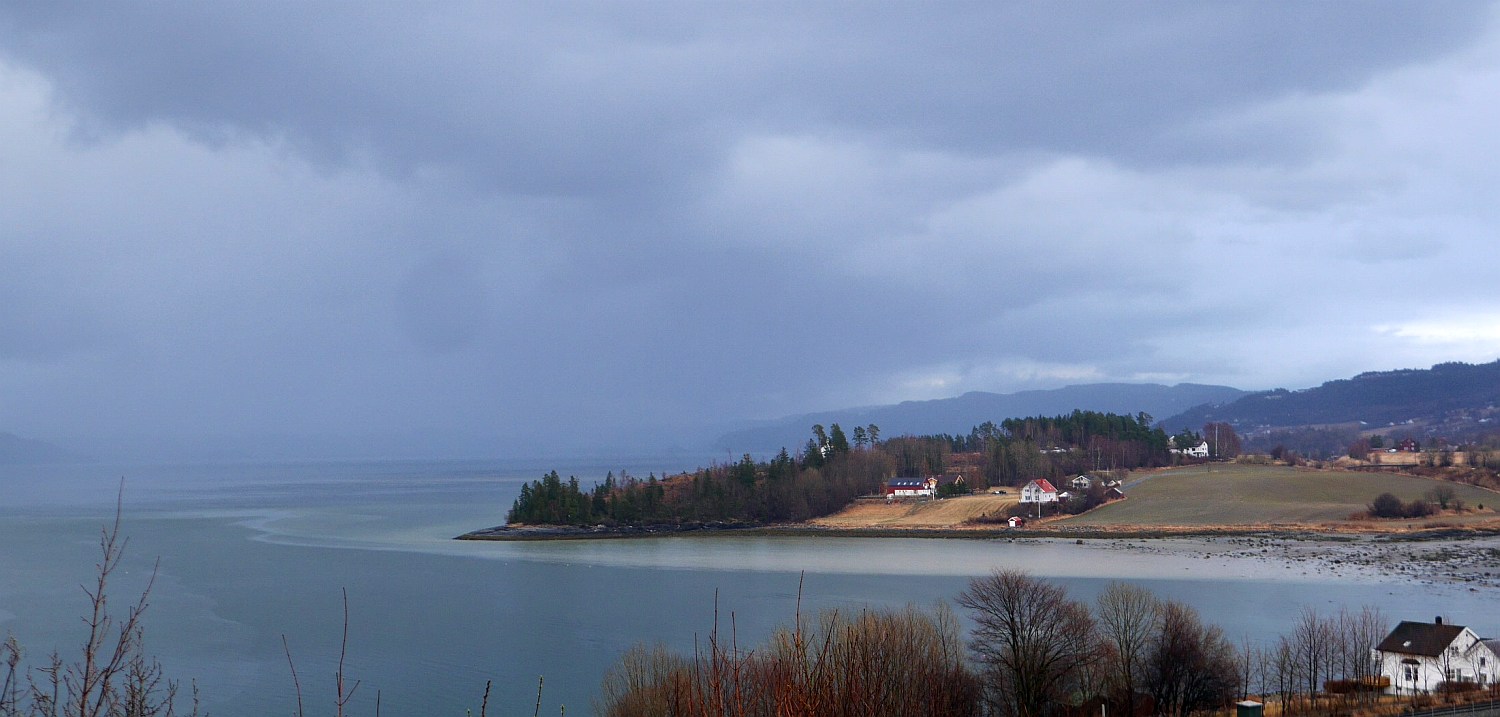
These relatively mild days has brought with it the full first wave of spring migrants to this part of Norway and while we were on a tour of the gardens today, the place was full of newly arrived active migrants, excited by the time of year….fieldfares (gråtrost) were chasing each other through the tree tops, redwings and a song thrush (rødvingetrost and måltrost) were singing as were wood pigeons (ringdue) and chiffchaffs (gransanger) whilst white wagtails (linerle) were feeding in the grass and geese were passing over. It started to rain heavily as soon as we finished…perfect timing…and returning home the muddy water from the small river that enters the bay below the house was evident…and a robin (rødstrupe) was singing his bittersweet song! Life is good!
We’re now going into a period traditionally called the hungry gap, but in my eyes it’s the Full gap, the period with an abundance of vegetables, both perennial wild and cultivated edibles. Yesterday’s dinner was a ryotto (risotto with rye rather than rice). In the last few days, many of these early spring permaveggies have put on a growth spurt! I photographed most of the ingredients in the garden first.
Garden harvested perennial veggies (apart from horseradish at top right, blanched inside for the delicious shoots)
Horseradish / pepperrot blanched inside for the delicious shoots
Indoor seed sprouts (sown in earth for larger yield): Alfalfa / lusern; Wild buckwheat / bokhvete; Oxalis tuberosa (oca shoots) and pea /ert shoots
Ryotto with carrots and Jerusalem artichokes, dried tomato, chili and golpar spice (ground seed of Heracleum persicum / Persian Hogweed / Tromsøpalme)…delicious and home (Norwegian grown) apart from the potatoes!
In December 2004, I went to a remote sensing conference in Concepcion in Chile in my other life as an ocean wave climatologist!
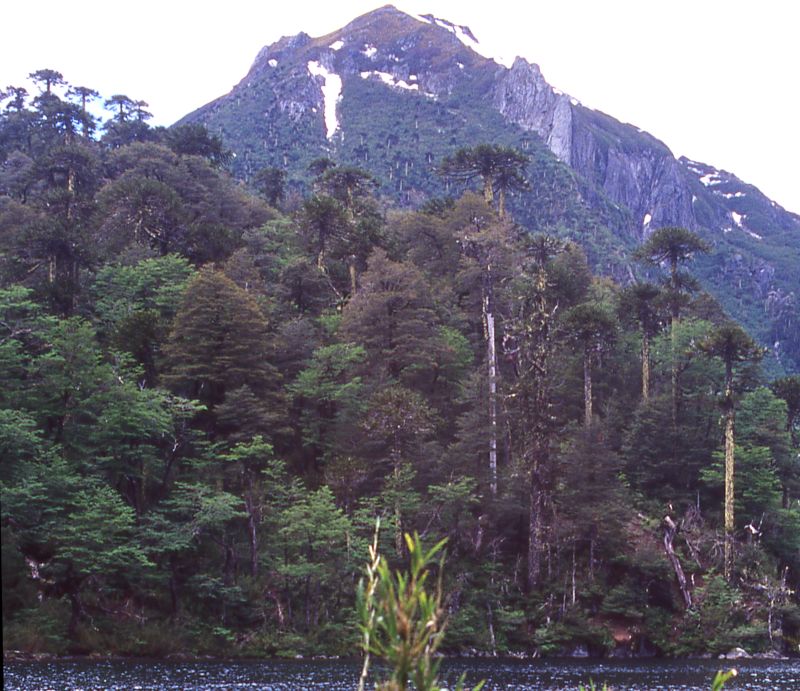
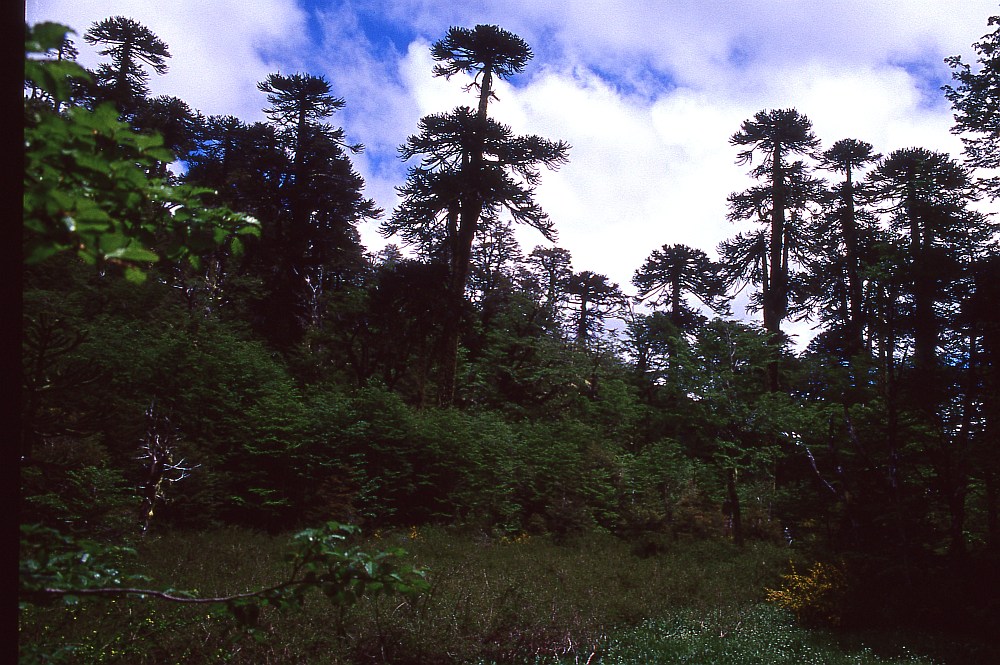
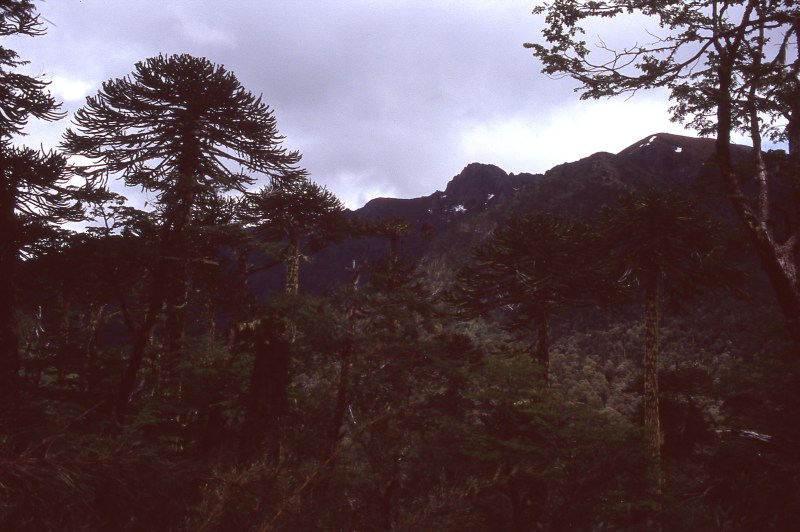
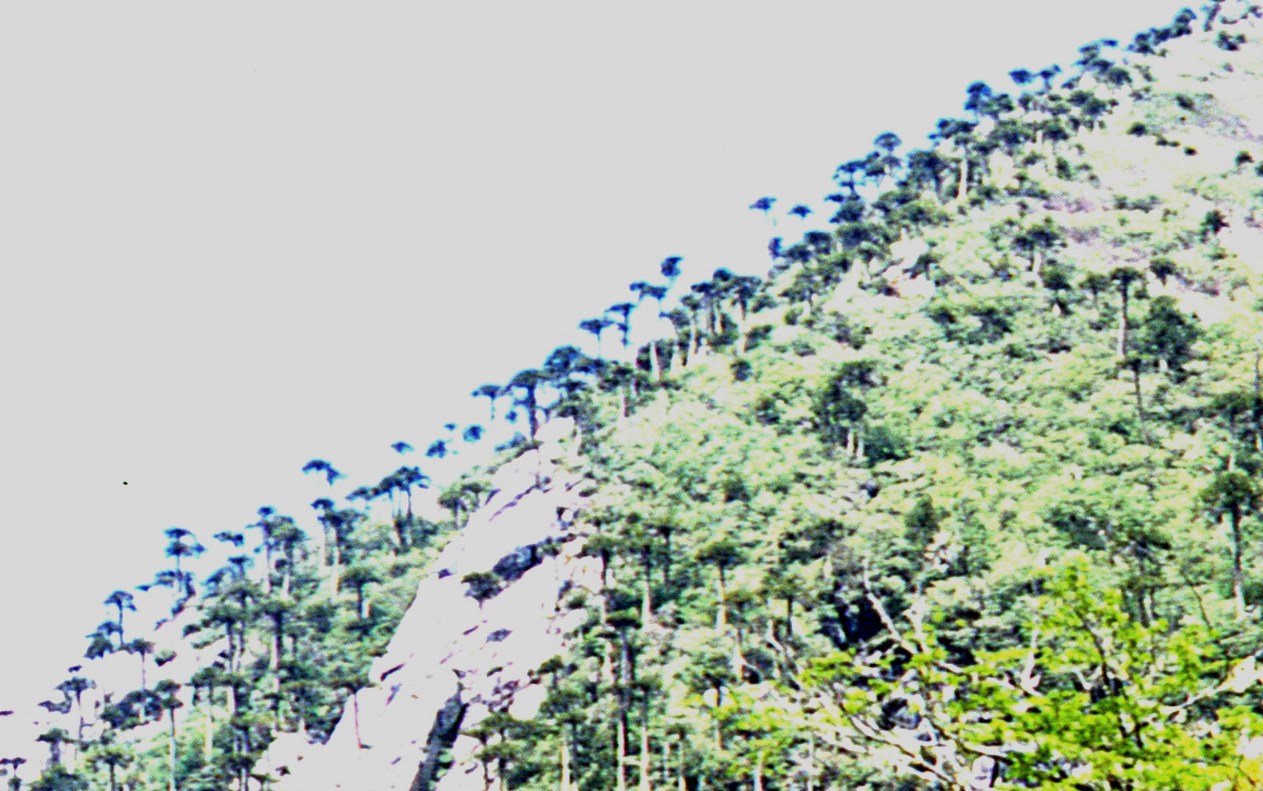
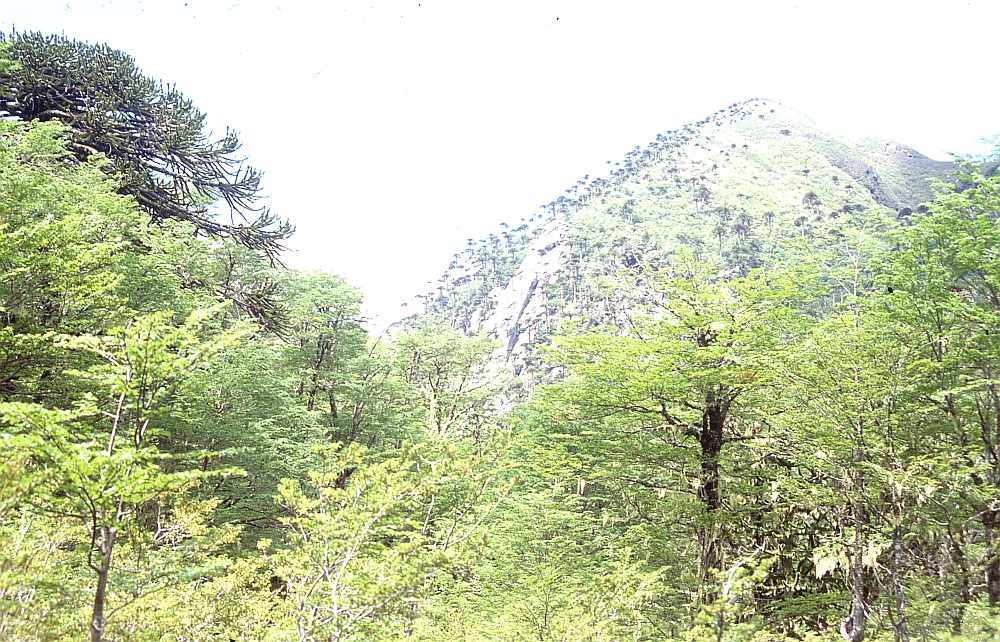
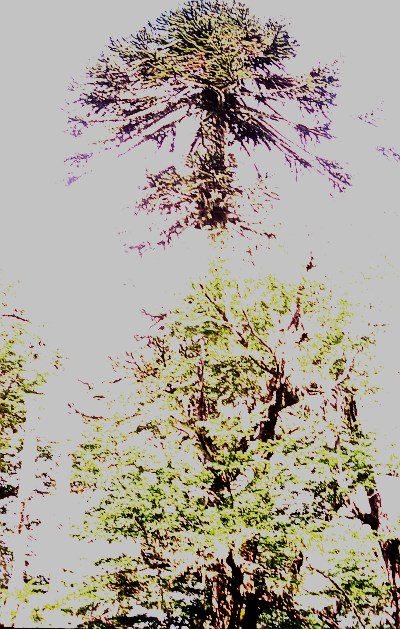
I took some holiday to experience some of the native edibles. One of the main objectives was to experience the ancient old growth Monkey Puzzle forest (Araucaria araucana) and I hoped also to see nuts (piñones) for sale on Mapuche (the indigenous people) markets. It was probably the wrong time of the year (spring) and I didn’t see any nuts. However, after a failed attempt to get up into the main part of the Conguillío National Park due to late laying snow, I did a long hike into the Huerquehue National Park where I walked amongst the old growth monkey puzzle trees that are sometimes known as Umbrella or Toilet Brush trees as old trees (they can reach 1,000 years old!) only have a few branches at the top. Nowadays, it is an endangered species and logging is no longer allowed. It is also the national tree of Chile. A significant part of the diet of the native Pehuenche people (one of the Mapuche peoples) were the nutritious nuts and their name means simply people of the monkey puzzle seeds (Pewen).
Huerquehue National Park
Old growth trees on a distant ridge
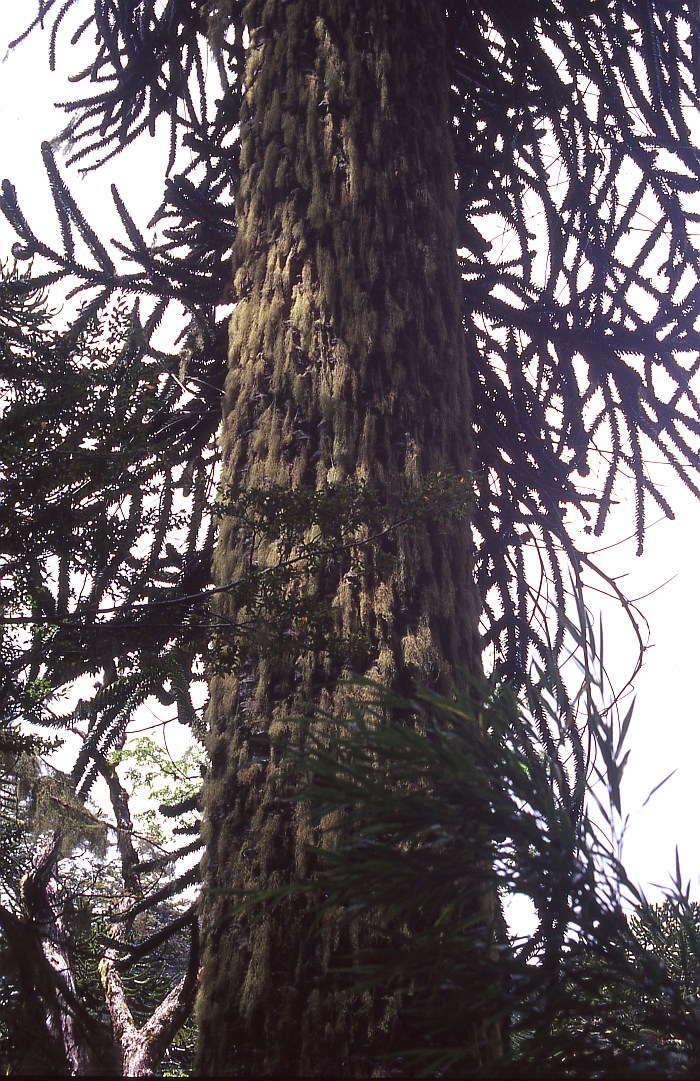
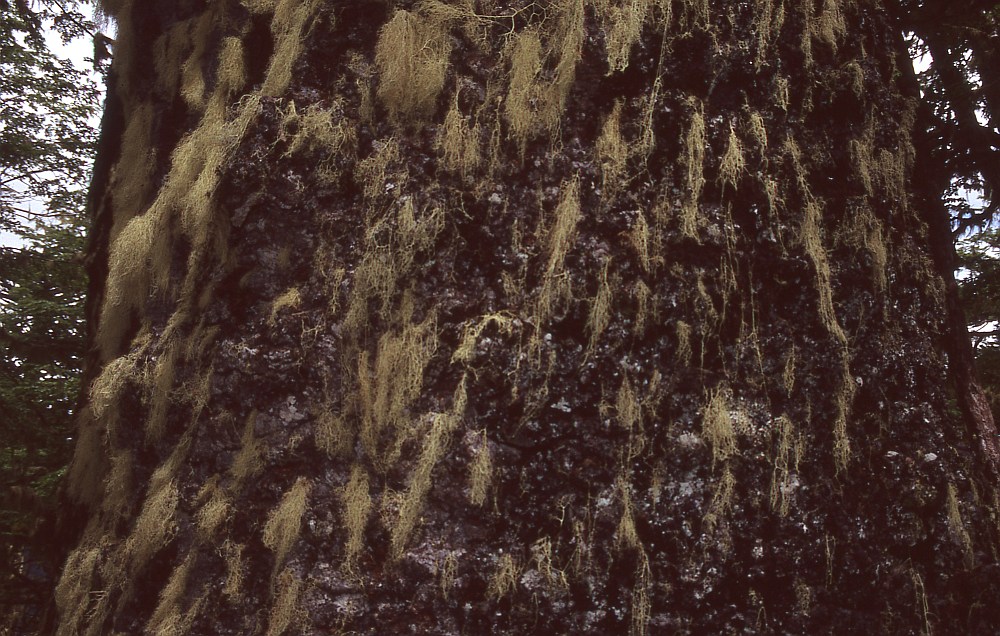
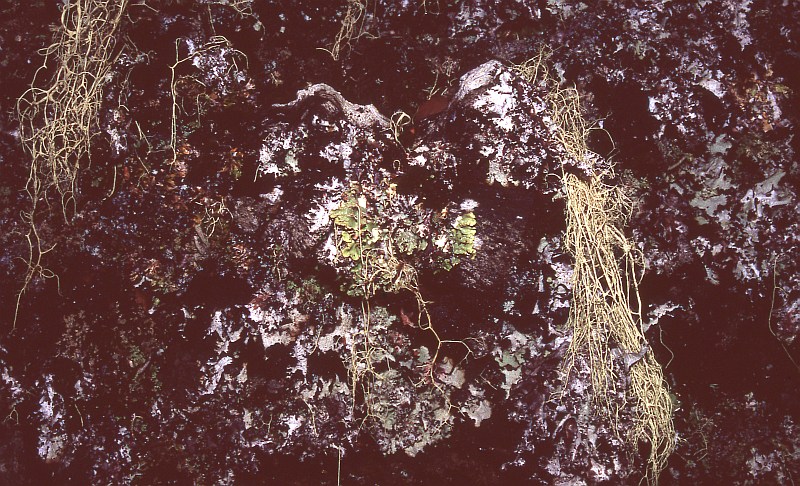
The largest tree I saw, covered with lichens of various species
Lichens on Araucaria araucana
Anemone multifida? was growing in association with the largest monkey puzzle.
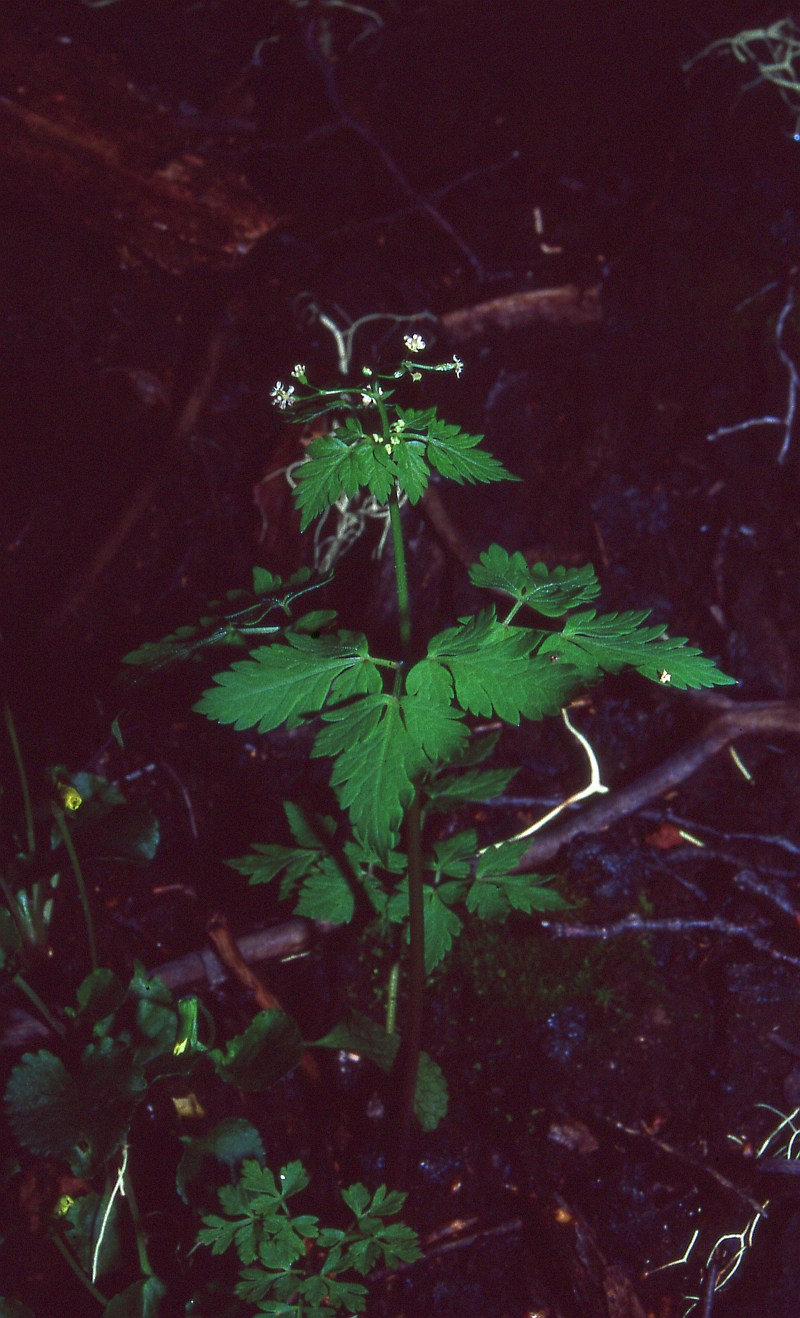
Osmorhiza chilensis is an umbellifer with a good aniseed taste (also found in North America) and growing well in forest shade
Gunnera chilensis/tinctoria (one of the 80 in my book) seen here clinging to rocks next to a high waterfall
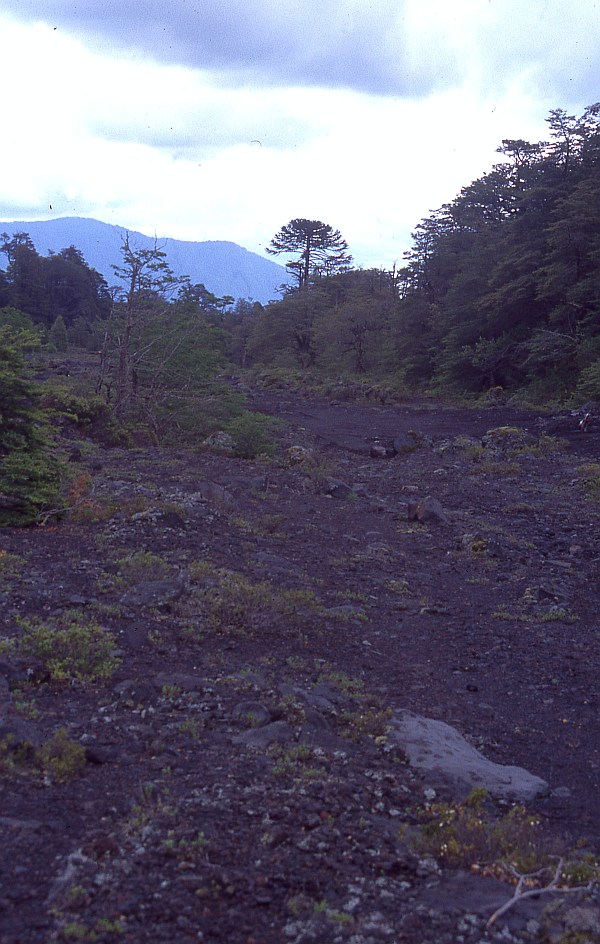
I did see one group of Araucaria in the Conguillio national park, here on islands spared by the lava flows!
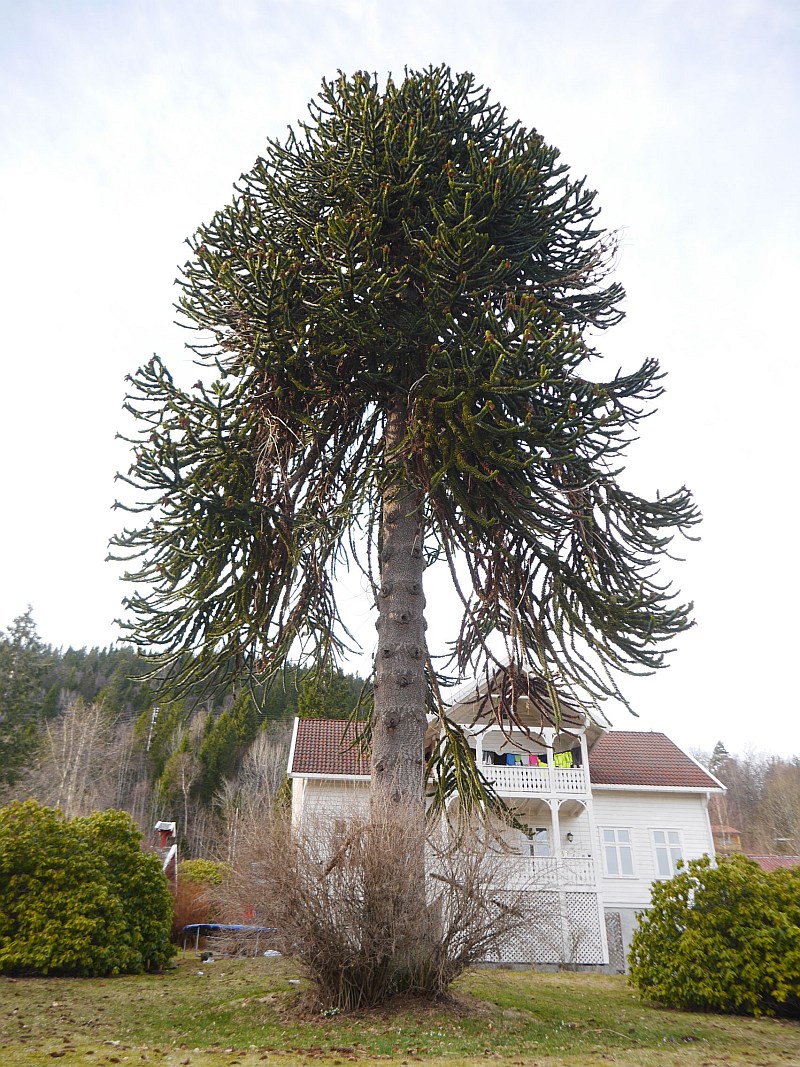
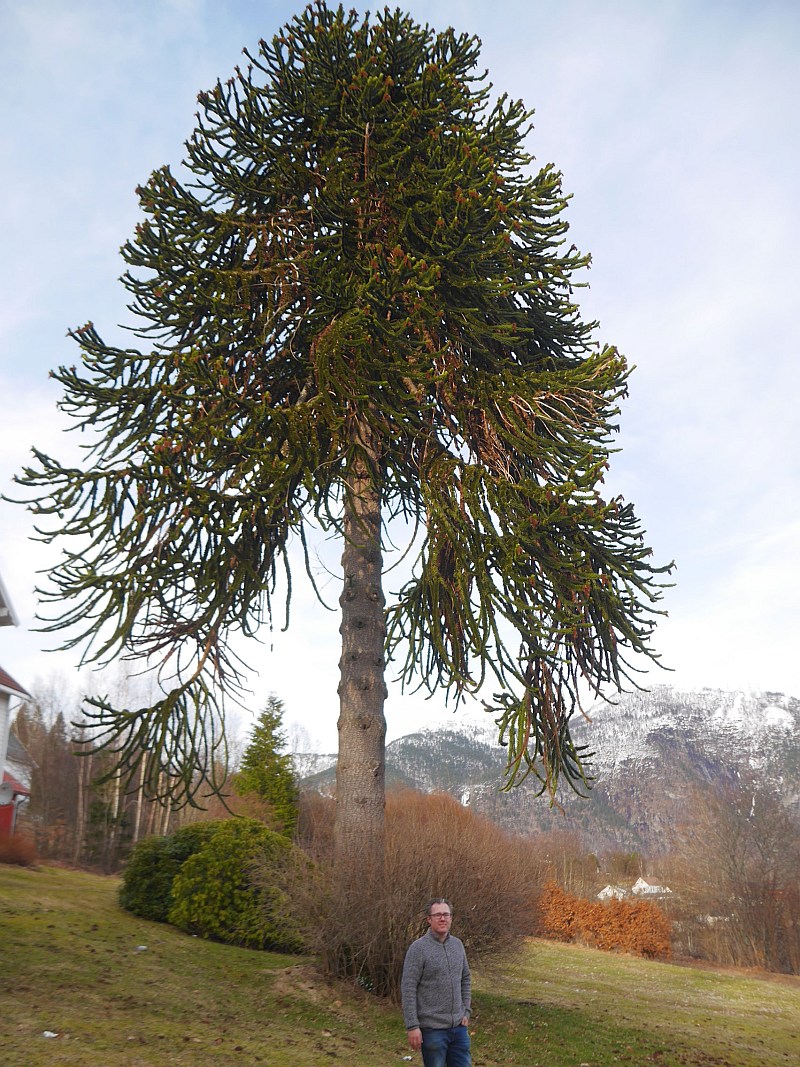
Andrew McMillion kindly picked me up early on Friday morning from the night train at Oslo airport and we drove together to the location of the KVANN / Norwegian Seed Savers annual meeting in Leikanger on the Sognefjord. As we were to arrive earlier than the other board members, I suggested going to Balestrand, about an hour further on as I’d heard that Norway’s largest Monkey Puzzle tree (apeskrekk) could be seen there! Andrew didn’t hesitate as he wanted also to go to Balestrand as he actually had family roots just a kilometer away from the tree!! There was much more than that though! It was an amazing day, first the wonderful trip over the mountains in perfect weather…to see what else we experienced, see the album!!
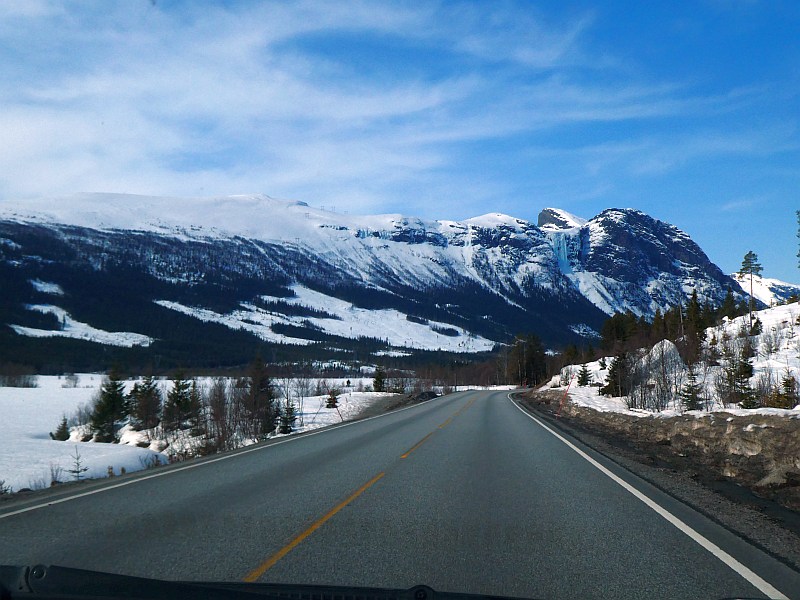
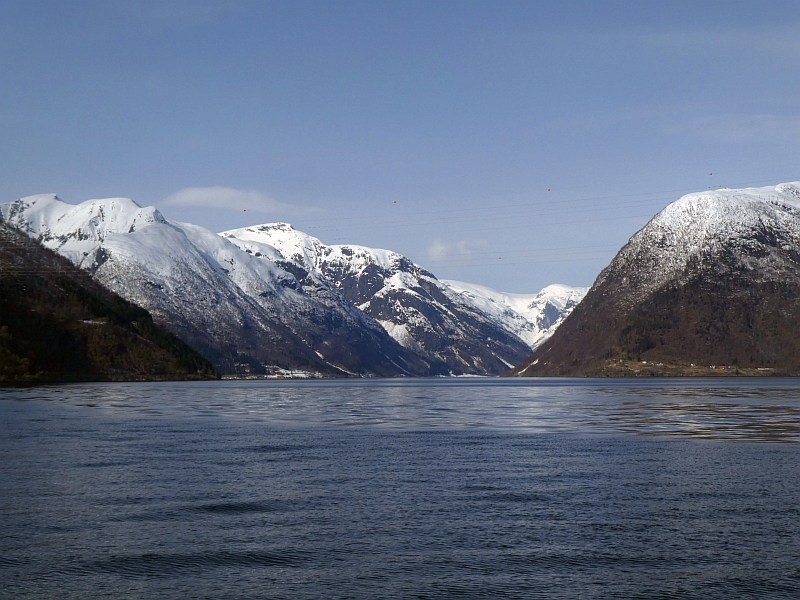
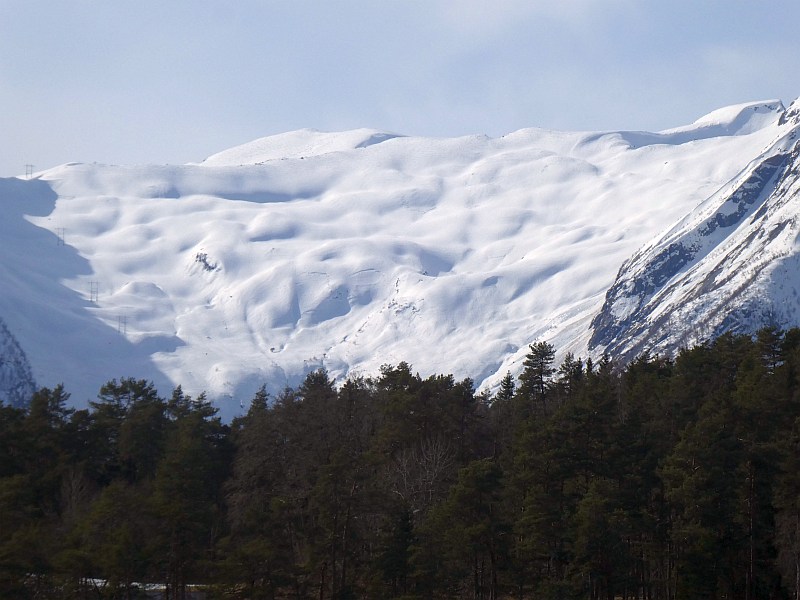
On the way over Hemsedalsfjellet to Sogn
On the way over Hemsedalsfjellet to Sogn
On the way over Hemsedalsfjellet to Sogn
On the way over Hemsedalsfjellet to Sogn
On the way over Hemsedalsfjellet to Sogn
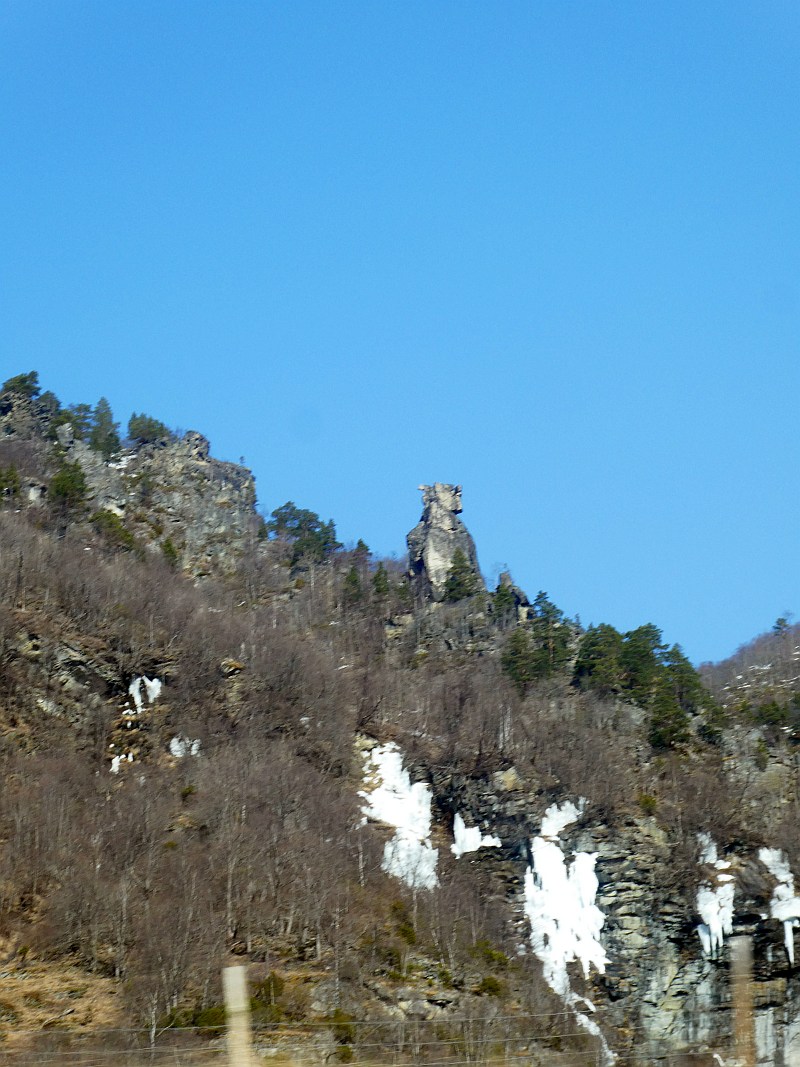
Rock man
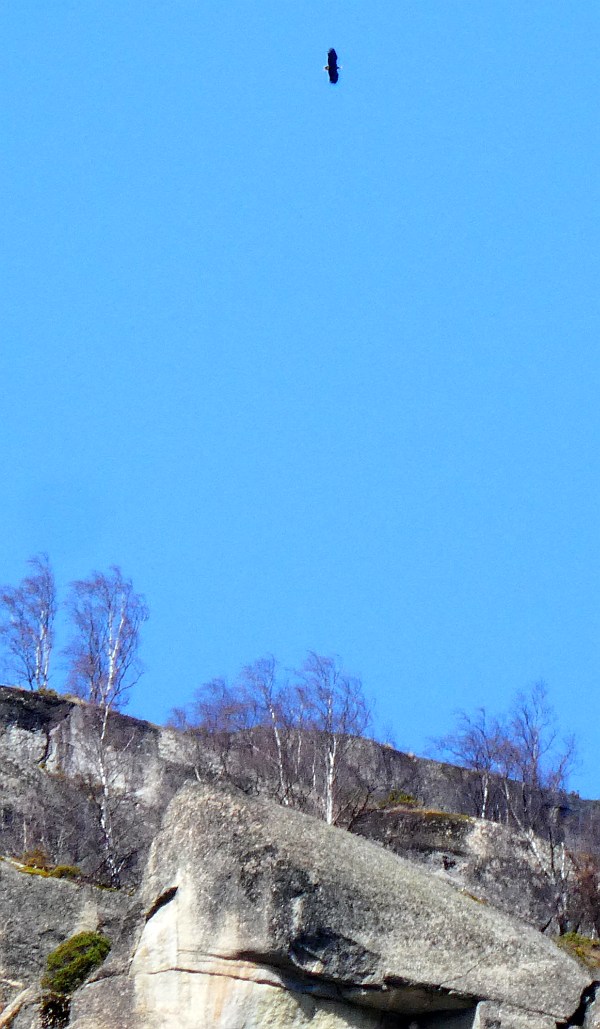
Just before this point, Andrew tells me that the last time he passed thjis place there were birdwatchers looking up at an eagle…I looked out of the window and there WAS an eagle high above us ;)
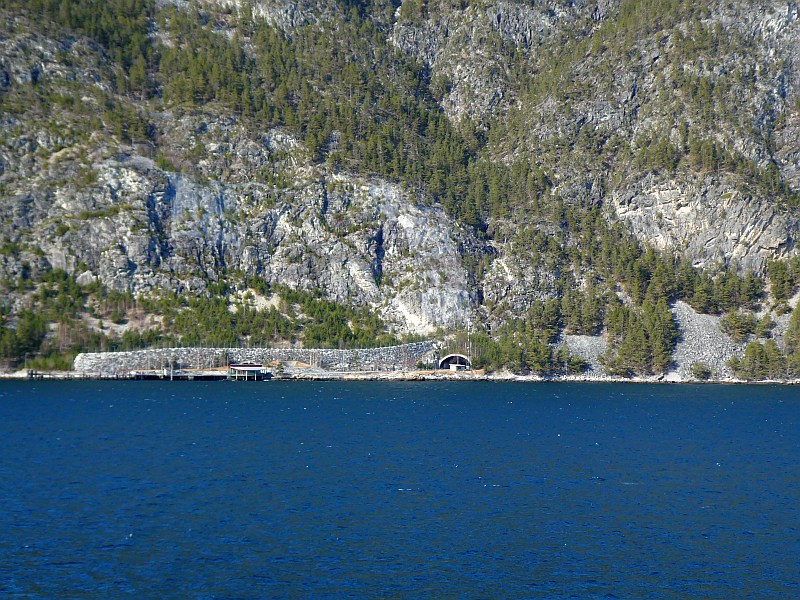
Ferry crossing from one tunnel to the next
Ferry across to Balestrand….Andrew coming home ;)
Approaching Balestrand
Above Balestrand
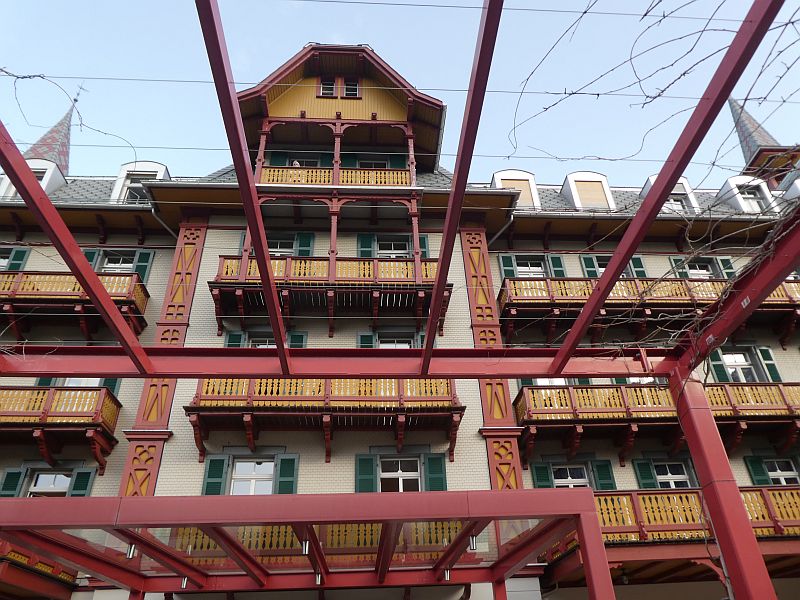
Kviknes Hotel was the largest wooden building in Norway when it was built…in Swiss style. Balestrand was a popular destination for Brits in the late 19th century and English climbing pioneer Margaret Sophia Green married one of the Kvikne family who owned the hotel and an English church was built in her memory after her death (https://en.wikipedia.org/wiki/St_Olaf%27s_Church,_Balestrand)
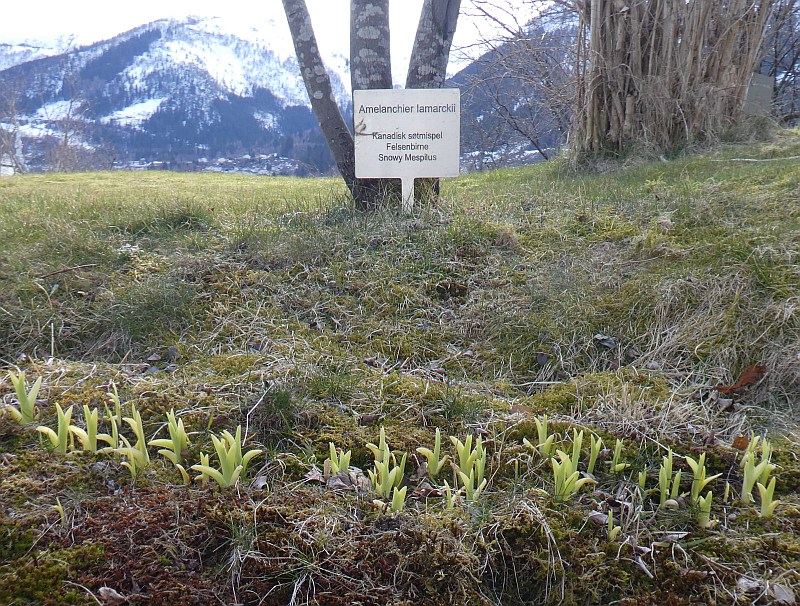
To our surprise there was a little botanical garden in the grounds around the hotel!
Frame dedicated to an artist colony from Balestrand
We had a taste of the young shoots of these giant stonecrops (bergknapp), Hylotelephium spectabile
Andrew inspecting a lovage plant emerging next to a grape..
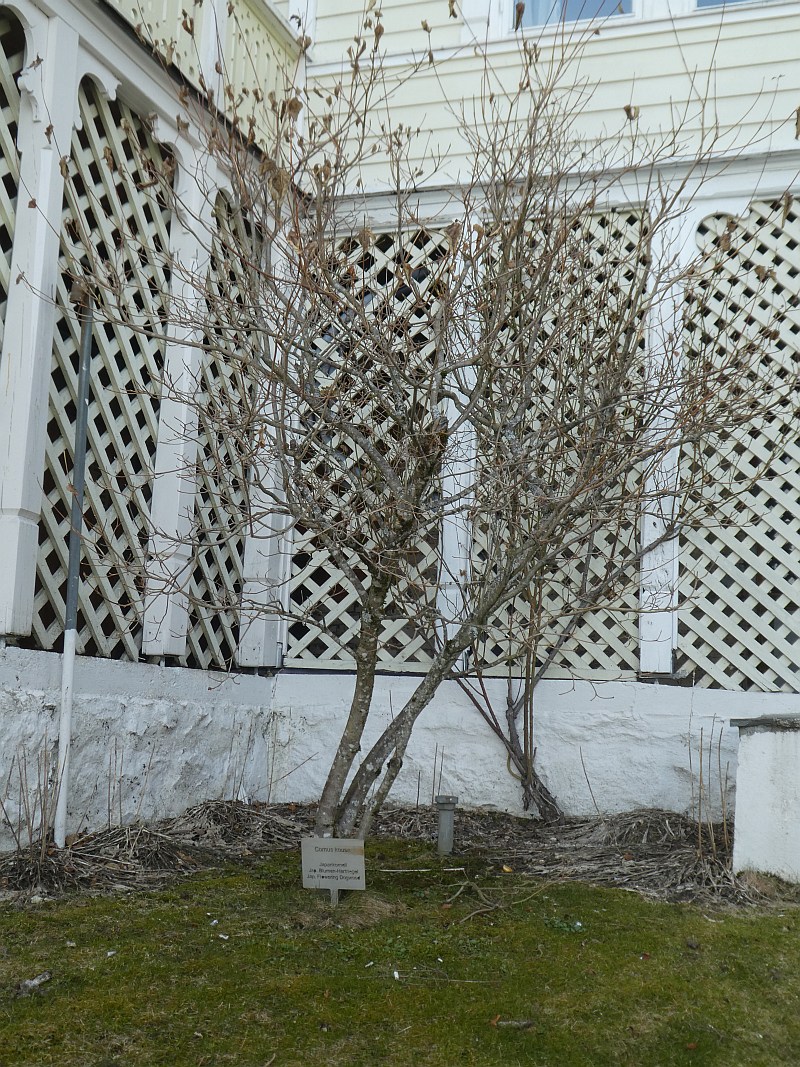
Cornus kousa
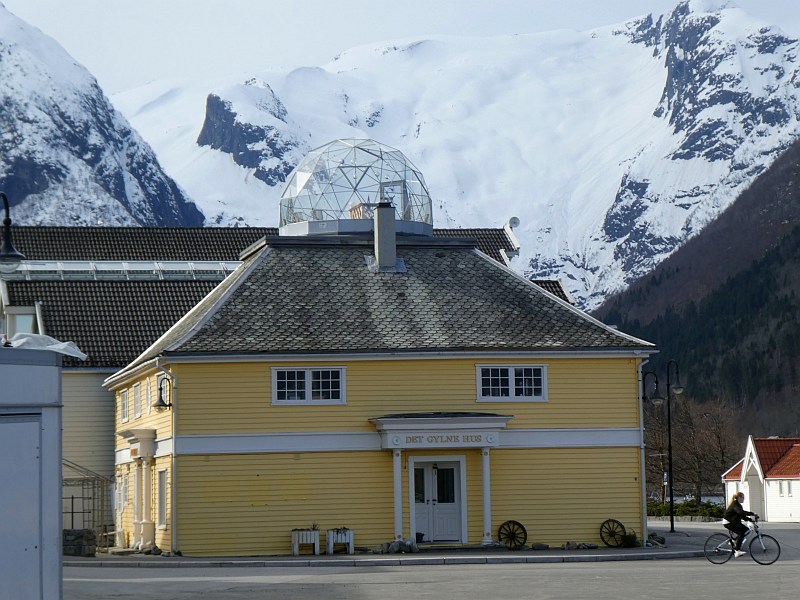
The Golden House is an art gallery with an observation dome and meditation spot on the roof
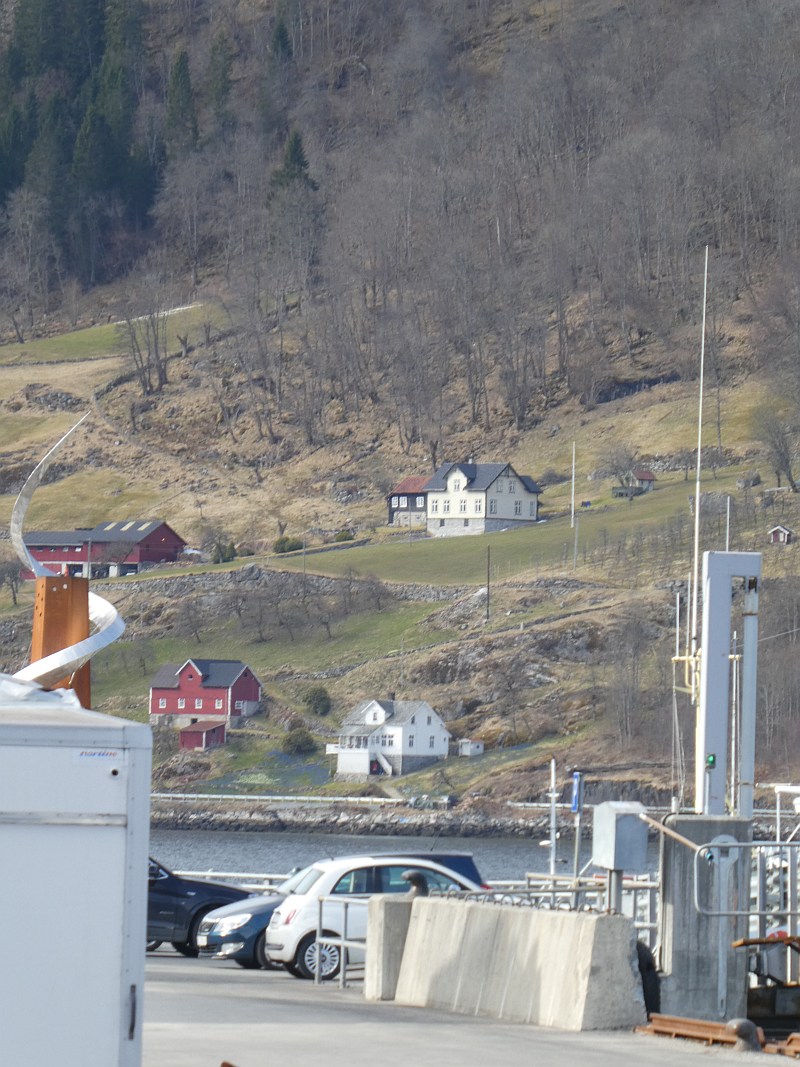
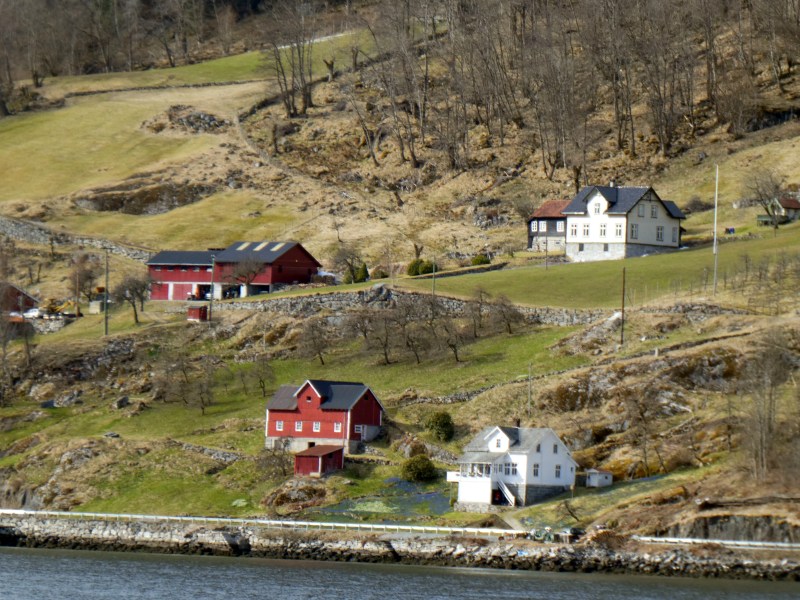
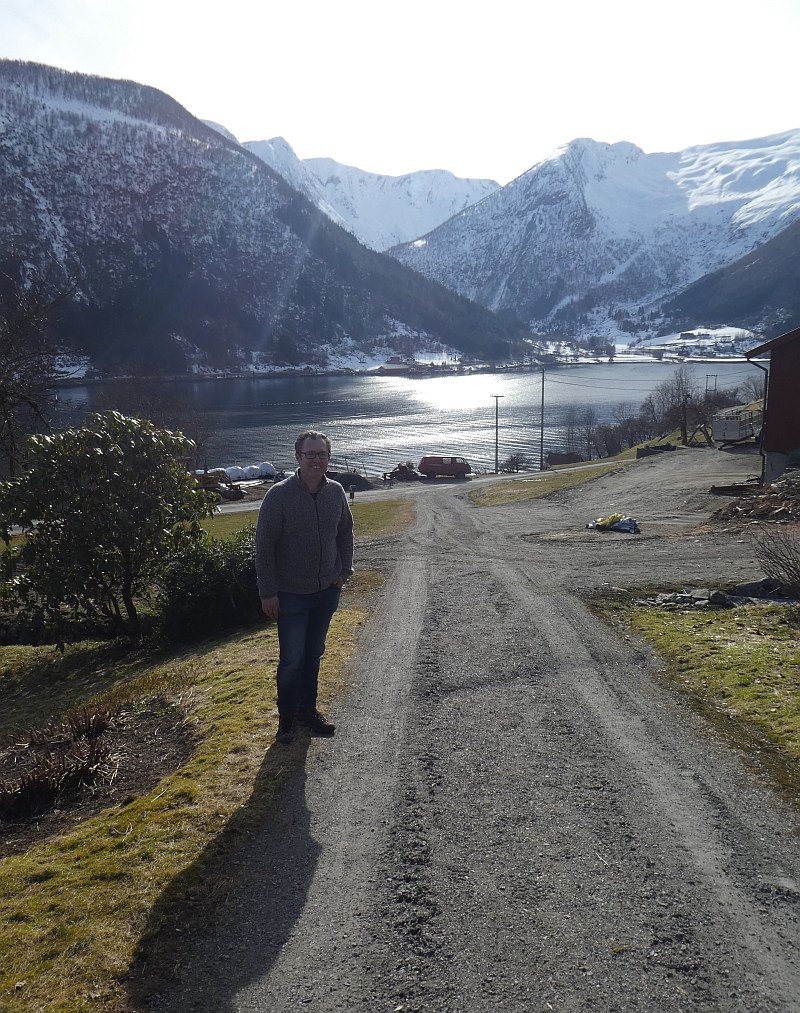
Looking towards Andrew’s ancestral farm
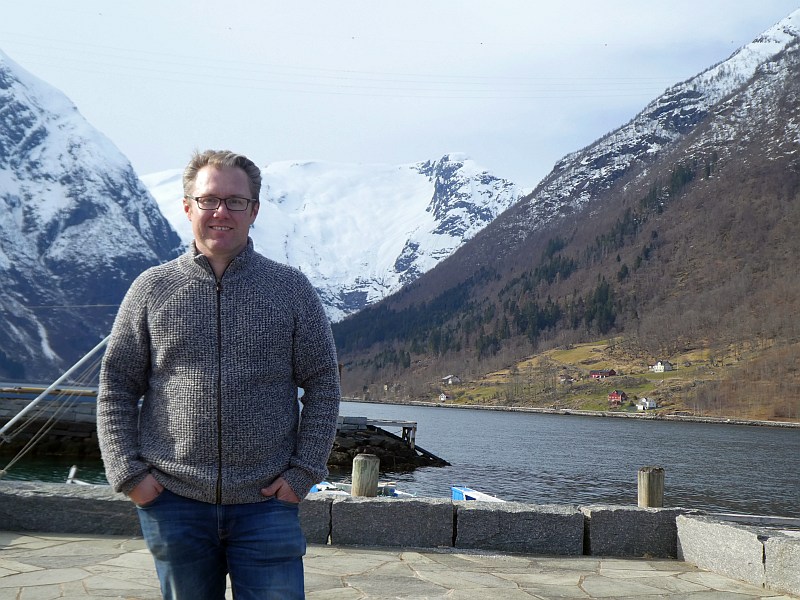
Andrew with his ancestral farm in the background
Looking towards Andrew’s ancestral farm
Looking towards Andrew’s ancestral farm
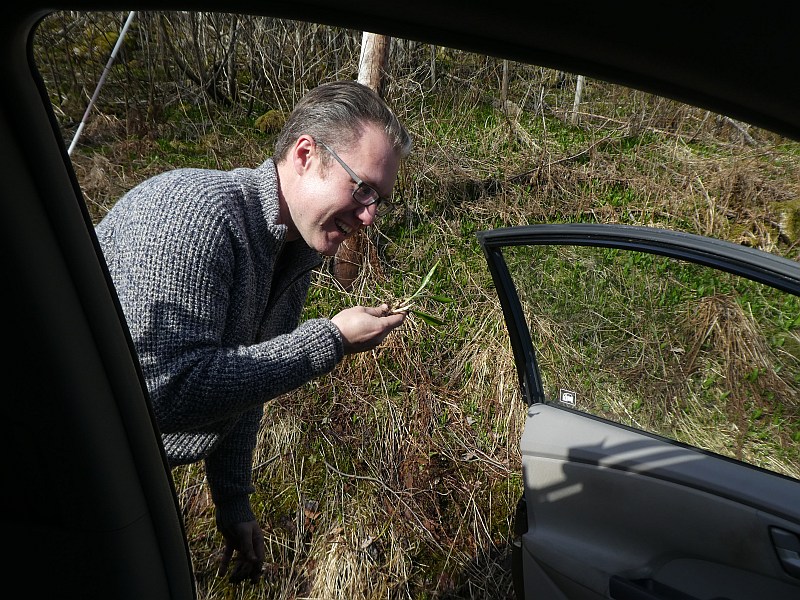
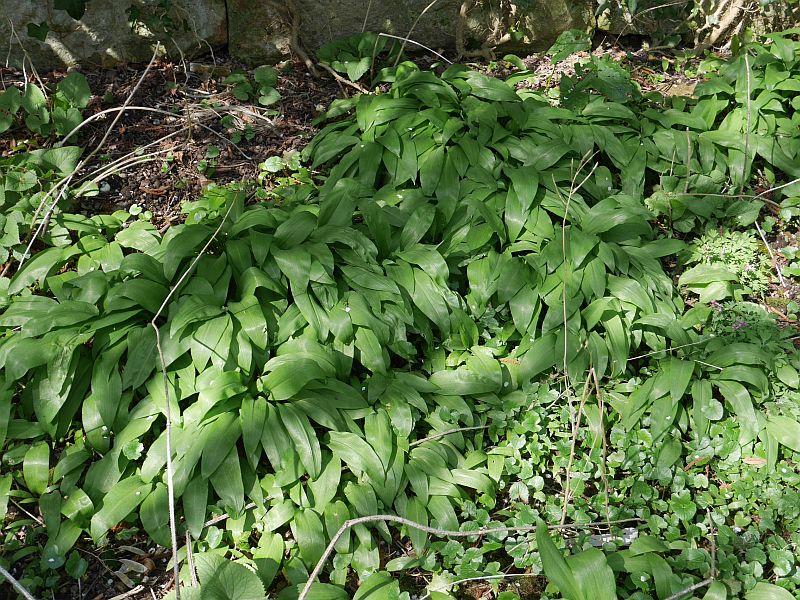
Driving up to Andrew’s ancestral farm was a carpet of emerging ramsons (ramsløk)…he took a couple of plants for his own farm in Nes!
View from the ancestral farm!
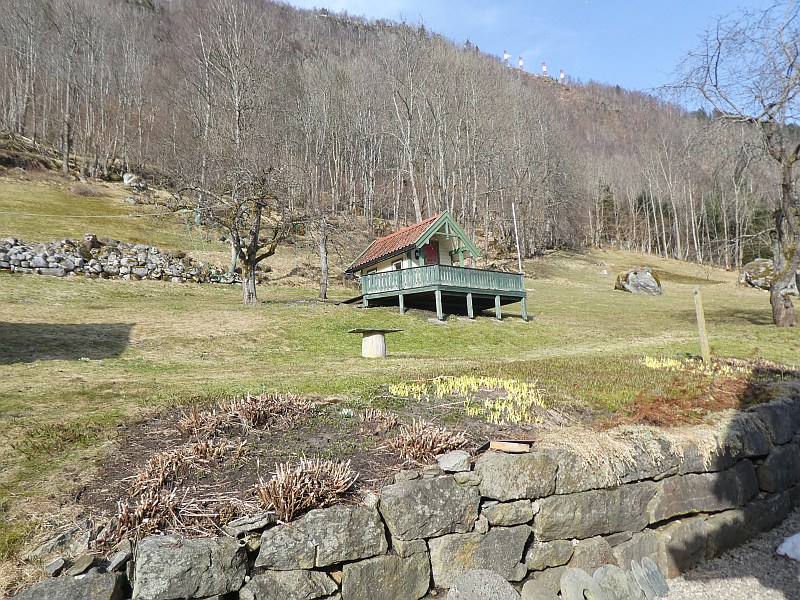
View from the ancestral farm with a carpet of crocus
Above the farm
Day lilies (dagliljer) on the farm
A new roof on the old farm house!
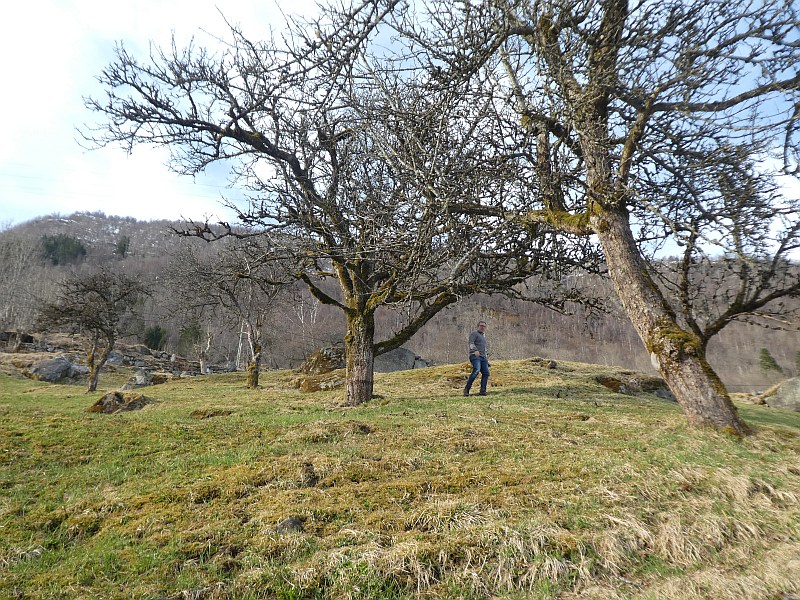
Andrew taking cuttings from one of the oldest fruit trees
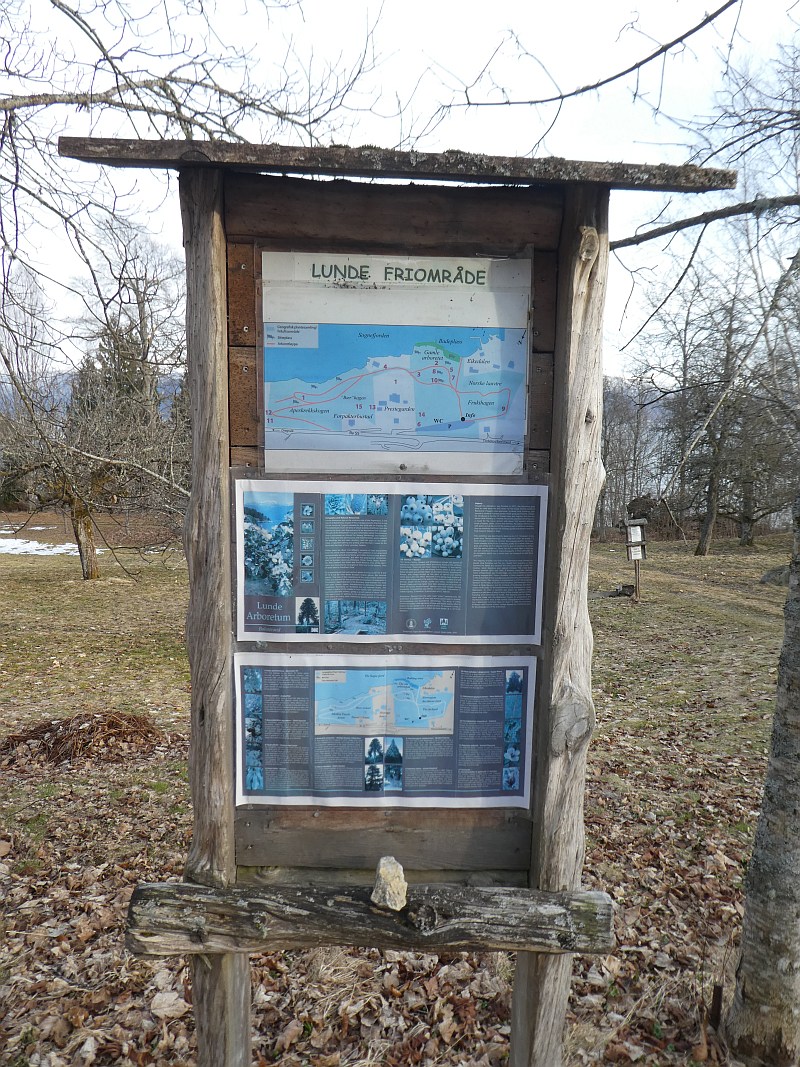
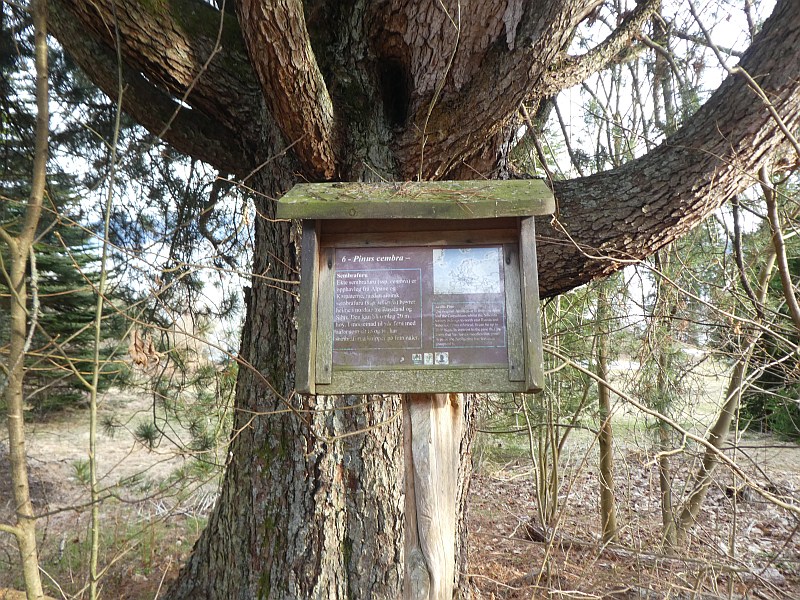
Lunde Arboretum was established in 1973 with the help of Professor Oddvin Reisæter from Oslo University due to the threat of developing the area for housing! However, some of the trees go back to the time of the first rector Harald Ulrik Sverdrup and his son HUS jr. who began to plant foreign trees in 1849 and fruit. By the end of the 19th century there was a collection of 46 pears here! The collections here were described by Professor Schubeler in the 1880s. Schubeler is well known for getting the help of local priests to test out plants throughout Norway. Both Reisæter and Schubeler figure in the Hablitzia tamnoides story in Norway!
Norway’s champion monkey puzzle came from England in 1873! It was long alone but several more trees were planted in 1984!
I’m chuffed to be asked to be a guest at the BBC Gardener’s Question Time Summer Garden Party at Mount Stewart on Strangford Lough in Northern Ireland on 9th June! I will be doing a couple of talks and a couple of garden foraging walks and talks on the day!
It’s a ticketed event, more information when I get it…here’s the press release:
Last weekend I attended this symposium in Stans (near Lucerne) with a diverse group of people including farmers, decision makers, bankers, investors, NGOs, students, landscape architects, writers, international organisations, chefs, plant breeders, university researchers, syntropic farmers, permaculturists etc. to discuss the role of perennials in what more and more people are seeing as a necessary paradigm shift in agriculture in the face of climate change and dwindling resources.
The program: https://static1.squarespace.com/static/5a574020b078696d379ca25e/t/5ab04a9288251bfd948ffe44/1521502868186/Program+PerennialsConference+7.Apr18.pdf
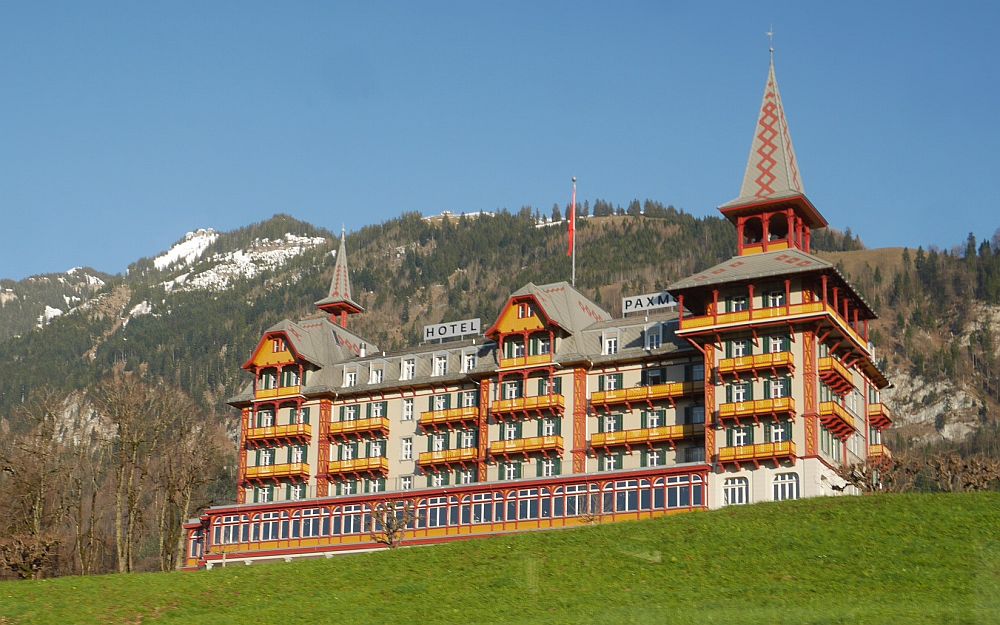
Jugendstil-Hotel Paxmontana in Flüeli-Ranft was where we were accomodated :) We arrived here in true Harry Potter style as the station (platform) where we had to get a connecting bus here didn’t seem to exist. At the next station where we asked a railway employee…a bus miraculously appeared going to the hotel which the official managed to flag down!
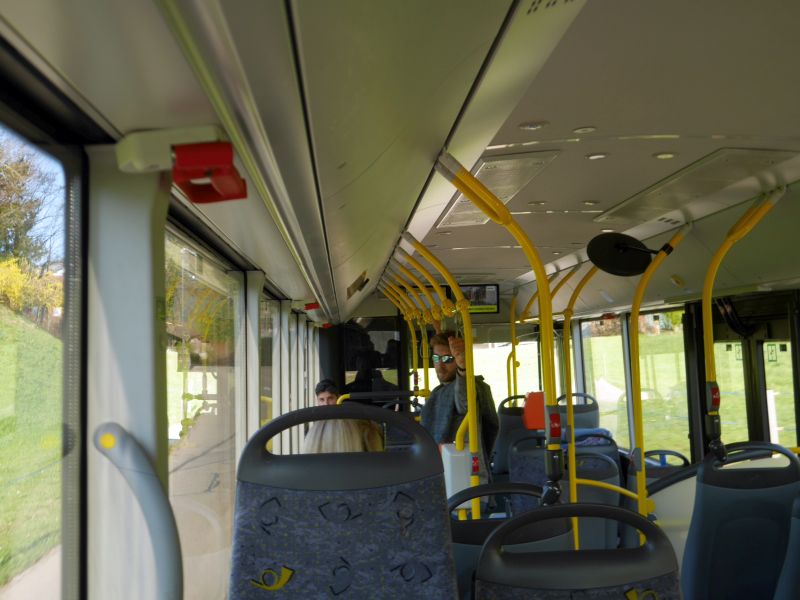
The magic bus…me, Joe Hollis and a few other delegates!
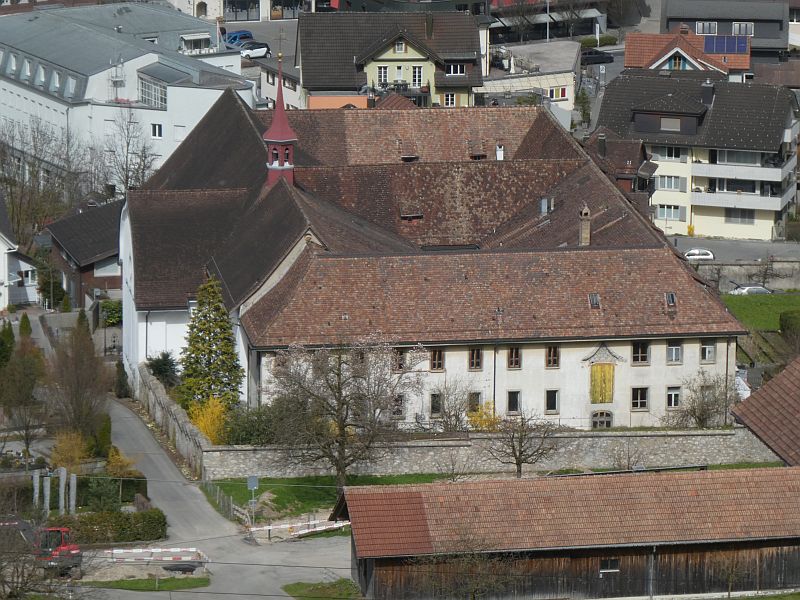
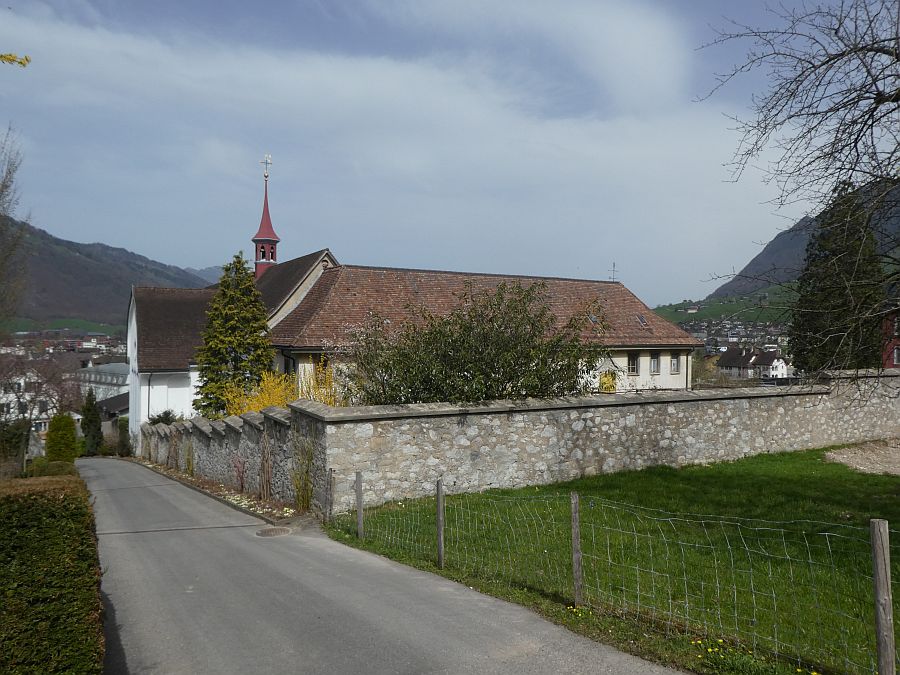
The site of the symposium: Kapuzinerkloster & Garten in Stans
The symposium was very well attended with around 100 people despite no real marketing!
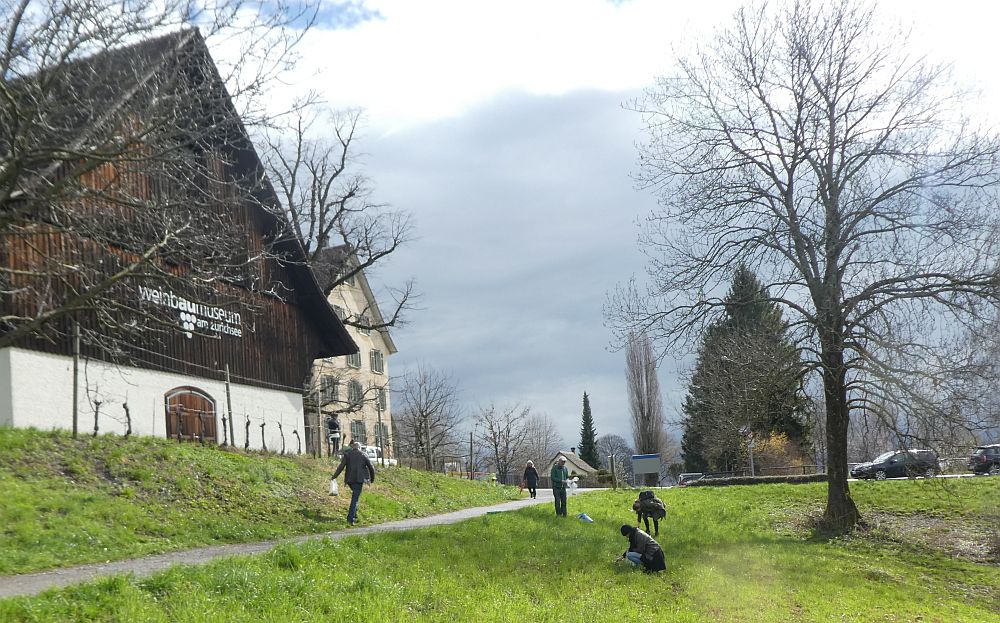
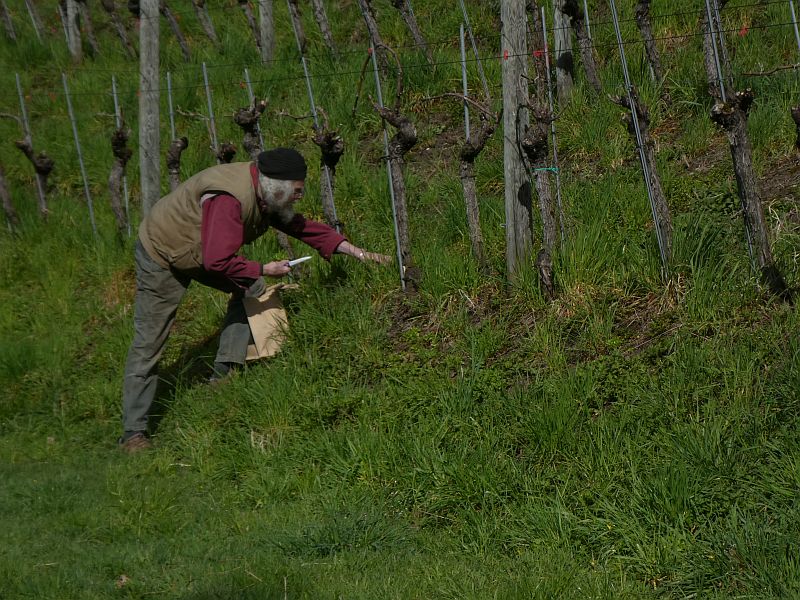
Myself and Joe Hollis helped out foraging perennial food for the symposium!
It was an honour to meet the Mountain Gardener Joe Hollis in person, such a wise and gentle person :) I’d encourage you to watch his Youtube videos (includes Udo, Aralia cordata) about many of the plants he grows in his paradise gardens! See https://www.youtube.com/user/mountaingardens/videos
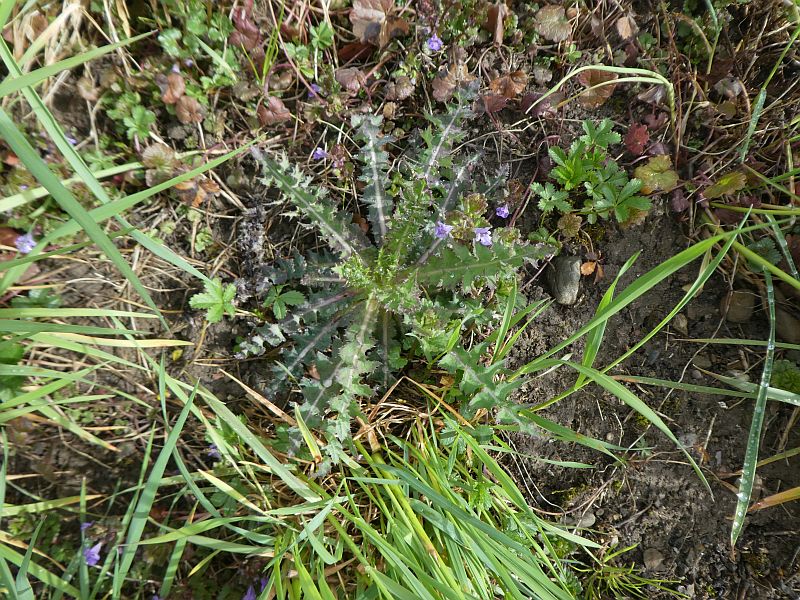
Sonchus, sow thistle
Plenty of nettles
Wild onion, probably Allium vineale
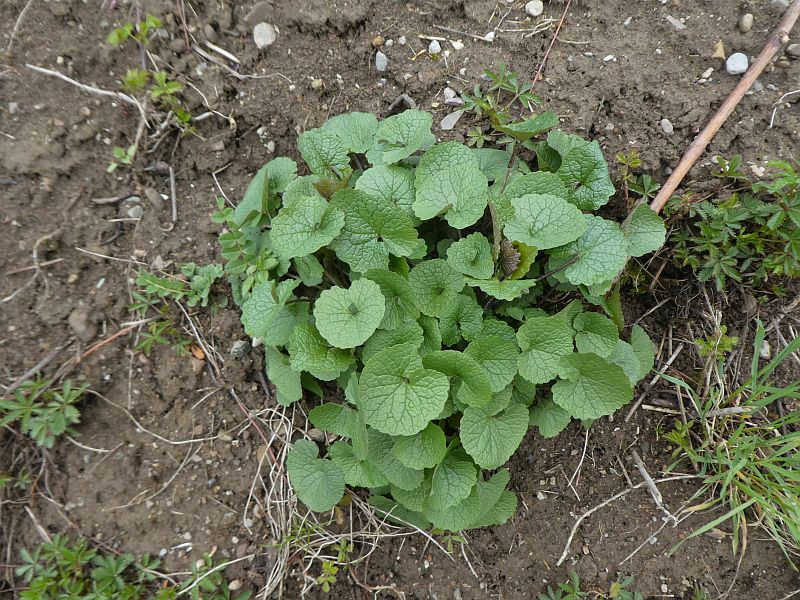
Hedge garlic (Alliaria)
Nettles and ground elder
Organiser and initiator Matthias Brück
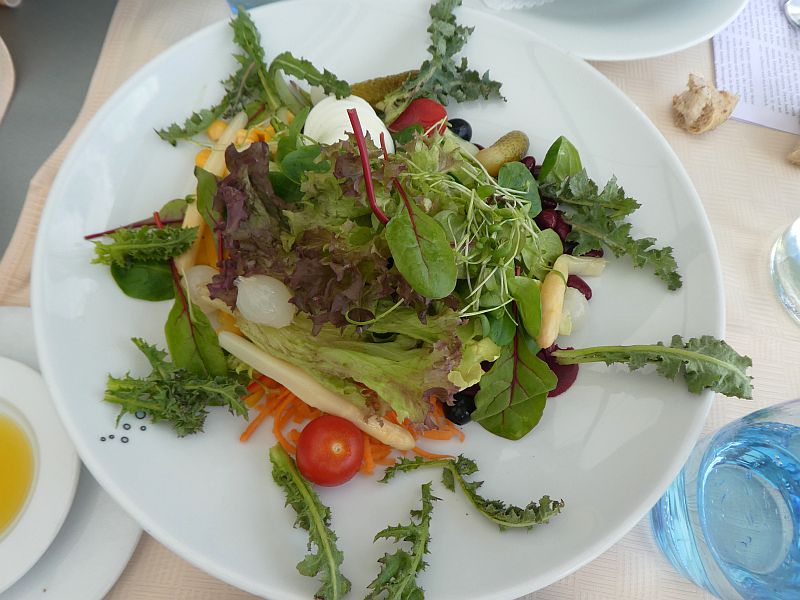
We ate lunch at the restaurant in the middle of the Nature park….the waiter and owner was bemused by us augmenting their rather boring salad :)
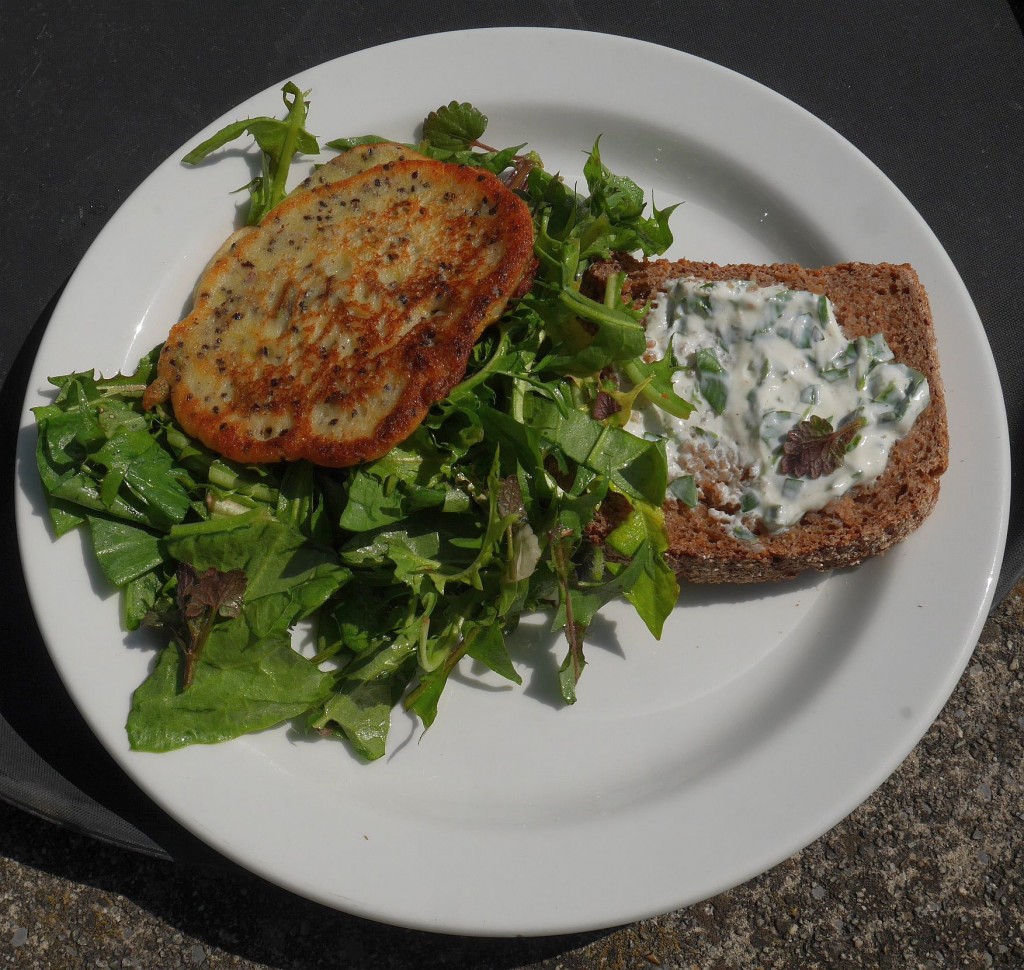
Billed as the Perennial Life Experience symposium food, it was for most attendees!
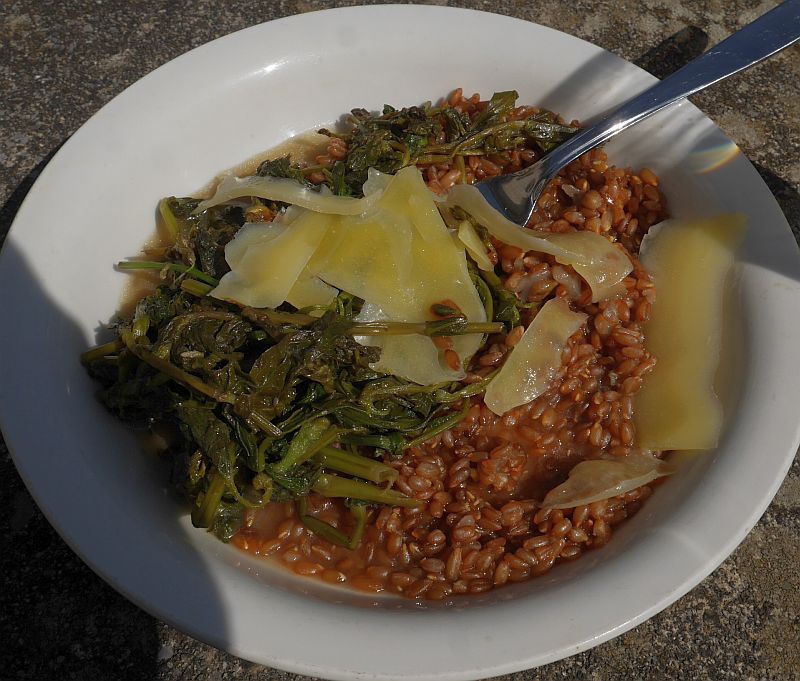
Perennial Ryotto! Similar to Norwegian Svedjerug, so not truly perennial…
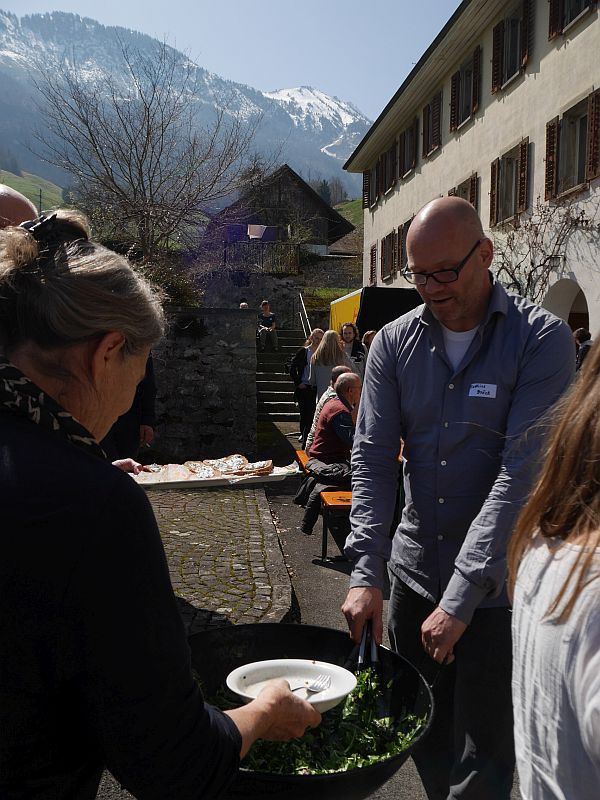
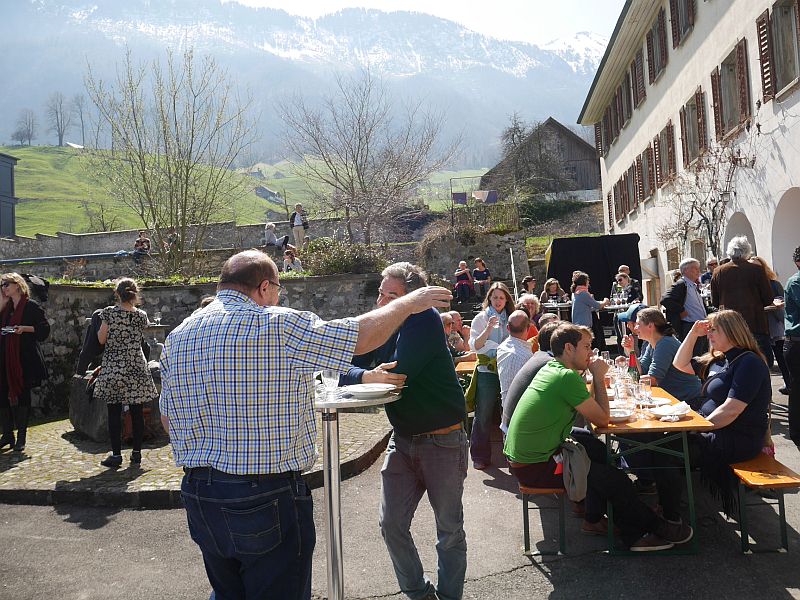
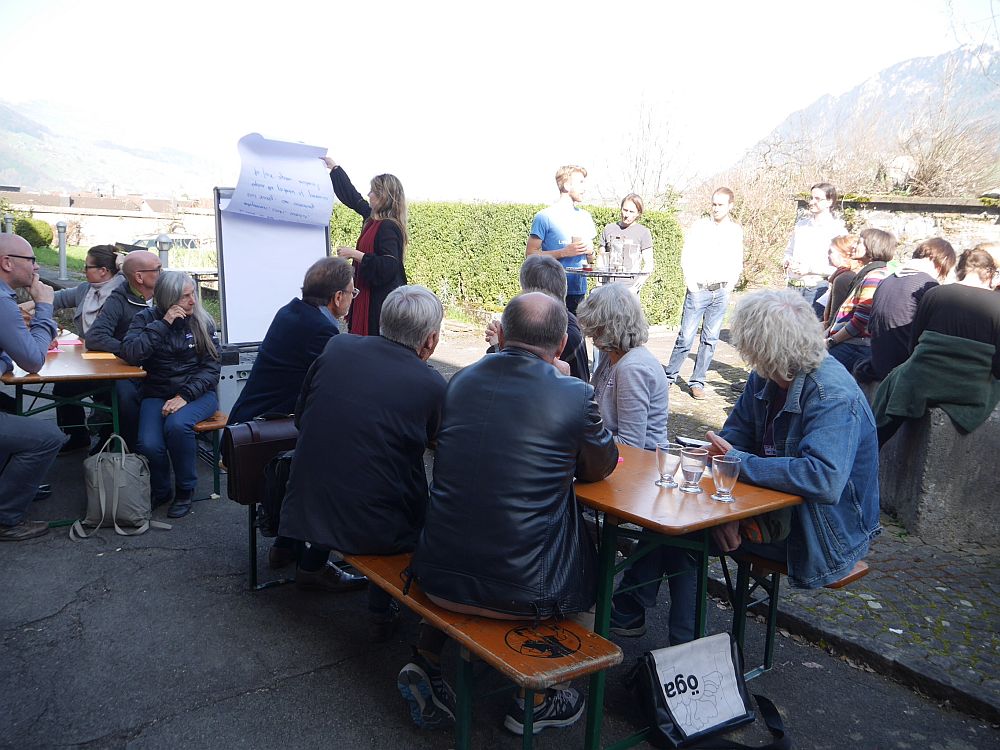
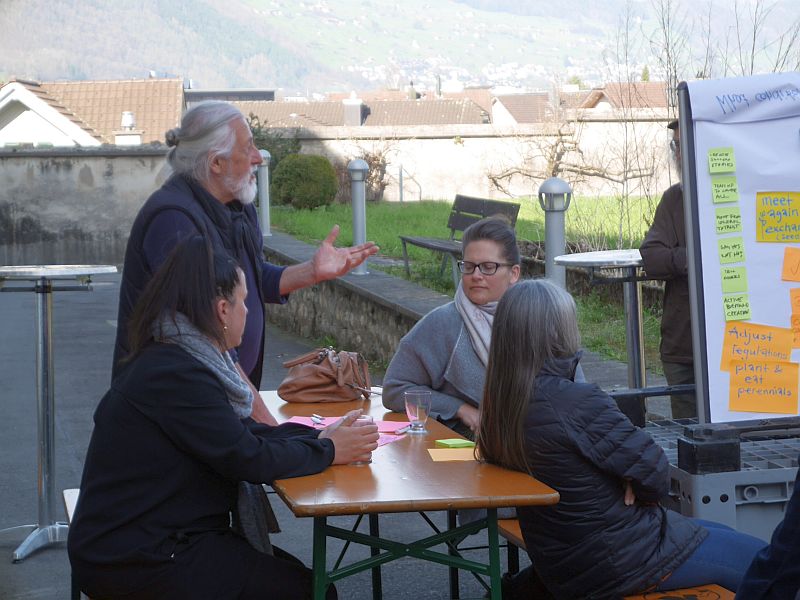
It was a beauiful spring weekend weatherwise and food and breakout sessions were held outside!
The author Dominic Flammer is also the curator of the Kapuzinerkloster & Garten which is currently under restoration.This will be a wonderful place for courses when it’s restored! He’s written several books including the wonderful Culinary Herbs of the Alps!!
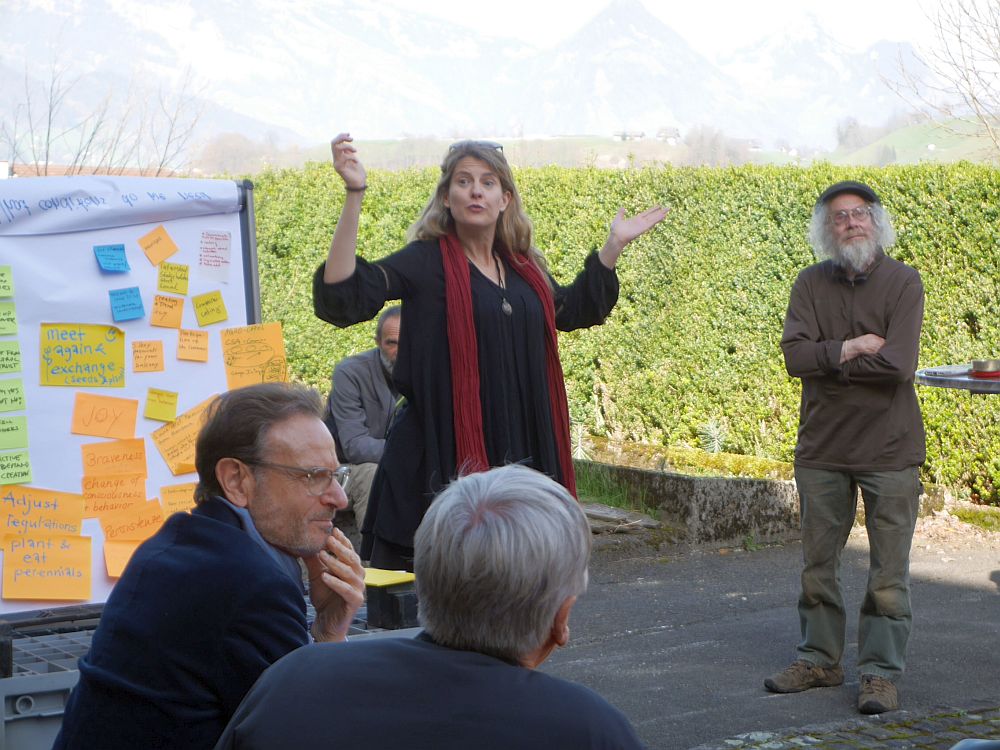
Katharina Serafimova wraps up the final breakout session to discuss how to take this forward!
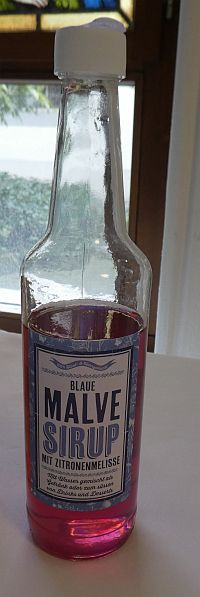
Malva syrup
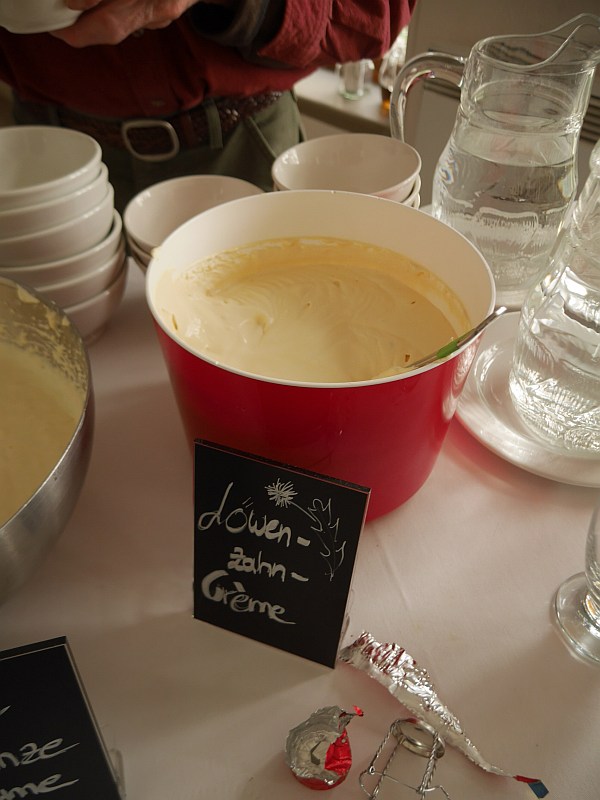
Dandelion wine
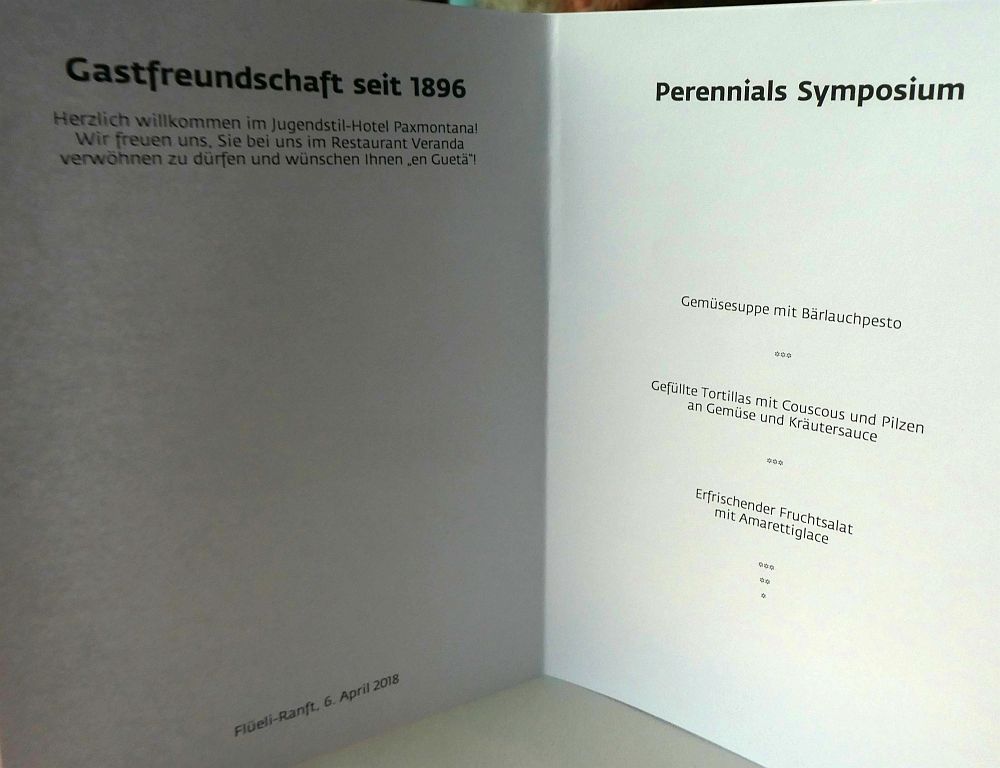
Menu for the first dinner at the hotel
View from the hotel
While I was visiting Pro Specie Rara in Basel, Joe Hollis joined the others foraging ramsons which grows like a weed in Zurich and is common on the hills around!
While I was visiting Pro Specie Rara in Basel, Joe Hollis joined the others foraging ramsons which grows like a weed in Zurich and is common on the hills around!
Campanula
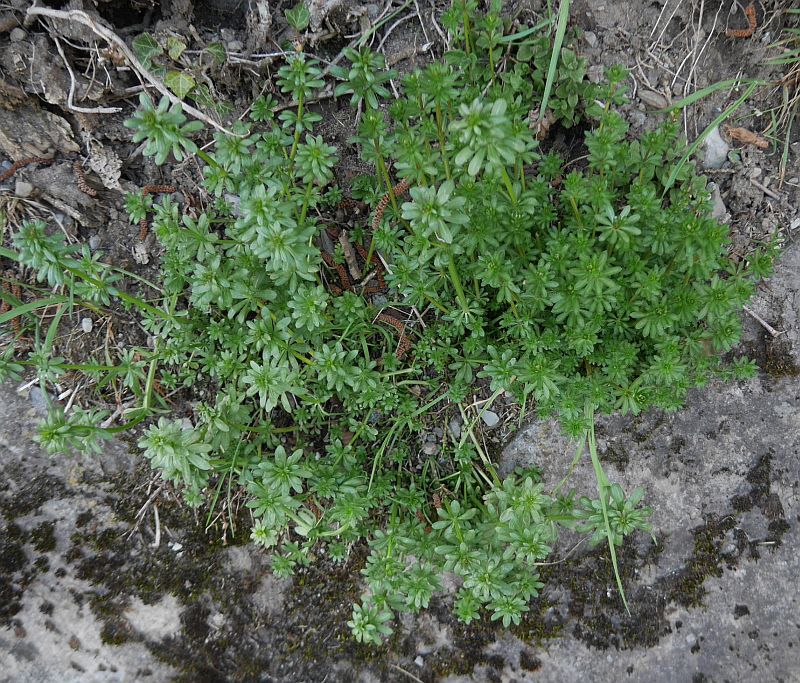
Galium
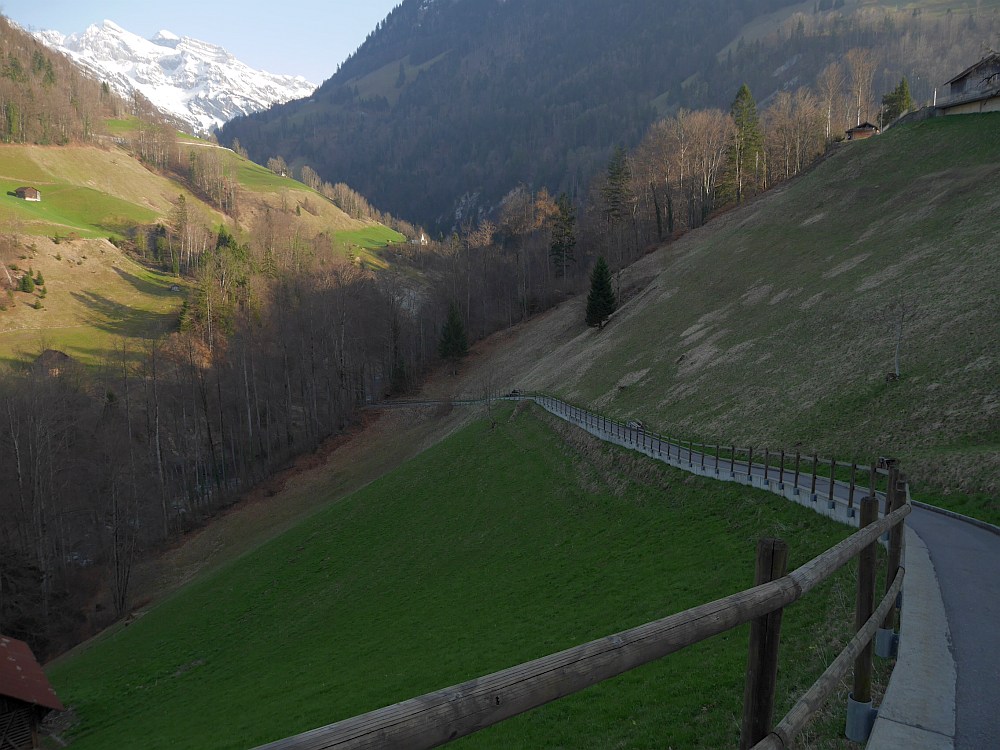
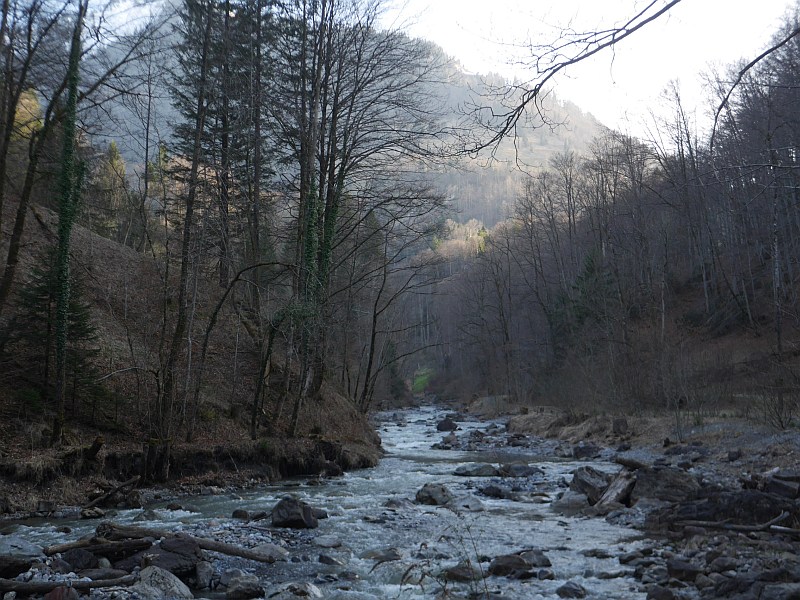
Path down to the river
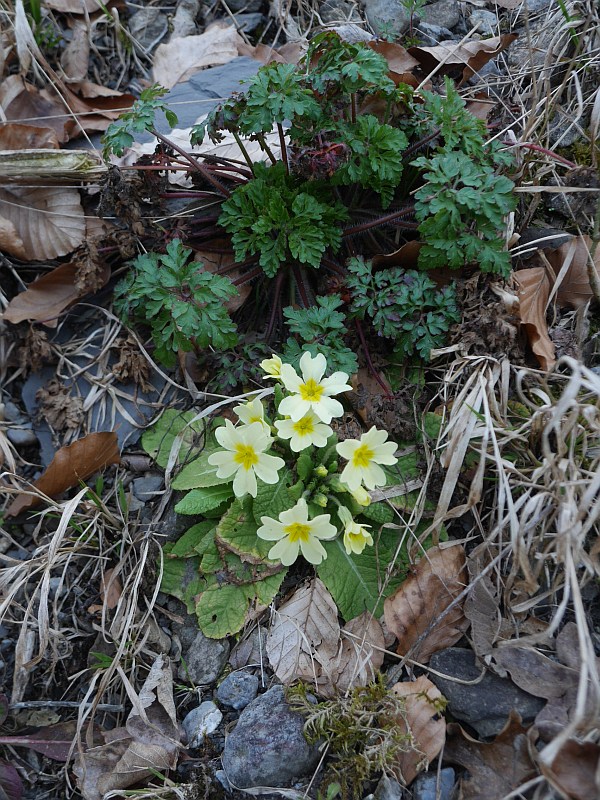
Primula veris x vulgaris hybrid?
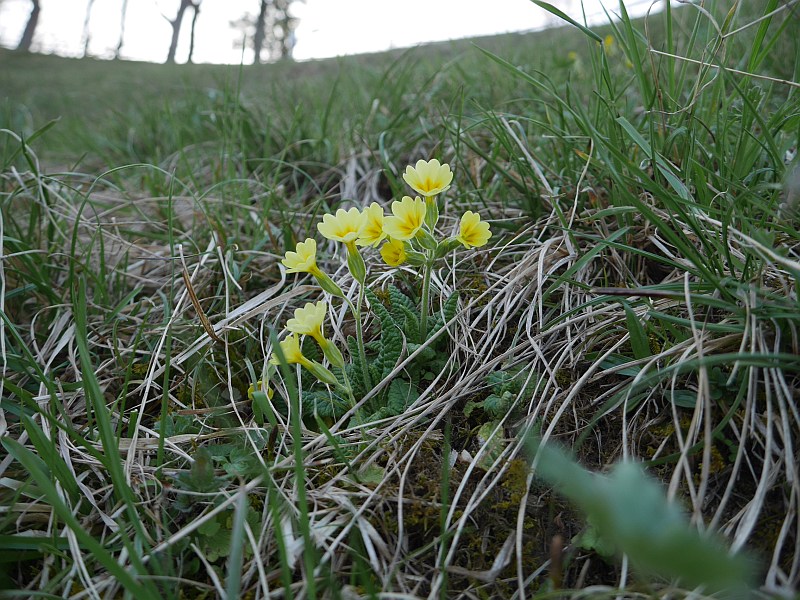
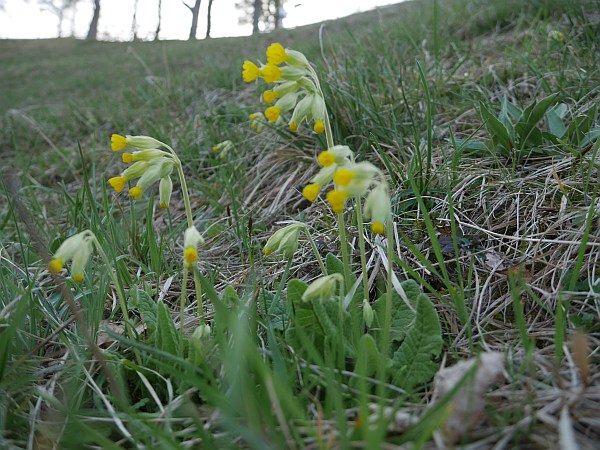
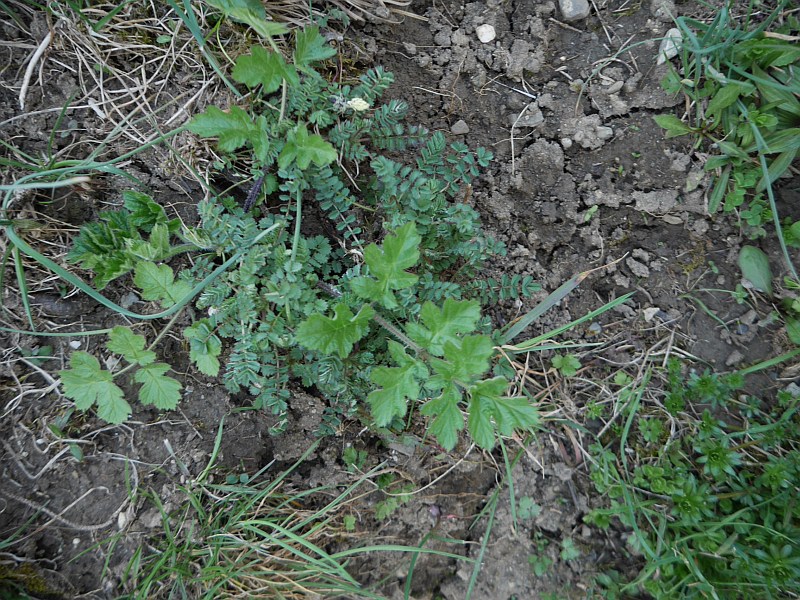
Primula veris
Heracleum
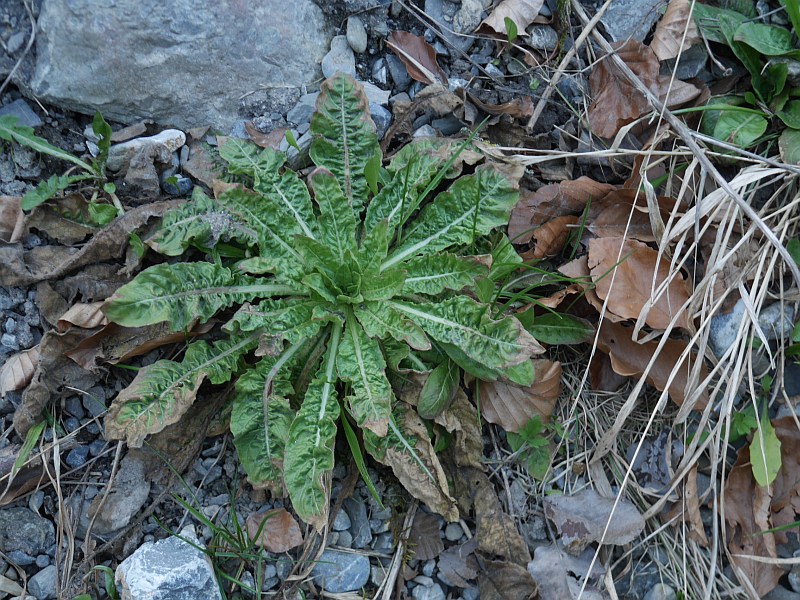
Taraxacum
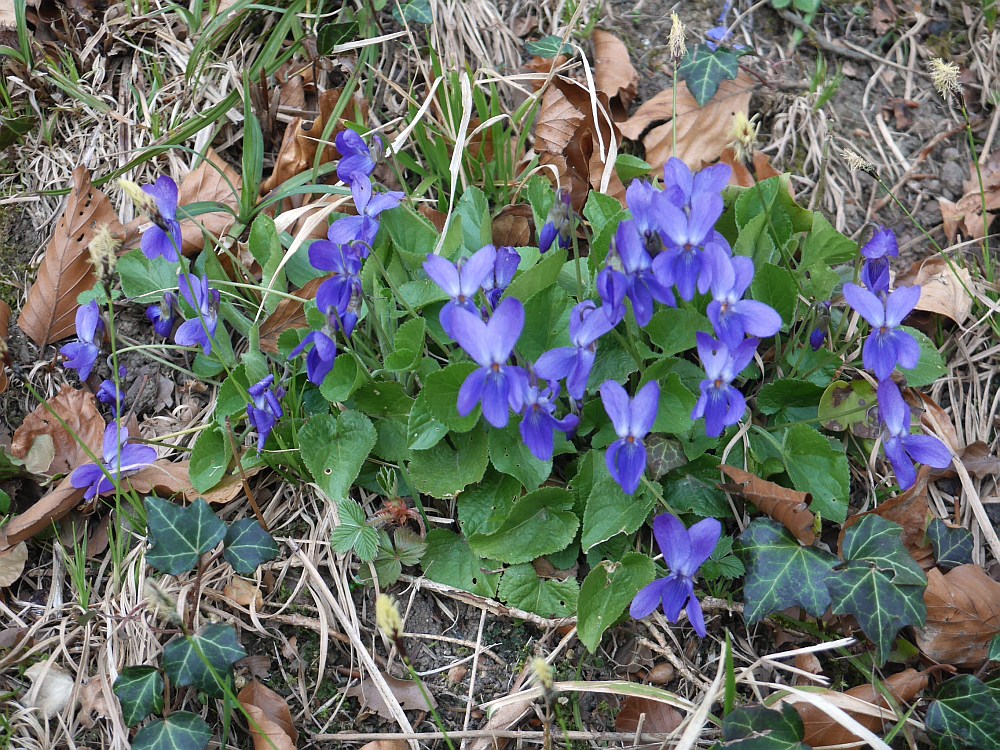
Viola
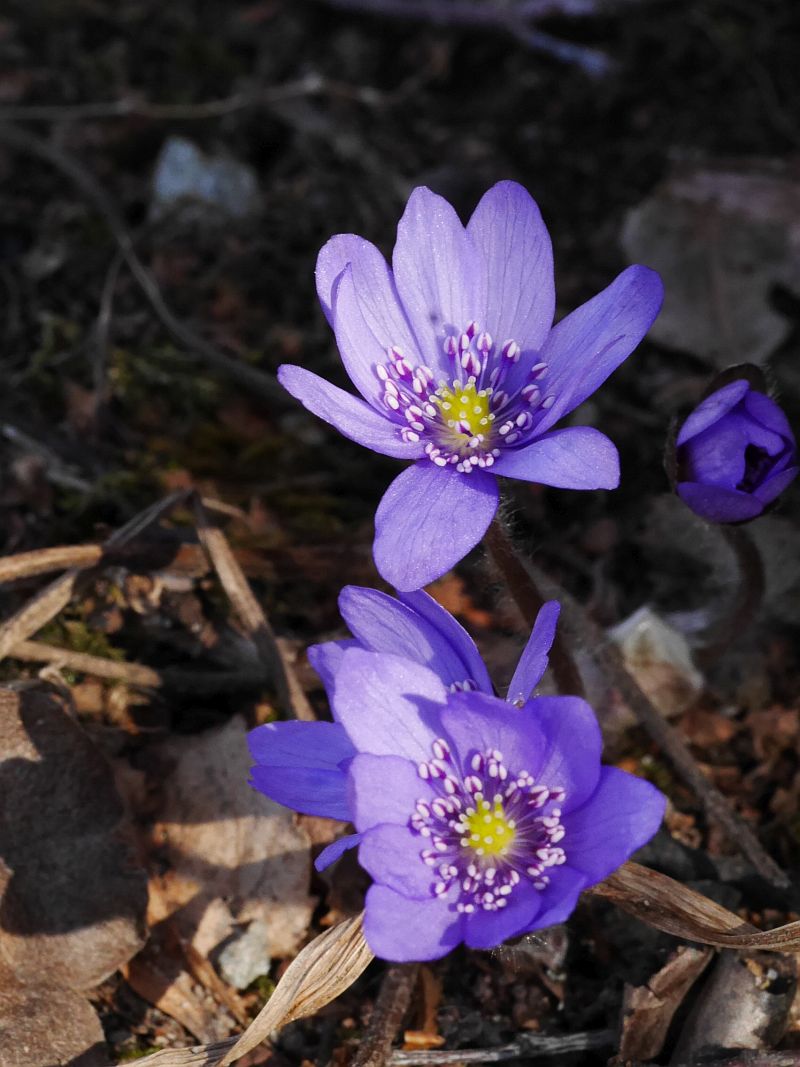
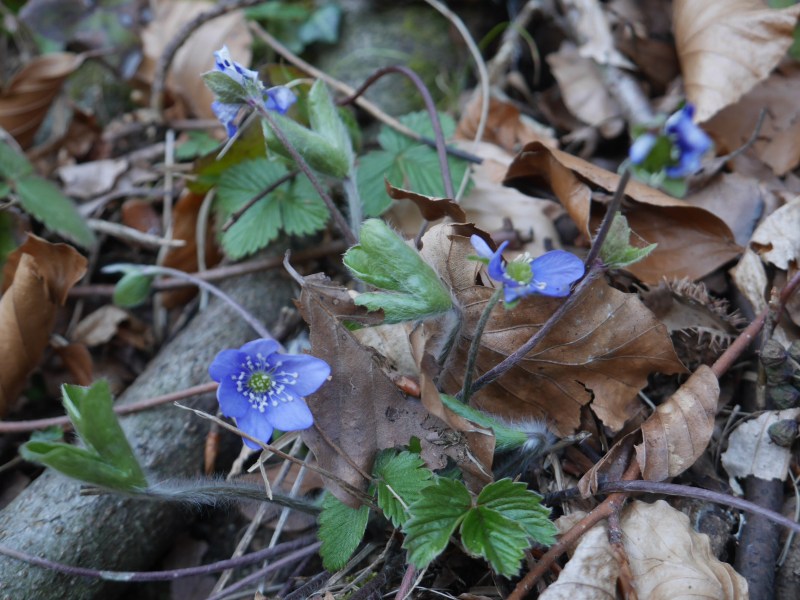
Hepatica (not edible)
Veronica beccabunga
Nettles
Barbarea vulgaris
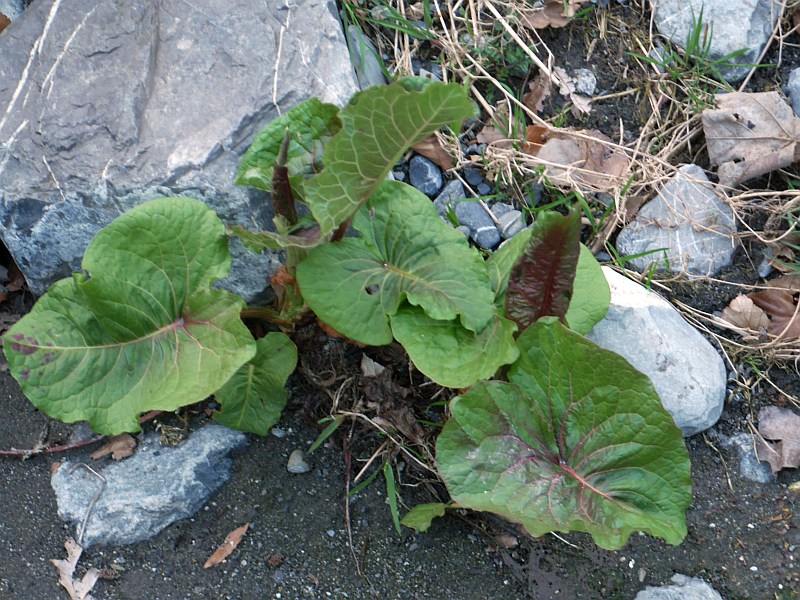
Fallopia (Japanese knotweed)
Evening Primrose (Oenothera biennis)
Primula vulgaris
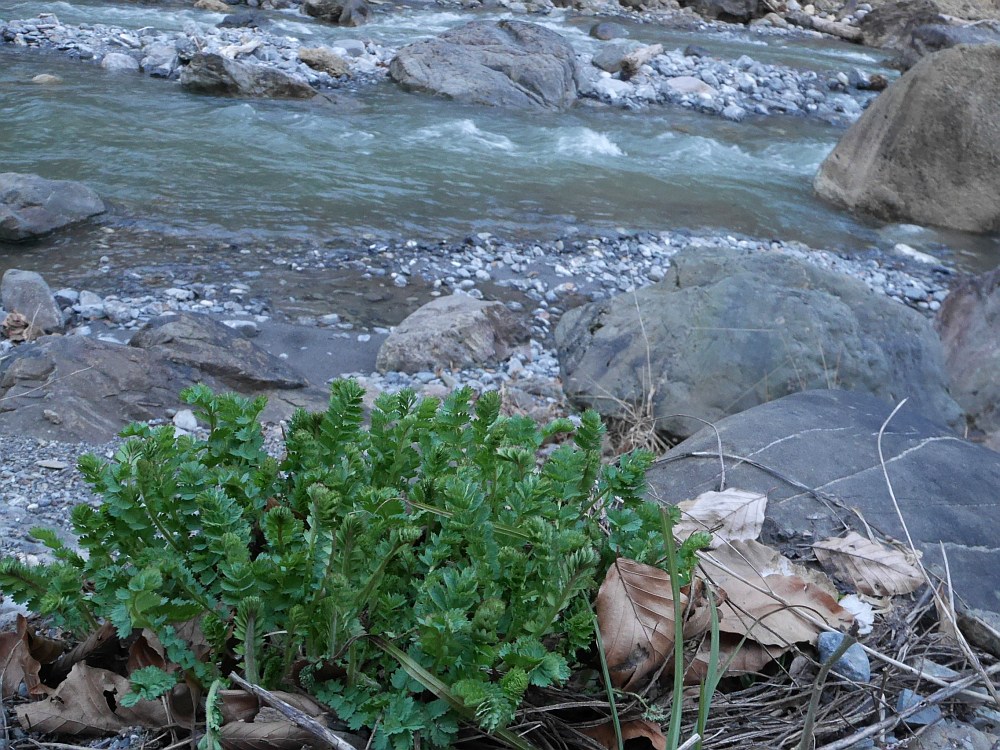
Sanguisorba minor
Aegopodium
Spring heath (Erica carnea)
Long distance paths
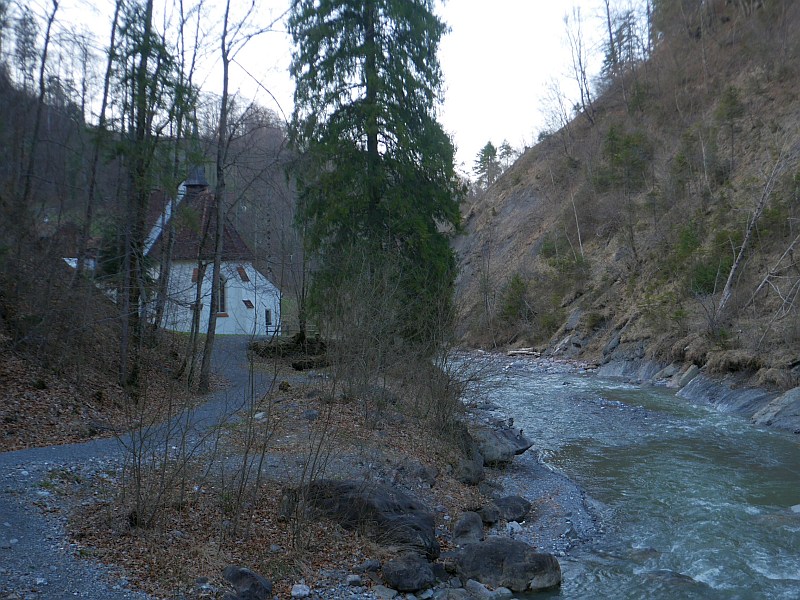
Chapel by the river
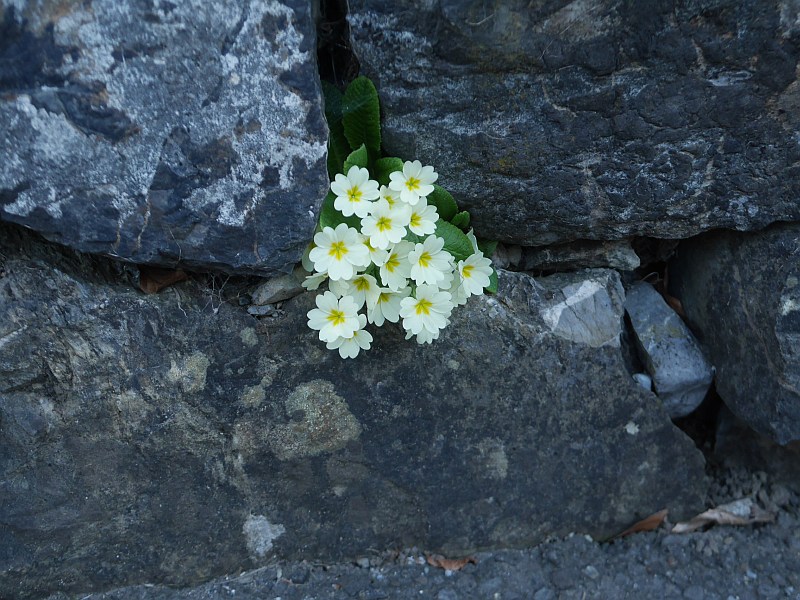
Primula vulgaris
More symposium food
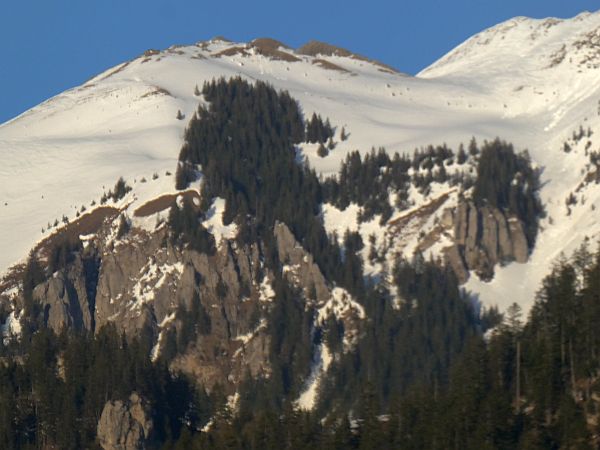
The view from the symposium
Another dandelion product
Joe Hollis
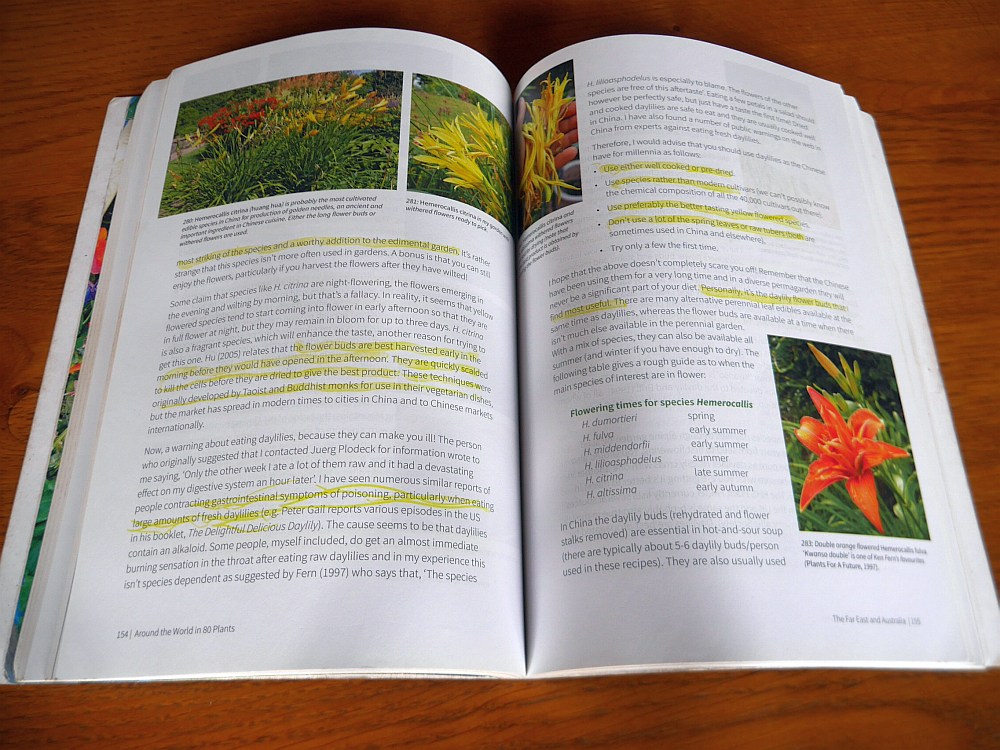
I was chuffed to sign Joe Hollis’ copy of my book and to see that he had made so many notes!
A bed right outside the venue with a contorted hazel full of ramsons (Allium ursinum)
The venue in Stans
View from a hike above Stans
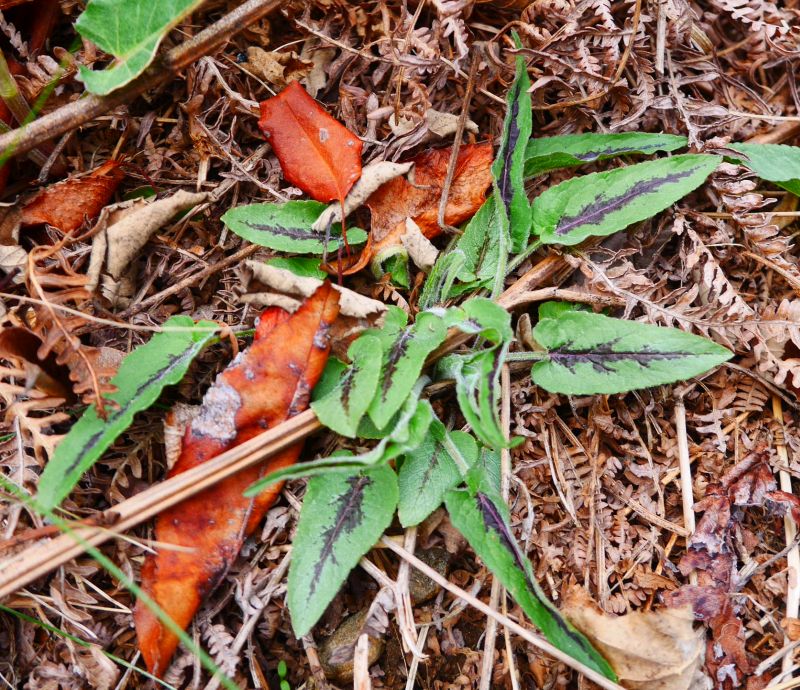
I saw this potential edimental Phyteuma spicata (?) in two places
One of the breakout sessions was based on two of us so-called “pioneers” telling our story as to how we became perennial vegetable growers. I was one. It was strange sitting in a room with groups discussing and analyzing my “case” ;)