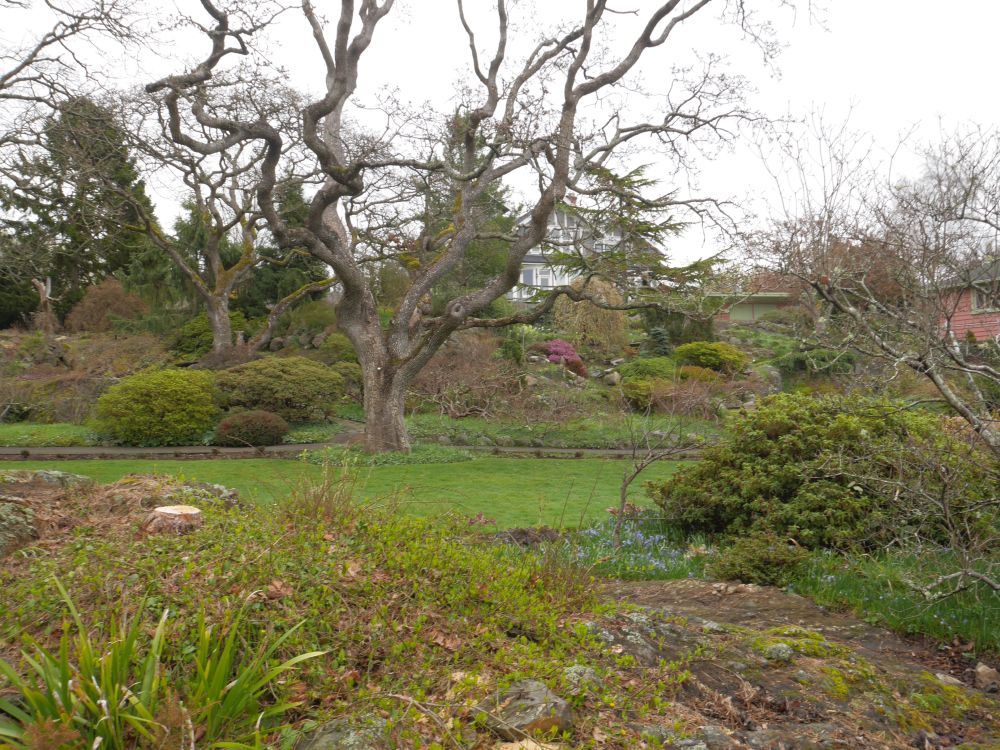
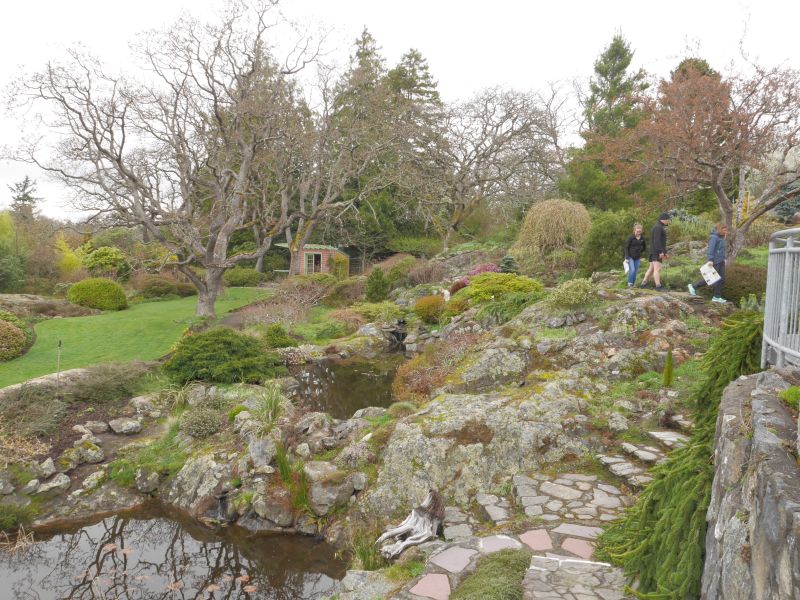
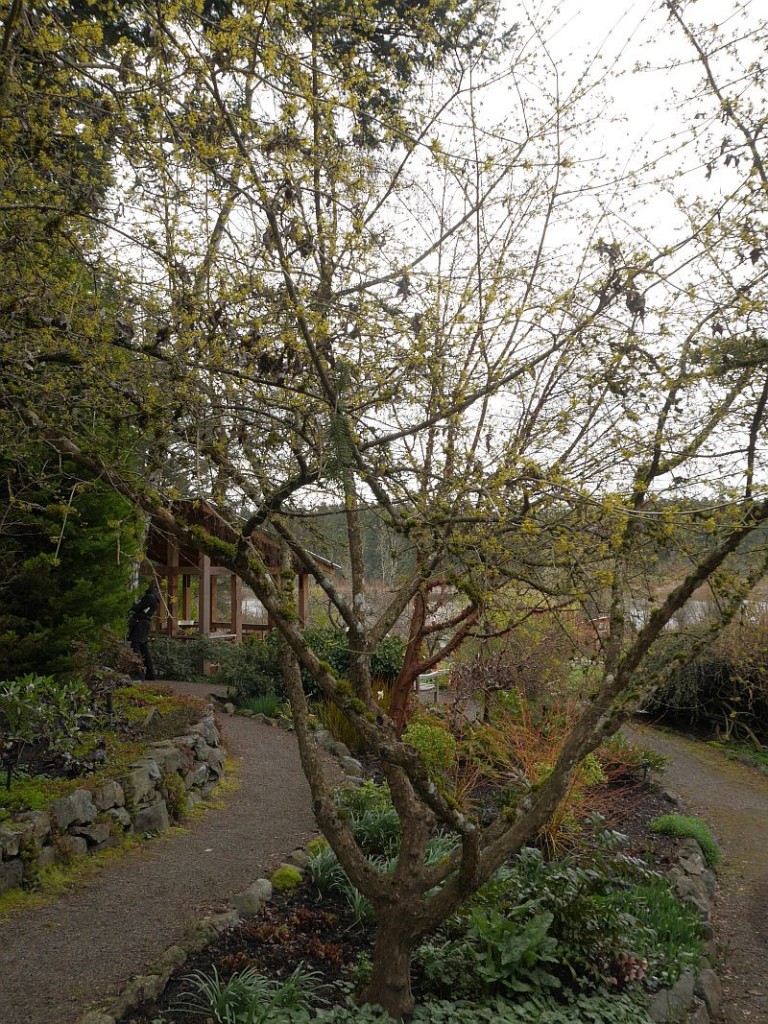
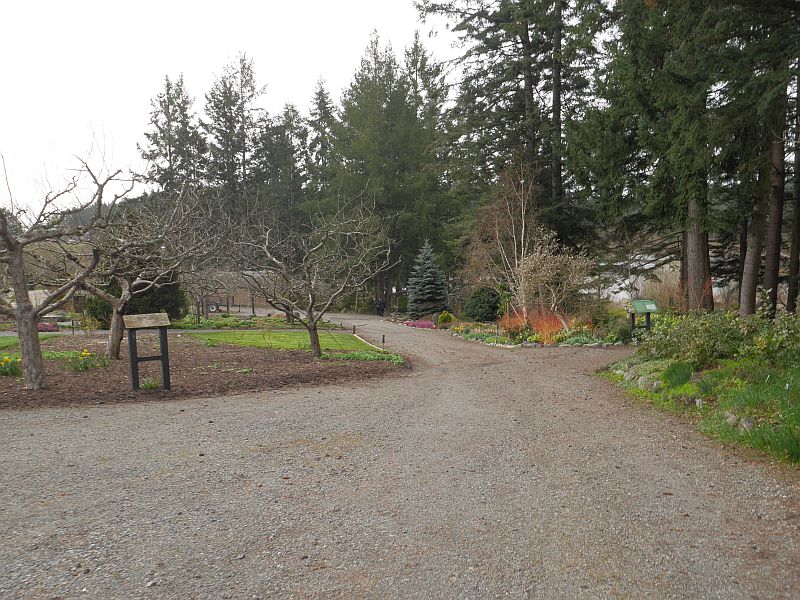
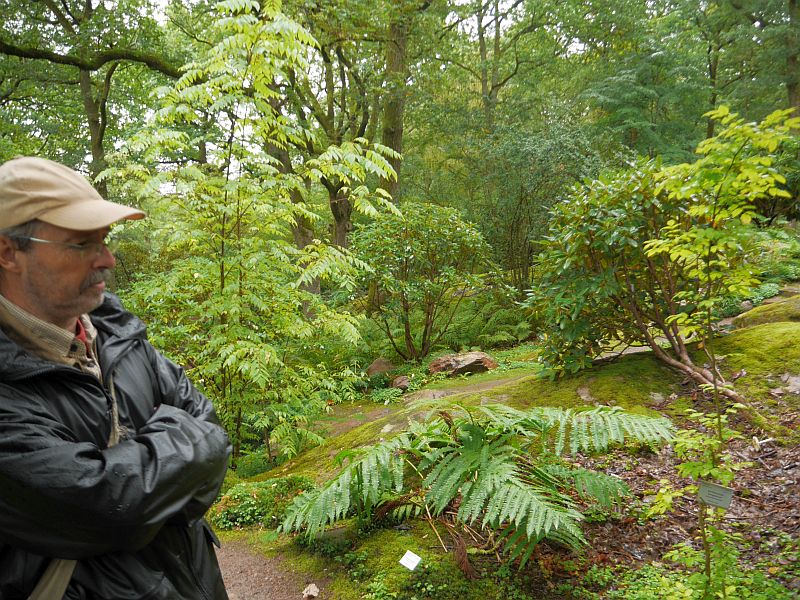
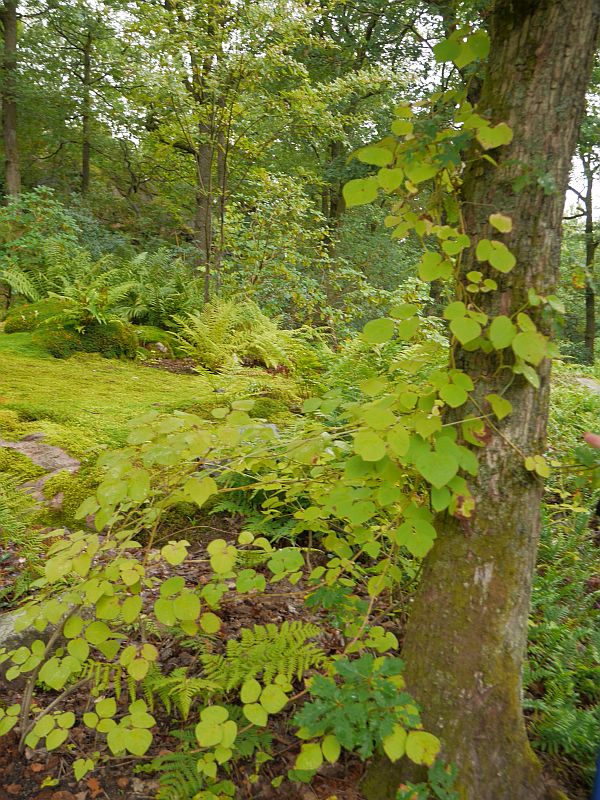
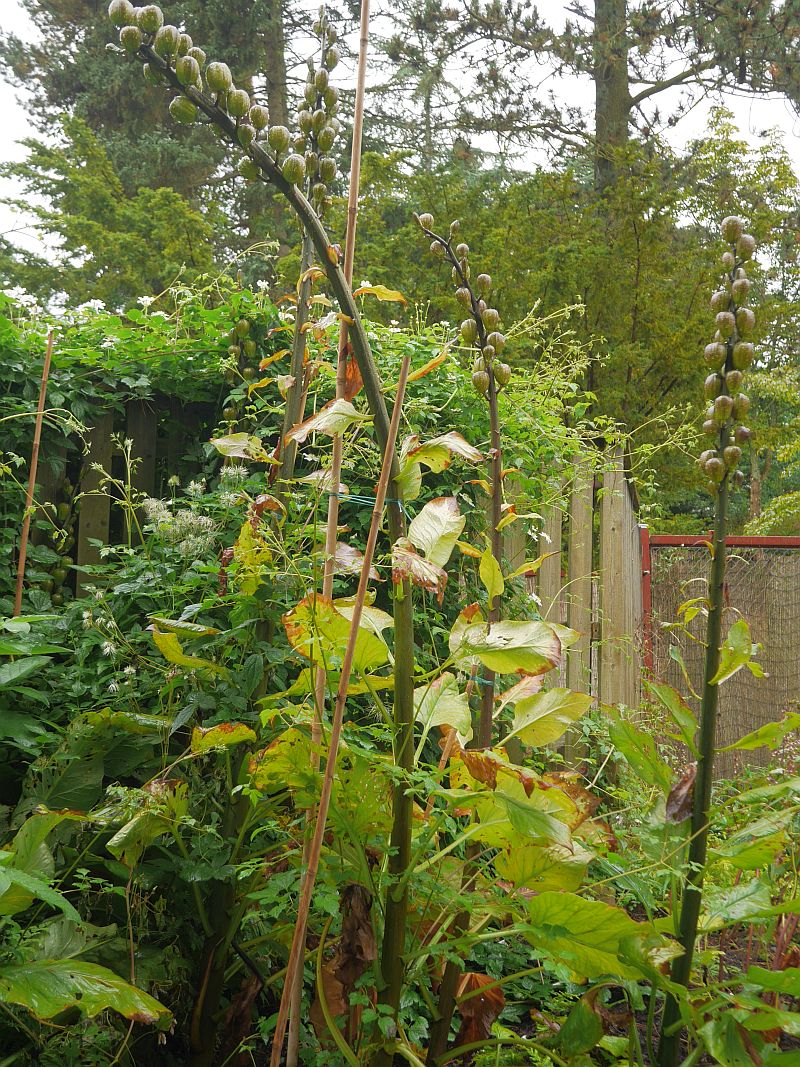
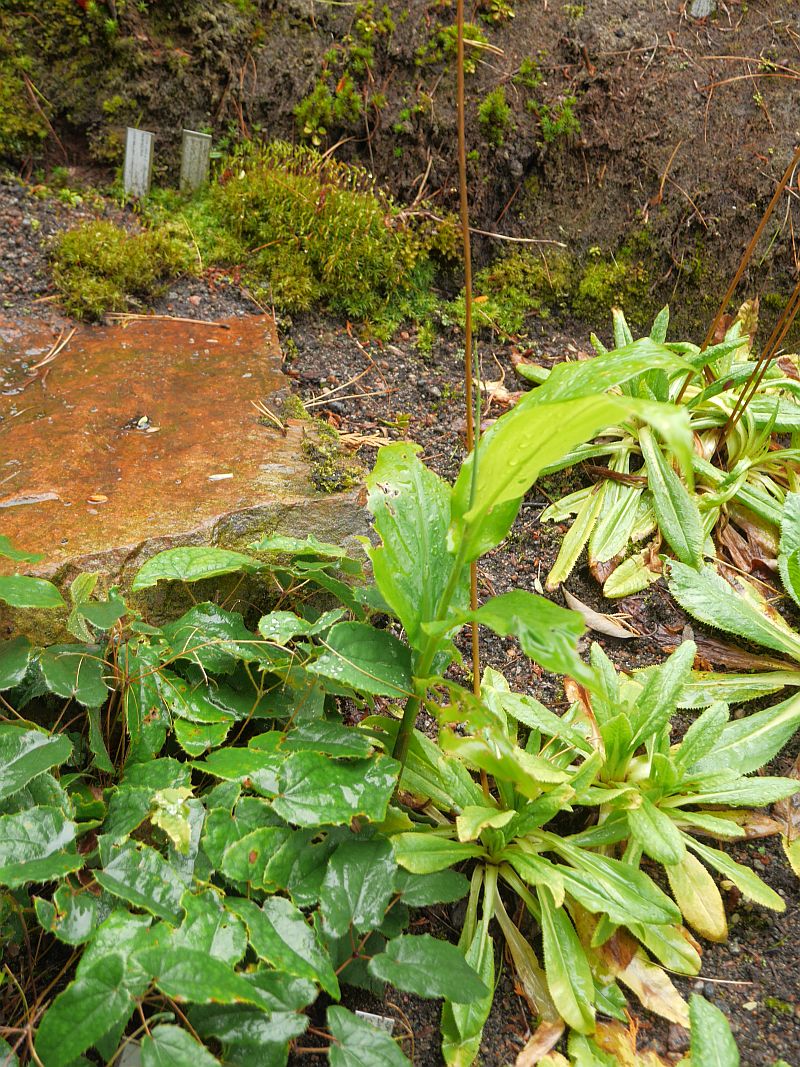
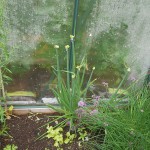
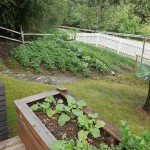
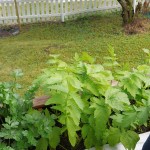
The next garden I visited in Victoria BC on 1st April 2017! The Abkhazi Gardens were created by Prince Nicholas Abkhazi from Georgia and his wife from 1947, taken over by the Land Conservancy to protect the garden against property development.
With Kelly Kerr
I think the garden was on the hill?
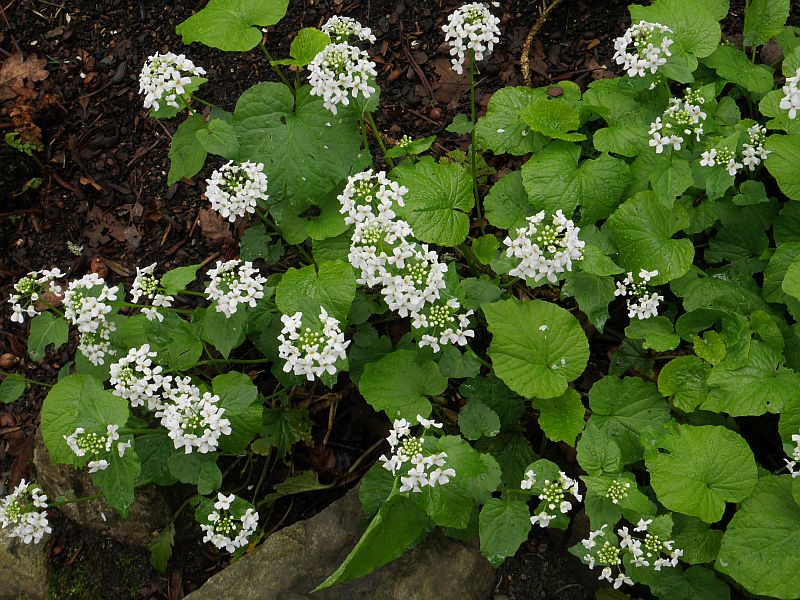
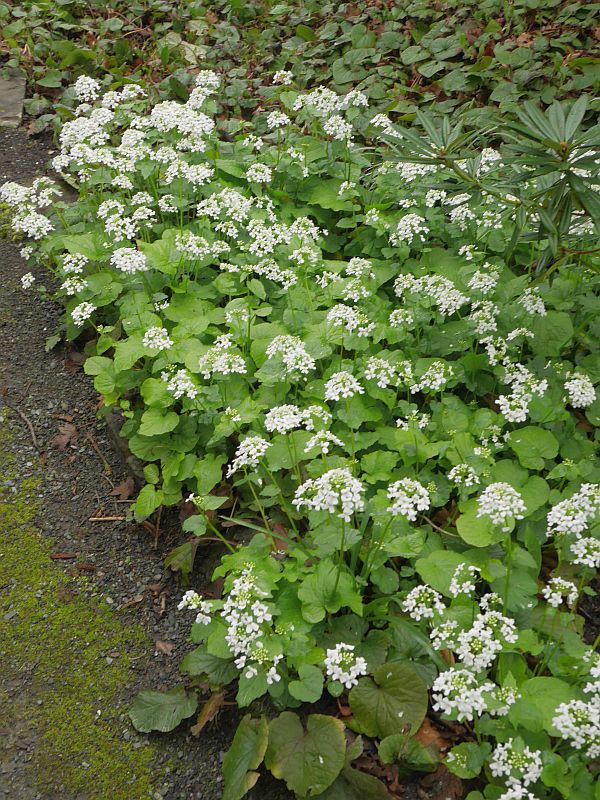
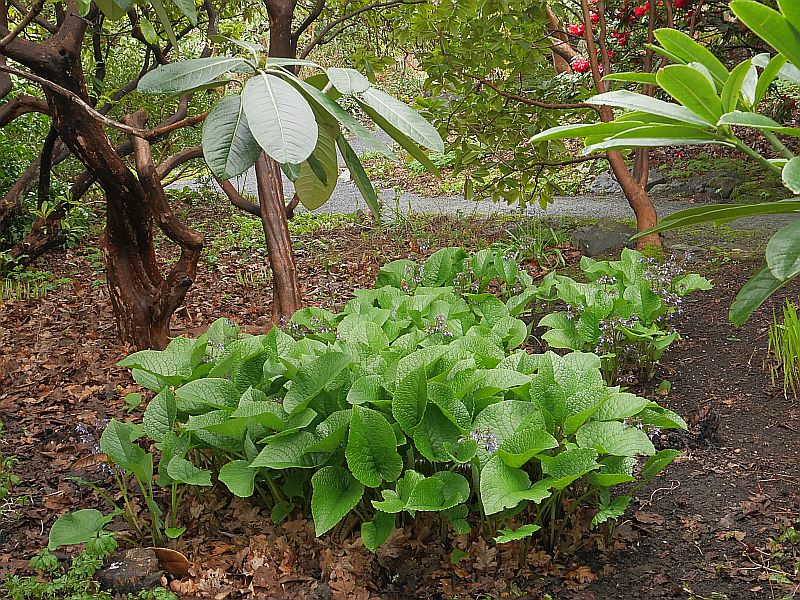
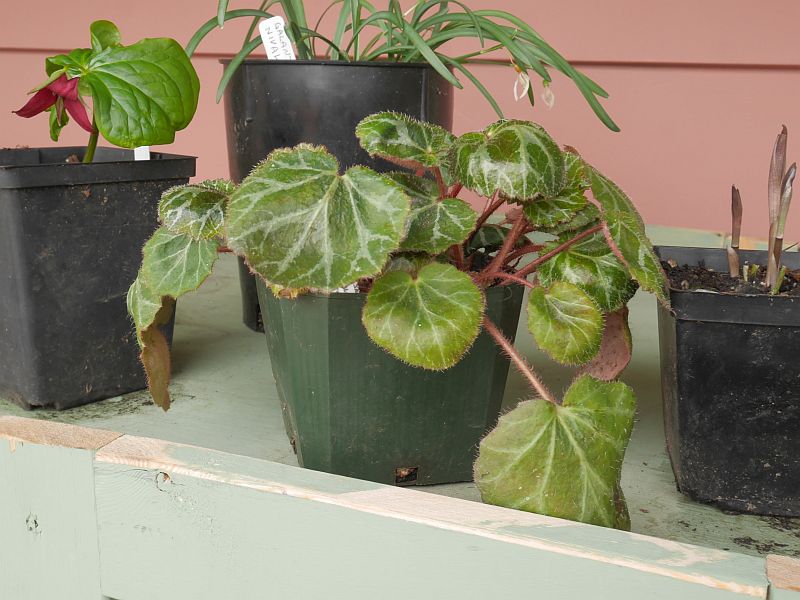
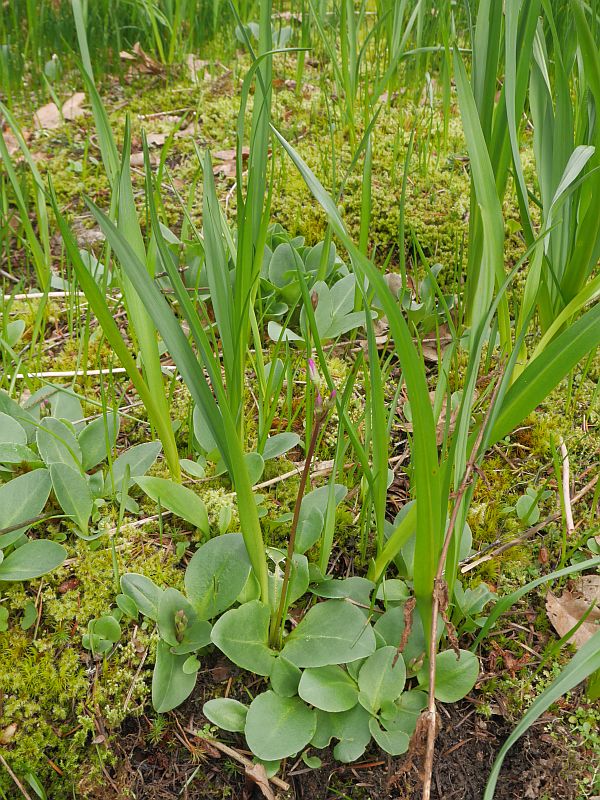
Pachyphragma macrophylla is a beautiful woodland edimental in the cabbage family which is one of the earliest flowering woodlanders. I had it for a number of years, but for some reason didn’t make notes of tasting it…I lost it unfortunately…replanted it last year and lost it again..
Pachyphragma macrophylla is from West Asia, N.E. Turkey to the W. Caucasus. It’s naturalized in Britain. Have a taste and let me know!
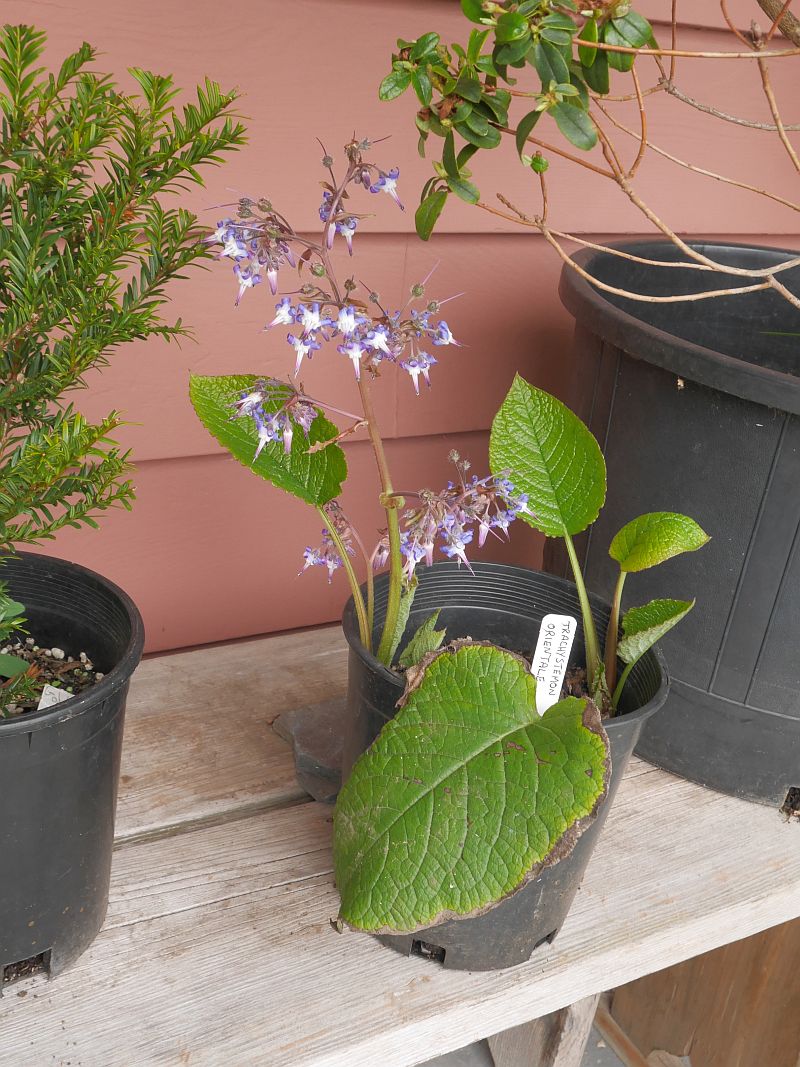
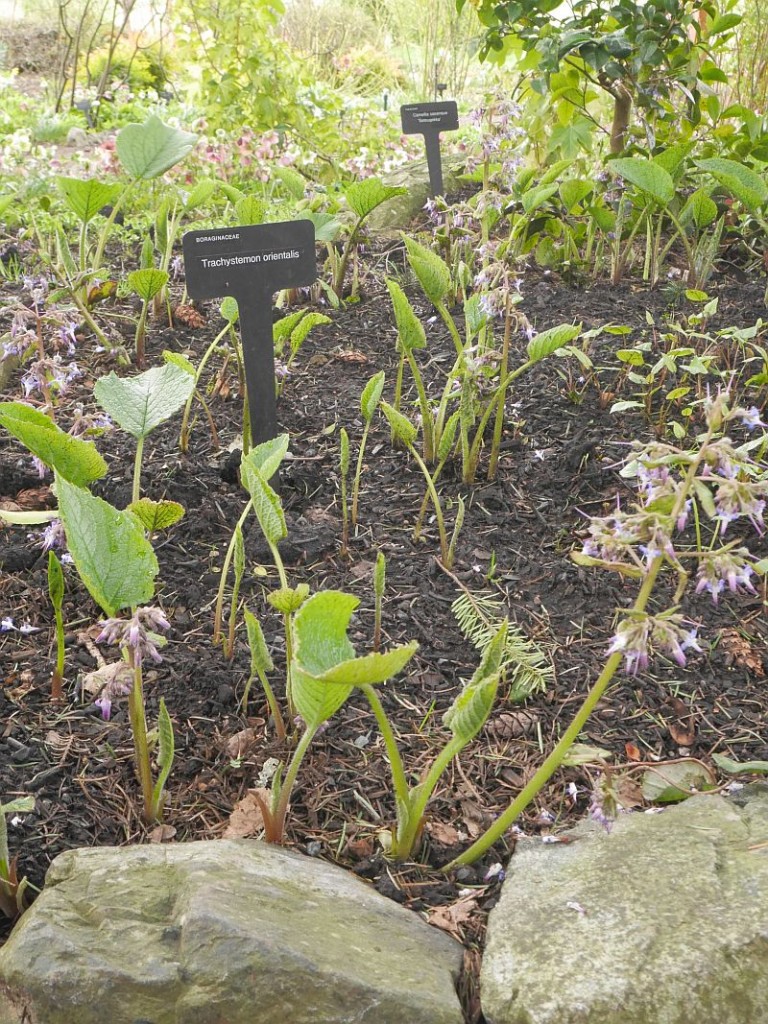
Trachystemon orientalis in flower
Polygonatum odoratum
Primula and Podophyllum
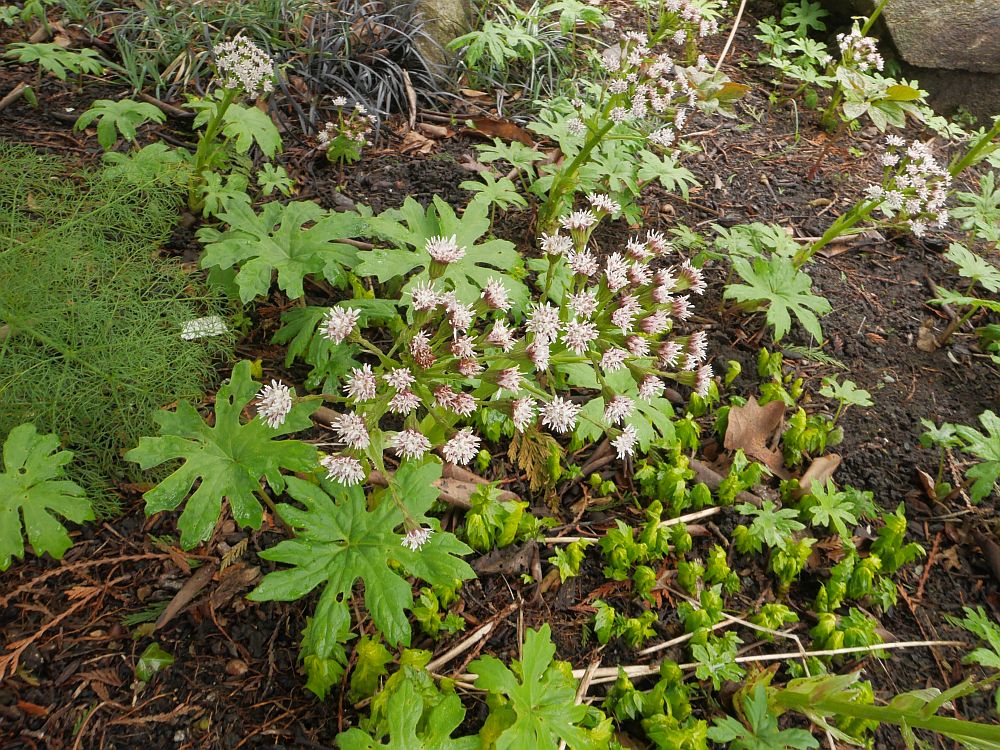
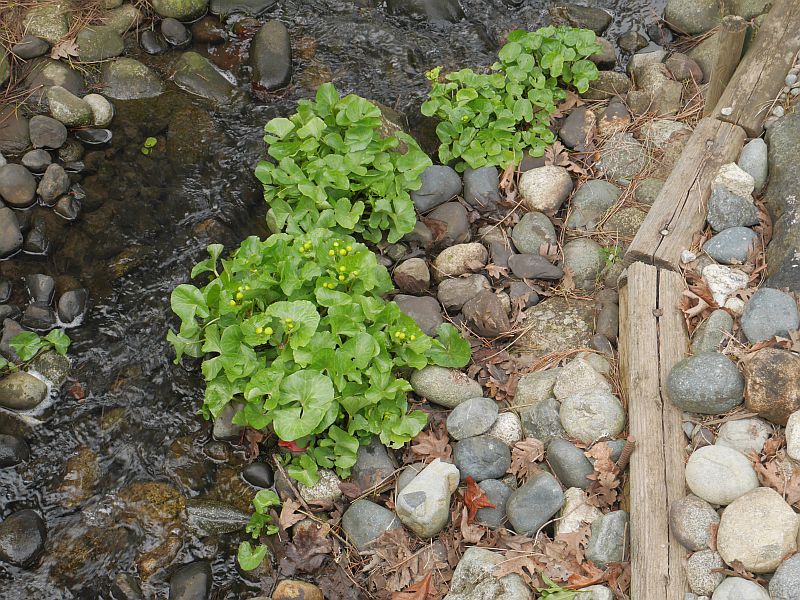
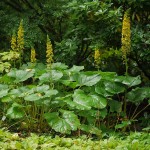
Petasites palmatus: the leaves and young stems were a vegetable for native american tribes
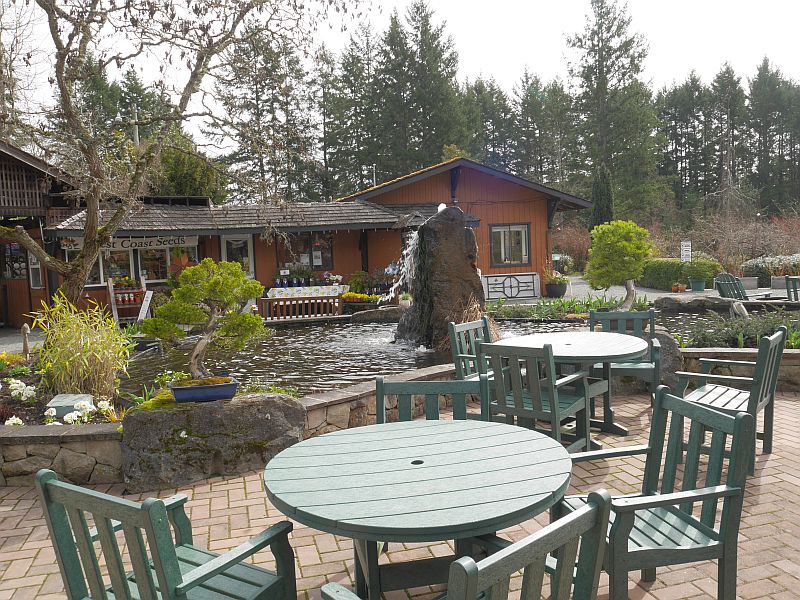
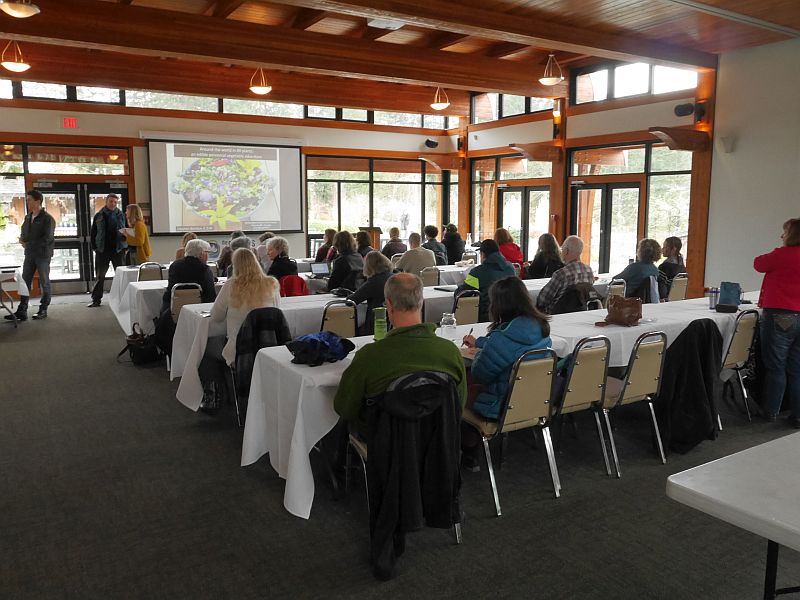
So much has happened this year that I haven’t had time to blog about several places I’ve visited this year….with a bit more time now I’m returning to my great trip to Canada in March and Victoria, BC. Solara Goldwynn, a local Permaculture Landscape Designer (Hatchet & Seed) had arranged a program for me including a walk and talk gig at the Garden of the Horticulture Centre of the Pacific, just 12 km from downtown Victoria! It’s a relatively young garden but full of interesting plants (far more interesting than the nearby world famous Butchart Gardens which doesn’t even merit a blog post!). It’s non-profit community focused garden with sustainable management practices. Here’s an album of pictures from the garden tour and talk – the participants preferred to stay inside and hear the whole lecture rather than going outside, so this album documents what we would have seen :)
Thanks to Solara Goldwynn for arranging this and great also to finally meet my friend Lara from Salt Spring Island!
Before my talk Solara and I walked around the garden, making a plan for a tour of these largely ornamental gardens looking for edimentals!! A good start was this sign announcing the Hosta garden, although it was a bit early to see any spring sprouts (Hostas appear in late spring) ;)
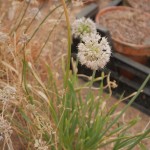
Allium acuminatum is one of the west coast wild onions, widely used by Native American peoples as food, including the Coastal Salish and Thompson
Caltha, cowslip or marsh marigold is also widely used for food and medicine by native peoples
Cornus officinalis, Sanshuyu: the fruits are used fresh and in an alcoholic drink
Cornus avellana “Contorta”, contorted Hazel. I hadn’t seen the name “Harry Lauder’s Walking Stick” before. From Wikipedia, it has Scottish roots!: “Sir Henry McLennan Lauder (4 August 1870 – 26 February 1950) was a notable Scottish entertainer, described by Sir Winston Churchill as ‘Scotland’s greatest ever ambassador!'” The Corkscrew Hazel was dubbed “Harry Lauder’s Walking Stick” because the comedian used a crooked branch cane during his performances.”
Harry Lauder and twisted walking stick
Harry Lauder’s Walking Stick
Sedum spectabile is a good spring salad plant!
Trachystemon orientalis took my thoughts to my friends in Bulgaria, Maria Tariyska and ИВАН КАМБУРОВ, plants bind us all together; see how this plant is eaten here – http://www.edimentals.com/blog/?page_id=1269
Nice touch at the entrance, including Trachystemon!
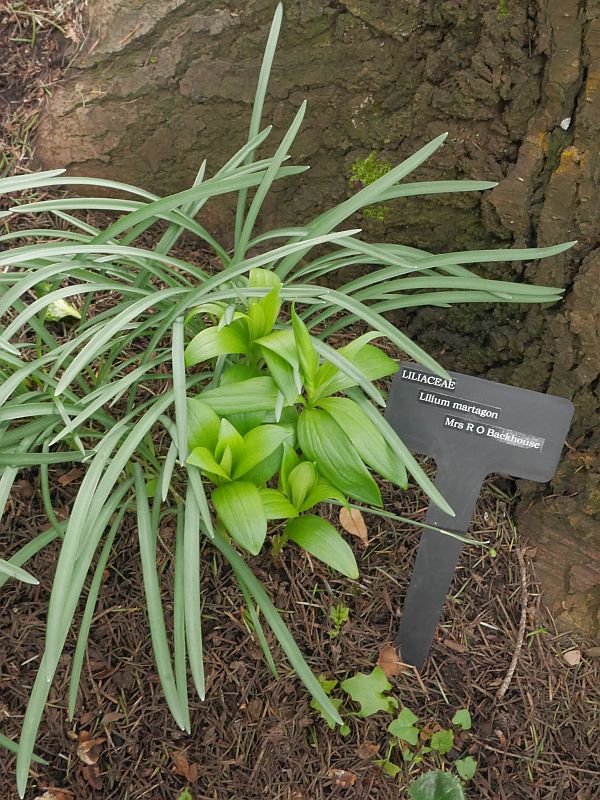
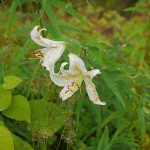
Lilium martagon has edible flowers and bulbs, a great plant for a forest garden
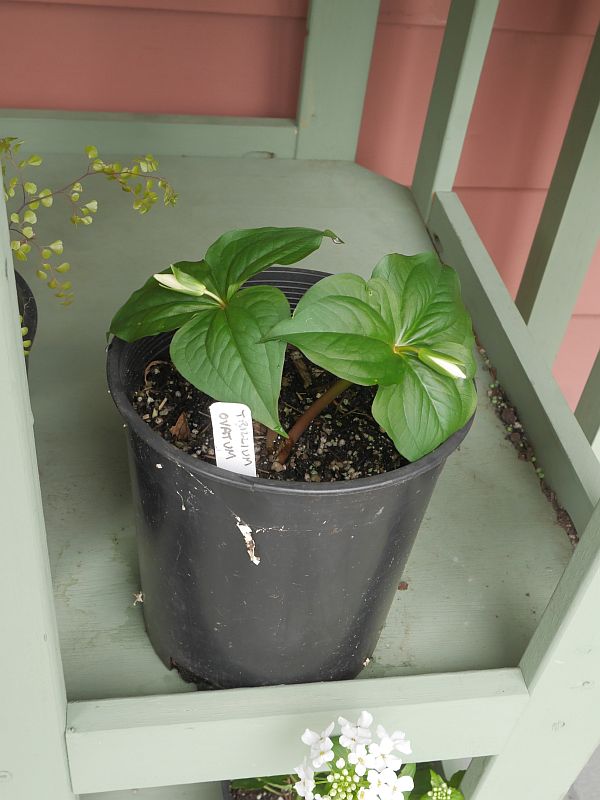
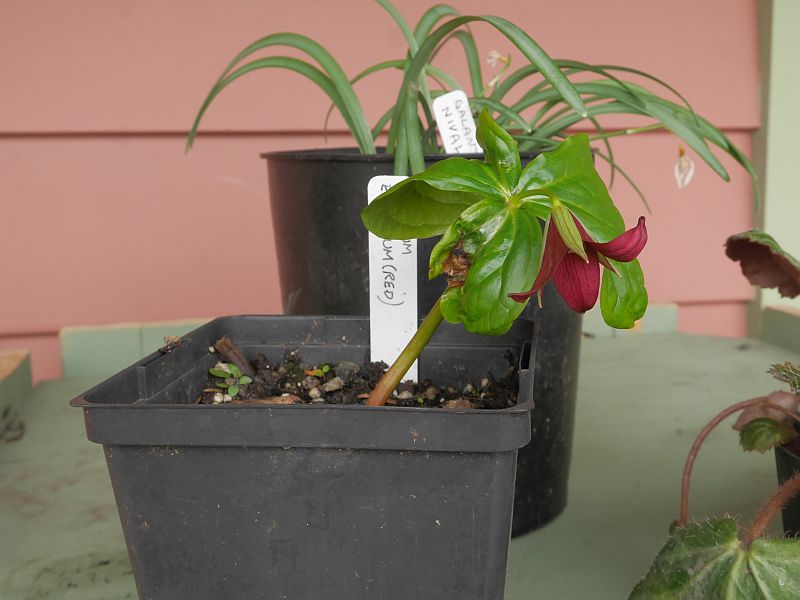
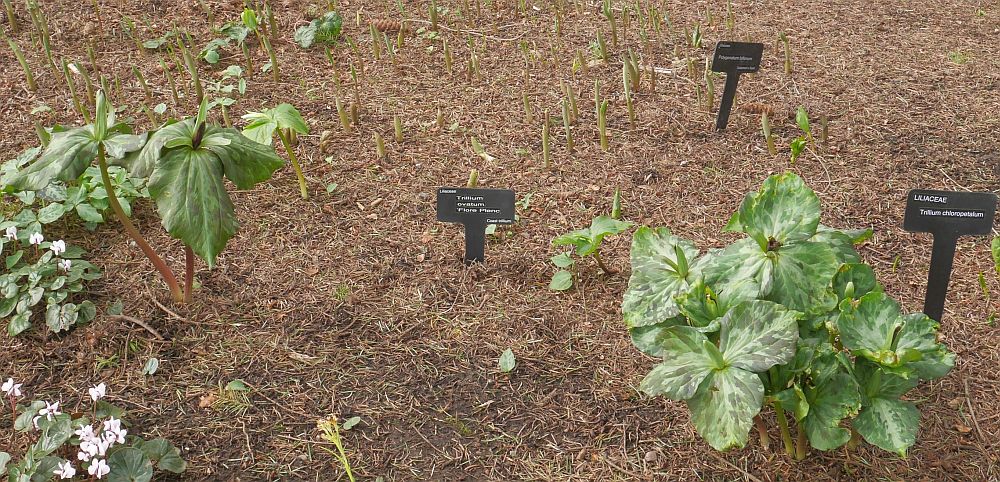
Trilliums and Polygonatums, more edible forest garden inhabitants
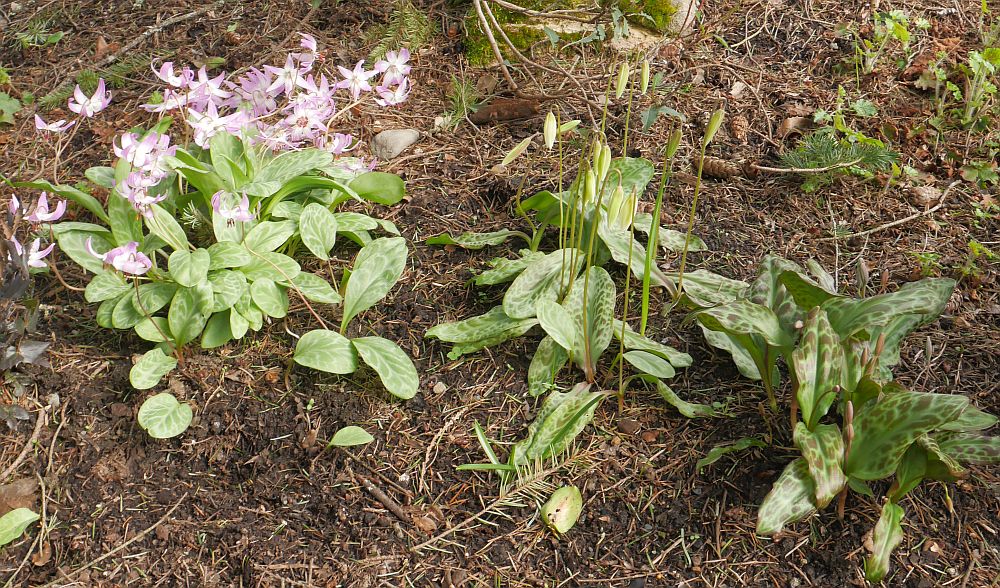
Erythroniums
…and more, Erythroniums
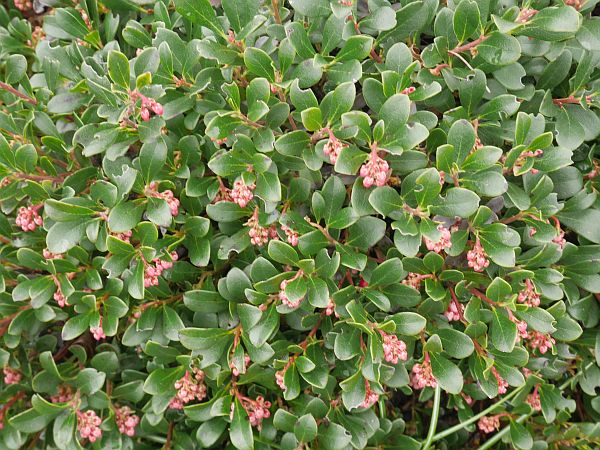
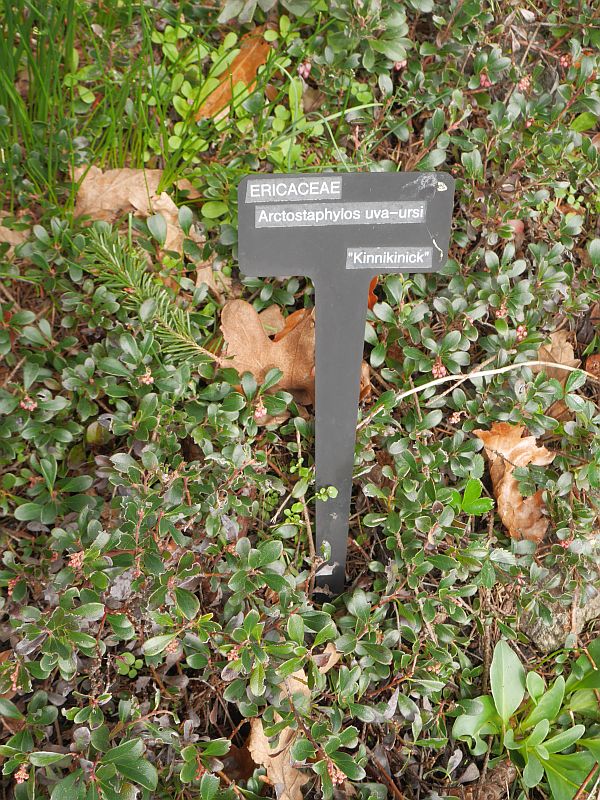
One of the edible berries of the west coast, kinnikinnick (melbær) is also widespread in Norway.
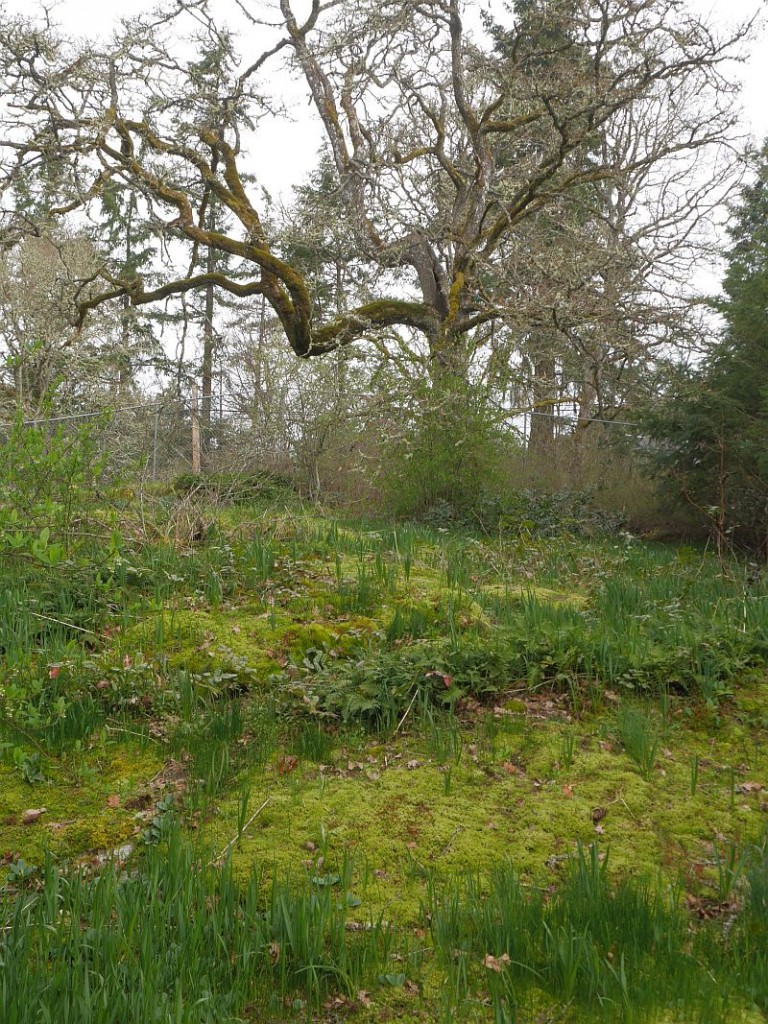
The native plant garden!
…with edible camas (Camassia) and garry oak
Edible camas and Dodecatheon
Ribes sanguineum “White Icicle”
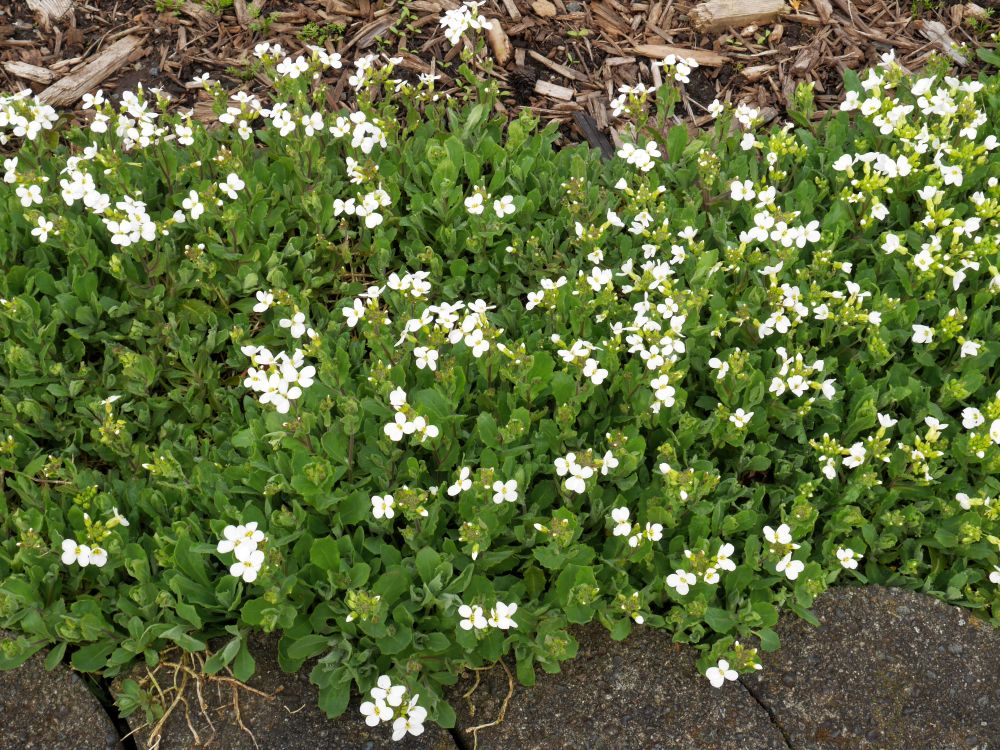
Arabis
Allium tuberosum
Allium schoenoprasum
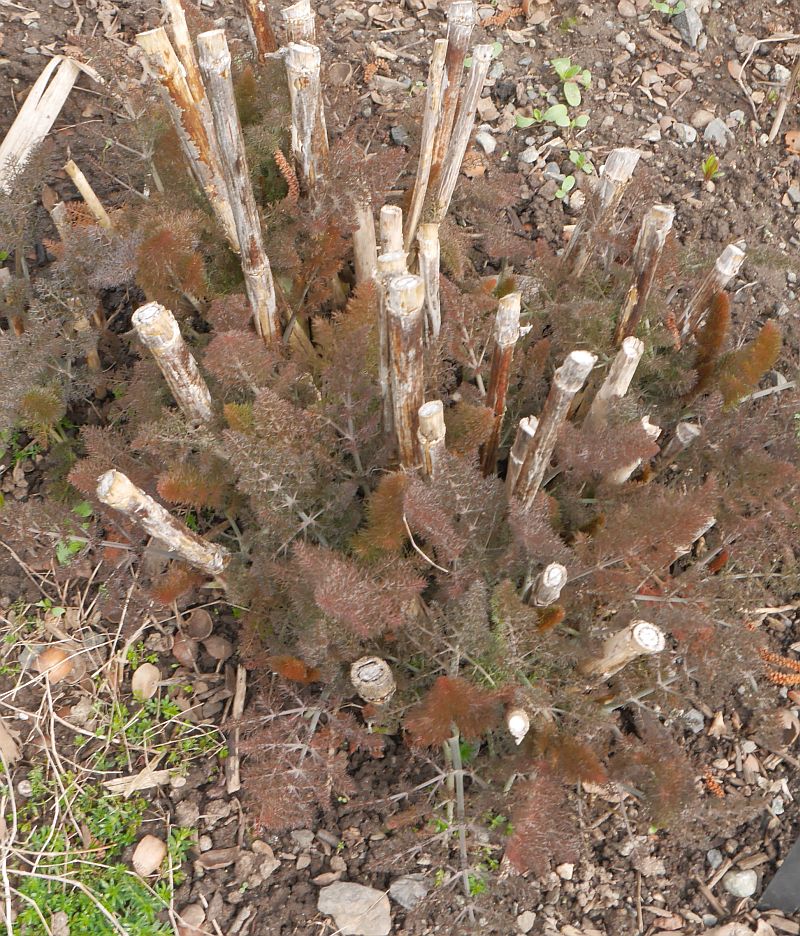
Bronze fennel
Lovage
Native Allium cernuum
Sweet cicely, Myrrhis odorata
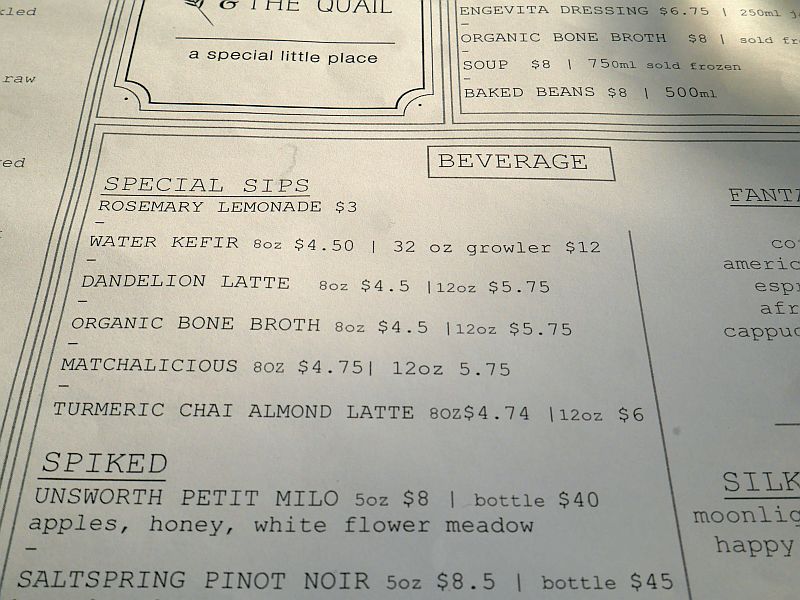
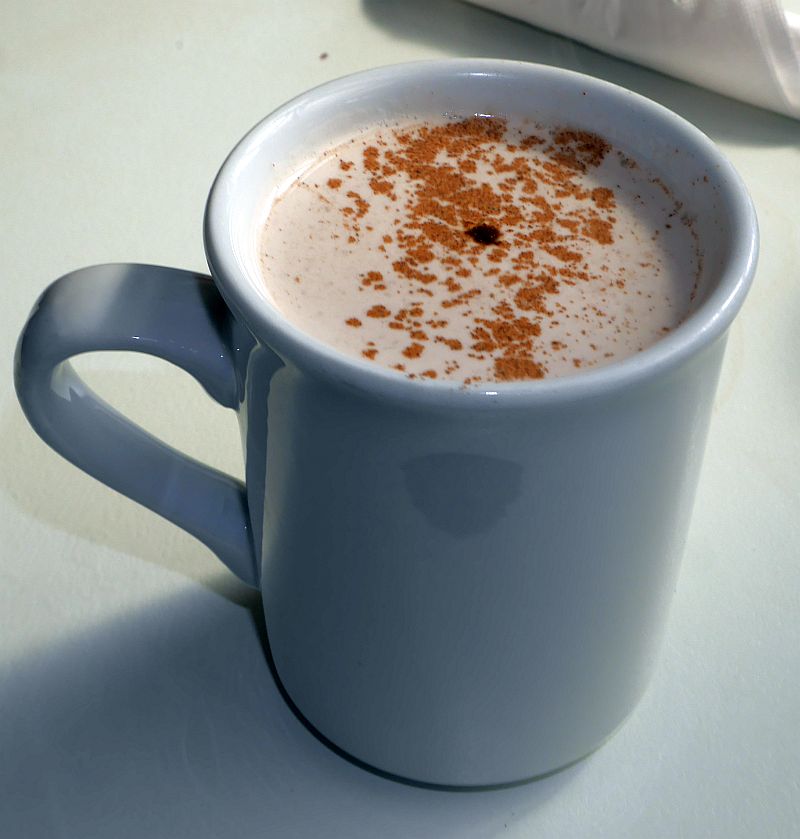
Guess what I chose? Dandelion Latte or Organic Bone Broth? ;)
Pictures from the Norwegian Permaculture Association’s Annual Meeting in Trondheim in June 2011 including design of the new Permabed at Svartlamoen and visit to the Edible Garden in Malvik!
The annual meeting was held at Svartlamoen (Remida)
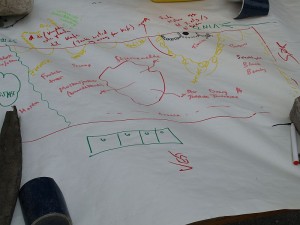
Design of the new permagarden at Svarlamoen!
Salad of the day had 106 different plants, 76% of which were perennials….
Allium detail from the day’s salad with Allium fistulosum and Douglas’ Onion (Allium douglasii), which has a narrow distribution straddling the border of Washington and Oregon in the US!
Mildrid and Jan Bang!
Birthday girl Benedicte Kihle! I remember making her a little 25 species salad on her 25th birthday!
Back in Nesodden (family visit) after two great days celebrating økouka (national organic week) in Porsgrunn! Thanks to Gunn Marit and Anne Sofie for inviting me and for all the great folks that attended, several of which were members of KVANN (Norwegian Seed Savers). On Wednesday evening I gave a 90min + talk about KVANN and perennial veggies, followed by the official opening of Porsgrunn Seed Library (with my Hablitzia – stjernemelde) seed being the first donation. Then, on Thursday morning, I gave a course on perennial veggies to a group in the newly restored Eidanger vicarage in which the Eidanger CSA (moved here this year from another site) has a room, including half an hour looking at wild and garden plants in the old rectory garden! A great mix of folks, it was particularly pleasing that two young students had travelled down from Bø i Telemark to learn more about perennial vegetables! It was also good to see the leader of the Århus CSA scheme Tove and the new gardener Katrine in attendance! I’d met Tove on that memorable life-changing visit to Århus 5 years ago (http://www.edimentals.com/blog/?p=13690). There are lots of exciting sustainable developments and initiatives in Porsgrunn and I also talked to a guy with plans of converting an old farm to a forest garden. Great also to meet a newly arrived American wwoofer who had travelled south from Engeløya (Steigen) where she’d been working for my friend Eva Bakkeslett (see http://www.edimentals.com/blog/?page_id=1720 about my 2015 visit to Engeløya). For this reason, the course was in English!! Eidanger is destined to become a centre of vegetable diversity in the future with such a great group of visionary folk and a lot of land to work with!
See also this aerial view of the Porsgrunn CSA at the Eidanger Prestegård: https://scontent-arn2-1.xx.fbcdn.net/v/t31.0-8/20863217_10214875018217539_4042211065793829304_o.jpg?oh=014f038146772c9a50993319a5a1c027&oe=5A546BFA
A picture album of edible species spotted in the Gothenberg Botanical garden on the last day of August 2017! Thanks to Johan Nilson for showing me around!
Hosta “Halcyon”
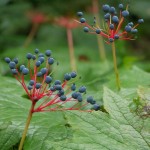
Diphylleia cymosa is in the Berberidaceae …the berries of D. grayi are used in Japan
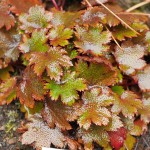
Alchemilla (Lady’s Mantle)
Gaylussacia dumosa, Dwarf Huckleberry from North America
A nice group of Allium wallichii
Allium wallichii
I’ve never seen North American Plantago cordata before, somewhat different leaves than other Plantagos
Canadian wood nettle (Laportea canadensis) is a good edible nettle (use leaves and stalks) from North American woodlands!
Labelled Allium taquetii, a synonym of thunbergii, nice in bud!
Saxifraga fortunei “Conwy Snow” : the leaves of this species (and a few others like stolonifera) are used in tempura in Japan. See http://www.edimentals.com/blog/?p=5495
Lilium auratum, one of the edible Asian species”
Doellingeria scabra is the new name of one of my favourite edimentals, Aster scaber (Korea Aster; see my book for its use!). I don’t think I’ve seen this one in botanical gardens before!
Allium ovalifolium
Allium cyaneum
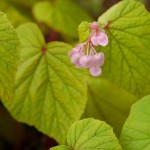
Begonia chinensis has edible flowers
The Japanese woodland has a good stand of edimental Ligularia fischeri (see edimentals.com for more)
Next to the Ligularia, there is a big stand of Cacalia delphiniifolia…I saw the leaves of this for sale in Japanese supermarkets, also used in tempura
Saxifraga fusca
Thanks to Johan Nilson for showing me round the bulb houses, where there are many Alliums!
Eryngium maritimum, sea holly, being grown for replanting in nature
I nice light blue variant of Allium beesianum growing alongside a normal flowered form
Nice to see a good form of dandelion (Taraxacum) ;)
Umbilicus tropaeofolius….I’ve never seen this Iranian brother of the European navelwort
A large Asian form of Oxyria digyna was interesting
Allium thunbergiii, one of the late flowering species
Allium hookeri var muliense, a good yellow flowered form!
I visited Bo “Bosse” Blomquist last year outside of Gothenburg and despite it being a bit late in the day and almost dark at the end, I was really impressed by his collection of edible trees, shrubs and bushes! He works in Gothenburg and is a regular visitor to the gardens! We agreed to meet before my talk and a group of friends also joined us!! It was great to walk in the garden with Bosse as he knew all the interesting edible woody plants! Thanks!! Here are a selection of pictures!
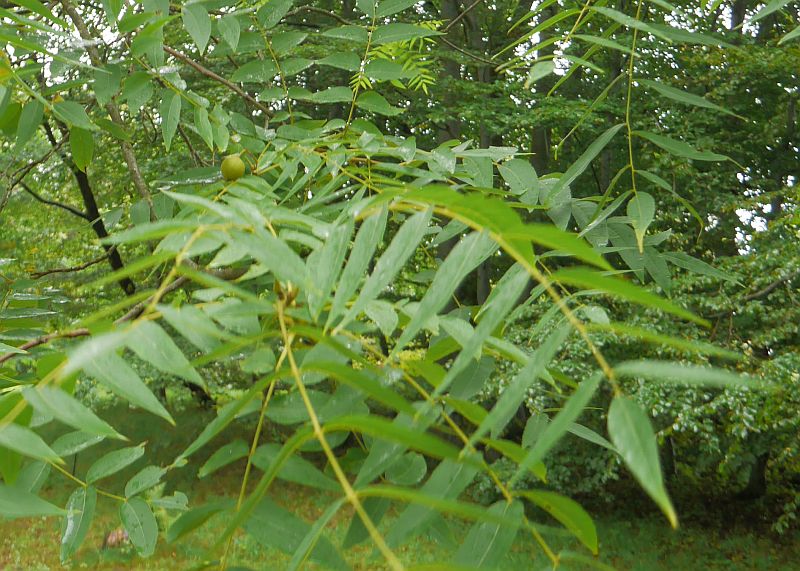
A walnut I’ve never seen before, Juglans microcarpa (Little walnut/Texas walnut)…this tree was surpisingly old, almost 90 if I remember right!
Juglans microcarpa (Little walnut/Texas walnut
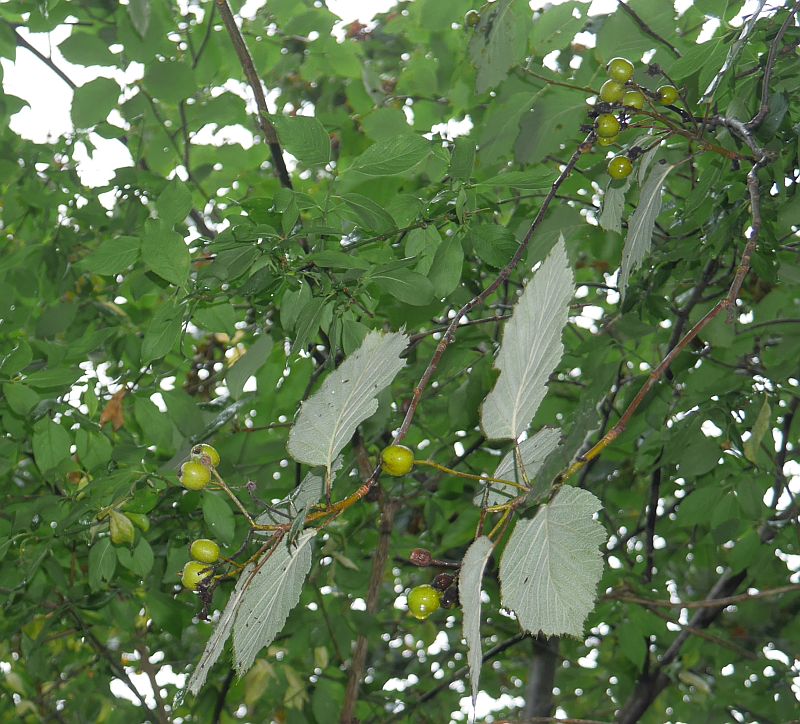
Another surprise, Sorbus devonensis, which I first saw in Martin Crawford’s forest garden about 11 years ago :)
Another surprise, Dystaenia takesimana, a plant in the carrot family that I haven’t succeeded with…sometimes called Korean celery due to the taste of the leaves
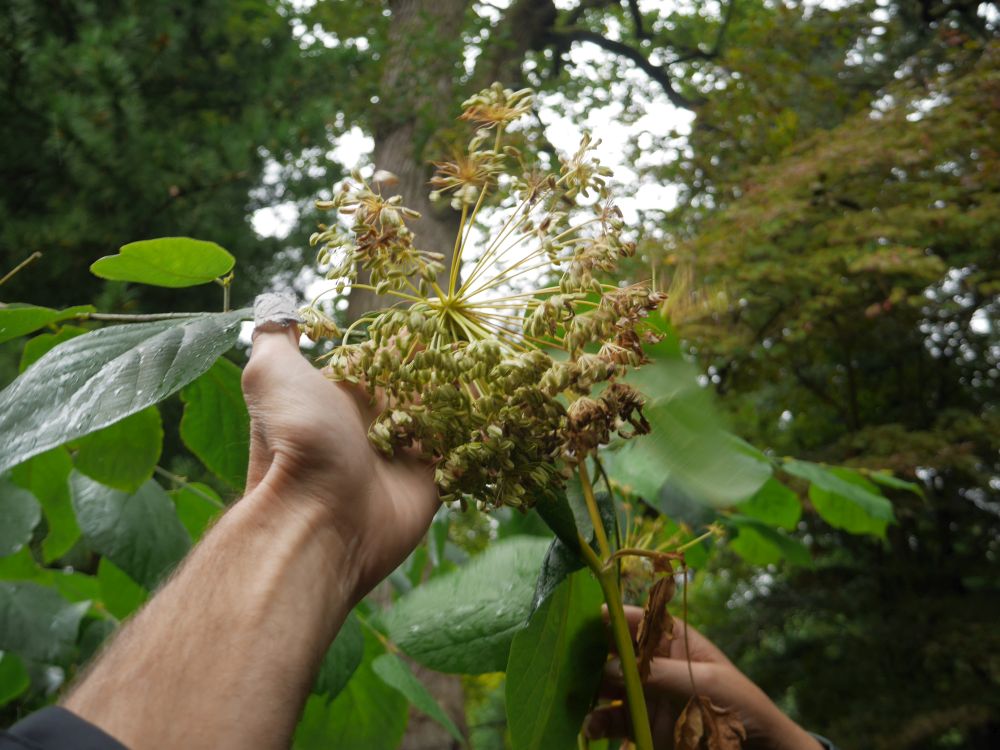
…and then Aralia cordata var. sachalinensis, Sakhalin-udo!!
Aralia cordata var. sachalinensis, Sakhalin-udo!
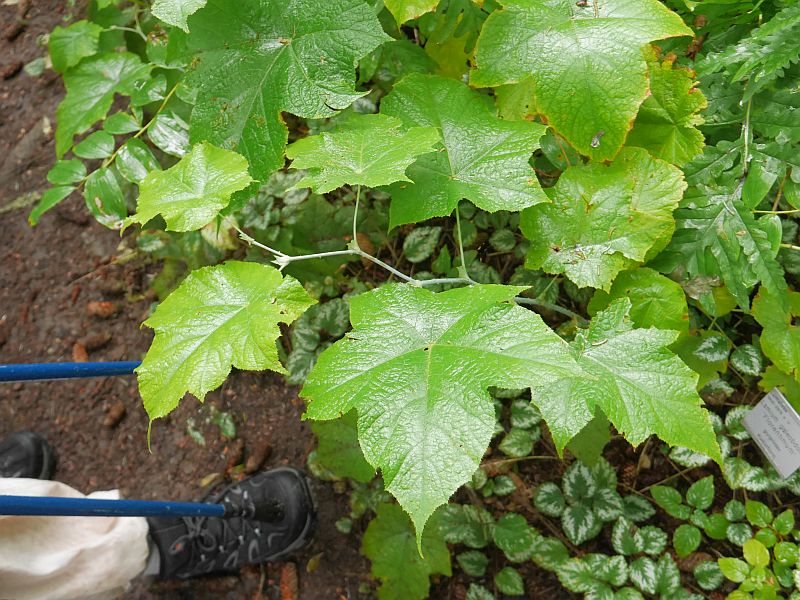
Rubus peltatus from Japan (is in my Japanese foraging book)
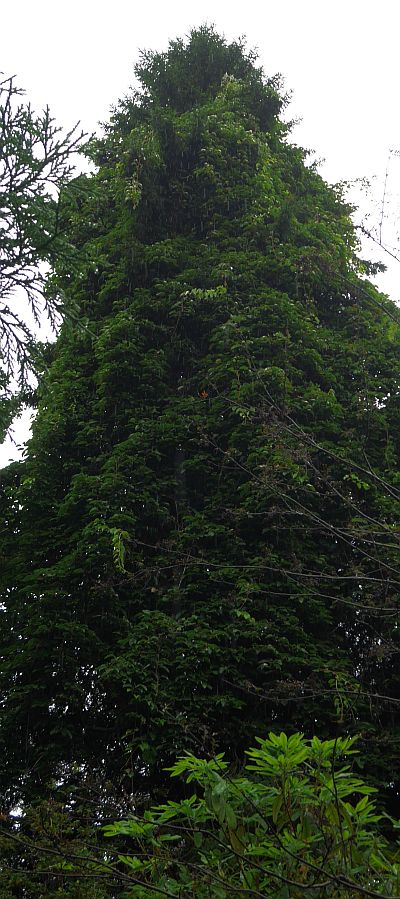
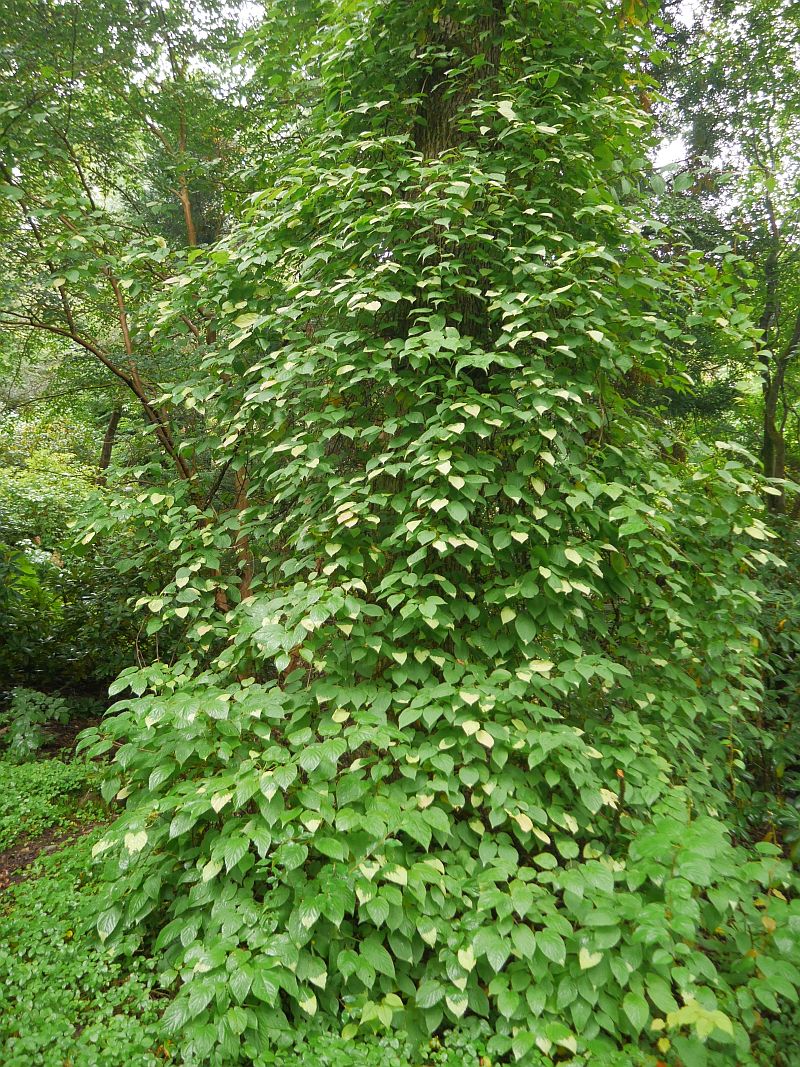
Another thing I’d missed earlier in the day (looking down too much) was the hardy kiwi (Actinidia arguta I think) which has climbed right to the top of this conifer…
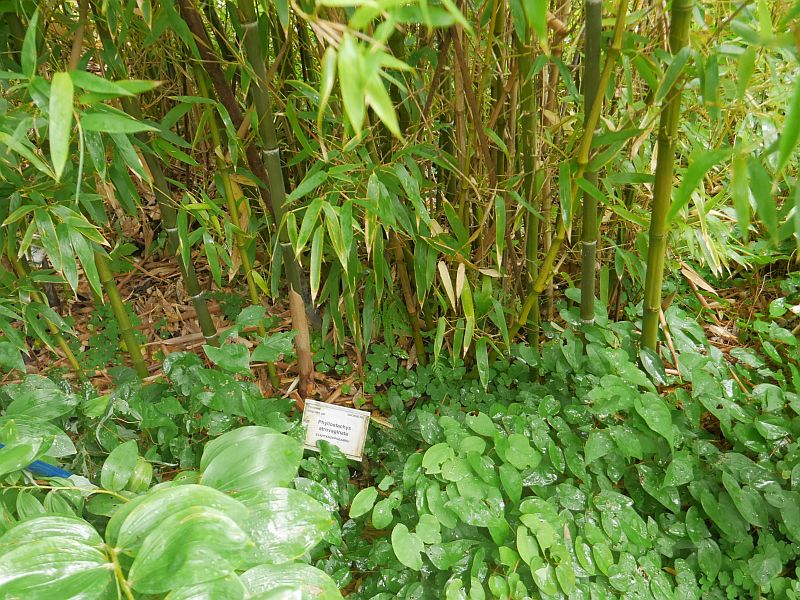
Bosse pointed out this bamboo with relatively thick shoots: Phyllostachys atrovaginata…
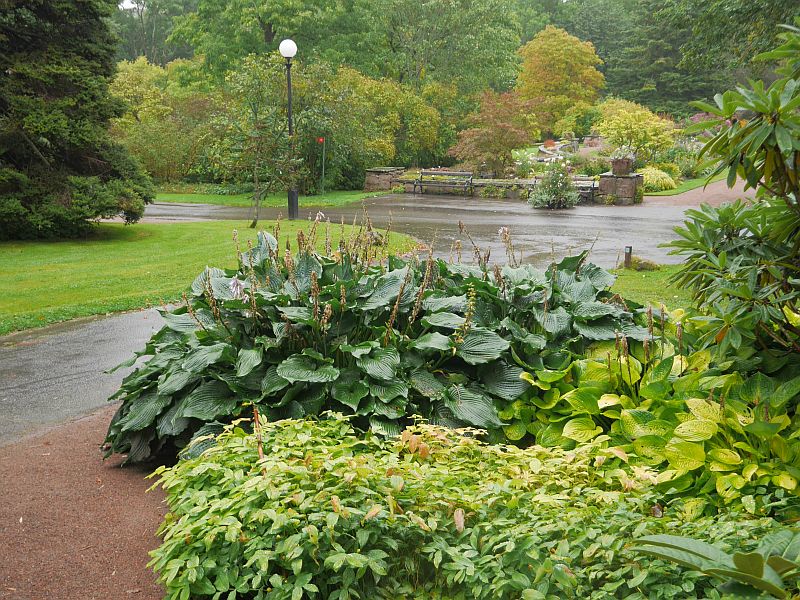
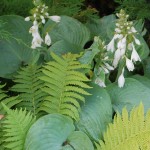
Large clump of Hosta (Sum and substance?)
Another patch of yellow flowered Allium hookeri var muliense; Yellow Hooker’s Onion
I hadn’t noticed this large Toona sinensis either….extensively cultivated in China for the young shoots, often served as a onion-like flavouring with omelettes!
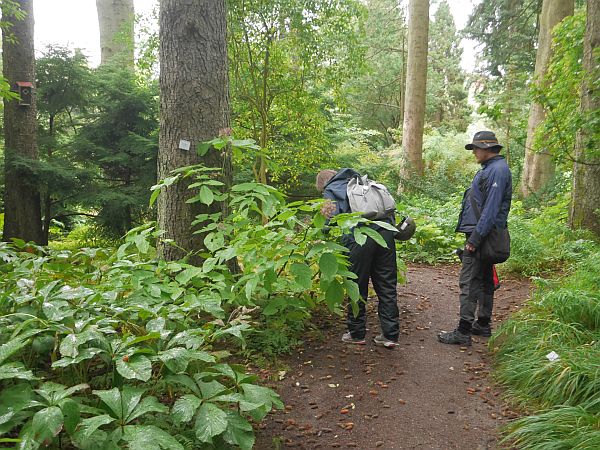
Bosse shows us Zanthoxylum bungeanum (Northern China Pepper), one of several species for which the spicy seeds and leaves are used
Zanthoxylum bungeanum (Northern China Pepper)
Matteuccia orientalis is as far as I know not used like Ostrich Fern, Matteuccia struthiopteris
Sinofranchetia chinensis, an unusual fruit from China
Giant lily, Cardiocrinum…the bulbs have been foraged in Japan!
Japanese ginger, Zingiber mioga
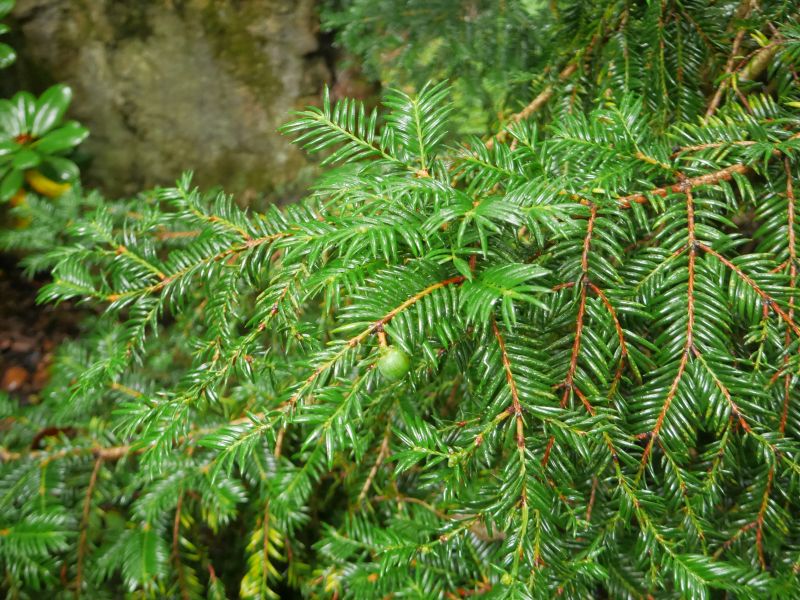
Cephalotaxus harringtonia, yew plum
Hardy kiwi..
Torreya nucifera from Japan is a popular edible seed!
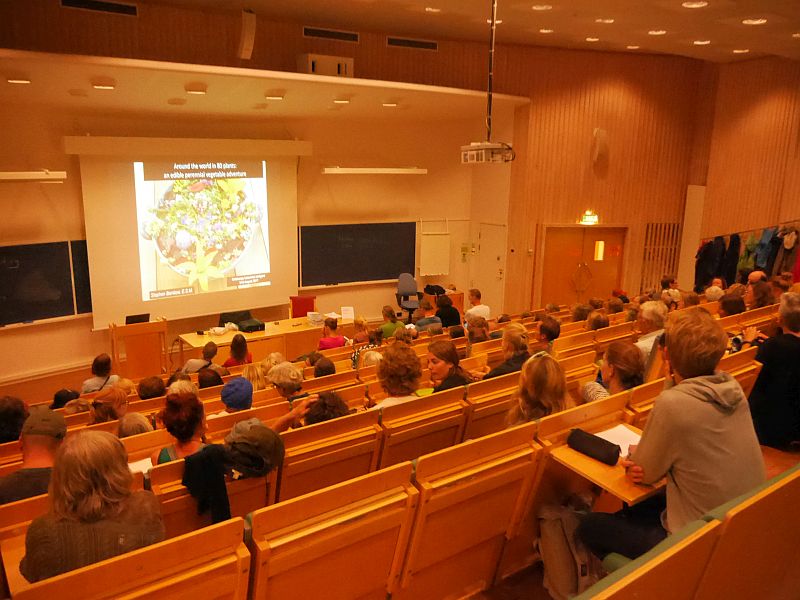
It was a great honour to finally get to talk at the Gothenburg Botanical Gardens last night….not just once but twice as the first talk (picture) was sold out…and as I told them Gothenburg is my favourite edible garden anywhere there was a big cheer (second talk). The garden has around 30,000 accessions and with an estimated 1/3 of all plants edible, that makes for a huge diversity of food plants all in one place…. I just hope the garden doesn’t have problems with “grazing” after my visit ;)
Thanks to Johan Nilson, Mats Havstrøm and the staff for making me feel welcome, to Johan for the tour around the greenhouse collections of Alliums and much more and the garden “forage”. Finally, it was great to meet Bosse Blomquist and friends who guided us around the more unusual collections of edible nut and fruit trees, many of which I hadn’t seen before!
My host Bente Brenna in Valdres Sopp og Nyttevekstforbund rents out rooms on her property right in the middle of Fagernes! Her garden contains a nice collection of Edimentals including Angelia archangelica (kvann)…one of which had the characters of Vossakvann (filled stems)
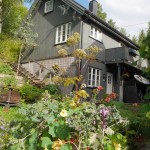
I stayed in the flat on the ground floor…
Lilies and an unusual looking rhubarb with lovage (løpstikke) and horseradish (pepperrot) behind
I was surprised to find Allium cernuum (Nodding onion / prærieløk) in a bed…until she reminded me that she had been part of the Grønttreff in my garden last summer: http://www.edimentals.com/blog/?page_id=5149
Hops / humle
Hops / humle
On the way up to the mountain area, Vaset where I would give my talk, we stopped off in this old garden (we had been given permission to visit the garden to look for edimentals after my talk if it was interesting enough…
Hops also here. In Norway, in the year 940 the Frostatingsloven (one of Norway’s oldest laws) made it illegal to steal hops or apples! In the Middle Ages and until the mid-18th century farm owners had to cultivate a certain amount of hops. Hops were primarily used for beer brewing, but also medicinally! For this reason, there are many old hop plants in Norway and it has also naturalised in woods in some places!
Angelica and hops
Stabbur or food store
Arriving at Skikroa (the skiing cafe) where the talk was to be held!
View from skikroa…there are many cabins in this area!
There was a festival the same weekend at Vaset and the local useful plant society had arranged a fungal foray (not much to find though as it had been so dry)
On the way back down to visit another garden with the course participants!
Hosta and ostrich fern (strutseving) near the garden entrance…a new garden with “ornamentals”, vegetables and herbs!
A bracket fungus / kjuke
Day lily / daglilje
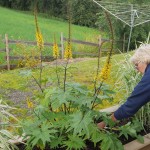
Ligularia (The Rocket?), but probably not a good edible variety
Meum athamaticum (spignel meu/ bjørnerot) is a very common hardy herb in Norwegian gardens
Catawissa onion? Etasjeløk…
The garden owner..
Hardnecked garlic introduced by local man Anders Nordrum (see datsja.no) was also growing in Bente’s garden!
Parsnip and pastinakk grow well here
Utilising the space on a rocky slope to growing veggies
View from the garden
..and hops here too!
We popped in to Bente’s CSA (andelsbruk) to collect some veggies for dinner
A polish family were growing broad beans
Before I took the bus to Voss, I did a little cultural walk near the centre of town
Pictures from a great day last Sunday in the company of a great group of permaculture interested folks from Oikos Nord Trøndelag (Oikos = Organic Norway)
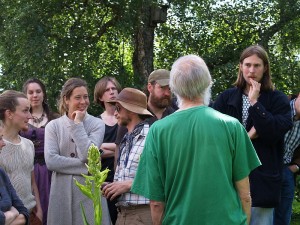
We started in my garden in Malvik at 10:30, then travelled north to Johannes Moen’s place just south of Steinkjer, stopping on the way to collect some fertility and for a swim in Leksdalsvatnet! I got home by train at 11:30 pm!
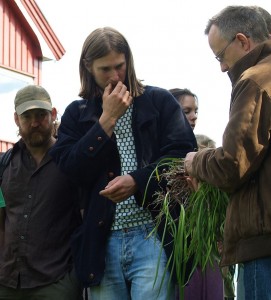
The day started with a tour around my garden
We stopped in Stiklestad on a farm which had been run organically since about 1990 to pick up horse muck for the perennial garden we were to create in the evening!
Not a plant I see often in this area, Stachys palustris was growing on the farm…it has edible tubers..I also found it growing at Hurdal Ecovillage last week and will dig some next time I visit…
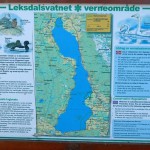
On the way north, we stopped off for a swim at the north end of Leksdalsvatnet, one of the best lakes for birds in our area, including little gull (dvergmåke) and great crested grebe (toppdykker/ https://no.wikipedia.org/wiki/Toppdykker), which I spotted from the car!
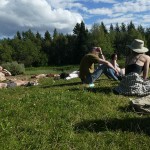
The swimming area…
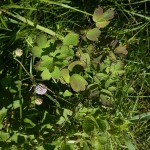
I found another rare plant in this area, Alisma plantago-aquatica (vassgro / greater water plantain), when I was out swimming :) I’ve never been convinced to try eating it. This is the entry in Cornucopia II: “The bulb-like bases are eaten after being dried to rid them of their acrid properties”. According to pfaf.org, “the seed is said to promote sterility. By contrast it is also said to promote conception ” ;)
The Alisma locality was on the other side of the water
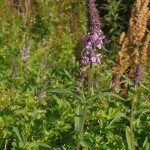
…and another rare plant, Thalictrum flavum I think, right next to where we sat
…and another rare plant, Thalictrum flavum I think, right next to where we sat
The last stop was at Johannes Moen’s strange house just south of Steinkjer..built by his dad in concrete, it had been designed to have glass sides in which plants could be grown, but it was sadly never completed…Johannes and his brother are living here now and making improvements
Johannes Moen tells us about the house
The original family home
They have been insulating the walls
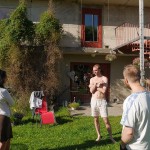
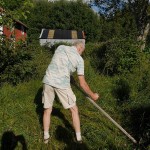
Scything demonstration on the area we were to convert to a new permaveggie garden!
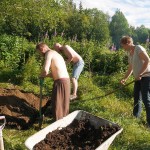
Participants learning the age old technique of bastard digging which I taught them (I learned this technique back in the 80s from one of John Seymour’s books and dug my own garden by hand in this way! It is surprisingly quick, this area only taking two people about an hour or so…after which we could plant straight away…with this technique, the top spit of soil ends up two spits down an upside down!
Veggie soup and blueberry pie for dinner by a bonfire of birch and “høymole/Northern Dock (Rumex longifolius)” which was also being burned at Hurdal last week ;)
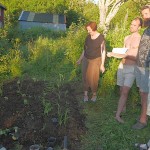
Planting up the bed with plants we’d brought with us from Malvik…
The plants include Hablitizia, Malva moschata, Caraway (Karve), various onions including Allium cernuum, A. scorodoprasum, A.fistulosum, A. schoenoprasum “Major”, Cryptotaenia canadensis, Viola canadensis, Ligularia sachalinensis (by mistake, I thought it was L. fischeri) etc.
Tour to the tower on top of the house!
Views over the surrounding agricultural land
…but forest surrounds one side of the property
I took the train back home from Sparbu
…and a beautiful journey it is along the side of Trondheimsfjord!
Salicornia (marsh samphire/salturt) grow on the mudflats in this picture
Perennial vegetables, Edimentals (plants that are edible and ornamental) and other goings on in The Edible Garden