Tag Archives: Onion Garden Chicago

Onions and Norwegian Folk Music

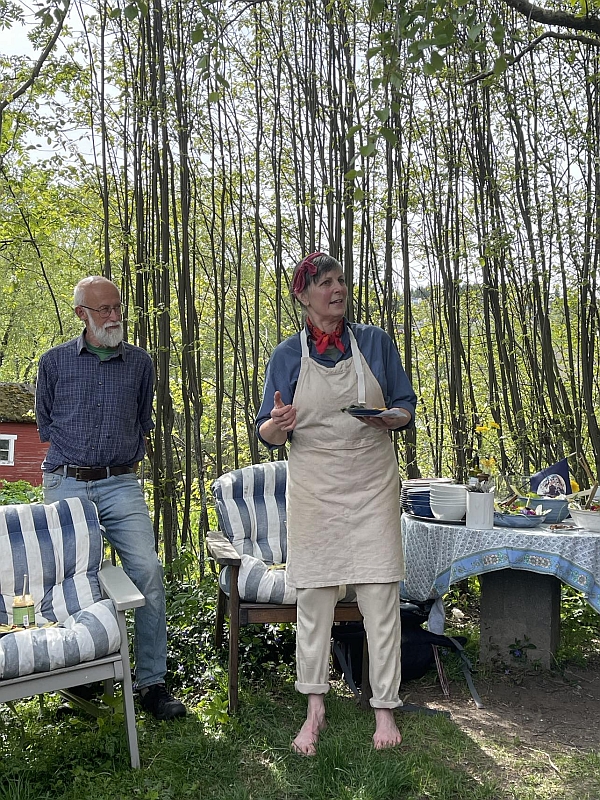
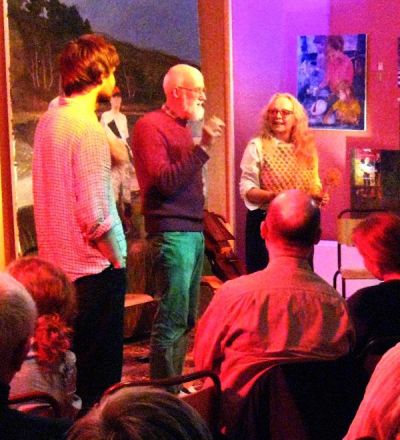
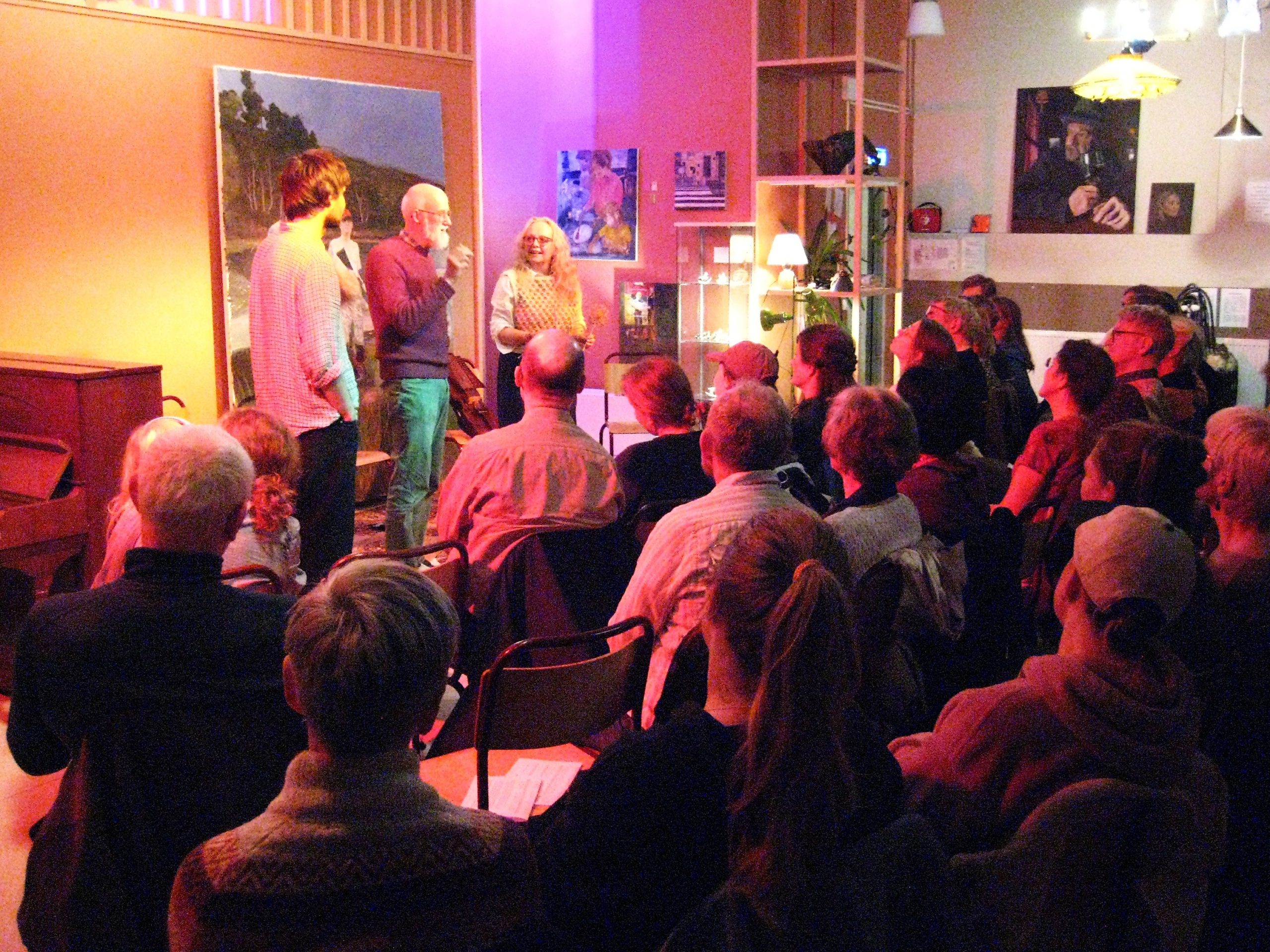
I enjoyed myself last Tuesday evening talking about onions with Marianne Meløy and Amund Storløkken Åse, surrounded by some amazing art at Atelier Ilsvika, in an eclectic acoustic mix of traditional Norwegian folk music (Guro Kvifte Nesheim kvintett), jazz, ethnobotany, Alliums, humour, Peer Gynt’s philosophical onion and vampires!  And they even performed a crazy traditional Swedish folk song “Røkt gjøk med løk” (smoked cuckoo with onions)! See https://www.youtube.com/watch?v=P92JsFOLjtY  and https://www.itromso.no/feedback/i/Bjqezl/dette-er-tidenes-10-psykeste-later
I wore my “Hvitløk gir åndelig vekst” badge (pictured below with two other wonderful onion badges created by my artist daughter Hazel that I didn’t have time to present!)
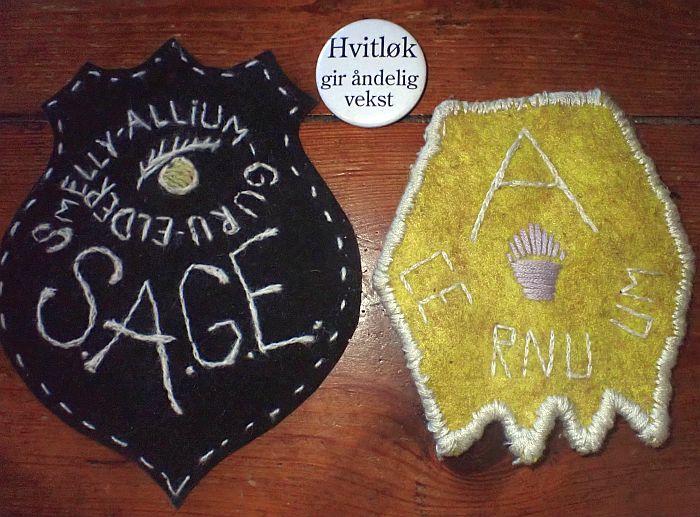
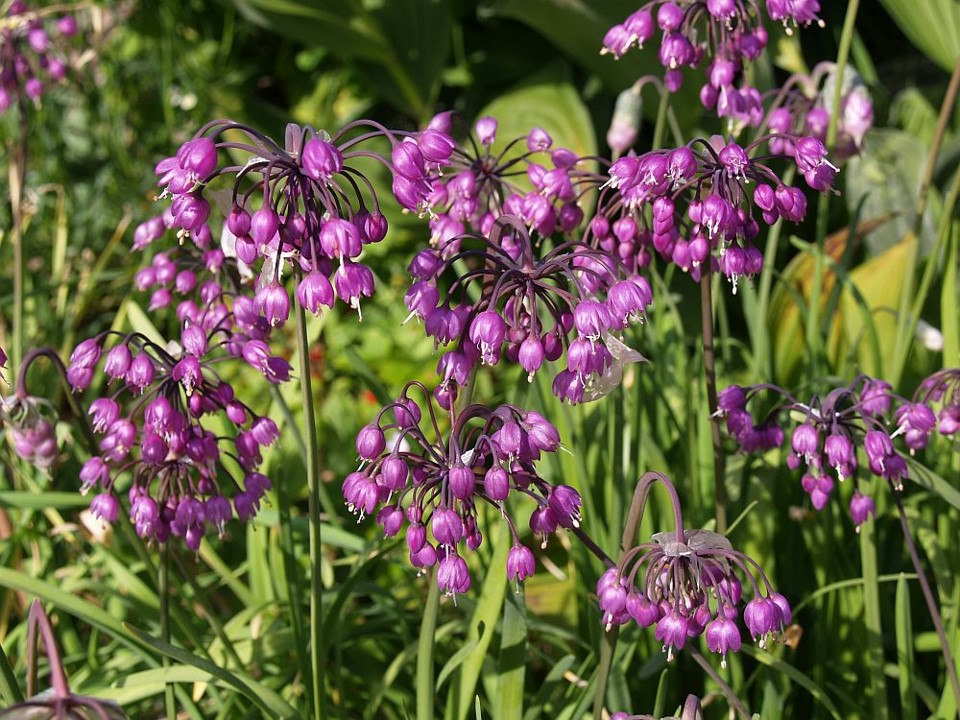
The badge bottom right says A cernuum, my favourite Allium aka the Chicago onion

Below are some Allium “fun facts”, not all of which I mentioned:

-The Onion Garden Chicago (Løkhagen Chicago) at the NTNU Ringve Botanical Gardens in Trondheim is one of the world’s largest collections of Alliums with  over 100 botanical species, over 400 different onions including cultivars and a collection of some 60 old Norwegian onions collected throughout Norway from Lindesnes to Finnmark and from sea level to mountain villages.
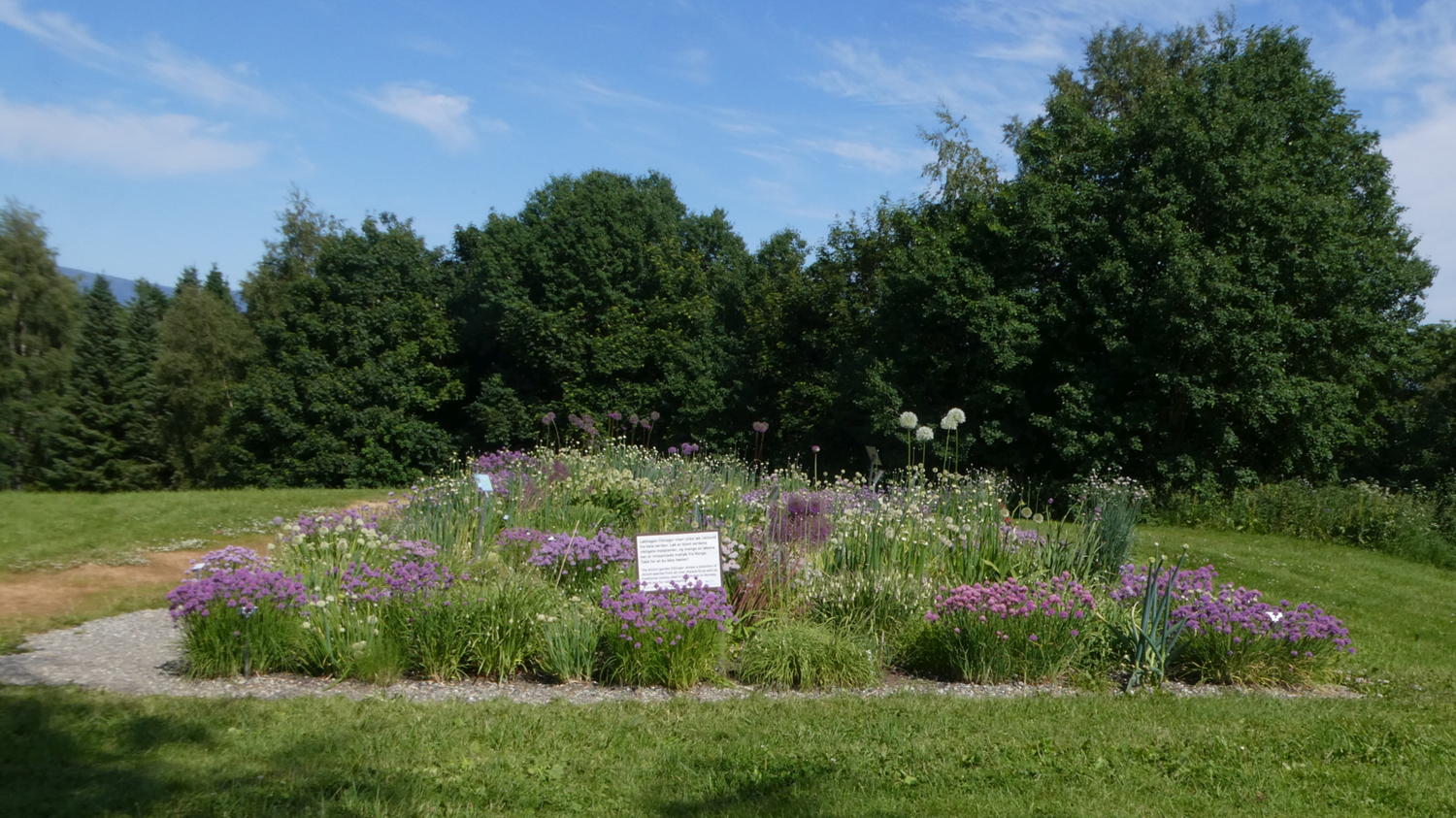
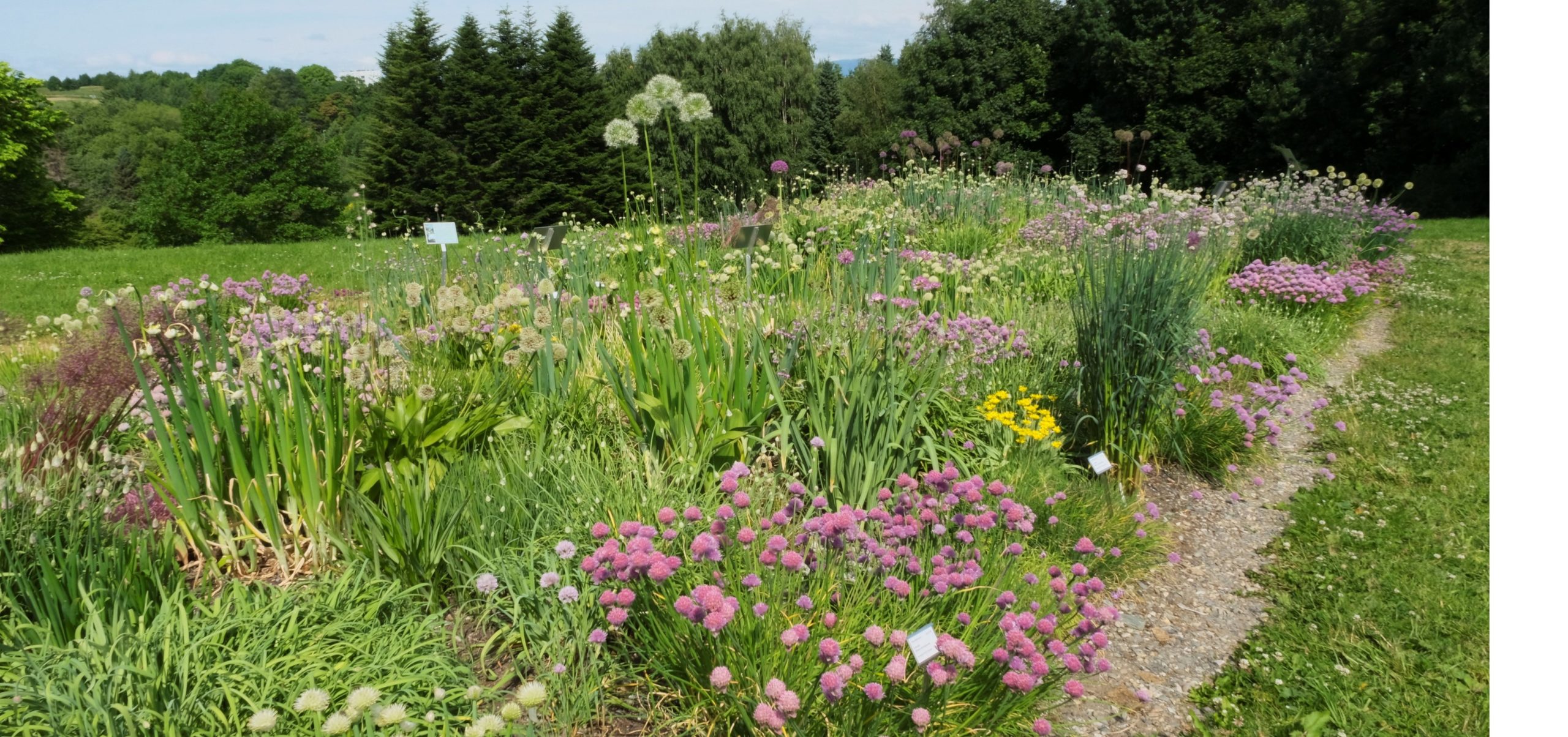

-Chicago means “stinking place in the woods” in one of the local indigenous languages (built in an area originally huge stands of Alliums  including Chicago onion – prærieløk; Allium cernuum) – see my daughter’s badge!
– There are around 930 Allium species in the world and many are wild foraged and domesticated locally and worldwide for food. Almost all are from the Northern hemisphere, with a few in South America and one in South Africa where close relatives the society garlics (the genus Tulbaghia) are found and can be seen in flower in autumn in the Onion Garden, but are overwintered inside.

-Linnaeus described the Allium genus in 1753.

-Although Norway has no Allium species in the mountains, we probably have the world’s northernmost wild onions growing at Knivskjellodden, near to and north of Nordkapp – this is Siberian chives (sibirgressløk or lávki) which gives an “interesting” flavour to cow and reindeer milk!

-The old Norwegian onions include Egyptian / walking onions (luftløk / etasjeløk), Welsh onion (pipeløk), chives (matgressløk), Siberian chives (sibirgressløk), ramsons (ramsløk), German garlic (kantløk), Victory onion (seiersløk) and sand leek (bendelløk). We have a collection of field garlic (vill-løk) and crow garlic (strandløk) elsewhere as they are too “weedy”.

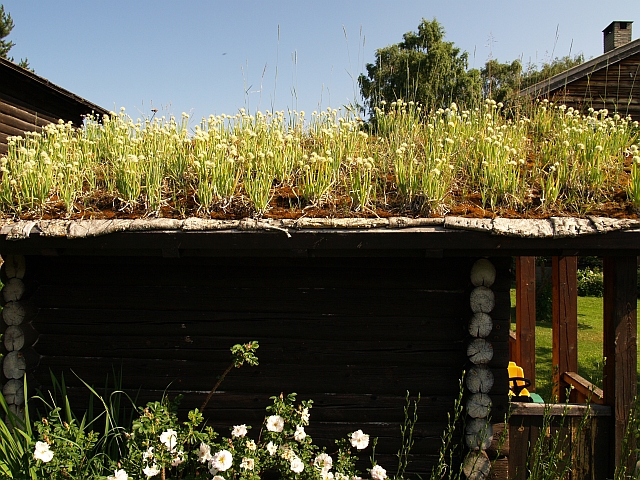
-Norway has surviving roof onions (takløk) in the Gudbrandsdalen valley grown traditionally on turf roofs to protect against fire and to provide onions for scrambled egg in the spring. This is Welsh onion (piepløk) Allium fistulosum from Siberia, but they have been evolving for such a long time on these roofs, self-sowing each year, that some botanists consider it a new species which could be called Allium gudbrandsdaliensis!   
-A world record pesto with 230 different onions was set on 6th June 2015 in Malvik; see https://www.edimentals.com/blog/?page_id=1507

-The most eaten onions in the world are the common bulb onion / kepaløk (Allium cepa), leeks / purre (Allium ampeloprasum), garlic / hvitløk (Allium sativum) and shallots /sjalottløk (Allium cepa var. aggregatum); the latter two are vegetatively propagated from the bulbs or bulbils (garlic) but the other two are mostly started from seed and die after flowering and setting seed in year two. In my part of the world, the season isn’t long enough for seed to mature outside so that we have to import seed and we are not then self-sufficient.

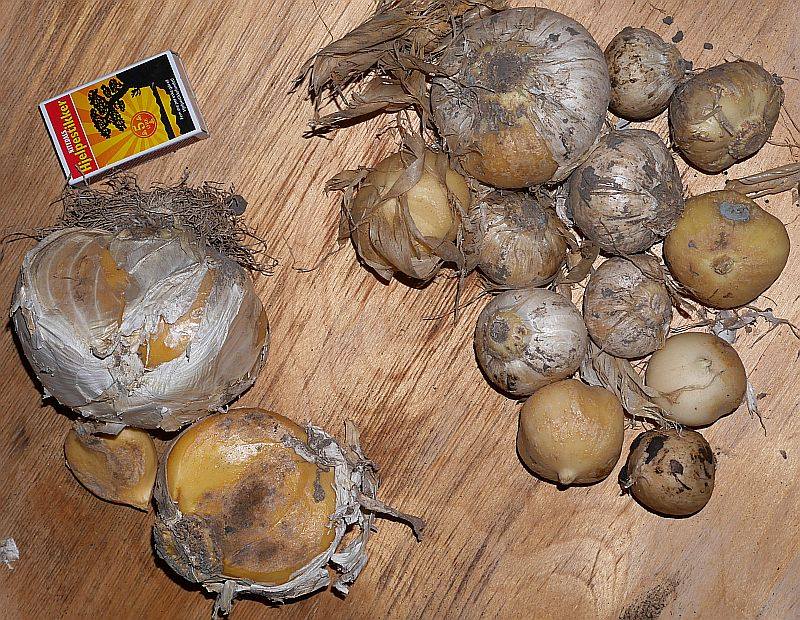
Allium cepa (kepaløk) isn’t found in the wild and the closest wild progenitor from which it evolved is Vavilov’s onion, perennial Allium vavilovii. Shallots (sjalottløk) are a perennial variety of the bulb onion much grown throughout Norway up to the 1970s. A number of old varieties, available through KVANN, are seeing a renaissance as people realise how important they are for food security in Norway.   Similarly, Johannes’ shallot (sankthansløk) Allium x cornutum is an interesting perennial hybrid shallot, harvested around mid-summer – Allium cepa is one of three parents.

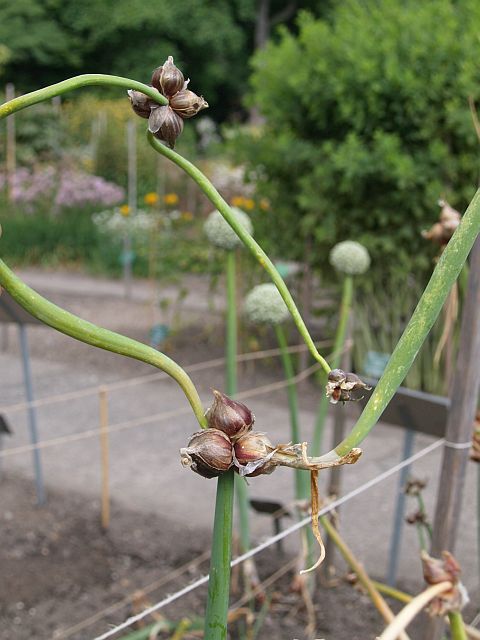
-Luftløk or etasjeløk (Egyptian onion) is another hybrid with Allium cepa, this time with Allium fistulosum which forms large topset onions instead of seeds. The stems collapse in autumn falling down and planting the topsets at some distance from the mother plant, hence walking onions in North America. Etasjeløk is the variety forming several levels of topsets as they sprout and form new topsets. This is the Catawissa onion of North America, deliberately crossed at the Catawissa research station in the 1870s and, due to its curious form and ease of multiplication is now found worldwide.
-Chives (gressløk) is the only Allium species found both in Europe, Asia and North America and it has also naturalized in other parts of the world.

-Ramsons (ramsløk) has become very popular for making pesto in the last 10-15 years and wild stands have been overharvested in parts of Norway; KVANN published so-called “ramsons common sense rules” (ramsløkvettreglene), written by botanist Klaus Høiland a few years ago; see https://www.edimentals.com/blog/?p=34038

-Allium chemistry is complicated due to the complex mix of sulfur compounds they contain and a book was written on this subject: Eric Block’s Garlic and Other Alliums: The Lore and the Science

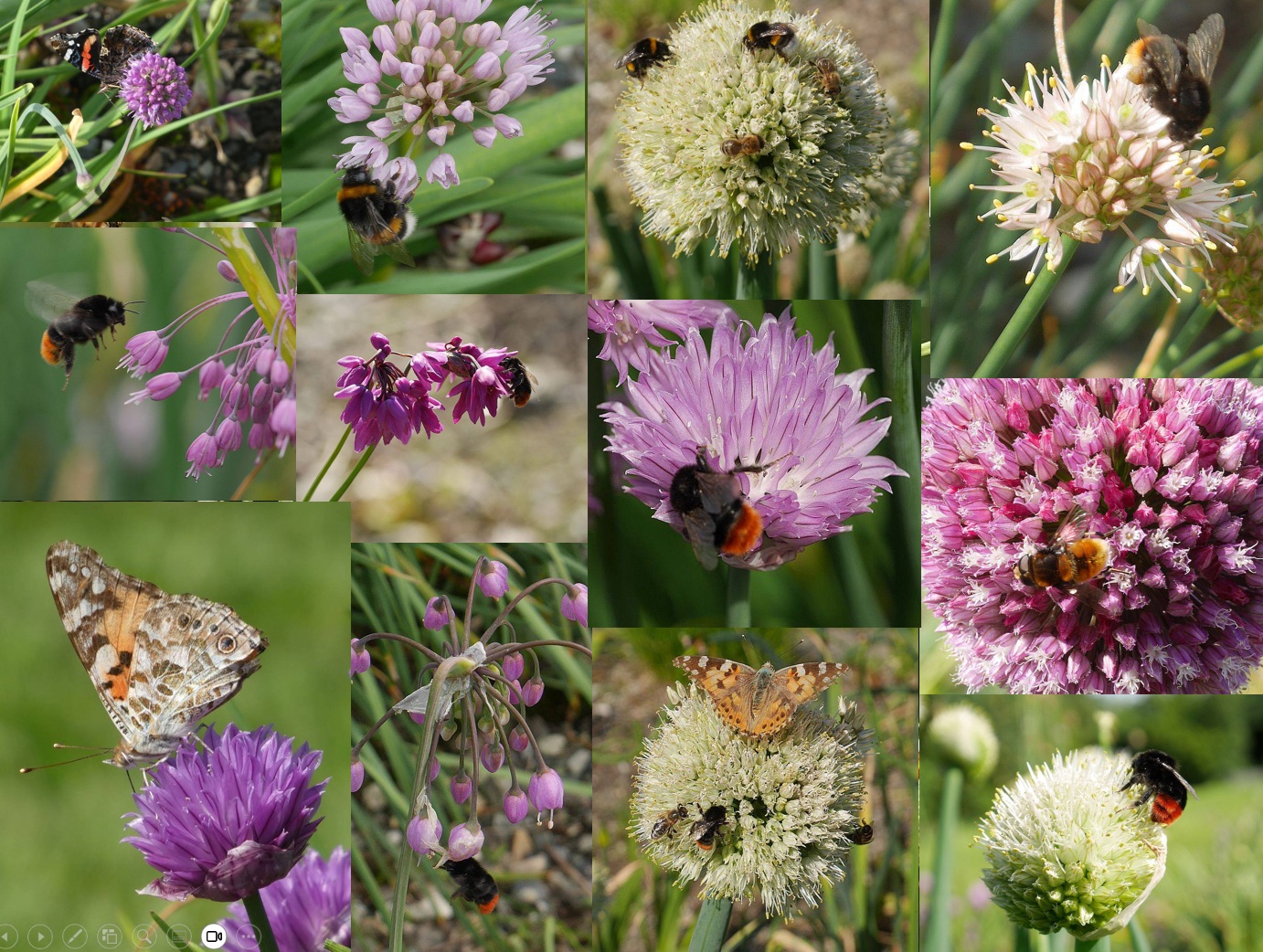
Alliums are some of the best pollinator-friendly plants attracting a range of bumble bees, wild bees, hoverflies and other insects.

-There are no surviving old varieties of garlic (hvitløk) in Norway, unlike Sweden and Denmark; The variety Valdres introduced to Norway  from Belarus by Anders Nordrum and Aleksandra sent to me from Finland, a Russian variety grown there for 80 years, in the early 2000s alongside Estisk Rød (Estonian Red) via Denmark all appear very similar and may be the same cultivar, having arrived in Norway by different routes.

-The Løk for Strøk project was designed to spread the joys of perennial edimental Alliums in Oslo through installations around the city; see https://aprilarkitekter.no/nb/project/lk-for-strk-19

-The Vikings grew onions in their enclosed onion gardens (laukgard); we don’t know which species they grew but it is likely that they cultivated several including one known as Geirlauk (old Edda); the boy’s name Geir literally means a spear, so this was an onion resembling a spear. Geirlauk has the same linguistic derivation as garlic (old English gārlēac). There are at least two candidate species for the original geirlauk (there is no evidence they had real garlic, although it’s not impossible). My best guess is that it was sand leek / bendelløk (Allium scorodoprasum) which is up to 2m tall and slender, more spear-like than garlic. It is often found today near where Viking settlements had been in Scandinavia.


-Some onions grow better in northern Norway than the south such as victory onion / seiersløk (Allium victorialis) which has naturalized in a big way in the Lofoten Islands (Vestvågøy). It has been suggested that it could have been introduced and cultivated by the Vikings and for that reason has been planted alongside Siberian chives in the onion garden at the Lofotr Viking Museum on Vestvågøy, an important settlement in the past. This species could be described as ramsons / ramsløk on steroids and is the go-to onion for home gardens in the north. Delicious seiersløk-pesto can be purchased in Lofoten.
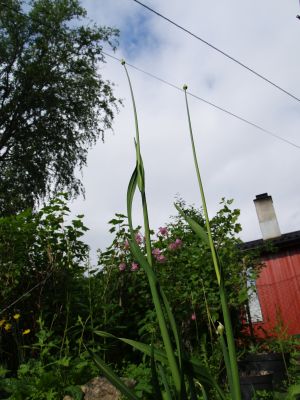
Allium scorodoprasum is spear-like

-Another candidate as geirlauk is field garlic / vill-løk (Allium oleraceum), a wild species with a local distribution from southern Norway along the coast to Troms and to higher elevations in the Gudbrandsdalen valley. Some years ago during an open garden day at home I mentioned my project  collecting old Norwegian onions and two young men who had come along as they were interested in my hop collection for brewing participated. One of them told me of an onion that grew locally where he lived on the island Tautra, known as geirlauk, and I was excited to find out what this was. He wouldn’t tell me where exactly it grew as it was a closely guarded secret as it was prized locally and by family visitors. I was disappointed to see that it was no more than Allium oleraceum but fascinating that this name was still in use perhaps pointing to its cultivation in the past on this historical island. Later the same year at a Nordic ethnobotanical seminar in Copenhagen I heard that this species was the only onion to be found on Iceland and not only that but in old documents there was a story that this onion was introduced where it’s still found today by an English missionary bishop who had got it from an island off Nidaros (Trondheim) around the year 1040. Later that year the onions from Tautra “met” the Icelandic onion again for the first time in almost 1,000 years in my garden!
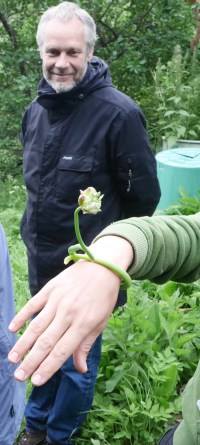
-The best protection against vampires is, of course, garlic (other Alliums work too!) and my daughter presented me with an onion armband (picture) when I travelled to Transylvania one year. There is actually a Transylvanian garlic which was taken to North America by settlers. It is sold commercially in the US and the following is the description accompanying it: “If you are troubled by vampire or blood-sucking in-laws, this is well worth growing”.


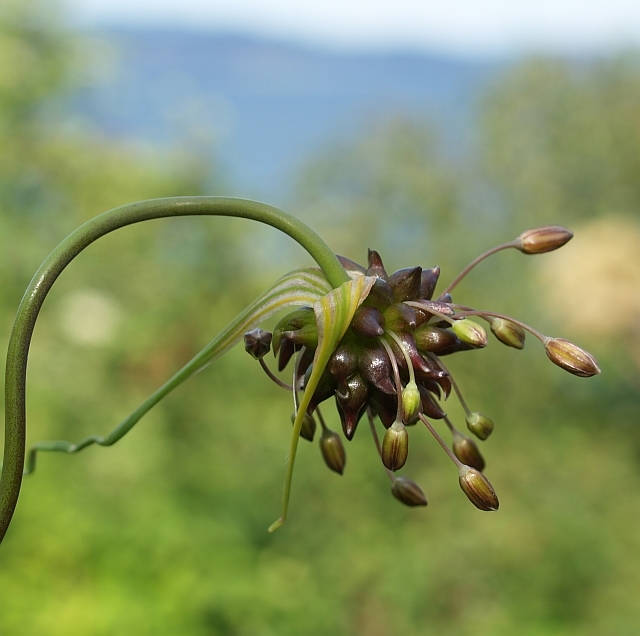
-Allium schubertii
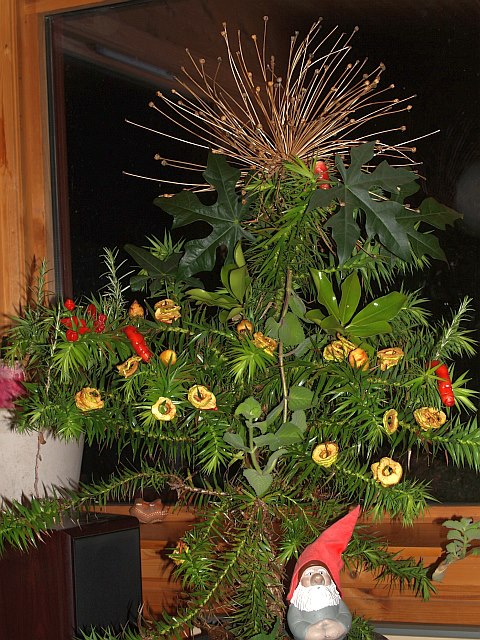
is known as the Firework onion and can be used both at the top of your Xmas tree and at New Year as a pet-friendly firework!

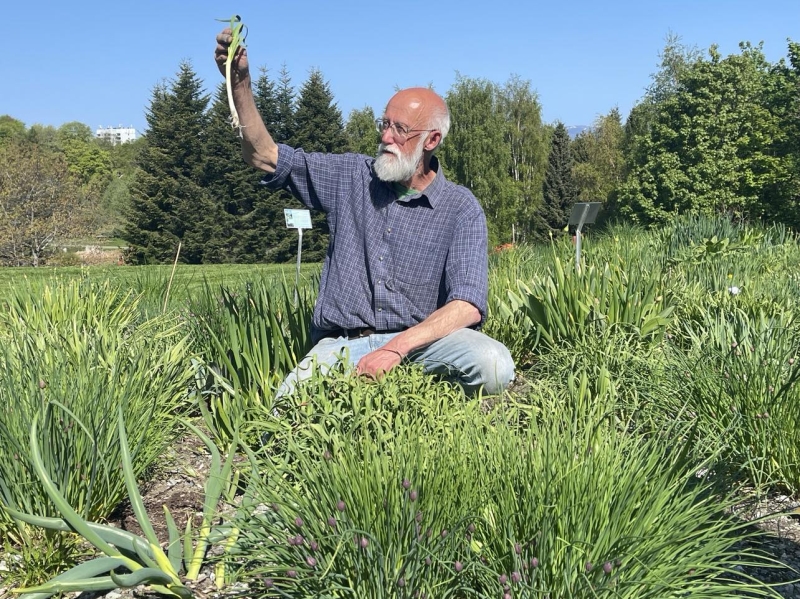
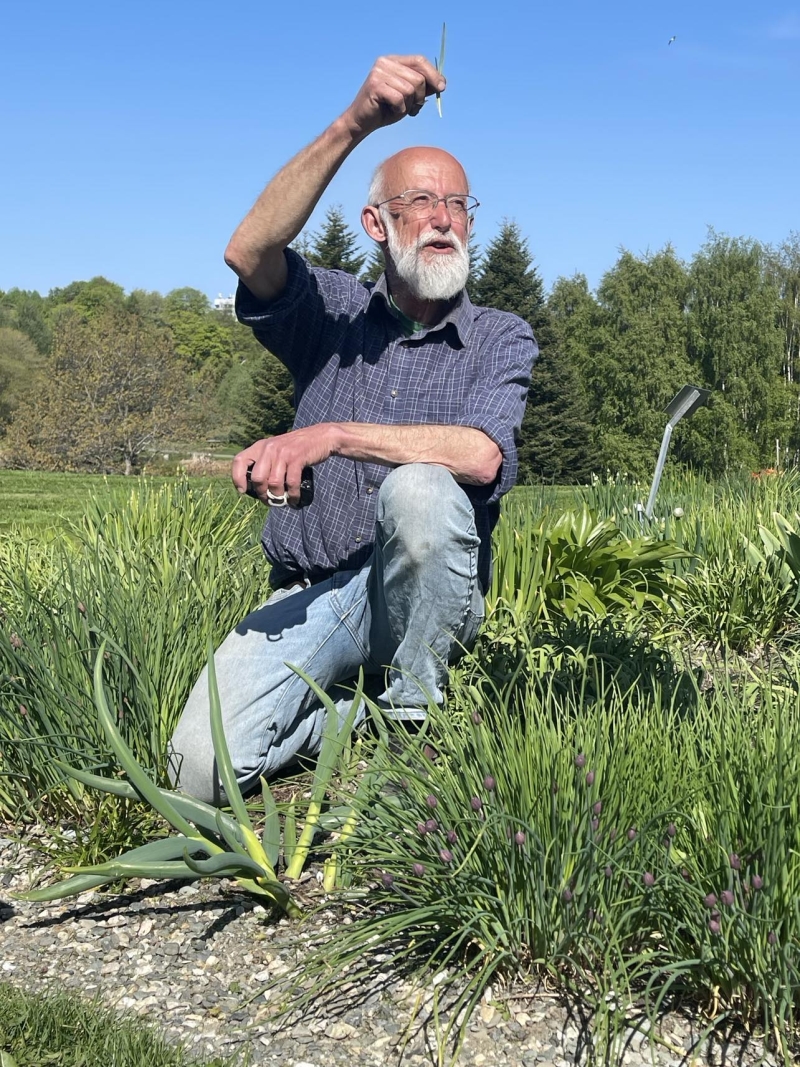
-The concert series at Atelier Ilsvika is acoustic, so a perfect event for the Alliophone (the seed head of Allium stipitatum) which I presented to Marianne! Here I am at the opening of the onion garden at Ringve equipped with one of these:
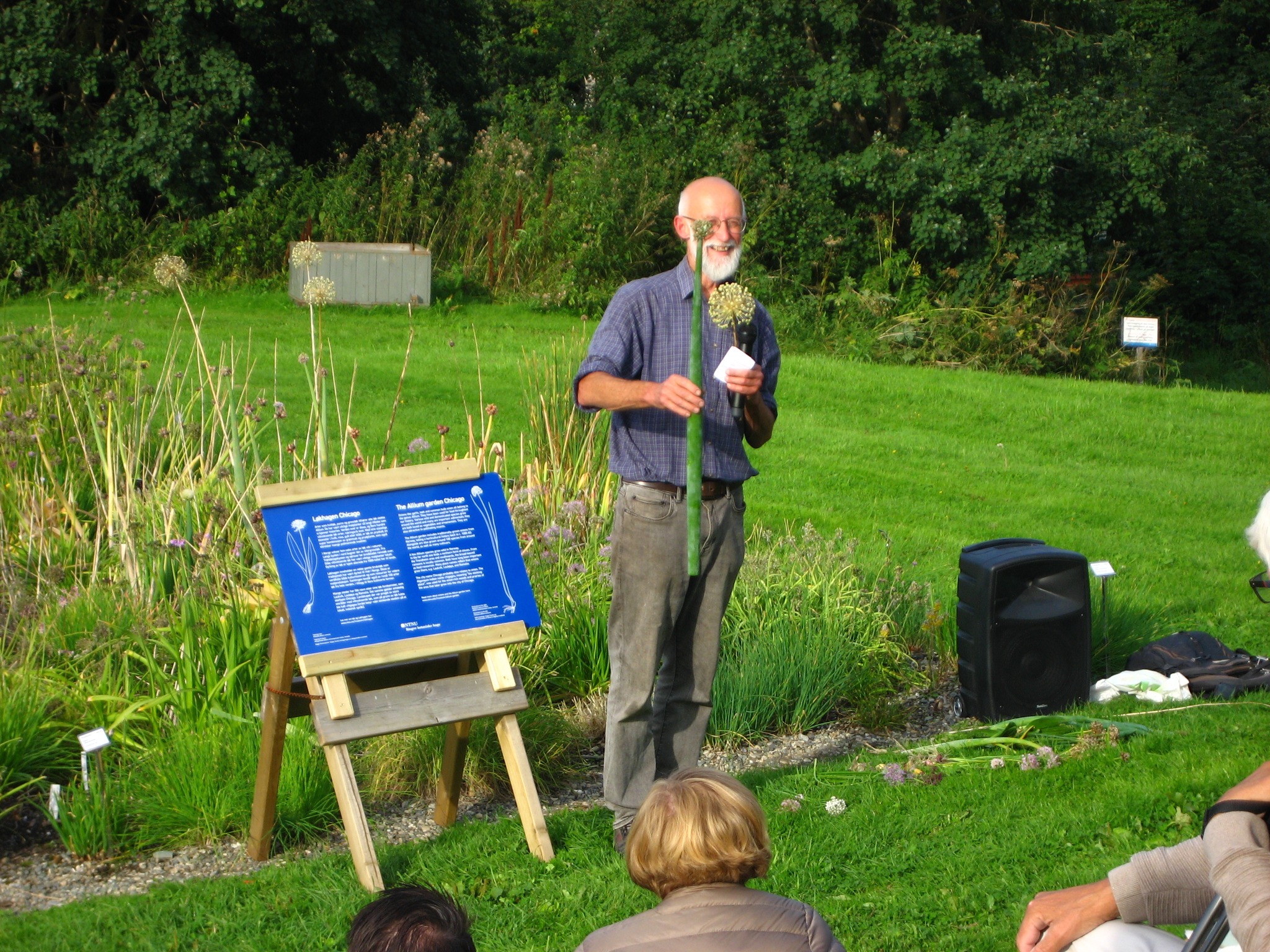

Allium stipitatum is probably the commonest species sold as ornamental onions (prydløk) in the autumn in garden centres, grown for its beautiful spherical flower heads. However, it is more than that, a delicious easily grown perennial onion known as Persian shallots. The large onions are grown on farms in Iran, sliced and dried and sold worldwide in Iranian supermarkets. In Iran, it is used in Mast-o Musir, a national yogurt dip with rehydrated Persian shallots and spices like golpar (ground seeds on Trømsøpalme, Heracleum persicum)!
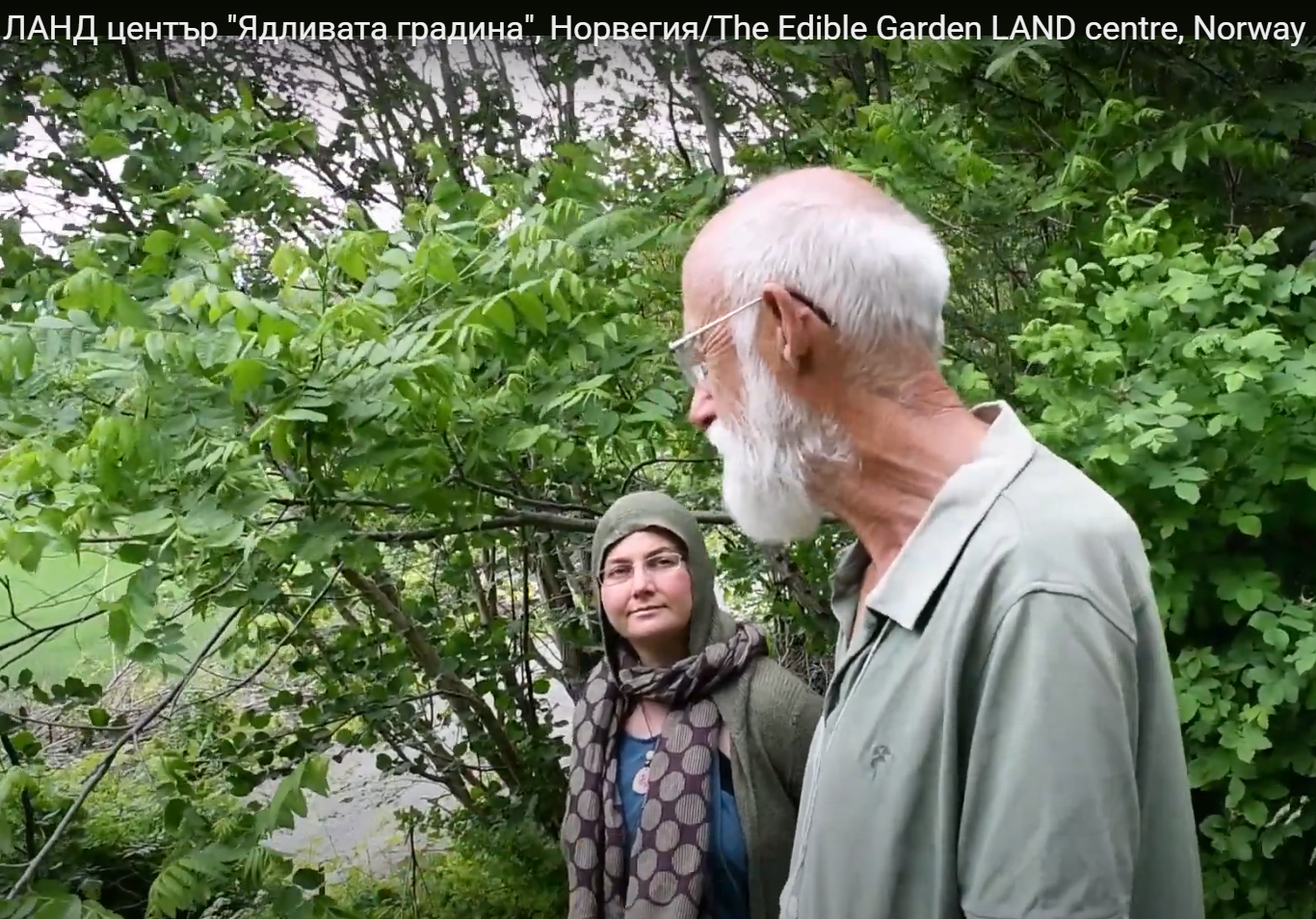


Video tour of my 3 gardens from June 2024

On 17th June 2024 I had a visit from Mihaela Tsarchinsk and Philip Varionov from the Green School Village and Permaculture Association of Bulgaria. We’d met previously at the European Permaculture Convergence in Bulgaria 10 years previously (she was the organizer). The purpose of the visit was to film my Permaculture LAND centre, The Edible Garden in Malvik. as part of a series of films of LAND centres in Norway, to inspire the establishment of a LAND network in Bulgaria. We visited all 3 gardens as they are all connected:We started at the Onion Garden Chicago at the NTNU Ringve Botanical Gardens, the Væres Venners community garden and last but not least The Edible Garden. Elin Tyse of Permaculture Association of Norway joined us.
If you’ve got a bit of time to spare please join me on the tour which can now be seen at https://www.youtube.com/watch?v=JcCheUzMddQ
WHAT IS LAND?
There are now 5 videos available from different LAND centres across Norway made on the same trip: Eirik Lillebøe Wiken and Alvastien Telste; Robin Leeber and Holt Gård; Camilla Fauske and Nordre Holt Gård and Anne-Marit Skogly’s Hvaler Gjestehage at https://pab.greenschoolvillage.org/land-videos 

Here are Elin, Mihaela and Philip in Trondheim during the visit:

Allium dispersal

Allium dispersal?
Well, this week was the week when vegetatively propagated onions from the Allium Garden Chicago in Trondheim were dispersed to members of the Norwegian Seed Savers organisation (KVANN; kvann.no) across the country for safekeeping (backup) and, hopefully spreading onwards in a year or two to other members! It’s been a very busy week digging up, sorting and packing altogether 271 portions of 62 varieties to 54 members! In case you were curious, below is the list of Alliums and a few other things I had promised folks. There were sent many land races of Allium x proliferum (luftløk / walking onion) and also many sand leek land races (Allium scorodorprasum
It’s too late to order now, but seed will be offered in the new year.
1 Allium “Wietses onion”
2 Allium brevistylum
3 Allium caeruleum (bulbils)
4 Allium carolianum
5 Allium cernuum «Alan Kapuler»
6 Allium cernuum «Dwarf White»
7 Allium cernuum “Tall White”
8 Allium cernuum x stellatum “Hammers Planteskole”
9 Allium douglasii
10 Allium fistulosum «Ex-Salatnyj 35»
11 Allium flavum “Blue Leaf”
12 Allium flavum var minus
13 Allium hookeri var muliense
14 Allium hymenorhizum
15 Allium ledebourianum
16 Allium moly
17 Allium angulosum x nutans “Norrlandsløk fra Lund”
18 Allium nutans
19 Allium nutans “Isabelle”
20 Allium ochotense “Tei, Japan”
21 Allium schoenoprasum subsp boreale Stonglandseidet, Senja (Siberian chioves)
22 Allium scorodoprasum unknown variety
23 Allium scorodoprasum Abrahamsplassen
24 Allium scorodoprasum Bornholm, Danmark
25 Allium scorodoprasum Grums, Sverige
26 Allium scorodoprasum Homborsund Fyr
27 Allium scorodoprasum Kvinnherad /Uppsala
28 Allium scorodoprasum Møvik, Kristiansand
29 Allium scorodoprasum Slovakia
30 Allium scorodoprasum Tjörn i Bohuslän, Sverige
31 Allium tuberosum “Sibbo” (Swedish heirloom)
32 Allium victorialis
33 Allium victorialis “Røst”
34 Allium wallichii
35 Tulbaghia “Cosmic”
36 Luftløk unknown 
37 Luftløk 5-story 
38 Luftløk Amish Spreading
39 Luftløk Beito
40 Luftløk Borøya, Tvedestrand
41 Luftløk Egyptian USA
42 Luftløk Grandma Pfeifer USA
43 Luftløk Labråten, Asker
44 Luftløk Lachmanns vei, Oslo
45 Luftløk Landeskogen Tuberkulose Sanatorium, Agder
46 Luftløk Lindesnes Fyr
47 Luftløk Malvik
48 Luftløk Ottawa Canada
49 Luftløk Sandholmen, Dønna
50 Luftløk Sola
51 Luftløk Sunnfjord
52 Luftløk Øyer, Innlandet
53 Luftløk Udøy, Mandal
54 Luftløk Forsand i Lysefjorden, Sandnes
55 Luftløk Varaldsøy, Kvinnherad
56 Luftløk Volga German
57 Luftløk Vollsveien på Jar, Bærum
58 Luftløk Tungenes Fyr, Randaberg
59 Luftløk Øyvind Erland
60 Tricyrtis sp. (toad lily)
61 Aralia cordata
62 Allium x cornutum “St Jansuien, Nederland”
63 Elaeagnus umbellatus
64 Sagittaria latfolia
65 Papaver somniferum Miks


Besøk fra (visit from) Arche Noah

Engelsk tekst nederst
I løpet av 17.-19. juli var jeg glad for å kunne returnere gjestfriheten gitt av KVANNs søsterorganisasjon Arche Noah (Austrian Seed Savers) under mine 2 turer dit i 2017 og januar 2020 rett før COVID-en rammet (se https://www.edimentals .com/blog/?s=arche+noah)
Dette var i forbindelse med et Erasmus pluss utdanningsprogram der Arche Noah-utdanningen besøker ulike steder i Europa for å lære mer om flerårige grønnsaker og skogshager! Vi besøkte hver av mine 3 hager: The Edible Garden, Væres Venners Felleshagen og Løkhagen Chicago ved NTNU Ringve Botaniske Hagen.
Vi fikk selskap av Guri Bugge, Mette Theisen og Judit Fehér fra KVANNs styre (bilde). Ursula Taborsky fra Arche Noah er nest til venstre på bildet fra min spiselige (skogs)hage.
English: During 17th-19th July I was happy to be able to return the hospitality given by KVANN’s sister organisation Arche Noah (Austrian Seed Savers) during my 2 trips there in 2017 and January 2020 just before COVID hit (see https://www.edimentals.com/blog/?s=arche+noah)
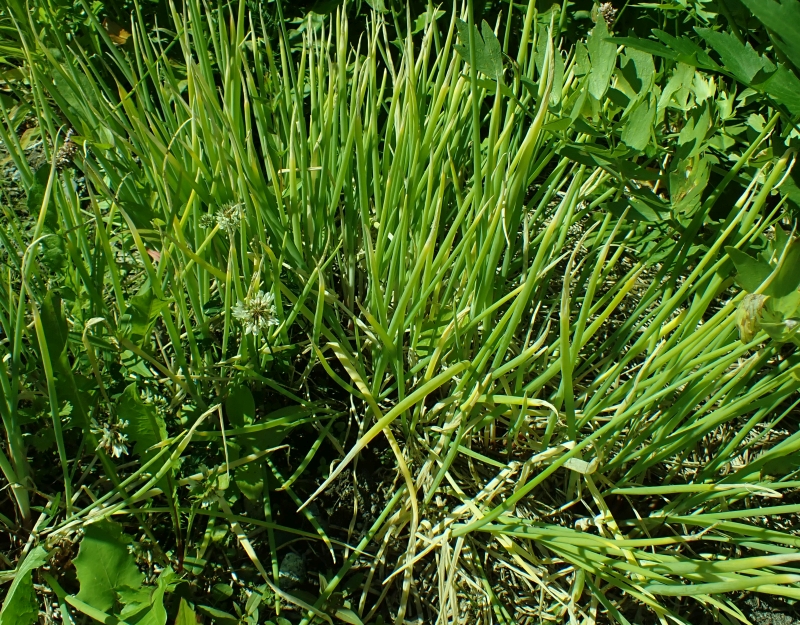
This was in connection with an Erasmus plus education program in which Arche Noah education are visiting various places in Europe to learn more about perennial vegetables and forest gardening! We visited each of my 3 gardens: The Edible Garden, Væres Venners Community Garden and the Onion Garden Chicago at the Ringve Botanical Garden.
We were joined by Guri Bugge, Mette Theisen and Judit Fehér from KVANN’s board (picture). Ursula Taborsky from Arche Noah is second left in the picture from my Edible (Forest) Garden.

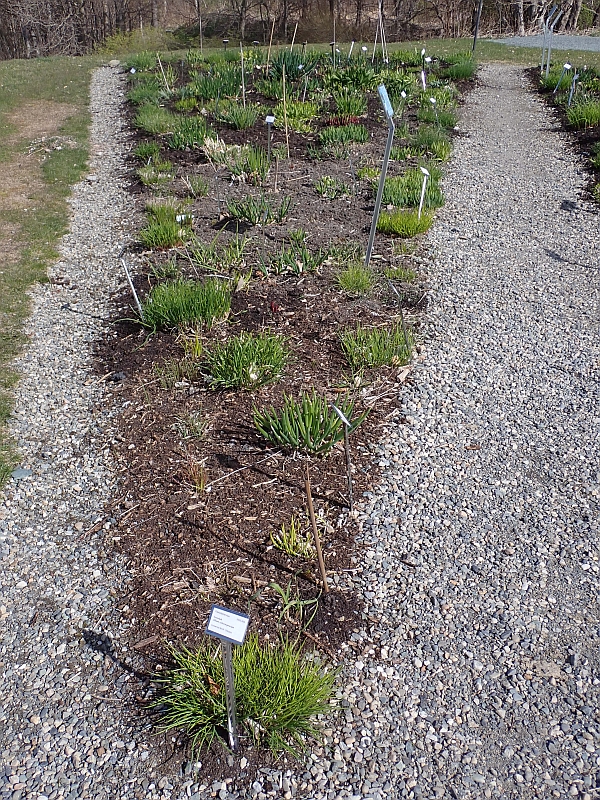
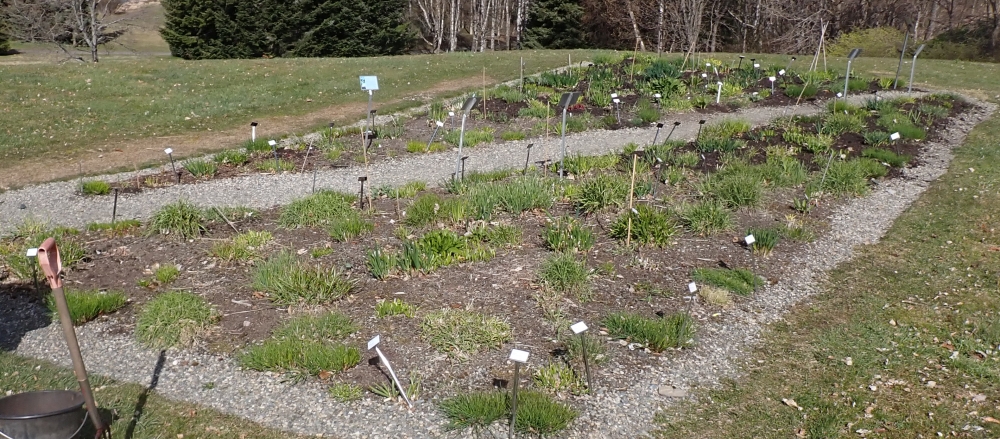
The Onion Garden Chicago on 3rd July 2024

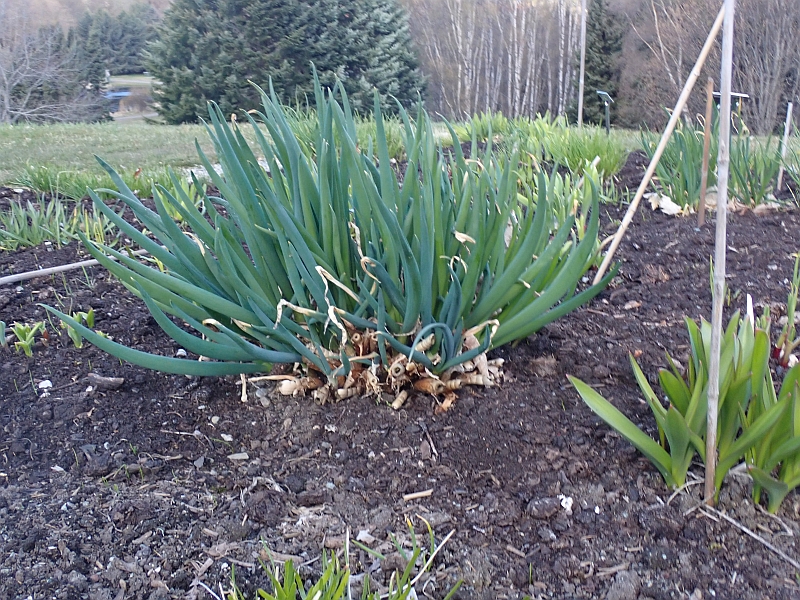
The Onion Garden Chicago at the Ringve Botanical Garden in Trondheim, Norway contains over 100 Allium species and over 400 different accessions including a collection of old Norwegian onions which I collected across the country with support from the Norwegian Genetic Resource Centre and the Norwegian Agricultural Authority. You can safely eat all Alliums and most species have in the past been wild foraged. A few do have an unpleasant taste, but most are good to eat including some of the best-known ornamental onions, some of the best edimentals (combined food and beauty) and edi-ento-mentals: also a very popular genus for pollinators like bumble bees. Members of KVANN (Norwegian Seed Savers) in Norway can order most of the Alliums grown in the garden each autumn (please support us by becoming a member at https://kvann.no/bli-med)
These are the 40 main Alliums I talk about, in order of appearance: Allium cernuum (nodding onion; Chicago onion; prærieløk) Allium cernuum “Alan Kapuler”(nodding onion; Chicago onion; prærieløk) Allium canadense Allium fistulosum (rooftop onion; takløk from the Gudbrandsdalen valley) a) From Søre Kleivmellomsæter, Mysusæter in Rondane at 885m asl b) From Nordre Geitsida, Sel municipality Allium cyathophorum var. cyathophorum Allium hymenorhizum Allium insubricum Allium validum (Pacific or swamp onion from California) Allium scorodoprasum (sand leek; bendelløk – garlic derives from old norse geirlauk meaning spear onion as demonstrated) Allium tricoccum (ramps) Allium caeruleum “Bulbilliferous form” Allium wallichii (Sherpa or Nepal onion) Allium senescens (Siberian onion) Allium fistulosum (Welsh onion; pipeløk) from Skedsmokorset, Akershus Allium sativum (hardneck / serpent garlic; slangehvitløk) Allium victorialis “Cantabrica” from northern Spain (Victory onion; seiersløk) Allium victorialis “Røst, Norway” from the island in the Lofoten Islands in Norway (Victory onion; seiersløk) Allium x proliferum “Catawissa onion” (topset, Egyptian or walking onions; luftløk, etasjeløk) Allium pskemense (tower onion; tårnløk) Allium pskemense x fistulosum “Wietse’s onion” Allium ochotense from Japan (earlier Allium victorialis) Allium carolinianum Allium moly (golden garlic, lily leek; gull-løk) Allium caesium Allium schoenoprasum (chives; gressløk) – deadheaded Allium douglasii (Douglas’ onion; Douglasløk) Allium cernuum “Dwarf White” (nodding onion; Chicago onion; prærieløk) Allium prattii x ovalifolium? (Chinese hybrid) Allium galanthum Allium rotundum Allium schoenoprasum subsp. sibiricum “Hokkaido” – later flowering than other chives Allium ovalifolium var. leuconeurum Allium flavum subsp. flavum var. minus (small yellow onion; doggløk) Allium ramosum Allium stipitatum (Persian shallots; Persisk sjalott) Allium maximowiczii var shibutsuense f. album Allium victorialis “Landegode, Nordland, Norway” (Victory onion; seiersløk) Allium nutans “Lena” (Siberian nodding onion; Sibirsk nikkeløk) Allum lenkoranicum

Saint John’s Eve Felafels

Yesterday was St. John’s Eve and many Norwegians (and other Scandinavians) celebrated what is known here as Sankthans or Jonsok with communal bonfires, the big midsummer celebration. Sankt Hans is a short form of Sankt Johannes. There is a special perennial onion which was traditionally harvested on this day in the Netherlands, which I believe to have a much large potential than its current status as a local food crop, as it is so much easier to grow, in particular in areas increasingly suffering from summer droughts and water shortages and avoids common pests of onions and shallots by its early growth and perhaps also resistance. If nothing else, it complements shallots and onions in that it is available much earlier in the year!
There is genetic evidence that St. John’s onion (Johannes-løk) has a unique triparental origin A. × cornutum with three putative parental species, A. cepa, A. pskemense, and A. roylei. Hardiness is probably bestowed by hardy Allium pskemense which has been growing in the Ringve Botanical Gardens in Trondheim for many years. A similar hybrid has been found both in Germany, Croatia and India. It was perhaps more widely cultivated in the past and these are just remnant populations. On 21st June I harvested the Croatian accession from the Onion Garden Chicago at the Ringve Botanical garden which had been left for two years resulting in hundreds of tightly packed onions and on 22nd June from the World Garden at the Væres Venner Community Garden. I replanted in both gardens single bulbs separated by about 10cm. in a roughly circular patch.
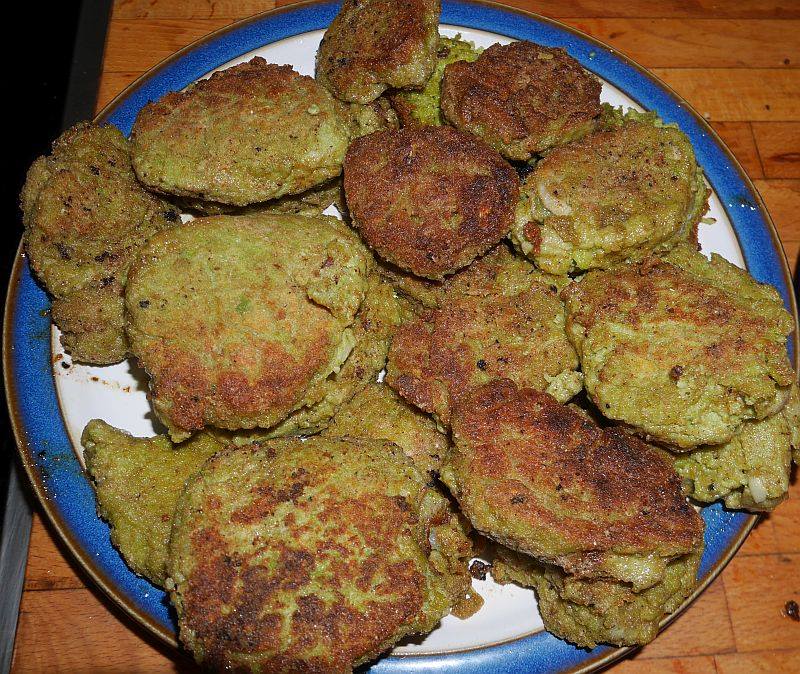
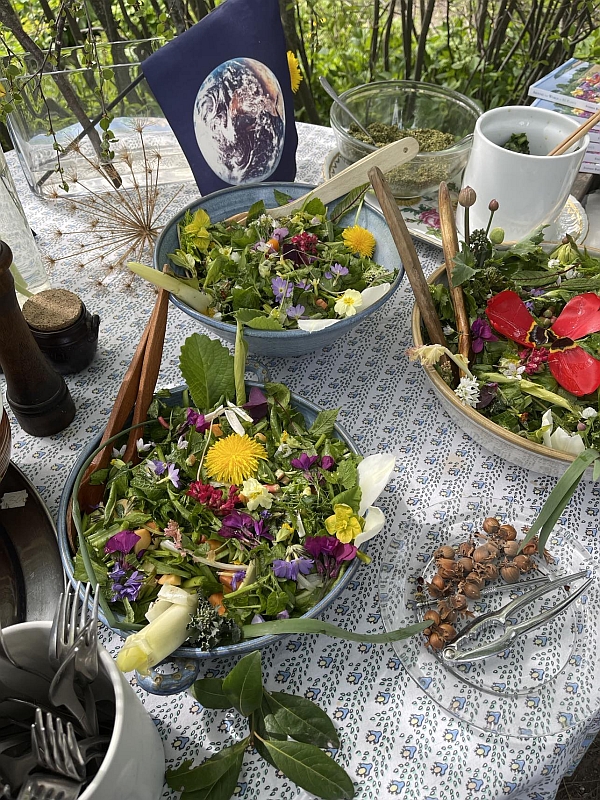
Last night, St. John’s Eve, I started a vegetarian midsummer tradition by making St. John’s Felafels with dried broad beans stored since the autumn and golpar spice (from dried seeds of a mix of Heracleum sp.).
See more about Johannes’ shallot at https://www.edimentals.com/blog/?p=22601

Snow onions

A new video on my youtube channel, the wonderfully exclusive SNOW ONION from the China and the Himalaya https://youtu.be/5mOcQ4aUQVI
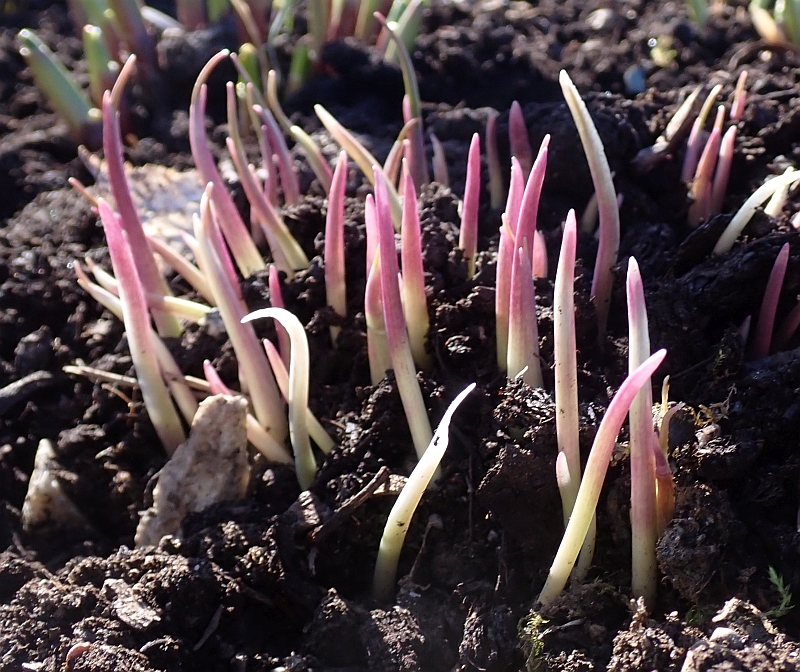
We’re back in the Onion Garden Chicago at the Ringve Botanical Garden in Trondheim, Norway on 10th May and the first Allium is in flower. It’s Allium humile, known as the snow onion (snøløk) and one of my favourites and one of the world’s most exclusive foods, known from the ethnobotanical literature to be wild collected both in Kashmir, where it has also been domesticated in kitchen gardens and sold in markets, and in the northernmost Indian state of Himachal Pradesh. Before you ask, I have no idea where you can get hold of seed or plants – my plants are sterile (no seed) – an exceptionally rare edimental (the garden website is here https://www.ntnu.edu/museum/the-onion-garden)

MAC 69 ONION CHEESE

Thanks everyone for all the birthday greetings! I spent my 69th by visiting the Onion Garden Chicago that I look after at the Ringve Botanical Garden, worked for an hour and harvested leaves from 69 different Alliums as one does, surprised my daughter by meeting her off the bus from Oslo and then had a lovely evening with Mac 69 Onion Cheese with Hablitzia tamnoides washed down with a few glasses, my first birthday as a Norwegian citizen 🙂

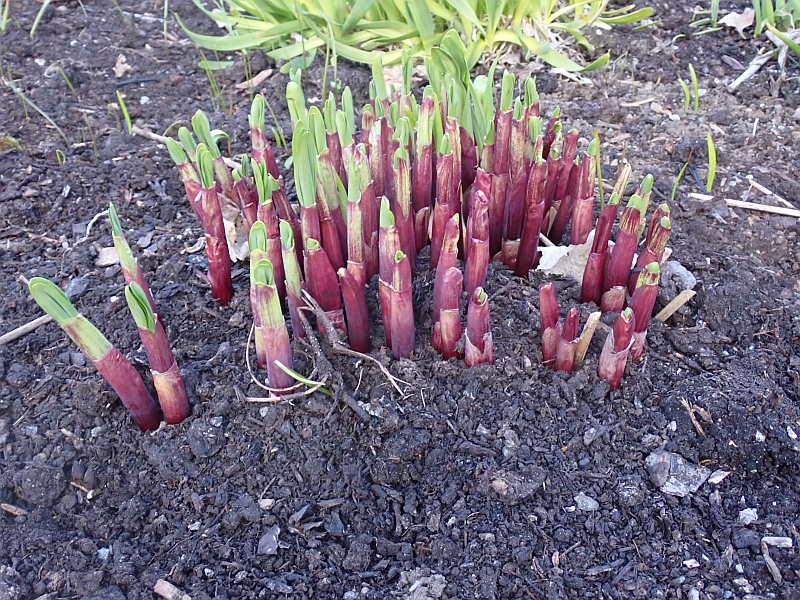
Wietse’s onion (Allium pskemense x fistulosum) is already huge!
Beautiful Allium moly shoots!

One of the Allium victorialis group accessions

The 2023 Permaveggies / Forest Gardening course

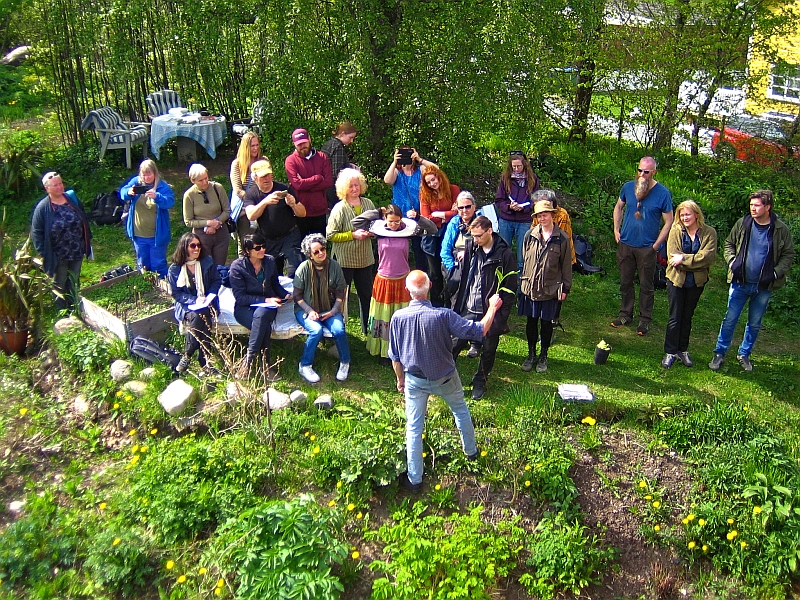
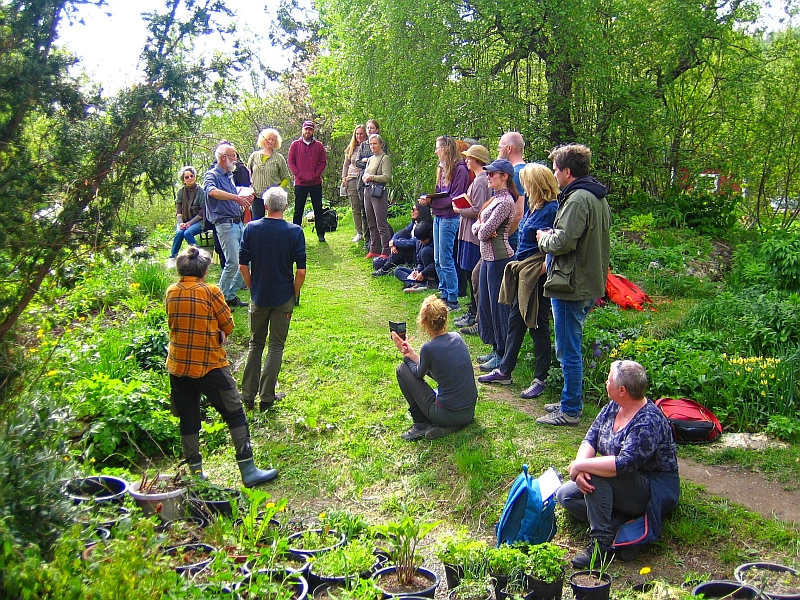
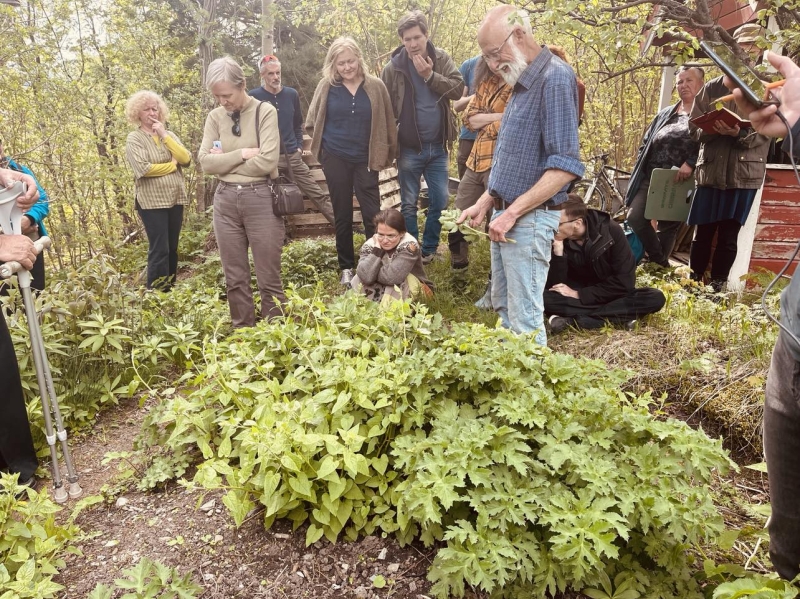
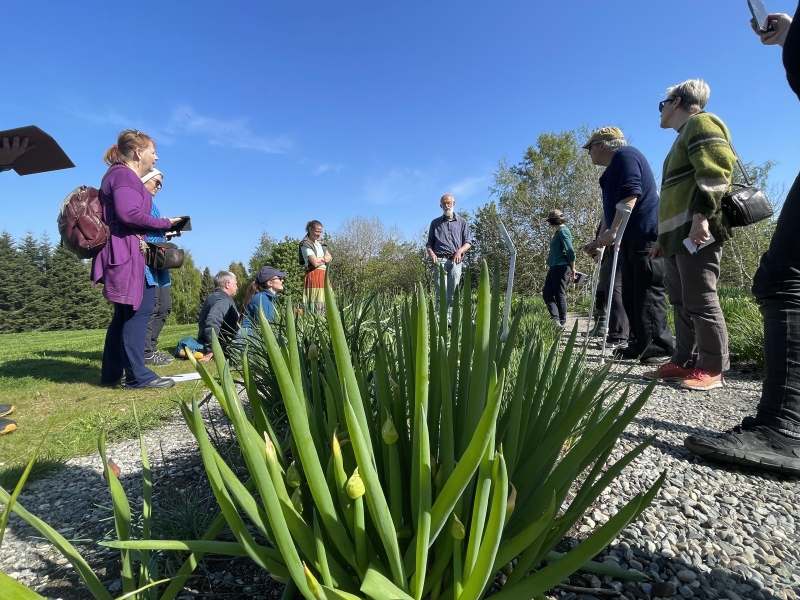
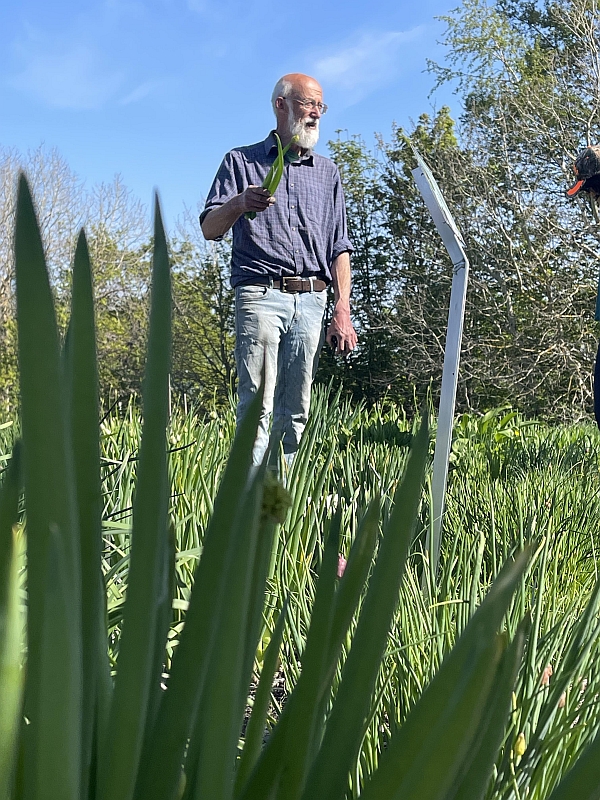
The 5th Permaveggies / Forest Gardening course I’ve held in Malvik took place on Sunday 21st and Monday 22nd May with guest Jen McConachie who gave her forest gardening course at Presthus Farm on the Monday evening. On the Sunday we met at my garden (The Edible Garden) for a garden tour and lunch from the garden with focus this year on growing food while maintaining a high biodiversity. On Monday we visited The Væres Venner Community garden to see the World Garden and also the large collection of edible trees and bushes that have been planted there, followed by a visit to the Onion Garden at the Ringve Botanical Garden in Trondheim.
Previous Permaveggies weekends were held in 2012, 2013, 2016 and 2019 whilst the 2020-weekend had to be cancelled because of Covid. More information on previous courses can be found here: Previous Permaveggies Courses.
I didn’t take many pictures this year, so thanks to Meg Anderson, Jen McConachie and Mark Tacker who took the pictures below.

Malvik:

In the Onion Garden Chicago at the Ringve Botanical Garden:

After Jen’s forest garden course, the participants split into groups to design a forest garden in a field next to the farm which it is planned to be developed as a forest garden (get in touch if you are interested!). Here is one of the groups presenting their plans:


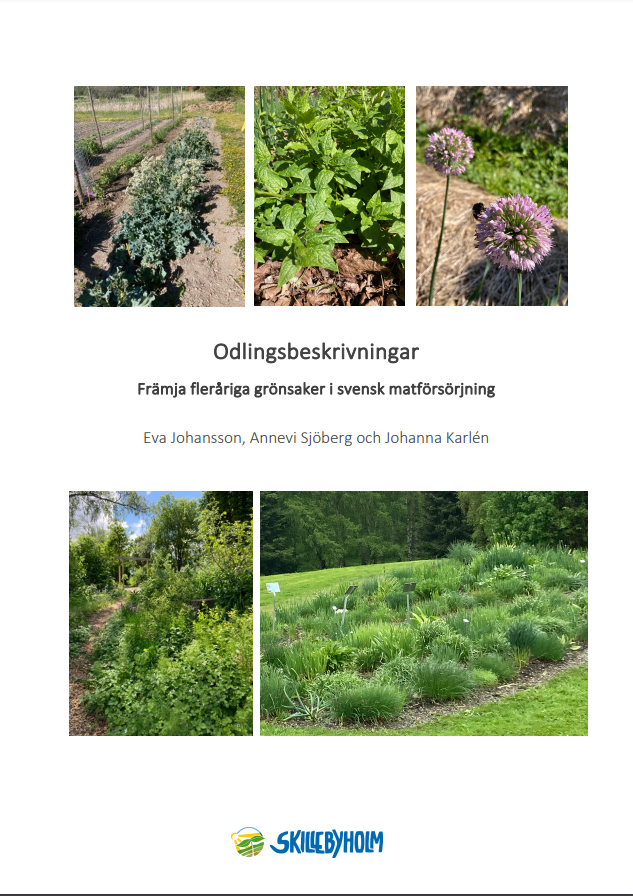
PROMOTING PERENNIAL VEGETABLES IN THE SWEDISH FOOD SUPPLY

In recent years, vegetable growers have started to open their eyes to perennial vegetables and quite a few are growing several types. Many more growers are curious and interested, but haven’t got started yet.
Now you can download the report put together by Eva Johansson, Annevi Sjöberg and Johanna Karlén through visits and interviews with growers of perennial vegetables all over the Nordics, including my 3 gardens in Trondheim / Malvik in June.
See https://perennagronsaker.se and click on the link! NB! In Swedish!
(Nice that the Onion Garden Chicago made the front page!)