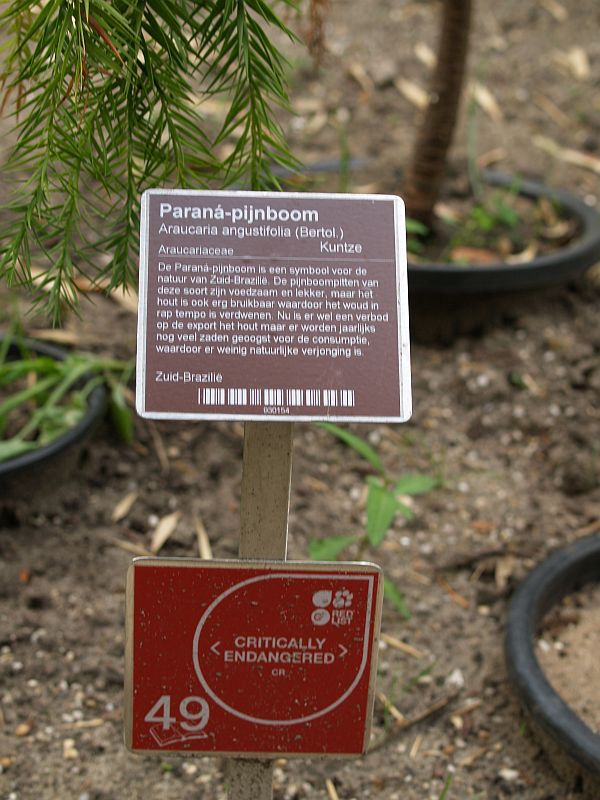
There’s been a lot of talk recently that we should return to real Xmas trees from the plastic trees which were once touted as being more environmentally friendly as they could be reused for many years. However, with the recent movement away from plastics due to the discovery that our oceans are filling up with microplastics, real trees are once again cool and what’s better than growing your own!! In June 2005, I was sent seed of Brazilian monkey puzzle, also known as Paraná pine, Brazilian pine or candelabra tree. It turns out that this tree is nowadays critically endangered. It is an important nut tree for the indigenous populations as is the common monkey puzzle tree further south.
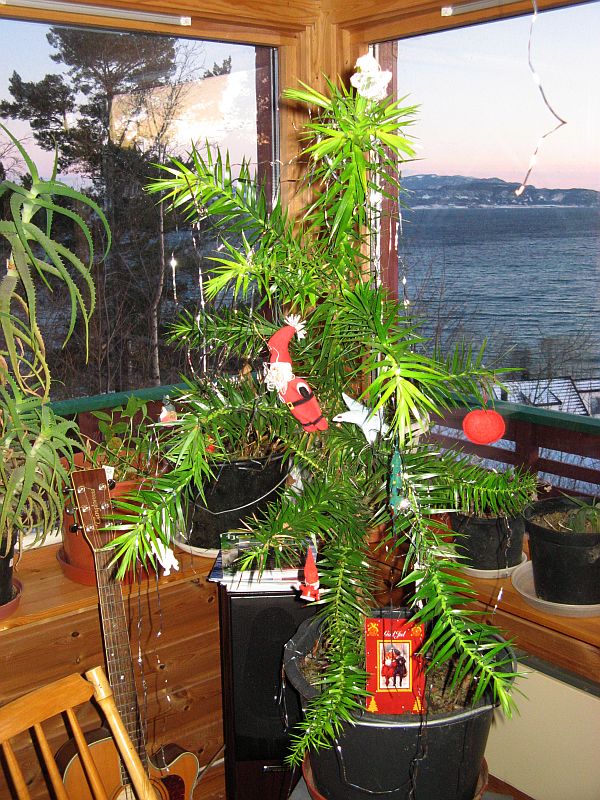
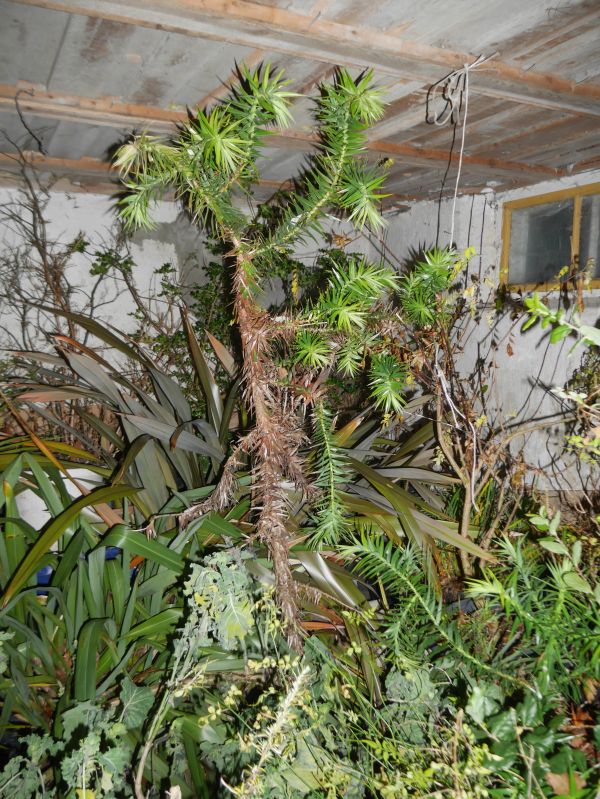
Not being hardy, I’ve grown this tree in a large pot and move it into a cold cellar which is around +3-4C in midwinter. There is very little light, but it just goes to sleep until spring. I adopted it as a Xmas tree around 2010, I just move it in its pot into the warm living room. After about 10 days it is moved back into the cellar. It survives this treatment without problem. Now at 12 years old the trees are getting a bit lanky and less attractive as a Xmas tree – they and are no doubt root bound.
Yes, best of all for the environment is the grow your own perennial Xmas tree (..and yes, I know it’s a plastic bucket :( )
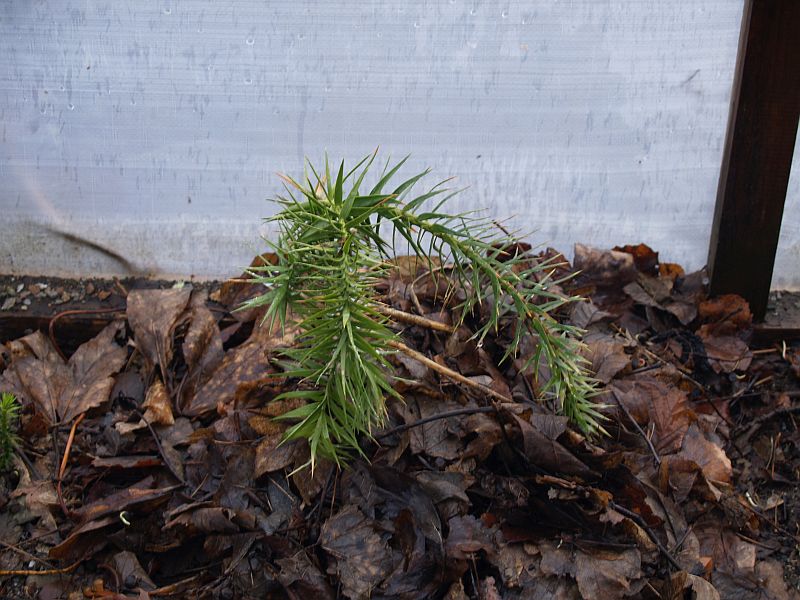
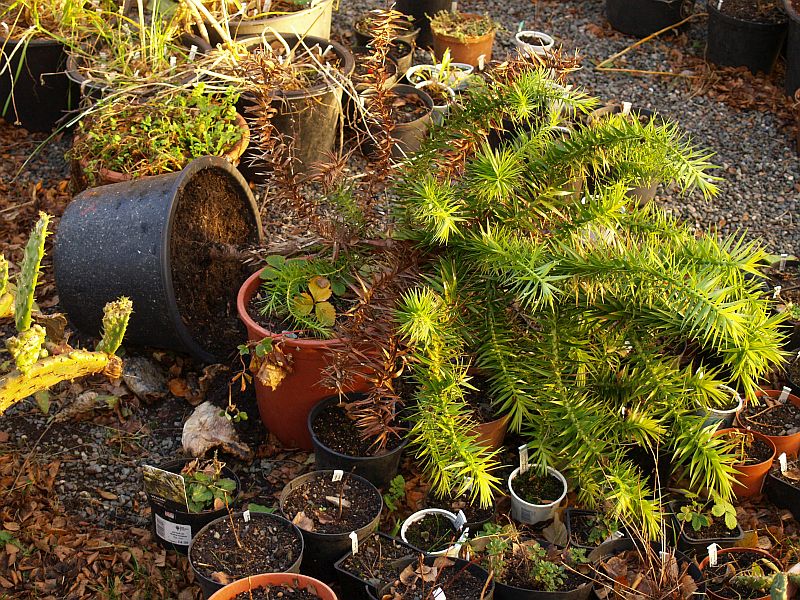
I tried to overwinter the Brazilian monkey puzzle with a leaf mulch and in an open (to the top) greenhouse. I was surprised that it made it well into March (picture), but a subsequent cold period killed it…
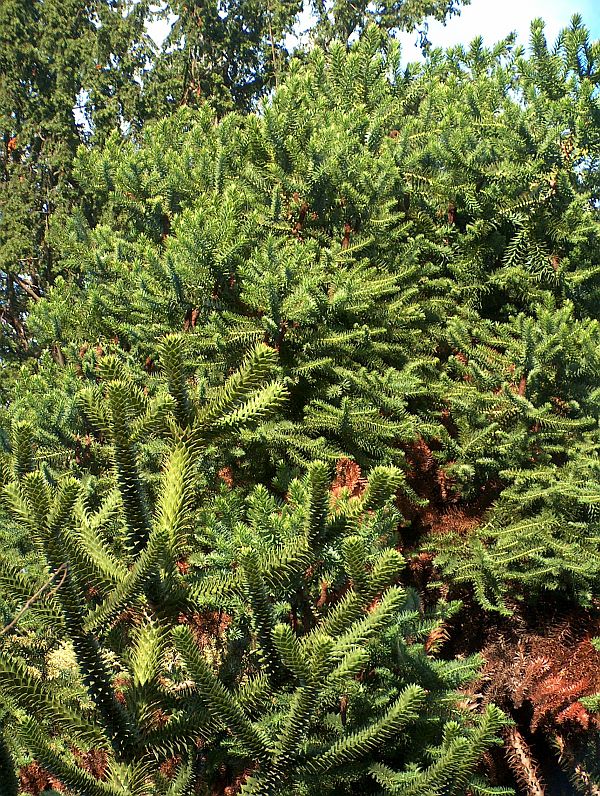
It grew much more quickly than the common monkey puzzle and this picture was taken in November 2008, only 3 years old
In the middle of London in the Chelsea Physic garden, you can compare both species of monkey puzzle – Araucaria araucana (below) and the narrower-leaved Araucaria angustifolia above
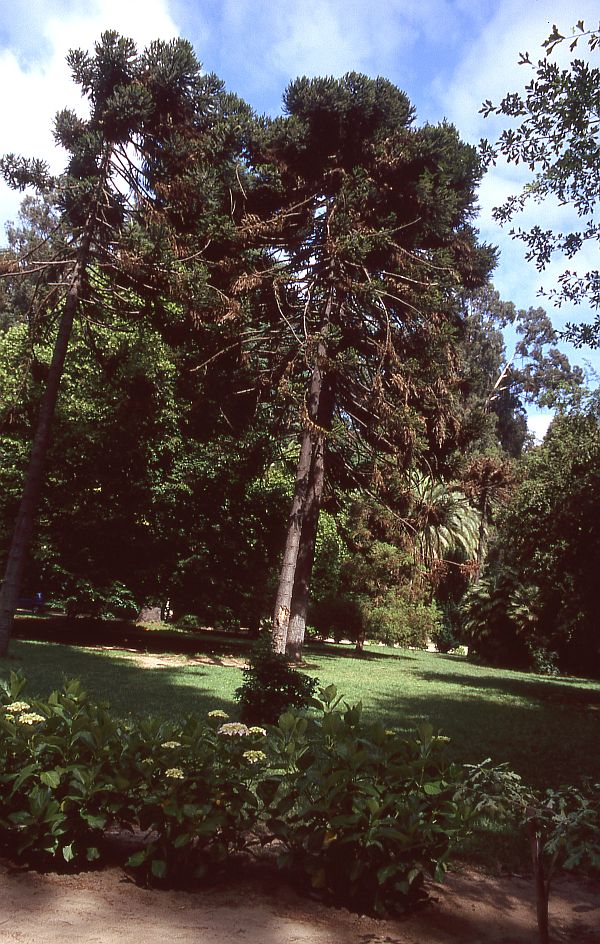
This picture was from the first time I saw this species, in the Jardín Botánico Nacional Viña del Mar in Chile around 2004.
On my 2004 trip to Chile I was fortunate to experience the amazing old growth monkey puzzle forest (Araucaria araucana) in the Huerquehue National Park
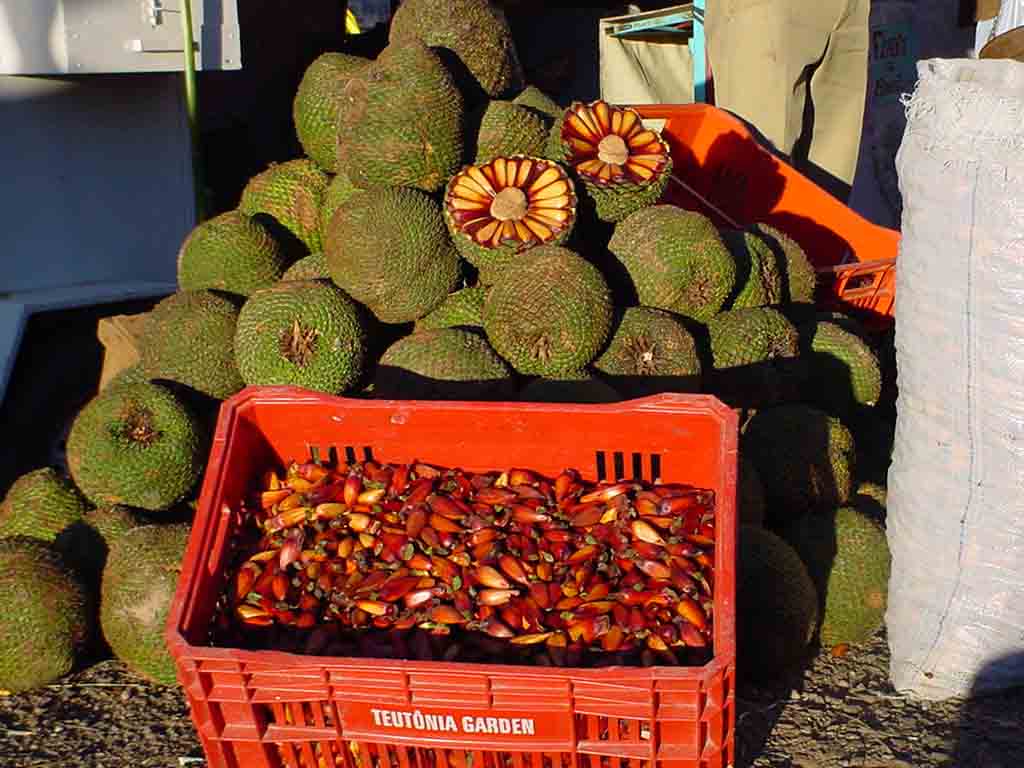
The picture (from Wikipedia) shows the cones (pinhas) and nuts (pinhões); Wikipedia: The seeds, similar to large pine nuts, are edible, and are extensively harvested in southern Brazil (Paraná, Santa Catarina and Rio Grande do Sul states), a habit particularly important for the region’s small population of Native Americans. The seeds, called pinhão [piˈɲɐ̃w̃] are popular as a winter snack. The city of Lages, in Santa Catarina state, holds a popular pinhão fair, in which mulled wine and boiled araucaria seeds are consumed. In Brazil, 3,400 tonnes (7,500,000 lb) of seeds are collected annually which, combined with extensive logging, seriously threatens the regeneration of the species. It is also as a softwood timber, used in stair treads and joinery.
In the Hortus Botanicus in Amsterdam
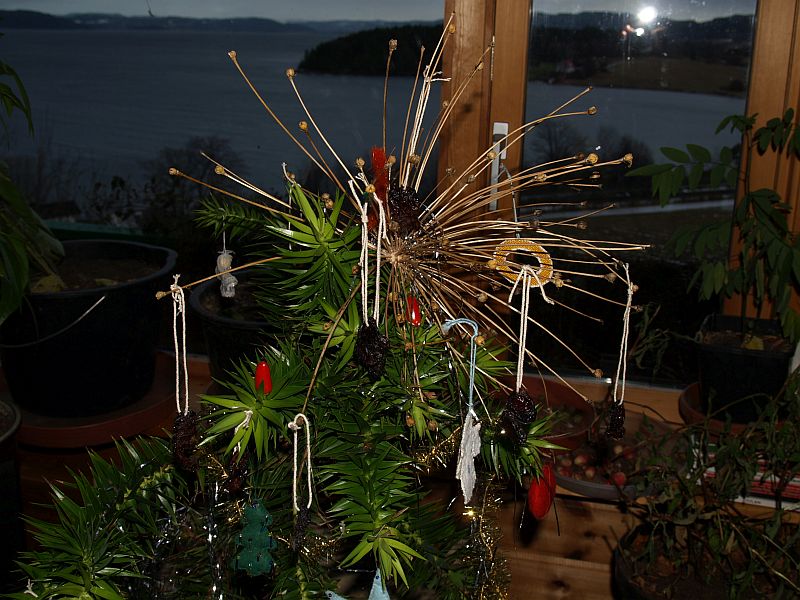
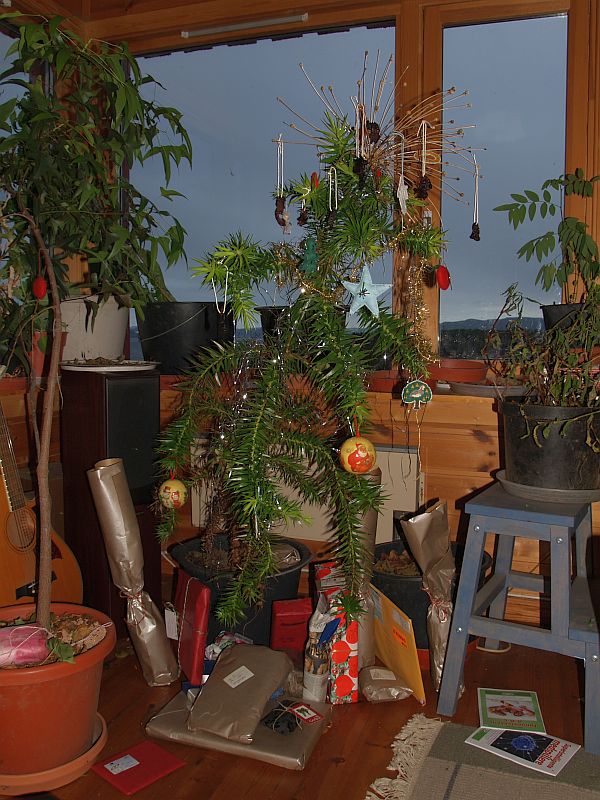
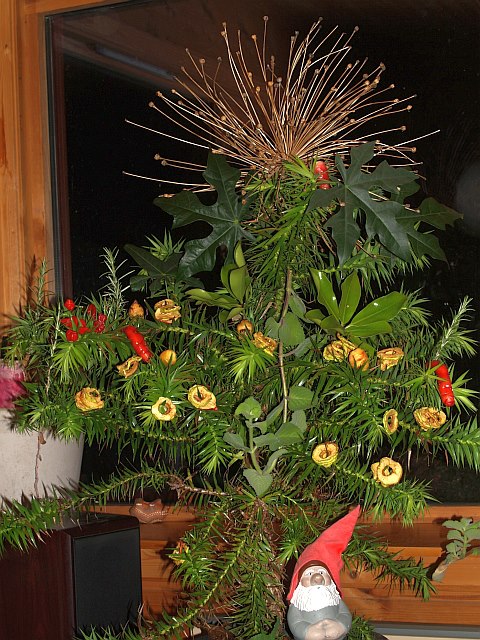
Since about 2010, I’ve used it as a Xmas tree. The next few pictures are from 2011 with the fairy replaced by the seed head of Schubert’s Onion, Allium schubertii
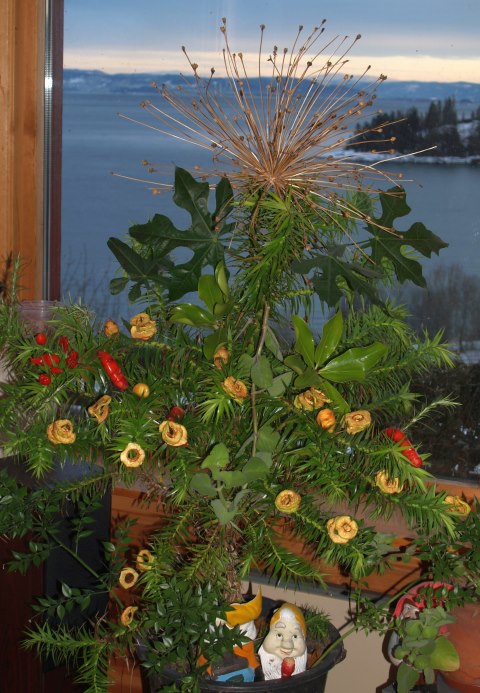
Xmas tree 2011 with the fairy replaced by the seed head of Schubert’s Onion, Allium schubertii
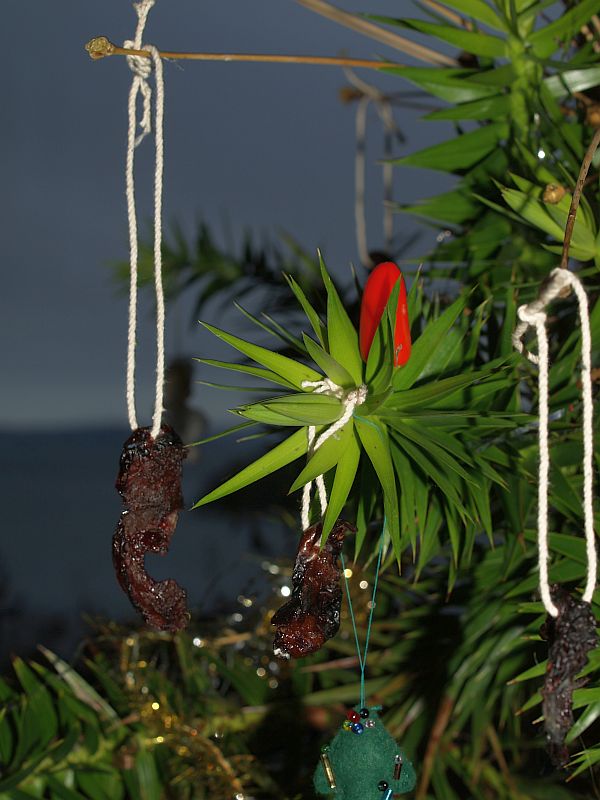
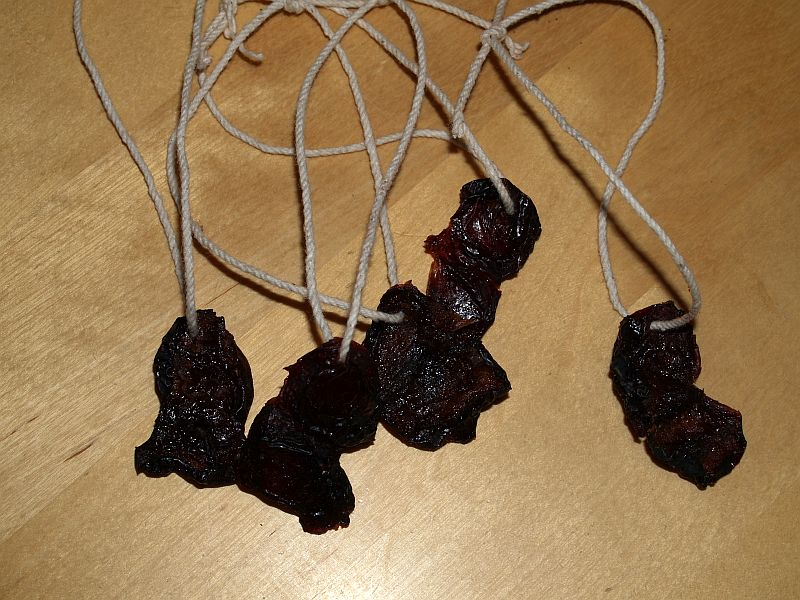
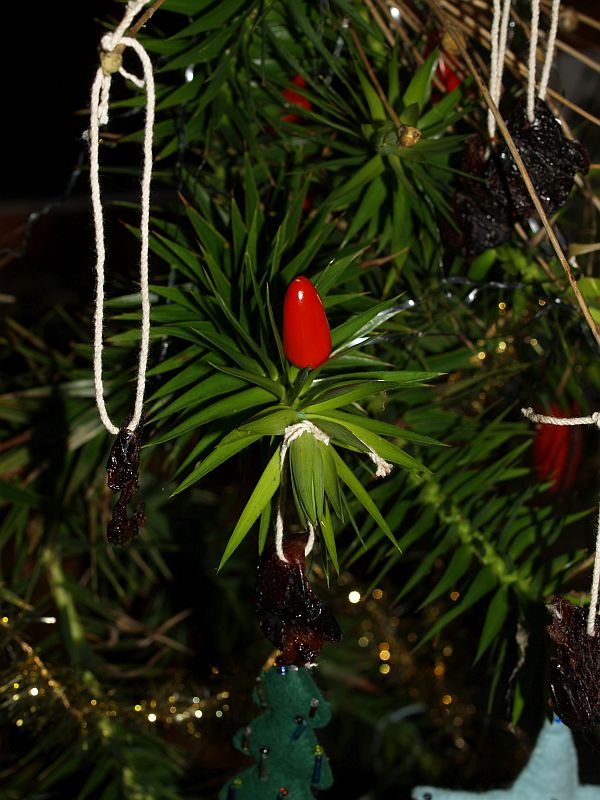
Lyspære (Light pear) is Norwegian for light bulbs. These are lysplommer (dried plums) but are disappointingly not very bright….. ;)
Lyspære (Light pear) is Norwegian for light bulbs. These are lysplommer (dried plums) but are disappointingly not very bright….. ;)
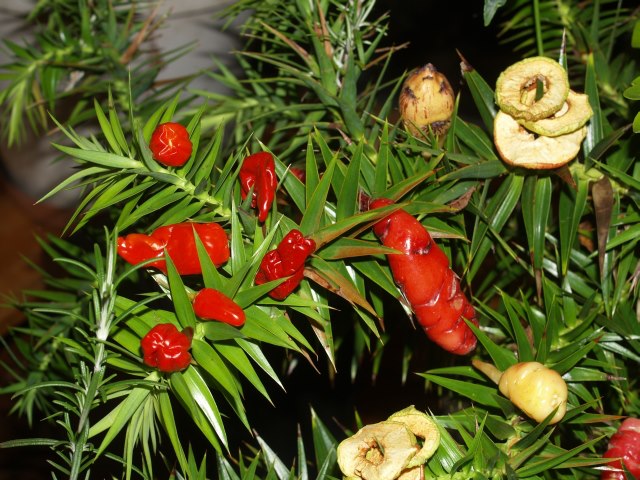
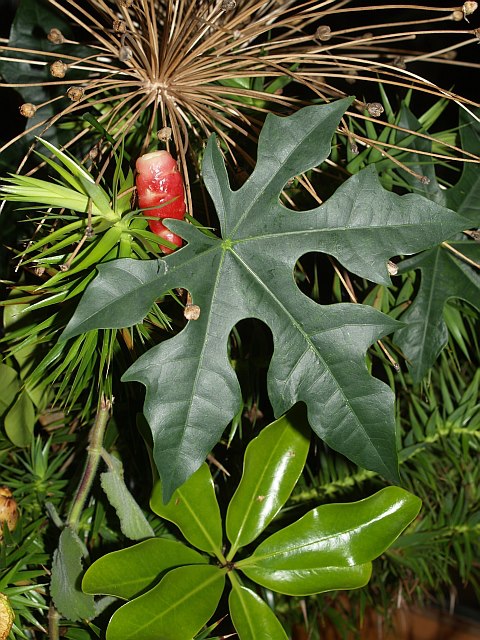
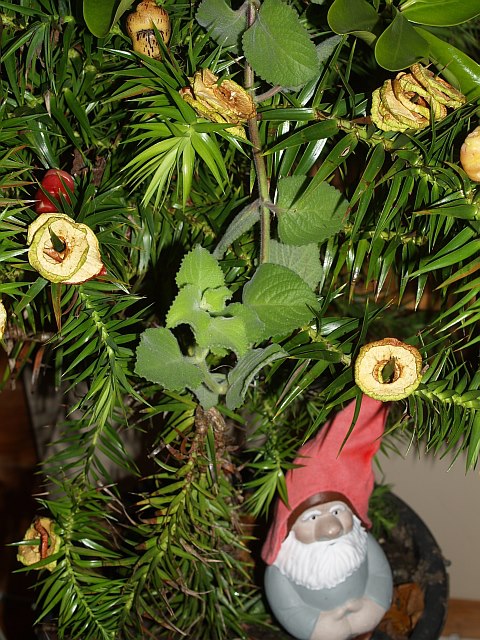
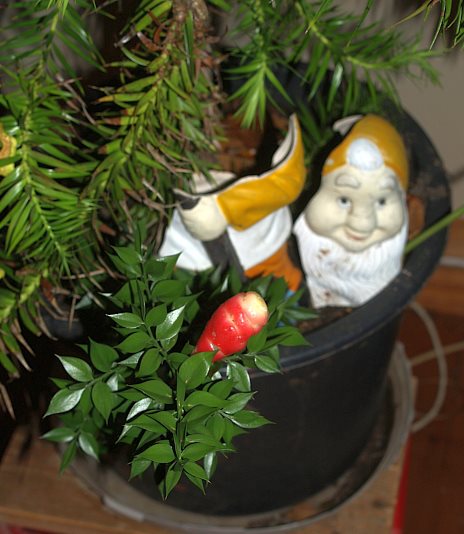
Continuing the 2011 theme of an edible Xmas tree, the concept was further developed in 2012 (sorry, no chocolate): Brazilian Monkey Puzzle or Parana Pine (the tree), Cuban Oregano, Rosemary, Butcher’s Broom (Ruscus), Chili, Dried Apples, 3 varieties of Oca (Oxalis tuberosa), Karaka (Maori edible from New Zealand), Mashua and, once again, Allium schubertii in the star role as the fairy!!
Erik the half a gnome!
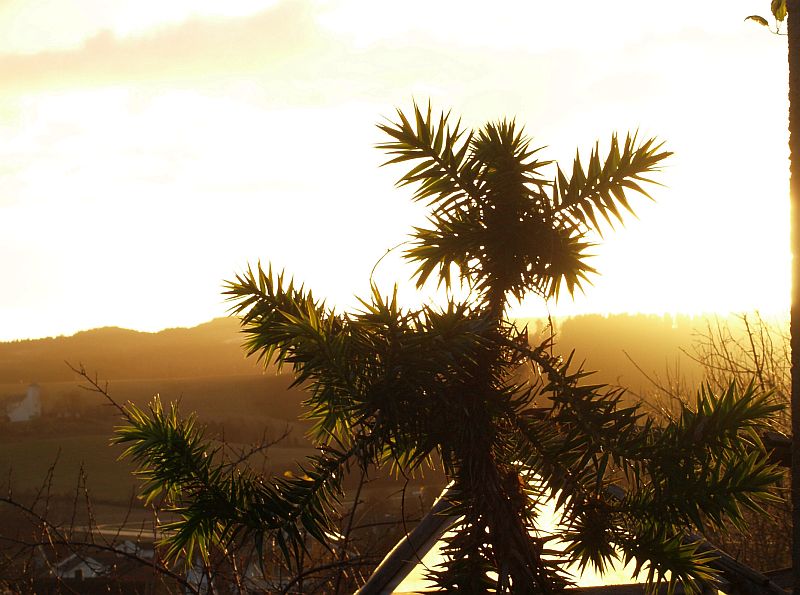
The two trees I have are moved outside for the summer, her blown over in a summer storm!
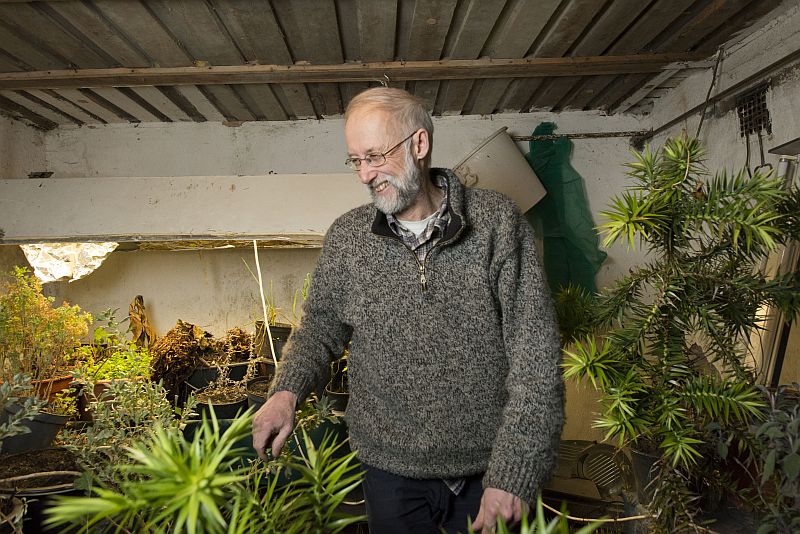
Winter in my cellar
18th December 2017…at 15 the trees are getting a bit lank, a bit like old growth trees :)
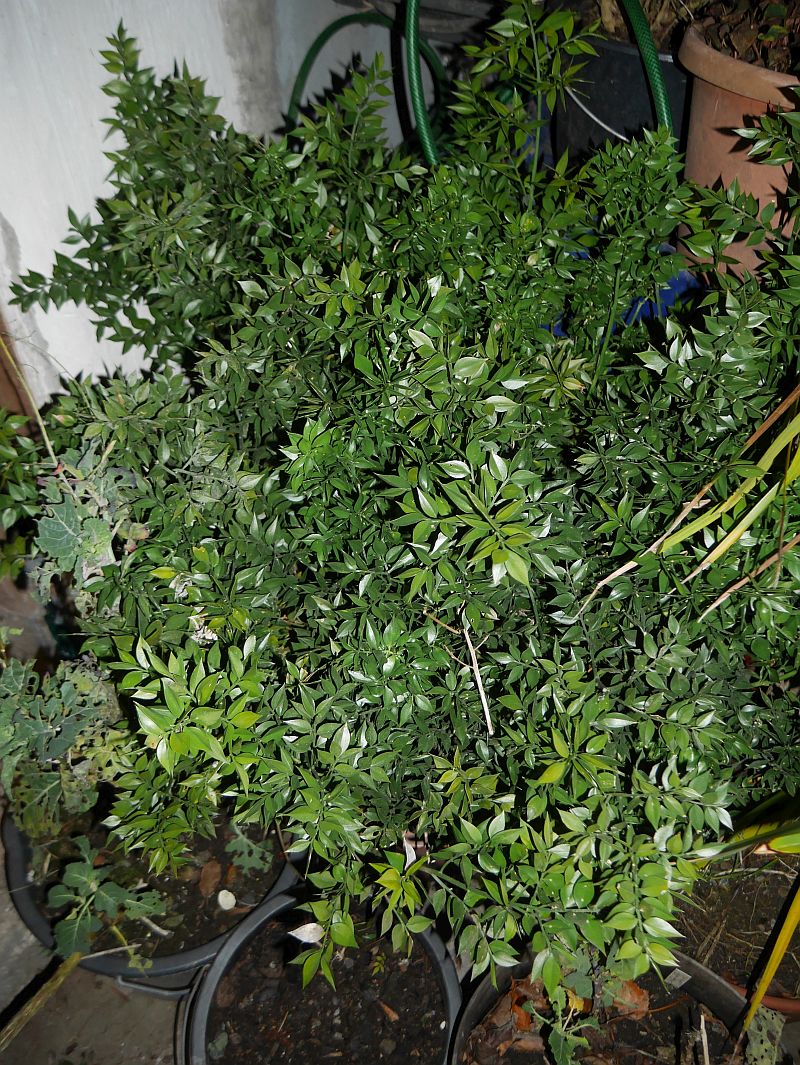
181217: Another good Xmas decoration plant is butcher’s broom (Ruscus aculeatus), also not hardy and overwintered in the cellar)
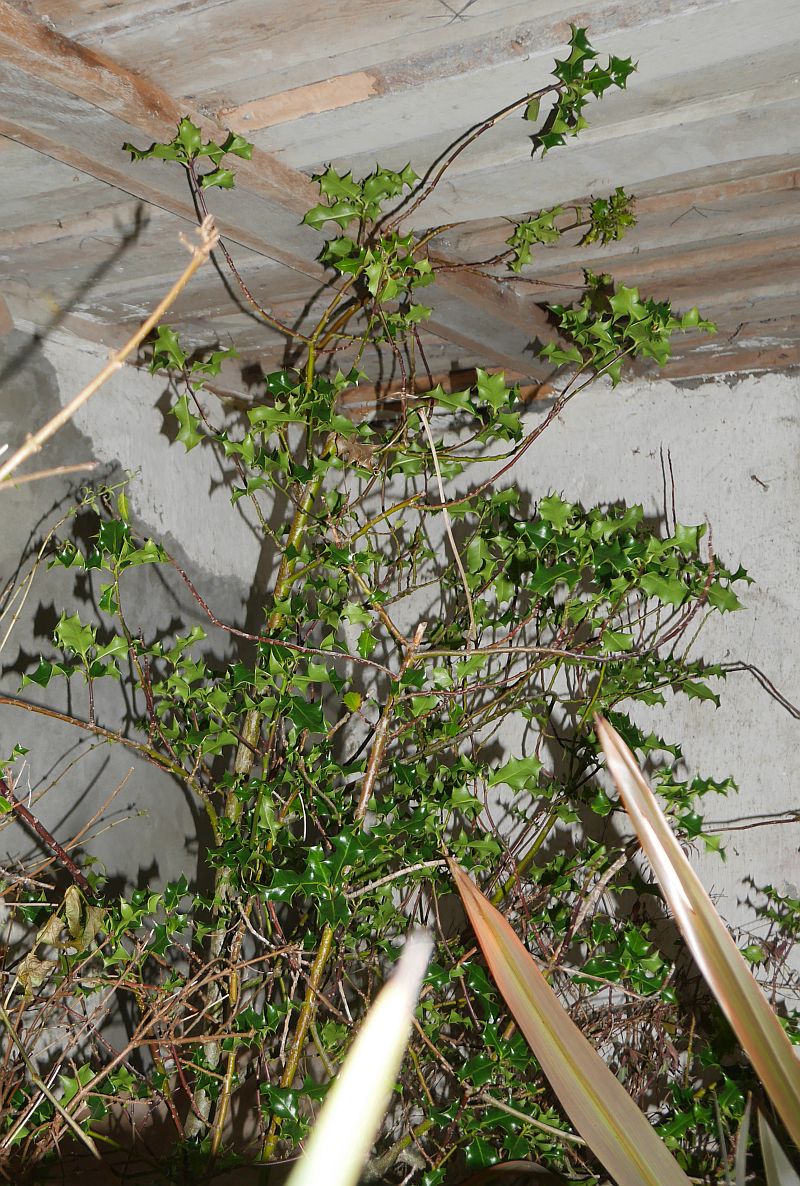
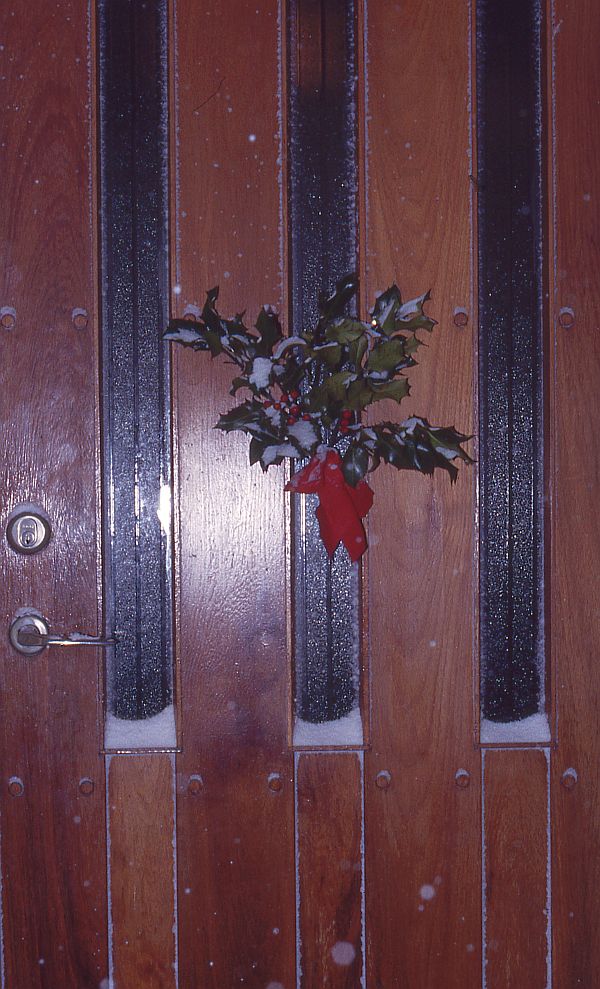
181217: Holly (kristorn) is also not hardy and is similarly overwintered in the cellar, also some 15 years old now
I was very saddened yesterday to learn that my friend Helge Finnøy has passed away after a very long illness :cry:
Helge was a gentle, modest, intelligent man and we shared an interest in particular in plants and insects and he reintroduced me to the music of Ray Davies (Kinks) and we were both at his memorable performance at Trondheim Torvet (town square) on October 11th 2014. I’m not one for sending flowers (at least not at this time of year), so I’ve put this little gallery together of my colourful memories of Helge! I have fond memories of visiting Helge (and Randi) and his garden at Torp (incidentally right next to Granly, where we rented a flat when we first moved to Norway i 1981). Takk for alt, Helge! Kondolere Randi Stubban og Sunniva Stubban Finnøy <3
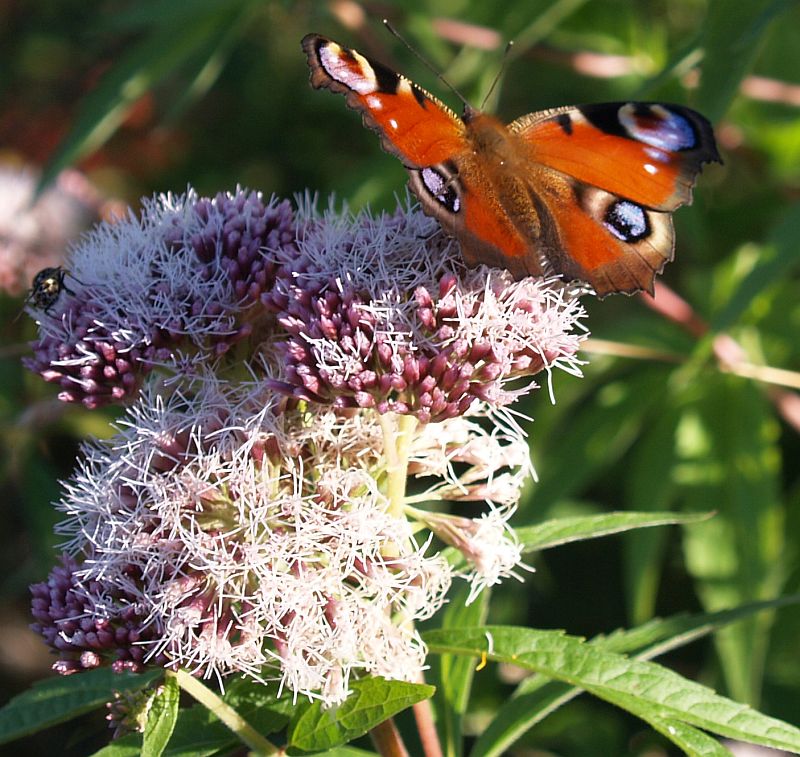
Helge was passionate about the things that interested him and that included butterflies. He told excitedly of seeing two peacock butterflies (dagpåfugløye) in his garden at Torp (a few km east of my own garden) in 2004. Two years later I had them in my own garden (picture). It turns out that Helge’s observation was the first ever of this species this far north. I checked our species reporting system artsobservasjoner.no and his observation was missing, so I’ve just added it on his behalf!
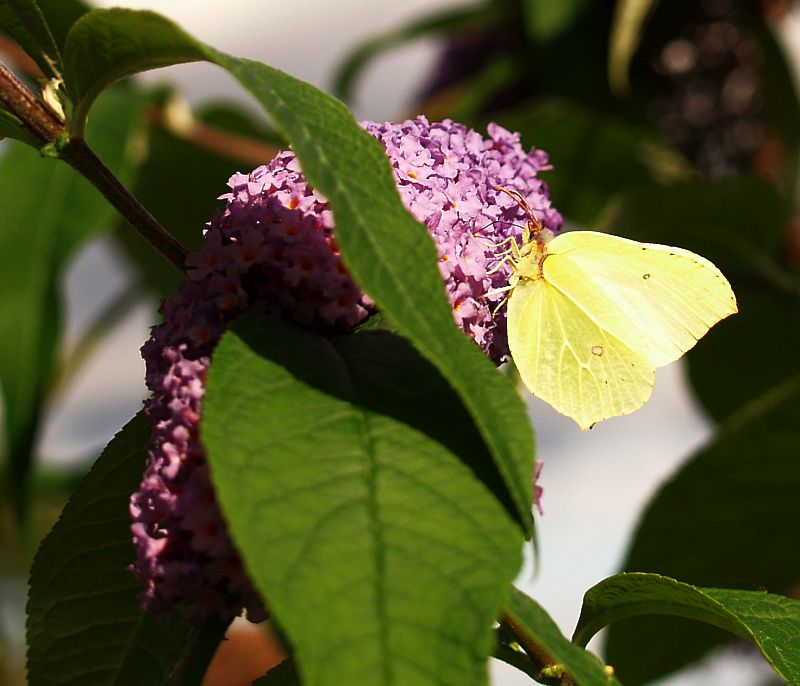
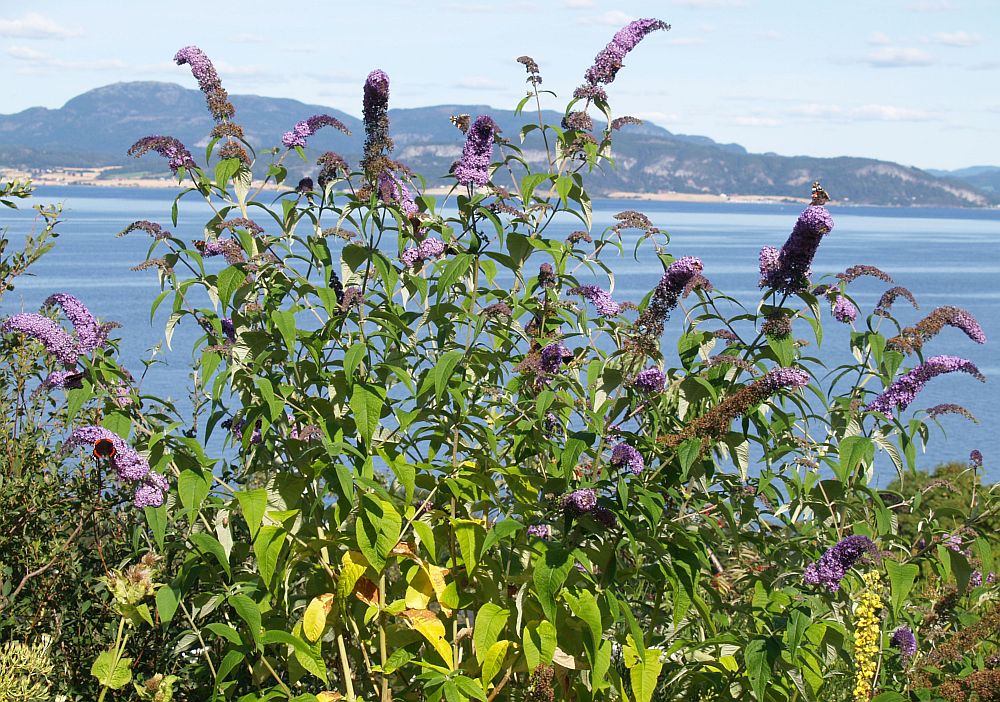
Helge was also passionate about trees and shrubs and was chuffed when he managed to grow plants that shouldn’t be possible here…in that way he inspired me to try despite what people said :) Buddleja (sommerfuglblomst) was one of them and he grew several colour forms to attract butterflies, including a particularly fine form, Royal Red. This picture is of a Brimstone (sitronsommerfugl) which finally turned up in my garden.. Helge told me this would happen!
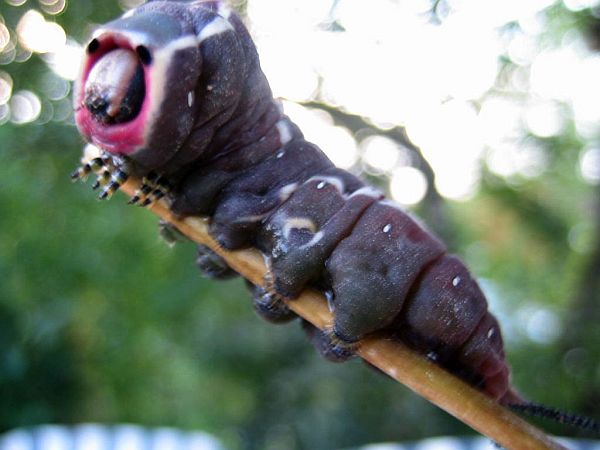
This creature turned up in another garden Torp and the owner brought it over to me hoping I could ID it…. I asked Helge and he could tell me it was the larva of the pussmoth (stor gaffelstjert)…this was in the days before it was easy to do an on-line identification!
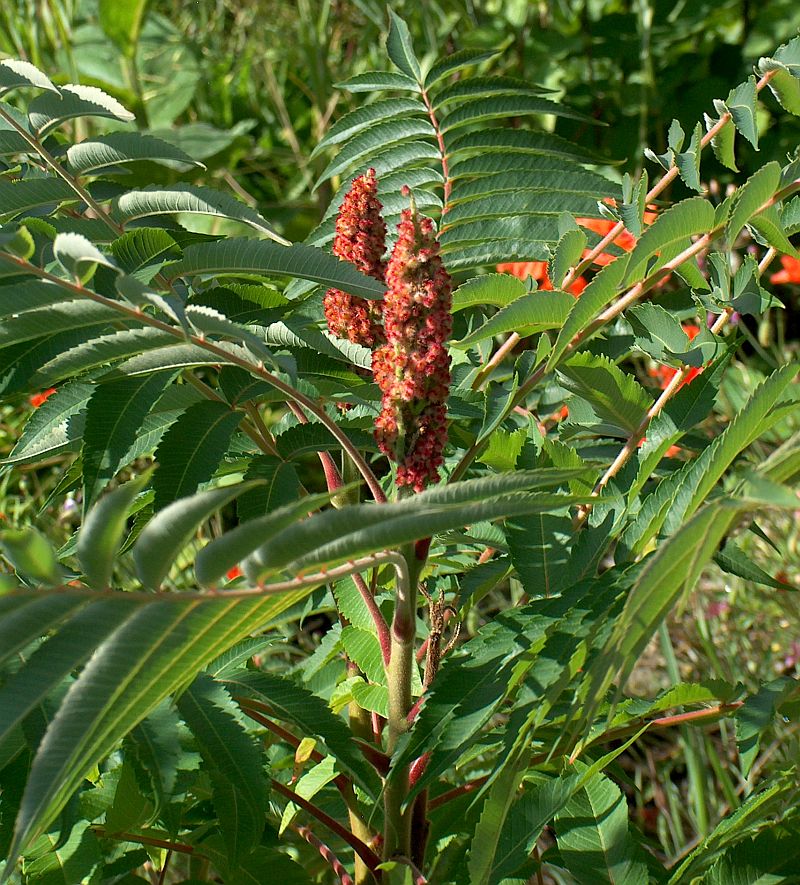
Rhus typhina (Stag’s horn sumach / hjortesumak) is one of the plants Helge gave me and 15 years on it’s still thriving, despite this being one of the plants that shouldn’t be hardy enough for Malvik
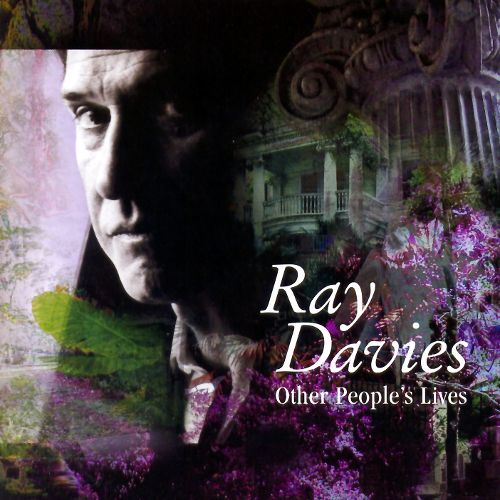
Helge recommended this album that had just came out when we saw Ray Davies play in Trondheim in 2014 and it still is a favourite which I incidentally played just a few days ago for the first time in a long time… The set list: https://www.setlist.fm/setlist/ray-davies/2004/torvet-trondheim-norway-73da9ab5.html (now playing). Prior to this I’d seen the Kinks play on the Schoolboys in Disgrace tour in 1975/1976…when I was at uni in Exete
Buddleja in my garden from a cutting from Helge
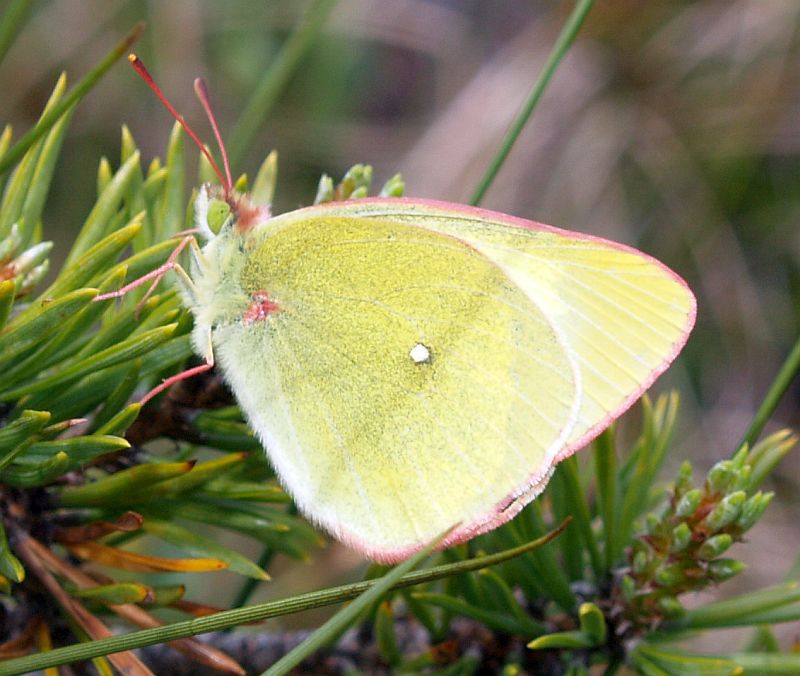
…and this is another Helge helped me with, moorland clouded yellow (myrgulvinge), the first time this species was recorded in Malvik kommune in 2008 (there have been 3 more observations in the last 3 years).
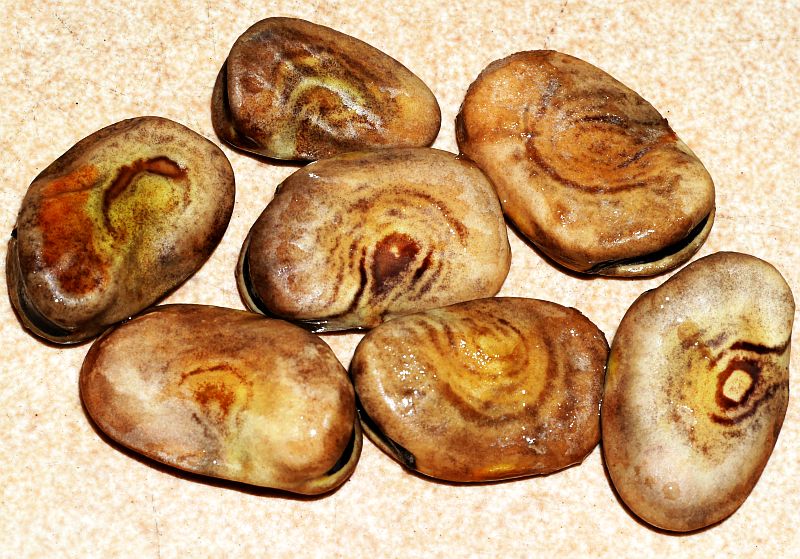
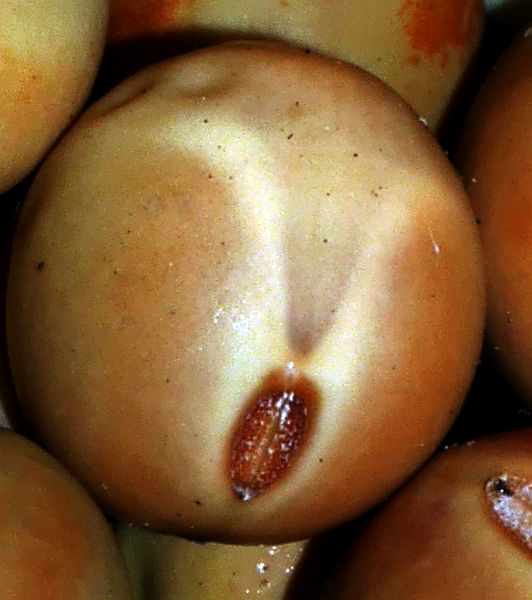
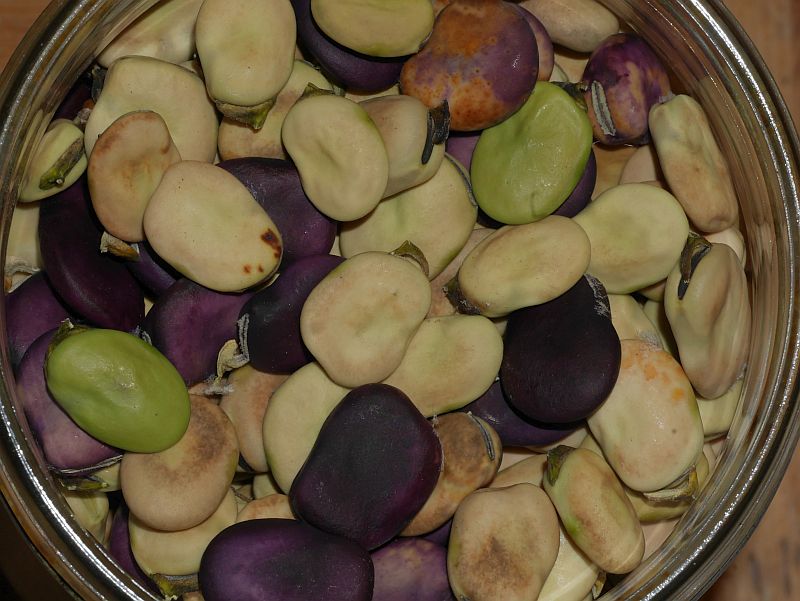
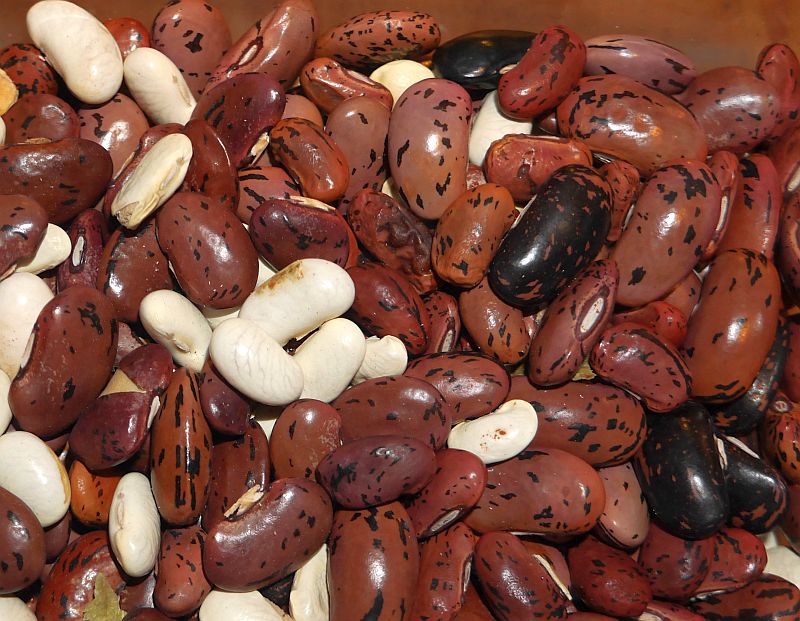
I always grow many different types of peas and broad beans (favas) (erter og bondebønner). Peas (Pisum sativum) rarely if ever cross so I grow them very close to each other. Broad beans do cross, but active selection I do manage to keep several varieties true to type (such as crimson flowered with its distinctive beautiful lime green beans ).They’ve been lying around the house on windowsills drying for two months and I finally got round to sorting them, saving some for seed, and saving extra of good ones for Norwegian Seed Savers’ yearbook. The rest I just mix to make mixed bean falafel and pea soup later in the winter!
Mixed peas
Marbled broad beans
Salmon flowered peas, one of the most beautiful peas (an edimental) and also productive here. Itis a crown pea with clusters of beautiful salmon pink flowers! See http://www.edimentals.com/blog/?attachment_id=13085 and http://www.edimentals.com/blog/?attachment_id=13086
Close-up detail of a salmon flowered pea, See http://www.edimentals.com/blog/?attachment_id=13086
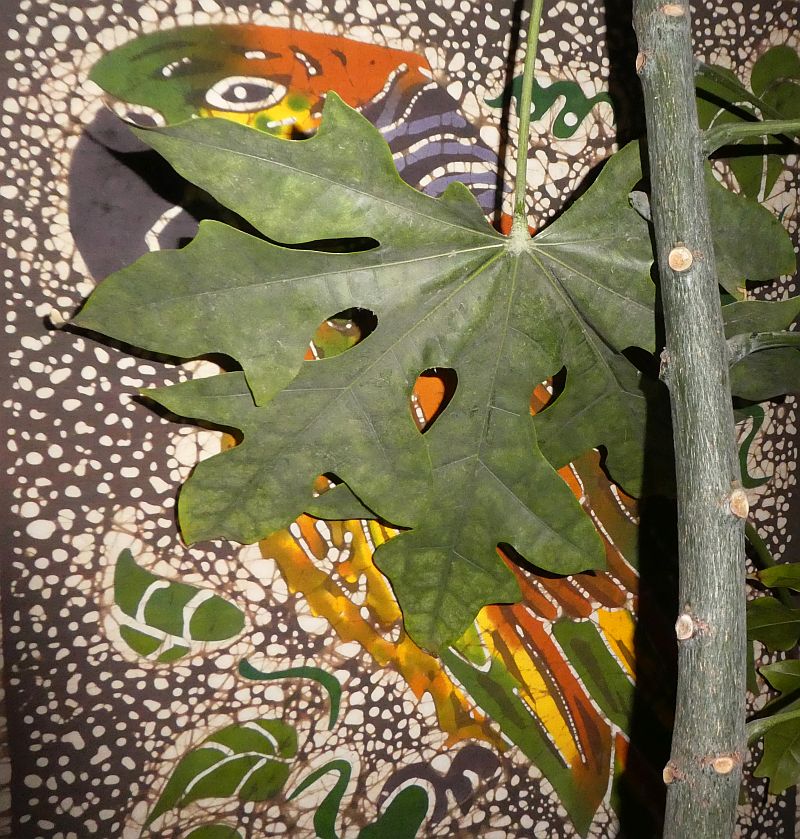
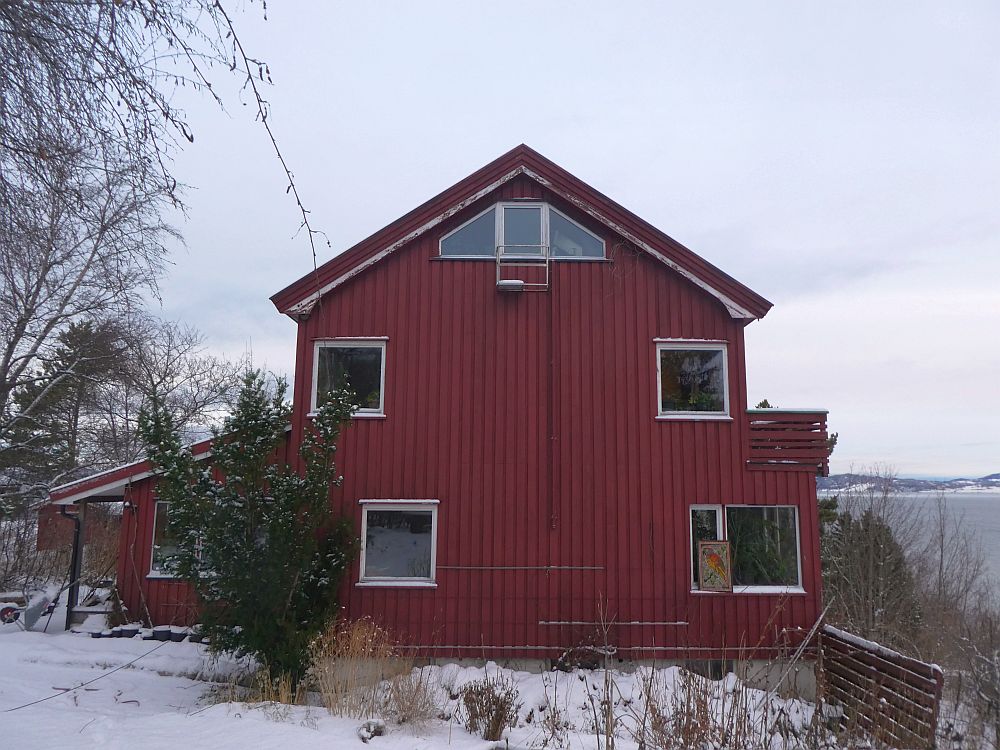
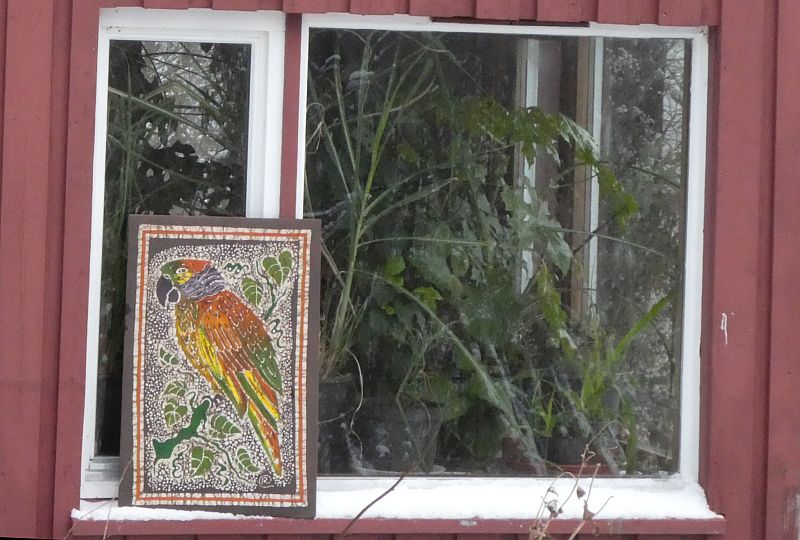
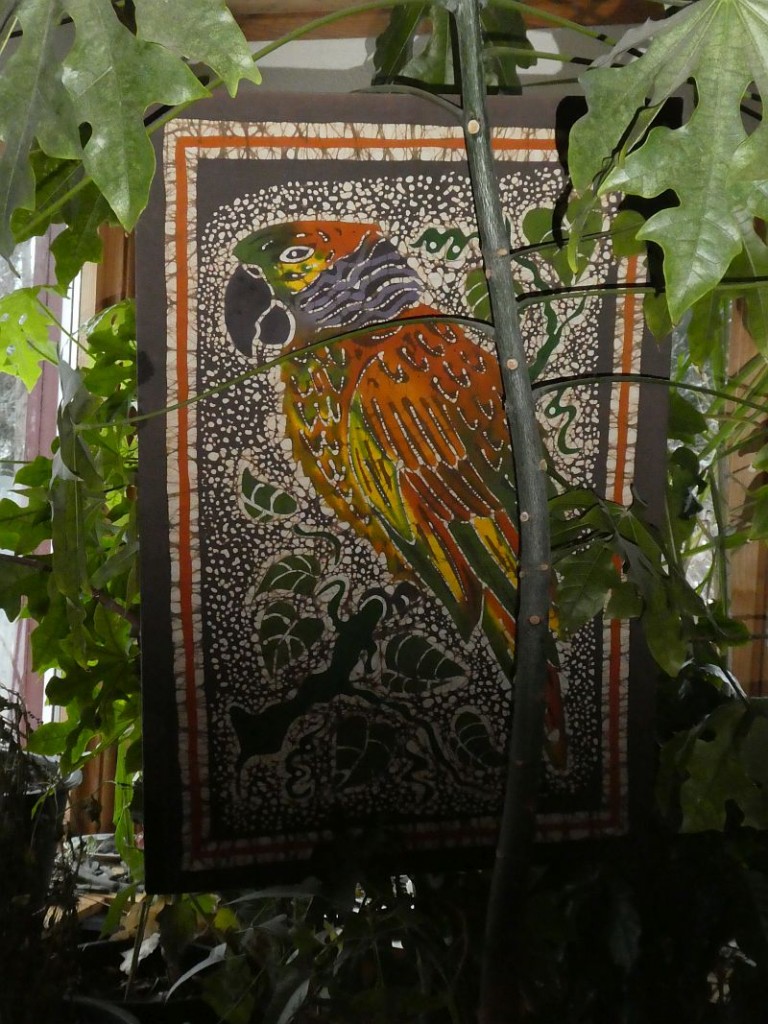
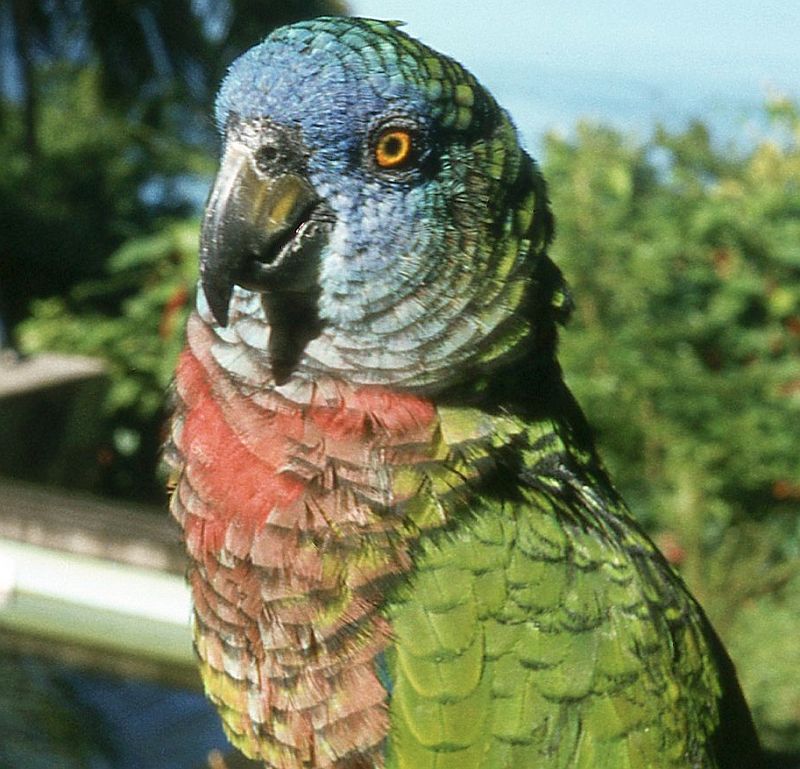
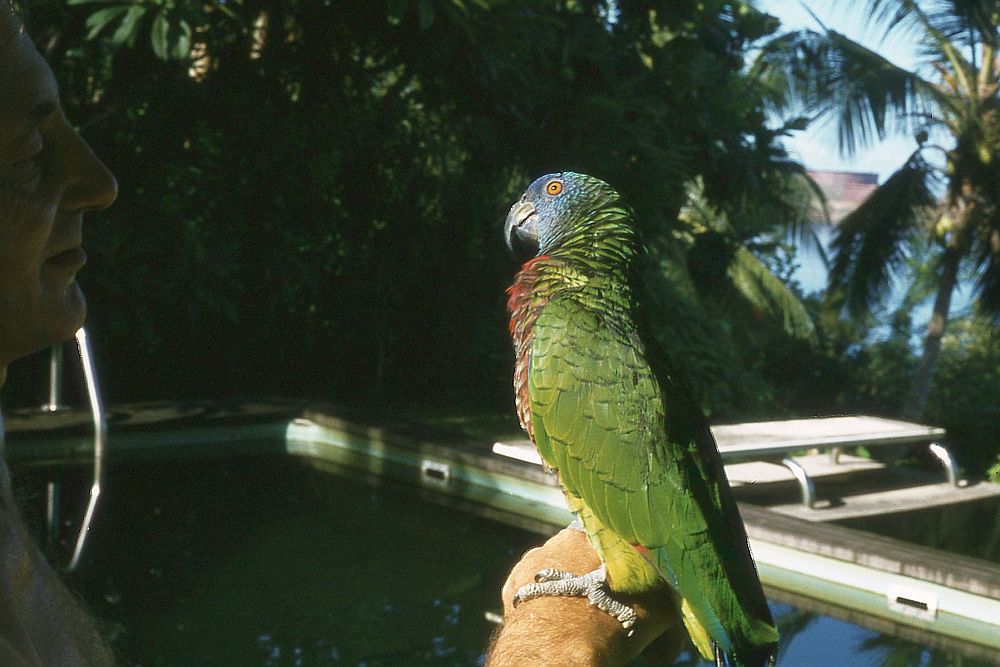
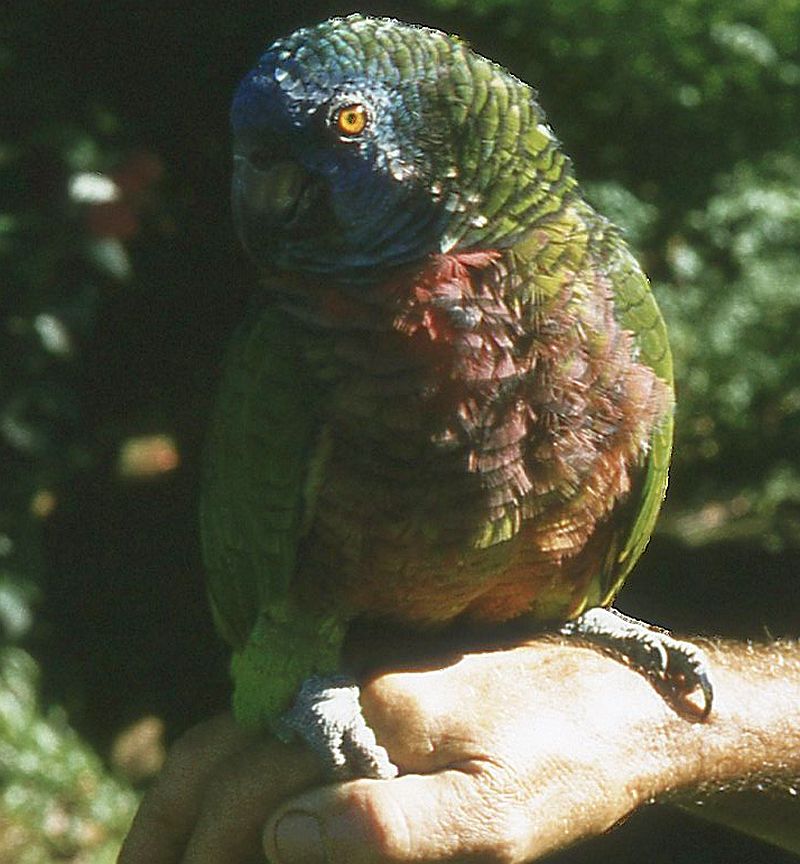
Today (13th December) is St. Lucia Parrot day and people are celebrating the world’s most beautiful parrot everywhere…even here in Malvik ;) – well, this is how I interpret this important feast day here….and the presence of this parrot in my indoor forest garden helps to brighten up the dark days of winter, together with the waxwings (aka arctic parrots, which are foraging in the garden as we speak!)….
When we visited the island in 1981, we hooked up with the local naturalist’s trust who gave a talk at the hotel about this bird and we were lucky enough to see one that had been found injured. This was just after Hurricane Allen had devastated the island and the population crashed to under 100 birds as reported in this video. It’s good to know that the population is now over 1,000 thanks to the conservation efforts for this wonderful endemic species found nowhere else than on this Caribbean island:
Waxwings (sidensvans) and siskin (grønnsisik) foraging under the bird feeder today.
With siskin and tree sparrow seen today, that brings this week’s species count to 21 species in the garden…in addition various other species have been seen flying over and on the fjord!
An active weekend in the garden digging a trench for the Internet, moving and stacking firewood and piling leaves over less hardy plants…before the next freeze with air temperature forecast to be below zero for the next 10 days…
Forbordfjellet was illuminated for several hours today
Sunny Forbordsfjellet
Sunny Forbordsfjellet
A long hole has appeared this weekend
Long hole digging for Internet cable!
Piles of leaves give winter protection to some less hardy plants in pots and my blackberry which has been layed down flat..