A comma butterfly (hvit C) has been hanging out in the garden the last few days and its favourite perch is an area covered with newspapers. Is it checking the punctuation?



A comma butterfly (hvit C) has been hanging out in the garden the last few days and its favourite perch is an area covered with newspapers. Is it checking the punctuation?

My daughter came over for lunch yesterday and couldn’t eat it all! Could I have a doggy bag she asked…preferably not plastic! Hosta sieboldiana “August Moon” and Ligularia fischeri leaves foraged some 5m from where we were sat did the job nicely :)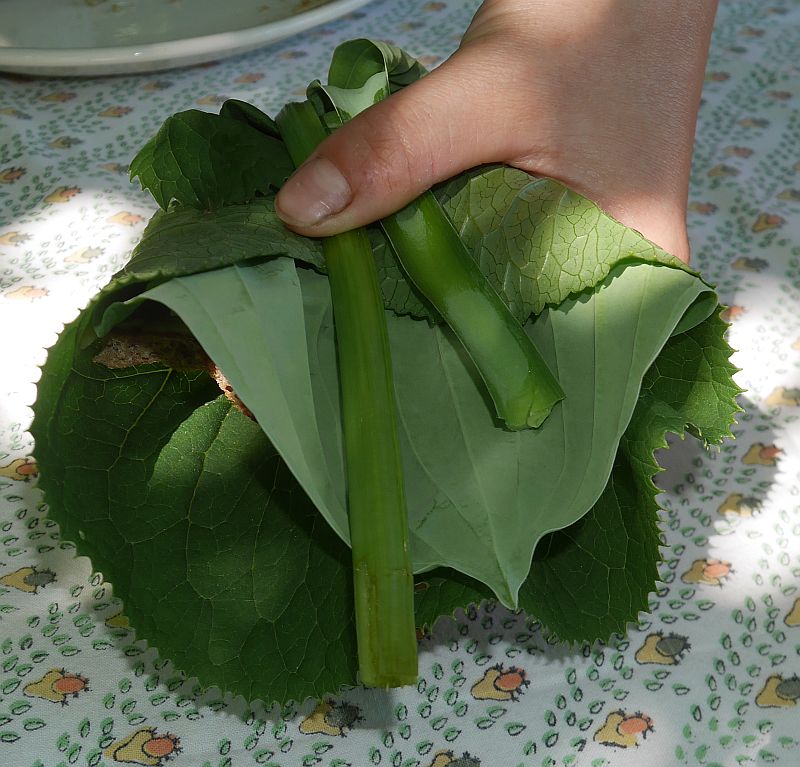

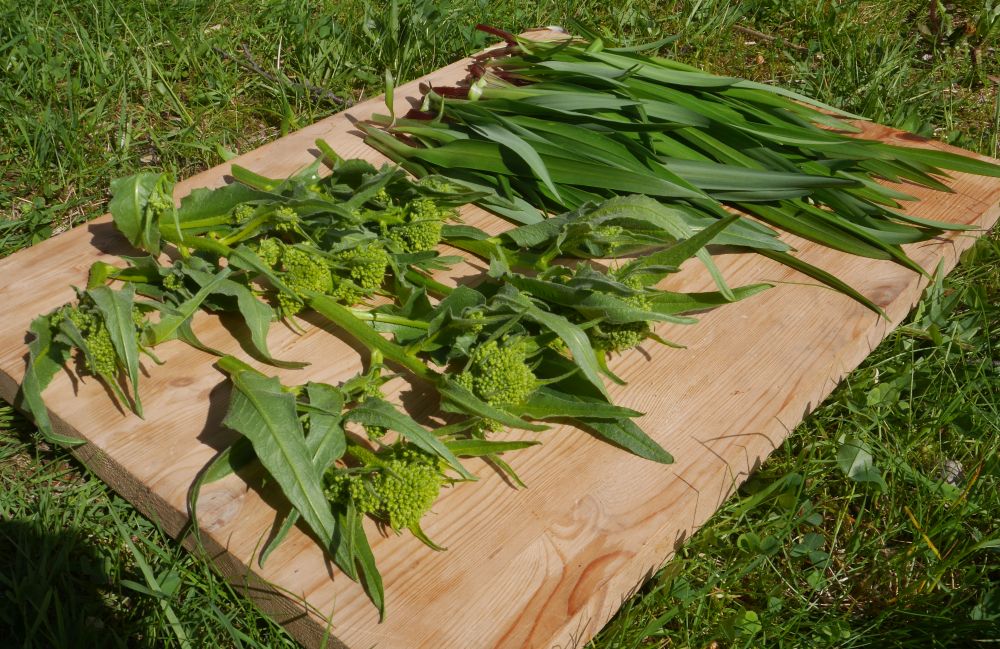
13th June 2020 perennial greens were stir-fried and served with quinoa and served with Allium ursinum flowers.
Allium validum (swamp or Pacific onion) with flower shoot
Saxifraga pensylvanica (swamp saxifrage)
Gunnera tinctoria
Asparagus officinalis (asparges)
Crambe maritima (sea kale / strandkål broccolis)
Perennial kale “Walsall Allotments” (flerårig kål)
Campanula latifolia (giant bellflower / storklokke)
Aster macrophyllus (big-leaf aster)
flowering shoots of various Russian Rumex acetosa cultivars (sorrel / engsyre)
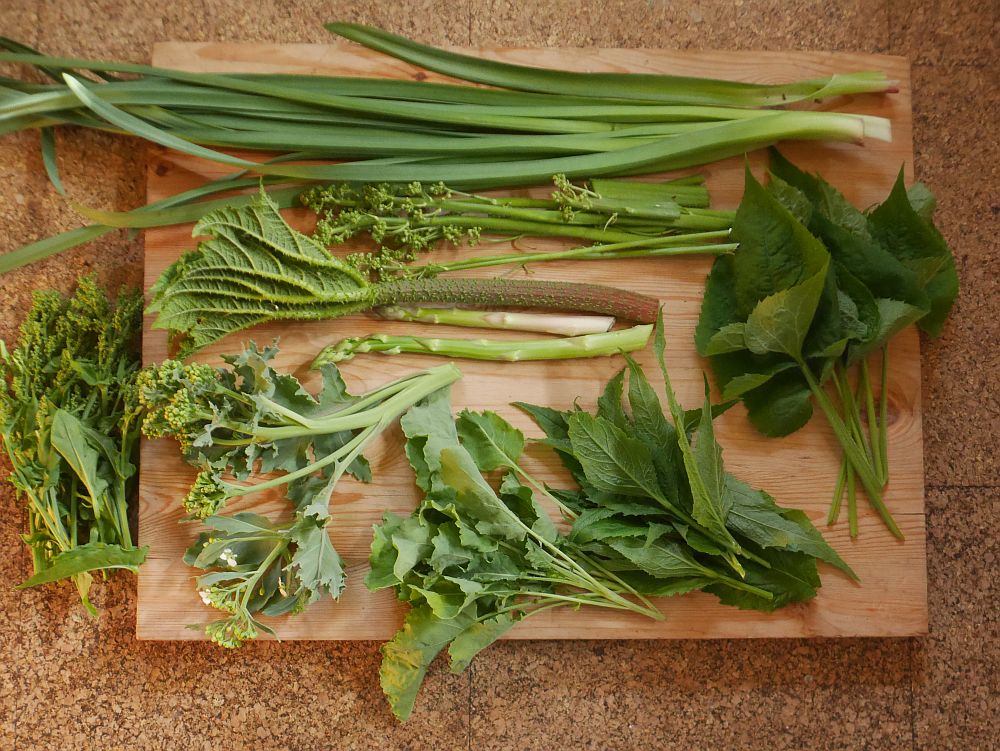

The greens were stir-fried with chili and garlic and served with Norwegian organic quinoa with ramsons (ramsløk) flowers:


Lesser whitethroat (møller) singing in the garden with a blue tit (blåmeis) joining in. In the second video you can hear snatches of the subsong. Lesser whitethroats overwinter south of the Sahara in Africa and in India.
Early morning view from the house :)
I have a feeling that no one else had this pizza last night! SO/TR? Sherpa Onion/Turkish Rocket of course, better known (to the botanist) as AW/BO or Allium wallichii/Bunias orientalis two of my June perennial vegetables, the young shoots of the onion (one of the latest Alliums to show it’s still alive in the spring) and the delicious broccolis of Turkish rocket. We turned it into pizza as we were making Danish sourdough rye bread (using the 24 hour bake at 70C method) and had made extra dough.
I’ve often noted that Hablitzia plants grow slowly the first year or so, but under ideal conditions (more warmth than we get outdoors here) they can grow fast…
I sowed seed in February, stratifying first for 10 days in the fridge and they germinated quickly in the living room. I grew them on indoors (it was too cold to put them out) and for lack of space I planted together with newly planted taro (Colocasia esculenta) tubers in a large pot. They grew quickly and they were about to start flowering yesterday when I dug up the plants and moved outside!

Hablitzia as a weed!
While researching Hablitzia tamnoides for my book Around the World in 80 plants (2014) I found the following simple entry in a 19th century encyclopedia of ornamental plants:  The author was clearly not impressed…..
Further Frederik Christian Schübeler (1815-1892) who was professor of botany and manager of the Oslo botanical garden at Toyen in Oslo from 1866-92 also noted from northern Norway that
“At Maalselvdalens Vicarage (69 deg. 10 min. N), where it also grows very well, it reaches 8 feet (2.5m) and doesn’t only give mature seeds, but spreads even in the garden as a weed.”
I found this difficult to believe and thought initially that it had been confused with good king Henry (Chenopodium bonus-henricus) which can be very weedy in a garden. I only had one plant at the time and I struggled to get more than a couple of seeds from it. Introducing a second plant, suddenly there was a lot of seed and seedlings appeared around the mother plants.
Nowadays it appears in many parts of the cultivated parts of my garden spread by the low friction seeds blowing around on ice in the winter and through my compost. Small plants often turn up as a weed in pot plants indoors which have been fed with compost. This is a plant which germinated in a pot with a bay tree (Laurus nobilis) some years ago. When the bay died, I let the Hablitzia grow on and it now uses the bay as a climbing frame!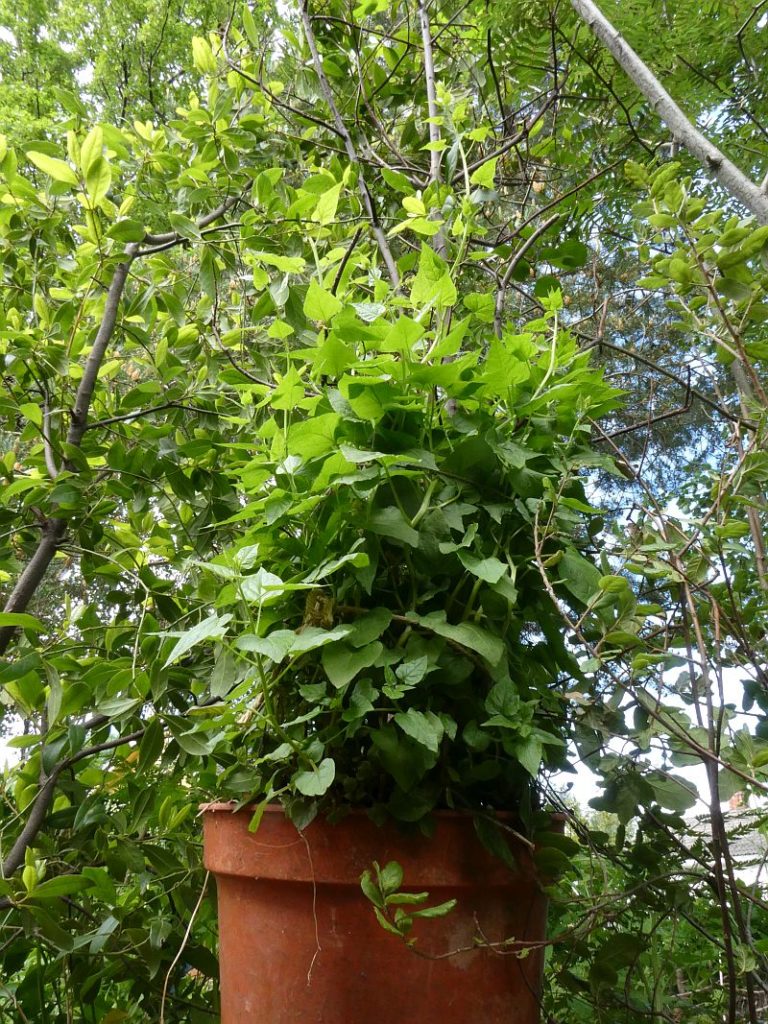
Nevertheless, Hablitzia seems to depend on naked earth to establish itself here and there are no reports of it escaping into nature approaching 150 years after its introduction as a garden plant here.
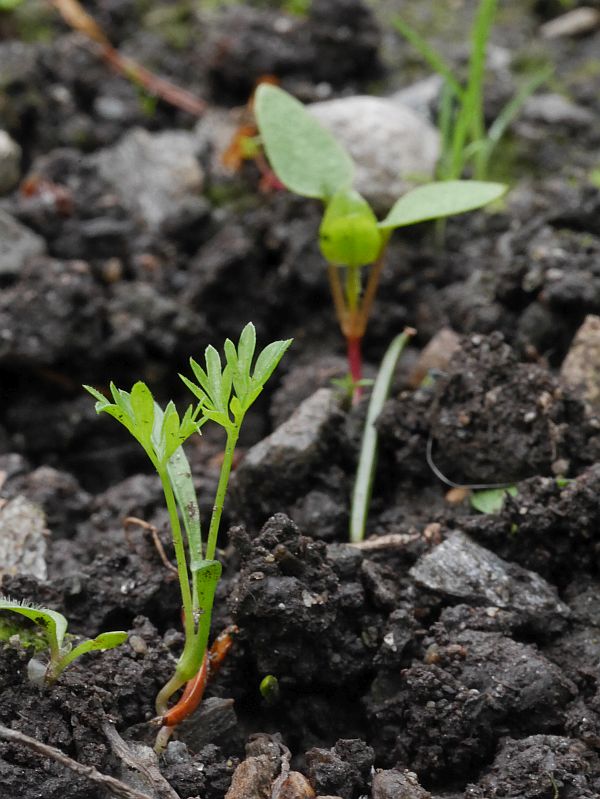
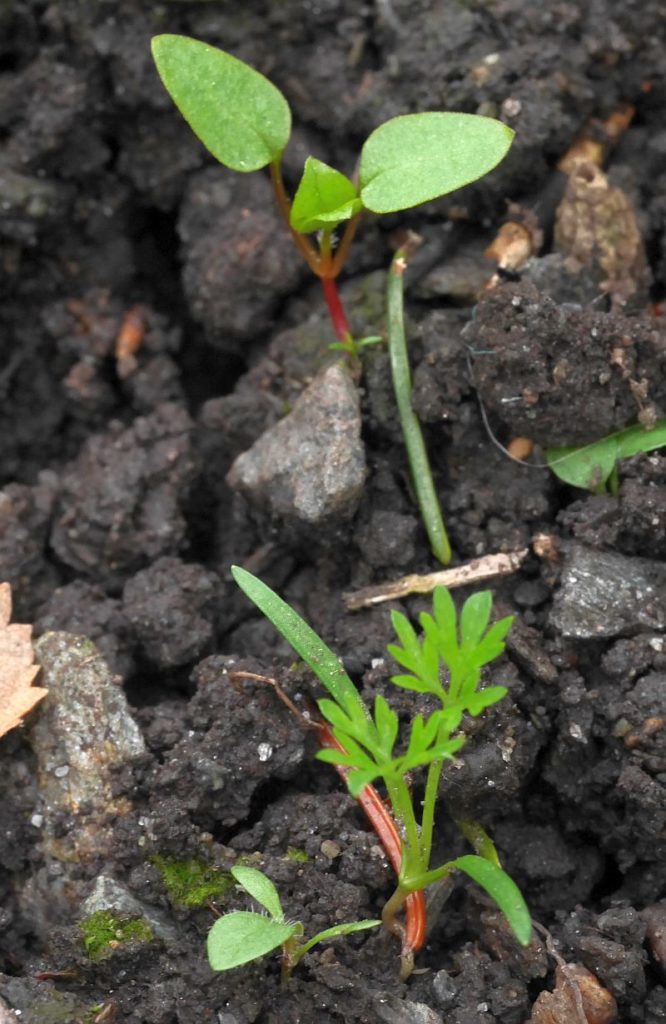
Yesterday, I was weeding Hablitzia from newly emerged carrot seedlings!

My friend the robin’s worst fiends are all the neighbour cats…..and he/she has young to protect now.
I hear the robin alarming before I see the cat.