Yesterday was the 5th anniversary of a memorable visit to the Århus CSA scheme and Tom Harald Eckell’s magical vegetables with Rita Amundsen, Margaret M. Meg Anderson and Veronica Samycia!
Never have I been so impressed by a field of vegetables (organic too), the astonishing diversity, many of which I’d never seen before…..and above all Tom Harald’s gentle modest manner in the midst of brilliance….my life changed that day…
We all sensed that we’d passed into a parallel universe for the duration of the visit and we all sensed simultaneously on the journey home our return! My life changed that day
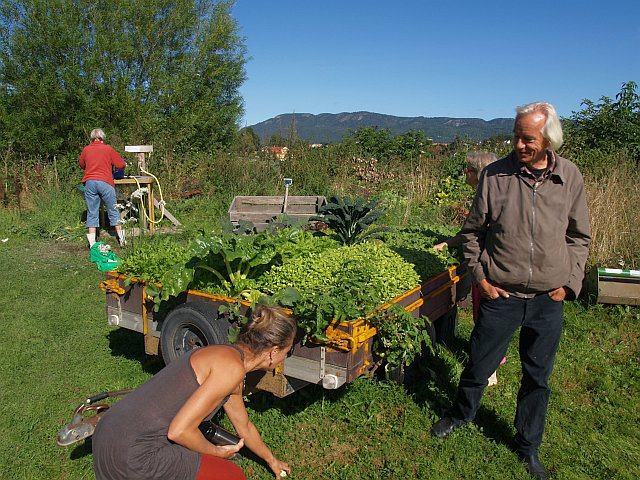
Tom Harald Eckell and Veronica Samycia in front of the salad trailer
Sunflower sprouts
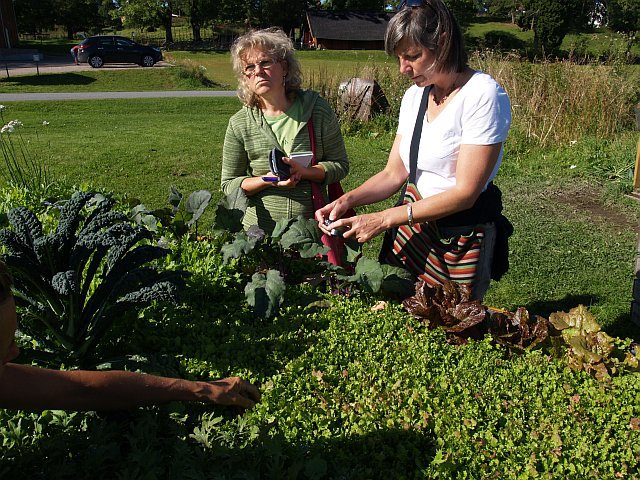
Rita Amundsen and Meg Anderson Hagen in front of the salad trailer
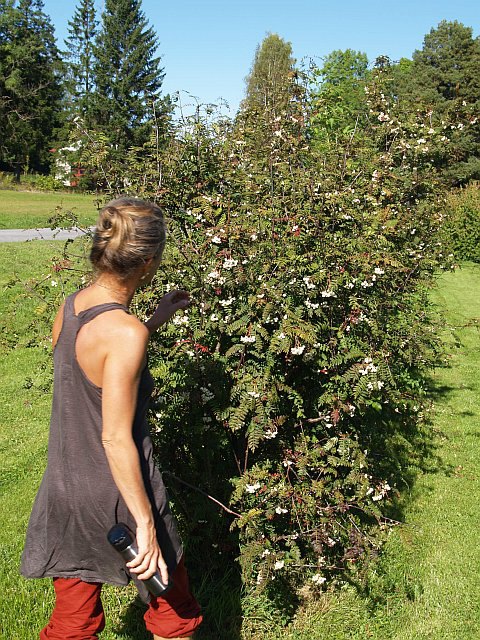
Veronica Samycia makes a B-line for favourite berry, one of the white Rowans
A large berried Cornus mas (Vårkornell)
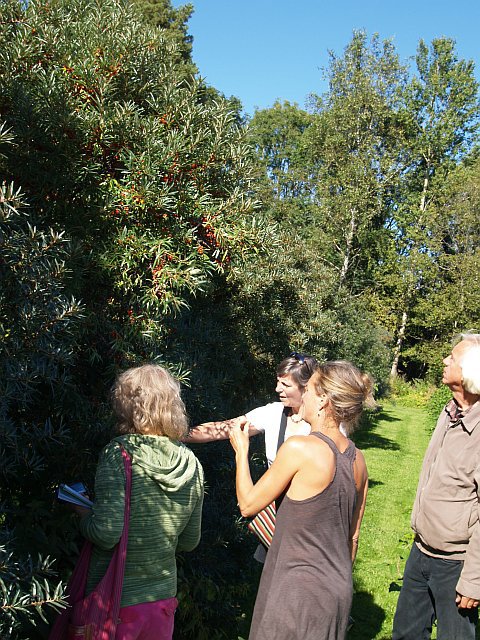
Inspecting the Sea Buckthorn / Tindved (Hippophae) collection
Sea Buckthorn / Tindved (Hippophae)
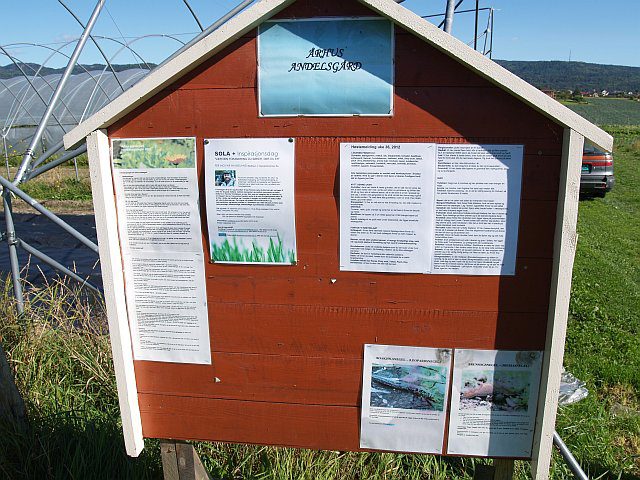
Århus Andelsgård
Squash and pickling cucumbers
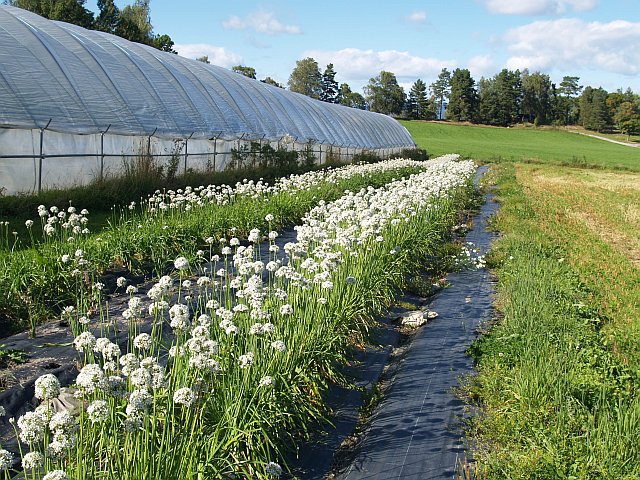
Tom Harald Eckell and (WOW WOW WOW) a long row of welsh onions!/pipeløk. Fantastic! My mind is truly blown by what this man does!
Welsh onions!/pipeløk (Allium fistulosum); you might have noticed I’m religious about onions and this row was simply onionasmic…
Margaret M. Meg Anderson spots the only cabbage white caterpillars of the day!. I suspect that Tom Harald had put them there himself!
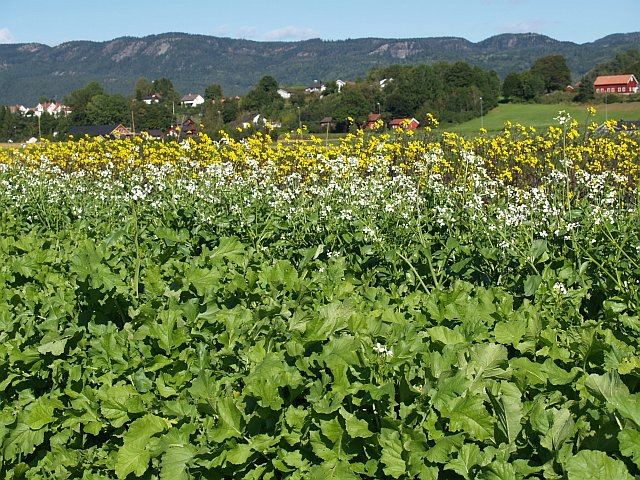
Radish for pods
Radishes grown for the pods. We agreed that this was an underestimated food. The pods produce considerably more than the “radishes”
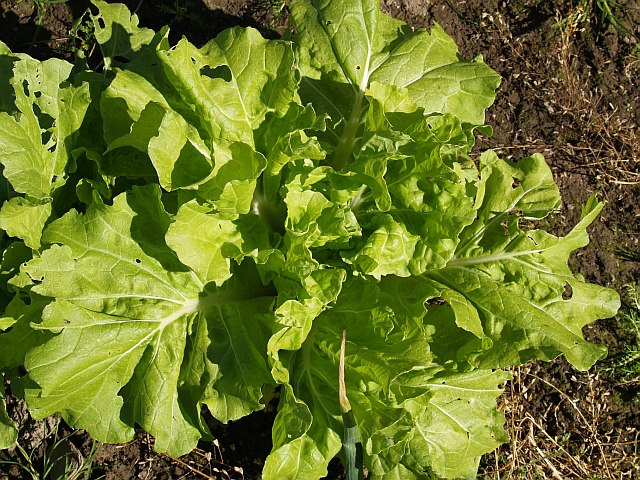
A Pak Choy
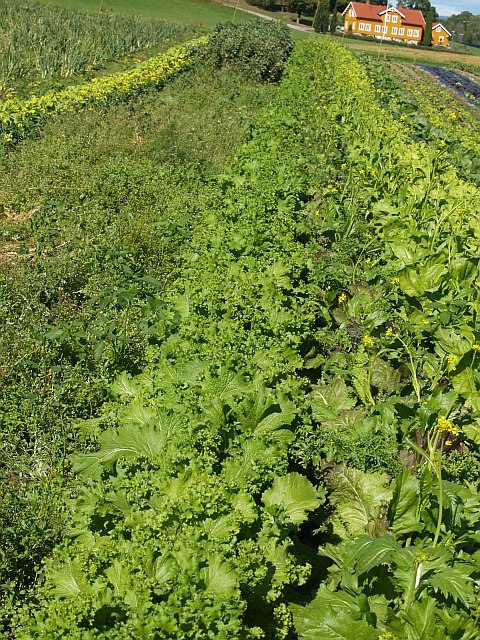
Amazing diversity of colours and leaf forms of the asiatic vegetables, growing perfectly here! Stunning!
More asiatic leaf vegetables
Flowering Pak Choy
More asiatics
…and even more
Grown for the succulent flowering stems
Veronica Samycia shows off the diversity of carrots including Dragon (‘s tooth) from Seeds of Change
Saltagurk
Rita Amundsen and Tom Harald in front of the Broad Beans!
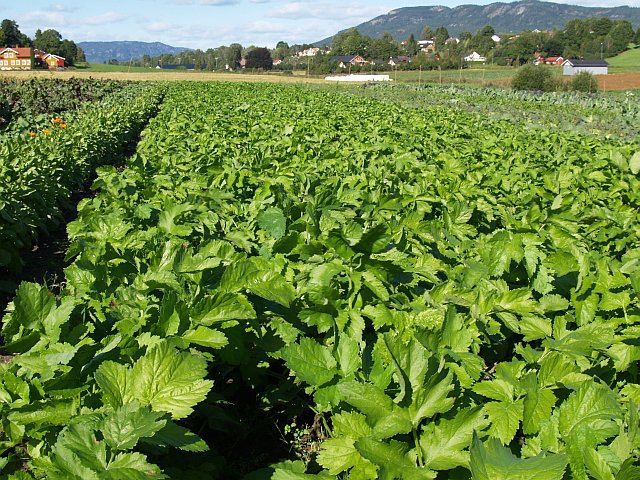
Parsnip
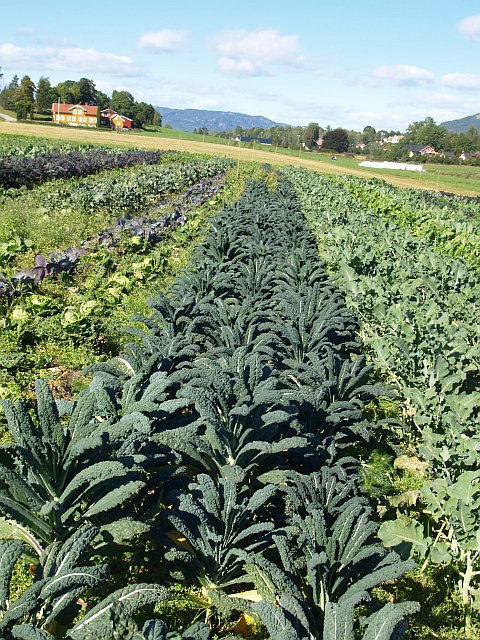
Nero di Toscana kale
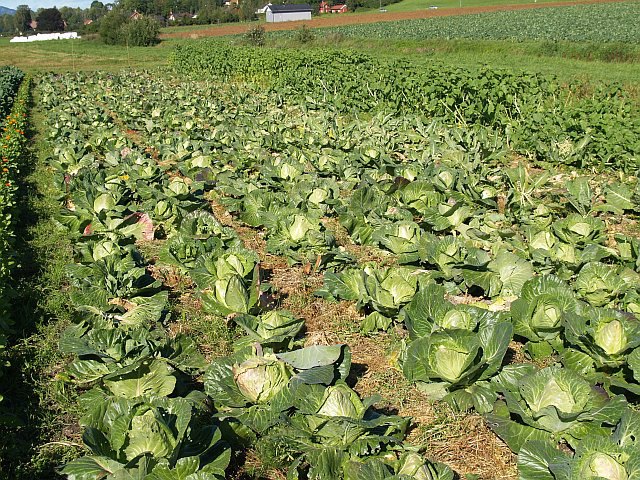
Giant cabbages
Kales and Broccolis (Grønnkål og brokolli)
A very interesting kale from either Baker Creek (Frank Morton) or Seeds of Change (Frank Navazio) – open pollinated, there was quite a large diversity
Rita Amundsen: What a waste – they don’t use the tops, the best bit!
Leek “Belgian Breeders Mix” from Frank Morton. He mentioned Lieven David
Leek “Belgian Breeders Mix” from Frank Morton. He mentioned Lieven David
At this point I passed out (besvimt) at the sight of this row of flowering Allium tuberosum (Kinagressløk). WOW WOW WOW again. An asiatic form of Allium fistulosum in front
Asiatisk pipeløk/Asiatic Allium fistulosum
Margaret M. Meg Anderson , Veronica Samycia, Tom Harald Eckell and Rita Amundsen
Just feel the weight of these
Tomato peppers
Watermelon
Carp pond overgrown with a Petasites spp
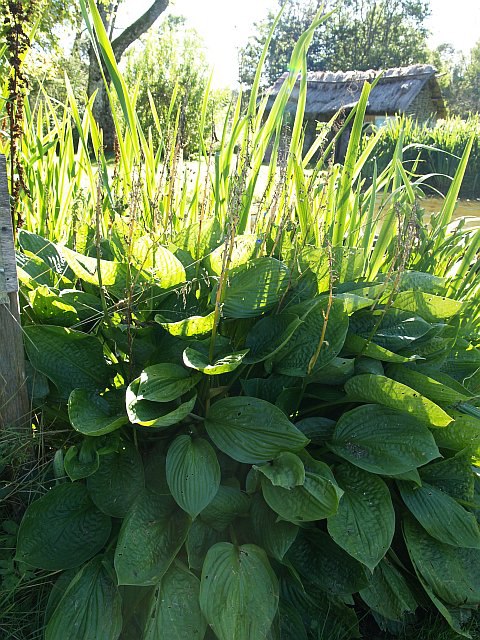
Hosta!
Flettverkshuset / Trellis Work House
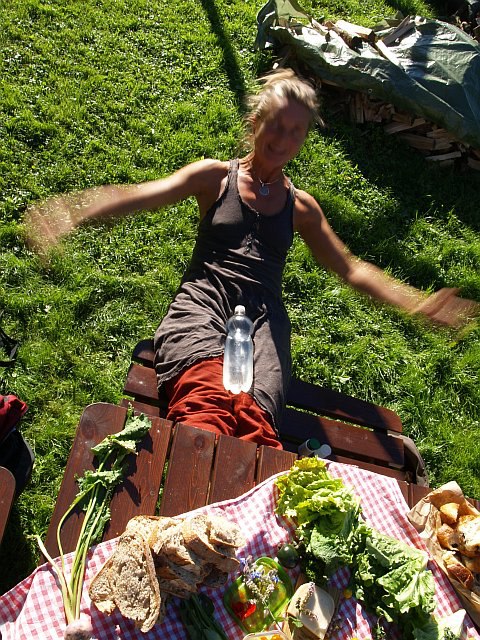
Veronica Samycia levitating
Veronica Samycia levitating
The lunch spread
Allium tea…
Earth Oven /Jordovn
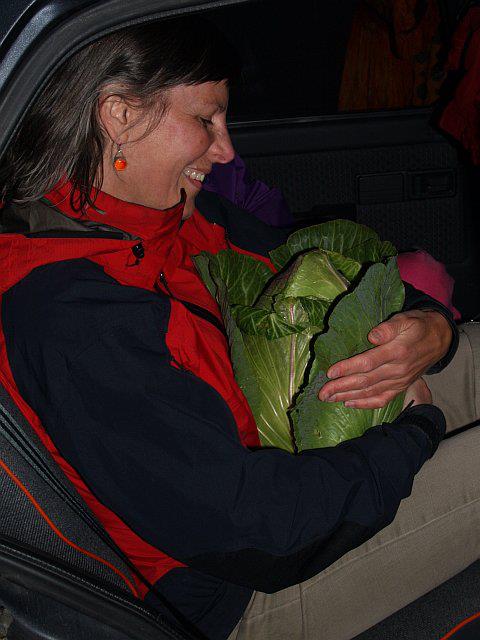
Margaret M. Meg Anderson elsker kål / starting a new trend of veggie hugging…
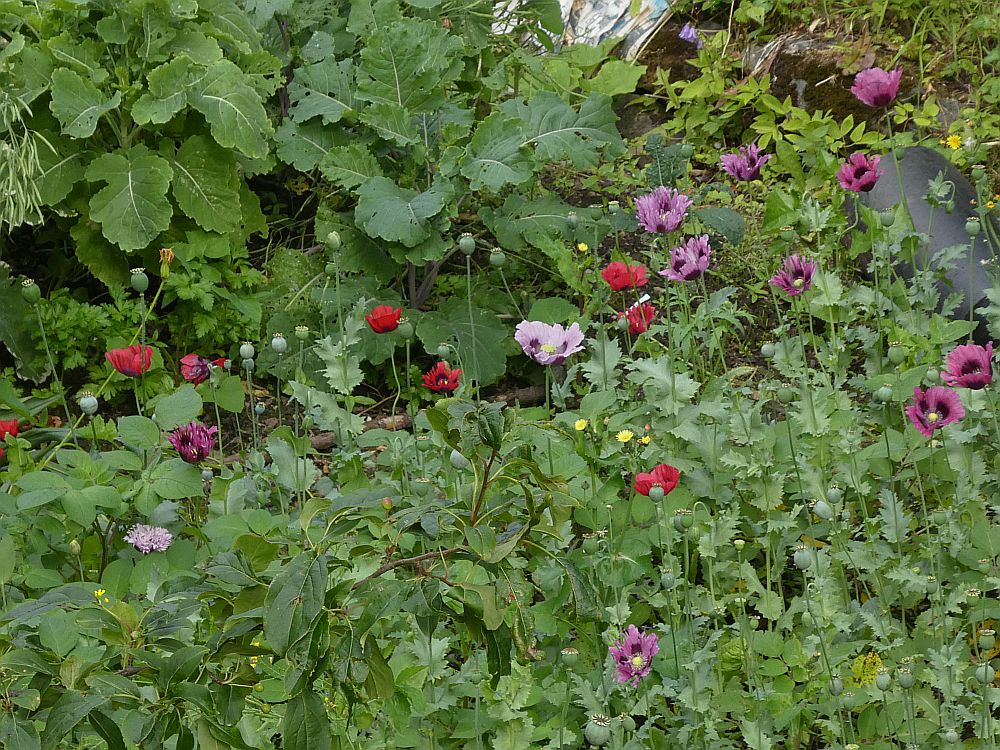
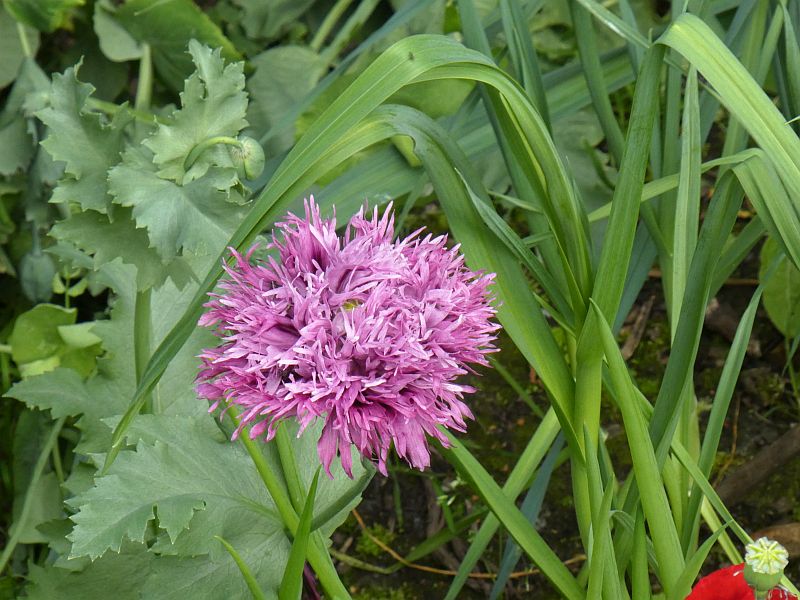
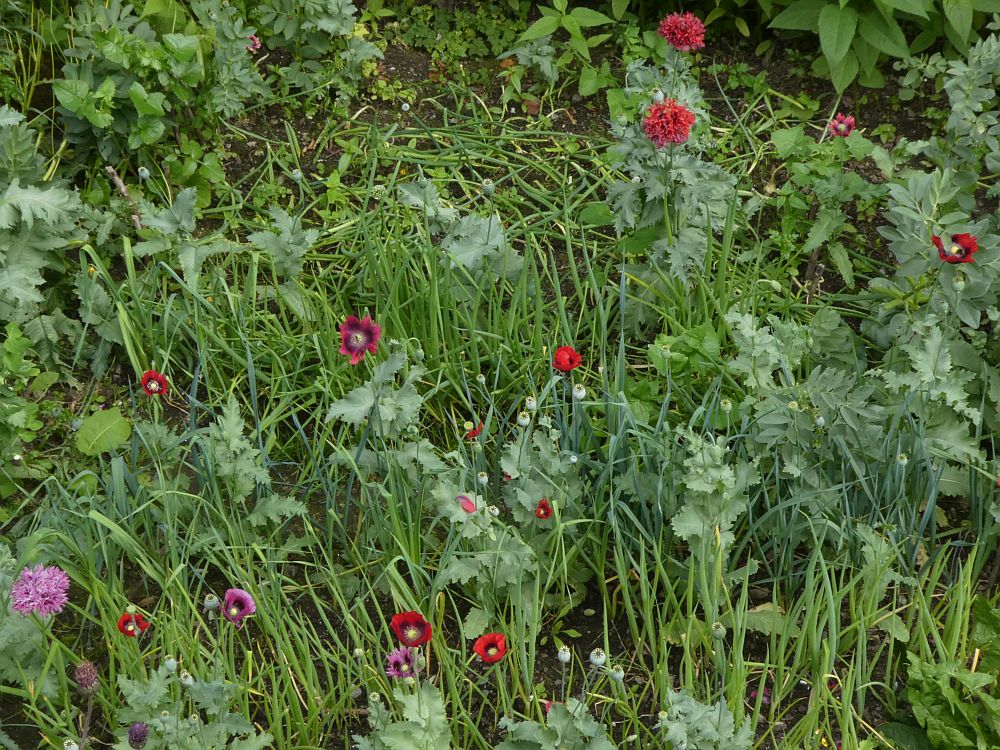
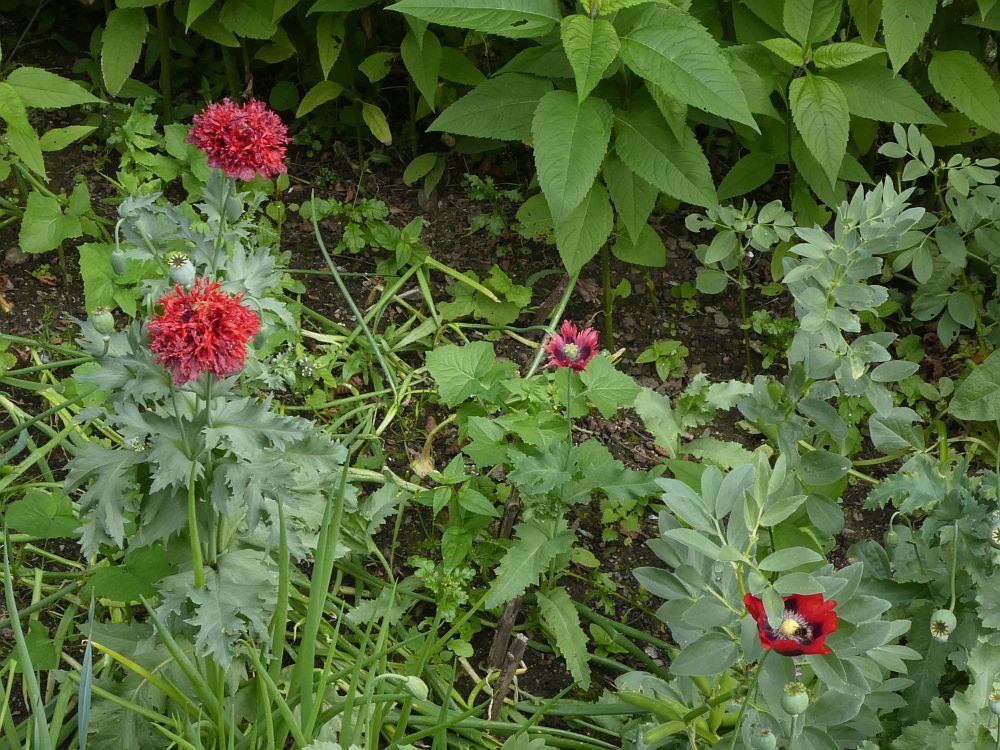
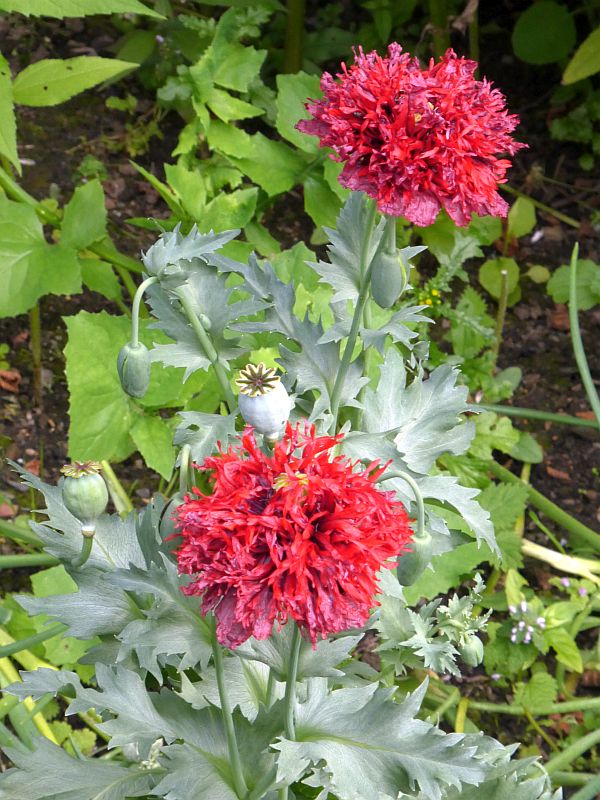
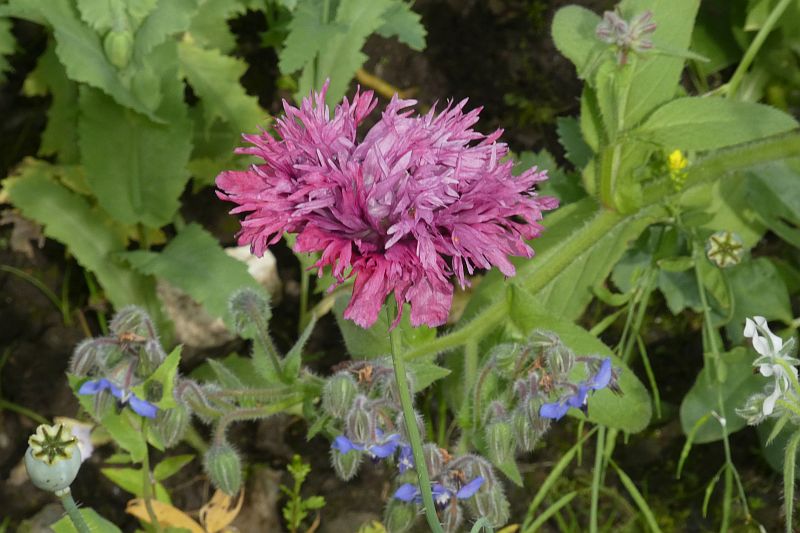
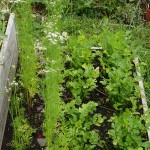
Added a few more overview pictures of my vegetable beds intertwined with poppies! No way are these weeds….so the other so-called weeds are just plants doing their job of repairing bare soil that lack pretty flowers, that’s all! See this page for links to many more pictures: http://www.edimentals.com/blog/?page_id=1967
The article below, published in Grobladet in 2006 is the story (in Norwegian) of how one of the commonest spring flowers in the Mediterranean countries became one of the most important vegetables in Japan, yet was completely forgotten at home…this is the story of shungiku, the edible-leaved Chrysanthemum, Glebionis coronaria.
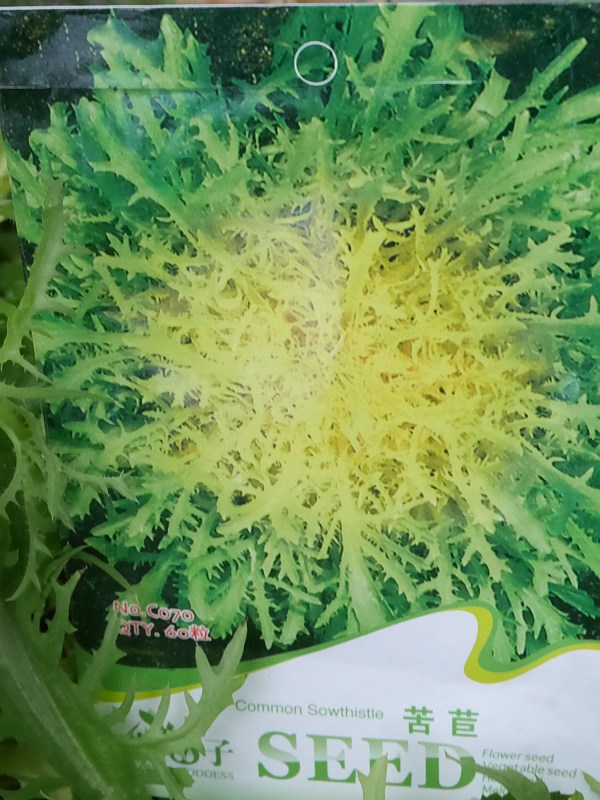
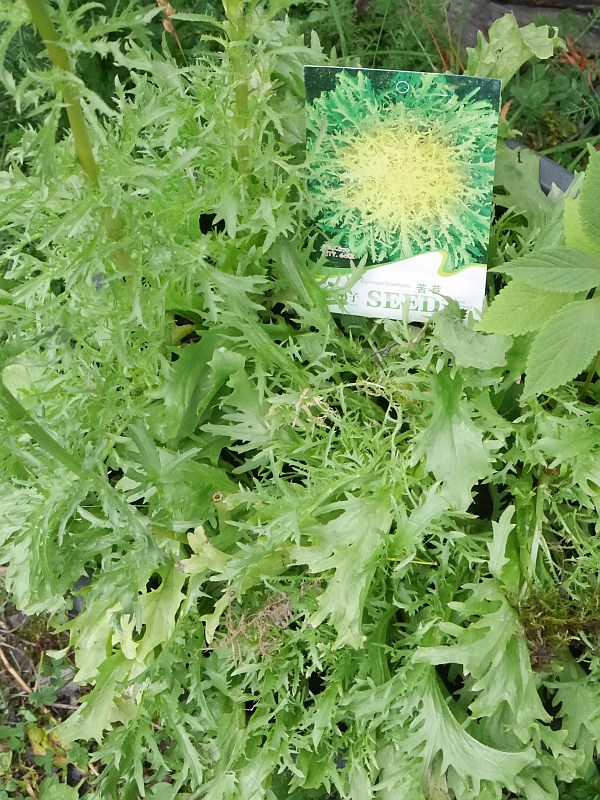
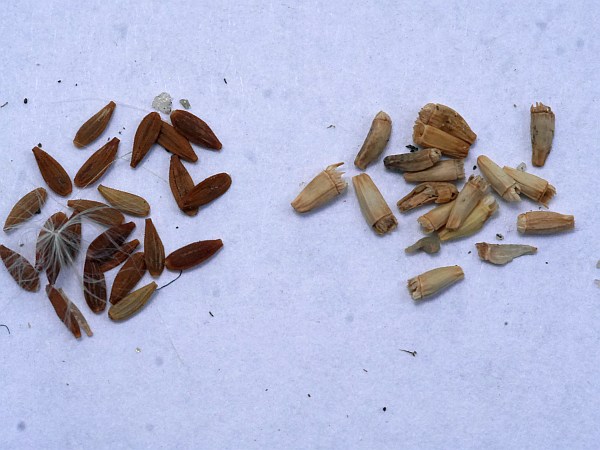
It would be a great project to select Sonchus oleraceus…for new improved yielding and special forms like was done with wild chicory aIt would be a great project to select Sonchus oleraceus…for new improved yielding and special forms like was done with wild chicory and other vegetables… Last winter somebody found seed of an amazing frilly sow thistle being sold in an on-line chinese vegetabe catalogue….too good to be true…I should have noticed that the seed weren’t Sonchus when I sowed them…it seems it’s just an endive :( Lost in translation?
The seed packet….The resulting plant.The flower stemI had seed left from the Chinese packet (right) and compared with common sow thistle seed collected in my garden…
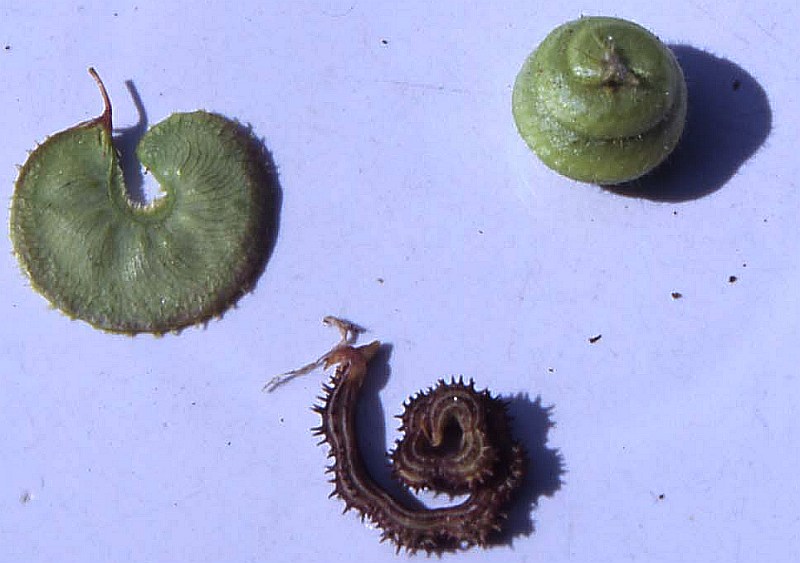
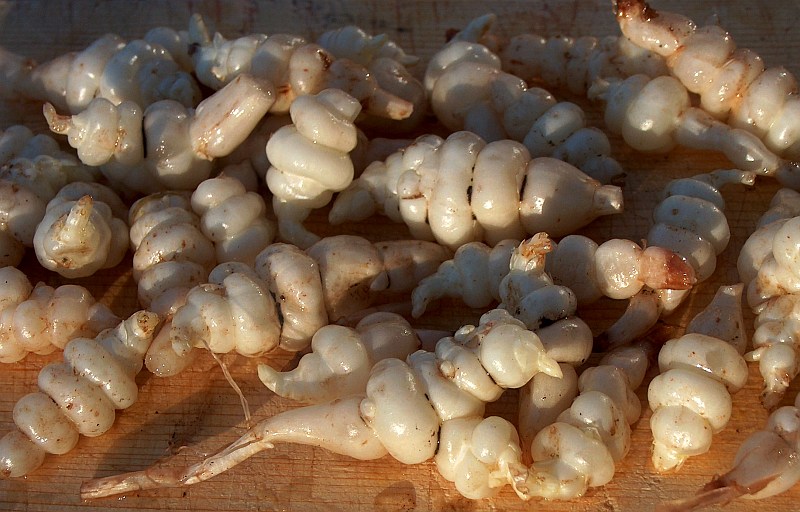
From top left and clockwise: Medicago radiata, Medicago scutellata “Sava” and Scorpiurus spp. (picture from my garden on 31st July 2004)Chorogi or chinese artichokes (Stachys affinis)
I read some 15 years ago (but would love a proper reference*) that the Victorians (and some more recent jokers too) were fond of practical jokes and would add various plant parts that resembled caterpillars, snails, worms etc to their salads. I call them collectively joke plants. I should grow them again…I love humour in the garden :)
Scorpiurus muricatus and S. vermiculatus (Prickly caterpillars, prickly scorpionstail / skorpionurt), Medicago scutellata “Sava” (snail medick), Medicago radiata (ray-podded medick) and chorogi or chinese artichoke (Stachys affinis) are examples. Pictures below (yes, I’ve grown them and smuggled them into my salads for the entertainment of unsuspecting visitors!)
*I find the following reference in Google Books: A Joy of Gardening by Victoria Sackville-West (Harper, 1958). On pages 184-186, there’s a section called “Joke plants” which I’d love to get hold of! Anyone have this book?
Add 050916: Thanks to Alison Tindale who mentioned joke plants in her great blog The Backyard Larder having seen a reference in the classic book by Fearing Burr “The Field and Garden Vegetables of America Containing Full Descriptions of Nearly Eleven Hundred Species and Varietes; With Directions for Propagation,Culture and Use” (1863). See http://backyardlarder.blogspot.hu/2013/06/rhubarb-vegetable.html (at the bottom)
A diverse selection of pictures from last weekend in the Edible Garden :)
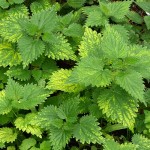
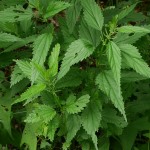
Urtica dioica “Danae Johnston” (stinging nettle/brennesle) originally came from Rosie Castle ten years ago (2006). Seed plants with similar variegation started appearing this year in my garden
Lathyrus tuberosus (Earthnut Pea/Tuberous Pea / Jordflatbelg9 clambering up into a yew (barlind) in my garden Edible tubers.
Lilium davidii var. unicolor flowering for the first time! It lacks the spots on the flowers seen in the species! Edible bulbs.
Platycodon grandiflorus (balloon flower / flattklokke) is cultivated for its edible root in the Far East
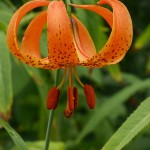
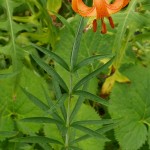
Lilium michiganense flowering for the first time : the bulbs are/were eaten by Native American tribes
Lilium michiganense flowering for the first time : the bulbs are/were eaten by Native American tribes
Lilium michiganense flowering for the first time : the bulbs are/were eaten by Native American tribes
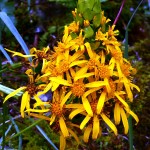
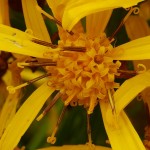
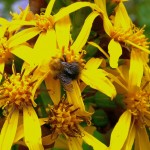
Ligularia fischeri flower close-up; for more on its use, see here: http://www.edimentals.com/blog/?page_id=3114
Ligularia fischeri flower close-up; for more on its use, see here: http://www.edimentals.com/blog/?page_id=3114
Ligularia fischeri flower close-up; for more on its use, see here: http://www.edimentals.com/blog/?page_id=3114
Calamintha nepeta is used as a herb tea or flavouring in food. Known as mentuccia, nipitella or nepitella in Italian cuisine!
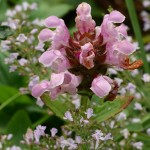
Prunella vulgaris “Pagoda”: the leaves can be used raw and cooked. Flowers are presumably also edible!
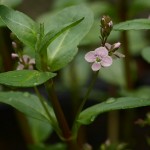
A pink flowered variant of Veronica beccabunga (brooklime)
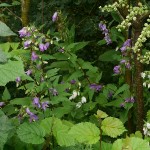
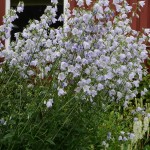
White and mauve coloured flowers of edible Campanula trachelium (nettle-leaved bellflower / nesleklokke) with poisonous Veratrum californicum on the right in full flower.
My chicories are growing well this year!
The tops of Chenopodium album from Feral Farm Agroforestry
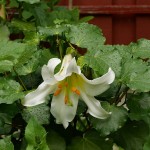
Lilium regale? growing up through a Macropiper excelsa from New Zealand!
English mace leaves can be used as a flavouring in soups and salads
Apium prostratum from New Zealand – see separate album about this!
It’s unusual here to see runner beans in flower in July…this was a cultivar I bought in Japan and is well ahead of other varieties I planted!
Slow to bolt coriander cultivar “Calypso” (right) is the most bolt resistant variety I’ve grown. It’s bred in the UK. I just hope it’s not so late at bolting that seeds are not produced!
I’ve had this magnificent Adenophora in my garden for many years, but am unsure what species it is…
I’ve had this magnificent Adenophora in my garden for many years, but am unsure what species it is…
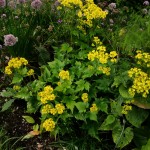
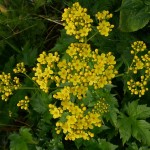
Now a few Patrinias which are in full flower now. Although wild collected in the Far East as a vegetable I’ve found them rather bitter…sadly. They belong to the Valerianaceae. This is Patrinia triloba v. takeuchiana
Patrinia triloba v. takeuchiana
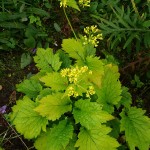
Probably Patrinia gibbosa
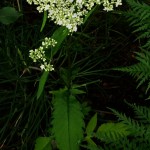
A white flowered Patrinia
A white flowered Patrinia
Urtica galeopsifolia, the stingless sting nettle
Rubus occidentalis is still 3 weeks or so away from harvest and its going to be a bumper one this year!
Clintonia borealis in fruit with Fragaria moschata…
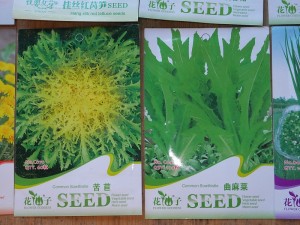
I couldn’t resist these two packets in a Chinese seed catalogue someone tipped me about. Never seen common sow thistle seed for sale (first picture), perhaps a cultivar?…and the second is Sonchus brachyotus, which I’ve never seen seed of before, but mention in the book “Another closely related perennial species, S. brachyotus, is used by farmers in northern Jiangsu. The young rosettes are washed, mixed with wheat flour, steamed, cooled, seasoned with mashed garlic, chopped onion, salt, vinegar and soy sauce (no doubt disguising the bitter taste suggested by the name, Bitter Wheat-field Herb, in the process).”
Exciting times!