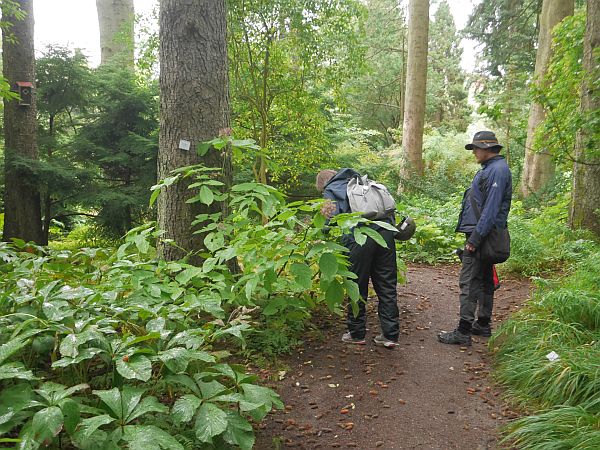
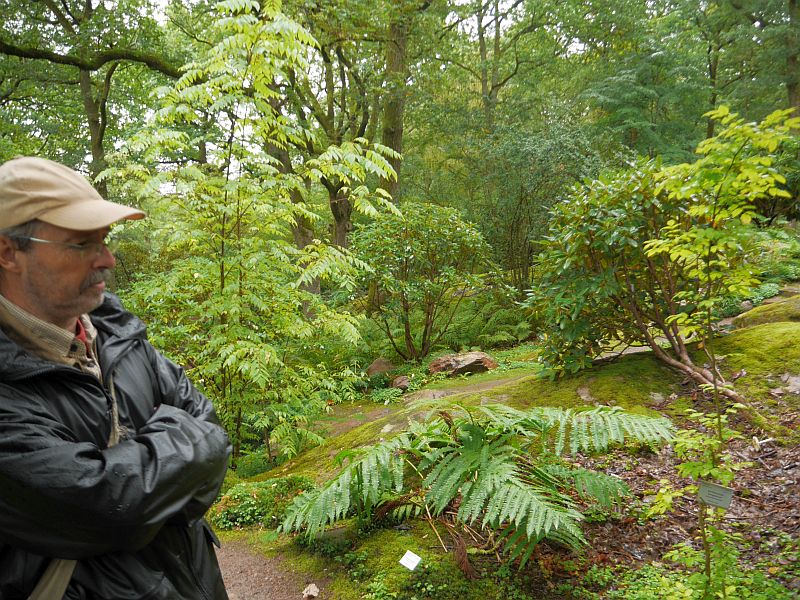
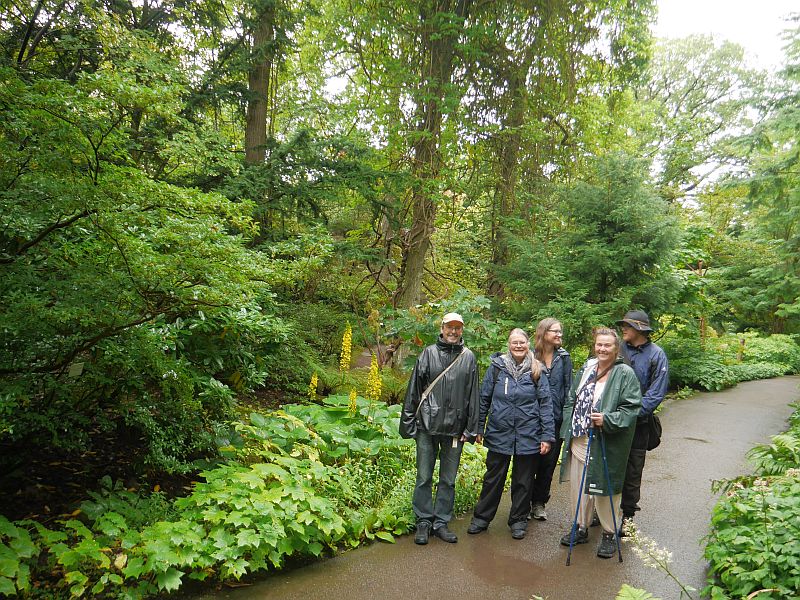
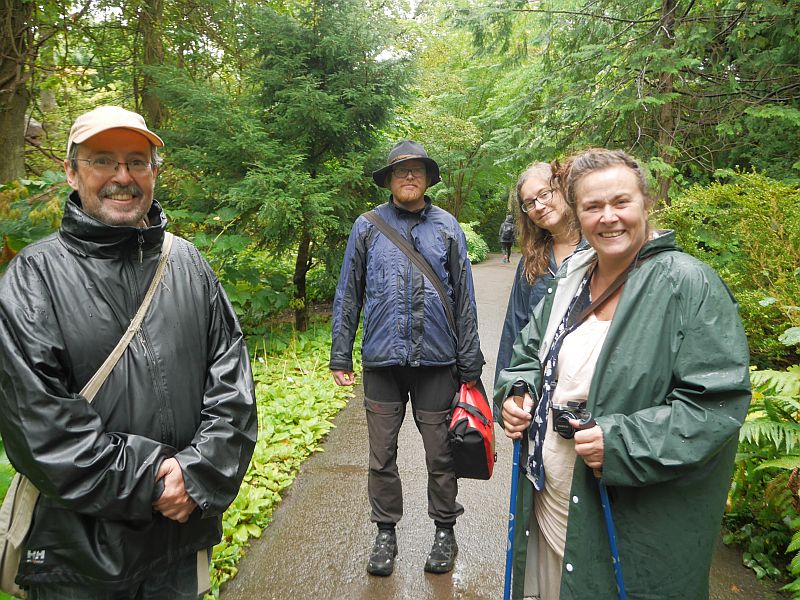
I visited Bo “Bosse” Blomquist last year outside of Gothenburg and despite it being a bit late in the day and almost dark at the end, I was really impressed by his collection of edible trees, shrubs and bushes! He works in Gothenburg and is a regular visitor to the gardens! We agreed to meet before my talk and a group of friends also joined us!! It was great to walk in the garden with Bosse as he knew all the interesting edible woody plants! Thanks!! Here are a selection of pictures!
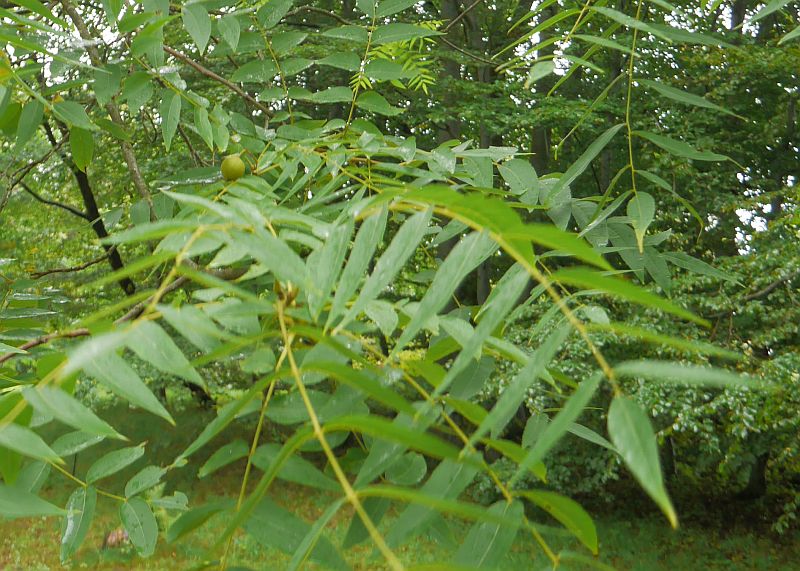
A walnut I’ve never seen before, Juglans microcarpa (Little walnut/Texas walnut)…this tree was surpisingly old, almost 90 if I remember right!
Juglans microcarpa (Little walnut/Texas walnut
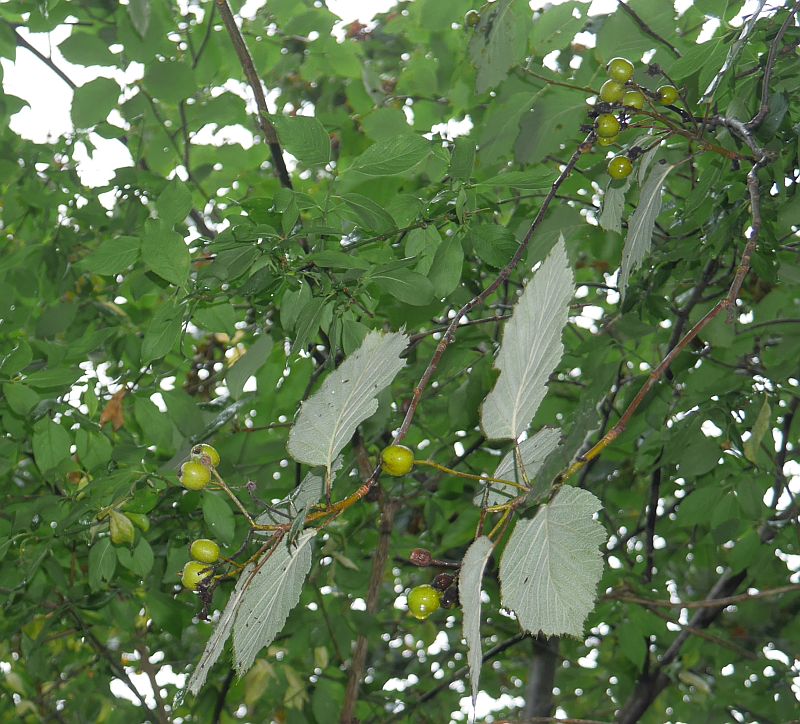
Another surprise, Sorbus devonensis, which I first saw in Martin Crawford’s forest garden about 11 years ago :)
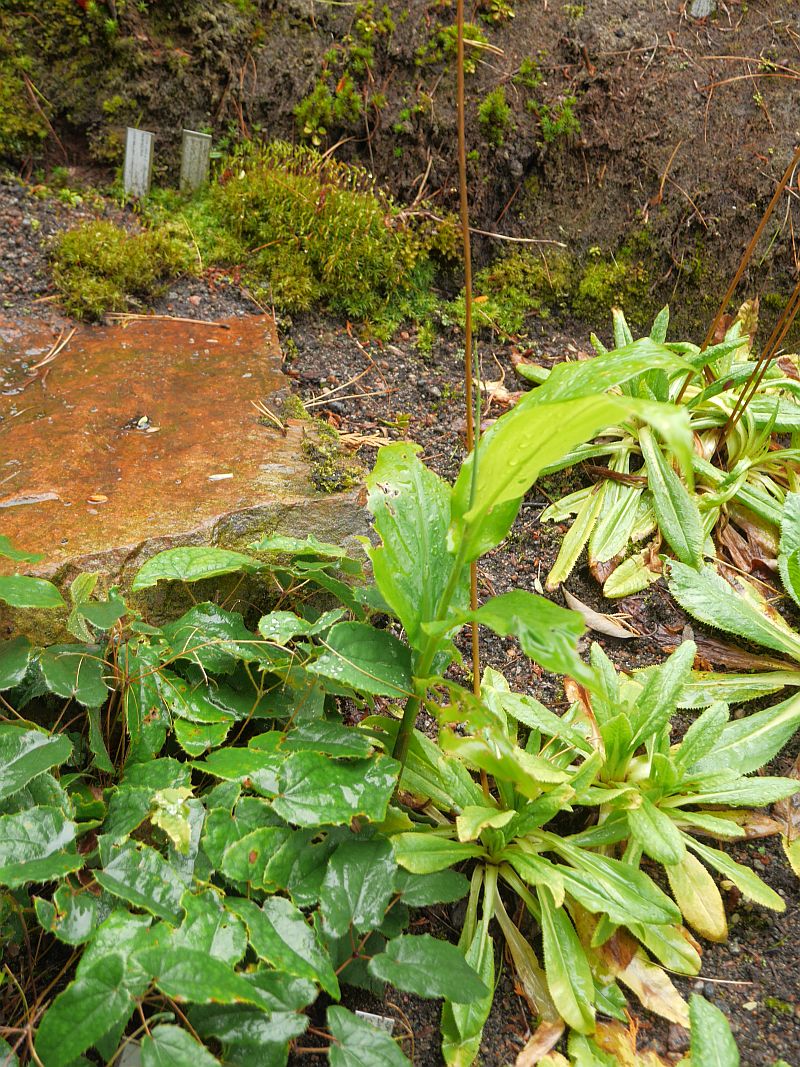
Another surprise, Dystaenia takesimana, a plant in the carrot family that I haven’t succeeded with…sometimes called Korean celery due to the taste of the leaves
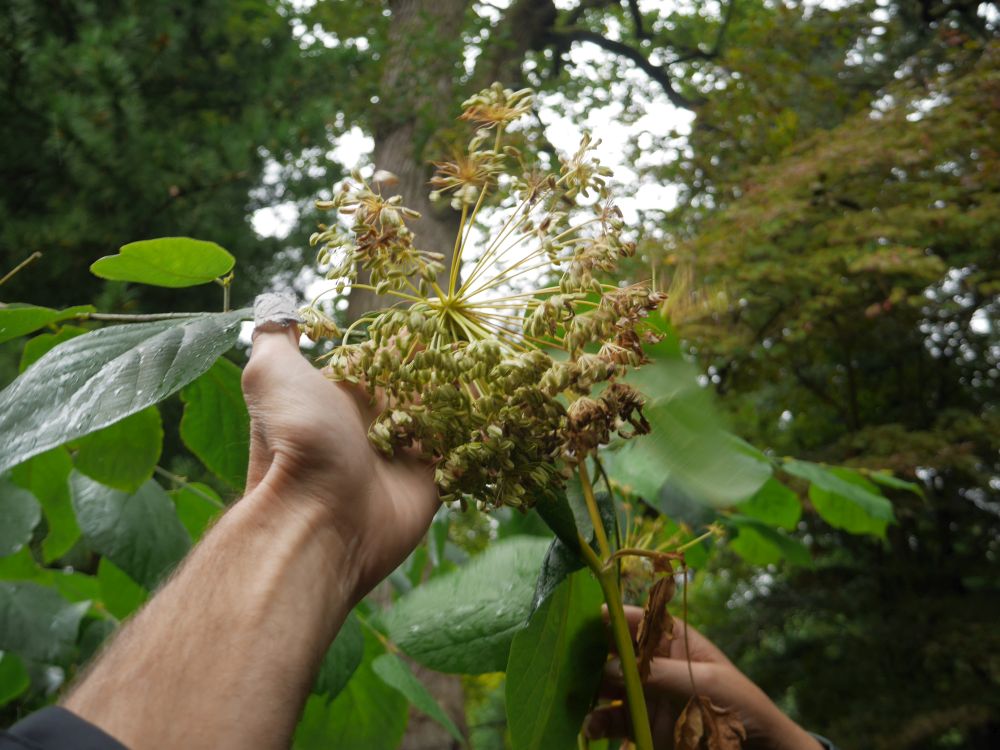
…and then Aralia cordata var. sachalinensis, Sakhalin-udo!!
Aralia cordata var. sachalinensis, Sakhalin-udo!
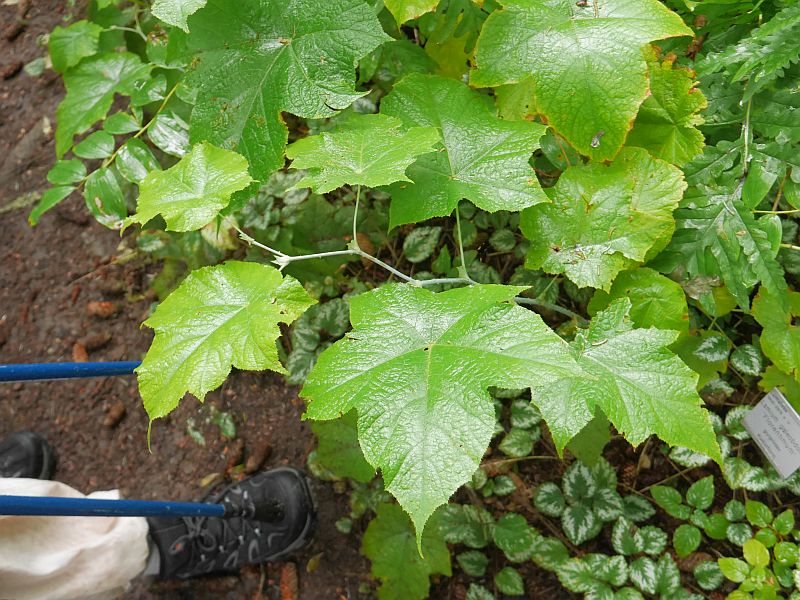
Rubus peltatus from Japan (is in my Japanese foraging book)
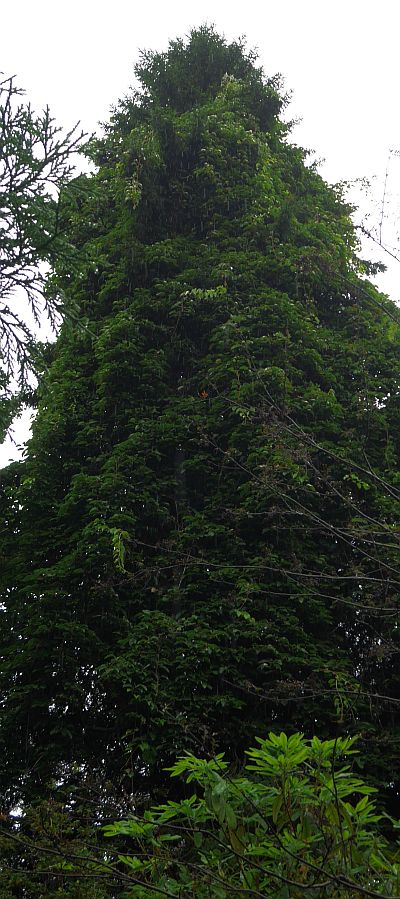
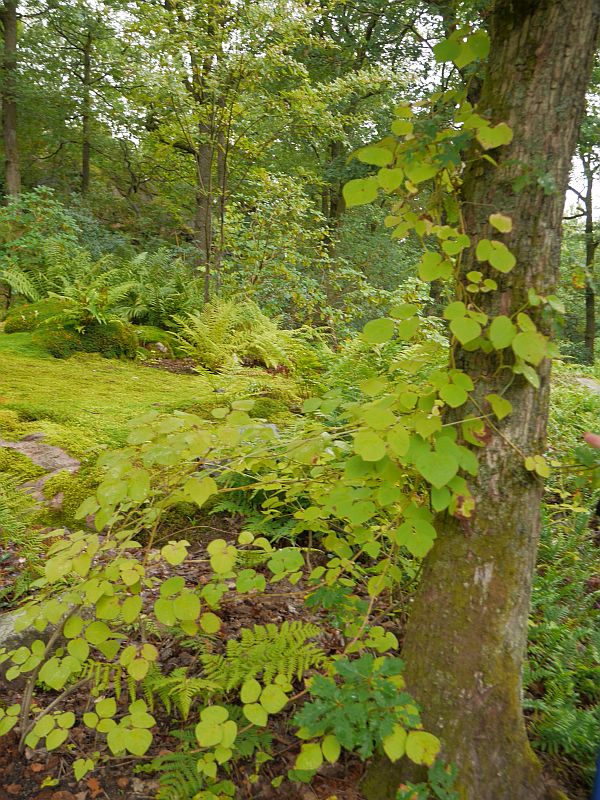
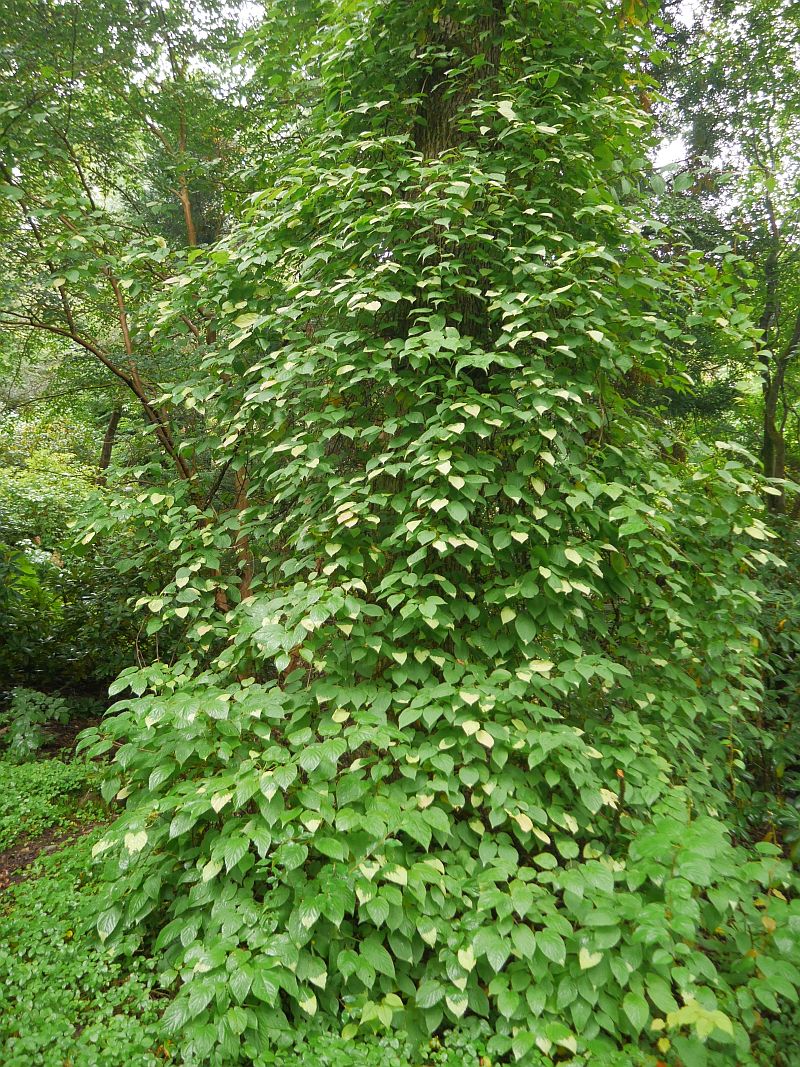
Another thing I’d missed earlier in the day (looking down too much) was the hardy kiwi (Actinidia arguta I think) which has climbed right to the top of this conifer…
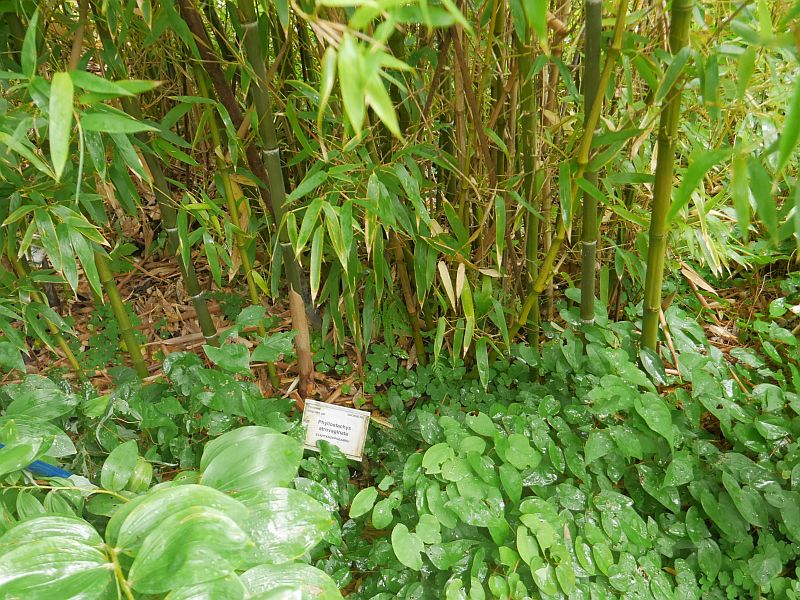
Bosse pointed out this bamboo with relatively thick shoots: Phyllostachys atrovaginata…
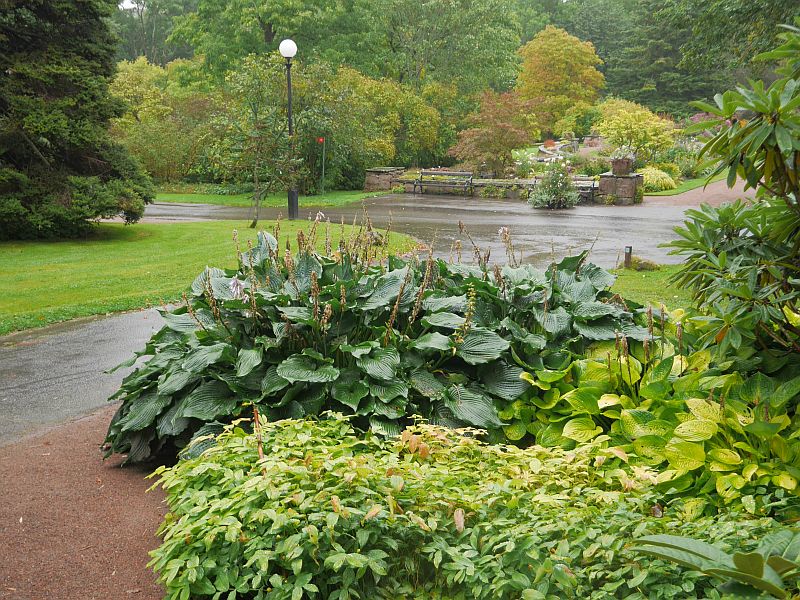
Large clump of Hosta (Sum and substance?)
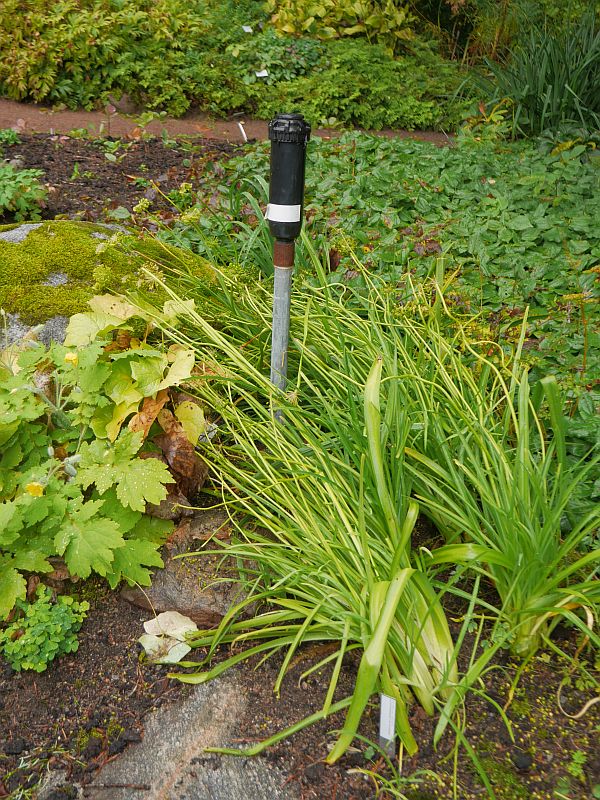
Another patch of yellow flowered Allium hookeri var muliense; Yellow Hooker’s Onion
I hadn’t noticed this large Toona sinensis either….extensively cultivated in China for the young shoots, often served as a onion-like flavouring with omelettes!
Bosse shows us Zanthoxylum bungeanum (Northern China Pepper), one of several species for which the spicy seeds and leaves are used
Zanthoxylum bungeanum (Northern China Pepper)
Matteuccia orientalis is as far as I know not used like Ostrich Fern, Matteuccia struthiopteris
Sinofranchetia chinensis, an unusual fruit from China
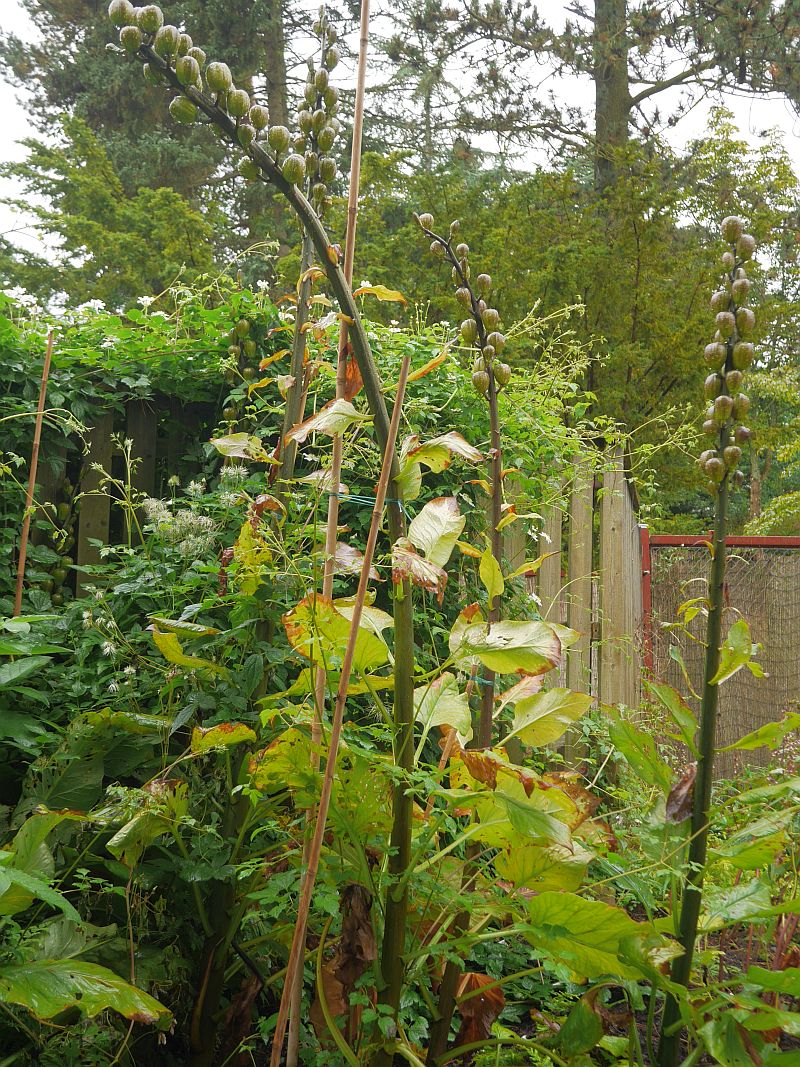
Giant lily, Cardiocrinum…the bulbs have been foraged in Japan!
Japanese ginger, Zingiber mioga
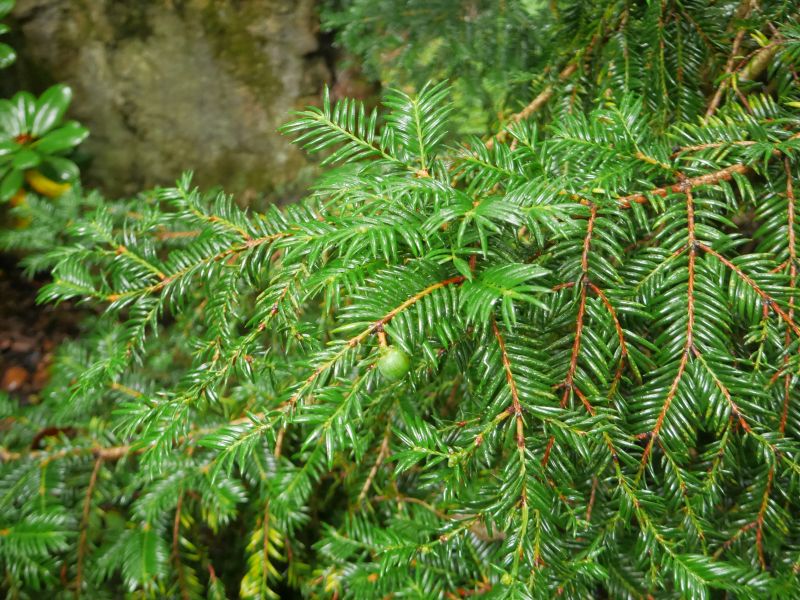
Cephalotaxus harringtonia, yew plum
Hardy kiwi..
Torreya nucifera from Japan is a popular edible seed!
Yesterday, I gave my first talk about my (second) love of onions (alternative title All you wanted to know about Alliums but were afraid to ask!)….fittingly in the nursery with I believe the best selection of Alliums being sold as foodplants in Europe if not the world , my friend Aiah Noack’s Naturplanteskolen just outside of Copenhagen. Aiah is the author of an excellent book Fantasilater (fantasy salads), only in Danish so far which also includes several Alliums. My book Around the World in 80 plants mentions some 45 Allium species!
In a little over 2 hours I covered about 66 of the world’s cold hardy onions and over 80 if we include cultivars and subspecies…
Other onion related topics were also covered, such as “grow your own fireworks and Xmas decorations”, “Allium as a dancing partner”, the Allium microphone (Alliomike) and the garlic scape armband to keep “wild” animals, trolls and mosquitos away (Transylvanian Garlic keeps vampires away too)… It was a fun afternoon with yet another great group of edimentals fans! ;)
The video is of one of my pictures about drying Persian Shallots with a shot of my drying racks over my wood burning stove. Someone noticed that you could actually see heat rising through the racks!!!! (a wood burning stove was on behind the projector) ;)
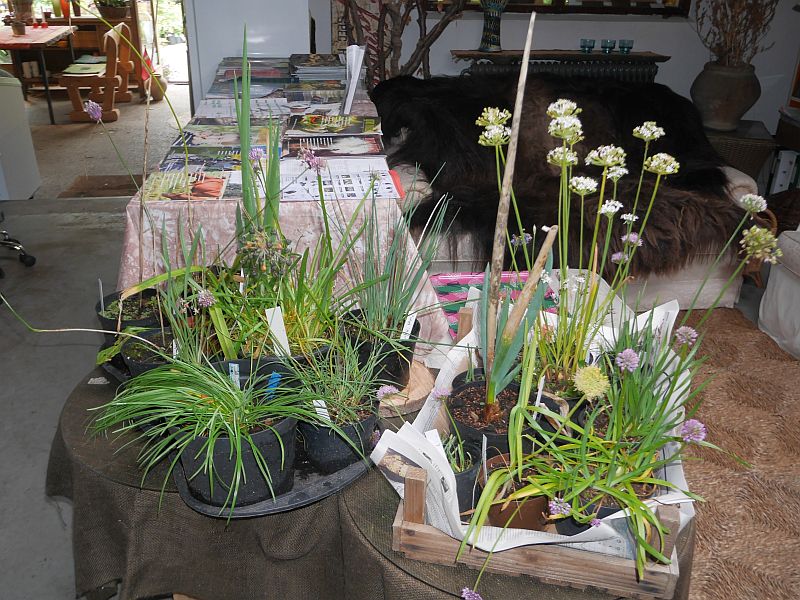
Aiah with a collection of late flowering Alliums from the nursery on display for the participants…
The day started with a tour of the (smelly) part of the nursery ;)
A large selection of Alliums for sale…
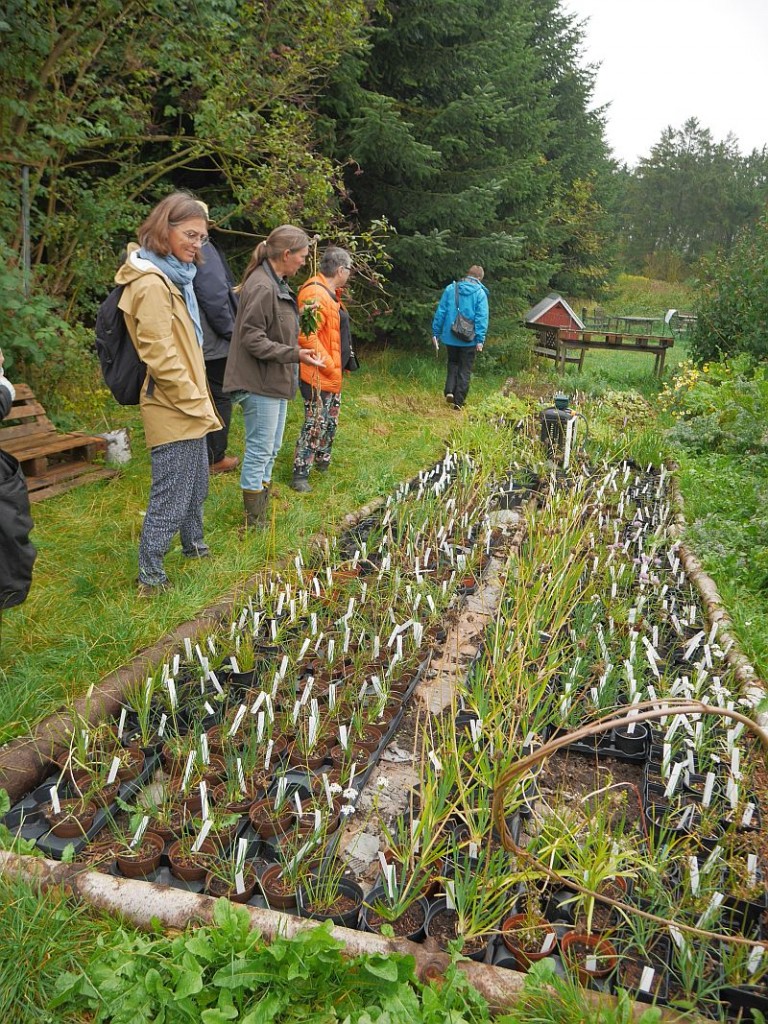
Aiah has constructed an Allium display garden with some 60 species :)
Allium nursery
Alliza for the food break (Allium pizza!)
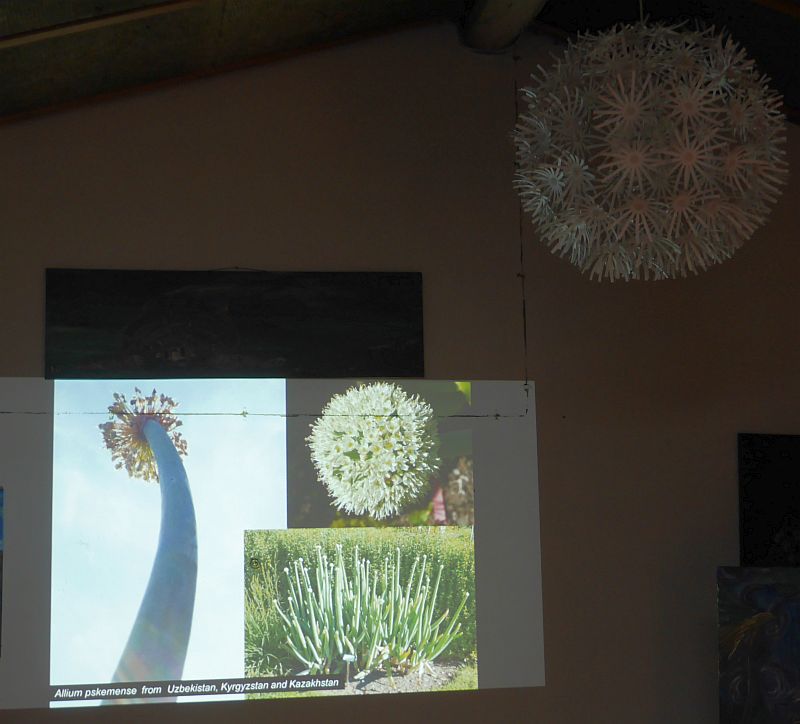
Somebody pointed out there was an onion inflorescence hanging from the roof, so I stopped to take this shot :)
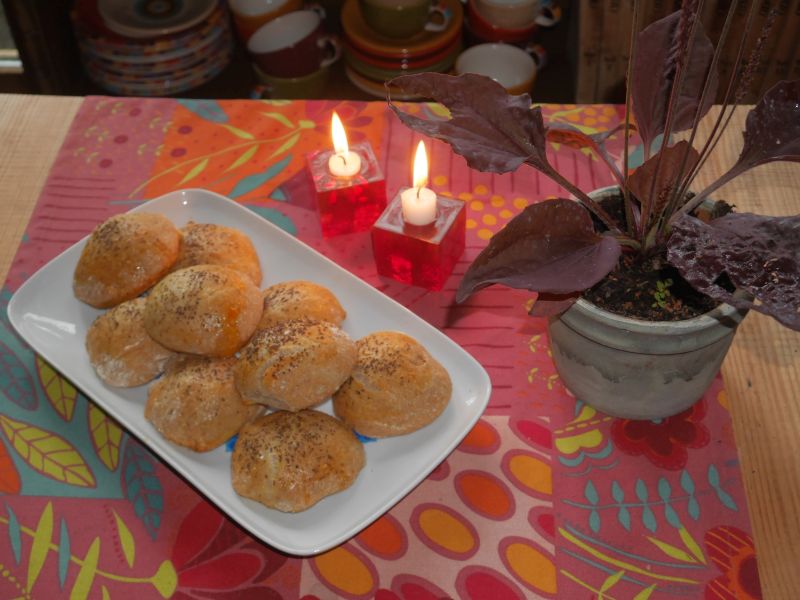
Not onion related but there were also delicious rolls decorated with seed of this plant, Plantago major “Atropurpurea”!
Perennial vegetables, Edimentals (plants that are edible and ornamental) and other goings on in The Edible Garden