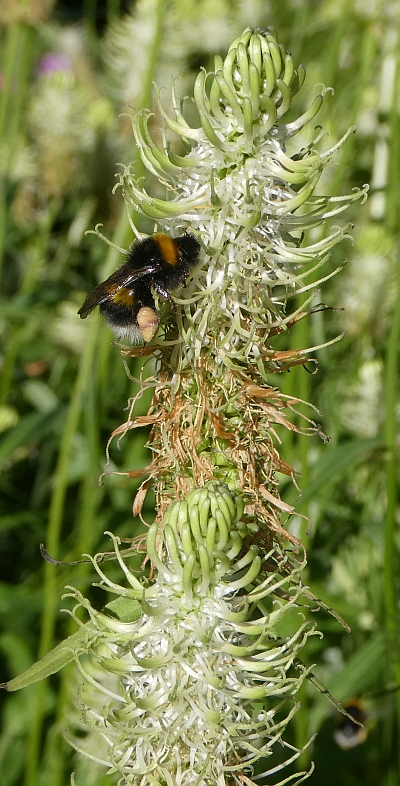
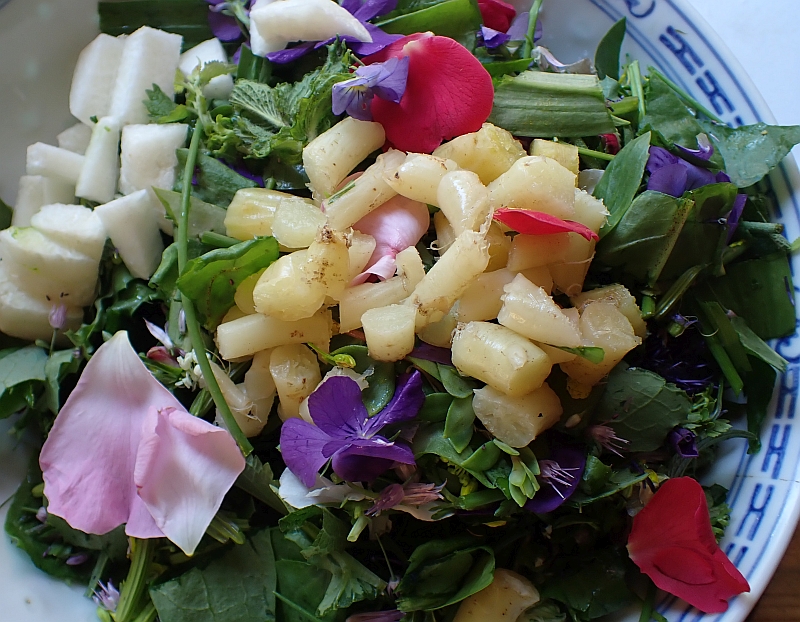
The rampions (vadderot in Norwegian, Phyteuma in Latin) has been naturalizing in my garden but so far keeping to the cultivated beds. I needed to dig up a few this week as it was outcompeting some other plants I wanted to keep. I cooked the roots and they were delicious and almost fibre-free and used in a salad. Along with other plants in the Campanulaceae this is a very useful root crop for the root hungry gap! And just look at the bumble bees swarming over the flower tops, always the most popular plant for the white-tailed bumblebees (jordhumler), one of the most useful plants to grow, both tasty (I use also spring leaves and flower buds), nice to look at and a pollinator friendly, ticking all 3 boxes required to categorise it as an edi-ento-mental!
Thr film shows bumble bees on a white-flowered patch of Phyteuma spicatum (spiked rampion).
See also these posts about Phyteuma:
https://www.edimentals.com/blog/?p=21018 (an article I wrote on the ethnobotany of Phyteuma “The perennial rampions: Shade tolerant edientomentals”)
https://www.edimentals.com/blog/?p=18624 (Rampions for dinner)
https://www.edimentals.com/blog/?p=11910 (Rapunsel)