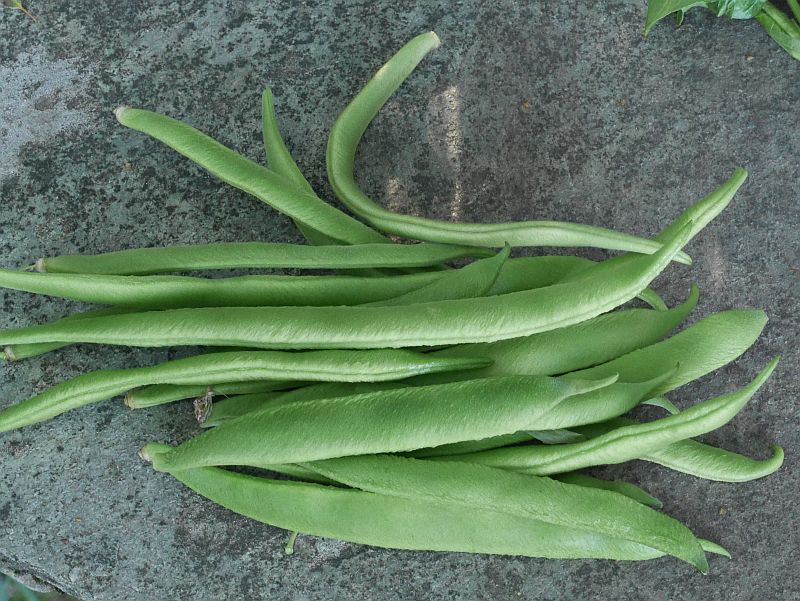
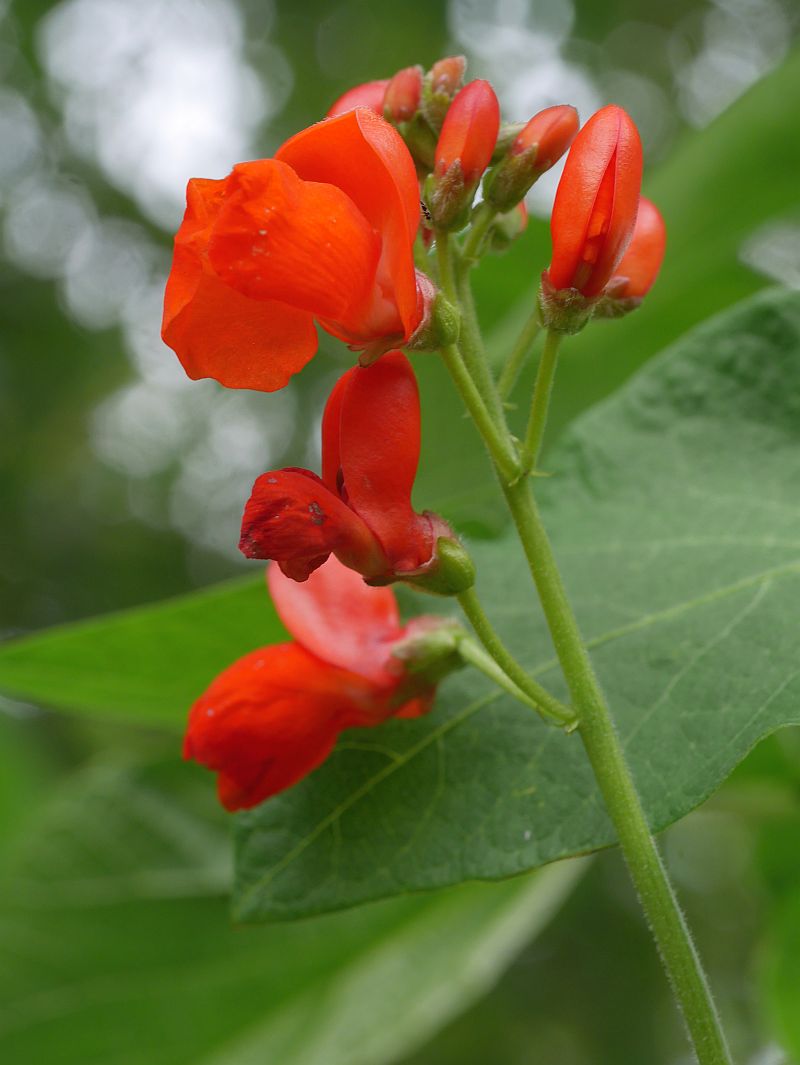
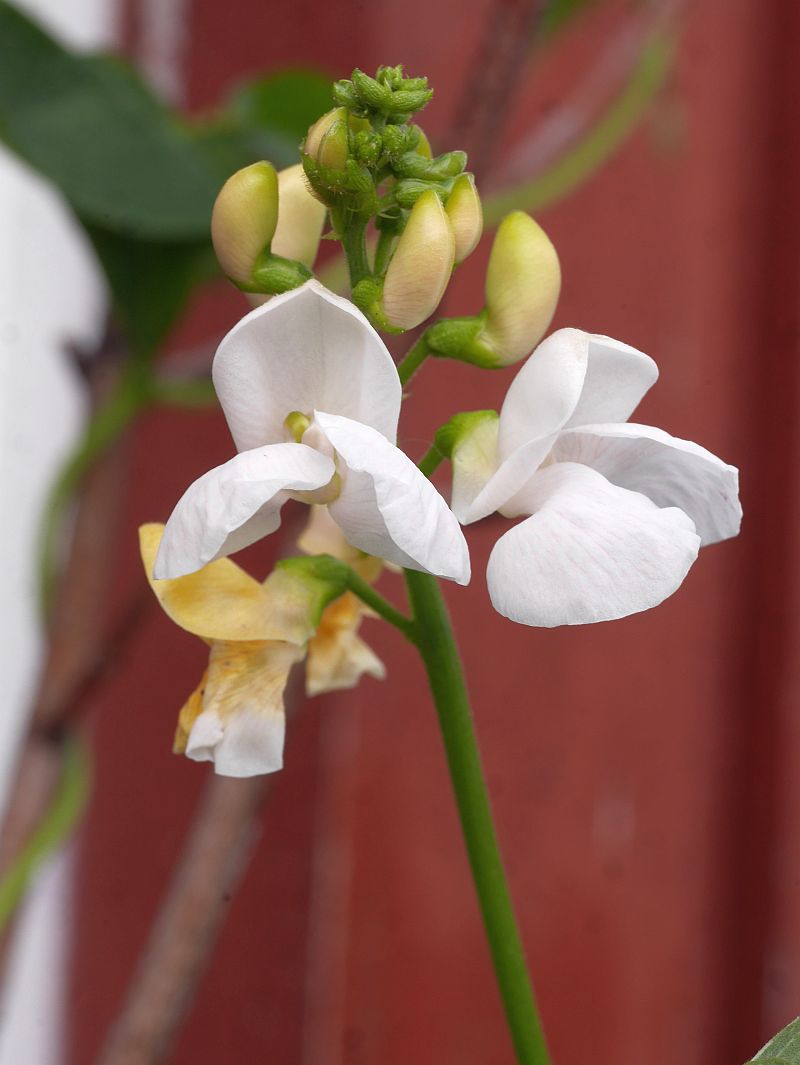
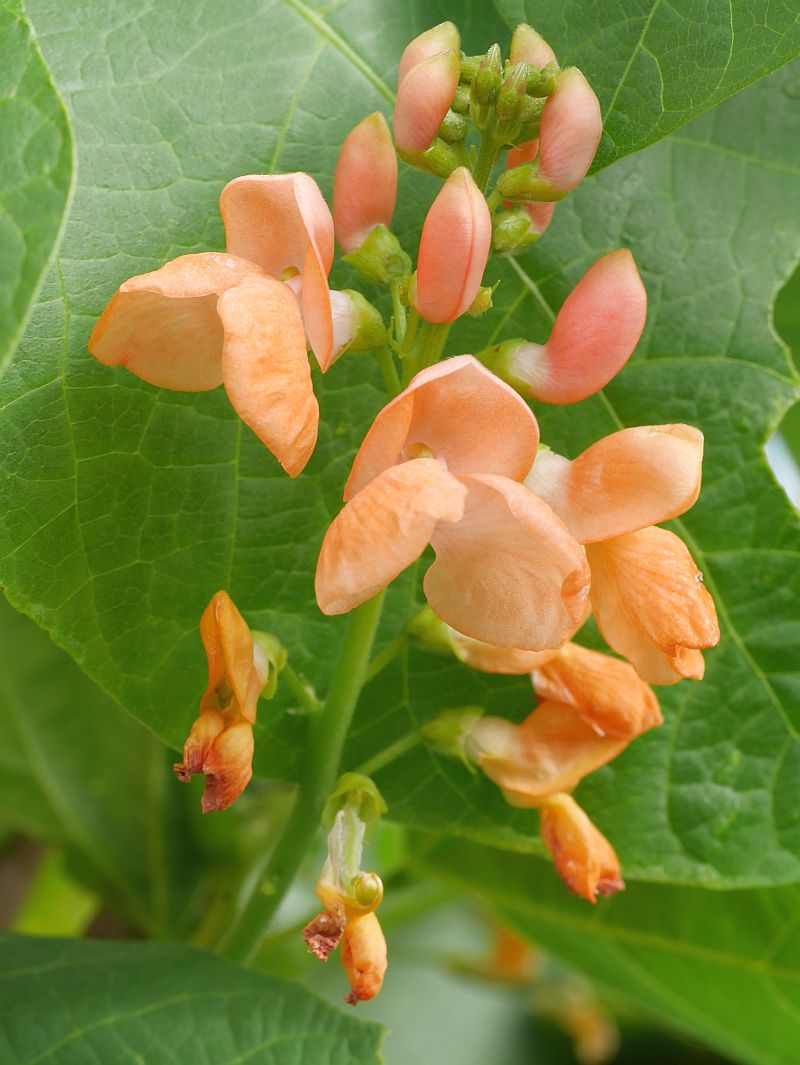
As I wrote earlier, it looks like we may have a glut of runner beans (Phaseolus coccineus) this year, the first time for many years. Runner beans are borderline here and last year we only managed to get a few beans before the first frosts. This year, we could have made a first harvest a week ago, but I wanted to keep the first beans for seed for the next couple of years. Yesterday we had bread dough ready and therefore made a pizza with runner beans and a mix of fungi picked in the woods (separate post). The dough was 100% coarse whole grain rye, spelt and emmer (sourdough)! Delicious as always!
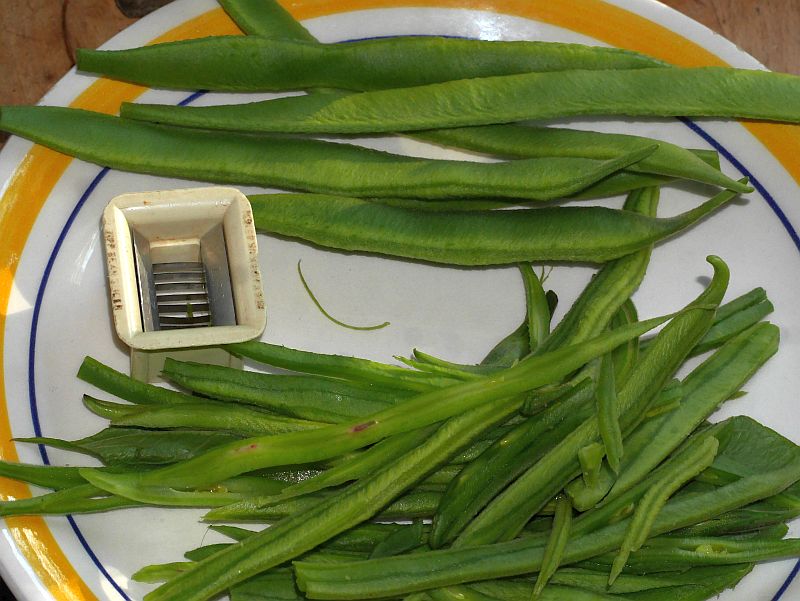
Slicing the beans with a runner bean slicer, commonly found in kitchens in the UK where this could well qualify as the national vegetable!
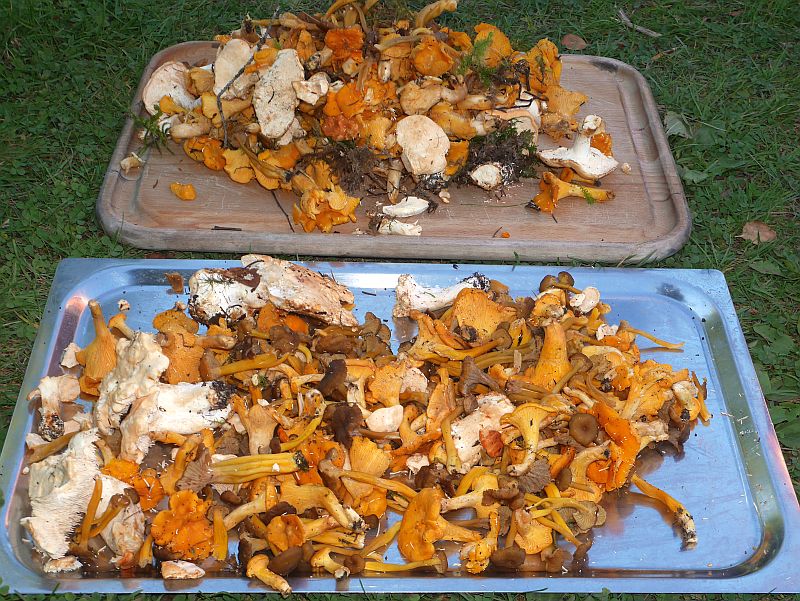
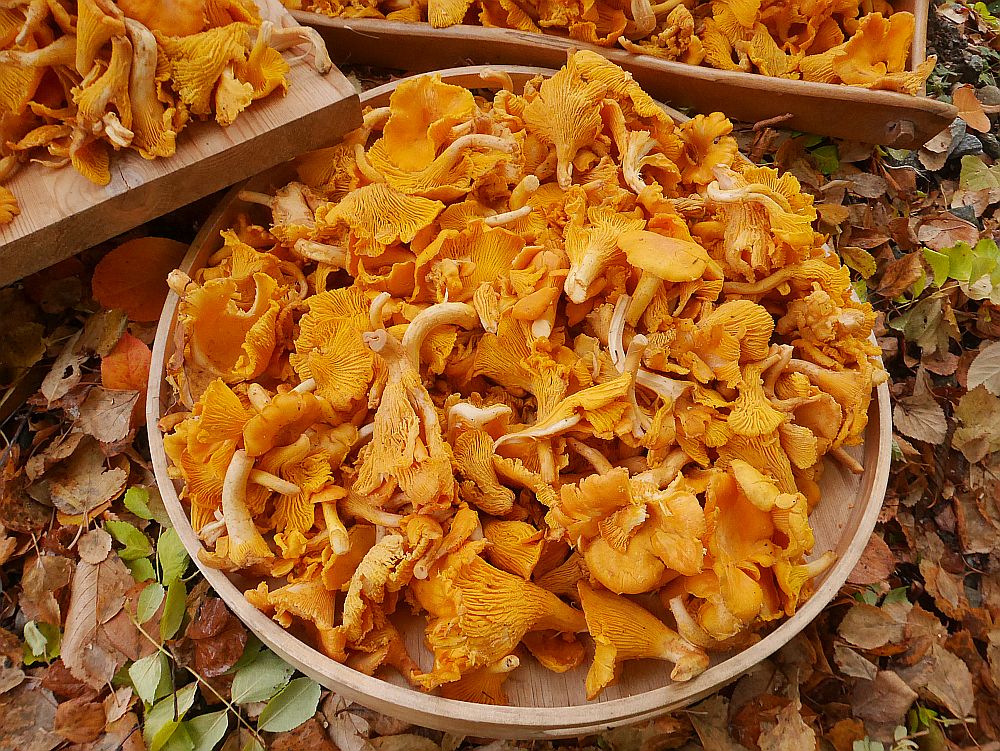
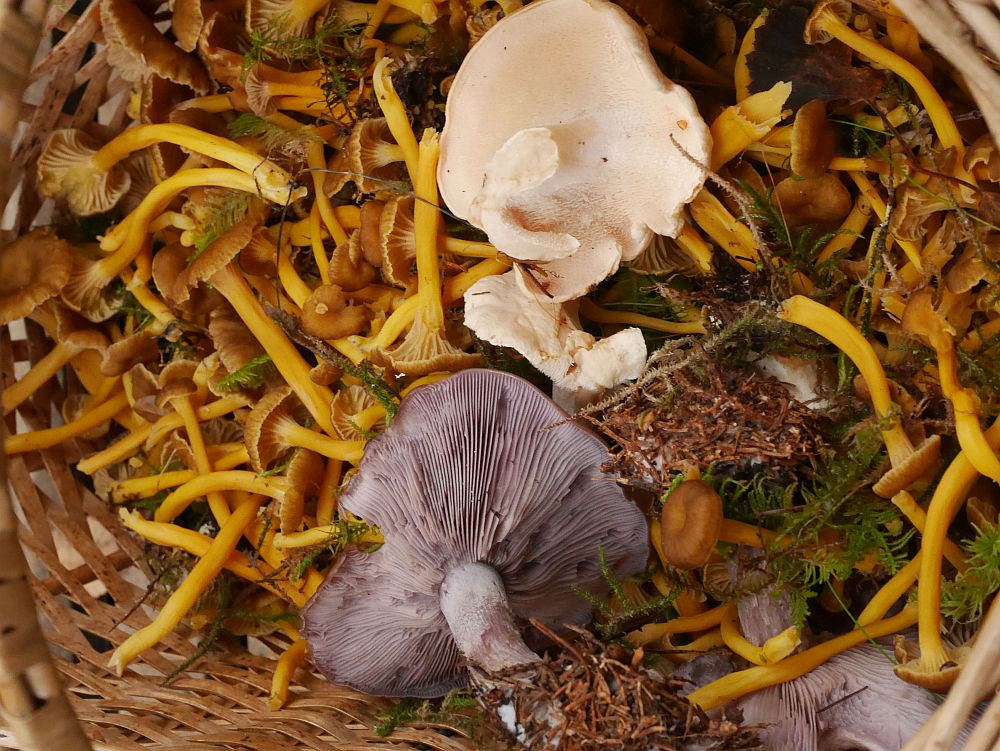
The forest is now full of edible fungi, witness today’s haul of mostly chantarelles, winter chantarelle, hedgehog fungi (two species) and puffballs (Norw: kantarell, traktkantarell, lys- og rødgule-piggsopp og røyksopp)
Tonight’s veggie pizza (with part of the bread dough as I’m also baking bread this evening) had some unusual for me ingredients: perennial kales, a mix of oriental brassicas (pak choy, mizuna, mustard greens etc.), various spring onions (all hacked out of the frozen soil) with garlic, chili, oregano, dried fungi – Albatrellus ovinus (fåresopp in Norwegian) and topped with dried seed of highly invasive himalayan balsam (kjempespringfrø), the seeds of which are quite attractive (see the picture)
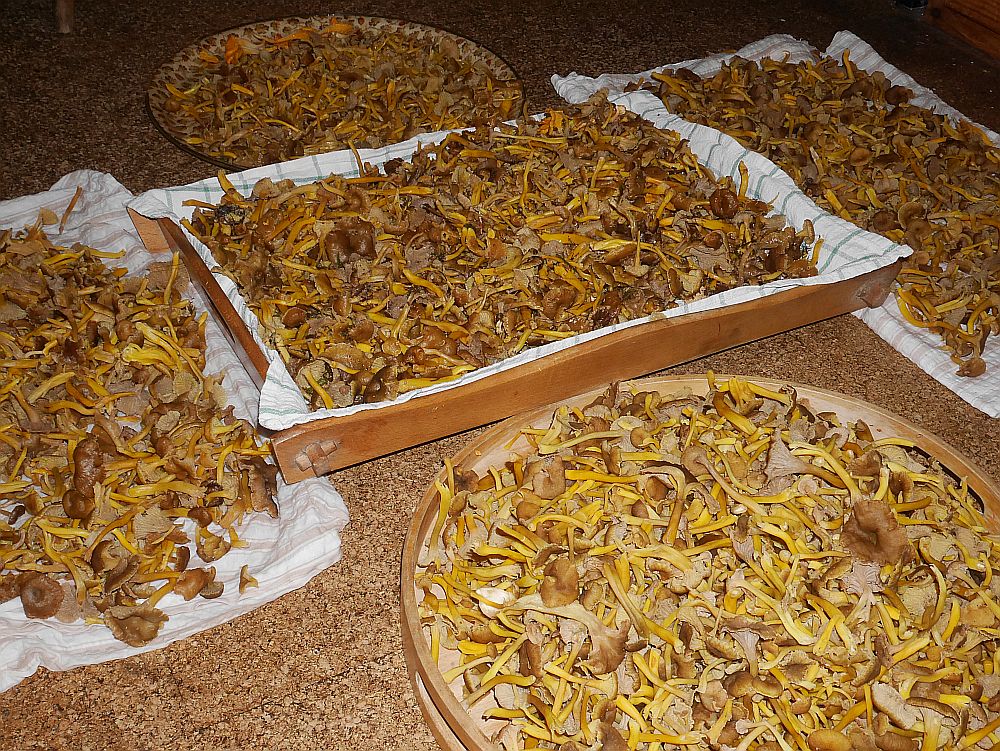
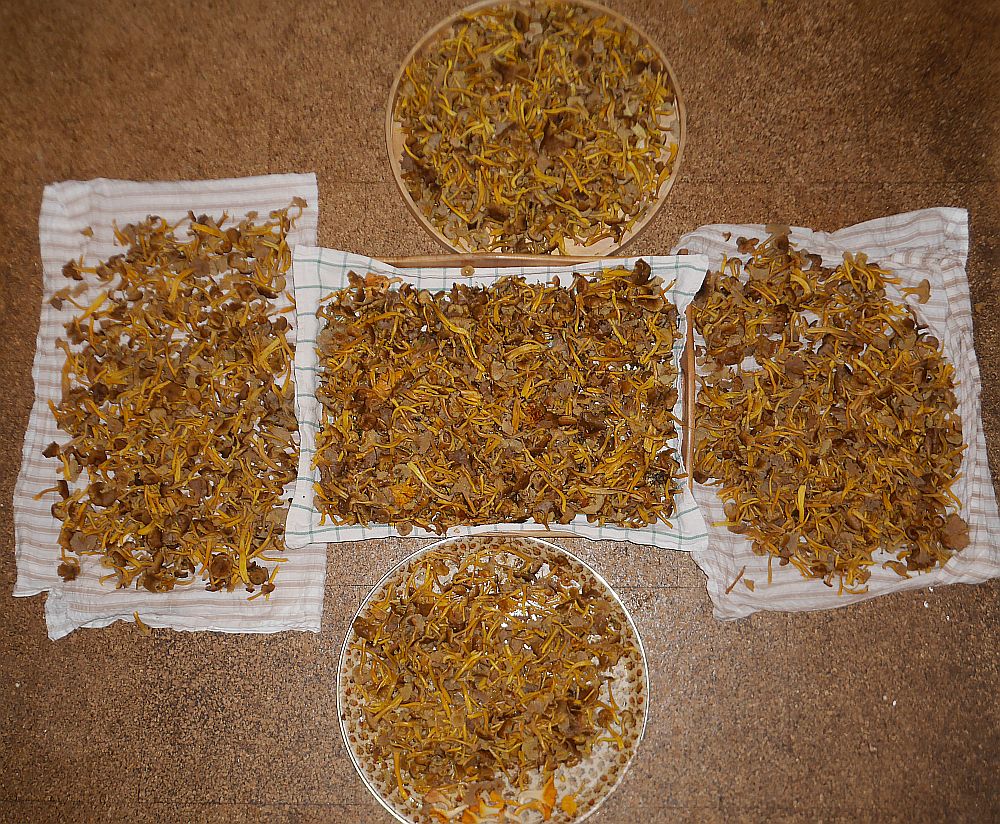
Earlier in October, we found a place with a large amount of chantarelles (kantarell); see http://www.edimentals.com/blog/?p=23655). We noticed that there were also a lot of winter chantarelles (traktkantarell; Cantherellus tubaeformis) growing in the same place, but we decided to wait a couple of weeks as many were still small and return before the first hard frosts (forecasted in the next few days). Here is the haul:
This week, somewhere in Trøndelag, we stumbled on a large number of chantarelles (kantarell). The aim of the trip was to pick winter chantarelles (traktkantarell) for drying. Imagine our surprise to find a huge number of chantarelles. I’ve never found so many so late in the year! There were many winter chantarelles too, but we decided to pick them next week!
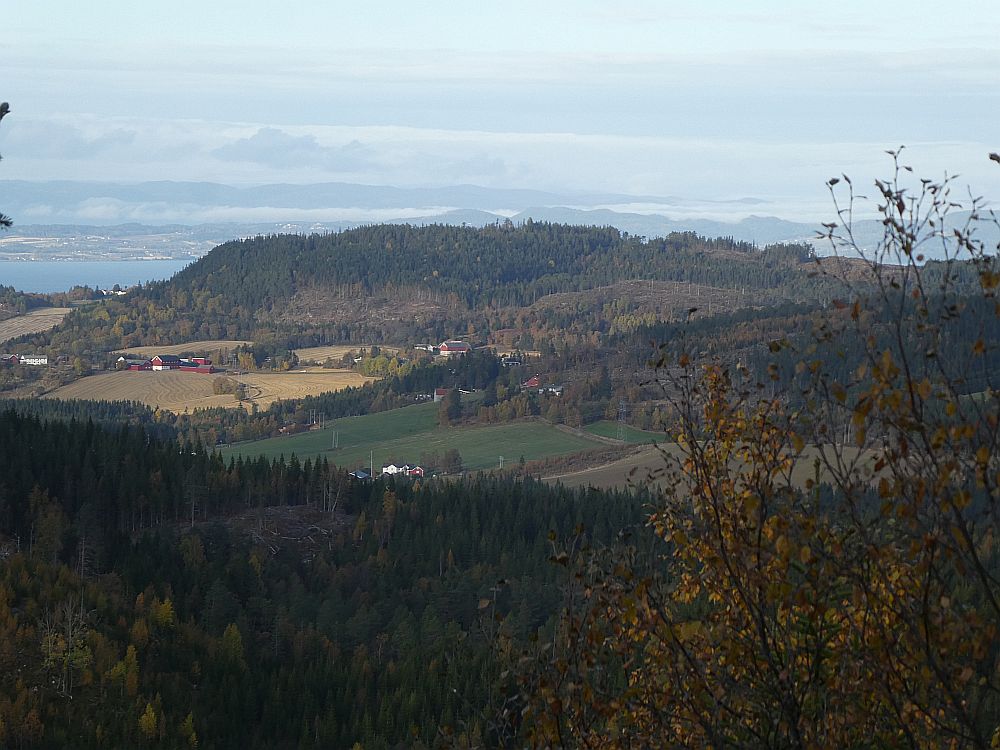
Walking up a very steep slope and suddenly this was the view in front of us:
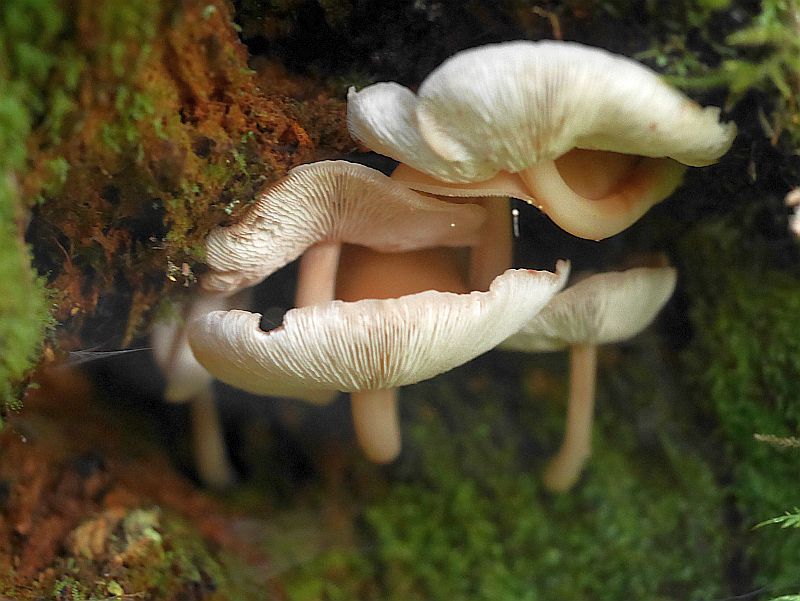
A new species for the garden is The Grooved Bonnet (Sølvhette) or Mycena polygramma, a bioluminescent fungi important in decomposing organic matter, recycling nutrients and forming humus in the soil, growing in the wild part of the garden next to a hazel. No bioluminescence seen though! Thanks to Berit Elle for the ID and Per Marstad for the verification!
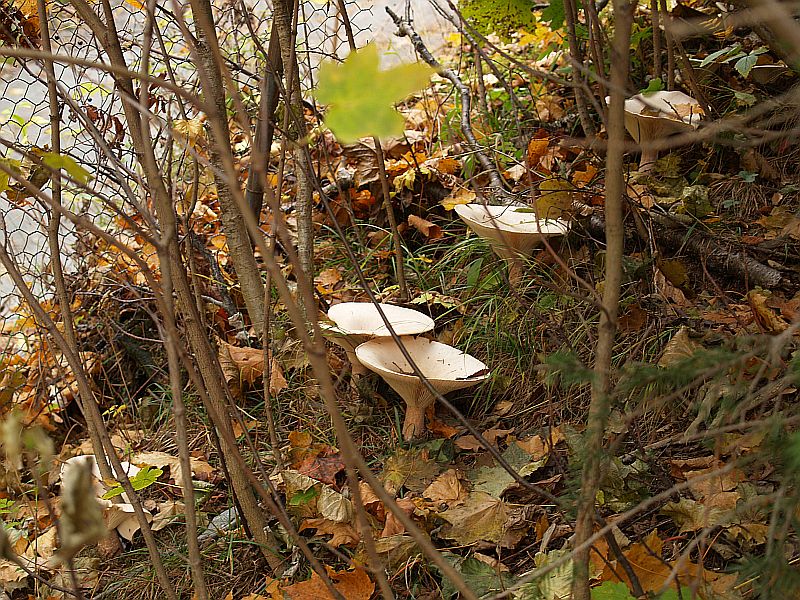
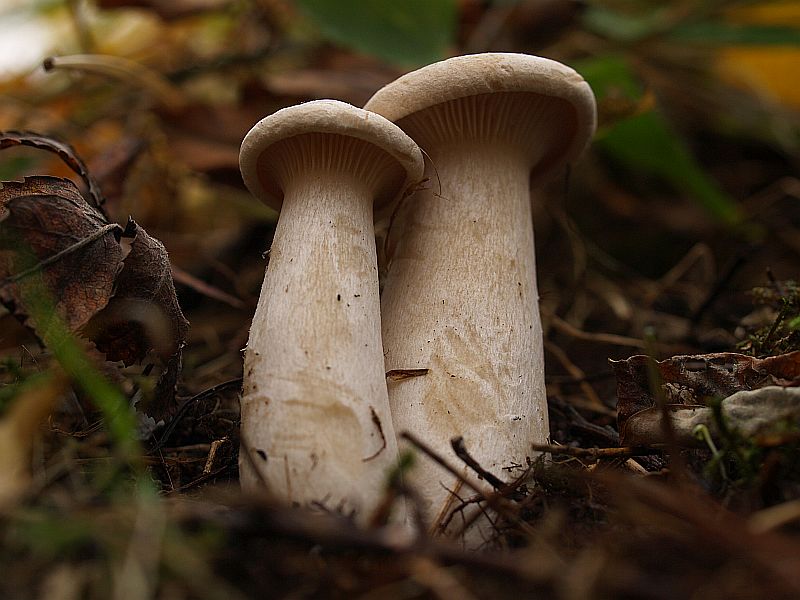
There’s a giant fairy ring in the garden, perhaps 10m in diameter, formed by a fungi called the trooping funnel (Clitocybe geotropa) or heggetraktsopp in Norwegian. This year only a few fungi have appeared. The pictures are from 12th October 2013:
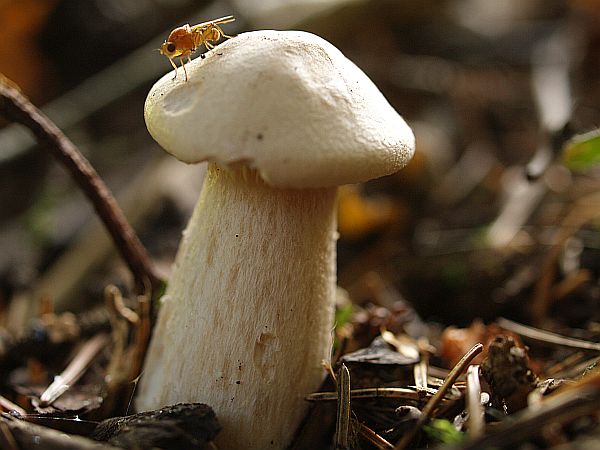
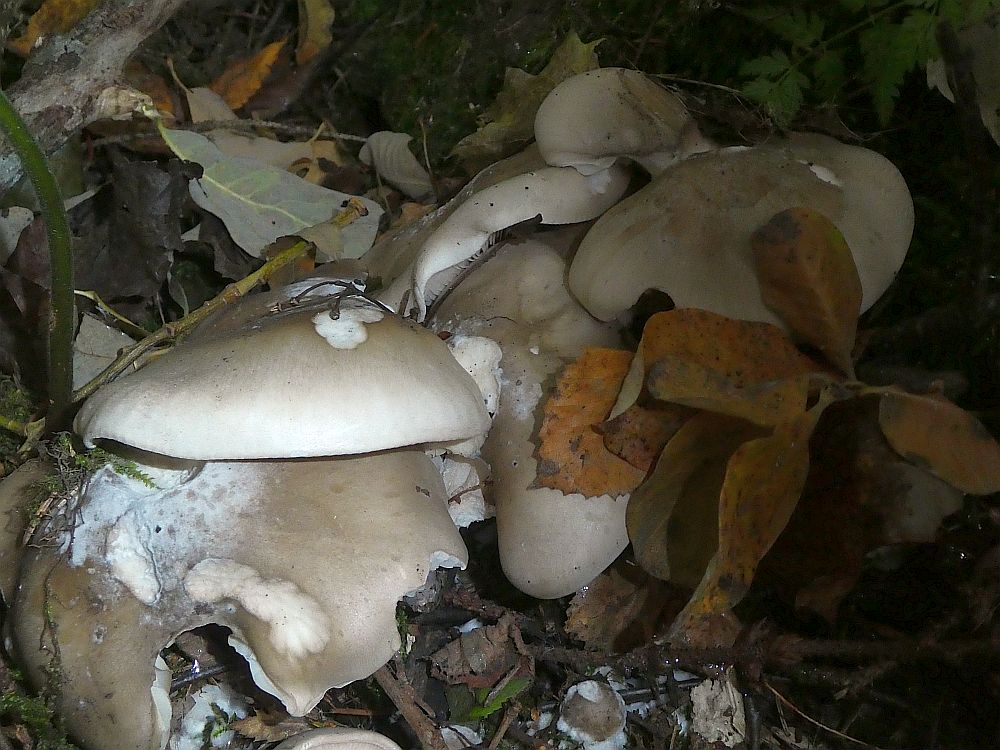
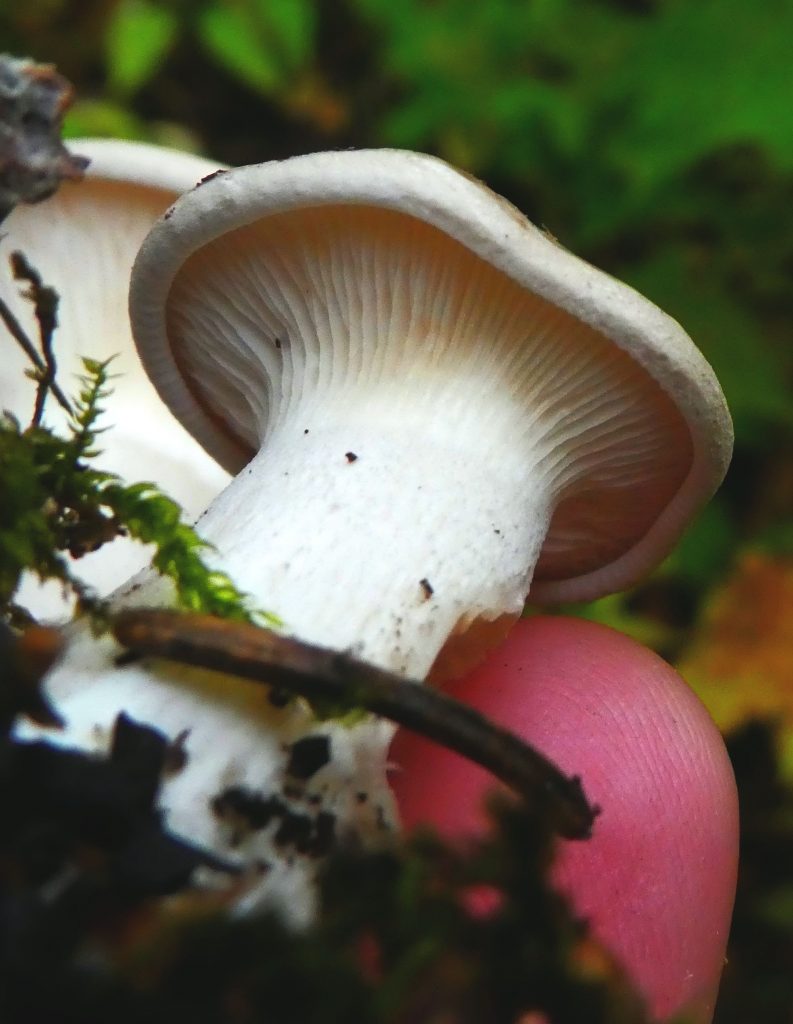
A line of cloud funnels or puddertraktsopp (Clitocybe nebularis) were found this week in the wild part of the garden. Edible if cooked for 10 mins. I haven’t tried yet.
Friday’s forage (11th October 2019) was combined with a walk to the top of Tripynten (315m).
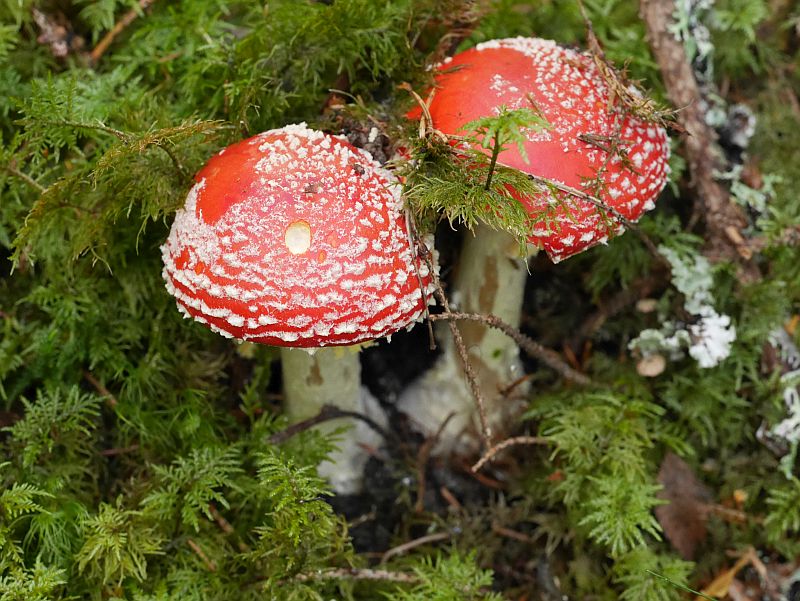
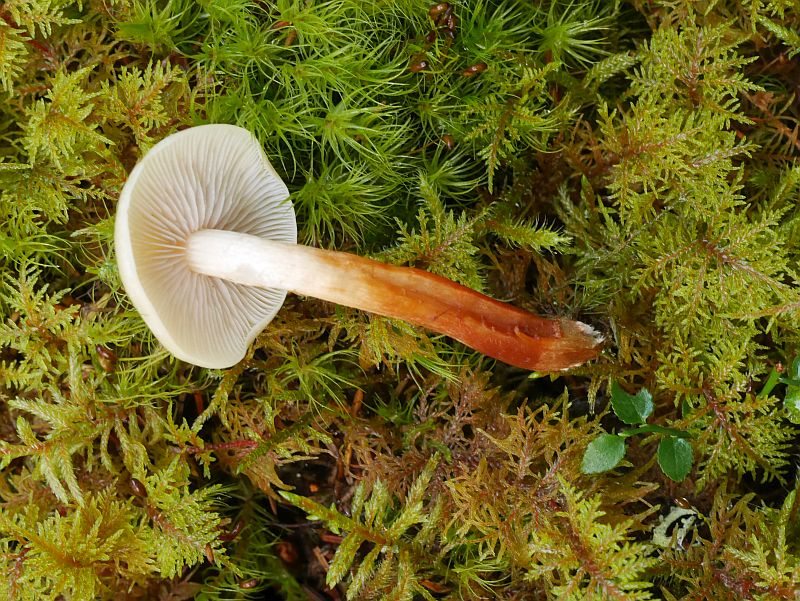
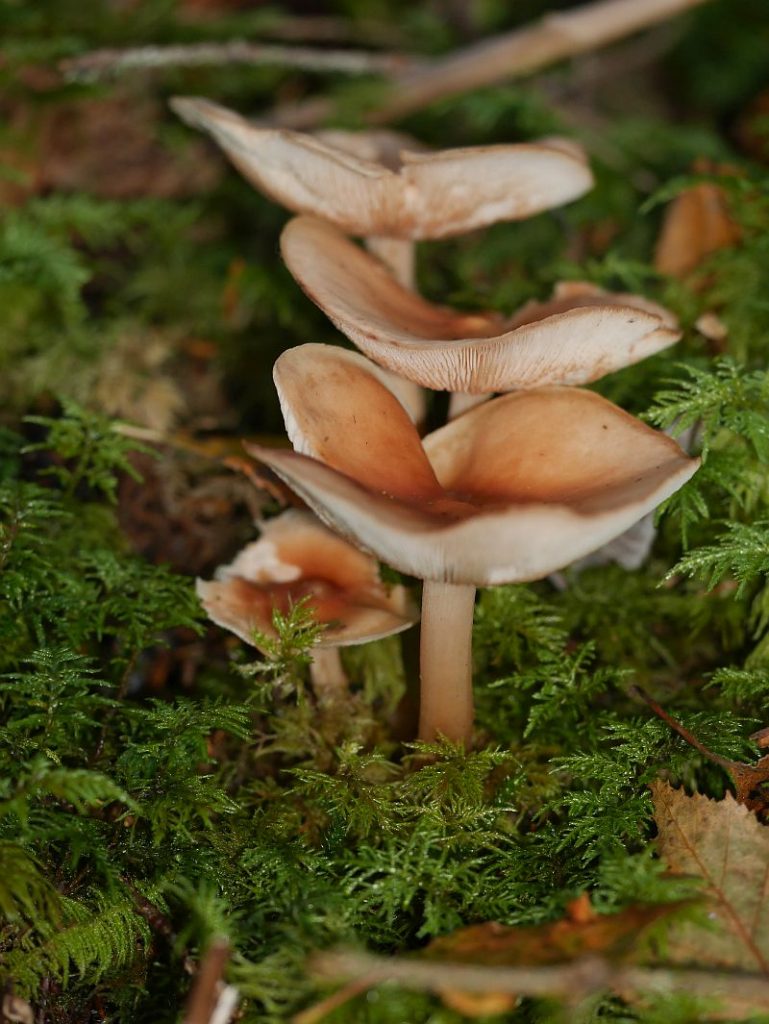
Please let me know if you can ID any of the fungi!
Malvik’s Pulpit Rock (Prekestolen)! Not advisable to walk out on it though!
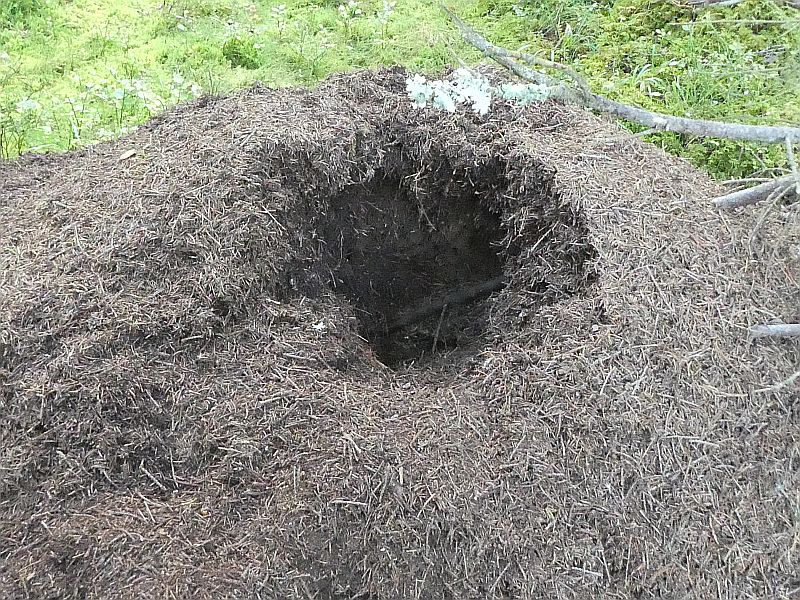
Presumably badgers (grevling) have been busy in this anthill.
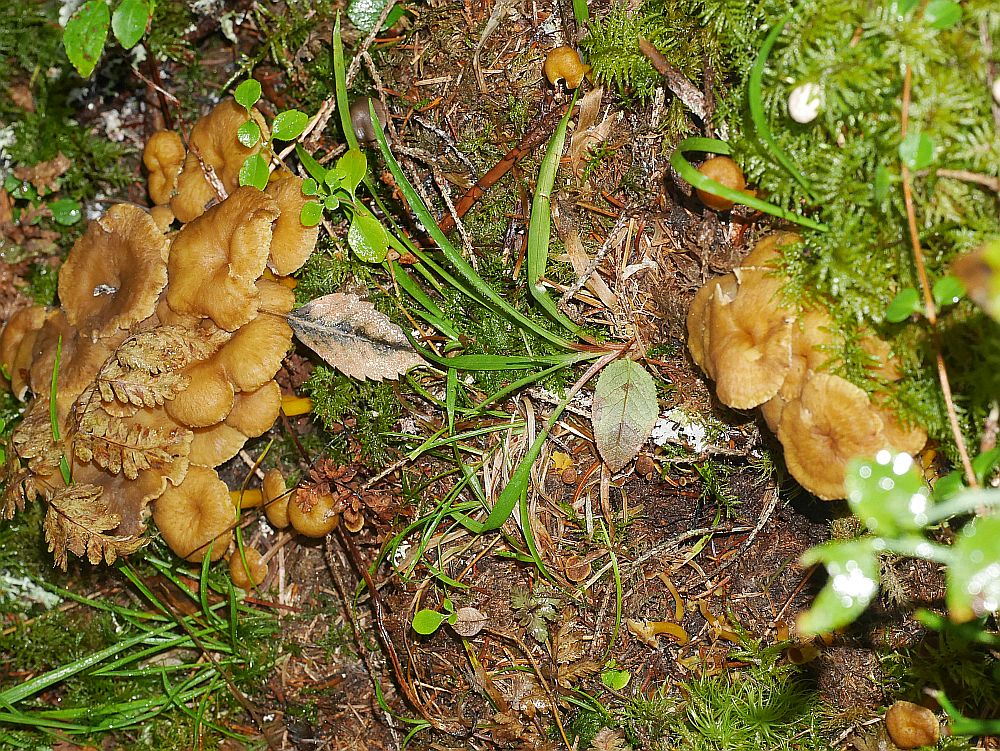
It was a long time before we found the prey, only one area of winter chantarelles (traktkantarell)
Winter chantarelles (traktkantarell)
View of Fevollberga which is just above the house and the fjord beyond and Frosta. The clearfelled south side of Fevollberga where there used to be a lot of old trees and breeding goshawk (hønsehauk) :(
View of Fevollberga which is just above the house and the fjord beyond and Frosta. The clearfelled south side of Fevollberga where there used to be a lot of old trees and breeding goshawk (hønsehauk) :(
That special moment each year when you see the first large group of chantarelles in the woods!
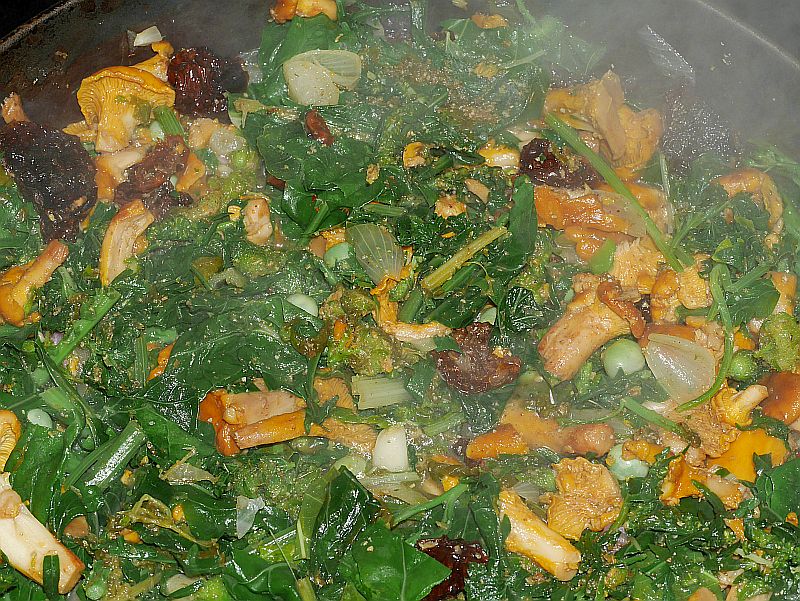
Used in a delicious green wholegrain spelt pasta sauce with Malva moschata (musk mallow), Rumex acetosa (sorrel), shallots, garlic, perennial rocket etc. and a strong organic cheese!
Perennial vegetables, Edimentals (plants that are edible and ornamental) and other goings on in The Edible Garden