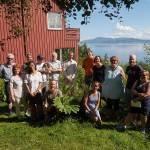
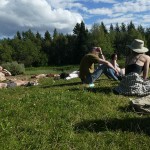
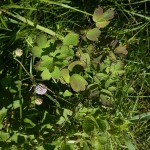
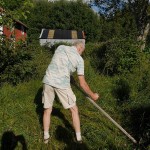
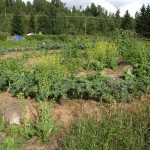
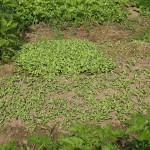
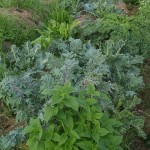
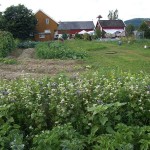
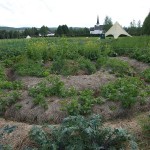
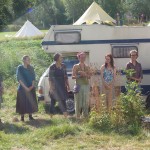
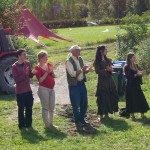
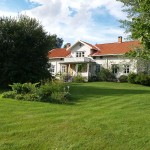
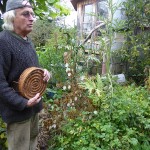
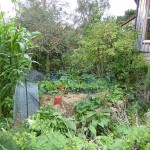
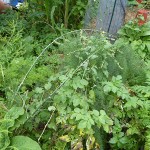
Back in Nesodden (family visit) after two great days celebrating økouka (national organic week) in Porsgrunn! Thanks to Gunn Marit and Anne Sofie for inviting me and for all the great folks that attended, several of which were members of KVANN (Norwegian Seed Savers). On Wednesday evening I gave a 90min + talk about KVANN and perennial veggies, followed by the official opening of Porsgrunn Seed Library (with my Hablitzia – stjernemelde) seed being the first donation. Then, on Thursday morning, I gave a course on perennial veggies to a group in the newly restored Eidanger vicarage in which the Eidanger CSA (moved here this year from another site) has a room, including half an hour looking at wild and garden plants in the old rectory garden! A great mix of folks, it was particularly pleasing that two young students had travelled down from Bø i Telemark to learn more about perennial vegetables! It was also good to see the leader of the Århus CSA scheme Tove and the new gardener Katrine in attendance! I’d met Tove on that memorable life-changing visit to Århus 5 years ago (http://www.edimentals.com/blog/?p=13690). There are lots of exciting sustainable developments and initiatives in Porsgrunn and I also talked to a guy with plans of converting an old farm to a forest garden. Great also to meet a newly arrived American wwoofer who had travelled south from Engeløya (Steigen) where she’d been working for my friend Eva Bakkeslett (see http://www.edimentals.com/blog/?page_id=1720 about my 2015 visit to Engeløya). For this reason, the course was in English!! Eidanger is destined to become a centre of vegetable diversity in the future with such a great group of visionary folk and a lot of land to work with!
See also this aerial view of the Porsgrunn CSA at the Eidanger Prestegård: https://scontent-arn2-1.xx.fbcdn.net/v/t31.0-8/20863217_10214875018217539_4042211065793829304_o.jpg?oh=014f038146772c9a50993319a5a1c027&oe=5A546BFA
Pictures from a great day last Sunday in the company of a great group of permaculture interested folks from Oikos Nord Trøndelag (Oikos = Organic Norway)
We started in my garden in Malvik at 10:30, then travelled north to Johannes Moen’s place just south of Steinkjer, stopping on the way to collect some fertility and for a swim in Leksdalsvatnet! I got home by train at 11:30 pm!
The day started with a tour around my garden
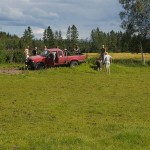
We stopped in Stiklestad on a farm which had been run organically since about 1990 to pick up horse muck for the perennial garden we were to create in the evening!
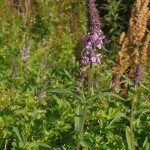
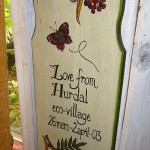
Not a plant I see often in this area, Stachys palustris was growing on the farm…it has edible tubers..I also found it growing at Hurdal Ecovillage last week and will dig some next time I visit…
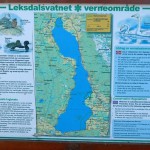
On the way north, we stopped off for a swim at the north end of Leksdalsvatnet, one of the best lakes for birds in our area, including little gull (dvergmåke) and great crested grebe (toppdykker/ https://no.wikipedia.org/wiki/Toppdykker), which I spotted from the car!
The swimming area…
I found another rare plant in this area, Alisma plantago-aquatica (vassgro / greater water plantain), when I was out swimming :) I’ve never been convinced to try eating it. This is the entry in Cornucopia II: “The bulb-like bases are eaten after being dried to rid them of their acrid properties”. According to pfaf.org, “the seed is said to promote sterility. By contrast it is also said to promote conception ” ;)
The Alisma locality was on the other side of the water
…and another rare plant, Thalictrum flavum I think, right next to where we sat
…and another rare plant, Thalictrum flavum I think, right next to where we sat
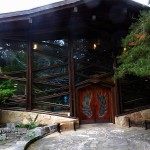
The last stop was at Johannes Moen’s strange house just south of Steinkjer..built by his dad in concrete, it had been designed to have glass sides in which plants could be grown, but it was sadly never completed…Johannes and his brother are living here now and making improvements
Johannes Moen tells us about the house
The original family home
They have been insulating the walls
Scything demonstration on the area we were to convert to a new permaveggie garden!
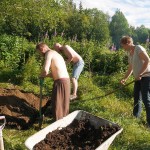
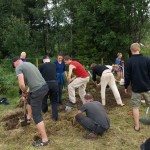
Participants learning the age old technique of bastard digging which I taught them (I learned this technique back in the 80s from one of John Seymour’s books and dug my own garden by hand in this way! It is surprisingly quick, this area only taking two people about an hour or so…after which we could plant straight away…with this technique, the top spit of soil ends up two spits down an upside down!
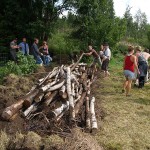
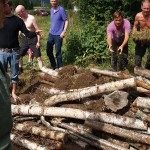
Veggie soup and blueberry pie for dinner by a bonfire of birch and “høymole/Northern Dock (Rumex longifolius)” which was also being burned at Hurdal last week ;)
Planting up the bed with plants we’d brought with us from Malvik…
The plants include Hablitizia, Malva moschata, Caraway (Karve), various onions including Allium cernuum, A. scorodoprasum, A.fistulosum, A. schoenoprasum “Major”, Cryptotaenia canadensis, Viola canadensis, Ligularia sachalinensis (by mistake, I thought it was L. fischeri) etc.
Tour to the tower on top of the house!
Views over the surrounding agricultural land
…but forest surrounds one side of the property
I took the train back home from Sparbu
…and a beautiful journey it is along the side of Trondheimsfjord!
Salicornia (marsh samphire/salturt) grow on the mudflats in this picture
Permakultur Grunnkurs (PDC) Trondheim/Malvik , 3 helger sommer/høst 2017
Permaculture Design Certificate Course (PDC) in Trondheim/Malvik over 3 weekends this summer/autumn
See also https://www.facebook.com/events/808432835979618/
The reason for my trip to Canada in March / April 2017 was because I was invited by Jean-Martin Fortier to visit and give a talk and discuss perennial vegetables at La Ferme des Quatre Temps, an amazing farm near Hemmingford, Quebec (south of Montreal and near the US border). Jean-Martin is well-known for his book “The Market Gardener” which has sold more than 80,000 copies! This album of pictures gives my impression of my short visit on the farm in very early spring, where a whole area is devoted to trialling permaveggies for the market, the best commercial operation I’ve seen! Thanks for the invite Jean-Martin!
This is the Wikipedia entry on the farm: “In the fall of 2015, Fortier was recruited by André Desmarais, Deputy Chairman, President and Co-Chief Executive Officer of Power Corporation and son of Paul Desmarais Sr, to design and operate a model farm, La Ferme des Quatre-Temps, on a 167 acres property in Hemmingford, Quebec. The mission of the farm is to demonstrate how diversified small-scale farms, using regenerative and economically efficient agricultural practices, can produce a higher nutritional quality of food and more profitable farms. The farm consists of four acres of vegetable production; sixty acres of animal grazing rotation including beef, pigs and chickens, ten acres of fruit orchards, a culinary laboratory for processing and creating original products and a huge greenhouse to produce vegetables throughout the year. The principles of permaculture were applied to ensure ecosystem balance: flowers were planted, ponds were dug to accommodate frogs and birdhouses were built to naturally control the proliferation of pests. Ten bee hives have also been installed on the property to promote pollination and mobile chicken coops allow hens to roam from one pasture to another to feed the worms in manure from cows.”
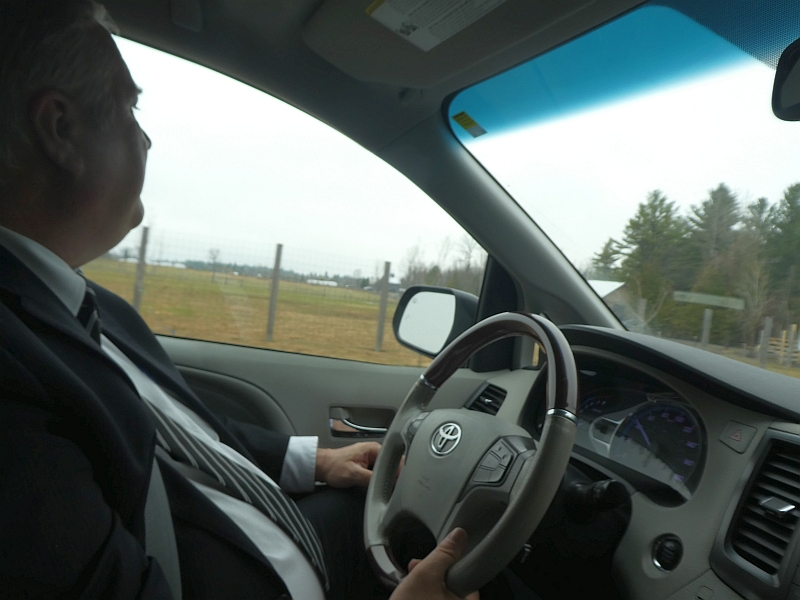
I was picked up in Montreal by one of Mr. Desmarais’ chauffers. Here we are approaching Hemmingford (wise to remember to turn off just before the US border…)
Chauffeur driven car
The driver wasn’t sure where to go and asked at Mr. Desmarais’ on-site house first.
Jean-Martin Fortier
The lecture was in this building..
I gave a short Around the World talk before lunch to staff, contractors and wwoofers…
Jonathan Pineault introduced the work on growing permaveggies for sale at the farm!
Each plant had a nicely set out slide with information relevant to marketing! Here is Hablitzia!
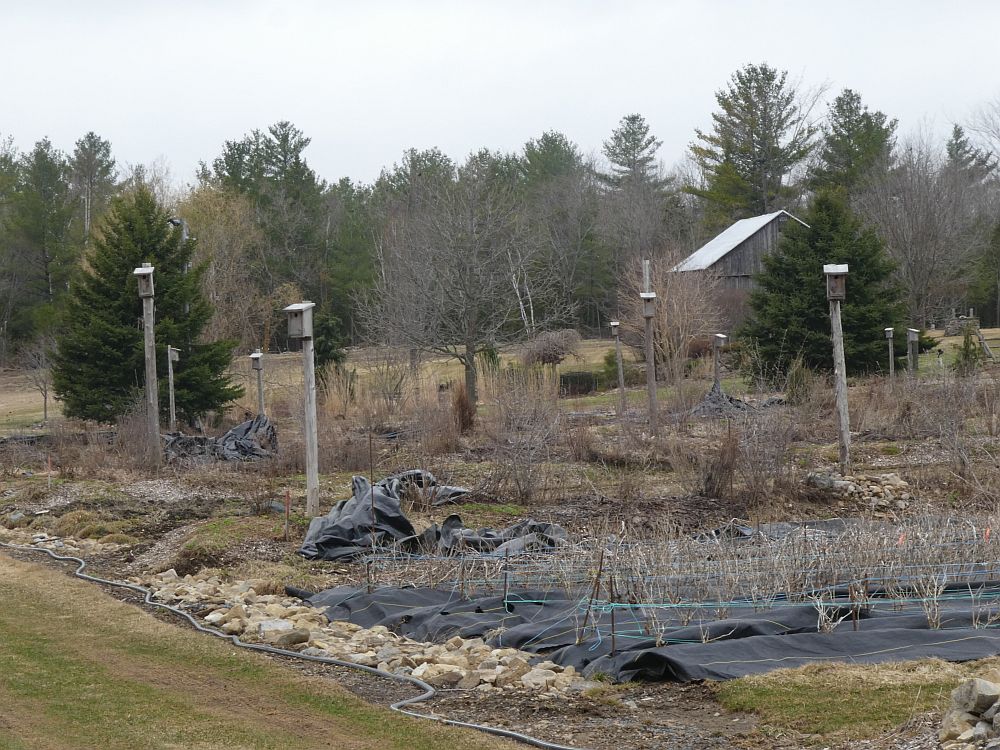
The permagardens were already looking good, note the nest boxes!
?, Jonathan Pineault and Alexandre Guertin (from Écomestible, www.ecomestible.com, who were contracted to the permaculture on the farm!) FB friend Carmen Porter, second from the right had kindly offered a place to stay locally and also showed me around the next day (more later)
Jonathan Pineault and ? with skirret :)
Cattails (but not planted with food in mind)
Perennial plantings
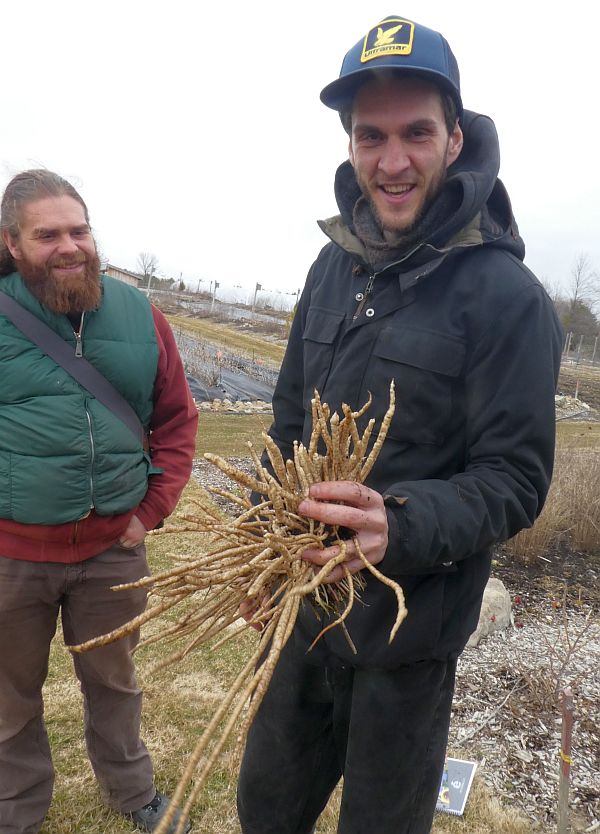
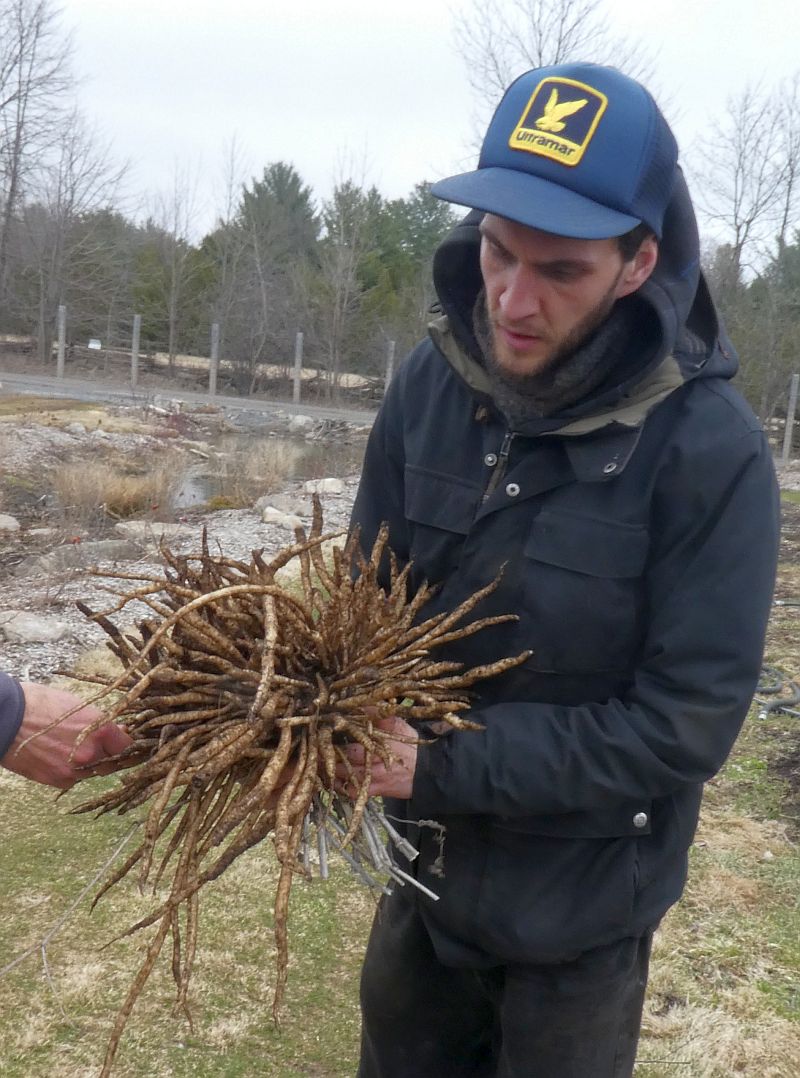
Horseradish I think…
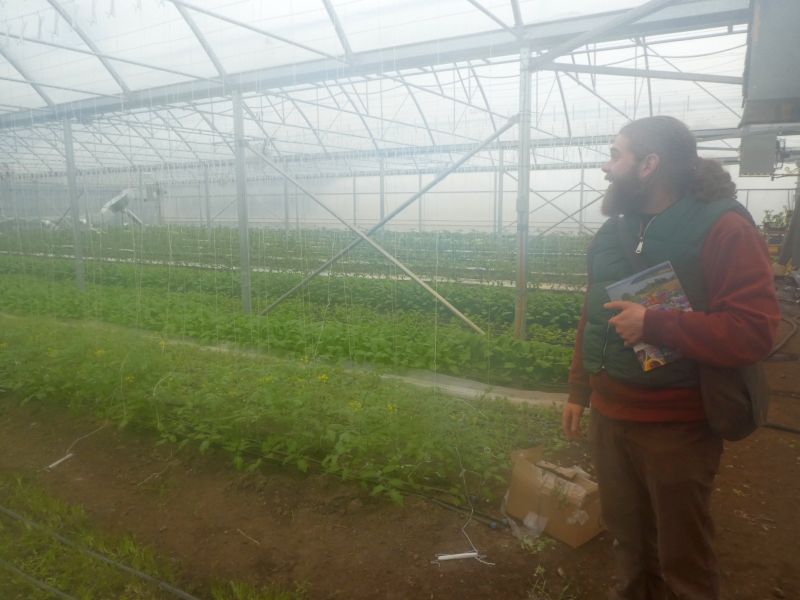
Tour of the greenhouses…
There were lots of birds on the farm…here a distant belted kingfisher I think…
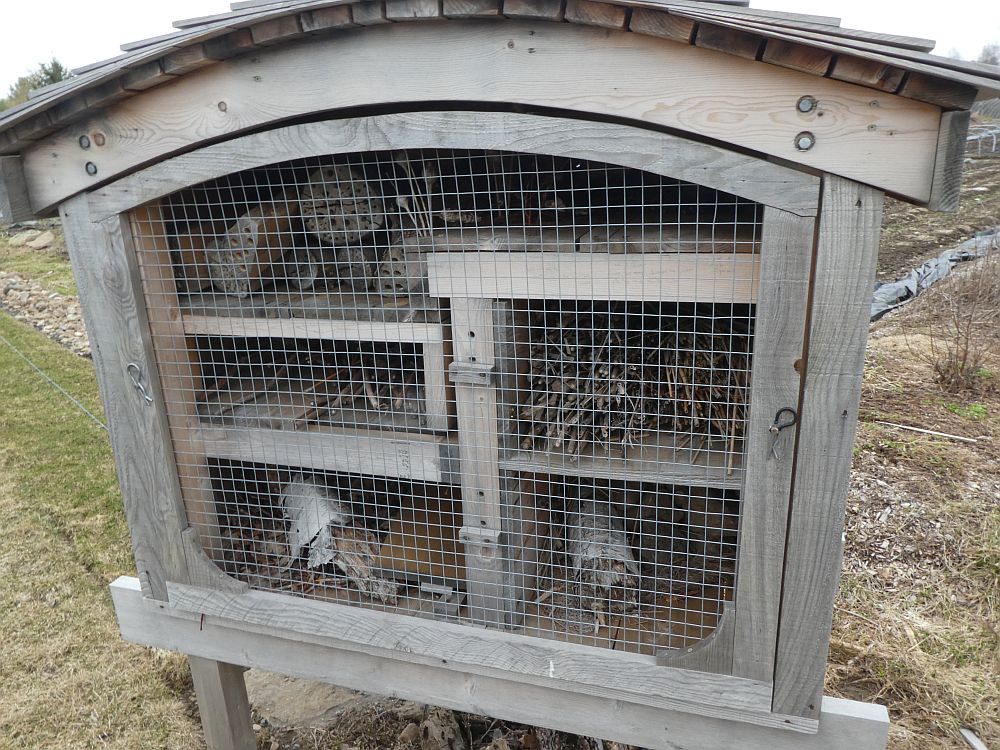
Insect hotel
What was the story behind this? A deviant scarecrow?
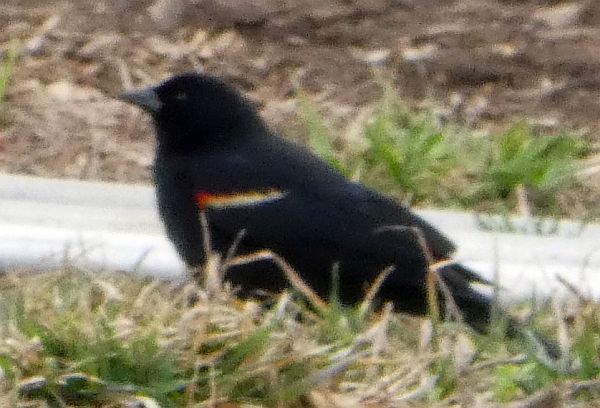
Red-winged blackbird
…and even Killdeers on open ground on the farm (NB! the strange name killdeer is from the bird’s kill-deer call ;) )
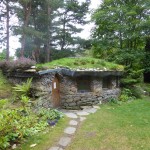
I’m visiting Hurdal Ecovillage again this weekend, so thought I would post this album of pictures from the Nordic Permaculture Festival held there in August 2013! https://www.facebook.com/events/219614368452015/
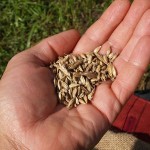
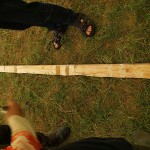
Johan Swärd talked about old grains including Svedjerugen, yes this rye, an integral part of the slash and burn agriculture practised by the Svedje-Finns, is really this tall!
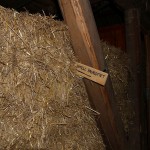
Svedjerug straw!
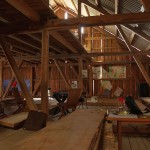
The barn where I gave my talk!
The festival produced most of its veggies on-site!
The organisers!
Prestegården from 1837 is part of the Ecovillage! I had a look in the garden for old garden edimentals!
Ludwig Appeltans and Suzanne de Waard of Earth Ways turned out to be fairly close neighbours to Teeny Weeny Farm in Forres where I was staying in September 2016. I’d followed Ludwig on Facebook for some time and was therefore happy to be invited over to see their place! It became clear that their hearts weren’t fully into their piece of land due to “circumstances” and that they were looking for somewhere new to really develop their ideas and run permaculture courses. It turned out that they had a secret as plans were already advanced and a few weeks later they would be moving to the Rubha Phoil Forest Gardens, on Skye (Armadale within walking distance of the Mallaig ferry!), a big loss for Forres….. I wish them good luck and hope to visit them there in the next couple of years (I have a special relationship with Skye and the Inner Hebrides from the time I lived in Scotland)!
I wish I’d taken notes on the day as I’ve forgotten some of the details…hopefully Ludwig Appeltans will add some comments to the pictures
Read more about Earth Ways here: https://www.earth-ways.co.uk/about
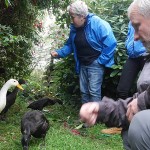
Tour of the gardens, followed by the running ducks!
Great to see a good sized Hablitzia here too! It turned out I sent Ludwig seed back in 2012 after he’d read my Permaculture Magazine article…
Diversity
Giant plantains (Plantago major)
Ludwig and Suzanne wrote an article about their brilliant polytunnel in Permaculture Magazine, in particular their simple water harvesting and hydroponic system. See https://www.permaculture.co.uk/articles/how-design-and-build-self-watering-polytunnel
Harvesting rainwater :)
Harvesting rainwater :)
This hole was just to show what the soil was like: easy to dig
Tamworth pigs
A large Fuchsia magellanica in full flower and with tasty fruits witnesses the mildness of the climate here!
After Ariane Burgess had showed me round the Edible Woodland Garden, I’d been invited to lunch by Craig Gibsone, one of the elders of Findhorn having been involved with the Findhorn Foundation for well over 40 years! He had also been at my talk the night before at the Tiny Weeny Farm, and he seemed familiar as I’d seen a Youtube interview with him (see the link above) some time ago! Craig was born in Australia but considers Findhorn to be his spiritual home. He is a multi-talented teacher, potter, painter, musician, gardener and permaculturist….and it was a real pleasure too to be in his company for a couple of hours! For more, see the picture gallery below!
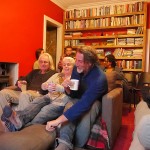
At my talk at Tiny Weeny Farm, Craig is on the left!
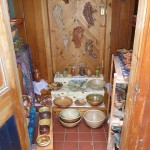
Pots for sale with honesty box at the entrance to Craig’s place
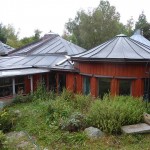
Craig lives in one of the wonderful barrel house, made from recycled Douglas Fir whisky barrels built in the 1920s and used in local distilleries until the 1980s!
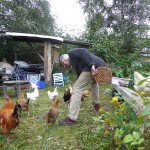
Tour of Craig’s garden…
His garden is a fantastic ecological oasis in the middle of Findhorn which otherwise struck me as mostly rather sterile…Craig is aware of this and said that he wished they could turn back the clock and replant Findhorn with useful and edible trees etc.
He told me that most people that visit consider his garden as a bit of a mess and that he’s lost control! However, he had created the garden for himself and wildlife. He told me that he enjoyed my visit as I could SEE! Yacon on either side of the path with sweet cicely , fennel , Jerusalem artichokes, sweet cirn and various edible bushes and trees!
Yacon!
Horseradish and much more
Wonderful!
A bay tree!
Diversity
Greater celandine (Chelidonium majus) sap is a powerful medicinal plant
Pond for wildlife
I even left with a new Allium…this one (Allium senescens?) was rather nice!
Jerusalem artichoke in full flower
Yes, I really loved Craig’s garden, permaculture in action!!
In Craig’s studio, the basil plantation…
Poppy seed
I was invited to have a look around as Craig finished cooking the lunch!
…and a fantastic lunch too with cheese and wine!! I think I was in paradise….
…and there were Norway connections in Craig’s house, here a greeting from Hurdal Ecovillage in 2003…I believe they came to Findhorn to get inspiration!
…and Craig had written a book together with our very own Permaculture guru Jan Bang: Permaculture – A Spiritual Approach book release….and opening at a random page, my friend Helene tells her story!
After lunch, Craig took me for a quick wander through the community
Finally, Cullerne Gardens is where the vegetales are grown communally. This was a bit disappointing, too much reliance on plastic and too little permaculture in my opinion…https://www.findhorn.org/cullerne-garden/
…and here Craig left me…I carried on into Findhorn village and sand dunes before cycling back to Dyke. Thanks, mate!
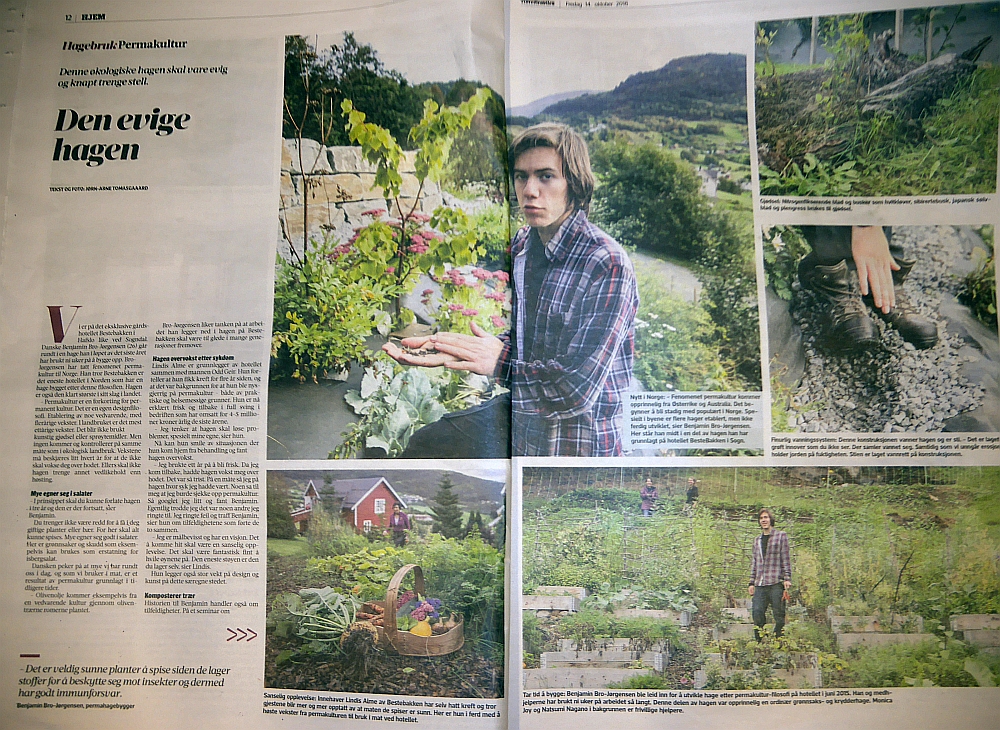
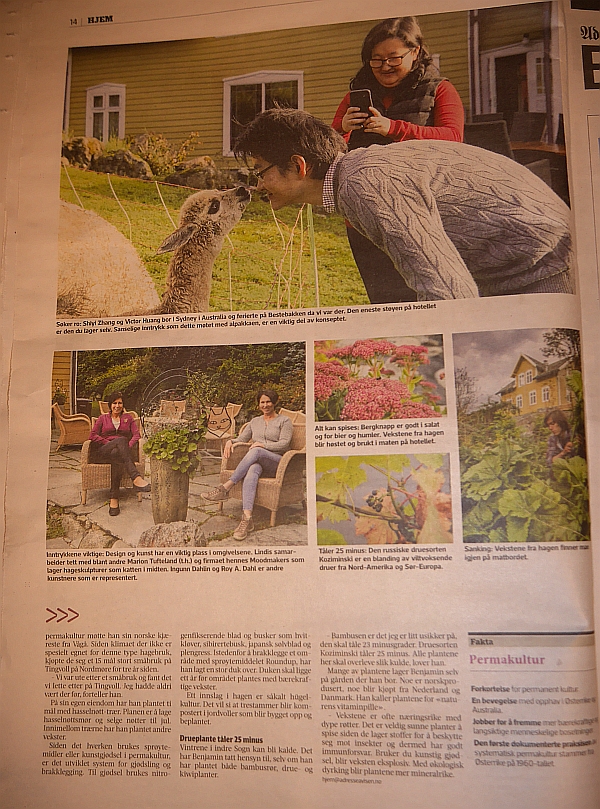
Benjamin Bro-Jørgensen, who together with Irja Frydenlund have started an edible perennials nursery in Tingvoll, Norway, was profiled in today’s Adresseavisen (Hjem magazine) in an article “Den evige hagen” (the eternal garden). Wow, Permaculture and perennial vegetables in my local paper! Well done! Apparently, it is also published in Bergenstidende :)
Alvastien Telste is Norway’s first LAND project (LAND officially started up in Norway yesterday) located on a side arm of the Hardangerfjord in beautiful surroundings…this was my next stop on my short tour of Western Norway. This little film (shot unknown to Eirik Lillebøe Wiken who was driving and narrating) shows the dramatic approach to this place, run by Eirik and Hege Iren Svendsen!
The road is very exposed to rock slides…see the size of the boulders that have tumbled down the hill and the repairs to the road and notice at 1:00 the sign warning of falling rocks
In the last part, we enter the forest garden area before seeing the house!
Here is my report from the second permaveggies / foraging weekend on the wonderful arctic island Skomvær outermost in the Lofoten Islands off north west Norway. I spent an amazing couple of days here in June 2014 with some lovely people!
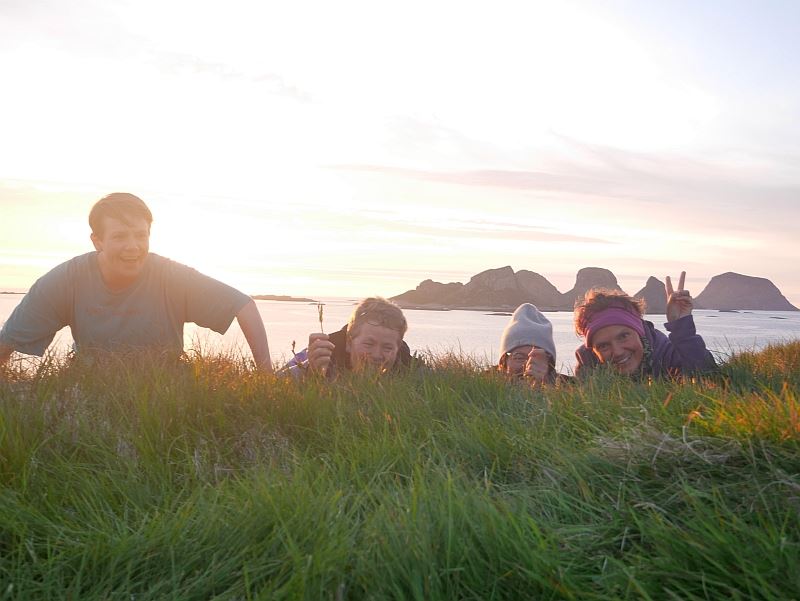
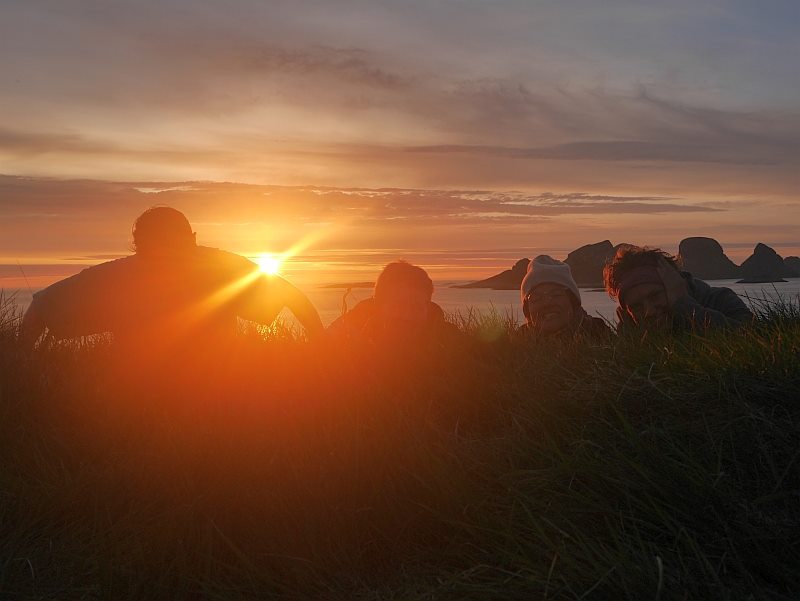
Foraging on land and for seaweed, wonderful wild food, warm weather, Tai Chi, Permaculture, arctic swimming, 5 Eagles soaring above us, the sunsets, inquisitive seals, lighthouse tour, the historical rose garden and much much more…………..
Please let me know if you’d be interested in joining us in 2017 (it’s not confirmed yet)…
This album appeared originally on FB: https://www.facebook.com/media/set/?set=a.10152397484675860.1073742076.655215859&type=1&l=f6a7c2e28e
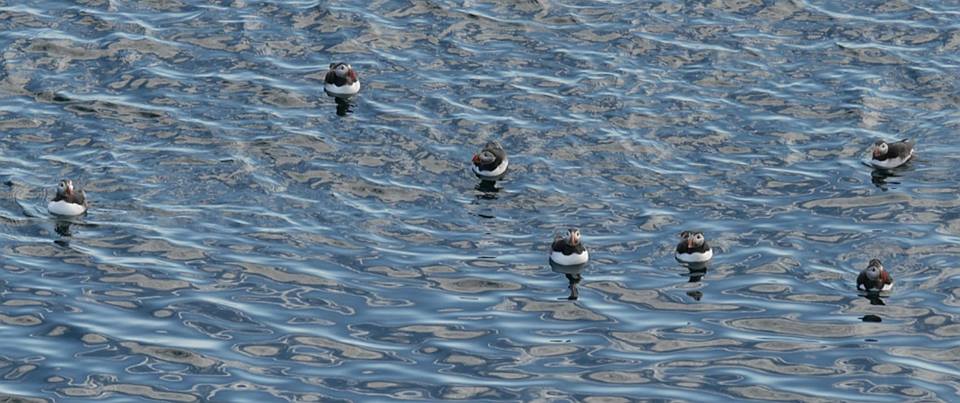
Puffins / Lunde
Puffins / Lunde
Foraging on Skomvær
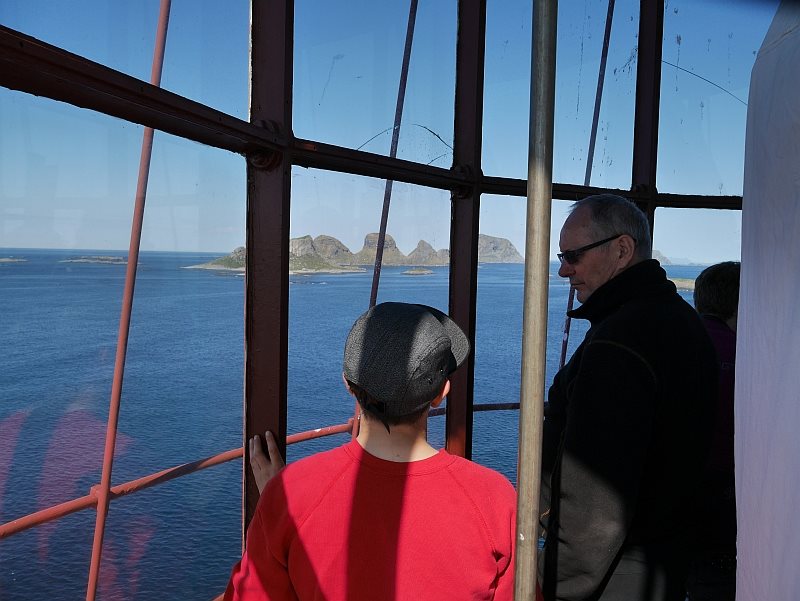
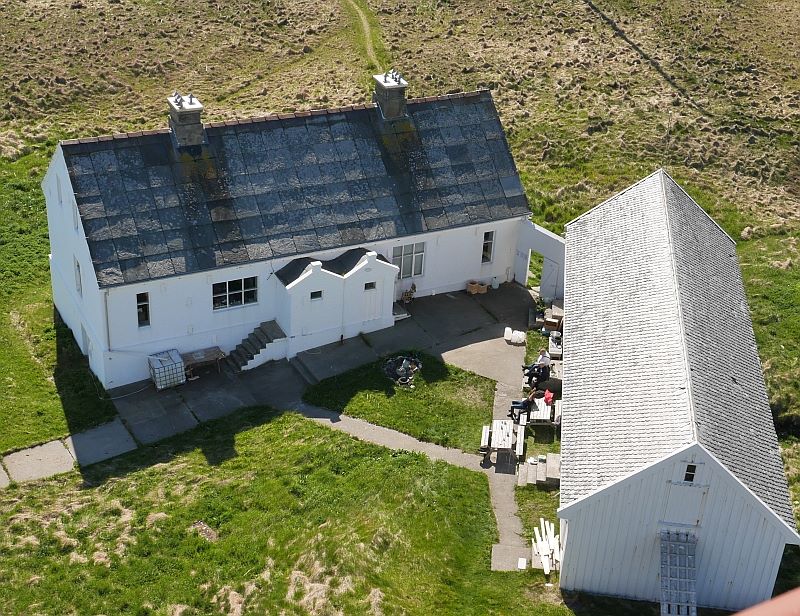
Elin gives a guided tour of the lighthouse.
Inquisitive seal
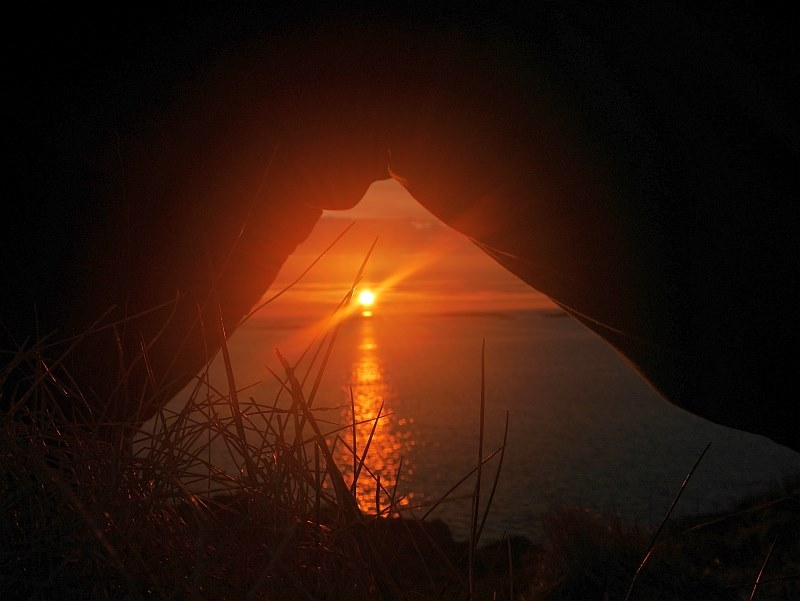
Midnight sun, taken 1 minute after midnight :)
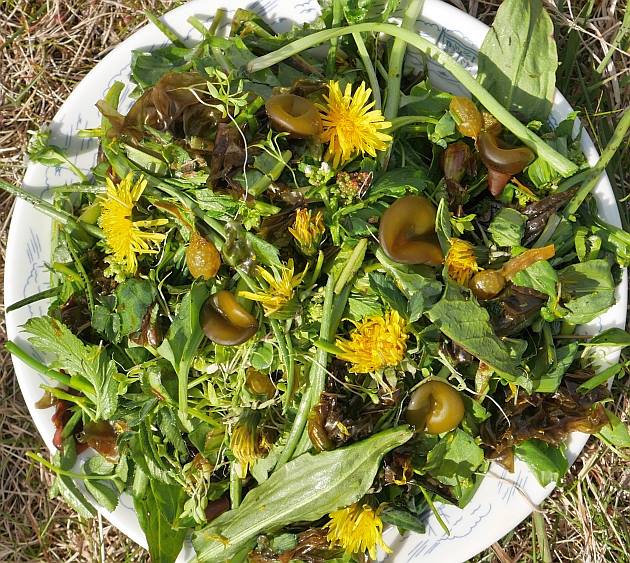
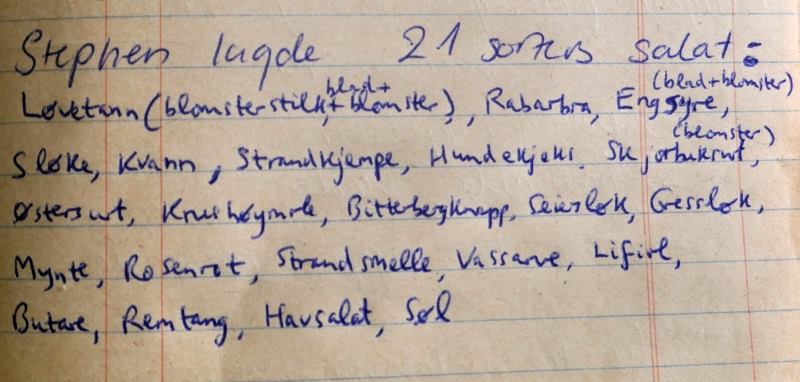
23 species salad made for yesterday’s lunch including seaweed and endemic dandelions… :)
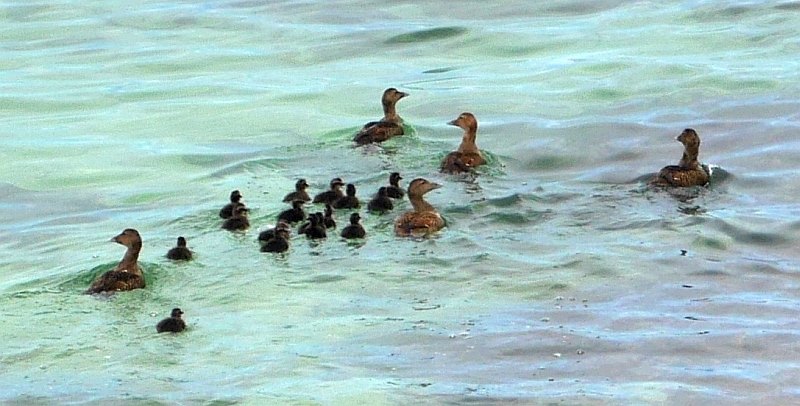
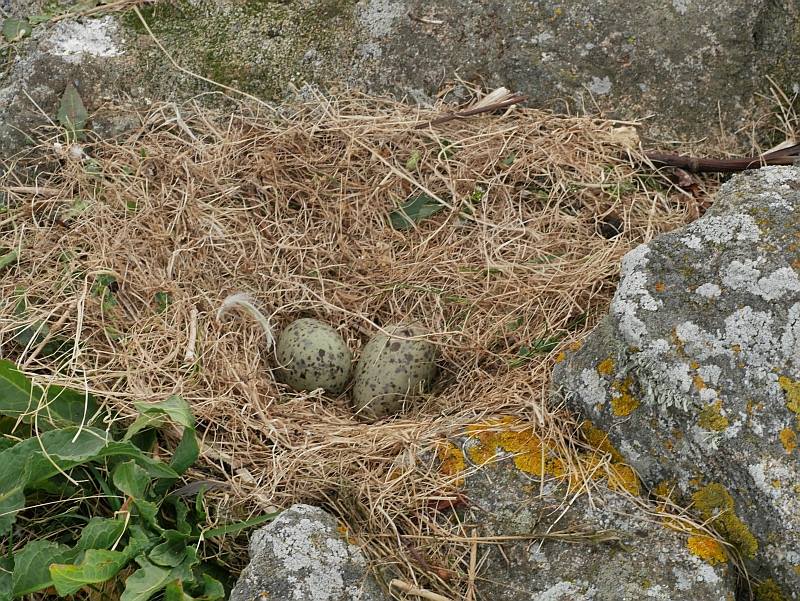
Eider duck / Ærfugl creche
Angelica sylvestris / Sløke roots were very tasty..
Eider / Ærfugl
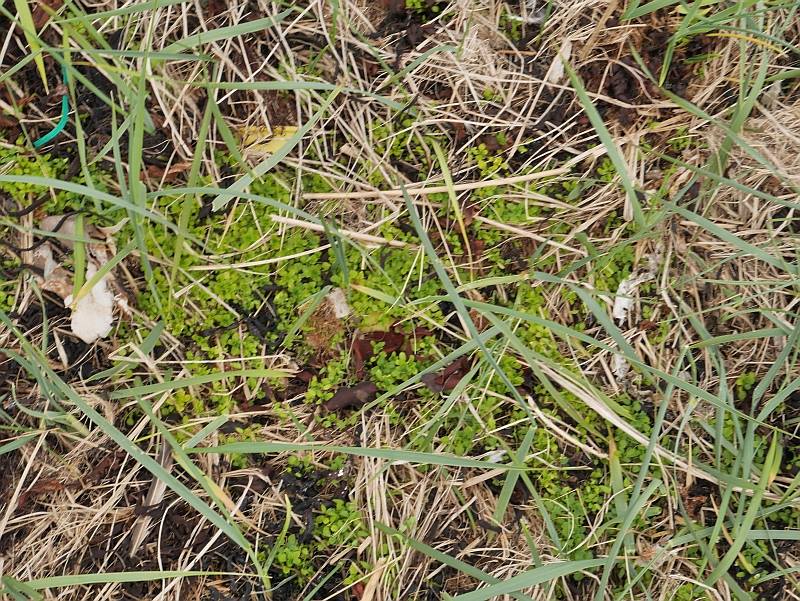
Chickweed / Vassarve sprouts growing on mass just above the washed up seaweed, used in the salad… :)
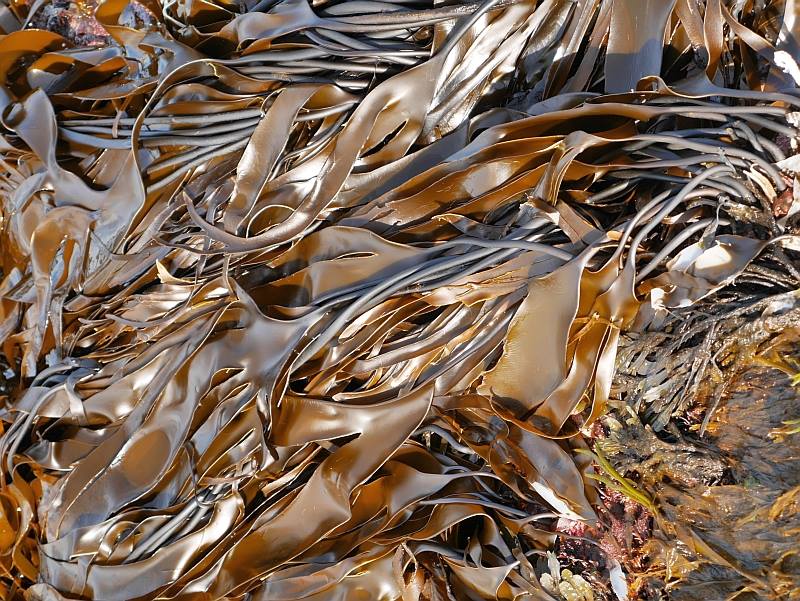
Sukkertare (Sea Belt), Fingertare (Oarweed) and Grisetang (Norwegian Kelp), all edible species…
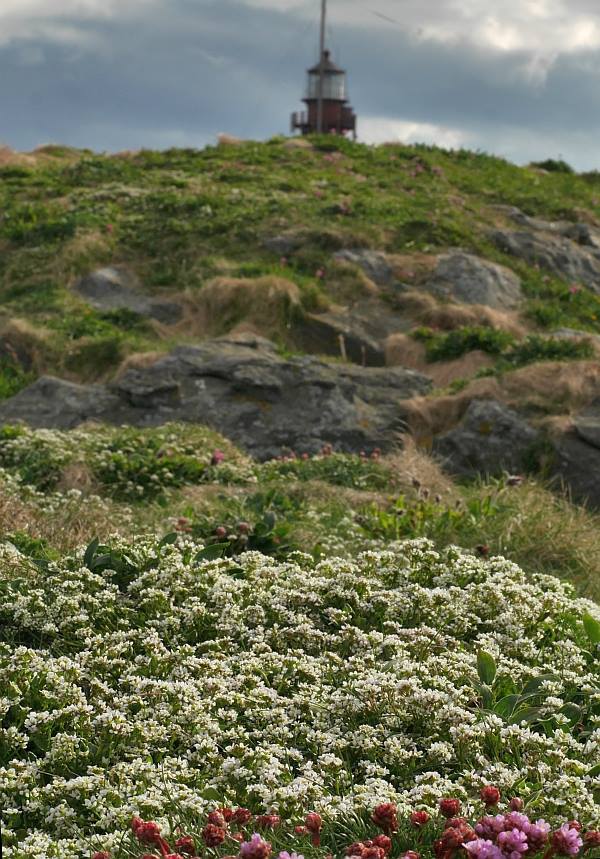
Rhubarb, the only survivor in the old lighthouse keepers garden…Røst Artist In Residence are creating a new garden out here, based on permaculture principles
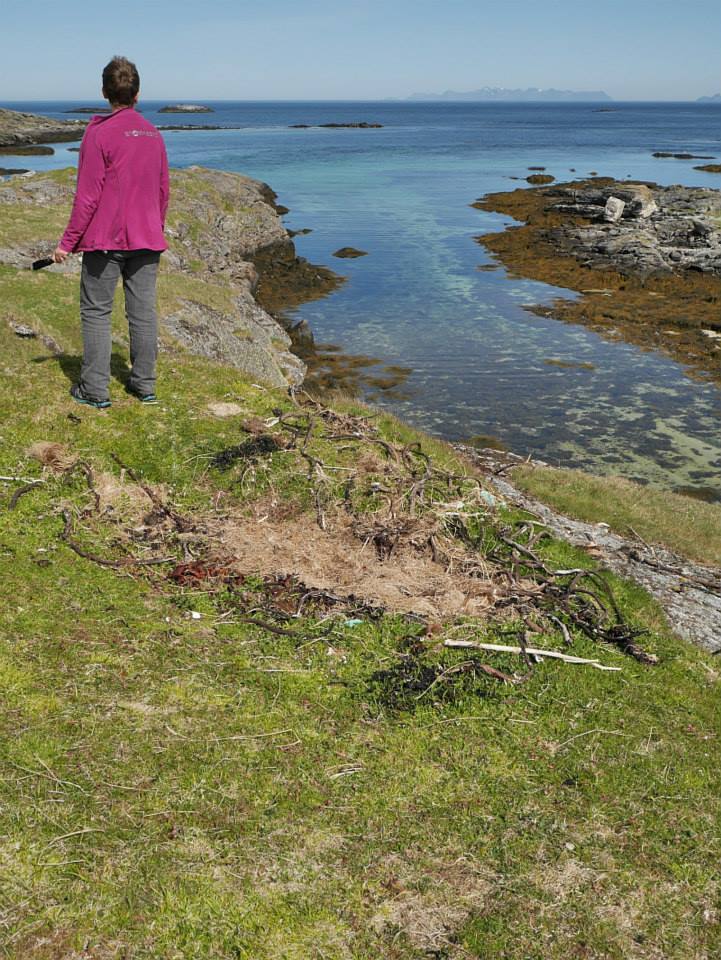
The site of an old Rose garden…..
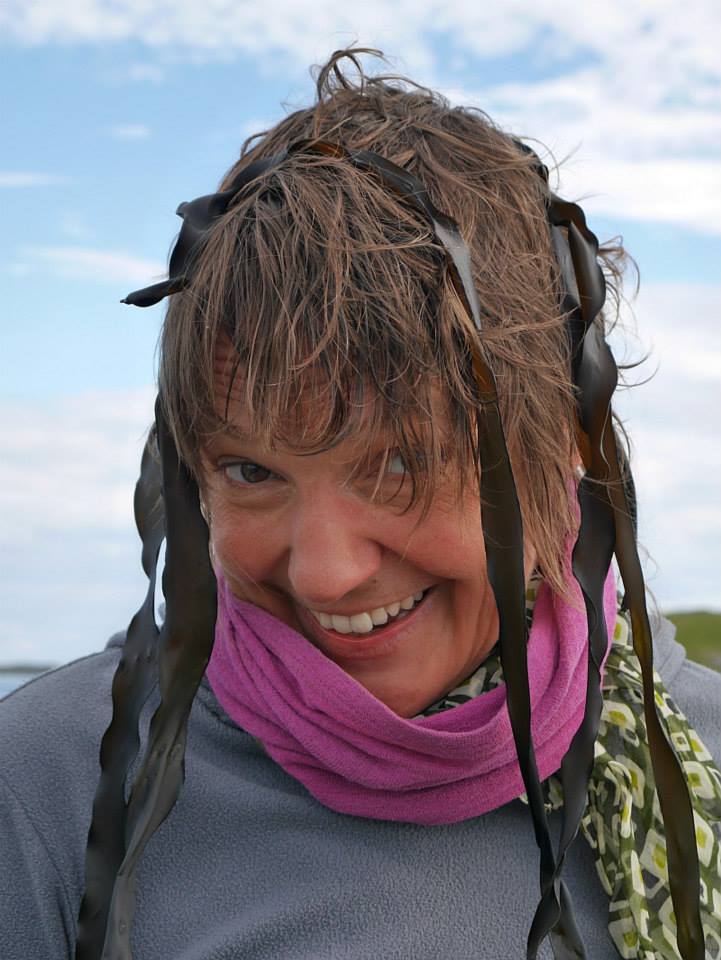
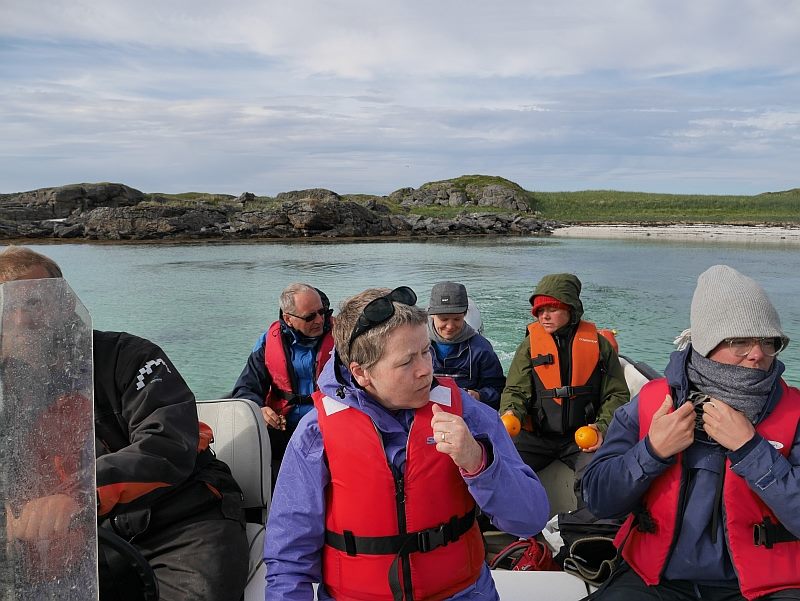
Returning from the seaweed harvest…
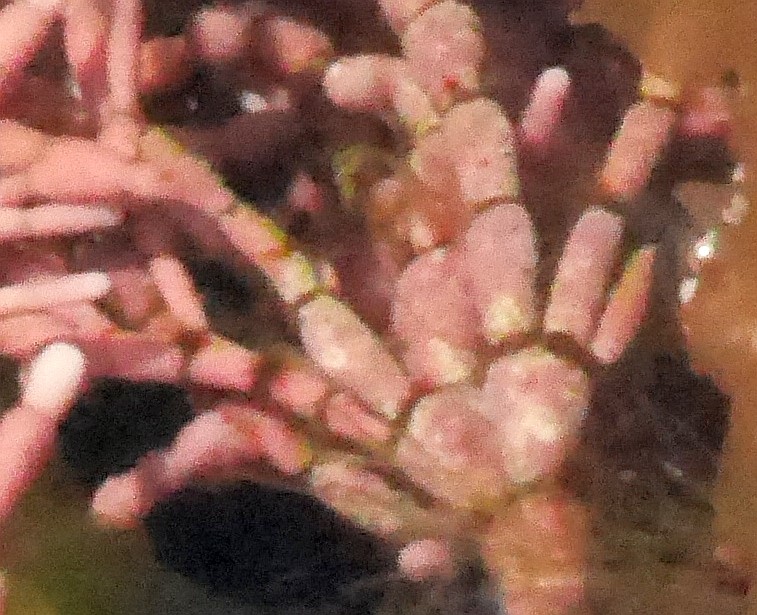
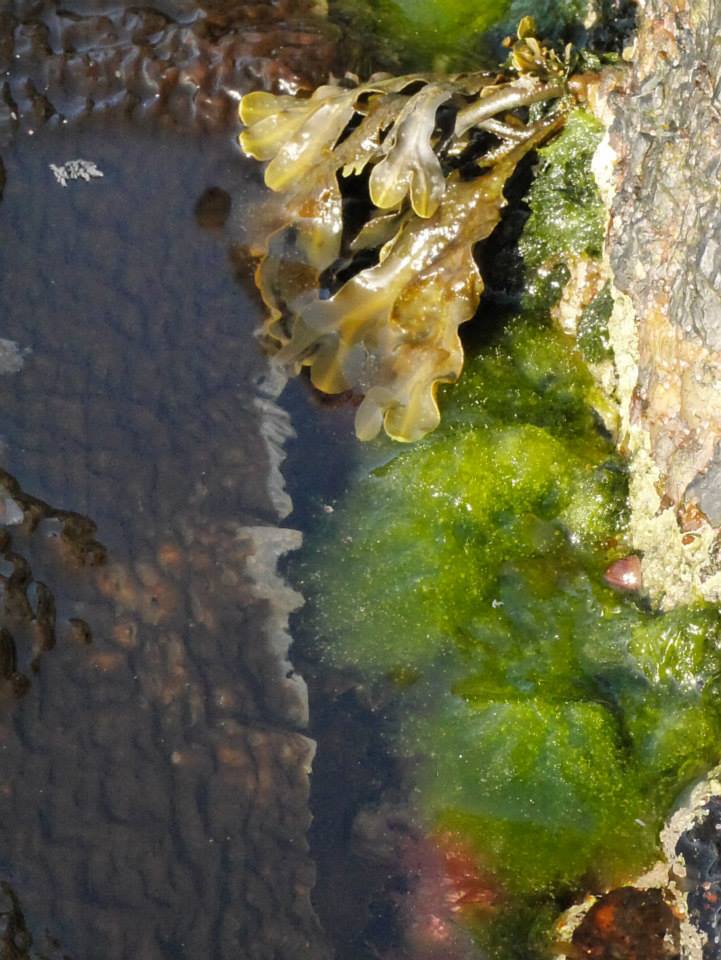
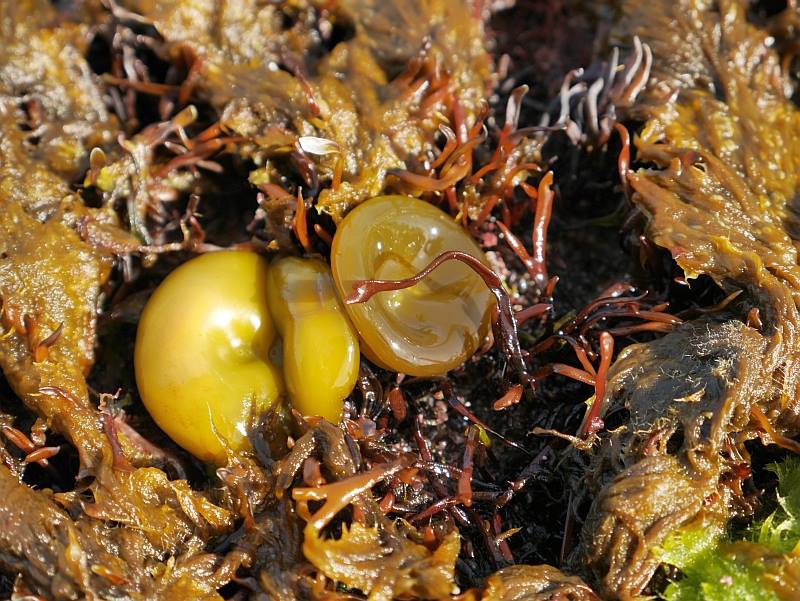
Anyone know what seaweed this is?
Mertensia maritima / Oyster plant / Østersurt
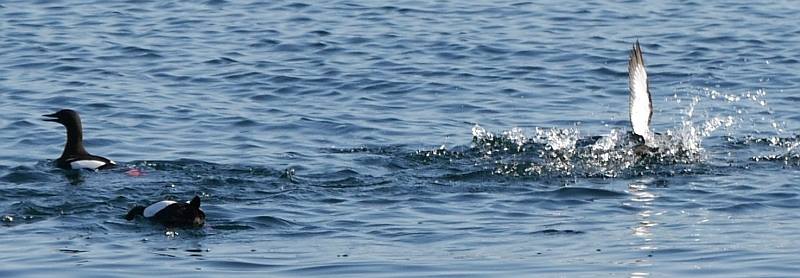
Black Guillemots / Teist
Eider Ducks / Ærfugl
Wood Cranesbill / Skogstorkenebb, the year’s first flowers here
Red Campion / Jonsokblom came in various different colour variants
Great black-backed gulls / Svartbak
Bird’s foot trefoil / tiriltunge
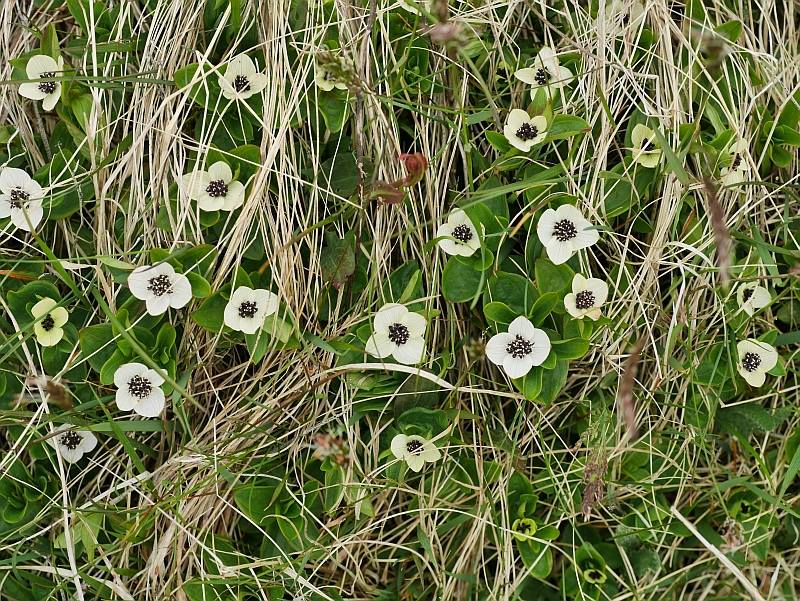
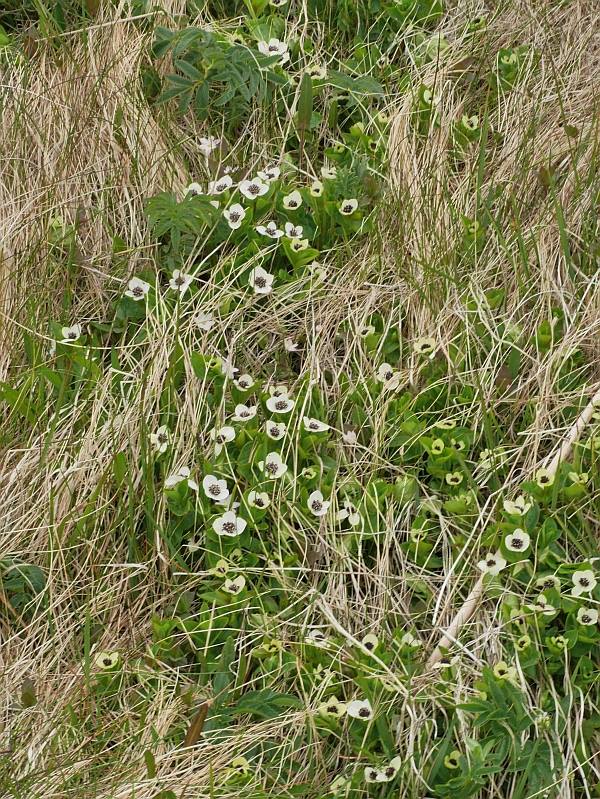
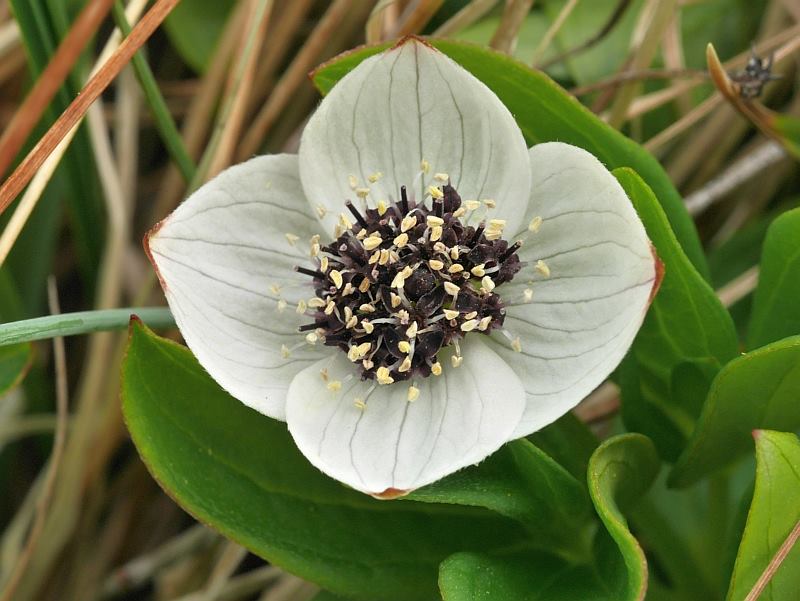
Cornus suecica with white bracts
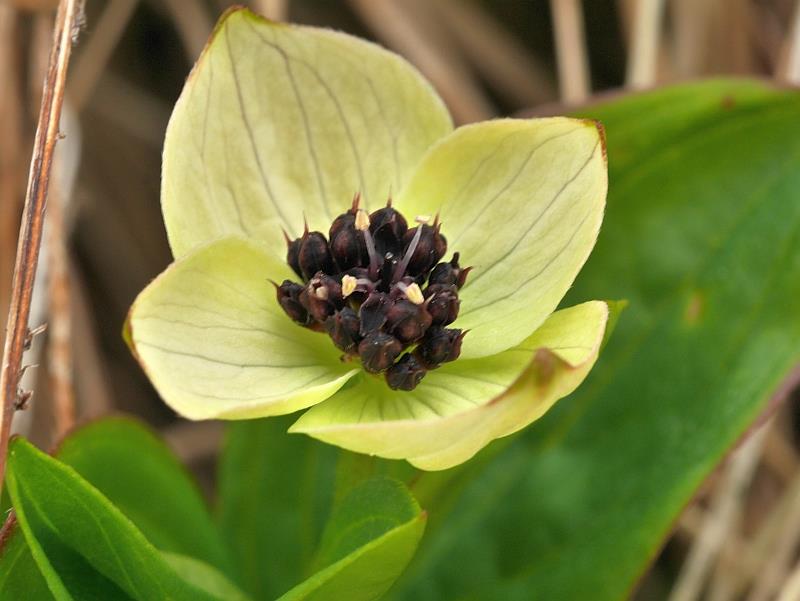
Cornus suecica with yellow bracts
Cow parsley / hundekjeks
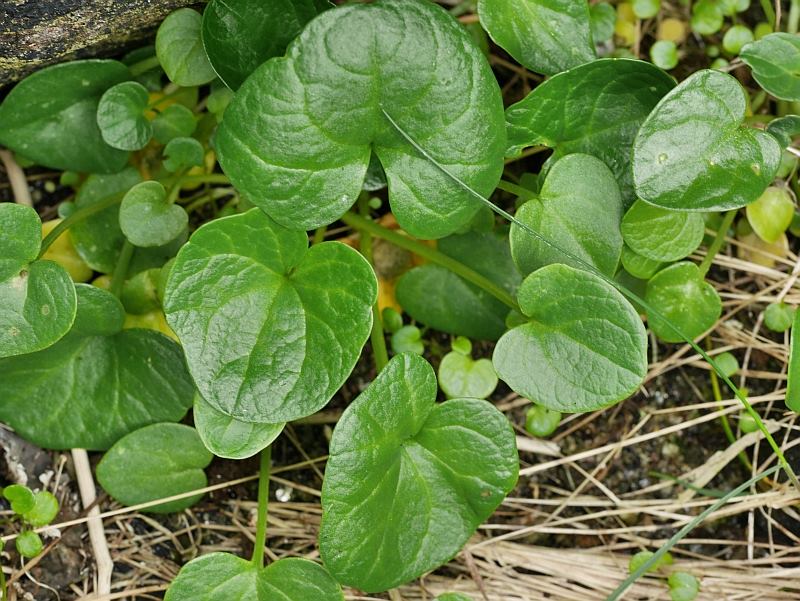
Violetti….
Eagle / Havørn and Hooded Crow / kråke
Our secluded bathing beach…
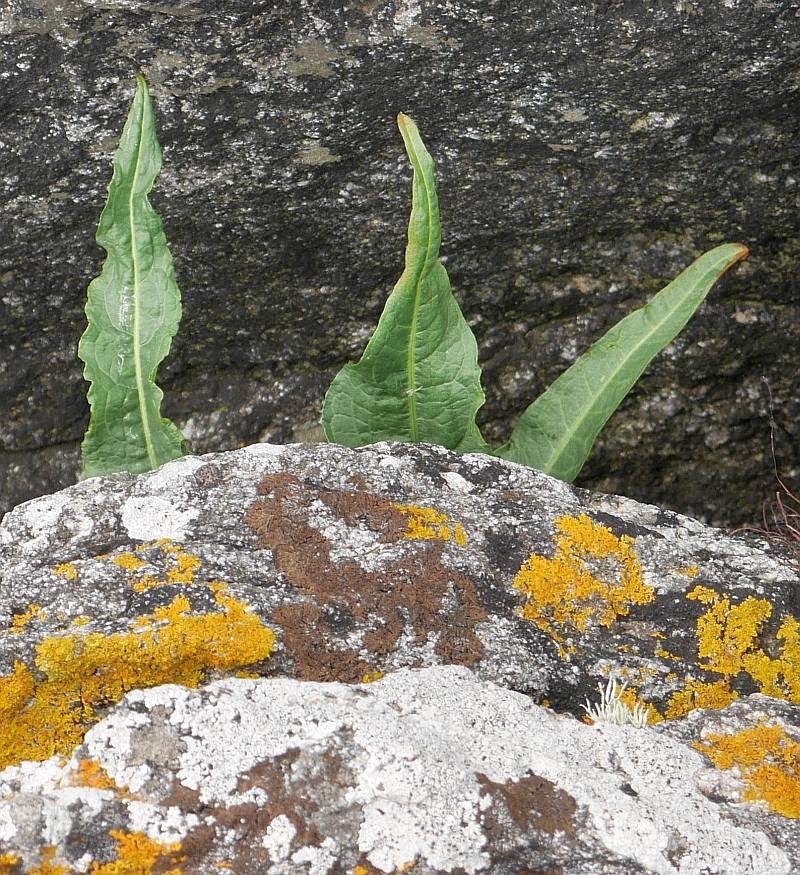
Rumex crispa
Rumex crispa
Sea plantain / strandkjempe
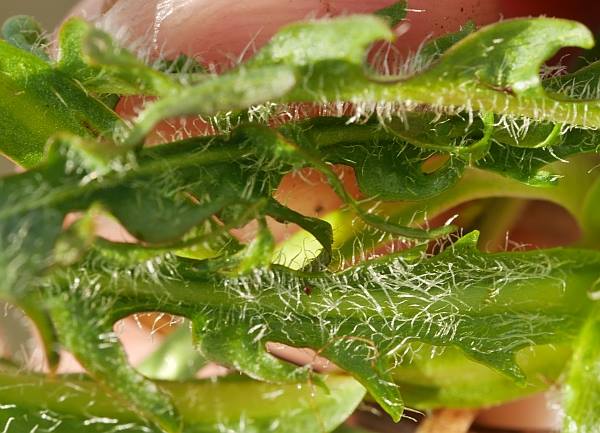
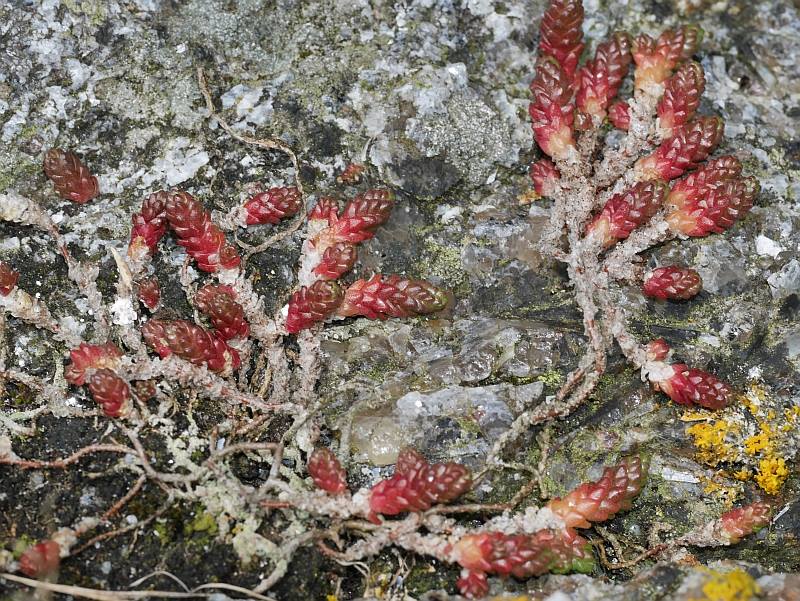
Anyone know what this seaside plant is?
Elin forages scurvy-grass / skjørbuksurt flowers
Foraging scurvy-grass / skjørbuksurt flowers
Foraging scurvy-grass / skjørbuksurt flowers
Norwegian coral
Shellsand beach
Mass germination of chickweed / vassarve on the beach
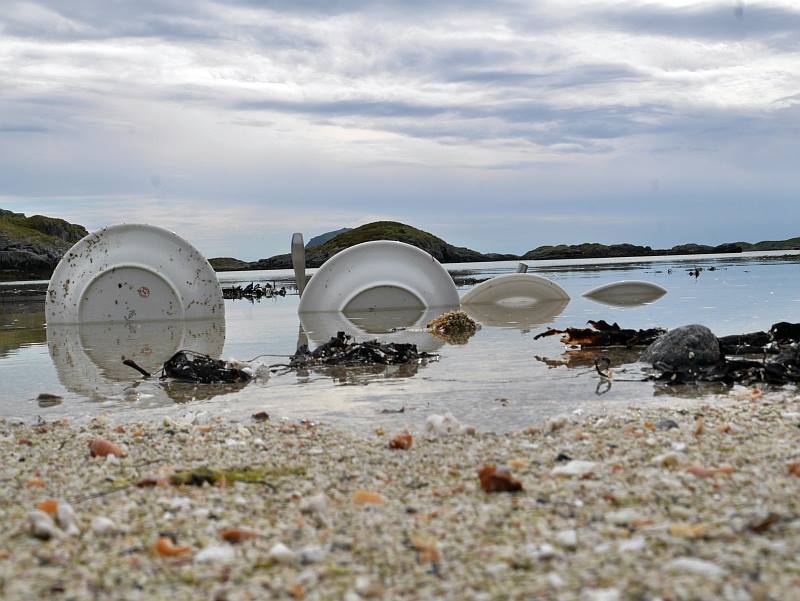
Washing up using tidal power….
Coral and Atriplex spp.
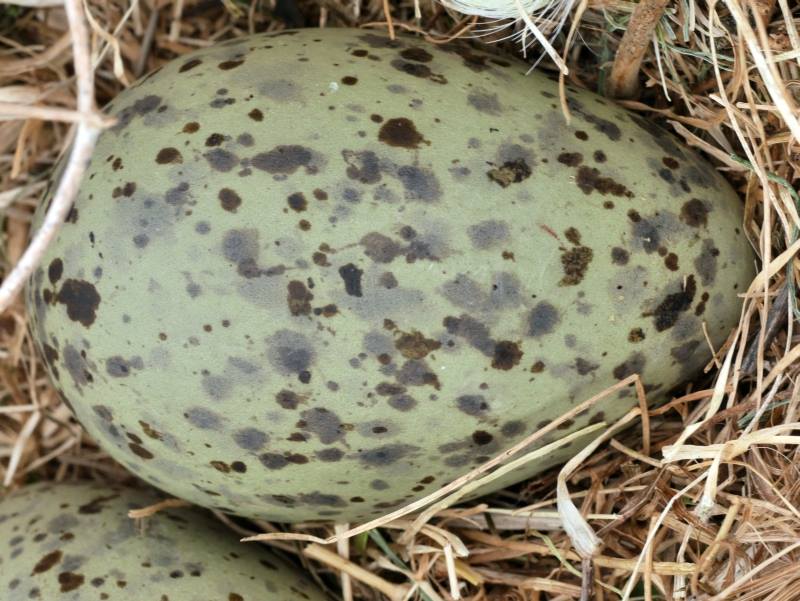
Eiderdown – an eagle / havørn had taken this unlucky bird…
Angelica archangelica
Seaweed washed up high in a winters storm
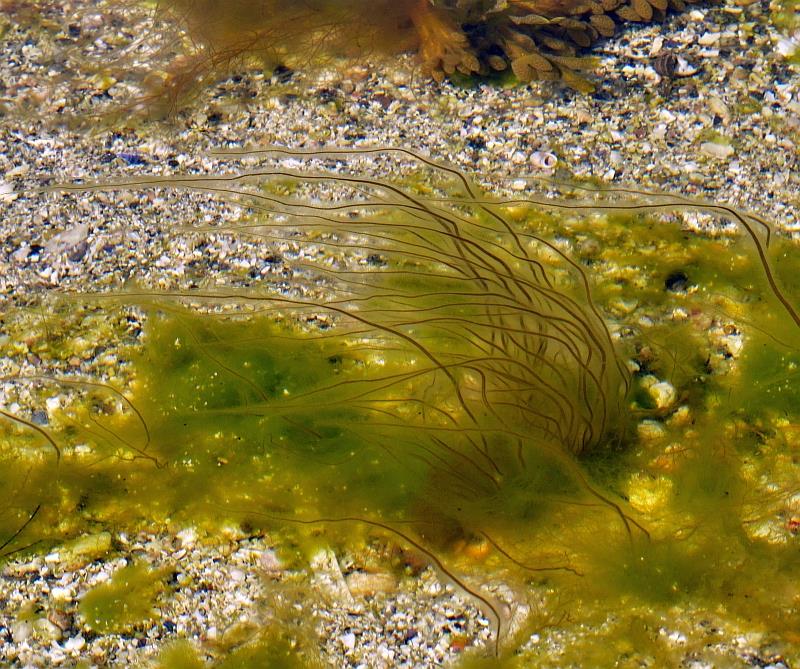
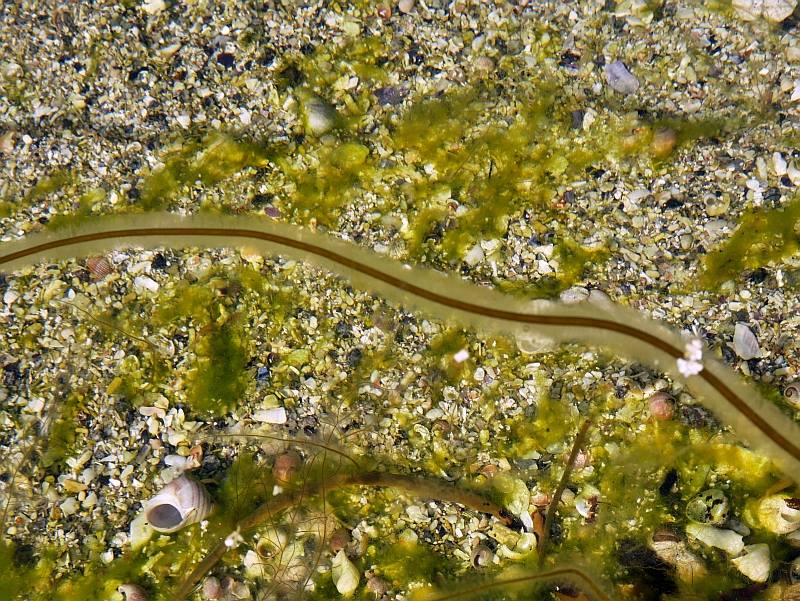
Thongweed, sea thong or sea spaghetti / remtang
Fingertare / Oarweed, one of the species harvested for alginates
Thongweed, sea thong or sea spaghetti / remtang
Fisherwoman
Dabberlocks, badderlocks or winged kelp /butare
Thongweed, sea thong or sea spaghetti / remtang. these structures which fix the seaweed to the substrate are called green sea beans / grønne bønner fra havet and we used them in salad
Greylag geese / grågås, a common breeding bird
Røst
Røst
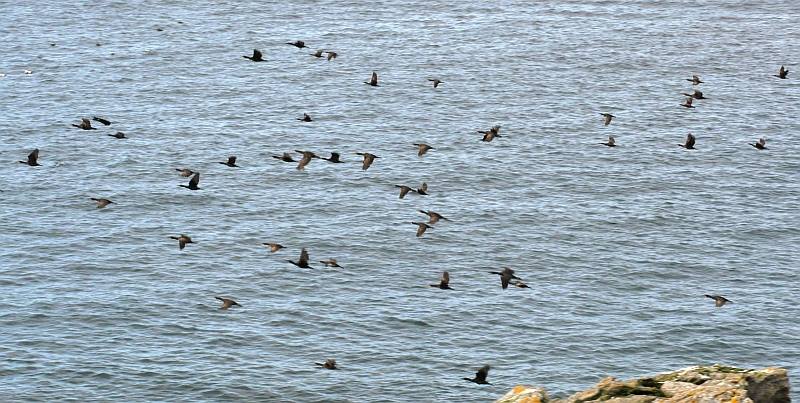
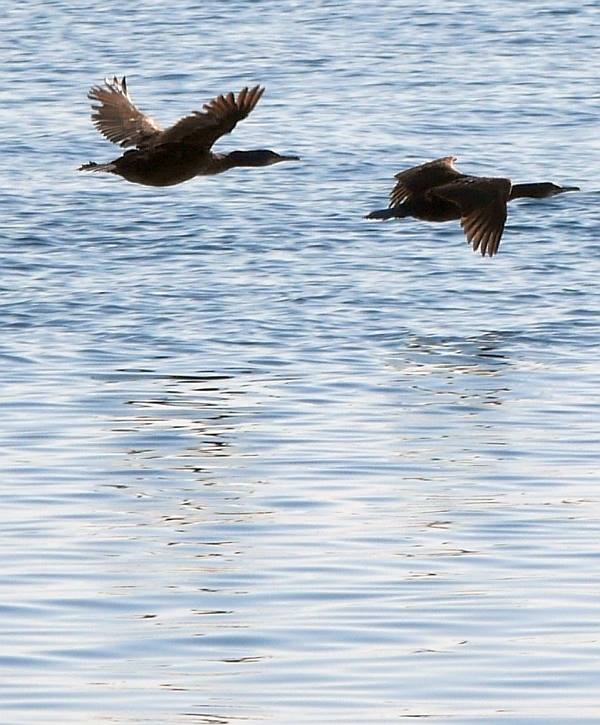
Shags / Toppskarv
The green rectangle in the centre is the sight of an old rose garden…Elin Sunshine Vister knows the details…
I wonder what the circular green area in the centre of the picture was?