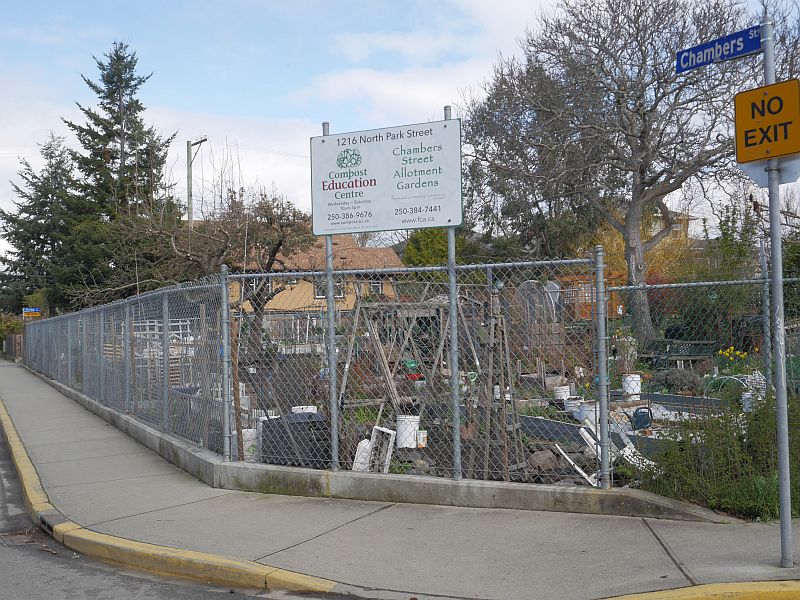
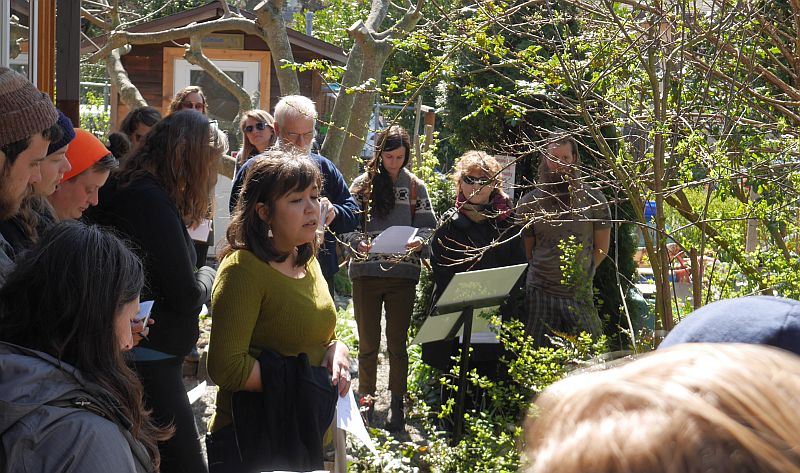
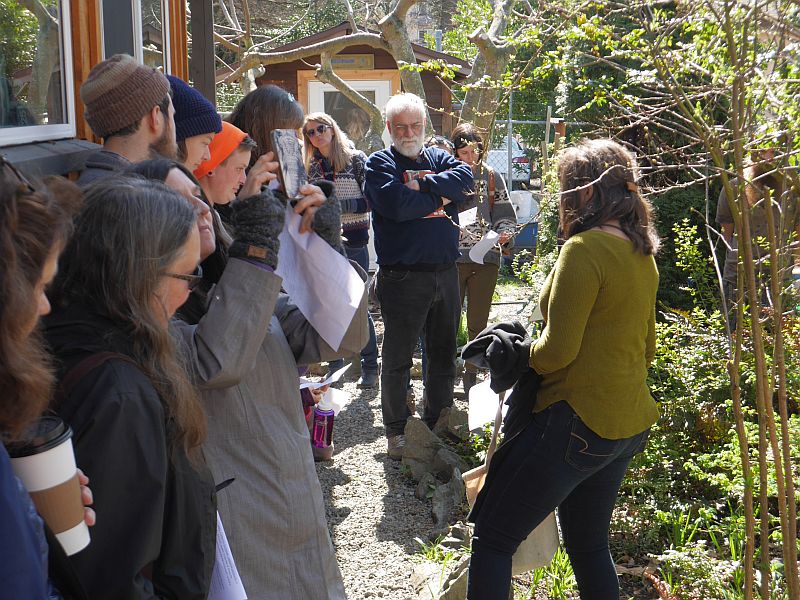
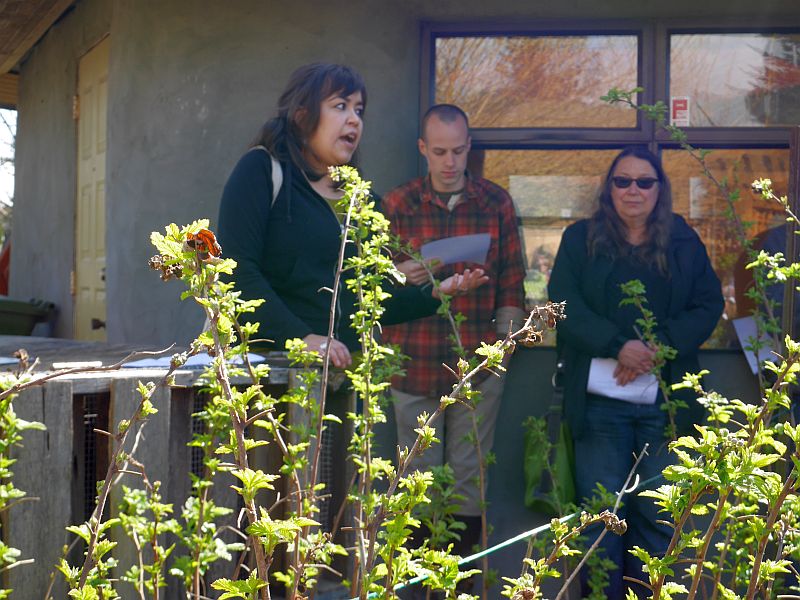
On 1st April 2017, I visited the Compost Education Centre in Victoria BC, Canada, where I’d enrolled on an indigenous plant walk around the grounds, lead by Ashley Cooper (Tsartlip First Nation) and is working to revitalize important cultural knowledge and practices in her community and beyond.
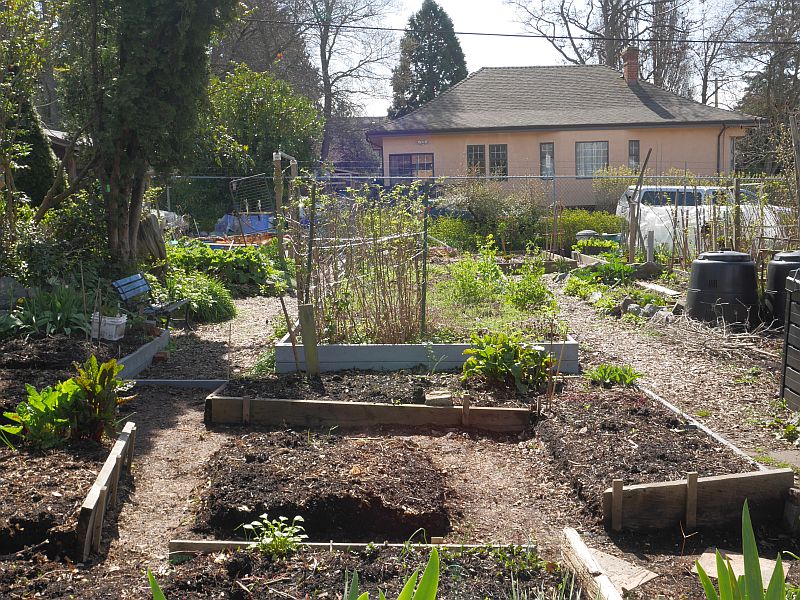
The centre has a small garden, but it is packed with many traditional and indigenous useful plants. It is a non-profit organization providing courses and workshops on organic gardening and composting in the Greater Victoria area (see https://www.compost.bc.ca). Here are a few pictures and a couple of videos of Ashley talking about camas and stinging nettle!
The coastal peoples harvested and semi-cultivated the wild stands of camas, both Great camas (Camassia leichtlinii) which was commonest around Victoria and common camas (C. quamash). In Victoria, Beacon Hill (see separate post) was an important site as were small offshore islands, where soils weren’t deep over rock and hence easier to harvest (my garden is perfect in that respect!). The beds were divided into individual plots maintained over the generations by different families.
Camas is said to have often been the only source of carbohydrate in the past for these coastal peoples who mostly ate fish and meat. Each year, the plots were cleared of stones and were burned to maintain the meadows. The bulbs were steamed in earth pits to convert the inulin to easier digested carbohydrates.
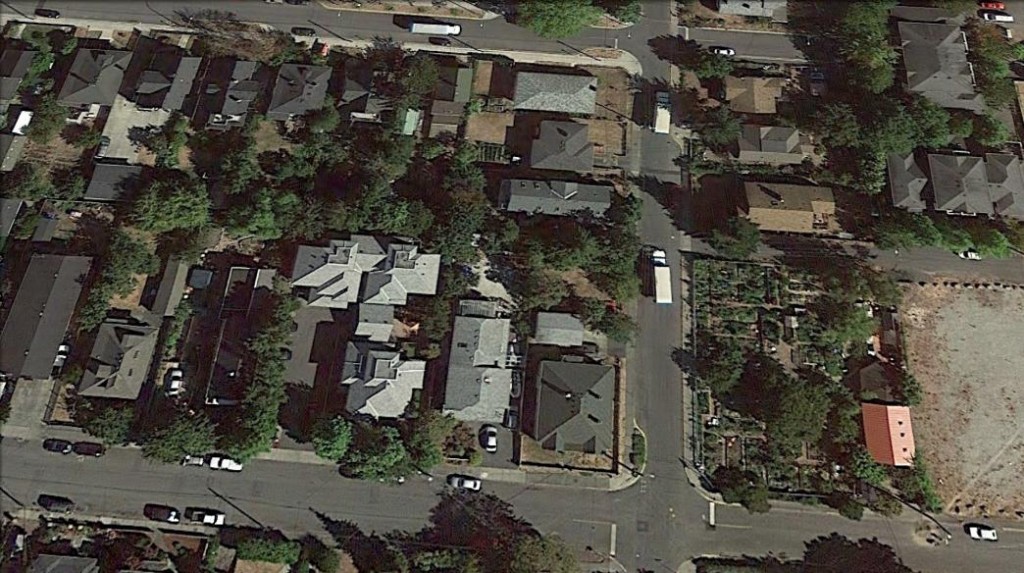
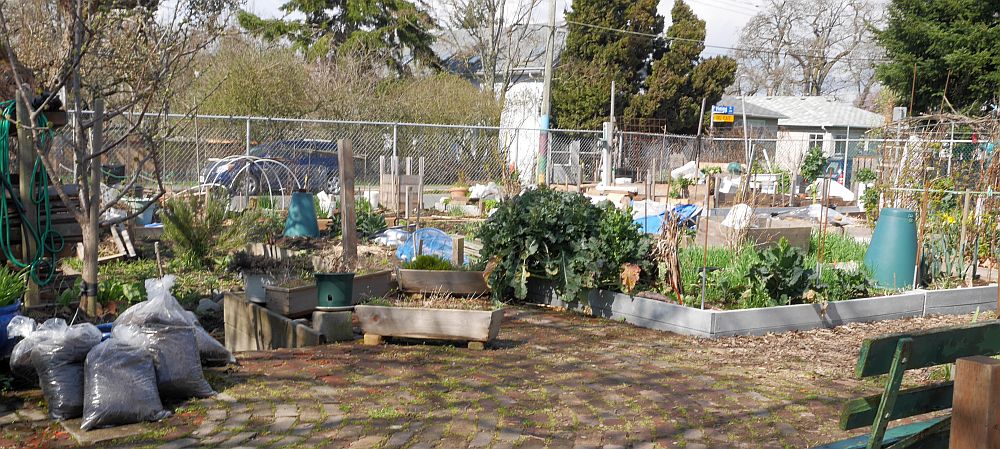
The Compost Education Centre is on the bottom right
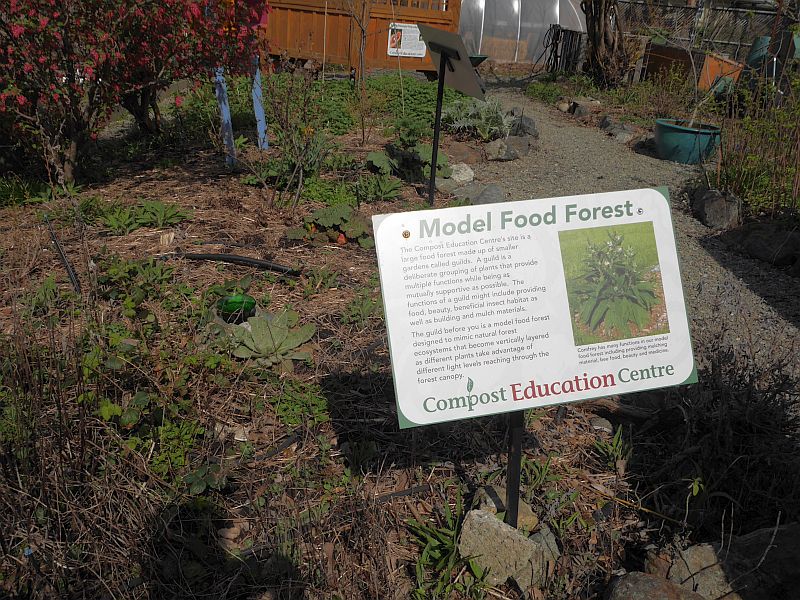
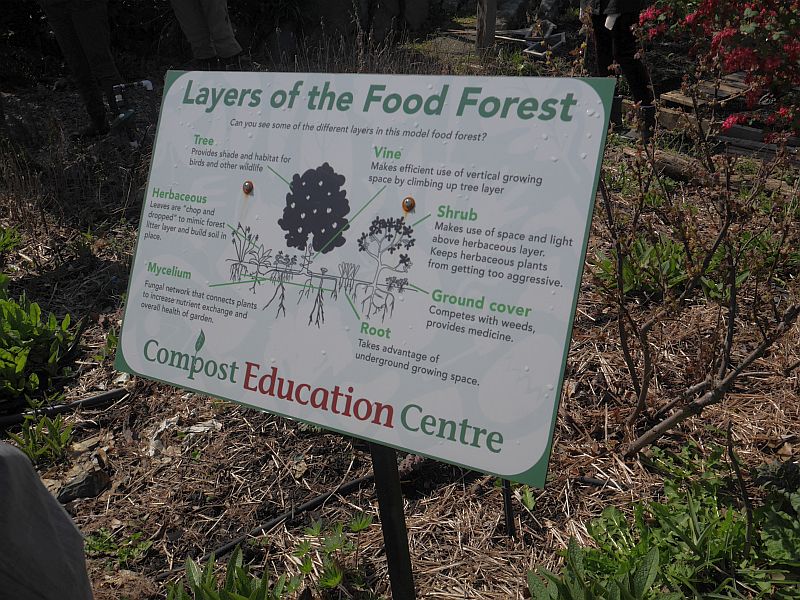
The whole area is designed as a Permaculture Food Forest
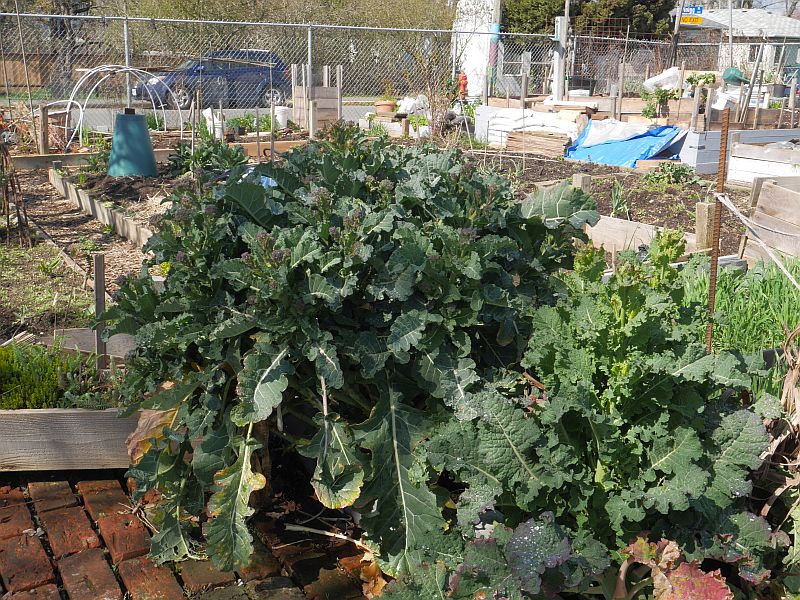
A large purple sprouting broccoli
Native Ribes sanguineum
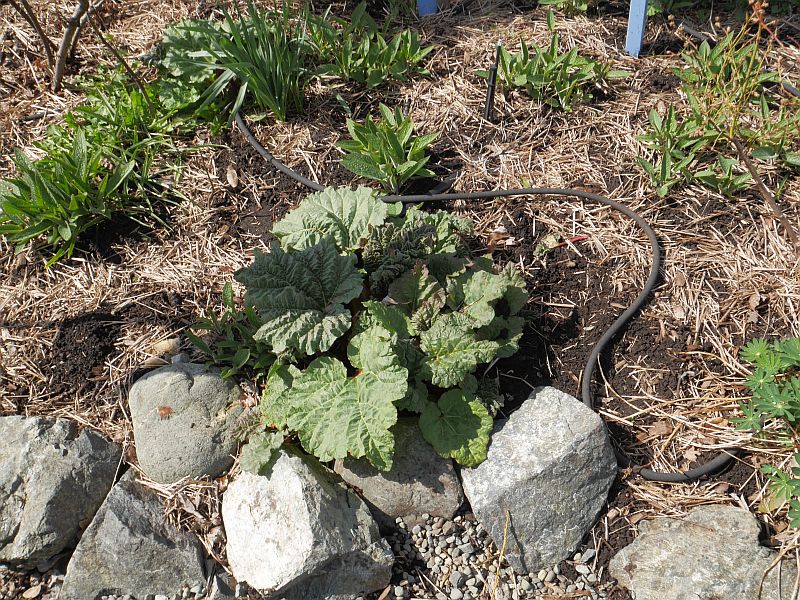
Rhubarb and comfrey
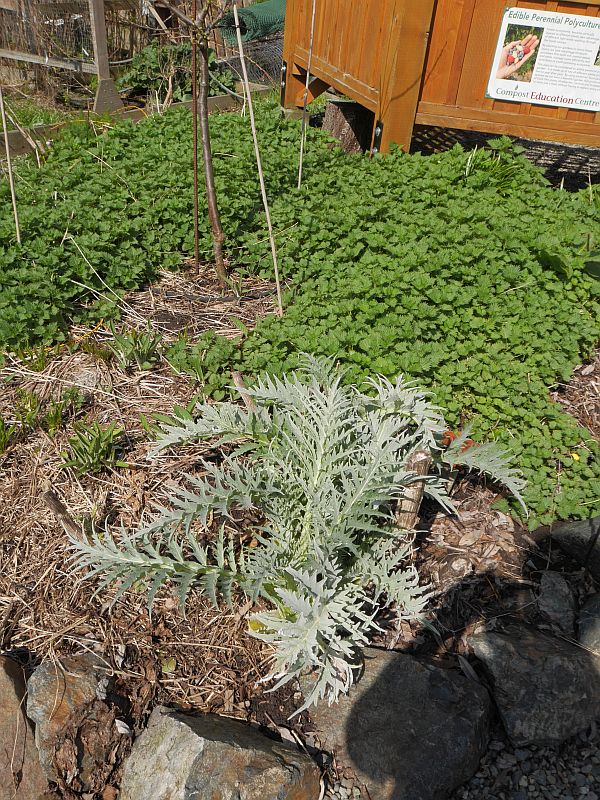
Nettles and artichoke
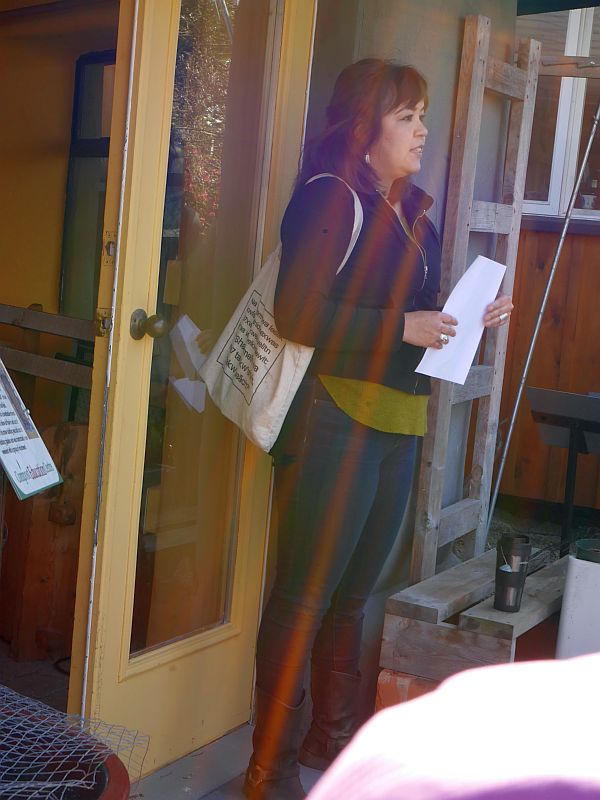
Ashley Cooper
Ashley talked about camas (bottom). I noticed an emerging Lomatium nudicaule (known as wild parsley). Ashley told us that it is an important medicinal plant.
I was lucky to pick up a signed copy of well known ethnobotanist Nancy Turner’s book “Food Plants of Coastal First People”
…and also the book “Saanich Ethnobotany” which she co-authored with Richard Hebda…here one of the pages about stinging nettle, which Ashley tells about in one of the videos!
My first day in Victoria and Vancouver Island, BC was a mixed one. As this was probably my only chance I decided to go to the Butchart Gardens, a one hour bus ride outside of Victoria, and rated by some as one of the finest gardens in the world. I didn’t have high expectations, but was disappointed that there were almost no plant labels (apart from the rose collection) and otherwise very few native plants as far as I could see…
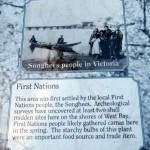
The botanical highlight was walking back to my lovely Airbnb room along the 30 min long Songhees coastal path. A interpretive sign informed of the rare Garry oak (Quercus garryana) ecosystem in which both camas (Camassia), an important Native American food plant, and Fawn lily (Erythronium oregonum) grew alongside Dodecatheon (shooting stars)! A couple of minutes later I saw many fawn lilies in the woods and one emerging flower stalk of Camassia (both leichtlinii and quamash grow here)!
Almost exactly a year ago, I was on the otherside of the Pacific witnessing the mass flowering of katakuri (Erythronium japonicum) in Japan: http://www.edimentals.com/blog/?p=9121
I’m staying this week in an Airbnb in the Esquimalt district of Victoria BC
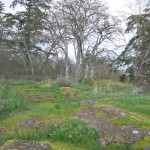
Remnant Garry Oak woodland in Victoria with Sea Blush (Plectritis), Shooting stars (Dodecatheon), Fawn lilies (Erythronium), Camas (Camassia), Sea blush (Sisyrnchium) and satin flower (Olsynium douglasii)
The Songhee First People and Camas
Garry oaks and masses of camas!
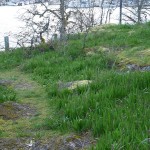
Camas almost in flower
Camas
Camas
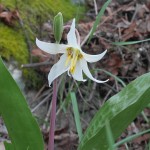
…and then I saw this beauty growing by the side of the path, Erythronium oregonum
…and there were many more in the woods!
Erythronium oregonum
Erythronium oregonum
Erythronium oregonum…
…and I’d found this great little bookshop in Victoria
…and 4 books by ethnobotanist Nancy Turner were soon in my possession together with a few others! Turner shows little evidence of fawn lily having been used my native peoples and they may be slightly poisonous…
Perennial vegetables, Edimentals (plants that are edible and ornamental) and other goings on in The Edible Garden