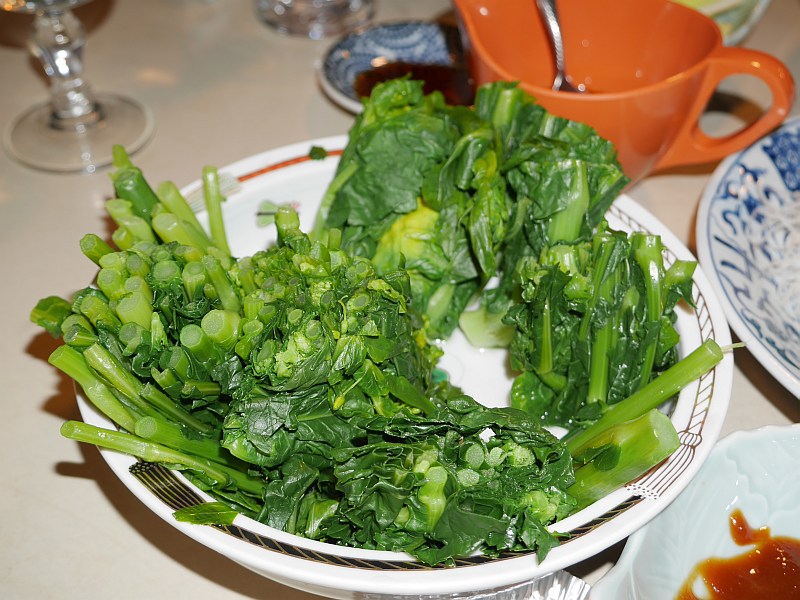
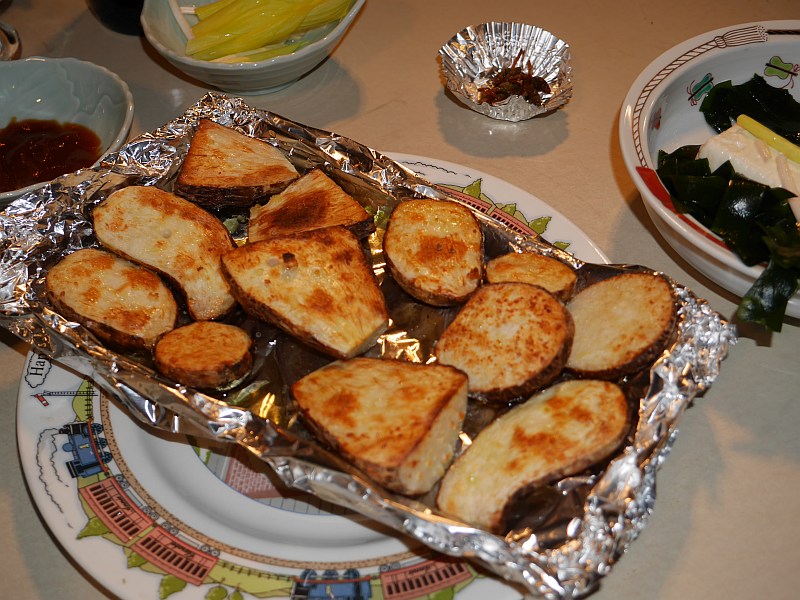
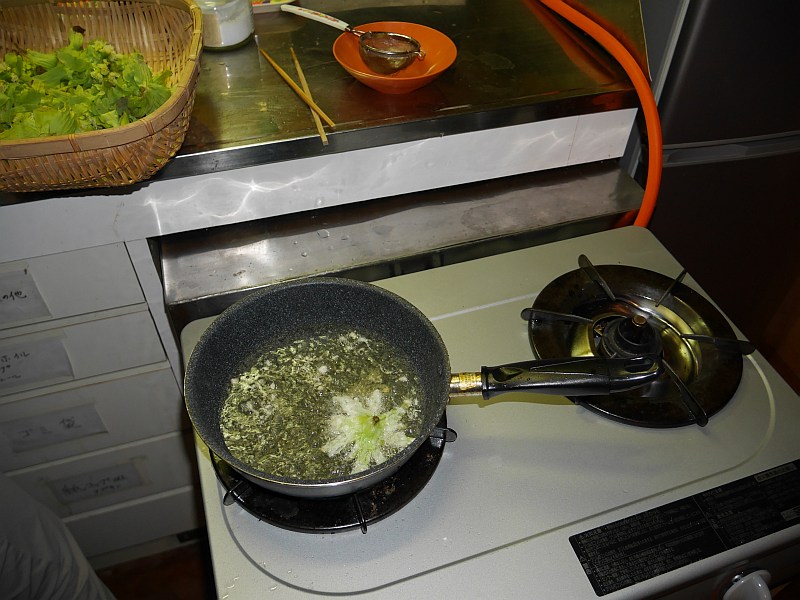
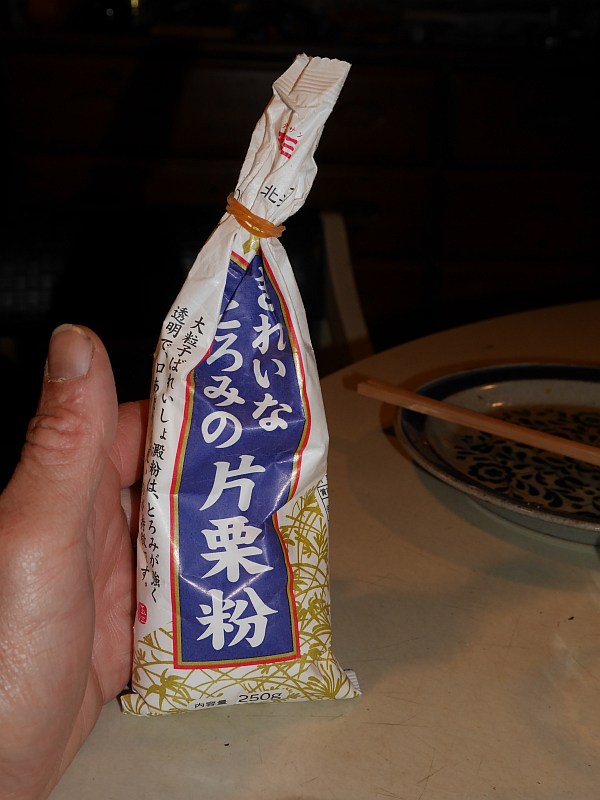
The article below, published in Grobladet in 2006 is the story (in Norwegian) of how one of the commonest spring flowers in the Mediterranean countries became one of the most important vegetables in Japan, yet was completely forgotten at home…this is the story of shungiku, the edible-leaved Chrysanthemum, Glebionis coronaria.
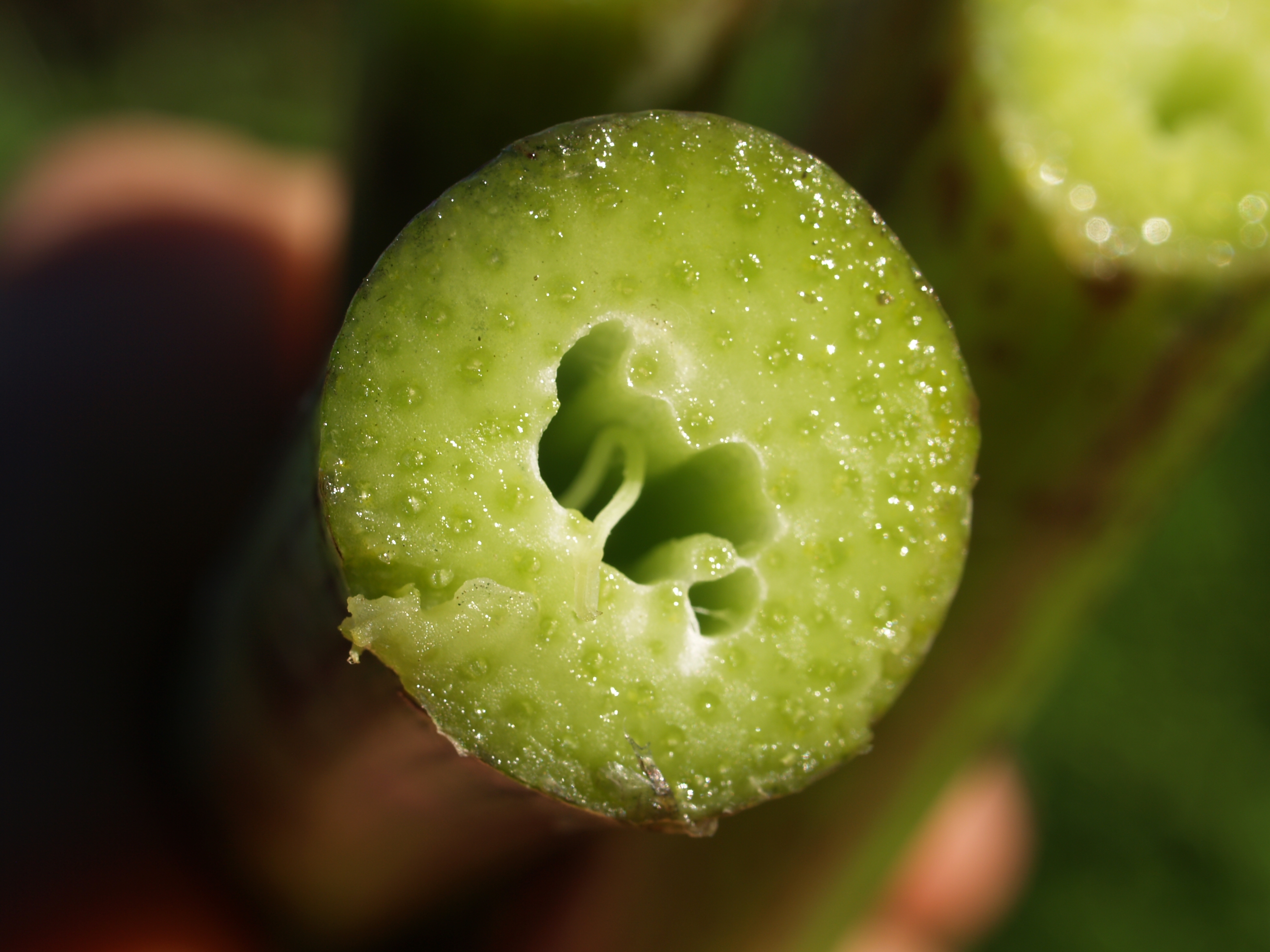
The genus Angelica has about 80 species distributed throughout the Northern hemisphere, of which around 25 are found in Japan. Around the world various Angelica species have been used traditionally for food and medicine, notably the Europe to Himalayas species Angelica archangelica, used since ancient times in various ways and the most well-known wild edible in Norway, where we have the domesticated form Vossakvann (see my book) with filled stems:
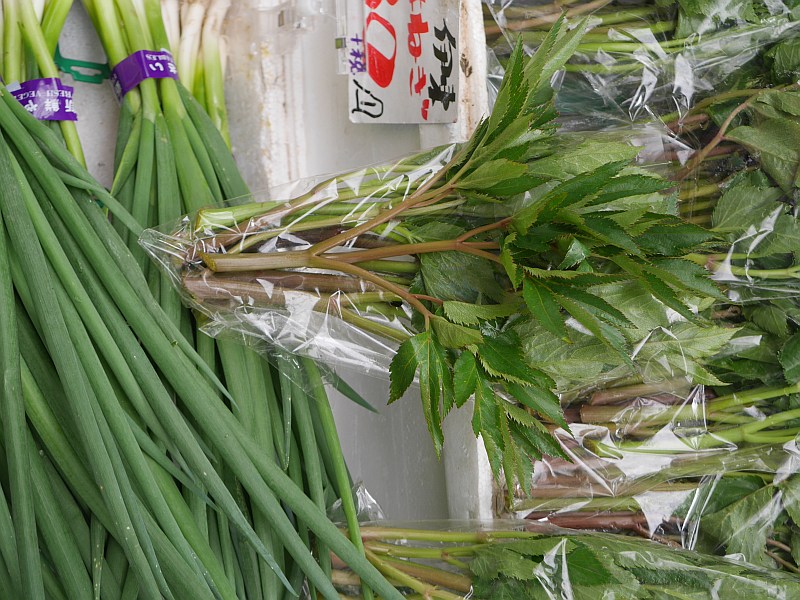
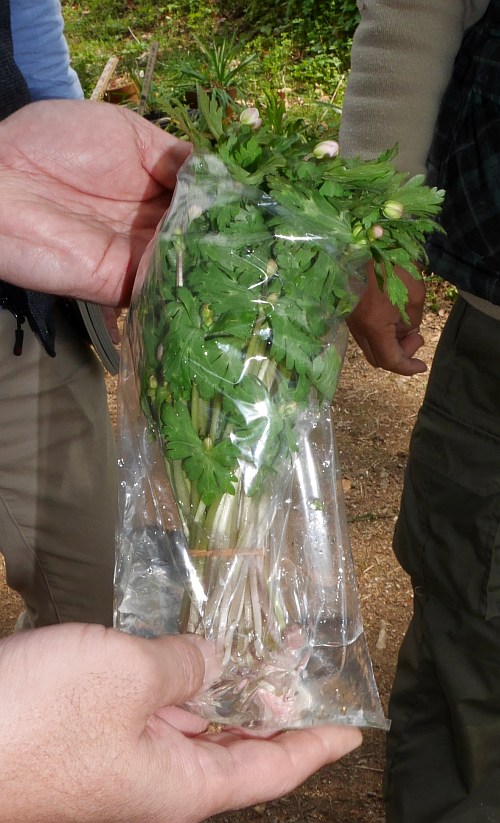
In Japan, no less than 11 species are covered in my most comprehensive Japanese foraging book, Ikozo Hashimoto’s Edible Wild Plants Encyclopedia (in Japanese). On my study trip to Japan in late March / early April 2016, we spent a few days on the scenic Izu Peninsula, a couple of hours from Tokyo. Here we found the best known Japanese species, Angelica keiskei (ashitaba) for sale in a supermarket (picture).
I wrote about my first encounter with this species here: http://www.edimentals.com/blog/?page_id=1385
(the Japanese name ashitaba means “tomorrow’s leaves”, referring to the plants very quick response to being damaged)
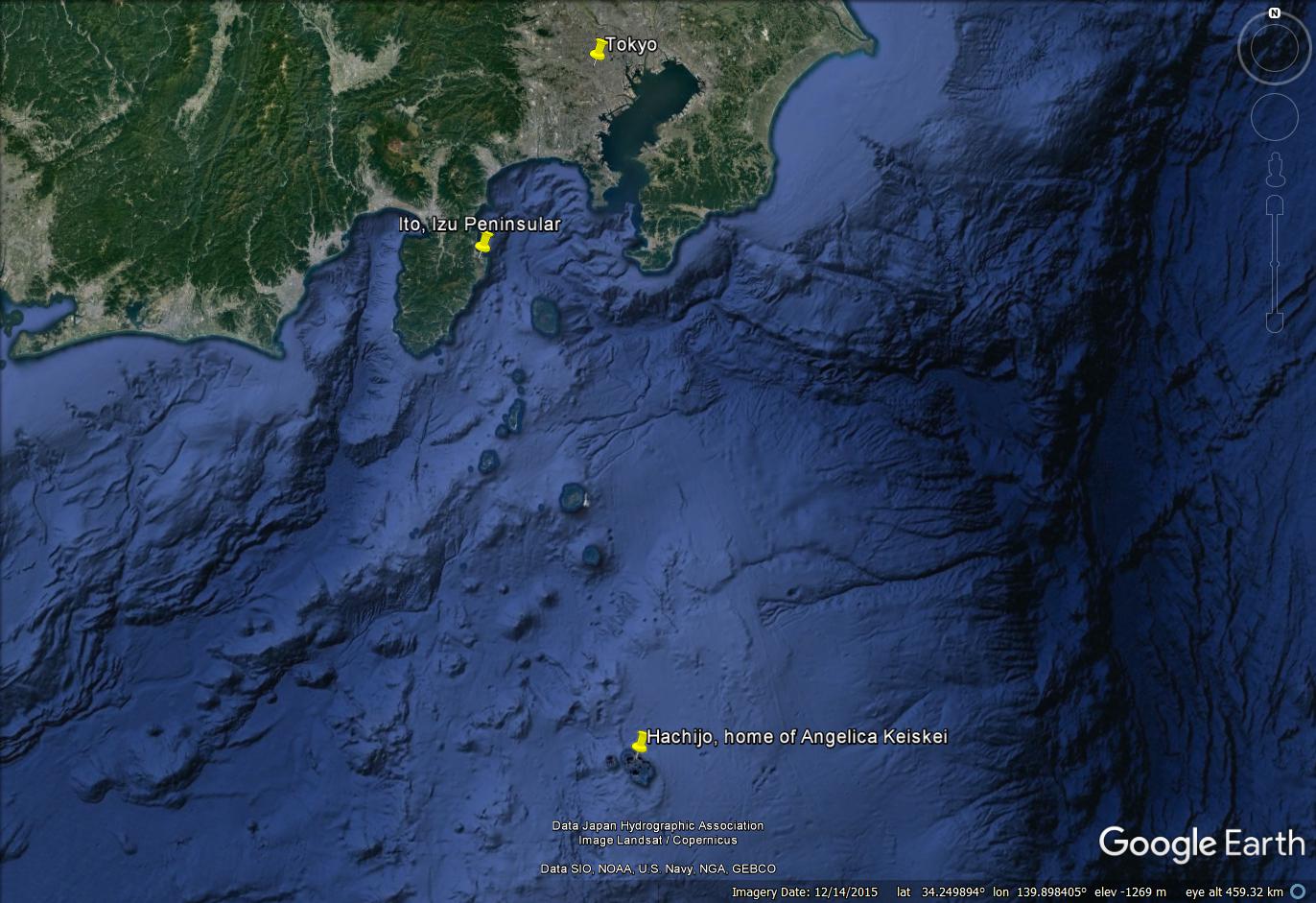
I wasn’t aware of it at the time, but ashitaba is endemic to the island Hachijō-jima (jima means island), one of a string of volcanic islands in the Pacific roughly 190 km south of Izu. Apart from Hachijō, ashitaba is cultivated on some of the other islands, including Izu Ōshima, Mikura-jima, Nii-jima and To-shima. It is also grown on the mainland (Honshū). Hachijo has a humid subtropical climate with very warm summers and mild winters, so it’s not surprising it didn’t overwinter in my garden and grew only slowly through the summer (more like winter in Hachijo!). It is an important plant for the local cuisine on the island where both the leaf and flower stalks, flower buds and roots are used in many types of dish from soba (buckwheat pasta), tempura, the alcoholic shōchū, as well as tea, cakes, konjac and even ice cream and is promoted for its health giving properties. In Izu oshima, it is fried in Camellia tea oil, an oil with a sweet, herbal aroma, cold-pressed from the seeds of Camellia oleifera. It is relatively strong tasting and is therefore mostly eaten in oily dishes like tempura or diluted for a milder taste. A nutrient analysis of ashitaba can be found here: http://www.mext.go.jp/b_menu/shingi/gijyutu/gijyutu3/toushin/05031802/002/006.pdf
Interestingly, the variety grown on Mikura-jima is said to be the best as it is less bitter. This variety has “thick” stems, which calls to mind our own thick stemmed Vossakvann variety which is also milder tasting! Varieties on other islands are said to be distinct, having coloured stems.
The most common species we saw in southern Honshu was shiny leaved Angelica japonica (hamaudo, meaning Udo growing on the beach). Many consider it to be “poisonous” (which probably signifies that it is stronger tasting), but it certainly is used in similar ways to ashitaba and we even encountered a local foraging what was probably this species on Izu (see the film at http://www.edimentals.com/blog/?p=9672).
More information can be found in the captions below, which includes pictures of other Angelica species seen in botanical gardens in Kyoto and Tokyo and even ashitaba being grown as a house plant in the mountains near Nagano. My friend Andrew McMilllion in Southern Norway has discovered this wonderful plant and is growing it indoors (in flower as I write this in mid-January).
Thanks to Tei Kobayashi for showing me around on the visit to Nagano and Ken Minatoya-Yasuda for translating some of the text in my foraging book!
My first Japanese encounter with Angelica was in the Kyoto Botanical Gardens and it was fittingly Angelica japonica, a large shiny leaved species often found on beaches on the island Honshu.
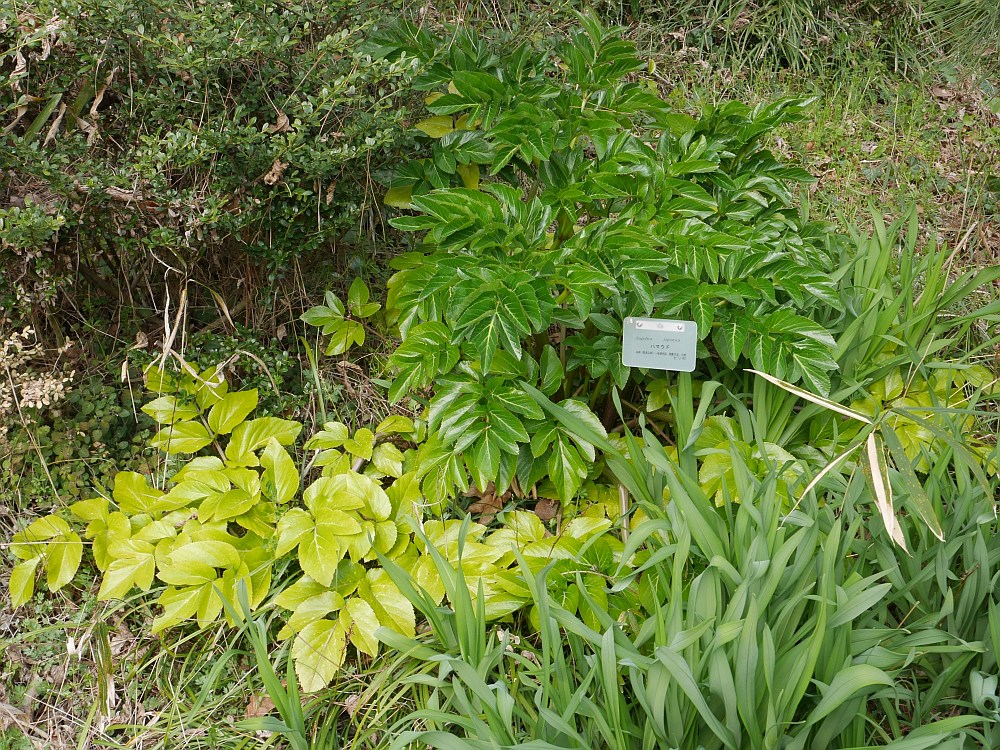
The Tokyo Metropolitan Medicinal Garden, a hidden little known gem for the edimentals lover, a short journey by train from central Tokyo and herein was a great collection of Angelicas!
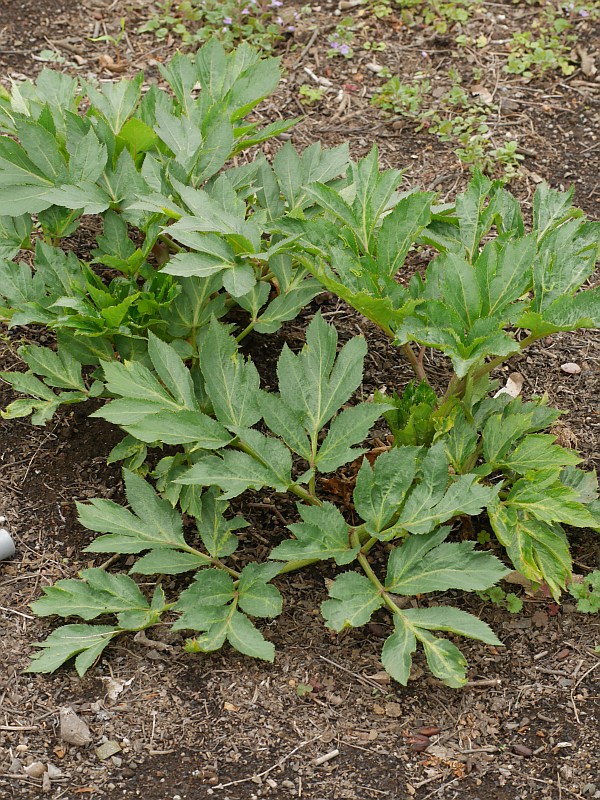
Probably the best known species outside of Japan is Ashitaba (Angelica keiskei), almost unknown in Europe until recently; see my account of meeting this plant in 2004 here http://www.edimentals.com/blog/?page_id=1385 (in the Tokyo Metropolitan Medicinal Plant Garden)
Angelica keiskei with its characteristic yellow plant juice
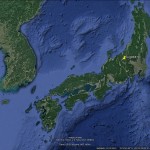
The location of the island Hachijo where Angelica keiskei originates (endemic), relative to Ito on the Izu peninsular where we found it in a supermarket (next picture)! Hachijo is one of a chain of islands off the mainland. Ashitaba has been domesticated on that island as well as several of the other islands: Izu Ōshima, Mikura-jima, Nii-jima, To-shima as well in some places on the mainland!
Angelica keiskei in a supermarket on the Izu Peninsula!
In the Tokyo Metropolitan Medicinal Plant Garden
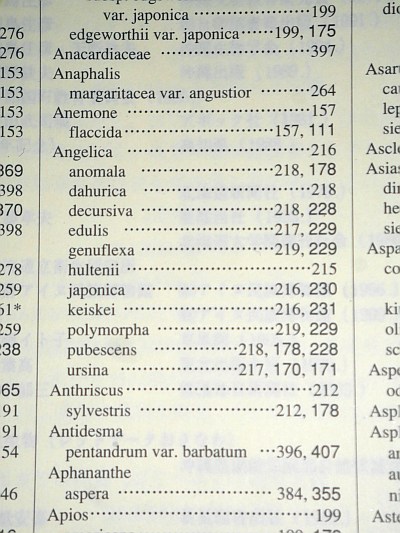
My comprehensive Japanese foraging book lists 11 species (Ikozo Hashimoto’s 2007 Wild edible plants encyclopedia)
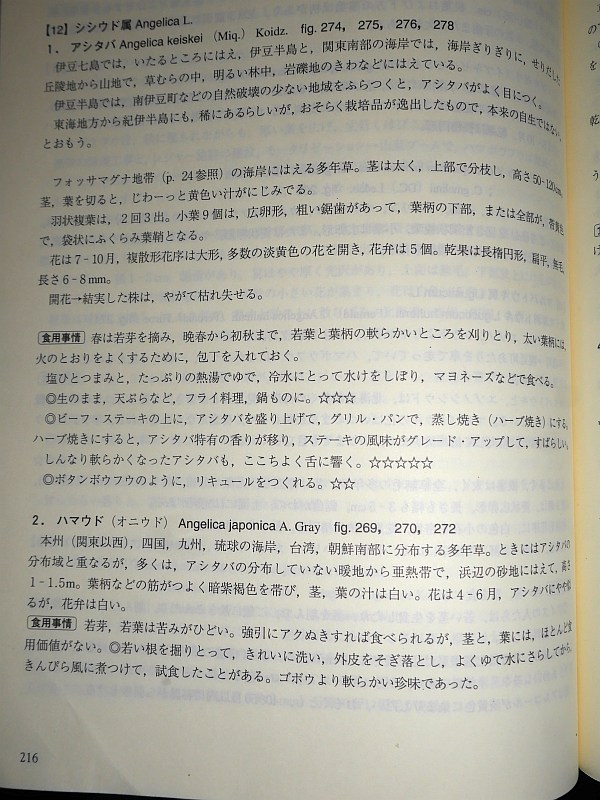
Detailed accounts in the foraging book…if only I could translate it easily (haven’t tried character recognition software and Google translate yet..)
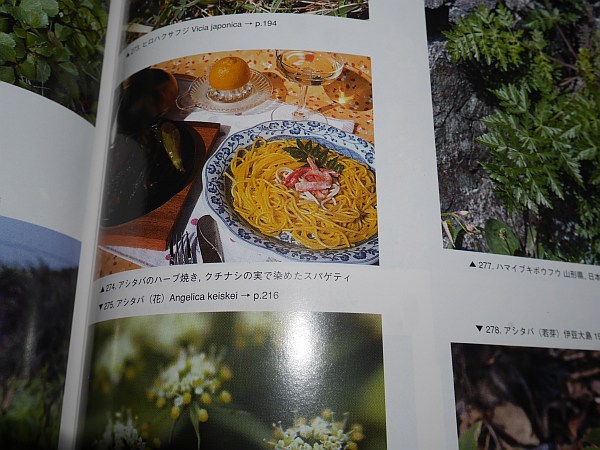
Picures of Angelica keiskei in the foraging book (left hand trio and bottom right)
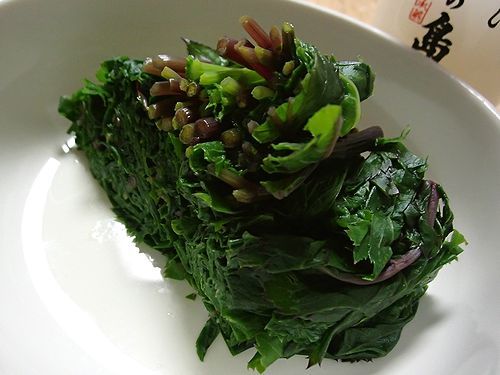
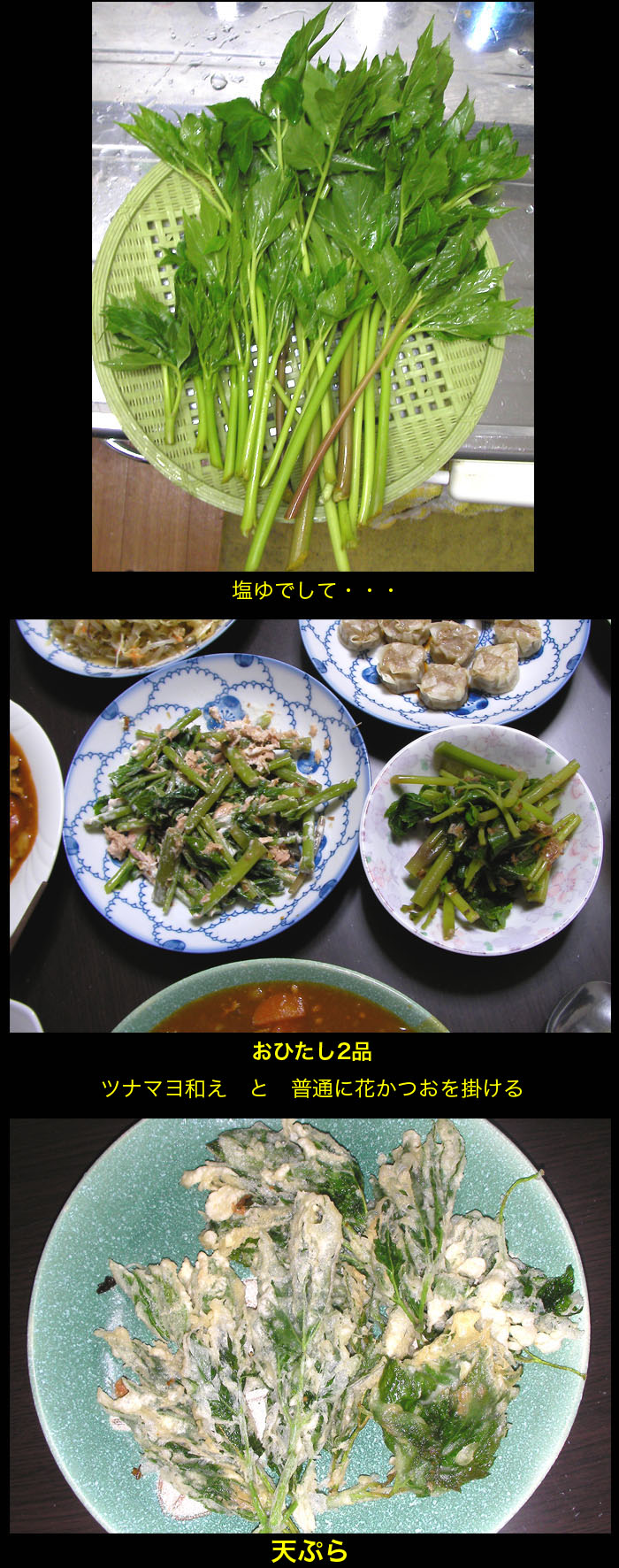
Ashitaba boiled with salt, squeeze out the moisture and served with soy sauce and sweet sake…it certainly looks good for you! (from http://blogs.yahoo.co.jp/he_e_ya/35505733.html)
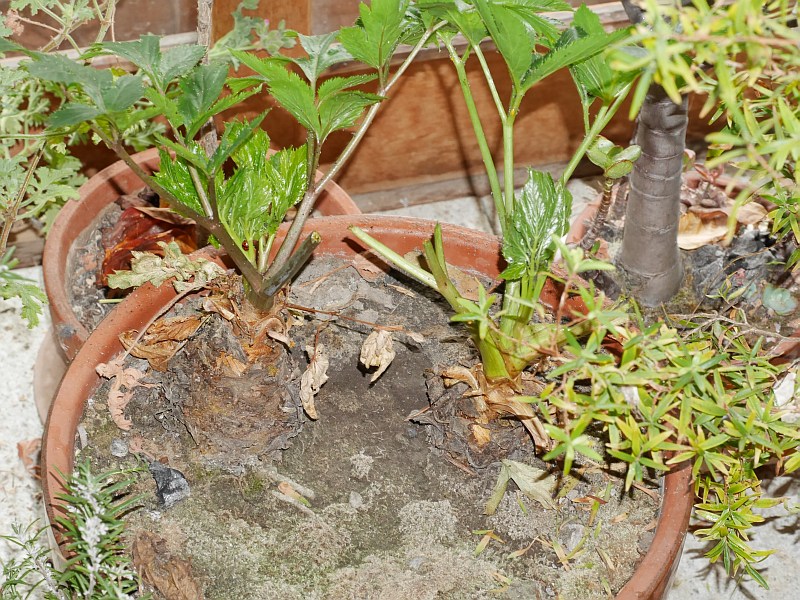
At the end of the trip I visited the mountains (Nagano) and I was taken to visit a local woman (a weaver artist) interested in foraging, Hisako Amari, and her potter husband Hiroshi Amari.. I found ashitaba growing on her window sill in the living room… I was told that these plants were maybe 10 years old. The leaves were harvested regularly for the kitchen, stopping the plant flowering and lengthening its life!
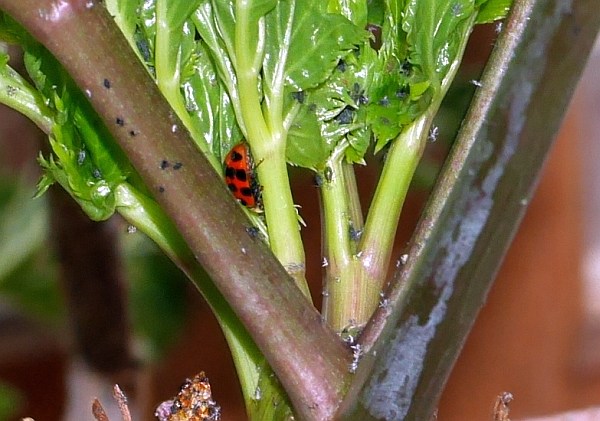
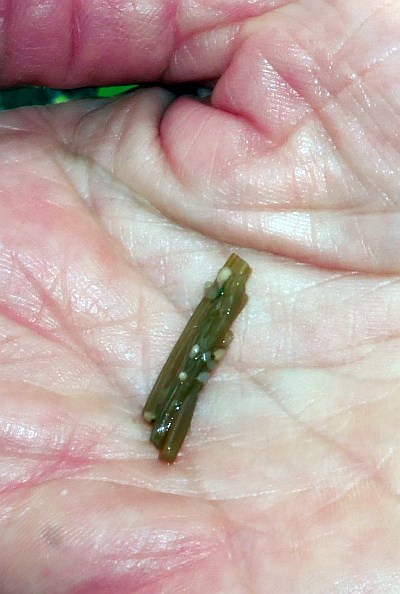
The window-sill ashitaba was infested by aphids, but biological help was at hand!
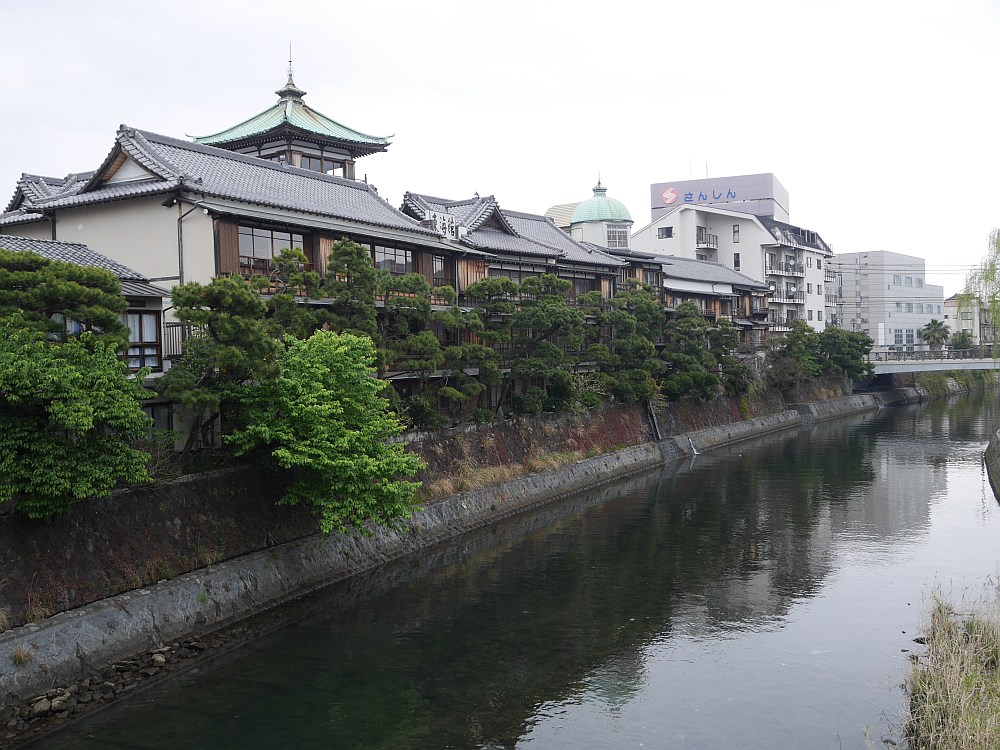
The accommodation in Ito on the Izu peninsula, a traditional Ryokan!
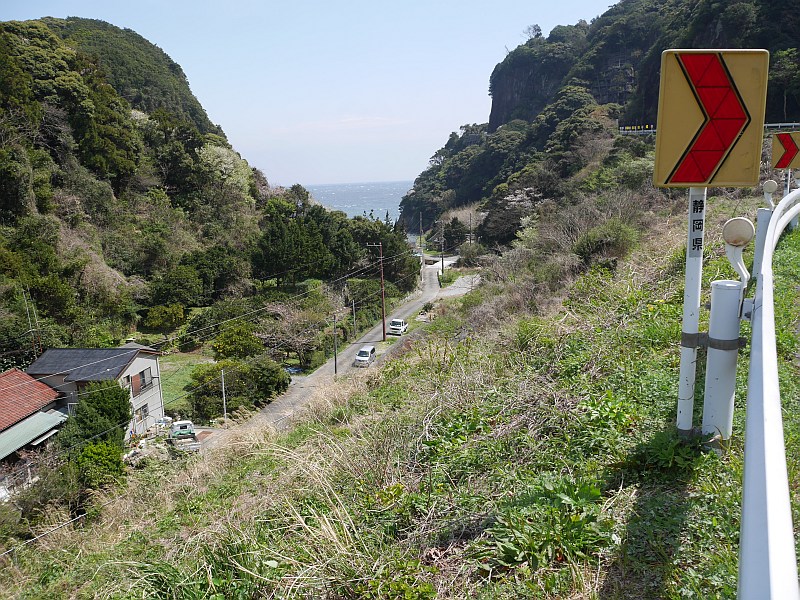
On a day trip by car from Ito, we stopped in a layby to do a bit of botanising on this slope
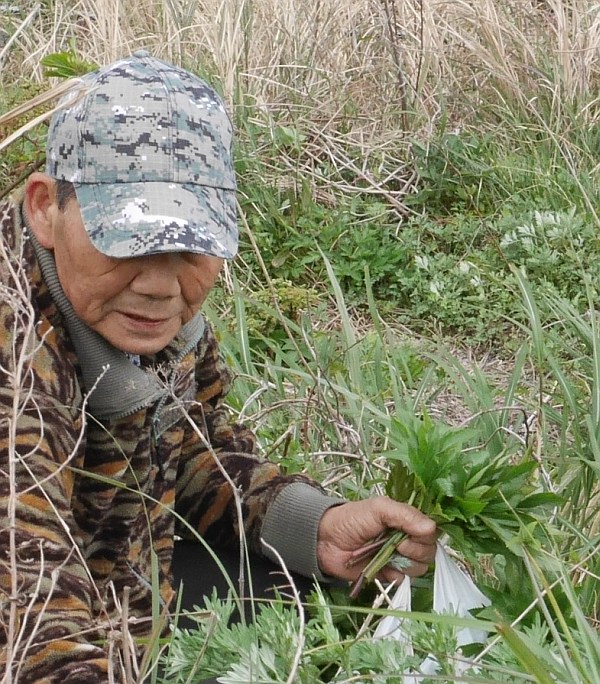
…a local turned up and started foraging :)
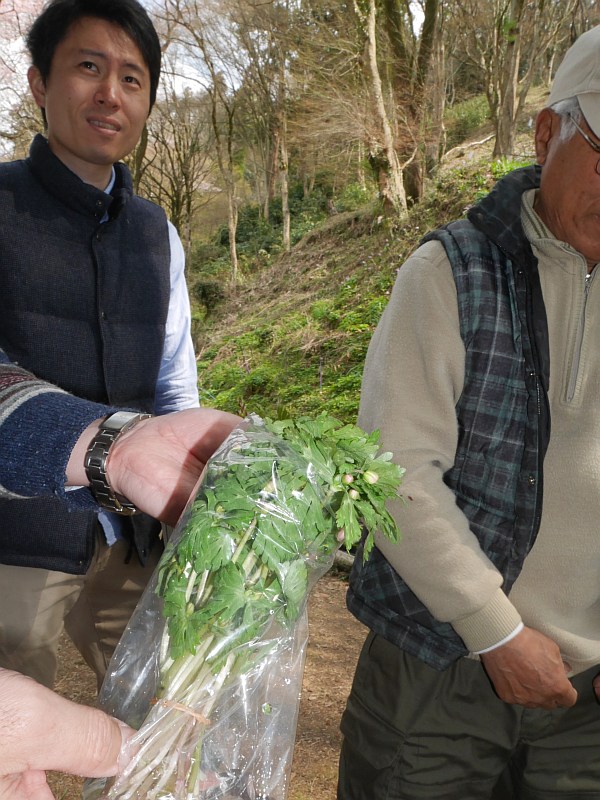
..here with the leaves of an Angelica species (I’ve seen these young leaves used in tempura)
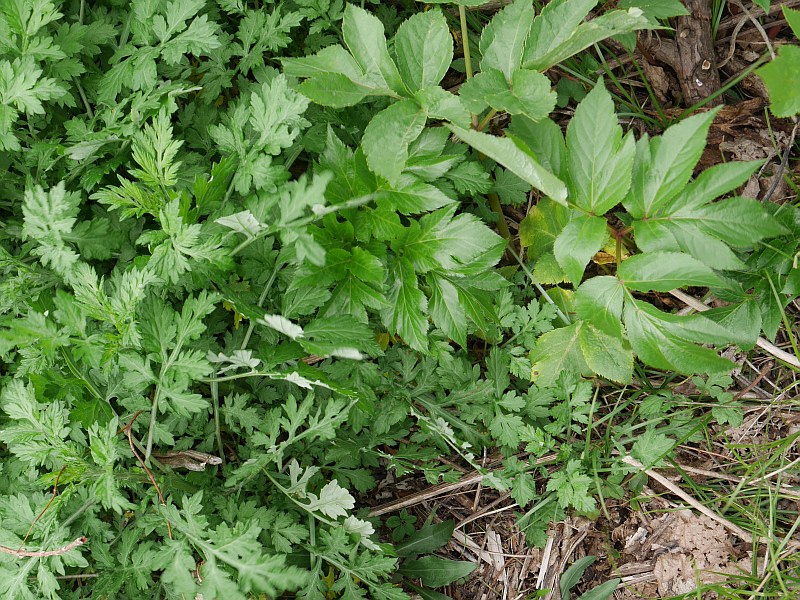
Yogomi (Artemisia spp.) with Angelica, both wild edibles
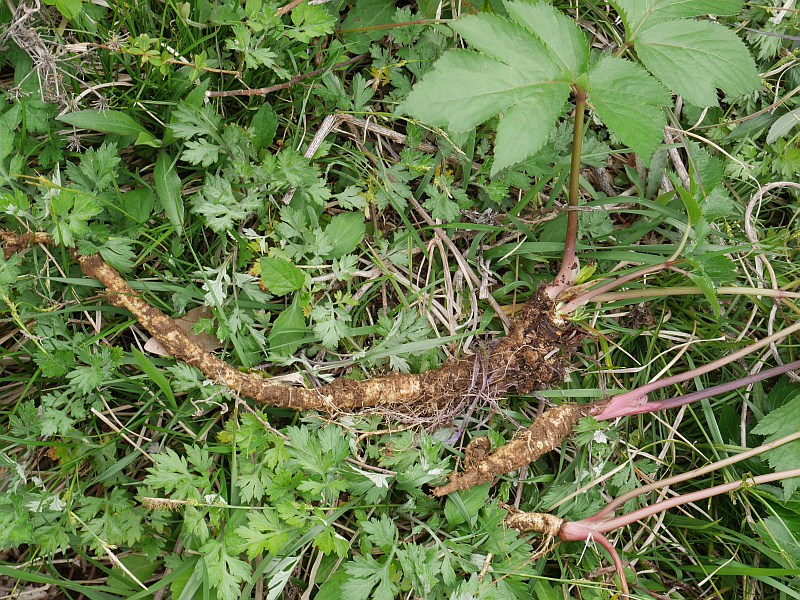
The roots are also used..
Angelica japonica (hamaudo) close to the harbour on the island Hatsushima, a 30 minute ferry ride from Ito.
Approaching the harbour on the island of Hatsushima
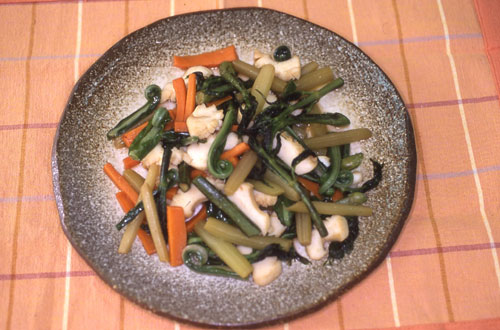
Angelica japonica is often stated as poisonous in Japan (it’s a confusion species to presumably better tasting Ashitaba; see http://sitakisou.blog.fc2.com/blog-date-20150427.html for a discussion about this), it is nevertheless easy to find folks that eat it and recipes, including this hamaudo, minami taniwatari (Asplenium antiquum fern fiddleheads), carrot and purple squid stir-fry (from http://www.dc.ogb.go.jp/toukan/62yasou/plant/yaso-cooking/hamaudotominamitaniwatariitame.html)
Also from my foraging book, pictures of Angelica japonica, hamaudo with, above “Kinpira of hamaudo’s roots”. My friend Ken tells me that “Kinpira is normally a well known “grandma-recipe” using Gobo (Burdock:Arctium lappa).”
Back to the Tokyo Metropolitan Medicinal Plant Garden, Angelica decursiva is one of the species in the aforementioned foraging book.
Angelica dahurica, also mentioned in the foraging book (Tokyo Metropolitan Medicinal Plant Garden)
There were rows of Angelica acutiloba in the Tokyo Metropolitan Medicinal Plant Garden; this species is native to Japan and Korea, but was culitvated for medicinal use in China. The roots are used as a substitute for the well known traditional Chinese medicinal plant Dong Quai, Angelica sinensis
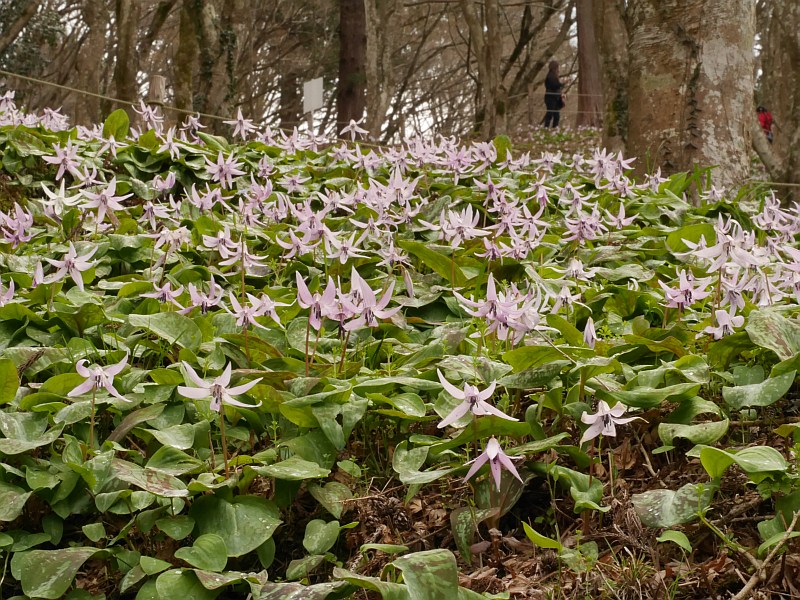
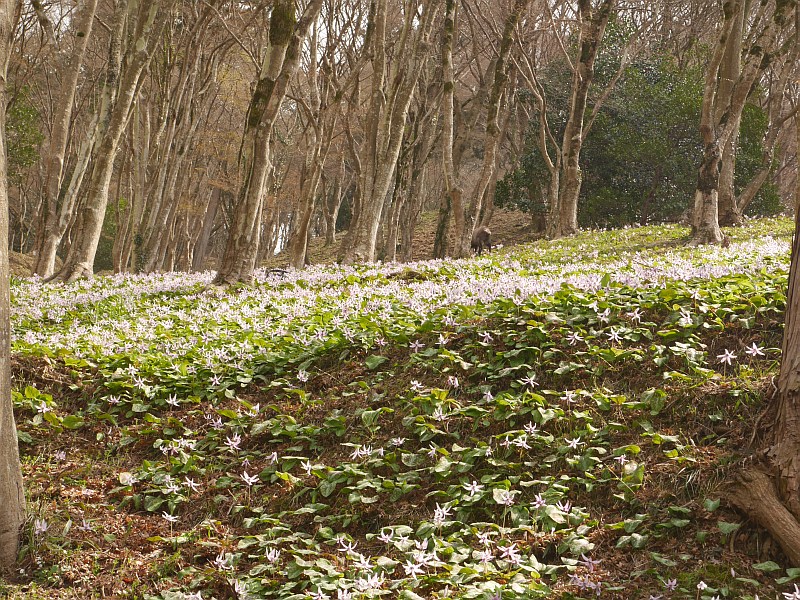
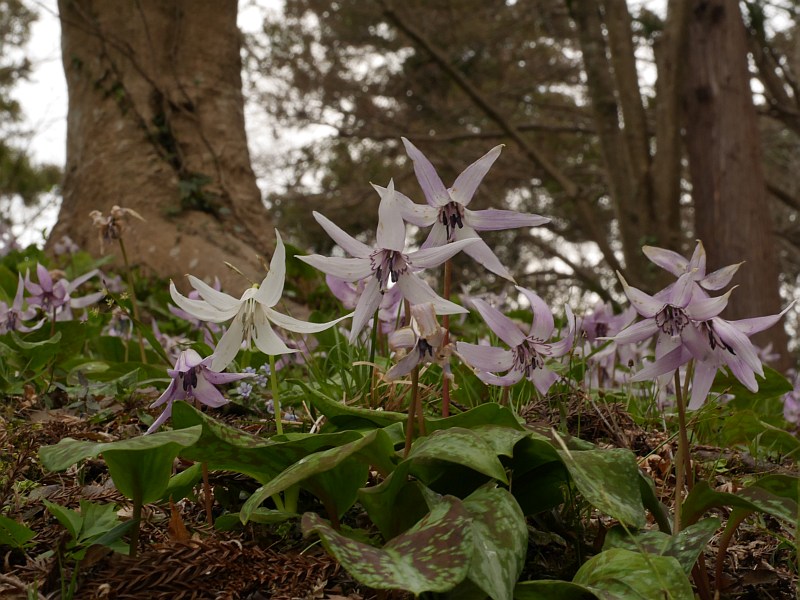
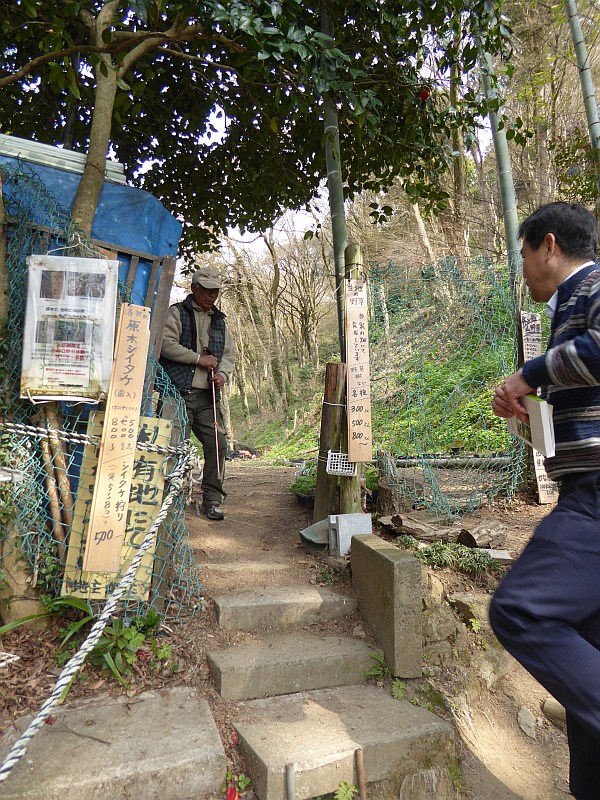
This post documents my visit with Aiah Noack of Naturplanteskolen in Denmark to the historical town of Asuke in Aichi Prefecture near to Toyota, where we’d spent the night, on 28th March 2016. Asuke and the Korankei Gorge is a popular place to visit to see the autumn colours, with some 4,000 different maples planted here since a priest started beautifying the place in 1634 (see http://japan-highlightstravel.com/en/travel/nagoya/120029). Aiah had contacted an old plant breeding colleague, Teruo Takatomi, based in Toyota, who had kindly offered to show us around for a couple of days and this was the first day of the itinerary they had arranged for us visiting natural areas and farms growing sansai (wild mountain vegetables). Two of Teruo’s colleagues took us to Asuke to see the mass flowering of katakuri (Erythronium japonicum) on Mt. Iimoriyama right next to the town. However, there was much more than katakuri in the wood as the first album documents and at the end of the walk through the woods we stumbled on a wonderful small nursery specialising in wild and edible plants! The owner ran it as a hobby and kindly invited us back to his house for tea and to see his garden (second album below).
For edimental gardeners, katakuri is one of the most exclusive vegetables, requiring at least 7-8 years to flower from seed! Two plants I was given by Magnar Aspaker in April 2008 still only produce one flower a year and I’ve never seen a flower, but it’s growing in a less than optimal environment… It has survived the worst of the freezes here including the coldest winter since records began (frozen solid for 3-4 months)! Ian Young relates the same problem in his excellent e-book “Erythroniums in Cultivation” (available for free at http://files.srgc.net/general/ERYTHRONIUMS-IN-CULTIVATION%20-2016-IanYoung.pdf). He says that the bulbs divide slowly and seed is important to increase plants, but it takes time. On the other hand, individual plants can, according to a Japanese site, reach 50 years old with a new bulb every year! This seems to be his favourite Erythronium, easy to grow (although slowly increasing) with dramatic markings on the flowers.
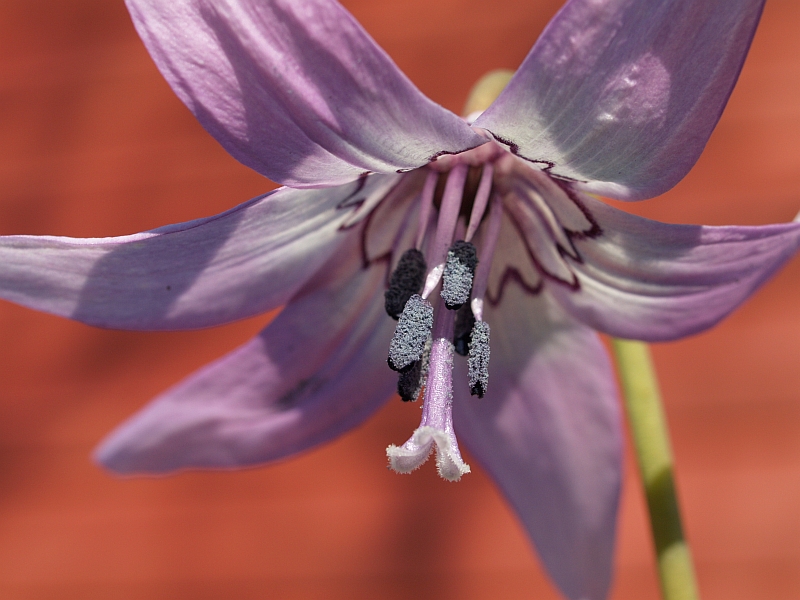
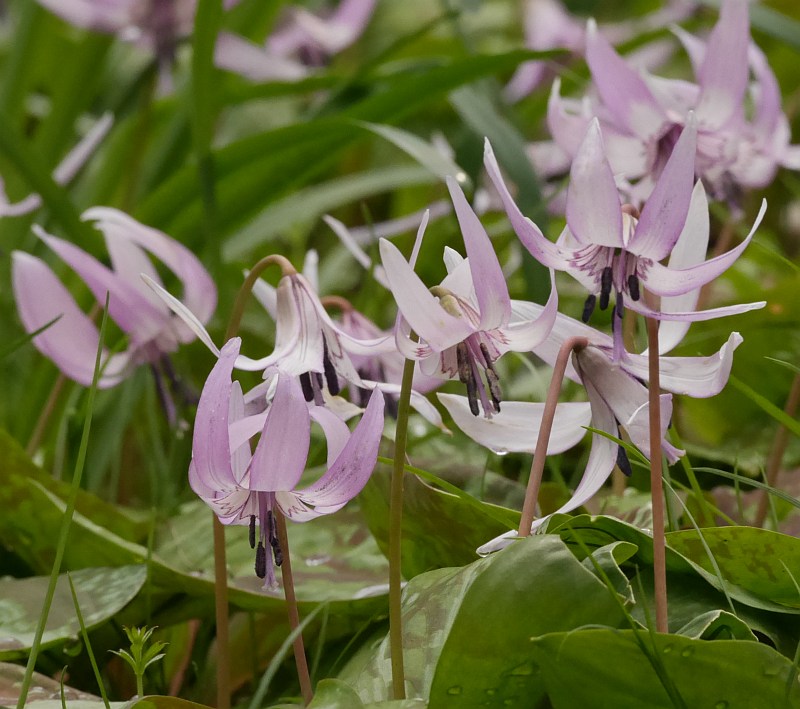
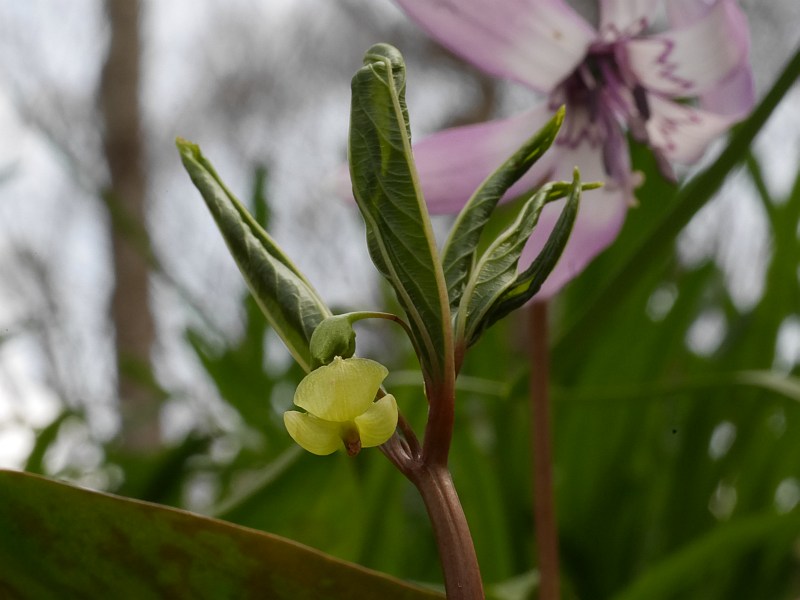
Erythronium japonicum in my garden
As an edible plant, it was once an important source of an edible starch, katakuriko, but the plant was overharvested (also due to its popularity for the wild flower industry) and potato starch is used today, retaining the name! Both the leaves and flowers are used in Japan in various ways and I’ve given a few recipes roughly tranlated from various Japanese pages in the following document:
…or as in this picture from one of my Japanese foraging books:
The leaves are also fermented!
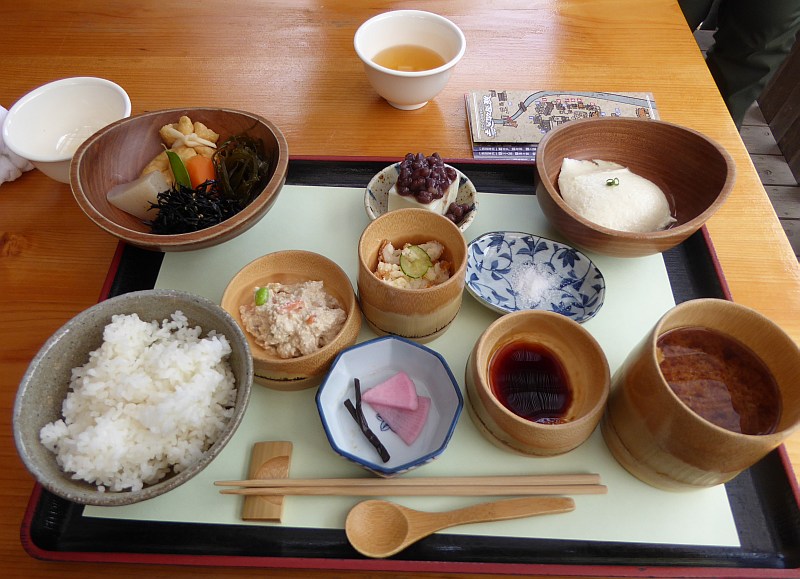
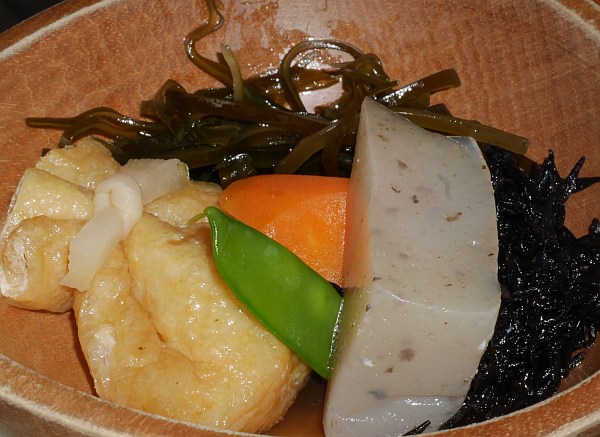
We also spent some time at Sanshu Asuke Yashiki, a working traditional crafts museum next to Mt. Iimori and had a gourmet lunch at the Kunputei restaurant overlooking the river gorge (third album below). This restaurant specialises on tofu dishes, handmade every morning and we ate konjac for the first time here (Amorphophallus konjac) (see this blog post for my experience with growing konjac: http://www.edimentals.com/blog/?page_id=845)
Approaching Mt. Iimoriyama (254m) 岡崎市 飯盛山 through Asuke town!
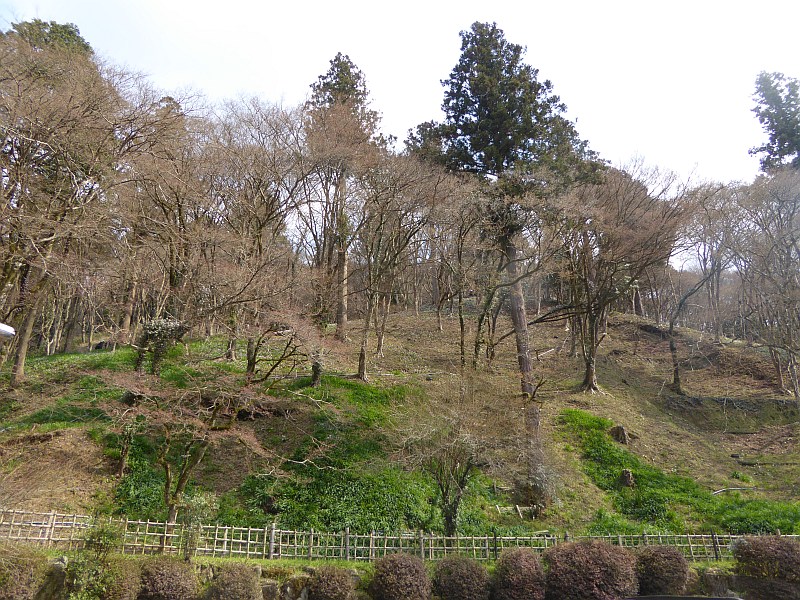
Mt. Iimoriyama (254m), the maples for which this place is famous in autumn (next picture) are not yet in leaf!
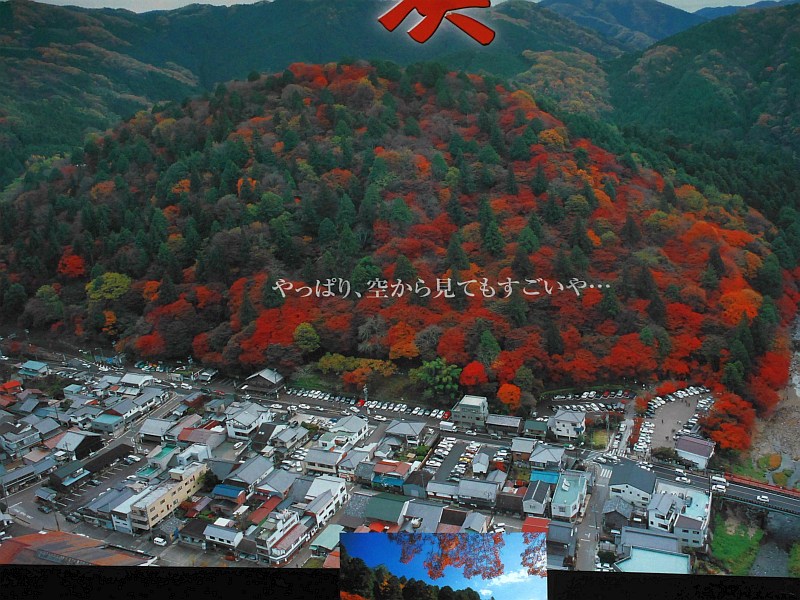
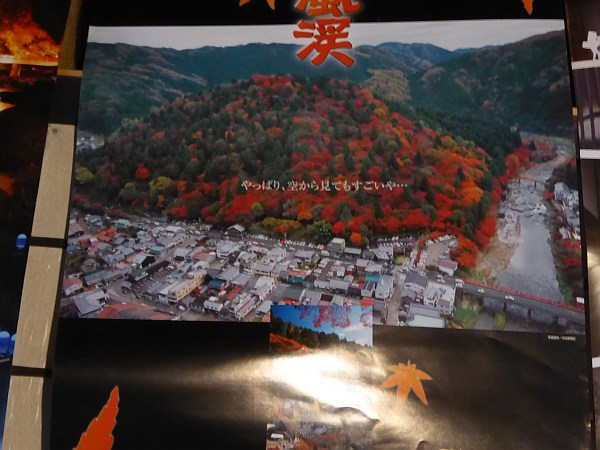
Poster showing the beautiful autumn colours of the Acers on Mt. Iimoriyama
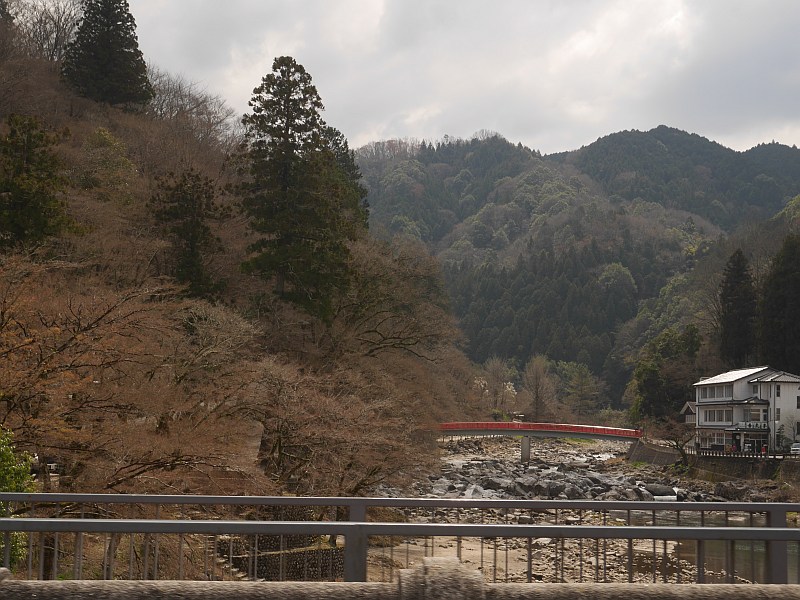
Taigetsu-kyo bridge
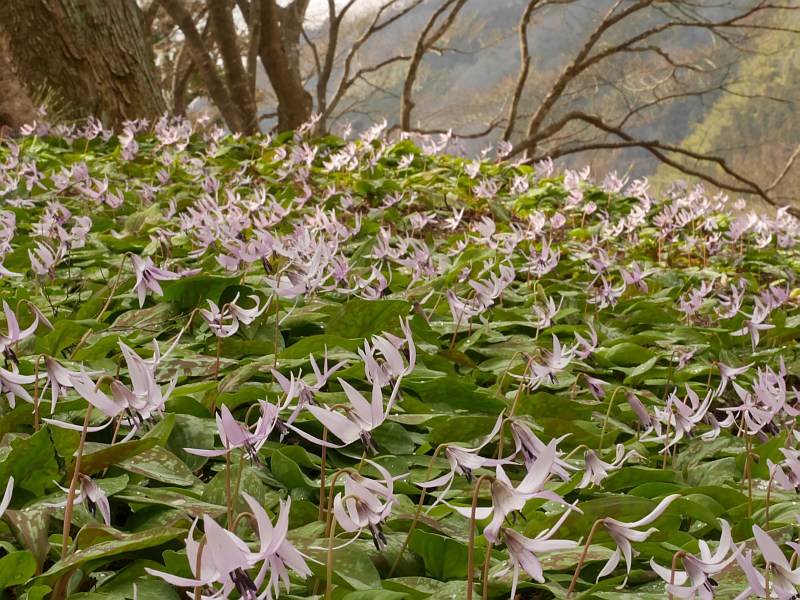
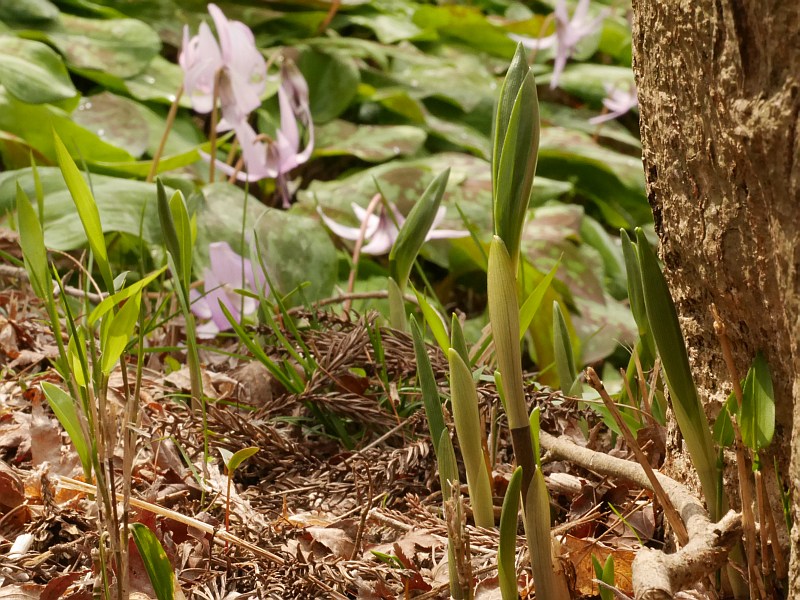
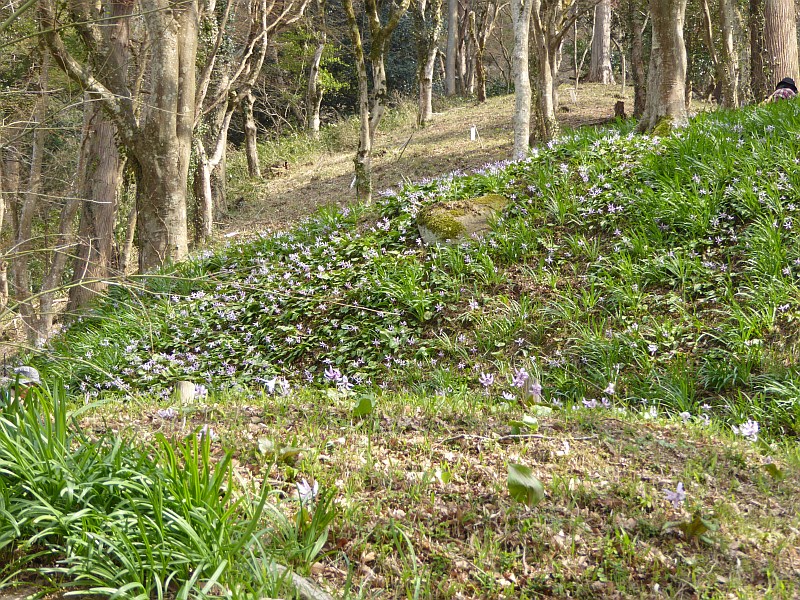
Katakuri (Erythronium japonicum) nature reserve!
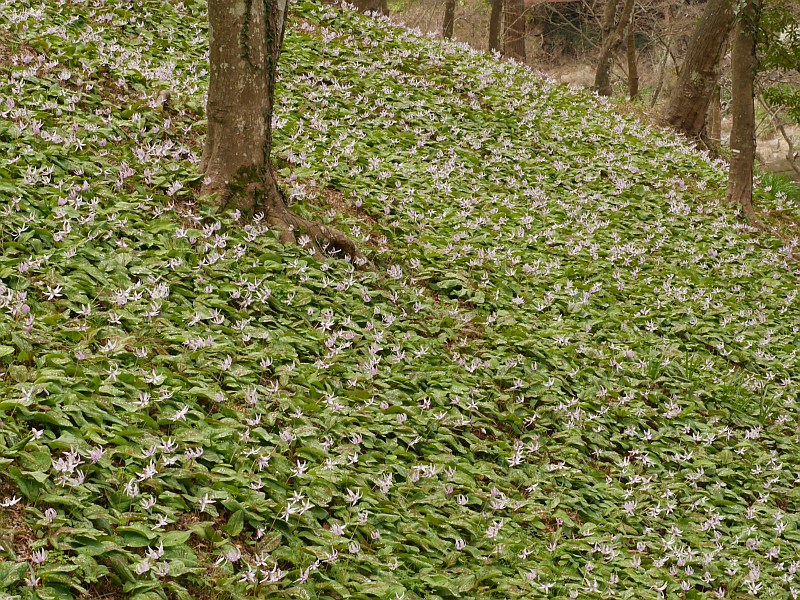
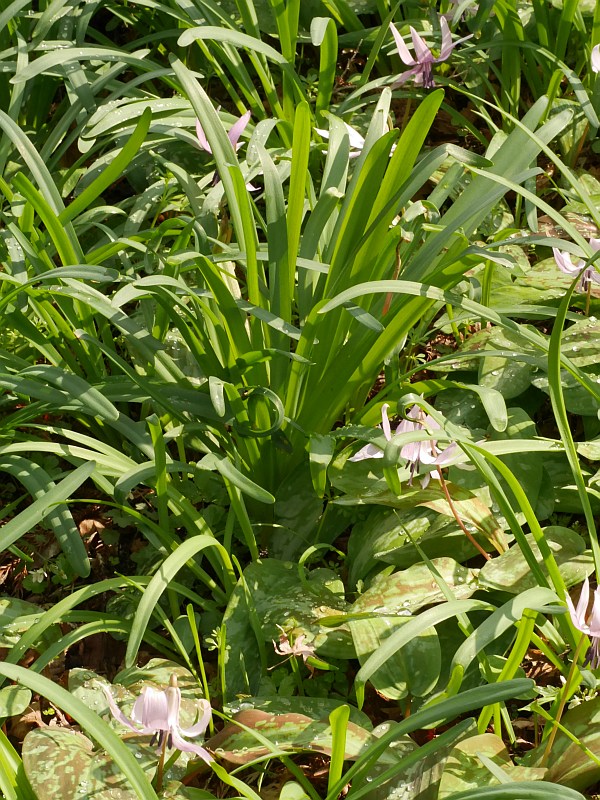
Katakuri as far as the eye can see!
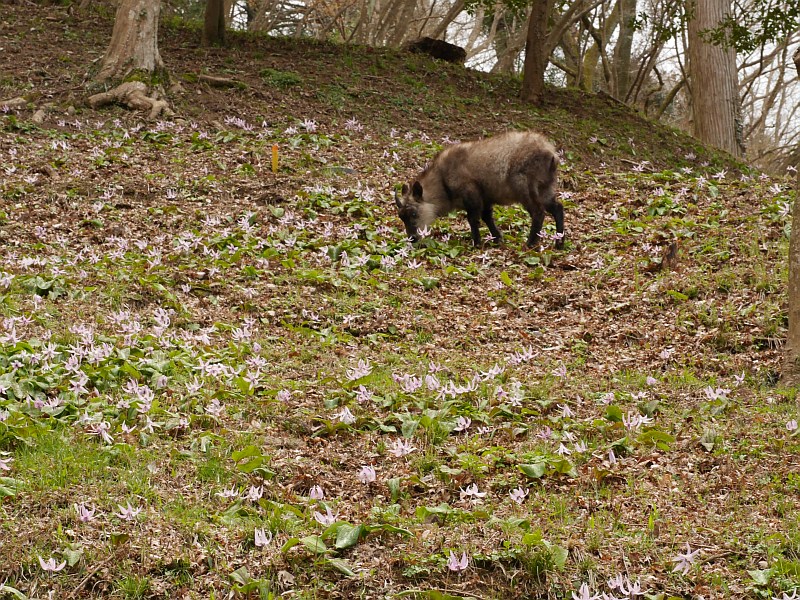
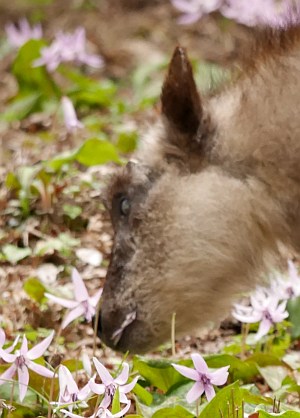
Japanese serow (Capricornis crispus) is a Japanese goat-antelope and seems to be as fond of katakuri as humans are :)
Caught in the act of eating a flower!
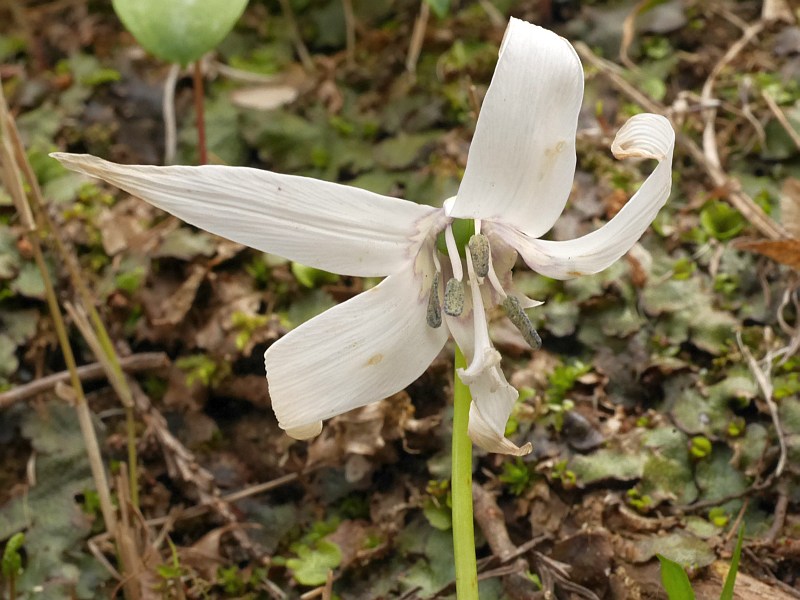
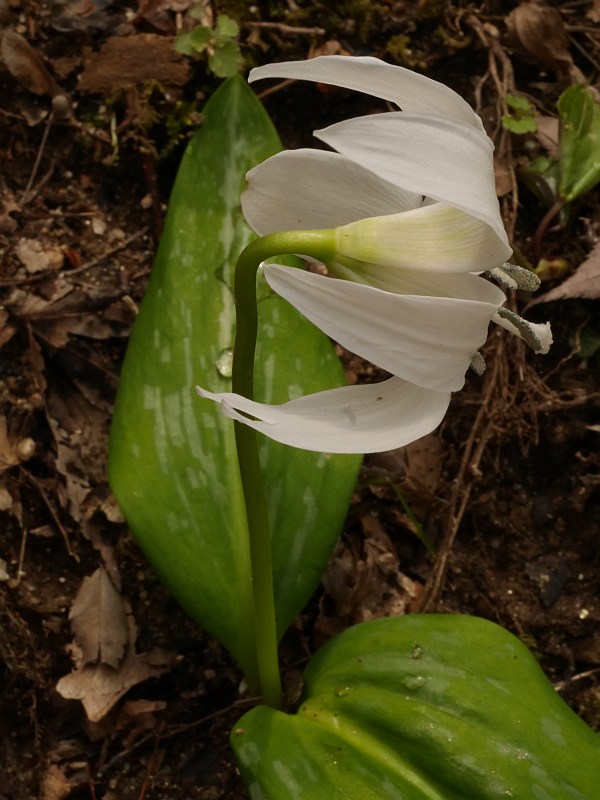
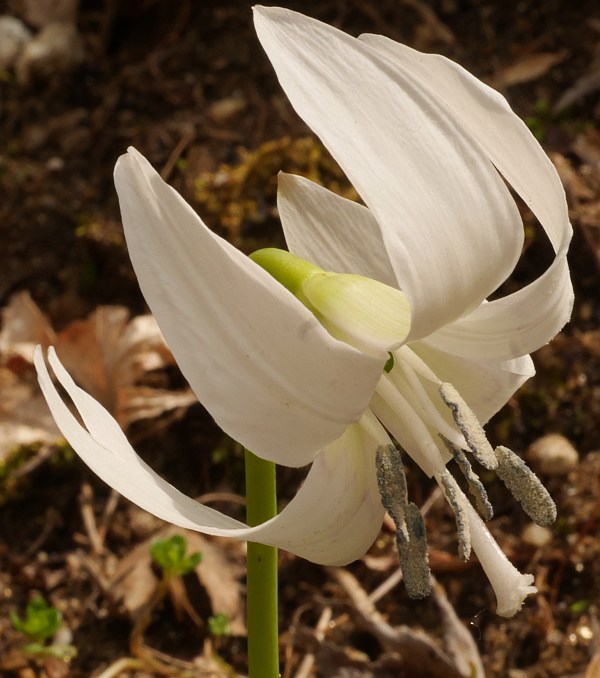
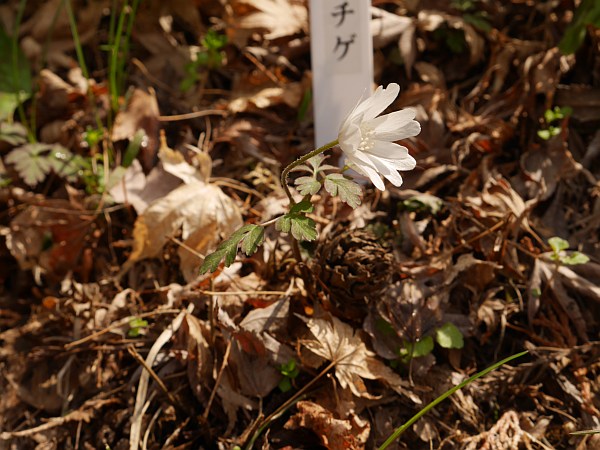
….with one white flower (Erythronium japonicum)
…white form, close-up
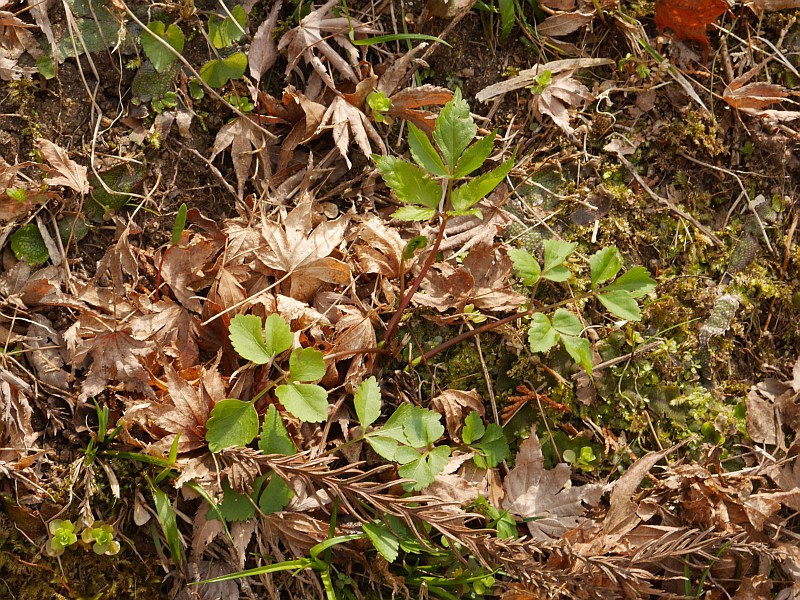
Apiaceae?
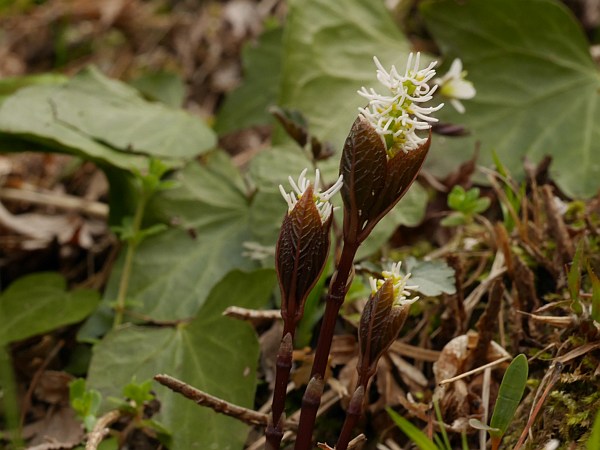
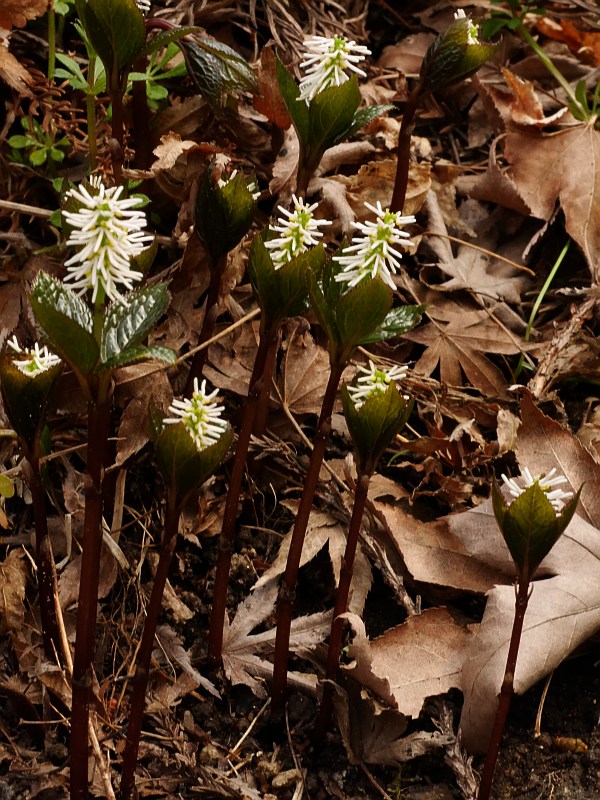
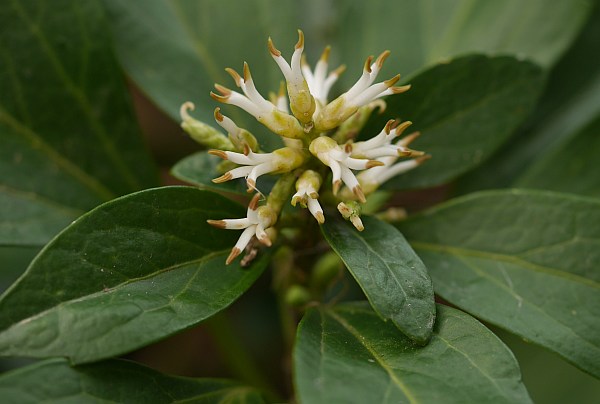
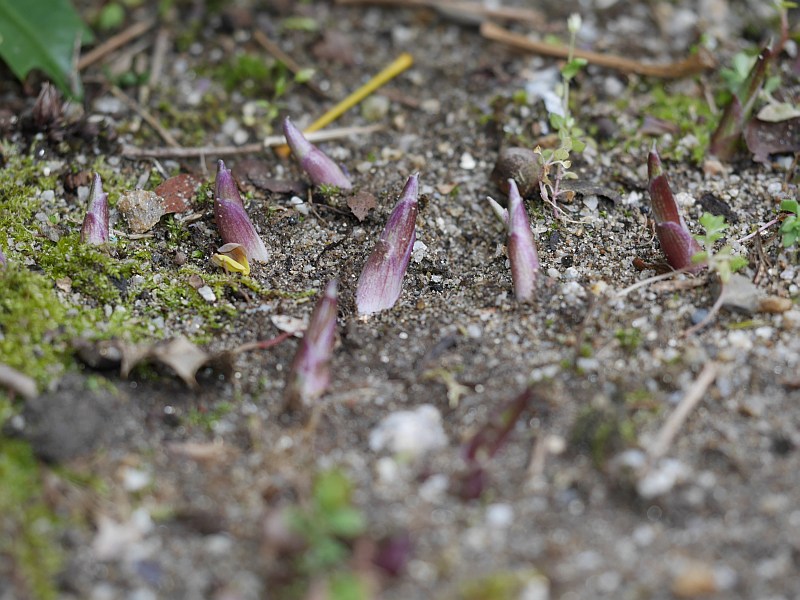
Chloranthus japonicus (Chloranthaceae) ia a speciality that I had no idea what was the first time I saw it – the young spring buds seem to be used as a minor vegetable. There are at least two other edible plants in the Chloranthaceae (Cornucopia II: A Source Book of Edible Plants)
Chloranthus japonicus
Omphalodes japonica
Cardiocrinum cordatum, one of the Giant lilies, closely related to true lilies, Lilium…both young leaves and bulbs have been eaten.
Cardiocrinum cordatum, one of the Giant lilies, closely related to true lilies, Lilium…both young leaves and bulbs have been eaten.
Lemmaphyllum microphyllum, a fern!
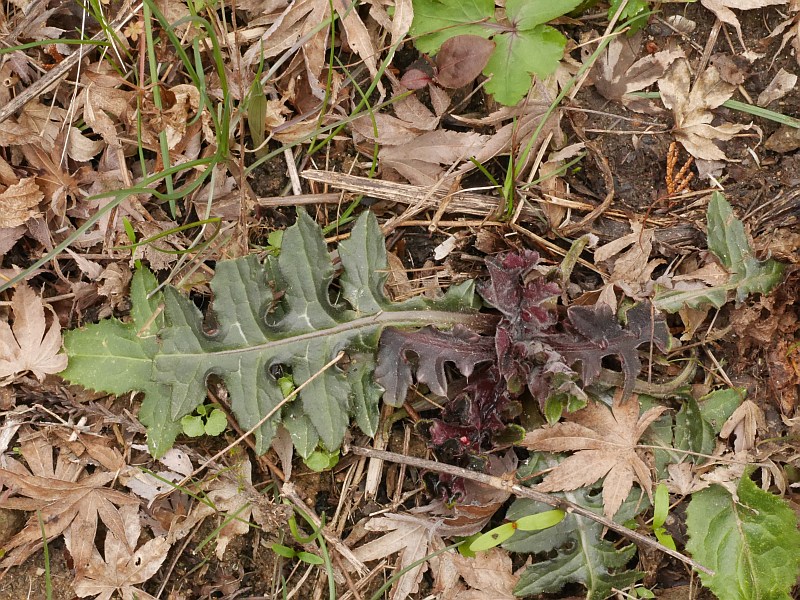
Cirsium?
Tricyrtis (a toad lily) have edible spring shoots
Houttuynia cordata
Actaea japonica?
??
Cirsium?
Polygonatum…probably edible
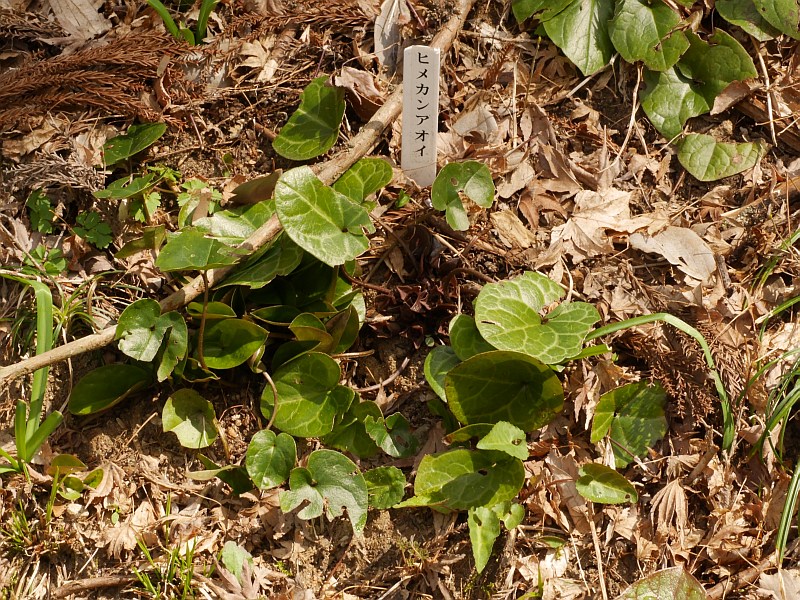
Asarum nipponicum: our guide helped us with some of the IDs via smartphone!
Asarum nipponicum in flower
Asarum?
I’ve been told this is a Croomia (a primitive plant from the Far East and SE USA!)
Lycoris sanguinea (Kitsune-no-kamisori meaning “fox’s shaving razor”!) considered to be very poisonous, but has been processed to remove alkaloids ane eaten in the past it seems!
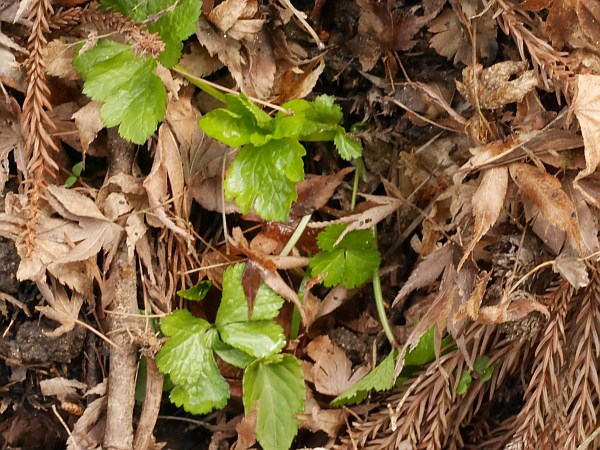
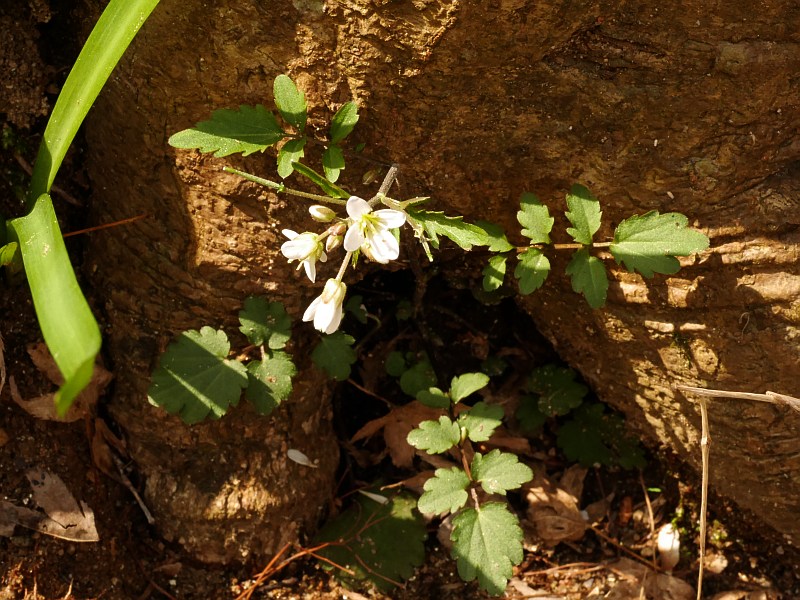
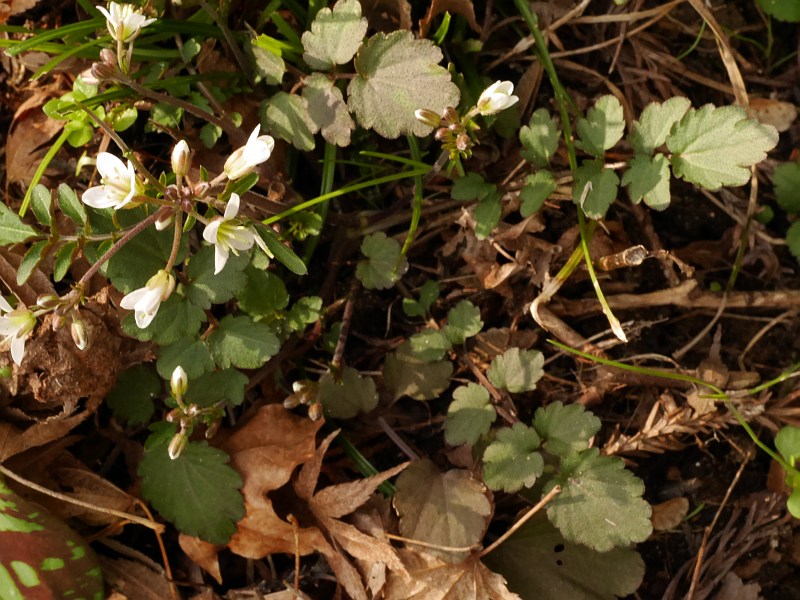
Cardamine spp.
Cardamine spp.
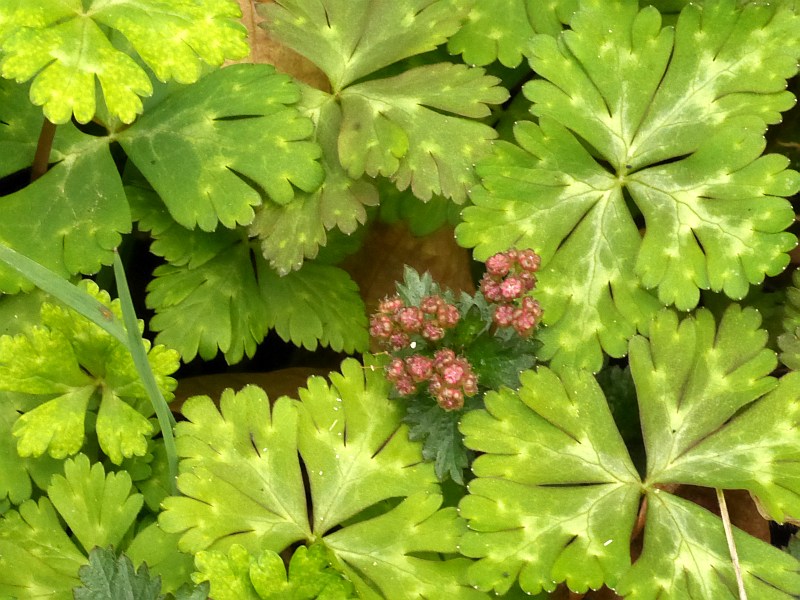
Chrysosplenium grayanum?
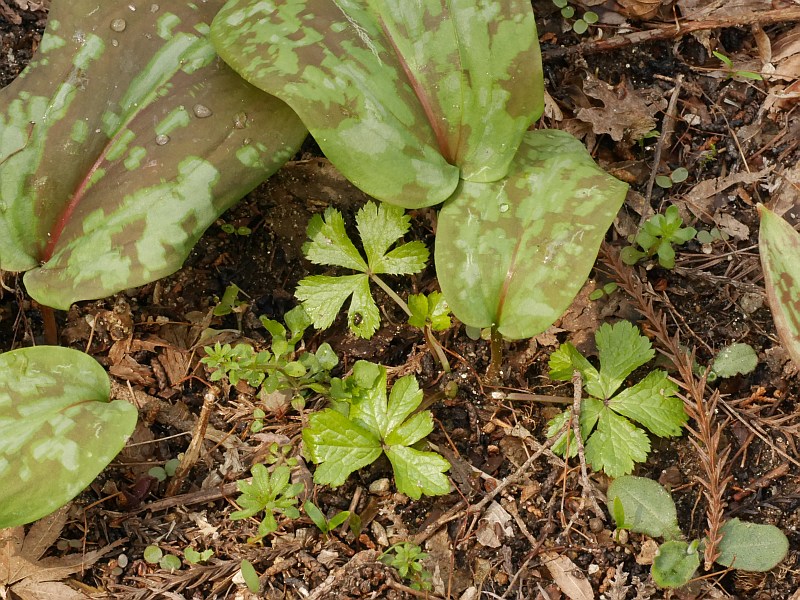
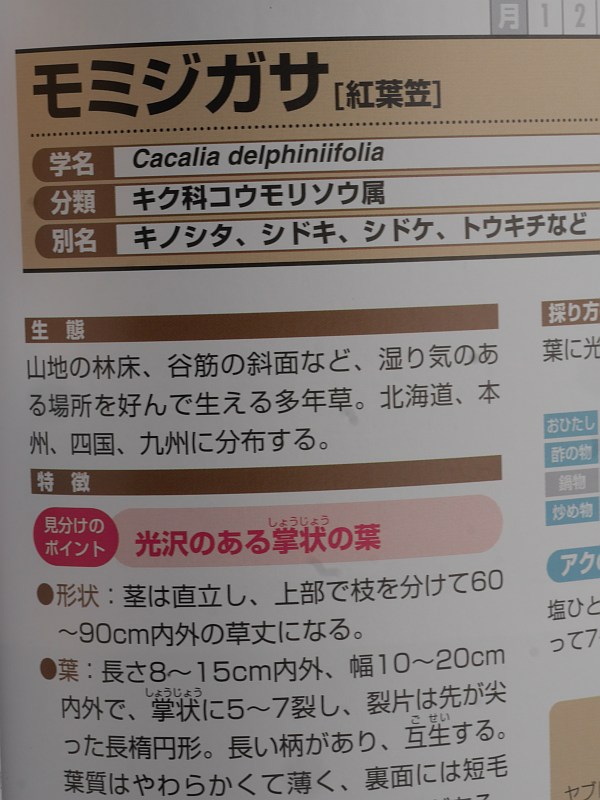
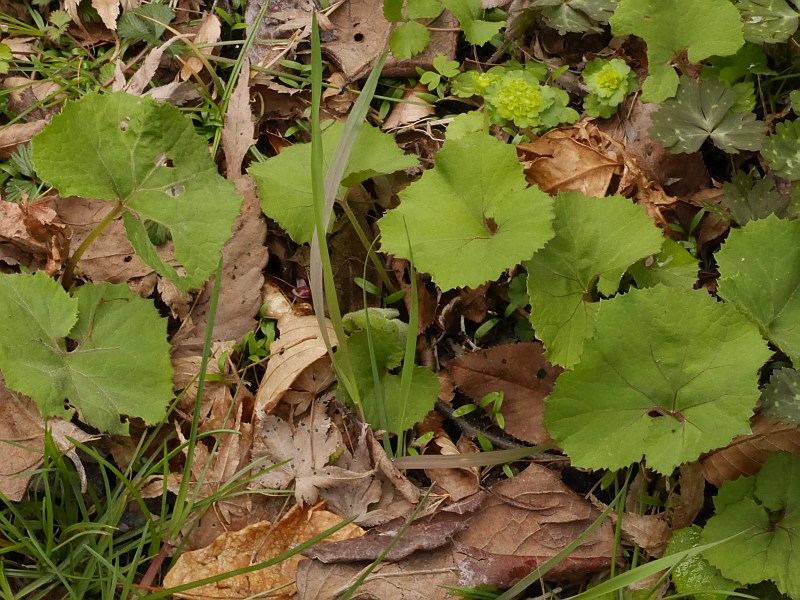
Young Cacalia delphinifolia (shidoke) with the larger leaves of Erythronium japonicum. I later found this species for sale in a supermarket, see http://www.edimentals.com/blog/?p=6340
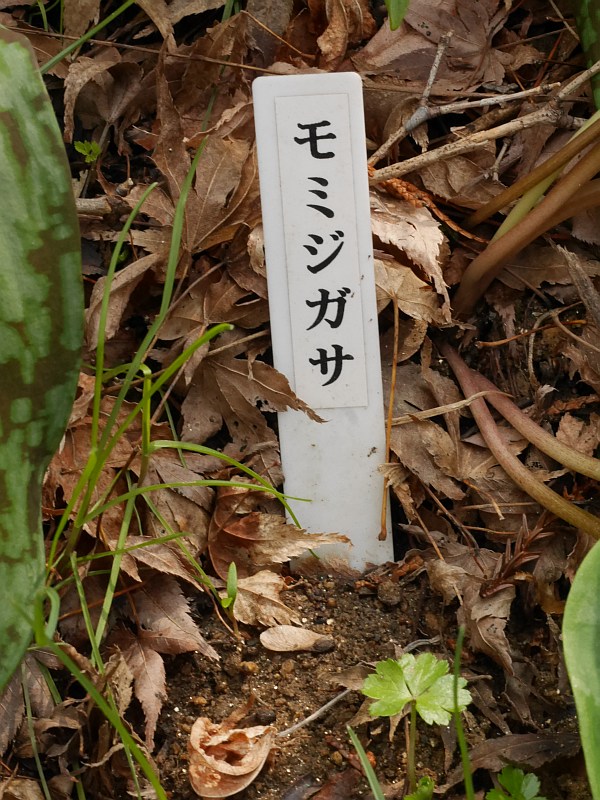
Cacalia delphinifolia (shidoke) sign
Our guides were able to provide the botanical name on their smartphone!
Polygonatum
Iris spp.
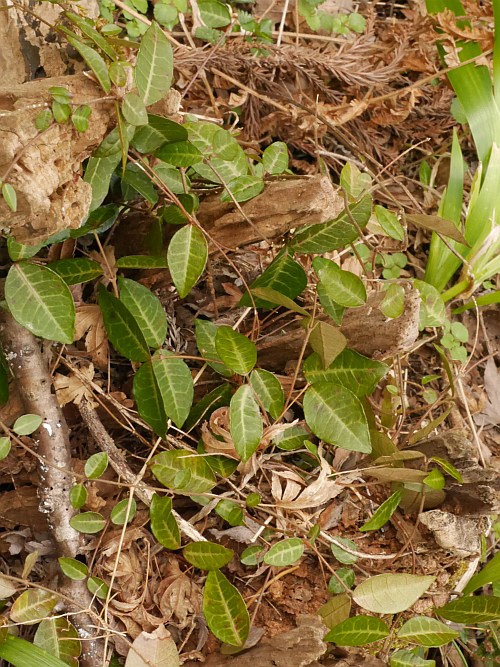
Trachelospermum asiaticum (Asiatic Jasmine), an evergreen climber with scented flowers. It has the Royal Horticultural Society’s Award of Garden Merit. Not edible!
Anemone flaccida, nirinsou was an important wild foraged plant, collected in large amounts in May and June in particular by the Ainu people and used in winter! Cooking presumably destroys any protoanemonin present….
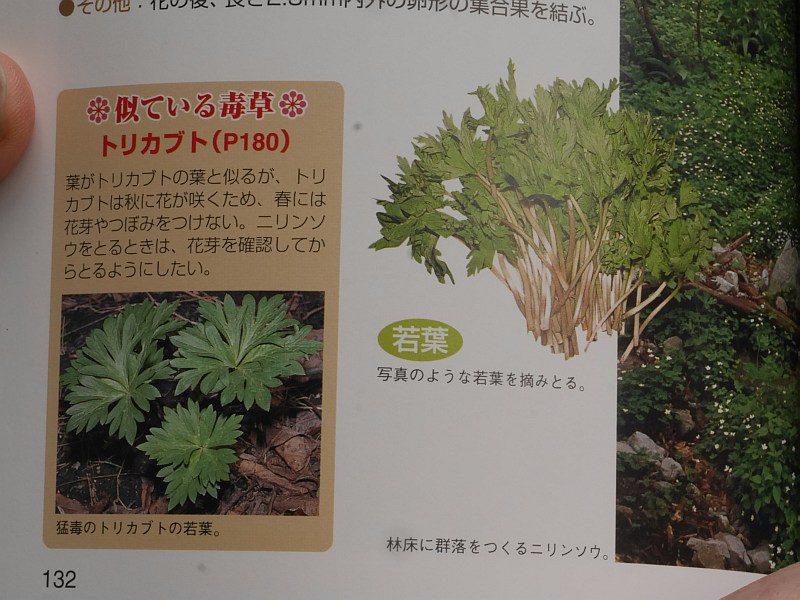
From our guide’s foraging book, showing a picture of monkshood (Aconitum) a poisonous look-alike of Anemone flaccida!
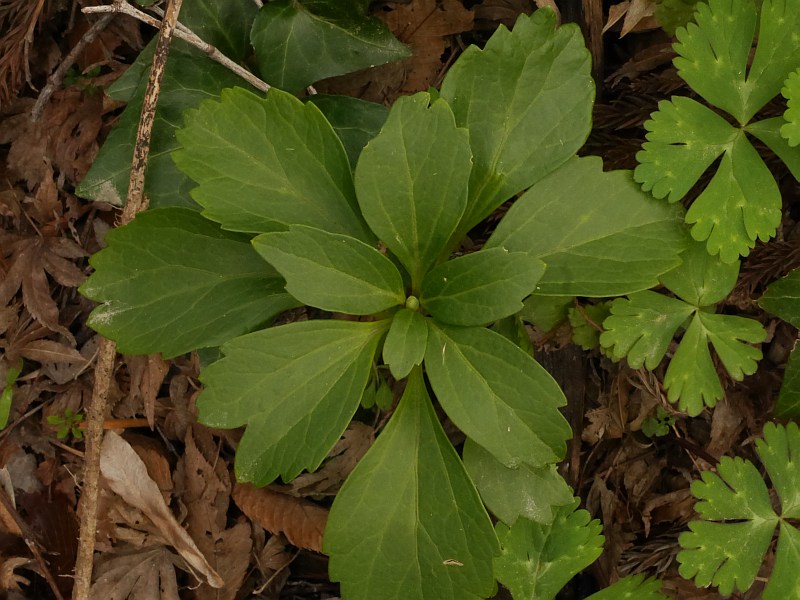
Anemone flaccida, nirinsou
Anemone flaccida!
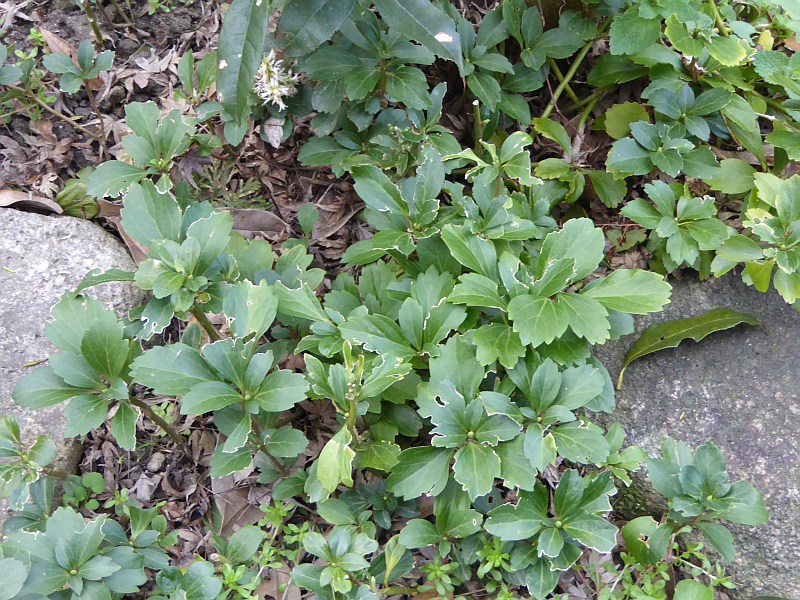
Pachysandra terminalis
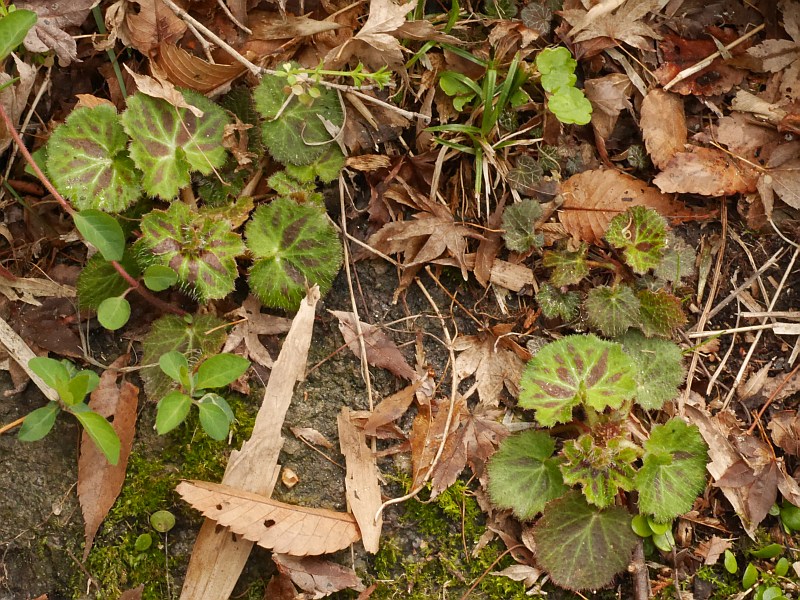
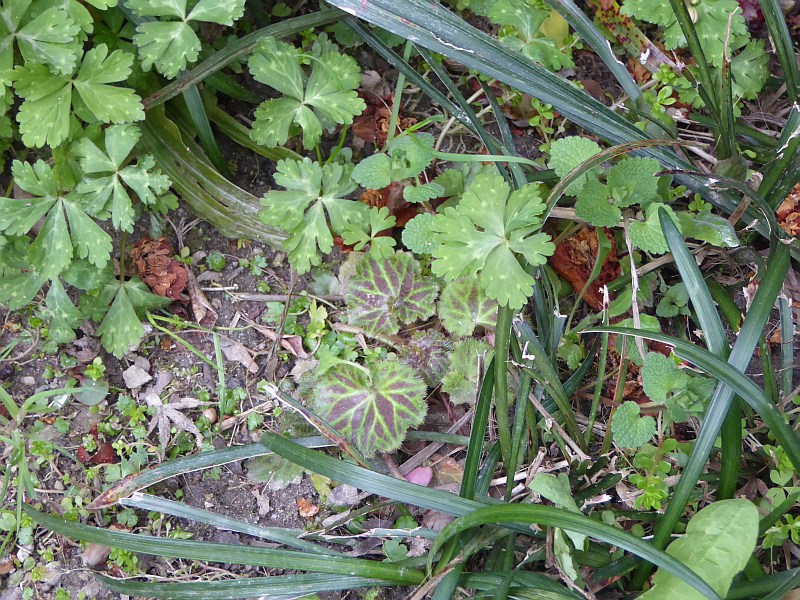
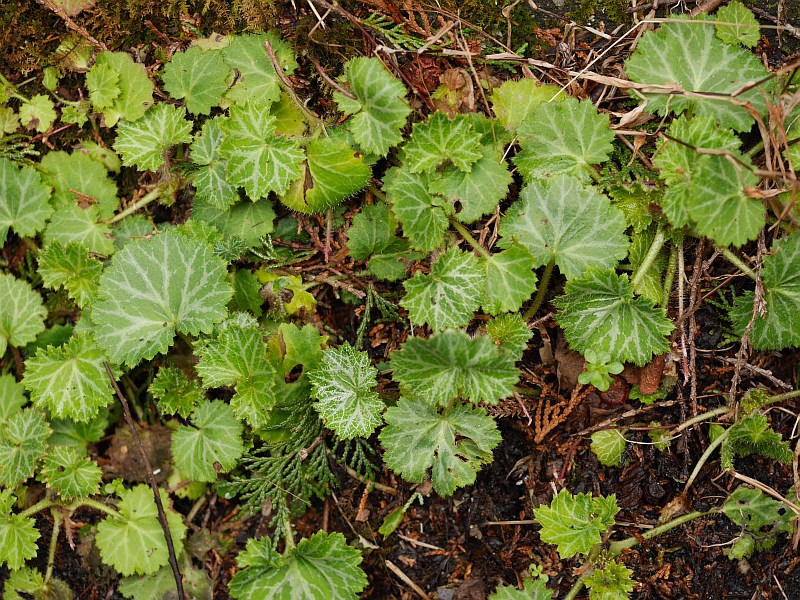
Yet another woodland edible and common ornamental….Saxifraga stolonifera (yuki-no-shita), again with many cultivars.. See also http://www.edimentals.com/blog/?p=5495
Saxifraga stolonifera (yuki-no-shita)
The flower appearing above a ring of Anemone flaccida looks like a Sanicula species?
On the trail around the nature reserve, we were asking our guides whether there were any wild plant nurseries in the area…..and as if my magic a small nursery selling local wild plants, including some edibles, appeared at the end of the trail on the edge of the wood! The owner was knowledgeable about the edible plants! We called the number and the owner turned up in a little while
Anemone flaccida being sold as food in the nursery
Anemone flaccida being sold as food in the nursery
Masashi Fujiwara – do you know which wild plant you are sampling in these three pictures? Fuki, I think?
Anemone flaccida (left) with Wasabia japonica in flower on the right in the nursery!
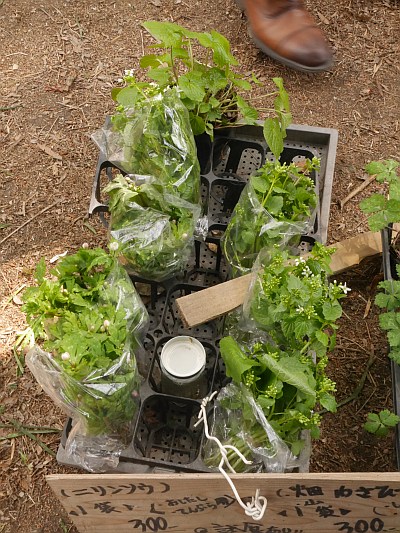
Small plants of Anemone flaccida for sale
Lycoris radiata? and ?
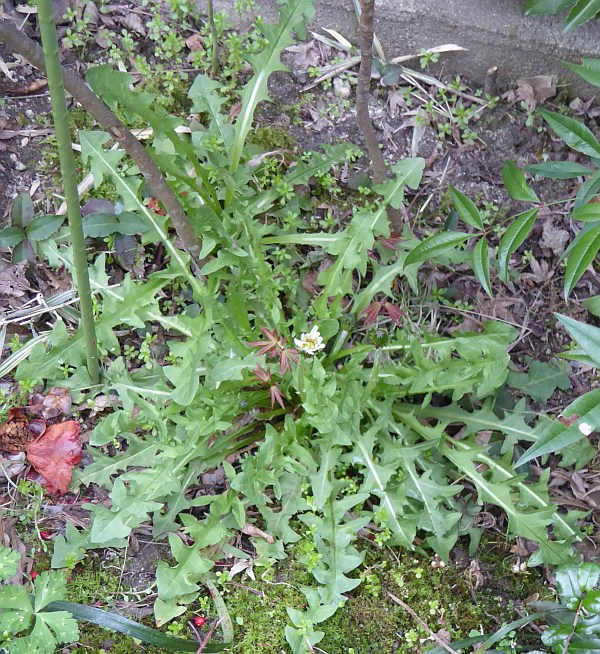
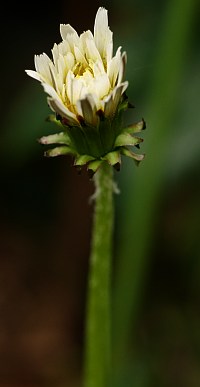
Taraxacum albidum, the white flowered dandelion!
The nursery owner on the left with one of our guides Masashi Fujiwara on the right
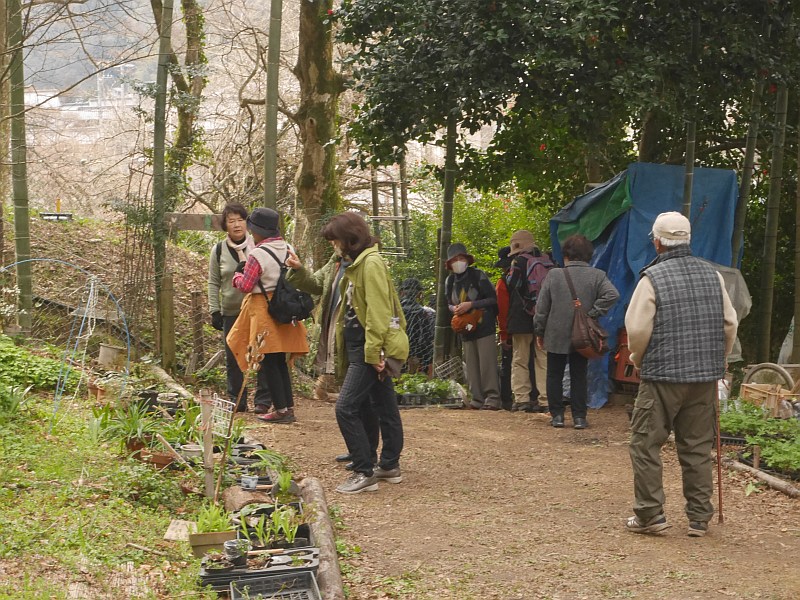
Suddenly a crowd arrived!
Wasabi and Anemone flaccida in the nursery
The owner was also selling Erythronium japonicum, which can take 7-8 years to flower from seed
Cryptotaenia japonica
He was growing wasabi all along the edge of the nursery
Adonis is one of the first to flower, we were lucky to see the last one!
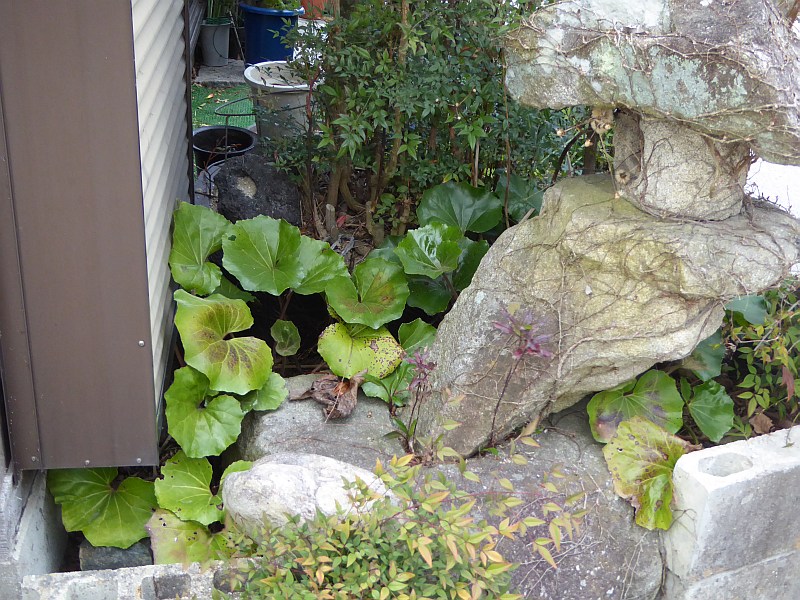
Petasites japonica, fuki is very popular wild and cultivated edible, often seengrowing near houses and the leaf petioles and flower buds were available in all supermarkets
Petasites japonica in our foraging book!
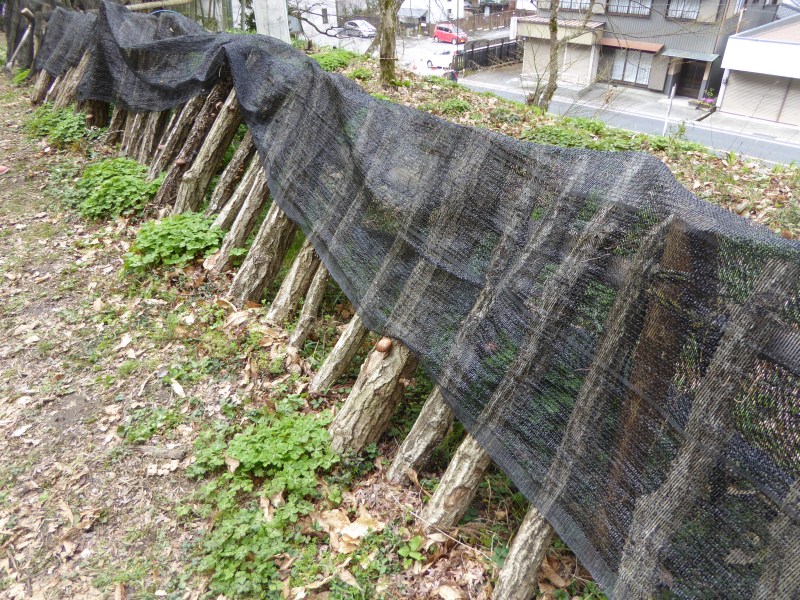
Part of the nursery was set aside to shiitake mushrooms grown on logs
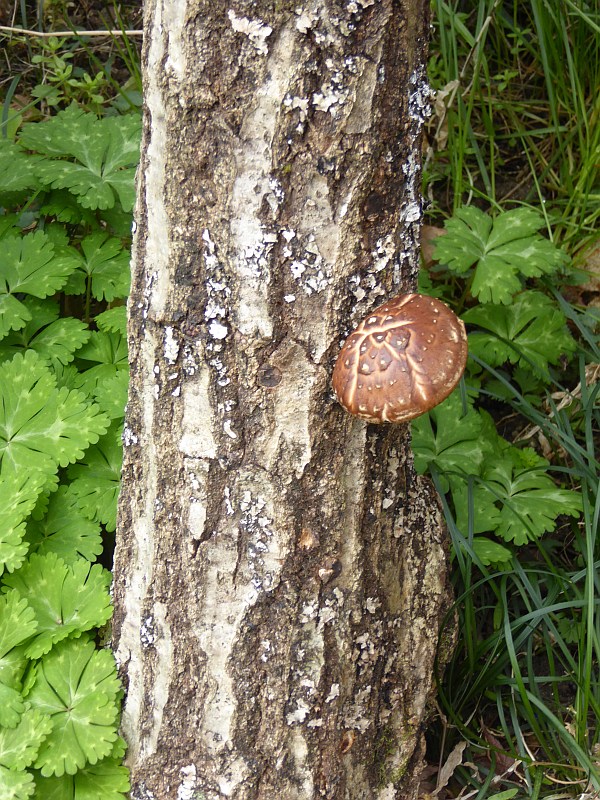
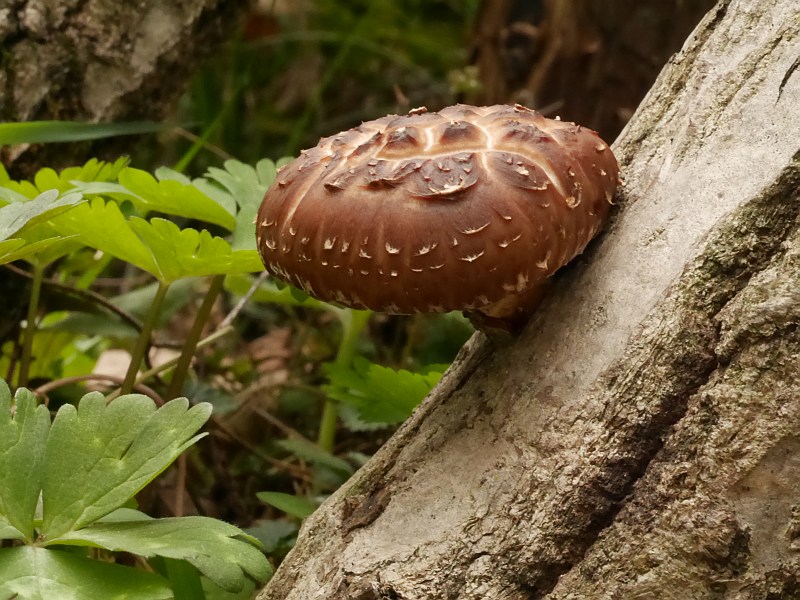
Shiitake with Anemone flaccida behind
Shiitake
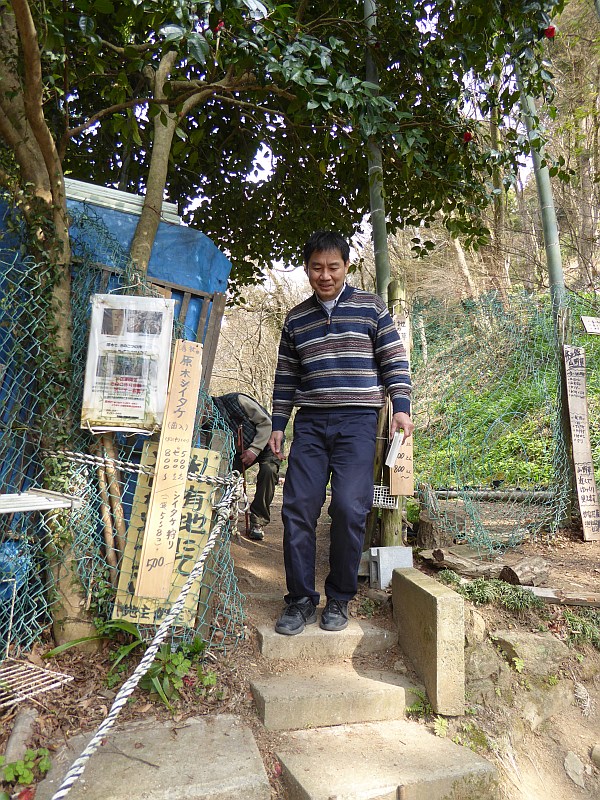
The owner and the nursery
From top left and clockwise: Anemone flaccida, Erythronium, Hemerocallis, Tricyrtis, Cardamine and Angelica, Saxifraga stolonifera, Taraxacum albidum and Erythronium japonicum (bottom left
Me, the owner and the white-flowered dandelion (Taraxacum albidum)
One of our guides!
…and last few from the Erythronium wood
Acers
Mass flowering of katakuri video!
In the afternoon, we were invited to the house of the nursery owner in the old traditional part of town. He also had a garden full of interesting plants!
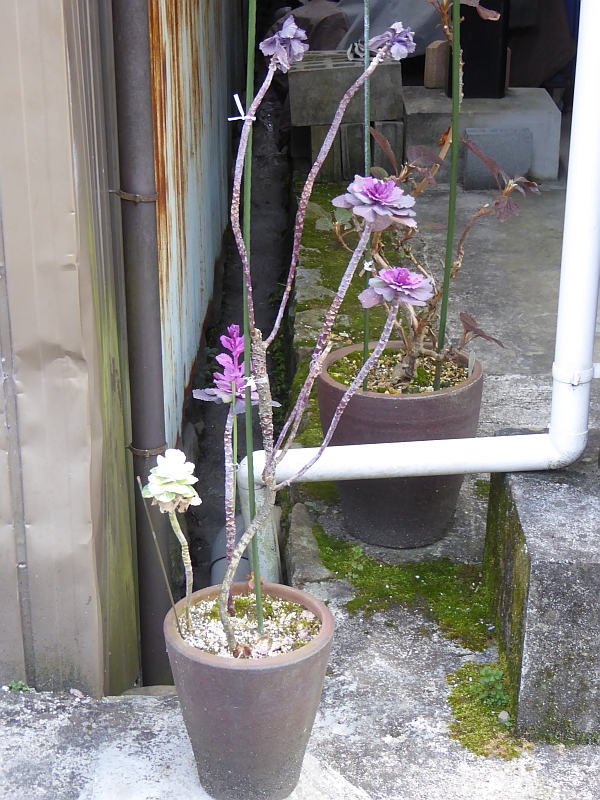
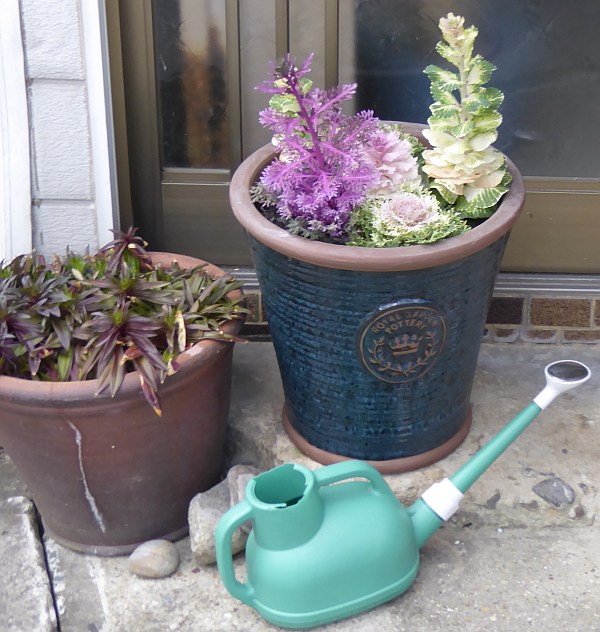
Overwintered ornamental cabbages
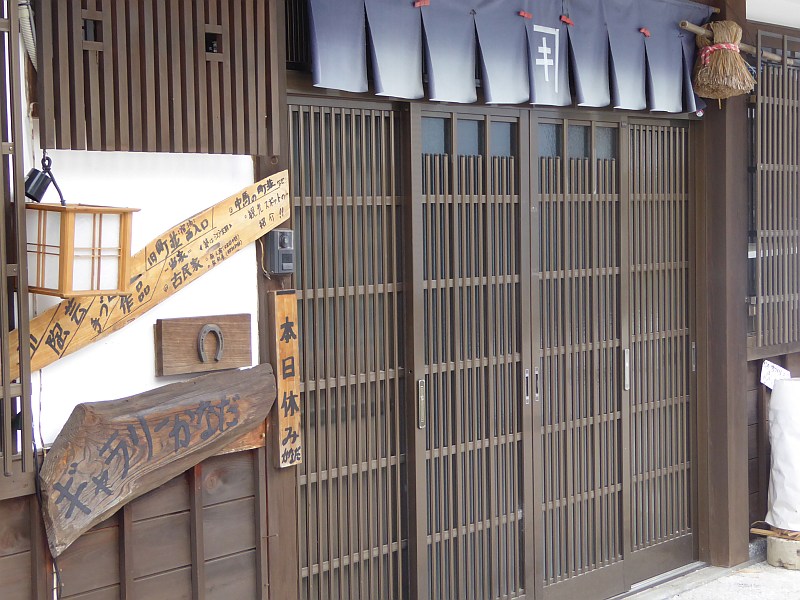
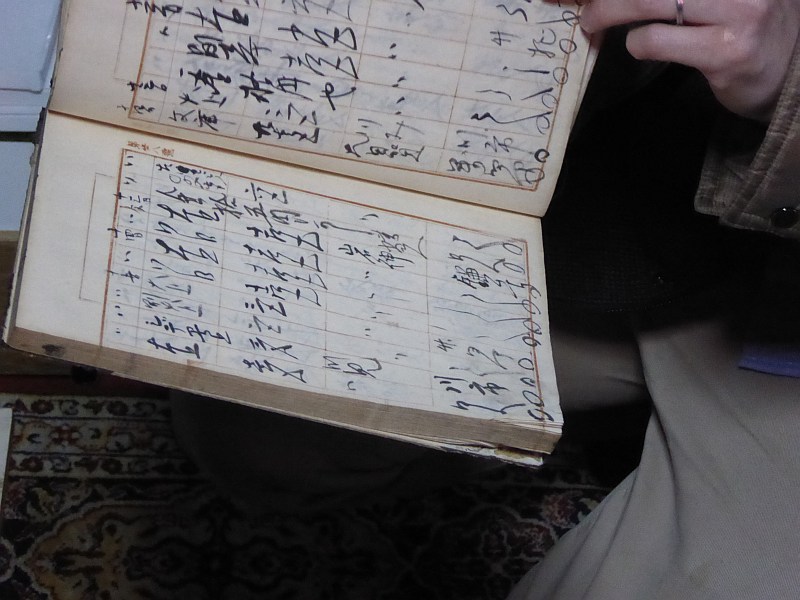
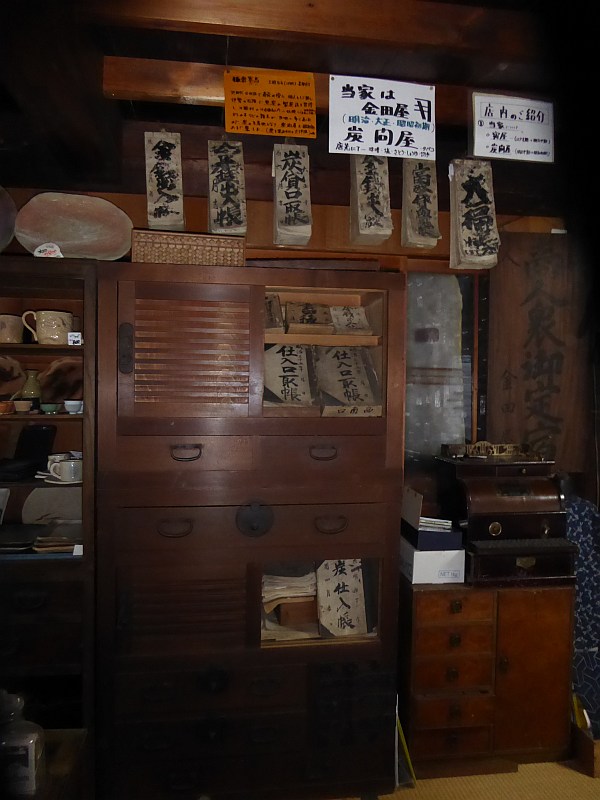
Our host’s house was an old fashioned shop that closed down as tourist numbers decreased
Our host, the nursery owner, also made various ferments.
This one was made with fuki (Petasites japonica)
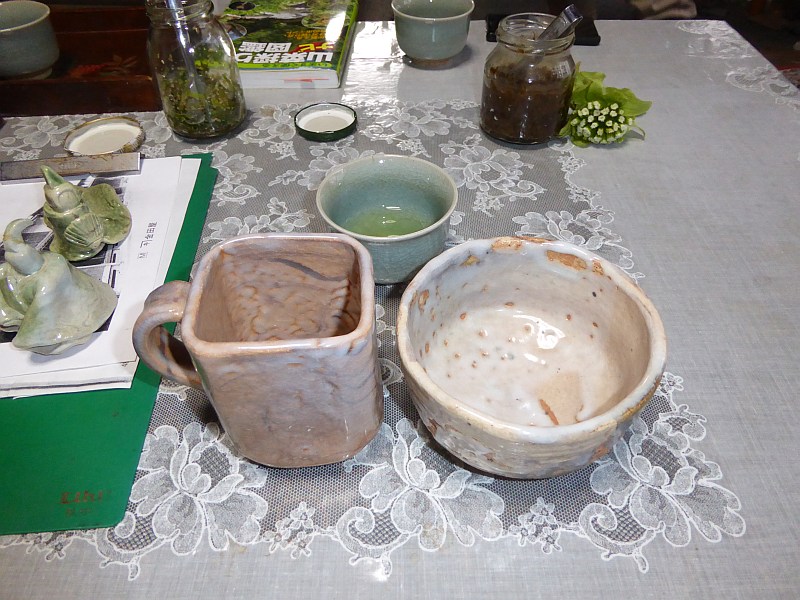
Another hobby was pottery…he kindly gave the one on the left as a gift!
Green tea..
Pots
The old shop
This poster was on the wall showing the maples in autumn colour
Out in the garden and there was a Taraxacum albidum, still with one white flower
Taraxacum albidum
Anemone flaccida in the garden
…and Saxifraga stolonifera
Pachysandra
Flowers of a Pachysandra species
Fuki, Petasites japonica
Fuki, Petasites japonicus
Hosta appears quite late in spring
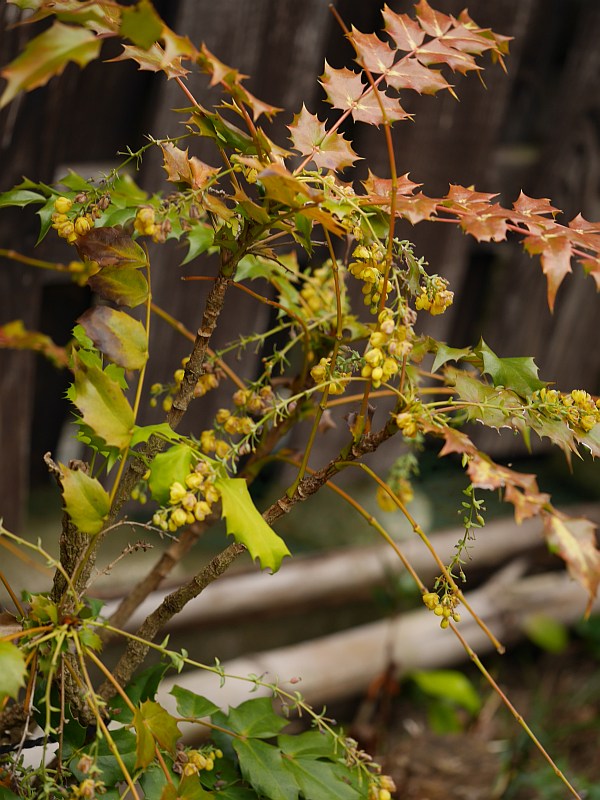
Mahonia
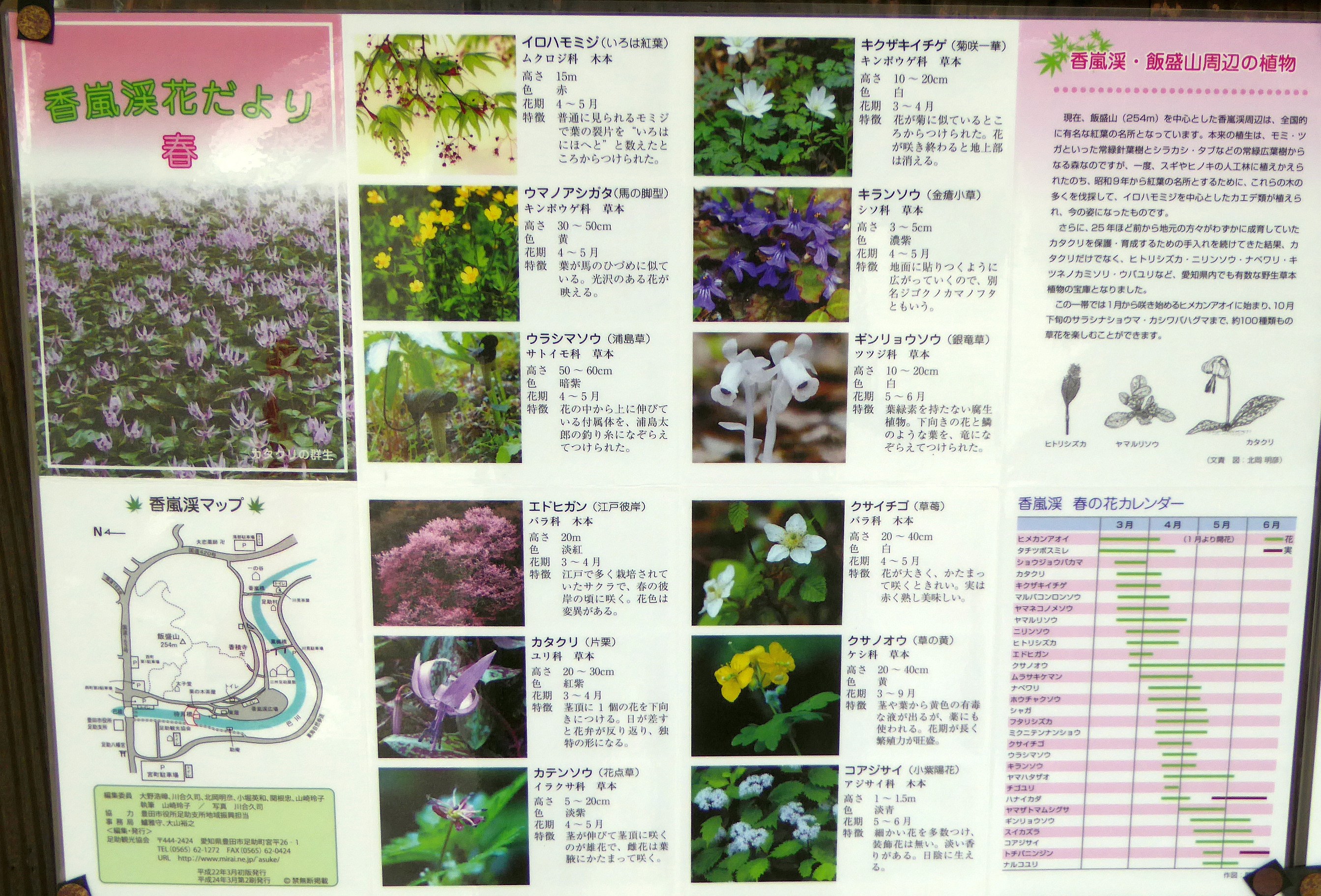
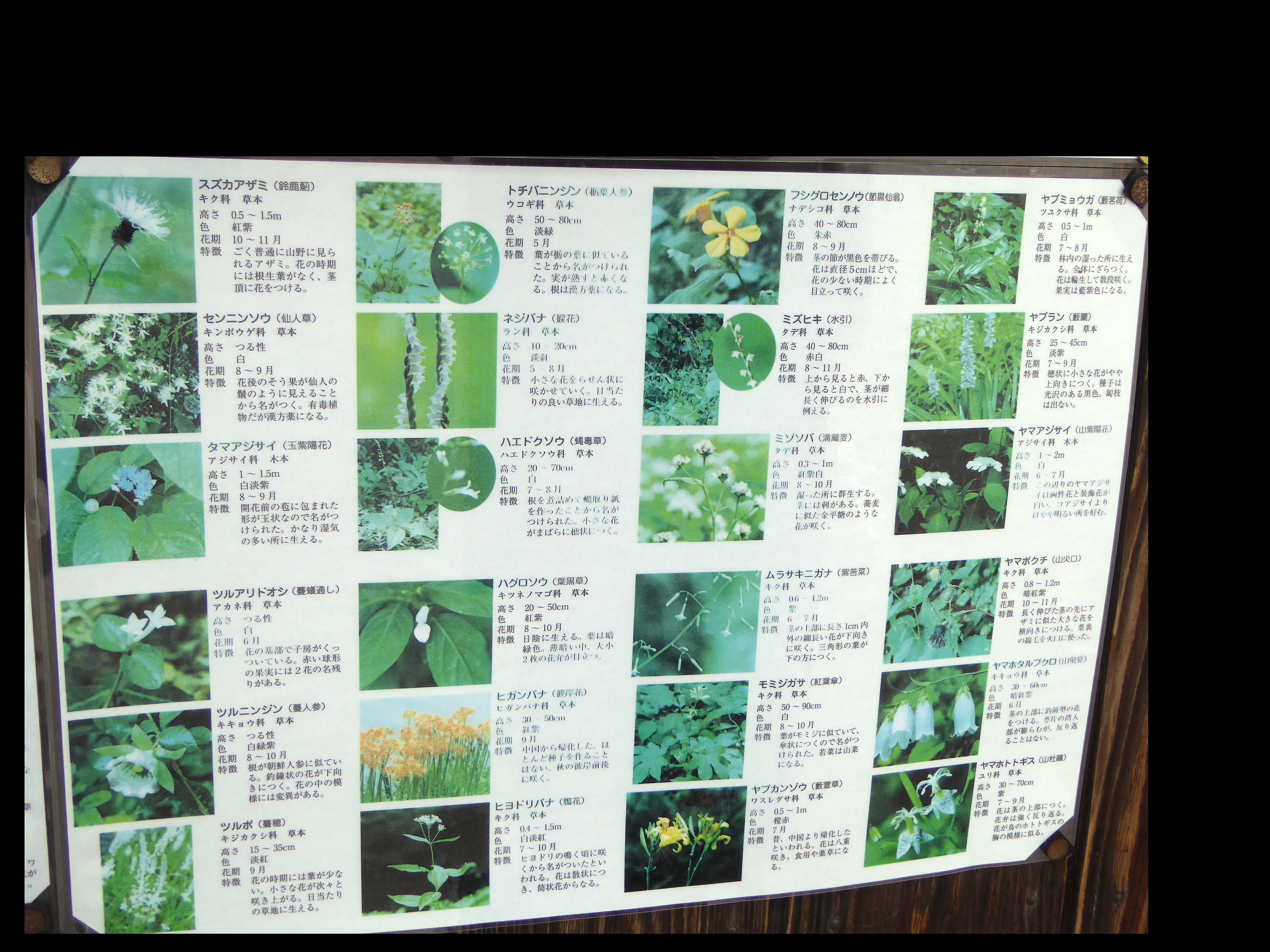
On our host’s wall was a poster of wild flowers on the mountain where we had botanised :)
Finally, a gallery of pictures from our visit to the traditional crafts museum, Sanshu Asuke Yashiki, and our gourmet lunch at the Kunputei restaurant within the museum grounds:
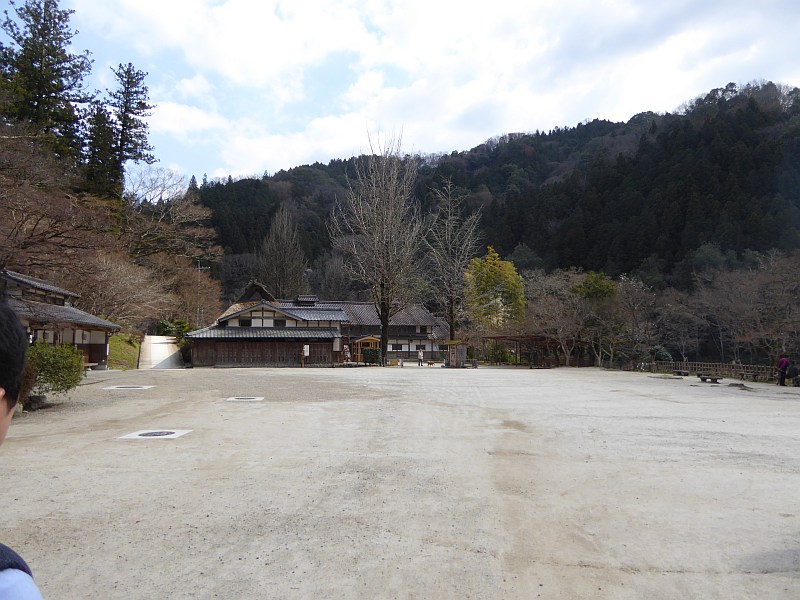
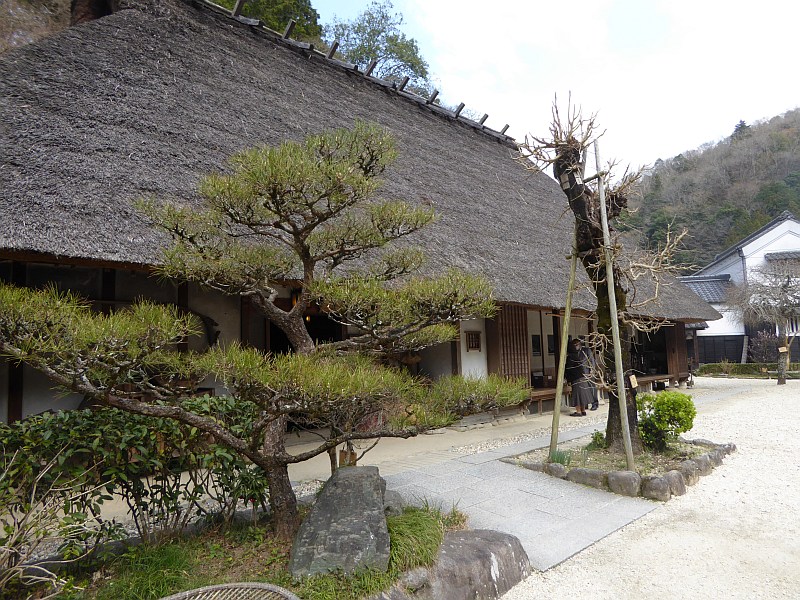
Sanshu Asuke Yashiki traditional crafts museum
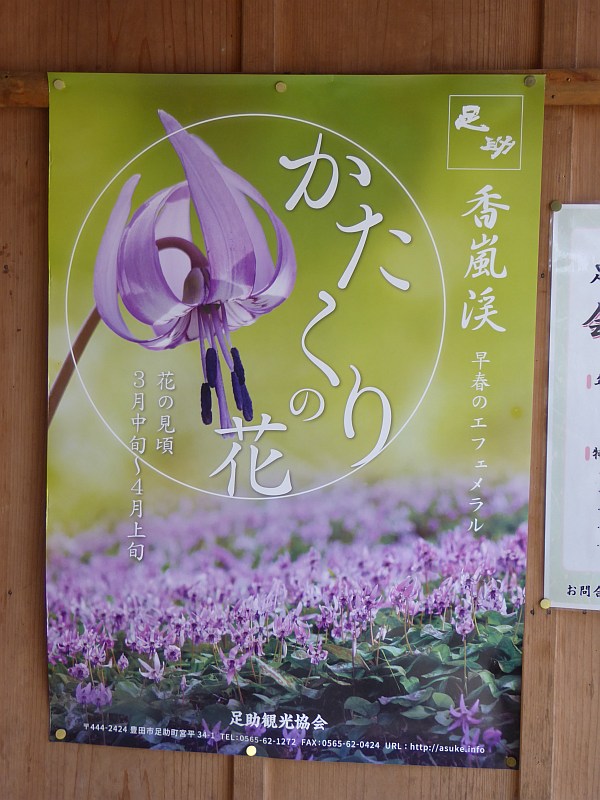
Katakuri poster at the museum entrance
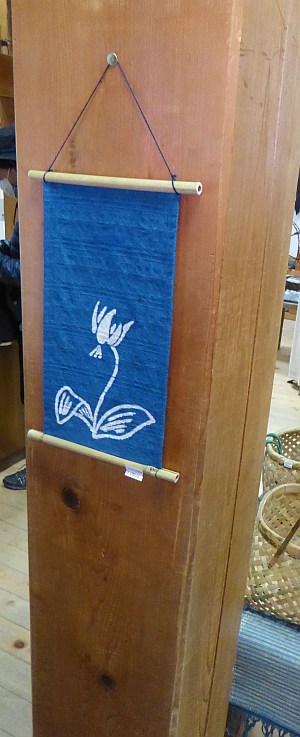
Katakuri art, the blue dye from Japanese Indigo (Polygonum tinctorium)
The blue dye from Japanese Indigo (Polygonum tinctorium)
Katakuri poster
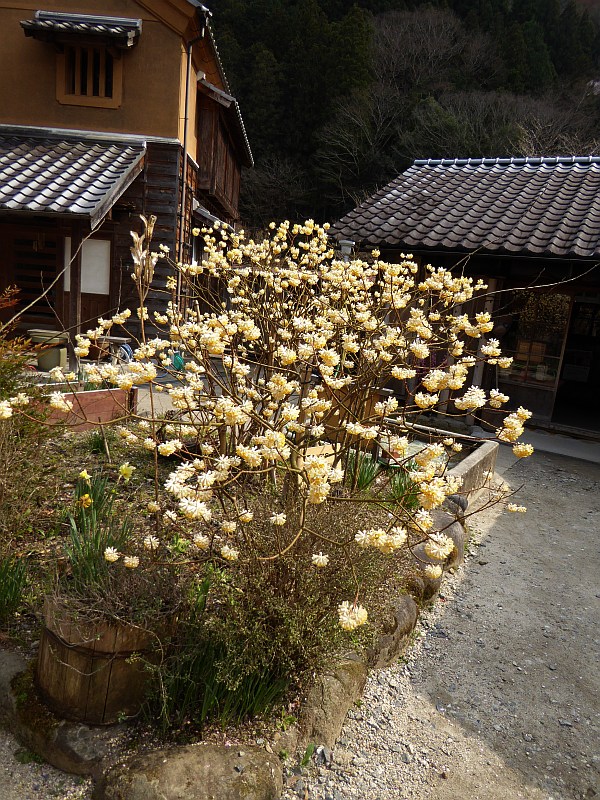
Edgeworthia chrysantha
Area for growing dye plants with Magnolia in full flower on the river bank
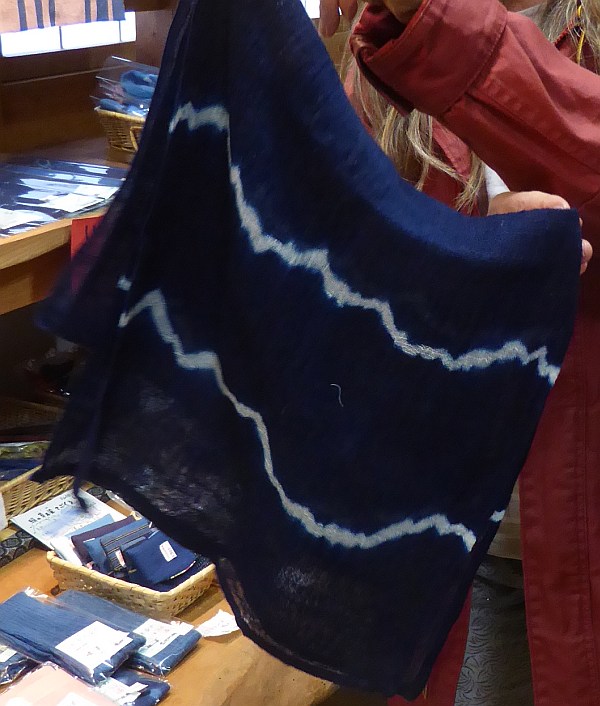
Blue dye from Japanese Indigo (Polygonum tinctorium / Persicaria tinctoria)
Dye exhibition
Japanese Indigo (Polygonum tinctorium / Persicaria tinctoria) seed
Japanese Indigo (Polygonum tinctorium / Persicaria tinctoria)
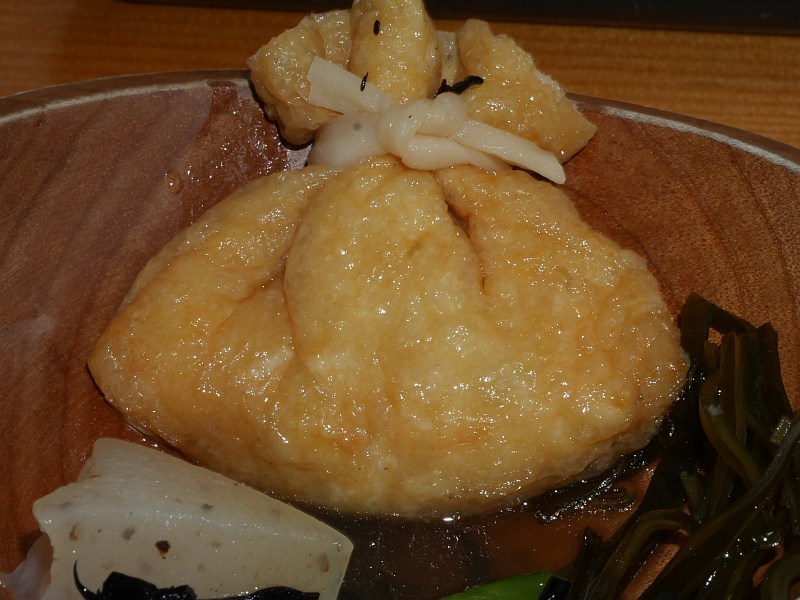
Gourmet lunch at the Kunputei tofu restaurant…I miss the Japanese food!
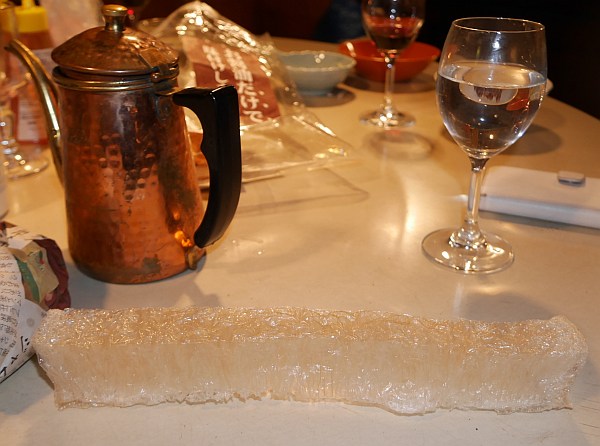
Konjakku is the jelly-like substance on the right! From Amorphophallus konjac
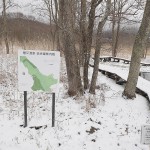
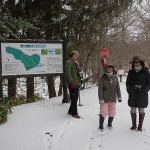
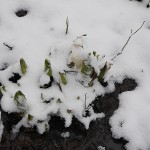
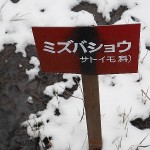
In early April 2016, on my study tour to Japan, I was invited to the mountain home of Ken Takewaki (and Masama) for a short visit. I wrote about Ken’s home and the shock of waking to new snow after 20C the day before in the lowlands back in April (see http://www.edimentals.com/blog/?p=6357)! Despite the snow, Ken took us on a trip around the local area (Sugadaira in Nagano) and we had a walk around a local wetland nature reserve, before Ken took us on a long walk up through the forest where he had recently taken over a piece of land in a clearing to grow vegetables. All the signs were in Japanese, so I don’t know the names of many of the plants we saw, but here’s the pictures:
Typha….known as the supermarket of the swamps as it has so many uses
Japanese Bullfinch?
Ken on the way up the trail to his off-grid vegetable patch
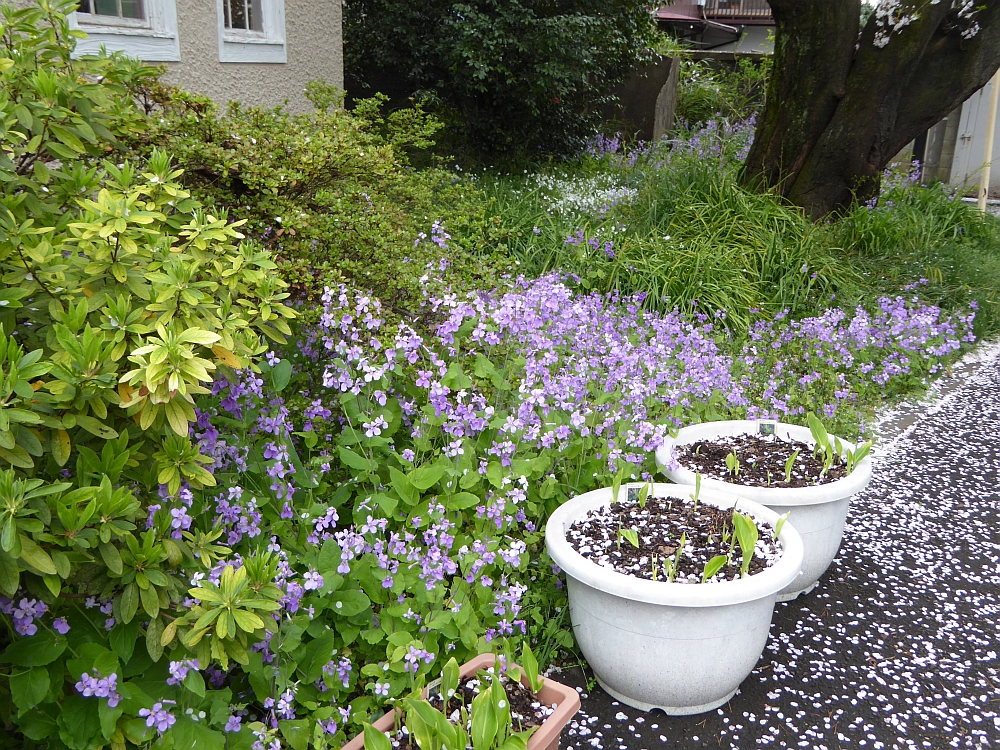
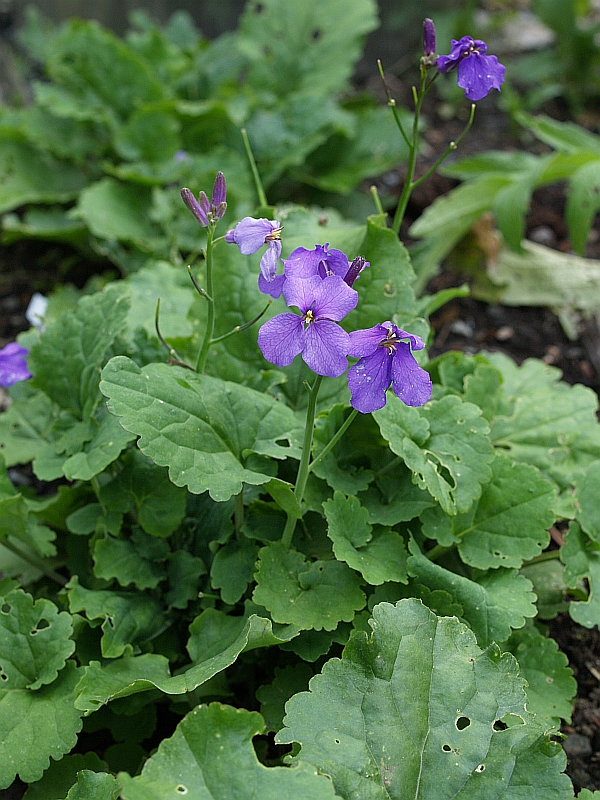
When I visited Japan in early spring 2016, I noticed a violet/purple flower growing as an ornamental in some gardens and also escaped as a weed.
In a Japanese garden growing as an ornamental
In the University of Tokyo Botanical Gardens
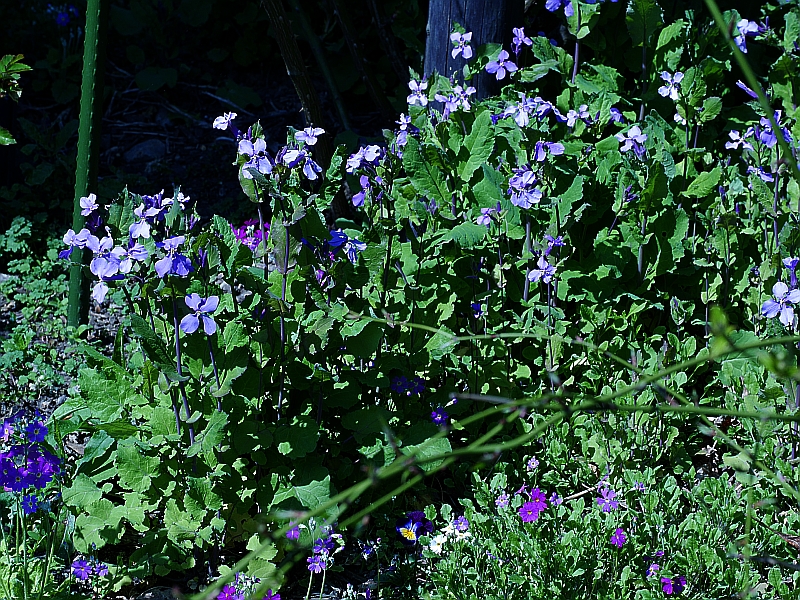
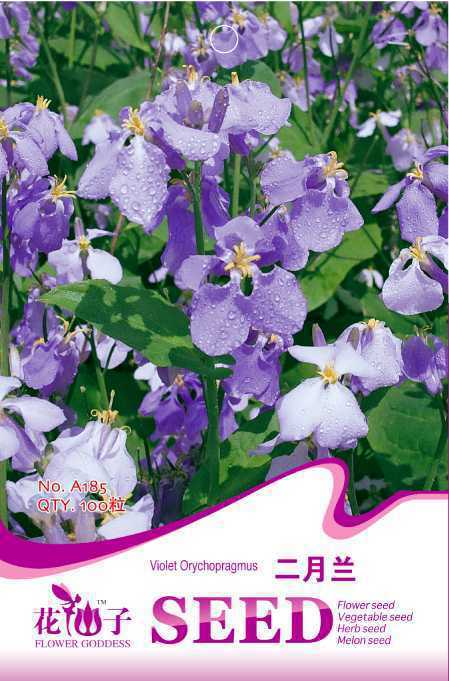
I finally realized that it was a plant I had grown for a couple of years (2011-2012) as an unusual annual vegetable, Orychophragmus violaceus, known as ‘Chinese Violet Cress’ or ‘February Orchid’, sourced from Horizon Herbs in the US. Despite one of its common names, it’s not an orchid but is related to cress, belonging to the cabbage family Brassicaceae.
Still in flower in November in my garden
Eaten alive by Brassica pests, bouncing back in the autumn with masses of shoots
In my garden
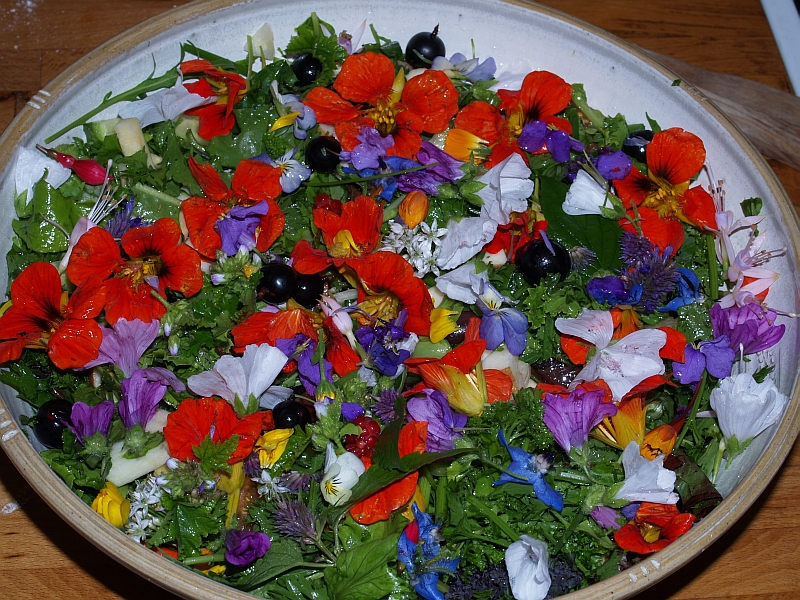
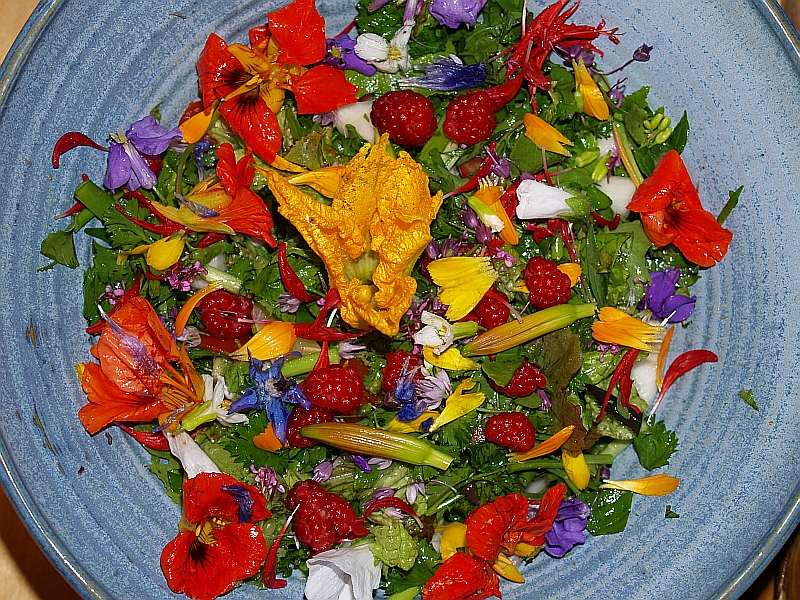
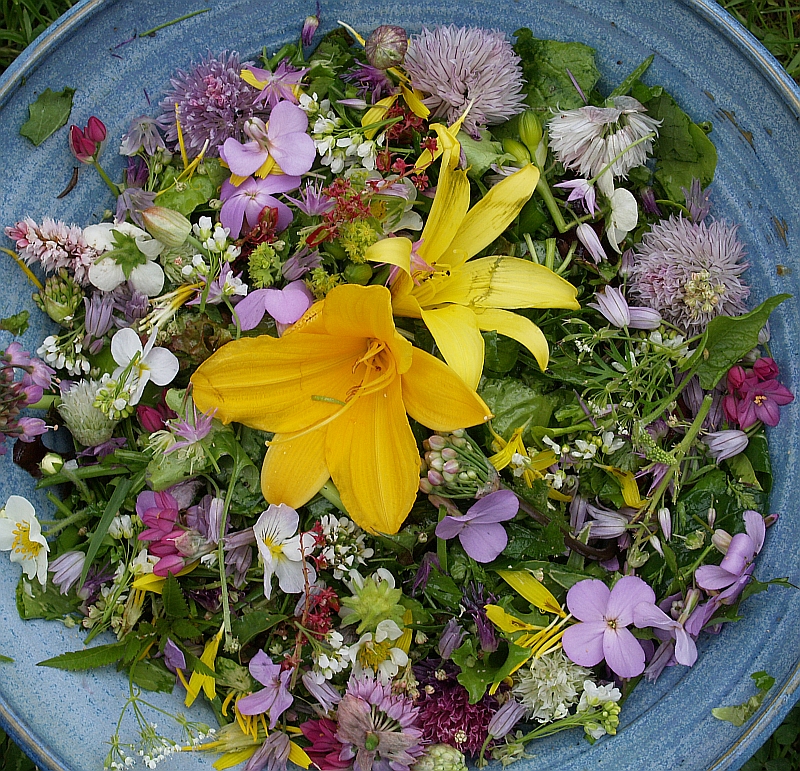
It hadn’t grown particularly well in my garden, but it did manage to flower and I used them in various salads during those two years, adding a different colour to the mix and it continued flowering right to the first frosts in November! It was also badly attacked by the usual pests of Brassicas, but it bounced back with masses of shoots from the roots in the autumn when the pest pressure was released. It doesn’t like temperatures below -5C and therefore didn’t have much chance of overwintering here in Malvik (it is biannual in the Far East).
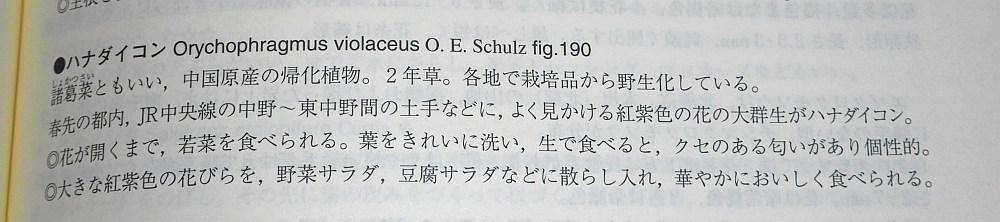
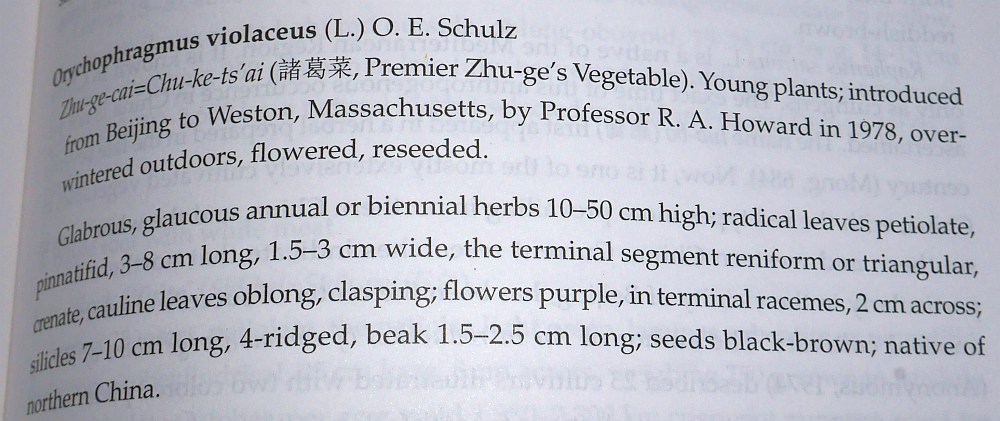
Orychophragmus violaceus has a wild distribution in China and Korea and was introduced to Japan a long time ago both as an ornamental and also as a potential oil seed crop (you can google pictures of it growing alongside rape oil plants). In the wild it has a wide range of habitats from woodlands, gardens, roadsides and open fields. In Japan it has widely naturalized in many habitats thanks to its adaptability and it is now found throughout the islands, encouraged by gardeners who love the early spring flowers. In some parts it carpets woodlands in the early spring and it has been described as the Bluebell of Japan! However it is also a weed in gardens (and as such one of the world’s most beautiful weeds!). In Japan it is known as hanadaikon (“flower-daikon”), which name is also used for Hesperis matrionalis (dame’s violet), ooaraseitou, murasaki-hana-na (“purple-flower-rape”), shikinsou (“purple-gold-plant”). Shokatsusai / zhu ge cai is its Chinese name.
Salad with Orychophragma violacea flowers!
Salad with Orychophragma violacea flowers!
Salad with Orychophragma violacea flowers!
It has also been used as a forage species in China: “Its shoots are rich in protein, iron, calcium and vitamins A and C. Hence it is a valuable forage. Its shoot yield is high, about 36,400 kg/ha, when cultivated in Chengdu. This plant species is adaptable to grassland, barren hills, roadsides, gardens, etc. Its protein content is higher than most other forage plants.”
Orychophragmus violaceus is mentioned as an edible wild plant alongside Udo (Aralia cordata) in Joy Larkcom’s Oriental Vegetables!
Short entry in Cornucopia II
In my comprehensive Japanese foraging book…translation needed!
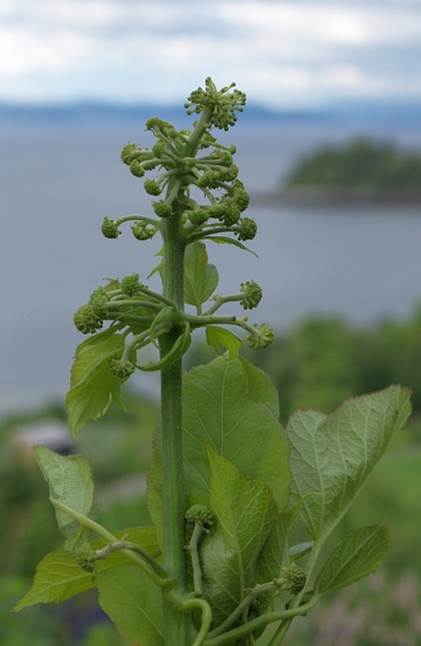
For the first time freely available is my article in Permaculture Magazine about my largest and most exciting vegetable Udo (Aralia cordata)! See the link near the bottom of the page and please subscribe here, they do a great job, but need our support! Go to https://www.permaculture.co.uk/subscribe…………….
To witness the underground cultivation of Udo in large caverns under Tokyo (mentioned in the article) was one of the reasons for embarking on a study tour of Japan with Naturplanteskolen in Denmark in Spring 2016, and during the visit we discovered that you can have one more layer in a forest garden……..
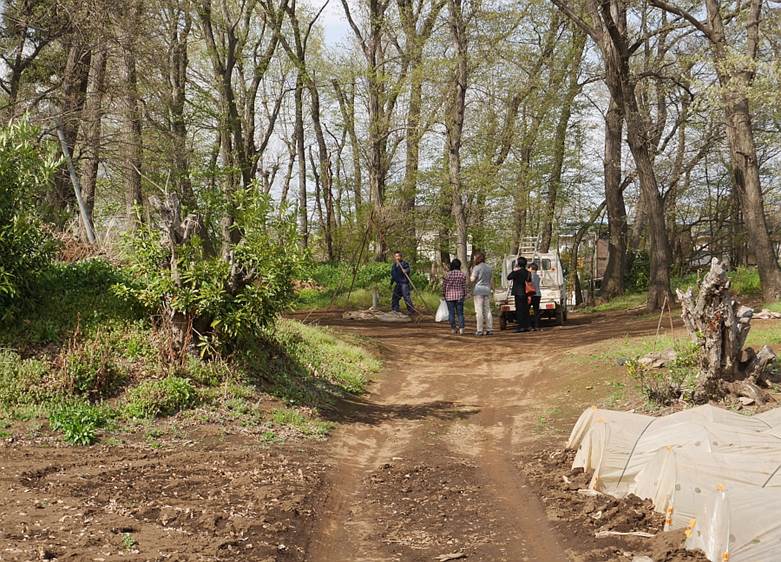
The udo wood…
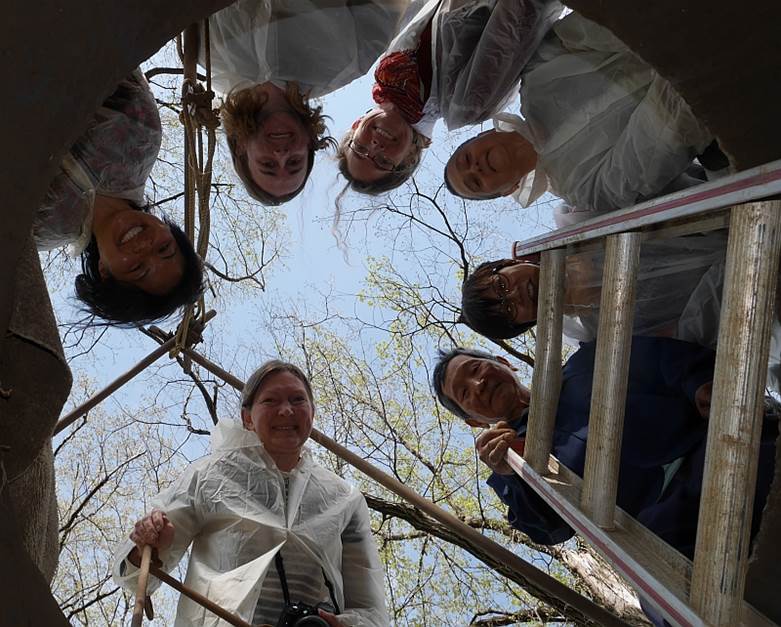
About to descend for the first time into Udo heaven; picture courtesy of Naturplanteskolen
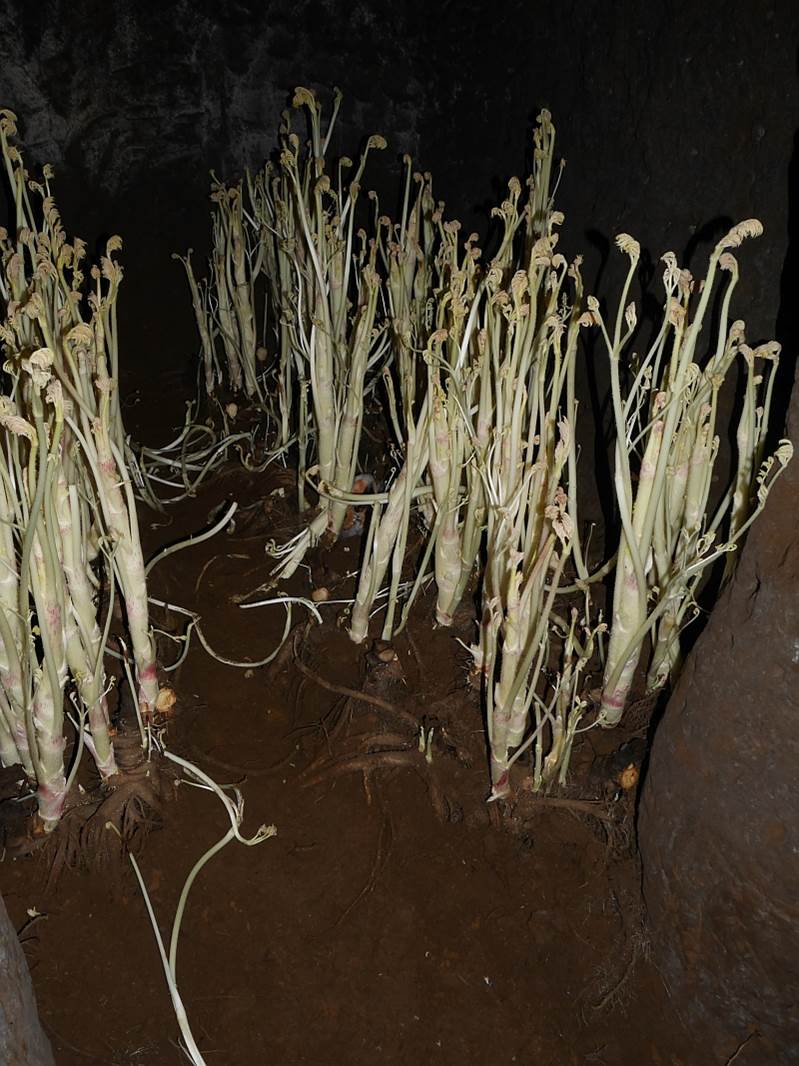
…and there they were!!
Green udo tempura in a restaurant!
The broccolis are also used
In the coldest spring ever in 2015 in my area, udo grew better than ever, whilst traditional farmers were struggling to sow and plant!
Thanks to Tei Kobayashi who acted as interpreter and liasing with the local authorities, to Ken Minatoya in the Netherlands who also initially called the city clerks for me and Joan Bailey for helping out, accompanying us on the visit and also for writing a local article, see here http://metropolisjapan.com/more-than-cherry-blossoms
I will write more about this visit as well as my other encounters with Udo in Japan as soon as I can!!
Each day on the trip to Japan had been equally amazing as the day before with new plant and food discoveries all the way!! The venue for my talk in Tokyo was the art/photography studio belonging to a guy called Ken Takewaki. It turned out he’d spent a lot of time in the UK working on organic farms and knew the owner of Poyntzfield Nursery in Scotland well and I’d already planned to try to visit Poyntzfield on my Scotland trip in September! Knowing that I was heading for the mountains after Tokyo, Ken kindly invited me to visit his mountain home! What a place and the food was out of this world! Ken and his lady Masami had made a special effort to feed me sansai!
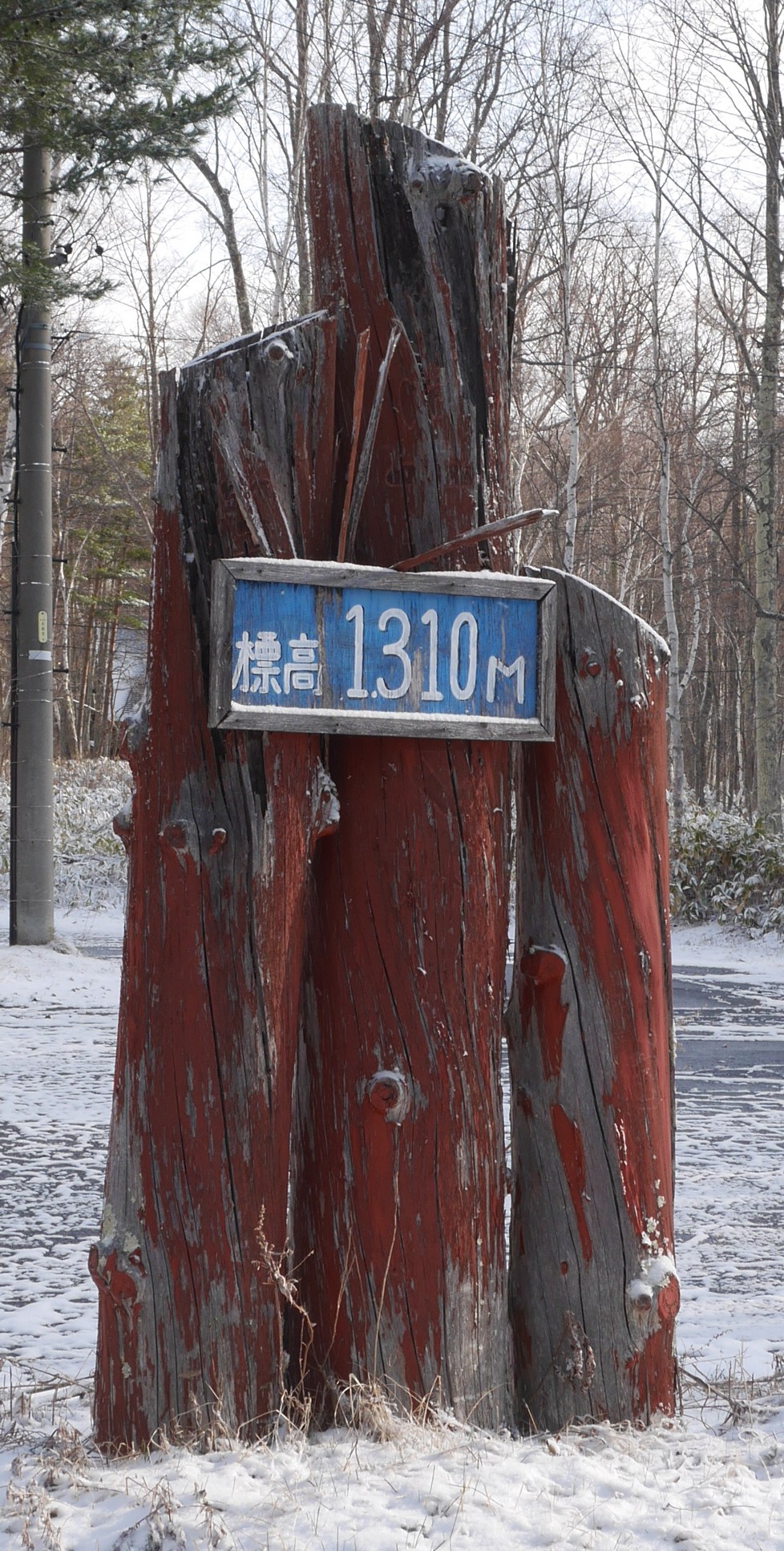
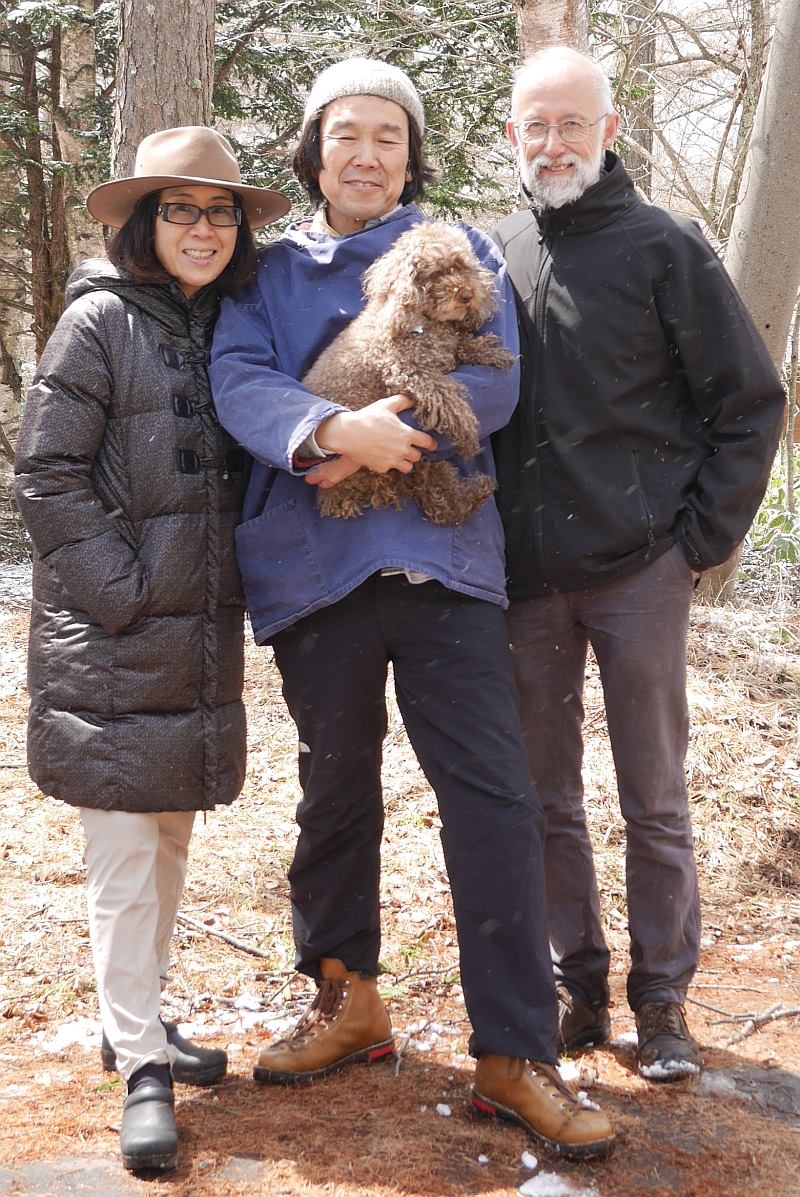
The next morning it was as if I’d been transported home in my dreams as there was new snow on the ground at the Ken’s home at 1300m. The day before it has been over 20C at 600m! Thanks so much to Tei, who I got to know through Caroline Ho Bich-Tuyen Dang, a member of Norwegian Seed Savers, for showing me so much of her village near Besshou (Ueda) in Nagano Prefecture and sharing all the amazing sansai and sake and for taking me to Ken’s place! More on Besshou later when I get time!Thank you so much too Ken and Masami for your hospitality!
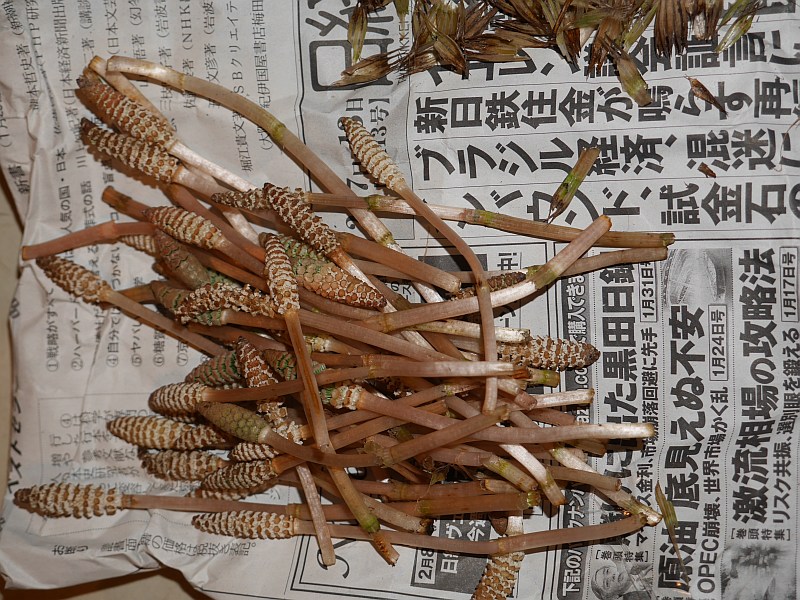
Knowing of my interest, Ken and Masami had picked sansai for dinner…here are the horsetails, tsukushi, Equisetum arvense flower buds
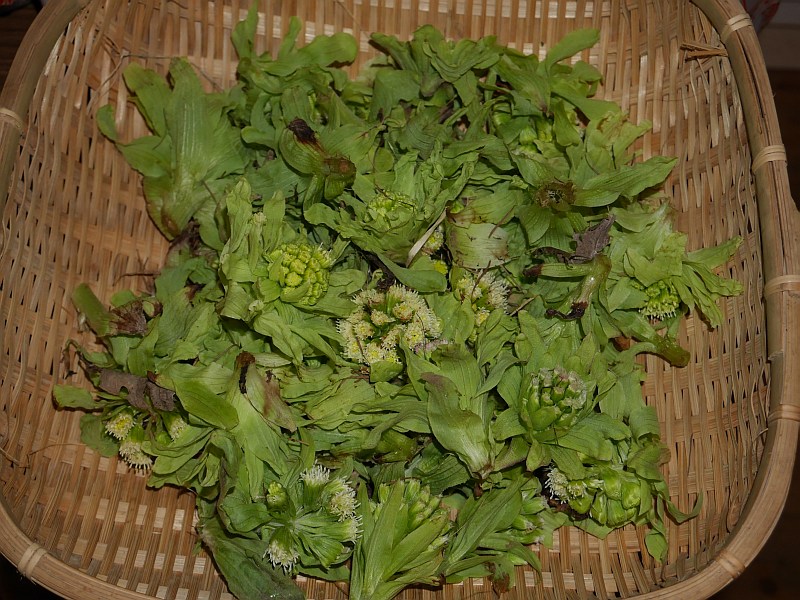
..and fuki (Petasites japonica) flower buds
…and I brought the shidoke (シドケ / Parasenecio delphiniifolia). I’d bought it in a supermarket. See here: https://www.facebook.com/media/set/?set=a.10154213988935860.1073742705.655215859&type=1&l=eb0bc1fced
Shop bought blanched Hosta shoots served as a salad with a dip!
Shop bought blanched Hosta shoots served as a salad with a dip!
???
Ken Takewaki talks sake!
With Perilla
Taro (Colocasia esculenta)
Making the tempura batter…ice for cold water is important!
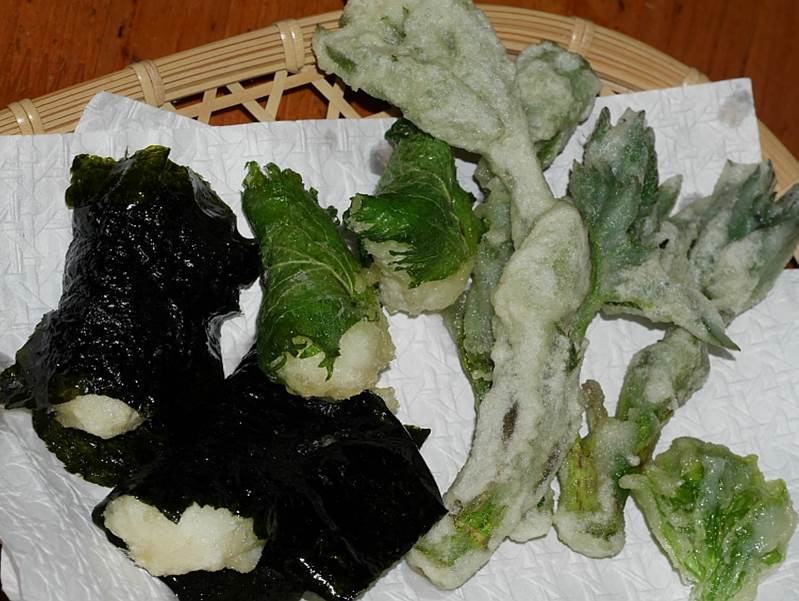
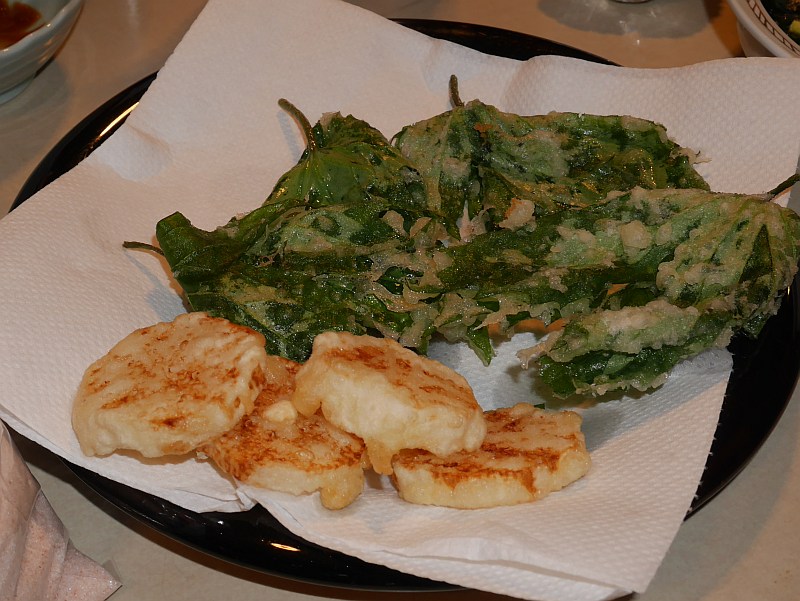
Fuki tempura
Fuki tempura
??
Shidoke tempura (Parasenecio delphiniifolia).
Shidoke tempura (Parasenecio delphiniifolia).
Shidoke and tsukushi (Equisetum) tempura
Tsukushi tempura
Ken spent some time in the UK working on organic farms and wrote this book of his experiences
Inside the book cover is this map…I will hopefully visit Poyntzfield nursery next month. Owner Duncan Ross and Ken are friends and have visited each other!
I hadn’t expected to be playing billiards :)
Tei in action!
The English connection…
Dried Daikon radish for breakfast
In the morning, the view from the living room and snow had arrived during the night or had I been transported back home?
Sasa (a bamboo) in snow
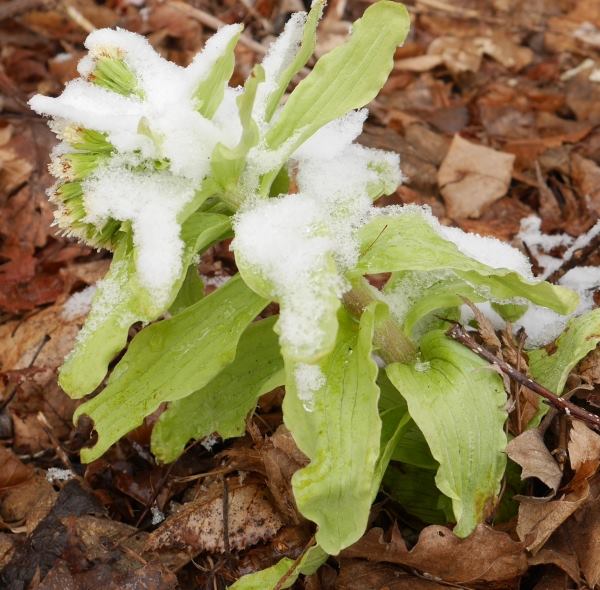
Fuki, Petasites japonica in snow, a veg I must have eaten 10 or more times during this trip…delicious
Misteltoe
Tei wasn’t prepared for the weather and had to borrow some clothes :)
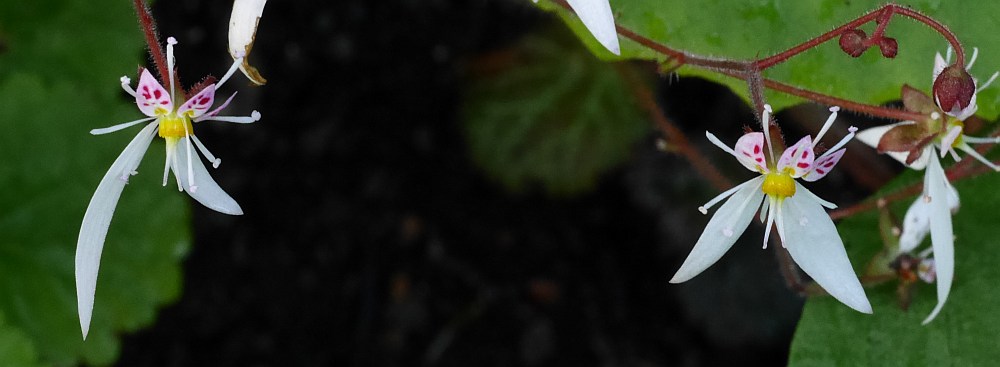
Saxifraga stolonifera is a lover of dark, wet, rocky places in Japan, Korea and China. I saw it several places in Japan during my March / April visit and ate the leaves as tempura, the commonest way of using it in the kitchen. In Japan, it has the “lovely” name Yuki-no-shita, meaning “Under the snow” whilst in English this fairly popular rock garden plant is known as creeping or strawberry saxifrage. It has flowered for the first time in my garden and they are rather special! There are a number of leaf selections (currently 8 available in the RHS Plant Finder in the UK, as well as a large flowered form). A great rock garden edimental then!! Probably not hardy, I will try to overwinter in my cellar!
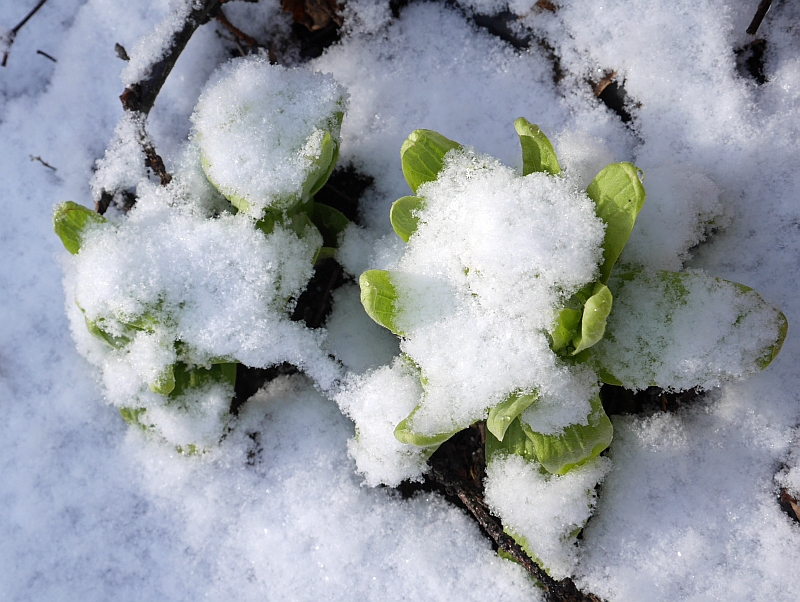
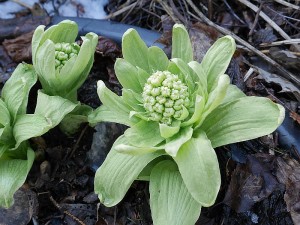
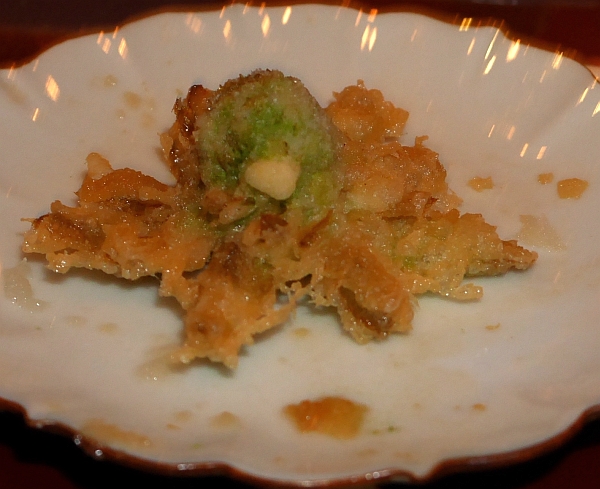
Two pictures of Fuki (Petasites japonicus) taken this morning, one of the delicious wild vegetables I ate in Japan (pictured prepared flower bud tempura, fukinoto) :)
Perennial vegetables, Edimentals (plants that are edible and ornamental) and other goings on in The Edible Garden