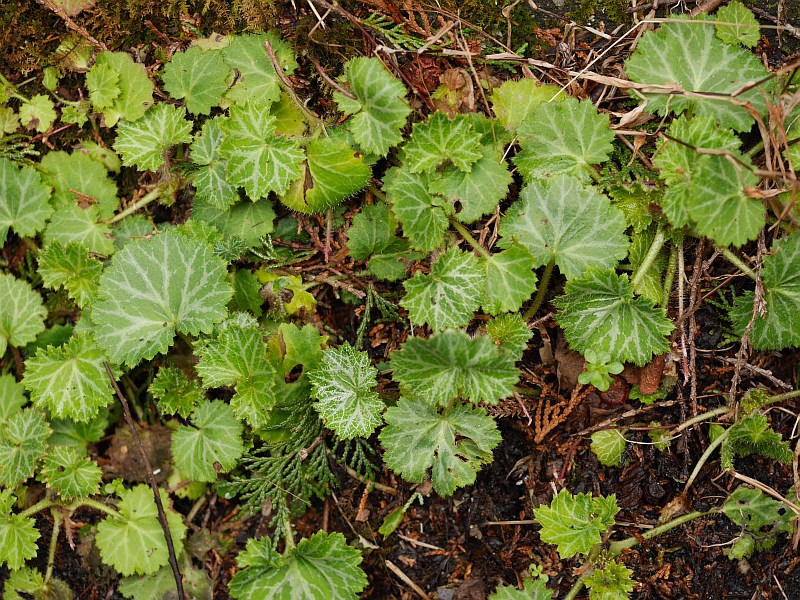
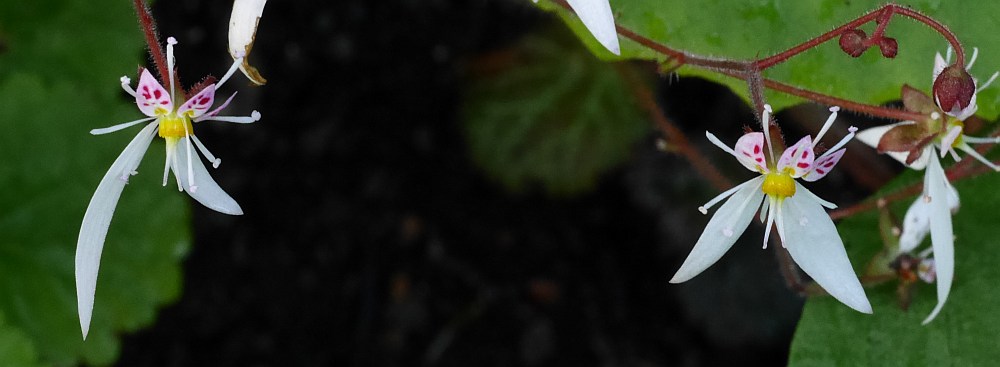
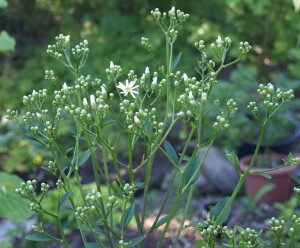
Saxifraga stolonifera is a lover of dark, wet, rocky places in Japan, Korea and China. I saw it several places in Japan during my March / April visit and ate the leaves as tempura, the commonest way of using it in the kitchen. In Japan, it has the “lovely” name Yuki-no-shita, meaning “Under the snow” whilst in English this fairly popular rock garden plant is known as creeping or strawberry saxifrage. It has flowered for the first time in my garden and they are rather special! There are a number of leaf selections (currently 8 available in the RHS Plant Finder in the UK, as well as a large flowered form). A great rock garden edimental then!! Probably not hardy, I will try to overwinter in my cellar!
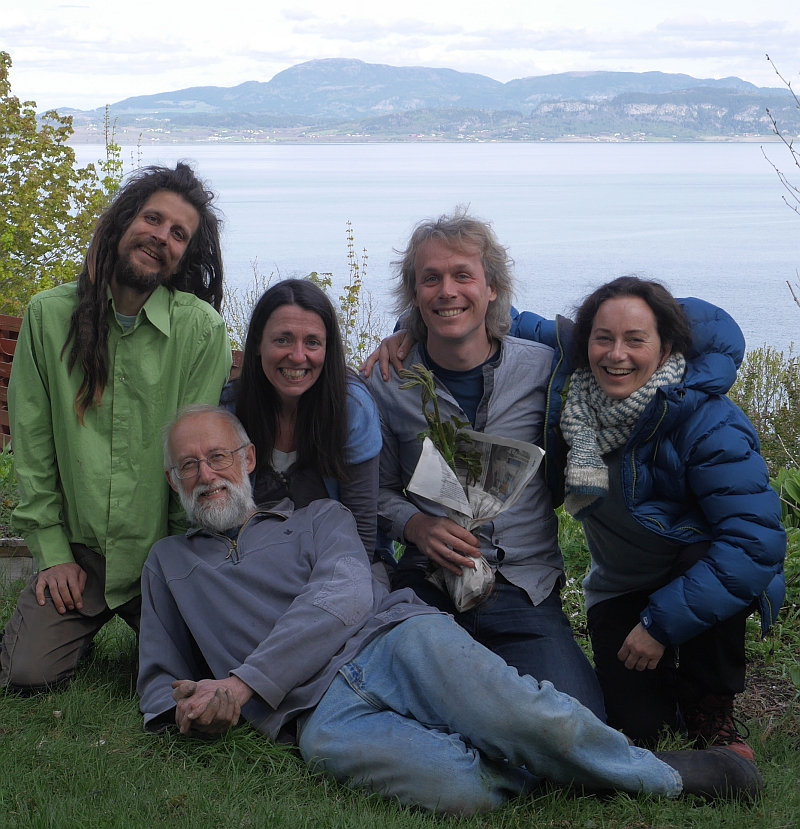
This was an unscheduled course day for me, my helper Lorna and Berit the camper, as it was a national holiday in Norway and Christian Odberger gave us a short course in grafting and I now have 6 or so new varieties of apples on a seed propagated apple. See also http://www.edimentals.com/blog/?p=4627
Day 4 course participantsDay 4 course participants
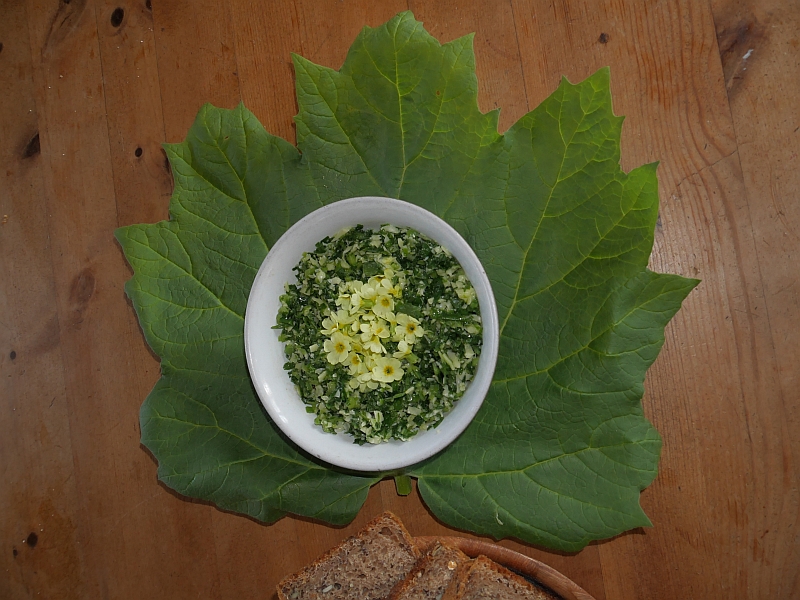
The last supper: Rheum palmatum / Primula dip!
The last supper: Rheum palmatum / Primula dip!
This is a slide I’ve been using recently of my favourite perennial vegetable that didn’t make it into my book as I discovered it too late, Ligularia fischeri (gomchwi), an important shade tolerant vegetable in Korea… The pictures to the left and right are from the website of a Ligularia farm in Korea! See more about this amazing plant here: http://www.edimentals.com/blog/?page_id=3114
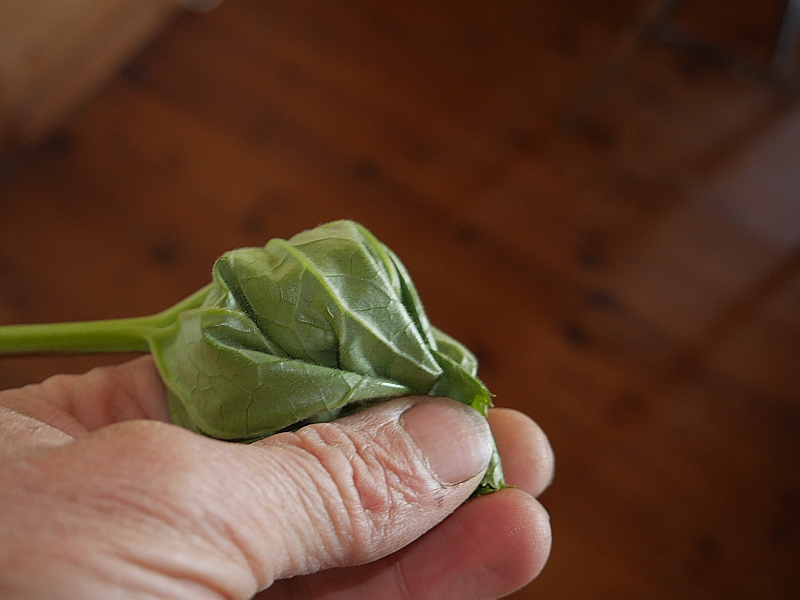
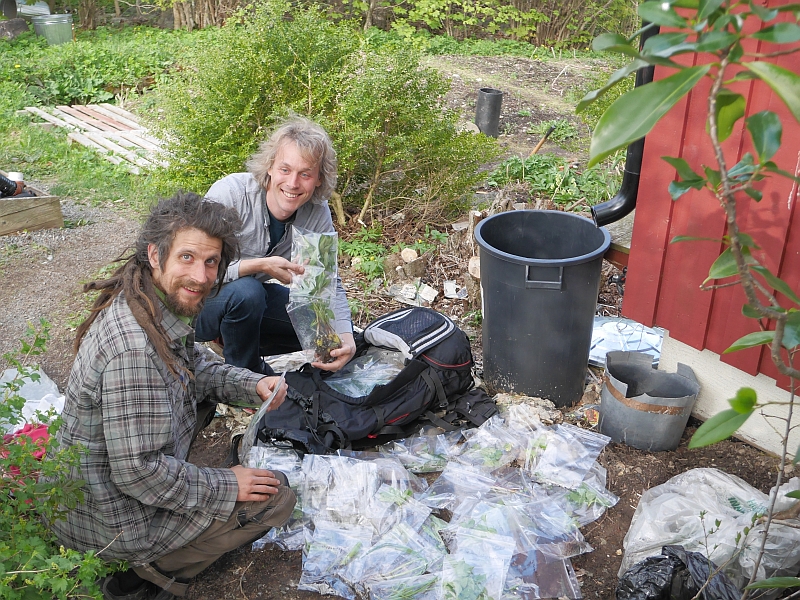
We decided to try Ligularia fischeri wraps (the wrap leaves are eaten in Korea, unlike some other countries) and all agreed that it was delicious!We decided to try Ligularia fischeri wraps (the wrap leaves are eaten in Korea, unlike some other countries) and all agreed that it was delicious!I sympathise with these guys as I have the same edimental-collectomania ;) They went away with some 40 different plants!
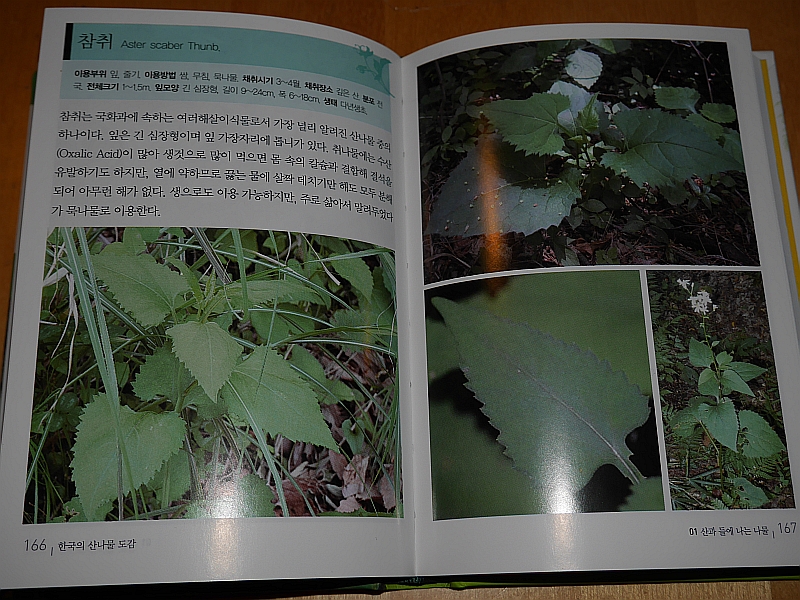
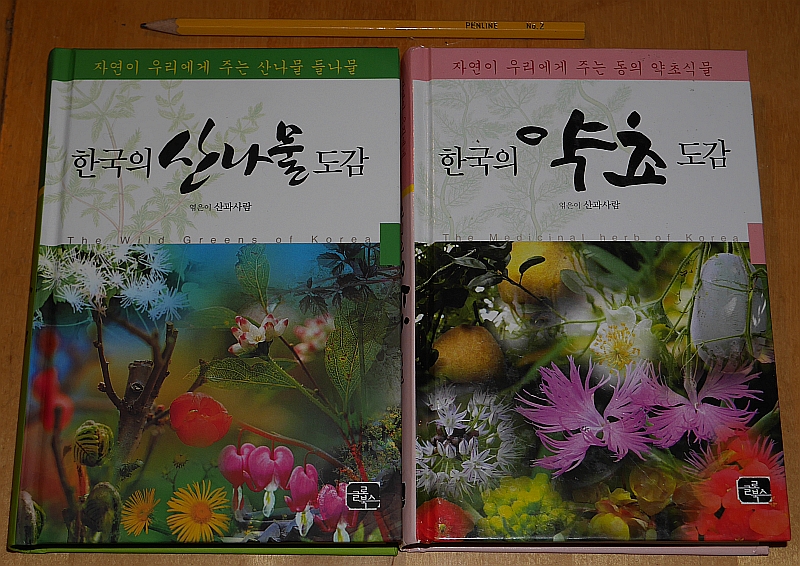
There are still many undiscovered (in the west) perennial edibles in the Far East. I’m therefore now concentrating mainly on that area in this quest. This spring I will travel for 3 weeks in Japan as part of this work. Another “country” with a rich diversity of food plants is Korea. With help from my Norwegian / Korean friend Misoni Sandvik whom I mention in my book, and who is on her own quest to find and grow wild herbs she remembers foraging when she was a child in South Korea, I’ve received two books from Korea today entitled “The Wild Greens of Korea” and “The Medicinal Herb of Korea”. There’s often a diffuse boundary between food and medicine in Korea, so the second book is also relevant, including plants like Aralia cordata (Udo)!
Aralia cordata (Udo)Aster scaber (Korean Asters), the plant that lead to Misoni contacting me as related in my book, a plant she was looking for that I had on my seed list!