I sowed broad (fava) bean / bondebønner (Vicia faba) seed indoors yesterday as there’s still snow where I’d planned to put them outside. In addition to my late broad bean grex with a mix of colours, I thought it would also be worthwhile to start developing a local early variety which could also potentially be useful in more marginal areas such as North Norway and mountain areas. I’m starting with 4 early varieties, two from IPK Gatersleben: 1) Expresse Zeer Vroege Witkiem (meaning “very early white germ (seed)” (FAB424), Express (FAB 7066), my own selection of the commercial variety Express which I’ve grown as my early sort for some years and another purportedly early variety De Monica from Chiltern Seeds. I’ll select mainly for earliness and seed size.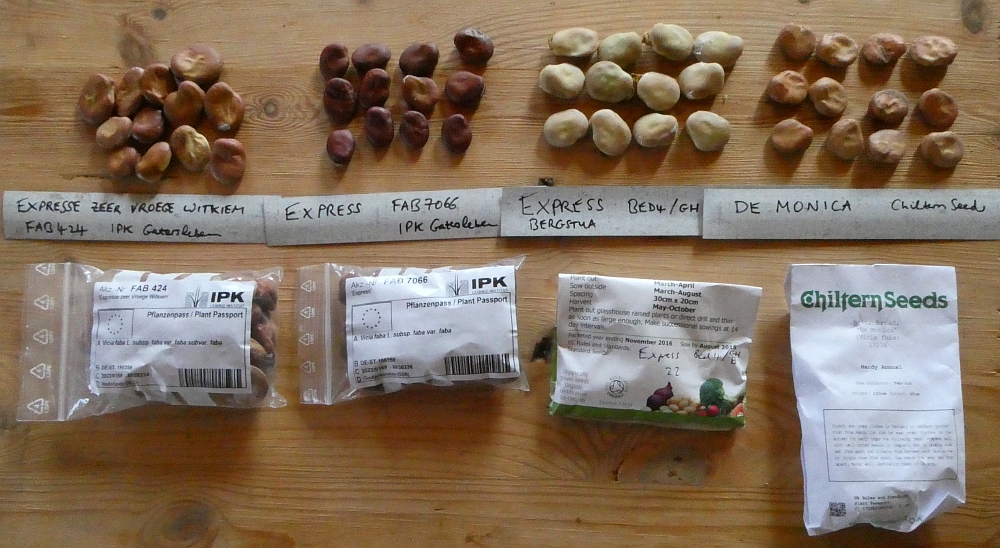
Monthly Archives: April 2023
Two spring signs
This spring sign today went unnoticed for many years, one of many moth species that has been registered feeding on Salix caprea (goat willow / selje) in spring, soon to be in flower here: this is the satellite / bølgefly (Eupsilia transversa); it overwinters as an adult. I’ve recorded it over the last few years from 14th March to 2nd May and once in the autumn. Its larval food plants are a variety of broad-leaved trees and shrubs including blackthorn, hawthorn, hazel, field maple, sweet chestnut and elms (all of which are found in the garden). The first bumblebees have been out in the garden this week on snowdrops and Crocus, here a tree bumblebee / trehumle (Bombus hypnorum), one of the commonest species here. It will too soon move over to goat willow (selje)!

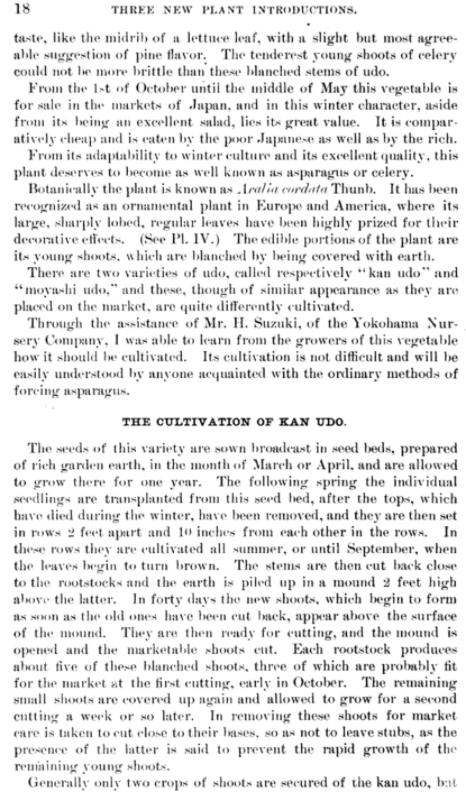
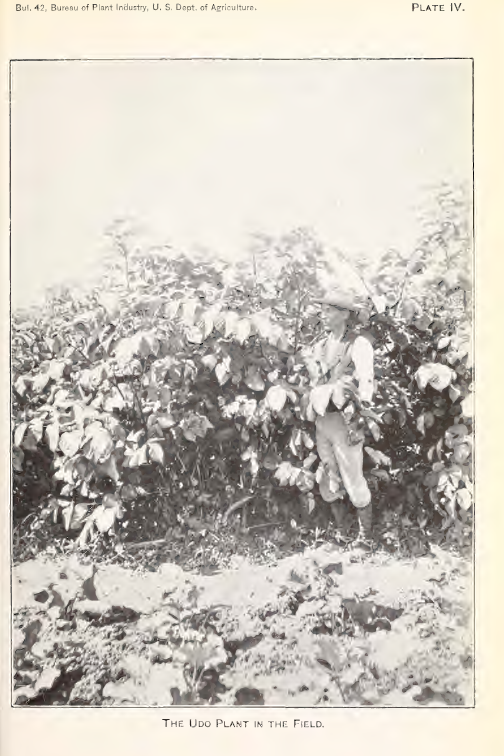
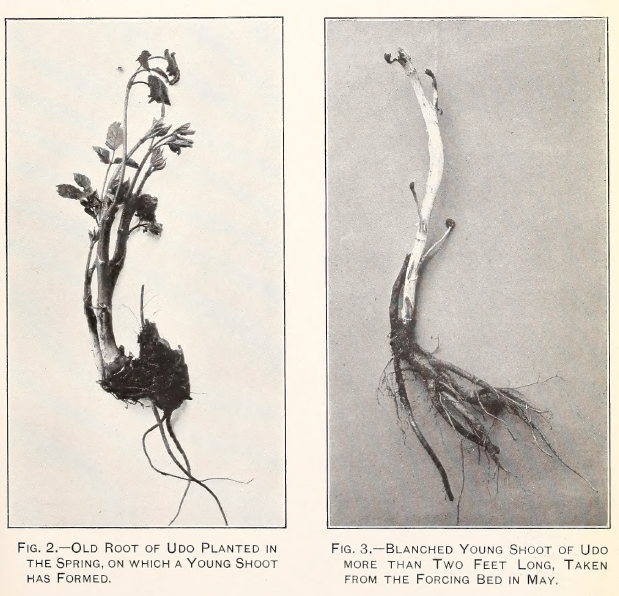
Udo introduction to the US with cultivation instructions (1903)
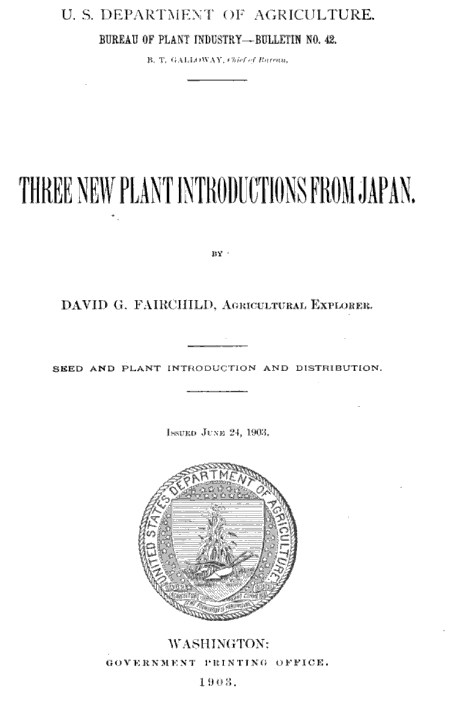
I stumbled upon this interesting US Department of Agriculture Bulletin from 1903 by David Fairchild, who calls himself Agricultural Explorer, entitled “Three New Plant Introductions from Japan”. There are 4 pages and some photos concerning udo (Aralia cordata) in the article “Udo : A new winter salad” (see pages 17-20 and the plates in the pdf below). This gives detailed growing instructions for “Kan udo” and “Moyashi udo” for harvesting during winter (October to May); these are cultivation techniques rather than udo varieties. Winter cultivation is more relevant to areas with relatively warm winters.
The other two plant introductions are Edgeworthia chrysantha as a fibre plant (for producing paper) and wasabi (Wasabia japonica).
Kyle Dougherty posted on my Edimentals Facebook group in 2021 about the same program with a great picture of udo cultivation and wrote “Here’s an interesting story for the udo (Aralia cordata) fans out there. In 1902 the USDA imported some 25,000 improved udo plants into the United States from Japan for trialing as a new vegetable crop. Plants were grown at the experiment station in Rockville, MD until at least 1917, and were also distributed to private gardens around the country and the Chico field station in CA. The Rockville experiment station is long gone, and is now the site of Montgomery College, but I can’t help but wonder if any of these plants are still out there somewhere. It’s also kind of a bummer that it never really caught on despite the effort the USDA put into it.”
Here’s the document I discovered (pages and plates are repeated below)




Happy Easter with a floriferous oxlip
Happy Easter 2023 with this floriferous forced Primula elatior (oxlip / hagenøkleblom) in the kitchen window. Unlike England where oxlip is a rare native plant, it was introduced to Norway in the 1800s from further south in Norway and has commonly escaped from gardens naturalising mainly in my area and further north, right to the very north of Norway. This is the first of the three Primulas to flower here, followed by Primula vulgaris (primrose / kusymre) and finally Primula veris (hagenøkleblom).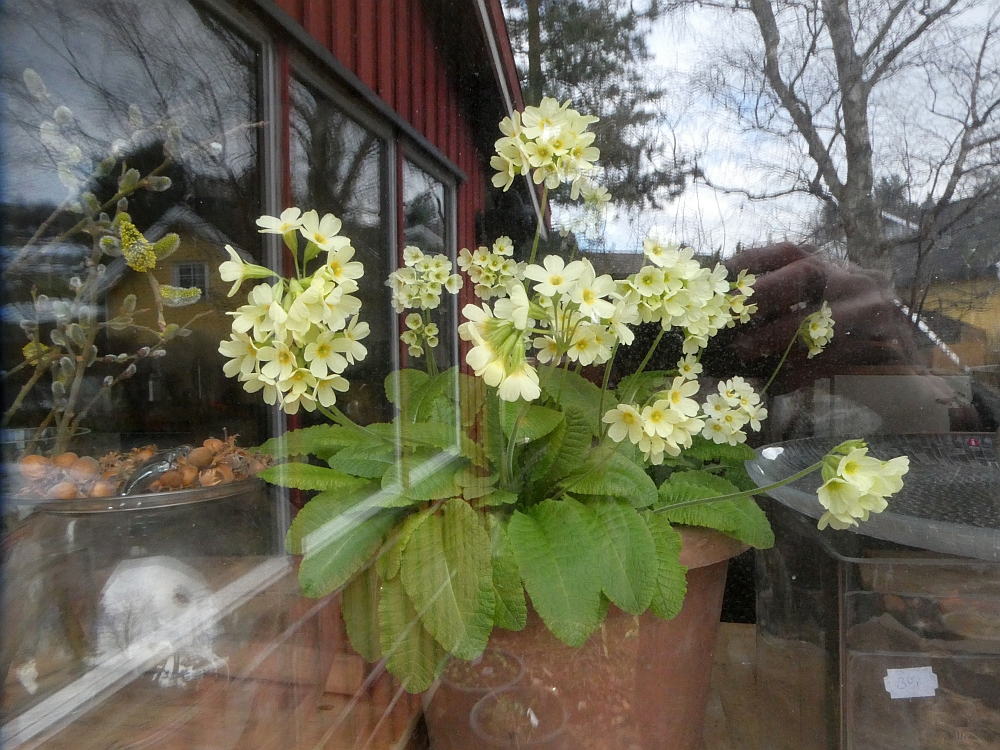
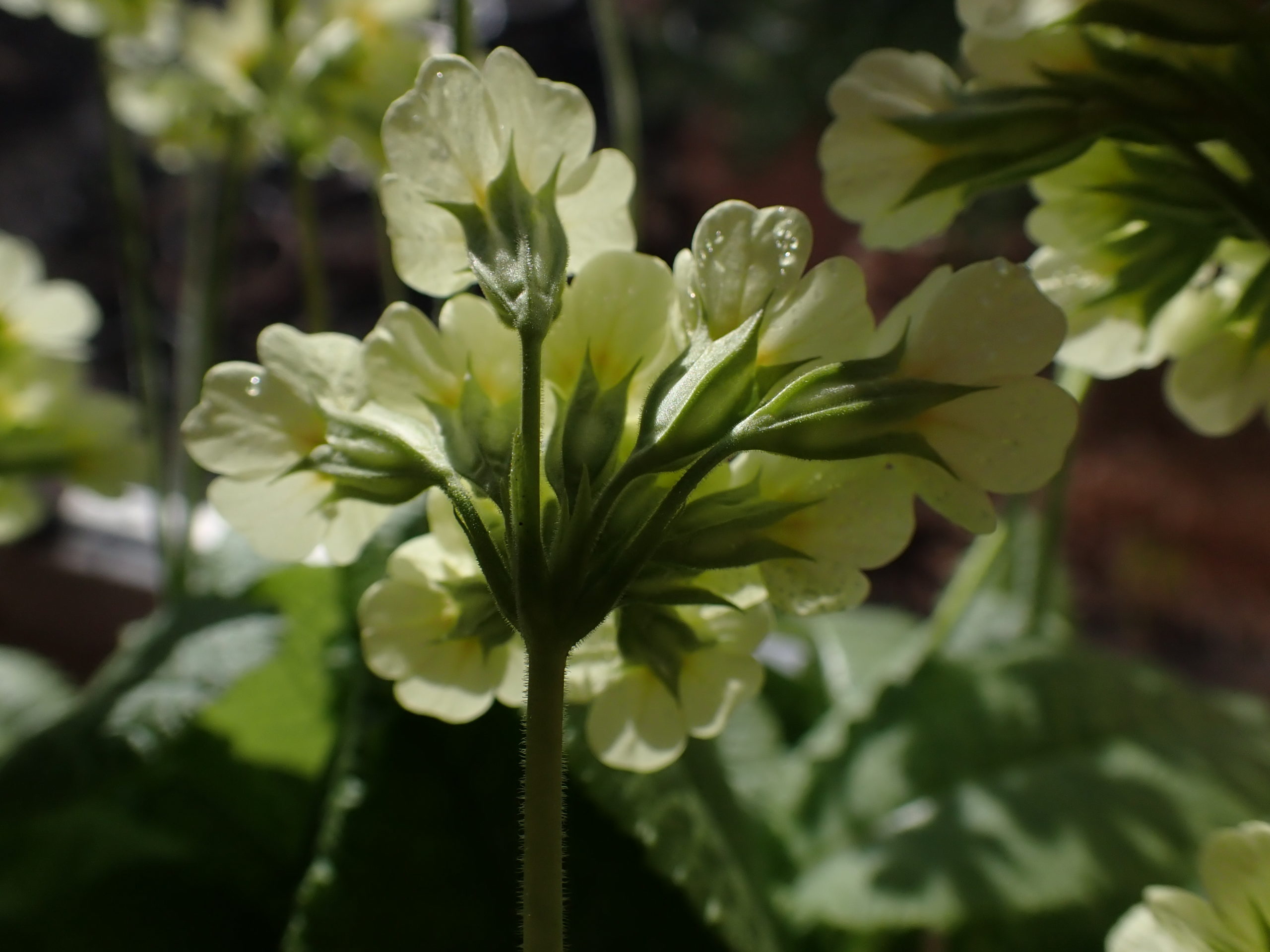

All 3 species which also commonly hybridise where they grow together, as in my garden, are considered to be edible. I mostly use them in mixed salads, the flowers decorating early spring salads. This is what Cornucopia II says about their edibility:

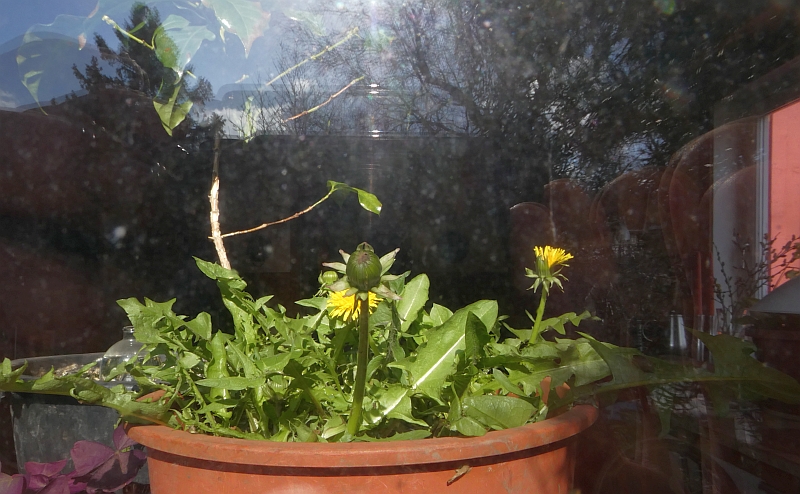
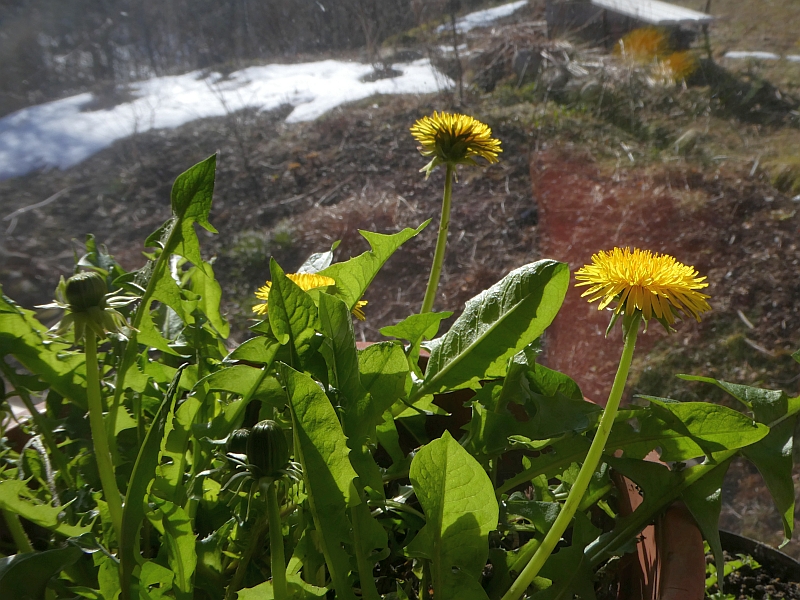
Another one flowering currently in the window are the forced dandelions which we’ve been eating for since January most days: