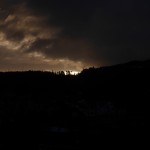
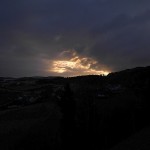
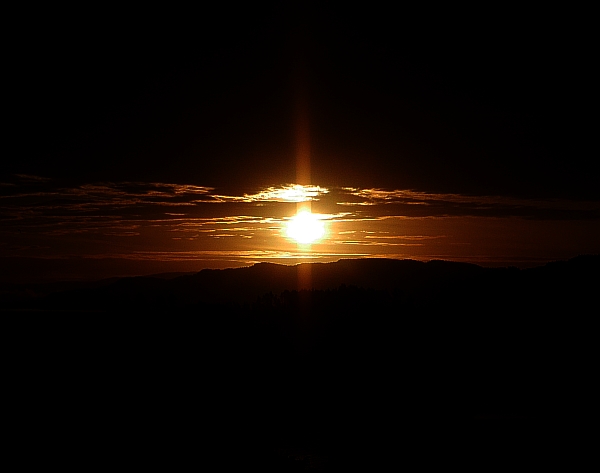
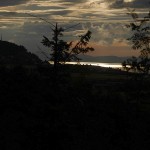
It was a false alarm when I wrote last week that the sun had set and wouldn’t rise again until mid-January. From my desk in the living room I noticed a bright light through my indoor forest garden…the sun rose and set again in the course of 2 minutes… :)
Sunrise through my indoors forest garden!
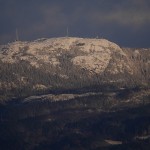
Forbordsfjellet on the other side of the fjord was looking beautiful today!
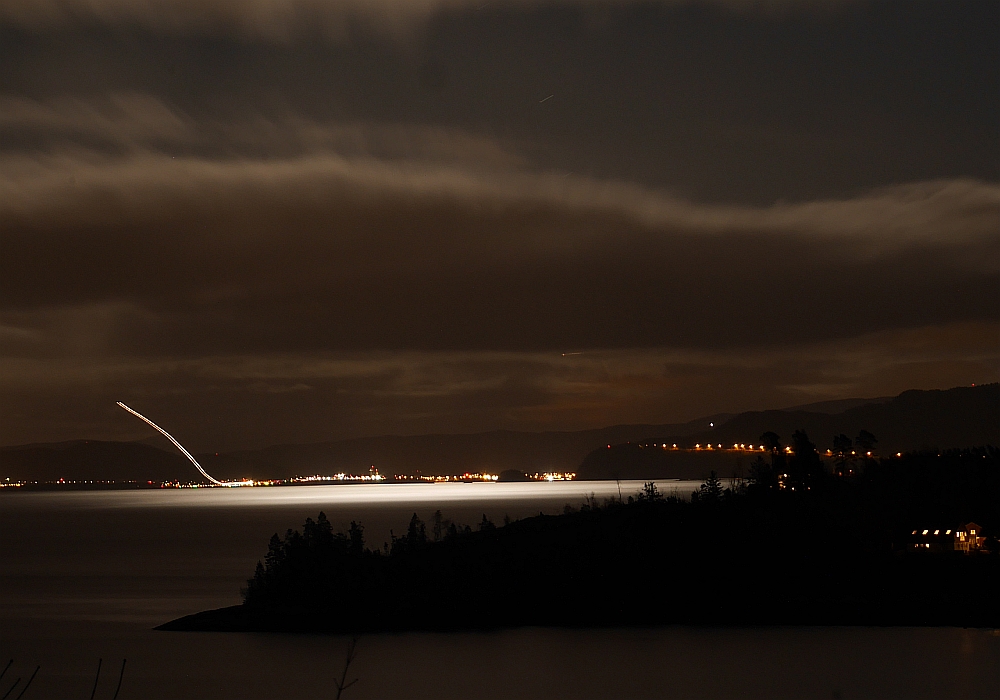
In my local area, a disproportionate large area of forest has been clear-felled recently, a practice we need to stop if we are to take climate change seriously as this releases much carbon dioxide. It was sickening to see just how large an area has been felled in recent years in this series of photos taken recently on a flight to Oslo. The usual excuse given is that a lot of trees have fallen in recent extreme storms and need to be “cleared” up. And what is causing these storms? A vicious circle in other words…
See my blog post about our recent field trip to discuss these problems here: http://www.edimentals.com/blog/?p=6529
I live close to the deeply indented bay near the centre of the picture. Malvikodden sticks out into the fjored “below” the bay and is now mostly treeless… a couple of other areas can be seen just inland…
Fevollbergan is / was a fascinating geologic/forest area close to where I live and a high population area…we should in particular be preserving such areas so close to where people live….I’m thinking of Stanley Park in Vancouver, Canada, a remnant of old growth forest in the centre of the city….
The sun is now rising close to due East having swung round day for day from close to north over a few short weeks…the sunrise is now rushing towards south….
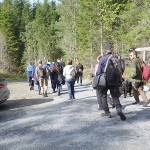
As part of Trondheim’s climate festival, which runs all this week, Naturvernforbundet (Friends of the Earth Norway) arranged a tour to experience first-hand a couple of remnants of old forest in Malvik! We learned more about the need to preserve more old forest in Norway, to extend the size of existing reserves and the importance to change the way we manage the forest as soon as possible to bind as much carbon as possible! Today’s clearfelling practices need to be changed to more ecologically sound methods.
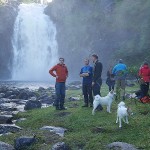
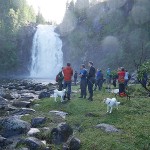
We learned how to spot old forest remnants from afar, that about 80% of the carbon is below ground level and that only about 3% of the forest in Norway is over 160 years old, although the amount of old forest is now on the rise. We also visited Storfossen on the Homla river and talked about the spray zone around the waterfall where several rare lichens and mosses can be found. The forest along the river in this dramatic canyon-like landscape was finally protected by law last year: http://malviknytt.no/2015/12/11/homla-naturreservat-vernet-i-dag
It was a very interesting day thanks in particular to biologist Arnodd Håpnes from Naturvernforbundet in Oslo who lectured and asked questions from the well attended tour participants together with Martin Stuevold from the local group who are pushing the plans for protecting the forest locally and also Jan Erik Andersen from Fylkesmannen who also informed about the complicated process of trying to protect more forest…
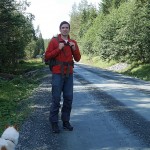
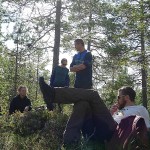
Martin Fagerheim Stuevold, leader of Naturvernforbund in Malvik (and neighbour) started with an introduction on the new plans being pushed by the local group for creating more forest reserves in Malvik
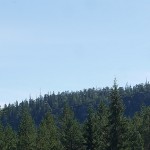
Arnodd Håpnes showed how we could see old forest from a distance. An uneven skyline like here on Jervfjellet demonstrates a mix of ages and species of trees.
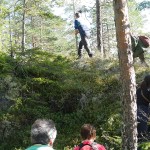
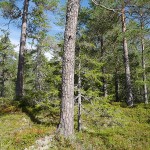
Entering the first forest area that is proposed protected. This area is close to the ski trails in Malvik (on the road from Jervskogen to Hønstad) and an area that I’ve passed many times in winter. I’ve registered different woodpecker species in this area including Grey woodpecker / gråspett.
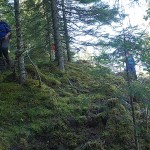
The uneven age of the trees is evident here.
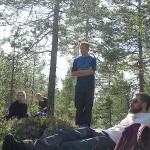
Arnodd’s lecture on forest and climate
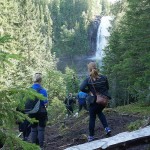
The second walk was the steep walk down to the mighty Storfossen on the Homla..
The waterfall was impressive after all the rain on Saturday
Lars Refseth from the local group
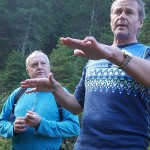
Martin Stuevold, Arnodd Håpnes and Jan-Erik Andersen (from Fylkesmannen)
We were in the spray zone!!
Telling about the importance of the spray zone around the waterfall for the diversity of the plant life and the strong gradients caused by the humidity
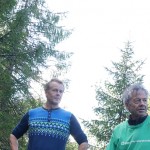
Arnodd and Steinar Nygaard of the Trondheim group of Naturvernforbund