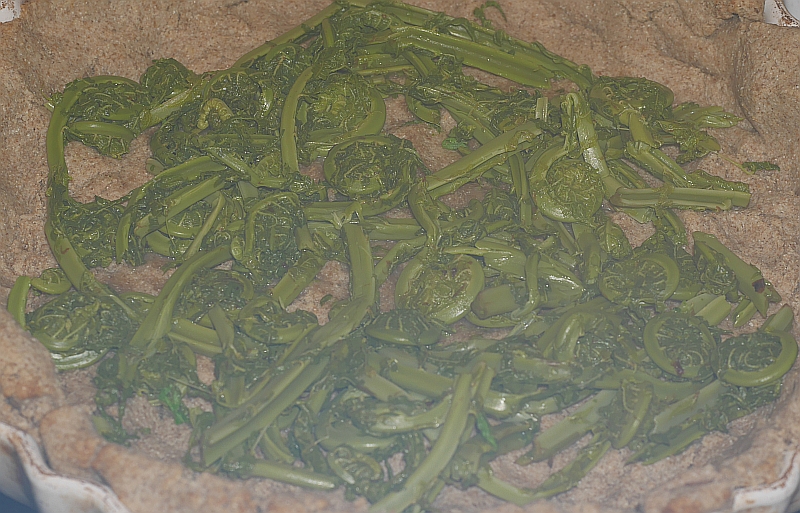
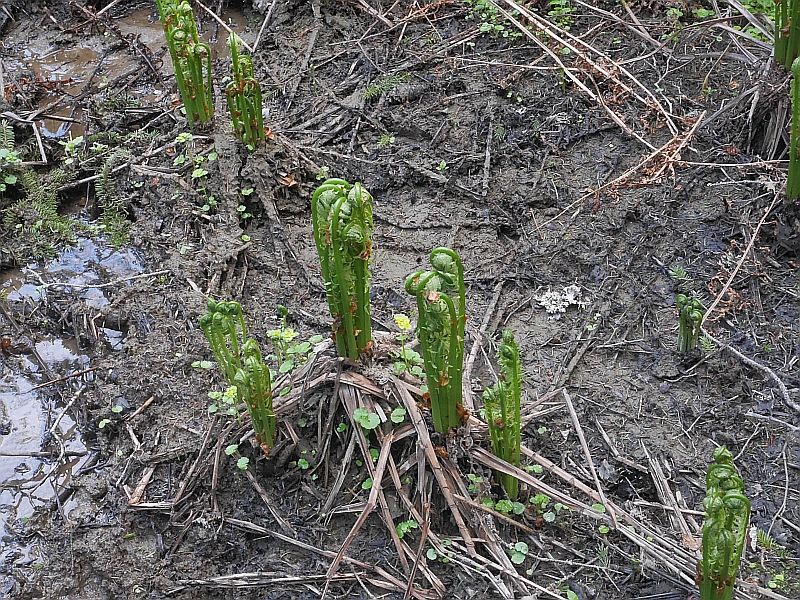
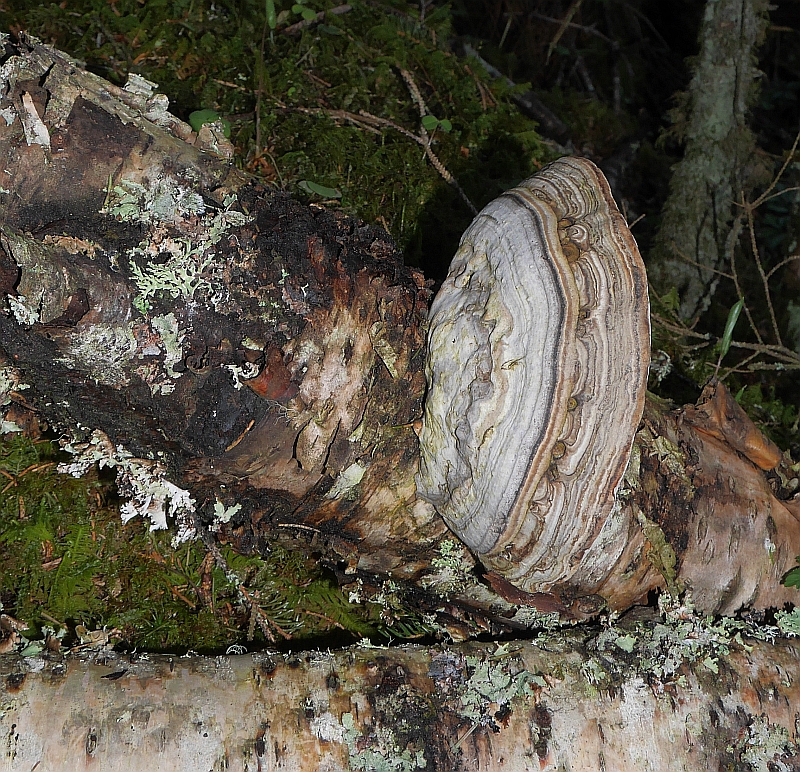
Ostrich fern pie was the culinary high this week…made with cooked ostrich fern, Allium scorodoprasum, garlic, chili and standard quiche ingredients and a 100% whole grain barley / rye crust and home grown poppy seeds on top! It was delicious :)
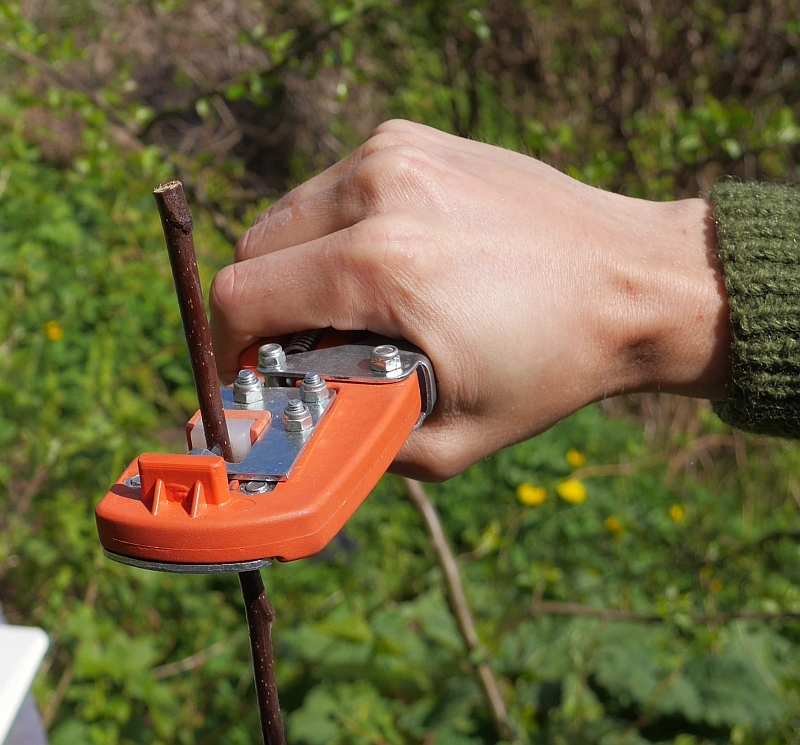
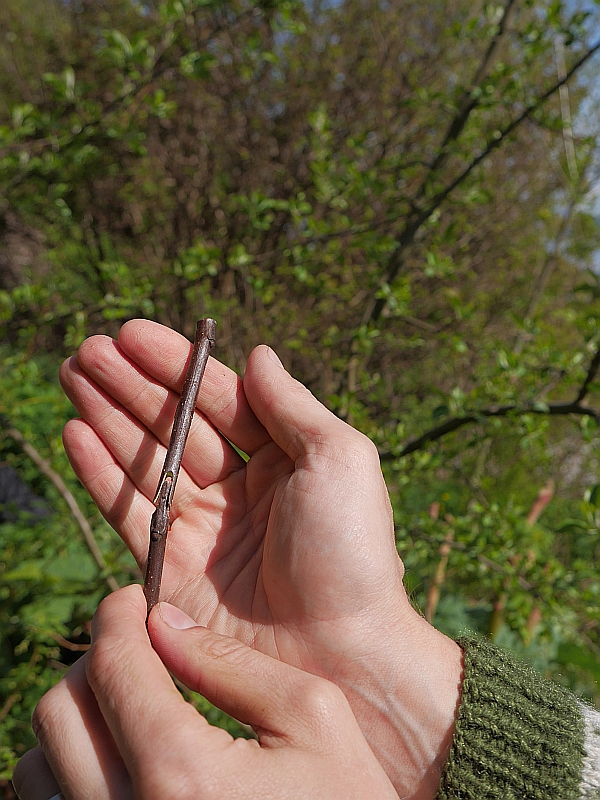
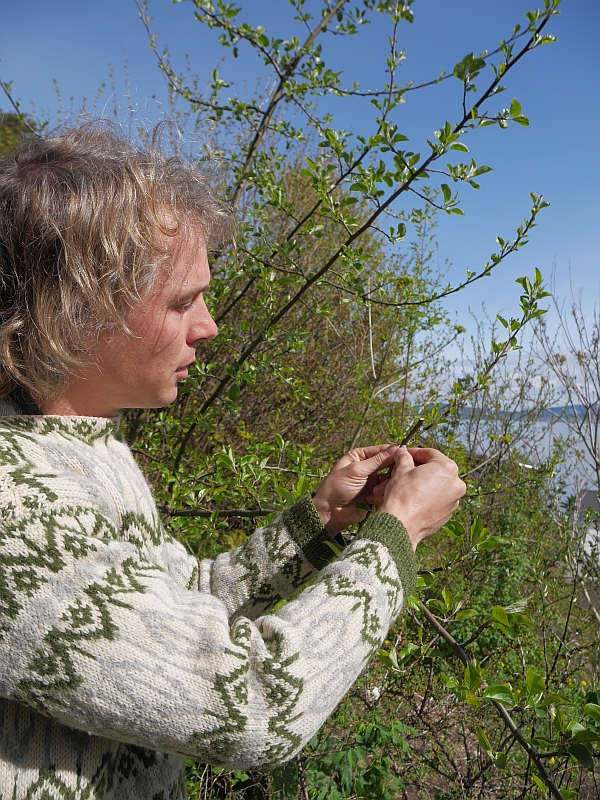
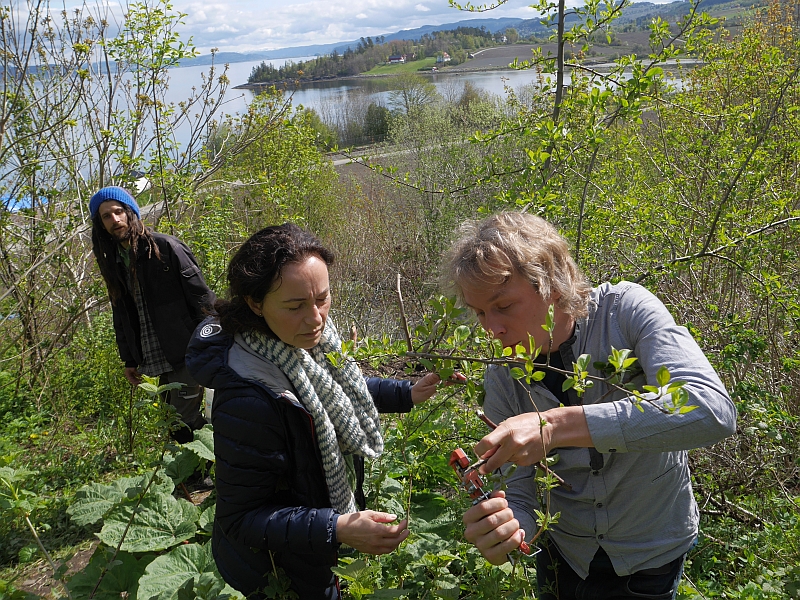
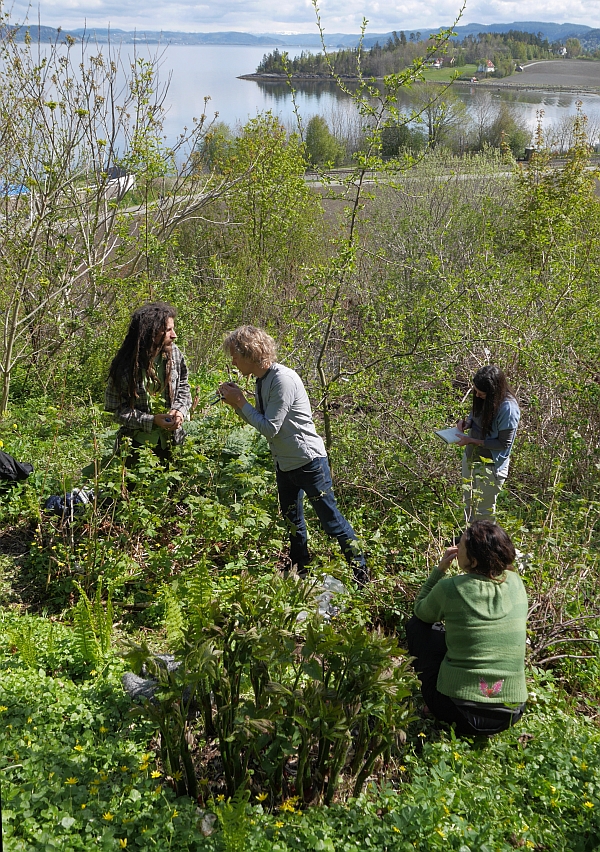
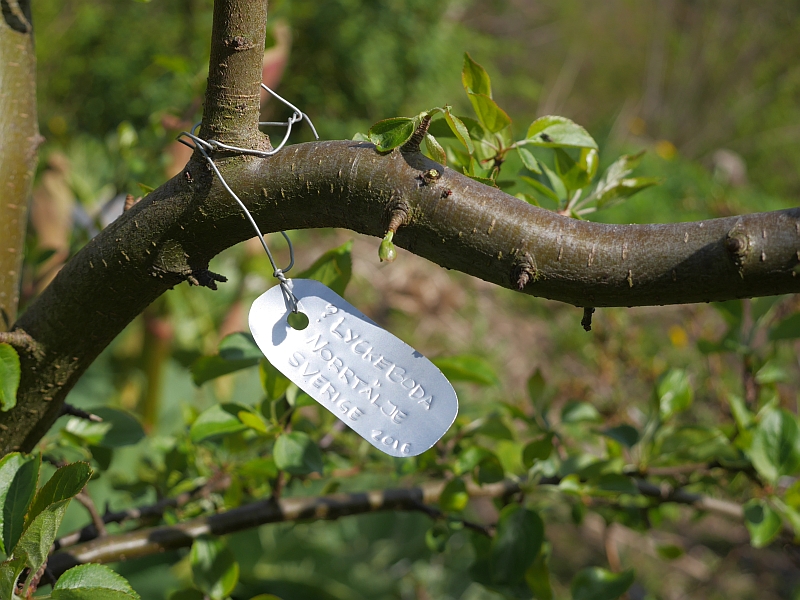
It wasn’t planned at all (the best things aren’t), but our Swedish guests Christian Odberger and Dante Hellstrøm stayed over until Monday evening to dig up a few (!) must-have plants from my garden. Our “camper” Berit Børte also accepted the offer to stay over until Monday. Christian had brought grafting material with him and kindly volunteered to do a grafting course for us, so here are the pictures of Christian, Berit and my garden helper Lorna from Belfast grafting some 6 varieties of apple on to a wild apple tree, the seeds of which I collected at Warsash (on the solent), Hampshire UK some 13-14 years ago!! AND it was a beautiful afternoon too! See also http://www.edimentals.com/blog/?p=4617
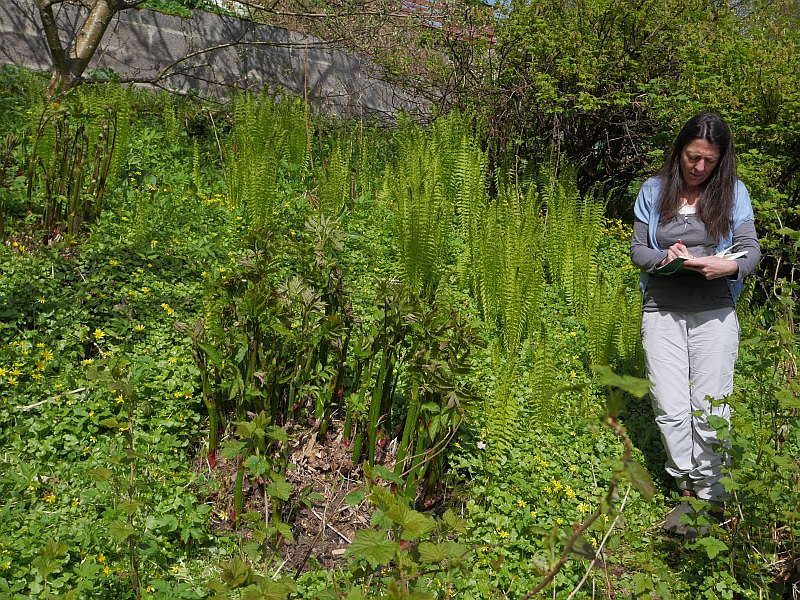
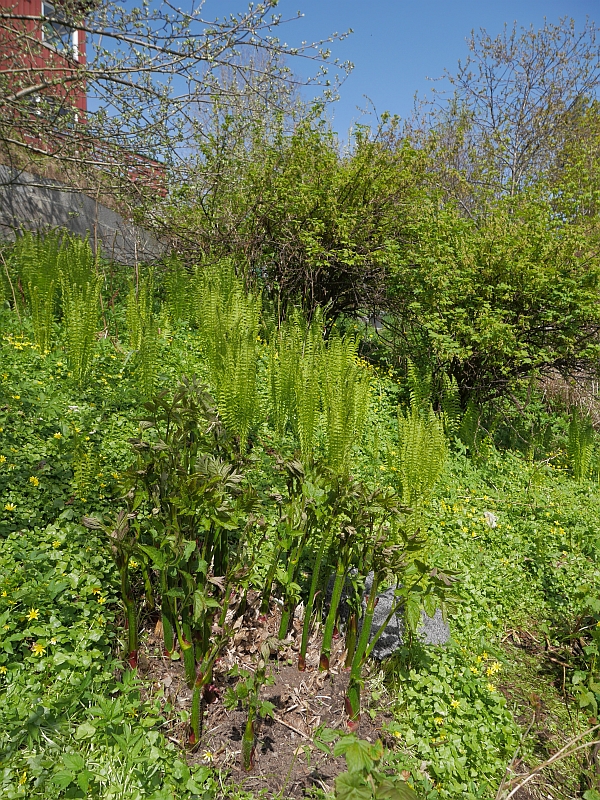
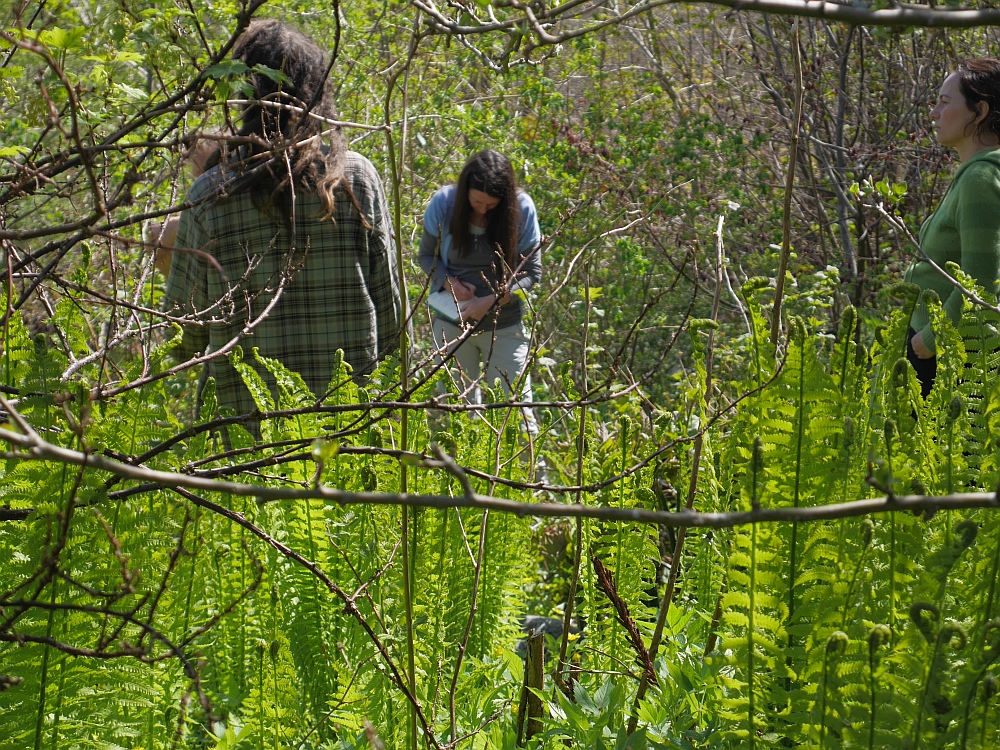
Lorna taking notes next to my Udo (you can almost see it grow at this time of year!) and ostrich fernsWe discovered that Rheum palmatum, ornamental rhubarb, has a pleasant taste, less acid than common rhubarb!Udo and ostrich fern
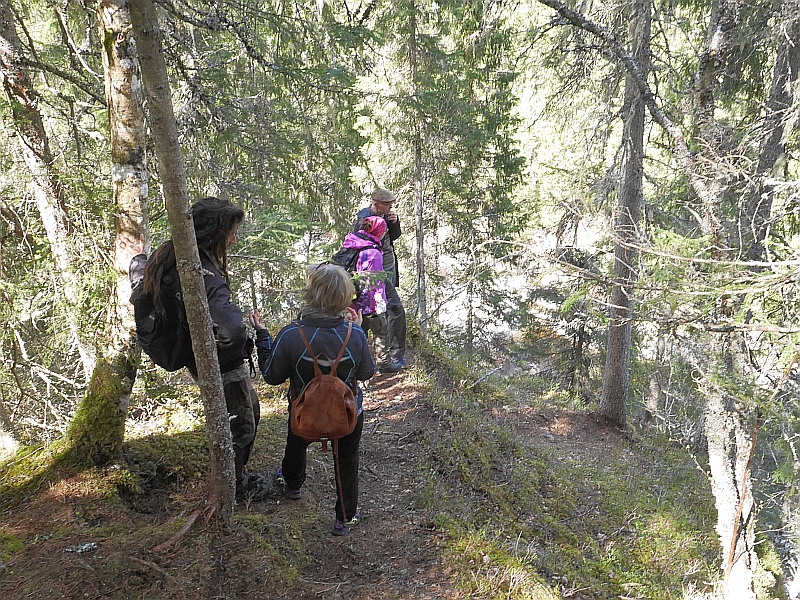
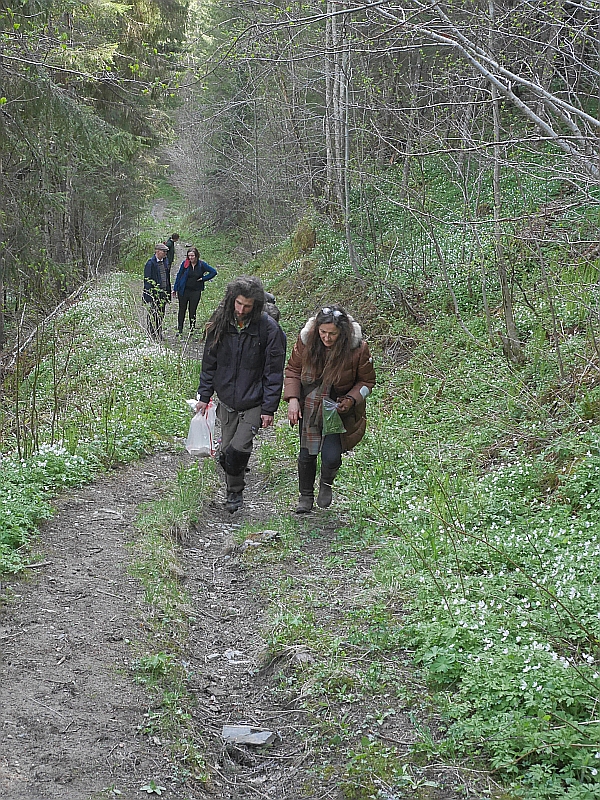
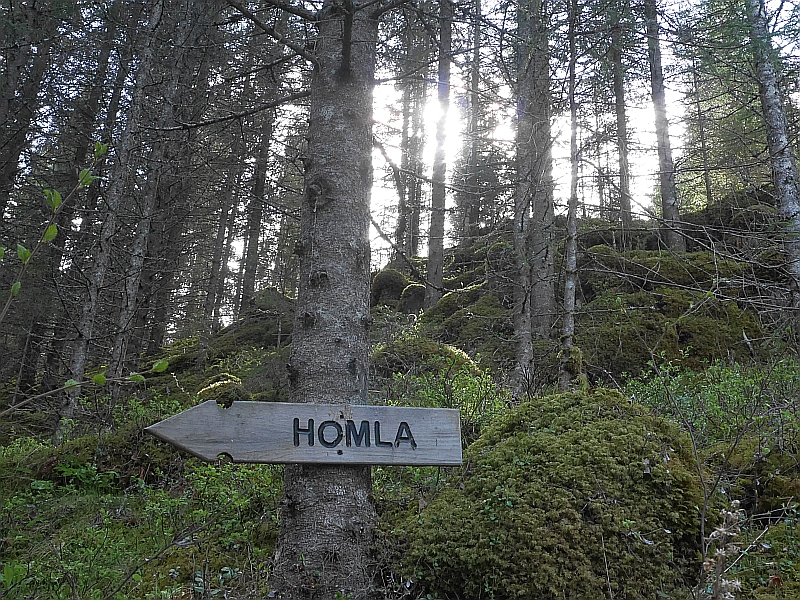
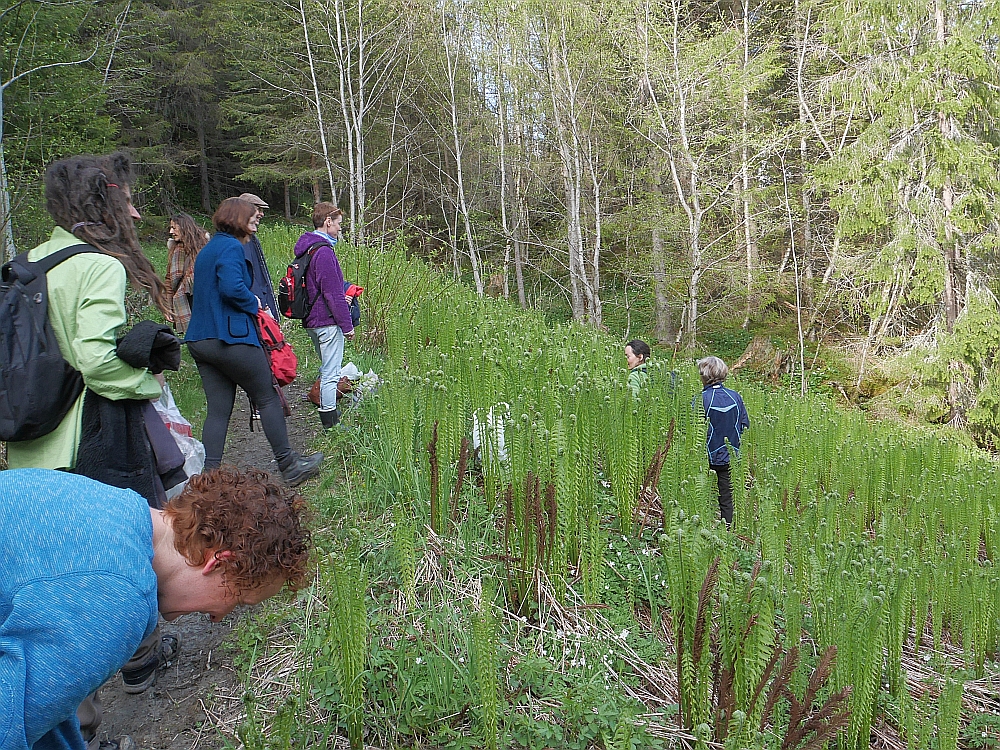
As usual, the highlight of these weekends is the incredible walk along the river Homla just 20 minutes from home with large quantities of Ostrich Fern along the way, truly one of Norway’s most beautiful plants and also most delicious!!
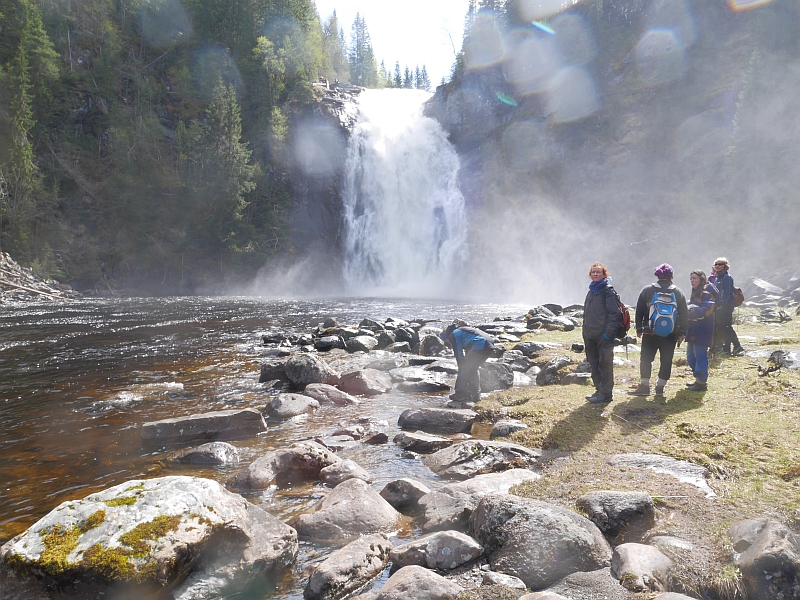
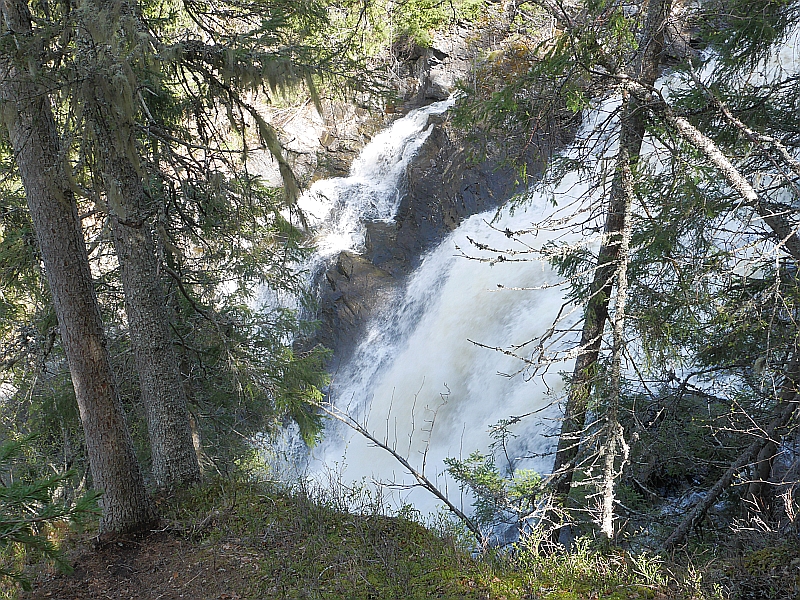
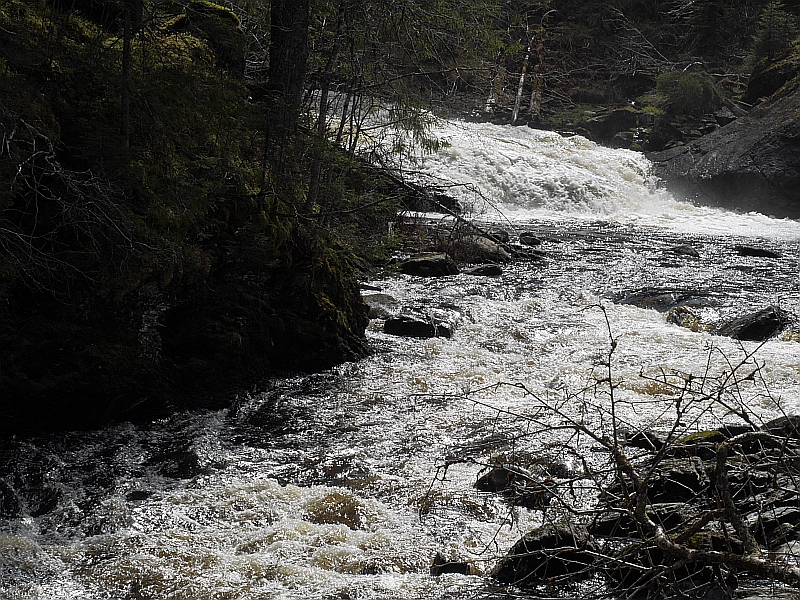
Storfossen (literally large waterfall!), the second highest waterfall at 40m in our region (Trøndelag). There’s a total fall of 80m in 3 waterfalls. If you’re lucky you can see salmon trying to climb the lowest of the 3!Participants showering in the drizzle from the waterfall stood in awe of this wonderfull sight, so close to Trondheim, but hardly known! We saw only a handful of other people on the trail in 4 hours!
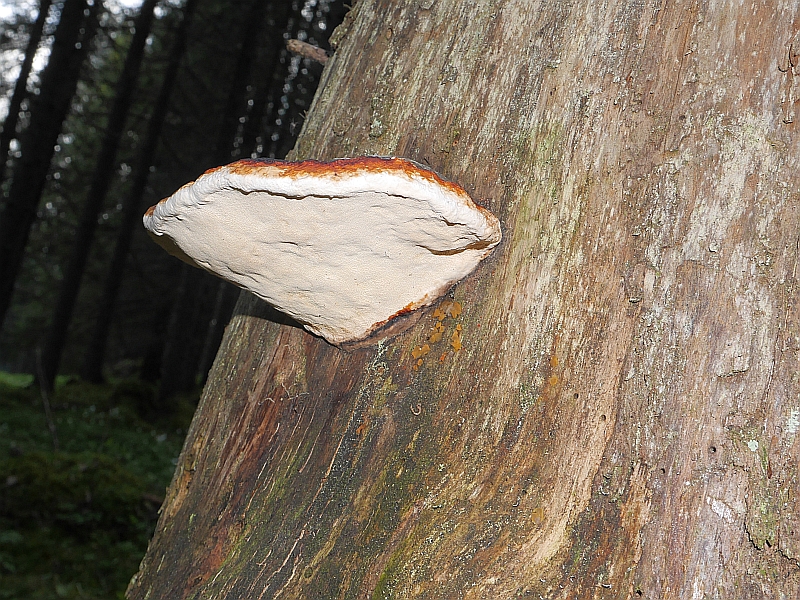
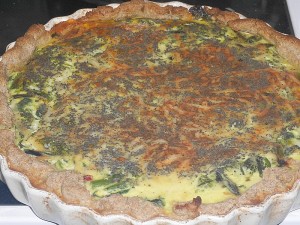
We found a few fungi. This is Fomitopsis pinicola / rødrandkjuke
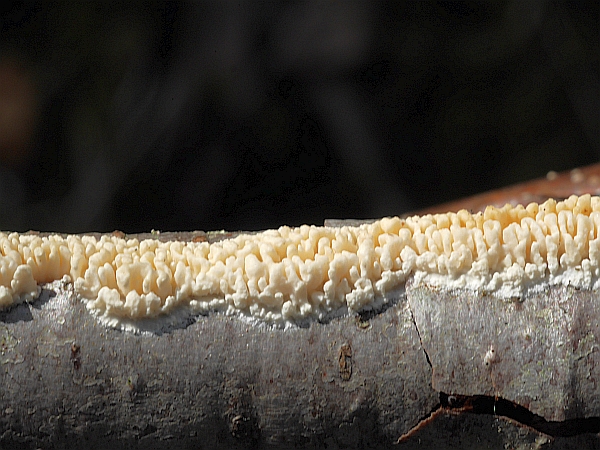
Basidioradulum radula (Tannsopp), earlier classified with the Hedgehog fungi!
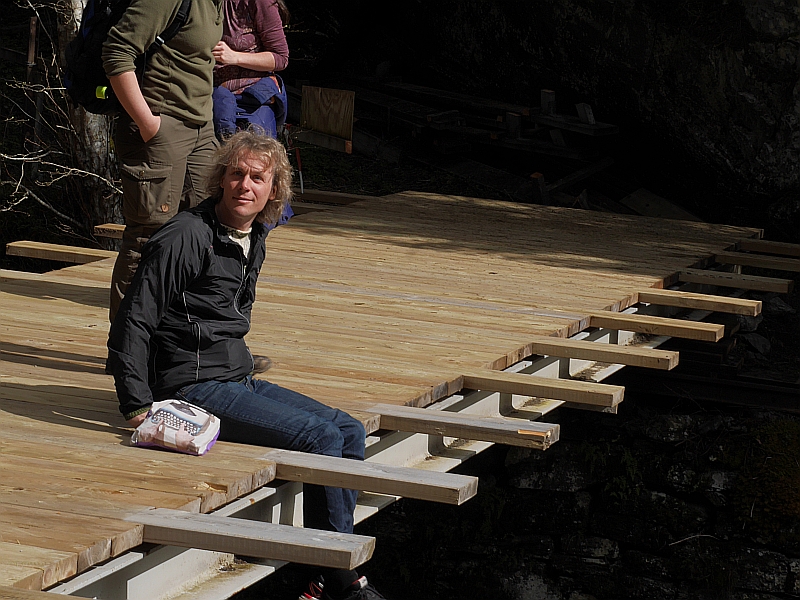
Christian thinking about going for a swim?
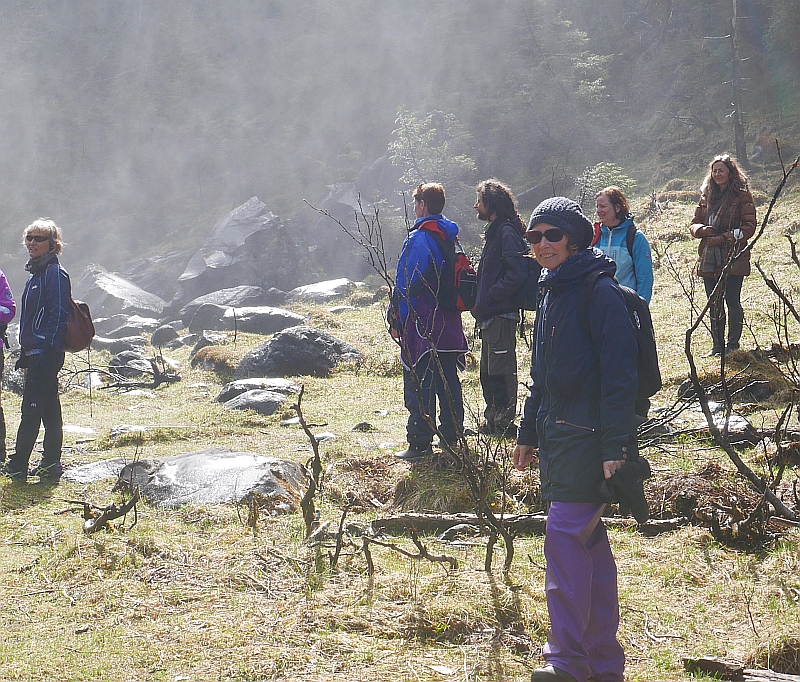
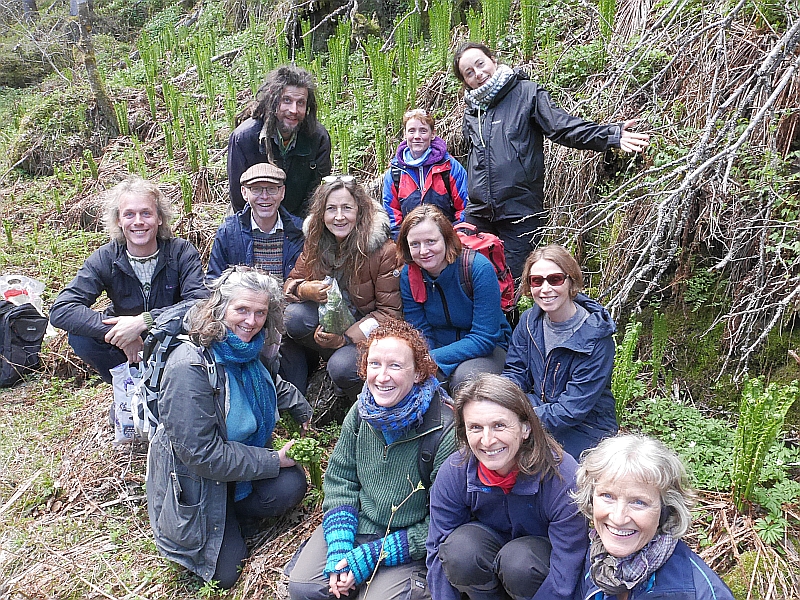
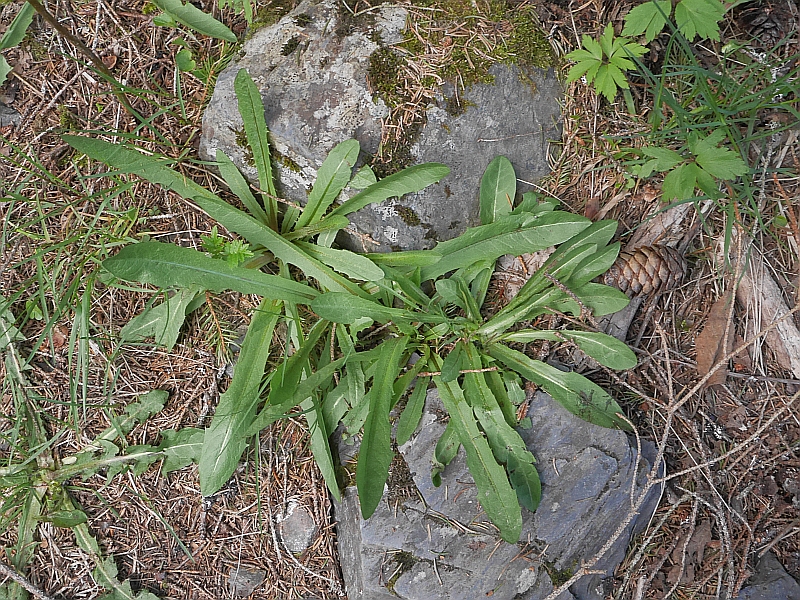
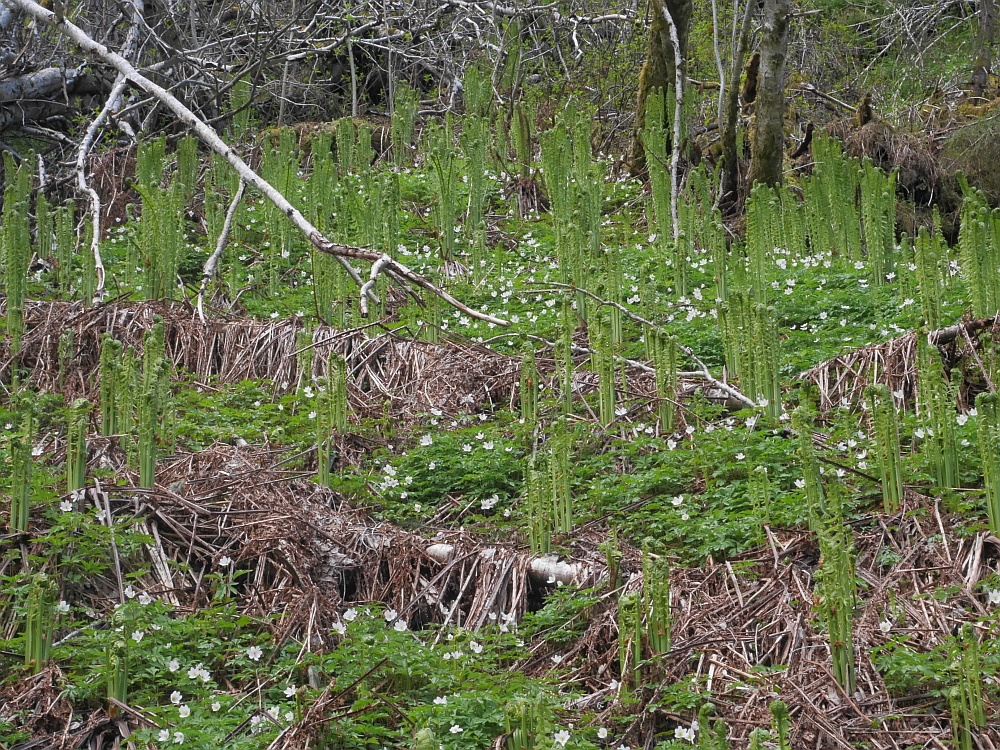
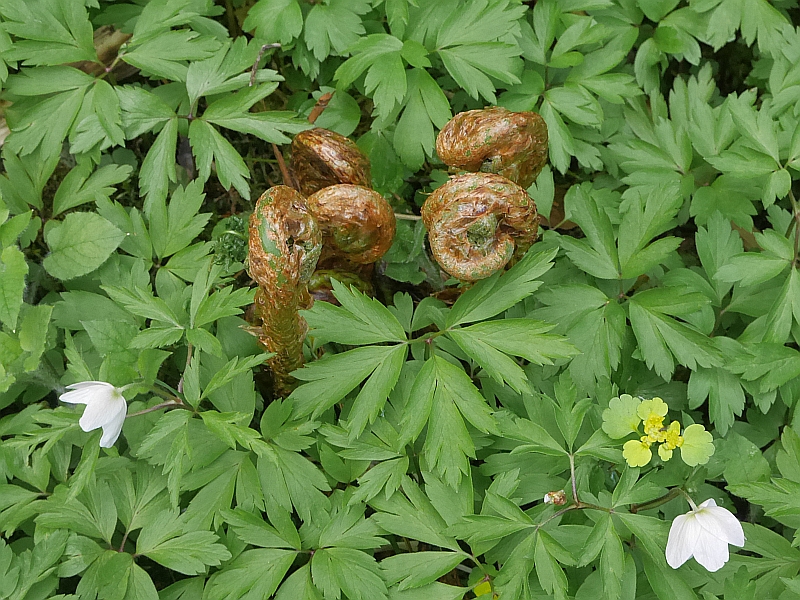
Happy participants, HIGH on nature and wild food!Happy participants, HIGH on nature and wild food!This dandelion was collected as it had a good mild taste!Ostrich fern / StrutsevingOstrich fern / StrutsevingOne of the confusion species that shouldn’t be eaten! With Anemone nemerosa (wood anemone / hvitveis) and Chrysosplenium alternifolium (Golden saxifrage/maigull)Roof garden!
There’s a lot of up and downs along the 4 hour walk (with stops) from Storfossen to Hommelvik!
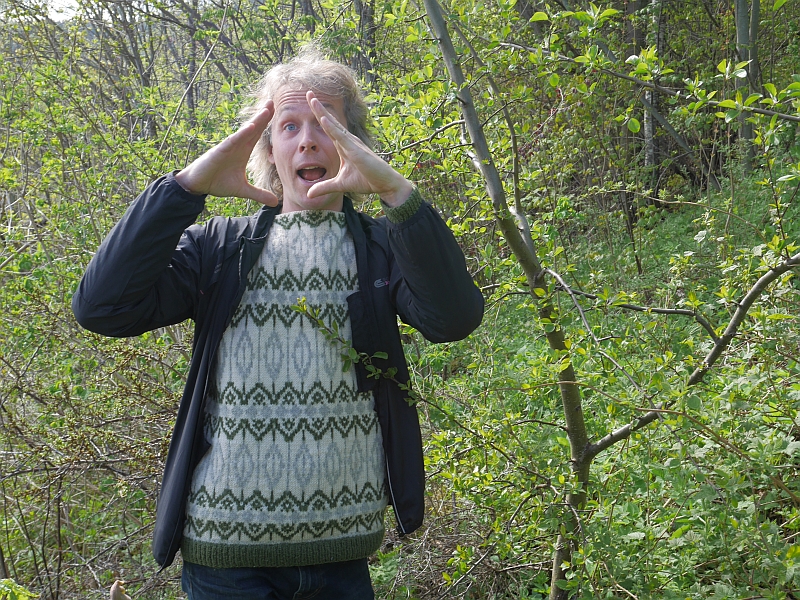
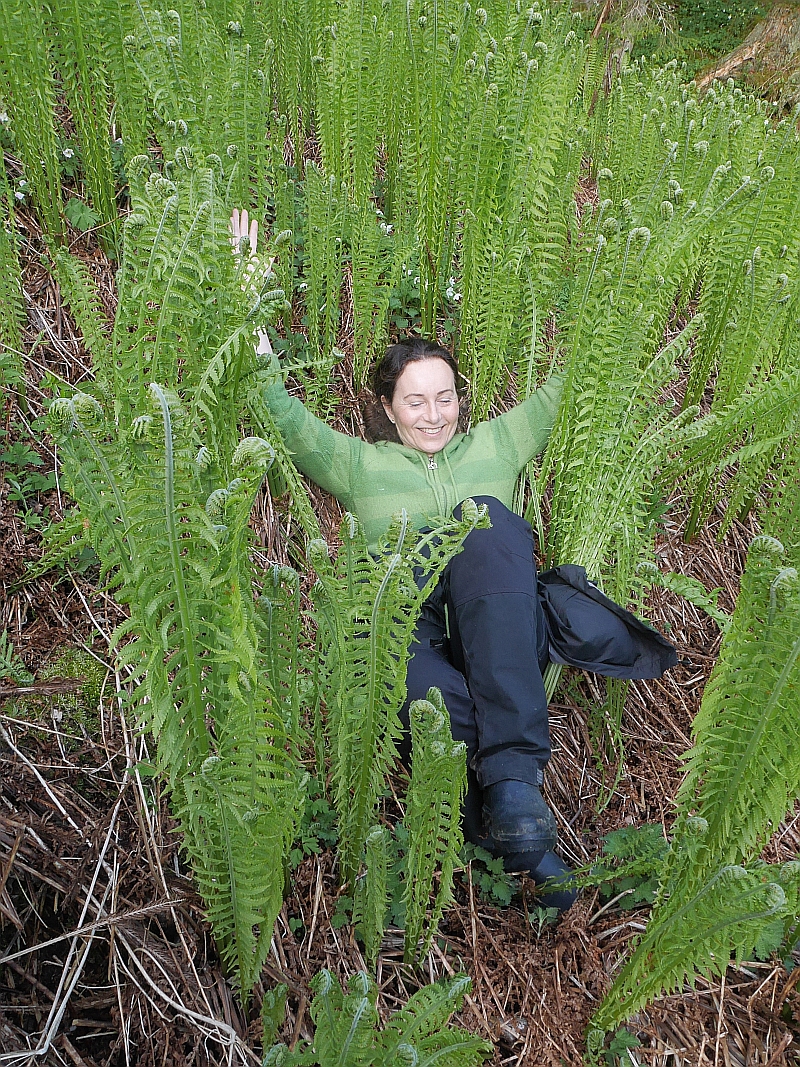
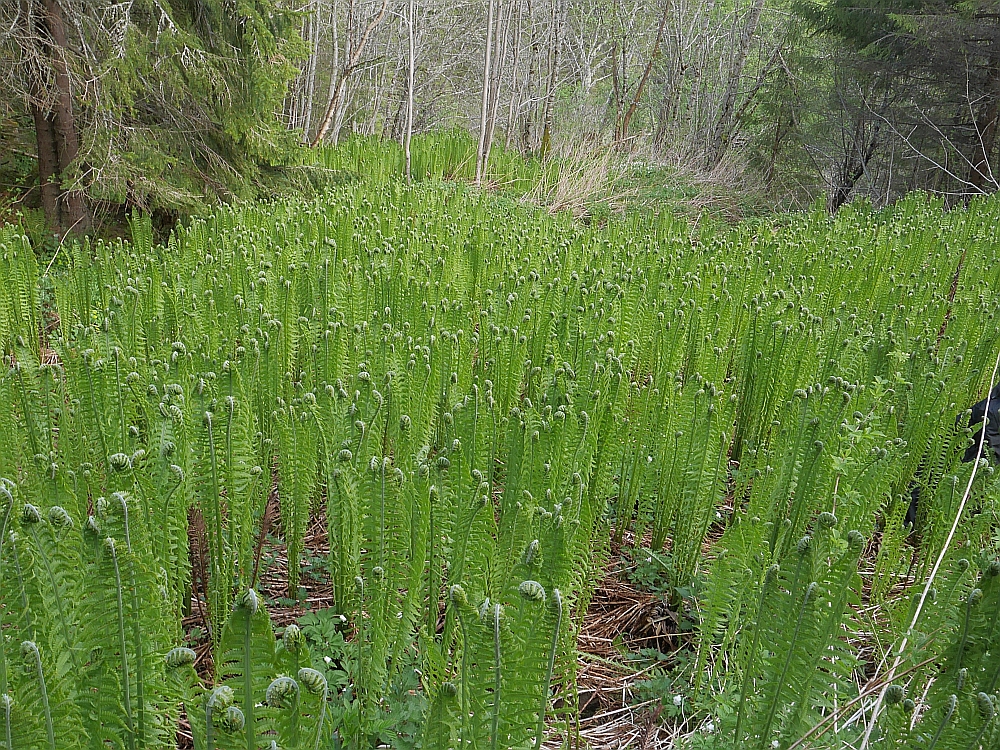
Everyone stopped in awe again at this beautiful rich stand of ostrich ferns which had come much further than in the cold air by the riverWe found this Swede communing with the ferns…Berit had a go too…next year we will have a group ostrich fern hug I think!
Hidden among the ferns are other edibles like nettle / nesle and giant bellflower (Campanula latifolia)
Fomitopsis pinicola / rødrandkjuke
The field horsetail/ common horsetail / kjerringrokk / (Equisetum arvense) is another sign of spring. The plant is known as sugina (杉菜) in Japanese, literally “cryptomeria vegetable”, possibly from the appearance of the green stems. The fertile stems at the stage shown are known as tsukushi (土筆). The ideograms literally mean “soil brush”, based on their shape. A common foraged vegetable in spring!! DON’T plant it in your garden, it is one of the most invasive plants on open land! BUT, one shouldn’t use large amounts…this is a spring vegetable used in a short period in spring!!Knuskkjuke (Fomes fomentarius) is the tinder fungus used to start a fire!Upon returning home we made a green pasta sauce with ostrich ferns (cooked for 15 minutes), Hablitzia shoots, Norrlands onion (see my book) for all 3), soaked dried chantarelles, organic tomatoes, garlic, chili, seasoned with cuban oregano, bay leaves and served over a choice of hemp pasta and emmer wheat pasta from Etikken in Trondheim!
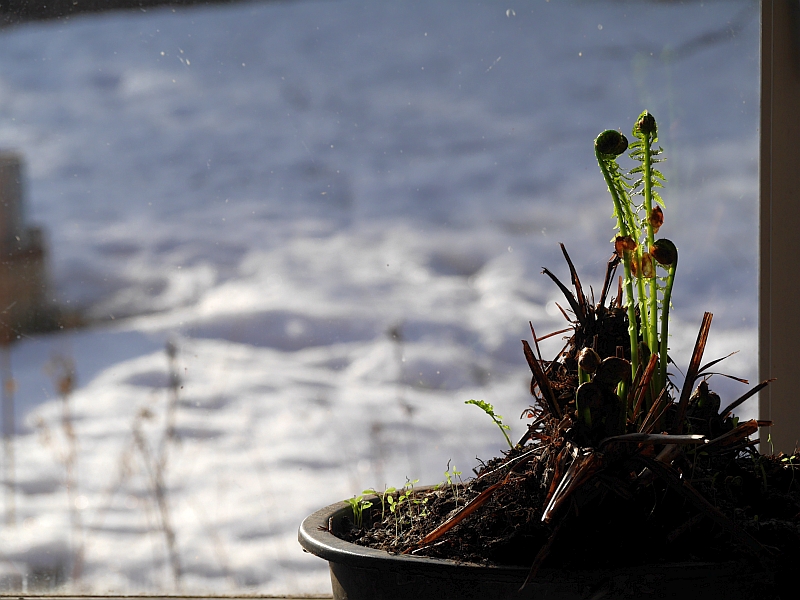
The Norwegian name for ostrich fern is strutseving (ostrich wing) and fiddleheads are now appearing in my kitchen window, two months before they will be out in the garden. It’s easy to dig up some roots of this spreading species in the autumn. I left them outside in these pots until about a month ago. I’m leaving these first relatively small fiddleheads to grow, so as not to kill the roots (they will be planted back in the garden to recover).
Perennial vegetables, Edimentals (plants that are edible and ornamental) and other goings on in The Edible Garden