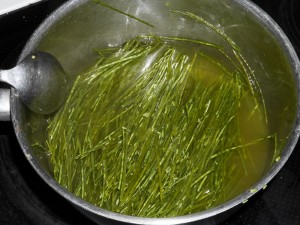
I have two helpers in the garden this week and one of the jobs was to pull up all the garlic mustard / løkurt which was in danger of spreading big time! When I returned home, Tone was sitting outside patiently pulling off the young seed pods. They were cooked up in a failed attempt to make them less fibrous. She then separated the young green seeds for a tasty exclusive relish which we ate with dinner!
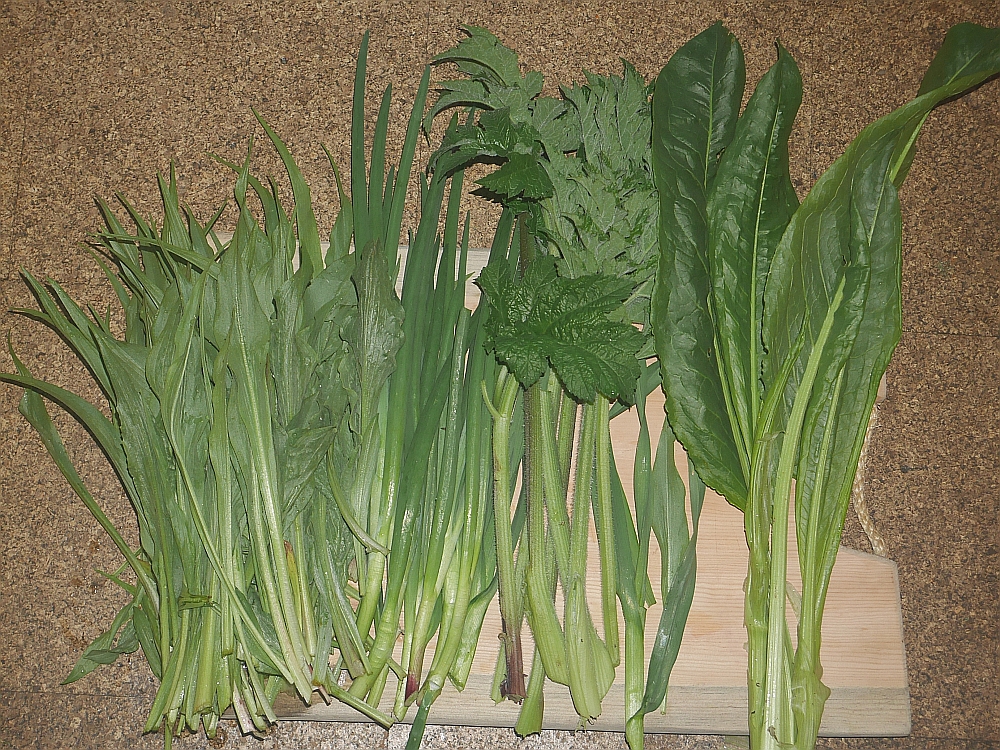
Tonights perennial greens. I sometimes eat wild fish, so these greens were added to a fish soup, spiced with ground Hogweed seeds!
From left to right: Scorzonera greens, Allium x proliferum “Amish Topset Onion”, Allium scorodoprasum, Heracleum spp. and Rumex patientia (patience dock)
In recent years, I’ve been experimenting with seed of perennials for winter greens, here the first time I’ve tried lovage / løpstikke sprouts. I sowed in November in a large pot left outside as they may not germinate without cold treatment. I then moved inside to an unheated room at the beginning of March and now there’s been mass germination and the taste is pretty good too :)
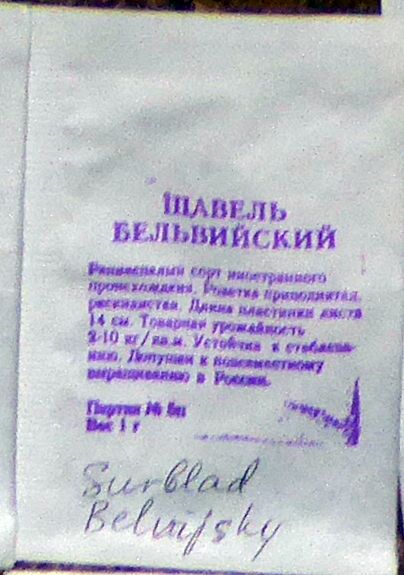
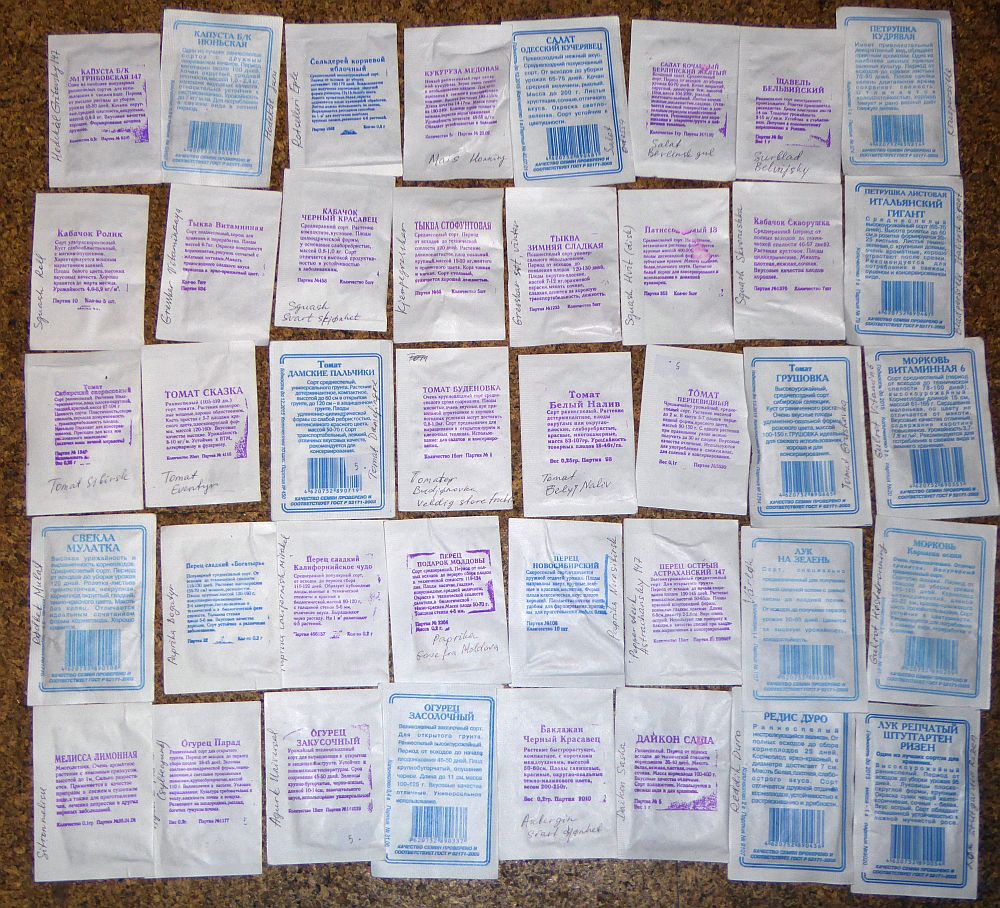
One of the members of Norwegian Seed Savers emailed me that she was going to Russia and would I like any seed….now, I have genetic defect that leads to me not being able to say no to seed…so I said yes please and if you find any perennials like cutivars of sorrel (Rumex acetosa) I’d be particularly interested. The package arrived today. I had never imagined I was saying yes to 40 packets and there was one packet of Rumex acetosa, a variety called Schavel (Sorrel) “Belvijsky”. I’m wondering if this could possibly be the elusive French cultivar “Belleville” which I mention in my book?
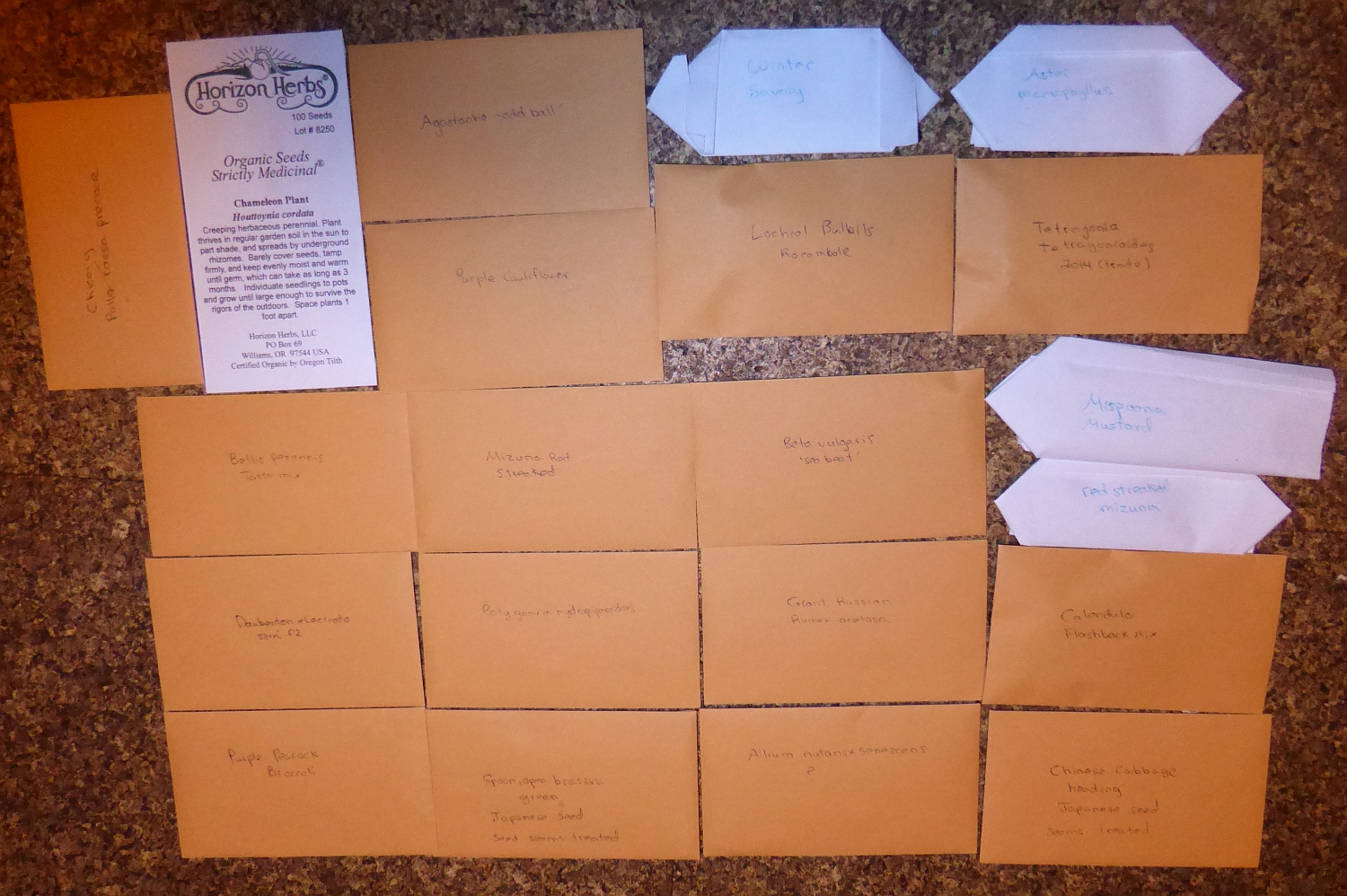
Thanks to my friend Telsing in Canada for this nice mix of oriental greens, the first time I’ve seen seed of Houttuynia cordata and some other interesting perennials like Giant Russian sorrel (Rumex acetosa) and Edible North American Aster macrophyllus
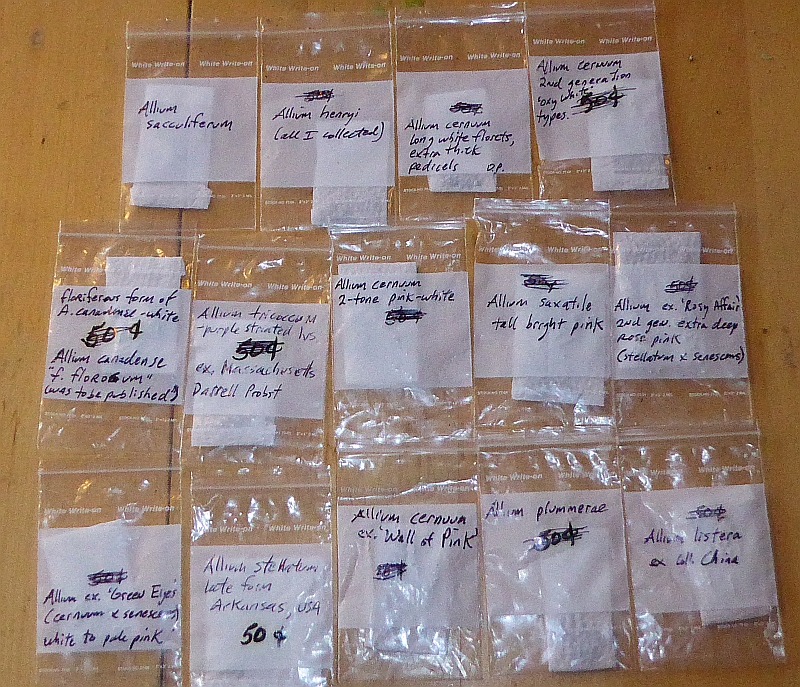
It’s XMAS!! In the post box today, a nice selection of Allium selections from the Onion Man….very kind of him trusting me with some of his best ornamental selections, destined to be Edimental selections!!
For the unusual vegetable enthusiast, the place to find seed are the alpine garden clubs’ seed exchanges: Scottish Rock Garden Club (SRGC), Alpine Garden Society (AGS) and the North American Rock Garden Society (NARGS) are the main international ones and each puts out a seed list of several thousand varieties donated by the members…by no means just alpine garden plants! I remember reading an article in the North American Herb Companion with a recommendation to source seed of unusual herbs from NARGS.
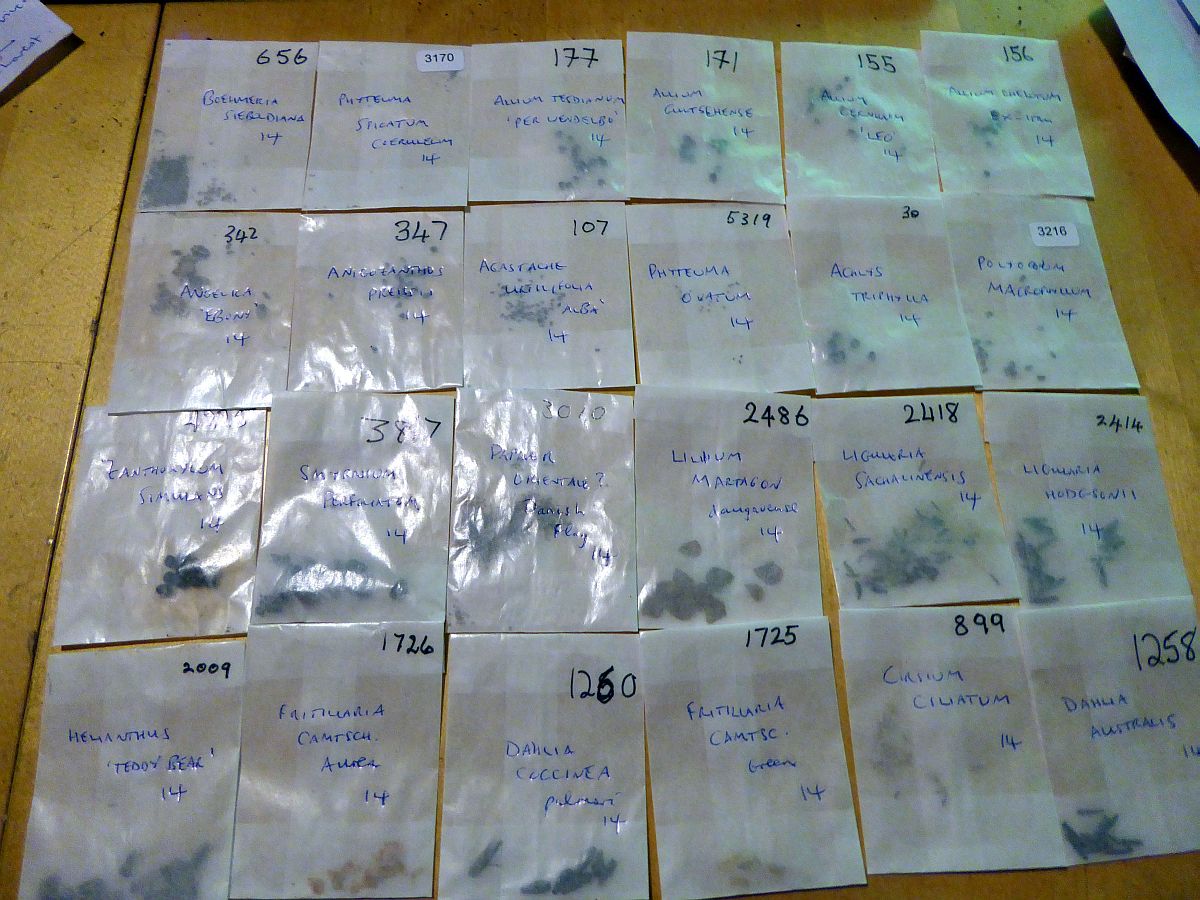
My SRGC seed arrived today and here they are, a mixed bunch including the yellow form of Kamchatka Lily (Fritillaria camschatensis “Aurea”), one I’ve been looking for for some time! You can probably read some of the names but there are Phyteumas, Ligularias, Alliums, Dahlias, Lilium, Polygonum macrophyllum, Agastache, Zanthoxylum simulans and Boehmeria…
While I was in London in December I met London Permaculture’s Stefan Geyer at St. Athan’s Hotel in London for a chat and it’s now available for all to hear on Stefan’s 21st Century Permaculture radio show live on Shoreditch radio:
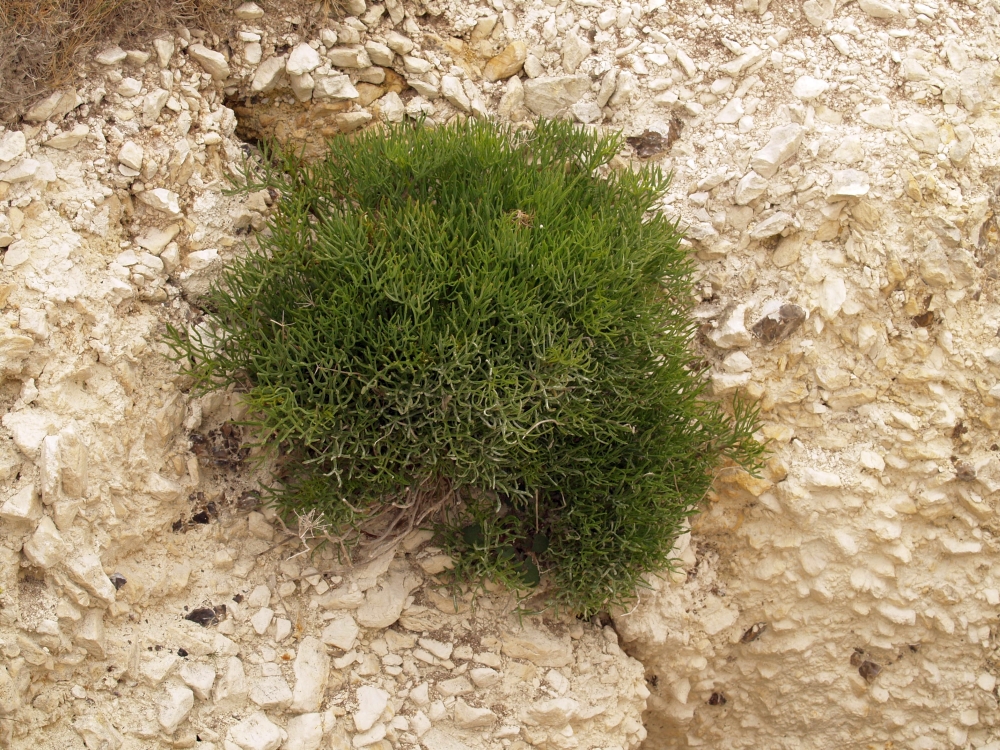
Amongst other topics, we talked about the book, how I travelled the globe researching the world of edible plants (both for real and through reading foraging and ethnobotanical literature from all continents), talked about some of the best perennial vegetables like Udo from Japan and Korea (now sold on markets in London), Sea Kale (the most British of all vegetables?), Sea Kale’s giant sister from the Caucasus (Crambe cordifolia), how a popular vegetable was harvested from the chalk cliffs of England using ropes and was shot down from cliffs by a friend of Charles Darwin (Death Samphire), and how a famous UK garden may have the most productive food forest (forest garden) in the UK unbeknowns to the owner…
The Highgrove Food Forest!Blanched Crambe cordifolia, the so-called Ornamental Sea Kale is a high-yielding edimental from the Caucasus
Foraging Crithmum maritimum (Rock Samphire) from the crumbling chalk cliffs was a dangerous occupation (NB! I did mix this one up in the interview, referring to it as Marsh Samphire, Salicornia….to many a cheap imposter of the real Samphire!)
See also http://www.permaculture.co.uk/news/2001155978/stephen-barstow-permaculture-radio
12, 13 and 14 in brackets indicates the harvesting year for the seed. Concerning seed quantity: as I don’t have many plants of each species, seed quantity is limited in most cases. Therefore, for some species you may only get a few seeds. Many species are harvested in my garden. Others are surplus from trade and purchase. OUT: Means out of stock.