Tag Archives: Sea Kale

Norwegian articles on edible halophytes and biosaline agriculture

Here are scans of two articles I wrote published in 2004 (in Norwegian) in Våre Nyttevekster. The first one is about great edible salt tolerant plants (halophytes) such as Tripolium vulgare (syn. Aster tripolium), Sea kale (Crambe maritima) and Beta maritima (sea beet), articles that were later expanded in my book Around the World in 80 plants!
For various reasons large areas of conventional agricultural land around the world are becoming too salty to grow conventional crops due to intensive cultivation with irrigation leading to salt build up in the soil. In places like the Netherlands coastal agricultural land is impacted by salt water from the sea. One can either try to breed increased resistence to salt in conventional crops or develop non-conventional crops based on wild species that naturally tolerate high levels of salt, so-called halophytes.
Download (PDF, 5.73MB)

Download (PDF, 2.98MB)

Solstice sweet and sour soup greens

P1610261
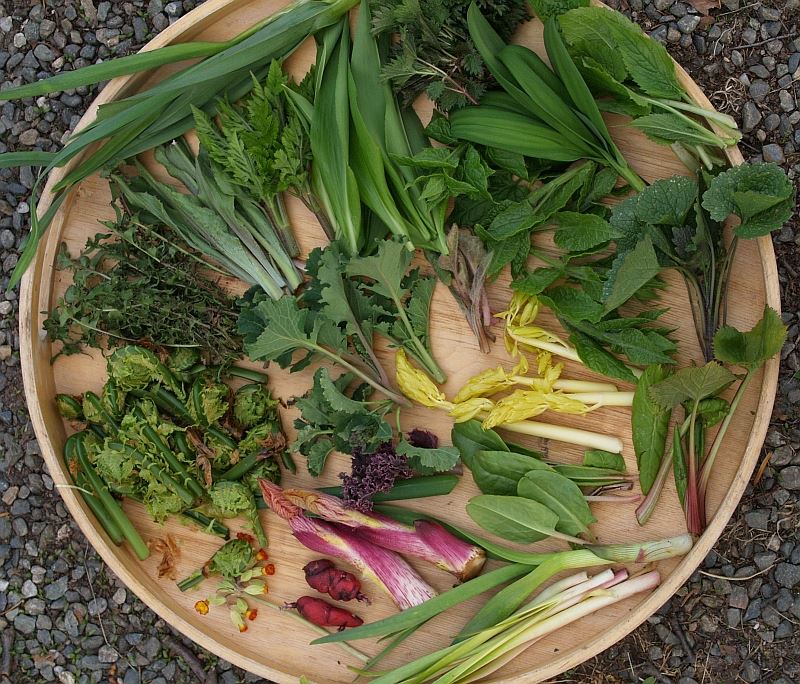
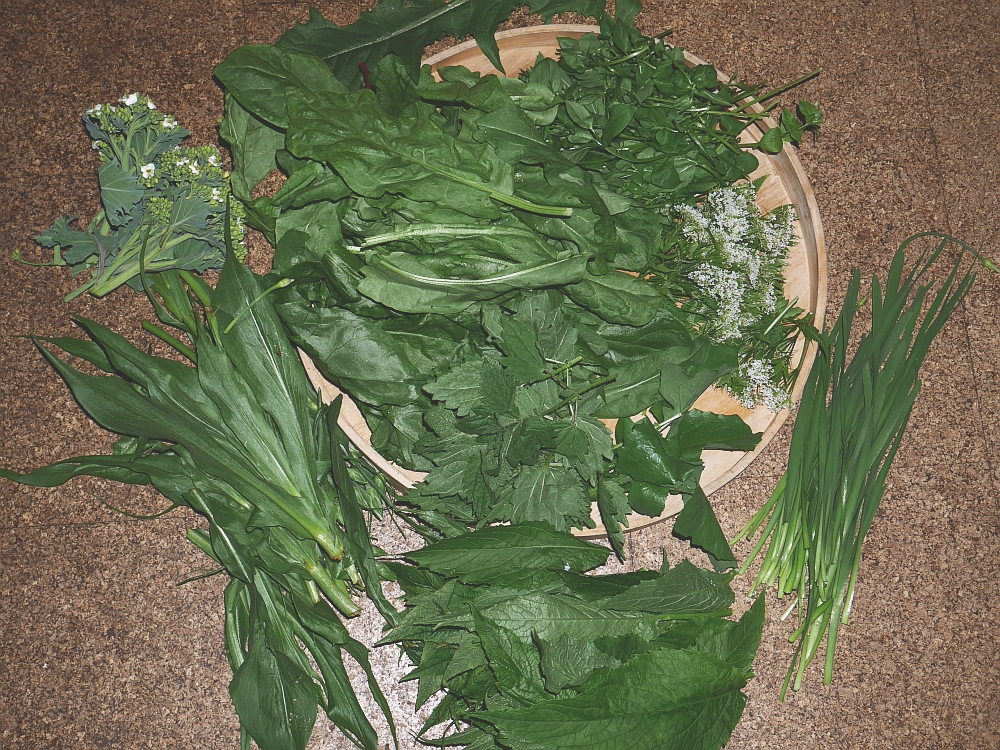
Tonight’s greens: Sea kale(strandkål), Scorzonera (scorsonnerot), Allium senescens, Sweet cicely (spansk kjørvel), Giant bellflower (storklokke), Sorrel / surblad, Nettle (nesle), Dandelion (løvetann)
P1610262
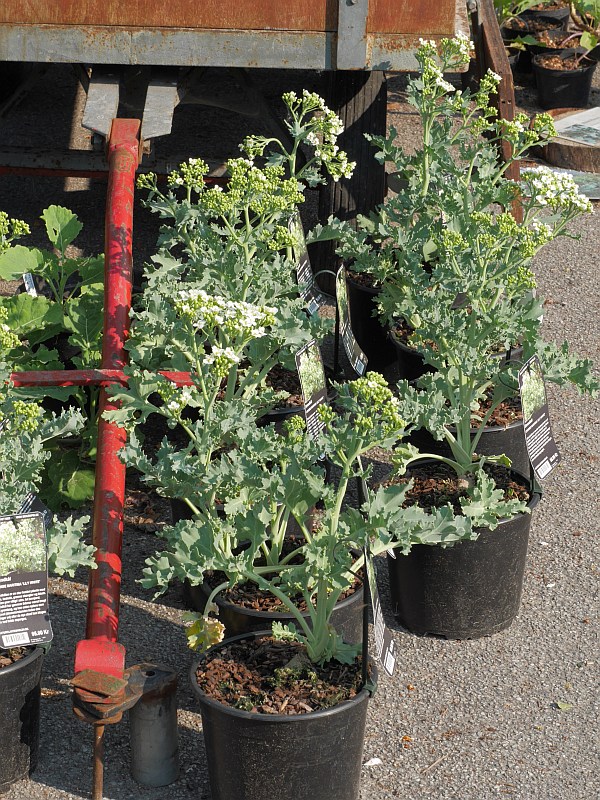
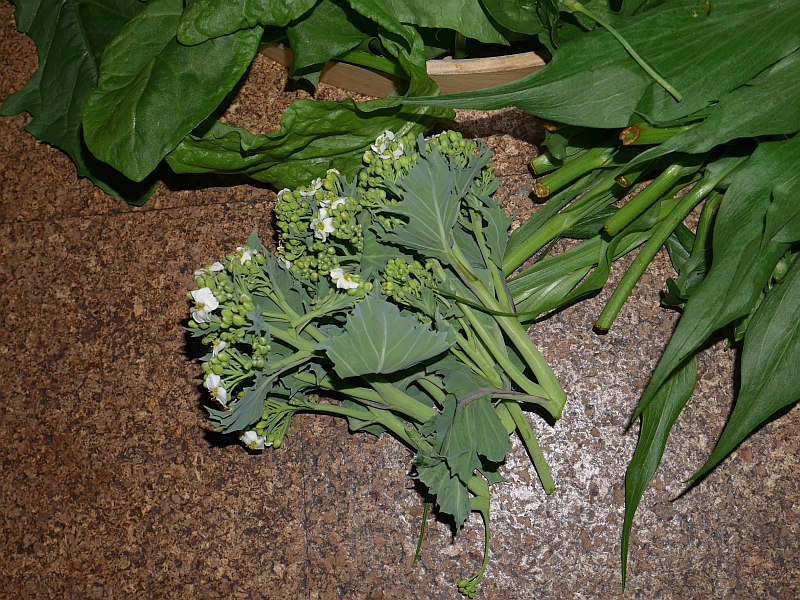
Sea kale(strandkål) flowering tops are delicious
P1610263
Scorzonera (scorsonnerot) tops are also delicious and sweet tasting
P1610265
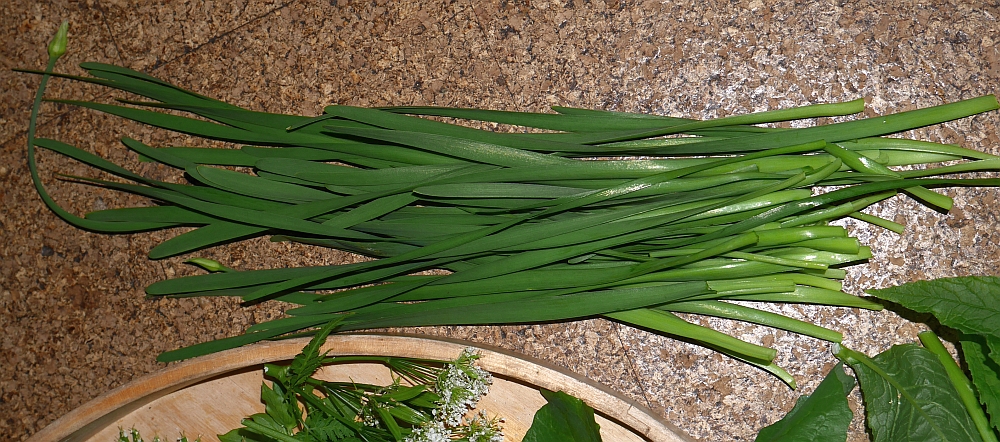
Allium senescens hybrid
P1610266
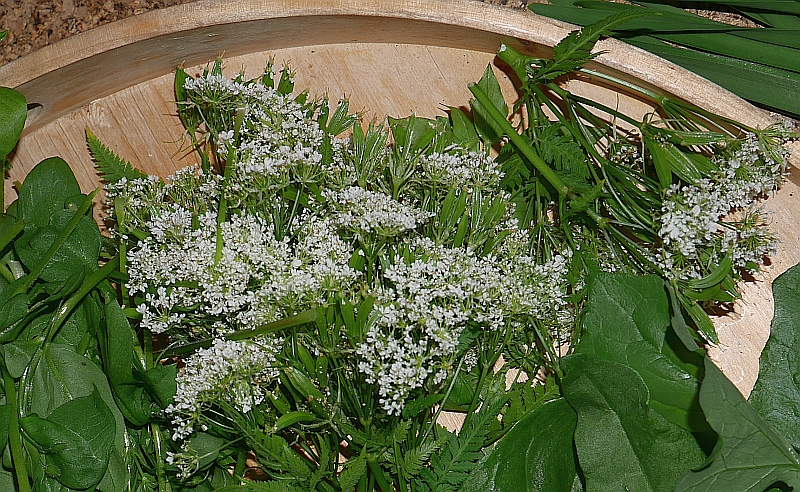
Sweet cicely (spansk kjørvel) flowering tops (the flower stems need to be removed as they are woody) are also sweet.
P1610267
Giant bellflower (storklokke) tops are also sweetish
P1610268
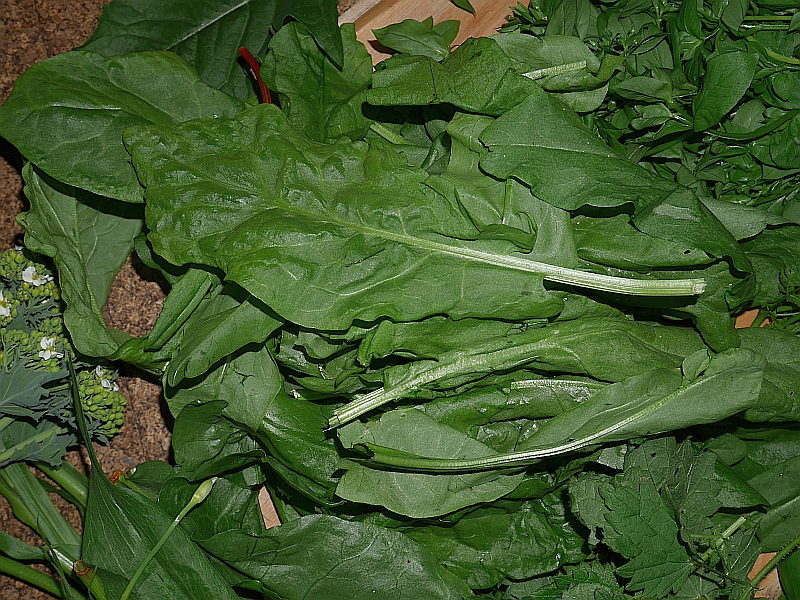
Sorrel (surblad) leaves from my patch of 6 Russian cultivars

Somebody once said that solstice greens are the best…I’d add that solstice perennial greens are even better :) Here’s what I used in tonight’s soup: Sea kale(strandkål), Scorzonera (scorsonnerot), Allium senescens, Sweet cicely (spansk kjørvel), Giant bellflower (storklokke), Sorrel / surblad, Nettle (nesle), Dandelion (løvetann) (all are in my book)…and I almost forgot that there’s chickweed (vassarve) in there too, perennial in that it’s there every year!

Diamond back moth invasion

One of the worst invasions of diamond back moth / kålmøll happened a couple of days ago….here is a video showing hundredds swarming over one of my Lily White sea kale plants which is about to flower. Luckily they never do much damage to sea kale (Crambe maritima) as the harvest is over before they arrive, one of the big advantages of perennial brassica…on the other hand, annual brassica crops are being planted now in my area…they have little chance against these tiny moths….
I blame the rapeseed oil industry for this…they don’t overwinter here, but they migrate passively on warm winds from central Europe and Russia, even reaching Svalbard and Northern Norway…

Perennial vegetable tempura

April 2014 and Yngvil (aka Ms. Saladdy) was helping out in my garden, her practical experience for her education to become a gardener!  I’ll let her tell her own story of the wonderful diverse tempura we made together on that day using perennial veggies!

See also https://saladdy.wordpress.com/2014/04/25/tempura-day 

..includes ostrich fern, blanched lovage, Udo, perennial kale, moss-leaved dandelion, Allium victorialis, nettles, Aster scaber, scorzonera shoots, Campanula latifolia, Oca, Myrrhis, Allium scorodoprasum, garlic, Allium ursinum, Ligularia fischeri (first time), sea kale, Primula veris “Red Strain”, Rumex acetosa, Alliaria petiolata and a few others…

10171287_10152312264960860_7856734276627163114_n