Many thanks to my friend Alfredo Sendim for inviting me to hold a course at his amazingly diverse Herdade do Freixo do Meio farm. It is run as a cooperative using many innovative agricultural methods, inspired in particular by Ernst Goetsch and Syntropic Farming! I was very happy that Fernanda Botelho also joined us to share her knowledge on local edible plants!
The 3 videos at the end show Agroforestry methods on the farm at Freixo do Meio, olives intercropped with a wide diversity of edibles and other useful plants!
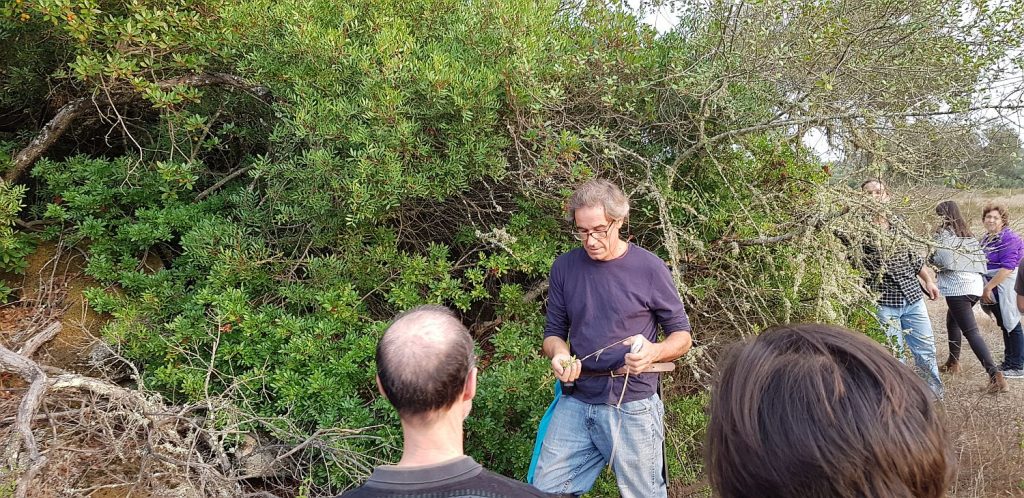
The day started with my lecture
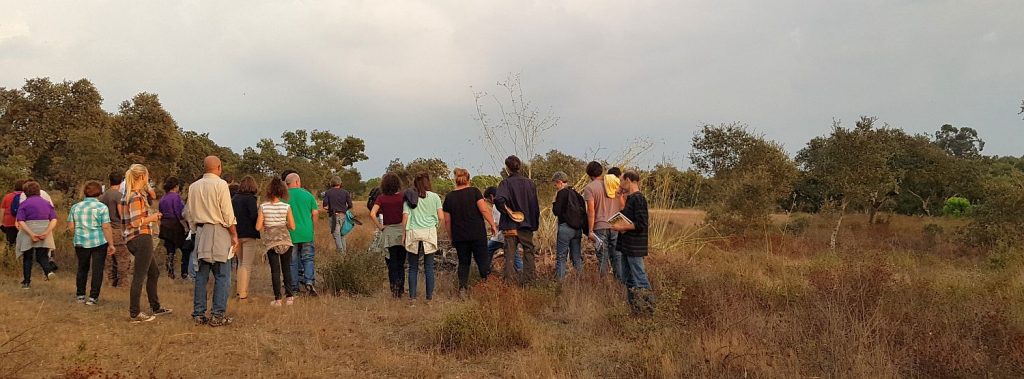
The course participants were joined by a group of farm workers and well known Portuguese forager /herbalist Fernanda Botelho!
Group hug of one of the ancient olive trees!
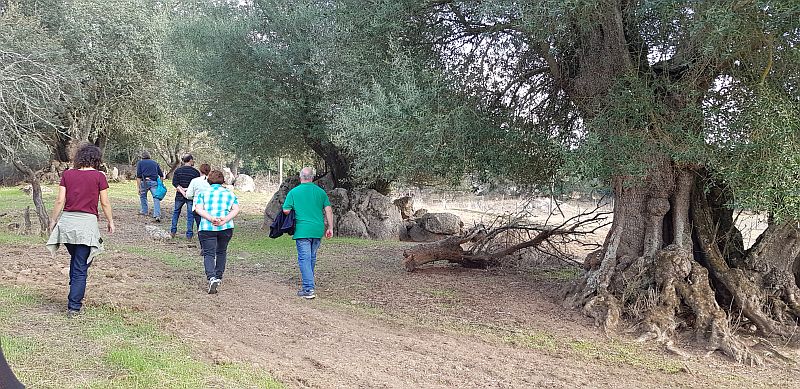
Ancient olives
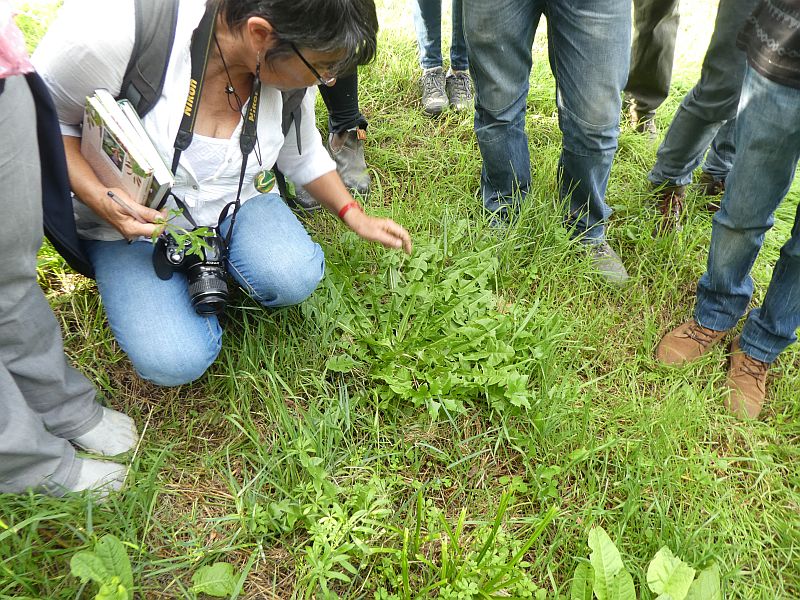
Fernanda with the biggest dandelion we found!
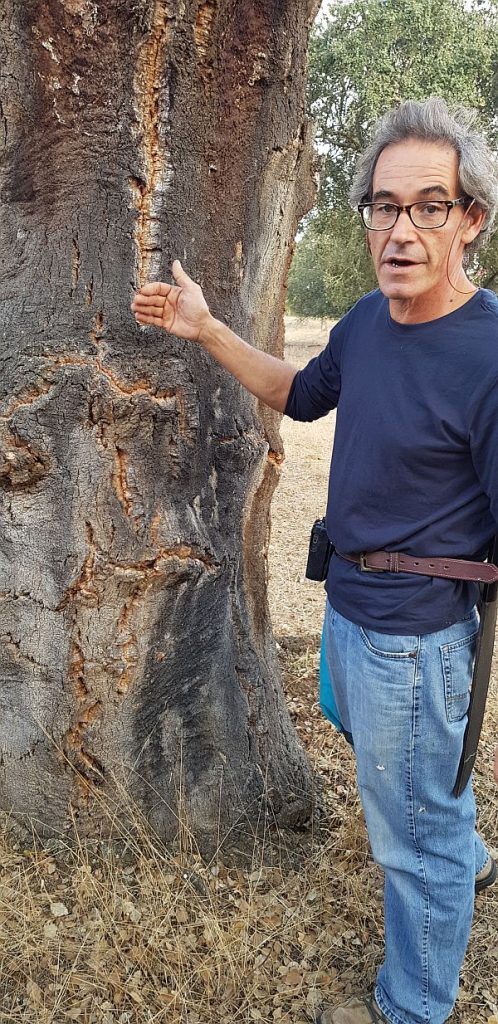
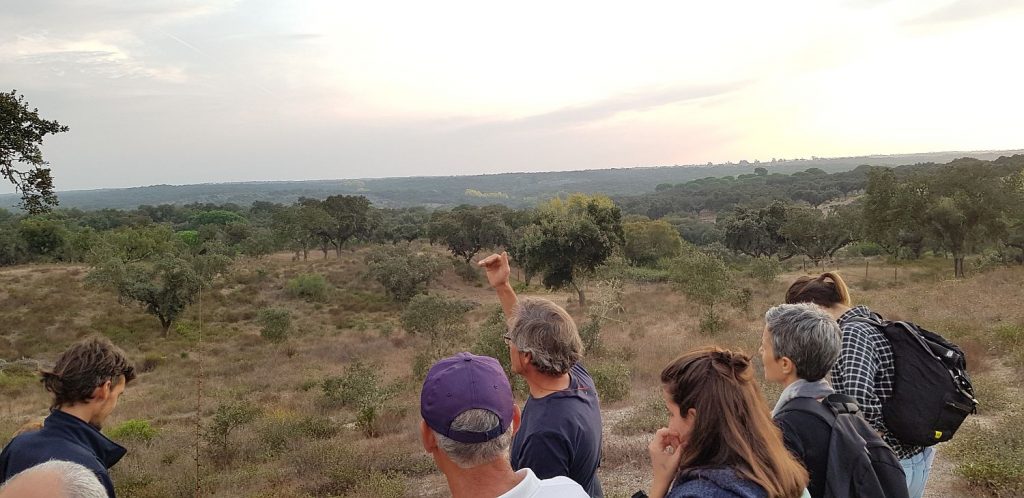
Alfredo Sendim, whose family have owned the farm for generations, lead a long 5 hour tour around the farm…here showing how this cork oak was scarred by poor cutting in the past!
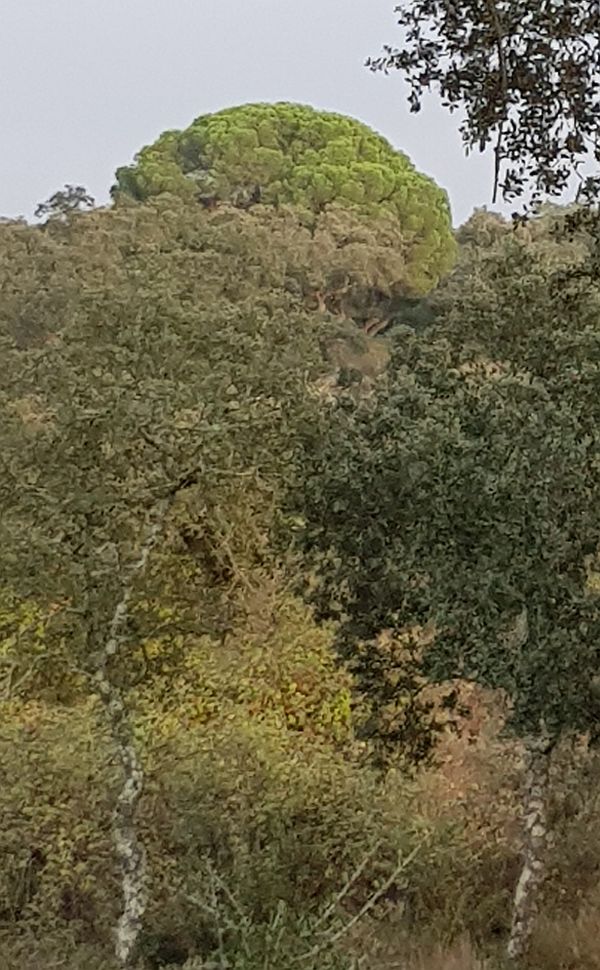
Typical form 0f Pinus pinea, umbrella pine, source of pine nuts, an important crop in this warm, dry area of Portugal!
Water is important for the animals…
Pistacia lentiscus, the mastic tree!
Acis autumnalis and Scilla autmnalis had appearedin response to the first rains after a prolonged drought!
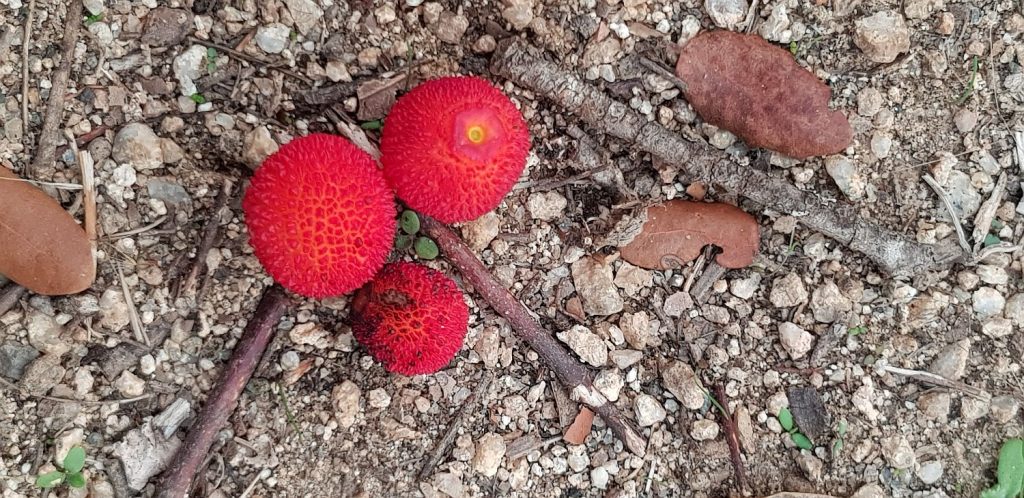
Medronheiro, the strawberry tree (Arbutus unedo)
Medronheiro, the strawberry tree (Arbutus unedo)
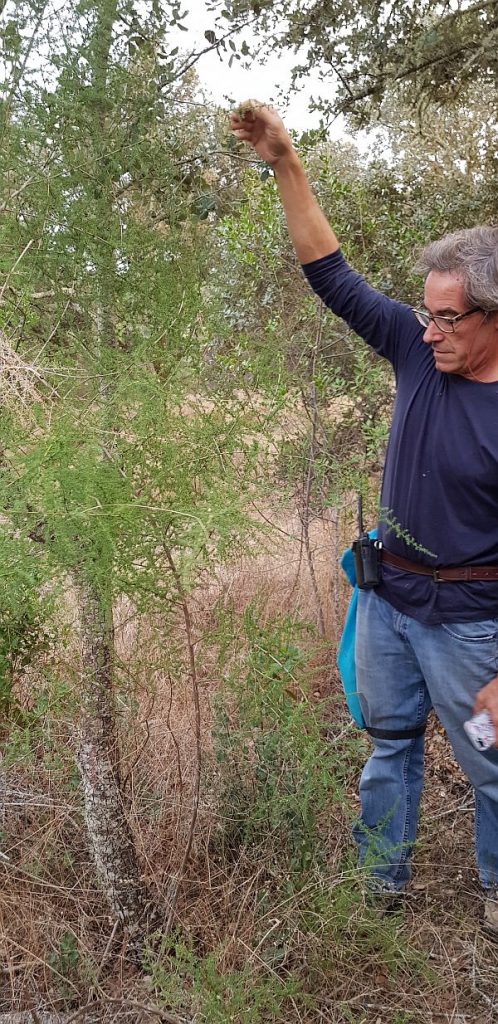
Asparagus….woody plants here…just beginning to sprout!
Acis autumnalis and Scilla autmnalis
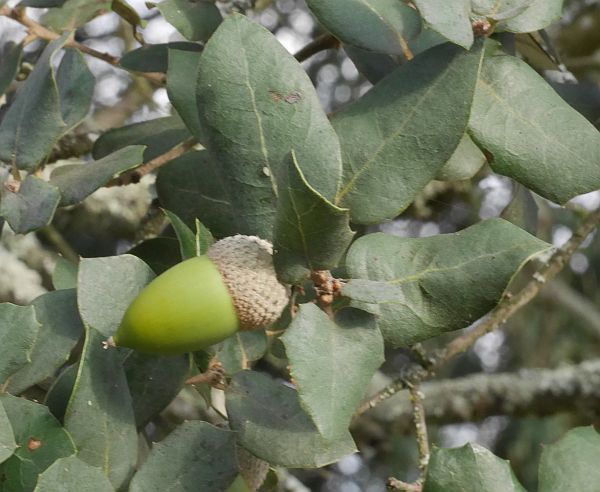
Quercus ilex ssp rotundifolia? (Holm oak), an important product of the farm!
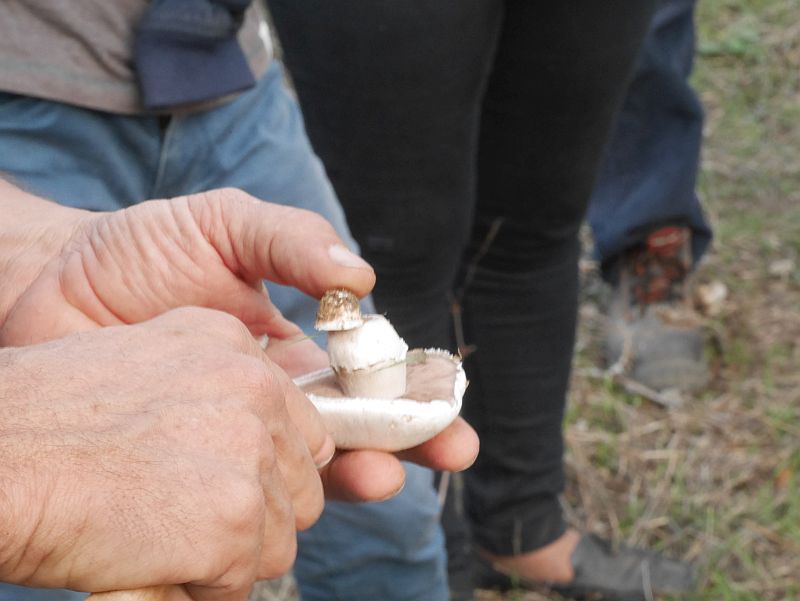
Field mushrooms, the first of the autumn!
Pinus pinea
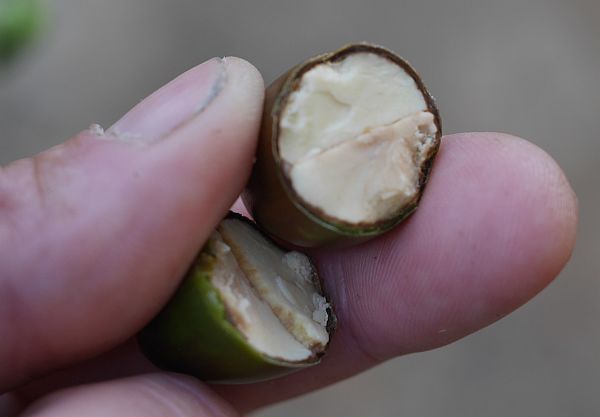
These acorns were actually quite sweet !
There was large diversity on the farm where machinery couldn’t reach…here with Pistacia, Ruscus aculeatus and Umbilicus!
Umbilicus rupestris
Me with Fernanda Botelho
Smilax aspera (young edible shoots like asparagus)
Stephen Barstow 30 October · Pistacia lentiscus, mastic tree
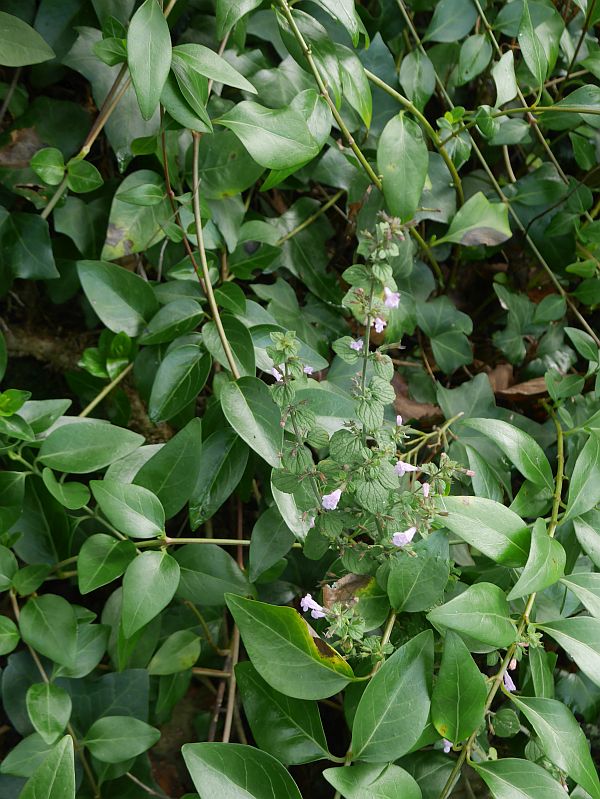
Calamintha nepeta
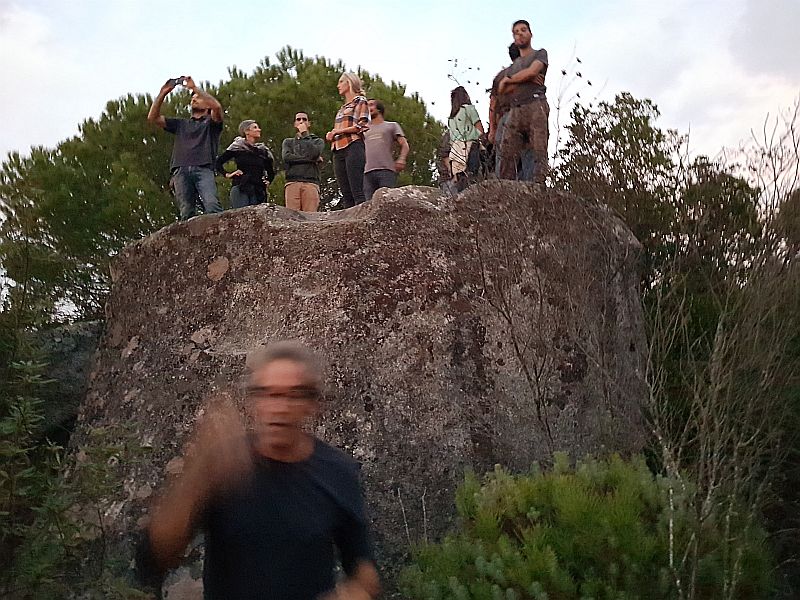
The seed grinding rock!
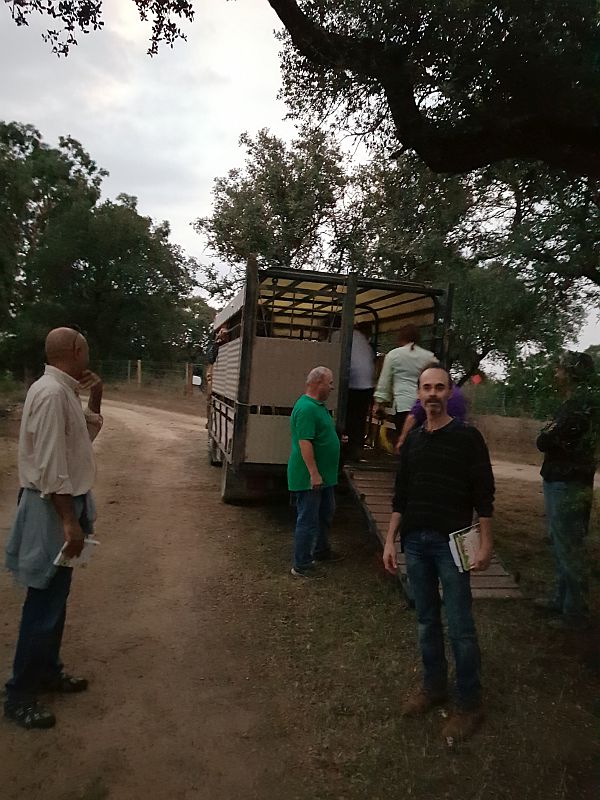
The transport home was a cattle truck…here with my friend Jorge Carona!
My accommodation on the farm!
Prickly pear with acorns and acorn biscuits (bolota)!
Showing the diversity of acorns on the farm (pictures taken by Alfredo!)
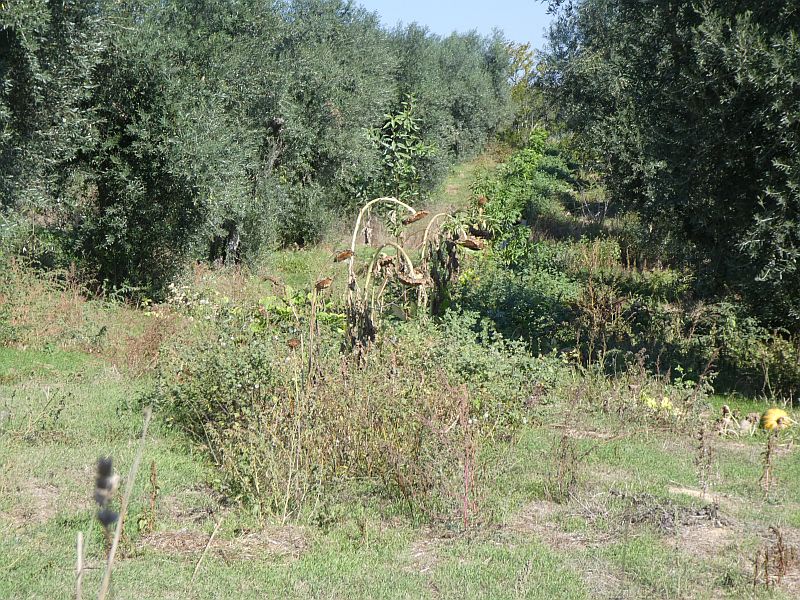
The agroforestry area.
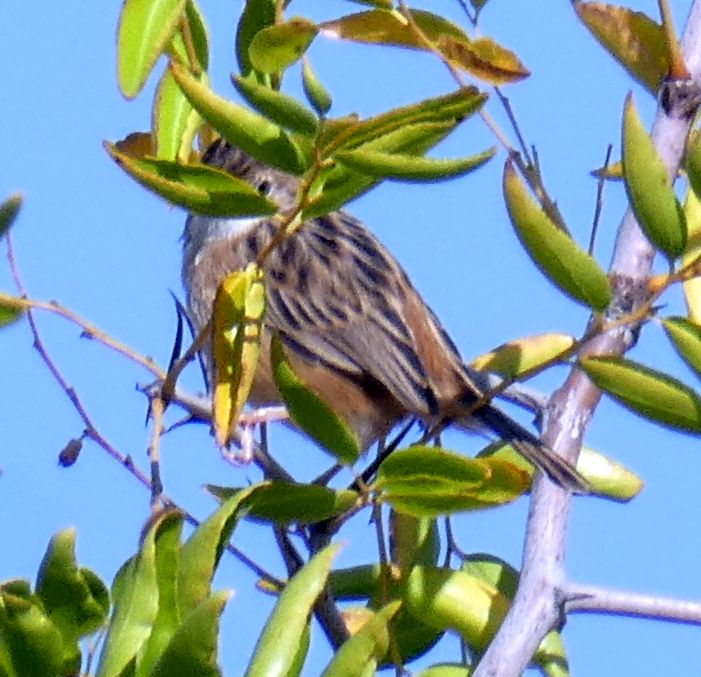
Whitethroat? in the Agroforestry area
Stonechat in the Agroforestry area
The Egg Temple
They had a few deer in a compound next to the Egg Temple…apparently the hens were healthier with deer nearby..
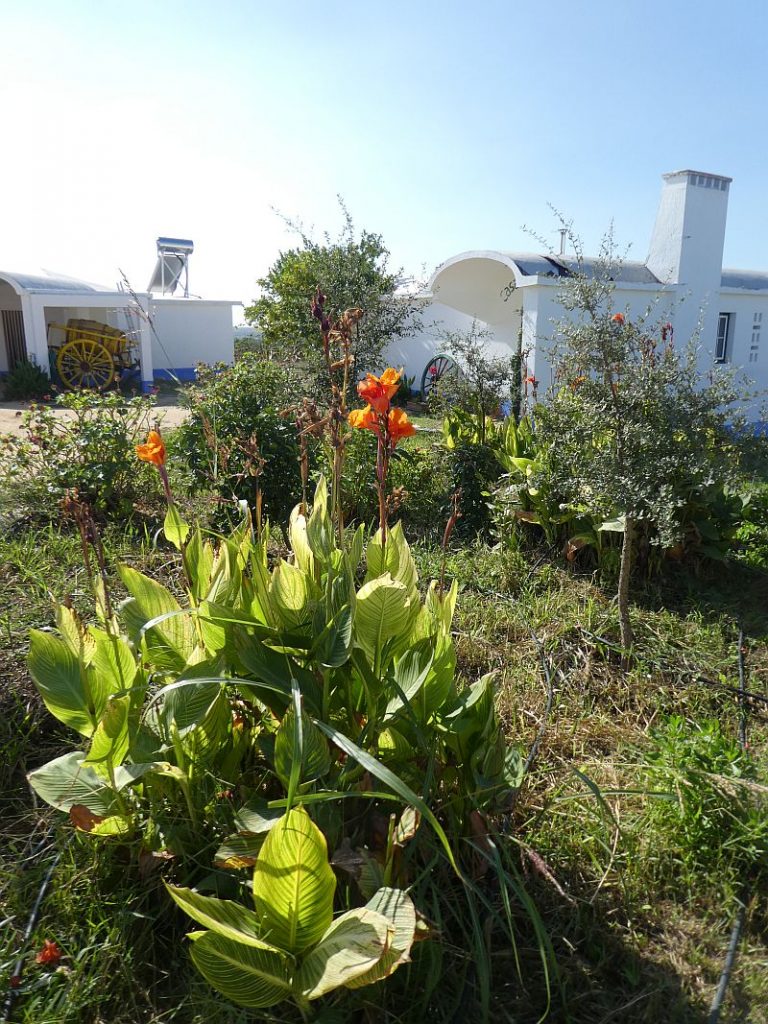
Dwarf Pomegranate and Canna
Canna
Canna
Clouded yellow and lucerne
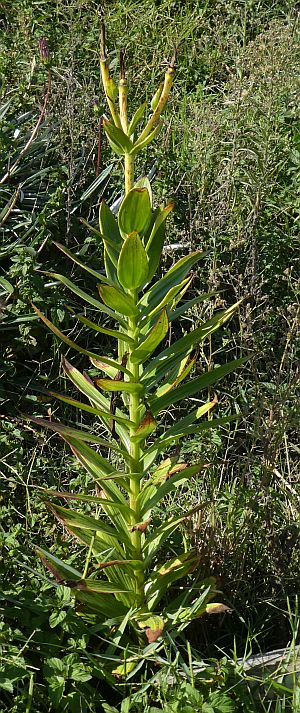
Lily
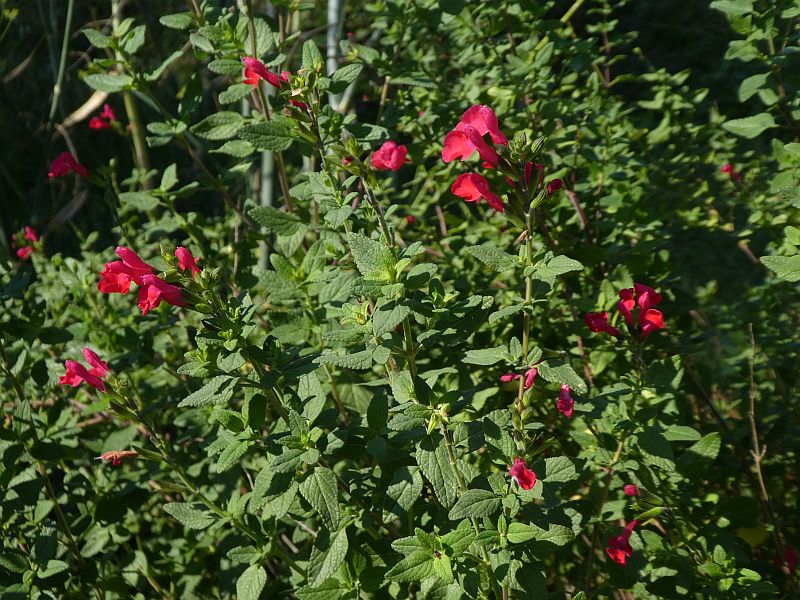
Blackcurrant sage
Mentha suaveolens
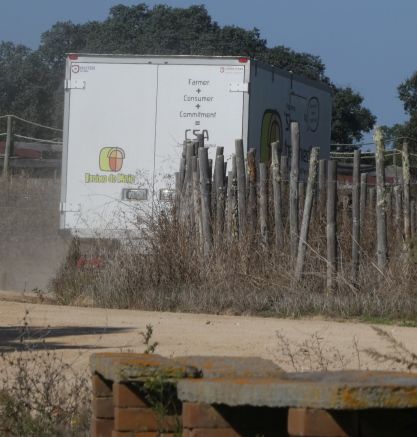
The delivery van returning….the farm sells though their shop in Lisbon
More traditional CSA area
More traditional CSA area
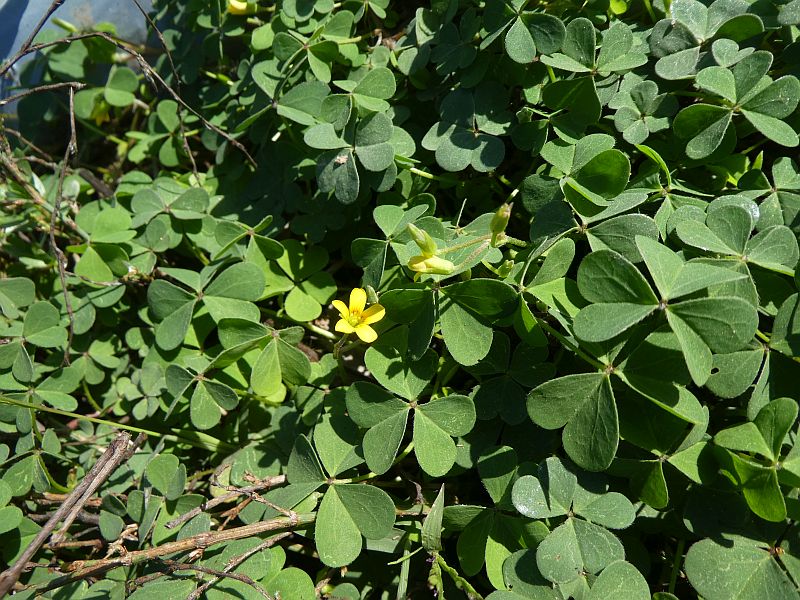
Oxalis corniculata, edible weed on the CSA area
The shop
Clouded yellow butterfly on lucerne:
Agroforestry methods on the farm at Freixo do Meio, olives intercropped with a wide diversity of edibles and other useful plants:
In the morning of the masterclass on permaveggies on 1st November 2018 organised by the Janas Ecovillage, we visited Jardim da Condessa D’Edla in collaboration with the Sintra Natural Parks! Fernanda Botelho and myself lead the tour of this amazing place seeking out a large diversity of edible plants, both wild and cultivated :)
Introduction by Joana Martins
A curly leaved Ruscus aculeatus (Butcher’s broom / erva-dos-vasculhos, gilbarbeira)…it has edible shoots At the bottom can be seen a Bergenia, a Siberian species that is very adaptable!
We talked about the edible flowers and fruits of Fuchsias
…and edible Begonias
Fernanda told us that the pretty flowers of Alyssum are edible!
Sweet chestnut
The cork palace, Chalet Condessa d’Edla
The cork palace, Chalet Condessa d’Edla
The cork palace, Chalet Condessa d’Edla
Rose
Yucca….the flowering stem can apparently be cooked and used like asparagus
…and the flowers are also edible! See http://www.edimentals.com/blog/?p=8470
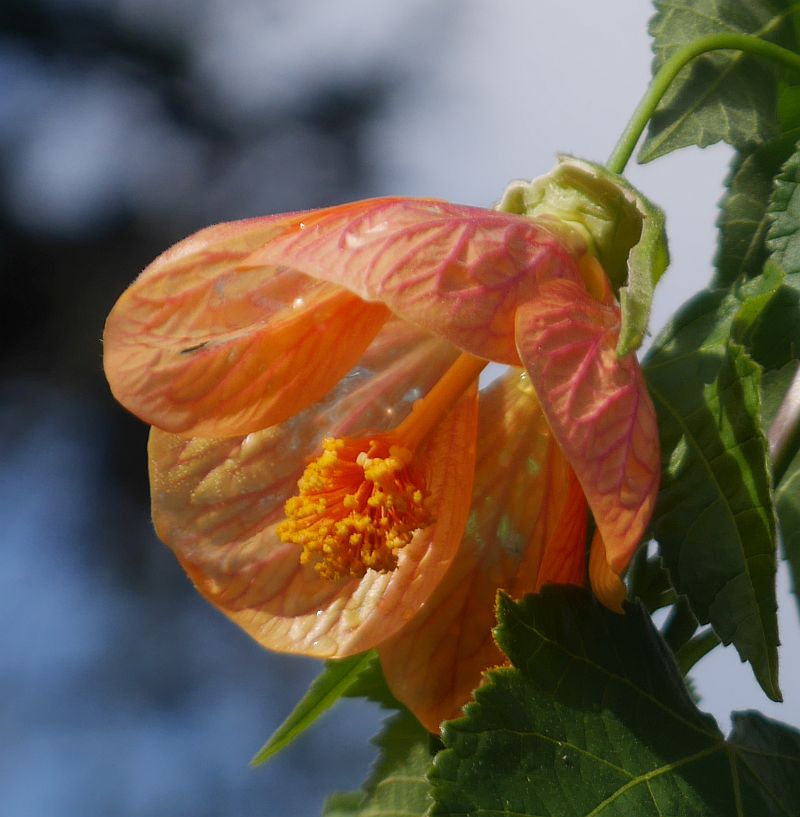
Abutilon is in the mallow family and has delicious (taste and look) flowers…an edimental (edible ornamental)
What was this, Fernanda?
Somebody commented if Asterix and Obelix been here?
Quercus spp. (oak)
Quercus spp. (oak)
Umbilicus rupestris, navelwort / umbigo-de-vénus
The Pena Palace
Chickweed / morugem (Stellaria media)
Valeriana?
Cephalotaxus (Japanese plum-yew) with ripe fruit!
Cephalotaxus (Japanese plum-yew) with ripe fruit!
Cephalotaxus (Japanese plum-yew) with ripe fruit!
Cephalotaxus (Japanese plum-yew) with ripe fruit!
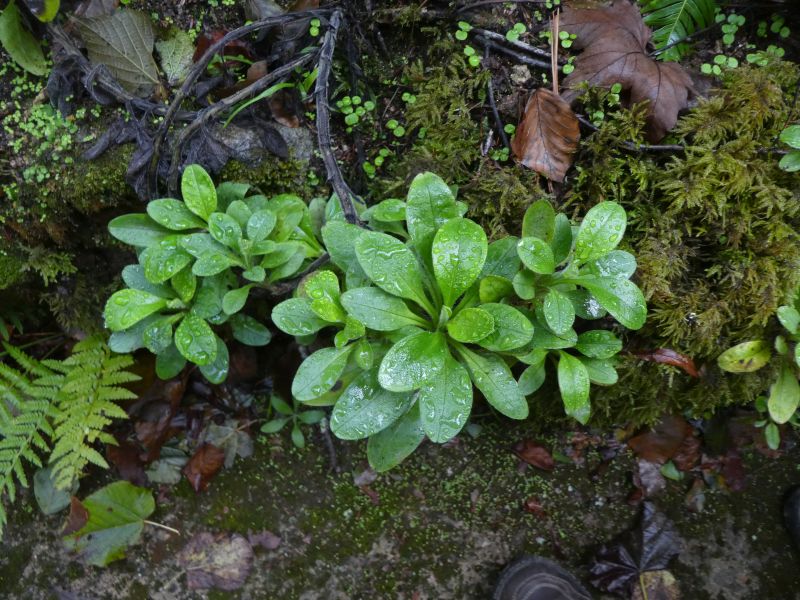
An interesting looking dandelion / dente-de-leão (Taraxacum spp.)
An interesting looking dandelion / dente-de-leão (Taraxacum spp.)
Centaurea with Alyssum
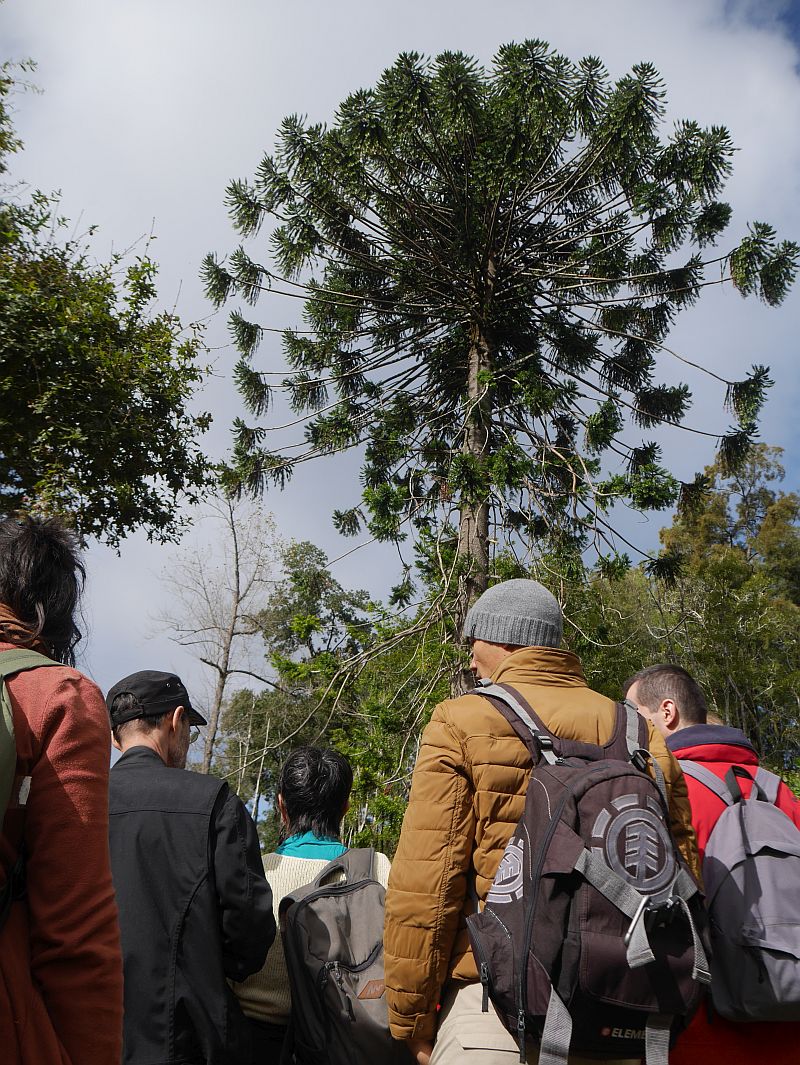
Monkey puzzle, Araucaria
Monkey puzzle, Araucaria
Blackberries
? on Eucalyptus
? on Eucalyptus
Tree ferns
Cordyline australis “Purpurea” (cabbage tree)
Monstera deliciosa has edible fruits
Gunnera, one of the 80 in my book
Yew (Taxus spp.)
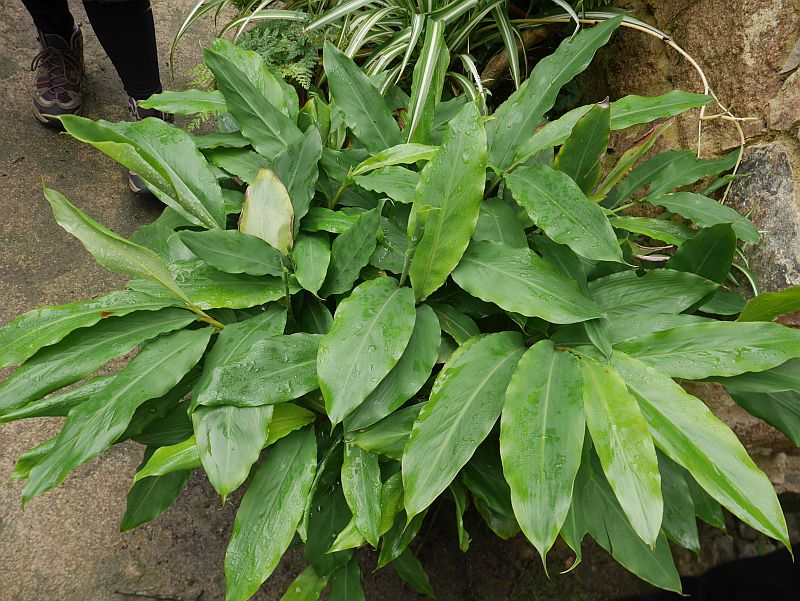
Cardamom
Participants with a Fuchsia in fruit!
Cordyline australis (cabbage tree)
Abutilon x hybridum? is another great edimental?
Abutilon x hybridum?
Abutilon x hybridum?
Abutilon x hybridum?
Viola spp
Alyssum
Myrtus communis (myrtle)
Myrtus communis (myrtle)
Calamintha nepeta
Phytolacca americana
Rumex acetosella?
Asparagus officinalis
Goji
Acelga / chard
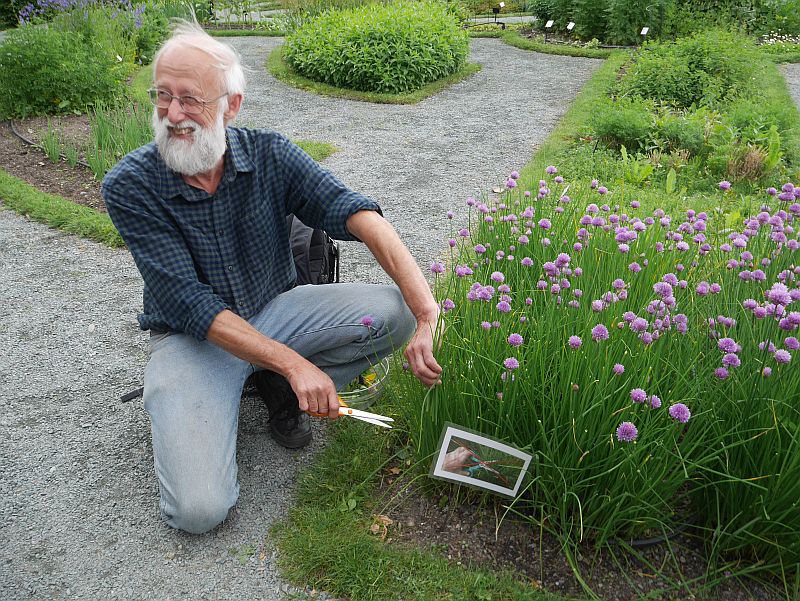
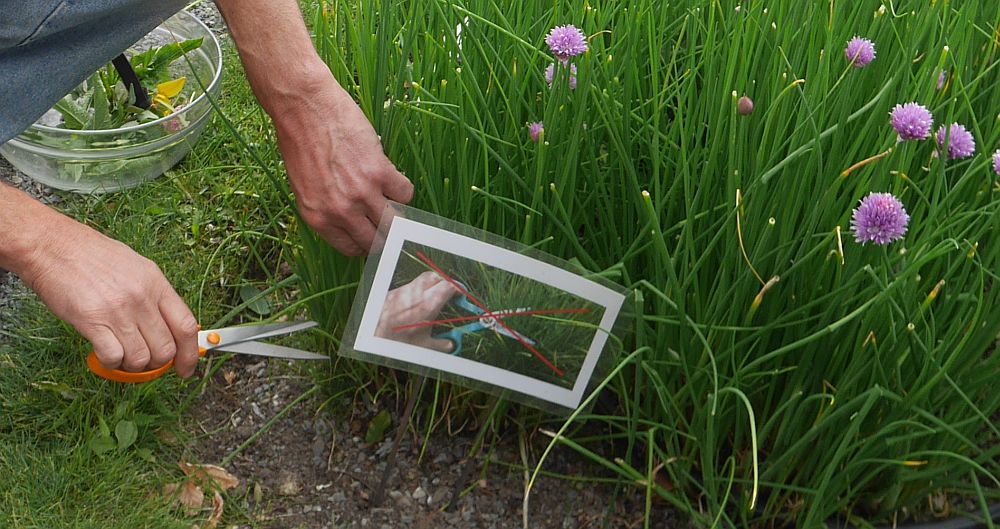
Allium schoenoprasum (chives)
Fuchsia
Lovage / levistico
Fuchsia
New Zealand Spinach
Parsley and Nigella
Agaricus
Tradescantia…probably one of the South American species that don’t seem to be edible
Fire salamander….
Parietaria
Plantago major
Returning to Janas and the afternoon session…a column of cars
The queues to get into see the Sintra palaces….we had the gardens more or less to ourselves!
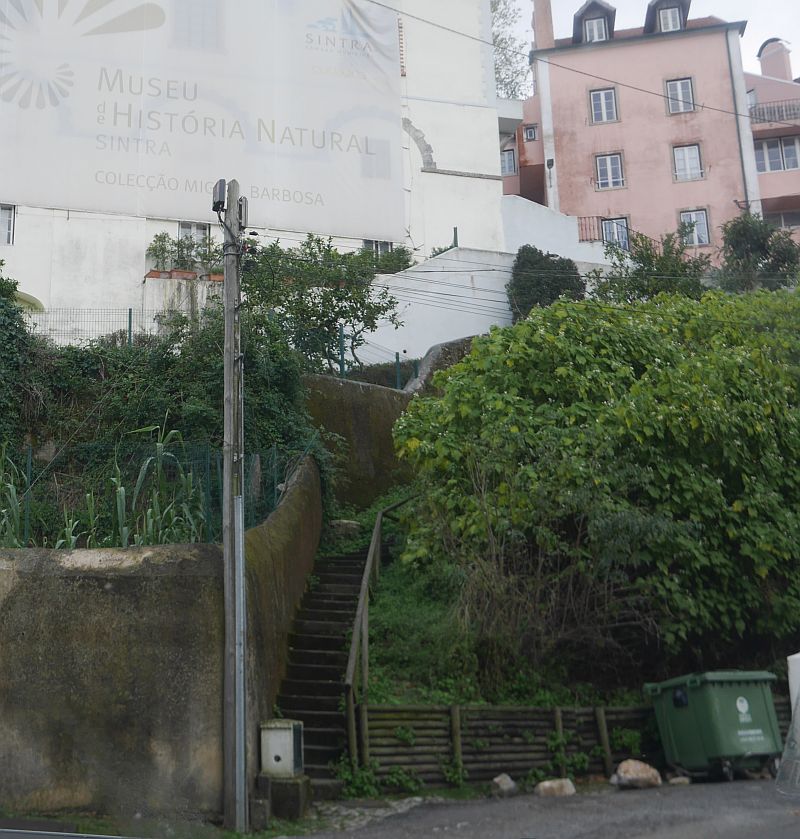
3 years ago I had foraged this part of Sintra with Fernanda and Jorge and we had walked up these steps and had ID’d this plant as Sparmannia africana (pictures can be seen in the photo album in this link: http://www.edimentals.com/blog/?page_id=2744)
3 years ago I had foraged this part of Sintra with Fernanda and Jorge and we had walked up these steps and had ID’d this plant as Sparmannia africana (pictures can be seen in the photo album in this link: http://www.edimentals.com/blog/?page_id=2744)
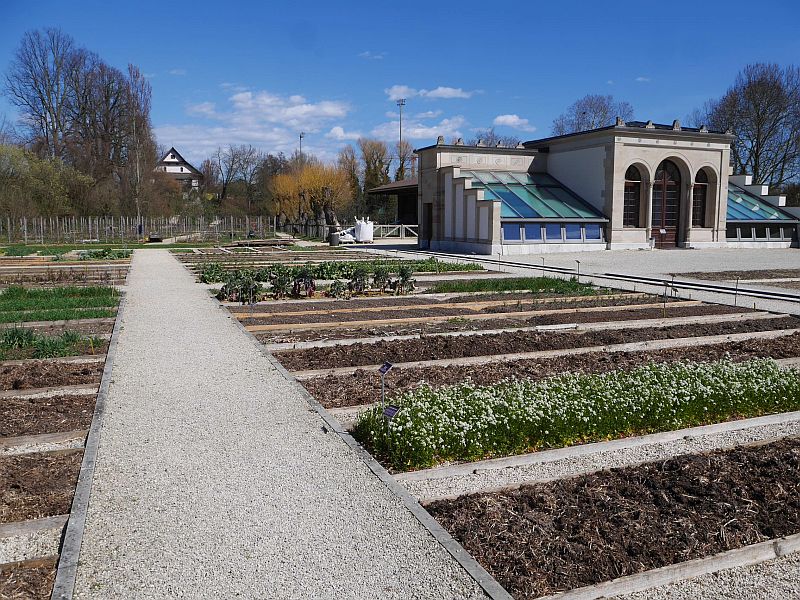
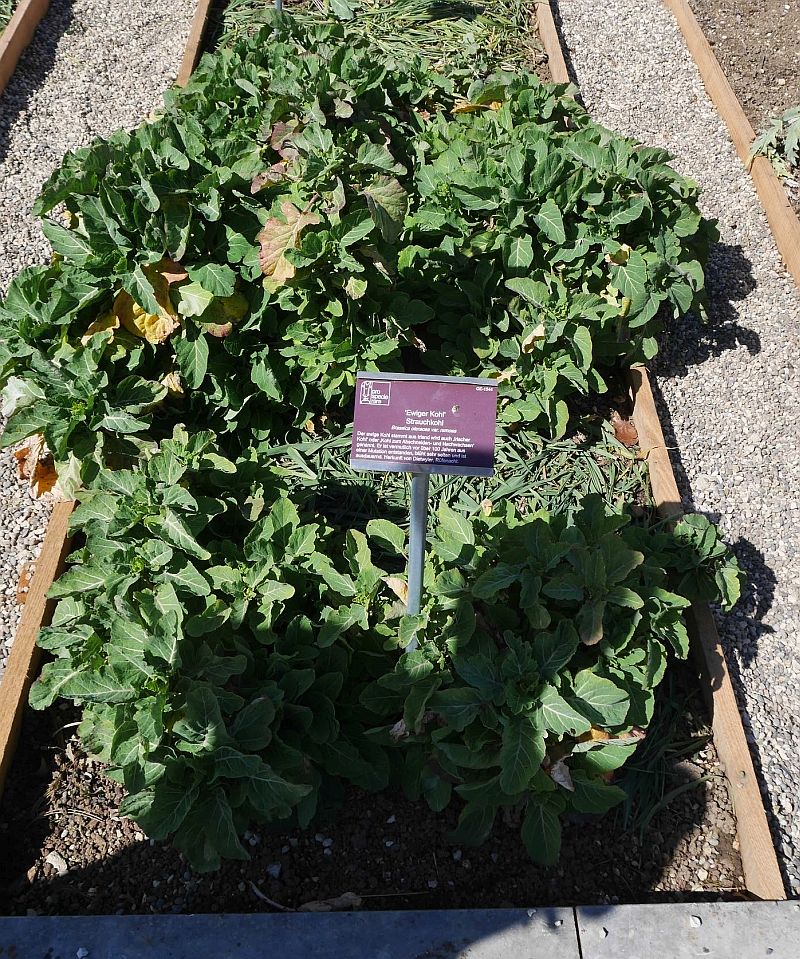
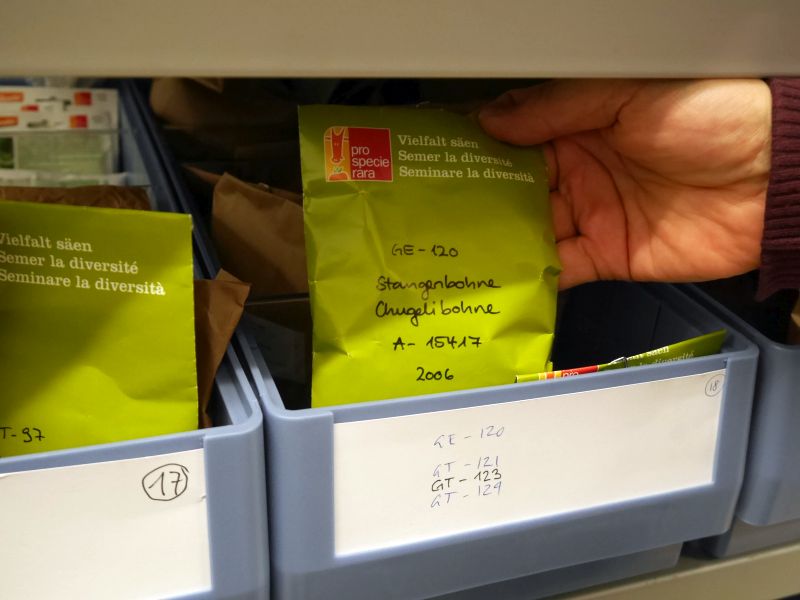
On 4th April 2018, I took advantage of my trip to Switzerland to attend the The Potential of Perennials for Food Resilience symposium to visit KVANN’s (Norwegian Seed Savers) sister organisation Pro Specie Rara in Basel. Many thanks to Director Béla Bartha (since 2002) and Head of Education, Esther Meduna for making me feel so welcome. The trial grounds and offices of Pro Specie Rara are located in the Merian Gärten, a botanical garden in Basel. I lead a walk and talk of the trial grounds and botanical collections followed by an evening lecture at Markthalle in the centre of Basel! A great place for a seed saver organisation to be located! Béla also showed me their seed vault a specially climate controlled room (15C and 15% humidity). The walk and talk was sadly interrupted by heavy rain and we moved indoors and I did a short version of my evening lecture instead!
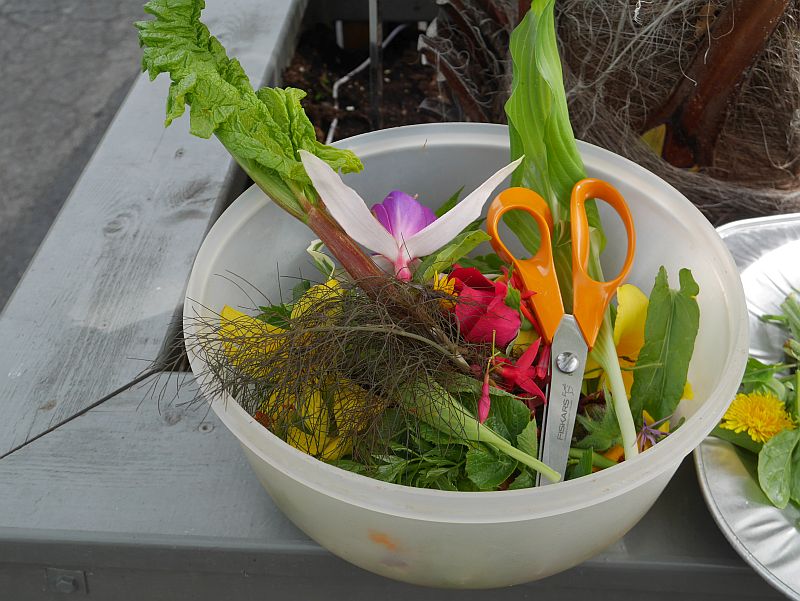
Day 3 of the KVANN (Norwegian Seed Savers) meet was at the Ringve Botanical Garden Open Day in Trondheim. The day started early as I drove one of the participants to the station in Trondheim and then spent a couple of hours collecting some of the ingredients for a multi-species salad. Including plants collected on a walk, talk and forage for KVANN members, we managed 111 ingredients in the salad! Thanks to all who helped make it a very successful and fun weekend!
Up early to another wonderful view
Coffee break at Ringve planning my walk and forage
Andrew and Meg working at the Ringve Botanical Gardens :)
Tijana Gajic weeding at the Ringve botanical gardens – we found some Chenopodium album (fat hen / meldestokk), picked for the salad!
Weeding at the Ringve botanical gardens – we found some Chenopodium album (fat hen / meldestokk), picked for the salad!
Sampling Myrrhis odorata (sweet cicely) flowers and young seeds for the salad in the Renaissance Garden…more about the Renaissance Garden which has 123 plants that were documented grown in Trondheim in the 1690s in the following link including a salad I made on the opening of the garden some years ago! Poisonous Veratrum (False Hellebore / Nyserot) in the foreground was discussed as a confusion species to edible Hostas!
Bad boy Barstow?….but I did have permission to harvest from the garden’s collections :)
Bad boy Barstow?….but I did have permission to harvest from the garden’s collections :)
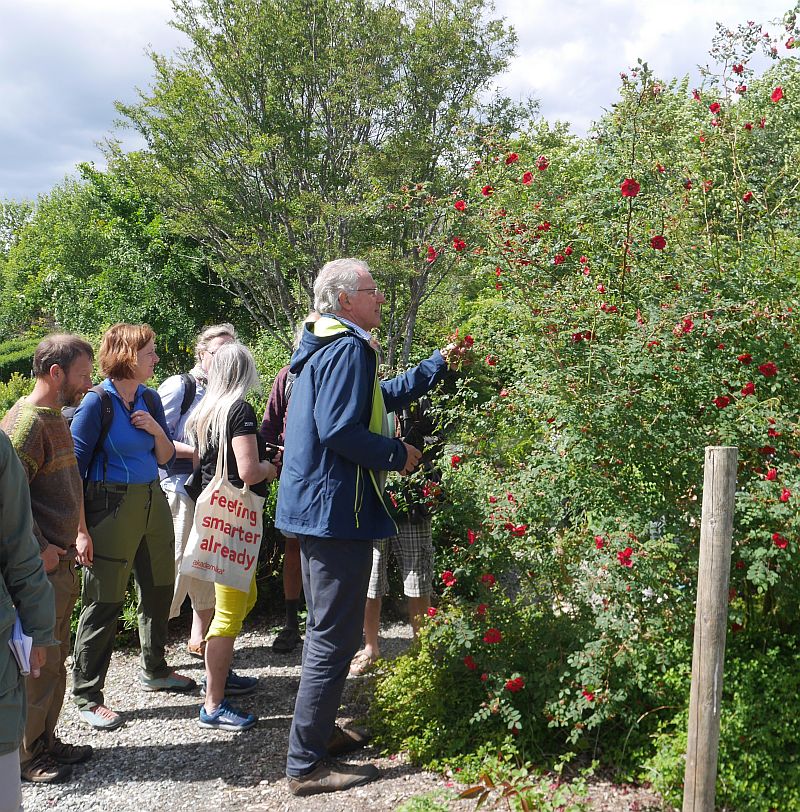
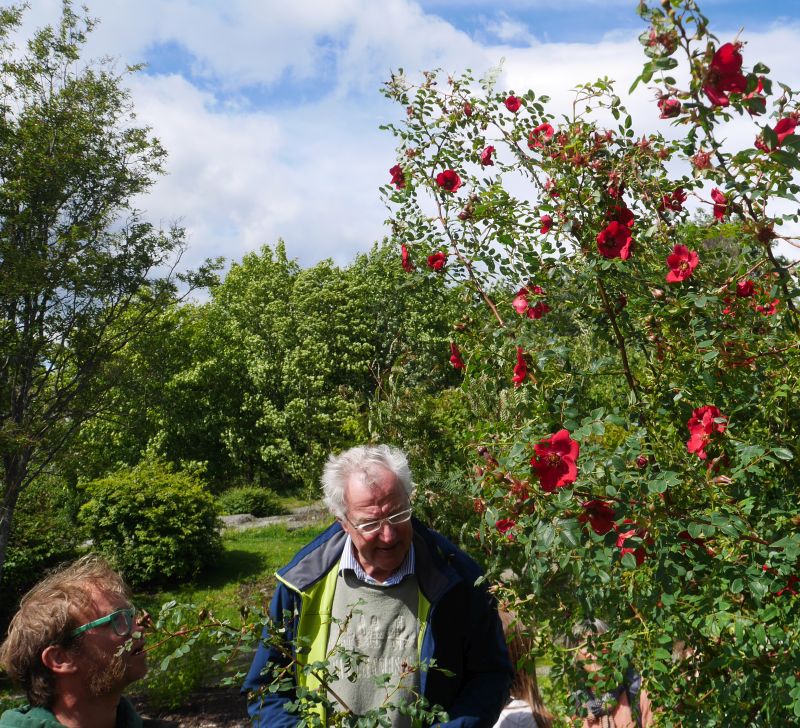
Rosa moyesii in full flower (mandarinrose), you can see the flowers in the final salad!
Eirik and Kjell admiring Rosa moyesii in full flower (mandarinrose)
Magnolia acuminata
The final salad put together by KVANN members was shown on our stand before taste samples were offered to the public! Children were eager to taste the flowers! With Hemerocallis, Allium ursinum, Fuchsia, Rosa moyesii, asparagus, Hosta flower shoots and leaves, violets, dandelion etc.
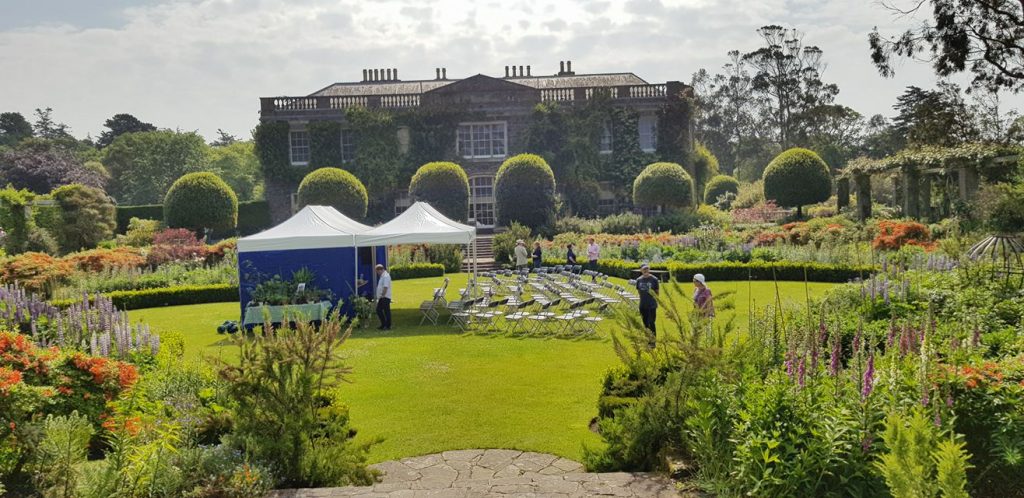
An album of pictures from my visit to National Trust property Mount Stewart on the Strangford Lough in Northern Ireland!
I return for the Planters Seminar in September!
Thanks to Neil Porteous for having me over :)
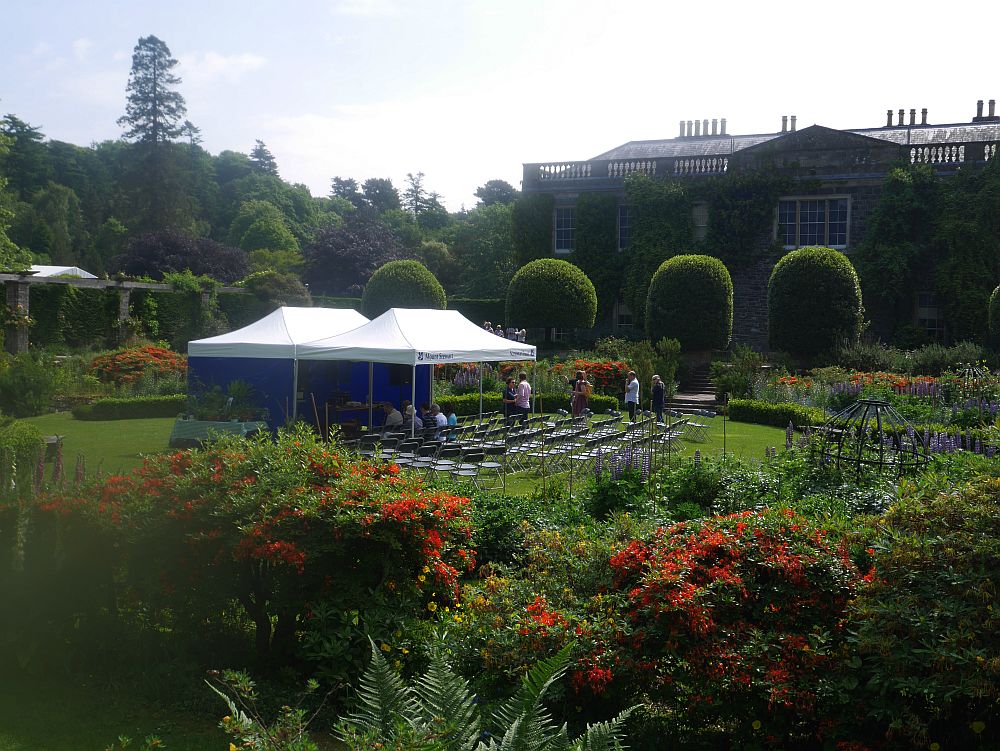
Mount Stewart
This was where I talked and ranted about the wonderful misunderstood Dandelion!
The main event was the Gardener’s Question Time recording (BBC Radio 4) with Bob Flowerdew and others
Foraging with the chefs from The Merchant Hotel in Belfast…here picking sorrel
….and Gunnera!
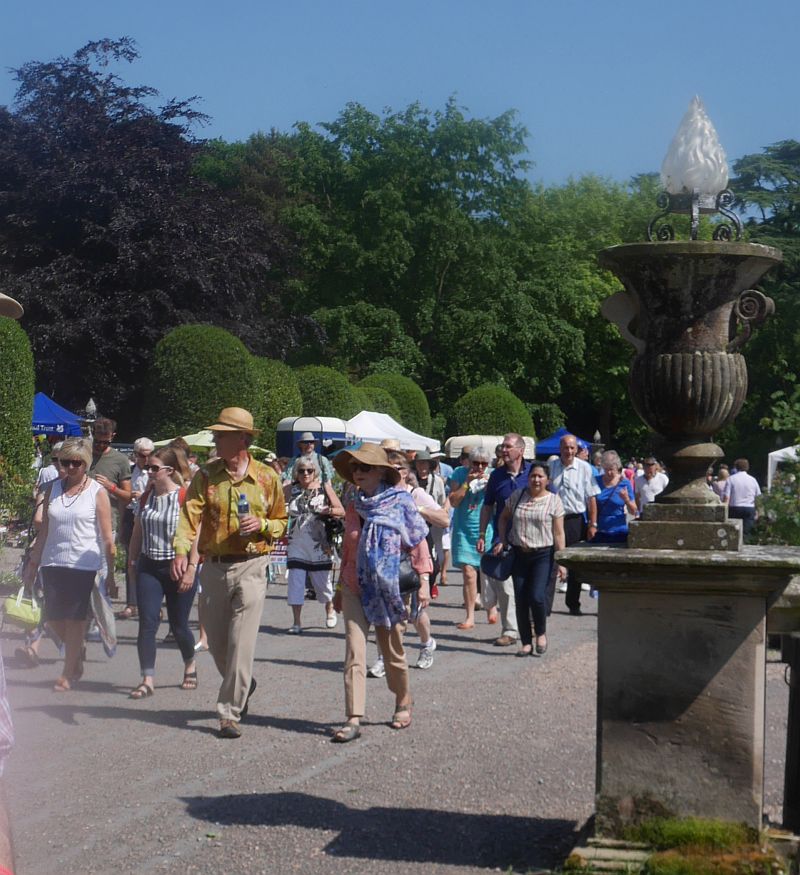
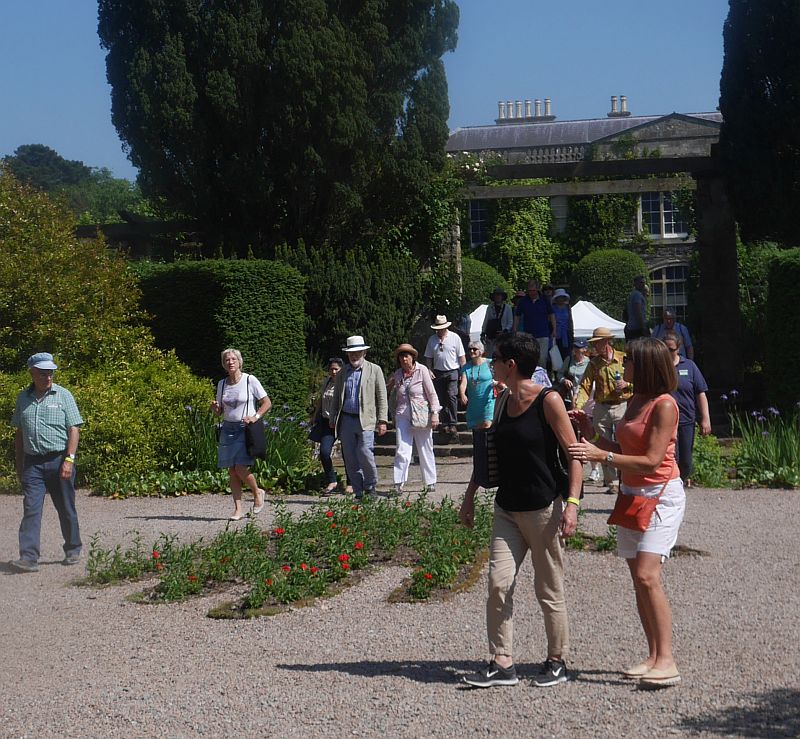
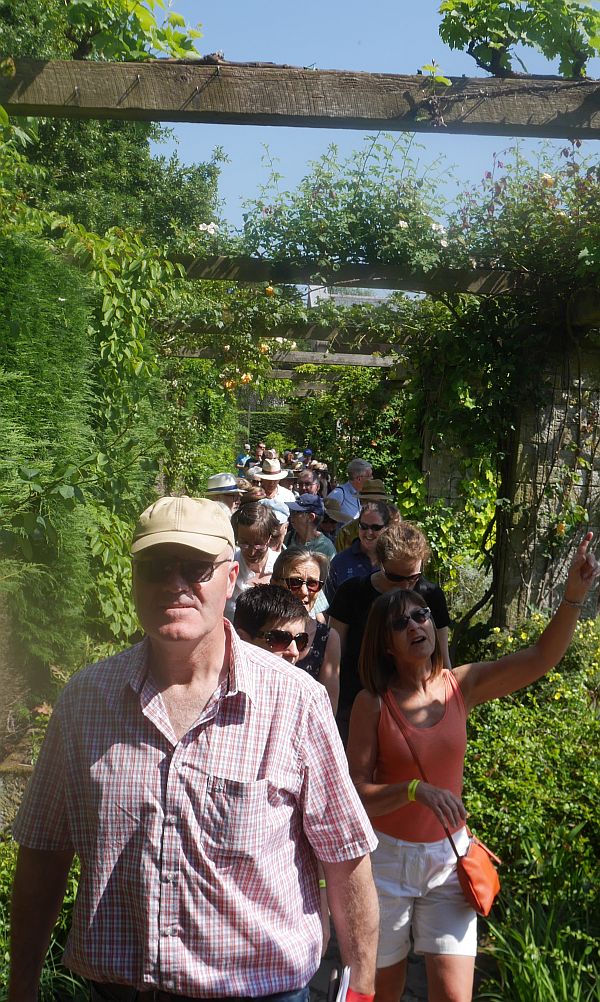
As Head of Gardener Neil Porteous who brought me over said humorously, the walk and talk took on biblical proportions :) Far too many people logistically :)
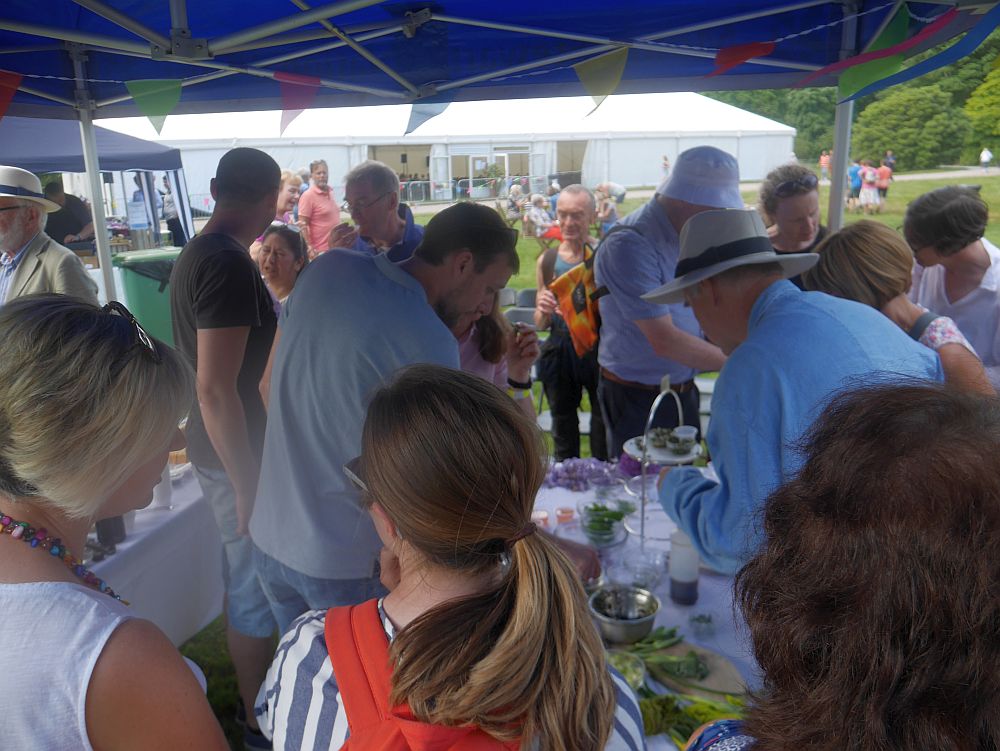
After my walk, talk and forage, the tasters prepared by the chefs were popular
After my walk, talk and forage, the tasters prepared by the chefs were popular
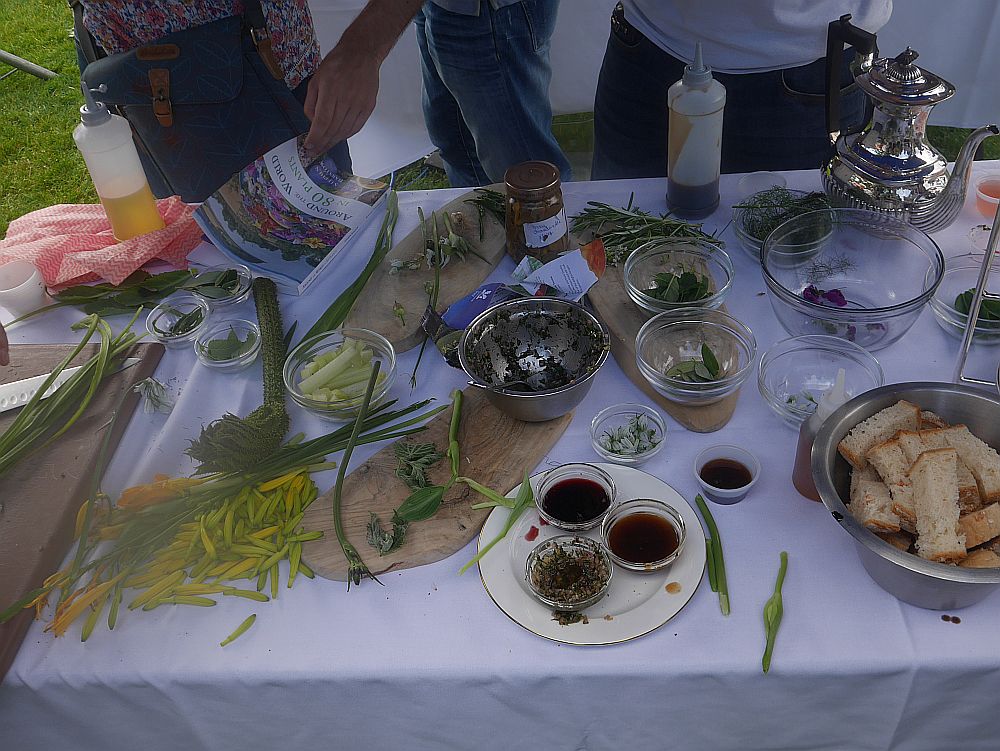
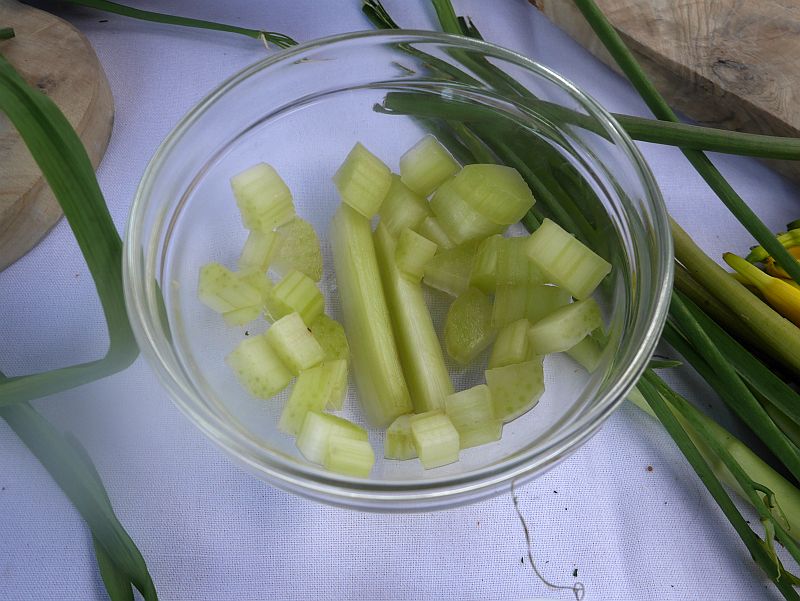
Foraged edimtentals included day lily buds, Hosta flower shoots and peeled Gunnera leaf stems. The chefs raved about all 3!!
The Gunnera was eaten raw dipped into a sauce…
Various edibles I spotted in the next pictures: Rheum palmatum?
Aralia cordata or californica?
Yucca (the flowers are edible)
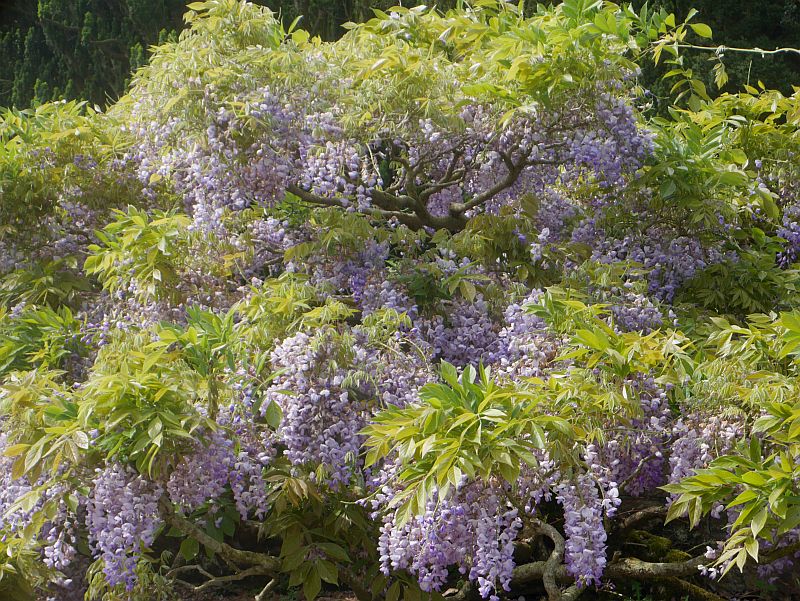
Wisteria
Oxalis corniculata?
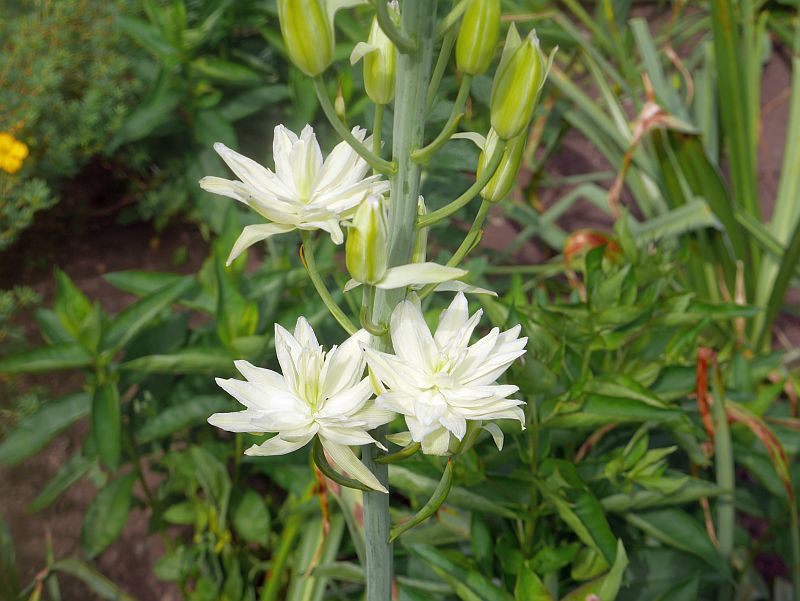
A double Camassia
A double Camassia
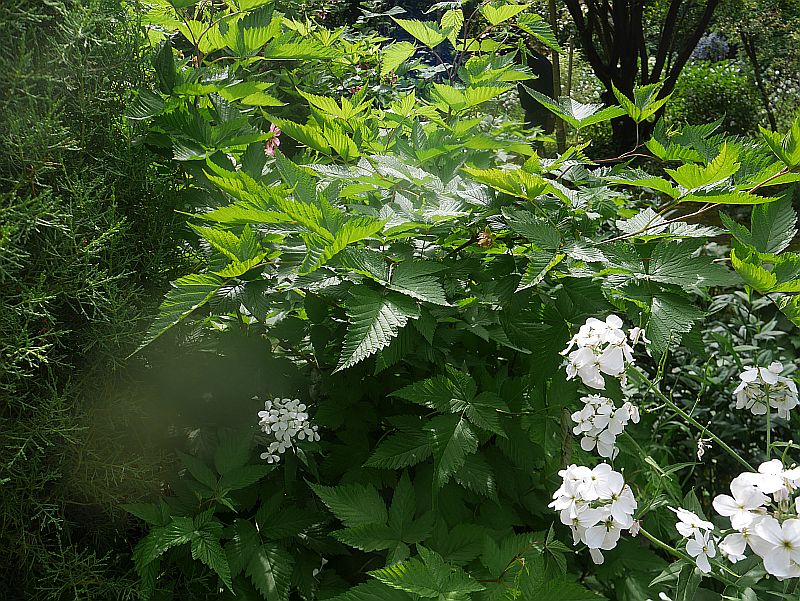
Rubus spectabilis with white Hesperis
Eucalyptus globulus
Himalayan lilt , Cardiocrinum
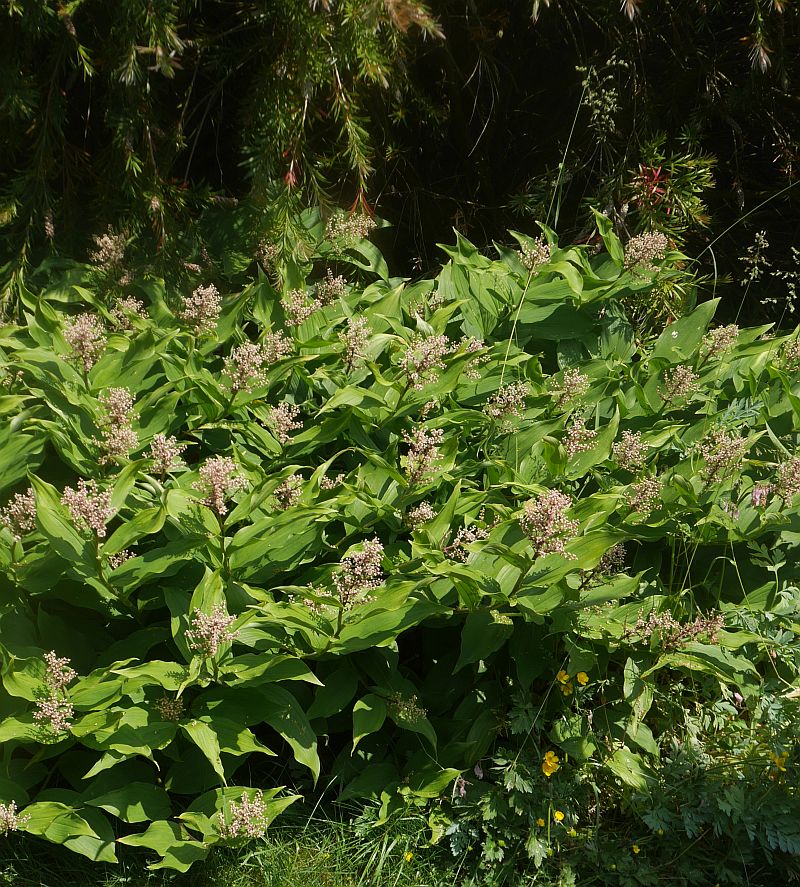
Smilacina racemosa, false solomon’s seal
Naturalised Camassia?
My day at Mount Stewart started before 8am accompanying Neil Porteous collecting plants introduced by famous Scottish plant hunter George Forrest for an exhibit to accompany a talk by Matt Biggs about Forrest. Neil is Head of Gardens at Mount Stewart and also the regional Gardens & Parks Advisor for NI for the National Trust
Mount Stewart has a mild climate and specialises on plants from the Southern Hemisphere…here two Maori food plants, Phormium (NZ Flax) to the left and the broad leaved mountain cabbage tree (Cordyline indivisa). Phormium nectar was commonly collected by the Maori as a sweetener. It was mixed with a meal from the root and stem of cabbage trees and also used to sweeten bracken fern roots! This was before bees were introduced to NZ by the Europeans!
The broad leaved mountain cabbage tree or tōī.(Cordyline indivisa) on the right with more common in cultivation Cordyline australis (ti kouka). The cooked roots of all cabbage trees were eaten by the Maori, but it was the roots of non-native Cordyline terminalis (ti pore) which was cultivated that were most highly prized! The core of the trunks were also sometimes eaten. They were best in spring and young trees were mostly used (less than 2m)
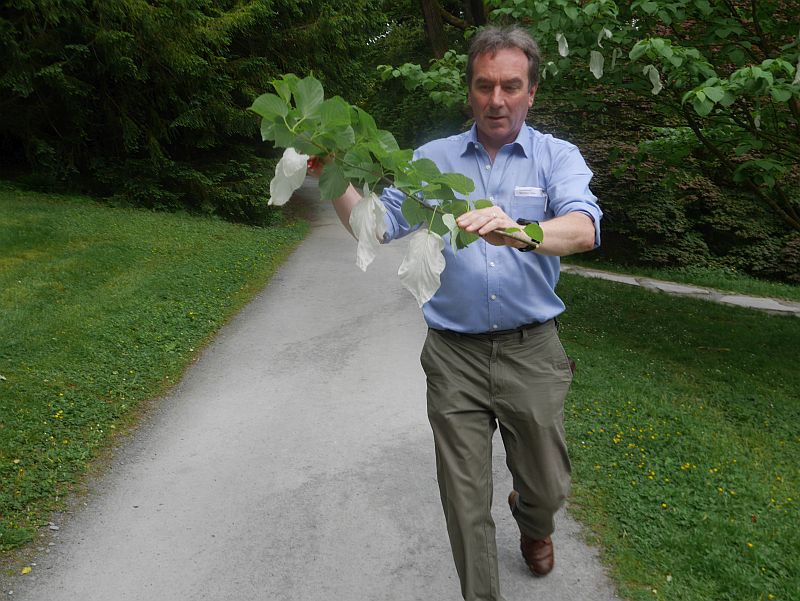
Davidia involucrata (handkerchief tree)
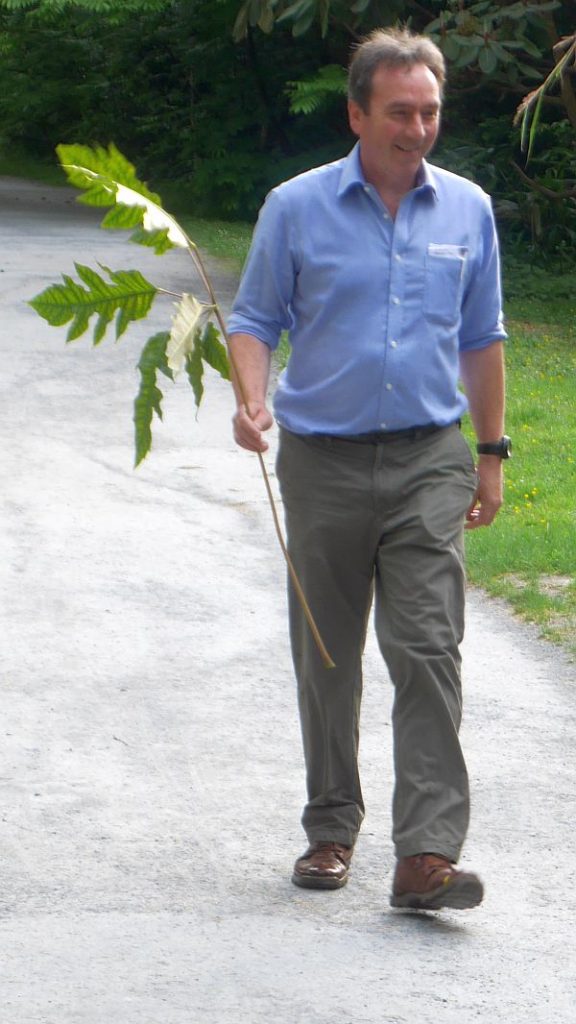
Neil Porteous with a handful of handkerchiefs…Davidia involucrata (handkerchief tree) for the George Forrest exhibit
Edible Hostas and Ostrich fern
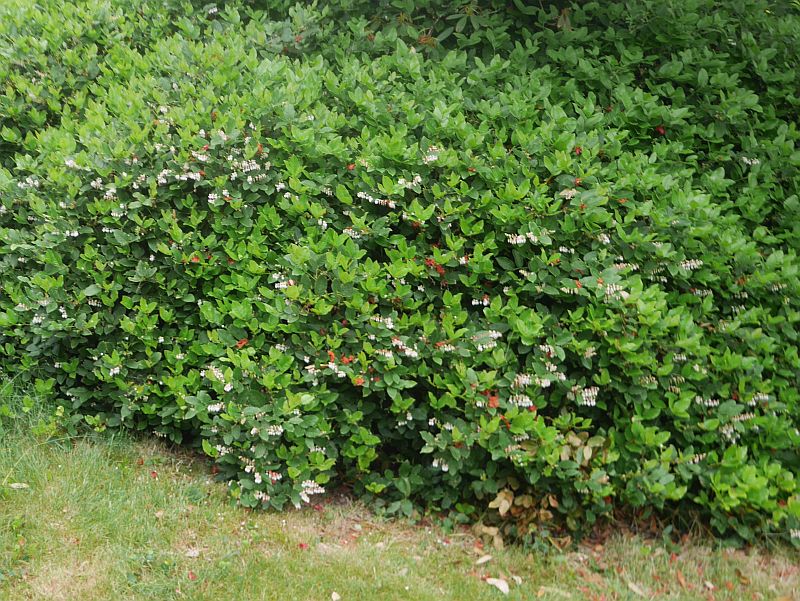
A good sized Gaultheria shallon from western North America (maybe there’ll be fruit on my return visit in September?)
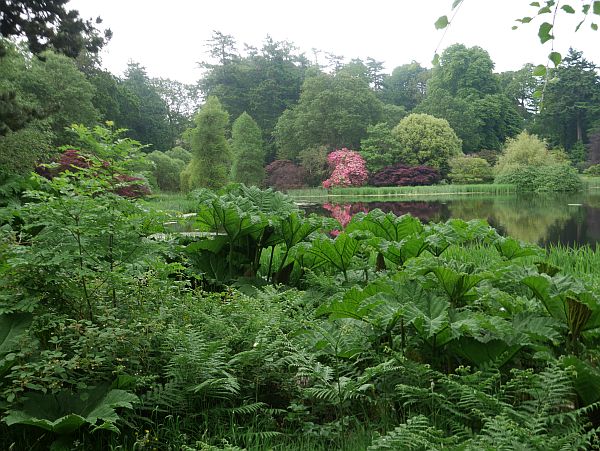
Gunnera
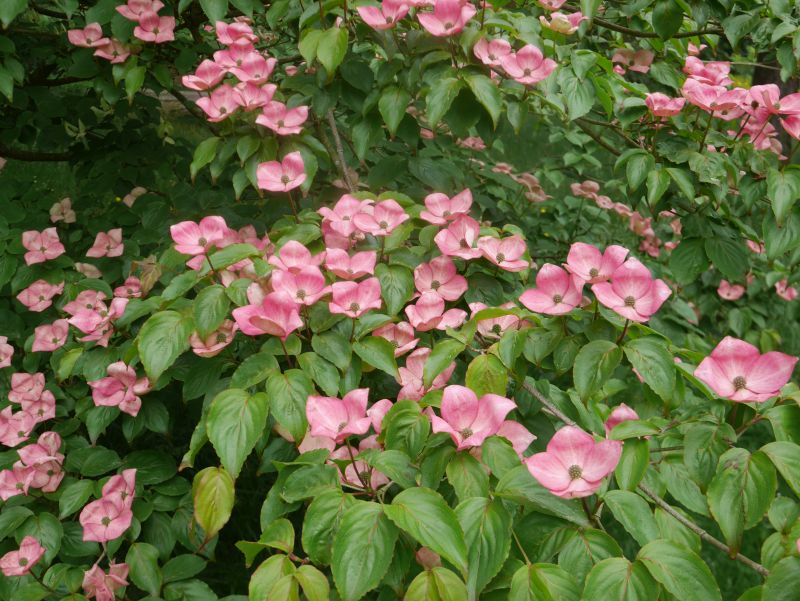
A nice pink flowered form of Cornus kousa!
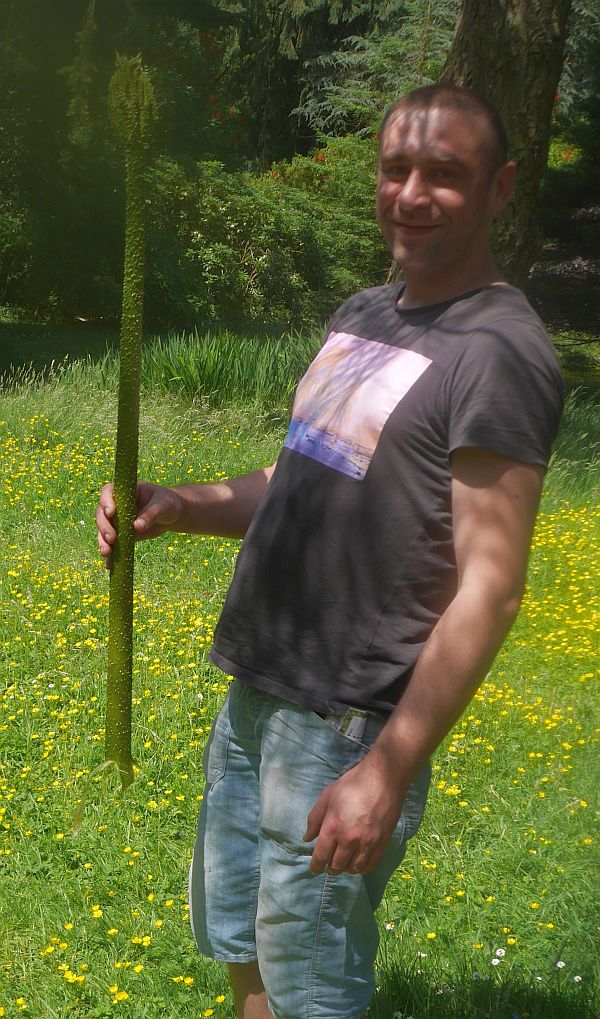
One of the world’s most spectacular edimentals was in flower at Mount Stewart in Northern Ireland at the weekend! Related to other great edimentals like Agave and Yucca, the Mexican Lily or Patleamole is sadly not likely to be hardy in my part of the world (Yucca filamentosa is hardy though!). Beschorneria is a small genus consisting of seven species that range from the southern US, Mexico and Central America. Mexican lily’s habitat is rocky massifs and cliffs in canyons and ravines from 2600 to 3,400 masl in pine-oak and fir (Abies religiosa) forest (Ref. 1). In the same reference, it is noted that “….the flowers are edible, after being boiled and fried.”
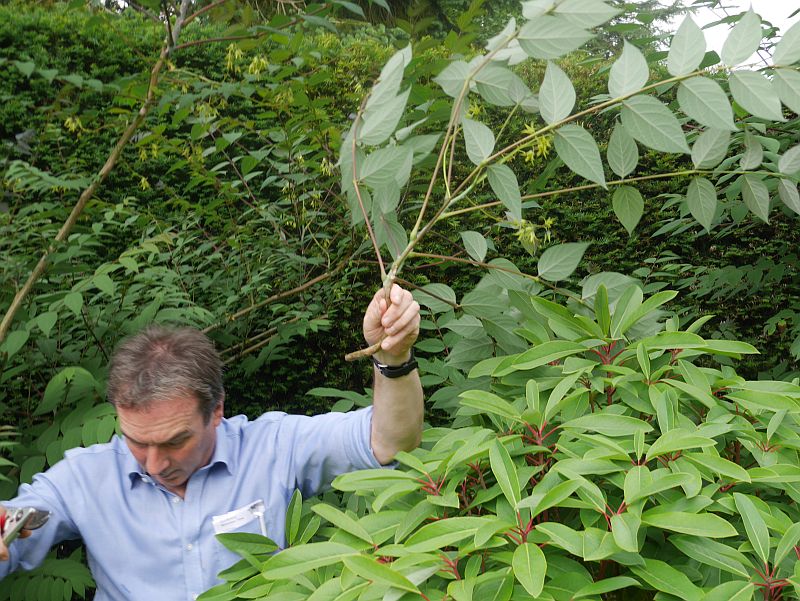
Decaisnea
Neil pointed out a Sonchus arboreus (tree sow thistle) that had survived the winter).
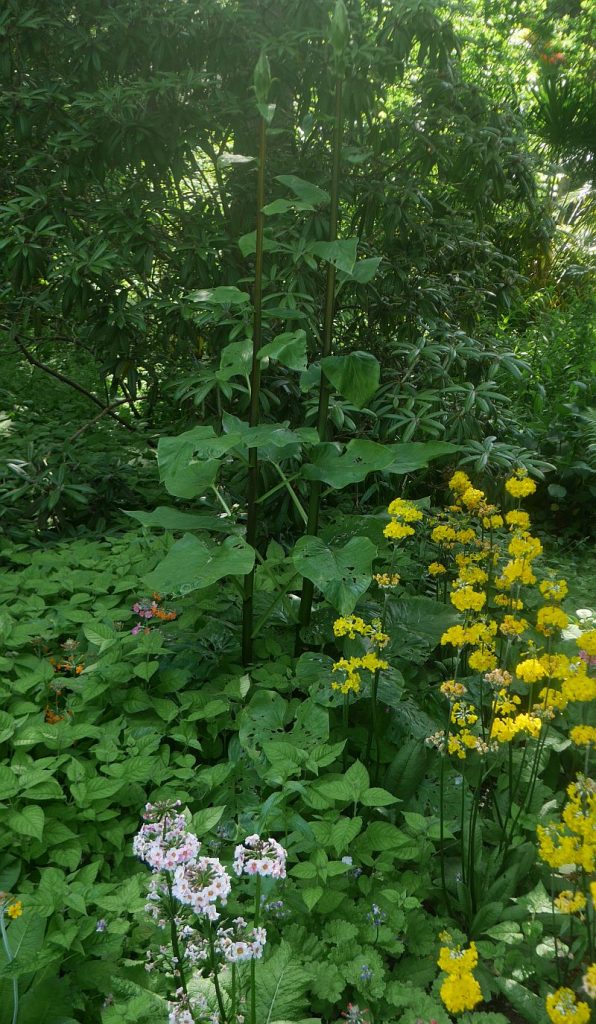
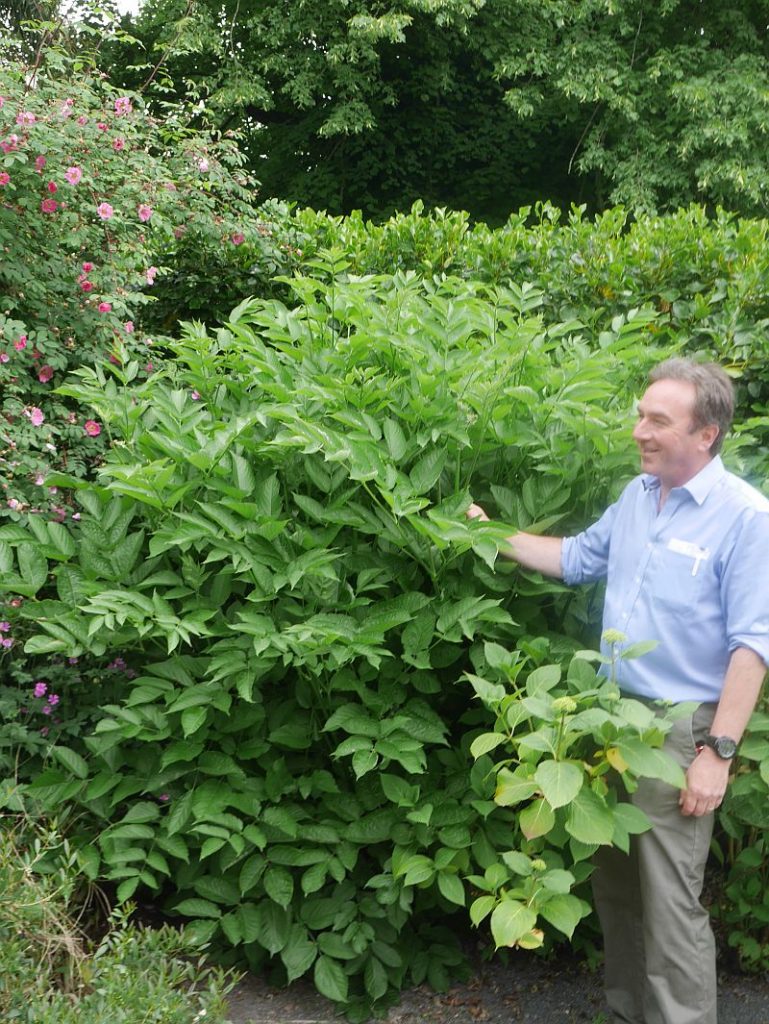
…and Neil was proud to show me a fine udo (Aralia cordata)!!
Perennial vegetables, Edimentals (plants that are edible and ornamental) and other goings on in The Edible Garden