One of my favourite perennial onions are persian shallots, Allium stipitatum and I’ve blogged about them several times in the past: https://www.edimentals.com/blog/?s=persian+shallot This is one of the earliest onions to appear in the spring and they flower and die down in the course of June. July is the best time to harvest the bulbs (I’ve often harvested them too late when they’ve already started sprouting in autumn). I harvested one plant this week and the bulbs were in perfect condition. I was once again struck by the yield (although it is probably two years since I harvested this plant). I replanted 3 of the largest bulbs. I usually dry the bulbs as they do in Iran, but this time I ate some fresh. They are surprisingly mild tasting and I used them fried in an omelette. Below the pictures is a Norwegian article on the persian shallot which I wrote in 2021.
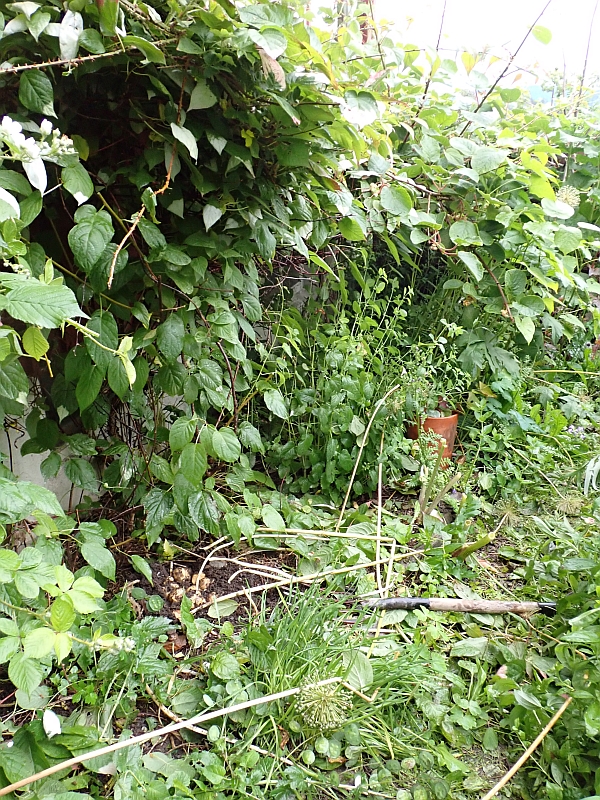
The persian shallots are overgrown by a mini kiwi (Actinidia kolomikta) behind it during June. Here I’ve cut the kiwi back in order to harvest the shallots
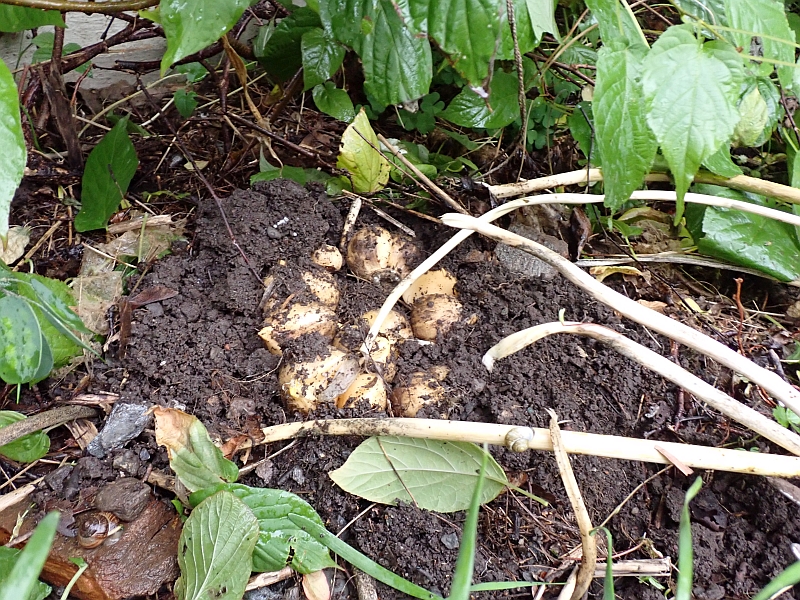
The persian shallot bulbs were quite close to the surface in several layers
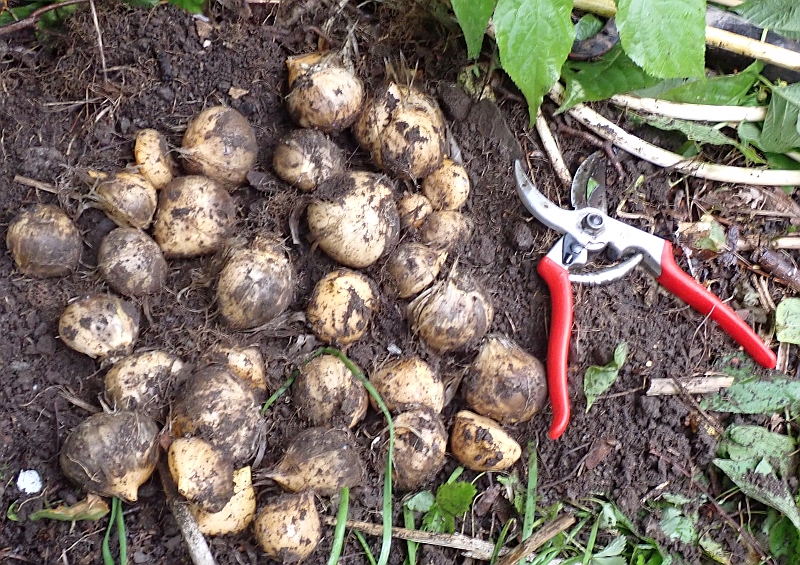
The bulb harvest was once again phenomenal (the biggest 3 onions were replanted)
Stir-frying one of the bulbs for an omelette
Please download this Norwegian article on persian shallots:
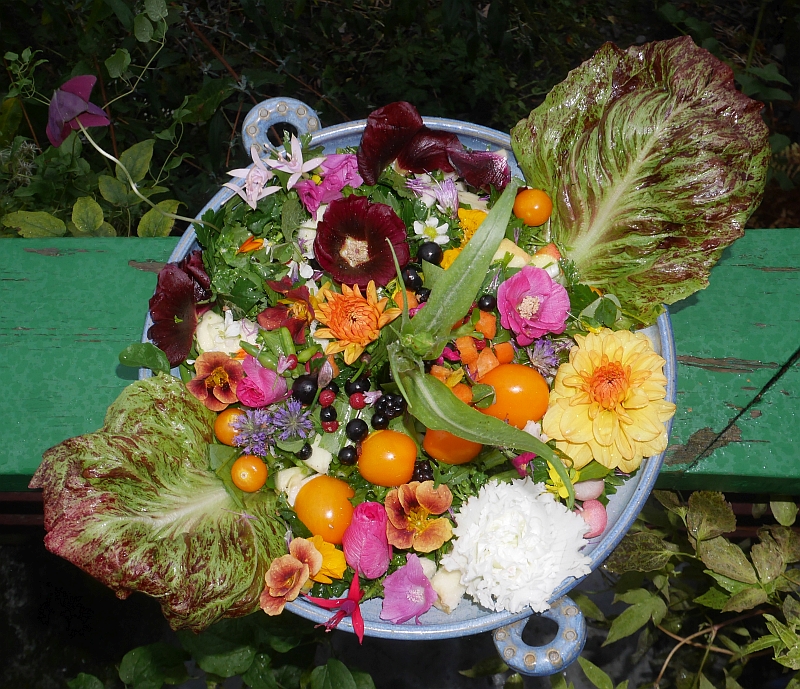
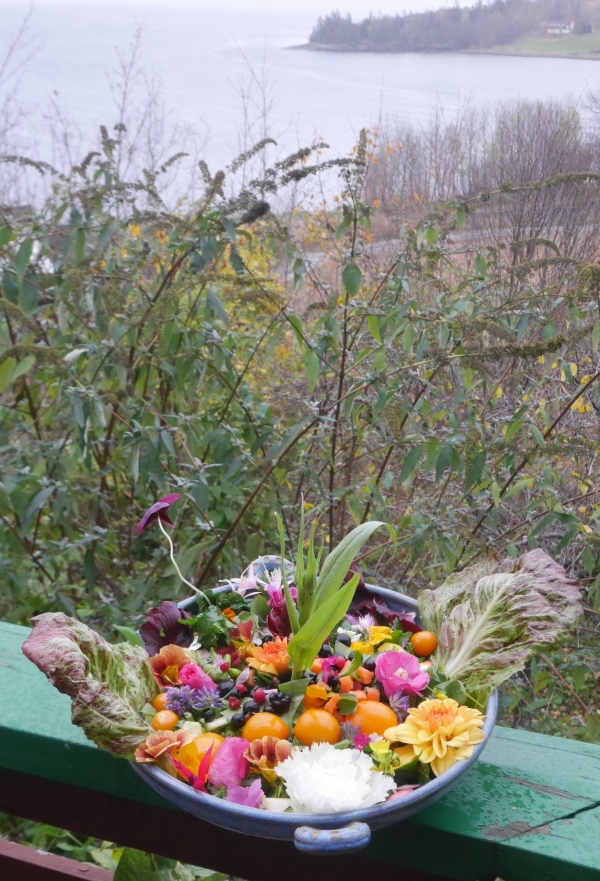
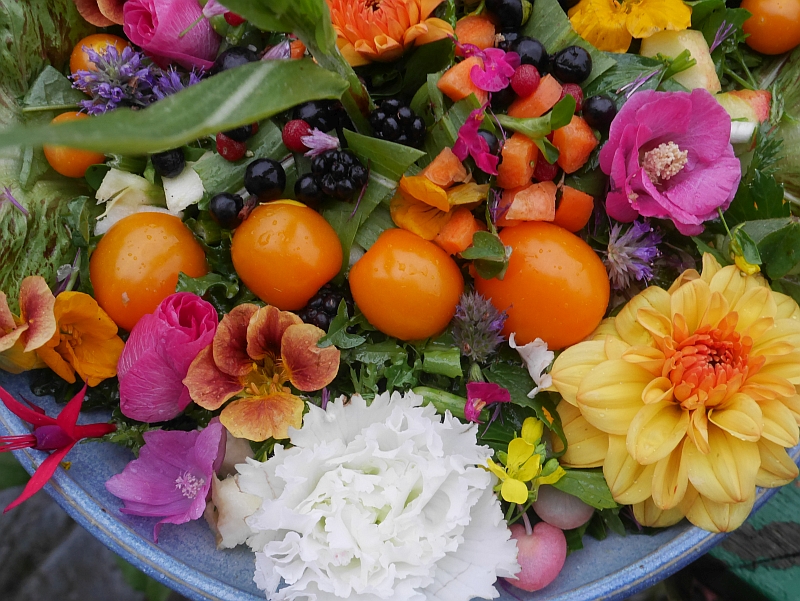
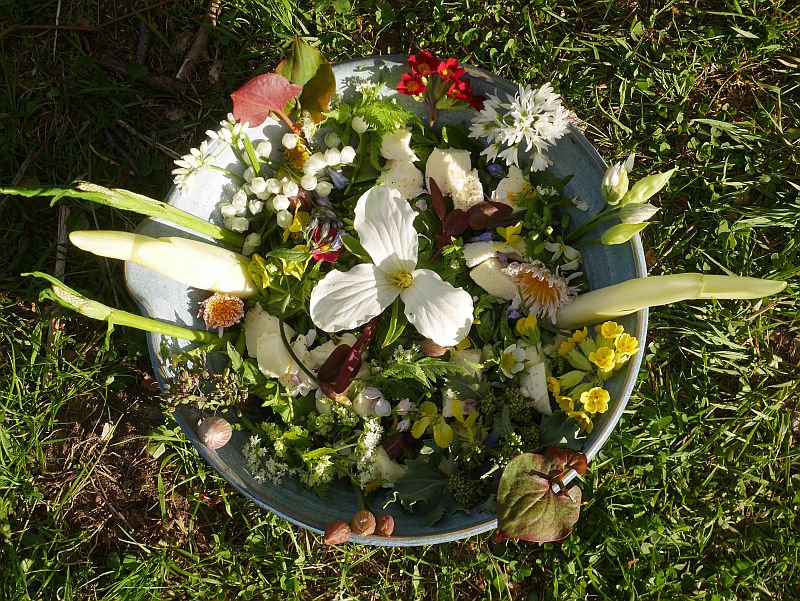
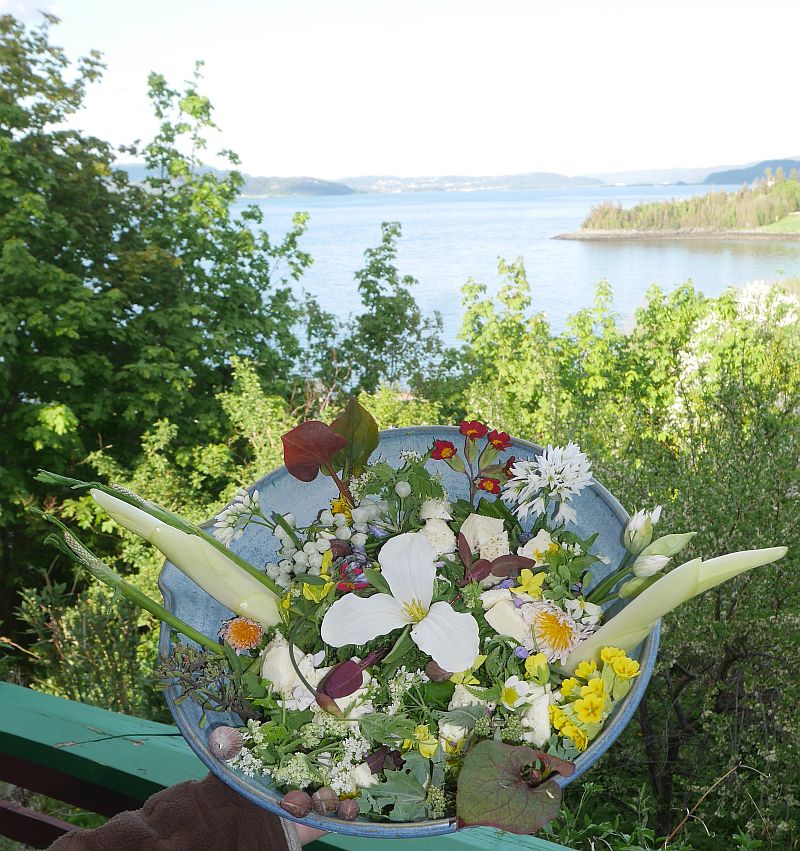
The Extreme Salad Man has been quiet recently. He was inspired to make this 5th November salad by a 10 year old Facebook memory of a salad he made (last picture below). Like 10 years ago, we¨’d had a very mild autumn (we may have the first frost this weekend). By chance the number of ingredients equalled the number of years I’ve been on this beautiful planet (66). For the recipe with the full list of ingredients (many are perennials), see the bottom of this post. It took less than an hour to forage around my garden and put together!
My November salad from 5th November 2011
THE RECIPE or how to make this at home? Harvested first around the living room a few Basella alba leaves, lemony flowers of two Begonias, leaves of the Okinawan spinach (Gynura bicolor), a couple of flowers of blackcurrant sage / solbærsalvie (Salvia microphylla v. grahamii), Ragged jack kale (grønnkål) leaves, leaves of chopsuey greens / kronkrage (Glebionis coronaria), four different perennial kales / flerårige kåls (Brassica oleracea), leaf shoots of Egyptian onion / luftløk (Allium x proliferum), a few leaves of common sow thistle / haredylle (Sonchus oleraceus), perennial rocket / flerårige rucola (Diplotaxis tenuifolia), parsley / persille leaves (Petroselinum crispum), leaves of Chicory / sikkori variety “Catalogna gigante di Chioggia” (Cichorium intybus), berries of black chokeberry / svartsurbær (Aronia melanocarpa), flowers of hollyhock mallow / rosekattost (Malva alcea), flowers of two varieties of hollyhock / stokkrose (Alcea rosea) – black and pink, hedge mustard / løkurt (Alliaria petiolata), mouse garlic (Allium carinatum), two varieties of dandelion / løvetann (Taraxacum spp.) including moss-leaved, flowers of Japan thistle (Cirsium japonicum), leaves of Allium senescens, a few of the last blackberries / bjørnebær (Rubus fruticosus), berries of black nightshade / svartsøtvier (Solanum nigrum), flowers of Allium mairei, flowers and leaves of anise hyssop / anisisop (Agastache foeniculum), flowers of two varieties of hardy Fuchsia / Magellan-tåre (Fuchsia magellanica) “Alba”og “Tricolor”, Autumn olive / Japansk sølvbusk (Elaeagnus umbellata) berries, radish / reddik (Raphanus sativus)flowers and unripe seed pods, flowers and flower buds of mustard greens / sennepsalat (Brassica juncea), a flower of marigold / ringblomst (Calendula officinalis), new shoots of curled dock / krushøymol (Rumex crispus), leaves and bulb of nodding onion / prærieløk (Allium cernuum), flowers of two varieties of nasturtium / blomkarse (Tropaeolum officinale), two varieties of spring onions / vårløk (Allium cepa), a few leaves of two varieties of sorrel / engsyre (Rumex acetosa), flower buds and flowers of chives / gressløk (Allium schoenoprasum), two leaves of chicory / sikkori variety “Rossa de Treviso” (Cichorium intybus) on the edge of the salad bowl, leaves of perennial chicory (Cichorium intybus), leaves of horned violet / hornfiol (Viola cornuta “Alba”), leaves of Rumex scutatus “Silver Shield” (buckler-leaved sorrel / Fransksyre), a flower of a reflowering variety of strawberry / jordbær (Fragaria x ananassa), flower shoot of scorzonera / scorsonnerot (Scorzonera hispanica), seen in the centre of the salad, a flower of Begonia “Double White, a Dahlia (georginer) flower, oca leaves (Oxalis tuberosa), tomato / tomat “Ida’s Gold” (Lycopersicon esculentum), berries of Physalis “Indian Strain”, two varieties of celery / selleri (Apium graveolens), berries of Ribes divaricatum “Worcesterberry”, carrot / gulrot, turnip / nepe and garlic / hvitløk! Put the flowers and other colourful ingredients to one side for the topping, wash, cut (I use scissors) and mix everything else for the main body of the salad, add the salad dressing (olive oil, salt, pepper and vinegar with crushed garlic) and mix, then use the artist in you to decorate the salad!
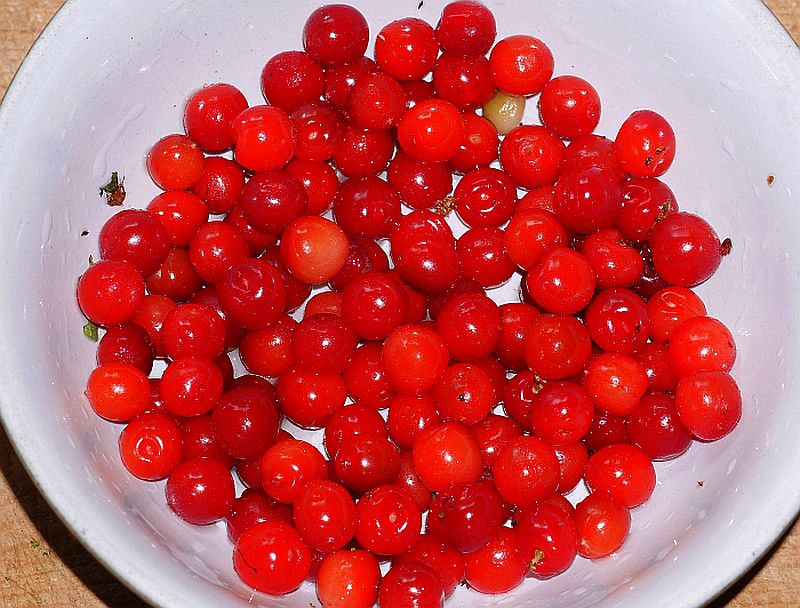
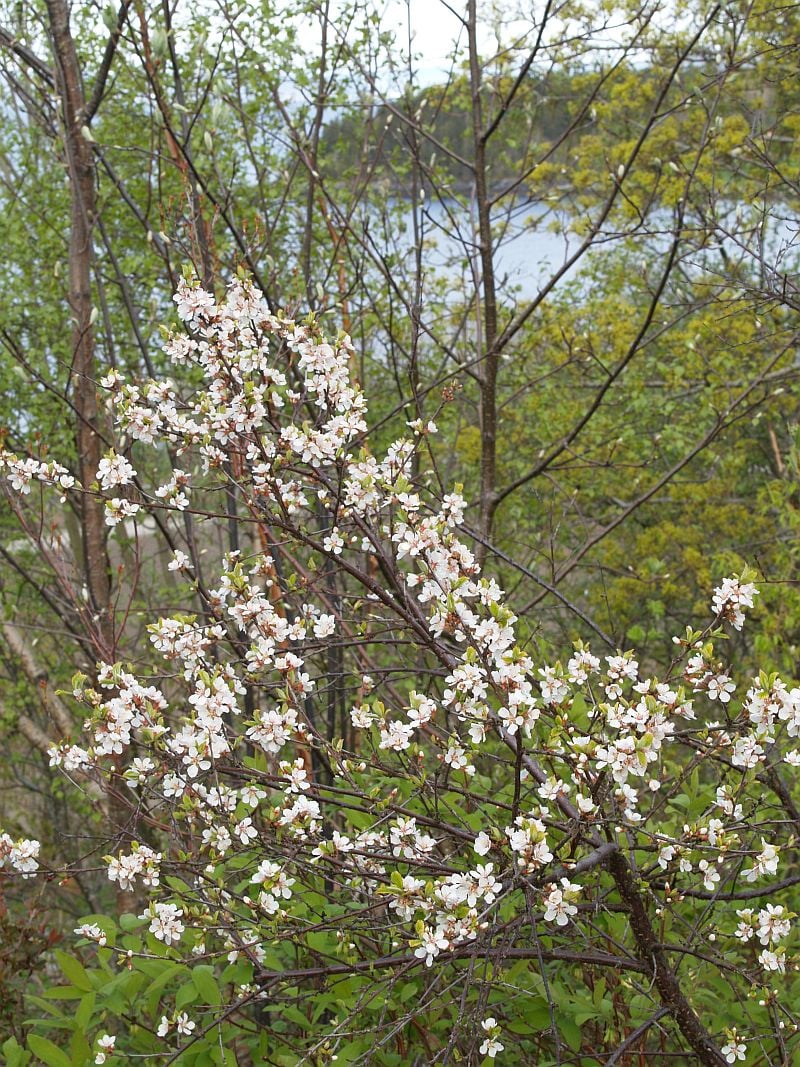
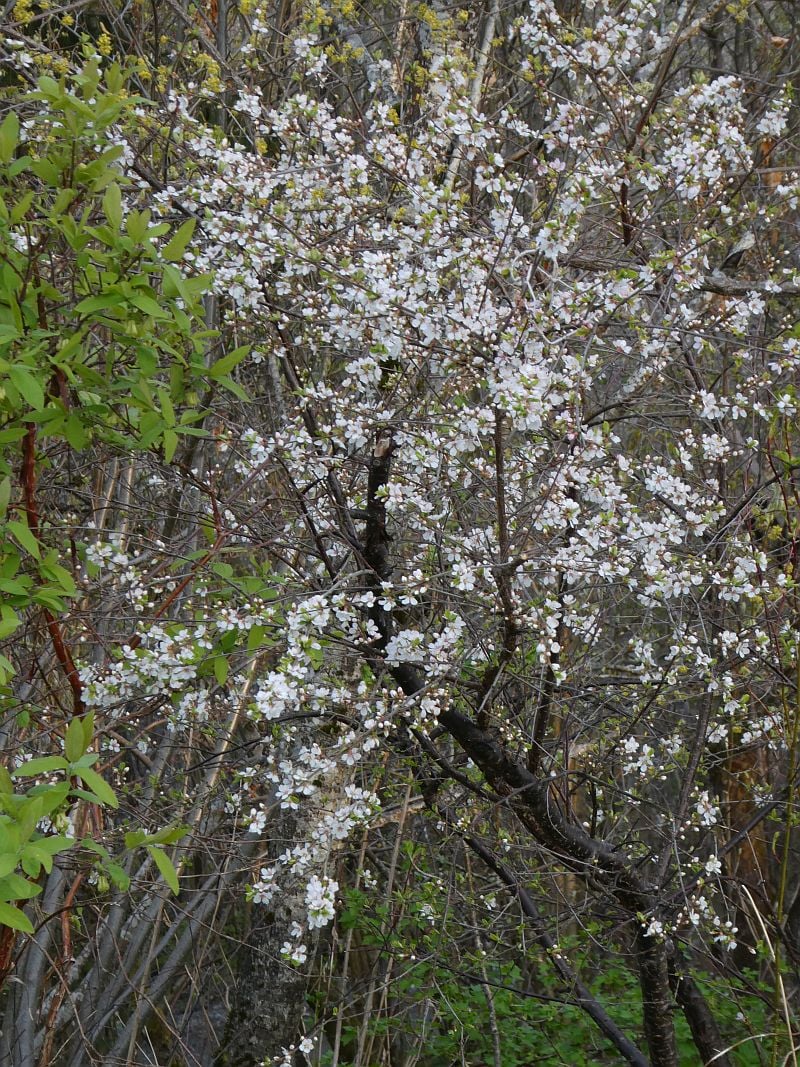
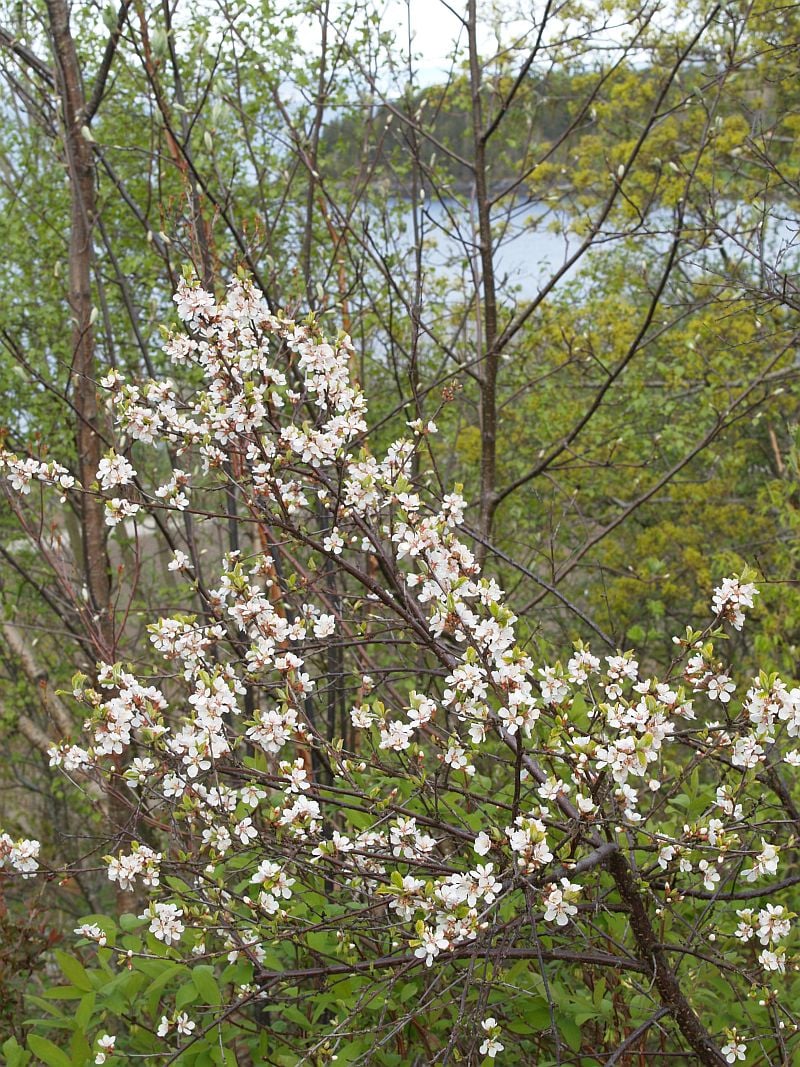
Nanking cherry (Prunus tomentosa) is a species native to northern and western China, Tibet, Korea and Mongolia. My two plants are seed propagated about 20 years ago, but are planted a bit far apart for good yields, but I’ve just harvested a small crop, having forgot about them (in a part of the garden I don’t often go) but then I heard the fieldfares (gråtrost) feasting on them this morning. The berries are quite sweet to my taste, not sour as is often reported, but the seeds are relatively large. The biggest advantage with them is that they are supposedly hardy down to below -40C, so something for Northern Norway and the mountain areas. They are also earlier than sweet cherries (Prunus avium) and therefore it’s worth having a couple of bushes to extend the fresh fruit season (ripe just after strawberries and honeyberries /haskaps which are earliest here).There are cultivars; from wikipedia: “…examples include ‘Graebneriana’ (Germany), ‘Insularis’ (Japan and Korea), ‘Leucocarpa’ (Manchuria; white fruit), and ‘Spaethiana’ (Europe).” They are also fantastic when blossoming (and full of fruit), so a valuable edimental in any case! And, yes I do save the seeds for sharing with Norwegian Seed Savers (kvann.no).
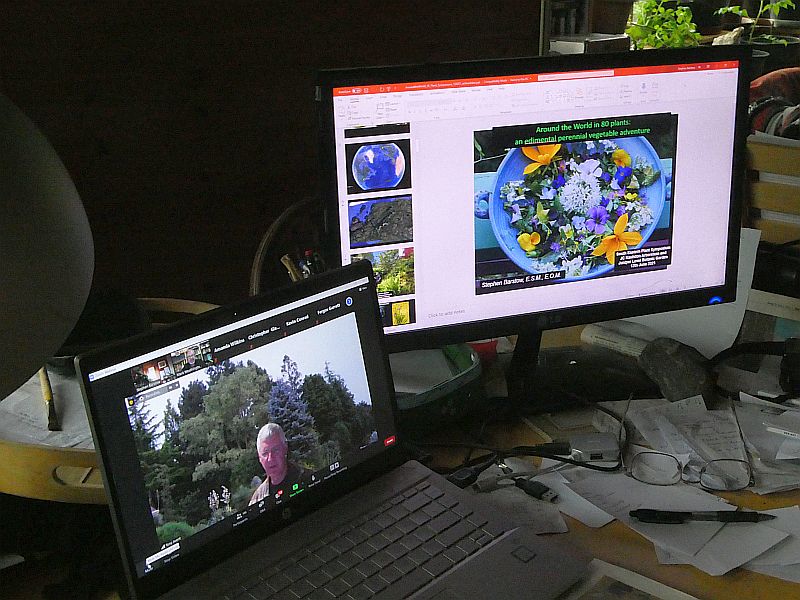
On the 12th June, I gave my first webinar at a mainstream gardening conference in the US, the Southeastern Plant Symposium, hosted by the JC Raulston Arboretum and Juniper Level Botanic Garden in Raleigh, North Carolina. I had thought that the invitation was on the back of a successful talk I gave at the Atlanta Botanical Gardens in September 2019. However, it turned out not to be the case and one of the organizers horticulturist and owner of Plant Delights Nursery, Tony Avent, had read my book, enjoyed it and had suggested to the committee to invite me!
My talk lined up to start on the right screen with Tony Avent on the left screen
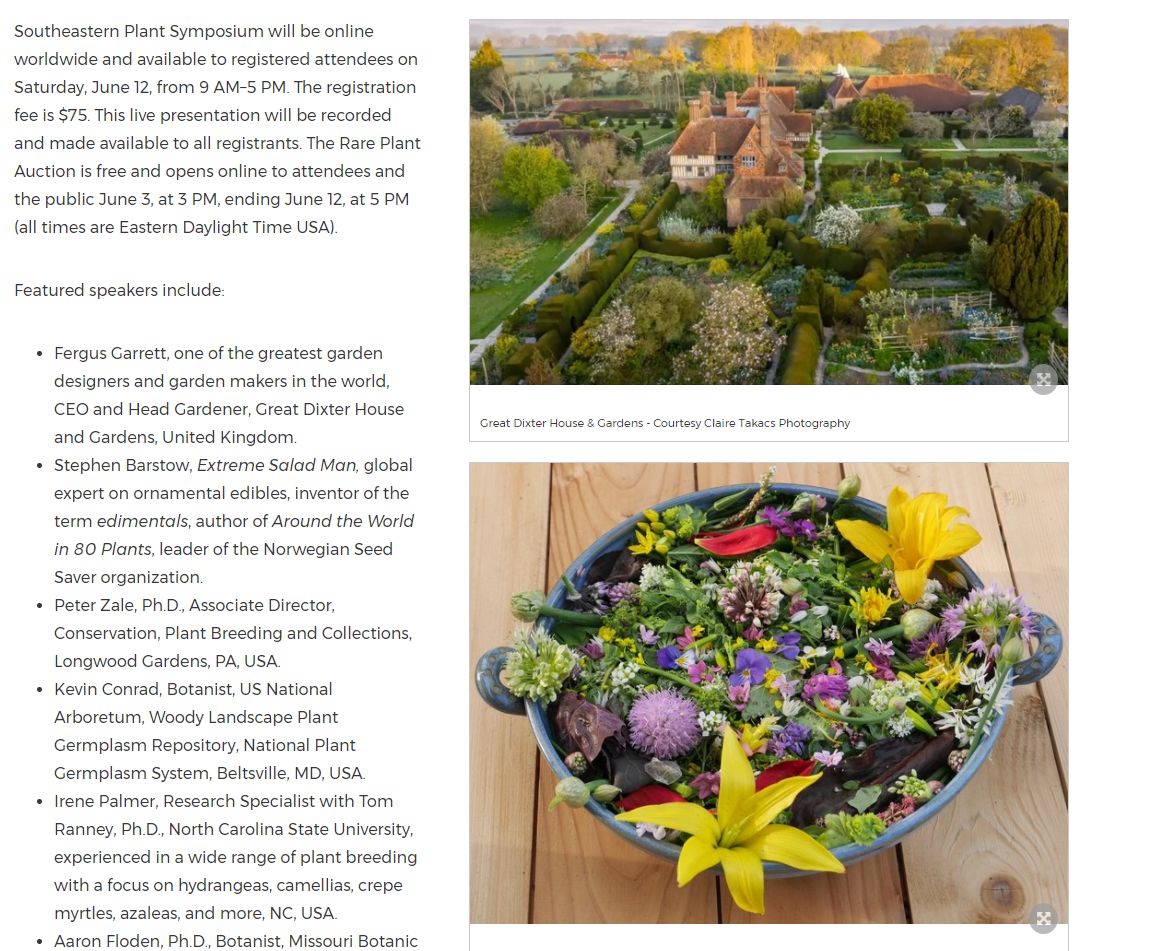
I was sandwiched between some great ornamental gardeners and plant breeders including Fergus Garrett of Great Dixter in the UK. I particularly enjoyed Aaron Floden’s talk (from the Missouri Botanical Garden) on unexploited native plants (in an ornamental context) and plant breeder Peter Zale’s talk on Hosta breeding (the market for Hostas in the US is enormous….time for a small segment dedicated to Hostas for food!). Edimental gardeners can, as I have over the years, get a lot of inspiration from ornamental gardeners.
The feedback after the event was very positive. One of the participants, Marty Finkel, wrote an article about the talk which has just been published on page 10 of the Granville Gardeners Gazette (available for all to read!) see http://www.thegranvillegardeners.org/wp-content/uploads/2021/07/Gazette-2021-07.pdf (after an article about human composting!)
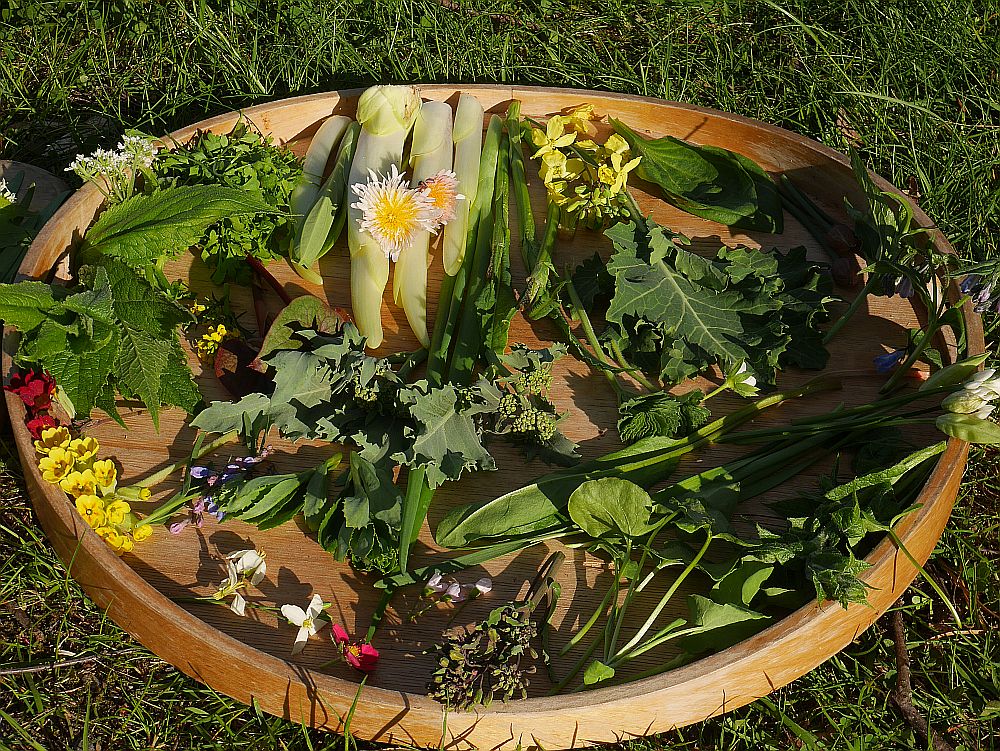
The Extreme Salad Man was asked last night to make a salad…..but he only managed 55 in total. He blames the fact that he was only given an hour. Nevertheless, all were pleased with the result. He hopes you like it too! A full list of plants can be found at the bottom below the pictures.
Following on from my visit to Joe Hollis at Mountain Gardens and on the back of a successful talk at the Atlanta Botanical Gardens in September 2019, I’ve been invited back in my capacity as “Extreme Salad Man, global expert on ornamental edibles, inventor of the term edimentals, author of Around the World in 80 Plants and (plant) leader of the Norwegian Seed Saver organization”……………..
Announcing that I’ll be one of the speakers along with Fergus Garrett of Great Dixter at the on-line Southeastern Plant Symposium organised by the JC Raulston Arboretum at NC State University and Juniper Level Botanic Garden in Raleigh NC.
19th June 2020: Video update from the Allium (Chicago) garden at the NTNU Ringve Botanical Gardens in Trondheim. The heat wave has brought many species into flower and the garden’s looking great! The official opening of the garden, planned for August, has been postponed to 2021. We are working on plant signs which will hopefully be added later in the summer. The garden currently contains some 300 accessions including around 100 Allium species and many old Norwegian onions collected over several years from all over the country and funded by Norsk Genressurssenteret and Landbruksdirektoratet. The signs for the garden are in part funded through a gift from Skjærgaarden (https://www.skjaergaarden.no) to KVANN (Norwegian Seed Savers) who have decided to use the gift at Ringve (see https://www.facebook.com/skjaergaarden.no/videos/2972781459487864)